Shared posts

01 Feb 15:13

Lab Mouse Nervous For First Day Of New Job Getting Cancer

STANFORD, CA—Anxious about all the brand-new challenges that lay ahead, a laboratory mouse was reportedly feeling nervous Friday in anticipation of its first day at a new job getting cancer. “Honestly, I’ve got butterflies in my stomach wondering how being riddled with tumors is going to go,” said the 6-month-old white rodent, adding that it couldn’t help but have the jitters when it realized it would have to show up and start developing agonizing malignant growths pretty much from day one. “I was good at my old gig ingesting dietary supplements, but this new job metastasizing cancer cells to my bones, organs, and lymph nodes is a rare opportunity for me. I mean, just the thought of walking in there and not getting cancer, of just sitting there with perfectly intact tissue, is keeping me up at night.” At press time, the mouse had reportedly calmed down ...

31 Jan 18:09

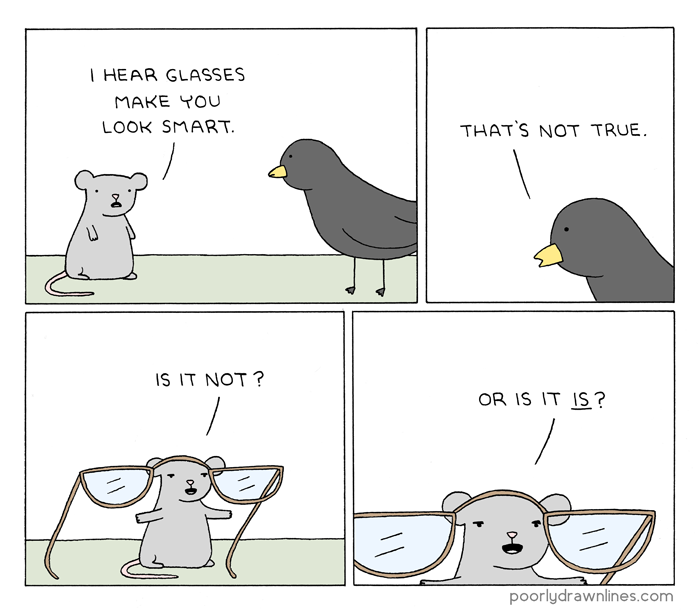
Smart

by Reza

31 Jan 09:02

Hillary Clinton Begs Elector To Dump Donald Trump In SNL "Love Actually" Skit

by Alicia Melville-Smith
Philip.paulsson

This was hilarious

It’s Hillary, actually.

Kate McKinnon's Hillary Clinton returned to Saturday Night Live this week, plotting to stop Donald Trump becoming president.

youtube.com

In a parody of THAT scene from everyone's problematic fave Christmas movie Love Actually, Clinton tracked down a member of the US electoral college to deliver a message.

In a parody of THAT scene from everyone's problematic fave Christmas movie Love Actually, Clinton tracked down a member of the US electoral college to deliver a message.

NBC / Via youtube.com

It's an, err, long list.

It's an, err, long list.

NBC / Via youtube.com


View Entire List ›

31 Jan 08:57

The US just imposed sanctions on Russia over election hacks

by Jessica Conditt
Philip.paulsson

And so it begins...

President Barack Obama's administration has imposed sanctions on Russia's two top intelligence services and it's ejected 35 Russian intelligence officials from the US. This is in response to Russia's repeated, documented hacks of the US election syst...
31 Jan 08:57

Coaldust says FML

by Coaldust

Today, my niece stole a bottle of whiskey from me to mix with Monster and get drunk with her boyfriend. It was a bottle of 23-year-old Pappy Van Winkle's that cost over $2000. FML

31 Jan 08:55

NIH: Give infants peanuts at 4-6 mos to avoid dangerous allergies

by Beth Mole
Philip.paulsson

Interesting.

(credit: Connie Ma)

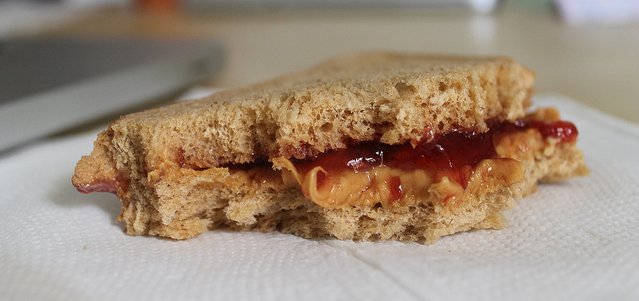
In recent years, peanut allergies among kids have soared, creating life-long sensitivities that can be deadly and banishing beloved PB&Js from lunch boxes everywhere. While the cause is still unclear, health experts are confident they’ve found the solution to the plague of peanut allergies: peanuts.

Parents, pediatricians, and other healthcare providers are now firmly advised to start feeding infants peanut-laced foods to head off allergies before they develop. Based on mounting evidence, experts think there’s a “window of time in which the body is more likely to tolerate a food than react to it, and if you can educate the body during that window, you’re at much lower likelihood of developing an allergy to that food,” Matthew Greenhawt, a food allergy expert, told The New York Times.

As such, a National Institutes of Health panel of specialists, including Dr. Greenhawt, released today a new set of guidelines for tossing peanuts into that window.

Read 9 remaining paragraphs | Comments

30 Jan 20:06

Lost genes that boost tomatoes’ flavor identified

by John Timmer

Enlarge (credit: Harry Klee, University of Florida)

Large-scale modern agriculture has a fair number of detractors, but the ones that ultimately matter most are the consumers. And consumers almost uniformly hate what's happened to the tomato. Over the past few decades, a fruit that once exploded with taste and aroma has become synonymous with bland, textureless mediocrity.

But some researchers haven't given up on the tomato. Taking a mix of flavorful heirloom strains and modern agricultural varieties, they've deployed everything from chemical chromatography to consumer taste tests to identify the key genes behind the loss of flavor. And with the new information, we're in a much better place to rescue the tomato.

This isn't new work, and some of the people involved were already talking about the outlines of it at science conferences back in 2013. But today's issue of Science features a major progress report from a large international team of scientists. As they describe the issue, a large team of scientists, along with the equipment they bring in tow, is really what you need to understand the tomato.

Read 8 remaining paragraphs | Comments

30 Jan 12:12

Federal Court Ruling Requires Private Businesses To Install Handicapped-Accessible Wheelchair Jumps

WASHINGTON—Disability rights groups celebrated Thursday after the federal court for the District of Columbia handed down a ruling requiring all private businesses nationwide to install handicapped-accessible wheelchair jumps. “This is a major victory for any disabled American who’s ever been prevented from performing a killer wallride or 360 bunny hop by the lack of proper handicap accommodations at a place of business,” said Alexis Pereira, a spokesperson for the American Association of People with Disabilities, adding that thanks to the ruling, wheelchair-bound individuals would finally be able to take full advantage of the nollies, table tops, and half cabs guaranteed by the Americans with Disabilities Act. “Until now, disabled Americans have had limited options for where to go to bust out badass G-turns and inverts. We’re hopeful that with this ruling, those with disabilities will never again be denied their constitutional right to shred.” Pereira added, however ...

27 Jan 16:21

Venus Through Water Drops

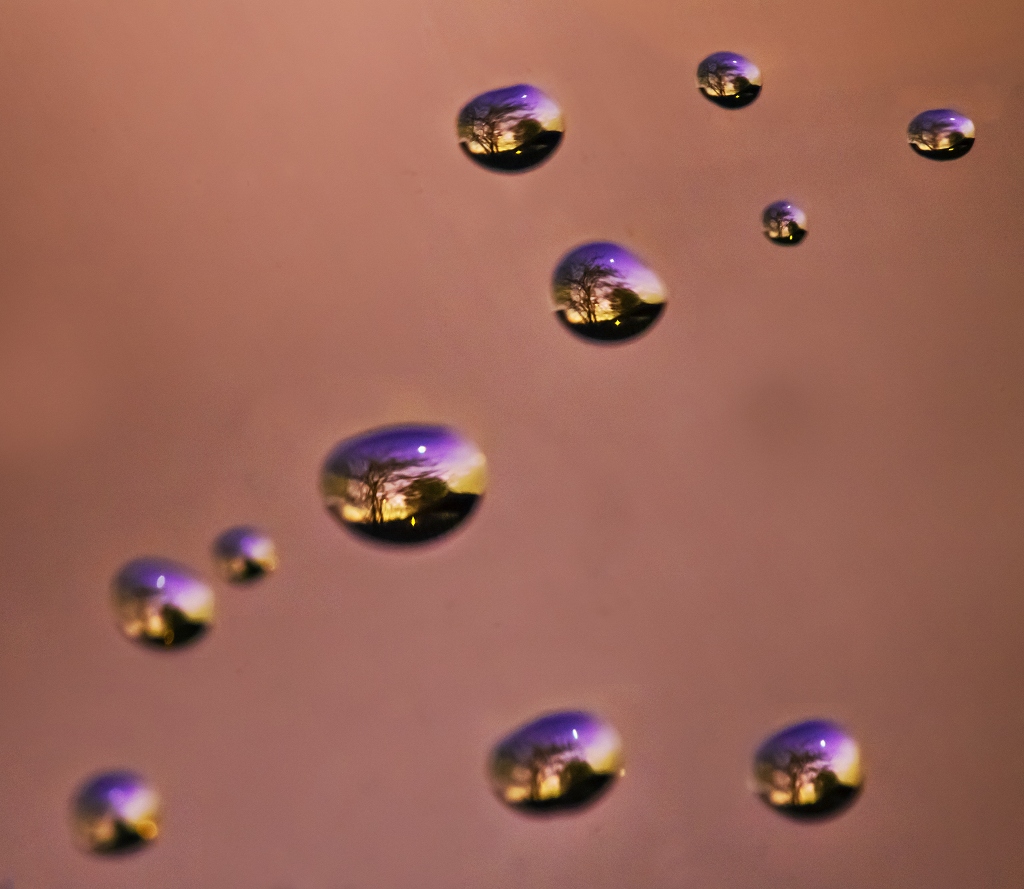
Venus Through Water Drops Now the brilliant "star" in planet Earth's evening skies, Venus is captured in this creative astrophotograph. Taken with a close-focusing lens on January 18 from Milton Keynes, UK, it shows multiple images of the sky above the western horizon shortly after sunset. The images were created by water drops on a glass pane fixed to a tree. Surface tension has drawn the water drops into simple lens-like shapes. Refracting light, the drops create images that are upside-down, so the scene has been rotated to allow comfortable right-side up viewing of a macro-multiple-skyscape.
27 Jan 13:58

Classic puzzle adventure 'Myst' comes to Android

by Nick Summers
Philip.paulsson

Nice, may have to rexplore this one...

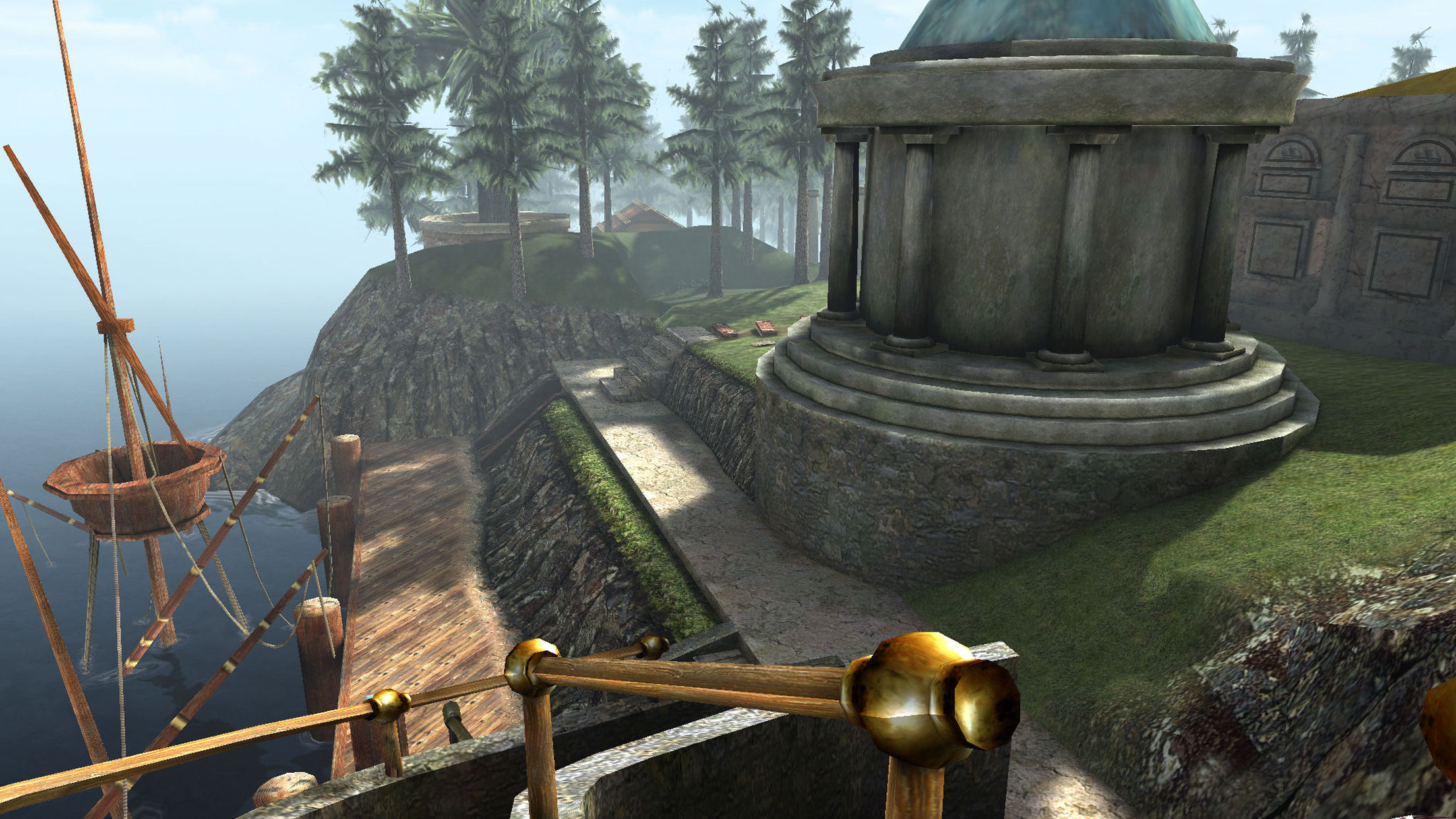
Myst needs little introduction. The puzzle adventure game was a smash hit when it originally released on the Macintosh in 1993. Now, it's available on Android too. The latest port, developed by mobile studio Noodlecake, is called realMyst and feature...
27 Jan 12:09

What the US Can Learn From Canada's Battle With an Anti-Science Government

Philip.paulsson

I'm hoping freedom of speech and the Freedom of Information act help prevent it getting *too* bad for science in the US.

Illustration: Jim Cooke/Gizmodo

We’re only a few days into the Trump era and it’s becoming painfully clear that the new president is mobilizing for a war on science. This situation is eerily reminiscent of attempts to suppress science in Canada during Stephen Harper’s tenure as Prime Minister, from 2006 to 2015. Here’s what Canadians say American scientists and concerned citizens should expect in the next four years—and what they can do to fight back.

As feared, President Trump is turning his anti-science views into public policy. In addition to entertaining anti-vaxxer views, the president has denied that climate change is real, calling it a pseudoscientific plot conjured by the Chinese “to make US manufacturing noncompetitive.” His devotion to fossil fuels remains unwavered, placing him at odds with the latest climate projections. It’s no wonder, then, that Trump has set his sights on dismantling institutional forces that could undermine his anti-science, anti-environment worldview.

President Donald Trump shows off his signature on an executive order about the Dakota Access pipeline. (Image: AP/Evan Vucci)

The Environmental Protection Agency is where Trump has struck first, setting up the EPA-bashing Scott Pruitt as its chief, freezing all EPA grants (which apparently won’t last beyond the end of the week), and forbidding staffers from talking to reporters or the public. EPA scientists who want to publish or present new findings may find themselves having their research reviewed by political appointees first, although the degree of political interference to come remains unclear. A measure to stifle the US Department of Agriculture was enacted, and then (partially) rescinded mere hours later. Disruptions to science communications have also been reported at the CDC and Health and Human Services.

Republicans in the United States have done this sort of thing before. Under President George W. Bush, all NOAA, USDA, and NASA climate info went went through the White House’s Council on Environmental Quality. The CEQ was hypersensitive to anything climate-related, and would routinely reject documents and handouts, including a 2003 brochure about “carbon sequestration” in the soil (i.e. how farmers can help reduce greenhouse gas emissions). “It is not just a case of micro-management, but really of censorship of government information,” noted a government official afterwards. “In nearly fifteen years of government service, I can’t remember ever needing clearance from the White House for such a thing.”

These are troubling portents of things to come for federal institutions that dare to stand at odds with the Republicans’ twisted new vision of America, in which its citizens are shielded from objective truth.

The Canadian government is currently under investigation for its efforts to obstruct the right of… Read more Read more

For Canadians, this all sounds disturbingly familiar. For nearly a decade, the Stephen Harper-led Conservative government did its darndest to prevent federal scientists from sharing their work with the Canadian public. Like the incoming US administration, the now-ousted Harper was fixated on fossil fuels, making it one of his top priorities to protect what he saw as Canada’s greatest asset: the Alberta tar sands. To ensure the steady flow of oil, the Conservatives clamped down on environmental science, from research on climate change to studies on the state of Canada’s rivers, lakes, and forests. At the same time, the Conservatives re-routed money away from federal institutions and projects they didn’t like, directing it instead at what were perceived as less-threatening research areas, including better ways to extract more oil from the tar sands.

Former Canadian Prime Minister Stephen Harper. (Image: Kashmera/Flickr)

Starting shortly after he took office in 2006, Harper began to introduce measures that made it difficult for federal scientists to share their work with the public. In order to speak to scientists, journalists had to go through government communications officers, which presented an often impenetrable bureaucratic barrier. The government also made it difficult for federal scientists to travel to conferences where they could share their findings.

If a government scientist wanted to speak to the national or international media, he or she would have to receive pre-approval from a minister’s office. As CBC pointed out back in 2015, this process involved “drafting potential questions and answers, which [were] then scrutinized by a team before the green light is given.”

In one instance, government scientist Max Bothwell found himself stuck in a Kafkaesque 110-page email exchange, in an effort to communicate his findings on climate change-induced algal growths to The Canadian Press. Unable to wait, the CP went ahead and published its report without the lead scientist’s input. After Prime Minister Justin Trudeau was elected and the muzzling of government scientists lifted, Bothwell told The Globe and Mail that the experience was both frustrating and embarrassing: “The way [the muzzling] is received by people like me is that these people don’t value me and they don’t trust me,” he said. “That message came across crystal clear: Scientists are not respected and they are not trusted.”

“More than a dozen unknown people inside the media sphere of my department were considering, debating, guiding, massaging, and exerting influence on the whole process.”

Natural Resources Canada research scientist Scott R. Dallimore says he felt muzzled under the Harper administration, too. In 2010, Dallimore co-authored a scientific paper describing the effects of flooding from drainage of a glacial lake 12,000 years ago in what is now the northwest Canadian Arctic. “It was an odd pick to impede my availability to Canadian press,” he told Gizmodo, “considering how uncontroversial and rather mundane our paper was, not to mention the fact that it was accepted for publication in Nature, a very respected science journal.”

The fact that Dallimore’s work was singled out showed how far the Harper administration’s reach was when it came to screening and vetting anything that even hinted at the environment or global climate change.

“Really, what was revealed to me was the complexity of the approval process and the number of people who were watching over me—more than a dozen unknown people inside the media sphere of my department were considering, debating, guiding, massaging, and exerting influence on the whole process,” said Dallimore. “In the end I received permission to speak [to the press] and they didn’t actually impose any control on what I said. But they influenced my accessibility such that Canadian press stories went ahead without hearing from the Canadian researcher involved, and without learning how the story fit within the mission of my organization to inform Canadians about the geology of the Canadian landmass. It was clear that I was being monitored and that I should be very wary of what I said.”

Kristi Miller, a molecular geneticist with the Department of Fisheries and Oceans, was told in no uncertain terms that she was to refrain from talking about her work—declines of Fraser River sockeye salmon—to reporters. “To be that controlled, it almost made you nervous,” she told The Globe and Mail. “They were almost trying to make you afraid of the public, and afraid of the media.”

Among the many programs cut or slashed, Harper de-funded the Experimental Lakes Area project, a unique research station encompassing nearly 60 formerly pristine freshwater lakes in northwestern Ontario. (Image: IISD)

For Michael D. Rennie, a biologist who worked for Fisheries and Oceans Canada studying ecological systems in the lakes of northwestern Ontario, things began to change once Harper amassed a majority parliament in 2012.

“Soon after, massive program cuts came sweeping through with massive layoffs and whole programs gone—including my own,” he told Gizmodo. Confusingly, however, Rennie’s group was only listed as “affected,” placing the staff in a state of limbo. “We were kept around [as employees] to ensure that the closure of our program—the Experimental Lakes Area—could be done such that the federal government would meet its obligations to the province under the original agreement that saw the program created,” he said. “In other words, dig your grave before we shoot you and bury you in it.” 

The defunding of ELA was seen as a damaging blow to conservation efforts in the country. Rennie and his team were studying 58 formerly-pristine freshwater lakes in the Kenora District of northwestern Ontario, and investigating the aquatic effects of pollution and other stresses on lakes and their catchments.

As for the muzzling, Rennie says that restrictions became much more stringent after 2012. “If I was contacted by someone from the media, I would reply and cc someone in communications to schedule an interview, which was [the new] policy,” he said. “But the strategy seemed to be that communications would simply never provide a response—our submission deadlines would pass and the story would be dropped.”

The emphasis on process—such as filling out five forms to hire a summer student, or providing a list of conferences a year and a half in advance only to be denied the trip with just a few days notice—also worked to limit public engagement beyond the simple measures of limiting contact with the media, says Rennie.

“The strategy seemed to be: mire everyone in bureaucracy so they have no time to do any real science,” he told Gizmodo. “The result of this—plus laying off hundreds of staff, and leaving many strung along in a limbo state of ‘affected’—resulted in a workplace that no one really wanted to be in with low morale and far more cynicism than is probably healthy.”

Other anti-science tricks invoked by the Harper government included axing the National Science Advisor position, scrapping the mandatory long-form census (which took a deep dive into the demographic make up of the Canadian population), slashing funding for Canada’s Ozone Network (a program providing near real-time data on the ozone layer above Canada), and ending the National Roundtable on the Environment and the Economy (a Canadian advisory agency focused on sustainability). In 2013, members of the House of Parliament reached a new low when they actually voted against the value of science in policy decisions—and then proudly gave each other high-fives for doing so.

Stories of gagged scientists in Canada during this period are abundant. Mercifully, however, this sad era in Canadian history is over. On October 19, 2015, Justin Trudeau led the Liberals to a decisive victory in the federal election. Among his campaign promises, he pledged to undo the restrictive measures imposed by Harper, and make science a priority during his tenure as Prime Minister. On November 5, 2015, Canada’s new Minister of Innovation, Science and Economic Development, Navdeep Bains, told government scientists that they’re finally free to speak to the media about their work. “Our [Liberal] government values science and will treat scientists with respect,” he said in a statement. “That is why government scientists and experts will be able to speak freely about their work to the media and the public,” adding, “We are working to make government science fully available to the public and will ensure that scientific analyses are considered in decision making.”

“Government scientists are paid for by taxpayers. It makes no sense to have a filter.”

It may be years before we realize the full impact this muzzling had on science in Canada, but the effects are undoubtedly far-reaching. For nearly a decade, Canadian citizens had little to no knowledge of what sorts of research their tax dollars were funding. Data gaps now likely exist in both the environmental and sociological records. This isn’t just a problem for science—it’s also a problem for society. For a democracy to work, and to ensure good policy making, the electorate needs to be informed. Without proper science, democracy suffers.

With this episode over, and with the United States now poised to deal with similar measures, Canadian scientists have some practical advice for American scientists and concerned citizens.

“For years, Canadian scientists looked to the United States with envy, marveling at the degree of openness afforded to them,” Dallimore told Gizmodo, “We strived in Canada to secure this model for our scientists and we succeeded. It would concern me greatly if this situation is now being flipped onto its head.”

The most important thing now, he says, is for journalists in the US to keep the story alive. “It was the role of the Canadian media and its persistence in covering this issue year after year—often to the point of utter repetitiveness—that helped the public understand what was going on,” said Dallimore. He believes the media played an important role in making science a major issue during the 2015 federal election—an election in which the Conservatives lost handedly to Trudeau’s Liberals.

Image: Richard Webster/deathofevidence.ca

“It’s also important to remember that government scientists are paid for by taxpayers,” Dallimore said. “It makes no sense to have a filter.” He adds that scientists deserve to be trusted and taken seriously, while at the same time cautioning that scientists shouldn’t go too far beyond their immediate area of expertise and assume they know what’s best in terms of public policy. Our credibility [as scientists] is based on the substance of our research findings and our ability to communicate, he says.

Dallimore acknowledges, however, that there are instances in which it’s acceptable for a government scientist to speak not on behalf of his or her institution, but as a concerned citizen. And indeed, this sentiment is growing in the United States, with some scientists feeling the need to become all-around “science advocates,” even if it means stepping a bit outside one’s own area of expertise.

Writing at his formerly anonymous blog UnmuzzledScience, Rennie is now offering advice to his American colleagues based on what he learned during Harper’s science clampdown. Among his many tips, he says it’s important for federal scientists to get a personal email address, build an anonymous social media presence, engage with university collaborators, educate the public on why government science matters and how it’s different from academic research, and get involved with a union.

“Engaging with outside collaborators is a key strategy for ensuring that work can still be communicated (even if a government researcher can’t comment on their paper, then their academic collaborator can), helps guard against publication blockage by administration (the collaborator can run with it), and maintaining data security (collaborators keep a copy),” Rennie told Gizmodo.

Encouragingly, some of these measures are already being adopted by scientists in the USA. Prior to Trump’s inauguration, American and Canadian scientists began working together to back up sensitive US environmental data.

Rennie says it’s also important to recognize and respect that not everyone is going to want to expose themselves to the same degree.

Above: Canadian protesters hold a mock rally in 2012 to mourn the death of scientific evidence.

But there are less overt ways to resist an anti-science administration, as well. In Canada, concerned scientists and citizens organized regular protests across the country, including a mock funeral on Parliament Hill in 2012 to mourn the death of scientific evidence. Other tactics included the writing and disseminating of open letters (800 scientists from 32 countries signed this letter asking Harper to end the “burdensome restrictions”), and the launching of complaints to watchdog groups (in Canada, complaints to Democracy Watch and a university law clinic led to an investigation of Canada’s Information Commissioner). US scientists have already started to adopt these strategies too, writing their own open letters to Trump.

Scientists, Rennie says, need to support the work of other scientists. He praises the proposed scientists’ march on Washington, which went viral on social media this week.

“It’s important to let government scientists know that we have their backs,” Rennie said. “We as the larger scientific community need to defend not just the role of evidence in decision making, but simple objectivism against a government that seems bent on convincing the American public that up is down and that red is blue, and that the media or anyone else who says otherwise has a secret agenda and can’t be trusted.”

“[The Trump administration is] trying to undermine people’s confidence in their ability to make objective observations and are so bold as to state things that can clearly be discredited as simply ‘alternative facts’ just to see who’s willing to abandon reason and jump blindly on board.”

Rennie says that scientists and concerned citizens have to remind people why science—why government science—is important in our ability to make clear and effective decisions, especially for a global power like the United States whose policies reach far beyond domestic borders. A perfect example of this is the Paris climate accord. Should the Trump administration drop the United States’ commitment to carbon emissions reductions, it could have a ripple effect on scientifically-sound global climate action.

As for the current situation in Canada, Dallimore says he feels more freedom under Prime Minister Trudeau, and he no longer feels an invisible barrier separating himself from the press (hence his openness in discussing the issue with Gizmodo). “It’s been a huge paradigm shift,” he said. “The department heads trust me.”

Rennie agrees, saying his former colleagues at the Fisheries Department report the situation has “improved dramatically” since the Liberals took over.

Indeed, the dark days for science are over in Canada. At least for now. Let’s hope this return to common sense repeats in the US in four years time. Until then, it’s time to mount a fight on behalf of science.

[CBC, Globe and Mail, The Toronto Star, UnmuzzledScience]

26 Jan 21:02

‘1984’ Tops Amazon Bestseller List

Philip.paulsson

Wow, that's great. Also worth the click cause their "thoughts" are pretty funny.

Due to a spike in demand, Penguin is printing 75,000 new copies of George Orwell’s dystopian novel 1984, currently a bestseller on Amazon. What do you think?

26 Jan 12:46

Rob

by Reza

26 Jan 07:54

Mike Pence Vows To Cut Conservation Funding After Discovering Elk Don’t Mate For Life

WASHINGTON—Promising swift action as soon as he takes office, Vice President–elect Mike Pence pledged Thursday to strip federal funding for conservation efforts shortly after learning that elk do not mate for life, sources confirmed. “One of this administration’s top priorities will be eliminating wasteful spending on environmental programs whose goals include the reckless and misguided federal protection of elk, a species of deer that chooses not to engage in a lifelong monogamous bond and instead mates with countless partners throughout its lifetime,” said Pence, who expressed his disgust that hundreds of millions of dollars had been earmarked by the previous administration to provide federal protection to the nation’s wildlands where these animals could enjoy “wanton and promiscuous behavior” in which they copulate freely among their herds. “The United States government cannot continue to provide support to a species whose males, year after year, choose to breed ...

26 Jan 07:43

Man gets three years in prison for laser strike on police helicopter

by Cyrus Farivar
Philip.paulsson

I still don't understand this. Of the 7000+ incidents in the US in 2016, a whopping 24 pilots went to the doctor to check their eyes afterwards. As far as I can tell, worldwide there hasn't been a single crash, fatality, permanent blinding, etc from these incidents. Why the fuck is it a felony requiring imprisonment?! Like US jails aren't already overcrowded enough. Just come up with a liner or something to put on the cockpit windows to block lasers and/or prevent the magnifying effect that they currently have. Jeebus.

Enlarge / Jordan Clarence Rogers fired a laser similar to this one, which was aimed upward in Egypt in 2012. (credit: Ed Giles / Getty Images News)

A Kansas City man was sentenced Thursday to three years in prison after he pleaded guilty in September 2016 to pointing a laser at a local police helicopter.

Jordan Clarence Rogers has now joined the ranks of people who have been convicted of laser strikes relative to the thousands of incidents that are reported to the Federal Aviation Administration every year.

The federal government takes such laser strikes very seriously and prosecutes cases when and where it can. The Department of Justice told Ars that more than 28,000 laser illumination incidents in the United States have been reported to the Federal Aviation Administration between 2011 and 2015. But as of 2014, only 134 arrests were made, and there were only 80 convictions.

Read 7 remaining paragraphs | Comments

25 Jan 20:56

This bag of Tostitos doesn't want you to drink and drive

If you haven't had anything to drink, the bag will show a green circle to indicate you're completely safe to drive home. If the bag senses alcohol on your breath, it displays a red circle with the message "don't drink and drive." The Party Bag also has NFC tech so you can tap it with your phone to hail a ride from Uber. The ride-sharing company and Mothers Against Drunk Driving (MADD) will offer a $10 ride credit during the Super Bowl on February 5th. All you have to do to take advantage of the discount is enter the UPC code from one of the bags in the Uber app. Sure, the whole thing is a marketing tactic, but if it reminds people to get home safe, this is a pretty neat way to do so.

"Our goal is to remove 25,000 cars from the roads that Sunday evening," Frito-Lay's chief marketing officer Jennifer Saenz told AdWeek. "Whether watching the big game at a friend's house or at a local bar, a safe ride home is just a few easy taps away."

24 Jan 16:46

Saturday Morning Breakfast Cereal - Theory of Awful TV

by tech@thehiveworks.com


Click here to go see the bonus panel!

Hovertext:
This theory does not apply to comics.

New comic!
Today's News:

Hey Boston! Three weeks left to get in your proposal to speak at BAHFest MIT 2017!

23 Jan 12:49

SpaceX Falcon 9 to Orbit

Philip.paulsson

Cool pic.

SpaceX Falcon 9 to Orbit
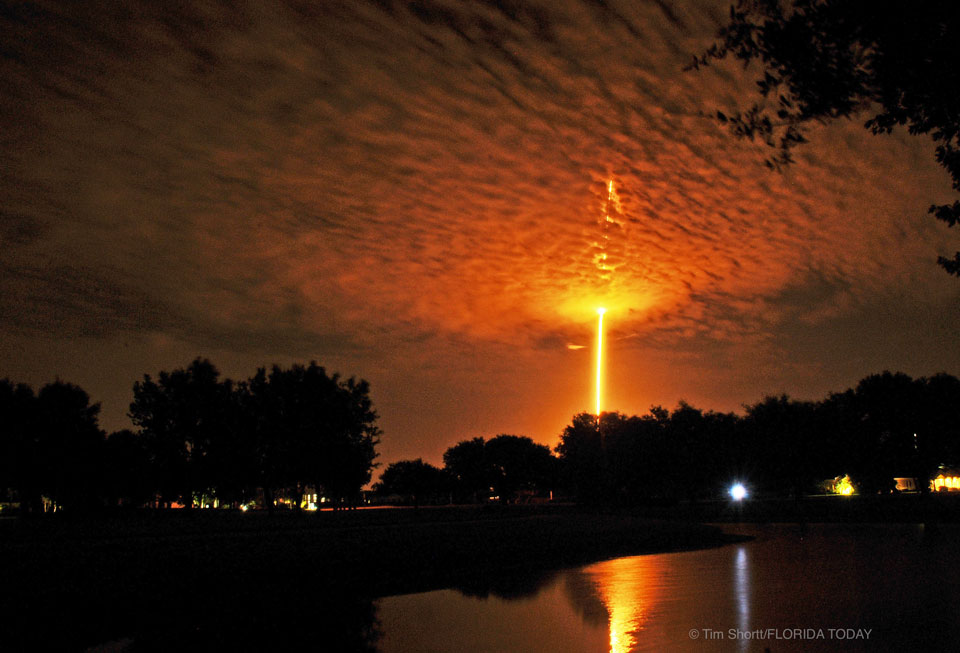
Birds don't fly this high. Airplanes don't go this fast. The Statue of Liberty weighs less. No species other than human can even comprehend what is going on, nor could any human just a millennium ago. The launch of a rocket bound for space is an event that inspires awe and challenges description. Pictured here, a SpaceX Falcon 9 V rocket lifted off through a cloud deck from Cape Canaveral, Florida last July to deliver cargo and supplies to the International Space Station. From a standing start, the 300,000+ kilogram rocket ship lifted its Dragon Capsule up to circle the Earth, where the outside air is too thin to breathe. Rockets bound for space are now launched from somewhere on Earth about once a week.
20 Jan 18:13

Departing Obama Tearfully Shoos Away Loyal Drone Following Him Out Of White House

WASHINGTON—Stopping and turning around as he made his way across the South Lawn after hearing the unmanned aerial vehicle hovering just feet behind him, outgoing President Barack Obama tearfully shooed away a loyal MQ-9 Reaper drone attempting to follow him out of the White House, sources confirmed Friday. “Go on now—get out of here!” said the former commander-in-chief, his lower lip trembling and his eyes welling with tears as he affected a stern tone of voice in an attempt to scare off the faithful hunter-killer drone that had spent the past eight years obediently at his side. “You can’t come with me anymore, you got that? Can’t you see this is for your own good? Now scram. What are you waiting for? Go!” At press time, a heartbroken Obama had thrown a rock in the drone’s direction, causing the unmanned aerial vehicle to flee into ...

20 Jan 17:30

For sharing:Long-ways | Box-ways


For sharing:

Long-ways | Box-ways

20 Jan 15:05

Cassini spots a small moon surfing through Saturn’s rings

by Eric Berger

NASA/JPL-Caltech/Space Science Institute

Saturn has an extensive ring system that extends out to 282,000km away from the planet, or about three quarters of the distance between the Earth and the Moon. Within this structure there are a dozen or so significant gaps, one of which is the Keeler Gap located near the outer edge of the planet's main rings. The tiny moon Daphnis has cleared this gap, which measures just 42km across.

One of the main benefits of having an orbiting spacecraft in a planetary system is multiple opportunities to image fine features—such as the 8km-wide moon Daphnis grazing through this narrow gap. And on Monday, NASA's Cassini spacecraft captured an amazing view of this interaction as Daphnis grazed Saturn's rings.

Read 2 remaining paragraphs | Comments

20 Jan 12:00

The Morning After: Friday, January 20 2017

by Mat Smith
Philip.paulsson

Shared for the gif.

Welcome to Friday morning. We've got new smartphone teasers, anti-drone guns in action, an even faster Tesla Model S, and so much more.
20 Jan 11:54

Tearful Biden Carefully Takes Down Blacklight Poster Of Topless Barbarian Chick From Office Wall

WASHINGTON—Sighing wistfully while recalling all the times the psychedelic artwork helped get his “rocks off,” Vice President Joe Biden reportedly grew emotional Thursday as he carefully took down a blacklight poster of a topless barbarian chick from his office wall. “Man, you have no idea how many times staring up at that badass warrior babe’s grade-A rack picked up Ol’ Joe when he was deep in some shit,” said a teary-eyed Biden, who cautiously removed the array of masking tape, poster putty, staples, and thumbtacks affixing the “total mindfuck” print to the wall to avoid damaging the image of the “completely stacked” female warrior. “This was the first and only thing I put up in my office. Hell, I never even bothered to unpack most of these boxes. Damn, that’s a sweet sword. She’s one wild lady-savage with some exotic, tribal powers; let’s just say ...

20 Jan 01:42

Chinese government has ordered 103 planned coal plants to be canceled

by Megan Geuss
Philip.paulsson

Nice. Banning the ivory trade, canceling coal plants... I'm thinking I should go join my brother over there!

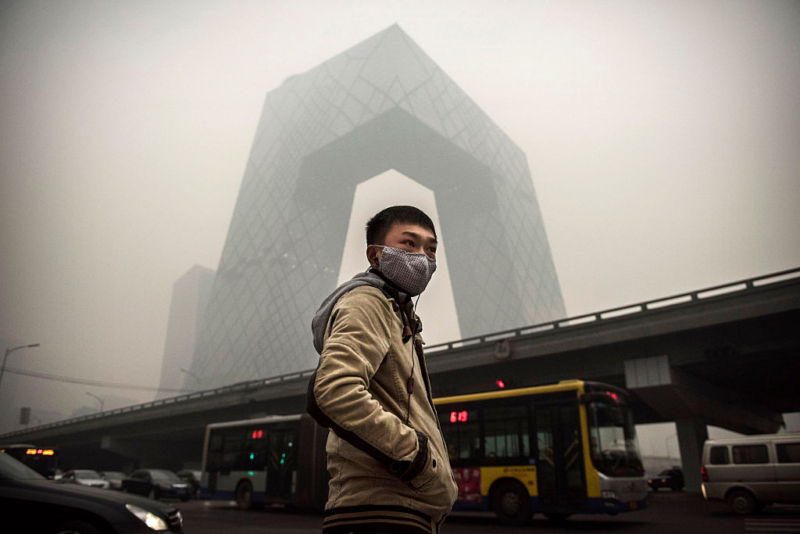
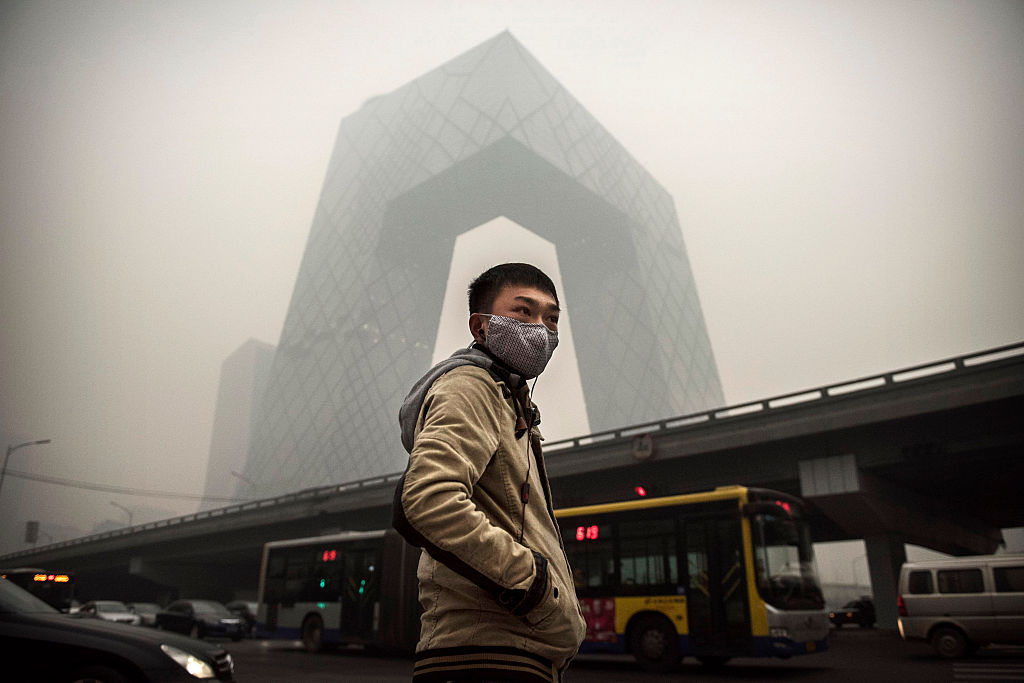
Enlarge / BEIJING, CHINA - NOVEMBER 29: A Chinese man wears a mask as he waits to cross the road near the CCTV building during heavy smog on November 29, 2014, in Beijing, China. (credit: Kevin Frayer)

This week, China’s Energy Administration issued a directive to cancel planning and construction on 85 coal plants in the country, according to The New York Times. An additional 18 were ordered to be canceled late last year. The 103 plants represent an astounding 120GW of capacity that would have come online for the country in the coming years.

The coal plants on the chopping block span 13 provinces, mostly in China’s northern and western regions. The Times reports that China’s Energy Administration was quite specific on which plants must halt development, but it’s unclear whether locals will immediately adhere to the directive—some of these plants have been under construction for 10 years already, and local officials may be reluctant to abandon those projects and fire the construction workers.

The cancellation is indicative of an economic imbalance that external environmental trackers have noted for a while—China has over-invested in coal power plants, with its existing capacity “being used less than half the time” according to Carbon Tracker. The International Energy Agency (IEA) notes that China accounts for more than 900GW of coal-sourced capacity, making it the biggest energy-related carbon polluter in the world. The country has promised to limit its coal-based capacity to 1,100GW by 2020, and this new directive will help China reach that goal.

Read 5 remaining paragraphs | Comments

20 Jan 01:41

2016 was the hottest year on record (again)

by Andrew Dalton
Philip.paulsson

Surprise! Another record hot year!

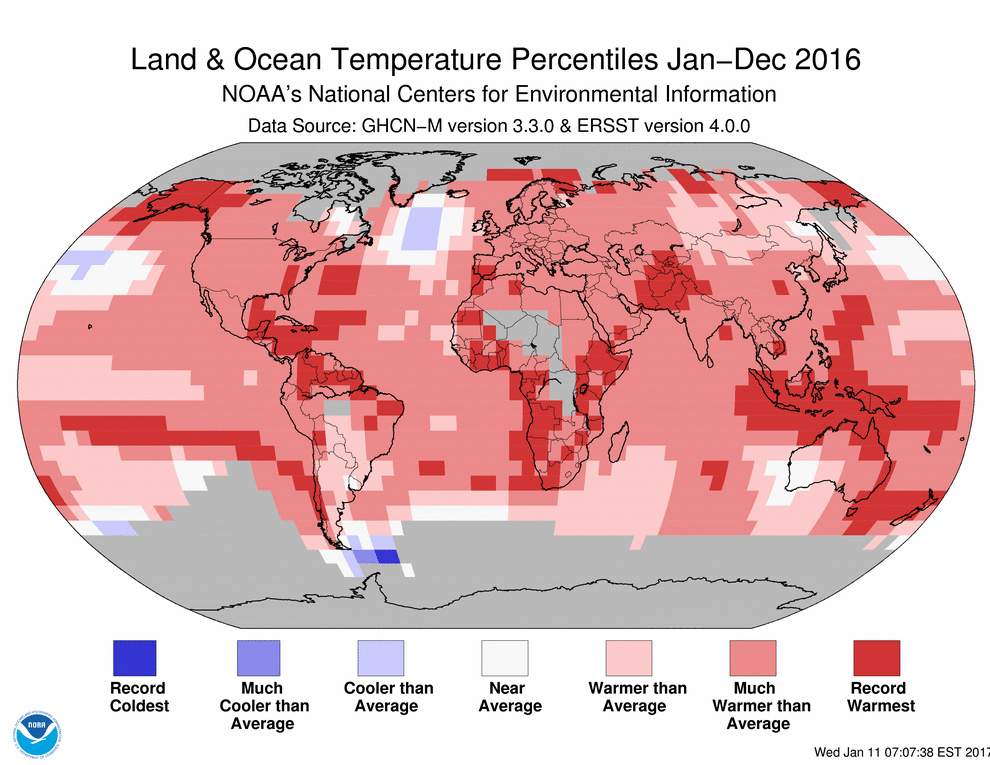
According to a joint report from NASA and the National Oceanic and Atmospheric Administration, 2016 was officially the hottest year on record. If that statistic sounds familiar, it's because 2015 was also the hottest year on record. As was 2014 befor...
19 Jan 19:15

The Quest For The Real-Life Treasures of Atari’s Swordquest

Philip.paulsson

Pretty cool story, if you're into video games and history. Kinda reminiscent of Ready Player One.

Whatever happened to the lost treasures of Swordquest? (Atari/Atari Mania/Used with Permission)

A solid gold sword. A diamond-encrusted chalice. A bejeweled talisman. Playing Atari in the 1980s, these were some of the prizes you could win—not delivered in pixel form on a screen, but as real-world treasures placed in the palm of your hand.

Atari commissioned five such prizes worth a total of $150,000, all to promote their new fantasy adventure game series, Swordquest. The Swordquest contest, one of the most audacious in video game history, offered players the chance to go on a digital quest for real treasure. They would follow a trail of esoteric clues from video game to comic book to live tournament, all for the chance to win real prizes valued at tens of thousands of dollars.

The contest began in spectacular fashion, but in the middle of it all, before all the prizes had been awarded, the whole thing was abruptly cancelled. The undistributed treasures seemed to disappear, their whereabouts a 30-year mystery. Until now.

Swordquest was an innovative, and ultimately aborted, series of fantasy adventure games that ran one of the most audacious contests in the history of gaming, asking brave players to follow a trail of esoteric clues from video game to comic book to a live tournament, all for the chance to win IRL quest prizes, like a large gem in a golden box or a jewel-studded crown of gold, each worth tens of thousands of dollars.

By the early 1980s, Atari, Inc. was at the pinnacle of its success. Dreaming big wasn’t a problem. The company ruled the burgeoning video game market, pulling in millions of dollars a year with its Atari 2600 home gaming system alone. One of the system’s most acclaimed games was a fantasy adventure called, well, Adventure. Released in late 1979, this game, filled with dragons with names like Grundle and Yorgle, quickly became a classic title, spurred on by its unique hidden clue known as the “Gray Dot.” This rogue pixel could be moved around to find a secret room that displayed the programmer’s name.

Atari historian Curt Vendel, co-author of the 2012 book, Atari Inc.: Business is Fun, told us that in the wake of this Easter egg becoming popular among players, “marketing thought it would be a great idea to create a series of games where players would have to find clues both in the game [and in its physical materials].”

This proposed sequel to Adventure was the project that morphed into the ambitious crossover event series, Swordquest.

In 1982, Atari was owned by Warner Communications, which happened to own a pair of other companies, DC Comics, and the Franklin Mint. As development on the Adventure sequel continued that year, the project began to expand, becoming a full-fledged crossover incorporating comic books from DC and bejeweled prizes from the Franklin Mint. With the help of game designer Tod Frye, who says he was, “pretty much the sole initiator and creative spirit behind the whole Swordquest thing,” the Swordquest mythos was born, incorporating elements of fantasy gaming, astrology, and the kabbalah, into a multimedia contest that was equal parts Willy Wonka and The Last Starfighter.

Behold the treasures of Swordquest. (Atari/Internet Archive)

The plan was to release a quartet of Swordquest games, each based around one of the four elements—Earthworld, Fireworld, Waterworld, and Airworld. Each game would come with a tie-in comic book that gave a more detailed telling of the game’s story than the pixelated graphics the Atari 2600 could achieve. These comic books would also hide clues that, if correctly deciphered, could earn a player entry into a final tournament.

The winner of each game’s tournament would receive a special treasure ripped straight from the pages of the comic, and brought to life by the Franklin Mint, with real gemstones and gold. The winner of the Earthworld tournament would win the “Talisman of Penultimate Truth;” the Fireworld contest would award the “Chalice of Light;” the Waterworld winner would earn the “Crown of Life;” and the champion of Airworld would be awarded the “Philosopher’s Stone.”

In addition to these prizes, the four winners would then compete for a final, ultimate prize: “The Sword of Ultimate Sorcery!” Each of the first four treasures was valued at around $25,000, while the sword was valued at $50,000.

The quest begins… (Atari/Atari Mania/Used with Permission)

The Swordquest series officially began in October of 1982 with the release of Swordquest: Earthworld. In the game, players moved through a series of rooms, each one corresponding to a Zodiac sign. They had to place specific items in each to uncover numeric clues that would point to word clues in the accompanying comic book. For instance, leaving the Grappling Hook in the Cancer room, and the Rope in the Leo room, would reveal the number clue “25 - 6.” This led players to page 25, panel six of the Earthworld comic book where the word “THE” was hidden within the background illustration.

The accompanying comic book, written by comic book greats Gerry Conway and Roy Thomas and illustrated by George Perez, told the tale of twins Tarra and Torr as they embarked on a quest to defeat the evil Tyrannus and collect the very same prizes that players were trying to win in the real world.

The comic included 10 different words hidden throughout its 52 pages. But the contest entry form only asked for five words. This final step was deciphered by noticing the words “prime” and “number” were colored purple in the comic book’s introduction. This clue indicated that only the words found on prime numbered pages were correct.

In the end, players who wrote in with the phrase, “QUEST IN TOWER TALISMAN FOUND” were awarded the title of “Supreme Sage of Sorcery” by Atari (people with three to four correct words were named “Wise Warrior,” and those with only one or two were dubbed “Brave Venturer”), and their names were entered in for a chance to join the final Earthworld tournament.

Earthworld sold around 500,000 copies, and around 5,000 players ended up submitting their answers to the final tournament. Of all those, only eight Supreme Sages of Sorcery submitted the correct words, granting them access to the competition. In May of 1983, the tournament was held at Atari headquarters in California. Each of the eight players was given a specially programmed version of Earthworld to complete in under 90 minutes. Stephen Bell, an unemployed 20-year-old from Detroit, took home the victory after he completed the game in just 46 minutes. Bell was given the Talisman of Penultimate Truth, a solid gold pendant inlaid with diamonds and other precious stones. It was also hung with a small, white gold sword.
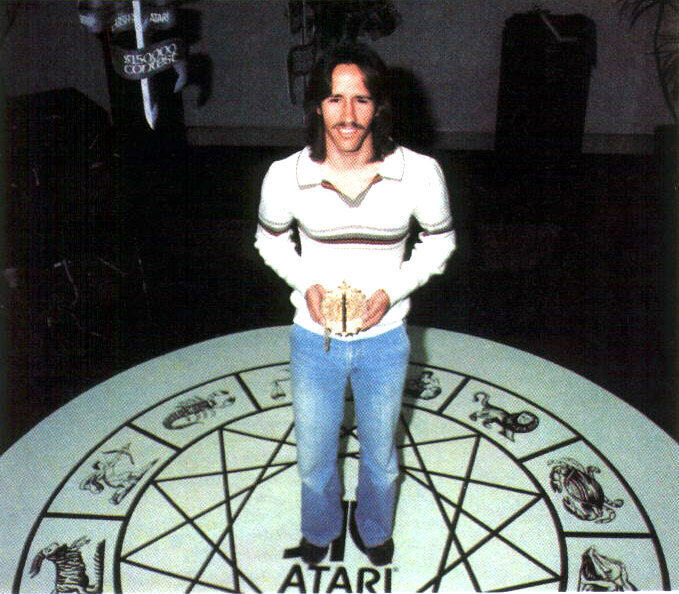
Stephen Bell and the Talisman of Penultimate Truth. (Atari Mania/Used with Permission

For his part, Bell wasn’t so entranced by the fantasy of the prize. When asked what he was going to do with the $25,000 boondoggle, he said, “No plans yet. I didn’t really expect to win … Maybe I’ll get a car. I’ve never had one.”

By the time the Earthworld tournament concluded, the next game in the series, Fireworld, had already been on shelves for three months. Players were already on their way to conquering the second volume’s mysteries. Unlike Earthworld’s map, which was based on the houses of the zodiac, the layout of Fireworld was based on the Tree of Life from the Kabbalah. The gameplay was much the same as in the previous game. Players put items in specific rooms to get clues leading to the comic book, where Tarra and Torr continued their adventures.

Again, 10 words were hidden within the comic book, with only five of them being the correct ones. The meta-clue in the Fireworld comic book was the word “seven,” once again in the introduction, but this time called out by a different font. This indicated that only the hidden words found on page numbers adding up to seven were correct. For example, the word “leads” was hidden on page 16; 1+6=7. The winning phrase included the words “LEADS TO CHALICE POWER ABOUNDS.”

Can you find the hidden word in this shot from the Earthworld comic? (Atari/Internet Archive)

Unlike the small number of winners who had deciphered the Earthworld riddles, the response to the Fireworld puzzles was much larger. Again, Atari sent out certificates awarding honorary titles to everyone who submitted. Those with one-to-two words correct were named “Valiant Stripling;” those with three-to-four words correct were called “Master Pathfinder;” and those who had cracked the whole code were dubbed a “Knight of Chalice.” This time, Atari had so many winners that it had to whittle down the number of contestants, from 73 to a manageable 50, by having each Knight of Chalice submit a written essay about what they liked about the game.

With the field narrowed to 50, the Fireworld tournament was finally held in January of 1984. Like the previous competition, each player competed using a specially programmed version of the game at Atari headquarters. This time the contest was won by Michael Rideout from Aiken, South Carolina, who beat the game in 50 minutes using the knowledge of the Tree of Life he had garnered while dabbling in tarot. Rideout won the Chalice of Light, a fantasy-styled pimp cup made of gold and platinum, studded with diamonds, rubies, sapphires, and pearls.

Michael Rideout and the Chalice of Light. (Atari Mania/Used with Permission)

Then came Waterworld, the third, and unexpectedly final installment of the Swordquest games. Unlike the previous games, Waterworld was given a limited release in February of 1984, being made available only to official Atari Club members who mailed away for the game. The layout of this installment was based on the seven spiritual chakras popular in New Age belief, making for a smaller map than ever before, with just eight rooms to explore. Once again, the clues pointed towards the comic book adventures of Tarra and Torr, this time looking for the words, “HASTEN TOWARD REVEALED CROWN.”

Unfortunately for the anxious Atari Club members who took the time to solve Waterworld’s puzzles, the entire Swordquest campaign was abruptly cancelled in the middle of 1984. Most of those who had already entered were told they didn’t qualify for the contest any longer (more on that below), and both Rideout and Bell were given $15,000 and an Atari 7800 as compensation for being unable to compete for the Sword of Ultimate Sorcery. Work had begun on both the game and comic book of Airworld, which would have been patterned after the I Ching, but neither was ever created, and the story was never finished. It seemed that Tyrannus finally won.

The meta-clue in the Waterworld comic book. (Atari/Internet Archive

The contest’s cancellation was a result of Atari being purchased by controversial gaming CEO Jack Tramiel, and his new company Tramel Technology. The video game industry had been in a swift decline since 1983, and Atari had finally bottomed out by mid-1984, allowing Tramiel to purchase Atari Inc. and its intellectual property for a song. During this time, Atari’s various divisions were sold and reassigned. Somewhere in that tornado of business, the remaining treasures of Swordquest were seemingly lost.

In an interview in 2005, Rideout confirmed that he still had the chalice, which he kept in a safe deposit box. The fate of the talisman is a bit more murky, although in that same interview, Rideout says that he’d heard Bell had it melted down by a coin dealer for college money, only keeping the white gold sword. Vendel confirmed that Bell had in fact melted down the amulet for cash.  

As to the Crown of Life that would have been given to the winner of the Waterworld competition, Vendel says that it was awarded, but during a semi-secret tournament, the winner of which has never been revealed. “Under contract, Warner was obligated to complete the contest for Waterworld, because players had submitted correct answers, and the game was sold to the public based on the fact that whomever solves the puzzle in the game would be awarded a prize,” says Vendel.

“They held a very quiet, non-public contest with the 10 people who solved the Waterworld contest. The crown was awarded to the third prize winner.” While we could find no hard evidence of this contest, Vendel says the contest had to take place by law.

Is this the Sword of Ultimate Sorcery? (Atari Mania/Used with Permission)

Since Airworld was never completed or sold, that game’s contest did not take place. The Philosopher’s Stone and the Sword of Ultimate Sorcery were also thought to be lost, though Vendel says they were destroyed. The popular myth is that the remaining prizes were included in Tramiel’s purchase of Atari Inc., and that he held onto them—specifically, that the Sword of Ultimate Sorcery hung over Tramiel’s mantelpiece. (Tramiel passed away in 2012.)

Even lead designer Frye told us that he believed the prizes went to Tramiel. “As best I can determine, [the remaining] three prizes were part of the Atari assets, and were transferred to the Trameil family in ‘84,” he says. Vendel, however is vehement that this is all fantasy. “[What] did not belong to Atari, nor was purchased by Tramel Technologies were the Swordquest prizes, because they were owned by Warner Communications, and were being held by Franklin Mint,” he says. “They’re not sitting on Jack Tramiel’s mantel, nor is the sword sitting over Jack Tramiel’s fireplace. He never had the rights or access to the [prizes].”

According to Vendel, the rumor stems from an Atari employee who did see a sword over the mantel, but it was a family heirloom, not the Swordquest sword.

In the end, no one was able to grab the Sword of Ultimate Sorcery. (Atari/Internet Archive

So what did happen to the Philosopher’s Stone and the Sword of Ultimate Sorcery? Vendel told us he got the scoop from a former member of Warner management. “Once Atari was sold, those prizes languished at Franklin Mint,” he says. “At some point Franklin Mint disposed of them. They were not retained, because why would they retain the prizes? It’s a lot easier just to smelt it back down and turn them into gold coins or other things they could sell.”

It seems that most of the lost treasures of Swordquest are just that: lost. But like with any great adventure there is still the glimmer of hope that the Crown of Life is still out there somewhere, awarded to some anonymous gamer who, all this time, has been a secret king.

19 Jan 01:44

High-tech toilets in Japan getting standardized icons

by Tom Mendelsohn
Philip.paulsson

Fixing the problems that really matter. Good on you, Japan!

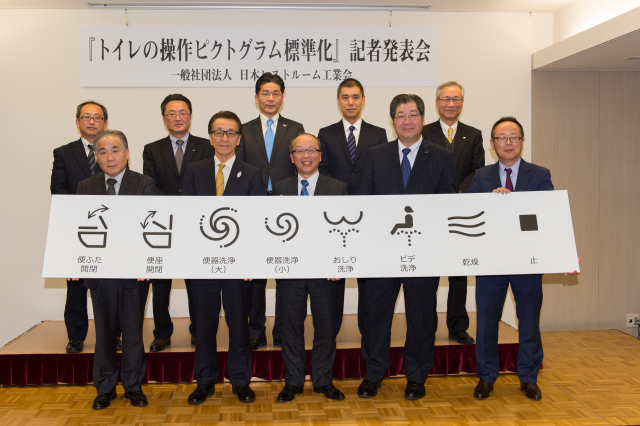
It's long been a conundrum for visitors to Japan: how do you actually use the toilet? For more than 35 years, the "washlet"—also known in some parts as the "super toilet"—has baffled the unwary traveller with its incredibly confusing array of additional functions.

Each of these space-age super toilets comes with a panel of buttons festooned with inscrutable icons. Press the wrong one and you can easily end up with a sharp jet of cold water at an uncomfortable angle, or even an unexpected blow-dry for your junk. What makes the whole affair exponentially more confusing is the fact that, until now, the makers of these Swiss army-knife commodes couldn't agree on a way to standardise the images they put on the buttons.

Ahead of the forthcoming Tokyo Olympics in 2020, however, with a massive influx of tourists and their bowel movements expected in the country, the manufacturers have reached a consensus. At a press conference on Tuesday, representatives from the nine companies that make up Japan's Sanitary Equipment Industry Association unveiled eight new symbols to accompany the various key functions for each new loo. Models released from April this year will all be standardised, and the manufacturers hope it might even become an international standard.

Read 6 remaining paragraphs | Comments

18 Jan 18:21

Voice Commands

Philip.paulsson

LOL I had a Dvorak keyboard for years in college.

Dvorak words may sound hard to pronounce, but studies show they actually put less stress on the vocal cords.
18 Jan 15:40

8 Men Own As Much Wealth As Half The World

Oxfam International reports that Bill Gates, Warren Buffett, Mark Zuckerberg, Carlos Slim, Jeff Bezos, Amancio Ortega, Larry Ellison, and Michael Bloomberg have a collective net worth of $426 billion, as much as the world’s poorest 3.6 billion people. What do you think?

18 Jan 11:58

Springsteen Tribute Band Drops Out Of Inauguration

The B-Street Band, a Bruce Springsteen tribute band hired to perform at the inauguration this Friday, has canceled out of respect for Springsteen’s feelings toward Donald Trump. What do you think?