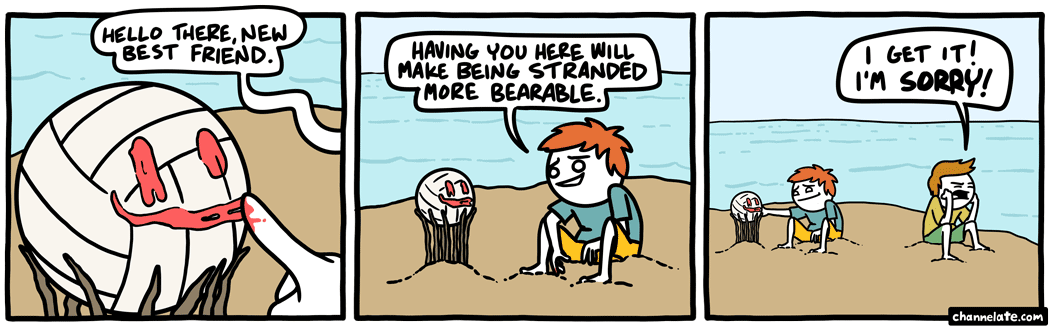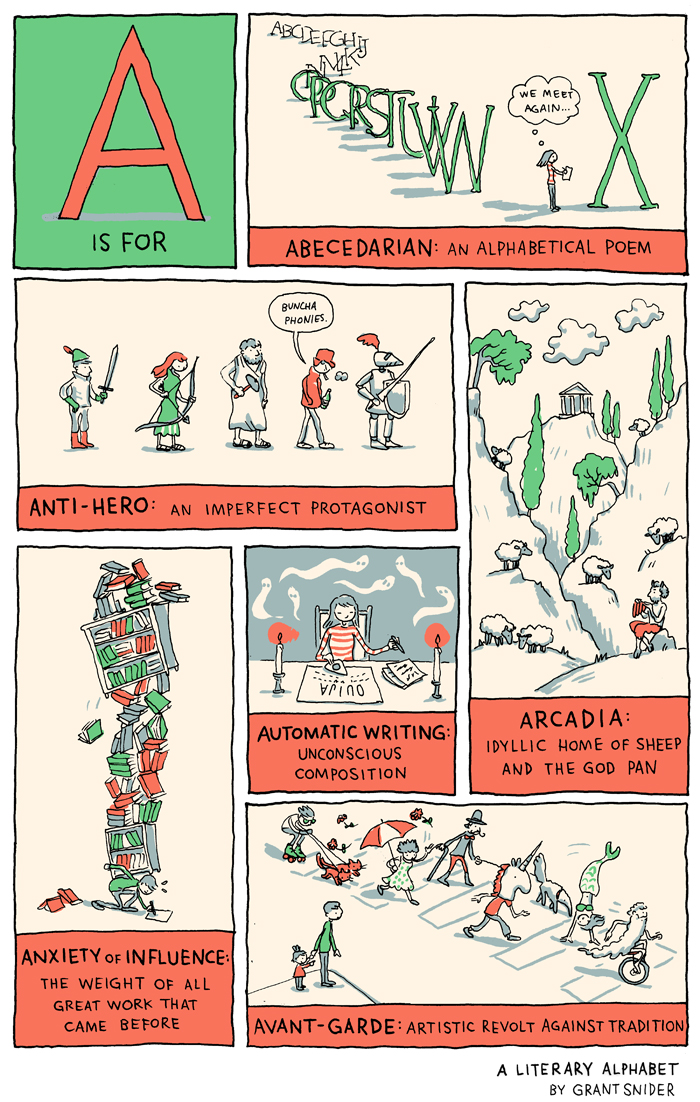
This comic was adapted from The Oxford Dictionary of Literary Terms by Chris Baldick. It's a fascinating and easy-to-understand reference book that demands to be illustrated. Stay tuned for more letters in the weeks to come.

Back Steve Spurrier and No. 14 South Carolina into a corner and you probably won't like the result. The Gamecocks (2-1, 1-1 Southeastern Conference) showed again how dangerous they can be with their season on the line, avoiding an 0-2 SEC start and regaining their footing in the Eastern Division with a 38-35 victory over No. 13 Georgia on Saturday night. Such wins aren't unique to Spurrier's Gamecocks in recent seasons. When rumblings began in 2010 that an aging Spurrier had lost his edge, his players responded with a victory over then-No. 1 Alabama that jump-started a run to the SEC Eastern Division.

Kevin Whitedrool...
In case giant turkey legs and deep-fried everything isn’t enough to turn your Disney vacation into a food coma, not to worry: the Macaroni and Cheese Bread Cone is here. Disney’s latest theme park atrocity ($9.29) is served propped up in a…
The post Disney Now Offering Mac and Cheese Bread Cones, Because Why Not appeared first on FirstWeFeast.com.
Kevin WhiteGO COCKS!
Despite losing defensive end Jadeveon Clowney, who was picked first overall in the NFL Draft this past spring, 2014 was shaping up to be one of the better seasons of Steve Spurrier’s tenure as South Carolina’s Head Ball Coach. The Gamecocks entered August ranked seventh in ESPN’s Football Power Index (FPI) — their highest preseason placement since FPI data became available in 2005 — and according to the FPI, they also had the SEC’s second-highest probability of going undefeated in conference play (trailing only Alabama).
But we’re less than a month into the schedule, and South Carolina has dropped to 20th in the FPI rankings following a brutal 52-28 loss to Texas A&M in its opener (so much for winning out in the SEC) and an underwhelming 10-point home win over East Carolina. Heading into Saturday’s clash against a suddenly dominant Georgia squad, South Carolina finds itself in danger of dropping out of the AP Top 25 for the first time since the preseason of 2010. Suffice to say, things haven’t gone according to plan for Spurrier and the Gamecocks.
South Carolina’s strength was supposed to be its offense, and on that side of the ball, it has only mildly disappointed. The 2014 Gamecocks have averaged 437 yards per game (YPG) of total offense thus far (they averaged 452 in 2013), ranking 10th in schedule-adjusted yards per play and 13th in FPI offense. And — as has been customary of Spurrier’s teams in recent seasons — the 2014 Gamecocks are breaking the 30-points-per-game barrier.
But South Carolina has struggled defensively. Last week, it allowed 453 total yards to East Carolina (a team against whom an average FBS school would have allowed 386 YPG a year ago), and were completely shredded for 52 points and 680 yards in their blowout loss to Texas A&M. Among FBS teams, only Central Florida and Bowling Green have allowed more passing yards per game this season, and only 11 teams have yielded more points per game.
Replacing Clowney up front has been difficult. Although the talented pass-rusher notched only three sacks in an injury-plagued 2013 campaign, the Gamecocks as a whole had 25, with Clowney’s ability to draw double- and triple-teams helping now-departed DT Kelcy Quarles amass 9.5 sacks. (Two years ago, with Clowney at full strength, South Carolina ranked sixth nationally with 43 sacks.) Without Clowney or Quarles in 2014, the Gamecocks have generated just one sack in two games, and the lack of pressure on opposing quarterbacks has played a big role in the team’s ghastly pass defense numbers.
Georgia seems poised to add to South Carolina’s defensive misery. The Bulldogs rank ninth among FBS teams in offensive FPI and are coming off a win against Clemson in which they racked up 45 points, with an incredible 328 yards and five touchdowns on the ground. While the Gamecocks’ defense has been most porous against the pass, they’ve also allowed the nation’s 20th-highest yards per carry average in the season’s early going; East Carolina picked up 6.3 YPC against them a week ago. The prospect of having to stop Georgia’s Todd Gurley, who averaged a staggering 13.2 YPC (198 yards on only 15 carries) against Clemson, can’t be appealing to Gamecocks defensive coordinator Lorenzo Ward.
Now, it’s unlikely South Carolina’s defense is truly as bad as it showed in the Texas A&M game, and by the same token, Georgia probably won’t crack 300 rushing yards on a routine basis. Las Vegas bookmakers had Georgia as six-point road favorites, implying roughly a 10-point difference between the teams on a neutral field — not the 31-point difference that would be implied by this year’s results alone. So despite the stark contrast between the early returns for each team, this isn’t a one-sided battle. And if South Carolina can pull off the upset, its schedule will ease up a bit: It gets Vanderbilt, Missouri (at home), Kentucky and Furman before mighty Auburn looms Oct. 25.
But the Gamecocks need to show progress (particularly on defense) by giving Georgia a worthy fight. Otherwise, a season that began with such promise could be derailed after having scarcely begun.

In mid-August, couples and lonely hearts packed a Brooklyn basement to hear scientists make sense of something the crowd could not: love. It was the 11th meeting of the Empiricist League, a kind of ad-hoc, small-scale TED Talks for scientists and the New Yorkers who adore them. In the back corner of the room, Christian Rudder sat by himself at the bar, nursing Stephen King’s “It.”
Rudder, the 39-year-old president and co-founder of the online dating site OKCupid, had come to deliver a distilled version of what he’s been working on for the last five years. In 2009, Rudder started OKTrends, an in-house blog for OKCupid, as a way to attract new members to a site that was nearly out of money. The posts covered such topics as the best camera angle for a profile picture and how people lie on their profiles — the mysteries online daters wonder about.
Soon, Rudder’s insights and wry wit were attracting millions of views. All of a sudden, Rudder, a one-time indie actor and rock star, had transformed himself into a dating laureate for the data age. By assembling users’ clicks and keystrokes into one place and spending hours inside Excel, Rudder had found a way to articulate our humanity.
Savvy book publishers took note. In 2012 Rudder proposed a book based on his blog, and Crown outlasted nine other publishers with a seven-figure bid. The book arrives on Tuesday, bearing the kind of Gladwellian title — “Dataclysm: Who We Are When We Think No One’s Looking” — meant to tell readers that a Big Idea lies between the covers.
Rudder’s talk at the Empiricist League borrowed from the book’s first chapter, covering the basics of whom we’re attracted to and why. Accompanied by a slideshow, he brought up a chart14 of how straight women rate the men on OKCupid based on their age. “Women who are, say, 28 find guys who are also 28 about the most attractive, and so forth. Up until about 40, when that’s getting too old.”

And then Rudder delivered the punchline. “And the male version is … ”

The crowd lost it — groans, hoots, hollers, total, uproarious laughter. It was enough to make me wonder why Louis CK doesn’t use Excel charts in his stand-up. Rudder, who has a kind of self-effacing charisma (“This segues to the next point on my shitty piece of paper here”) stammered for a bit and smiled. “It is kind of terrible.”
Later, somebody in the crowd shouted a question: “Could you point to an age at which, for a woman, it’s not even worth signing up?” Laughter again.
Rudder demurred. “This is attractiveness votes, so think of this as our proxy for lust,” he said.
The questioner interrupted. She was looking for a clear-cut answer, a capital-T Truth. “You know the number!” she shouted.
Rudder: “From the time you’re 22 you’ll be less hot than a 20-year-old, based on this data. So that’s just a thing.”
A flawed, messy, human thing that we probably could’ve intuited, but now, thanks to the data, we know. In the age of Big Data, the empirical has deciphered the intimate. And Rudder’s the one holding the cipher.
Rudder is now the president of OKCupid, but in 2009, before he started OKTrends, OKCupid was close to the end. The company had enough money to last until the end of the year, but without further investment that would be it. It was a free, advertising-supported dating site trying to scrape by in a market crowded with dozens of competitors and two hegemons: eHarmony and Match.com.
For over a decade, online dating had been taking advantage of Big Data before Big Data was even a buzzword. The hallmark of nearly any15 online dating site is the information a user volunteers in the hopes it’ll help find her love, sex or some combination of the two. That’s already a rich source of personal data to draw from, and OKCupid layered more on top of it. Every person coming to OKCupid has the opportunity to answer thousands of questions about what’s important to her and her prospective mate. The site runs the answers through some calculations to determine a match percentage for any given couple and then shows it to them. OKCupid’s mathiness was its sales pitch.
Rudder, who lives in the Williamsburg neighborhood of Brooklyn, is married and has never been on an online date. He co-founded the site in 2003, but he stayed out of the business for several years while touring with his rock band, Bishop Allen. In 2009, OKCupid’s cofounders called Rudder home to try to bring more users to the site by writing about its inner workings and its millions of members.

The founders of OKCupid, Max Krohn, Sam Yagan, Chris Coyne and Christian Rudder, in 2010.
Michael Falco
Their idea was to start a blog that shared the kinds of interesting tidbits about OKCupid users that they were already emailing around the office. The hope was that if Rudder cobbled together pithy insights into, say, how a woman’s body type correlates to her self-confidence, prospective users would read them and sign up.
These days, this kind of data-as-PR strategy is commonplace for startups. After the recent earthquake in Napa, Jawbone, which makes a fitness tracker, showed how the earthquake disturbed users’ sleep. And PornHub, the porn hub, recently outlined the different ways its users watch XXX content. But in 2009, Rudder said, “It was a different world because no company ever published any of their data about it. So even just the fact of publishing some stats felt kind of transgressive.”
Rudder’s first post about race — “How Your Race Affects The Messages You Get” — topped 1 million views. (Currently it stands at 1.2 million views.) This was raw shareable content before Buzzfeed or Upworthy had figured out the social Web. People, it seemed, liked reading about themselves.
But Rudder is no Virginia Woolf. His writing on OKTrends didn’t somehow speak to a larger, introspective truth. (Sample passage: “If you want worthwhile messages in your inbox, the value of being conversation-worthy, as opposed to merely sexy, cannot be overstated.”) Rather, the data did that for him.
“Often the deeper you go with it, or the more time you spend with these things, the more you see folk wisdom, or the shit everybody knows, confirmed with numbers.”
When Rudder highlights the differences in profile verbiage for those who like gentle or rough sex, it’s a voyeuristic peek into something you can’t even overhear at brunch. When he notes that a person who likes beer is more likely to want to sleep with somebody on a first date, it’s an intriguing question about our own personal correlations and causations. And when he writes that more people want sex daily rather than weekly as they move into their mid-20s, it’s a poignant insight into our shifting values as we grow from teenagers to adults.
To make these posts, it would take Rudder weeks to sort through the data his colleagues provided. He’d hunker down with a huge data set, load up Excel, and, as he puts it, “embrace the darkness.” “I’m very grim when I’m doing this stuff, as I’m sure you could imagine, and it’s just something about the grimness. You just live in it, man. If I have one talent it’s the ability to sit in front of anything, whether it’s Pro Tools or Excel or some postmodern novel or whatever it is, and just, like, do it.”
Sometimes the darkness doesn’t ebb even when Rudder hits publish. In late July, he wrote a post titled “We Experiment On Human Beings!” He was responding to the controversy over disclosures that Facebook manipulated users’ timelines to test how emotions spread through the network. Rudder thought Facebook got a raw deal in news coverage because all Internet companies run small- and large-scale experiments to help hone their products or make sense of their data. Among other things, his post disclosed that OKCupid sometimes inverted its match percentages, showing high marks to people who weren’t supposed to be compatible, therefore implying the opposite. OKCupid then measured whether those matches were less productive (i.e. led to fewer messages) than the traditional algorithm’s.
Rudder mused about experimentation in the same casual, jokey tone that he used to talk about the efficacy of users’ selfie habits. (“Maybe people just like each other because they think they’re supposed to? Like how Jay-Z still sells albums?”) The Internet went into umbrage mode, asking whether OKCupid had the right to change what it was showing its users for the sake of improving its product, and thus its bottom line. The Guardian, the BBC, and USA Today all covered the post. Tim Carmody, a tech writer, weighed in: “Ultimately, you ought to be ashamed to treat people and the things they make this way. It’s not A/B testing. It’s just being an asshole.” Were OKCupid’s users integral to its service or raw material to be manipulated?
Under fire, Rudder went on a podcast run by a producer for NPR’s “On the Media” a few days after the post was published. The studio ran hot — a producer in the booth interjected in the middle of his colleague’s interview to say:
Either you’re a company that’s trying to make the best possible product or you’re social scientists doing experiments about human behavior. And if you’re social scientists there are guidelines, and there are ethics, and there are things that scientists have to abide by. … In this conflation, some of the safeguards that social scientists would have get lost.
Rudder pushed back:
Part of what’s confusing about this experiment is the result. The algorithm does kind of work. … What if it had gone the other way? What if our algorithm was far worse than random? Then if we hadn’t run that experiment, then we basically are doing something terrible to all the users. This is the only way to find this stuff out. If you guys have an alternative to the scientific method, I’m all ears.
It got more contentious from there, which Rudder regrets. The flap has made him think hard about the value of sociological insights, and what the limits should be in the pursuit of them. “The more I think about it, a good line to hold to is, we don’t want to change anything the users have entered themselves. Then you are actually misleading people. Those are facts that you’re changing. Whereas an algorithm isn’t a fact, it’s a process.” People’s identities are sacrosanct, in other words, but how they’re introduced to whoever comes next is not.
Despite all this, from a business standpoint OKTrends has certainly been worth it. Mass media devoured even the noncontroversial posts from the beginning. As Dan Slater wrote in his comprehensive 2013 book on the online dating industry, “Love in the Time of Algorithms”16:
The mainstream print media jumped all over Rudder’s dispatches. In 2010, the OKTrends blog served as fodder for at least half a dozen New York Times articles and blog posts. “The PR that was generated from the blog was transformational for our brand,” says [OKCupid co-founder Sam] Yagan, who appeared on CNN and elsewhere to discuss some of the OKTrends findings.
OKCupid discovered earlier than most what data could tell us. As data has become more entwined with our humanity, and vice versa, it’s easy to forget what the point of it all is. Having, say, a central repository of friends’ birthdays so we don’t have to keep them in a separate calendar seems to be about little more than convenience. But Rudder and OKTrends showed that Big Data had more to offer. With every decision we make online we leave a trace about our intentions, conscious or otherwise. When all those traces are gathered together into one central space, they form a reservoir of knowledge about who we are.
Since OKTrends was started, 25 million new people have joined OKCupid; in the five years before the blog, the site had attracted 5 million. Two years after the first post, the media company IAC scooped up OKCupid for $50 million. If anybody knows correlation isn’t causation, it’s Rudder, but the start of OKTrends marked a new chapter in the company. Chris Coyne, one of the founders, told me the site “certainly became profitable shortly after that.” Rudder, and our data, had helped to salvage the company.

Rudder in Bujalski’s 2005 film “Funny Ha Ha.”
Funny Ha Ha
Rudder’s childhood had the same shambling, itinerant quality as his career. His family moved around a lot — Cleveland, Mexico City, Houston, Louisville, Little Rock, wherever his dad’s banking job took them next. “They were very nontraumatic-type moves. I don’t know, it was just a thing that happened,” Rudder said.
Along the way, he wasn’t aspiring to be anything in particular. Not a matchmaker, nor a data scientist, nor a star of a film that New York Times critic A.O. Scott named one of his 10 best of the year in 2005, nor the guitarist for a beloved indie pop band. He stumbled into all of it — they were just things that happened.
They started happening when Rudder went to Harvard in 1993. “I originally went thinking I would do math and physics and then I took some math classes my first year and I was like, whoa, fuck this. First, everybody was way better than I was. Second, I just didn’t like college. Period.” So he took a leave of absence and moved back to Little Rock, where he “hung out, sat around, worked for my girlfriend’s dad. Dicked around in Excel, basically.”
But even Rudder, who has used Excel in almost every job he’s had, could only dick around for so long. A year later he went back to Harvard, determined to change course even if he was right back where he started. Gone were the math and physics courses, in was the English curriculum. And then by senior year it was back to math. “Not to pick a fight with any post-structuralist critics or anything like that, but a certain frame of mind can only tolerate that kind of academic stuff for [so long],” he said. He earned a math degree in 1998.
After graduating, he followed friends to Texas, where he worked on a financial graphing tool (more Excel) and thought about becoming a baker. But the people he worked with at the bakery weren’t his style. “I just couldn’t handle the hippies. I never smoked pot or anything and I can’t deal with the searcher mindset, especially in a work environment where I was like, ‘I gotta get this done,’ and they were like, ‘Dude, man, we get paid by the hour.’”
And so, tired of the searchers, Rudder went searching. Like any sensible 20-something in the late ’90s, he turned to the Internet. He knew a guy who knew a girl who knew a startup looking for writers, so he got a job at TheSpark.com, and moved to Boston for it. TheSpark was a kind of proto-Buzzfeed that offered lifestyle quizzes and would later grow into SparkNotes, a CliffsNotes-knockoff on the Web. Rudder was the content guy, writing satirical humor posts (“How to Lose a Fight So The Other Guy Goes to Jail”) as a way to get people to stay after they came for the quizzes.
Those were the posts that, many years later, would mature into OKTrends. It helped that TheSpark is also where Rudder met Sam Yagan, Chris Coyne and Max Krohn, all of whom would go on to found OKCupid with him.

Rudder’s band, Bishop Allen.
Matt Petricone / Courtesy of Dead Oceans
A few years after Rudder left TheSpark he and a Harvard pal, Justin Rice, self-released an album as the band Bishop Allen. The album’s fifth track gives a shoutout to Excel, which Rudder used to put the album together. “To figure out where edits should be, Christian would use spreadsheets. So he’d be like, ‘OK, we’re at this BPM, I know 11 measures in I need to splice in this drum fill,’ so he would figure out the exact moment in the timecode to put the edit,” Rice recalled.
Within five years, the band’s songs would be featured in commercials for Sony and Target, they’d make a cameo in the 2008 film “Nick and Norah’s Infinite Playlist,” and the tours and CDs would bring in enough income for Rudder and Rice to focus on music more or less full time. Immersing himself in Bishop Allen was how Rudder paid the bills while OKCupid struggled to find its audience.
Bishop Allen wasn’t Rudder’s first taste of minor fame. In 2001, his old roommate from Harvard, Andrew Bujalski, cast him in his first movie, “Funny Ha Ha.” It was a kind of meditation on what it’s like to be a young adult stuck in mediocrity, and know it. Rudder played Alex, the unattainable guy that the film’s lead, Marnie, is chasing. Bujalski recalled over email, “He had zero interest in pursuing acting, but he brought complete honesty and fearlessness to it and knocked my socks off.” The movie made critics swoon when it came out in 2005, and they dubbed “Funny Ha Ha” the birth of a new genre of film: mumblecore. Rudder, the math major, satire-writer, Excel-dicker, had helped transform indie cinema. Just one of those things that happened.
“There isn’t really, like, a thread. I’ve definitely never planned any of this stuff out,” Rudder said, looking back. Rice, though, does see a throughline. “I think there’s a method for thinking that he can bring to bear on any given task. Whatever dissimilarities there are between the various kinds of things that he’s doing, they’re definitely united in that they allow for a systematic approach.”
If OKTrends was Rudder’s sketchpad, “Dataclysm” is his reluctant manifesto. The book covers data from OKCupid, Twitter, Facebook, Google and other sites to describe how Big Data has already changed our lives, and all the changes to come. “If there’s one thing I sincerely hope this book might get you to reconsider,” Rudder writes in the introduction, “it’s what you think about yourself. Because that’s what this book is really about. OKCupid is just how I arrived at the story.” Rudder wants to convince us that data is how we can arrive at our own stories. “As the Internet has democratized journalism, photography, pornography, charity, comedy, and so many other courses of personal endeavor, it will, I hope, eventually democratize our fundamental narrative.” Gone are the days when our moment is defined only by researchers, effete columnists or whoever else gets to say what a millennial is. Now, Rudder argues, the story is ours to tell.
But if submitting to Big Data is what’s required, are we interested in telling it? Rudder started writing the book in a pre-Edward Snowden era, when the conversation about data was largely about its possibilities, not its perils. There’s a telling passage early in the book when Rudder writes, “If Big Data’s two running stories have been surveillance and money, for the last three years I’ve been working on a third: the human story.” But that doesn’t go quite far enough. These days, isn’t the human story a combination of surveillance and money?
Rudder acknowledges that more data often doesn’t lead to more insight for anyone other than the company receiving it. “We want people to send more messages on OKCupid, but it’s unclear if that’s actually good for people,” he said. Our data, when amassed, can tell a larger story, sure, but we usually aren’t the ones actually doing the telling. It’s more often the NSA, or OKCupid, or some third party who bought the data from Twitter, who controls the narrative. Data may be helping to “make the ineffable effable,” as Rudder writes in “Dataclysm,” but the mass of humanity is still being interpreted through someone else’s filter.
And even then, the stories that are being told aren’t necessarily incisive ones. Rudder’s book is filled with interesting factoids — online daters are copying and pasting their messages to maximize the number they send; people of every race mention pizza on their profiles; the most popular place for a Craigslist missed connection in the South is Walmart — but they rarely surprise. They’re cocktail chatter, not sociological breakthroughs. “It’s very rare that you find that counterintuitive thing, much to the book PR agent’s chagrin,” Rudder said.
Perhaps that’s the breakthrough: that we’re actually quite good at intuiting our inner workings and secret desires already. “Often the deeper you go with it, or the more time you spend with these things, the more you see folk wisdom, or the shit everybody knows, confirmed with numbers,” Rudder told the Empiricist League. His real contribution isn’t that he offers 100 different insights into the way humans behave; it’s that 90 of the 100 are things we had a sense of already. Rudder’s posts and book are at their best when they act as little more than a mirror. We are who we thought we were. Now we just have the numbers to confirm it.
CLARIFICATION (Sept. 9, 9:46 a.m.): Christian Rudder took a year-long leave of absence from Harvard but did not drop out of school for that period, as this article originally stated.

We applaud FiveThirtyEight for this massive undertaking, but cutting burritos lengthwise makes them look like (you know what we're thinking).
The post The Search for The Best Burrito in America is Over appeared first on FirstWeFeast.com.

Dating isn’t easy, no matter who you are. This is a great Attenborough clip about wasps and orchids.
Original is on my site here.
Kevin Whiteget in my belly
A one in 100 million find, albino lobsters are the rarest of them all.
The post Two Very Rare White Lobster Found Off The Coast of Maine appeared first on FirstWeFeast.com.
The totally believable Pumpkin Spice-flavored condom is not actually a thing. Relieved? Disappointed? You decide.
The post Seven Condom Flavors Stranger Than Pumpkin Spice appeared first on FirstWeFeast.com.
One thousand "Never Ending Pasta Pass" cards will be issued today at 3pm. Because who doesn't want to gorge on pasta and breadsticks for 49 days straight?
The post Game Changer: Olive Garden Offers 7 Weeks of Pasta for $100 appeared first on FirstWeFeast.com.
The Georgia entrepreneur opened his first Chick-fil-A restaurant at an Atlanta shopping mall in 1967. The rest is Chick-fil-A history.
The post Chick-fil-A Founder S. Truett Cathy Dies at Age 93 appeared first on FirstWeFeast.com.
Kevin WhiteHI THERE LITTLE GUY!

Photograph by Brian Skerry, National Geographic
Blacktip sharks, bluefin trevallies, and twinspot snappers (foreground)ever watchful for a potential mealthrong a shallow passage into the lagoon of Millennium Island in the southern Line Islands, a pristine Pacific archipelago. Top predators like these are a defining feature of the worlds healthiest coral reefs.
See more pictures from the September 2014 feature story A World Apart: The Southern Line Islands.

Photograph by Matthieu Paley, National Geographic
Greenland's Inuit survived for generations eating almost nothing but meat in a landscape too harsh for most plants. Today markets offer more variety, but a taste for meat persists.
The 64 residents of the remote east Greenland village of Isortoq, pictured here, still hunt and fish but combine traditional Inuit foods with purchases from the supermarket, the large red building in the foreground. A favorite dish: seal dipped in ketchup and mayonnaise.
See more pictures from the September 2014 feature story The Evolution of Diet.
See more of National Geographics coverage on the Future of Food »

Kevin Whitei like the idea of this until i think of how gross some people are.
The best way to experience a foreign destination is to meet the natives, and online services are making that easier than ever before. You can stay with local hosts through Airbnb, explore with local guides through Vayable, and dine with local cooks through sites like PlateCulture, Feastly, Cookening, and…
The post Airbnb For Food Means You’ll Never Eat At a Tourist Trap Again appeared first on FirstWeFeast.com.
Kevin WhiteCOOL~!
Kevin WhiteASIA 2015!


Photograph by Anibal Trejo, National Geographic Your Shot
Firecrackers douse raucous revelers in a steady stream of sparks during a celebration of Correfoc, or fire runs, in Sant Quint de Mediona, Spain. A Catalan tradition, the festival features groups of participants known as "devils" running wild among the narrow streets, igniting fireworks along the way.
The shooting conditions are really dangerous for the photographer, writes Your Shot photographer Anibal Trejo. I had to protect myself to avoid burnings, dressing up with long sleeves, protective glasses, a hat, handkerchief, and even gloves.
Trejos picture recently appeared in the Your Shot assignment How Close Can You Get?
This photo was submitted to Your Shot. Check out the new and improved website, where you can share photos, take part in assignments, lend your voice to stories, and connect with fellow photographers from around the globe.
Kevin WhiteYES!
Many of you know the feeling: You walk into an upscale joint, and a little tike is throwing lamb pappardelle all over the place, screaming at the top of his or her lungs, and generally causing a scene. But what can you do,…
The post GTFO Kids: Increasing Number of Restaurants Ban Children appeared first on FirstWeFeast.com.
Kevin Whiteits a cat with human eyes...


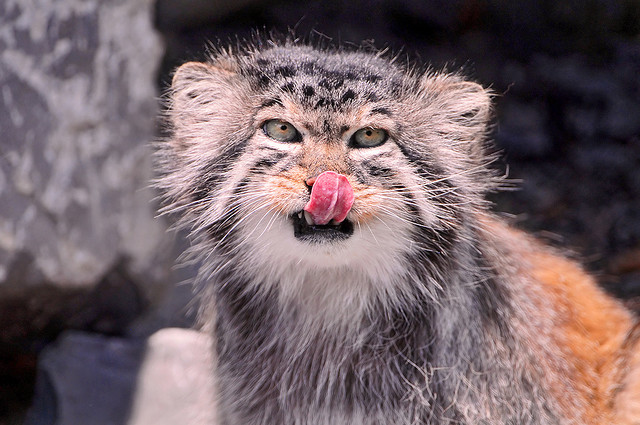


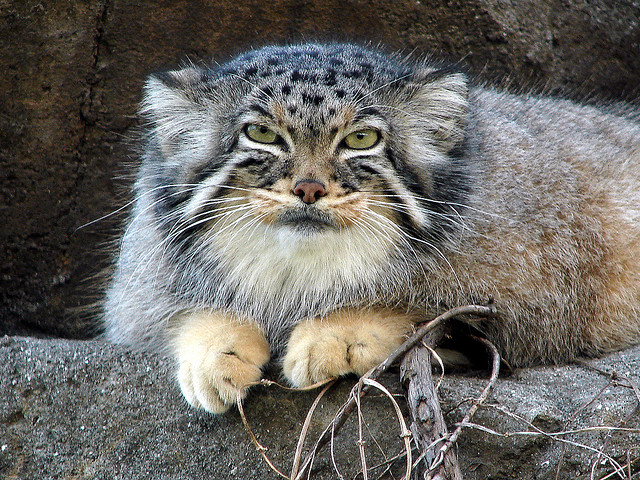
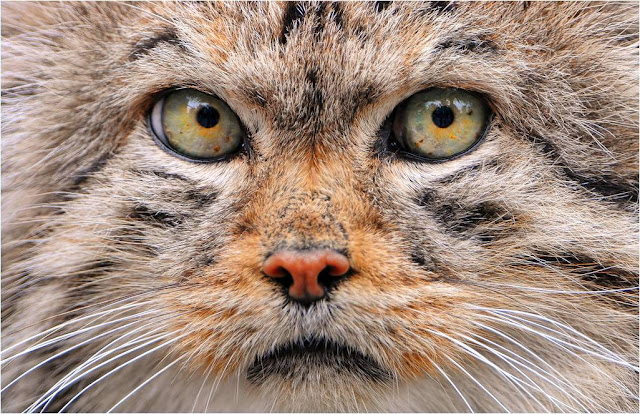



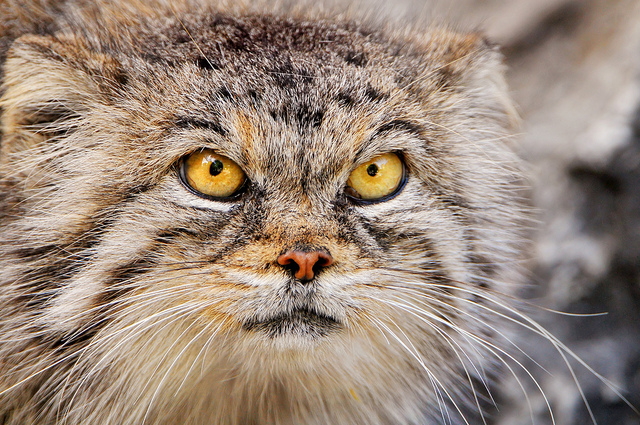
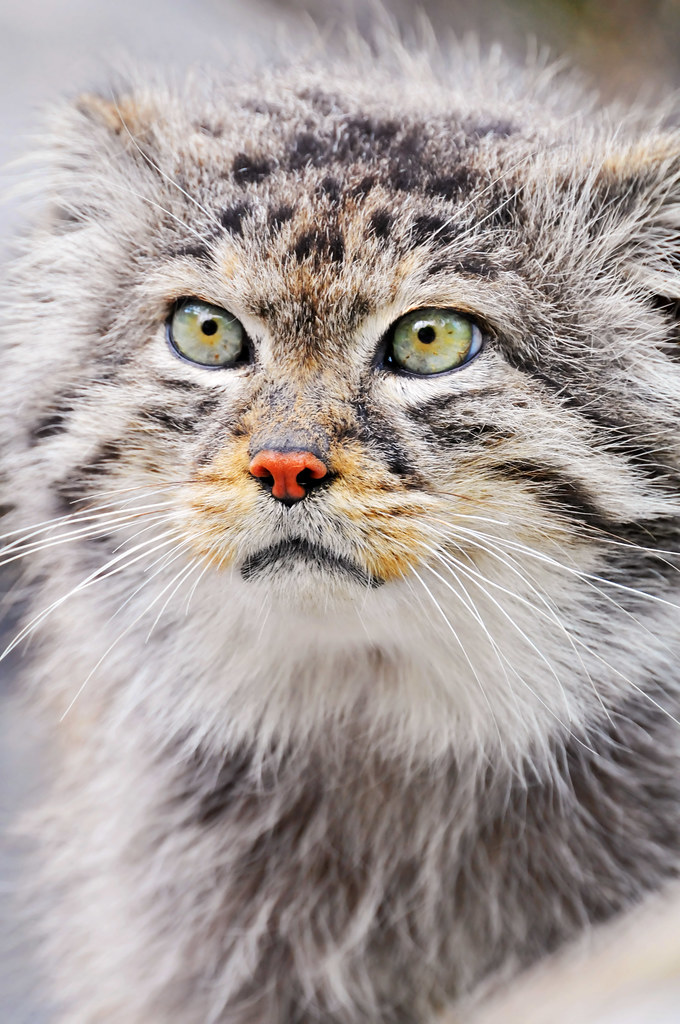 The Manus has not been studied a great deal in the wild, where it is classified as near threatened. This is because it is distributed very patchily throughout its territory, not to mention the fact it is still hunted despite protection orders made by the various governments who create human law in its range. Before it was legally protected tens of thousands of Manuls were hunted and killed each year, mostly for their fur.



becausegoodheroesdeservekidneys:
Source For more facts follow Ultrafacts
YOOOOOOOOOOOOOOO
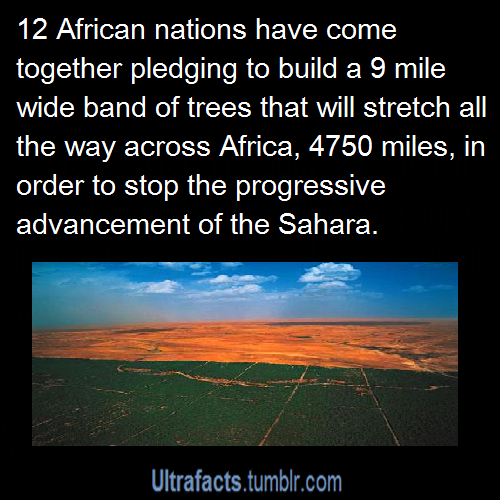
Senegal, Mauritania, Mali, Burkina Faso, Niger, Nigeria, Chad, Sudan, Eritrea, Ethiopia, and Djibouti. Those are the countries. It will be drought-resistant species, mostly acacias. And this is a fucking brilliant idea you have no idea oh my Christ
This will create so many jobs and regenerate so many communities and aaaaaahhhhhhh
more info here: http://en.wikipedia.org/wiki/Great_Green_Wall
it’s already happening, and already having positive effects. this is wonderful, why have i not heard of this before? i’m so happy!
Award-winning barber Miguel Rosas of Moline, Illinois has rightfully earned his name in the haircut hall of fame. Rosas is known for masterfully shaving cuts inspired by characters such as Steve Jobs and Venom from Spiderman (see pictures below). But the…
The post Colonel Sanders Haircut Earns Barber Free KFC For Life appeared first on FirstWeFeast.com.

Photograph by Hannes Lochner, National Geographic Your Shot
When photographer Hannes Lochner set up his camera at a water hole in South Africa's Kalahari, he tried hiding it from curious lions because "they might play with it or carry it off," he writes. "On this particular evening, I was in my vehicle just as the sun was setting, the dust in the air creating a special kind of Kalahari light, and a pride of lions arrived. By repeatedly clicking the shutter, I coaxed the ever curious cubs forward."
Lochner's picture recently appeared in Your Shot's Daily Dozen.
</p>This photo was submitted to Your Shot. Check out the new and improved website, where you can share photos, take part in assignments, lend your voice to stories, and connect with fellow photographers from around the globe.</p>Kevin WhiteAlso a cool story that the rest of the US should get on board with .... http://www.bbc.com/news/magazine-28693239

Photograph by Rennis Kauffman, National Geographic Your Shot
A tight angle captures the McCloud River falling in tiers to an unseen swimming hole below. The Middle McCloud Falls are one of three on the clear, chilly river in northern California's Shasta-Trinity National Forest. From an overlook at the Middle Falls, visitors can take in Mount Shasta and Castle Crags among other natural features.
This photo was submitted to Your Shot. Check out the new and improved website, where you can share photos, take part in assignments, lend your voice to stories, and connect with fellow photographers from around the globe.
About a year ago, Shake Shack decided to convert their classic crinkle cut fry to a fresh, hand-cut, russet potato. On a statement released today on the Shake Shack website, CEO Randy Garutti explains why the company made the switch: “The motivation…
The post Shake Shack Crinkle Cut Fries Will Return This Fall appeared first on FirstWeFeast.com.