Shared posts

08 Feb 06:32

Nowheresville - The New Yorker

by hodad
Russian Sledges

via billtron

kazakhstan autoreshare

The Palace of Peace and Reconciliation, one of two Norman Foster buildings, in Astana. Kazakhstan’s President, Nursultan Nazarbayev, has had Astana constructed in the middle of the steppe, to replace the country’s previous capital. Photograph by Richard Barnes.

The Khan Shatyr Entertainment Center, in Astana, Kazakhstan—also known as the world’s tallest tensile structure, or tent—took four years and four hundred million dollars to build. It devoured a thousand truckloads of materials, which came from all over. The special ethylene tetrafluoroethylene, or ETFE, polymer that envelops the Khan Shatyr, and makes it look, at certain times of the day, like a terrible sea creature risen from the steppe, came from Germany and China. The sand lining the beach on the top floor came from the Maldives. The tropical plants came from Spain.

Is it hard to ship plants?

“Yes!” said Caner Demir, who was the head of on-site logistics for the final phase of the Khan Shatyr project. A genial, bearded Turk in his mid-thirties, Demir has limited English and chooses his words carefully. “You are shipping plants, in a truck. For eighteen, nineteen days. Live plants.”

Khan Shatyr is Kazakh for “King of the Tents.” It was designed by Foster and Partners, the firm of Norman Foster, who is known for his ability to put flesh (or, at least, ETFE) on the theoretical postulates of postmodern architecture. But Lord Foster does not drive trucks. The Turkish company Sembol did the construction, so most parts of the giant tent were routed through Turkey. The most direct overland route went through northern Iran and then Turkmenistan, but it had a drawback. “Drivers do not like going through Turkmenistan,” Demir said. “In Turkmenistan there are many regulations. But no rules.”

The government of Kazakhstan is not without its own rules and regulations, but as Nigel Dancey, of Foster and Partners, put it to me, “You’re presenting to the President, he shakes your hand, you make a decision, and the process is very quick.” To speed the construction of the other Foster building in Astana, the Palace of Peace and Reconciliation, the President sent the Army. Khan Shatyr was built on a less exigent schedule, but it was still helped along: customs officials opened an office at the construction site in order to save time at the border; visas were expedited.

For Sembol, the trickiest part was lifting the three giant steel beams that hold up the Khan Shatyr. The beams had been assembled on the ground; now they weighed two thousand tons and had to be hoisted simultaneously and brought together at their highest points so that they could support one another. A whole separate structure had to be built to perform this feat; when it was done, an international squadron of mountaineers arrived to run hundreds of cables from the base of the tripod to the top, before hanging the ETFE on them. The Presidents of many countries, including countries that hate one another, came to the opening ceremony, last July 5th. It was a fitting present for Kazakhstan’s leader, Nursultan Nazarbayev, who turned seventy the next day, and who had constructed this entire city, ex nihilo, in the middle of the Kazakh steppe.

Astana is a government city, not a tourist city, but all you do is tour it. You tour it in the cab from the airport, passing the gleaming new English-language Nazarbayev University and then the new soccer stadium, speed-skating track, and ten-thousand-seat velodrome. (“It’s like a bug,” I ventured of the velodrome. “A giant, low-slung, predatory—” “It’s a bicycle helmet,” the taxi driver said, and, yes, this made more sense.) You tour the city from the observation deck of Bayterek, a weird white structure that resembles a giant badminton birdie, with a golden bird’s egg on top; you tour it from the seat of every bus that takes the long, circuitous way through town because there aren’t yet enough bus routes. You tour whether you want to or not.

My favorite tour of all was courtesy of a Kazakh friend I will call Marat, a lawyer. We had met while playing hockey at a small outdoor rink in the old, Soviet part of town, and then had gone to Marat’s place to eat horse meatballs and plov and drink endless cups of tea with his family. We discussed Kazakh democracy (developing), the geographical position of Kazakhstan on a map of the world (in the very center), and the contributions of the Kazakh people to world history (significant). Kazakhs are east-central Asian, meaning that they more or less resemble the inhabitants of Mongolia (and a dozen other nearby and not-so-nearby places, including, to some extent, Kyrgyzstan and Yakutia); they speak a Turkic language, mildly worship Allah, write in a modified Cyrillic, and drive Nissans. Recently, Genghis Khan, whose armies conquered this part of the world in the thirteenth century, has been enjoying a popular resurgence as a proto-Kazakh, and Marat spoke warmly of him. “The only reason he didn’t conquer the rest of Europe was he didn’t think it was good grazing land for his horses,” Marat said. And then we ate some more horse.

After dinner, Marat drove me back across the frozen Ishim River to the apartment I’d rented in the new part of town. Astana has been the capital of Kazakhstan only since 1997, three years after Nazarbayev told a stunned parliament that a prosperous, independent country like Kazakhstan ought to have its capital “in the center” of the country, rather than on the border. It seemed like a bad idea. Dubai had beaches; Brasília, which the Brazilian government built by fiat in the nineteen-fifties, had a sunny, gentle climate. Almaty, the old capital, was pleasantly situated in the foothills of the Tian Shan Mountain range, and was famous for its apple orchards. And Astana? It was six hundred miles to the north—that is to say, toward Russia—and bitterly cold. Kazakh nomads had grazed their flocks here, until they were annihilated by Stalin, after which the vast steppe turned into what one writer has bluntly called “Stalin’s dumping ground.” It was where he sent the “punished peoples”—the hundreds of thousands of Germans, Ingush, and Chechens deported en masse in the nineteen-thirties and forties. Was the parliament now a punished person? Stalin also sent hundreds of thousands of political prisoners to Kazakhstan. A few hours east of the proposed capital lay the town of Ekibastuz, where Aleksandr Solzhenitsyn served a term in a labor camp. The old name of the proposed capital was Akmola, “the white graveyard.” This is where Nazarbayev was suggesting that everyone move from Almaty, which means “father of apples.”

Nonetheless, the move went forward. Marat joined the crowd of ambitious young people relocating to the new capital, where he took a job as a legal counsel for one of the large construction firms. The city grew up around him, especially on the west side of the river, which was rechristened the Left Bank.

Marat drove slowly. We passed the Astana Triumph apartment complex, built in the style of the seven skyscrapers raised in Moscow after the Second World War. (“We must be ready for an influx of foreign visitors,” Stalin had fretted. “What will happen if they walk around Moscow and find no skyscrapers?”) Left Bank Astana was beautiful at night, each building, it seemed, with its own nighttime color scheme, and the street lamps all going full blast. We arrived at the two-mile strip that houses the main government buildings and architectural wonders of the city. Marat took me past Foster’s Palace of Peace and Reconciliation, a pyramid glowing a pale, ethereal yellow; the Presidential Palace, a big, blue-domed version of our White House; the central concert hall, by the Italian architect Manfredi Nicoletti, whose exterior consists of a series of inwardly slanting, non-contiguous, bright-aqua walls that resemble an unfolding flower, and which last year hosted the first annual Astana International Action Film Festival, organized by the Kazakh-born Timur Bekmambetov, the director of “Wanted,” the 2008 film in which Angelina Jolie is an assassin in the employ of a giant loom; the Beijing Palace, built in a Chinese style; and the St. Petersburg Shopping Center. Marat named each of the buildings in turn, lovingly, even the big white structure that housed the K.N.B., formerly the K.G.B. “Here is the Ministry of Defense,” he said, as we pulled up to an intersection in the very heart of the Astana government mall. “And, right across from it, the Ministry of Foreign Affairs.” To our left was Bayterek, the big badminton birdie, the symbolism of which was so involved that even Marat didn’t bother going into it. To our right, as he now pointed out, were some Kazakh girls—kazashki. Their car had pulled up beside ours and they were laughing. Handsome, married Marat gave them a dignified nod.

Finally, we arrived at the three blue-green glass skyscrapers that dominate the western part of the mall. They are called the Northern Lights, and there is a curve to their silhouettes, making them look like long cardboard boxes that have been bent out of shape. For eight thousand tenge a night (fifty-four dollars), I had rented an apartment on the fourteenth floor of the middle tower; it had a large modern living room with a segmented black-and-red leather couch, standing Hitachi surround-sound speakers, a flat-screen television of prodigious dimensions, and a bidet. In the evening, several spotlights are directed up at the Northern Lights from below to underscore their beauty, making it a little hard to sleep, but this was a small price to pay. I had a great view of the Khan Shatyr and of a fellow high-rise, the Ministry of Transportation—which, O.K., suddenly burst into flames a few years ago—and also of the Nur-Astana Mosque, one of the biggest in Central Asia, which shines a bright white in the evening and whose sixty-three-metre-tall minarets represent Muhammad’s age at the time of his death.

The Soviets didn’t just exile people to Kazakhstan. They also tested nuclear weapons here, launched spaceships, and, along the Caspian Sea basin, drilled for oil. In the nineteen-eighties, Kazakhstan became one of the places where the Soviet Union began to fall apart. The Kazakhs grew tired of the nuclear tests; when, in 1986, Mikhail Gorbachev appointed an ethnic Russian to head the republic, protests erupted and were violently suppressed. Most telling of all was an accident at the huge oil field at Tengiz, near the Caspian: in June, 1985, ten months before Chernobyl, there was a well blowout that sent a column of fire six hundred feet into the air, higher than the Northern Lights; it burned for more than a year, until a team of American specialists were called in to contain it. The lesson for anyone paying attention was that there was a lot of oil at Tengiz, and that the Soviets couldn’t handle it.

In 1989, Nazarbayev became the First Secretary of the Kazakhstan Communist Party. Some would say this was a lousy time to become First Secretary; others would kick themselves for becoming First Secretary any sooner. Nazarbayev must have felt a bit of both. He was born in rural southern Kazakhstan and had then been educated, employed, and taken up, for his obvious managerial talents and determination, by the Communist state, working in the metallurgical plants of Karaganda, built by Stalin’s prisoners, before rising in the Party, and he remained grateful to the U.S.S.R. In its waning years, he fought to save the Union in some form, even as he quietly prepared Kazakhstan for independence, and himself for the future. In 1991, he argued, nonsensically, that “a transition to a market economy is fully in line with Marxist theory.” Yet this doubletalk and, indeed, doublethink made him an attractive figure—according to one poll, the most popular politician in the empire before it collapsed. In December of 1991, he was easily elected President of the Soviet republic of Kazakhstan; a week later, the Soviet Union ceased to exist.

The President of a newly independent Kazakhstan—the ninth-largest country in the world, by landmass—had a number of problems. Many of them were related to Russians, of whom he had inherited more than six million, and to Russia, with which he now shared the world’s longest border. The most immediate problem with the Russians was that they were leaving, which meant that a great deal of education and expertise was being lost. The other problem was that they were staying: at its birth, Kazakhstan was the only post-Soviet republic where the titular nation was not in the majority. Certain cities near the border were almost entirely Russian; to this day, most media in Kazakhstan are either from Russia or in Russian. The process of Russification had progressed further here than just about anywhere else; nearly all Kazakhs spoke Russian, whereas a large number could not really use Kazakh in anything more than a domestic context.

Marat, who grew up in Ust-Kamenogorsk, a very Russian city, said that he spent his childhood in fistfights and his teen-age years trying to get some space to speak his native tongue. His father was an actor in the Kazakh national theatre, so Marat knew the language, but when he spoke it in public, he recalled, a Russian would often remark, “We can’t understand what you’re saying. Speak Russian.” There were also more insidious forms of Russification. As Marat and I were about to split a bottle of vodka, I asked him whether Kazakhs drank a lot. He considered, then answered, “Russians drink a lot.” And Kazakhs had been living with Russians for a long time.

None of this was lost on Russian politicians and thinkers after the Soviet collapse: the Duma deputy Vladimir Zhirinovsky, who was born in Almaty, called for Kazakhstan to become Russia’s “back yard” again; Edward Limonov, the poet turned politician, was arrested for plotting to invade Northern Kazakhstan and declare it an independent Russian republic. Even Solzhenitsyn, in his famous 1990 epistle on what Russia ought to do, argued for annexing Northern Kazakhstan. By 1992, there were Russian irredentist wars in Moldova and Georgia, an Armenian irredentist war in Azerbaijan, and an old-style clan-based civil war in nearby Tajikistan. It wasn’t unreasonable to assume that Kazakhstan would be next. That it wasn’t—that, in fact, Kazakhstan eventually emerged as a viable state, the most prosperous and seemingly stable in Central Asia—is in no small part a consequence of Nazarbayev’s tact, intelligence, and unerring political instincts. (“Anyone could have done what he did!” the talented young novelist and poet Erbol Zhumagulov told me. “Any decent, reasonable, diplomatic, educated person could have done it.” But how many such people were there at the top of the Soviet hierarchy in 1991?) The Russian political theorist Dmitry Furman has praised Nazarbayev’s subtlety: where Boris Yeltsin had to shell his parliament into submission in 1993, Nazarbayev managed to get his parliament to dissolve itself; where Yeltsin underwent a gruelling and ruinous election campaign in 1996, Nazarbayev appointed his most dangerous rival, the poet Olzhas Sulemeinov (“the Kazakh Yevtushenko”), to an ambassadorship in Rome.

Nazarbayev’s handling of an often drunk Yeltsin in those years was especially dexterous. As Nazarbayev relates in his memoirs, at a meeting in Moscow not long after independence Yeltsin asked why Nazarbayev wouldn’t give Tengiz to Russia. The Russians had discovered it, and how was Kazakhstan going to get all that oil out of the ground? “I looked at him and saw he wasn’t kidding,” Nazarbayev writes. A ticklish situation. He played it cool. “I said: ‘Only if you give us the Orenburg province. Orenburg used to be the capital of Kazakhstan.’ He said, ‘Do you have any territorial claims on Russia?’ I said, ‘Not really.’ He laughed. I laughed.” Another international crisis averted. Not long afterward, Nazarbayev announced a multiyear, multibillion-dollar contract with Chevron to develop Tengiz.

And then, after several seasons of guile, backroom dealing, and craft, Nazarbayev made his move. He took his government halfway across the country, so that the Russians could forget, once and for all, about Northern Kazakhstan. Having done this for geopolitical reasons, Nazarbayev decided, apparently, to make the most of it.

Astana is being built according to a general plan devised by the famed Japanese architect Kisho Kurokawa. His design called for a city that proclaimed the Age of Life, to replace the Age of the Machine. What this appears to mean, in practice, is that the machines get to have a better life than the people: the Left Bank is laid out on a grid, for ease of automotive navigation, and the access roads to the several bridges across the Ishim are convenient and unclogged. Furthermore, for reasons of temperament and vigilant policing, Astana drivers are the best behaved of any I’ve seen in the post-Soviet world. There is talk of a light-rail system, but for the moment it’s all cars, bridges, and meandering buses.

New Astana is currently framed by the two Foster buildings—the Khan Shatyr at one end, and the Palace of Peace at the other. (Beyond them, the steppe.) For the Khan Shatyr, the client, President Nazarbayev, suggested a traditional Kazakh tent; for the Palace of Peace, he wanted a pyramid. If you are an architect, there are definite advantages to a place where the President is not just the President but the Leader of the Nation (El Basy, in Kazakh) and the co-author of the national anthem. When I spoke to Norman Foster in the Foster-designed Hearst Tower, in New York, he recalled the travails of Richard Rodgers, whose design for Heathrow’s Terminal 5 took twenty years to complete. In the meantime, Foster and Partners won the competition for Beijing Airport. “And Beijing Airport is probably about five times the size of Terminal 5,” Foster said. “We opened Beijing Airport in time for the Olympics”—which is to say, in four years. “Terminal 5 spent that long in a public inquiry.” In Astana, construction never gets hung up in a public inquiry.

The Palace of Peace is, just as Nazarbayev had hoped, a classic pyramid shape; inside, it is divided into three levels. The first is recognizable as the elegant black granite foyer of an opera house, which seats fifteen hundred. The second level, which is reached by a small elevator that travels at an angle, like elevators in dreams, is a magnificent high-ceilinged meeting hall, in white granite; and the third level is a skylit conference room, of the sort familiar to students of Foster’s other buildings—a space bathed in natural light interrupted only by the angled lattice of the building’s frame. In this room, the leaders of the world’s nations, whether old and powerful or new and a little shaky, can meet around a big round table to discuss whatever troubles them. The windows are decorated with a series of stained-glass portraits of white doves, commissioned specifically by President Nazarbayev. While I was in Astana, a ballet master from St. Petersburg’s Mariinsky Theatre staged a performance of “Giselle” in the opera hall. It was one of only a few performances to grace Astana’s concert spaces in many weeks, and tickets were impossible to come by. I had better luck getting a seat at the playoff series of the Astana KHL hockey team, though, sadly, it was overmatched by the Ak Bars of Kazan.

Between the pyramid and the Khan Shatyr are the government buildings and a dozen towers that seem to have been airlifted from midtown Manhattan. In Manhattan, the buildings get higher and higher because there is no room; in Astana, situated in one of the most sparsely populated areas on the planet, the buildings get higher and higher just because. Some signify their functions visually: the Sovereign Wealth Fund of Kazakhstan is housed in two twenty-five-story glass-and-steel buildings where the glass is colored gold. The building of the ministries, ten stories high and three-quarters of a mile long, includes two cavernous arches, which lead into the main square before the Presidential Palace, as if to say, “We guard the President, but you are welcome in.” The big KazMunaiGas building, at the other end of the mall, is in the same style, with an arch through which you can see Khan Shatyr, as if to say, “We dug up the gas, now let’s go shopping.” Many of the major office and government buildings seem to have been completed, but there are still many large apartment complexes on the way; some have been delayed by the ongoing financial crisis. The population of Astana has doubled in the past fifteen years, and is expected to double again in the next fifteen. For the moment, the massive scale of the city never seems designed to intimidate a person moving through it, the way Stalinist architecture did, in places like Moscow, Warsaw, and Bucharest. In Astana, it’s more as if an extravagant promise were being made, and clothing it in glass and steel and ETFE will somehow make it come closer to becoming true.

Still, erecting skyscrapers on a steppe is a tricky business. There was certainly something peculiar about the Northern Lights. For a set of three forty-story towers, there didn’t seem to be many people living there. The three buildings were connected by a long foyer or corridor, which included some small shops: two mini-groceries, a travel agency, a bank. One afternoon, I walked by a young woman in one of the stores who was engaged in what I thought was karaoke, until I read on the storefront that it was a production studio. The building, though occupied, was still under construction. “Press button for concierge,” a sign by the front door said, but there was no concierge, and in any case the door was unlocked. “Walking around the building during working hours is strictly forbidden,” another sign said, which struck me as unfriendly. Strangest of all was the wind howling through the elevator shafts. “Whooooo,” it said. “Whoooo-ooo-ooo.

I woke up early each morning owing to a serious case of jet lag, yet, no matter how early it was, the workers at the construction site outside my window were already at it. They hadn’t built very much just yet—a few pilings, a foundation. What were they building? Several big yellow cranes with the Sembol logo loomed over the site.

The construction workers were the first outside; as the sun rose in the sky, they remained the only ones. Pedestrians would appear momentarily, then be swallowed up by a car or a bus. This was no country for walking men. The prisoners in Solzhenitsyn’s “One Day in the Life of Ivan Denisovich,” set not far away, spend a lot of time discussing the cold; when I arrived in Astana, in late February, it was colder. The temperature would rise to minus fifteen degrees Fahrenheit during the day, then drop to minus thirty at night. Plus, there was the wind, which whipped in off the steppe. Nazarbayev has been planting trees on the outskirts of town, to keep the wind at bay, but so far there are too few trees and too much wind.

The wide, spacious sidewalks of the Left Bank and the long pedestrian mall running down the central axis were covered by a thin layer of ice, which, in turn, was covered by a thin layer of snow. It didn’t matter; there was so much room in every direction that one could just slide along at one’s leisure. It was dicier in the parking lots, which were entirely frozen over. S.U.V.s leaving the underground parking of the shopping mall next to the Northern Lights would jump out into the cold with great confidence and then start sliding around on the ice. The places with the surest footing were the areas that had not yet been built upon. There was always a nice, hard path that had been beaten through the snow by one’s fellow-Astanians, and you could walk on that.

The steppe is never very far away in Astana. It lurks on the edge of town, ready to reclaim the land as soon as the Astanians let down their guard. Residents of the city like to tell of the hardships they faced, or might have faced, when moving here. An American Embassy officer said he’d heard so much about the lack of basic amenities in the capital that he had a thousand pounds of food shipped to him from the States in advance of his posting, mostly Rice-A-Roni. It turned out that there was plenty of food, though the Embassy officer is still glad that he brought the Rice-A-Roni.

Over a plate of horse ham—it’s a little denser and darker than ham ham—a young woman who was born in the city told me that many men, arriving here alone from Almaty in the nineteen-nineties, had started keeping girls on the side. “And a lot of them are Russian,” she added, outlining the procedure: “A girl arrives from Omsk and starts working as a waitress at a night club. Then she’s no longer a waitress but still ‘working’ at the night club. Then she’s no longer working anywhere but has an apartment and drives a used luxury vehicle.” My friend Marat had recently quit his job at the construction firm to work for the city of Petropavlovsk, near the Russian border, and now has to drive the three hundred and fifty miles back to Astana in order to see his family. I asked him if he, too, was starting a second family, and he said no. “I am still trying to build the first family,” he told me. But he was sympathetic to the men who had two families. “There are too few Kazakhs,” he said. “We need to make more.”

There will be no shortage of room for them. A shiny poster of a future building hangs outside each construction fence. Even on the observation deck of the mighty Bayterek, the main attraction is a three-dimensional model of the city some years from now. A young tour guide stands beside the 3-D model, pointing out the buildings already visible from Bayterek, and those not yet built. Nearby, at the Palace of Independence, there is a much bigger model of Astana in 2030. Nigel Dancey, of Foster and Partners, says it’s the largest such model he’s ever seen.

Standing with me at the 3-D model in Bayterek was an older Kazakh man in a fur hat. It turned out that he was from Atyrau—Kazakh oil country. “That’s where they get the money to build all this!” he exclaimed. When asked if he was in town as a tourist, he said that, in fact, he wasn’t; the air in oil country is very bad, and he was here to have a doctor examine his heart.

“The city will develop in three directions,” the tour guide said. “South, toward the airport, and west, and east.”

“What about north?”

“There is already a city to the north.”

And there was. I could see it from my fourteenth-floor apartment. Across the frozen river lay a city that was dusty-gray and beige. It was not a city of ten different buildings that, after a week, one could name but a city of endless anonymous apartment blocks in which people actually lived.

I made it over a few days later. The old town wasn’t pickled in oil, exactly: the waterfront had seen a lot of construction in the past few years, including a Radisson (five hundred dollars a night for the basic room, broadband included) and three apartment towers that looked suspiciously like my own Northern Lights. But, if you took the bus a bit beyond the river, you were back in the U.S.S.R. The place had been developed at the whim of Nikita Khrushchev, as part of his Virgin Lands (Tseliny) project, practically his first initiative after Stalin’s death and, forever after, his pride and joy. Hoping to recapture the spirit of pioneering young Communism, Khrushchev announced a mobilization of the young to “virgin” Kazakhstan, which was to become the granary of the Soviet Union. The young people went, sowed wheat, wrote songs, didn’t know what they were doing, received Khrushchev a couple of times. “Please, send some girls,” the First Secretary later recalled one group telling him, for it consisted of many men and just one young woman. Amid the virgin fields was an old Russian fort called Akmola. In 1961, it was renamed Tselinograd; it couldn’t have hurt that this sounded a little like “Stalingrad.” In the post-independence years, it became Akmola again; then, after the move, Astana—which simply means “capital” in Kazakh.

Subscribe to The New Yorker

Kazakhs are no longer in the minority in Kazakhstan; there are ten million of them, up from six and a half million at independence. Twenty years ago, they were less than forty per cent of the population; now they are sixty-three per cent. In that time, four million native Russian speakers left Kazakhstan; a little more than four million remain. Many of the ones still in Astana live in the distinctive long five-story buildings known as khrushchevki. You get a very different vibe from the Russians here than you do in Russia. They are outnumbered; those who have decided to stay have made their peace with this, but others are on their way out. Nazarbayev has kept ethnic tensions at a minimum, and still there have been incidents. More important, there is no way forward for Russians except through Kazakh, and many do not want to learn it. “My kids are not going to learn Kazakh,” one young Russian-German woman told me. “Let them learn English, let them learn French, but not a language that not even one whole country speaks.”

In a hockey shop, I met Andre. He was around forty. He said that he didn’t have a single friend left in Astana, that he spends all his time online, chatting with other music fans from Ukraine whom he’s never met. He is going to travel to Ukraine over the summer and scout it out for a possible move. “Things are O.K. here for now,” he said. “But, after Nazarbayev, who knows.” I heard that from a number of Russians. “There could even be a genocide,” a young man in Almaty named Dima told me. It’s possible the Russians were being paranoid; it’s also possible they had a guilty conscience. I picked out only two ethnic Kazakhs on the Astana hockey team, and when I asked Marat why there were so few he said that Russian coaches during the Soviet era did not encourage Kazakh kids. He was taking his older son, who was six, to his first hockey practice the next day.

Farther out, beyond Tselinograd, lies the former Akmolinsk Camp for Wives of Traitors to the Motherland, or Alzhir. The women interned there were the wives of men who had been imprisoned or shot during Stalin’s great purge; when N.K.V.D. officers showed up at their apartments, they asked if the women would like to see their husbands. The women said yes. A few weeks later, they found themselves in the middle of the Kazakh steppe.

Alzhir is just twenty miles from Astana, near the village of Malinovka. There are very few museums devoted to Stalinist terror in the former Soviet Union, but this is one. It consists of a red Odessa-made train car originally meant for cattle and used to transport political prisoners, an Astana-style statue of grief (it looked a bit like the velodrome), and a small but informative exhibition space, which includes displays about ethnic Kazakhs who were killed or imprisoned during the terror of 1937-38, as well as one devoted to the Alzhir camp, which ran from 1937 to 1953. After it closed, some of the women returned to their native cities; a small number remained in Kazakhstan. In 1989, during glasnost, the son of a former prisoner who had remained in the area tried to organize a reunion. Many of the women were no longer living, of course, but some came; others, according to the tour guide at the museum, believed it was another trick, like the one that lured them from their homes to begin with, and refused to return to Kazakhstan.

I was driven to Alzhir by a man named Chin, who was originally from Xinjiang Province, in western China, which borders Kazakhstan. He walked through the exhibit with me, exclaiming at one point that they had the same thing in China, though Mao, in a twisted form of sibling rivalry, always outdid Stalin. When we got out, Chin needed a cigarette. “Look at that,” he said, nodding toward the village of Malinovka, which consisted of a few five-story khrushchevki. At the museum, we had learned that Malinovka had grown over the ruins of the camp. “No one even knows what used to be here,” Chin said. “It was here, and now it’s gone.”

We drove back to the city in the late afternoon. As we approached it from the steppe, Astana looked somehow shabbier, more vulnerable. In the early nineteen-nineties, Chin told me, he had prospered for a time exporting rawhide to China, and was subject to the overtures of the criminal rackets, which were as active in Kazakhstan in those years as they were in Russia. Chin refused to pay them for protection. “I was young, so I wasn’t afraid,” he said. “Then I saw many things, and I became afraid.”

At the Northern Lights, things were growing even stranger. I started getting trapped in the elevator; the wind in the shafts was putting so much pressure on the doors that at times they couldn’t open. Then I found myself becoming envious of people living on higher floors. The fourteenth floor was fine, but there was also the twenty-fifth, the forty-first. “What’s it like up there?” I would ask in the elevator. “High up,” they would say. My neighbors were well-dressed Kazakhs and a smattering of foreigners, among them professors from Nazarbayev University. But when I asked, through a friend, to interview some of them I was told that their contracts prohibited it. A slight chill fell over relations among neighbors at the Northern Lights. Also, a new sign appeared: it asked residents to be coöperative with volunteers who might be coming around in connection with the upcoming Presidential elections.

That was a surprise. There wasn’t supposed to be another Presidential election until 2012, but the people of Kazakhstan had placed five million signatures on a petition proposing that a referendum be held to extend Nazarbayev’s term until 2020. Well, Nazarbayev said, this would be undemocratic—but he couldn’t simply ignore the desires of five million people. So in January of this year he came up with a compromise: the elections, instead of being cancelled, would be held a lot earlier, on April 3, 2011. The President said that he had asked Party officials not to hold any big rallies for him; he wanted, he said, to let the other candidates have an opportunity to “show themselves.” His chief political adviser predicted that Nazarbayev would win 95.9 per cent of the vote; soon, people started receiving text messages on their cell phones reminding them to make their voices heard in April.

Nazarbayev has become a dictator. Over the years, he has systematically sidelined, intimidated, and even jailed his opponents; newspapers that say too much are routinely subjected to lawsuits, raids, and closure; journalists have been beaten, and worse. In 2005 and 2006, the country was shocked by the murders, one not long after the other, of two outspoken oppositionists. One of the victims, who had been shot twice in the chest and once in the head, was declared a suicide.

For years, many Kazakhs have been expecting Nazarbayev to at least transfer power to a handpicked successor, as Yeltsin did with Vladimir Putin, but Nazarbayev has not yet done so. Part of the problem may be familial. Like King Lear, he has three daughters. None have emerged unscathed from the period of his rule. The youngest married the son of the President of Kyrgyzstan, a nice dynastic pairing, but three years later they divorced, and not long after that the ruling family of Kyrgyzstan was forced from power and fled to Moscow in disgrace. Nazarbayev’s oldest daughter married an ambitious young doctor; in 2008, Kazakhstani courts sentenced him, a middle-aged oligarch and media magnate by then, to forty years in prison for kidnapping and extortion. The sentence was issued in absentia, since he has most likely been living (and blogging) in Austria since 2007. The middle daughter has kept a lower profile, except when it comes to the Forbes billionaires list, where this year she was tied, at $1.3 billion, with her distinguished husband, Timur Kulibayev, who is part owner of one of the country’s largest banks and the chairman of KazMunaiGas. Last fall, prosecutors in Switzerland reportedly opened a money-laundering probe against Kulibayev. (He has denied the allegations.)

Nazarbayev’s disappointment is more than merely paternal. He is the father of the nation—and he has no children to entrust the nation to. Would he not leave if he could? But he can’t. Not yet. In the past few years, the President has undertaken several initiatives to demonstrate his stature on the world stage: in 2010, after considerable lobbying, he received the chairmanship of the Organization for Security and Cooperation in Europe; in early 2011, he hosted the Asian Winter Games, at which Kazakhstan’s men’s hockey team defeated its rivals by an average score of 16–1. More substantively, he has taken a harder line with the Western oil majors, trying to adjust the terms of contracts that Kazakhstan signed from a position of weakness in the early nineteen-nineties. Nazarbayev is an international statesman, but his hold on power grows ever less secure. On April 3rd, he was reëlected to the Presidency with 95.5 per cent of the vote. No one was fooled. The result of his long tenure, and the stability that has accompanied it, has been paradoxical but predictable: the longer he remains, the more worried people become about what will happen when he finally leaves.

Toward the end of my stay in Astana, I finally learned what the construction workers outside my window were building: the Astana Media Center, which could house as many as ten television channels, and, perhaps, decrease Kazakhstan’s dependence on Russia in this sphere. It was a vital project, and the government wanted it done quickly. The workers came in shifts around the clock; this was why they always seemed to get up earlier than I did. Caner Demir, the man who did logistics for Khan Shatyr, was also running logistics for the media center, and he explained all this to me at the work site on a Saturday afternoon. He showed me some sketches of the upcoming building. “We have already ordered everything,” he said. “The glass, the materials for the roof, the plants. Everything is ready.”

Is it hard to ship glass?

“Yes!” Demir said. “You are shipping glass! In a truck!”

The other mystery outside my window remained the Khan Shatyr. I believed it was trying to tell me something. During the day, it was sullen, gray, and scaly, the ETFE like armor. Toward evening, though, the Khan Shatyr started to glow violet. Later at night, it became a light green. From where I stood, on the fourteenth floor, it looked like the image of Devils Tower, in Wyoming, that the aliens in “Close Encounters of the Third Kind” implanted in the mind of Richard Dreyfuss, so that he would know to meet them there. Was I supposed to meet the aliens at Khan Shatyr? Or buy a pair of shoes?

You enter the Khan Shatyr through a severe, gray granite doorway slightly reminiscent of the Lenin mausoleum in Moscow. Inside, though, the resemblance fades. The dramatic central atrium is full of light. The white steel beams that Sembol lifted with such difficulty rise from a black granite floor and meet four hundred and fifty feet in the air at a kind of orb, from which, in turn, the cables that hold up the structure descend through the ETFE. Five levels of white balcony, small green plants spilling over the ledges, rise up toward the ceiling from the atrium, shops on the first two floors, restaurants and a cinema on the third, an arcade and a game room, mostly for kids, on the fourth, complete with a bumper-car track, and then, on the fifth, the beach. There was a sale at the Timberland store, but I could find nothing in my size; the Polo store seemed to carry mostly shirts with big embroidered designs; but the Gap was the Gap, large and spacious and staffed by fresh-faced Kazakh teens in Gap sweaters.

The mall wasn’t overrun by shoppers, but it was certainly much busier than the streets. The temperature rises the higher you go, so that, by the time I reached the fourth floor in the Arctic boots I had bought at Dave’s, in Manhattan, I had begun to feel a little uncomfortable. The beach is on the top floor of the Khan Shatyr. In addition to the yellow sand shipped in from the Maldives and heated to create that beachlike feel, it has comfortable beach chairs, a pool-size swimming area for adults and one for kids, and a small water slide. The twenty-seven-dollar entry free (thirty-eight on weekends) provides full-day access to the beach and the spa, which includes a fitness center, three saunas, and a Turkish bath. The weekend fee is fifteen times the hourly wage of an Astana construction worker, but no one said it would be cheap to reverse the course of nature. From where I stood, sweating, a few bathers were visible, wearing small post-Soviet swim trunks, in one of the coldest cities in the world. ♦

Original Source

08 Feb 05:27

▶ Singh is King - Official Hindi Full Song | Snoop Dogg | Akshay Kumar | RDB | - YouTube

by russiansledges
Russian Sledges

I had forgotten about this, somehow

08 Feb 05:27

For The Girls Who Drink Whiskey | Kate Bartolotta

by russiansledges
Russian Sledges

this is pretty terrible

(via facebook: "The Manic Pixie Dream Girl: A Beginner's Guide")

Kate Bartolotta, owner and founder, Be You Media Group
07 Feb 18:51

Willkommen home, Frau Merkel

by The Data Team
Russian Sledges

"Fewer notice that John Boehner, the Speaker of the House of Representatives, and Rand Paul, a senator from Kentucky with presidential ambitions, are of German origin"

As a German-American, I hope that you never do

ON FEBRUARY 9th Angela Merkel, Germany’s chancellor, will meet Barack Obama in the White House. They will discuss the war in Ukraine, transatlantic trade, the wobbling euro zone and the upcoming G7 summit in Bavaria. German-Americans will barely notice, few of them emphasise their links with the Fatherland. In the United States, German-Americans constitute the largest single ethnic group, yet despite 46m Americans claiming German ancestry, they are barely visible. Everyone knows that Michael Dukakis is Greek-American, the Kennedy clan hail from Ireland and Mario Cuomo was an Italian-American. Fewer notice that John Boehner, the Speaker of the House of Representatives, and Rand Paul, a senator from Kentucky with presidential ambitions, are of German origin. German immigrants have flavoured American culture like cinnamon in an Apfelkuchen. They imported Christmas trees and Easter bunnies and gave America a taste for pretzels, hot dogs, sauerkraut–and coffee. Today German-Americans are quietly successful. Their median household income, at $61,500, is 18% above the national norm. They are more likely to have college...Continue reading

07 Feb 18:46

This video of Ruth Bader Ginsburg talking about feminism is even better than you hoped

by Amanda Taub
Russian Sledges

via Ibstopher

<3 <3 <3

Supreme Court justice Ruth Bader Ginsburg spoke about feminism at a Georgetown law school event this week.

It was, as you would expect from the Notorious RBG herself, 100 percent delightful:

  • RBG on the sheer staggering dumbness of overt sexism: "In the U.S. Attorney's office, women were strictly forbidden in the criminal division. There was one woman in the civil division. And the excuse for not hiring women in the criminal division was 'they have to deal with all these tough types and women aren't up to that.' And I was amazed! I said, 'have you seen the lawyers from Legal Aid who are representing these tough types? They are women!'"
  • RBG on how we'll know when there are enough women on the Supreme Court: "When there are nine!"
  • RBG on what she would pick if she could have any talent in the world: "If I could have any talent in the world, any talent that god could give me, I would be a great diva."

Never change, Justice Ginsberg. Never.

WATCH: Claire Shipman of Good Morning America speaks with Ezra Klein about competent women being bypassed by overconfident men

07 Feb 15:11

A Meat Processing Professional Reviews "Snowpiercer"

by hodad
Russian Sledges

via billtron

wICCXTa

Previously: A Meat Processing Professional Reviews Cormac McCarthy’s The Road

Snowpiercer is presented in a conventional 1.85:1 aspect ratio, the U.S. widescreen cinema standard, and runs for 126 minutes. Although the film has a laudable focus on issues of food security, I sadly cannot recommend it. I appreciate that many hands work on a film such as this, but ultimately I hold the director, Mr. Bong, responsible for the inconsistencies that he has allowed to appear in his product.

The first obvious area of interest is the protein block, the film’s primary on-screen food source. Early in the running time, the male lead discovers that these blocks are comprised of processed insect protein. I have no quarrel with this – in the conditions of the train, entomophagy is a highly sensible choice. Insects provide all nine essential amino acids, valuable fatty acids, and are high in calcium. They also grow very efficiently – insects will produce 12 times the amount of protein from their feed when compared to, say, a cow.

I am also pleased by the jelly-like appearance of the blocks – while I deal with the more traditional mammalian gelatin in my professional life, the gelling agent has also been successfully extracted from insect sources. I truly wish, dear reader, that I could leave it there, and congratulate Mr. Bong on his choice.

Sadly, the response to the revelation of his protein source leaves a lot to be desired. Curtis, the aforementioned male lead, reacts with immediate disgust. One might well expect somewhat less squeamishness from a character who is later revealed to have sought out and consumed human infants! I grant that babies are established to taste better, in the character’s own objective impression. But I would argue that the drive provided by taste is considerably reduced when one’s only options are to eat or die. Sadly, throughout the remainder of the film the protein blocks are continually disparaged, and a valuable opportunity to educate people on a new and sustainable food source is lost.

This loss becomes more pitiable when we learn that, before the protein blocks, the tail section’s main diet was human flesh. This food was, in the end, provided via a system of voluntary limb donation. I do not approve of this system. I have previously had cause to speak of the inefficiency of this “living larder” style of cannibalism, and do not wish to repeat myself. In the film’s defence, the inevitable post amputation deaths from sepsis and shock would indeed provide a source of fresh corpses, and yet more protein for the tail section to consume.

The inciting incident for the voluntary system is revealed to be an elderly man, Gilliam, performing self-amputation with a knife. This will not stand. Perhaps Mr. Bong believes that his own arm is as soft and boneless as a well-aged steak, but I should hope he knows better about the rest of humanity! The removal of limbs requires specialised tools, and a severing of bone and sinew. Without access to these, Mr. Gilliam is at a severe disadvantage. The removal of his limb would have been an extremely long and, presumably, painful process–nothing like the inspiring moment of high drama that is implied. Yet with a suitable axe or bone saw, the problem could have been solved. I would suggest that Mr. Bong does his research next time he talks about removing limbs!

This film created the opportunity for a truly relevant and interesting discussion on the allocation of scarce resources. While it has failed in this instance, I hope that Mr. Bong’s career will provide other opportunities to explore these topics, and to rise to the level which I believe he is capable of.

Editor’s Note: This article has been corrected from its original version. The meat processing professional lacked an understanding of international naming conventions; they wish to apologize and encourage you to eat more meat. 

Original Source

07 Feb 15:04

Baking units demystified

by Nathan Yau
Russian Sledges

I love that we've gone from "imperial" units of volume to "baking"

Units chart

A handy chart by Andrew M.H. Alexander. Treemap conversion from one gallon, down to a teaspoon.

Tags: units

07 Feb 14:27

SF General Hospital To Be Renamed After Zuckerberg

by Jay Barmann
SF General Hospital To Be Renamed After Zuckerberg With a $75 million gift to the San Francisco General Hospital Foundation, the soon-to-be renovated SF hospital and its under-construction new building will be getting the name The Priscilla and Mark Zuckerberg San Francisco General Hospital and Trauma Center. [ more › ]


07 Feb 12:35

Foie Gras Alert: Attorney General Kamala Harris Is Appealing Federal Judge's Decision That Overturned The Ban

by Jay Barmann
Foie Gras Alert: Attorney General Kamala Harris Is Appealing Federal Judge's Decision That Overturned The Ban Attorney General Kamala Harris has filed an appeal with Ninth Circuit, as SFist learns today, much to the applause of the animal cruelty lobby. [ more › ]


06 Feb 23:40

Walker Strikes "Truth" and Wisconsin Idea from UW Mission in Budget | PR Watch

by hodad
Russian Sledges

via firetron billhose

06 Feb 16:31

Making Höme Improvisåtion, A Game About Building Furniture Without Instructions

by Michael Rougeau
Russian Sledges

via bernot

Making Höme Improvisåtion, A Game About Building Furniture Without Instructions

ANIMAL’s feature Game Plan asks game developers to share a bit about their process and some working images from the creation of a recent game. This week, we spoke with Colton Spross and AJ Kolenc of Atlanta studio The Stork Burnt Down about Höme Improvisåtion, a very short game that’s way better than it sounds.

There are some things in life you want to do as infrequently as possible: going to the dentist, looking for a new job, putting your dog to sleep, to name a few. Building Ikea furniture is one of them, but it turns out it makes a pretty great video game.

gameplan-feb5-2

The fact that something that sucks in real life can be fun in a game isn’t surprising. I do lots of things in virtual space that I wouldn’t want to actually do, like killing people and jumping out of planes and fucking dudes. But unlike sex, skydiving and murder, cobbling together poorly made Swedish furniture is not exciting. And yet here I am, jamming virtual legs into a digital tabletop and loving it. The developers at The Stork Burnt Down have somehow taken a task that’s both arduous and boring and made it into something enjoyable and hilarious. Höme Improvisåtion is, against all odds, fun.

“There have been a few articles that have been saying things like, ‘Ikea should hire these guys!'” the game’s lead programmer, AJ Kolenc, told ANIMAL. “I am in support of that, in case Ikea ever decides to contact us. But so far nothing.”

gameplan-feb5-3

Höme Improvisåtion was created mainly by three people over just 48 hours during the 2015 Global Game Jam in January. Its developers describe it officially as “The world’s most fun & accurate cooperative furniture assembly experience!” (exclamation theirs, of course).

The game features only three pieces of furniture, which just like in real life fall out of the box in chunks. But in Höme Improvisåtion Ikea’s signature illustrated instruction manuals are missing, and you have to build from memory based on the images that were visible on the front of the boxes before you opened them. The first, a simple table, is very easy to create—just slot the legs into the holes. The second, a standing lamp, is harder, especially if you didn’t look too hard at the picture. This is when most players will realize how wrong things can go. The third, a more complex table, is essentially impossible to get right, the developers confessed.

“I can’t imagine anyone could figure it out,” Kolenc said.

gameplan-feb5-4

But that’s OK. In fact, it’s amazing. Once all the furniture is assembled, right or wrong — and more likely wrong — you can arrange it around the room while more boxes drop in. That’s when you can start combining different pieces into glorious works of modern art, or horrible Franken-lamp abominations, or something in between. After a while I was dying of laughter, even playing by myself.

It gets chaotic when multiple people join in simultaneously. When I described Höme Improvisåtion to a friend recently, he responded, “Oh, so you help each other build the furniture?” But it’s hard enough to get these right by yourself; you run into all the same problems you would in real life, from believing sincerely that there are parts missing to knowing for certain that some of them don’t actually match up. “No, you definitely don’t help one another,” I replied.

gameplan-feb5-5

This strange type of obstructive cooperation—where you’re technically working together but really more screwing with one another—is rare in games, and it’s not the only way in which Höme Improvisåtion is unique.

“I built a bed recently from Ikea, and it had pneumatic components, and we accidentally put them on backward, so it was basically a catapult,” said Colton Spross, another of the game’s creators. “We felt pretty good about the concept [of the game]. It was something that we were pretty enthusiastic about making. We hadn’t tried anything like that before, and the scope was achievable…It was a room with furniture in it, and we felt like we could do a really good job of making a polished and fun version of that.”

gameplan-feb5-6

It’s kind of obvious, but bears confirming: Höme Improvisåtion is not actually associated with Ikea. It’s been framed in media coverage as a game in which you build Ikea furniture, but the developers tried to avoid actually using the word “Ikea” wherever possible so as to avoid potential legal troubles. The pieces are based on real stuff from the Swedish company’s catalogs, but slightly different and with made-up names.

The developers do plan to keep moving forward with the concept, though, because the feedback from anyone who’s played it has been so positive. They’re not sure exactly what form it will ultimately take, but for now they’re adding more content to the free web version, and asking for help naming a new chair on Twitter.

gameplan-feb5-7

The theme of the game development event during which Höme Improvisåtion was created was “What do we do now?” Spross said that’s what he winds up saying to himself every time he tries to build Ikea furniture in real life, and it was that realization that sparked the idea. They ran with it from there.

“We found in past game jams that it’s best to just do the craziest idea you come up with, because when else are you going to do it?” Spross said. “I’m not opposed to mainstream games. I enjoy them. But they’ve already done it—you know what I mean? Like, how many different combat systems have been designed? If I’m making a game about Ikea furniture, my main competition is myself, you know? Just make something that’s different enough that there’s somewhere to be explored, instead of just trying to make another Zelda.”

Höme Improvisåtion is available for free.

The post Making Höme Improvisåtion, A Game About Building Furniture Without Instructions appeared first on ANIMAL.

06 Feb 13:33

Hi everyone. I kind of forgot about this blog until someone...


Hi everyone. I kind of forgot about this blog until someone reminded me about it. I felt like maybe I’d said enough about these cats, because there are other problems in the world. But I met some people who said they thought it was really important, so I’ll put up some more pictures of terrible cats.

In case you only like to look at cats and not at drawings of cats or cookies shaped like cats I made a tag so you can do that. The tag is, “#cats”.

Anyway here is a cat on his way somewhere looking all self-important and egg-shaped and covered in straw, of course.

06 Feb 13:32

This is a terrible unicorn


This is a terrible unicorn

06 Feb 13:31

#BlackGirlsMatter: When Girls of Color Are Policed Out of School

by Anita Little
Russian Sledges

via rosalind

Screen shot 2015-02-05 at 1.29.50 PMLast year, 12-year-old Mikia Hutchings was faced with expulsion from her Georgia middle school and possible felony charges by the local sheriff’s department.

Her crime: writing the word “hi” on a locker room wall.

Her white friend graffiti’d even more words on the wall, yet the school handled their punishments quite differently. Mikia’s friend paid $100 in fines to the school and was suspended for a few days, but since Mikia’s grandmother couldn’t afford to pay the fine, the girl had to attend a disciplinary hearing with school administrators, spend a summer on probation and complete 16 hours of community service.

Her family has now filed a complaint with the Department of Justice, citing a violation of the Civil Rights Act.

Stories like Mikia’s are not uncommon.

A pioneering study just released by the African American Policy Forum and Columbia Law School’s Center for Intersectionality and Policy Studies shows that, when it comes to doling out punishments, school administrations are way harder on black girls than their white counterparts. Titled Black Girls Matter: Pushed Out, Overpoliced and Underprotected [pdf], the study delves into the blatant racial disparities that result in black girls being more likely to fall behind in their education.

Black feminist law professor Kimberlé Crenshaw, the lead author of the study, said in a statement:

As public concern mounts for the needs of men and boys of color through initiatives like the White House’s My Brother’s Keeper, we must challenge the assumption that the lives of girls and women—who are often left out of the national conversation—are not also at risk.

The study reveals many alarming statistics on how overpolicing and “zero-tolerance” policies lead to girls of color dropping out, going into low-wage work and, in some cases, ending up incarcerated.

Screen shot 2015-02-05 at 12.46.56 PM

As the chart above shows, black girls are suspended at a rate six times that of white girls (black boys are suspended three times more than white boys). The gap becomes even wider in the public school systems of major cities: In New York, black girls are suspended at 10 times the rate of white girls, while in Boston they’re suspended 11 times more. When it comes to expulsion, black girls in New York were expelled 53 times more than white girls and in Boston, 10 times more.

In the study, young girls of color often saw their zero-tolerance schools as “chaotic environments in which discipline is prioritized over educational attainment.” They were more likely to become detached from their education and less likely to earn a high school diploma.

In conjunction with the release of the study, the AAPF hosted a webinar on the criminalization of girls of color that had #BlackGirlsMatter and #WhyWeCantWait trending on social media Wednesday.

Screen shot 2015-02-05 at 1.33.48 PMScreen shot 2015-02-05 at 1.40.06 PM Screen shot 2015-02-05 at 1.34.13 PMIn their recommendations, the study’s authors address the dearth of research and advocacy surrounding black girls, and they urge schools to question punitive policies that ultimately lead to the detriment of black girls, their families and their communities. Policies should let black girls know that they belong in school, not out of it.

 Photos courtesy of the Black Girls Matter press kit


Screen-shot-2014-01-22-at-3.56.53-PM-150x150
Anita Little is the associate editor at Ms. magazine. Follow her on Twitter.
06 Feb 13:29

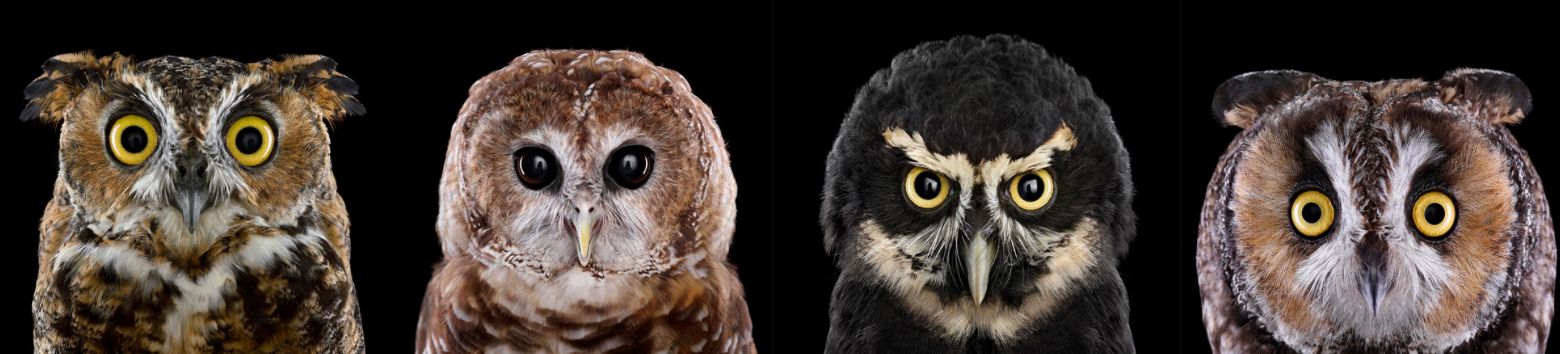
Gorgeous portraits of owls

by David Pescovitz
screenshot

The National Audobon Society's magazine has a gorgeous feature on photographer Brad Wilson's incredible portraits of owls of all kinds. Read the rest

06 Feb 04:18

ICON | Josephine Baker

by Lizzie
Russian Sledges

via rosalind

There are few iconic women that I can think of that were seemingly as passionate, artful, stylish, visionary, and bold as perhaps Josephine Baker was. The more I look in to her biography, the more it boggles the mind how much she accomplished and how steadfast she was about her values. Born into poverty in St. Louis, Baker became a child performer and eventually a domestic servant by age eight. After suffering abuse by her employer, including her hands being burnt after she put too much soap in the laundry, Baker lived on the streets in the slums of St. Louis until her street-corner dancing was discovered and she was recruited to be part of a local vaudeville act. Her talent took her to New York be a cabaret dancer where her star continued to rise. In 1934 she was recognized as the first black woman to star in a major film, Zou-Zou. Ernest Hemingway called her, "the most sensational woman anyone ever saw." Here she is dancing the Charleston in 1925 to get an idea.

Baker was a huge star in France but American audiences refused to believe that a black woman could be so sophisticated, despite being a muse of F. Scott Fitzgerald, Langston Hughes, Chritian Dior and Pablo Picasso. She refused to entertain segregated audiences in the U.S. and by 1937 permanently relocated to France. One of her famous quotes says it all, "I have walked into the palaces of kings and queens and into the houses of presidents. And much more. But I could not walk into a hotel in America and get a cup of coffee, and that made me mad." During World War II, Baker was recruited by French Military Intelligence and worked as a honorable correspondent who collected information she could about German troop locations from officials she met at parties that she would be write in invisible ink on her sheet music! She was adamant about not performing in countries that didn't support Free France or remained neutral, even if it meant giving up major billings.There are plenty of photos of Jopsephine Baker in full glamour and gowns, draped in furs and diamonds, so when I discovered these images of her tomboy side—riding horses, showing sports cars, attending Concours d'Elegance, or spying on Nazis during World War II, I was bowled over. There's just so much more to Baker, so much more than I have the capacity to relay here, but she more than squarely fits in the hall of the Tomboy Style icons. Thank you, Ellie.
06 Feb 04:13

shihlun: Walead Beshty’s FedEx Sculptures series (2005 -...

Russian Sledges

via rosalind


shihlun:

Walead Beshty’s FedEx Sculptures series (2005 - present).

Walead Beshty constructs glass vitrines that are the exact dimensions of a FedEx box, and he then places the glass boxes into a FedEx box and ships it to the exhibition site. The glass sculptures then show the wear and tear of its travels through “space and time.”. This cracked surface is supposed to represent a record of the sculpture’s “hidden life” as though the sculpture were an exposure of a photograph. The FedEx boxes the sculpture is delivered in then becomes the base for the artwork. Beshty then gives the sculptures a title which consists of a record of the journey the box took to arrive at the exhibition.

06 Feb 03:41

Hot Beer, Anyone?

by Jacob Grier
Courtesy of David L. Reamer

If there’s one thing big beer marketers know, it’s that people like their beer cold. “It’s a simple fact that consumers love ice cold beer, and we love providing it,” writes MillerCoors, touting their cold-activated labels with mountains that turn blue to indicate when beer “goes from cold … to Super Cold.” The problem of insufficiently frigid beer apparently plagues the American consumer and technology is here to help.

But since this is the middle of winter, consider an alternative suggestion. Why not drink hot beer?

The idea seems strange today, but heated ale drinks were once staples of home and tavern life. They provided warmth on chilly nights and nutrition when meals were scarce. And although we’re in the midst of a craft brewing renaissance in which no style of beer is too exotic or obscure to bring to market, warmed ales are conspicuous by their absence.

If the allure of hot beer is mysterious, it helps to consider that both the beer and the setting were very different when these drinks were popular. Today’s crisp, clear lagers and bitter, hoppy IPAs are not conducive to being at enjoyed at high temperatures. Prior to the 20th century, English and American drinkers were more likely to be quaffing malty ales. These fermented quickly without refrigeration, and at their best they offered a full-bodied sweetness that could be enjoyed unchilled or even hot.

They weren’t always at their best, however. Publicans could let them go stale and the ales were prone to spoilage by bacterial invaders. As historian Maureen Ogle writes in Ambitious Brew, a history of beer in America, “Wise drinkers edged toward a mug of ale, taking a delicate first sip in order to find out whether the tankard contained sweet beer or sour; a thick, yeasty pleasure or a rank broth with the taste and texture of muddy water.”

Warnings abound of unscrupulous publicans adulterating their ales with all sorts of unsavory additions to cover up defects. Famed barman William “The Only William” Schmidt cautioned in his 1891 book The Flowing Bowl that “[this] healthy and agreeable beverage used to be prepared often enough from a mixture containing many violent poisons, as Indian hemp, opium, sulphuric acid, sulphate of iron, etc.—nay, the addition of strychnia even was suspected.” One hopes he was exaggerating. Even so, when the quality of beer was unreliable, the temptation to season it with sugar, spice, and spirits, all of which were common additions to heated ales, is understandable.

The heat in taverns serving these drinks would have come from a fireplace around which stiffened, weary travelers would gather, warming up with a hot beverage of some sort. An ice-cold beer was probably the last thing they desired.

The fire served as a source of heat for the drinks, too. Iron loggerheads were kept in the flames, ready to be plunged into tankards of Flip, a popular mixture of ale, rum, and sugar. Less dramatically, metal mulling pots were nestled amongst the coals to bring malty ales to warming temperatures.

Many of these drinks provided not just warmth and a buzz, but also nutrition. Beverages like caudel and ale berry supplemented alcohol with grains or dairy, blurring the line between food and drink. Books from the 1800s such as The Practical Housewife, Bar-Tender’s Guide, or Cooling Cups and Dainty Drinks contain many variations on the theme of hot and hearty ale concoctions. The strangest and most substantial of these was posset, which was prepared by curdling milk or cream with hot wine or beer in a specially designed pot. The warm liquid was drawn from the bottom for drinking and the spongy curds spooned from the surface. (If you ever wondered what the king’s ghost in Hamlet meant when he described poison causing his blood to “posset and curd, like eager droppings into milk,” now you know.)

Historian Dorothy Hartley described the appeal of such “soup wine” or “ale meal” in her book Food in England. “After long hours of travel, hot wine, or spirits, on an empty stomach … often you were too tired to eat. Thus, the compromise of a caudel, which warmed you, fed you, and ‘kept you going till you could obtain a solid meal.’”

Indeed, heated ale was often perceived as being more healthful than cold beer. A pamphlet first published in 1641 with the title “Warm Beer” cautioned that although cold drink is pleasant when one is thirsty, “pleasant things for the most part are very dangerous.” The unknown author of the preface claims that drinking cold beer caused him to suffer headache, toothache, stomachache, cough, cold, and other illnesses, but drinking his beer “hot as blood” restored him to good health. He goes on to warn that cold beer could be downright lethal, recounting numerous tales of overheated imbibers falling deathly ill after attempting to refresh themselves with cold beverages.

As bizarre as the argument seems, it was grounded in classical theories of medicine that held that the stomach was like a cauldron boiling and breaking down cooked food. "Well into the 17th century, and long after that in the popular imagination, it was taken as a given that digesting was cooking in the fires of the stomach,” explains Rachel Laudan, author of Cuisine and Empire. “Anything that quenched those fires, endangered this vital process. And what more effective dampener of the flames than cold, wet drinks?"

These theories of digestion eventually gave way to more empirical approaches, but enjoyment of warm beer continued through the 19th century. Even so, trends were underway that would eventually drive heated ale drinks out of fashion. By 1888, W. T. Marchant was lamenting their decline in his In Praise of Ale, published in London. “It is a matter of regret that some of the more comforting drinks have gone out of date. When beer was the staple drink, morning, noon, and night, it was natural that our ancestors would prefer their breakfast beer warm and ‘night-caps’ flavoured.”

Perhaps the most important change was the rise of German lagers. Previously enjoyed in the United States mostly by German immigrants and sold in close to proximity to breweries, the development of pasteurized bottling lines and refrigerated rail cars allowed these beers to travel much longer distances and reach much larger markets.

American drinkers gradually took to the style and Prohibition helped complete the transition. When the ban on alcohol was repealed, dormant breweries offered plenty of capacity for making beer, but the market had irrevocably shifted away from the saloon and toward home consumption. “Brewing’s future lay not in barrels of beer rolled behind mahogany bars,” Ogle writes of the period, “but in the cool, well-lighted interiors of the nation’s refrigerators.” Americans traded their ales for lagers that were colder, cleaner, and more consistent.

Appreciation for craft beers has revived in recent decades and it is a great time  to be a beer lover. With such an abundance of excellent beers to choose from, one may question whether there is any need to heat them up with all sorts of other ingredients. We no longer believe that our bellies are fiery cauldrons that could be extinguished by a cold draft. We have better ways of feeding ourselves than scooping curds off a pot of posset. We have bosses who frown on starting mornings with a breakfast beer, regardless of its temperature.

The demands of good health and nutrition no longer dictate that we drink our ales hot. The only reason left to do so is for pleasure, as a small handful of bars and breweries have rediscovered. The New York cocktail laboratory Booker and Dax has brought back the practice of heating beer cocktails with red-hot pokers. In London, a bar called Purl gets its name from a warm ale-and-gin drink once popular among laborers on the Thames, and it serves a modern spin on the beverage. In Portland, Oregon, Cascade Brewing offers their Glueh Kriek, a tart cherry ale served hot with spices.

As brewers and bartenders plunder the past for inspiration, could hot ale drinks become the next big thing? Will heat-activated cans soon appear at a store near you? It’s unlikely. But however dubious their theories of health and digestion, our ancestors did know a thing or two about consuming beer. Perhaps in these cold winter months, adventurous beer enthusiasts might be willing to step back in time and enjoy what Charles Dickens described as “the happy circumstances attendant upon mulled malt.”

This article was originally published at http://www.theatlantic.com/health/archive/2015/02/hot-beer-anyone/385031/


06 Feb 02:24

AEP : Kentucky Will Deny Creationists $18,000,000 in Tax Rebates Because of Their Discriminatory Hiring Practices

Russian Sledges

via firehose via Albener Pessoa

Answers in Genesis, Ken Ham‘s ministry, is a religious non-profit. That’s why the Creation Museum can require you to sign a “statement of faith” if you want to work there.

Ark Encounter, the Noah’s Ark theme park that’s eligible for millions of dollars in tax rebates, is a for-profit business. They cannot discriminate in hiring.

Sounds simple enough.

But if you looked at the job listings at AiG’s website (since taken down), the requirements for some jobs made no sense at all:

That’s a position that requires you to be a Christian… despite working on Ark Encounter.

When my colleague Dan Arel asked Ken Ham about this directly, Ham was adamant that it was a position for Answers in Genesis:

But, as Dan wrote, the conflict was clear:

What it appears is happening here is that AiG is hiring employees for their non-profit and having them work on the Ark Encounter project, a for-profit business. By doing so, they are able to use religious discrimination in the hiring process and claim that the Ark Encounter itself is not hiring or discriminating. If this sounds shady to you, that’s because it is.

Today, Kentucky officials announced that Answers in Genesis would not be eligible for the incentives — a move that will cost the Creationists up to $18,000,000 in future rebates:

The state Tourism, Arts and Heritage Cabinet said in a letter Wednesday that the Ark Encounter project has evolved from a tourist attraction into a ministry that intends to discriminate in hiring based on religion.

“State tourism tax incentives cannot be used to fund religious indoctrination or otherwise be used to advance religion,” Tourism Secretary Bob Stewart wrote in the letter. “The use of state incentives in this way violates the separation of church and state provisions of the Constitution and is therefore impermissible.”

AiG’s lawyers have argued that they have the right to hire whomever they want… which is true, as long as they don’t expect any government subsidies. But you can’t say “Jews need not apply” and expect to be rewarded for it, which is precisely what Ken Ham’s group wanted.

Even the Governor is on board with this:

Gov. Steve Beshear said Tuesday that he supported Stewart’s decision.

“We expect any entity that accepts state incentives not to discriminate on any basis in hiring,” Beshear said in a statement. “While the leaders of Ark Encounter had previously agreed not to discriminate in hiring based on religion, they now refuse to make that commitment and it has become apparent that they do intend to use religious beliefs as a litmus test for hiring decisions. For that reason, we cannot proceed with the tourism incentive application for the Ark Encounter project.”

Americans United for Separation of Church and State, which led the charge against these tax breaks, were thrilled with the state’s decision:

“This project was never a good candidate for public funding,” said the Rev. Barry W. Lynn, executive director of Americans United. “Its purpose is to promote fundamentalist Christianity, and it should be funded with private contributions from believers.”

Hey, Ken: Your ark is sinking.

(Thanks to Ed for the link. Large portions of this article were posted earlier)

06 Feb 01:42

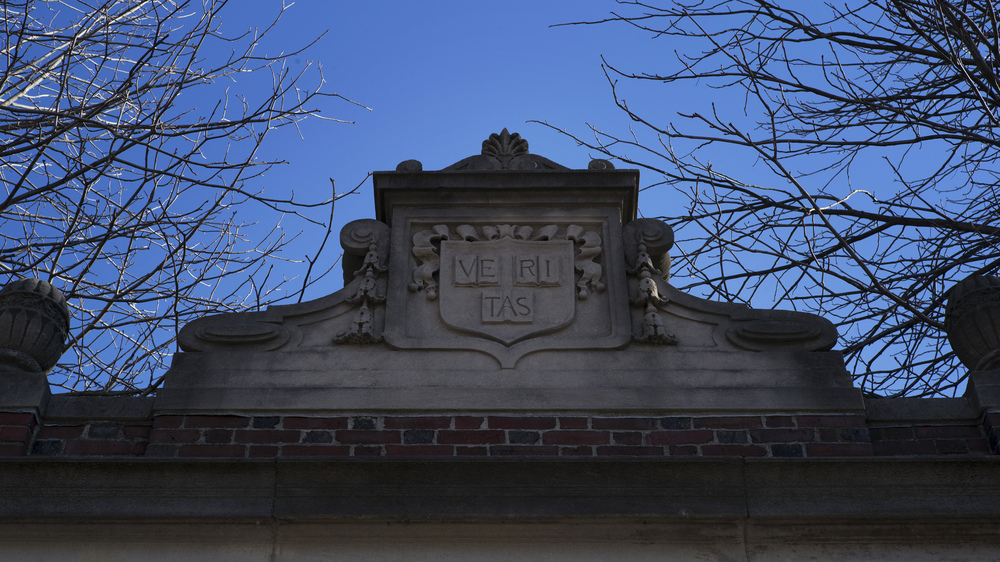
Harvard Bans Sexual Relationships Between Professors And Students

by Bill Chappell
Russian Sledges

via firehose via Ibstopher

Harvard Bans Sexual Relationships Between Professors And Students

A Harvard University representative says its new policy on sex between professors and students was created after a review found its old approach

A Harvard University representative says its new policy on sex between professors and students was created after a review found its old approach "did not explicitly reflect the faculty's expectations."

BRIAN SNYDER/Reuters /Landov

For the first time, Harvard University is banning sexual relationships between faculty and undergraduates, strengthening language in its policies on sexual misconduct. The change comes as the school examines its rules and undergoes a federal review.

Last year, Harvard was among dozens of schools the Department of Education said it's investigating for how they handle sexual abuse allegations.

A Harvard representative says that the new policy was created after a review by a Faculty of Arts and Sciences committee found that "the existing language on relationships of unequal status did not explicitly reflect the faculty's expectations of what constituted an appropriate relationship between undergraduate students and faculty members."

In the past, many U.S. colleges have lacked a formal policy on professors dating students. That has begun to change in recent years, with schools either barring professors from having sex with students they oversee or requiring them to recuse themselves from such situations.

Last month, Arizona State University joined schools that have expanded the dating prohibition to include any student whom the professors have a chance of overseeing.

Harvard's ban goes further than that approach, putting the university in line with Yale and others that have adopted similarly wide bans.

From Bloomberg News:

"'Undergraduates come to college to learn from us,' said Alison Johnson, a Harvard history professor who chaired the panel that wrote the policy. 'We're not here to have sexual or romantic relationships with them.'"

The shift at Harvard comes at a complicated time for it and other colleges that are being urged to do more to prevent sexual abuse and to help victims of harassment and rape.

Back in October, a group of 28 law professors accused the school of overreacting in its new approach to handling sexual misconduct claims. Discussing that change, Harvard Law professor Janet Halley told NPR's Tovia Smith that it give more rights and protections to victims than to the accused, and places pressure on the Title IX office to show results.

Copyright 2015 NPR. To see more, visit http://www.npr.org/.
05 Feb 18:21

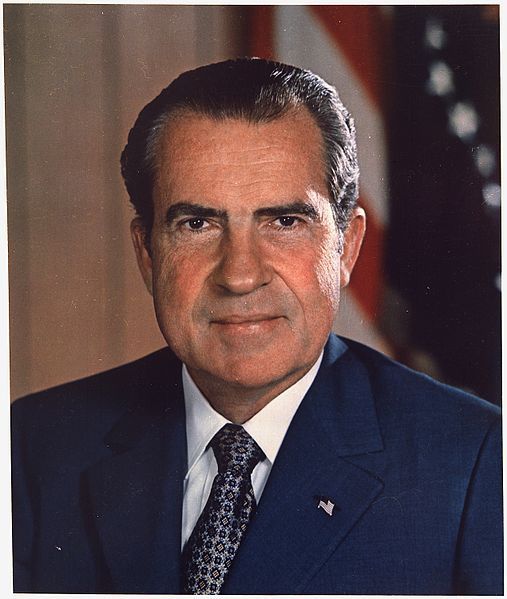
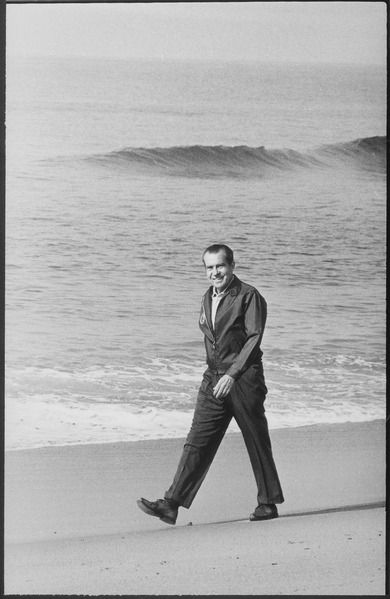
A Few Facts You May Not Know About Richard Nixon

by Miss Cellania
Russian Sledges

"Nixon meditated, although he probably would not have described his practice as such. He greatly enjoyed long periods of silence during which he would simply sit still and not speak. This almost certainly would qualify as a form of meditation."

that just means he was raised by quakers

Neatorama presents a guest post from actor, comedian, and voiceover artist Eddie Deezen. Visit Eddie at his website or at Facebook.
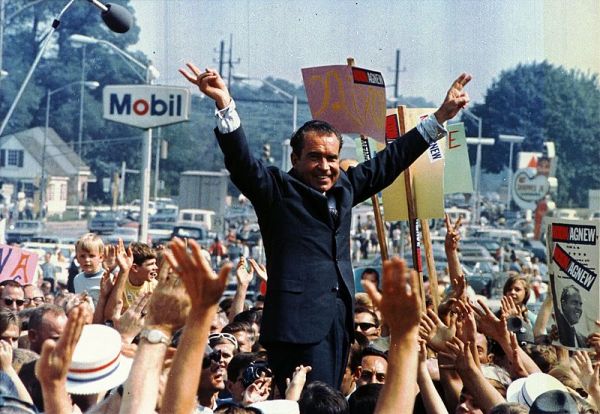
Richard Milhous Nixon. Just the name still sends vibrations of hate and malice in countless Americans. Our 37th U.S. president, as well as being our only president to voluntarily resign in disgrace, Richard Nixon was a bundle of oddities and eccentricities.

Nixon made an appearance on Rowan & Martin's Laugh-In and he once played host to Elvis Presley in the Oval Office. These are two of the more well-known facts of Nixon's life and career. Let's take a look at a few other facts you may not have known about Richard M. Nixon.

* The Watergate break-in is not the only break-in to which Richard Nixon is connected. When he was a student at Duke law school, he and two accomplices broke into the dean's office to check their grades before they were posted.


* His favorite TV show was Gilligan's Island and his favorite movie was Patton.

* One of teenaged Nixon's jobs was as a barker at the wheel of fortune booth at the Slippery Gulch Carnival in Prescott, Arizona.

* A Secret Service agent once saw Nixon taste one of his dog biscuits.

* Nixon originally wanted to be an FBI agent. He was rejected by the bureau.

* Nixon always wore a suit and dress shoes when he walked on the beach.

* He had motion sickness and hay fever his entire life. One cannot help but wonder how he dealt with the multitude of vehicles and traveling he had to do as president.

* Nixon meditated, although he probably would not have described his practice as such. He greatly enjoyed long periods of silence during which he would simply sit still and not speak. This almost certainly would qualify as a form of meditation.

* Nixon's nicknames included Gloomy Gus, the Iron Butt, the Mad Monk, the New Nixon, and Tricky Dicky.

* He was so paranoid he once ordered the Secret Service to tap his brother Donald's phone.

* Nixon holds the record for most times appearing on the cover of Time magazine, with 55.

* A student protester once gave Nixon the finger. The president gave him one back.
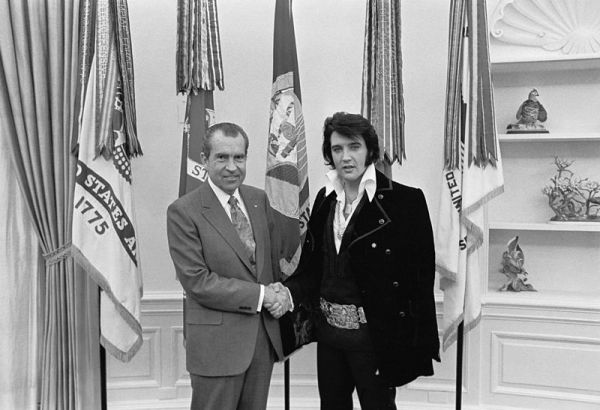
* He was the first president to visit all 50 states. No president before Nixon had taken the time to travel to every state.

* Nixon refused to shake hands with anybody from San Francisco.

* Nixon claimed to never have had a headache his entire life.

* He is responsible for having the words s**t and f**k published in the pages of the New York Times. During the Watergate scandal, it was discovered that some of the secret tape recordings Nixon made in the Oval Office included him uttering those four-letter words, and others. The New York Times actually printed verbatim transcripts of the tapes, with the obscene words included.

05 Feb 15:16

"I adore the way fan fiction writers engage with and critique source texts by manipulating them and..."

Russian Sledges

via firehose

Courtney shared this story from Super Opinionated.

“I adore the way fan fiction writers engage with and critique source texts, by manipulating them and breaking their rules. Some of it is straight-up homage, but a lot of [fan fiction] is really aggressive towards the source text. One tends to think of it as written by total fanboys and fangirls as a kind of worshipful act, but a lot of times you’ll read these stories and it’ll be like ‘What if Star Trek had an openly gay character on the bridge?’ And of course the point is that they don’t, and they wouldn’t, because they don’t have the balls, or they are beholden to their advertisers, or whatever. There’s a powerful critique, almost punk-like anger, being expressed there—which I find fascinating and interesting and cool.”

-

Lev Grossman (via leliaana)

*Sometimes.

(via drst)

05 Feb 13:24

Snow train

by whyevolutionistrue
Russian Sledges

#snowpiercer

If you live in the northern bits of North America now, you may wonder what happens to trains when there’s a lot of snow. Well, many are stopped, but some indefatigable trains plow on. Here’s one of them: a freight train identified as “CN train 406 West at Salisbury, NB [New Brunswick], February 3, 2015″. It’s Canadian, of course!

I’m surprised that they don’t have some kind of windshield wiper to clean the snow from the engine; at one point the train is chugging on when the engineer can’t see.

h/t: Matthew Cobb, from a tw**t by Space Shuttle commander Chris Hadfield.


05 Feb 13:22

An iceberg's underbelly

by David Pescovitz
flipped-iceberg-antarctica_88301_990x742

This is the otherworldly underside of an iceberg in Antarctica, photographed by Alex Cornell, a passenger on a National Geographic-operated tour of the region.

"This one had recently flipped over and had this arresting alien green color to it," he told National Geographic Travel. "It looked a lot more like a parked spacecraft than a floating iceberg."

05 Feb 13:21

SLOVAKIA: Pope Francis Endorses Public Vote To Ban Gay Marriage & Adoption

by Joe Jervis
Russian Sledges

pope is still catholic

Via J. Lester Feder at Buzzfeed:
Pope Francis gave his blessing on Wednesday to a referendum that would ban marriage and adoption rights for same-sex couples in Slovakia, which will be voted on this Saturday. “I greet the pilgrims from Slovakia and, through them, I wish to express my appreciation to the entire Slovak church, encouraging everyone to continue their efforts in defense of the family, the vital cell of society,” Francis said during Wednesday’s general audience in Rome. “For first time in Slovak modern history the Catholic Church is heavily involved in political campaign,” said Martin Macko, executive director of the LGBT rights group Inokost. The Slovak referendum follows the success of a similar ballot measure in another Catholic-majority Eastern European country, Croatia, which adopted a ban on recognizing the marriages of same-sex couples in December.
As I reported in October 2014, this weekend's referendum is being pushed by the Alliance Defending Freedom, who filed a local amicus brief even though Slovakia had already approved a constitutional ban on same-sex marriage in June 2014, earning lavish praise from Brian Brown. The coming vote would essentially affirm that ban and widen it to include any recognition of same-sex relationships. Two related bills on the ballot would ban same-sex couples from adopting children and allow parents to withdraw their children from sex education classes.

Last week Right Wing Watch reported that Brown sent out an email blast asking supporters to join an anti-gay petition launched by CitizenGo, the Madrid-based anti-gay group where he serves on the board of directors. The petition urges Slovaks to vote in favor of the bills. Also supporting this weekend's vote is the World Congress of Families, another group Brown works with. In September 2014 Brown and World Congress of Families leaders attended a Kremlin summit which concluded with a formal written call for more nations to impose Russian-style anti-gay legislation.

Yet another organization backing the referendum is C-FAM, the viciously anti-gay Catholic group headed by Breitbart columnist Austin Ruse (above right), who was fired by the American Family Association last year after declaring during an AFA radio guest-hosting gig that liberal college professors should "all be taken out and shot." From C-FAM's website:
As was to be expected, the sodomist pressure group inside the European Parliament is furious. While they had no problem with narrow parliamentary majorities redefining marriage to include same-sex “marriages” in France, Spain, and other countries (usually without the matter having been discussed in the preceding electoral campaigns…), they abhor the idea that ordinary people should have their say on the matter. Sophie Veld, a Dutch MEP and leader of the homosexualist and pro-abortion lobby, described the forthcoming referendum as “distasteful”, thereby betraying her own rather selective adherence to human rights and democratic procedures. We, however, are looking forward to the outcome of this democratic vote.
Buzzfeed notes that the local Catholic Church is being evasive about their role in the referendum:
The leadership body of the Catholic Church in the country, the Conference of Slovak Bishops, has walked an awkward line around the referendum. On the one hand, the bishops have given full-throated support to the proposal, including endorsing the referendum in a televised mass and pastoral letter on Feb. 1. The conference also appears to have solicited funds to support the Alliance for Family through a page on its official website. On the other hand, it has bristled at the suggestion that the referendum is the creation of the church. “The referendum itself is an initiative of civil society; it’s not primarily of the church,” said the conference’s spokesman, Father Martin Kramara, in an interview with BuzzFeed News.
Per Slovakian law, at least 50% of all registered voters must cast a ballot in order for a law to be valid. That rule reportedly gives local LGBT activists some hope and they are urging Slovaks not to vote at all rather than vote against the three proposed bills. But with Pope Francis now aligning himself with some of the most powerful US-based anti-gay hate groups, that tactic may prove futile, particularly because of Slovakia's small population.

Still, the Economist notes that three out of four recent national referendums failed to meet the 50% threshold, with only the 2003 vote to join the European Union succeeding. Should the bills be approved, LGBT activists have vowed to take the issue to EU courts. Whatever the outcome, Slovakia will remain the leading example of US-based religious groups off-shoring their hatred of LGBT people because they increasingly find little traction at home. Our wins are the world's loss.
05 Feb 03:35

#thewestisdead

Russian Sledges

it's like that puppies and guns calendar


#thewestisdead

05 Feb 02:10

flouncydresses: Maria Antonietta Juan Gatti - Vogue España

Russian Sledges

via rosalind


flouncydresses:

Maria Antonietta 
Juan Gatti - Vogue España

05 Feb 02:09

Dartmouth to offer course on #BlackLivesMatter movement | USA TODAY College

by hodad
Russian Sledges

via billtron

77302ab1d83ab19dcc5841ff37e3cf2e
hodad

Ms. Dr. on the USA Today blog.

#BlackLivesMatter demonstration at Dartmouth College (Photo by Zuff Idries)

#BlackLivesMatter demonstration at Dartmouth College (Photo by Zuff Idries)

#BlackLivesMatter will soon be more than just a Twitter hashtag for students at Dartmouth College.

The school will offer a course this spring titled “10 Weeks, 10 Professors: #BlackLivesMatter,” examining structural violence against communities of color. The lessons in the pilot course will be split into 15 sections that span more than 10 academic departments, including — but not limited to —  anthropology, history, women’s and gender studies, mathematics and English, according to The Dartmouth.

Abigail Neely, a Dartmouth geography professor, says the course was inspired by a workshop led by Rev. Starsky Wilson, co-chair of the Ferguson Commission – a community-based think tank created by Missouri Gov. Jay Nixon. On Martin Luther King Jr. weekend, Wilson led a two-hour seminar at the school and encouraged faculty to think about ways to integrate the events in Ferguson into an academic setting.

English professor Aimee Bahng says the objective of the course is to contextualize the systemic, extrajudicial killings in Ferguson and around the nation.

“We want to bring this moment into conversation with a historical trajectory,” says Bahng.

Bahng says that the course will also study structural forms of violence – including redlining, housing discrimination and the prison-industrial complex – and how they compound state violence against minorities.

Neely says the challenge and innovation of the course is its transgression of traditional department boundaries.

“The point really is to use the tools our disciplines offer us,” says Neely. “And to sort of offer up different ways of thinking about this really complicated and intractable problem that we’re living through in this moment, and to recognize that no single discipline is enough.”

While they will not lead their own sections, Bahng and Neely are working to coordinate the Ferguson Teaching Collective at Dartmouth.

Chelsey Kivland, a postdoctoral fellow in the anthropology department, is a member of that collective.

Kivland says she was contacted to lead a course section since she already teaches an “Ethnography of Violence” class, which spends a week analyzing police brutality and the ways in which various forms of violence – institutional, symbolic and physical – nourish each other.

“It’s something that all of us wake up with every day, so I’m really happy that this course is happening. This is exactly what this college needs.”

Kivland says she plans to expand on that curriculum and study how the media dehumanize men and women of color by drawing comparisons to animals, invoking discourses about respectability and cherry-picking images and videos of police brutality victims.

“One of the reasons I’m really motivated to teach this course at this time is to continue the conversation,” Kivland says. “I do feel that people are already starting to forget (about Ferguson), but these are really urgent matters that play out in people’s daily lives. Only occasionally are they punctuated by a mass movement.”

Kivland says the upcoming electoral season serves as another impetus to further the dialogue about state-sanctioned violence and potential policy reforms.

And students seem to be curious about the course.

Adria Brown, a senior Native American studies major, says she was excited to hear about the class but is concerned about student enrollment.

“I do wonder who will take the class – whether it’ll be kind of preaching to choir or if they’ll get different points of view,” says Brown. “But I still think – no matter what – that it’s worth having the class to really interrogate this topic.”

Brown also says it is inspiring to see contemporary social justice movements being translated to the classroom.

Kevin Gillespie, a senior English and government double major and president of Dartmouth’s NAACP chapter, says he’s hopeful that the interdisciplinary course will facilitate better understanding of racial oppression.

“As a black man, it’s incredibly hard to have this reality,” he says. “It’s something that all of us wake up with every day, so I’m really happy that this course is happening. This is exactly what this college needs.”

Jaleesa Jones is a student at the University of North Carolina Chapel Hill and was a fall 2014 Collegiate Correspondent.

Original Source

05 Feb 00:10

dunequotes:1984 Dune Movie Coloring Book Pages


dunequotes:

1984 Dune Movie Coloring Book Pages

04 Feb 23:53

The AIB ruckus has Indian comedians angry—and confident of a comeback

by Shelly Walia
Russian Sledges

via firehose

Now what?

Indian comedians are angry. Really, really angry.

“People are waiting to get offended. They open their computers in the morning, and they think ‘how can I be offended today,'” said stand-up comedian Atul Khatri. “It’s becoming a national pastime.”

“Comedians speak the truth—and get paid for that. We’re saying it like it is,” said Sumukhi Suresh of “Anu Aunty” fame. “It’s sad if you pull the plug.”

There is reason for such derision. A week after All India Bakchod (AIB) released videos of a live performance on YouTube, the comedy collective has taken down the content in the face of outrage from right-wing Hindu groups, threats of action by politicians and a police investigation.

And thus, the already difficult business of stand-up comedy in India has suddenly become even more challenging as comedians find their freedom of expression questioned and their preferred medium of distribution under scrutiny.

But there’s a strange irony in this entire situation: Stand-up comedy in India has rarely got such mainstream publicity—and that definitely won’t hurt an industry where eyeballs matter.

Appropriate warnings

“AIB took every possible precaution to make sure that if someone doesn’t want to see the video, they shouldn’t see it,” stand-up comedian Kenneth Sebastian told Quartz. “Seriously, don’t watch it if you can’t handle it.”

The three YouTube videos came with appropriate warnings for adult content. Even before the live performance took place, the comedy collective suggested watching roasts of Charlie Sheen and Pamela Anderson to prepare attendees to what to expect. Not only this, there were boards at the venue to warn about the content.

“If you don’t like it, watch MSG (The Messenger of God) or an episode of Ramayana. Don’t waste your time,” Khatri suggested.

The show—christened “AIB Knockout”—was neither aired on television nor on radio, where people could have stumbled on it by chance. To be offended, one had to go on YouTube and search the video. “It’s like breaking into someone’s house, going into the bathroom, using it, and then putting a notice that ‘your bathroom is not clean,’” Sebastian said.

Karan Johar, who was the roastmaster and a butt of some seriously insulting jokes himself, felt similarly:

Not your cup of tea…don't drink it!!!

— Karan Johar (@karanjohar) February 3, 2015

The internet

The internet—and YouTube, to be precise—has always been the medium of choice for India’s fledgling comedy community.

“They won’t let us be on TV or radio, so let us be on the internet. There is no other medium like YouTube that let’s you have freedom of speech,” said Sebastian. “If you are going to moral police the internet, that’s insane, because then we might move to the Middle East or North Korea.”

Though pressure was evidently piling on, it was unclear as to why exactly AIB chose to restrict access to the videos on YouTube. The comedy collection has been reluctant to talk to the press and declined comment when Quartz reached out on Feb. 03.

It has now given this lengthy explanation.

Hey everyone… pic.twitter.com/bBcnji3LBV

— All India Bakchod (@AllIndiaBakchod) February 4, 2015

“The internet is what unites us 1% who think like that,” added Sebastian. “We will find a way through Twitter or Facebook, and ironically, we will make sure that they don’t do more moral policing. We know our rights.”

“Forget India. YouTube is the last bastion of free speech for every country in the planet,” said stand-up comedian Sorabh Pant.

Thin-skinned

Being the path-breakers they are, AIB isn’t new to authorities clamping down, said Sebastian. “But they didn’t realise the magnitude.”

“India would have had to wait at least 10 years to watch gay jokes openly—that too by celebrities—in a country where being gay is illegal,” he added. “Basically, you’re so open and accepting about each other that you make jokes about it.”

The same was true for a woman comedian, Aditi Mittal, being roasted—with the same level of audacity as for a man—and she was fine with it.

“You make a joke as an equal—that’s what women want in India. She is above these jokes. That’s maturity,” Sebastian said.

For women stand-up artists like Suresh,  what’s even more grating is that groups and politicians vociferously oppose AIB’s humor, while comedians like Kapil Sharma can go about night-after-night making blatantly insulting jokes about wives and women. “It’s a little irritating.”

The double standards are difficult to miss.

“If any politician says…shit like ‘women should stay at home,’ that’s fine. But they’d have a problem with celebrities making fun of each other—with complete consent,” said Sebastian. “All this is not about AIB. It’s just a sense of control they want to have.”

“There were people who got offended over PK without even having seen the movie. So these are unemployed people who would go out of their way to get offended,” added Pant.

Comeback

But India’s stand-up comedy community isn’t planning to back down.

“It won’t stop AIB or anyone else from coming up with live shows,” said Suresh. Instead, all the mainstream publicity that AIB and their ilk has managed in the last few days will only help broaden the audience. “Comedians aren’t going to listen to people saying, ‘Don’t do it.'”

“We thrive on this,” said Sebastian. “Such things are just gonna push us more to talk about things like this.”

“This whole thing makes us aware of what you can do and cannot do. It was waiting to happen. The only thing will happen is that language might be diluted,” added Pant, “But we will still be working hard to create comedy.”

So, who will have the last laugh?

This article is a part of Quartz India. For more, follow this link.