(All you need to sew on a button- needle, thread, thimble… and half a matchstick.)
Even if you pay £4000 for a suit, the sad fact is that buttons do fall off, even the ones sewn on by hand by the best Savile Row tailors.
Now I don’t think for a moment that the ladies and gentlemen who read English Cut are incapable of sewing a button on. But as with everything in life, there’s a right way and a wrong way to do it.
Sewing a button on correctly is particularly important with the key button on a coat, the middle waist-fastening button (With Savile Row you only button the middle button; never the top or the bottom).
The secret here is to sew the button on with enough enough “shank” (the amount of space allowed by the thread, between the button and the coat). Ideally you want a quarter-inch between button and coat. Anything more makes the button droopy, anything less can make the front of your suit look too tight, and downright awful.
Yes, even something as minor as this can create a serious problem.
Obviously the Savile Row tailors will have sewn on thousands of buttons in their time, so getting the right amount of shank is easy for them. But what if you’re a novice?
Here’s a great tip:
Get yourself a standard wooden match. Place it over the top of the button, then thread the button around it, as seen in the following picture.
(nearly there)
Then once the button is good and sewn, pull the match away… the slack created by where the match used to be will give the thread that extra length needed to get the correct shank. Then finish the job by wrapping the remainder of the thread around the shank, and sewing through. Just like you would normally.
(Sewn-on button with quarter-inch shank. Voila! You learn something new every day,)
It’s a simple trick, but it works every time.
PS : Ideally, you should run the thread through a piece of beeswax, or use pre-waxed thread. This helps prolong the the length of time the button will stay on.
THE HOLE THE FOX DID MAKE is a new comic, and a bit of an experiment in a few ways (being set in the early 90s, it's more modern than my usual stuff, and it's also a strip, which I've never done before). I've been thinking of it as a tragic ghost story (as, granted, most ghost stories tend to be) but also somewhat of a mystery as well. The title, and elements of the story, were inspired by the folktale The Oxford Student. And for folks who use Tumblr, a link to the comic has been posted there also!
ALSO: I'll be having an official book launch for my short story collection Through the Woods in Toronto on July 15th, and there is info on the where & exactly-whens here!
We spent 15 hours researching nearly 30 USB battery packs, eliminating models that were either too expensive, too bulky, or too short on storage. We settled on 5 finalists based on their ratios of size, weight, and cost compared to the advertised capacity. We then had an electrical engineer spend almost 245 hours testing these finalists in order to find that the $30 IntoCircuit Power Castle 11,200 mAh is the USB power bank that most travelers should carry in their bags or briefcases. Little touches like an LCD that displays the remaining charge by percentage and automatically starting to charge devices you plug in without a button press make it feel more thoughtfully designed than the competition. It’s also the battery pack that held the most mAh per dollar.
The IntoCircuit Power Castle can keep a smartphone running for a few days away from an outlet, and it can add hours to the life of a big tablet when you’re stuck on a long flight. Portable USB battery packs are a dime a dozen, but this one saves space, weight, time, and money—even if just a little bit of each.
If our top pick is sold out, or you really think you’ll need the extra juice, the $40 RAVPower Deluxe 14,000 mAh is our runner-up. However, you should know that it was noticeably slower to charge other gadgets and itself. This isn’t a huge deal, but it can be annoying if you often find yourself in a bit of a rush. Some users also report hearing a slight, high-pitched whine that may or may not be noticeable to you.
Our electrical engineer spent nearly 245 hours monitoring the charge and discharge cycles of these power banks as they were hooked up to an iPad and an Android phone. We measured some surprising real-world behaviors that aren’t revealed on spec sheets, like charging inefficiencies and underpowered currents; those results flipped some of our early predictions on their heads.
Who Needs This?
A USB battery pack (also known as a power bank) like the Power Castle comes in handy when you’re away from reliable power for a few days at a time. Think of situations like a road trip, or when you’re bouncing between airports, or if you end up in a region without electricity. It’ll charge one smartphone or one small tablet somewhere between two to five times, depending on the capacity of the battery in your particular gadgets.
It’s also useful when you’re burning through battery life very quickly, like during long days at a tradeshow/conference or long flights across whole oceans or continents. It’ll add precious hours to the life of a 10-inch iPad or keep a handful of smaller gadgets up and running.
The Power Castle is not the right power bank if you’re looking for something to carry in your pocket or purse every day.
The Power Castle is not the right power bank if you’re looking for something to carry in your pocket or purse every day in case your phone needs a little juice before you get home. There are smaller, lighter packs for those purposes, though they only hold about half as much energy. (We know that we’ve promised to cover those, but we haven’t made a pick yet—sorry.) This also isn’t the right battery for intensive power needs like charging a laptop. It can’t crank out enough voltage to fully recharge those kinds of high-drain batteries.
How We Picked
This version of the guide is an update to a pick we made in March 2013, so we used our previous criteria as a baseline to look for new contenders. Our targets were in the neighborhood of 10,000 mAh, $50, 8 ounces, and the dimensions of a thick Android phone. We ended up looking closely at about 30 power banks that met the initial criteria.
As a category, USB power banks have seen some steady improvements in the past year. Capacities have risen, prices dropped, and weights and dimensions remained relatively steady. More models advertise 2.1 A and even 2.4 A ports, which allow for faster charging of devices that support those high-draw amperages. This allowed us to raise our standards for minimum specs.
Our USB travel power bank finalists, from left to right: Satechi Portable Energy Station, RAVPower Deluxe, IntoCircuit Power Castle, Anker Astro E5, Limefuel Blast L130X.
Not too many editorial outlets write comparative reviews of USB battery packs. The few that do only post one-off user reports. There’s almost no empirical data about real-world performance or how power banks compare to one another. So though we read all the reviews that we could find, we didn’t use them as a main source for any of our decisions.
The biggest factors in our choice of finalists were the ratios of weight, volume, and cost against the advertised capacity of each pack. We didn’t set any hard and fast rules, but the banks that we chose can hold close to 300 mAh per dollar, more than 1,100 mAh per ounce, and at least 1,000 mAh per cubic inch.
Our testing setup included a bench ammeter to measure the current and mAh output from each power bank into gadgets like the 3rd-gen iPad, pictured.
Our house electrical engineer (formerly of NASA’s Jet Propulsion Laboratory) Sam Gordon explained that these power banks basically consist of 3 components. The lithium-ion battery dictates how much power the thing can actually store. The voltage converter determines the sweet spot of efficiency at the expected output current. And the logic board monitors and regulates the flow of energy from a wall charger into the bank and from the bank into the gadget it’s charging. The logic board also determines how the pack interfaces with the gadgets you plug in. A good power bank needs all three of these to work well in order to efficiently charge itself and devices that are plugged into it. With that in mind, Sam devised a handful of tests to measure the packs’ true capacities, discharge currents, and any odd behaviors that might not otherwise appear on a spec sheet.
The first test measured each pack’s actual capacity and how long it took for the pack to charge up completely. We started by completely draining each power bank. Then, one at a time, we hooked each pack up to a wall charger. Using an ammeter and a laptop running tracking software, we measured how many mAh passed into each power bank, how long it took to reach maximum capacity, and the curve of the input current over time.
In the second test, we measured how fast and how efficiently each pack charges a third-generation iPad. The battery in this tablet is absolutely massive, with a capacity of 11,560 mAh, and it’s designed to take a 10 watt charger—roughly 5 V at 2 A. Put another way, it pushes travel packs toward their limits. Instead of a wall charger, we connected an iPad to each power bank through its highest-draw port (either 2 A, 2.1 A, or 2.4 A, depending on the model). To make sure the iPad never hit a full charge, we played a 10-hour YouTube video so that there would be a constant drain on the battery.
The third test measured how quickly and efficiently each bank charged a Nexus 5 smartphone. We used a similar procedure to the iPad charge test but used the 1 A ports on each pack and left the Nexus 5 in Google Maps Navigation mode to ensure that the battery never reached full capacity. The phone has a 2,300 mAh battery and is designed to work with a 5 V, 1.2 A output charger.
The final test measured maximum amperage. In our three previous tests, we believe that the ammeter and extra cables all introduced extra resistance in the circuit, which reduced the current. So this time we ran a quick test, using a cable with an inline ammeter instead of the separate bench ammeter, to gauge the maximum output current from each pack’s highest-draw port.
Our Pick
The IntoCircuit Power Castle offered the most mAh per dollar without being too bulky. Devices start charging automatically, and a built-in LCD tells you how much juice is left. For a typical smartphone, you’re looking at a few days of extra life.
It’s the smallest pack by volume, weighs less than 10 ounces, and holds the most mAh per dollar.
After accounting for size, price, capacity, and all the quirks that turned up during testing, theIntoCircuit Power Castle 11,200 mAh emerged as the best travel buddy if you’ll be on the road for two days or longer. It’s the smallest pack by volume, weighs less than 10 ounces, and holds the most mAh per dollar. The charge and discharge rates are the fastest we measured, which gives it an edge when it comes to last-minute travel prep or situations where you desperately need a little bit of juice in your phone. It’s also the only finalist with a numerical charge indicator, which is as close as any of these packs come to having a user interface.
The IntoCircuit Power Castle 11,200 mAh has two output ports, a numerical charge-level indicator, and even a built-in flashlight.
Based on our test results, here’s an estimate of how many battery cycles a fully juiced Power Castle 11,200 mAh will provide to some popular phones and tablets, accounting for inefficiency of transfer:
iPhone 5S:
4.5 cycles
iPad (3rd Gen):
0.6 cycles
iPad Air:
0.75 cycles
iPad Mini with Retina:
1 cycle
Samsung Galaxy S5:
2.5 cycles
Nexus 5:
3 cycles
Nexus 7:
1.5 cycles
That’s a couple extra days of battery life for the most power-hungry phones. And even with a full-size, energy-guzzling tablet like the third-generation iPad, the Power Castle provides enough of a charge to watch around three extra movies. If you do the math, you’ll note that these figures are significantly lower than the advertised maximum, but that’s not due to false-advertising (usually). Rather, this power loss is due to inefficiencies inherent to transferring energy from one battery to another via USB, something that all power banks have to deal with.
The Power Castle has one 5 V / 2.1 A output for tablets and other high-draw devices, and one 5 V / 1 A output for phones and other low-draw devices. It can simultaneously charge one device in each port. Though there are other packs with 2.1 A outputs (and the Limefuel even has two 2.4 A outputs), the Power Castle juiced up an iPad faster than any other finalists.
It also charged itself at a marginally faster rate than any of the other packs, storing 1,000 mAh for every 1.05 hours it was plugged in.
Looking beyond its performance, the Power Castle’s build quality and design also give it a slight edge over most of its competitors. It feels like it’s built to hold up on the road over months and months of use. Weighing in at a shade under 10 ounces, it’s not exactly feather-light, but it’s still an ounce or two lighter than some other top packs. It also takes up the least space in your bag by a few fractions of a cubic inch, at 2.8 x 4.3 x 0.9 inches.
The faux brushed-metal plastic cover adds a bit of texture to help prevent the pack from sliding off a table (and looks classier than other plasticky packs, if that matters to you). Compared to the $130 Mophie Powerstation XL—the power bank you’ve probably seen at Best Buy, the Apple Store, or some shop at the airport—the IntoCircuit feels just as sturdy but is smaller by volume and weighs about 33 percent less, all while somehow ringing up $100 cheaper.
The Power Castle can charge two gadgets at the same time.
Our favorite interface touch is the LCD with the bank’s remaining charge level by percentage. (Other packs just use four or five LED indicators.) The number changes steadily as it charges or discharges, whereas the indicators on other packs only change in intervals of 20 or 25 percent of the bank’s capacity. It’s reassuring to be able to monitor the levels as closely as you can with the Power Castle.
The Power Castle also automatically begins charging devices when they’re first connected. Other packs require you to press a button to start the process.
Flaws but not dealbreakers
The Power Castle’s advertised capacity is lower than some of its competitors, and it’s somewhat less efficient than many of them. Compared to the 14,000 mAh RavPower Deluxe (and after factoring in inefficiencies—the IntoCircuit is somewhat less efficient than its competitors), it’s missing more than a cycle’s worth of energy for a phone. A few people will need that extra capacity. But for most travelers, the Power Castle will get through most situations with no problem, so we think it makes sense to save the weight, space, and money.
The Power Castle doesn’t come with its own AC adapter (though you probably have enough of those already), and owners are quick to point out that there’s no Lightning Cable attachment. We suppose those are fair gripes, though most banks don’t come with their own charger, and none come with a Lightning Cable. Use the one that came with your phone, or buy a spare. On the plus side, it does come with a USB to micro USB cable, plus a second USB cable that accepts five included dongles for mini USB, 30-pin, and a few feature phone plugs.
When the pack says it’s at 50 percent, it’s probably closer to 25 or 30 percent…
The most common gripe we heard about the Power Castle is that below a certain threshold, the charge indicator is just not very accurate. When the pack says it’s at 50 percent, it’s probably closer to 25 or 30 percent and the count will start to drop pretty fast, based on user feedback and our own experience. That’s not ideal, but some of the packs with the 4-LED indicator system demonstrate the same behavior, if user reviews are to be believed.
Pass-through charging—that is, charging the power bank while it, in turn, charges other gadgets—isn’t supported. Most other packs don’t have this feature either.
It doesn’t have the same volume of user reviews as other power banks, which means that we’re less likely to hear about potential problems. At the time of writing, there are 161 Amazon user reviews for an excellent average of 4.6 stars. Only 12 of those reviews are 3 stars or less. Some commenters mentioned that IntoCircuit offers a $10 gift certificate to verified buyers who leave a 5-star review, which is sketchy. But even if that user score is artificially inflated, the Power Castle proved itself in our testing, and is still cheap, light, and small. Some user reviewers were shipped duds, and as with any piece of low-cost electronics, there’s a chance that’ll happen to you, so buy from somewhere with a good return policy—and try to do it more than two days before your vacation starts. (Let us know if you run into that problem.)
The runner-up
If you can’t find the IntoCircuit, we suggest the RAVPower as a solid second choice. It’s a tad more expensive with a bit more mAh to offer, but it was markedly slower to charge (both itself and gadgets): keep that in mind.
If the IntoCircuit Power Castle is sold out, or you’ll travel more comfortably knowing you have an extra day of battery power for your phone, our runner-up choice is the RavPower Deluxe 14,000 mAh. It has a huge capacity, netting about an extra day of smartphone battery life or a few extra hours for a big tablet. At just a shade over 10 ounces, it has average heft for the category, and it carries the most energy by weight. It also holds the most energy by volume. At at $40, the price is still very reasonable.
A few things stopped us from making it our main pick. Charging and discharging are pretty slow compared to the Power Castle. It took 17 hours to fully charge this thing, about 1.22 hours per 1,000 mAh. Its fastest port is 2 A, not 2.1 A or 2.4 A, and our test results showed that it charged an iPad at a slower rate than most other power banks.
The RavPower Deluxe is also fairly large, about a half-inch longer and wider than the IntoCircuit, with only marginally less depth, so it won’t be as easy to pack. It also has the lowest Amazon user rating among our finalists, though an average of 4.3 stars over 477 ratings is pretty great in most categories. A few users complained about a high-pitched “squeeee” noise while it’s charging, though we couldn’t hear it—if you’re older than 35 or have been to a few Slayer shows, that part of your hearing is probably gone now.
What to look forward to
We can obviously expect to see packs with higher capacities, and they’ll get marginally smaller and lighter. We’ll also see more packs with 2.4 A outputs. Not too many gadgets can draw that amperage yet, but since there’s no harm in charging a phone through a high-output port, expect to see more manufacturers future-proofing their packs by incorporating 2.4 A slots.
We know we’ve promised a pick for a smaller, lighter power pack for daily carry in a pocket or handbag. We don’t have one yet. Sorry!
The Competition
The Satechi Energy Station 10,000 mAh, our pick in last year’s guide, still has plenty of redeeming qualities. It weighs just 7.5 ounces, or about 25% less than the IntoCircuit Power Castle. Wirecutter founder Brian Lam likes its long, rectangular shape because he finds it easier to pack than more square-shaped packs, though your mileage may vary. At this point, however, it’s the most expensive power bank in the group (at $60) with the lowest capacity (at 10,000 mAh). It charges slow, too. It was a great pick a year ago, but times have changed, even if the Satechi’s price hasn’t.
…it’s the most expensive power bank in the group (at $60) with the lowest capacity (at 10,000 mAh).
Early in our research, the Anker Astro E5 looked like a frontrunner. It has the highest capacity in the group, 15,000 mAh, and it seemed to have solid ratios of capacity against weight, volume, and cost. The Amazon user reviews are excellent, and the spec sheet listed a fast 2.1 A output. But we got some weird results in our tests, even after testing two different units. The current swings wildly while it charges, as much as 0.7 A each second. What might be even stranger is that the efficiency and discharge times are nearly on par with other packs. You might ask: if the results are OK, what’s the harm? Our electrical engineer believes that the behavior could damage the components in the pack and lead to a much shorter lifespan for the product.
We let Anker know about our results after the initial test. They believed the pack to be defective, so they sent us a replacement. We measured very similar results from that pack, too. We tried getting in touch with an Anker engineer or product manager, but had not heard anything from them at the time of writing. We honestly don’t know if what we measured will have an effect on real-world performance. But there are a few other solid packs to pick from, and they all show normal charging behavior, so we’re setting this one aside.
We scoped out the Limefuel Blast L130X 13,000 mAh because it has two 2.4 A ports for charging two high-draw devices at once. It’s coated in a grippy rubber material so that it won’t slip. For $40, that’s great. But the test results were middle-of-the-road at best. Our electrical engineer said that it acted like a prototype that was released a bit too early. This is a new company and they’re off to a solid start, but this is not the pack to buy right now.
We looked at quite a few other packs as well, most of which received easy dismissals on price, capacity, weight, or size.
The Mophie Powerstation is the power bank you’re most likely to find at brick-and-mortar stores like Best Buy, the Apple Store, or the last-minute electronics shops at any airport. We briefly looked at the 12,000 mAh version, the Powerstation XL, but it weighs almost a full pound and costs $130. Those are non-starters.
The New Trent PowerPak+ NT135T almost made our group of finalists. It was a little too big, a little too expensive, and its best output port is a little underpowered. Not quite there yet. We’d also already dismissed New Trent’s iCarrier and iGeek batteries after testing them in our 2013 roundup.
The Anker Astro 3 2nd Gen has dual 1.5 A ports and a third 2.4 A port, but there aren’t many gadgets that benefit from those hookups (not yet, anyway). And at $50 for 12,000 mAh, the capacity per dollar is lower than we were able to find elsewhere.
The uNu Enerpak Vault is massive—1 inch thick, 7.5 inches long, and 4.5 inches across. That’s one of the lowest capacities per cubic inch that you’ll find, and it’s not easy to pack. The capacity per dollar is mediocre as well.
The Patriot FUEL+ costs $71 for 9,000 mAh, which is a terrible mAh to price ratio, and none of the new models they announced at CES 2014 looked like better deals, either.
The Incipio offGrid costs $47 for 8,000 mAh, which is a mediocre ratio and a significantly lower capacity than you can find elsewhere.
The Lepow Moonstone only holds 6,000 mAh, which is not much juice if you’re away from an outlet for more than a day or so.
We also briefly looked at other packs from Cobra, Eton, ZAGG, Braven, Jumpr, and Hyper (no, this was not the lineup for Lollapalooza 1994), and we dismissed them all on price, capacity, and size.
Wrapping it up
If you’re hitting the road, bring the IntoCircuit Power Castle 11,200 mAh with you. It’ll help keep your gadgets powered up even if you’re away from an outlet for a few days, and it’s the best balance of cost, capacity, and size that we could find.
This guide originally appeared on The Wirecutter on 6/6/2014 and is republished here with permission.
Costume with Claire Hummel Length: 00:45:26 Synopsis: On this week’s podcast, we talk to Claire Hummel about costuming, cosplay, style, and more. Claire is an amazingly talented artist and currently a Production Designer at HBO. Claire has a passion for costuming, history, materials, and style, we chat with her about how she found her love of costuming, the importance of reference, her experiences both professionally and personally.
Lindsay from Light Grey Art Lab just posted the podcast we recorded last week about clothing and costume design! I ramble on about research, inspiration, making cosplay, all sort of good stuff- head on over and check it out if you’re curious. :)
All the way back in 2008, we wrote about an increasingly common practice among slimy DC lobbyists to "sign up" clueless organizations to be used as astroturfing figureheads. For example, it seemed odd that corn farmers were suddenly interested in internet ad rates. The original article, by Declan McCullagh, included the money quote from an anonymous person involved in those kinds of astroturfing schemes:
"You go down the Latino people, the deaf people, the farmers, and choose them.... You say, 'I can't use this one--I already used them last time...' We had their letterhead. We'd just write the letter. We'd fax it to them and tell them, 'You're in favor of this.'"
This seems to be standard practice for the big broadband companies. We highlighted how AT&T got "The Latino Coalition" to speak up in favor of their attempted (and eventually failed) merger with T-Mobile. Meanwhile, Comcast recently got the US Hispanic Chamber of Commerce to come out in favor of Comcast buying Time Warner Cable. And, of course, the dirty secret in all of this is that the way this works is the big companies toss a bunch of money at these organizations to get them to "support" whatever positions the companies want them to support. For example, the Hispanic Chamber of Commerce received $320,000 from Comcast.
We recently wrote about the latest round of astroturfing groups that the broadband players were supporting, and who were out arguing in force against net neutrality. Lee Fang, at Vice, who wrote the original report that was based on now has a followup, talking about how many of the organizations listed as "members" of the astroturf group "Broadband for America" claim they have no idea what that is and did not choose to sign up.
Bob Calvert, the host of TalkingWithHeroes.com, a radio program listed as a Broadband for American member, told us that he is not familiar with the net neutrality debate. "My program is a non-political program supporting our men and women who serve and who have served our country and their families," said Calvert, in response to an inquiry from VICE.
Another Broadband for America member, the Texas Organization of Rural & Community Hospitals, said it had joined only to support broadband access in rural and underserved areas, not on issues relating to net neutrality or the classification of broadband as a utility. "We will reexamine this endorsement and make a determination whether to continue supporting the coalition should we find that the current policies they are proposing would undermine the original goal of greater access for all Americans," said Dave Pearson, president of the group, which represents rural hospitals in Texas as the name suggests.
Some directly say they disagree with Broadband for America's position on net neutrality.
Don Hollister, the executive director of the Ohio League of Conservation Voters, said he was unaware of his organization being listed as a Broadband for America member. After our inquiry, Hollister wrote to us to share a message he sent to Broadband for America:
"The Ohio League of Conservation Voters does not endorse your position on broadband. This is not a policy area that we take positions on. Why are we listed as a Broadband for America member? I am unaware of Ohio LCV taking any position on broadband issues and I have been Executive Director since 2011. The Ohio LCV is not a member of Broadband for America. Remove us from your listing of members."
Other groups we contacted were simply confused. "I'm not aware of them and I pay all the bills. I've never heard of Broadband for America," replied Keith Jackson, an accountant with the Spread Eagle Tavern & Inn, a cozy bed and breakfast in Ohio that is listed as a Broadband for America member.
There's more in the original article. But it's pretty straightforward: many of the named members either had no idea or thought they were signing up for something very, very different. And yet now they are "supporting" policies they either don't know about or don't support. But this is how things are done in the cynical corners of Washington DC. You get support in any way necessary, no matter how ridiculous.
“To start with, every human being should be considered sane/accountable before law.”
—Anders Behring Breivik, court statement, 2012
“In the case of evil, as in that of dreams, there are not multiple readings.”
—Simone Weil, Gravity and Grace
Last week in Santa Ana, California, two convicted sex offenders who were being tracked by multiple agencies, and who had nevertheless spent much of their parole together, violating it, and who had even gone together to the Santa Ana police, in 2011, to seek protection from a third, also male sex offender, were arraigned in the killings of four women: Kianna, Monique, Martha, and Jarrae, all of whom had histories of sex work. Police said they suspected there was a fifth, unidentified murder. Federal probation officials said nothing. In Los Angeles, a man who played a cop on television was held in the fatal shooting of a woman named April, his wife, and at the end of the paper’s breaking story—after it was noted that the man, Michael Jace, had no arrest record, and after a detective was quoted saying the man’s 911 call (and confession) to police was the first ever made from that house, and after a neighbor was quoted saying the Jaces “were the Huxtables on the block”—the Los Angeles Times reported that his previous wife, Jennifer, had claimed in their 1997 divorce that he, the man, had physically attacked and threatened her. Later, it was reported that in a 2005 custody case concerning Jennifer’s and Michael’s son, a friend of Jennifer’s had testified that in one such attack, “[Michael] was raging and out of control,” and that “the extent of his anger” was “one of the most terrifying things” she’d ever seen. In Isla Vista, on the front lawn of the Alpha Phi sorority house, a boy with a black BMW and three brand-new guns shot two young women, Katie and Veronika, then got into his car and drove, opening fire into the IV Deli Market and killing another student, Christopher, before crashing his car into a Jeep. When the police went to his apartment, they found his two roommates, George and Cheing, lying knifed to death and ditto their friend, Weihan, and although the boy’s killings were briefer, more desultory than planned, the sum of his victims still got up to six, or one less than the number of police officers who had: showed up at his door some months ago; asked some questions about the disturbing, antisocial nature of his YouTube “vlog”; found his answers unwarranting of precaution; left, without searching his bedroom.
Reports on the last of these three atrocities had it that cops thought the boy, 22, was either “polite and courteous,” or “polite and kind,” or “polite and charming.” Certainly, he was polite. From what we’ve seen, if one thing he said about himself was true, Elliot Rodger was a gentleman. Michael Jace was a law-abiding citizen whose second, now-dead wife testified in the 2005 custody case that he was a “good dad” and a “provider.” Steven Dean Gordon and Franc Cano, the two parolees, did the time well enough to end it. Now they are homeless, unable to work. Jace is bankrupt. He listed his debts in the 2011 filing to be between $500,000 and $1 million, and agreed to a payment plan on which he’s fallen behind. Rodger was spending hundreds and more hundreds on lottery tickets in the California Powerball, so sure he was born to win that when he lost it felt like being robbed, and as he lost, he compensated with a plan: to rid us of “attractive young couples,” “the popular young people who never accepted [him],” and “all women,” for not being attracted to him. In sum: get rich (quick), or kill trying.
No doubt the various law enforcers of California are trying, too. Still, it’s hard not to think these killings might have been slowed, might even have been stopped, if more members of what is generously called “the system” had the slightest acuity, maybe a little bit of feeling for a pattern, when it comes to fallen, immobilized men and their as-ever easiest targets. When the blood dries, the events described were predictable, are familiar, are above all unapocalyptic.
We live in nothing too new, nothing too near a revelation. Just plain old American noir.
What Elliot Rodger wrote of his life, all 107,000 words or 141 pages of it, is too personal to be a manifesto and not sympathetic enough to be a memoir, and so I could accept it only as a manuscript for fiction (his mother, who suggested he try becoming a writer, must have felt the same after reading his emails about women). Most of my favorite novels are unpublishable autobiographies. And, syntactically, the kid’s alright. His style is as literal as a cop’s, and he’s forever casting a long foreshadow over events he clearly got wrong, but he is not unpromising—or compromising—in his chilling variations on a theme.
The motifs being money, cars, hard-bodied blondes, exclusive invitations, pop music, and proper nouns, I thought immediately of Bret Easton Ellis, but there’s no humor, no shine in what he titled, perhaps expecting an E! adaptation, My Twisted World. In fact, the adamant lack of lyricism and tourist-on-a-sidewalk pacing puts all Knausgaard’s Struggles to shame. Could it be parody? Many sentences begin with incisive, timeless, and true generalizations (“The most beautiful women choose to mate with the most brutal of men”) before withering into sly hilarity (“instead of magnificent gentlemen like myself”), but often the boldest lines fall flat (“the vast majority of the female population will be deliberately starved to death,” as if we don’t have enough bad jokes about the fashion industry). Is it all an ambiguously self-reflexive melodrama? Or is it just a draft of what could someday be a 21st-century noir masterpiece, and, like all noir masterpieces, a grim and slippery indictment of American masculinity? As advance praise, we have Barack Obama’s answer-containing question—“why did [a young man] who grew up and studied here, as part of our communities, resort to such violence?”—and although the president said it after and about the capture of Dzhokhar Tsarnaev, nobody fact-checks a blurb.
Rodger writes in the voice of a boy who’s had everything, especially therapy. Not even “millennial narcissism” explains the mediated recounting, up from age zero, of every shift and vicissitude in his fortune and emotional state; nor does it tell us why a 22-year-old would describe arguments as “conflicts.” Whatever “help” we wish young white male murderers had gotten before it was too late, the character of Elliot Rodger had in spades. He lived in the state with the strictest gun-control laws in the nation. He’d never been abused, or developed a drug problem. He drank red wine and vanilla lattes and listened not to Southern rap or Swedish metal or whatever else you might think is sexist, but to 1980s pop stars on hetero, sexual love: Belinda Carlisle, Whitney Houston. The Police. Even his participation in the dank forums of PUAhate.com—a Men’s Rights-type site—seemed to follow from, not form, his misogyny. And while most Men’s Rights types spend their days baiting outspoken feminists, Rodger, in his “final solution” for a “pure,” “fair,” sex-free, vagina-free planet, wasn’t targeting Women’s Studies majors. He was going after the “stuck-up blonde sluts” at “the hottest sorority house at UCSB” (many of whom might also have been Women’s Studies majors, but Rodger seems incapable of that thought, and he’s hardly alone). He lived in a Disney dreamland. More American Pie than American Psycho, his so-called manifesto feels written not by a criminal, not by a sociopath, but by a child of Hitler and Coca-Cola who took this country a little too seriously.
On Facebook, he liked Starbucks, Armani, tourism, sunsets. He was obsessed with The Secret. Then the lottery. He thought a beautiful blond woman was the prize he deserved for being such a good boy—as if, at the county fair, he could shoot enough ducks to win a girlfriend. He was so committed to exceptionalism that he applied it all only to him. He once used the phrase “less white than me.” Less white. In fact, the more I read, the shakier all the causality felt and the more common, at core, his interpretation of “believing in himself” seemed, until I just couldn’t get over a line on the fifth page, age 5, when his family moved to Cali from England: “I now considered myself,” he writes, “an American kid.”
In America, two kinds of people are considered innocent: children and victims. Rodger, an innocent who never quote-unquote became a man, therefore wrote himself out as a victim—a laughable thought, when you see him IRL, on video, pouting like ’99 Ryan Phillippe in his golden-hour Gucci shades. But if he’s not your natural-born outcast, neither is he an outlier. Nor do I think he’s insane. Elliot Rodger is a logical extremist; his logic, that of the American electocracy. By this I mean what electocracy always means—a political system that lets its citizens vote, but leaves all actual decision-making power in the hands of an arbitrary, irresponsible group—but also what it connotes, a way of ruling derived from the Puritans’ self-satisfying notion of the pure and justified “elect.” In Rodger’s world, you were either among the elect, the elite, or you were in hell.
Of the four or maybe five women killed around Santa Ana, the body of only one—Jarrae Nykkole Estepp, 21, a pretty-faced white single mother—was found. It was found in Anaheim, on a conveyor belt, at a trash-sorting facility, and when I read this I quietly screamed. A useless scream, because of course, the word for these women is disposable. Because the state won’t nanny them and the cops won’t leave them alone and the robbers of their lives feel like, well, she was selling it anyway, it wasn’t like breaking into a home. Not like killing someone’s wife, for example. And, at the same time, a lot like a man killing his wife. For she whom the gods would destroy, they first make a “whore.” Ask a man who’s hit a woman, if he’ll tell you. Ask a woman who’s been hit, and she will: “whore” is the oldest name in the book and the first one said when a man feels his worst feeling, which is humiliation, or the shock of not being a man. Not all men, don’t worry, only all the men I’ve known, and all the men my friends have known, and not only them, but all of us, all of us who think strippers and sex workers and suburban wives and/or stuck-up blond sorority girls are something less than or betraying either the feminine or feminist ideal, all of us who make these crimes by emasculation feel as common, and unstoppable, as acts of god.
In OJ Simpson’s glassy-eyed memoir, If I Did It, he recalls “running into” a sex worker who told him she saw Nicole Brown Simpson, by then his ex-wife, at some wild parties, running with a pretty rough crowd. “This stand-in was basically a part-time hooker,” OJ sighs, and “here she was, a call girl, telling me that my ex-wife was partying with a ‘rough crowd.’ I was pretty upset, as you can imagine, and after the shoot I drove over to Nicole’s house and read her the riot act.” When Nicole tells OJ her friends are “nice people,” he replies: “You better open your eyes, Nicole. Nice people don’t go around getting themselves knifed to death.” And, then: “Nice people don’t turn into whores.” What a shock to find that his prize, a Baywatch blonde, had not only come to life but was pushing, hard, a status-sanctioned way of living it. The man, threatened by association, sounds like a murderer in defense of his pride. He also sounds like a lot of our mothers, which is why, thirteen years later, he remained sure enough of the national consensus on Nicole Brown’s behavior to, however slantedly, tell us with confidence that he premeditated and justified the killing. She had sinned.
Before noir was American, it was French. Unsurprising, then, that the closest antecedent to My Twisted World isn’t by Ellis or Ellroy, but by Michel Houellebecq. In Whatever, written the same year OJ did it, Houellebecq posits that “sexuality is a system of social hierarchy.” Here’s how: the narrator, a “pathetic creep” and Parisian government worker who is and is not Michel Houellebecq, realizes that his good-guy co-worker, middle-class compatriot, and friend, Tisserand, is slowly and surely “losing it.” Having just suffered a break-up, Tisserand lives in a fog. At breakfast one day, he sighs: “Fuck it! I’m twenty-eight and still a virgin!”
Michel goes home, thinking. “It’s a fact,” he muses to himself, “that in societies like ours sex truly represents a second system of differentiation, completely independent of money; and as a system of differentiation it functions just as mercilessly. . . . The effects of these two systems are, furthermore, strictly equivalent. Just like unrestrained economic liberalism, and for similar reasons, sexual liberalism produces phenomena of absolute pauperization. Some men make love every day; others five or six times in their life, or never. Some make love with dozens of women; others with none. It’s what’s known as ‘the law of the market.’ . . . Sexual liberalism is an extension of the domain of the struggle, its extension to all ages and classes of society.”
This theory, which explains why a reasonably good-looking, articulate, and privileged American kid could fully believe himself an underdog, would be almost productive had its false premise not been laid out a minute earlier, when Tisserand explains “that a vestige of pride had always stopped him from going with whores.” To an astonished Michel, he continues: “I know that some men can get the same thing for free, and with love to boot.”
Likewise, in My Twisted World, Rodger is assigned a female social worker he finds attractive. He enjoys his time with her, but the rare pleasant mood is ruined when he realizes that, because she has been hired to hang with him, “it’s like going to a prostitute. It feels good for a while, but afterward, you just feel pathetic.” The thought of paying for sex isn’t the rub; he has the funds, after all. What enrages him is the thought of other men not paying for sex.
So much male jealousy, competition, and bitterness springs from this one funny fact—that they think any kind of love comes for free. That there is ever a time when even sex qua sex don’t cost a thing. Money or no money, the rest of us know we have to pay.
You could say the trouble for Rodger started when, around puberty, he began to know—and, in writing, recite—the first and last names of every boy he considered a sexual competitor, while at the same time referring to girls almost always collectively. Girls. Pretty girls. Pretty blond girls. Only three girls (or perhaps, by this time, women) are listed by name in My Twisted World, vis-a-vis dozens of boys (I’m not including family members). By the end of his writing and life, he’s failed to distinguish between any groups of humans at all, to the point where he considers his 6-year-old brother yet another budding Romeo who, because “he will grow up enjoying the life [Rodger has] craved for,” must die. “Girls will love him,” Rodger says. “He will become one of my enemies.” Rodger begs our most individuating question—“why don’t you love me?”—by proving himself repeatedly unable to individuate another. In erotic coupling, the ego finds relief in its equal. But had Elliot Rodger ever found his equal and opposite in another human being, he would, by all indications, have been repulsed. Reading him, I kept remembering Rooney Mara’s kiss-off in The Social Network: “You are going to go through life thinking that girls don’t like you because you’re a nerd.1 [Or short. Or half-Asian. Or bad at football, or not a real ladies' man, or somehow else disappointing to the ur-dads of America.] And I want you to know, from the bottom of my heart, that isn’t true. It’ll be because you’re an asshole.”
Which is why, for me, the trouble got interesting when Rodger finally reveals the one-word password to all of his dreams: Zuckerberg. By this point in My Twisted World, he’s dropped out of Moorpark and landed at the better, i.e. better-looking, Santa Barbara City College. Having researched what it takes to be a famous and wealthy writer of “epic” stories and discovered that it takes “twenty years,” a lot of hard work, and maybe even some in-between jobs (which, like many of his fellow self-described intellectuals, he categorically abhors), Rodger decides he needs to invent something big—like Facebook, the utility he wields to stalk and obsess over the classmate and California dream girl whose verifiably symmetrical, wealth-signifying face breaks his heart.
It is true that Facebook is the biggest social ranking system in the States after the IRS, and equally as hated and invasive. It is true that Facebook made Mark Zuckerberg staggeringly rich and perhaps that way more attractive to his beautiful wife, Priscilla (who, incidentally, looks more like Rodger’s Chinese mother than like any of the girls he stalked on Facebook). It is both true and factual, even if much of The Social Network isn’t, that when Zuckerberg started (or stole) this empire, it was a sexual ranking system. A hierarchy of beauty and supremacy. You know, a Hot or Not kind of thing—to which the first photos uploaded, by these lonesome, rejected nerds, were of sorority girls.2
There are many extensions of the weapons of struggle. Manufactured, then programmed, these weapons are arguably helpful to those who do struggle in what is—this bit of child morality holding fast—an unfair and massively garbage world, but they are provably harmful in the hands of ailing, flailing young men who tend to put “my” before that “struggle.” If you’re going to go for these boys’ guns, never mind their knives, you might consider seizing their computers while you’re at it.
I am, of course, not long considering seizing any computers (likewise, I’ll join the “conversation” on gun control when cops start dropping their Glocks). For one thing, internet porn is as free as it gets for the desirous, and what I do dead seriously want to consider is why the messy, shockingly diverse, and sometimes parodically sexist world of pornography—and not the Puritan, hierarchical, and secretly sexist world of Facebook—will indubitably be blamed for the way it makes some boys see women.
When the Rodger of My Twisted World watches his first porno, he has the usual feelings of arousal, confusion, and shame. Only his shame is laced with disgust. Yet even for the hottest, most stereotypical porn stars (who are in turn usually playing stereotypes), sex is hard to separate from abasement. As Wayne Koestenbaum reminds us in his 2011 book on the subject, humiliated means to be made humble, to be lowered in the rankings. Some porn is dehumanizing, as is some sex. But pleasurable sex among equals, or good masturbation to porn, is—I believe—rehumanizing. “What is humiliating,” says Koestenbaum, “is the sexual body itself, its humors and swellings, its pulsations and emissions.” Almost no sex won’t get you dirty. No desire to fuck someone won’t, if you hunt it down long enough, make you feel as “vicious [and] barbaric” as Rodger wrote all women were. And there is no way a biological man, naked and shrinking after sex, could feel, as Rodger describes himself, like “a god compared to” literally anyone. When Koestenbaum imagines “a society in which humiliation is essential—as a rite of passage, as a passport to decency and civilization, as a necessary shedding of hubris,” he is making the world’s best case for promiscuity. As for our virgin suicide, his frigidity and ensuing hysteria had less to do with women “not being attracted to” him than it did his not finding remotely attractive the risks of humiliation, abasement, and animal glory that multiply so quickly when you take off your clothes and just ask.
Consensual sex is no cure for misogyny—especially when misogyny is itself a side-effect of the need to be king, to have no equals—but it does, in my experience, have a way of putting men in their place. There is evil—the incapacity to love our shared fate—in each of us. But vulnerability and evil cannot coexist. In the bedroom, everyone’s needy. And though it’s not much like sex, pornography yet presents a universe with more alternatives to white supremacy, compulsory heterosexuality, and standards of beauty than television, film, contemporary art, or advertising; literally anything you need, anything you find attractive, you can find in porn.
If Rodger had a problem with porn, it was that he didn’t see nearly enough of it. If he had a problem with America, same thing.
In Sterling Ruby’s 2009 video installation, “The Masturbators,” male porn stars jack off alone. Recently, while interviewing him for an unrelated magazine piece, I asked Ruby what it was like to work with the men. He told me that when the porn stars came in, they were mostly full of bluster, like—you want me to what? That’s it? Ruby nodded. Then watched as, one by one, the professionals couldn’t finish the job. Some of them broke down, almost crying. One screamed repeatedly to turn off the camera. Another got so upset he threatened to break down the door between him and the smaller man, the artist, and beat him up.
Ruby said a smart thing: that it was embarrassing to be a man, but he wouldn’t have it any other way. He also said he thought the US porn industry, a phrase I can’t tell if he meant synecdochically, was cruel for telling men to come on command. I agreed, but I also thought the men broke down in their small white rooms, one at a time in front of one camera, because they’d never before had to be the lone objects of a gaze. And, lacking the feminized receptacle without which the dick can’t exist, they began to feel, for perhaps the first time in a while, the embarrassment of just being human.
After Elliot Rodger knifed and shot six people, tried to kill more with his car, and finally, prematurely crashed, he must have looked up through his window and realized that, after all these years of feeling himself invisible, he was suddenly being seen from all angles. Nobody wasn’t paying attention to him. The cops weren’t there yet; he could have basked for a second. But by the time they arrived, he had shot himself.
Kate Losse’s description of the nerd figure in Silicon Valley can be expanded to fit the “nerd” or “underdog” in many male-dominant arenas: “The problem is that aside from those few guys reveling in their spray-tanned fantasy ‘brogrammer’ masculinity, very few people in programming identify with the term ‘brogrammer.’ The brogrammer is always someone else—he is THOSE Facebook guys who yell too loudly at parties and wave bottles in the air, he is not the nice, shy guy who gets paid 30 percent more because of his race, gender, and appeal to the boy-genius fetishes of VCs. The loud and tacky ‘brogrammer’ is a false flag—if you are not a brogrammer, the logic goes, you must be an outcast genius who has suffered long and would never oppress a fly. The industry is full not of the former but the latter—programmers who are smart and may present as harmlessly ‘nerdy’ but whose sense of themselves as being ‘the underdog’ means that it is very hard to see the ways in which they participate in unconsciously but potentially harmful ways in an industry that has coded them as kings.” ↩
In 2012, Business Insider reported that Mark Zuckerberg’s net worth had dropped from $17.5 billion, in 2011, to $9.4 billion. The headline read “Mark Zuckerberg is worth less than Michael Dell,” prefaced by three words, in all caps: “THE ULTIMATE HUMILIATION.” ↩
So, this weekend's news in the tech world was flooded with a "story" about how a "chatbot" passed the Turing Test for "the first time," with lots of publications buying every point in the story and talking about what a big deal it was. Except, almost everything about the story is bogus and a bunch of gullible reporters ran with it, because that's what they do. First, here's the press release from the University of Reading, which should have set off all sorts of alarm bells for any reporter. Here are some quotes, almost all of which are misleading or bogus:
The 65 year-old iconic Turing Test was passed for the very first time by supercomputer Eugene Goostman during Turing Test 2014 held at the renowned Royal Society in London on Saturday.
'Eugene', a computer programme that simulates a 13 year old boy, was developed in Saint Petersburg, Russia. The development team includes Eugene's creator Vladimir Veselov, who was born in Russia and now lives in the United States, and Ukrainian born Eugene Demchenko who now lives in Russia.
[....] If a computer is mistaken for a human more than 30% of the time during a series of five minute keyboard conversations it passes the test. No computer has ever achieved this, until now. Eugene managed to convince 33% of the human judges that it was human.
Okay, almost everything about the story is bogus. Let's dig in:
It's not a "supercomputer," it's a chatbot. It's a script made to mimic human conversation. There is no intelligence, artificial or not involved. It's just a chatbot.
Plenty of other chatbots have similarly claimed to have "passed" the Turing test in the past (often with higher ratings). Here's a story from three years ago about another bot, Cleverbot, "passing" the Turing Test by convincing 59% of judges it was human (much higher than the 33% Eugene Goostman) claims.
It "beat" the Turing test here by "gaming" the rules -- by telling people the computer was a 13-year-old boy from Ukraine in order to mentally explain away odd responses.
The "rules" of the Turing test always seem to change. Hell, Turing's original test was quite different anyway.
As Chris Dixon points out, you don't get to run a single test with judges that you picked and declare you accomplished something. That's just not how it's done. If someone claimed to have created nuclear fusion or cured cancer, you'd wait for some peer review and repeat tests under other circumstances before buying it, right?
The whole concept of the Turing Test itself is kind of a joke. While it's fun to think about, creating a chatbot that can fool humans is not really the same thing as creating artificial intelligence. Many in the AI world look on the Turing Test as a needless distraction.
Oh, and the biggest red flag of all. The event was organized by Kevin Warwick at Reading University. If you've spent any time at all in the tech world, you should automatically have red flags raised around that name. Warwick is somewhat infamous for his ridiculous claims to the press, which gullible reporters repeat without question. He's been doing it for decades. All the way back in 2000, we were writing about all the ridiculous press he got for claiming to be the world's first "cyborg" for implanting a chip in his arm. There was even a -- since taken down -- Kevin Warwick Watch website that mocked and categorized all of his media appearances in which gullible reporters simply repeated all of his nutty claims. Warwick had gone quiet for a while, but back in 2010, we wrote about how his lab was getting bogus press for claiming to have "the first human infected with a computer virus." The Register has rightly referred to Warwick as both "Captain Cyborg" and a "media strumpet" and has long been chronicling his escapades in exaggerating bogus stories about the intersection of humans and computers for many, many years.
Basically, any reporter should view extraordinary claims associated with Warwick with extreme caution. But that's not what happened at all. Instead, as is all too typical with Warwick claims, the press went nutty over it, including publications that should know better. Here are just a few sample headlines. The absolute worst are the ones who claim this is a "supercomputer."
Anyway, a lot of hubbub over nothing special that everyone seemed to buy into because of the easy headlines (which is exactly what Warwick always counts on). So, since we just spent all this time on a useless nothing, let's end it with the obligatory xkcd:
Instant positives pretty difficult to produce, it turns out.
All film-related technology relies upon advanced coating technology. This week we traveled to the old Kodak Park in Windsor, Colorado to attempt to line up the necessary coating services and know-how needed for New55 FILM production. The campus is many hundreds of acres/hectares big, and the companies have coaters that can coat materials at rates of up to 500 meters per minute. That means we could get everything we need in about five minutes! But not really, as the preparation and setup time can take months. New55 FILM is a tiny customer, but we hope to be a good one for these types of services.
Kodak Park in Colorado
Since we are planning to use an off-the-shelf 4x5 negative emulsion, if possible, the focus is on the even more complex coating of the Receiver Sheet, or just "the receiver". This is the white shiny paper that the positive print forms on. But it isn't just paper: This is the special material that was first formulated by Weyde and Rott and then improved by Polaroid over many years. The function of the receiver is to take a portion of the processing negative and, via diffusion transfer, form a reverse, positive image with tone characteristics that are similar to conventional continuous tone photographic printing.
And, since Polaroid kept much of the receiver design a secret, the only book-form reference we have is the Focal Press book by Andre Rott and Edith Weyde entitled, "Photographic Silver Halide Diffusion Processes", and certain of the early Edwin H. Land essays, such as published by McCann, particularly Volume 1, "Polarizers and Instant Photography". Then there are several patents, long expired, that hint of certain tips, tricks and practical implementations of "the receiver". These are, by far, the most valuable to us, and it is good that the companies concentrated on patents, which as you know have a limited lifetime, so anyone, including you, can now use them.
Very small clumped and dispersed nanoparticles
This technology detective story becomes even deeper when we start to analyze the materials used to make the receiver. For instance, both aqueous and solvent processes are used to coat the receiver and further processing is needed to convert metallic salts put down into a properly distributed network of metallic nanoparticles. The nanoparticles act like seeds, or electrodes/catalysts, which form the various grades of tones from black to gray. I will post more about this fascinating area of nanotechnology that has been going on in the photographic industries for a long time, unseen. The importance of having just the right mix of metals, and the right number of particles over a certain area is high, as that sets the tone scale, and there is also a cost per unit area of materials to consider. Weyde, and Land, both wrote about how each particle ought to be for its intended use.
Aqueous Coatings vs Solvent-Based Coatings
There are thousands of coatings and many techniques for coating sheet products such as paper, plastics, films and fabrics. We need to coat baryta paper - the paper that is normally used for photo prints - with the special materials mentioned previously to form the receiver sheet, and produce the positive print. Aqueous coatings, as the name suggests, are water-based. Water is a good and environmentally safer solvent for paints, for instance, and for things such as gelatin emulsions, candy, food, and printing. But solvent-based coatings have their own advantages: Oil paints use a solvent (volatile petroleum oils) to maintain a sticky, adhesive and semiliquid state. The solvent evaporates into the atmosphere. Other solvent-based materials contain alcohols, or light oils similar to paint thinner. Oil paints can be stronger, and tougher, and have other chemical advantages, but industrial coatings with solvent-based materials also require additional steps to capture and clean the evaporated solvents. Often this is termed "solvent recovery".
Our detective work tells us that traditional receivers are made of both aqueous (water) and solvent based materials, which have to work together to form the nucleating layer. Sounds complex? Yes it is. We are fortunate to have the experience of coaters, some who were with Kodak, Polaroid and other important firms in the coating business, to help us understand the manufacturing tradeoffs as we near decision points on the processes needed to produce New55 FILM. Even they, however, find this field of coated nanoparticles something they will have to learn about, too.
Secrecy is needed in industry, this we understand, and trade secrets are essential to keep. But when companies die, the knowledge can, and often does die. Look at the many industries and technologies from the Roman Era until today - medicine, surgery, navigation, pigments, gold plating, and many many more - that were lost because nobody dared write down how to do it out of fear of copying. It was not until the 18th Century when patents allowed inventors to bring forth their ideas for public review in return for 20 years of exclusivity, and look at what happened since then. But not everything to be known is written, and it certainly is not on the internet, or google searchable.
So that was the subject-of-the-week, amid many sourcing and vendor efforts, phone calls, visits, quotations and buying the things we need to finalize the design. Onward.
A bit disjoint, but some interesting photo chemistry stuff in here.
Some films with cubic grained emulsions
What film shall we use, and can we use an off-the-shelf sheet film (to get started) or do we have to have one custom made?
These are important questions for New55 FILM.Polaroid used a material known as SO-139 for T55, supplied by Kodak. We know today that SO-139 is a dye sensitized cubic grained medium speed emulsion similar to Kodak's Panatomic-X, supplied in long rolls for processing.
One of the problems with old T55 was that the negative was too big: It's size was a poor fit in many scanner and enlarger carriers. We want to avoid that.
Another problem with custom made anything is lead time and start up cost. Could be too much in our case.
A better way is to find, if possible, something already available that works well. For those of you who have been following along, we started with EFKE because their film worked great in the DTR process, and we were quite disappointed when EFKE ceased production. I really liked it for everything: monobaths, DTR and conventional processing, but I had to get over it. Since that time we have purchased and done experiments with nearly every available black and white 4x5 film, and we have learned a lot of interesting and valuable things about them.
Most of the cubes are near the surface, and that's good.
Cubes and Tabs
In the days when DTR was invented and developed by Agfa, and Polaroid, the only emulsions used were so-called cubic-grained emulsions. A cubic grained emulsion is, as the name implies, composed of silver halide grains shaped like cubes of salt, though smaller, often suspended in just a single layer of gelatin. Tri-X is a good example of a cubic grained emulsion. It can look sharp, and grainy too.
The "tabs" are well below the surface. Fujifim and others do a much neater job than this picture shows.
To make a very long story short (that includes probabilistic photonic theory and advanced, multilayer coating technology), the tabular, or tab-grained emulsion was developed to overcome the graininess, yet maintain the high speed, and there are other advantages to tab grains, such as less silver used and somewhat lower cost of materials. In order for tab grains to show their flat face to the light, which improves film speed, they ought to be laid down flat and close, like a tile floor. One way to do that is to first coat with a very thin layer of tab grained filled liquid emulsion in such a way as to get a lot of the tabs to lay parallel, and down on the surface of the film base. Then an overcoat of clear gelatin may be applied to provide durability. The result is a smoother look and less grain yet good film speed.
The flat plates need to lay flat on the film base and this requires special coating tricks.
But there is a downside to the tab grain scheme that some of you already know about: Because the grains are well below the surface, it takes more time for processing chemicals to get in and do their job. Developing, fixing and washing all take more time with tab grains. Not enough to bother anyone - much, except anyone in a hurry, like us.
Instant photography utilizes the rapid processing of the negative and formation of the positive image. This process is slowed down by multilayered tab films, and they are not what we want right now for our New55 FILM negative.
We want the "rocks" to sit right next to our processing reagent and be available as quickly as possible so that the DTR process can proceed without delay. If you take a look at Fujifilm's FP-3000b negative, (out of production) which processes in 15 seconds, you can see the remaining silver grains with the naked eye!
Only one of Land's list of cubic grained emulsion films survives today. Note that he also experimented with papers, such as Kodabromide, as the "negative".
Land's list of films tried. In those days they were all cubic grained films and papers.
But there are at least a dozen remaining cubic-grained emulsions if you look around, and some of them are very close to such classics as Panatomic-X in their operation. Each have their own advantages and disadvantages, and costs. Logistics, shipping, and import duties also contribute to the cost and risk of sourcing the films, and then there is the reverberating market for analog films in general, which tends to rule out weak hands in the long-term.
In some respects, the cubic grained emulsions we need for New55 FILM production are simpler and more widely known than our receiver sheet! Sobering, but also intriguing: Could we make film, too? If we want to do that, as a strategic move, where would we start? It's too soon for all that, as we are very busy with all the other things - items that are no longer made.
So we can be grateful for the likes of our existing film makers who have kept at least a few traditional emulsions alive and available, and we have learned that, in total, more cubic-grained emulsions are sold today than tab grain emulsions.
The final emulsion for New55 FILM production has NOT been set. That gives us some lateral maneuvering room as we plan the other parts of the system such as the processing chemicals, and the all-important receiver sheet design. You can be fairly certain, however, that any film we use will feature a cubic-grained emulsion.
The driving in rural Tanzania is intense. Mountains without guard rails, extended trucks going around the curves, sometimes passing each other at the same time. Sometimes creeping, sometimes breakneck speeds. Our race against the setting sun, beautiful against trees and mountains, has been lost, and so we’re on a nighttime road. Already dangerous, it becomes even more chancy with blind curves made blinder. Sorry mom.
There are always people walking and riding bikes alongside the road, no shoulder or sidewalk, trusting that vehicles will avoid them, sometimes at the last moment. I fear for their safety, and for my own trust in the buses they recently emerged from, careening along, crossing road lines when they exist.
A language of signals becomes more and more apparent as we go along – present during the day, it is more visible at night. Sometimes high beams flicker, sometimes horns are tapped, sometimes a right or left turn signal is left on for what seems like no discernible reason. So we ask.
The high beams flicking to you oncoming are a “slow down, caution,” because of a speed trap or a tight curve or a wrecked truck. One slow pulse of high beam is a “hello, I see you. All is well.” As a following car, turn your high beams on to indicate to the vehicle in front of you that you want to pass. A turn signal to the outside for the car behind is “it’s safe to pass,” to the inside is “caution this side.” We think the outside turn signal is also for oncoming traffic, to help define the outside of the car for oncoming traffic. Horns are used as thanks and heads up.
Of course I wonder how this started, how it spread, why it’s so standard now. I wonder how it spreads. And I love how it has people in touch with each other, even from within their little enclosed world of vehicles.
Note: This story is relatively spoiler-free, except for some stuff from X-Men: The Last Stand but that movie doesn’t count anyway.
Last week my wife and I saw X-Men: Days of Future Past. I thought it was great, but something has been bugging me ever since leaving the theater. It's not how Patrick Stewart's Professor X is still alive when his body was disintegrated in X3. (He transported his consciousness into the body of his brain-dead twin, of course). It's not how Ellen Page's Kitty Pryde gained the ability to send characters back in time. (Secondary mutation, duh.) Those other half-dozen major plotholes? Reddit's got you covered.
The thing bugging me was arguably more nerdy: how the heck is Quicksilver listening to a Walkman in 1973?!?
Let’s set up the scene: It’s 1973, and the mutant character Quicksilver (whose power is superspeed, for those not familiar) is busting Magneto out of prison. During a climactic battle, he dons his headphones and, to the tune of Jim Croce’s Time in a Bottle, proceeds to take out seven guards in super slo-mo which covers milliseconds in real-time. You can catch a few bits from the scene in this official preview clip:
First, I want to make clear that despite my initial concerns over the somewhat goofy costume, I really liked Quicksilver--this was a fantastic action scene, the equivalent to Nightcrawler's introduction at the beginning of X2. Evan Peters did a great job with the role, but despite the general awesomeness, I felt that there were glaring historical errors concerning the character. I put forth the following list of grievances:
Cassette tapes were not available circa 1973! I was one year old, but I’m pretty sure I remember this correctly!
Even if cassettes were around, portable cassette players were most assuredly not!
Headphones--all wrong! Where are the giant cans!??
This is the story about how my obsession with a movie prop taught me a little bit of little-known audio technology history.
An Inquiry Begins
I needed hard facts, so I went straight to the source: my dad. Back in the ‘70’s, he was quite the audiophile--gear like Sansui amplifier, TEAC reel-to-reel, Dual turntable, Acoustic Research speakers--this of course qualifies him as an expert on all 1970’s audio gear. According to my dad, he knew of no one who had music cassettes or decks around 1973. I knew folks would raise a fuss so I fact-checked my source and here’s what I found.
TDK Super Dynamic - First Hi-Fi Tape 1968 (Credit: Duncan Toms)
The compact cassette was developed in the early ‘60’s by Philips, which went on to introduce the first boom box, home video recorder, and the compact disc, which they developed with Sony. Throughout the ‘60’s cassettes were mono and generally used for dictation and journalism purposes. In 1971 the Advent Model 201 hi-fi stereo tape deck was introduced making cassettes viable for music recording. In 1973 they probably weren’t wide-spread and pricey but I will give Quicksilver a pass on cassettes and recorders seeing as how they were available and he can steal anything he wants via his superspeed.
First Walkman - Sony TPS-L2 - 1979 (Credit: Flickr user rockheim via Creative Commons)
There is no way a portable stereo cassette player that fit on Quicksilver’s belt existed in 1973. My dad, the expert, agrees that they were not around back then and the only thing that would come close were the mono machines used for journalism and dictation. There were ‘portable’ 8-track players but they were by no means small enough to fit on your belt and the fidelity wouldn’t be good enough for the high standards I feel sure Quicksilver had. Both my dad and I can’t remember the Walkman being around until the late ‘70’s, early 80’s. Google research supported this as the Walkman did not come out in Japan until 1979 followed by the US in 1980. Yes! I knew it!
But my fact finding dug up another tidbit--a device I had never heard of before--called the Stereobelt. It was invented by a German by the name of Andreas Pavel--in 1972.
Down the Rabbit Hole
How have I never heard of this thing? I collect old audio and camera manuals. I have spent my fair share of time on audiophile forums, I seek out obscure equipment, but I had never come across this device. There is surprisingly little information on the internet concerning the Stereobelt. In fact, I was only able to find just one picture of it.
Andreas Pavel - Inventor of the Stereobelt CREDIT: Adriana Zehbrauskas
Andreas Pavel was a German-born, ametuer inventor and voracious music fan in his mid-twenties, who wanted a way to immerse himself in music anywhere he went. In 1972, he cobbled together a portable unit by gutting and repurposing existing devices, and thus the Stereobelt was born. The Stereobelt consisted of a tape transport unit and an amplification unit that attached to either side of a belt. It also supported two sets of headphones so the experience could be shared!
And so it was that in 1972 in a snowy Swiss forest, Andreas and his girlfriend experienced Herbie Mann’s Push, Push courtesy of his new invention. Andreas describes the event, ‘I pressed the button and suddenly we were floating. It was an incredible feeling to realize that I now had the means to multiply the aesthetic potential of any situation.’
So why do we not see a portable tape deck until the Walkman in 1979, and what happened to the Stereobelt? Andreas shopped his invention around to various electronics companies, none of whom were interested. Nobody was going to walk around isolating themselves from society with headphones on! As far as I can tell, he did not meet with Sony but in 1977 he did file patents for the Stereobelt in the US and various countries in Europe. Then Sony releases the Walkman in 1979. Andreas approached them for royalties and a legal battle ensued. A battle that would continue until 2004 and put Andreas millions in debt to his lawyers, but a battle that he finally won for an undisclosed amount, but estimated to be in the low eight-figures and Walkman royalties. Andreas is now credited as the creator of the personal stereo, an honor previously held by Sony.
This is about all the information to be found about the Stereobelt, most of which came out in 2004 when the settlement occurred. I wanted to know more about the Stereobelt itself, but there is little to no information concerning it’s specs. It looks like it never saw mass production, so I assume the one existing picture is a later prototype, possibly from around 1977 when the patents were registered. Naturally, I tracked down the patent which was an updated version from 1983 and it was wilder than I could imagine.
Credit: US Patent Office
I don’t know how many features were actually implemented on the prototype but here’s the features listed in the patent:
Playback and recording module
Cassette storage
Amplifier with two headphone outputs. This alone is impressive since headphones around this period would need a lot more juice to drive them than the small, energy-efficient ones of today.
Two folding headphones with belt clip
EQ circuitry
Recording mixer
Line in/out
FM receiver with antenna built into belt
Stereo microphones in the belt for live recording and headphone noise cancellation. Bose started noise-cancellation research in 1978, finally releasing noise-cancelling headphones for aviation use in 1989 and consumer versions didn’t arrive until 2000. Andreas was ahead of his time on a technology that is now used from Bose to Beats.
Transducers embedded in the belt which transferred bass frequencies directly to the body. Rumble Pak, anyone?
Short-range stereo transmitter for wireless headphones - Koss released the first consumer wireless headphones in 1990, the JCK-300’s, which worked via infrared. Wireless headphone technology was around but not available to consumers in the ‘70’s. Koss has recently introduced Wi-Fi headphones and we have an abundance wireless headphone choices.
Time-delay circuitry for simulation of room acoustics--basically surround sound. Quadraphonic sound, or 4.0 surround sound, was very ‘70’s but I could find no evidence of such features integrated into portable devices.
Andreas Pavel’s Stereobelt never got to market, but it’s legacy can be seen all around us. It’s a device clearly ahead of it’s time--which brings us back to fictional 1973 and Quicksilver’s questionable tech. Let’s take a closer look, shall we.
Photo credit: 20th Century Fox
Slow clap. Well done. I salute you, prop master. Someone did their homework. Stereobelt was developed in 1972 and Quicksilver obviously stole a prototype. Can’t wait to get a closer look at the prop and especially curious as to what appears to be a ‘DANGER’ sticker on the control unit.
But We're Not Done
Photo credit: Carl’s Jr.
I’m calling BS on the headphones. Once again, my expert dad confirms that any stereo headphones circa 1973 were typically large, over-the-ear models such as the very popular Koss Pro-4AA’s which he owned and are amazingly produced to this day. There were lighter, open-ear models such as the very popular Sennheiser HD-414’s developed in 1968 but they were still large with a headband.
Headphone history was a bit more difficult to work out, but the small, wire-banded headphones don’t seem to appear until 1979-80 with the release of the Walkman. The individual, on-ear phones that Quicksilver is sporting are most definitely a more recent style and they have the look of a stylized prop. I will admit defeat on both the cassette tape and portable stereo, but I’m sticking to my guns on this one. Headphones are a no-go.
Photo credit: 20th Century Fox
This journey taught me a few things, and I now have a better understanding of our rich audio technology history. I got to relive a bit of my childhood and bond with my father. And I now have a greater appreciation for the hard work of the X-Men production designers and their attention to detail--utilizing obscure tech while keeping the story plausible was a nice touch. Now that we have cleared all that up, I will leave you with my previously unspoken fourth grievance: How does Quicksilver listen to anything at all if the entire scene takes place in a fraction of a second?
Leave your best apologetics theory in the comments!
I found some really good sources of information during my research that I would like to share:
Last year eight Americans — the four Waltons of Walmart fame, the two Koch brothers, Bill Gates, and Warren Buffett — made more money than 3.6 million American minimum-wage workers combined. The median pay for CEOs at America’s large corporations rose to $10 million per year, while a typical chief executive now makes about 257 times the average worker’s salary, up sharply from 181 times in 2009. Overall, 1% of Americans own more than a third of the country’s wealth.
As the United States slips from its status as the globe’s number one economic power, small numbers of Americans continue to amass staggering amounts of wealth, while simultaneously inequality trends toward historic levels. At what appears to be a critical juncture in our history and the history of inequality in this country, here are nine questions we need to ask about who we are and what will become of us. Let’s start with a French economist who has emerged as an important voice on what’s happening in America today.
1) What does Thomas Piketty have to do with the 99%?
French economist Thomas Piketty’s surprise bestseller, Capital in the Twenty-First Century, is an unlikely beach read, though it’s selling like one. A careful parsing of massive amounts of data distilled into “only” 700 pages, it outlines the economic basis for the 1%-99% divide in the United States. (Conservative critics, of course, disagree.)
Just in case you aren’t yet rock-bottom certain about the reality of that divide, here are some stats: the top 1% of Americans hold 35% of the nation’s net worth; the bottom 80%, only 11% percent. The United States has such an unequal distribution of wealth that, in global rankings, it falls among the planet’s kleptocracies, not the developed nations that were once its peers. The mathematical measure of wealth-inequality is called “Gini,” and the higher it is, the more extreme a nation’s wealth-inequality. The Gini for the U.S. is 85; for Germany, 77; Canada, 72; and Bangladesh, 64. Nations more unequal than the U.S. include Kazakhstan at 86 and the Ukraine at 90. The African continent tips in at just under 85. Odd company for the self-proclaimed “indispensable nation.”
Piketty shows that such inequality is driven by two complementary forces. By owning more of everything (capital), rich people have a mechanism for getting ever richer than the rest of us, because the rate of return on investment is higher than the rate of economic growth. In other words, money made from investments grows faster than money made from wages. Piketty claims the wealth of the wealthiest Americans is rising at 6%-7% a year, more than three times as fast as the economy the rest of us live in.
At the same time, wages for middle and lower income Americans are sinking, driven by factors also largely under the control of the wealthy. These include the application of new technology to eliminate human jobs, the crushing of unions, and a decline in the inflation-adjusted minimum wage that more and more Americans depend on for survival.
The short version: A rising tide lifts all yachts.
2) So why don’t the unemployed/underemployed simply find better jobs?
Another way of phrasing this question is: Why don’t we just blame the poor for their plight? Mention unemployment or underemployment and someone will inevitably invoke the old “pull yourself up by your bootstraps” line. If workers don’t like retail or minimum-wage jobs, or if they can’t find good paying jobs in their area, why don’t they just move? Quit retail or quit Pittsburgh (Detroit, Cleveland, St. Louis) and…
Move to where to do what? Our country lost one-third of all decent factory jobs — almost six million of them — between 2000 and 2009, and wherever “there” is supposed to be, piles of people are already in line. In addition, many who lost their jobs don’t have the means to move or a friend with a couch to sleep on when they get to Colorado. Some have lived for generations in the places where the jobs have disappeared. As for the jobs that are left, what do they pay? One out of four working Americans earn less than $10 per hour. At 25%, the U.S. has the highest percentage of low-wage workers in the developed world. (Canada and Great Britain have 20%, Japan under 15%, and France 11%.)
One in six men, 10.4 million Americans aged 25 to 64, the prime working years, don’t have jobs at all, a portion of the male population that has almost tripled in the past four decades. They are neither all lazy nor all unskilled, and at present they await news of the uncharted places in the U.S. where those 10 million unfilled jobs are hidden.
Moving “there” to find better work isn’t an option.
3) But aren’t there small-scale versions of economic “rebirths” occurring all over America?
Travel through some of the old Rust Belt towns of this country and you’ll quickly notice that “economic rebirth” seems to mean repurposing buildings that once housed factories and shipping depots as bars and boutiques. Abandoned warehouses are now trendy restaurants; a former radiator factory is an artisanal coffee shop. In other words, in a place where a manufacturing plant once employed hundreds of skilled workers at union wages, a handful of part-timers are now serving tapas at minimum wage plus tips.
In Maryland, an ice cream plant that once employed 400 people with benefits and salaries pegged at around $40,000 a year closed its doors in 2012. Under a “rebirth” program, a smaller ice cream packer reopened the place with only 16 jobs at low wages and without benefits. The new operation had 1,600 applicants for those 16 jobs. The area around the ice cream plant once produced airplanes, pipe organs, and leather car seats. No more. There were roughly 14,000 factory jobs in the area in 2000; today, there are 8,000.
General Electric’s Appliance Park, in Louisville, Kentucky, employed 23,000 union workers at its peak in 1973. By 2011, the sputtering plant held onto only about 1,800 workers. What was left of the union there agreed to a two-tier wage scale, and today 70% of the jobs are on the lower tier — at $13.50 an hour, almost $8 less than what the starting wage used to be. A full-time worker makes about $28,000 a year before taxes and deductions. The poverty line for a family of four in Kentucky is $23,000. Food stamp benefits are available to people who earn up to 130% of the poverty line, so a full-timer in Kentucky with a family still qualifies. Even if a worker moved to Kentucky and lucked out by landing a job at the plant, standing on your tiptoes with your lips just above sea level is not much of a step up.
Low paying jobs are not a rebirth.
4) Can’t people just get off their couches and get back to work?
There are 3.8 million Americans who have been out of work for 27 weeks or more. These are the country’s long-term unemployed, as defined by the Department of Labor. Statistically, the longer you are unemployed, the less likely it is that you’ll ever find work again. Between 2008 and 2012, only 11% of those unemployed 15 months or more found a full-time job, and research shows that those who do find a job are less likely to retain it. Think of it as a snowball effect: more unemployment creates more unemployable people.
And how hard is it to land even a minimum-wage job? This year, the Ivy League college admissions acceptance rate was 8.9%. Last year, when Walmart opened its first store in Washington, D.C., there were more than 23,000 applications for 600 jobs, which resulted in an acceptance rate of 2.6%, making the big box store about twice as selective as Harvard and five times as choosy as Cornell.
Telling unemployed people to get off their couches (or out of the cars they live in or the shelters where they sleep) and get a job makes as much sense as telling them to go study at Harvard.
5) Why can’t former factory workers retrain into new jobs?
Janesville, Wisconsin, had the oldest General Motors car factory in America, one that candidate Obama visited in 2007 and insisted would be there for another 100 years. Two days before Christmas that year and just before Obama’s inauguration, the plant closed forever, throwing 5,000 people out of work. This devastated the town, because you either worked in the plant or in a business that depended on people working in the plant. The new president and Congress quickly paid for a two-million-dollar Janesville retraining program, using state community colleges the way the government once used trade schools built to teach new immigrants the skills needed by that Janesville factory a century ago.
This time around, however, those who finished their retraining programs simply became trained unemployables rather than untrained ones. It turned out that having a certificate in “heating and ventilation” did not automatically lead to a job in the field. There were already plenty of people out there with such certificates, never mind actual college degrees. And those who did find work in some field saw their take-home pay drop by 36%. This, it seems, is increasingly typical in twenty-first-century America (though retraining programs have been little studied in recent years).
Manufacturing is dead and the future lies in a high-tech, information-based economy, some say. So why can’t former factory workers be trained to do that? Maybe some percentage could, but the U.S. graduated 1,606,000 students with bachelor’s degrees in 2014, many of whom already have such skills.
Bottom Line: Jobs create the need for training. Training does not create jobs.
6) Shouldn’t we cut public assistance and force people into the job market?
At some point in any discussion of jobs, someone will drop the nuclear option: cut federal and state benefits and do away with most public assistance. That’ll motivate people to find jobs — or starve. Unemployment money and food stamps (now called the Supplemental Nutrition Assistance Program, or SNAP) encourage people to be lazy. Why should tax dollars be used to give food to people who won’t work for it? “If you’re able-bodied, you should be willing to work,” House Majority Leader Eric Cantor said discussing food stamp cuts.
The problem with such statements is 73% of those enrolled in the country’s major public benefits programs are, in fact, from working families — just in jobs whose paychecks don’t cover life’s basic necessities. McDonald’s workers alone receive $1.2 billion in federal assistance per year.
Why do so many of the employed need food stamps? It’s not complicated. Workers in the minimum-wage economy often need them simply to survive. All in all, 47 million people get SNAP nationwide because without it they would go hungry.
In Ohio, where I did some of the research for my book Ghosts of Tom Joad, the state pays out benefits on the first of each month. Pay Day, Food Day, Mother’s Day, people call it. SNAP is distributed in the form of an Electronic Bank Transfer card, or EBT, which, recipients will tell you, stands for “Eat Better Tonight.” EBT-friendly stores open early and stay open late on the first of the month because most people are pretty hungry come the Day.
A single person with nothing to her name in the lower 48 states would qualify for no more than $189 a month in SNAP. If she works, her net monthly income is multiplied by .3, and the result is subtracted from the maximum allotment. Less than fifty bucks a week for food isn’t exactly luxury fare. Sure, she can skip a meal if she needs to, and she likely does. However, she may have kids; almost two-thirds of SNAP children live in single-parent households. Twenty percent or more of the child population in 37 states lived in “food insecure households” in 2011, with New Mexico (30.6%) and the District of Columbia (30%) topping the list. And it’s not just kids. Households with disabled people account for 16% of SNAP benefits, while 9% go to households with senior citizens.
Almost 22% of American children under age 18 lived in poverty in 2012; for those under age five, it’s more than 25%. Almost 1 in 10 live in extreme poverty.
Our system is trending toward asking kids (and the disabled, and the elderly) to go to hell if they’re hungry. Many are already there.
7) Why are Walmart and other businesses opposed to SNAP cuts?
Public benefits are now a huge part of the profits of certain major corporations. In a filing with the Securities and Exchange Commission, Walmart was oddly blunt about what SNAP cuts could do to its bottom line:
“Our business operations are subject to numerous risks, factors, and uncertainties, domestically and internationally, which are outside our control. These factors include… changes in the amount of payments made under the Supplemental Nutrition Assistance Plan and other public assistance plans, [and] changes in the eligibility requirements of public assistance plans.”
How much profit do such businesses make from public assistance? Short answer: big bucks. In one year, nine Walmart Supercenters in Massachusetts received more than $33 million in SNAP dollars — more than four times the SNAP money spent at farmers’ markets nationwide. In two years, Walmart received about half of the one billion dollars in SNAP expenditures in Oklahoma. Overall, 18% of all food benefits money is spent at Walmart.
Pepsi, Coke, and the grocery chain Kroger lobbied for food stamps, an indication of how much they rely on the money. The CEO of Kraft admitted that the mac n’ cheese maker opposed food stamp cuts because users were “a big part of our audience.” One-sixth of Kraft’s revenues come from food stamp purchases. Yum Brands, the operator of KFC, Taco Bell, and Pizza Hut, tried to convince lawmakers in several states to allow its restaurants to accept food stamps. Products eligible for SNAP purchases are supposed to be limited to “healthy foods.” Yet lobbying by the soda industry keeps sugary drinks on the approved list, while companies like Coke and Pepsi pull in four billion dollars a year in revenues from SNAP money.
Poverty is big business.
8) Should We Raise the Minimum Wage?
One important reason to raise the minimum wage to a living one is that people who can afford to feed themselves will not need food stamps paid for by taxpayers. Companies who profit off their workers’ labor will be forced to pay a fair price for it, and not get by on taxpayer-subsidized low wages. Just as important, people who can afford to feed themselves earn not just money, but self-respect. The connection between working and taking care of yourself and your family has increasingly gone missing in America, creating a society that no longer believes in itself. Rock bottom is a poor foundation for building anything human.
But won’t higher wages cause higher prices? The way taxpayers functionally subsidize companies paying low-wages to workers — essentially ponying up the difference between what McDonald’s and its ilk pay and what those workers need to live via SNAP and other benefits — is a hidden cost squirreled away in plain sight. You’re already paying higher prices via higher taxes; you just may not know it.
Even if taxes go down, won’t companies pass on their costs? Maybe, but they are unlikely to be significant. For example, if McDonald’s doubled the salaries of its employees to a semi-livable $14.50 an hour, not only would most of them go off public benefits, but so would the company — and yet a Big Mac would cost just 68 cents more. In general, only about 20% of the money you pay for a Big Mac goes to labor costs. At Walmart, increasing wages to $12 per hour would cost the company only about one percent of its annual sales.
Despite labor costs not being the most significant factor in the way low-wage businesses set their prices, one of the more common objections to raising the minimum wage is that companies, facing higher labor costs, will cut back on jobs. Don’t believe it.
The Los Angeles Economic Round Table concluded that raising the hourly minimum to $15 in that city would generate an additional $9.2 billion in annual sales and create more than 50,000 jobs. A Paychex/IHS survey, which looks at employment in small businesses, found that the state with the highest percentage of annual job growth was Washington, which also has the highest statewide minimum wage in the nation. The area with the highest percentage of annual job growth was San Francisco, the city with the highest minimum wage in the nation. Higher wages do not automatically lead to fewer jobs. Many large grocery chains, including Safeway and Kroger, are unionized and pay well-above-minimum wage. They compete as equals against their non-union rivals, despite the higher wages.
Will employers leave a state if it raises its minimum wage independent of a nationwide hike? Unlikely. Most minimum-wage employers are service businesses that are tied to where their customers are. People are not likely to drive across state lines for a burger. A report on businesses on the Washington-Idaho border at a time when Washington’s minimum wage was nearly three bucks higher than Idaho’s found that the ones in Washington were flourishing.
While some businesses could indeed decide to close or cut back if the minimum wage rose, the net macro gains would be significant. Even a small hike to $10.10 an hour would put some $24 billion a year into workers’ hands to spend and lift 900,000 Americans above the poverty line. Consumer spending drives 70% of our economy. More money in the hands of consumers would likely increase the demand for goods and services, creating jobs.
Yes, raise the minimum wage. Double it or more. We can’t afford not to.
9) Okay, after the minimum wage is raised, what else can we do?
To end such an article, it’s traditional to suggest reforms, changes, solutions. It is, in fact, especially American to assume that every problem has a “solution.” So my instant suggestion: raise the minimum wage. Tomorrow. In a big way. And maybe appoint Thomas Piketty to the board of directors of Walmart.
But while higher wages are good, they are likely only to soften the blows still to come. What if the hyper-rich like being ever more hyper-rich and, with so many new ways to influence and control our political system and the economy, never plan to give up any of their advantages? What if they don’t want to share, not even a little more, not when it comes to the minimum wage or anything else?
The striking trend lines of social and economic disparity that have developed over the last 50 years are clearly no accident; nor have disemboweled unions, a deindustrialized America, wages heading for the basement (with profits still on the rise), and the widest gap between rich and poor since the slavery era been the work of the invisible hand. It seems far more likely that a remarkably small but powerful crew wanted it that way, knowing that a nation of fast food workers isn’t heading for the barricades any time soon. Think of it all as a kind of “Game of Thrones” played out over many years. A super-wealthy few have succeeded in defeating all of their rivals — unions, regulators, the media, honest politicians, environmentalists — and now are free to do as they wish.
What most likely lies ahead is not a series of satisfying American-style solutions to the economic problems of the 99%, but a boiling frog’s journey into a form of twenty-first-century feudalism in which a wealthy and powerful few live well off the labors of a vast mass of the working poor. Once upon a time, the original 99% percent, the serfs, worked for whatever their feudal lords allowed them to have. Now, Walmart “associates” do the same. Then, a few artisans lived slightly better, an economic step or two up the feudal ladder. Now, a technocratic class of programmers, teachers, and engineers with shrinking possibilities for upward mobility function similarly amid the declining middle class. Absent a change in America beyond my ability to imagine, that’s likely to be my future — and yours.
"To read the headlines, it seems that the USA has emerged out of the blue to the point of becoming the world’s oil and gas production giant. All thanks to the Shale Revolution. Recently President Obama made various noises that the US could solve the Ukraine gas dependency on Russian gas because of the spectacular growth of extracting natural gas, and more recently, oil, from shale rock formations across the US. There’s only one thing wrong with this picture—“It ain’t gonna happen…”
The surface numbers are indeed impressive to a layman or politician. According to US Government Energy Information Administration data, between 2005 and 2010 the contribution from shale gas to total US marketed gas production rose from less than 2% to more than 20%.
And 2011 set an all-time record for US production as the result of shale gas growth. However the shale gas comes from a small number of areas with significant and viable shale rock formations that have trapped gas and oil in the interstices of the sedimentary shale rocks. The main shale gas areas are the Barnett shale in Texas’ Fort Worth basin; the Fayetteville and Woodford shales of the Arkoma basin in Arkansas and Oklahoma; the Haynesville shale on the Texas Louisiana boarder; the Marcellus shale in the Appalachian basin, and the most recently exploited, the Eagle Ford shale in southwest Texas.
Two metrics widely used in describing shale well performance are the initial production (IP) rate and the production decline rate which together determine the ultimate recovery (UR) from a well, an essential number in determining economic viability. A group at MIT university in Massachusetts carried out an analysis of production data from the major US shale regions. What they found is sobering. While initial production from most shale gas plays was unusually high, an essential component of the Wall Street shale gas bubble hype, the same gas regions declined dramatically within a year. They found “in general, shale well output tends to drop by 60% or more from the Initial Production rate level over the first 12 months. The second is that the available longer-term production data suggests that levels of production decline in later years are moderate, often less than 20% per year.”
Translated, that means on average after only four years, you have only 20% of your initial gas volume available from a given horizontal drilling investment with fracking. After seven years, only 10%. The real volume shale gas boom appeared in 2009. That means in the fields where significant drilling was present by 2009 are already dramatically depleted by 80% and soon by 90%. The only way oil or gas drillers have managed to maintain production volume has been to drill ever more wells, spending ever more money, taking on ever more debt in hopes of a sharp rise in the depressed US domestic gas price. As a whole shale energy companies spend more than they are making in net profit, creating a bubble of “junk” bond debt to keep the Ponzi game going. That bubble will pop the second the Fed hints interest rates will rise, or even sooner.
The industry tries hard to pump the prospects of the shale revolution. One of the most outspoken recently was the CEO of Conoco/Philips, Ryan Lance. Taking a baseball analogy, he recently told an energy conference in Houston that the shale gas “revolution” in the country is only just beginning and there should be several decades left of successful energy production: “We’re in the first inning of a nine-inning game on the shale revolution in the United States.” He did not make clear what the scientific connection between baseball and shale gas was.
The reality of the shale gas boom is increasingly being shown to be quite different. According to Arthur Berman, a petroleum geologist of 34 years’ experience who has studied production and other aspects of the shale gas and oil boom, “forecasts show production in shale plays from North Dakota’s Bakken to Texas’s Eagle Ford will peak around 2020. Those investing with the expectation that the boom will last for decades are “way out of line.””


 (All you need to sew on a button- needle, thread, thimble… and half a matchstick.)
 (nearly there)
 (Sewn-on button with quarter-inch shank. Voila! You learn something new every day,)


 Our USB travel power bank finalists, from left to right: Satechi Portable Energy Station, RAVPower Deluxe, IntoCircuit Power Castle, Anker Astro E5, Limefuel Blast L130X.
 Our testing setup included a bench ammeter to measure the current and mAh output from each power bank into gadgets like the 3rd-gen iPad, pictured.
 The IntoCircuit Power Castle offered the most mAh per dollar without being too bulky. Devices start charging automatically, and a built-in LCD tells you how much juice is left. For a typical smartphone, you’re looking at a few days of extra life.
 The IntoCircuit Power Castle 11,200 mAh has two output ports, a numerical charge-level indicator, and even a built-in flashlight.

 The Power Castle can charge two gadgets at the same time.
 If you can’t find the IntoCircuit, we suggest the RAVPower as a solid second choice. It’s a tad more expensive with a bit more mAh to offer, but it was markedly slower to charge (both itself and gadgets): keep that in mind.

 Our USB travel power bank finalists, from left to right: Satechi Portable Energy Station, RAVPower Deluxe, IntoCircuit Power Castle, Anker Astro E5, Limefuel Blast L130X.
 Our testing setup included a bench ammeter to measure the current and mAh output from each power bank into gadgets like the 3rd-gen iPad, pictured.
 The IntoCircuit Power Castle offered the most mAh per dollar without being too bulky. Devices start charging automatically, and a built-in LCD tells you how much juice is left. For a typical smartphone, you’re looking at a few days of extra life.
 The IntoCircuit Power Castle 11,200 mAh has two output ports, a numerical charge-level indicator, and even a built-in flashlight.

 The Power Castle can charge two gadgets at the same time.
 If you can’t find the IntoCircuit, we suggest the RAVPower as a solid second choice. It’s a tad more expensive with a bit more mAh to offer, but it was markedly slower to charge (both itself and gadgets): keep that in mind.







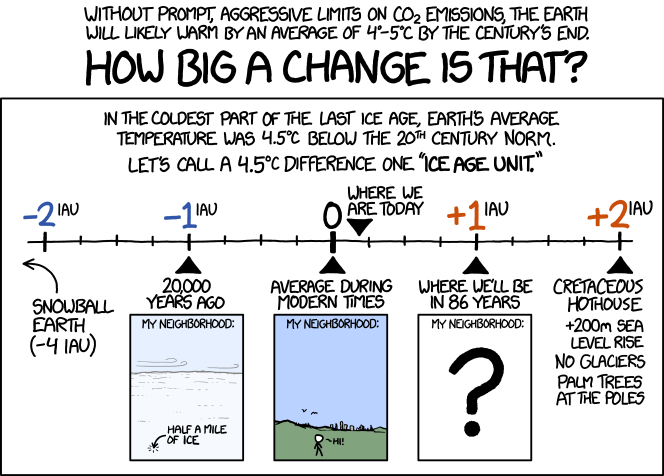


 TDK Super Dynamic - First Hi-Fi Tape 1968 (Credit: Duncan Toms)
 First Walkman - Sony TPS-L2 - 1979 (Credit: Flickr user rockheim via Creative Commons)
 Andreas Pavel - Inventor of the Stereobelt CREDIT: Adriana Zehbrauskas
 Credit: US Patent Office
 Photo credit: 20th Century Fox
 Photo credit: Carl’s Jr.
 Sennheiser HD-414 & Koss Pro-4AA (Photo credit: Sennheiser Corp & Koss Corp)
 Photo credit: 20th Century Fox

 TDK Super Dynamic - First Hi-Fi Tape 1968 (Credit: Duncan Toms)
 First Walkman - Sony TPS-L2 - 1979 (Credit: Flickr user rockheim via Creative Commons)
 Andreas Pavel - Inventor of the Stereobelt CREDIT: Adriana Zehbrauskas
 Credit: US Patent Office
 Photo credit: 20th Century Fox
 Photo credit: Carl’s Jr.
 Sennheiser HD-414 & Koss Pro-4AA (Photo credit: Sennheiser Corp & Koss Corp)
 Photo credit: 20th Century Fox


 And how hard is it to land even a minimum-wage job? This year, the Ivy League college admissions acceptance rate was 8.9%. Last year, when Walmart opened its first store in Washington, D.C., there were more than 23,000 applications for 600 jobs, which resulted in an acceptance rate of 2.6%, making the big box store about twice as selective as Harvard and five times as choosy as Cornell.