Shared posts

28 Dec 02:23

Seattle Now & Then: Fourth and Pike

by jrsherrard

(click to enlarge photos)

THEN: This rare early record of the Fourth and Pike intersection was first found by Robert McDonald, both a state senator and history buff with a special interest in historical photography. He then donated this photograph - with the rest of his collection - to the Museum of History and Industry, whom we thank for its use.  (Courtesy MOHAI)
THEN: This rare early record of the Fourth and Pike intersection was first found by Robert McDonald, both a state senator and history buff with a special interest in historical photography. He then donated this photograph – with the rest of his collection – to the Museum of History and Industry, whom we thank for its use. (Courtesy MOHAI)
NOW: Westlake was cut through from Fourth and Pike to Denny Way in 1906-7.  The Seaboard Building (1907-9) replaced the small storefronts on the northeast corner.
NOW: Westlake was cut through from Fourth and Pike to Denny Way in 1906-7. The Seaboard Building (1907-9) replaced the small storefronts on the northeast corner.

Through the 1890s Pike Street was developed as the first sensible grade up the ridge, east of Lake Union before the ridge was named Capitol Hill by the real estate developer, James Moore.  As a sign of this public works commitment, Pike Street was favored with a vitrified brick pavement in the mid-1890s.  As can be seen here, Fourth Avenue was not so blessed.  The mud on Fourth borders Pike at the bottom of this anonymous look north through their intersection and continues again north of Pike beyond the pedestrians, who in this scene are keeping to the bricks and sidewalks.

Fourth Avenue between Pine and Pike Streets begins, in this "birdseye" from Denny Hill, to the right of the Lutheran church with the steeple, far left, right to the intersection with Pike, which is just right-of-center.  The structures on the east side of Fourth Avenue seen here in the 1890s match those in the feature photo.  The Methodist Protestant church, on the right, is at the southeast corner of Third Ave. and Pine Street.   The larger light brick building, left of center, is named for its builders/owner, Otto Ranke.
(CLICK to ENLARGE)  Fourth Avenue between Pine and Pike Streets begins, in this “birdseye” from Denny Hill, to the right of the Lutheran church with the steeple, far left.  Fourth continues to the right, reaching the intersection with Pike, which is just right-of-center. The structures north of Pike and on the east side of Fourth Avenue seen here in the 1890s match those in the feature photo. The Methodist Protestant church, on the right, is at the southeast corner of Third Ave. and Pine Street. The larger light brick building, left of center, is named for its builders/owner, Otto Ranke.  Its west facade appears upper-right in the featured photo at the top.
While the northwest corner of Fourth Ave. and Pike Street is hidden in this early 20th Century look east on Pike from Second Ave, the west facade of the Ranke Building at the northwest corner of 5th and Pike does show.
While the northwest corner of Fourth Ave. and Pike Street is hidden in this early 20th Century look east on Pike from Second Ave, the intersection sits immediately above the subject’s center.  Standing on both of the trolley tracks, a team and wagon are heading north (to the left) on Fourth.  The nearly new Seattle High School (Broadway Hi) is at the center  horizon.  First Hill is on the right and Capitol Hill on the left.   They are, of course, parts of the same ridge.

At the intersection’s far northeast corner dark doors swing beside the Double Stamp Bar’s sign, which pushes Bohemian Beer at five cents a mug. The first storefront to the right (east) of the bar and its striped awning is the Frisco Café, Oyster and Chop House, whose clam chowder can be had for a dime and “oysters in many styles” for a quarter.  Far right on the sidewalk at 404 Pike, a general store sells both new and used, and advertises a willingness to barter with cash-free exchanges.  Its merchandise is a mix of soft and hard: hanging buckets and baskets are seen through the windows, as well as a pile of pillows.  These storefronts and two more are sheltered in five parallel, contiguous sheds, modest quarters that are given stature with the top-heavy false façade they share above the windows.

This Times clipping from 1910 suggests that the Frisco Bar found a new home near First and University.  The classified also offers up its bar furniture for sale, which is not a good sign.
This Times clipping from 1910 suggests that the Frisco Bar found a new home near First and University. The classified also offers up its bar furniture for sale, which is not a good sign.

The bookends here are the Ranke Building, far right, and the Carpenter’s Union Hall, far left.  Otto and Dora Ranke were the happy German-born and wed builders who staged plays and light operas in their home and performed in them, too.  When the Ranke’s built their eponymous big brick building. it featured a hall and stage for productions of all sorts, including musicals.

The Ranke home at the northwest corner of Pike and 5th.  A past feature about this Peiser photograph is attached below near the top of the string of the relevant links.
The Ranke home at the northwest corner of Pike and 5th. A past feature about this Peiser photograph is attached below near the top of the string of the relevant links.

In 1906, beginning at this intersection, an extension of Westlake Avenue was cut and graded through the city grid to Denny Way, where it joined the ‘old’ Westlake that is now ‘main street’ for the south Lake Union Allen-Amazon Neighborhood. As part of this Westlake cutting, Carpenter’s Hall was razed, and a landmark, the Plaza Hotel, took its place in the new block shaped by Fourth Avenue, Pine Street and the new Westlake Avenue.  The Carpenters moved one block north on Fourth Avenue where they built a new brick union hall.  Then in 1907 Fourth Avenue was continued for two blocks north from Seneca Street, through the old territorial university campus, to Union Street.  As a result of these two regrades, in less than two years the crossing of Pike Street and Fourth Avenue developed into one of the busiest intersections in the city.

The Plaza Hotel underconstruction during the 1906 paving of the then brank new Westlake.  The view looks north from 4th and Pike.  On the left, Fourth Avenue still climbs Denny Hill.
The Plaza Hotel underconstruction during the 1906 paving of the then brank new Westlake. The view looks north from 4th and Pike. On the left, Fourth Avenue still climbs Denny Hill.
 On the left Fourth Avenue still climbs Denny Hill ca. 1908 - but not for long.  (Courtesy, THE MUSEUM of HISTORY and INDUSTRY "also known as" MOHAI)
On the left Fourth Avenue still climbs Denny Hill ca. 1908 – but not for long. (Courtesy, THE MUSEUM of HISTORY and INDUSTRY “also known as” MOHAI)
The American Hotel at the northeast corner of the new Fourth Ave. and Pike Street configuration.  Building on the future Seaboard building soon resume with many floors added above these five.
The American Hotel at the northeast corner of the new Fourth Ave. and Pike Street configuration. Building on the future Seaboard building soon resume with many floors added above these five.

WEB EXTRAS

Anything to add, Paul?  Again and again – thru ten clicks – one may proceed with Ron Edge’s pulls, this week, of appropriate links to past features at and/or near Fourth Avenue and Pike Street.  Following those we may find a few more fitting ornaments at these by now late hours allow.

THEN: We are not told but perhaps it is Dora and Otto Ranke and their four children posing with their home at 5th and Pike for the pioneer photographer Theo. E. Peiser ca. 1884.  In the haze behind them looms Denny Hill.   (Courtesy Ron Edge)

pan-f-denn-hill-1885-web

5th-ave-car-barns-then-mr

THEN: While visiting Seattle for some promoting, silent film star Wallace Reid shares the sidewalk at 4th and Olive with a borrowed Stutz Bearcat.  (Courtesy, Museum of History & Industry)

THEN:  Built in 1888-89 at the northeast corner of Fourth Avenue and Pine Street, the then named Norwegian-Danish Evangelical Lutheran Church marked the southeast corner of Denny Hill.  Eventually the lower land to the east of the church (here behind it) would be filled, in part, with hill dirt scraped and eroded from North Seattle lots to the north and west of this corner.  (Courtesy, Denny Park Lutheran Church)

THEN: Sometime between early December 1906 and mid-February 1907 an unnamed photographer with her or his back about two lots north of Pike Street recorded landmarks on the east side of Third Avenue including, in part, the Washington Bar stables, on the right; the Union Stables at the center, a church converted for theatre at Pine Street, and north of Pine up a snow-dusted Denny Hill, the Washington Hotel.  (Used courtesy of Ron Edge)

========

NEARBY ON PIKE

A troublesome hydrant at the corner of 6th Ave. and Pike Street on March 3, 1920.
This first appeared in Pacific on Jan 19, 1997.

 THREE SECURE HYDRANTS in WALLINGFORD taken during my “Wallingford Walks” between 2006 and 2010.

hydrant-43_corl-9_10_6-b-WEB

The Northeast corner of Meridian and 45th Avenue.
Framed by "Chenical Hill" at Gas Works Park Sept. 10, 2006.
Framed by “Chenical Hill” at Gas Works Park Sept. 10, 2006.

=====

ANOTHER LEAK ON PIKE

3. Trolley-flood-on-Pike web

3.-nowTrolley-flood-on-Pike-WEB

First appeared in Pacific on Jan 29, 1995

====

TWO PIKE PAGES OF SIX in PIG-TAIL DAYS

Below we have pulled Sophie Frye Bass's description of Pike Street - the first two of six pages on pioneer Pike.   The reader is encourage to find the other four, and then to read all of this well-wrought book by a daughter of the pioneers.
Below we have pulled Sophie Frye Bass’s description of Pike Street – the first two of six pages on pioneer Pike. The reader is encourage to find the other four, and then to read all of this well-wrought book by a daughter of the pioneers.

Pike-St.-Pigtail-Days-p70-71-(of-6)WEB

=====

Now up the stairs to nighty-bears.  We will re-read and proof tomorrow.


12 Dec 10:42

Bits to Atoms: Testing the Form 1+ SLA Desktop 3D Printer

by Sean Charlesworth

3D printing keeps getting bigger, better and more accessible every day--you can now buy a MakerBot or Dremel 3D printer at Home Depot. Plastic filament printers are, by far, the most common type you will find at makerspaces and home garages, but high-resolution resin printers are slowly creeping into the mainstream. One of the most promising, is the Formlabs Form 1+ SLA printer developed by a team from the MIT Media Lab. I had the chance to put a Form 1+ through it’s paces for two months and here’s how it went.

You will need a dedicated, clean workspace for the Form 1+.

First, a little backstory on the company. Formlabs was founded in 2011 by a group of MIT grads who were frustrated by the fact that there was no economical way for most people to experience the highly-detailed prints that SLA and DLP resin printing offered. Unlike filament printers, which were popping up everywhere at relatively consumer-friendly prices, SLA printers cost tens of thousands of dollars and were simply out of reach of most users. Formlabs set out to make a desktop SLA printer that would rival the big machines and cost only slightly more than many filament printers. At the end of 2012 they successfully completed a $100,000 Kickstarter campaign, eventually bringing in over 2.9 million dollars. Nothing like being too successful--now the pressure was on with a lot of machines to build. Production delays happened and then they got hit by a patent infringement lawsuit from 3D Systems, the inventors of SLA printing. I am happy to hear that the parties have settled, and the case was just dismissed with prejudice on December 1. Formlabs is free to forge ahead.

Photo CREDIT: Formlabs

Having met the Formlabs team a few times at Maker Faire and other events, I have always been impressed. Everyone at the booth knew their stuff, answering in-depth anything I threw at them. One particular staffer was really killing it with thorough and informative answers--turns out she was their material scientist. The machine was sharp looking and all the prints looked great--I really wanted to buy one, almost backed the Kickstarter for an early unit, but chickened out. Recently I contacted Formlabs to request a sample unit to test. So for the past few months, I've had a Form 1+ in my possession and was able to put it through it’s paces!

How It Works

Photo CREDIT: Formlabs

The Form 1+ SLA printer makes a good first impression--sleek and simple design, using quality materials. It just looks cool. It takes up a little more room than a large coffee maker, but it also comes with a cleaning station that you will need to make room for. The on-board interface has one button that does everything with a variety of taps and holds, mostly you use it to simply start and stop prints. PreForm is the easy-to-use model processing software that can be downloaded from the Formlabs website.

The build envelope is 4.9” x 4.9” x 6.5”, which may sound tiny when compared to filament print beds, but prints can be positioned in ways to maximize the space. There are three print resolutions available: 100, 50 and 25 microns (.1, .05, .025mm). As a comparison, 100 microns is typically the finest resolution available with filament printers and a professional printer such as the ProJet 7000 (which I used for the Millenbaugh Motivator) can print at 125-50 microns. “A-ha!” you say--the Form 1+ can do even finer resolution than the pro machine! Yes, it can technically print a finer layer thickness, but you also have to consider feature resolution, which is the smallest detail the printer can accurately reproduce. This is where the pro machine wins out. The ProJet can accurately reproduce details down to 50 microns, where the Form 1+ does 300 microns. Don’t get me wrong, 300 microns is still really small and the Form 1+ can do details just great, but you can start to see what a lot more money will get you.

The Form 1+ uses a laser to ‘draw’ and cure each layer of the print in a UV-curable, liquid resin. An amber acrylic cover encases the print area to keep sunlight out, which would cure the resin and to protect you from the laser. The print adheres to a removable print platform that clamps into the machine, at the top of the z-axis spindle. Below the platform is a removable, acrylic resin tray, which has an optically clear silicone bottom and mounts into a pivot mechanism that rocks the tray up and down, during printing, in order to peel the print off. The trays are also amber and come with a lid so they can be safely stored without curing the resin inside. Upon removing the resin tray, you can see the large mirror mounted at a 45 degree angle which the rear-mounted laser bounces off of and into the bottom of the resin tray.

I was able to get the Form 1+ up and printing in no time--faster setup than a filament printer. With a filament printer there’s a lot more moving parts and the filament has to be loaded, which requires preheating the machine. Typically some kind of covering or coating has to be put on the print bed and it has to be leveled and then the machine has to preheat. With the Form 1+, I filled the resin tray to the line, uploaded the model and printing began immediately. With a filament printer, if you want to change materials, the machine must heat up, the filament extracted, the new filament loaded and then the system needs to be flushed to remove any traces of the prior filament. With the Form 1+, simply remove the tray and insert a new one with a different resin, this is assuming you have an extra tray (more on that later).

Resin comes in a light-tight bottle that needs a good shake, if it’s a pigmented material. It’s poured into the resin tray to the to the ‘max’ fill line, which should be adhered to closely, as the level of the resin rises dramatically as the platform submerges. Carelessly overfilling the tray would result in an overflow that would end up inside the machine. I would let the resin sit for a little to allow bubbles to work their way out. Once a print is initiated, the platform lowers into the resin and sits on the bottom of the tray. The laser immediately starts darting around, curing a thick layer of resin and supports that the entire print hangs from and adheres to the aluminum print bed. When a layer is finished, the resin tray, which is mounted to a hinge, dips down thereby peeling the print off the bottom of the tank. The print platform then moves up slightly for the next layer and the tray moves back into position. It does this for every layer and is the only noise the machine makes and while not silent, it’s far quieter than my MakerBot. Once the print finishes, the platform will move to it’s home position at the top of the z-axis spindle, with the print hanging, bat-like, from the bottom. I would recommend allowing the print to rest for a few minutes, as there is still liquid resin clinging to it that will drip back into the tray.

Like any 3D printer, prints can take a long time. The Form 1+ is the updated version of the original Form 1 and is twice as fast and has a laser four times as powerful. At the medium, 50 micron setting, a 1:64 scale jetcar took around 8 hours and the larger 1:48 scale took around 12 hours. A long time, but not for this type of printing and the wait is worth the details.

8 hours for a small print, 12 hours for the medium sized one.

Once a print is finished, it’s onto the cleaning station where we remove any liquid resin remaining on the print. Formlabs put together a nice vacuum-formed tray that has a place for the platform, two cleaning tanks and an absorbent pad to rest models on while they dry. A squeeze bottle, blunt scraper, flush cutters, tweezers and rubber gloves are also included. You will have to purchase isopropyl alcohol for cleaning the models. I would recommend getting at least a gallon can from your local mega mart as it takes a good bit to fill all the tanks and it will get dirty fairly quick. The print has to be pried off the print platform using the included scraper. It can be a tough job but the PreForm software wisely adds little notches to the base of each print which makes getting the scraper in and under the print much easier.

Cleaning station--it's sticky.

Once removed, the print goes in the first tank with alcohol and gets shaken gently for a minute or two, then it soaks for around 10 minutes. The print is removed, using the convenient basket and moved to the second tank for a repeat shake and soak and then to absorbent pad to dry. At this point, the print is not 100% cured and will be slightly soft and flexible, so be careful not to bend, break or scratch anything. I confirmed with Formlabs that they will usually zap the finished print in a UV oven for a few minutes for a full cure. For the rest of us, the print could be put in the sun for a few minutes or it will cure on it’s own over a few days. I found putting prints in the sun a risky business as I had some thin features severely warp from rapid curing.

Removing supports.

This is a good point to remind everyone that prints are UV-reactant, so you don’t want them sitting in the sun or under a halogen lamp as they will discolor and become brittle. This is not unique to the Form 1+, but true of most resin printers, so prints should be painted or at least clear coated to protect them. You will also need to remove the model from the supports, which attaches the model to the print bed (more on this in the Software section). Supports can be removed with the included flush cutters or an x-acto knife and any remaining marks can be sanded once the model is cured.

Testing the Software

The PreForm software is simple and easy to use, while still giving the user access to some tweaks. Pick the material and layer thickness and have the software orient your model and auto generate supports. Unlike filament printers where it’s ideal to have a nice, flat surface to put on the print bed, the Form 1+ needs models at an angle. Why? Because the peeling process becomes much more difficult and prone to failure with large surfaces. It’s like trying to peel a sticker off in one piece without it ripping. If you were printing a cube with a side directly on the print bed, it has to peel that whole surface versus a square positioned corner-down which would be a much smaller area to peel. By the time the printer gets to the middle of the cube, where there is a lot of surface area, there would be enough supports and mass generated that it would probably peel ok.

I wrecked Winterfell better than the Boltons. Positioning flat on print bed caused failure.

Ideally, the cube would be hollowed-out to both save material, time and making it more likely to print successfully. Since nothing will be laid flat, everything on the Form 1+ will print with supports, unlike filament printers where certain designs can print without supports. It It’s still a good idea to design models to use as few supports as possible to save on resin and post-print clean up. PreForm will automatically generate supports and indicate possible problem areas. There is the option to tweak support settings and even manually add and remove supports, which is nice. In general, the software did a good job but it is ‘dumb’, as it does not know what is the ‘good’ or visible surface of a model. You may want to manually orient models so the downside, or unseen side, faces the supports, this way, any marks the supports may leave will be hidden.

Should have positioned supports under the car, not on side.

Familiar options such as shells (wall thickness) and fill (how solid the interior is) are absent from PreForm (and most resin printing software) since the model will print exactly how it’s modeled. A solid cube will print solid and use up a lot of material, so to save on time and materials, models should be hollowed with escape holes when possible, which will require additional modeling work. The Form 1+ needs to be connected to a computer via USB to upload the model--there is no SD card option. However, once the model is completely loaded into the printer, the computer can be disconnected. Uploading the model can take a few minutes, but nothing unreasonable and the print will start while the rest of the model uploads.

The Materials

Formlabs offers white, gray, black and clear resins which run $149 for a liter. I haven’t crunched the numbers on how this compares to filament, but it’s definitely more expensive. I filled a whole gallon bag, plus some, with prints from one bottle of resin, so it does go quite a long way. I tested the gray, black and clear which all produced nice prints. My favorite was the black which made details really pop. I didn’t like the gray as much since it was slightly translucent on many parts. The clear came out nice and can be polished to transparency, although it is prone to yellowing as it ages or if exposed to too much UV light.

I would describe the fully-cured resin as acrylic-like, as it can get brittle and I have snapped off thin pieces and edges. To confirm my suspicions, I dropped a failed print on the floor and it shattered into pieces, so prints should be handled with care. I don’t know if I would want to use them for mechanical parts, other than mock-ups, as I would feel more comfortable with ABS which has some give. Formlabs just released a castable material that can be used in ‘lost wax’ applications, which is excellent for jewelry makers. They also announced that a clear, flexible material is due anytime now and it looks promising.

I was able to print this bag of failure plus more with one bottle of resin.

The Bad Stuff First

Printer #1 - Laser test shows bad laser with halo.

Let’s get the bad out of the way first. The worst thing I can say is that in the two months I was testing the Form 1+ I went through three printers. Yep. The first one had a bad laser which caused every print to fail. The beam should normally be a pinpoint, but mine had a halo around it which was like painting with a rag versus a fine paint brush. The second had a spectacular fail with the peel motor, which moves the tray up and down. There was a horrible grinding noise and it pulled the tray down so far it rammed into the body of the printer. The tray was stuck in the down position and wouldn’t budge, meaning it couldn’t be removed or emptied easily. I had to let the printer sit open in the sunlight for a few days to cure all the resin left in the tray, so it could be shipped back.

Printer #2 - Tray just kept on going and jammed here.

The third printer worked like a champ and I got great prints on it until a few days after Norm and I shot the Form 1 video when the peel motor stopped working. This was different than the second unit, as I could move the tray up and down and even remove it. Turns out the peel motor uncoupled from the tray mechanism and could be fixed relatively easily, but it was time to send the printer back anyway.

Printer #3 - Peel motor detached from tray mechanism.

I was a bit disappointed by the failures but I will say this - these are the typical things that go wrong with the Form 1+, Formlabs is aware of the problems and have been addressing the issues. I was also getting demo units that have been shipped all over and probably used more than a typical printer. Disappointing, nonetheless. Customer service was very good, prompt and thorough, but that could be biased by the fact that I was reviewing the unit. Although, I don’t think that’s how Formlabs operates, they seem to take customer service seriously and to be doing a pretty good job. I think for a Kickstarter project that wildly outperformed expectations, with a small group of people, they are doing pretty well.

Beautiful failures: resin stuck to bottom of tray.

Aside from the hardware failures, I would have occasional print failures, where the print would not peel properly and get stuck to the tray. When this happens you get a layer of resin baked to the tray bottom, which blocks the laser from adding to the model. The print is ruined and you have to very carefully use the included scraper to remove the baked on resin. This is nerve wracking as the bottom of the tray is a soft silicone and if you gouge or scratch it, your tray is toast. I was surprised that this wasn’t as bad as I thought it would be--I managed to get it clean every time without damaging anything.

Carfully removing failed print from tray.

After scraping off these baked-on bits you have to run a comb through the tank in order to sift out any stray bits that would ruin prints. Formlabs gives you every possible tool you need except for this--I used a regular fine-tooth hair comb. I asked Formlabs why they chose silicone and not glass and it comes down to the stresses that the peeling process causes on the tray. Their answer: glass would break. The biggest bummer concerning the tanks is the silicone will eventually start to cloud due to the laser. The clouding will then cause bad or failed prints and the tray must be replaced. Formlabs recommends moving the position of prints around the print platform to give all surfaces of the tank equal play, but ultimately after about 2 bottles of resin you should think about replacing your tank which costs $60. I don’t like that part at all, and hope to see improvements to extend the life of the resin trays.

Three trays cracked in same spot.

There should be a dedicated tray for each type of resin you plan on using. It is technically possible to clean out and use the same tray for different materials, but it’s unrealistic and messy.

During my tests, I had three resin trays crack, one of which I thought was my fault, but upon further inspection they all cracked at the exact same spot - the back left corner where there’s a molded pour spout. I think this is a weak spot and the stresses of the peeling process may tend to crack the trays.

A look inside reveals how easily dirt can get on optics.

Finally, for a unit that relies on lasers and optics, the open body design is a problem and I feel it should be sealed in some way. Both my apartment and shop were a torture-test for the Form 1+, between NYC dirt, old building dirt, three cats, etc., the mirror would get dirty very easily. When the resin tray is removed, the interior of the printer is completely exposed, with the large mirror directly beneath the opening. As the repair tech at NYU Film and TV, I have a lot of experience and tools for cleaning lenses and sensors, but cleaning the mirror on the Form 1+ and getting it spotless and streak-free was really tough. If dirt gets on the smaller mirrors that direct the laser back inside the machine, cleaning would be particularly difficult. With this layout, it’s relatively easy to accidently get resin on the mirror and even a drop would be very bad and difficult to clean off. I spoke with Formlabs at NYC Maker Faire about this and they indicated that they had always wanted some type of sealed unit, but there’s only so much they could address and still keep costs down and, especially while doing a startup. I hope to see this improved in future units.

While not a bad thing per se, something to keep in mind when using the Form 1+ is that a dedicated workspace is needed for the printer and cleaning station. My MakerBot is crammed into the corner of my desk and that works fine, but the Form 1+ system needs more space. Ideally it would be in a clean area (ie. not your woodshop) and it needs a fair amount of space in the back to open the lid. There needs to be a spot for the cleaning station as well and keep in mind, that no matter how hard you try, resin and alcohol will get on this work area. I was trying to be tidy, but everything around the printer eventually got a little sticky.

The Good Stuff!

Amazing detail!

The prints I produced with the Form 1+ were very, very nice. I was really impressed with the detail on the miniature jetcar and the lightsaber turned out really well. Prints generally had a nice surface finish, supports were relatively easy to remove and sanding and painting is easily done. I felt that print times for this level of detail were totally reasonable and to be expected for SLA printing. Formlabs has a nice range of materials to work with especially with their new additions. I love how the machine looks and that it’s relatively quiet. Formlabs is obviously working on improvements and have been actively listening to feedback.

Every Jedi must forge his lightsaber.

I like the PreForm software and don’t really have any bad things to say about it. It was straightforward and easy to use, it’s auto mode generally worked well, it was fast and gave just the right amount of tweaking options. Getting the printer running was a breeze and is overall easy to use, this is counterbalanced by the routine maintenance that must be done. You have to keep the mirror and bottom of the tray perfectly clean - fingerprints and excessive dust will ruin prints. You have to make sure the inside of the tank is clean and free of stray cured bits of resin. Unused trays and resin must be sealed and kept out of direct sunlight. The cleaning station will need cleaned and the alcohol changed out periodically. If you are a detail-oriented type, this should not be a problem and is worth it for excellent prints. If you run the Mr. or Ms. Messy Workshop, this is probably not the printer for you. I would not recommend this printer for most schools where students have direct access, unless highly supervised. If you are a jewelry maker, craftsman, into miniatures, a sculptor, ZBrush artist, etc, this would be an excellent printer for you.

So would I buy a Form 1+? As much as I like the prints, I personally would like to wait for their next gen machine which I hope would address some of the issues I had. I would also like to see them come out with a material that hits that sweet spot between their standard material and the flexible--something that is rigid with just a bit of give. Despite any problems I ran into, I really liked testing the Form 1+ and look forward to what Formlabs will do next. I think they have a solid foundation to work from and the Form 1+ will keep getting better. I also suspect that they will have a lot more competition down the road, especially from 3D Systems and Stratasys, the big guns in the field of 3D printing. If you would like to learn more about Formlabs (and MakerBot) I would highly recommend the Netflix Print the Legend documentary, which is an excellent behind-the-scenes look at not only 3D printing, but the world of Kickstarter and small startups.

Check out the video of Norm and I discussing the Form 1+.

12 Dec 02:35

Life After Debt: Why America Needs an Anti-Capitalist Left

by Ann

Does America need a Left? Yes, very much. We need a Left that rejects a vision of politics based on the expansion of an unjust economic system, which is to say that we need a Left that rejects James Livingston’s advice that we “compromise with the world as it actually exists.” This is not a call to reject pragmatism, but rather to acknowledge that the “world as it actually exists” has for too long been defined through reactionary terms. We argue instead for an activist, avowedly anti-capitalist Left, one that seeks to tear away the constraints that have impeded necessary, fundamental change.

The Left, which for too long has capitulated to rules of engagement established by conservatives, needs to work to find alternatives to our present debt-financed society.

Unfortunately, this Left, though it exists in fragments, is overshadowed in the United States. Those who would claim the mantle of the Left have tried for too long to advance their goals by appeasing the Right, hoping, misguidedly, to find common cause and to compromise their way into a better world. The progressive movement—the institutions, think tanks, pundits, and politicians that currently stand in as the serious spokespeople of the Left—speaks of  “good jobs,” “economic growth,” and “regulated markets,” appealing to a mythical middle ground that has never and cannot exist. By capitulating the very terms of engagement to conservatives, progressives have distorted their message and acted against the interests they purport to serve.

America needs a Left that does not, as Michael Lerner noted, approach the question of social change in an “economistic” fashion. The progressives that dominate political discussion and action share in common a vision of change as emerging via market mechanisms. This mainstream Left is beyond rehabilitation. We believe, like Eli Zaretsky, that “progress is blocked by the same internal capitalist dynamic that created progress in the first place.” We must counter capitalism not by appealing to it, but by opening space for people to no longer be dominated by its logics. The demand for such a Left is undeniable. What’s missing is only the political will to see it through.

Read the rest of this article (co-authored with Henry Ostrom) in Tikkun.

12 Dec 01:20

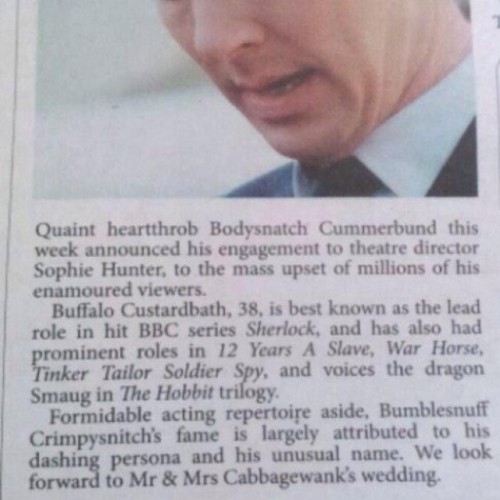
An Australian newspaper congratulates Benedict Cumberbatch on...

Tertiarymatt

Please be real. Please be real.


An Australian newspaper congratulates Benedict Cumberbatch on his recent engagement. -mrsmo

11 Dec 23:11

How To Get Into Hobby RC: A Snapshot of the Multi-Rotor Market

by Terry Dunn
Tertiarymatt

Interesting little article for those interested in flying about with the whirring and the crashing.

Buying a multi-rotor can be a daunting experience. There are so many different models already on the market, with more emerging every day. Those choices represent a wide range of sizes, capabilities and quality, not to mention price points. In an effort to make the candidate pool a little less overwhelming, I have compiled an overview of currently-available multi-rotors. Consider it a snapshot of this ever evolving scene. Obsolescence will come quickly.

To make the list more manageable it has been abridged to include only those aircraft that meet the following criteria:

  • Hobby Grade – Parts can be replaced or upgraded as needed.

  • Ready-to-Fly (RTF) – The multi-rotor is ready to fly, or very nearly so when purchased. A transmitter is included. Smart phone controllers don’t count (sorry Parrot).

  • Available from US retailers – No offense to our foreign readers. This criteria is meant to weed out the clones, and knock-offs of dubious origin.

The multi-rotors shown here have been divided into two categories: small and medium. The primary difference being that medium multi-rotors are capable of carrying an action camera such as a GoPro. Of course there are multi-rotors that would fit into large, X-Large, Jumbo, etc. categories. These ships are intended for hauling high-quality video equipment. Due to their complexity and cost, they should really only be considered by experienced pilots. So they have been omitted from this list.

I have chosen to include only RTF models simply because that is what most people prefer. With small quads, RTF is really the only option. There is nothing wrong with using an unassembled kit for your medium multi-rotor. In fact, there is a strong case to be made that building your own aircraft will provide you with a much better understanding of its inner workings and abilities. You just have to be willing to dedicate the time and effort required to get it assembled, outfitted and tuned.

Please note that this is not a ranking. I have personal experience with only a handful of the listed models. So any type of hierarchy would be disingenuous. Comparing listed features is one thing. Actually flying and exercising those features is quite another.

Small Quads

If you are new to multi-rotors, this is where you should be looking. These quads are ideal for learning the basics of multi-rotor piloting, but without the financial and safety risks associated with larger aircraft. With a few models selling for under $50, there really is no excuse to skip this important step in the learning process.

None of the small quads feature GPS capability. This means that they have no way to hold their position autonomously when the wind tried to blow them away. I think that learning to fly without GPS is a critical skill that will serve you well when you transition to a larger machine. GPS is a fabulous and useful tool, but it’s an unreliable crutch for those who can’t be bothered to learn basic flying skills. Being able to fly the aircraft manually when the GPS link is lost (it happens all the time) can get you out of a jam.

Small quads are perfect vehicles for learning to fly multi-rotors. The inputs are the same as with larger aircraft, there’s just less risk involved. Plus, they’re fun to fly indoors.

Some of the small quads include cameras as built-in or optional equipment. These cameras can be fun to play with, but I have yet to use one that provides high-quality photos or video (regardless of the camera’s advertised specs). If aerial photography is your end-game, you will find much improved results once you step into the medium category.

The larger quads in the small category can be a bit much for flying in confined indoor spaces…especially when you’re just starting out. So if you’re stuck in a cramped apartment, you’re probably better off with one of the “smaller” small quads. If you have access to a large indoor space such as a basketball court, it is a great stress-free training area. Outdoor areas can be useful too. Just be aware that areas close to buildings, trees, walls, can hide turbulent air when the wind is blowing.

In my opinion, the most important features to look for in a small quad are adjustable control sensitivity (via gyro settings, multiple flight modes, and/or dual-rate controls), a reasonably-sized 2-stick transmitter, and a dependable supplier for replacement parts (preferably local). The best way to address the third qualifier is to visit a local hobby shop and choose from the lines they carry. Local prices are often the same as those found at internet stores.

Brand Model Size* Transmitter Size Adjustable Sensitivity Camera FPV Current Street Price
Align M424 240mm diag full FM $110
Ares Ethos PQ 63mm long small FM $50
Ethos QX 130 205mm long full D/R O $100
Ethos HD 292mm long full D/R I O $170
Ethos FPV 292mm long full D/R I I $270
Spectre X 100mm long medium D/R I O $90
Blade Pico QX 92mm long small D/R $50
Nano QX 140mm long medium FM, D/R $90
FPV Nano QX w/goggles 140mm long medium FM, D/R I I $420
180 QX HD 292mm long medium FM, D/R I $190
Dromida Kodo 90mm diag small FM I $60
Ominus 238mm long medium FM, D/R $80
Estes Proto-X 45mm long small $30
Proto-X SLT 45mm long medium FM, D/R $40
Proto-X FPV 115mm long full FM/GR I I $230
Heli-Max 1Si 123mm diag medium FM, GR, D/R I $140
1SQ 123mm diag medium GR, D/R $100
1SQ V-Cam 123mm diag medium GR, D/R I $130
230Si 230mm diag medium FM, GR, D/R $150
230Si w/camera 230mm diag medium FM, GR, D/R I $180
HobbyZone Faze 45mm long small $40
Hubsan H111 45mm long small $60
H107C 70mm long medium GR I $50
H107D FPV 140mm long full GR I I $175
LaTrax Alias 166mm long medium GR, D/R $150
Syma X1 not listed full FM $30
X3 220mm long medium FM $40
X4 140mm long medium FM $35
X5 310mm long medium FM $50
X5C 310mm long medium FM I $75
X6 560mm long full FM $75
X11 152mm long medium FM $30
X12 45mm long medium FM $25
Traxxas QR-1 120mm long medium GR, D/R $70
Walkera Ladybird 85mm long medium D/R $55
Ladybird FPV 85mm long medium D/R I I $255
Infra X 108mm long medium D/R $130
Scorpion (6 motors) 118mm long medium D/R $50

* Not all manufacturers use the sane measurement methods. Some provide the distance between rotor shafts, while others include the blade lengths. The values shown here are taken directly from the manufacturer's specifications.

** FM = Selectable flight modes, GR = Adjustable gyro rates, D/R = Dual rate controls - All are effective means of adjusting a quad's responsiveness

*** I - Included, O - Optional

All efforts have been made to ensure the accuracy of this information, but verify features and specifications with your retailer before making a purchase.

Medium Quads

Once you’ve mastered your small quad, you should be ready to move into a medium multi-rotor. You may choose a tri-rotor or hex-rotor, but all of the units that I found within my criteria are quads. In some cases, the actual size change from a small to medium quad may not be much at all. Regardless of their footprint, medium multi-rotors represent a significant uptick in power, weight, and complexity.

Medium quads can haul around a good quality camera for aerial photography. There multi-rotors represent a significant increase in power over small quads. Threat them with respect.

All of the medium ships utilize brushless motors and lipo batteries with three or more cells. This extra power is what allows them to haul a payload like a GoPro, fight strong winds, and reach impressive speeds. The same level of power can also pose a significant danger if not handled with adequate diligence and competency. At the risk of putting too fine a point on it, I’ll summarize by saying this: Always be smarter than your multi-rotor. In other words, just because you can get great aerial footage of your kid’s soccer game, doesn’t mean you should. In fact, you shouldn’t…it’s an awful idea.

When moving from a small to a medium quad, you will probably find that the larger vehicle is considerably easier to fly, especially in wind.

When moving from a small to a medium quad, you will probably find that the larger vehicle is considerably easier to fly, especially in wind. First of all, the medium ships are typically denser than the smaller quads, so they are less affected by the wind’s ambitions. Furthermore, the medium multi-rotors will often feature a larger and more precise suite of instruments and processors that stabilize it. When all systems are functioning properly, the electronic pixie dust inside a medium multi-rotor will handle most of the piloting workload. You just tell it where you want it to go.

While most people use medium multi-rotors for shooting photos or video, their power and agility also makes them fun sport models (with or without a camera attached). Many of the listed aircraft are capable of basic aerobatics such as flips and rolls.

As with small quads, I suggest that you first check availability at local hobby shops. If you plan to use your multi-rotor for aerial photography, you should definitely consider a model that includes a gimbal. Gimbals provide a huge improvement in the quality of your media by isolating the camera from the inescapable tilts and bobbles of the aircraft. Many gimbals also include the ability to reposition the camera during flight. A 2-axis gimbal provides stabilization in the pitch and roll axes.

A gimbal, such as the 2-axis gimbal shown on the Blade 350QX2 AP Combo is invaluable for capturing smooth video footage in rough flying conditions.

3-axis gimbals add the ability to pan the camera without yawing the multi-rotor. Just keep in mind that the landing gear can obstruct the field of view with 3-axis gimbals unless there is a provision to reposition the camera or gear in flight. Some multi-rotors that do not include gimbals can be outfitted with add-on units whenever you’re ready.

First Person View flying is a fun segment of multi-rotors. Just be sure to learn the basics of flying before you strap on FPV goggles.

You will find that a few of the medium quads come equipped with First Person View (FPV) systems. All of them can be outfitted with add-on FPV systems. Keep in mind that many FPV systems require an amateur radio technician license to operate legally. Legalities aside, FPV should be considered an advanced skill. It is my firm opinion that you should refrain from FPV until you have a solid grasp of the demands of flying a medium multi-rotor. Given the limited situational awareness, potential latency, and risk of video signal loss, FPV can be overwhelming for pilots with little experience.

Brand Model Size* Camera Gimbal Stock FPV Approx Street Price
3D Robotics Iris+ 550mm long GP Hero 3 (not incl.) optional 2-axis $750
Blade 350 QX2 465mm long GP Hero 3 (not incl.) $450
350 QX2 AP Combo 465mm long C-Go1 (1080p/30) 2-axis 5.8GHz Wi-Fi $700
350 QX3 465mm long GP Hero 3 (not incl.) $500
350 QX3 AP Combo 465mm long CGO 2 (1080p/60) 3-axis 5.8GHz Wi-Fi $1000
DJI Phantom 1 350mm long GP Hero 3 (not incl.) optional 2-axis $420
Phantom FC40 350mm long FC40 (720p/30) 2.4GHz Wi-Fi $430
Phantom 2 350mm long GP Hero 3 (not incl.) optional 3-axis $550
Phantom 2 Vision 350mm long Integrated (1080p/30/60i) 1-axis (tilt) 2.4GHz Wi-Fi $760
Phantom 2 Vision+ 350mm long Integrated (1080p/30, 720p/60) 3-axis 2.4GHz Wi-Fi $1100
Inspire 1 438mm long Integrated (4K/30) 3-axis 2.4GHz $2900
Hitec Q-Cop not listed Integrated (1080p/30, 720p/60) 1-axis (tilt) Wi-Fi $800
Walkera QR X350 Pro 289mm long GP Hero 3 (not incl.) $365
QR X350 Pro FPV 289mm long iLook (720p/30) 2-axis 5.8GHz Wi-Fi $900
Scout 335mm long iLook+ (1080p/30) 2-axis 5.8GHz Wi-Fi $1600

* Not all manufacturers use the same measurement method. Some provide the distance between rotor shafts, while other include the blade lengths. The values shown here are taken directly from the manufacturer's specifications.

All efforts have been made to ensure the accuracy of this information, but verify features and specifications with your retailer before making a purchase.

Conclusion

Even with filters applied to create this list, I realize that there are likely a few models that I’ve missed within each category. None of these omissions are an intended slight. The multi-rotor market is just too dynamic and broad to catch them all…which, of course, is the whole reason for this list in the first place. I hope that it will help you narrow your search when you are ready to buy a multi-rotor (or two) for yourself.

Terry spent 15 years as an engineer at the Johnson Space Center. He is now a freelance writer living in Lubbock, Texas. Follow Terry on Twitter: @weirdflight

11 Dec 16:39

LEGO Invisible Lift Contraption is Hypnotizing

by Norman Chan
Tertiarymatt

This thing is SO AMAZING

11 Dec 16:34

What the World Doesn't Need Are Steampunk Luxury Condos

Tertiarymatt

peaksteam

Every so often, circumstances conspire to deliver a perfect send-up of an unfortunate national trend. This is not one of those moments. This is a story where all of us lose.

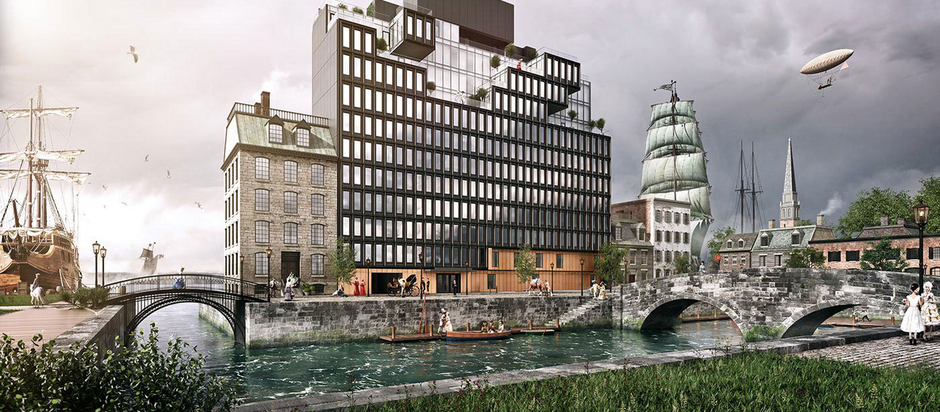
A new luxury development called 15 Renwick in New York is giving built form to steampunk. That's right, steampunk: that dark, Victoriana-obsessed cousin of Renaissance festivals and Star Trek conventions is now a theme for condos. I'm sorry to report that it gets worse: Steampunk is the entire pitch for the building.

(IGI-USA)

That's right: Those are sloops and frigates parked along Manhattan's West Side. Contrary to the rendering above, 15 Renwick isn't some kind of steam-powered estate floating gayly on the Hudson. It's an 11-story, 31-unit building just off Canal Street in Hudson Square, the neighborhood that the New York Observer called"the last corner of undeveloped Manhattan" in 2012.

The project, which is nearing completion now, looks like the last stop along a tour designed by Jules Verne (Journey to the Center of New York Real Estate). Renderings of the building's condos, townhouses, and penthouses feature residents who all appear to be socially well-adjusted. I'm kidding: They look like people who think New York was better back when it was called New Amsterdam.

(IGI-USA)

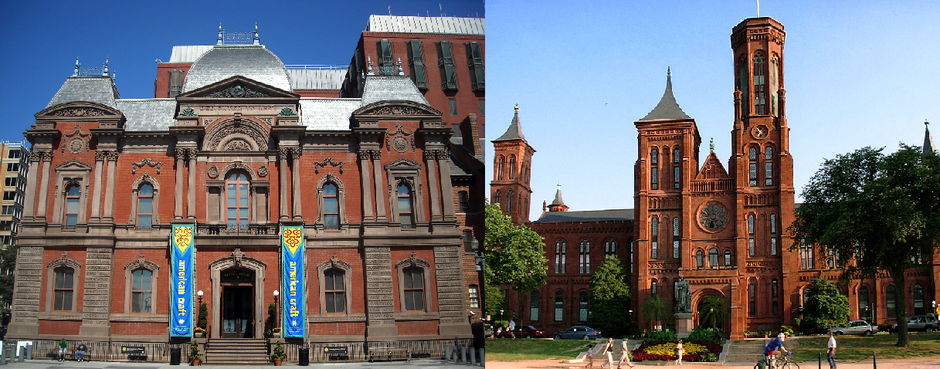
Renwick Street and the building alike take their names from 19th-century Columbia University engineer James Renwick, and his better-known son, James Renwick, Jr., the architect who designed such iconic buildings as the Smithsonian Institution's Castle. But 15 Renwick doesn't have anything to do with Romanesque Revival architecture. The building is the work of ODA Architecture, whose lead, Eran Chen, boasts a number of credible multifamily projects in New York.

Left: The Smithsonian American Art Museum's Renwick Gallery (built in 1859), originally as the Corcoran Gallery of Art. Right: The Smithsonian Institution Building (1855), better known as the Smithsonian Castle. Both were designed by James Renwick, Jr. (Smithsonian Institution)

The condos, townhouses, and penthouses—which are still selling, from between $2.4 million to $7.1 million—are tricked out with walnut flooring and bleeding-edge appliances. There's even a Zen garden (designed by the landscape firm HM White Site Architects). Yet whatever the project's merits, the developer didn't advertise them directly, at least not at first. An early marketing push for the units relied entirely on the characters themselves, neglecting things like interior details in favor of a sell that emphasized livin' that Founding Father life.

(IGI-USA)

First as tragedy, then as farce, as the saying goes: Way back in 2008, The Onion ran a feature on the threat of "aristocratization" facing the nation's gentrifying neighborhoods. A sardonic housing report detailed how "the enormous treasure-based wealth of the aristocracy makes it impossible for those living on modest trust funds to hold onto their co-ops and converted factory loft spaces."

Now those aristocrats are a feature, not a flaw. Danielle Tcholakian, who covers west Manhattan for DNAinfo, spoke to 15 Renwick developer Dan Oelsner, who told her that Hudson Square is a "boutique neighborhood" that's "full of rich hipsters."

(IGI-USA)

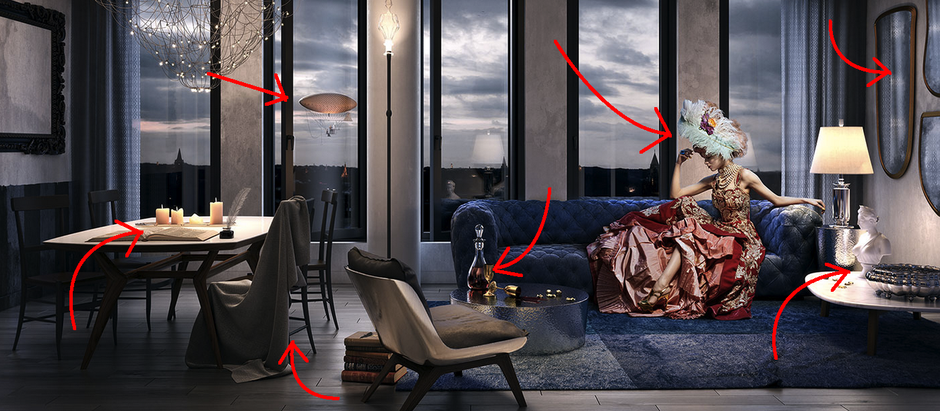
Let's take stock of what this rich hipster's boutique life entails:

—Tome with quill and ink, for writing one's paper Tumblr
—Vast cape draped over the chair
—There is definitely an airship out the window
—Not just a carafe of cognac, but an artfully spilled goblet
—That hair tho
—Marble bust on an Isamu Noguchi coffee table
—Are those shields?

All that's missing is a tiered cake and the grubby faces of de Blasio orphans pressing against the window, dreaming of affordable housing and warm mittens.

Kitchen and still-life studio. (IGI-USA)

"Our target market is people who are creative, different," 15 Renwick developer Eldad Blaustein told the Observer when the project first launched. "We always joke that it might be a Wall Street trader, but he’s writing songs, he’s writing poems at night."

A Wall Street trader, perhaps, who writes songs and poetry at night. (IGI-USA)
(IGI-USA)

This project should be an opportunity to reexamine the acute fever that has settled over the nation in the early part of this decade. Which goes beyond the obsession with artisanal cocktails and pickles and mayo and toast. And beyond those curly mustaches that a certain stripe of men and women are so taken with. (Why do mustaches need a Pinterest page?) It should be an opportunity for everyone to watch a season or two of Deadwood as a reminder that the 19th century was terrible.

But 15 Renwick is not that opportunity. It's too late for that. The only thing left is to burn it all down.

(IGI-USA)
(IGI-USA)

New York: What happened to you?

11 Dec 06:33

Adam Interviews John Cleese

by Adam Savage
Tertiarymatt

This is unexpected!

I had the incredible opportunity to interview one of my heroes a few weeks past. John Cleese and his five cohorts of Monty Python gave me the first laugh I shared with my parents. Cleese himself is not only in good shape for his 75 years, he’s surpassingly present, curious, generous and yes, funny. We even got to read one of his sketches together! I left for the tour the very next morning and I have to admit I’m still glowing. He brings the number of Pythons I’ve met to three (Gilliam and Jones being the others). I have rarely had such FUN doing an interview. I think I looked at the questions I wrote maybe three or four times total. That’s how far we ranged.

11 Dec 06:21

In Brief: What You Should Know about Police Body Cams

by Norman Chan
Tertiarymatt

An unusually political post from TESTED.

You may have heard about President Obama's recently announced plan to assist local law enforcement's acquisition, education, and use of new equipment. In addition to using Federal funds to help bolster frayed relationships between law enforcement and the communities they serve, the pitch also called for funding of body cameras to be worn by police officers--a $75 million investment for 50,000 cameras. But what does the use of those cameras mean in practice? The Electronic Frontier Foundation has a great breakdown of their concerns for the use of body cameras, and what they and the ACLU think needs to be addressed before implementation. And as for how body cameras have affected police departments already using them, The Atlantic has a report on the police department of Post Falls, Idaho, where body cameras use became mandatory in 2011.

11 Dec 06:18

Adam's Tour Diaries #15: Cleveland Rocks!

by Adam Savage
Tertiarymatt

Featuring Magic Trashcan.

Dec. 5, 2014: Hello, Cleveland! My day here started early. The awesome Len Peralta showed up at 8:30 and took me out to breakfast! [Norm's note: Len's also the co-host of the Creature Geek podcast!]

We talked a lot about kids, which is good because Len has about 37 of them.

I’m amazed Len doesn’t walk with a cane.

Oh, a word about that skillet we're eating off of. I was gobsmacked to find that it’s not real. I mean, it’s real, but it’s not iron -- it’s plastic. Weighs nothing. I find that sort of dissonance hilarious and tried to buy one from the waitress. She went to ask the chef who GAVE ME TWO of them. Now I have two very convincing looking plastic skillets. I must find a proper prank to perform with one … (A nice prank.)

As Len gave me a ride back from breakfast he pointed out that Captain America: Winter Soldier was filmed in and around Cleveland. Like here for instance.

Dammit, Bucky! It’s me! STEVE!

Then Len told me to go to a place called Big Fun. So I did. Wow! How rewarding that trip was!

A word about stores like Big Fun: I’ve been going to them for DECADES. I used to shop at Little Rickie in NYC. In fact I rented a storefront from owner Phillip Retzky in the late ‘80s (the original 1st and 1st location of Little Rickie, before they moved to 1st and 3rd).

Some friends and I ran a cooperative gallery out of that space for a year called Points of Departure. The East Village was only JUST becoming hip around that time. I mean, it was deep hip (Ann Magnuson hip) long before that, but it was getting popular hip (like Williamsburg in the early aughts) around that time.

I even visited the American Science and Surplus MOTHERSHIP in Chicago in the early ‘90s! And their second Chicago store. I didn’t know about their other store in Milwaukee until I was there on tour but I’ve been there too! I’ve also shopped at Archie MacPhee’s in Seattle. Made a special pilgrimage there with Mrs. Donttrythis on our honeymoon in the early aughts.

Anyway, so, kitsch toy stores and I go WAAAY back. And Big Fun is one I didn’t know about. What a great place. I got to talking to the owner and we didn’t stop for about an hour. I took some pix in his photo booth, bought a bunch of Xmas presents for everyone, and gave comps to his staff for the show that night.

This is my new buddy Steve, the owner.

Steve’s business card says “The Big Cheese.” Of COURSE it does. We had a lot to go over. What a great place. Their whole staff was super nice.

Look! An Artoo Unit being used as a trash can!
I find this so comforting ...

Back in NYC, an old girlfriend and I used to do photo booth pix all the time. Every time we saw one. That was one of our “things.”

You can’t pass a photo booth without taking a photo, right?

The theater we’re performing in in Cleveland is called the Connor Palace. It’s one of the best houses I’ve played. So lively and vibrant in terms of sound. We weren’t quite sold out, but it sure sounded like it.

Here’s Cleveland’s “Where’s Jamie? pic.
Backstage during the show.
We had this great assistant on stage during the performance.
My dressing room in Cleveland was beautiful!
Fan-made art. From duct tape!
Frank Ippolito’s MOM!
Our little assistant came backstage and brought her brother.

So all in all, Cleveland was awesome. Next stop: the Windy City.

While on tour for the Behind the Myths stage show, Adam is blogging about his adventures and exploration of each city he visits.

Other Entries:

11 Dec 02:26

Flying Lotus - Never Catch Me (feat. Kendrick Lamar)

Tertiarymatt

watch with caution

Flying Lotus, 'Never Catch Me feat. Kendrick Lamar', a film by Hiro Murai. The song appears on 'You're Dead!', preview the album and learn more at http://fly...
11 Dec 01:46

Kendrick Lamar - i (Official Video)

Tertiarymatt

For all my people struggling, remember that you're the only you there is and the only one that ever will be.

Out now on iTunes: http://smarturl.it/iKL Google Play: http://smarturl.it/iKLgp Amazon: http://smarturl.it/iKLamz
10 Dec 18:38

How to Draw Mushrooms on an Oscilloscope with Sound

by Christopher Jobson
Tertiarymatt

This is pretty dang cool. Via Coop.

How to Draw Mushrooms on an Oscilloscope with Sound video sound

In this surprisingly interesting video from Jerobeam Fenderson we watch (and listen) as he explains how to draw images using the visualizations of sound waves on an old analog Tektronix oscilloscope. To be clear: the images you’re seeing here are not being animated through software, instead Fenderson creates waveforms (sounds) using his computer, and those sound waves LOOK LIKE THIS when fed into an oscilloscope. Suffice to say there’s lots of math involved, and it’s all a little bit over my head, but luckily he answers some questions over on his blog about how it all works. Make sure to watch through to the end.

10 Dec 06:15

How I Light Tested's In-Studio StandUp Videos

by Joey Fameli
Tertiarymatt

Neat.

This will be a weekly three-part behind the scenes series: Lighting, Shooting, and Editing.

"Standups" are what I call the solo presented video segments we do at Tested--a term taken from the news industry, in which a reporter addresses the camera, usually to another anchor, or the audience. It's become a common internet video format: one person, in frame, talking to camera (audience) with coverage layered over. We do them with our Makerbot videos, Show and Tells, Product reviews, etc. Everyone approaches the lighting, shooting, and editing of these segments differently; whether it be natural lighting, close-up center frame (ie, webcam), lighting quick hard cuts, etc. Today, I'd like to share my process on how I approach the lighting for these segments, specifically the 12 Days of Tested Christmas video series for 2014.

Let me start off with this amazing illustration of my light direction and placement.

For this shoot I used 5 lights: 2 Background Lights, 1 Rear-Key Back Light, 2 Fills

  • #1 Background Light, 650watt Arri, CTB half, medium flood/spot
  • #2 Background Light, Kino Flo Diva-Light, half-cranked
  • #3 Rear-Key Back Light, 650 Arri, CTB half, full flood
  • #4 Lowel Rifa-Light Softbox, 75%
  • #5 Kino Flo 4' Double

I wanted to stick with traditional omni-lit studio lighting for this shoot, while adding harder lights to help sculpt the subject. We recently redesigned and painted the set with much more color and props, naturally I wanted to show it off with background lights, but still contrast that with the subject.

Above is a short video I put together of each light's specific contribution to the scene. Let's walk through what each of those lights does for the shot.

The first (#1) background light is an Arri that gives a nice splice of hard light over the items in the background, throwing some shadows around, and the Kino (#2) helps fill some of those shadows and adds sparkly bits on the background props.

Throwing the 650 Arri, high and behind, would give me a harder key (#3, the highest value of all the lights in the studio), and help shape the back left of their head. To compliment and even that out, I then added the 4' Kino Bank (#5) to toss a soft even fill to finish that wrap around. I then kicked in the opposite end fill (#4) which is a Lowel Softbox that adds fill to the other side of the subject, and also increases the overall light value of the room.

All the lights were set to tungsten (3200k) except for background light #1, and rear key #3; those have Half-CTB gels (Color Temperature Blue) to cool down those background elements, so that the front facing subjects lights would seem warmer. Warming up the flesh tones while keeping background subjects slightly cool, will separate those two elements just a little bit more.

That's it. Pretty simple--a little more involved than a three-point lighting setup, but not by much. Our studio can go pitch black, so having full control of all lights can give me a chance to play with some nuances. You can see the results in the first 12 Days of Christmas video below.

I'd love to hear your thoughts and your own techniques, so feel free to comment below, or message me on twitter @joeyfameli.

Next week I'll talk about the Blackmagic Pocket Camera rig that I've built to replace our Panasonics for Standups and other field setups!

[This post was originally published on Joey's personal blog]

10 Dec 01:06

Camping - 12/9/2014

by Will Smith
Tertiarymatt

Rough intro from Norm, but the TMNT discussion is good.

Adam, Norm, and Will share camping stories and strategies, after having a surprising discussion about the Teenage Mutant Ninja Turtles films.
10 Dec 00:59

Adam's Tour Diaries #14: Indiana Intrigue

by Adam Savage
Tertiarymatt

Ah, confusing place-names.

Dec. 4, 2014: There’s an Indiana in Pennsylvania, you say? Wait, what? They even have an Indiana University of Pennsylvania just to confuse us all. Lest we get uppity, though, remember that Pennsylvania became a state on Dec. 12, 1787. Indiana didn’t become a state until Dec. 11, 1816. So … yeah. Looks like Indiana the state (Jamie’s home state, by the by) is the pretender to the throne here. The town in Pennsylvania predates the state.

Wait a minute. I’m getting some news here (that means I’m checking Wikipedia), and it looks like the town was incorporated the SAME YEAR AS THE STATE OF INDIANA. Ohhhh. Intrigue.

We’re going to have to settle this with some good old-fashioned arm-wrestling.

Anyway. Where was I? Right, Indiana the town. Christmas tree capital of the world. Birthplace of Jimmy Stewart at the location of the Jimmy Stewart museum. Our show was in a stadium, and again, it was sorta hard to hear the audience, but they made up for it by being SUPER LOUD. And awesome.

It looks like a microphone, right?

But before I get to the show, I did get out and do another round of thrift shopping: I headed over to Denise’s Antique Mall to do a little shopping. Wouldn’t you know it I forgot to take a pic of the place? It was quiet but packed with stuff, and I picked up this cool burner that looks like a microphone.

As for dressing rooms, I had a good one.

I think this “Where’s Jamie” is pretty easy, although I tried to get him to lie down on the ground and expose only his head. He refused.

He’s pretty easy to spot, alas.

Ah well. Like I said the crowd was PUMPED. We had a fun show, then I fell asleep on the way to Cleveland.

While on tour for the Behind the Myths stage show, Adam is blogging about his adventures and exploration of each city he visits.

Other Entries:

10 Dec 00:54

Detail from page 351 of Family Man, now online! (psst if you...


Detail from page 351 of Family Man, now online!

(psst if you sign up for the Patreon at $5+, you can read the notes for last week’s page right away instead of waiting, like, three years!)

10 Dec 00:54

Happy international cheetah day ♥


Happy international cheetah day ♥

08 Dec 16:33

The Metamorphosis

Tertiarymatt

I enjoy the enthusiasm on Marten's face in the last panel.


Ads by Project Wonderful! Your ad could be here, right now.

Velocipede is a really fun word to say.

Velocipede.

Vellllocipede.

08 Dec 01:16

don't

Tertiarymatt

Political Commentary via Comical Pornography

http://oglaf.com/dont/

05 Dec 18:59

kittydoom: sickomobb: svllywood: Ben Affleck speaks about...

Tertiarymatt

This kinda surprised me.


kittydoom:

sickomobb:

svllywood:

Ben Affleck speaks about Islamophobia X

ON BILL MAHERS ISLAMOPHOBIC ASS SHOW GO AWFF AND EID MUBARAK BROTHERS AND SISTERS

OMG im not mad at him for playing as batman anymore

You go on with your bad self, Ben Affleck.

Huh. 

05 Dec 03:04

"Wanderers" Imagines Human Exploration Through Our Solar System

by Norman Chan
Tertiarymatt

still a better movie than Interstellar.

05 Dec 02:34

Invisible City Life: The Urban Microbiome

by Marina Alberti
Tertiarymatt

A brief (ish) primer on the likely direction my work will be headed.

Microbes play a key role in the function of ecosystems. They contribute to biodiversity (Fierer et al. 2012), nutrient cycling (Fenchel et al. 2012), pollutant detoxification (Kolvenbach et al. 2014), and human health (Gevers et al. 2012). Since they control … Continue reading →
04 Dec 20:36

The Samian Letter

by ateliersisk
Tertiarymatt

Image of portrait bust on the click-thru.

It’s been One of Those Nights in the makeshift studio: the errors/shortcomings outstrip anything that might be working well, the floor is quite slanted, causing the modeling stand to drift, one cannot step back from the work, the persistent dry heat results in a nosebleed, and the garret’s ceiling is so low that even the vertically-challenged risk concussion if forgetful.  And the practice of this clay-mad vocation has been relegated to two or three hours per day (if that) for far too many months, which physically hurts.  So take a breath.  I’m still here.  Working around the clock. Knowing that this level of frustration always precedes a break-through. Remembering what is possible with perseverance.  Daily listing the little things one is grateful for. Admitting that at least the solution for the letters on the clay surface of this piece is approaching.  Trusting in the Unknown in all its forms.

I’m clenching one of the wooden letters so tightly in my fist that it has left its mark on me: Y.  I look down at the Pythagorean or Samian letter, ears burning:

The Pythagoric Letter two ways spread,
Shows the two paths in which Man’s life is led.
The right hand track to sacred Virtue tends,
Though steep and rough at first, in rest it ends;
The other broad and smooth, but from its Crown
On rocks the Traveller is tumbled down.
He who to Virtue by harsh toils aspires,
Subduing pains, worth and renown acquires;
But who seeks slothful luxury, and flies,
The labor of great acts, dishonored dies.

(Fragment attributed to Pythagoras)

Just like the two paths of the letter, ‘Samian’ makes both ‘manias’ and ‘animas’ – a path to illness, and a path to the soul.  Y.  When spoken aloud, isn’t this the most profound letter in the alphabet?  It hovers in wordless – even soundless – cries of grief, but it also echoes through those aching in mind, body, heart and soul for another reason: it is the first letter for the Beloved, for ‘You.’  And at the end of the day, both dwelling places merge as the branches to the trunk of the Samian letter, for one is simply the perceived loss of the other.

03 Dec 02:52

Review: High West A Midwinter Nights Dram Rye Whiskey

by Jason Pyle
Tertiarymatt

Would quite like to try this, but dang, pricey.

High West released “A Midwinter Night’s Dram” Rye Whiskey earlier this year. It has taken some time to hit my area sadly, but I was finally able to procure a bottle. This whiskey is of the same blend of straight rye whiskeys that make up the distillery’s Rendezvous Rye bottling. It consists of a 16 year old rye whiskey from Barton distillery blended with a 6 year old 95% rye grain whiskey from Midwest Grain Products (MGP), formerly LDI. The final blended whiskey is then finished in both Port and French Oak barrels.

HighWestMidwinterNightsDramFront900_grandeHigh West A Midwinter Nights Dram Rye Whiskey, 49.3% abv (98.6 proof), $85/bottle
Color: Medium Amber
Nose: Familiar MGP (Former LDI) Rye rounded with more sweet notes. Mint, cinnamon, and gin botanicals meet dried dark fruits and berry aromas. Vanilla caramel sweetness anchors the nose.
Palate: Caramel, vanilla, cinnamon, clove, raisin, and red berry syrup. Nice oak grip and balanced barrel notes.
Finish: The port finish lingers – dark fruits, caramel, and warm spices.
Overall: A Midwinter Night’s Dram is a delicious mingling of rye whiskeys enhanced by the finishing process, not overcome by it. In this case the fruitier, richer aromas and flavors from the port balance the base rye’s bright notes. In an industry that has seen independent bottlers go from sourcing whiskey and placing their label on it, to sourcing whiskeys and shoving it in a finishing barrel, any barrel, it’s nice to see a deft hand with finishing yield an improved product. Well done!
Sour Mash Manifesto Rating: 9.2 (Superb)

03 Dec 00:17

Weird Ecology: On The Southern Reach Trilogy – The Los Angeles...

Tertiarymatt

I am so stoked to be able to finish reading these soon.

Also, I think Weird Ecology might be an emerging field of fiction, and one to which I might be suited.

ON A BITTERLY cold day in January 2013, a dolphin was discovered swimming in the famously noxious waters of the Gowanus Canal in Brooklyn. A crowd soon gathered by the Union and Carroll Street bridges and along the banks of the canal. The NYPD showed up to monitor things; a news helicopter hovered overhead. Living nearby at the time and alerted by a friend’s text, I went over to have a look. The sight was hard to credit. There it was, unmistakably a dolphin, swimming slowly back and forth in one of the most phantasmagorically polluted waterways in the world. Signs of the dolphin’s distress were evident — a bloody dorsal fin, periods of what appeared to be torpor alternating with spells of agitation. After several hours — people standing vigil, snapping pictures with their phones — the dolphin stopped moving. A hush fell on the crowd; even the cops looked stricken. The dolphin bobbed in the grey-green water, inert, manifestly dead. A necropsy later revealed it to have been ill: riddled with tumors, malnourished, its kidneys failing. 

I thought of the Gowanus Canal dolphin while I was reading Annihilation, the first volume in Jeff VanderMeer’s Southern Reach trilogy.  At a mid-point in the book, the narrator — she identifies herself only as “the biologist” — spots a pair of dolphins swimming in a canal.

"I knew that the dolphins here sometimes ventured in from the sea, had adapted to the freshwater. But when the mind expects a certain range of possibilities, any explanation that falls outside of that expectation can surprise. Then something more wrenching occurred. As they slid by, the nearest one rolled slightly to the side, and it stared at me with an eye that did not, in that brief flash, resemble a dolphin eye to me. It was painfully human, almost familiar. In an instant that glimpse was gone and they had submerged again, and I had no way to verify what I had seen. I stood there, watched those twinned lines disappear up the canal, back toward the deserted village. I had the unsettling thought that the natural world around me had become a kind of camouflage."

The biologist is several eventful days into an expedition exploring Area X, the mysterious, unpopulated stretch of southern coast where, thirty years ago, an Event occurred. (And here I need to interrupt myself. Area X is a beguiling creation, the riddle at the center of these marvelous books, and I will endeavor not to spill its secrets here. Still, I can describe the basic set-up.) The official explanation for the Event is ecological disaster, but this is a fiction. The truth is weirder (a word I will be resorting to often in this review) — the truth is, no one understands what happened. There was an Event, and after the Event, there was Area X. The Event created a border. The area outside the border is controlled by the Southern Reach, the government agency set up to monitor, investigate, and contain Area X. The Southern Reach has, over the years, launched serial expeditions into Area X. Many of them have ended in disaster. The biologist is participating in the twelfth expedition. By the time she sees the peculiar dolphin, the expedition has already started coming apart.

The biologist is an expert in transitional environments: in-between places, where different ecosystems overlap. What does she make of Area X? It features several transitional zones, moving from cypress swamp to salt marsh to beach and ocean. It appears to be a pristine environment — that is, signs of man seem largely to have been erased: “The air was so clean, so fresh, while the world back beyond the border was what it had always been during the modern era: dirty, tired, imperfect, winding down, at war with itself.” And yet the fauna of Area X displays signs of oddness. There is the dolphin in the canal. A boar behaves strangely. A “moaning creature” lurks miserably in the weeds. Beyond the animals, there is the abandoned village, the old lighthouse on the beach, and the tower, “which was not supposed to be there.” The tower postdates the Event of thirty years ago — it’s an Area X addition to the landscape. If it is a tower, it’s an inverted one, because it rears not up but down into the earth. It seems to be made of stone but really isn’t. Inside the tower is an inscription, a very long inscription, spiraling down the wall as it descends underground, composed of luminescent flora: “Where lies the strangling fruit that came from the hand of the sinner I shall bring forth the seeds of the dead to share with the worms…” Deep within the tower, the biologist and her fellow expedition members come to realize, something is creating the inscription. Far below them, someone or something is writing on the wall.

So then, what kind of place is Area X? Most certainly it is a transitional environment. In Area X, one thing turns into another — it’s a site of transformation and transmutation. And Area X is weird — weird as in, “that’s weird,” and weird as in Weird Tales and H.P. Lovecraft’s philosophy of Weird. Lovecraft used the term “Weird” to describe his own work and the work of other writers he liked — tales not necessarily supernatural in intent but that aim to create a sense of dread, awe, terror, and the like. As Lovecraft wrote with characteristic fervor: “Children will always be afraid of the dark, and men with minds sensitive to hereditary impulse will always tremble at the thought of the hidden and fathomless worlds of strange life which may pulsate in the gulfs beyond the stars, or press hideously upon our own globe in unholy dimensions which only the dead and moonstruck can glimpse.”

If what VanderMeer creates with the Southern Reach books is a twenty-first-century version of weird fiction — and indeed the Lovecraft influence is clear in the trilogy — it’s a Lovecraft turned on his head, mashed with other influences. The early novels of J.G. Ballard might be one influence (I’m thinking particularly of the way Ballard’s characters psychologically adapt to drastic examples of “climate change”). Andrei Tarkovsky’s films Stalker and perhaps Solaris might be another. And then, interestingly, there is an entirely different heritage that VanderMeer seems to be drawing on: the American naturalist tradition running from Thoreau to Rachel Carson to Annie Dillard to, more recently, David Quammen and Elizabeth Kolbert.

While there are moments of satisfyingly psychedelic Lovecraftian freakout in all three Southern Reach books, VanderMeer is clearly not coming from the same place as poor old benighted H.P., and that’s why I feel he turns Lovecraft on his head. Lovecraft’s tales, effective as they often are, especially when read at a certain age (my adolescent brain was happily scrambled by H.P’s frequent and fearful allusions to “non-Euclidean geometry”), were written in the heyday of eugenics and are full of a shuddering preoccupation with and aversion to interbreeding (actually, any kind of breeding), miscegenation, degeneracy, and devolution. VanderMeer’s books, it seems to me, embrace all these things. His is an ecologically minded Weird fiction. In the books, Area X is not a channel into the primordial ooze where tentacled, bloblike Old Ones lurk (à la Lovecraft). Area X is frightening, yes, but what appears to be happening there is not a reversion to Chaos and Old Night but what we might see as the start of a comprehensive reversal of the Anthropocene Age.

What makes Area X weird exactly? In his recent book Hyperobjects: Philosophy and Ecology after the End of the World, Timothy Morton coins the term “hyperobjects” to describe events or systems or processes that are too complex, too massively distributed across space and time, for humans to get a grip on. Black holes are hyperobjects; nuclear materials such as uranium and plutonium, with their deep-time half-lives, are hyperobjects; global warming and mass species extinction are hyperobjects. We know, we live with, the local effects of these phenomena, but mostly they are quite literally beyond our ken. In one sense they are abstractions; in another they are ferociously, catastrophically real. Because they are so massively distributed in terms of causality and consequence, they refute or distort our homely notions of time and space.

In Morton’s terms, then, Area X is a hyperobject. In the books, the Southern Reach’s attempts to theorize and “think” Area X are pitifully inadequate. Area X is beyond all that. It is Weird in a way that transcends concepts of natural or unnatural. Trying to describe what it’s like to live with hyperobjects (to the extent that we can at all), Morton himself invokes Lovecraft:

"Gravity waves from the “beginning of time” are right now passing through my body from the edge of the universe. It is as if we were inside a gigantic octopus.  H.P. Lovecraft imagines the insane god Cthulhu this way. Cthulhu inhabits a non-Euclidean city, just like Gaussian spacetime. By understanding hyperobjects, human thinking has summoned Cthulhu-like entities into social, psychic, and philosophical space. The contemporary philosophical obsession with the monstrous provides a refreshing exit from human-scale thoughts. It is extremely healthy to know not only that there are monstrous beings, but that there are beings that are not purely thinkable, whose being is not directly correlated with whatever thinking is."

Ecological disaster has granted Lovecraft a whole new currency in the twenty-first century. He’s come to resemble one of the lunatic scholars he invented to furnish his tales with a critical apparatus: Ludvig Prinn, the comte d’Erlette, “the mad Arab Abdul Alhazred.” He’s been named as just this sort of disreputable precursor or prophet by the writers and artists affiliated with the Dark Mountain collective in England. In their original “Uncivilisation” manifesto and in the annual anthologies they’ve produced for the past few years, Dark Mountain writers have, like Morton, tried to think ecology after the end of the world. In the words of “Uncivilisation”:

"And so we find ourselves, all of us together, poised trembling on the edge of a change so massive that we have no way of gauging it. None of us knows where to look, but all of us know not to look down. Secretly, we all think we are doomed: even the politicians think this; even the environmentalists. Some of us deal with it by going shopping. Some deal with it by hoping it is true. Some give up in despair. Some work frantically to try and fend off the coming storm. Our question is: what would happen if we looked down? Would it be as bad as we imagine? What might we see? Could it even be good for us? We believe it is time to look down."

The Dark Mountain project offends a lot of people. It gets called defeatist, misanthropic, “collapsitarian.” But surely there is something in the air (and in the soil, and the ocean) these days. It is a very literal kind of Weltschmerz. It is not about (or not just about) apocalypse-mongering or twenty-first-century millenarianism. The hyperobjects are here. Imaginative responses to them (which is to say, to total ecological collapse) can take many forms: Morton’s theory. The testimonies and rites of Dark Mountain. And, in their own way, the Southern Reach books.

In Authority, the second book in the series, VanderMeer steps back from the biologist’s experiences inside Area X and turns his attention to the Southern Reach itself. If Area X can be regarded, from a certain perspective, as a high-functioning ecosystem, then the Southern Reach is the opposite. John Rodriguez, aka Control, is the newly appointed director of the Southern Reach. Much of Authority is given over to Control’s hapless attempts to impose order on the disintegrating conditions he encounters there. The staff is secretive, mutinous, possibly insane; the prevailing mood is a kind of paranoiac cluelessness. Control’s plans are undermined and sabotaged at every turn. For him, the Southern Reach proves to be almost as inscrutable as Area X.

Behind the Southern Reach is Central, the shadowy parent organization. Behind Control is his mother, a high-clearance operative for that parent organization, as her father was before her. Control toils, then, in the family business, and Authority becomes, as it moves along, a kind of family story. The third book in the series, Acceptance, traces this family story further while interweaving other stories set during both the past and present of Area X. We encounter characters from the previous books in a very new light. A bigger picture—a much bigger picture—emerges in fragments and hints. The history of Area X and Central turn out to be intimately intertwined. The family story expands to include basically everyone.

The books themselves operate in a similar way. They draw on multiple genres and blend traditions we’ve come to regard as distinct. They contain all kinds of echoes. For instance, reading them, I sometimes heard Thoreau. In 1846, Thoreau climbed Mount Katahdin in Maine. His account of the ascent in The Maine Woods culminates in a famous passage in which, on reaching the summit, he becomes disoriented and starts thinking wild thoughts:

"This was that Earth of which we have heard, made out of Chaos and Old Night. Here was no man’s garden, but the unhandselled globe. It was not lawn, nor pasture, nor mead, nor woodland, nor lea, nor arable, nor waste land. It was the fresh and natural surface f the planet Earth, as it was made for ever and ever, — to be the dwelling of man, we say,—so Nature made it, and man may use it if he can. Man was not to be associated with it. It was Matter, vast, terrific,—not his Mother Earth that we have heard of, not for him to tread on, or be buried in,—no, it were being too familiar even to let his bones lie there,—the home, this, of Necessity and Fate. There was clearly felt the presence of a force not bound to be kind to man. It was a place for heathenism and superstitious rites,—to be inhabited by men nearer of kin to the rocks and to wild animals than we…. What is it to be admitted to a museum, to see a myriad of particular things, compared with being shown some star’s surface, some hard matter in its home! I stand in awe of my body, this matter to which I am bound has become so strange to me. I fear not spirits, ghosts, of which I am one,—that my body might,—but I fear bodies, I tremble to meet them. What is this Titan that has possession of me? Talk of mysteries!—Think of our life in nature,—daily to be shown matter, to come in contact with it,—rocks, trees, wind on our cheeks! The solid earth! the actual world! the  common sense! Contact! Contact! Who are we? where are we?"

In A Pilgrim at Tinker Creek, written 130 years later, Thoreau’s literary descendant Annie Dillard uneasily contemplates the teeming, spendthrift multiplicity of life:

"The picture of fecundity and its excesses and of the pressures of growth and its accidents is of course no different from the picture I painted before of the world as an intricate texture of a bizarre variety of forms. Only now the shadows are deeper. Extravagance takes on a sinister, wastrel air, and exuberance blithers. When I added the dimension of time to the landscape of the world, I saw how freedom grew the beauties and horrors from the same live branch."

Exuberance blithers. I fear bodies, I tremble to meet them. In these passages the naturalism of Dillard and Thoreau turns into something else, something resembling the feverish, unnatural speculations of Lovecraft. At certain moments, at certain extremes, the naturalist tradition starts to look Weird. And perhaps the reverse is true as well—as noted above, Lovecraft himself has been adopted by some as a kind of deranged, pioneering crypto-ecologist. In the Gowanus Canal, where the ailing dolphin expired, new forms are growing. In that Cthulhoid sludge, fed on a century and more’s worth of raw sewage and toxic chemicals, microbes are mutating and forming white clouds of “biofilm” that float through the depths. Here is a truly Lovecraftian speciation.

This is the moment we find ourselves in now. In the Southern Reach books, VanderMeer imaginatively merges the naturalist and un-naturalist traditions. The biologist (in all her different incarnations) is the perfect representative of this merger. She comes to practice, over the course of the books, a kind of Weird Ecology. It’s an ecology fit for our moment, when we’ve begun to understand that what is happening in the world, to the world, is happening irreversibly. Describing the moment, Timothy Morton echoes Thoreau: “The reality is that hyperobjects were already here, and slowly but surely we understood what they were already saying. They contacted us.”

The Southern Reach books imaginatively figure this contact. The beauty of the books is that they let the other side win. They offer a collapsitarianism in reverse. Area X represents not ecological collapse but rather human collapse — or, better said, human transmutation. Area X cleanses its territory of anthropogenic poisoning, then sets to work on people themselves. As one of the more unhinged employees of the Southern Reach reflects in his notes on Area X:  “Would that not be the final humbling of the human condition? That the trees and birds, the fox and the rabbit, the wolf and the deer… reach a point at which they do not even notice us, as we are transformed.”

David Tompkins is a writer based in Brooklyn.

02 Dec 07:05

"When I was a freshman, my sister was in eighth grade. There was a boy in two of her periods who..."

“When I was a freshman, my sister was in eighth grade. There was a boy in two of her periods who would ask her out every single day. (Third and seventh period, if I remember correctly.) All day during third and seventh she would repeatedly tell him no. She didn’t beat around the bush, she didn’t lie and say she was taken—she just said no.
One day, in third period, after being rejected several times, he said; “I have a gun in my locker. If you don’t say yes, I am going to shoot you in seventh.”
[[MORE]]
She refused again, but right after class she went to the principal’s office and told them what happened. They searched his locker and there was a gun in his backpack.
When he was arrested, some of my sister’s friends (some female, even) told her that she was selfish for saying no so many times. That because of her, the entire school was in jeopardy. That it wouldn’t have killed her to say yes and give it a try, but because she was so mean to him, he lost his temper. Many of her male friends said it was “girls like her” that made all women seem like cockteases.
Wouldn’t have killed her to say yes? If a man is willing to shoot someone for saying no, what happens to the poor soul who says yes? What happens the first time they disagree? What happens the first time she says she doesn’t want to have sex? That she isn’t in the mood? When they break up?
Years later, when I was a senior, I was the only girl in my Criminal Justice class. The teacher, who used to be a sergeant in the police force, told us a story of something that had happened to a girl he knew when she was in high school. There was a guy who obviously had a crush on her and he made her uncomfortable. One day he finally gathered up the courage to ask her out, and she said no.
The next day, during an assembly, he pulled a gun on her in front of everyone and threatened to kill her if she didn’t date him.
He was tackled to the ground and the gun was taken from him. When my teacher asked the class who was at fault for the crime, I was the only person who said the boy was. All the other kids in the class (who were all boys) said that the girl was, that if she had said yes he would’ve never lost it and brought a gun and tried to kill her. When my teacher said that they were wrong and that this is what is wrong with society, that whenever a white boy commits a crime it’s someone else’s fault (music, television, video games, the victim) one boy raised his hand and literally said; “But if someone were to punch me and I punched him back, who is at fault for the fight? He is, not me. It’s self-defence. She started it, so anything that happens to her is in reaction to her actions .It’s simple cause and effect.”
Even though he spent the rest of the calss period ripping into the boys and saying that you are always responsible for your own actions, and that women are allowed to say no and do not have to date them, they left class laughing about how idiotic he was and that he clearly had no idea how much it hurt to be rejected.
So now we have a new school shooting, based solely on the fact some guy couldn’t get laid, and I see men, boys, applaudin him, or if they’re not applauding him, they’re laying blame on women as a whole. Just like my sister’s friends did. Just like the boys in my Criminal Justice class did.
This isn’t something that’s rare. This isn’t something that never happens, or that a select group of men feel as if they are so entitled to women that saying no is not only the worst possible thing a woman can do, but is considered a form of “defence” when they commit a crime upon them (whether it be rape or murder-as-a-reaction-towards-rejection).
Girls are being killed for saying no to prom invites. Girls are being killed for saying no to men. They are creating an atmosphere where women are too scared to say no, and the worst part is? They are doing it intentionally. They want society to be that way, they want women to say yes entirely out of fear. Even the boys and men who aren’t showing up to schools with guns are saying; “Well, you know, I wouldn’t do that, but you have to admit that if she had just said yes …”
If you are a man and you defend this guys’ actions or try to find an excuse for it, or you denounce what really happened, or in any way lay blame on women, every girl you know, every woman you love, has just now thought to themselves that you might lose your shit and kill them someday for saying no. You have just lost their trust. And you know what? You deserve to lose it.”

-

cry laugh feel love peace panic:  

"Wouldn’t have killed her to say yes? If a man is willing to shoot someone for saying no, what happens to the poor soul who says yes? What happens the first time they disagree? What happens the first time she says she doesn’t want to have sex? That she isn’t in the mood? When they break up?" -vampmissedith.tumblr.com

THIS IS MANDATORY READING!

(via feminist-space)

EVERYONE STOP WHAT YOU’RE DOING AND READ THIS.

(via stfueverything)

01 Dec 21:19

The Real Mr. Difficult, or Why Cthulhu Threatens to Destroy the...

Tertiarymatt

This is pretty solid.

I MAY AS WELL state my claim in as straightforward a way as possible: H. P. Lovecraft, he of the squamous and eldritch, is wrongly derided as a bad writer. Lovecraft is actually a difficult writer. The previous decade saw a slow-motion dust-up over the notion of difficult writers thanks to Jonathan Franzen’s 2002 New Yorker essay “Mr. Difficult: William Gaddis and the Problem of Hard-to-Read Books” and the 2005 rejoinder by Ben Marcus in Harper’s: “Why Experimental Fiction Threatens to Destroy Publishing, Jonathan Franzen, and Life as We Know It.” Franzen suggested an age-old conflict between Contract writers who wanted to offer a “good read” to their audiences, and Status writers who pursued an artistic vision to the very limits of the novel-form. Marcus, in his response, pled a case for high modernism, for writers who “interrogate the assumptions of realism and bend the habitual gestures around new shapes.”

Both essays are harmed by the simple fact that Franzen and Marcus are self-interested: Franzen considers himself “a Contract kind of person” and was put out when he received a letter from a reader who complained that his novel The Corrections contained the word “diurnality.” Marcus was put out by Franzen’s essay, labeling his own piece “a response to an attack” from the real status players of literature: the inappropriately named realists who hold experimental fiction of the sort Marcus prefers to write in disdain.

As it has been nine years, surely it is time to plant another flag: Lovecraftian fiction as experimental fiction — that is, the sort of fiction I’ve been known to write.  I’ve done a bit of actual experiments: what if we triggered nucleic exchange between Lovecraft and the Beats, or Raymond Carver, or David Foster Wallace, or New Narrative, or or or...? (See my The Nickronomicon.) If there’s a difference between the self-interest in this essay and those of Franzen and Marcus, it’s a simple one: you’ve never heard of me. There’s no reason why you should, as I am a Status writer with no status, a Contract writer who has reneged.

No writer of quality would write fiction in the mode of a writer known to be a bad one, but Lovecraft is “known” to be bad. Publishing in the pulps and the amateur press of his day, Lovecraft avoided the critical gaze during his lifetime, but in 1945 the legendary literary critic Edmund Wilson devoted a New Yorker piece to taking Lovecraft apart. “Tales of the Marvellous and the Ridiculous” was reprinted in Classics and Commercials: A Literary Chronicle of the Forties, which guaranteed that the drubbing would be widely read for decades to come. There’s little actual criticism in the piece, though. Wilson just sniffs that Lovecraft’s prose was verbose and undistinguished, and not a patch on Edgar Allan Poe’s. He then provides zero examples of such inferior sentences, or even a single sentence of any sort from any of Lovecraft’s fiction. Wilson explains that Lovecraft stories frequently contain the words “horrible”, “frightful”, “unholy”, and the like, which he then explains should never appear in a horror story.

Well, unless the horror stories in question are first-person narratives in which the protagonist is just summarizing the claims of another character: 

“Other road experiences had occurred on August 5th and 6th; a shot grazing his car on one occasion, and the barking of the dogs telling of unholy woodland presences on the other.”—“The Whisperer In Darkness”

Or if the word occurs in a snippet of an in-story foreign newspaper:

 “The living man was clutching a horrible stone idol of unknown origin, about foot in height, regarding whose nature authorities at Sydney University, the Royal Society, and the Museum in College Street all profess complete bafflement, and which the survivor says he found in the cabin of the yacht, in a small carved shrine of common pattern.”— “The Call of Cthulhu”

We could go on, but we need not. Lovecraft doesn’t use adjectives to avoid description, or due to a failure of the imagination, or even to persuade the reader that some frightful unholy thing is just that. Lovecraft uses a variety of testimonies and in-story artifacts (newspaper articles, diaries, sound recordings, correspondence) to build a practical case for the cosmic horrors with which he was obsessed.  He had a pretty clear aesthetic and used polyphony well to build authority for the ineffable. His logically-minded characters — scholars, bookish sorts, curious investigators — traveled the road of rationality right up to the dead end where rationality necessarily failed. (And yes, sometimes at the dead end awaits a whistling squid.) One might even say that Lovecraft interrogates the assumptions of realism and bends the habitual gestures around new shapes, to detourn a phrase. For Marcus, fiction is “a hunger for something unknown, the belief that the world and its doings have yet to be fully explored”, which is explicitly a belief held by Lovecraft’s narrators and implicitly by Lovecraft’s readers. That which drives Marcus to read Gaddis led me to read Lovecraft.

Lovecraft is a perfectly capable writer when it comes to pacing, to invention, to story logic, and even when it comes to generating the occasional quotable phrase — all the attributes needed for a successful career in the pulps. Characterization and observation of social realities go right out the window, but Lovecraft had no real interest in the social world or even human beings at all.  Franzen could have been speaking of Lovecraft, and not postmodern fiction, when he wrote, “Characters were feeble, suspect constructs, like the author himself.” Pulp, like postmodernism, offers other, more difficult, pleasures.

But Lovecraft was ultimately ill-suited to the pulps, both in temperament and in his aesthetic project. He was never prolific enough to make a living in the story mines, and his ad hoc “Cthulhu mythos” didn’t appeal to pulp readers the way that recurring protagonists and damsels in distress did. His difficulty was his difficultness. Lovecraft shares many attributes with Franzen’s Status writers, despite writing in the low-status idiom of pulp horror and science fiction.  Franzen, reading Gaddis’s The Recognitions, fumes that “[b]lizzards of obscure references swirled around sheer cliffs of erudition, precipitous discourses on alchemy and Flemish painting, Mithraism and early-Christian theology. The prose came in page-long paragraphs in which oxygen was at a premium, and the emotional temperature of the novel started cold and got colder.” 

The same complaints are made about Lovecraft. Writer Daniel José Older recently complained in a Buzzfeed Books essay that a favorite Lovecraft phrase, “cyclopean”, was nonsensical. “What image are we to take from this? Buildings with a single window at the top? Buildings built by one-eyed giants? It means nothing to me visually, yet it’s clearly one of Lovecraft’s favorite adjectives.”  All Older had to do was look up the word. Cyclopean means gigantic and uneven and rough-hewn—it is both allusive and descriptive. “Cyclopean masonry” is a term of art in archeology.

Why does “cyclopean” appear in, say, “The Shadow Over Innsmouth”? The narrator is a student and a declassed part of New England’s elite. (He discovers that he’s a descendent of the wealthy Obed Marsh.) He’d know the word and use it. Would the station agent in the same story use it? No, he’d say something like “Leaves the square-front of Hammond’s Drug Store - at 10 a.m. and 7 p.m. unless they’ve changed lately. Looks like a terrible rattletrap — I’ve never been on it.” And he does. Lovecraft’s narrators are often intellectuals — is it really a surprise that Peaslee, a professor of political economy, narrates “The Shadow Out of Time” like so:

“This is a highly important fact in view of the shadow which fell so suddenly upon me from outside sources. It may be that centuries of dark brooding had given to crumbling, whisper-haunted Arkham a peculiar vulnerability as regards such shadows — though even this seems doubtful in the light of those other cases which I later came to study. But the chief point is that my own ancestry and background are altogether normal. What came, came from somewhere else — where, I even now hesitate to assert in plain words.”

Let’s compare it to the rhetoric of an actual political economist:

 “Moved by insane delusion and reckless self-regard, the German people overturned the foundations on which we all lived and built. But the spokesmen of the French and British peoples have run the risk of completing the ruin, which Germany began, by a Peace which, if it is carried into effect, must impair yet further, when it might have restored, the delicate, complicated organization, already shaken and broken by war, through which alone the European peoples can employ themselves and live.”

That’s Keynes, in the introduction to The Economic Consequences of the Peace from 1919. Similar sentence structures, similar free use of figurative language, and a sense of holding court even in the preliminary throat-clearings before a case is being set out. Do a mind-switch between Keynes and an alien Yithian for a few years, and he’d come back nervous and drooling and sounding even more like Peaslee than he already does. 

Lovecraft routinely violates the pulp-fiction contract — no snappy dialogue, no aspirational heroes, no moral instruction, no appeals to a just universe where the good are ultimately rewarded and evil finally banished, no cliffhangers or even suspense. His narrators announce their dooms in their first or second sentences, which helps keep the emotional temperature just above absolute zero to start with. Lovecraft demanded a significant synoptic facility of his readers: he made reference to then-controversial scientific theories like quantum mechanics and plate tectonics, sprinkled his stories with allusions to classical history and languages. When the narrator of “The Whisperer in Darkness” compares the sunny Vermont countryside to the backgrounds of Italian paintings, he’ll throw you a bone and mention Leonardo, but then expect you to also know Il Sodoma.

Lovecraft realized that he was a Status writer, not a Contract writer as well. He concludes his critical study, Supernatural Horror in Literature, by describing weird fiction “as a narrow though essential branch of human expression, and will chiefly appeal as always to a limited audience with keen special sensibilities.” In Franzen’s Status model, the value of a work of fiction “exists independent of how many people are able to appreciate it.”  So, great, we’re all agreed. We just hate one another.

Lovecraft’s quality is obscured by his difficulty, and his difficulty is obscured by his popularity. If Lovecraft isn’t seen as a difficult writer, it is because of the pulp idiom in which he worked. Franzen points to college as the place where people are made to read difficult books, but Lovecraft is an adolescent fascination. Lovecraft demands the careful attention that only a teen boy with little else to do — no high school romances, no sports practice — can muster. Lovecraft’s pulp provenance, and early spike by Edmund Wilson, kept Lovecraft’s work from being taken seriously. Only over the past twenty years, with reprint volumes via Penguin Classics and Library of America, with champions such as Michel Houellebecq and Reza Negarestani has Lovecraft earned a place in what we used to call the canon (while making quotation marks in the air with our fingers, natch).

Sure, his stuff is difficult, but is it any good?  This is a fine question, and the answer is yes. The objections to Lovecraft’s fiction — the flat characters, the Greco-Latinate adjectives, the neurotic emphases on racial degeneration (Lovecraft was a racist clown, not unlike fellow difficult writer Ezra Pound) and the terror of existence as a tiny speck of flesh and time in the face of infinity — essentially boil down to an objection to the Lovecraftian project. Lovecraft is excellent at what he does, which is why his cult following has persisted for three generations, while both the pulp favorites (Seaberry Quinn) and critical darlings (Kenneth Patchen) of his era have faded into obscurity.

Critics and fans can be wrong, both in the 1940s and today. But I’d argue that Lovecraft’s ascension is neither an accident nor a mistake. His semantic and syntactic choices all operate in service to his deep themes of cosmic pessimism and materialism, and his attempts to find the sublime and the terrible in the chicken-wire and papier-mâché ”worlds” of pulp fiction hint broadly at a proto-postmodernism. Literary realism, on the other hand, is suspect because in none of the many books about middle-class foibles has anyone ever realized that the Grand Narratives of the twentieth century are a sham foisted on us by linguistic tyranny...and also that down in the deepest ocean there awaits a whistling squid older than the universe itself.

Nick Mamatas is the author of several novels, including the Lovecraftian Beat road novel Move Under Ground, the Trotskyist Crowleyite noir novel Love is the Law, and the forthcoming I Am Providence.

01 Dec 18:09

Photo

Tertiarymatt

SCIENCE


01 Dec 09:09

heatherbat: deerishus: I can’t resist centaurs have been all...


heatherbat:

deerishus:

I can’t resist centaurs have been all over my dash lately, so i’m starting a group of teen punk centaurs with dyed tails and bad words shaved into their sides, and studded jackets and spiked horseshoes YEAH. YEAH.

omg punk taur. best.