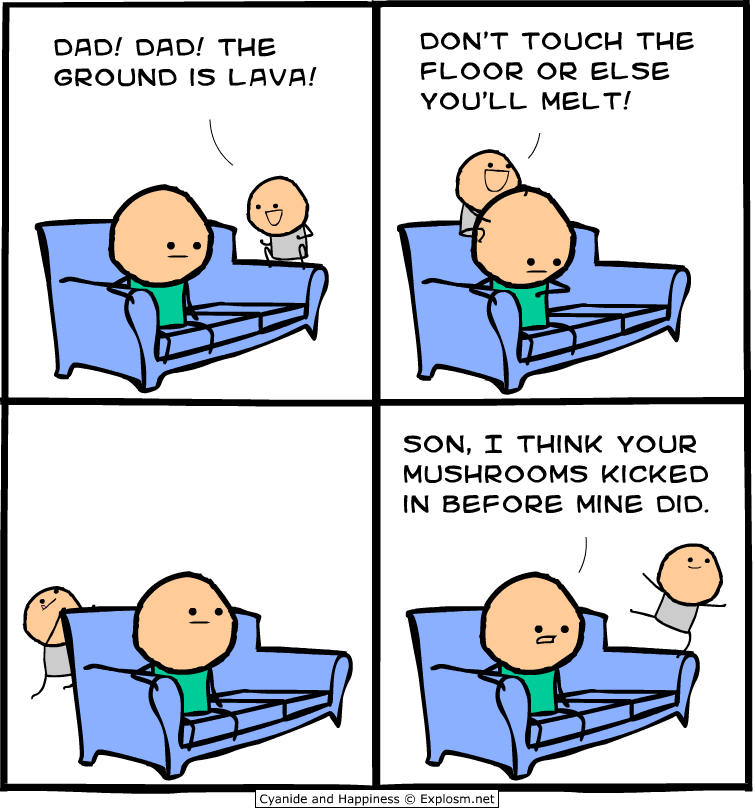
A vidinha do vizinho parece sempre mais sorridente.
O post Mentirinhas #764 apareceu primeiro em Mentirinhas.
A vidinha do vizinho parece sempre mais sorridente.
O post Mentirinhas #764 apareceu primeiro em Mentirinhas.

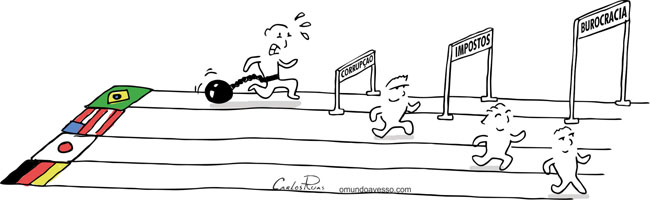
The post Saiba como abrir uma pequena empresa no Brasil appeared first on DrPepper.com.br.
There could be all manner of alien life forms in the universe, from witless bacteria to superintelligent robots. Still, the notion of a starivore—an organism that literally devours stars—may sound a bit crazy, even to a seasoned sci-fi fan. And yet, if such creatures do exist, they’re probably lurking in our astronomical data right now.
That’s why philosopher Dr. Clement Vidal, who's a researcher at the Free University of Brussels, along with Library of Congress Chair in Astrobiology Stephen Dick, futurist John Smart, and nanotech entrepreneur Robert Freitas are soliciting scientific proposals to seek out star-eating life. Vidal, who coined the term starivore in a paper he wrote in 2013, is the first to admit how bizarre it sounds. Yet he insists that some of the most profound scientific discoveries have come about by examining natural processes through a radically different lens.
“Newton did not discover new gravitational bodies: He took a different perspective on a phenomena and discovered new things exist,” Vidal told me. “It might well be that extraterrestrial intelligence is already somewhere in our data. Re-interpreting certain star systems as macroscopic living things is one example.”
Simple forms of life may be strewn all over universe, but if we ever discover intelligent aliens, they’ll probably vastly outstrip us in technology and intellect. It’s impossible to say exactly how a hyper-advanced civilization would live, but one very likely feature—according to the handful of scientists who ponder such matters—is their ability to harness tremendous quantities of energy.
“Our civilization produces minuscule amounts of energy—a trillion times less than the power produced by the sun,” Avi Loeb, chair of Harvard University’s astronomy department, told me. “You can imagine that some advanced civilization would be able to harness the entire energy of its host star. The question is, how would they do it?”
Is star-eating life one possible answer? That may depend on how we actually define life. Vidal’s starivores call for a definition free of our terrestrial biases (that life will require carbon, oxygen, water and so forth). But metabolism—the controlled conversion of matter to energy and expulsion of waste—is, by definition, common to all living organisms. And, it so happens, there are a number of stellar bodies in the universe that display similar behaviors, including certain binary stars.
“Energy flow, a maintenance of an internal organization and an exportation of entropy, all appear to be present in some binary systems,” Vidal writes in his PhD thesis, which was published as a book last year.
Which is to say, what astronomers may have taken to be two massive balls of plasma locked in a gravitational embrace could actually be a very large, very hungry civilization devouring a hapless star.

Now, not all binary star systems behave even remotely like metabolic systems. Contact binaries vigorously exchange matter and energy, but the process is unstable, while detached binaries don’t appear to exchange matter at all. But in certain semi-detached binary systems, energy flows from one star to another in a controlled manner, while gas is expelled regularly via novae or jets. It’s this latter sort of binary system, Vidal argues, that may be hiding some form of metabolism—perhaps belonging to intelligent life.
Strictly speaking, Vidal’s idea is not entirely new. In the 1953 novel The Star Maker, Olaf Stapledon envisioned an advanced civilization that feeds off the energy of an artificial star, in a binary system constructed to fuel an endless journey through space. Vidal also takes inspiration from Dyson spheres, hypothetical megastructures that encircle stars and soak up nearly all their energy.
But intriguing as it sounds, the notion of advanced life masquerading as a star faces a major hurdle: Some way of empirically proving or disproving the presence of intelligence.
“The difficulty with this idea, like any other idea for advanced intelligence, is in finding signals,” Loeb said. “If we knew what to look for, we would have found it already.”
Vidal agrees. “Obviously, the confirmation or refutation of this idea is over my head. It needs to be a team effort, composed of high energy astrophysicists and astrobiologists.”
Whether any researchers decide to take up the starivore challenge remains to be seen. But it’d be shortsighted to write off the possibility. After all, new searches for life’s techno-signatures—waste heat, industrial pollution and even Dyson spheres—are bubbling forth from the astronomical community.
And if Vidal happens to be right, well, that would pretty much change the way we conceive of the universe. We could have thousands of starivores in our galaxy alone.
Meet, if you dare, the Old World hookworm. Its flesh is a pinkish grey, and its head is slightly, creepily bent away from its body. It has a wide mouth, almost as big as the entire head, barbed with two pairs of sharp teeth. It looks like a finger with the jaws of a great white shark. And it is a parasite.
The Old World hookworm lives in the intestines of bigger animals, including many humans. It latches onto the wall of the intestines with its teeth, and sucks its host's blood. In this way, the hookworm prospers at its host's expense. Like all parasites, it takes and gives nothing back.
Surely we would be better off without such a good-for-nothing drain on resources? Suppose all the world's parasites disappeared overnight. Wouldn't all the other animals be healthier, and wouldn't there be less suffering? Surprisingly, a world without parasites might not be a nicer one. There might be just as much sickness and pain, but much of the beauty of the natural world would be obliterated. Perhaps worst of all, we might all stop having sex.
There are millions of different parasites. The word is derived from the Greek word "parásītos", which means "one who eats at the table of another". They infect and live off other species, known as hosts, benefitting at the expense of their chosen victims.
Around 50% of all organisms are parasitic
It's not just worms: many groups of organisms have some members that are parasites. Plenty of fungi are parasites, including the largest living organism on Earth, a honey fungus 2.4 miles (3.8 km) across in the Blue Mountains in Oregon. There are also parasitic plants such as mistletoe, not to mention fleas and lice, and viruses and bacteria. There are even bird parasites: cuckoos are the most famous, thanks to their cheeky habit of laying eggs in other birds' nests.
Scientists estimate that around 50% of all organisms are parasitic. "There's a huge universe of parasites," says parasite expert Andres Gomez of ICF International in Washington, DC. "They are abundant, ubiquitous, diverse and important."
Clearly, if we got rid of all the parasites, the world would look very different. You would notice the difference before the first day was out.
"Within hours, millions of poor people would be cured of serious chronic illness like malaria, schistosomiasis and ascariasis," says Kevin Lafferty of the US Geological Survey in Santa Barbara, California. "People would be able to work harder and enjoy their lives more. Their livestock and crops would be healthier too."
Our immune systems have evolved to cope with a certain amount of infections
But this honeymoon period wouldn't last long. For one thing, our bodies might rebel against it. "There could be unanticipated consequences of taking parasites away, because we've been co-evolving with them for so long," says Jaap de Roode of Emory University. "It wouldn't be good for us."
According to the "hygiene hypothesis", our immune systems have evolved to cope with a certain amount of infections. So if we aren't exposed to parasites and other diseases when we're young, our immune systems don't develop properly and can start attacking our own bodies. This may explain why so many people today, living in clean environments, suffer from allergies and autoimmune diseases. If we weren't exposed to any parasites at all, we might suffer from even more of these diseases.
What's more, it wouldn't just be our immune systems that ran out of control.
As well as harming people, parasites keep down the numbers of plant-eating insects and other animals we consider pests. Within months, these species would increase in numbers and cause serious damage to food crops, says Lafferty. As a result, we would have to use even more pesticides, which would affect wildlife. Even with the extra pesticide, "some people would start to go hungry," says Lafferty.
We'd have to kill a lot of things
"Almost every species you can think of has a parasite," says Levi Morran of Emory University in Atlanta, Georgia. "And parasites have a role in ecosystems to cull populations and keep them in check. Without parasites, populations could explode."
Without parasites, we would have to start culling species whose numbers would otherwise explode, says Morran. "That would be difficult and something humans haven't dealt with before," he says. "We'd have to kill a lot of things, so it would be rough."
And it wouldn't just be us doing the killing. There would be a cornucopia of animals and plants, that in the old world would have been killed as a result of their parasites. Something would have to eat them.
"Nature really doesn't like a vacuum," says Lafferty. As a result, predatory species like spiders and birds would take the place of the vanished parasites. Over the years, these predators would become more numerous, and in the long run more would evolve.
This increased threat from predators would transform many animals and plants. After a few centuries, Lafferty says, evolution would change the "types of defences that animals and plants invest in: more spines, thicker shells, distasteful chemicals."
One possibility is that the oceans would turn into thick green mats
It's not clear what this would mean for ecosystems as a whole, but it might well be bad news. "These food webs might be more or less stable - we are just starting to sort this out - but my guess would be less stable," says Lafferty.
The changes could be particularly dramatic in the oceans, says Luis Zaman of the University of Washington in Seattle. The seas are filled with algae and other microorganisms that get their energy from sunlight. Directly or indirectly, they feed all the animals in the sea. But they are "constantly battling viruses," says Zaman, and that keeps their numbers down.
"Without these viruses, it is hard to say what exactly would happen," says Zaman. "One possibility is that the oceans would turn into thick green mats, like the ones you see on small ponds by the road."
This would be bad news for everything else in the ocean. "Take out all of the parasites across the ecosystem, and it probably will collapse," says Zaman. "It might take a while, and it might oscillate wildly between states of lush vegetation and barren desert, but it almost certainly wouldn't end well."
As well as helping keep populations in check, parasites have a longer-term effect: they power the evolution of new species. Yes, really: we have parasites to thank for much of the diversity of life on Earth.
That's because hosts and parasites are in a constant evolutionary arms race, which pushes both of them to get better at surviving. "When hosts and parasites interact it's really fertile ground for co-evolution," says Morran. "This host-parasite co-evolution is responsible for a massive amount of evolutionary change in the history of life on earth."
We would see even more drastic rates of extinctions
In research published in 2014, Zaman simulated the evolution of organisms using a computer model, and found that parasites force their hosts to become more complex. When he suddenly removed the parasites, the host animals became much less complex, and much more alike.
In real life, Zaman suspects that removing parasites wouldn't just make other organisms simpler. "My bet would be that we would see even more drastic rates of extinctions," says Zaman. "Research has shown many times that parasites are important drivers and maintainers of diversity."
They also may have driven animals to become more sexually attractive to potential mates.
There is no courtship ritual finer than that of bowerbirds. Found in the forests of New Guinea and Australia, male bowerbirds make beautiful works of art to attract a mate. They construct a bower from sticks, and decorate it with brightly coloured objects like fruit, shells and even man-made objects like pens. Females will only mate with them if their bower is of excellent quality.
There is a theory that the evolution of this extraordinary display was driven by parasites. The same goes for other awe-inspiring sexual attributes, such as the dramatic tail feathers of a peacock, the great mane of a male lion and the theatrical horns of a ram.
Dramatic male traits like a peacock's tail are a kind of badge of honour
In the early 1980s, W. D. Hamilton and Marlene Zuk studied the sexual displays of North American birds. They found that species that were more prone to blood parasites tended to be showier: males and females were both more brightly coloured, and males were better singers.
They suggested that dramatic male traits like a peacock's tail are a kind of badge of honour. They are a message to females that this male has fought its parasites successfully and still has energy to spare. A female ought to choose a male with these extreme traits, because it suggests the resulting offspring would inherit his ability to resist infection.
The same might be true of sexually-attractive traits in humans, says de Roode. "Some people think the brain we have to create music, or even the ability to think about biodiversity, may be the result of sexual selection - of which parasites are believed to be a main driver."
As well as driving the evolution of flashy courtship, parasites could be the main driver for the very existence of sex in the first place. The main benefit of sex is that it shuffles genes, allowing animals to produce offspring quite different from themselves. Parasites may encourage this rapid genetic turnover by forcing hosts to keep evolving.
This idea, that animals must keep improving their design just to stay alive in a competitive world, is called the Red Queen hypothesis. It was proposed by evolutionary biologist Leigh Van Valen in 1973. Van Valen named it after a passage in Lewis Carroll's Through the Looking Glass, in which the Red Queen tells Alice that in the novel's alternative world "it takes all the running you can do, to keep in the same place".
Males might even become obsolete
There is experimental evidence that sex helps animals survive parasites. In 2011 Morran showed that infectious bacteria could wipe out populations of asexual worms, whereas worms that did have sex survived.
So if parasites drove the evolution of sex, would getting rid of parasites stop species having sex? It's not out of the question, says Morran. "If we took away parasites we may be in a situation where asexuality becomes prevalent." Smaller species would stop far sooner, he says. Humans are so hard-wired to mate it would take a long time for us to become asexual or self-fertilising. If we ever did, we would become more genetically alike.
Humans would be transformed as a species if we stopped having sex. Males might even become obsolete, says Lafferty. "In areas where parasites are rare, male snails start to disappear from the population, leaving females that can reproduce on their own," he says.
So far from trying to eliminate parasites from the world, some scientists are now suggesting that we should conserve them, just as we take care of pandas and tigers. On the face of it the idea sounds ridiculous, but Gomez believes they are worth saving. In a paper published in 2013, he argues that parasites can organise ecosystems, and that often one parasite will protect its host from another more harmful parasite.
Who would donate money to save the rhinoceros bot fly?
They could even be useful to medicine. Viruses are a kind of parasite, and many of them use bacteria as hosts. So if a person has a bacterial infection, the right virus could be used to treat it – rather than standard antibiotics, which have been massively over-used. At the moment such "phage therapy" is only really used in Russia, Poland and Georgia, but other countries are now taking it more seriously. The US National Institute of Allergy and Infectious Diseases recently announced plans to use it to combat antibiotic-resistant bacteria.
Parasites are threatened by many of the same factors that affect other species: things like climate change, pollution and the destruction of habitat. Nevertheless, conserving them is not an easy sell. Who would choose to donate money to save the rhinoceros bot fly, a massive insect whose young develop in the stomachs of rhinos, when they could help save the rhino instead?
It's a problem conservationists are going to have to face up to. In the meantime, if you're still tempted by the idea of a world without parasites, you might want to consider that it wouldn't stay that way for long.
Instead, new parasites would probably evolve almost immediately. "There is so much to be gained from being a parasite," says Morran. "I would predict that if you snatched all the parasites away, it wouldn't be long before other species moved into those niches."
Albener PessoaSee also: http://9gag.tv/p/a5goo3/the-leatherman-tread-25-tools-you-wear-on-your-wrist?ref=fbl9
This product is compliant with current TSA (Transportation Security Alliance) regulations for allowable carry-on items. Please visit www.tsa.gov for a complete list of regulations.
By adding or removing links, this band is adjustable in 1/4" and 1/2" increments.


I was approached by a porn star that wanted me to re-do her site. She agreed to my price and I fulfilled the job. She paid and that was that.
A few weeks go by and I’m contacted by her husband.
Client: I’d like you to update the site again. As payment, you can have sex with my wife once a week.
A friend of mine’s father knows that I do some web design. The following conversation occurred when I was over at her house.
Father: I have a business idea. How hard is it to make a Facebook?
Me: Oh, very easy.
Daughter: He doesn’t mean to make a Facebook profile. He means to re-make all of Facebook.
Me: Oh. Very hard.
Father: Oh, okay.
We were making leaflets for a local church, and the client wanted a logo designed with the Earth being shielded by the hand of God. I send the client a proof.
Client: The hand looks too human. Please use a hand that looks more like God’s.
Part of why people don't like insider trading is that it seems too easy. Some people spend their days slaving over a hot spreadsheet, trying to figure out if a company will make money or not, and then you just waltz in with a tip from your buddy at the golf club and buy some call options on the company just before it announces a merger. It's just unfair.
Say what you will about Bonan Huang and Nan Huang, but they (allegedly) worked hard for their hot tips. You don't see a lot of this on the golf course:

That's a heavily redacted list of search queries that they allegedly ran in Capital One's database of credit card sales, looking to see how many people were using their Capital One cards at Chipotle. Bonan Huang and Nan Huang worked at Capital One "as data analysts tasked with investigating fraudulent credit card activity," but, I mean, the database was just sitting there, how could they resist taking a peek? They could not.
Their queries seem to have revealed that a lot of people were putting burritos on their Capital One cards, because on July 21, 2014, the day after querying the database, Bonan Huang and Nan Huang between them apparently bought call options on 5,500 Chipotle shares for a total of just less than $100,000. Chipotle released earnings after the market closed that afternoon. Earnings were good; in particular, revenue was up 28.6 percent quarter-on-quarter.
The next day Bonan Huang and Nan Huang allegedly started selling their options, making a profit of about $278,000. For three days' work. But at least they wrote the queries. Usually when I say "for three days' work," the work was golf. These guys did work.
If you believe the Securities and Exchange Commission, actually, they did a ton of work:
Defendants worked for a large credit card issuer as data analysts tasked with investigating fraudulent credit card activity. While employed there, Defendants searched their employer's nonpublic database that recorded the credit card activity for millions of customers at numerous, predominantly consumer retail corporations. The Defendants conducted hundreds, if not thousands, of keyword searches of this database. These searches, which were not done in furtherance of their employment duties, allowed the Defendants to view and analyze aggregated sales data for the companies they searched.
Isn't that sort of sweet? I mean, these guys appear to have done fundamental research on a bunch of companies, and then bought stock in the companies whose fundamental performance was better than market expectations, while selling stock in the companies whose performance was worse than expected. The SEC singles out Chipotle, as well as Cabela's and Coach, where they bought put options because sales were decreasing, though there seem to have been quite a few other trades as well.
Apparently -- unsurprisingly -- there was a pretty strong relationship between people buying burritos or guns or purses with Capital One cards, and people buying burritos or guns or purses with cash and other credit cards, so their research proved profitable. Ridiculously profitable. From the SEC complaint:
From January 2012 to January 2015, defendants Bonan Huang and Nan Huang deposited a total of $147,300 into their six OptionsHouse accounts. During this time period they transferred approximately $1,763,500 out of these six accounts. As of January 15, 2015, the total balance in the six acounts was approximately $1,063,000. Accordingly, Bonan Huang and Nan Huang made approximately $2,826,500 trading options during this period in their OptionsHouse account. This represents a three-year return of approximately 1,819%.
That's amazing! These two like customer-support guys at Capital One were seemingly running an incredibly successful fundamental research-driven long/short equity hedge fund. A small fund, but still. The average equity hedge fund returned 25 percent -- total, not annual -- during that period. You sometimes see insider-trading cases where someone makes like a thousand-percent return in a few days by buying call options just before a merger. Every so often a network of tippers will yield multiple big scores like that. But to do hundreds of searches and trade multiple stocks over three years based entirely on raw consumer spending signals, and to make 1,819 percent doing it, is just phenomenal. Even if the consumer spending signals were, you know, stolen.
People have asked me if this is insider trading and, you know, sure it is? (If the allegations are true, I mean.) This is not "classical" insider trading -- trading or tipping by an insider at Chipotle or whatever -- but rather "misappropriation" insider trading:
The "misappropriation theory" holds that a person commits fraud "in connection with" a securities transaction, and thereby violates § 10(b) and Rule 10b-5, when he misappropriates confidential information for securities trading purposes, in breach of a duty owed to the source of the information. ... Under this theory, a fiduciary's undisclosed, self-serving use of a principal's information to purchase or sell securities, in breach of a duty of loyalty and confidentiality, defrauds the principal of the exclusive use of that information. In lieu of premising liability on a fiduciary relationship between company insider and purchaser or seller of the company's stock, the misappropriation theory premises liability on a fiduciary-turned-trader's deception of those who entrusted him with access to confidential information.
Here, Bonan Huang and Nan Huang allegedly got the information from their employer, Capital One, which was supposed to have exclusive use of the -- hey, wait a minute, does that mean that Capital One was allowed to trade on this data for its own profit? Wouldn't that be amazing? Surely the answer is no: I assume that Capital One signed agreements with retailers (or rather, with Visa and MasterCard, which signed agreements with retailers) in which it promised not to disclose transaction data, or use it for nefarious purposes. Really anyone who used this data would be misappropriating it from, ultimately, Chipotle. Which gets to keep its sales data to itself. Except once a quarter when it releases that data and the stock jumps.
Henry Manne, the pioneering scholar of law and economics who died last week, famously argued that insider trading should be legal, in part because it makes markets more efficient, and this case is a good example. Chipotle's and Coach's and Cabela's stocks were mispriced, the day before their earnings announcements, because those companies had earnings information that the market didn't have, and didn't tell anyone. (Until the next day.) People bought and sold those stocks at the wrong price all day long. Bonan Huang and Nan Huang seem to have done their research to figure out the right price. Illegal research, sure, but they were right -- spectacularly, and over and over again.
That's how markets work: People do research to try to figure out the right price, and then if the price is wrong they trade, and eventually prices get to be right. And so there are tons of legal, yet somehow unfair-seeming, ways in which smart traders try to figure out the right price. There are helicopters with heat-sensitive cameras flying over oil tanks to help hedge funds get non-public oil supply information. There's a former Google engineer "selling analysis of obscure data sets" -- like "satellite images of construction sites in 30 Chinese cities" -- "to traders in search of even the smallest edges." Or there are like a billion people trying to use Twitter to predict stock prices. That is the business. You take the data that is out there, or find new ways to get new data, and then you analyze the heck out of it to find out if it tells you anything about companies that you didn't already know.
And usually the answer is that it tells you a teeny little bit, and you add a few basis points to your returns. The returns to discoverers of new data sets tend to dissipate quickly -- in part because others discover them too, but in part because, you know, the market is smart, lots of people have incentives to figure this out, how much more information could one more piece of information really give you, etc. Markets are basically efficient. (Right?) If you had asked me two days ago if raw Capital One credit-card usage data would be helpful in making excess returns in the stock market, I'd have said, sure, of course. If you'd asked me if you could use it to make consistent excess returns of 1,800 percent over three years, though, I would have been skeptical. Surely lots of Wall Street firms -- Chipotle is followed by 31 analysts -- and asset managers are doing tons of research to try to estimate Chipotle's sales. They're visiting branches and calling investor relations and talking to pork suppliers and surveying consumers and generally getting paid a lot of money to build a robust estimate of how many burritos Chipotle is selling. One more piece of data -- one credit card company's charges at Chipotle -- would be helpful, but come on, not that helpful.
Nope: Super helpful! I don't know what to tell you. It seems a shame that Bonan Huang and Nan Huang's research was apparently illegal. Because it was really good.
To contact the author on this story:
Matt Levine
at mlevine51@bloomberg.net
To contact the editor on this story:
Zara Kessler
at zkessler@bloomberg.net
Albener Pessoavia Firehose
 |
Courtney
shared this story
from  Super Opinionated. Super Opinionated.
|
drst:
Crap, the Bay Area is segregated!
CLICK HERE FOR MORE MAPS!
thelandofmaps.tumblr.comOne of the fallacies about the Bay Area is how “diverse” it is. The overall population is but neighborhoods are not.
All content is Copyright © 2000–2015 of Explosm, LLC.
Prisoners in China are buying inventors’ ideas so they can patent them and reduce their jail sentences, according to a newspaper report.
The inmates are taking advantage of a law that allows jail terms to be commuted if prisoners can prove they have come up with important technical innovations and inventions, the Beijing Youth Daily said.
The newspaper said it had found a number of agents openly advertising the service to “reduce sentences by patented innovations”.
One intellectual property agent in the northern province of Shaanxi said the service usually started at about 6,800 yuan (HK$8,580) for a basic patent application on behalf of a prisoner.
More complex invention patents cost up to 60,000 yuan, the newspaper said, after one of its reporters posed as a relative of a jail inmate enquiring about the service.
The agent asked for detailed information about the prisoner, including their education, work experience, interests and family background so they could find the most appropriate patent that would have the best chance of getting their sentence reduced, the report said.
The prisoner can have their name put on the patent of an idea already invented or one under development.
The undercover reporter was advised to buy a series of patents over two years.
“We have carried out this sentence reducing service many times in Shaanxi. You can trust us,” the agent was quoted as saying.
“Some rich people come to us right after they get into trouble and before they go to jail. It takes a lot of early preparation.”
Several other intellectual property agencies, who did not advertise the sentence reduction service openly, said it might be possible to carry it out later after they made further enquiries.
One high profile case of a prisoner getting his sentence reduced through patents was the former vice chairman of the Chinese Football Association, Nan Yong, although the article did not suggest the inventions were not his own.
Nan was jailed for 10½ years in 2012 for taking bribes worth more than 1.19 million yuan for fixing matches and abusing his power.
He has had four devices patented by the State Intellectual Property Office.
They include a device that helps footballers train to shoot and a portable soccer goal.
His sentence has been reduced by one year because of his good behaviour, including his inventing and writing.
He also published a science fiction story in 2012.
Albener PessoaNao eh por falta de aviso. Materia de 2011
22/03/2011 - 08h22
LEILA COIMBRA
DE BRASÍLIA
Mais da metade dos municípios brasileiros (55% do total) terá deficit de abastecimento de água em 2015. Levantamento feito pela ANA (Agência Nacional de Águas) mostra que são necessários investimentos de R$ 22,2 bilhões para evitar o risco de um colapso total até 2025.
Hoje, cerca de 16% das cidades do país têm algum problema de abastecimento. Para tratar também os esgotos jogados nos rios, o que impede a reutilização das águas, serão necessários cerca de R$ 70 bilhões.
Os dados fazem parte do Atlas de Abastecimento Urbano de Água, um mapeamento completo de todos os 5.565 municípios brasileiros, liderado pela agência das águas com instituições federais, estaduais e municipais.
DISTRIBUIÇÃO
O estudo mostra que o Brasil é um dos países mais ricos em recursos hídricos, mas o grande desafio no fornecimento de água é a população concentrada em locais onde há sua menor oferta.
A região amazônica reúne 81% das fontes hídricas do país, mas as áreas de maior densidade populacional, como o Sudeste e o Nordeste, têm só 3% da água, originada na Bacia do Atlântico.
"Caso não sejam feitos os investimentos, haverá risco de interrupção temporária no abastecimento cada vez mais frequentes. Manobras como rodízio no fornecimento para os consumidores poderão ser mais usadas. Mas não há risco para pânico", diz Ney Maranhão, superintendente de Planejamento de Recursos Hídricos da ANA.
O Nordeste é a região que mais demandará investimentos em captação de água, por ter as menores reservas: R$ 9,1 bilhões.
Já o Sudeste, onde está a maior parte da população, precisa de mais dinheiro para tratamento de afluentes. Juntos, os Estados de SP, RJ, ES e MG vão precisar de R$ 7,4 bilhões em captação de novas fontes de água.