
Shared posts

16 Jul 14:15
Watergate Redux
by Kevin Murray
The Dallas, Texas offices of law firm Schulman & Mathias were broken into two weeks ago by two burglars caught on surveillance camera. The two stole three computers. Damon Mathias, a partner at the firm, said
Attorneys said the burglars may have been hired to steal documents related to State Department whistleblower Aurelia Fedenisn, who is represented by the firm...
In early June, Fedenisn gave CBS News a draft State Department Inspector General report which offered the details of allegations that alleged sex crimes involving diplomats — including one U.S. ambassador who allegedly visited prostitutes — were ignored by State Department top officials. (more)
Time to sweep the office.
Attorneys said the burglars may have been hired to steal documents related to State Department whistleblower Aurelia Fedenisn, who is represented by the firm...
In early June, Fedenisn gave CBS News a draft State Department Inspector General report which offered the details of allegations that alleged sex crimes involving diplomats — including one U.S. ambassador who allegedly visited prostitutes — were ignored by State Department top officials. (more)
Time to sweep the office.


14 Jul 12:19

Uma graça!
by Tati Arcolini
Com traços simples, cores vivas e uma alegria singela, Jaco Haasbroek ilustra objetos do dia a dia com tanta graça que não dá pra não sorrir. Lâmpada, sofá, cebola e pimenta ficam muito mais divertidos!


(via)
Tadeu and -1 others like this
14 Jul 00:42


The Political Cartoon Of The Year?
by Joe
Albener Pessoavia firehose


Massa, Tertiarymatt and 2 others like this
13 Jul 23:08
Battery + Steel Wool = Magic
Tadeu, Rolf.westerteiger and -1 others like this
13 Jul 23:06
Bad Feelings
firehose, Albener Pessoa and -1 others like this
13 Jul 23:06
I Don't Appreciate It When My Friends Do Their 'Pimp My Ride' Impression
Albener Pessoa likes this
13 Jul 23:04
Cat Encounters The Tardis
Albener Pessoa and -1 others like this
13 Jul 21:05


Coolest Cat Ever
Bobo and his beloved vacuum cleaner.
Submitted by: Krzysztof
Laura.prettyinpink, anonue and -1 others like this
13 Jul 20:42


How to Pick the Right Electronics Board for Your DIY Project
by Thorin Klosowski

Some of the best DIY projects use microcontrollers or cheap single board computers to automate awesome stuff. But Between the Arduino, the Raspberry Pi, and the BeagleBone, it's hard to figure out which is best for a project. Let's demystify the most popular boards and make the selection process a bit easier.
    
|
13 Jul 20:34
His Master's Voice
by Charlie Stross
Back in the mists of time I wrote a couple of novels, titled "The Atrocity Archives" and "The Jennifer Morgue". These came with some extras, notably afterwords explaining the ideas underlying the universe of the Laundry Files. And lo, there have been no signs of a British audiobook edition ... until now.
To coincide with the new, facelifted covers on the British editions of these books (below), Orbit are getting ready to release audio editions that don't come with an American accent. (These will also be available via the RNIB's talking books service for blind and visually handicapped people.)
And as a trailer, they're releasing the first chapters of each book, for your streaming audio pleasure!
The Atrocity Archives:
The Jennifer Morgue:
UPDATE
And in other Laundry Files related news ...
Astute sky watchers will know that a new Laundry Files novel, "The Rhesus Chart", is due out in July 2014.
I'm now able to announce that, in addition, a new Laundry Files novella is going to show up in the next few months! You'll be able to read "Equoid" on Tor.com at the end of September. It will be followed by a limited run signed first edition hardcover (illustrated by Steve Montiglio, who did the covers for the Golden Gryphon editions of "The Atrocity Archives" and "The Jennifer Morgue"!) from Subterranean Press in 2014.
"Equoid" is set shortly before the events of the "The Fuller Memorandum". It's the longest non-novel-length Laundry story so far. And it explains (among other things) precisely what H. P. Lovecraft saw behind the wood-shed when he was 14 that traumatized him for life, the reproductive life-cycle of unicorns, and what really happened on Cold Comfort Farm.
(Beyond that, I've got tentative plans for more Laundry Files novels—but nothing's going to happen until after I've written the next chunk of the Merchant Princes series.)
Albener Pessoa, Thomas.couperus likes this
13 Jul 20:11


A Primer on Krav Maga: The Combative System of the Israeli Defense Forces
by Brett

I can’t remember how I first heard about Krav Maga, but I do remember being immediately intrigued. All martial arts have an appeal to most men and their fighting spirit, but Krav Maga’s draw owes less to the mystique of many of the traditional disciplines and more to a distinct aura of bad-assitude. It’s a simple and effective “street fighting” self-defense system that’s more martial than art. A well-trained practitioner of Krav Maga is basically a walking human weapon.
Wanting to learn more about Krav Maga, I first looked for a reputable gym that taught the system in my area, but I unfortunately came up short. So I got a set of Mastering Krav Maga DVDs for Christmas last year to familiarize myself with some of its basic principles. Wanting to know still more, I then called up David Kahn, the badass dude who made the videos and the Chief Instructor of the U.S. Israeli Krav Maga Association, to get his insights firsthand.
What I discovered is that Krav Maga is a brutally effective tactical mixed martial art/combative and self-defense system that lives up to its reputation. If you too have ever wondered what Krav Maga is all about, here’s your primer.
The History of Krav Maga
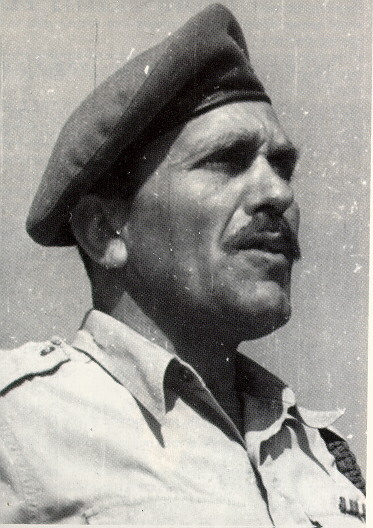
Imi Lichtenfeld, founder of Krav Maga.
To fully appreciate Krav Maga, David says, you need to know its history.
The origins of Krav Maga can be traced to pre-World War II Czechoslovakia (present-day Slovakia) and a young Jewish athlete named Imi Lichtenfeld. Imi was a nationally and internationally renowned boxer, wrestler, and gymnast. Beginning in the mid-1930s, fascist and anti-Semitic groups rose to power in Czechoslovakia and began inflicting violence on Jewish communities. Feeling duty-bound to protect his neighbors, Lichtenfeld organized a group of young men to patrol his community and defend against would-be attackers. He quickly learned, however, that his training in sport martial arts was no match for the anti-Semitic thugs he encountered. Fighting for points in a match and fighting for your life in a street fight require a different mindset and different techniques. To effectively defend himself and his community, Imi began synthesizing his martial art knowledge and started placing an emphasis on attacks that quickly disabled and neutralized a threat.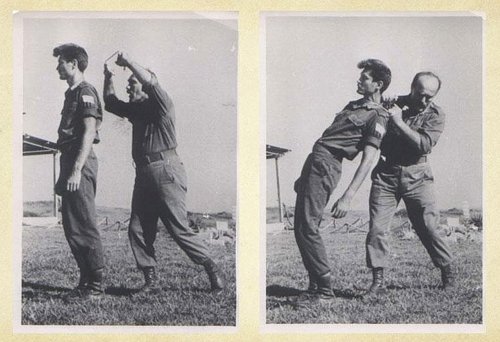
By 1940, Imi found himself living under a Nazi-allied puppet regime and decided to head for Palestine to join the Zionist Movement and fight for a Jewish state of Israel. When he moved to Palestine in 1942, he joined the Haganah, a pre-Israel Jewish paramilitary organization with a mission to protect Jewish settlers from locals who did not welcome the new arrivals. Israeli military leaders quickly noticed Imi’s fighting skills and his ability to teach those skills to others. They put him in charge of training the military’s elite fighting forces, including the Palmach (elite strike force), the Palyam (marine commandos), and the Haganah.
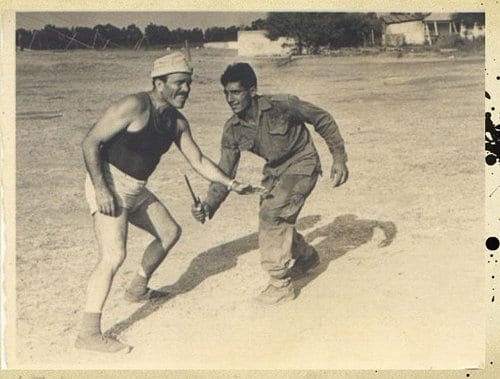
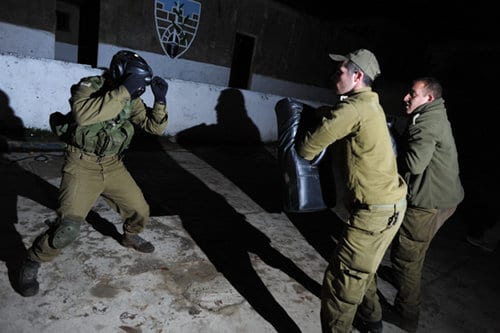
After Israel gained statehood in 1948, these separate fighting forces were merged into the Israel Defense Forces (IDF), and Lichtenfeld was named the Chief Instructor of Physical Fitness at the IDF School of Combat Fitness. It was in this role that he developed what today is known as Krav Maga. Lichtenfeld needed a combative system he could teach new military recruits in just three weeks — one that was simple, efficient, and effective, and could be applied in a number of lethal situations. To create such a system, Lichtenfeld combined the most effective techniques of boxing, aikido, judo, wrestling, and jujitsu into a single, fluid, fighting military discipline that emphasized continuous motion, simultaneous defense and attack, and attacks to an assailant’s soft tissue and pressure points. He called his self-defense system “Krav Maga,” meaning “contact combat” in Hebrew. It quickly became the official combative of the IDF and continues to be today.
After retiring from the IDF, Lichtenfeld began teaching Krav Maga to Israeli citizens.
Imi taught Krav Maga for nearly 20 years in the IDF. After retiring from military service in 1964, he began devoting his time and energy to modifying and teaching the self-defense system to civilians. Imi opened two Krav Maga studios in Israel where he taught thousands of students and instructors, all while continuing to add and improve upon the fighting discipline he had developed in the military. In 1974, Imi founded the Krav Maga Association, a non-profit dedicated to promoting and teaching Krav Maga in Israel and throughout the world.
Krav Maga is still the official combative system of the Israeli Defense Forces.
A few of Imi’s early disciples brought Krav Maga to the United States, and it quickly became a preferred close-combat system in many U.S. military and police forces. Several commercial Krav Maga organizations have formed over the years to teach and promote Krav Maga in the U.S., each with a counterpart in Israel. Each of these organizations claim to be the “true” heir and guardian of Imi Lichtenfeld’s original Israeli Krav Maga, and go out of their way to show their connection to Krav’s founder.
The Principles of Krav Maga

As mentioned above, Krav Maga is a tactical mixed-martial art/combative and self-defense system that combines boxing, judo, jujitsu, and aikido. In recent years, other martial arts have been incorporated into Krav Maga such as muay Thai and Wing Chun.
Neutralize the threat. The primary goal in Krav Maga is to neutralize your threat as quickly as possible. This overarching goal governs all the other principles of Krav Maga. Because your aim is to dominate and incapacitate your attacker as soon as possible, pretty much anything goes in Krav Maga. You can’t worry about fighting etiquette when your life is on the line. You do whatever you have to do to preserve your life.
Keep it simple. There aren’t katas or patterns in Krav Maga. Just strikes, holds, and blocks. Krav Maga was designed so that it could be put to use as soon as possible.
Simultaneous defense and attack. Many martial arts treat defensive and offensive moves as separate and discrete actions, e.g., first you block (defensive), then you kick when you find an opening (offensive). The downside of this approach is that it’s reactive and you typically just end up in a cycle of never-ending defensive movements. In Krav Maga, the fighter looks to combine an offensive movement with every defensive movement — he wants to disrupt the attack and simultaneously counterattack. For example, if an attacker goes for your throat, you’d not only try to deflect his attack, but also simultaneously counterattack by going for his eyes, groin, or throat. The goal is to neutralize your threat as quickly as possible. (Sidenote: Wing Chun also has a similar simultaneous defensive/offensive principle.)
Retzev, or continuous motion. Related to the principles of simultaneous defense and attack is retzev, a Hebrew word for “continuous motion.” David Kahn describes retzev as a “seamless explosion of violence,” in which the goal is to neutralize your attacker with a continuous series of aggressive defensive and offensive movements. As your attacker reacts to your counterattacks, you’ll respond with more punches, kicks, and headbutts until the attacker is no longer a threat. Retzev requires a fighter to work from instinct and not rely on a pre-set routine. A well-trained practitioner of Krav Maga will know how to react to any type of threat without hesitation.

Use of weapons of opportunity. You can easily incorporate firearms and knives into Krav Maga. Besides these traditional weapons, Krav Maga also teaches practitioners to improvise and use any object at their disposal as a weapon. Keys, pens, belts, and chairs can all be incorporated into Krav Maga techniques in order to neutralize your opponent as quickly as possible.
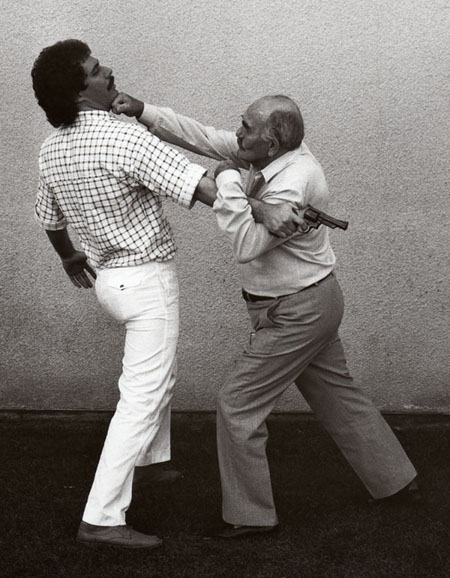
Weapon defense. Besides teaching students how to use weapons, Krav Maga also shows how to defend yourself from an armed attack.
Focus on vulnerable soft tissue and pressure points. A well-known principle of Krav Maga is its emphasis on attacking vulnerable soft tissue and pressure points. Many counterattacks involve eye gouging, groin attacks, and strikes to the throat. Some criticize Krav Maga for this, arguing that “it’s not manly to punch a guy in the nuts.” I brought this criticism up with David during our conversation and this was his response: “Krav Maga’s goal is to neutralize a dangerous attacker as quickly as possible. Plain and simple. Sometimes a strike to the groin is the best option to neutralize an attack. When you’re violently attacked in the street, the person attacking you isn’t following some sportsman’s code of chivalry — he wants to hurt, maim, or possibly kill you — so why should you give him the courtesy of not punching below the belt? You can’t worry about fighting etiquette or what’s ‘manly’ when your life is at stake.”
Subduing techniques. In addition to striking attacks, Krav Maga also utilizes subduing techniques in order to de-escalate a violent confrontation. Joint locks and various grabs are used to exert control over your attacker and put you in a position to end the threat.
Krav Maga in Action
How to Get Started in Krav Maga
Join a Krav Maga gym. The best way to get started with Krav Maga is to join a Krav Maga gym. “Krav Maga, like any martial art, is best learned in a group and under the guidance of a well-trained instructor,” says David. Because Krav Maga is designed to prepare you for real-life attacks, you need to have people who can help simulate those situations for you in a gym. It’s hard to practice how to defend and counterattack a headlock if no one is there to put you in a headlock.
David did have one caveat about joining a Krav Maga gym. Because of Krav’s growing popularity in the United States, there are a lot martial arts studios saying they teach Krav Maga in order to get new students, even though the instructors sometimes have little or no formal training in the system. “Do your research and make sure the instructors are legit,” David says. If the instructor has trained in Israel, that’s a good sign.
As mentioned above, there are several competing Krav Maga organizations that claim to be teaching the “true” Krav Maga of Imi Lichtenfeld. It’s a touchy subject among Krav Maga followers and there have been lawsuits between the groups. David is the Chief Instructor of the U.S. Israeli Krav Maga Association (IKMA), a non-profit formed in 1978 by Imi Lichtenfeld to govern and promote the teaching of Krav Maga. There are gyms across the country that associate with U.S. IKMA. David teaches at the gym in New Jersey. If you’re in the area, stop by and check it out. David is a super nice guy and you’ll learn a lot.
Buy videos and books. If you can’t find a reputable Krav Maga gym in your area, there are plenty of instructional books and DVDs on the subject. Watching a DVD is definitely no substitute for actually training in a gym, and you shouldn’t try out moves you’ve learned solely by video in a street fight, but the DVDs will give a basic overview of Krav Maga and its techniques. I highly recommend David’s set of DVDs, Mastering Krav Maga. They’re very well-done and David does a great job explaining and demonstrating the methods and movements.
Related posts:
- Don Draper Judo: Unarmed Self-Defense from the Mad Men Era
- A Man’s Guide to the Martial Arts: Getting Started
- So You Want My Job: Martial Artist
- How To Throw a Dynamite Overhand Punch
- How to Use a Flashlight in a Tactical Situation
|
|
Albener Pessoa, Yum likes this
13 Jul 00:39

The culture that is Japan markets in everything Newcomb’s paradox edition
by Tyler Cowen
Albener PessoaThere are too many dumb people in the world
In Japan, where palm reading remains one of the most popular means of fortune-telling, some people have figured out a way to change their fate. It’s a simple idea: change your palm, change the reading, and change your future. All you need is a competent plastic surgeon with an electric scalpel who has a basic knowledge of palmistry. Or you can draw the lines on your hand with a marker and let him work the magic you want.
The story is here, hat tip goes to Robert Martinez. There are some other interesting points in the article, but I shall not reproduce them here.
12 Jul 19:06
Explaining the Apple E-Book Price-Fixing Suit
by John Gruber
If you read only one take on yesterday’s e-book price-fixing lawsuit judgment, make it Adam Engst’s. Comprehensive explanation of the entire saga.
12 Jul 16:24
What is the Best Predictor of Unhappiness?
Albener PessoaDetesto dirigir no transito engarrafado de BH.

Tadeu likes this
12 Jul 13:54


Mind-Blowing Spaceships from 1970s British Paperbacks
by Annalee Newitz
Albener PessoaCool ! (via firehose)

Paul McAuley is the author of The Quiet War, as well as Life After Wartime and Evening's Empires. He's also got an amazing collection of 1970s SF paperbacks, whose covers he's just digitized to share with the world. Here's his gallery of covers that feature spaceships done in a cool, psychedelic-minimalist style.
|
|
Jesper Thunstedt, oz garcia likes this
12 Jul 12:55


Visualizing the Bechdel test
Albener Pessoavia firehose
 |
popular
shared this story
from  Ten Chocolate Sundaes. Ten Chocolate Sundaes.
|
to my sister, to my brother and to my friend Ber
Introduction
Bechdel test was enunciated by Alison Bechdel on the comic Dykes to Watch Out For in 1985. For a movie to pass the test, it must meet the following prerequisites:- It has to have at least two women in it,
- who talk to each other,
- about something besides a man.
The most widely used form of the test today added the necessity of the two female characters to have names. The test has the characteristic of being simple, so easy to apply, and not requiring much for a movie to succeed. However, one of it's limitations is that the application of the test on a single movie is debatable, since there can be many artistic choices that end up making the movie not pass the test (for example, Run Lola Run doesn't have two female characters who talk to each other). Thus, its application is more interesting when applied to a set of films, since it may reveal patterns of how women are represented consistently in this particular set. The graphs present here subdivide the films into groups according to variables available on various sites, to try to find how each category affects the way females characters are represented.
I have little academic knowledge in film or in sociology, so I'll try to avoid comments that are not about the graphics.
The Bechdel rates are from bechdeltest.com. I removed movies where more than 50% of users who commented on it disagreed about the classification. The site classifies films according to each prerequisites of the test. Here, I grouped the films based only on whether they pass the test or not. I did it for clarity.

I have little academic knowledge in film or in sociology, so I'll try to avoid comments that are not about the graphics.
The Bechdel rates are from bechdeltest.com. I removed movies where more than 50% of users who commented on it disagreed about the classification. The site classifies films according to each prerequisites of the test. Here, I grouped the films based only on whether they pass the test or not. I did it for clarity.
Click on the charts to enlarge them.
The charts
Years
Despite the fact that <a href="http://bechdeltest.com" rel="nofollow">bechdeltest.com</a> provide data about the movies' year, I used data from imdb.com, as I rely more on them in this regard.
The graph below shows the proportion of film that succeed on the Bechdel test across the years.

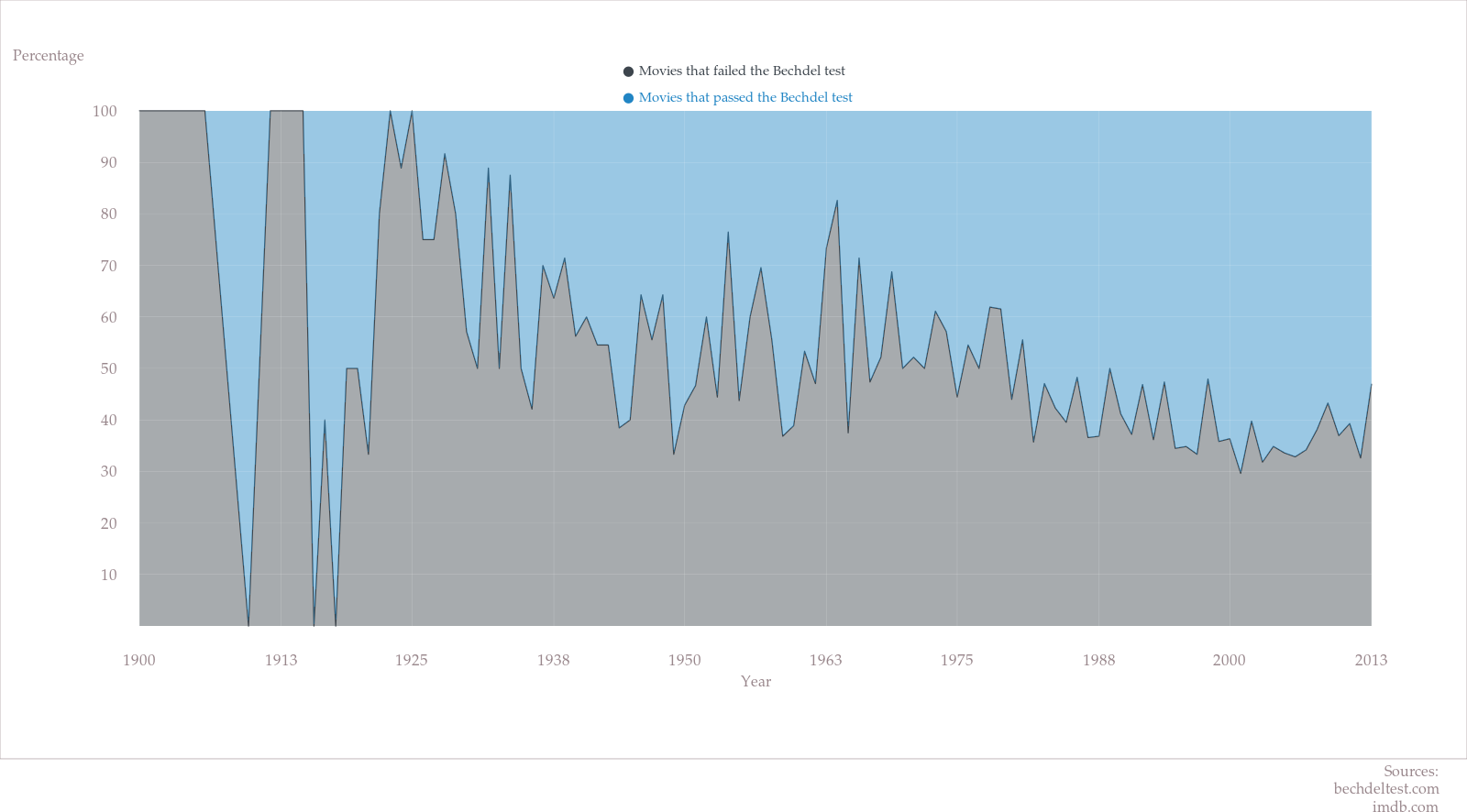
The visualization of variations seems compromised, due to the fact that there are some years with very few films analyzed, as can be seen in the plot of movie analyzed on <a href="http://bechdeltest.com" rel="nofollow">bechdeltest.com</a> by year:
 To try to circumvent this problem, I used the lowess function in R,that applies a locally-weighted polynomial regression. This regression has its smoothness related to the parameter f, which, according to the maintainer's description, is:

The smoother span. This gives the proportion of points in the plot which influence the smooth at each value. Larger values give more smoothness.
Below is a gif that shows how the change on the parameter f from 0 to 1 influences the graph.


I wanted to show how the parameter affects the graph, making clear the bias that the method may be having in this case. Bellow is the chart with f = 2/3, the default value for the function.
 The actual measures on each year here don't represent the data as in the first graphic, what is important now is the trend. So, it seems that there was, at the beginning of the last century, a rapid insertion of female characters, this increase stabilized in the 1930s. Another tendency in this direction seems to have happened between the 1960s-80s.

Movie Genre

The genres of each movie were obtained from <a href="http://imdb.com" rel="nofollow">imdb.com</a>, where each movie can have multiples genres. Only genres present in more than 50 films are shown.
There are several discussions on whether or not documentaries should be evaluated according to the parameter of the Bechdel test. I am of the opinion that they should not, but I didn't put too much thought into it, and, as I've said before, I m not a expert on the subject. So, I decided to leave them here.
Directors and writers
These chart represented writers and directors with more than five films evaluated. As these professionals often end up specializing in certain genres, these were added in the graph for comparison. There were too many directors and writers, and this would make the chart too long and boring, so I selected those that I consider to be the most famous to display in these charts. Also, I didn't repeat the ones in the directors chart in the writers chart. Some famous directors, like Akira Kurosawa, James Cameron and M. Night Shyamalan did not have five movies analysed as directors, but did as writers. The directors and writers were obtained from <a href="http://imdb.com" rel="nofollow">imdb.com</a>. When a movie is based on a book, IMDB gives credit to the book's author, that's why many of them appear in the writers graph.
Directors

Writers

Directors, writers and producers by gender
These charts are divided by the gender of professionals working in different stages of film production. How the gender was assigned is described at the end of the post.


Countries
Proportion of Bechdel test classes according to the country of origin of the film. This information was obtained from <a href="http://imdb.com" rel="nofollow">imdb.com</a>. Only countries with more than 15 movies where included.


The first time I heard of the Bechdel test was while talking the Academy Award for Best Picture. So I wanted to compare this award against others. I chose the ones that I believe are the most important. I have included the movies nominated for the best picture in each award (Palme d'Or at Cannes, Golden Bear in Berlin, Golden Lion at Venice and the Academy Award for Best Picture). The information on the awards come from <a href="http://imdb.com" rel="nofollow">imdb.com</a>.


What we talk about when we talk about Bechdel test
During the process of production of these charts, I have wondered if the Bechdel test was actually measuring what it intended. That is, if it really captured groups of movies where women were underrepresented, and, when they appeared, had their role around men.
To try to answer this question, I researched, in the movie scripts present in imsdb.com

Below the result, I added a violin plot on each axis to help to visualize the distribution of the variables.

Before talk about the colors, I want to address the vertical dispersion of the graph. I was surprised to see that women talk so much less than men in movies. I thought this might show a bias in the movies chosen to be analyzed in <a href="http://bechdeltest.com" rel="nofollow">bechdeltest.com</a>. To see if this was the case, I did the same graph for all scripts present in <a href="http://imsdb.com" rel="nofollow">imsdb.com</a> and in <a href="http://script-o-rama.com" rel="nofollow">script-o-rama.com</a>, irregardless if the movie was analyzed in <a href="http://bechdeltest.com" rel="nofollow">bechdeltest.com</a>. And the result was:
 So, it does not appear that <a href="http://bechdeltest.com" rel="nofollow">bechdeltest.com</a> has some bias on this variable.
Now, about the distribution of the Bechdel test in the chart, at first, it seemed to me that the test was capturing what it proposes, since the blue dots are seemingly more likely than others to be on the center or down and to the left. Thus, movies where women are represented or referenced at least as much as men are passing the test. However, there is a positive correlation between the two variables:
 I speculated that this must be due to the fact that secondary characters generally refer to the main characters. Thus, women have fewer lines, which shows that they are mostly secondary characters, that makes them refer more to men, that are usually the main character. If this reasoning is true, the chart is showing that the Bechdel test, when discriminating to one variable, also discriminates for the other. But, maybe referring to the main character is not something that just secondary female characters do, but also secondary male characters. So I tried to develop a way to see if the test was also able to display films in which women are more focused on men than other male characters.
To try to address this issue, I made another chart, where I compare if female characters refer more to men than male character to men.
Here is the scheme of what this graph is representing:


To try to answer this question, I researched, in the movie scripts present in imsdb.com
and in
script-o-rama.com,
the number of words spoken by men and women and the proportion of times that men refer to women and vice versa (how often does a genre talk about the other). I colored the points in the graphs according to the Bechdel test, and thus expected films where women talk as much or more than men and/or movies where men refer more to women than women to men would, mostly, pass the test. I removed the outliers from the chart to make the range easier to visualize. As this chart can be tricky to understand, I did this scheme below to demonstrate what each square represents.
Below the result, I added a violin plot on each axis to help to visualize the distribution of the variables.

Before talk about the colors, I want to address the vertical dispersion of the graph. I was surprised to see that women talk so much less than men in movies. I thought this might show a bias in the movies chosen to be analyzed in <a href="http://bechdeltest.com" rel="nofollow">bechdeltest.com</a>. To see if this was the case, I did the same graph for all scripts present in <a href="http://imsdb.com" rel="nofollow">imsdb.com</a> and in <a href="http://script-o-rama.com" rel="nofollow">script-o-rama.com</a>, irregardless if the movie was analyzed in <a href="http://bechdeltest.com" rel="nofollow">bechdeltest.com</a>. And the result was:

Now, about the distribution of the Bechdel test in the chart, at first, it seemed to me that the test was capturing what it proposes, since the blue dots are seemingly more likely than others to be on the center or down and to the left. Thus, movies where women are represented or referenced at least as much as men are passing the test. However, there is a positive correlation between the two variables:

To try to address this issue, I made another chart, where I compare if female characters refer more to men than male character to men.
Here is the scheme of what this graph is representing:

And here the chart.

Here, the right hand side of the chart is where women are talking more about men than men about men. In other words, the females characters more frequently makes refering to males than male characters. My hope is that this is a good way to judge whether women are represented by characters more focused on a man than would be expected. Looking at the violin plots at the top, it seems that the Bechdel test didn't
discriminate this feature in the movies. So, it seems that the test is a good way to measure if female characters are having the same voice as the male character, but not so much to measure what this voice is saying.To finish, here is the same chart as above, but for all scripts.

Bechdel test aside, it seems clear from these graphs' Y axis that women are alarmingly less represented than men in movies.
Where does the data come from?
Classification of films according to the Bechdel test
The classification of the films was obtained in bechdeltes.com site. In it, anyone can enter information about a movie and classify it accordingly. Usually, those who put the data also insert a comment saying why. Every movie has a discussion on the classification. When posting a comment on this conversation, the user can click that she/he has disagreed with the classification or can simply comment. Seeing some of these pages, I realized that most users that do not click on the disagreed box, agreed with the classification. Thus I made a filter where I only accepted films where more than 50% of users who commented do not disagree with the classification. Note that 50% do not refer to the amount of comments, but 50% of users who commented (one user can comment more than once). Some films had more than one entry. In such cases, if the classification of these were different I removed the film, if both inputs have the same classification I considered the sum of the comments to apply the filter mentioned above.
Year, country, gender, directors, writers, producers and awards of films
Information of the production of the films were obtained from imdb.com. Here is a discussion of APIs available to obtain this type of information. Some APIs have the problem that, when there are more than three directors or screenwriters for a film, they do not return at all. In these cases, it was necessary to search the IMDB site manually. I have found no API that provides information on movie awards, so, for this information, it was also necessary to manually search the site.
Gender of directors, screenwriters and producers
The gender of the people involved in the films were assessed in different ways.
- First, I check whether the page of the person on IMDB contained if she/he was an actress or actor, which would deliver the genre, since the word is gender specific.
- If there were no such information, the number of gender-specific pronouns (she/he, her/he, herself/himself) present in the trivia and biography of the person was counted. The gender with the most pronouns was linked to the person.
- If there was a draw in the count or the person did not have these fields on her/his page, the first name was matched against the table of first name and gender present in genderchecker.com. I found this list conservative, ie. when a first name has a reasonable proportion of both genders it returns "unknown". That is, it avoids false positives.
If it was impossible to get the gender by theses methods the gender was assigned "unknown" and has not been used in graphics which involve that variable.
Information on the scripts for the films
To be able to assess what the Bechdel test was capturing, I made some graphs with data of the screenplays of films. The screenplays were available from the websites imsdb.com and script-o-rama.com. I developed a R script to read these screenplays and to couple each line to a character. These character names were matched with the names of the characters on the page of the movie on IMDB. From the method stated above, it was possible to return the gender of actors and actresses who play each character. Thus, it was possible to couple each line to a gender. The R script is not perfect, mainly because some scripts presented in these sites are not well formatted. So, I applied some quality filters: The screenplays accepted were the ones that my R script could capture:
- At least 500 lines linked to characters.
- At least five characters.
- At least 50 lines linked to each gender.
Theses quality controls aim to avoid screenplays that the R scripts did not get right in ways that could compromise the charts. The necessity for minimal number of lines is to be sure that the R script got a good part of the screenplay. The filter on characters number is to avoid screenplay where very few characters have been identified, what would make the ones that were identified over represented. And the minimal number of lines linked to each gender is to avoid cases where to R script identified only marginal characters of a gender.
The R scripts used
All graphics and the data extraction were performed using R. I uploaded the working directory here. The codes are not fully annotated and the directories still a little messy. At the moment, I do not have the time, but as soon as possible, I will try to organize them. In this directory, there is also some scripts to deal with the financial information from the-numbers.com and score information from rottentomatoes.com that I didn't show here, because I didn't find it very interesting.
Table
I made a table with the movie informations here. This table is after removal of the movies where more than 50% of users who commented disagreed with the <a href="http://bechdeltest.com" rel="nofollow">bechdeltest.com</a> classification.
Final consideration
This is my first attempt at doing graphics on a subject that has no relation to my work (and in a foreign language to me), so any criticism (about the design, data or grammar) is very welcome.Edit 07/05/2013 : I corrected the title of the X axis of bar charts. They were named as "percetage".
Alvaro Freitas, Tertiarymatt and -1 others like this