
Riccardo Sapienza
Shared posts
08 Apr 18:53

Magnetic Localized Surface Plasmons
by Paloma A. Huidobro, Xiaopeng Shen, J. Cuerda, Esteban Moreno, L. Martin-Moreno, F. J. Garcia-Vidal, Tie Jun Cui, and J. B. Pendry
Author(s): Paloma A. Huidobro, Xiaopeng Shen, J. Cuerda, Esteban Moreno, L. Martin-Moreno, F. J. Garcia-Vidal, Tie Jun Cui, and J. B. Pendry
Surface plasmons, electromagnetic fields generated by the charge oscillations at the surface of a light-illuminated metallic nanoparticle, are typically described in terms of effective electric dipoles and their dynamics. Scientists discover that adding periodic grooves to the surface of subwavelength metallic disks creates localized surface plasmons of magnetic character in addition to the typical electric ones.

[Phys. Rev. X 4, 021003] Published Thu Apr 03, 2014
08 Apr 18:47
Light Transport and Localization in Two-Dimensional Correlated Disorder
by Gaurasundar M. Conley, Matteo Burresi, Filippo Pratesi, Kevin Vynck, and Diederik S. Wiersma
Author(s): Gaurasundar M. Conley, Matteo Burresi, Filippo Pratesi, Kevin Vynck, and Diederik S. Wiersma
Structural correlations in disordered media are known to affect significantly the propagation of waves. In this Letter, we theoretically investigate the transport and localization of light in 2D photonic structures with short-range correlated disorder. The problem is tackled semianalytically using t...
[Phys. Rev. Lett. 112, 143901] Published Mon Apr 07, 2014
08 Apr 05:51


Tektronix data in Python
by AMCDawes

Screenshot of python code for viewing and saving data from Tektronix scopes.
In the Photonics and Quantum Optics lab, I’ve made open-source a high priority. With that in mind, we’ve written software to interface with many of our instruments. We also rely on github for version control and dissemination of our code. I’m particularly happy with a small application that pulls data from a Tektronix oscilloscope (tested on TDS1000 & 2000 models). This is my first python GUI app, despite having worked in python quite heavily for the past 12+ years. If you are interested, the work-in-progress code is available and should work for a Tek scope plugged in to USB on a linux host. I can’t promise it works on other platforms.
Here is a partial list of the requirements:
- Python
- numpy
- matplotlib
- wxPython
- python-usbtmc
All but the last are fairly standard for scientific use of python. The last can be installed by your package manager. In Fedora, run
yum install python-matplotlib-wx
and that should ensure that you have all but the last of these components installed. I used the python package manager “pip” to install the usbtmc package:
pip install python-usbtmc
Credit for this project also goes to Eli Bendersky for an awesome example that got me 90% through this process.
07 Apr 13:59
Coherent Control of Total Transmission of Light through Disordered Media
by S. M. Popoff, A. Goetschy, S. F. Liew, A. D. Stone, and H. Cao
Author(s): S. M. Popoff, A. Goetschy, S. F. Liew, A. D. Stone, and H. Cao
 We demonstrate order of magnitude coherent control of total transmission of light through random media by shaping the wave front of the input light. To understand how the finite illumination area on a wide slab affects the maximum values of total transmission, we develop a model based on random matr...
[Phys. Rev. Lett. 112, 133903] Published Tue Apr 01, 2014
07 Apr 13:45


Controlling a bunch of servos
by L.
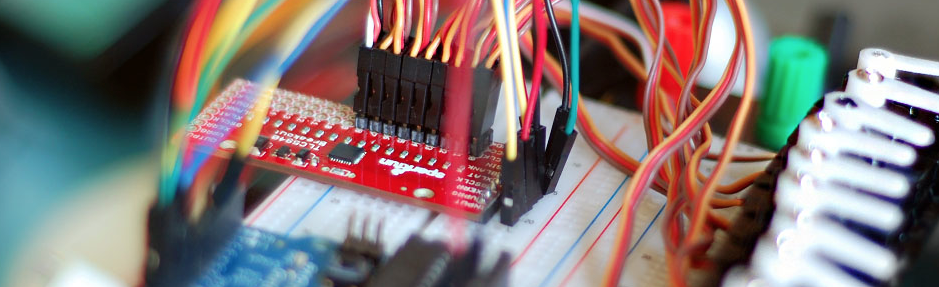
A friend just asked a quick question: How can I make a bunch of cheap (not fast) laser shutters? Here’s a quick answer: For motors, servos are pretty easy to use. Put a piece of black material on the arm of the servo if the laser is weak and this is safe to do. Alternatively, put a mirror on it and direct the beam to a beam block.
Drive the servo motors with an Arduino. Here’s a demo on how you can hook it up.
Piece of cake. Give this job to a barely conscious undergrad.
Here’s a shopping list, all from Sparkfun (not sponsored– just a good company):
Arduino – $25
Breakout board – $13
5v adapter – $6
Servo – $13
USB cable – $5
Header pins – $1.50
If you want to control them from switches, that’s easy to implement with the Arduino directly. Alternatively, you can use Processing (with Firmata) and make a simple GUI interface on the host computer.
An alternative (and more expensive) approach is to use linear actuators and an IO board from Phidgets.
Jacopo.bertolotti likes this
01 Apr 09:34
Experiments on Seismic Metamaterials: Molding Surface Waves
by S. Brûlé, E. H. Javelaud, S. Enoch, and S. Guenneau
Author(s): S. Brûlé, E. H. Javelaud, S. Enoch, and S. Guenneau
 Materials engineered at the micro- and nanometer scales have had a tremendous and lasting impact in photonics and phononics. At much larger scales, natural soils civil engineered at decimeter to meter scales may interact with seismic waves when the global properties of the medium are modified, or al...
[Phys. Rev. Lett. 112, 133901] Published Mon Mar 31, 2014
28 Mar 10:42
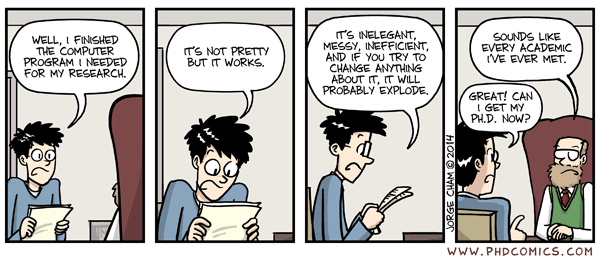
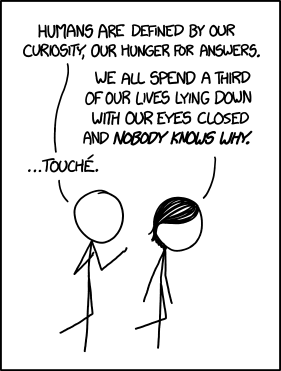
03/26/14 PHD comic: 'Not Pretty'
| Piled Higher & Deeper by Jorge Cham |
www.phdcomics.com
|
|
 |
||
|
title:
"Not Pretty" - originally published
3/26/2014
For the latest news in PHD Comics, CLICK HERE! |
||
Hanno, Adam Victor Brandizzi and one other like this
27 Mar 22:42
Fundamental Limits to Extinction by Metallic Nanoparticles
by O. D. Miller, C. W. Hsu, M. T. H. Reid, W. Qiu, B. G. DeLacy, J. D. Joannopoulos, M. Soljačić, and S. G. Johnson
Author(s): O. D. Miller, C. W. Hsu, M. T. H. Reid, W. Qiu, B. G. DeLacy, J. D. Joannopoulos, M. Soljačić, and S. G. Johnson
We show that there are shape-independent upper bounds to the extinction cross section per unit volume of dilute, randomly arranged nanoparticles, given only material permittivity. Underlying the limits are restrictive sum rules that constrain the distribution of quasistatic eigenvalues. Surprisingly...
[Phys. Rev. Lett. 112, 123903] Published Wed Mar 26, 2014
27 Mar 22:39
[Report] Optical Broadband Angular Selectivity
by Yichen Shen
A photonic crystal heterostructure is designed to provide optical selection based on propagation direction.
Authors: Yichen Shen, Dexin Ye, Ivan Celanovic, Steven G. Johnson, John D. Joannopoulos, Marin Soljačić
27 Mar 22:39
[Report] Quantum Plasmon Resonances Controlled by Molecular Tunnel Junctions
by Shu Fen Tan
The optical properties of silver plasmonic dimers depend on the selection of bridging molecules. [Also see Perspective by Nordlander]
Authors: Shu Fen Tan, Lin Wu, Joel K.W. Yang, Ping Bai, Michel Bosman, Christian A. Nijhuis
27 Mar 22:39
[Report] Observation of Brownian Motion in Liquids at Short Times: Instantaneous Velocity and Memory Loss
by Simon Kheifets
The motions of Brownian particles are tracked and evaluated on short time scales where solvent effects play a role.
Authors: Simon Kheifets, Akarsh Simha, Kevin Melin, Tongcang Li, Mark G. Raizen
25 Mar 11:45

The single-channel regime of transport through random media
by A. Peña
Article
Understanding and controlling the transport of light through random media is important for many applications. Here, Peña et al . demonstrate how in the deeply localized regime transport is mediated by a single transmission channel composed of a localized internal mode or a necklace state.
Nature Communications doi: 10.1038/ncomms4488
Authors: A. Peña, A. Girschik, F. Libisch, S. Rotter, A. A. Chabanov
21 Mar 10:01
[Report] Control Profiles of Complex Networks
by Justin Ruths
The control profile is a network statistic that may prove useful in approaching the control of complex networks. [Also see Perspective by Onnela]
Authors: Justin Ruths, Derek Ruths
Meichen_Yu likes this
20 Mar 19:09

A fully photonics-based coherent radar system
by Paolo Ghelfi
A fully photonics-based coherent radar system
Nature 507, 7492 (2014). doi:10.1038/nature13078
Authors: Paolo Ghelfi, Francesco Laghezza, Filippo Scotti, Giovanni Serafino, Amerigo Capria, Sergio Pinna, Daniel Onori, Claudio Porzi, Mirco Scaffardi, Antonio Malacarne, Valeria Vercesi, Emma Lazzeri, Fabrizio Berizzi & Antonella Bogoni
The next generation of radar (radio detection and ranging) systems needs to be based on software-defined radio to adapt to variable environments, with higher carrier frequencies for smaller antennas and broadened bandwidth for increased resolution. Today’s digital microwave components (synthesizers and analogue-to-digital converters) suffer from limited bandwidth with high noise at increasing frequencies, so that fully digital radar systems can work up to only a few gigahertz, and noisy analogue up- and downconversions are necessary for higher frequencies. In contrast, photonics provide high precision and ultrawide bandwidth, allowing both the flexible generation of extremely stable radio-frequency signals with arbitrary waveforms up to millimetre waves, and the detection of such signals and their precise direct digitization without downconversion. Until now, the photonics-based generation and detection of radio-frequency signals have been studied separately and have not been tested in a radar system. Here we present the development and the field trial results of a fully photonics-based coherent radar demonstrator carried out within the project PHODIR. The proposed architecture exploits a single pulsed laser for generating tunable radar signals and receiving their echoes, avoiding radio-frequency up- and downconversion and guaranteeing both the software-defined approach and high resolution. Its performance exceeds state-of-the-art electronics at carrier frequencies above two gigahertz, and the detection of non-cooperating aeroplanes confirms the effectiveness and expected precision of the system.
20 Mar 07:52
Universal Behavior beyond Multifractality in Quantum Many-Body Systems
by Luitz, David J.; Alet, Fabien; Laflorencie, Nicolas
Title: Universal Behavior beyond Multifractality in Quantum Many-Body Systems
Author(s): Luitz, David J.; Alet, Fabien; Laflorencie, Nicolas
Source: PHYSICAL REVIEW LETTERS, 112 (5): FEB 6 2014
Document Type: Article
Author(s): Luitz, David J.; Alet, Fabien; Laflorencie, Nicolas
Source: PHYSICAL REVIEW LETTERS, 112 (5): FEB 6 2014
Document Type: Article
20 Mar 07:52
Observation of Infinite-Range Intensity Correlations above, at, and below the Mobility Edges of the 3D Anderson Localization Transition
by Hildebrand, W. K.; Strybulevych, A.; Skipetrov, S. E.; et al.
Title: Observation of Infinite-Range Intensity Correlations above, at, and below the Mobility Edges of the 3D Anderson Localization Transition
Author(s): Hildebrand, W. K.; Strybulevych, A.; Skipetrov, S. E.; et al.
Source: PHYSICAL REVIEW LETTERS, 112 (7): FEB 19 2014
Document Type: Article
Author(s): Hildebrand, W. K.; Strybulevych, A.; Skipetrov, S. E.; et al.
Source: PHYSICAL REVIEW LETTERS, 112 (7): FEB 19 2014
Document Type: Article
20 Mar 07:51
Recurrent Scattering and Memory Effect at the Anderson Localization Transition
by Aubry, A.; Cobus, L. A.; Skipetrov, S. E.; et al.
Title: Recurrent Scattering and Memory Effect at the Anderson Localization Transition
Author(s): Aubry, A.; Cobus, L. A.; Skipetrov, S. E.; et al.
Source: PHYSICAL REVIEW LETTERS, 112 (4): JAN 28 2014
Document Type: Article
Author(s): Aubry, A.; Cobus, L. A.; Skipetrov, S. E.; et al.
Source: PHYSICAL REVIEW LETTERS, 112 (4): JAN 28 2014
Document Type: Article
17 Mar 08:38

Electrically driven subwavelength optical nanocircuits
by Kevin C. Y. Huang
Nature Photonics 8, 244 (2014). doi:10.1038/nphoton.2014.2
Authors: Kevin C. Y. Huang, Min-Kyo Seo, Tomas Sarmiento, Yijie Huo, James S. Harris & Mark L. Brongersma
07 Mar 08:54

Extraordinary momentum and spin in evanescent waves
by Konstantin Y. Bliokh
Article
The momentum and spin of a propagating photon are given by its wave vector and circular polarization, respectively. Bliokh et al. here show that evanescent electromagnetic waves possess a polarization-dependent momentum component and a polarization-independent spin component, which are both orthogonal to the wave vector.
Nature Communications doi: 10.1038/ncomms4300
Authors: Konstantin Y. Bliokh, Aleksandr Y. Bekshaev, Franco Nori
06 Mar 10:09

Optical detection of radio waves through a nanomechanical transducer
by T. Bagci
Optical detection of radio waves through a nanomechanical transducer
Nature 507, 7490 (2014). doi:10.1038/nature13029
Authors: T. Bagci, A. Simonsen, S. Schmid, L. G. Villanueva, E. Zeuthen, J. Appel, J. M. Taylor, A. Sørensen, K. Usami, A. Schliesser & E. S. Polzik
Low-loss transmission and sensitive recovery of weak radio-frequency and microwave signals is a ubiquitous challenge, crucial in radio astronomy, medical imaging, navigation, and classical and quantum communication. Efficient up-conversion of radio-frequency signals to an optical carrier would enable their transmission through optical fibres instead of through copper wires, drastically reducing losses, and would give access to the set of established quantum optical techniques that are routinely used in quantum-limited signal detection. Research in cavity optomechanics has shown that nanomechanical oscillators can couple strongly to either microwave or optical fields. Here we demonstrate a room-temperature optoelectromechanical transducer with both these functionalities, following a recent proposal using a high-quality nanomembrane. A voltage bias of less than 10 V is sufficient to induce strong coupling between the voltage fluctuations in a radio-frequency resonance circuit and the membrane’s displacement, which is simultaneously coupled to light reflected off its surface. The radio-frequency signals are detected as an optical phase shift with quantum-limited sensitivity. The corresponding half-wave voltage is in the microvolt range, orders of magnitude less than that of standard optical modulators. The noise of the transducer—beyond the measured Johnson noise of the resonant circuit—consists of the quantum noise of light and thermal fluctuations of the membrane, dominating the noise floor in potential applications in radio astronomy and nuclear magnetic imaging. Each of these contributions is inferred to be when balanced by choosing an electromechanical cooperativity of with an optical power of 1 mW. The noise temperature of the membrane is divided by the cooperativity. For the highest observed cooperativity of , this leads to a projected noise temperature of 40 mK and a sensitivity limit of . Our approach to all-optical, ultralow-noise detection of classical electronic signals sets the stage for coherent up-conversion of low-frequency quantum signals to the optical domain.
05 Mar 14:37

The use of silk-based devices for fracture fixation
by Gabriel S. Perrone
Article
Current bone fracture repair options include metallic and resorbable systems, both of which suffer from various issues and limitations. Here, the authors demonstrate resorbable and biocompatible silk bone screws, via in vivo testing.
Nature Communications doi: 10.1038/ncomms4385
Authors: Gabriel S. Perrone, Gary G. Leisk, Tim J. Lo, Jodie E. Moreau, Dylan S. Haas, Bernke J. Papenburg, Ethan B. Golden, Benjamin P. Partlow, Sharon E. Fox, Ahmed M. S. Ibrahim, Samuel J. Lin, David L. Kaplan
27 Feb 11:00

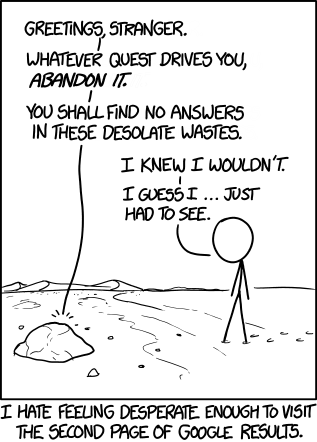
Image transport through a disordered optical fibre mediated by transverse Anderson localization
by Salman Karbasi
Article
Anderson localization allows the transport of light through a transversely disordered medium. Here, Karbasi and colleagues demonstrate that this effect even allows the transmission of images through a disordered optical fibre.
Nature Communications doi: 10.1038/ncomms4362
Authors: Salman Karbasi, Ryan J. Frazier, Karl W. Koch, Thomas Hawkins, John Ballato, Arash Mafi
24 Feb 08:48
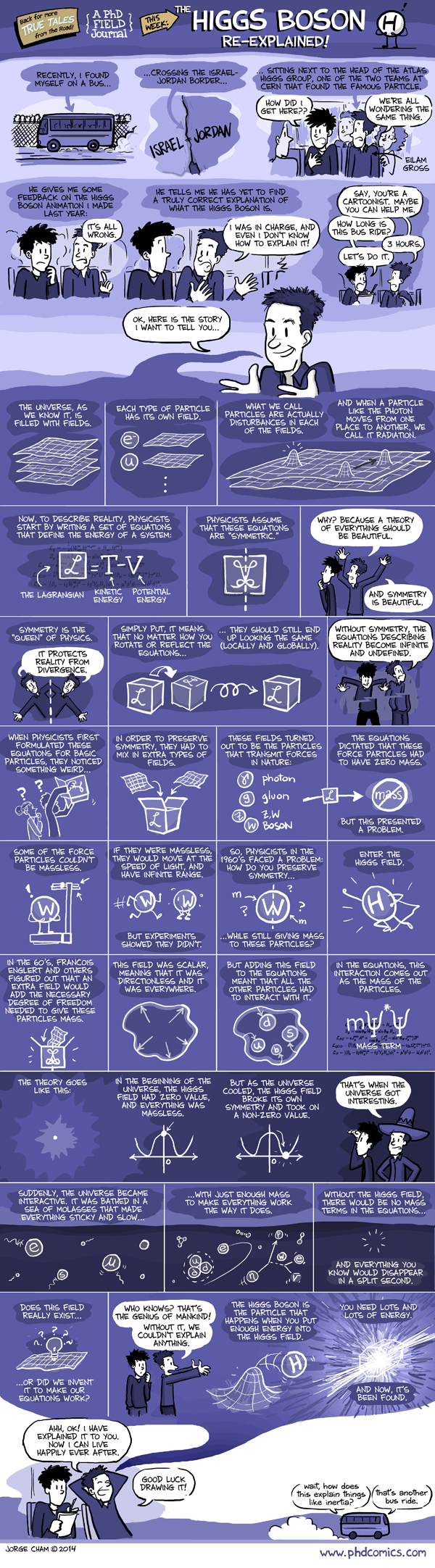
02/19/14 PHD comic: 'The Higgs Boson Re-Explained'
| Piled Higher & Deeper by Jorge Cham |
www.phdcomics.com
|
|
 |
||
|
title:
"The Higgs Boson Re-Explained" - originally published
2/19/2014
For the latest news in PHD Comics, CLICK HERE! |
||
Snipergirl, Sheller0 and 12 others like this
21 Feb 11:30
Ha fatto anche cose buone
by Marco Cattaneo
Riccardo Sapienzasi, non e' male, ma suona differente se si compara per esempio all'UK: Each year the Research Councils invest around £3 billion in research...
Sì, lo so, c’è chi lo dice parlando di Mussolini, ma io francamente non ho ambizioni revisioniste. Parlo del Governo Letta. E nella fattispecie di Maria Chiara Carrozza, che ha praticamente chiuso la sua breve esperienza da ministro varando il Programma Nazionale per la Ricerca (PNR) 2014-2020.
Difficile che ne abbiate sentito parlare, in queste settimane. Anche perché ormai sembra che la politica, in questo paese, si sia ridotta a puro gioco di gestione del potere. E spesso l’informazione si limita al triste rendiconto degli scambi di slogan tra i protagonisti.
Ecco, invece il 31 gennaio scorso il governo ha approvato il PNR. Prima di scatenare un entusiasmo fuori luogo è meglio dire da subito che non ci sono miracoli in vista. Piccoli passi sì, però, nell’auspicio che il Comitato interministeriale per la programmazione economica lo approvi.
Tanto per cominciare c’è un dettaglio non da poco. Il precedente PNR era triennale. Questo invece diventa settennale, per essere in linea con il Programma Horizon 2020 dell’Unione Europea. Ma non solo. Un piano triennale per la ricerca non permette di guardare molto lontano, ci si limita alla gestione ordinaria. Poter guardare a un orizzonte (toh, che caso) di sette anni dà invece un po’ più di respiro.
Ma veniamo alla sostanza. Il piano previsto ha una dotazione complessiva di 6,3 miliardi di euro, vale a dire 900 milioni all’anno, suddivisi in numerose voci.
Tra le più interessanti vale la pena di segnalare le seguenti.
60 milioni di euro l’anno per il bando di almeno 1800 nuovi dottorati (sempre all’anno).
100 milioni all’anno per almeno 100 progetti riservati a chi ha conseguito il dottorato di ricerca da meno di sei anni (finanziamenti, insomma, che non si discostano di molto dagli starting grant dello European Research Council).
63 milioni all’anno riservati a chi ha conseguito il dottorato da meno di dieci anni e ha trascorso almeno un triennio all’estero oppure a vincitori di starting grant o advanced grant dell’ERC (e questo potrebbe garantire il cofinanziamento dei progetti, generalmente richiesto dall’Unione).
10 progetti della durata di 5-7 anni da circa 100 milioni a progetto, nell’ambito del programma Excellence with Impact.
200 milioni al’anno per progetti di ricerca triennali senza limiti di costi (programma RIDE, Ricerca Italiana d’Eccellenza).
185 milioni l’anno per finanziare il potenziamento del sistema di infrastrutture.
Ma ci sono anche 50-100 milioni l’anno in voucher in conto capitale per il supporto all’innovazione delle PMI, e altri 18 milioni in credito agevolato per finanziare progetti congiunti tra PMI e università o enti pubblci di ricerca.
(Per chi volesse leggere integralmente il PNR, lo si trova in calce al comunicato stampa del ministero del 31 gennaio.)
Non è un gran che, l’ho detto, ma non è nemmeno nulla. E forse è tutto quello che si potrebbe fare nella contingenza attuale, a meno che qualcuno non metta seriamente mano al ripartimento dei fondi della spesa pubblica. Ma per questo, per quanto mi riguarda, ci ho messo una pietra sopra. E mi limito a sperare che questo piccolo intervento non finisca in un cassetto del nuovo governo a fare la muffa per fare posto a velleitarie riforme epocali.
Se poi dovesse passare, staremo a vedere secondo quali criteri saranno distribuiti i finanziamenti. Perché non basta che ci siano. Devono andare anche a chi se li merita.