Shared posts

27 Dec 23:35

Home insurance companies dropping customers

by Nathan Yau

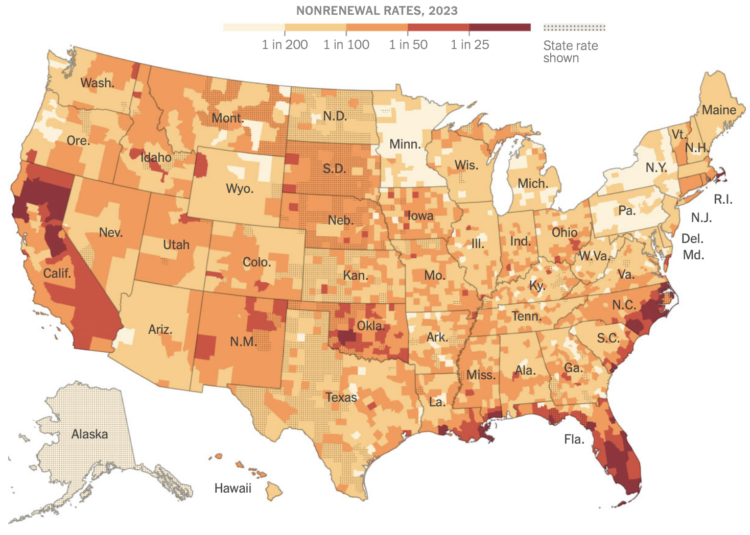
Because of a warming planet with more wildfires and hurricanes, it’s growing more common for insurance companies to stop insuring people with existing policies. For the New York Times, Christopher Flavelle, with analysis and graphics by Mira Rojanasakul, describes the coverage shift.

The consequences could be profound. Without insurance, you can’t get a mortgage; without a mortgage, most Americans can’t buy a home. Communities that are deemed too dangerous to insure face the risk of falling property values, which means less tax revenue for schools, police and other basic services. As insurers pull back, they can destabilize the communities left behind, making their decisions a predictor of the disruption to come.

Oh good.

Tags: climate, insurance, New York Times

21 Dec 13:39

Startup set to brick $800 kids robot is trying to open source it first

by Scharon Harding

Earlier this month, startup Embodied announced that it is going out of business and taking its Moxie robot with it. The $800 robots, aimed at providing emotional support for kids ages 5 to 10, would soon be bricked, the company said, because they can’t perform their core features without the cloud. Following customer backlash, Embodied is trying to create a way for the robots to live an open sourced second life.

Embodied CEO Paolo Pirjanian shared a document via a LinkedIn blog post today saying that people who used to be part of Embodied’s technical team are developing a “potential” and open source way to keep Moxies running. The document reads:

This initiative involves developing a local server application (‘OpenMoxie’) that you can run on your own computer. Once available, this community-driven option will enable you (or technically inclined individuals) to maintain Moxie’s basic functionality, develop new features, and modify her capabilities to better suit your needs—without reliance on Embodied’s cloud servers.

The notice says that after releasing OpenMoxie, Embodied plans to release “all necessary code and documentation” for developers and users.

Read full article

Comments

20 Dec 14:59

US temporarily bans drones in parts of NJ, may use “deadly force” against aircraft

by Jon Brodkin

The Federal Aviation Administration temporarily banned drones over parts of New Jersey yesterday and said "the United States government may use deadly force against" airborne aircraft "if it is determined that the aircraft poses an imminent security threat."

The FAA issued 22 orders imposing "temporary flight restrictions for special security reasons" until January 17, 2025. "At the request of federal security partners, the FAA published 22 Temporary Flight Restrictions (TFRs) prohibiting drone flights over critical New Jersey infrastructure," an FAA statement said.

Each NOTAM (Notice to Air Missions) affects a specific area. "No UAS [Unmanned Aircraft System] operations are authorized in the areas covered by this NOTAM" unless they have clearance for specific operations, the FAA said. Allowed operations include support for national defense, law enforcement, firefighting, and commercial operations "with a valid statement of work."

Read full article

Comments

20 Dec 02:24

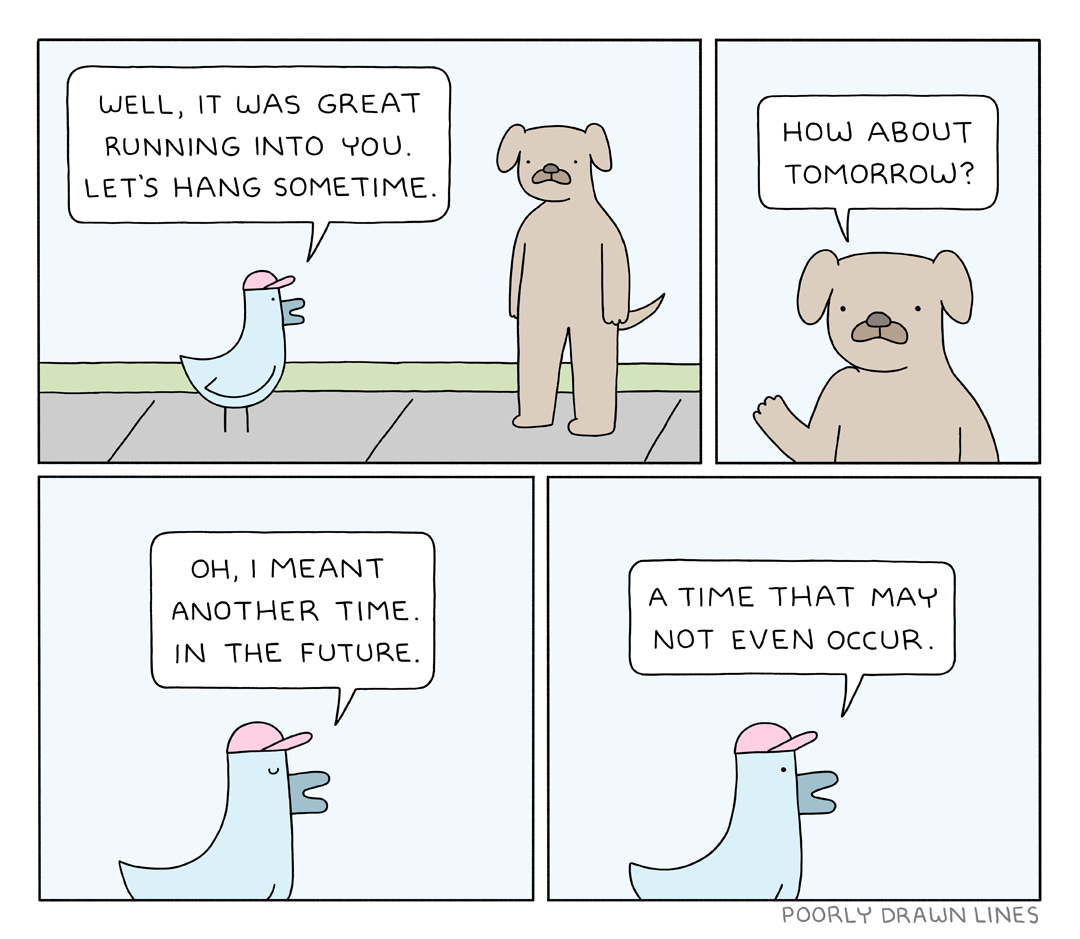
Sometime

by Reza
19 Dec 22:34

Z-Wave Long Range and its mile-long capabilities will arrive next year

by Kevin Purdy

Z-Wave can be a very robust automation network, free from the complications and fragility of Wi-Fi and Bluetooth. Just how robust, you ask? More than a mile long, under the right circumstances, as hardware soon to hit the market promises.

All claims of radio distances should be taken with amounts of salt unhealthy for consumption. What can be accomplished across an empty field is not the same as what can be done through buildings, interference, and scatter. But Z-Wave Long Range (or Z-Wave LR), operating "in long range mode at full power," can hit 1.5 miles, according to the Z-Wave Alliance, presuming you've got the right star-shaped hub network.

By using a star network topology instead of a more traditional mesh, Z-Wave LR reduces the need for hubs and repeaters, relying instead on a central hub. It can be more reliable for larger commercial spaces, security setups, and bigger homes, and also more power efficient. Devices automatically adjust their signal strength while on Z-Wave networks, extending the battery life of a single coin cell up to 10 years—again, under best-case circumstances. If you're really a glutton for punishment, you can fit up to 4,000 devices on a network running Z-Wave LR, because LR can co-exist on the same network as standard Z-Wave meshes.

Read full article

Comments

18 Dec 17:23

Americans spend more years being unhealthy than people in any other country

by Beth Mole

The gap of time between how long Americans live and how much of that time is spent in good health only grew wider in the last two decades, according to a new study published in JAMA Network Open.

The study, which looked at global health data between 2000 and 2019—prior to the COVID-19 pandemic—found the US stood out for its years of suffering. By 2019, Americans had a gap between their lifespan and their healthspan of 12.4 years, the largest gap of any of the 183 countries included in the study. The second largest gap was Australia's, at 12.1 years, followed by New Zealand at 11.8 years and the UK at 11.3 years.

America also stood out for having the largest burden of noncommunicable diseases in the world, as calculated by the years lived with disease or disability per 100,000 people.

Read full article

Comments

18 Dec 17:22

Trump to block the government and military from buying EVs

by Jonathan M. Gitlin

The incoming Trump administration has even more plans to delay electric vehicle adoption than previously thought. According to Reuters, which has seen transition team documents, the Trump team wants to abolish EV subsidies, claw back federal funding meant for EV charging infrastructure, block EV battery imports on national security grounds, and prevent the federal government and the US military from purchasing more EVs.

During the campaign, candidate Trump made repeated references to ending a supposed EV mandate. In fact, policies put in place by current US President Joe Biden only call for 50 percent of all new vehicles to be electrified by 2032 under EPA rules meant to cut emissions by 56 percent from 2026 levels.

More pollution

Instead, the new regime will be far more friendly to gas guzzling, as it intends to roll back EPA fuel efficiency standards to those in effect in 2019. This would increase the allowable level of emissions from cars by about 25 percent relative to the current rule set. US new vehicle efficiency stalled between 2008 and 2019, and it was only once the Biden administration began in 2021 that the EPA started instituting stricter rules on allowable limits of carbon dioxide and other pollutants from vehicle tailpipes.

Read full article

Comments

18 Dec 17:20

Companies issuing RTO mandates “lose their best talent”: Study

by Scharon Harding

Return-to-office (RTO) mandates have caused companies to lose some of their best workers, a study tracking over 3 million workers at 54 "high-tech and financial" firms at the S&P 500 index has found. These companies also have greater challenges finding new talent, the report concluded.

The paper, Return-to-Office Mandates and Brain Drain [PDF], comes from researchers from the University of Pittsburgh, as well as Baylor University, The Chinese University of Hong Kong, and Cheung Kong Graduate School of Business. The study, which was published in November, spotted this month by human resources publication HR Dive, and cites Ars Technica reporting, was conducted by collecting information on RTO announcements and sourcing data from LinkedIn. The researchers said they only examined companies with data available for at least two quarters before and after they issued RTO mandates. The researchers explained:

To collect employee turnover data, we follow prior literature ... and obtain the employment history information of over 3 million employees of the 54 RTO firms from Revelio Labs, a leading data provider that extracts information from employee LinkedIn profiles. We manually identify employees who left a firm during each period, then calculate the firm’s turnover rate by dividing the number of departing employees by the total employee headcount at the beginning of the period. We also obtain information about employees’ gender, seniority, and the number of skills listed on their individual LinkedIn profiles, which serves as a proxy for employees’ skill level.

There are limits to the study, however. The researchers noted that the study "cannot draw causal inferences based on our setting." Further, smaller firms and firms outside of the high-tech and financial industries may show different results. Although not mentioned in the report, relying on data from a social media platform could also yield inaccuracies, and the number of skills listed on a LinkedIn profile may not accurately depict a worker's skill level.

Read full article

Comments

18 Dec 13:23

Inside the New Museum at the Lincoln Memorial

by Eric Wills
Inside the New Museum at the Lincoln Memorial
Photograph by Josh Amann/Wikimedia.

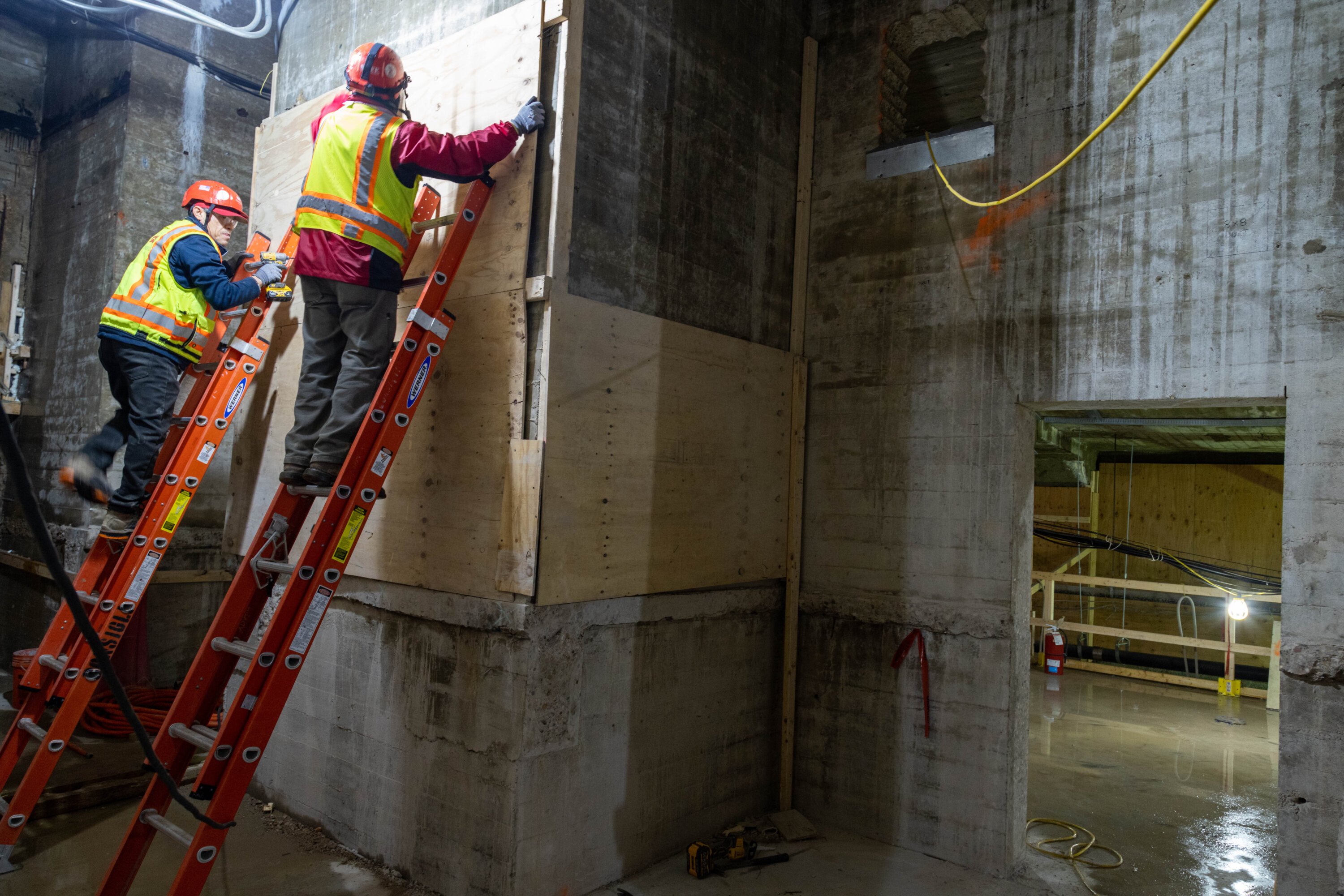
On a rainy Tuesday morning, I stood under Abraham Lincoln for the first time. “Those reinforced concrete beams are actually where Abe is sitting right now,” said Sam Meyerhoff, a senior project manager in the DC office of the construction company Consigli, as she pointed some 40 feet in the air. We were standing in the undercroft, the cavernous, column-lined space under the Lincoln Memorial, as Meyerhoff was helping lead a tour of the ongoing construction of the site.

When it was built more than a century ago, workers elevated the memorial above the National Mall by sinking 122 concrete pillars into the bedrock, leaving some 50,000 square feet of empty space underneath the marble likeness of our country’s 16th president. Call it the nation’s basement. It was off limits to visitors, something of an urban legend—the only hint of its existence a small bookstore and exhibition area tucked underneath the memorial.

But now, as part of a $68 million-plus project, the undercroft will be transformed into a 15,000-square-foot visitor center with a museum, theater, and revamped bookstore. The center will celebrate the construction of the memorial and its significance in the fight for Civil Rights. “It is the single most important place where Americans go to exercise their First Amendment rights,” says Mike Litterst, the chief of communications with the National Mall and Memorial Parks.

A cross section of the new visitor’s center. Rendering courtesy of Quinn Evans.
A rendering of exhibition space in the new museum. Rendering courtesy of Quinn Evans.
A rendering of theater, where visitors will be able to watch video clips projected onto screens and columns in the undercroft. Rendering courtesy of Quinn Evans.
A rendering of a corridor in the new museum. Rendering courtesy of Quinn Evans.

Effectively, Consigli and Quinn Evans, the architecture firm behind the project, are constructing a new building in the undercroft—a glass box perched on a freshly poured concrete slab a story-and-a-half up from the dirt floor. Twenty-two-foot-tall windows will give visitors views of the unfinished section of the undercroft, where films and movies will be projected onto screens and the concrete pillars as part of the museum’s programming. Maybe footage of the Black contralto Marian Anderson, on Easter Sunday 1939, singing “My Country, ‘Tis of Thee” as part of a public performance at the memorial, after she was denied access to Constitution Hall because of the color of her skin. Or maybe Martin Luther King, Jr. delivering lines from his famous “I Have a Dream” speech in 1963, about transforming “the jangling discords of our nation into a beautiful symphony of brotherhood.” To prevent condensation from forming on the glass, the panels, fabricated in London, will tie into the electrical system and will be heated. The only changes to the exterior of the memorial: the existing bronze doors on the north and south sides will be enlarged, and a new entry will be added for staff.

Modeled on the Parthenon, the memorial was designed by the architect Henry Bacon and dedicated in 1922, the sculpture of Lincoln carved by the Piccirilli brothers, a team of Italian stonecutters, under the supervision of Daniel Chester French. The idea for the museum first emerged in the 1960s, says Litterst—the brainchild of a Republican Congressman from Iowa, Fred Schwengel, who thought the undercroft could be dedicated to the life of Lincoln. After the idea again gained momentum, David Rubenstein, the businessman and philanthropist, donated $18.5 million to the cause in 2016. (The federal government has pledged $26 million, and the nonprofit National Park Foundation raised $43 million, including Rubenstein’s grant. The addition of a second elevator and extra waterproofing will lift the total cost of the project above $69 million, Litterst says, though he’s uncertain by how much.) Because of the sensitive and historic nature of the site, the design process took seven years; construction started in March 2023.

Workers in the undercroft on a recent Tuesday morning. Cartoons and other drawings left on columns by the original builders of the memorial will be featured in the museum. Photograph by Evy Mages .
Photograph by Evy Mages .

Much work remains. During the tour, rain fell from the ceiling in the section where new restrooms will be located, because exterior waterproofing was recently stripped away so it can be replaced. Some 400 tons of galvanized rebar were used as part of an effort to shore up the front part of the memorial, making it blast-proof. Small white stalactites hang from the ceiling in areas where water has seeped in over the years; damaged spots will be repaired. Workers have already removed and replaced the steps to the memorial to add waterproofing.

The project is scheduled to be completed in 2026, the year of the nation’s Semiquincentennial, or 250th anniversary of the signing of the Declaration of Independence, Litterst says. With the hope, of course, that the ribbon cutting comes before July 4th. Giving visitors a chance, finally, to glimpse our nation’s long-hidden basement on the National Mall, and reflect anew on the memorial’s significance. And perhaps on Dr. King’s famous words that “the arc of the moral universe is long, but it bends towards justice,” as we ponder the journey that lies ahead.

The post Inside the New Museum at the Lincoln Memorial first appeared on Washingtonian.

15 Dec 20:02

When will Wegmans open?

by Store Reporter

Seven years after it was first announced, Rockville’s new Wegmans is finally scheduled to open in the second half of 2025. The 80,000-square-foot grocery store will anchor the sprawling Twinbook Quarter development on Rockville Pike, which will eventually encompass 18 acres of retail, residential and office space. Wegmans will have its own two-level underground parking garage, which hopefully will be enough to corral all those hungry fans who have been waiting for this store to open since 2018. Also: This week, Gov. Wes Moore announced his support for a proposal that would allow Maryland grocery stores to sell beer and wine for the first time since 1978. Will the alcohol ban be lifted before Wegmans opens? Stay tuned.

The post When will Wegmans open? appeared first on Store Reporter.

12 Dec 15:00

The Biden Administration Is Separating Families at the Border. It Doesn’t Always Say Why.

by by Mica Rosenberg

by Mica Rosenberg

ProPublica is a nonprofit newsroom that investigates abuses of power. Sign up to receive our biggest stories as soon as they’re published.

In handwritten cursive, a Russian immigrant named Marina wrote out the story of the day U.S. Customs and Border Protection agents took away her 1-year-old baby while she was being held in a detention facility in southern California. “I cried and begged, kneeling, not to do this, that this was a mistake, not justice and not right,” she wrote. “She was so little that no one knew anything about her. I was very afraid for her and still am!”

This didn’t happen during the Trump administration, which separated more than 4,000 migrant children from their families under its controversial “zero tolerance” policy. Marina was separated from her baby in April of this year. The 40-year-old former restaurant manager came to the U.S.-Mexico border with her husband, mother-in-law and child to seek asylum. More than eight months later, she and her mother-in-law remain in federal immigration custody in Louisiana. Her husband is detained at a different Louisiana immigration facility. And Aleksandra is over a thousand miles away, being cared for by strangers in foster care in California.

Aleksandra is one of around 300 children the Biden administration has separated from their parents or legal guardians this year, according to two government sources who asked not to be identified because they hadn’t been authorized to speak about the separations. Most of the cases involved families crossing the southwestern border, the sources said. These numbers haven’t previously been reported.

Similarly, 298 children were separated from their parents in 2023, according to a government report to Congress published on Tuesday, even as overall migrant crossings have declined. According to the report, the average amount of time children separated between April 2018 and October 2024 have spent in federal custody before being released to a sponsor is 75 days.

The Department of Homeland Security, Customs and Border Protection, and Immigration and Customs Enforcement did not respond to multiple requests for comment on the numbers or on Marina’s case.

Those officials who did speak about the separations did so on the condition they not be identified. They said the current separations are not similar — in either character or scale — to what was happening during the Trump administration. Its zero tolerance policy directed authorities to detain and criminally prosecute all immigrants caught illegally crossing the border and to separate them from their children if they were travelling together. Biden administration officials say they have only separated families for reasons according to longstanding immigration practices, including when they have concerns about the parents or the safety of the children. Some of those concerns are related to suspicions about abuse, criminal histories or threats to national security.

The administration reports the numbers of separations to Congress and to lawyers at the American Civil Liberties Union who have been charged with providing oversight. However, those reports give few details about the reasons for the separations, especially in cases where parents have been flagged for national security reasons. Around 80 of the children separated between December 2023 and November 2024 were in that category, one of the government sources said, and some 50 of those were Russian, like Aleksandra. The second source said at least 10 of the Russian children who were separated this year are still in government custody.

In cases involving national security, the government can withhold its rationale even from the families themselves, making it hard for them and their lawyers to contest the separations or mount a defense. And some advocates have been reluctant to talk publicly about the current separations, much less call out President Joe Biden’s administration, as they press for the government to resolve their clients’ cases and fear the incoming Trump administration could apply the same standards more broadly to separate more families in the future.

Family separations at the border did not begin with the zero tolerance policy and didn’t end when it was lifted, said Talia Inlender, deputy director of the Center for Immigration Law and Policy at the University of California, Los Angeles School of Law, which wrote a report on family separations going back to the Obama years and before. She said that while Trump’s policy was unprecedented because of how expansive it was, the scant information that the government provides about separations at the border has been common practice across administrations.

“I think the lack of transparency creates a lack of accountability,” she said, “and that is by design.”

“Where there is room left for agency discretion,” Inlender said, “that’s really where we need to make sure that there are eyes on what is happening, so that these exceptions, or these grey areas, don’t become the rule.”

During telephone interviews with Marina and her husband, conducted through a translator, the couple said they hoped by breaking the silence on their case, they might get answers about why they were separated from their daughter and get her back. They asked to be identified only by their first names because of their pending deportation cases.

Marina said that she and her husband Maksim, who worked as a supplies manager at a construction company, had met at a restaurant where Marina worked in Moscow. They married in 2021 and tried for years to have a child before Alexsandra was born.

Maksim said he started going to antigovernment protests in support of opposition leader Alexei Navalny and later against Russia’s invasion of Ukraine. According to an affidavit Marina gave as part of her asylum case, she said Maksim had been detained, questioned and on one occasion beaten up by police after protests. ProPublica could not independently corroborate the accounts of his political activity. They both said Marina wasn’t involved in the protests and had asked him to stop attending them. Eventually the family decided to leave the country, fearing government reprisals.

After researching the best routes into the U.S. online, they said they bought tickets to Dubai, Mexico City and Tijuana, which sits on the border with California. Once in Tijuana, Marina said they waited for six months for an appointment after using a U.S. government app known as CBP One to apply for permission to approach the border and ask for asylum. They were finally granted a slot and allowed to cross in mid-April.

But instead of being released to pursue their asylum claim, Marina said she and Aleksandra were held in a cold cell at a Border Patrol detention facility. She said she was given only formula and vegetable purees for Aleksandra. She smashed up bread from her own sandwiches to give her daughter extra food. At the time Aleksandra was learning to walk and was always moving around; she had just started to talk.

Then, after several days, Marina said she and her baby were surrounded by border officials who told her the adults would be detained and Aleksandra would be taken away. She said one of the agents handed her a note that read: “CBP has made this decision for the following reason: You are being taken into custody for presenting a public safety or national security risk.”

Recalling the desperation she felt upon seeing the note, Marina wrote: “Why would that be? I didn’t even have an interview!!!”

She said she became catatonic after a Border Patrol agent took her daughter by the hand and led her away.

“I thought I died at that moment.”

Excerpts from a handwritten account by Marina, a Russian immigrant, about her separation from her 1-year-old at the U.S. border. She wrote and translated it in detention and shared it with ProPublica.

Her experience might sound familiar to anyone who followed the news about the thousands of separations carried out by the Trump administration. Its zero tolerance policy first began as a pilot program in 2017, but the administration denied its existence until spring 2018. Even then, authorities refused to make public the details of how the policy was being implemented, including where the children were being held, how many of them were in custody, or even how the separations were conducted.

In June of 2018, ProPublica obtained audio that had been recorded in a Border Patrol facility of wailing children who had been separated from their parents. Among them was a 6-year-old girl, pleading to make a phone call to her aunt. That audio triggered a bipartisan outcry that led the administration to announce the end of the policy 48 hours later. And a federal lawsuit brought by the ACLU forced the administration to reunify the children in its custody with their families.

That reunification effort continued even after Trump left office. Biden, who called zero tolerance a “a moral and national shame,” formed a task force to finish the reunifications shortly after taking office. It found that some parents had been deported without their children and remained separated years later. Biden promised going forward that his administration would not separate children from their parents “except in the most extreme circumstances where a separation is clearly necessary for the safety and well-being of the child or is required by law.”

Biden’s Justice Department negotiated a settlement with the ACLU allowing it to disperse assistance to the families that had been harmed by zero tolerance. Under the terms of the deal, signed last December, future family separations were only allowed in “limited” circumstances, including when parents are deemed a threat to the child, have an outstanding arrest warrant or need to be hospitalized.

The settlement also said separations were allowed when government officials found parents or legal guardians could pose “a public safety or national security risk to the United States,” including people suspected of terrorism or espionage. But in those cases the agreement says that the government is not required to provide documentation of the reason for its decision if it would mean disclosing sensitive information.

Such cases could include instances when migrants’ names come up on an international watch list, said a third government official, who, like the others, spoke on the condition of anonymity. In June of this year, the U.S. Treasury Department sanctioned two Uzbeks and one Russian national for alleged links to an ISIS-linked human smuggling network that the State Department said facilitated travelers coming to the United States.

“If they are looking into cases more deeply and then people are let go after they found out the information they had was not correct,” the official said, “it’s still pretty difficult to say we shouldn’t go ahead and make those checks if we need to pay extra security attention in these cases.” Sometimes, the official said, authorities are able to quickly resolve any security concerns and reunite the families.

Advocates do not disagree that sometimes separations are warranted, said Lee Gelernt, an ACLU attorney and the lead lawyer in the family separation lawsuit. And they said they understand the sensitivity of sharing information that could put the country at risk.

However, when asked whether the Russian cases highlight the potential pitfalls of the agreement the ACLU made with the administration, Gelernt said that the government “cannot create a loophole and place everything in the black box of national security.”

He added that if the exceptions become “an excuse to circumvent the bar on separations, we will return to court.”

With Biden leaving office soon, it’s the incoming Trump administration that most worries the advocates. Trump made stopping border crossings and mass deportations a centerpiece of his campaign and says they are part of his Day 1 plans for when he takes office, but when asked several times in an interview over the weekend if he would revive the zero tolerance policy, he said: “We’ll send the whole family, very humanely, back to the country where they came. That way the family’s not separated.”

Inlender wasn’t convinced that Trump wouldn’t ramp up family separations. “With any loopholes that exist in policies, any loopholes that exist in the settlement agreements, I think there is always a danger when you have an incoming administration that has already both shown itself willing, and in some cases able, to inflict cruelty to separate families, that they will use any tools at their disposal,” Inlender said.

The children who were separated from their parents for national security reasons in the past year came from a range of countries, including Romania, Turkey, Ukraine, Lebanon, Iran, Kyrgyzstan, Armenia, Colombia and Venezuela, the two government sources said. The majority, however, came from Russia. In fact, only one Russian child separated from their parents this year was listed as being separated for a reason other than national security, they said.

None of the officials interviewed could say whether Russian families had been flagged for special scrutiny. The 50 Russian children separated last year represent a very small share of the overall Russian border crossings. According to CBP data for the 2024 fiscal year, which began last October and ended in September, 7,137 Russian families crossed the southwestern border, almost all of them through legal ports of entry like Marina’s family.

The secrecy surrounding Marina’s case has meant the government has not told her or her lawyer any more specific reason for her detention and prolonged separation from Aleksandra. Marina’s New York-based attorney, Elena Denevich, said in an email that while she has filed a series of parole requests for Marina since May, “the requests were denied based on unspecified ‘national security concerns.’” Denevich said DHS “has provided no evidence or explanation to substantiate this allegation.”

The Office of Refugee Resettlement, which is part of the Department of Health and Human Services and oversees migrant children, said it could not comment on individual cases and referred questions about enforcement to DHS. ORR, which earlier this month had only published data on family separations through January 2024 on its website, updated its site with nine new reports from February through October this week.

In addition to interviews, Marina shared her four-page handwritten account of the separation after translating it herself into English using a tablet provided to her in detention. ProPublica reviewed court documents and spoke to Maksim’s stepfather, who crossed the border months earlier but was released to pursue an asylum claim.

Marina’s family has joined a class-action lawsuit brought by more than 150 detained Russian-speaking asylum seekers against the government claiming they are systematically being denied parole by ICE because of their nationalities. Maksim’s stepfather says he has been working nonstop as a long-haul truck driver to pay for legal fees as he fights for the release of his family. ICE said it could not comment on pending litigation.

After their separation, Marina, stuck in detention, said she had to wait three months before she was finally allowed to speak with her daughter on the phone in July. Beginning in August, they were allowed weekly video calls. Because the family Aleksandra is staying with doesn’t speak Russian, Marina has asked them to put on Russian YouTube videos from time to time so her daughter can listen to people speaking her native language. She says Aleksandra looks healthy and like she is being well taken care of, surrounded by toys and wearing new clothes. She is grateful for the foster family, who points to the screen and says “mama” when they talk to remind her who her mother is, but she breaks down crying when talking about how the separation has affected her.

“I’m just trying to take care of myself because my little daughter needs a healthy mom. But because she is so little, I feel really bad. I am starting to fall apart, both mentally and physically,” Marina said from detention. She said she is having trouble sleeping and experiencing a series of worsening health problems.

Not knowing the reason behind their family’s separation is agonizing.

“I don’t have the slightest clue why they did this to us.”

Andrey Babitskiy contributed reporting.
11 Dec 22:53

Photobucket opted inactive users into privacy nightmare, lawsuit says

by Ashley Belanger

Photobucket was sued Wednesday after a recent privacy policy update revealed plans to sell users' photos—including biometric identifiers like face and iris scans—to companies training generative AI models.

The proposed class action seeks to stop Photobucket from selling users' data without first obtaining written consent, alleging that Photobucket either intentionally or negligently failed to comply with strict privacy laws in states like Illinois, New York, and California by claiming it can't reliably determine users' geolocation.

Two separate classes could be protected by the litigation. The first includes anyone who ever uploaded a photo between 2003—when Photobucket was founded—and May 1, 2024. Another potentially even larger class includes any non-users depicted in photographs uploaded to Photobucket, whose biometric data has also allegedly been sold without consent.

Read full article

Comments

10 Dec 20:25

Amazon starts selling Hyundai cars, more brands next year

by Jonathan M. Gitlin

Amazon started selling new cars today. The online retailer and Internet giant has had its sights on shifting metal for some time now, and if you live in one of 48 cities in the US, and you're looking for a new Hyundai, it's ready for your business.

Hyundai has been working with Amazon for several years on its digital experience, adding Alexa to its cars and showcasing its products at Amazon.com. But now, with Amazon Autos, customers can go ahead and buy the car, not just learn about it so they can go to a dealer well-informed.

In fact, the dealerships remain part of the process even with Amazon Autos—hence the fact that the service is not rolling out nationwide.

Read full article

Comments

09 Dec 18:57

AI Expert Says That Each ChatGPT Query Is Equal To Wasting Half A Litre Of Water, Implying That…

08 Dec 15:15

US to start nationwide testing for H5N1 flu virus in milk supply

by John Timmer

On Friday, the US Department of Agriculture (USDA) announced that it would begin a nationwide testing program for the presence of the H5N1 flu virus, also known as the bird flu. Testing will focus on pre-pasteurized milk at dairy processing facilities (pasteurization inactivates the virus), but the order that's launching the program will require anybody involved with milk production before then to provide samples to the USDA on request. That includes "any entity responsible for a dairy farm, bulk milk transporter, bulk milk transfer station, or dairy processing facility."

The ultimate goal is to identify individual herds where the virus is circulating and use the agency's existing powers to do contact tracing and restrict the movement of cattle, with the ultimate goal of eliminating the virus from US herds.

A bovine disease vector

At the time of publication, the CDC had identified 58 cases of humans infected by the H5N1 flu virus, over half of them in California. All but two have come about due to contact with agriculture, either cattle (35 cases) or poultry (21). The virus's genetic material has appeared in the milk supply and, although pasteurization should eliminate any intact infectious virus, raw milk is notable for not undergoing pasteurization, which has led to at least one recall when the virus made its way into raw milk. And we know the virus can spread to other species if they drink milk from infected cows.

Read full article

Comments

06 Dec 20:14

Soon, the tech behind ChatGPT may help drone operators decide which enemies to kill

by Benj Edwards

As the AI industry grows in size and influence, the companies involved have begun making stark choices about where they land on issues of life and death. For example, can their AI models be used to guide weapons or make targeting decisions? Different companies have answered this question in different ways, but for ChatGPT maker OpenAI, what started as a hard line against weapons development and military applications has slipped away over time.

On Wednesday, defense-tech company Anduril Industries—started by Oculus founder Palmer Luckey in 2017—announced a partnership with OpenAI to develop AI models (similar to the GPT-4o and o1 models that power ChatGPT) to help US and allied forces identify and defend against aerial attacks.

The companies say their AI models will process data to reduce the workload on humans. "As part of the new initiative, Anduril and OpenAI will explore how leading-edge AI models can be leveraged to rapidly synthesize time-sensitive data, reduce the burden on human operators, and improve situational awareness," Anduril said in a statement.

Read full article

Comments

06 Dec 20:10

How did the CEO of an online payments firm become the nominee to lead NASA?

by Eric Berger

President-elect Donald Trump announced Wednesday his intent to nominate entrepreneur and commercial astronaut Jared Isaacman as the next administrator of NASA.

For those unfamiliar with Isaacman, who at just 16 years old founded a payment processing company in his parents' basement that ultimately became a major player in online payments, it may seem an odd choice. However, those inside the space community welcomed the news, with figures across the political spectrum hailing Isaacman's nomination variously as "terrific," "ideal," and "inspiring."

This statement from Isaac Arthur, president of the National Space Society, is characteristic of the response: "Jared is a remarkable individual and a perfect pick for NASA Administrator. He brings a wealth of experience in entrepreneurial enterprise as well as unique knowledge in working with both NASA and SpaceX, a perfect combination as we enter a new era of increased cooperation between NASA and commercial spaceflight."

Read full article

Comments

06 Dec 12:35

Maryland will use AI tech to manage traffic in the near future - WTOP News

Maryland will use AI tech to manage traffic in the near future - WTOP News

Maryland will use AI tech to manage traffic in the near future - WTOP News

05 Dec 17:35

Rivian opens its adventure charging network to other EVs today

by Jonathan M. Gitlin

Today, Rivian announced that it is opening up the Rivian Adventure Network of fast chargers to drivers of all other makes of electric vehicles, beginning with its location in Joshua Tree, California. The Joshua Tree Charging Outpost, which has 12 DC fast chargers, is now accessible to any EV with a CCS1 charging port, as well as any Tesla or EV equipped with a native NACS (J3400) port using an adapter. A planned hardware upgrade in the future will add native NACS cables. (Rivian is switching the plugs on its own EVs from CCS1 to NACS in 2025.)

Rivian revealed its plans in early 2021 to build charging stations, a few months before it let us loose in the R1T electric pickup. The Rivian Adventure Network currently has deployed banks of fast chargers at 91 sites across the US, with another 12 in the works. (A separate Rivian Waypoint Network is building out level 2 chargers with J1772 plugs.)

All but one of the Adventure Network sites have at least six DC fast chargers, although until now, all have been the preserve of Rivians alone. In total, the automaker plans to have 3,500 DC fast chargers in the Adventure Network.

Read full article

Comments

05 Dec 14:18

Prenatal test accidentally picks up cancer in 50% of those with wonky results

by Beth Mole

In 2013, researchers reported an eye-opening case of a healthy pregnant woman with a puzzling prenatal test result. A routine genetic screen using cell-free DNA—a highly accurate blood test—suggested her fetus had an extra copy of chromosome 13 (Patau syndrome) and only one copy of chromosome 18. These results are devastating; both conditions can cause severe abnormalities. Those with Patau syndrome often only survive a few days or weeks after birth. But, when doctors looked at scans and did additional pregnancy testing, all they found was a healthy fetus developing normally. The woman carried on with her uncomplicated pregnancy and gave birth to a healthy baby.

The alarming genetic results may have been written off as a freak testing flub. But soon after giving birth, the otherwise healthy 37-year-old mother of two reported severe pelvic pain. Imaging revealed what looked like multiple bone tumors, and she was subsequently diagnosed with metastatic small cell carcinoma of vaginal origin. Tragically, she has since died.

Testing of one of her tumors found that the cancerous cells had an increased number of chromosome 13 relative to chromosome 18. Her prenatal test had picked up her deadly cancer.

Read full article

Comments

04 Dec 18:01

No more EV app folders: Universal plug-and-charge is due to launch in 2025

by Kevin Purdy

To fill a car with gas, you generally just need a credit card or cash. To charge an EV at a DC fast charging station, you need any number of things to work—a credit card reader, an app for that charger's network, a touchscreen that's working—and they're all a little different.

That situation could change next year if a new "universal Plug and Charge" initiative from SAE International, backed by a number of EV carmakers and chargers, moves ahead and gains ground. Launching in early 2025, the network could make charging an EV actually easier than gassing up: plug in, let the car and charger figure out the payment details over a cloud connection, and go.

Some car and charging network combinations already offer such a system through a patchwork of individual deals, as listed at Inside EVs. Teslas have always offered a plug-and-charge experience, given the tight integration between their Superchargers and vehicles. Now Tesla will join the plug-and-charge movement proper, allowing Teslas to have a roughly similar experience at other stations.

Read full article

Comments

04 Dec 15:10

China hits US with ban on critical minerals used in tech manufacturing

by Ashley Belanger

China has immediately retaliated against the US following new export curbs that the Biden administration announced Monday, which restrict a wider range of Chinese businesses from accessing any foreign products that include even a single US-made chip.

On Tuesday, China's Ministry of Commerce punched back, announcing a ban that takes effect immediately on "exports of 'dual-use items' related to gallium, germanium, antimony, and superhard materials to the US," Reuters reported. Such "dual-use items" cover goods and technologies used for civil or military purposes, while the rare-earth metals are critical to tech manufacturing.

"In principle, the export of gallium, germanium, antimony, and superhard materials to the United States shall not be permitted," China's ministry said.

Read full article

Comments

04 Dec 12:50

Splash pads really are fountains of fecal material; CDC reports 10K illnesses

by Beth Mole

There's nothing quite like a deep dive into the shallow, vomitous puddles of children's splash pads. Even toeing the edge is enough to have one longing for the unsettling warmth of a kiddie pool. But the brave souls at the Centers for Disease Control and Prevention have done it, wading into 25 years' worth of records on gastrointestinal outbreaks linked to the wellsprings of fecal pathogens. And they unsurprisingly found enough retch-inducing results to make any modern-day John Snows want to start removing some water handles.

Between 1997 and 2022, splash pads across the country were linked to at least 60 outbreaks, with the largest sickening over 2,000 water frolickers in one go. In all, the outbreaks led to at least 10,611 illnesses, 152 hospitalizations, and 99 emergency department visits. People, mostly children, were sickened with pathogens including Cryptosporidium, Camplyobacter jejuni, Giardia duodenalis, Salmonella, Shigella, and norovirus, according to the analysis, published Tuesday in the CDC's Morbidity and Mortality Weekly Report. The tallies of outbreaks and illnesses are likely undercounts, given reporting delays and missed connections.

Though previous outbreak-based studies have provided bursts of data, the new analysis is the first to provide a comprehensive catalog of all the documented outbreaks since splash pads erupted in the 1990s. Together, they provide a clear, stomach-churning explanation of how the outbreaks keep happening. Basically, small children go into the watery playgrounds while they're sick and spread their germs.

Read full article

Comments

04 Dec 00:32

Elon Musk Wants to Own Permanent Daylight Saving Time

by Andrew Beaujon
Elon Musk Wants to Own Permanent Daylight Saving Time
Donald Trump and Elon Musk watch the launch of a SpaceX Starship rocket in November. (Photo by Brandon Bell/Getty Images)

Elon Musk runs a car company, a space-exploration company, a social network, an artificial intelligence company, a neurotechnology company, and a tunneling company. He and fellow billionaire Vivek Ramaswamy also run the “Department of Government Efficiency,” a nongovernmental commission set up to make proposals to cut government spending for President-Elect Trump. And in that role, Musk now appears to want to take charge of time itself.

The Washington Post reports that Musk, apparently inspired by an online poll, is on board with ending daylight saving time. It’s an idea that lawmakers on both sides of the US political divide—including Trump’s nominee for Secretary of State, US Senator Marco Rubio—have supported, though legislation to do so has stalled.

One potential reason: The US tried permanent daylight saving time beginning in January 1974. It was billed as a national experiment that might save energy, but the experiment quickly went off the rails: The sun didn’t rise until well into the morning, and children who had to leave for school in the dark were injured and even killed by drivers. “It’s time to recognize that we may well have made a mistake,” a US senator said a few weeks after the rollout.

Support for permanent DST fell from 79 percent to 42 percent in three months. It turned out that the only thing less popular than changing the clocks twice a year was not changing them at all. That August, as Watergate consumed Washington, Congress voted to end the experiment.

It remains unclear what authority Musk and Ramaswamy’s commission might have, but the pair does seem to have Trump’s ear, and as the Post reports, the next President has signaled he’s fine with changing to permanent DST. Which could mean that if a future rollout of permanent DST takes place, it’s the names of Musk, Ramaswamy, and Trump that Americans may be muttering as they venture out into the dark on winter mornings.

The post Elon Musk Wants to Own Permanent Daylight Saving Time first appeared on Washingtonian.

03 Dec 14:04

People will share misinformation that sparks “moral outrage”

by Jacek Krywko

Rob Bauer, the chair of a NATO military committee, reportedly said, “It is more competent not to wait, but to hit launchers in Russia in case Russia attacks us. We must strike first.” These comments, supposedly made in 2024, were later interpreted as suggesting NATO should attempt a preemptive strike against Russia, an idea that lots of people found outrageously dangerous.

But lots of people also missed a thing about the quote: Bauer has never said it. It was made up. Despite that, the purported statement got nearly 250,000 views on X and was mindlessly spread further by the likes of Alex Jones.

Why do stories like this get so many views and shares? “The vast majority of misinformation studies assume people want to be accurate, but certain things distract them,” says William J. Brady, a researcher at Northwestern University. “Maybe it’s the social media environment. Maybe they’re not understanding the news, or the sources are confusing them. But what we found is that when content evokes outrage, people are consistently sharing it without even clicking into the article.” Brady co-authored a study on how misinformation exploits outrage to spread online. When we get outraged, the study suggests, we simply care way less if what’s got us outraged is even real.

Read full article

Comments

02 Dec 22:22

Advent Calendar Advent Calendar

The growth rate of items per day may may seem absurd, but it's actually much less than the acceleration in the 12 Days of Christmas song.
01 Dec 01:56

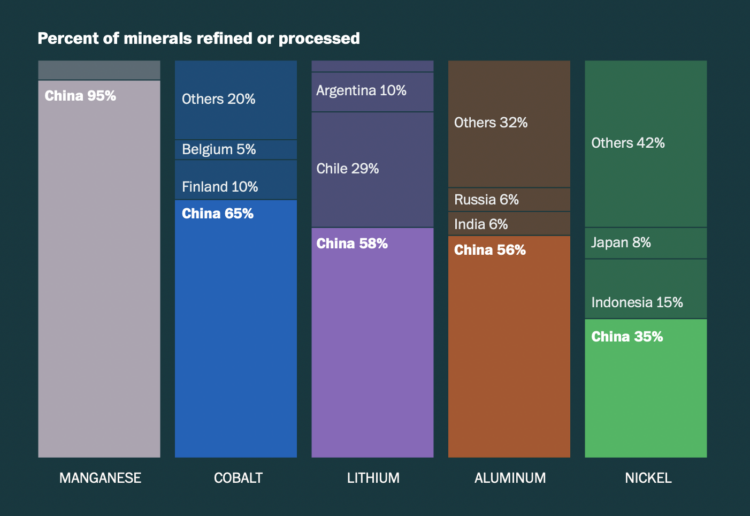
Material requirements from EV batteries

by Nathan Yau

To make batteries for electric vehicles, manufacturers require materials from all over the world. It’s not always clear how these materials are obtained. The Washington Post provides insights into the where and how with a set of maps and charts.

Tags: batteries, cost, electric vehicle, Washington Post

28 Nov 15:26

Biden FCC Boss Rosenworcel To Step Down, Can’t Be Bothered To Express Alarm At What Comes Next

by Karl Bode

We’ve noted how Trump’s win means that Brendan Carr (R, AT&T) will now be in charge of the nation’s top telecom and media regulator. We’ve also made it very clear his tenure will involve dismantling whatever’s left of FCC broadband consumer protection, killing remaining media consolidation limits, and threatening to pull the broadcast licenses of any media companies critical of King Trump.

If you hate free speech, enjoy being ripped off by Comcast, love feckless consolidated corporate media that kisses authoritarian ass, and enjoy weird new taxes on your Netflix bill going right into AT&T’s pocket, the next four years at the FCC should be your cup of tea.

Unsurprisingly, Carr’s FCC appointment means that the existing boss, Jessica Rosenworcel, will be stepping down in January. In a statement on her departure, Rosenworcel praises her fellow staffers and the work they did getting a COVID-era broadband discount for poor people off the ground:

“I am proud to have served at the FCC alongside some of the hardest working and dedicated public servants I have ever known. Together, we accomplished seemingly impossible feats like setting up the largest broadband affordability program in history—which led to us connecting more than 23 million households to high-speed internet, connecting more than 17 million students caught in the homework gap to hotspots and other devices as learning moved online.”

In a separate statement she Congratulates Carr on his appointment:

“I want to congratulate Commissioner Carr on the announcement by the President-elect that he will serve as the Chairman of the Federal Communications Commission. This agency has responsibility for communications technology that is vital for everything in modern civic and commercial life. It is also fortunate to have extraordinary expertise thanks to the hardworking public servants who labor faithfully to implement the law and help build a digital future that works for everyone”

How nice.

Lacking from either statement is absolutely any acknowledgement whatsoever that the entirety of her work at the agency is about to be dismantled by a collection of authoritarians that have publicly announced their intent to destroy consumer protection, dismantle the entirety of corporate oversight and the public safety net, and weaponize the FCC to assault the press.

Now, I’m not saying that Rosenworcel should have told the Trump administration to go fuck itself on her way out the door using large fonts and animated gifs. Nor do I think it was necessary for her to even be particularly hostile (especially given the personal safety dangers female public officials face in the fashy broligarch era). Nor was it even probably necessary to mention Trump by name.

But I do think it might be nice if Democratic officials signaled the slightest fleeting acknowledgement in public facing statements that the incoming administration intends to do very obvious harm to vulnerable communities, corporate accountability, journalistic freedom, the entirety of consumer protection, and the rule of law.

Everything Rosenworcel has worked on is poised to be destroyed. That popular Affordable Connectivity Program (ACP) Rosenworcel mentions in her statement, which provided a $30 discount off the broadband bills of poor people? Trump Republicans have already killed it, resulting in 23 million struggling Americans suddenly forced to pay higher prices than ever for broadband.

Rosenworcel’s efforts to restore net neutrality? Dead. Her planned inquiry into the nature of anticompetitive broadband caps? Dead. Her agency’s attempt to acknowledge racism in broadband deployment for the first time in history? Dead. Efforts to hold wireless companies accountable for spying on their users location data? Dead. Efforts to combat sleazy cable TV fees? Dead as a doornail.

All of these efforts are poised to be either dismantled by a corrupt court or at best never see enforcement by corrupt Trump officials. The entirety of your public-facing legacy as a public servant is about to be dismantled by a rotating array of some of the biggest authoritarian sycophants to ever hold public office and that’s not mentioned at all? Not even a vague and clever nod in the direction of alarm?

Now again, I appreciate that Rosenworcel wants to maintain civility as she eyes post-FCC political or professional opportunities. But the complete and total lack of any ideological alarm whatsoever in her exit statements (pretty common among Democrats at the moment) sends a very clear message to the public and press that this is all business as usual and there’s nothing to see here.

I saw the same thing by several prominent broadband and media experts when they gave quotes to the New York Times, CNN, and the Washington Post on Carr’s appointment. Lots of talk about what a “nice and qualified guy” Brendan Carr is, but very little alarm about his looming plans to take a hatchet to decades of broadband end media reform and journalistic freedom.

The second Trump term is guaranteed to set new high water marks for corruption, the assault on federal consumer protection, the erosion of media consolidation limits, and the use of government power to stifle journalism, education, female reproductive rights, civil rights, and anything else this collection of bobbleheaded authoritarian shitgibbons view as a threat to unlimited wealth and power.

The very least Democratic officials can do is simply acknowledge the extensive harms barreling down on the nation’s most vulnerable. But even that seems to consistently be a bridge too far. This era’s going to be uniquely ugly, requiring a new breed of leadership, journalism, and activism that isn’t afraid to, at the very, very least, acknowledge objective reality.

27 Nov 20:26

You Can’t Do Mass Deportations Without Mass Domestic Surveillance And ICE Is Already Exploring Its Options

by Tim Cushing

ICE has never been opposed to mass surveillance. It has used everything it possibly can to locate Trump’s so-called “bad hombres” and subject them to family separation and a detainment infrastructure incapable of handling the former president’s (and now President-elect) masturbatorial fantasies about “border invasions.”

ICE buys location info from data brokers to evade warrant requirements. It slurps data from utility companies to locate immigrants who need electricity, heat, and internet connections but would rather not be hassled for trying to exist and earn a living by providing this same information directly to the US government.

The operative theory appears to be that immigrants here illegally aren’t protected by the US Constitution. But that’s simply not true. Rights are extended to people living in our borders, whether or not they’re US citizens. However, none of that is going to matter if Trump succeeds in deploying his mass deportation plans — ones that are long on rhetoric and short on actual planning at the moment.

Rest assured, the round-ups will outpace the planning following Trump’s re-ascension. ICE tends to be very proactive when it feels the person in the Oval Office has its back. “Going forward” means “starting now,” as this New Yorker article written by Ronan Farrow points out. Be sure you don’t overlook what’s being said in the last sentence of the article’s opening paragraph.

In September, the Department of Homeland Security (D.H.S.) signed a two-million-dollar contract with Paragon, an Israeli firm whose spyware product Graphite focusses on breaching encrypted-messaging applications such as Telegram and Signal. Wired first reported that the technology was acquired by Immigration and Customs Enforcement (ICE)—an agency within D.H.S. that will soon be involved in executing the Trump Administration’s promises of mass deportations and crackdowns on border crossings. A source at Paragon told me that the deal followed a vetting process, during which the company was able to demonstrate that it had robust tools to prevent other countries that purchase its spyware from hacking Americans—but that wouldn’t limit the U.S. government’s ability to target its own citizens. 

Nice. So, we’re doing business with a company that will only allow the US government to target US citizens. While it’s great that it’s preventing outside countries from doing this (which is a claim I’m not inclined to believe), it’s definitely shitty that it’s offering a bespoke version to the DHS and ICE for the express purpose of plug-and-play domestic surveillance.

Then there’s the first sentence of the paragraph, which indicates this was in motion two months ahead of the election, which suggests two equally disturbing things. Either the outgoing administration was fine with expanded domestic surveillance or DHS felt it should get the ball rolling because the victor of the 2024 election was likely to be supportive of expanded domestic surveillance. Perhaps the purchasing department was just running a Trump re-election parlay. Or maybe the DHS felt pretty confident Kamala Harris wouldn’t object to mass surveillance, even while she argued against mass deportations. Not great!

The DHS may have handled the macro, but ICE jumped on the micro as soon as it became clear who was headed to the Oval Office in January.

Within hours of Trump’s election to a second term, ICE—which is still under the authority of President Biden, but which has often seemed sympathetic to Trump’s anti-immigrant rhetoric—put out a new call for private companies to submit plans for augmenting the agency’s surveillance infrastructure, including ankle monitors, and software and hardware used for tracking targets’ biometrics. 

More surveillance and a shit-ton of more money for the private companies handling federal prisoners and federal detainees, some of which have already expressed their pleasure over this year’s presidential election during earnings calls.

As Farrow’s article points out, the federal government has “struggled” both in terms of oversight and accountability when it comes to expanded surveillance powers and surveillance tech rollouts. One could credibly argue you can’t call a terminal lack of interest in oversight and accountability a “struggle.” But no one can argue this turn of events — one that aligns government agencies’ thirst for expanded power with technical advances that make this sort of thing cheaper and easier than it’s ever been — is going to make America great again. It’s just going to make America something it’s really never been: you know, East Germany, the USSR, China, etc.

And we’re all going to pay the price, and not just in terms of the additional taxes that will be needed to gird the infrastructional loins of Trump’s mass deportation plans. If this moves forward, America will be the worst it’s ever been — a nation hollowed out deliberately by bigots who think the nation can only be great if nearly half of its population lives in fear of being forcibly ejected. And while that happens, tech companies that aid and abet this atrocity will make billions off the misery of millions.

27 Nov 19:05

Smart gadgets’ failure to commit to software support could be illegal, FTC warns

by Scharon Harding

Makers of smart devices that fail to disclose how long they will support their products with software updates may be breaking the Magnuson Moss Warranty Act, the Federal Trade Commission (FTC) warned this week.

The FTC released its statement after examining 184 smart products across 64 product categories, including soundbars, video doorbells, breast pumps, smartphones, home appliances, and garage door opener controllers. Among devices researched, the majority—or 163 to be precise—"did not disclose the connected device support duration or end date" on their product webpage, per the FTC's report [PDF]. Contrastingly, 11.4 percent of devices examined shared a software support duration or end date on their product page.

Elusive information

In addition to manufacturers often neglecting to commit to software support for a specified amount of time, it seems that even when they share this information, it's elusive.

Read full article

Comments