×You need to sign in to continue.

Shared posts

31 Aug 08:21

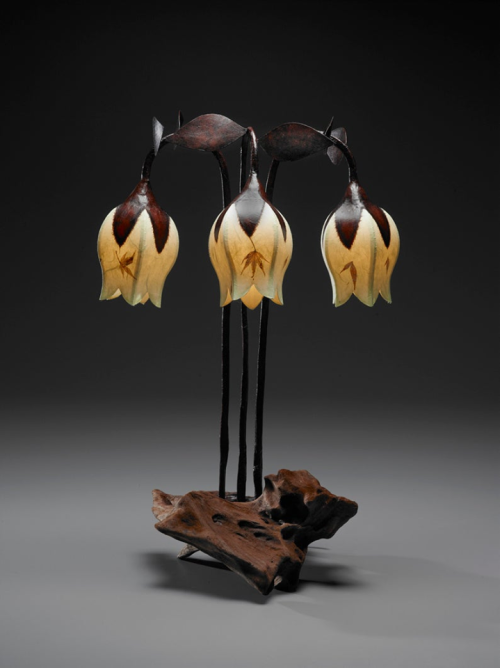
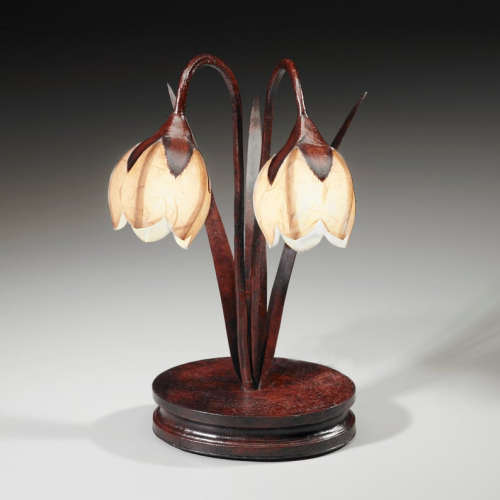
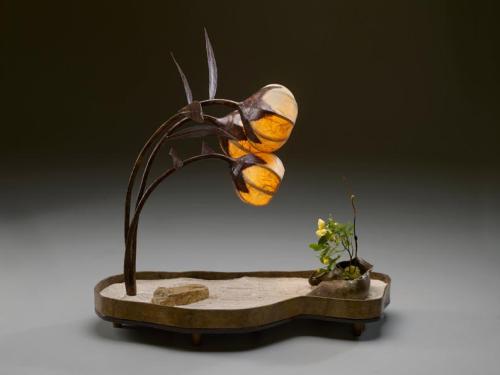
arsenicinshell: Handmade Pumpkin and Tulips lights made of...

Suko

That last one!


https://twitter.com/ArsenicInShell/status/1295466273602666497?s=20


https://twitter.com/ArsenicInShell/status/1295466273602666497?s=20


https://twitter.com/ArsenicInShell/status/1295466273602666497?s=20


https://twitter.com/ArsenicInShell/status/1295466273602666497?s=20


https://twitter.com/ArsenicInShell/status/1295466273602666497?s=20


https://twitter.com/ArsenicInShell/status/1295466273602666497?s=20

arsenicinshell:

Handmade Pumpkin and Tulips lights made of paper

29 Aug 05:52

Synonym Date

Suko

Slough is such a great word.

We need some grub to munch--I'll go slouch over to the kitchen.
28 Aug 18:39

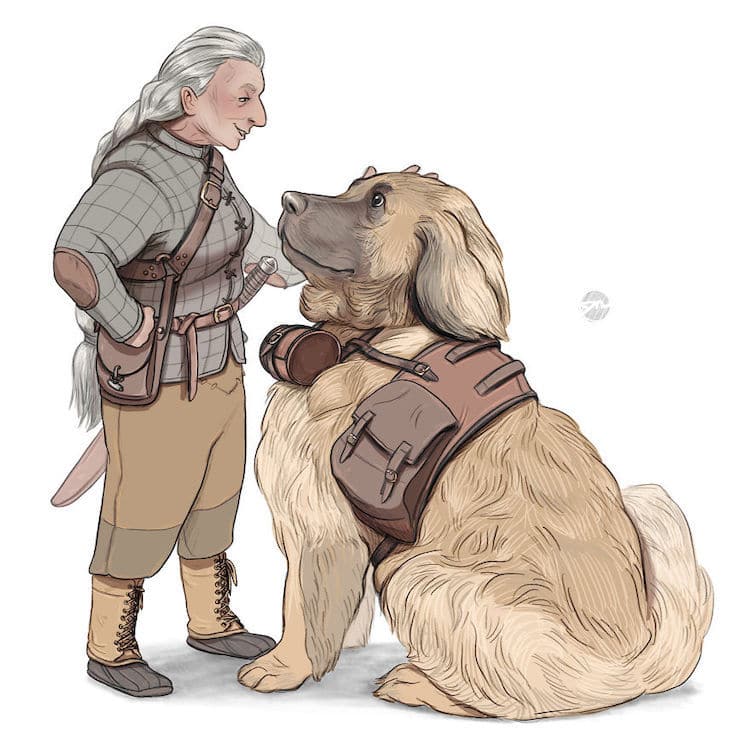
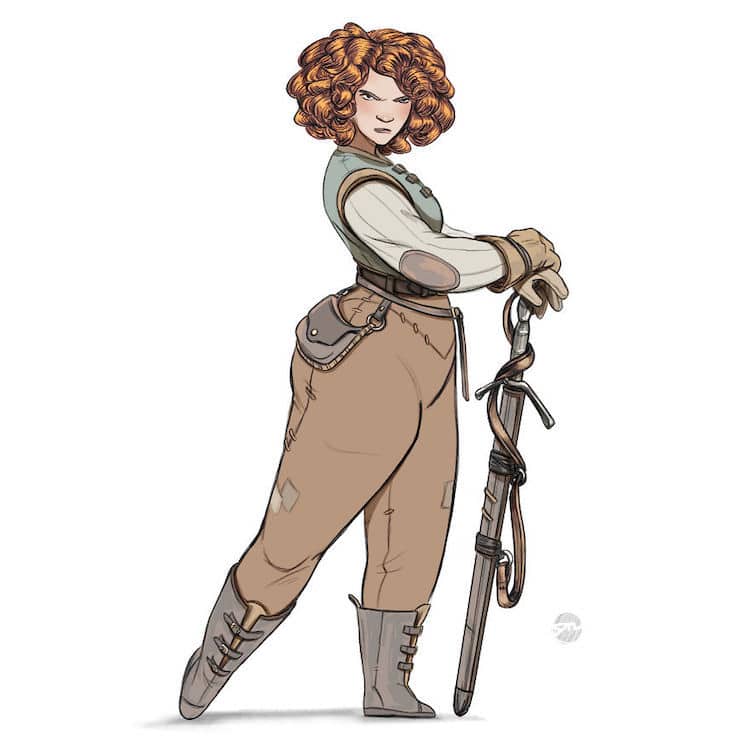
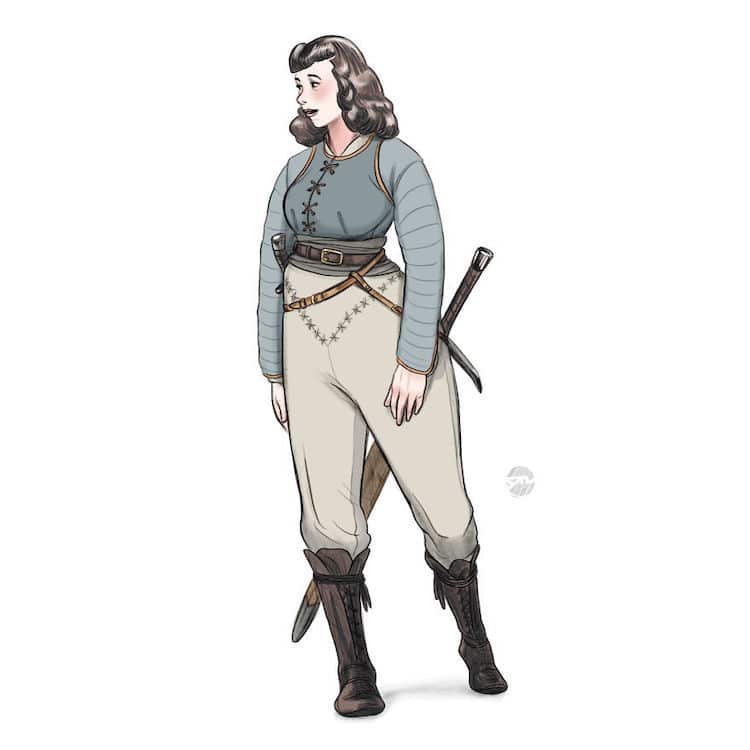
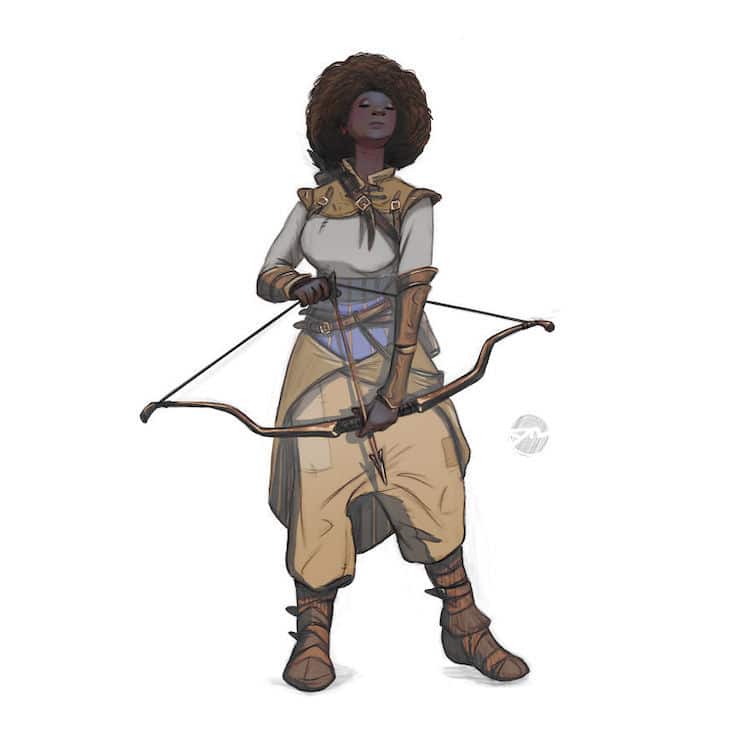
Illustrator Imagines Powerful Warriors as a Diverse Group of Strong Women [Interview]

by Emma Taggart
Suko

Still love these. I got the pdf and they are great. I see that she has some new ones on her social media feeds too.

Illustrator Imagines Powerful Warriors as a Diverse Group of Strong Women [Interview]

Female Warrior Illustrations by Yael Nathan

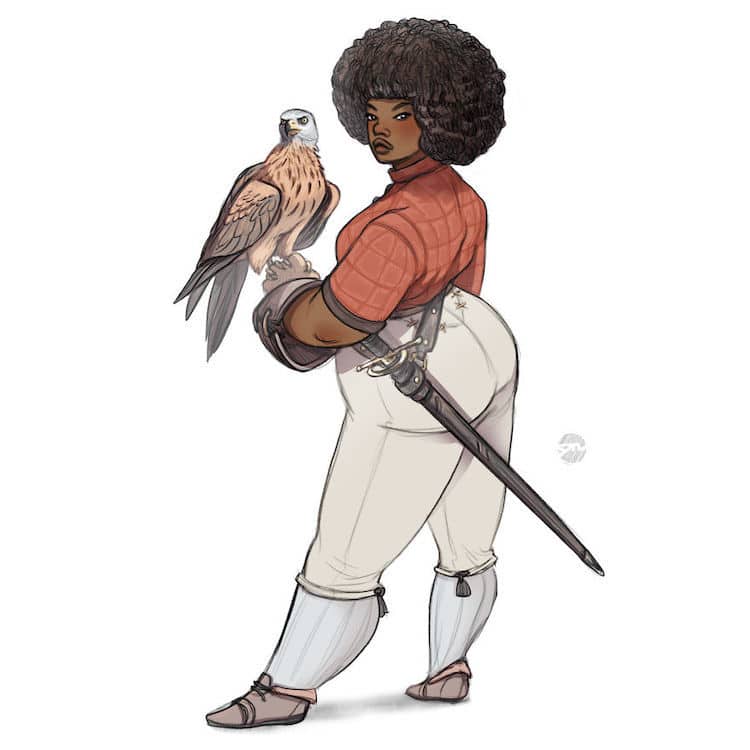
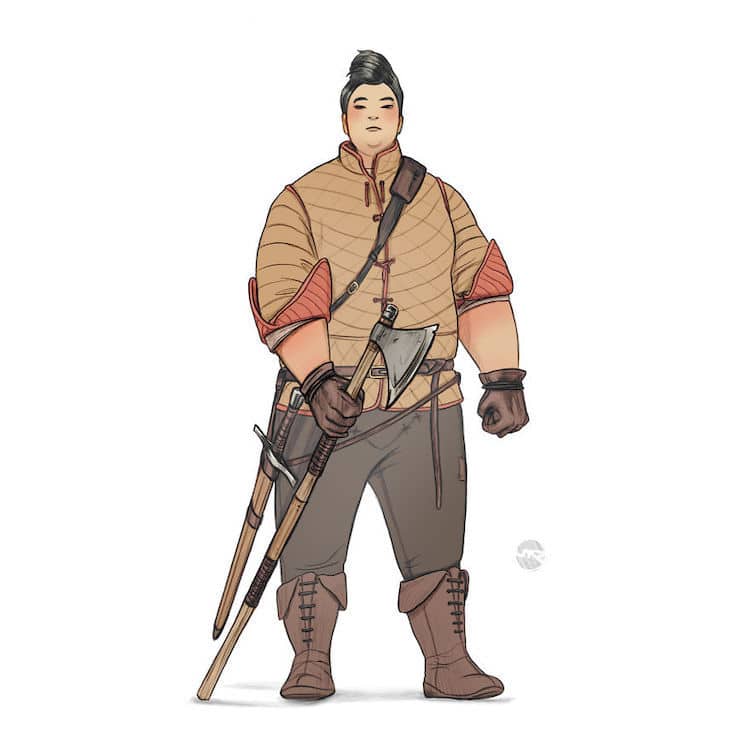
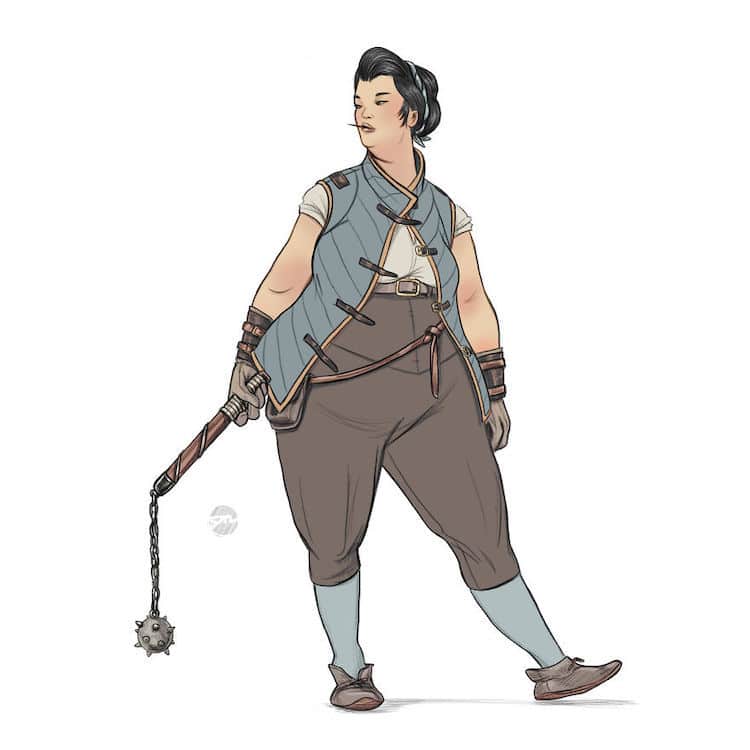
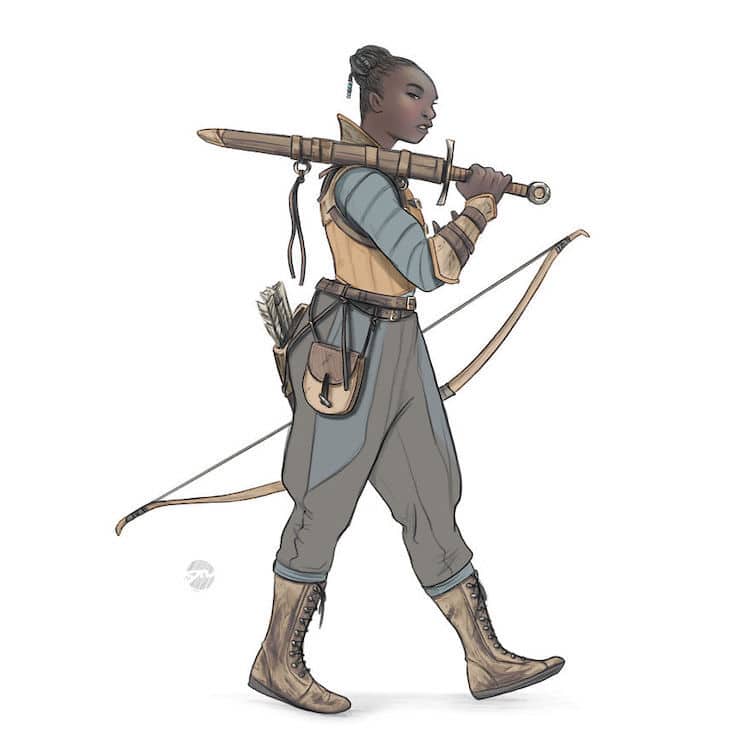
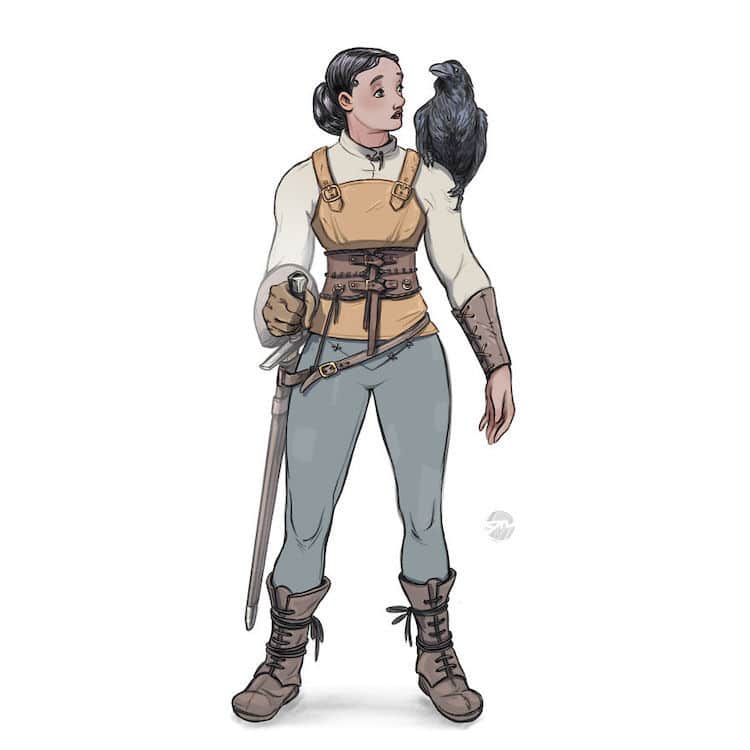
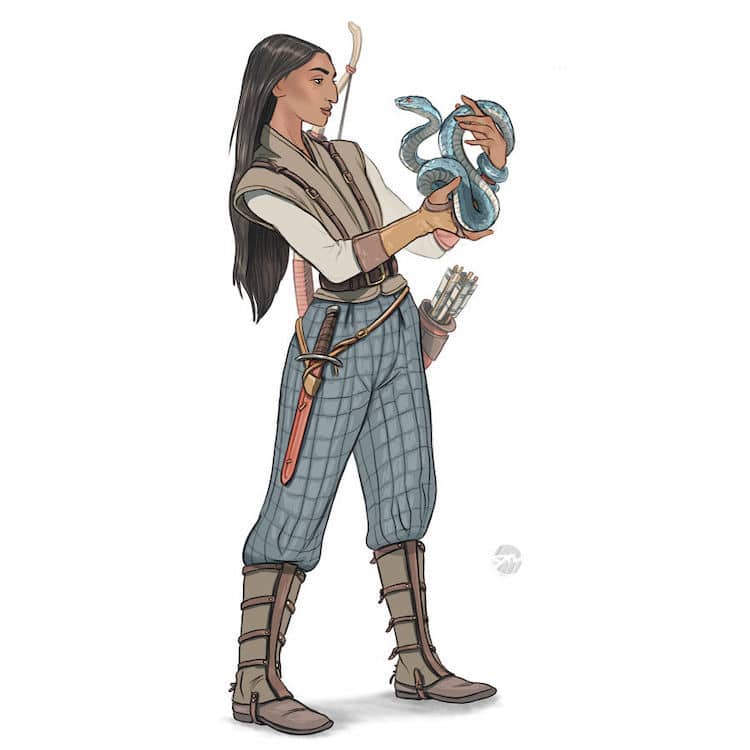
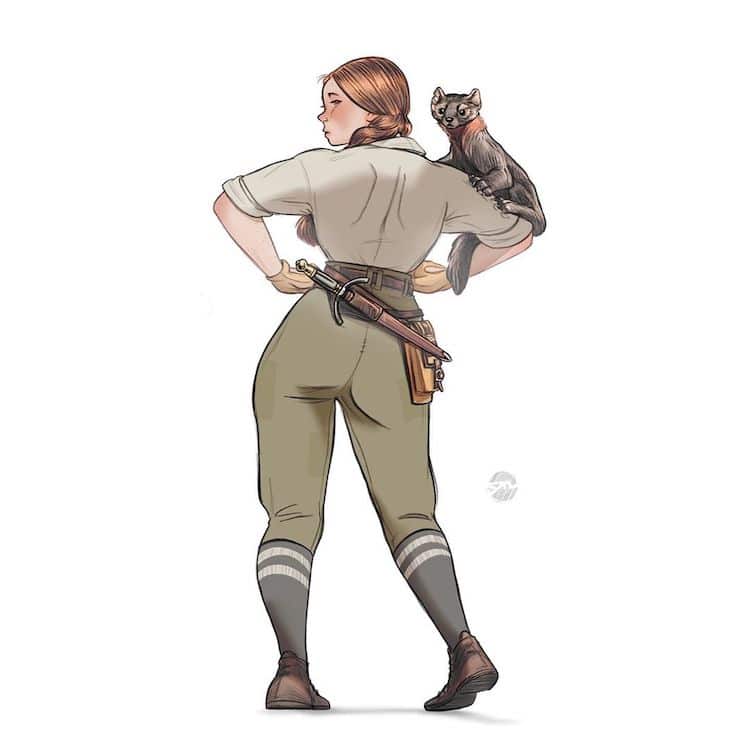
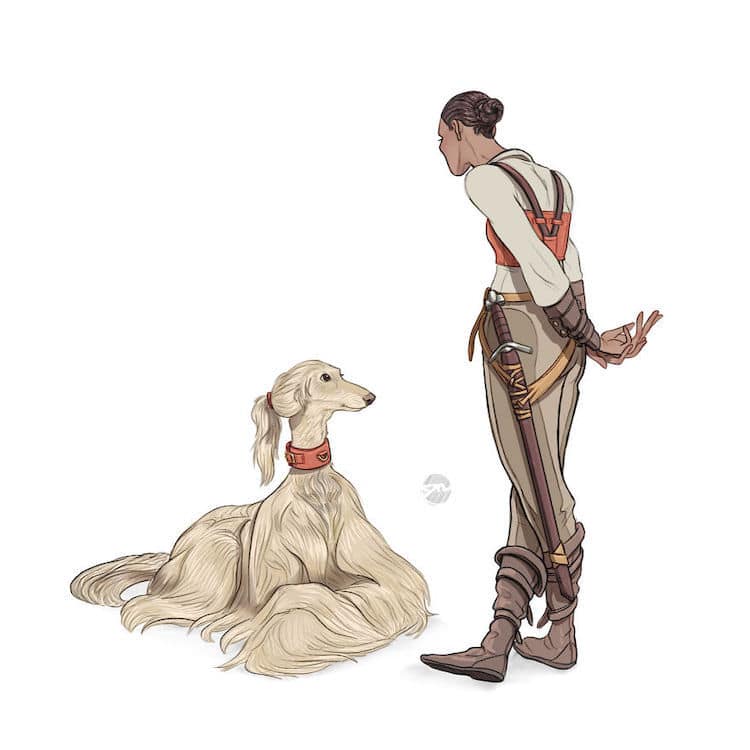
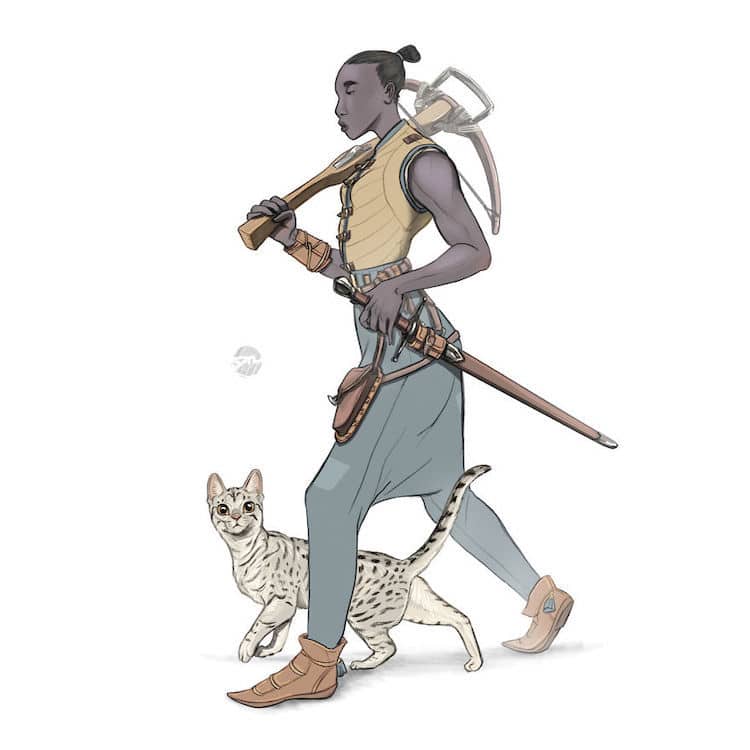
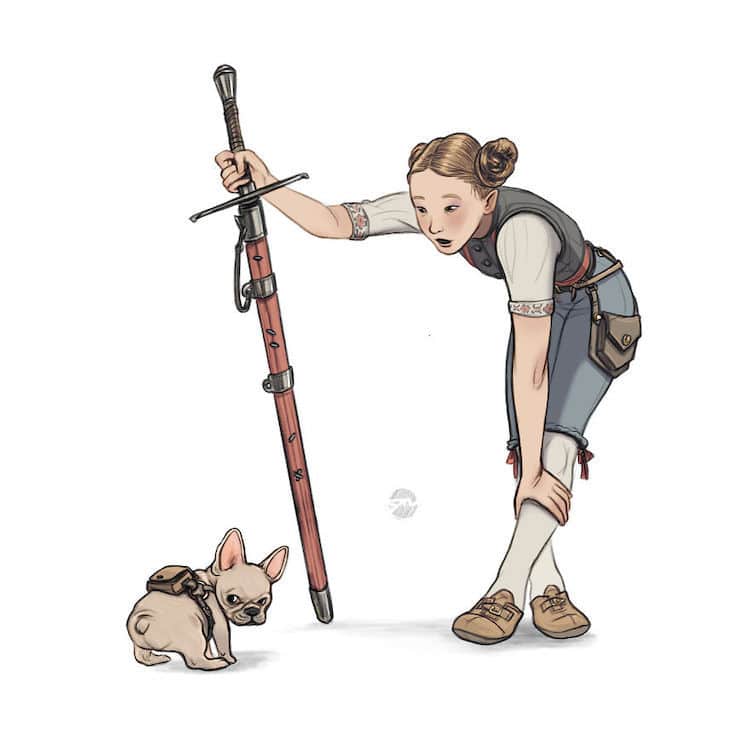
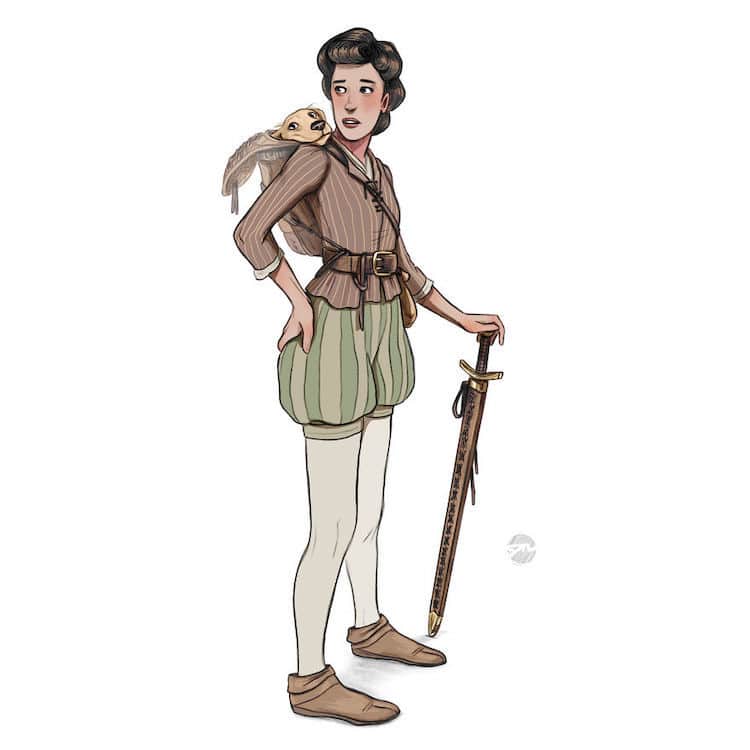
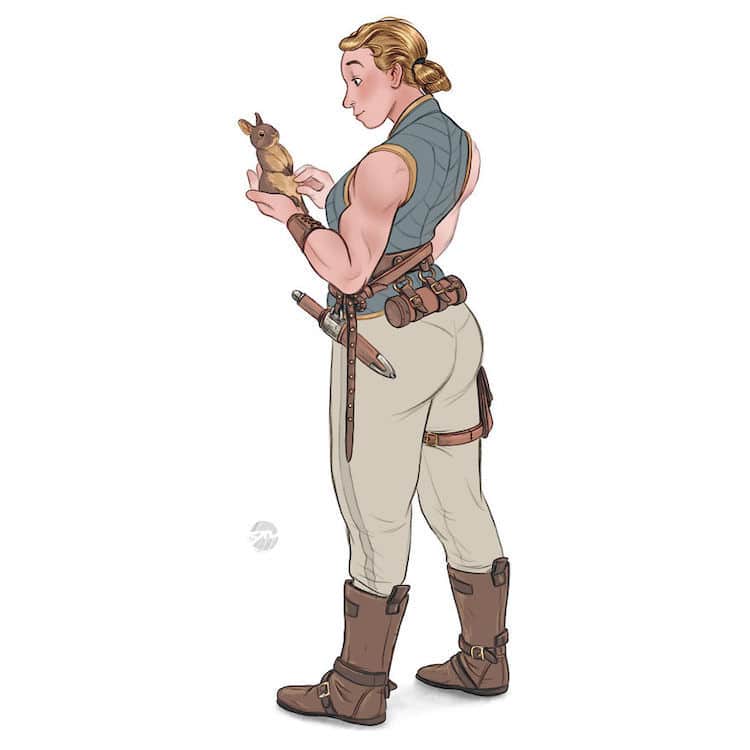
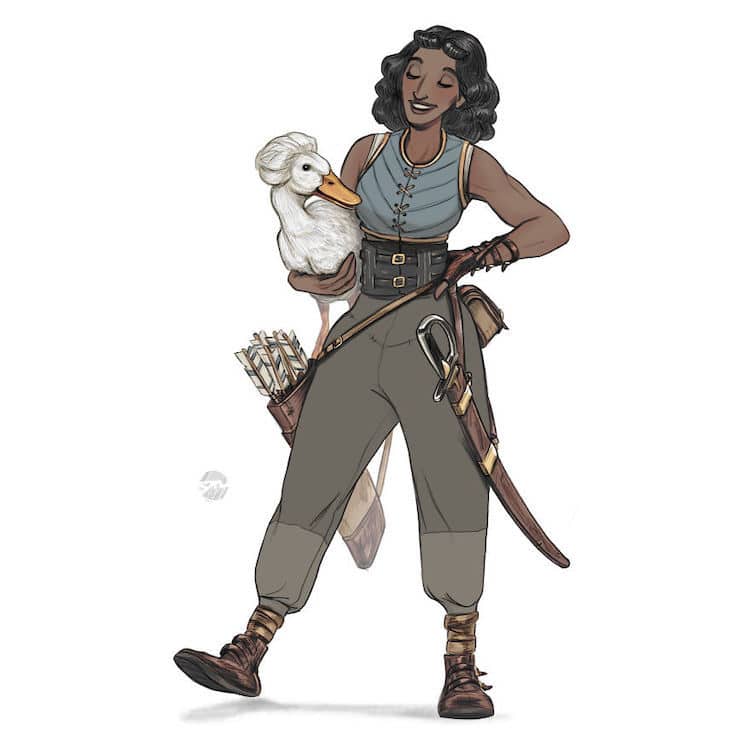
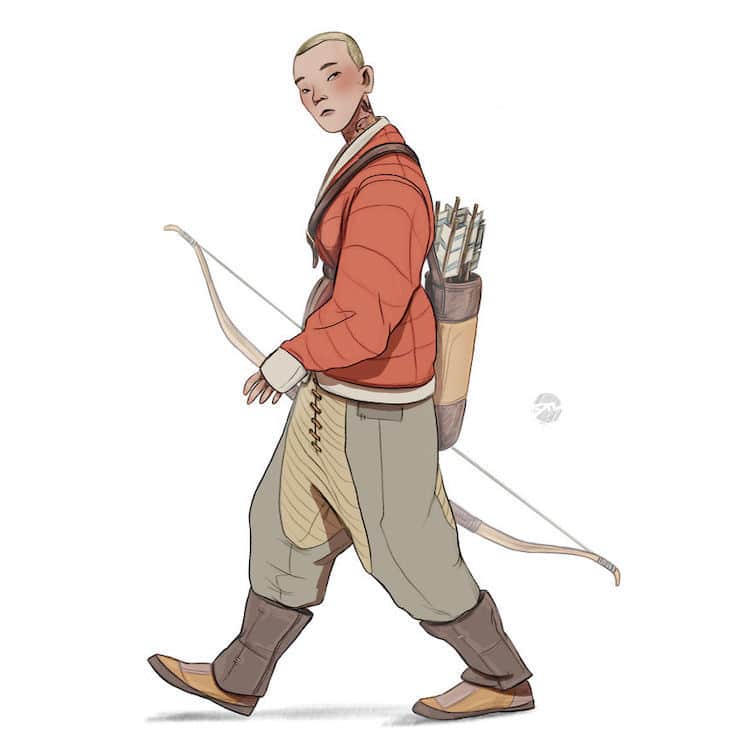
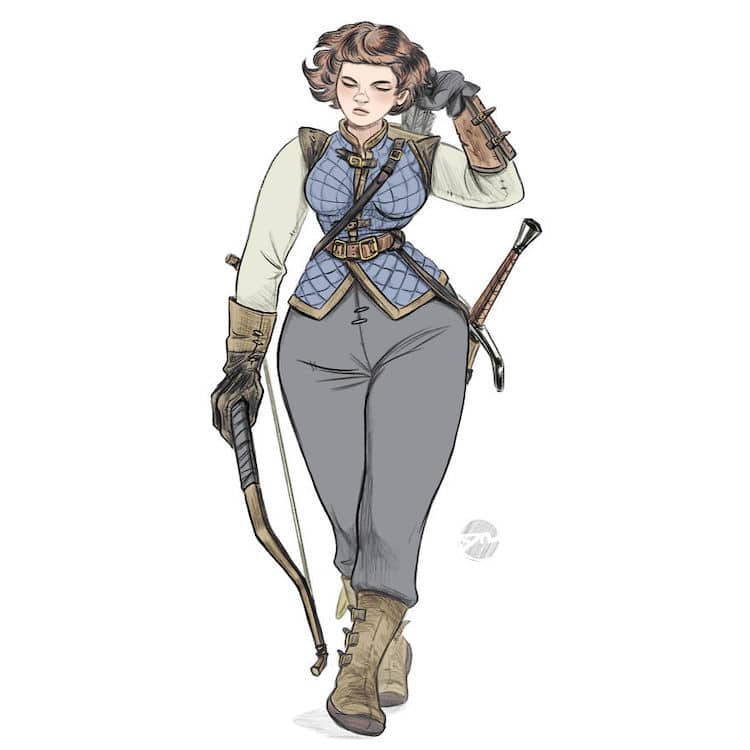
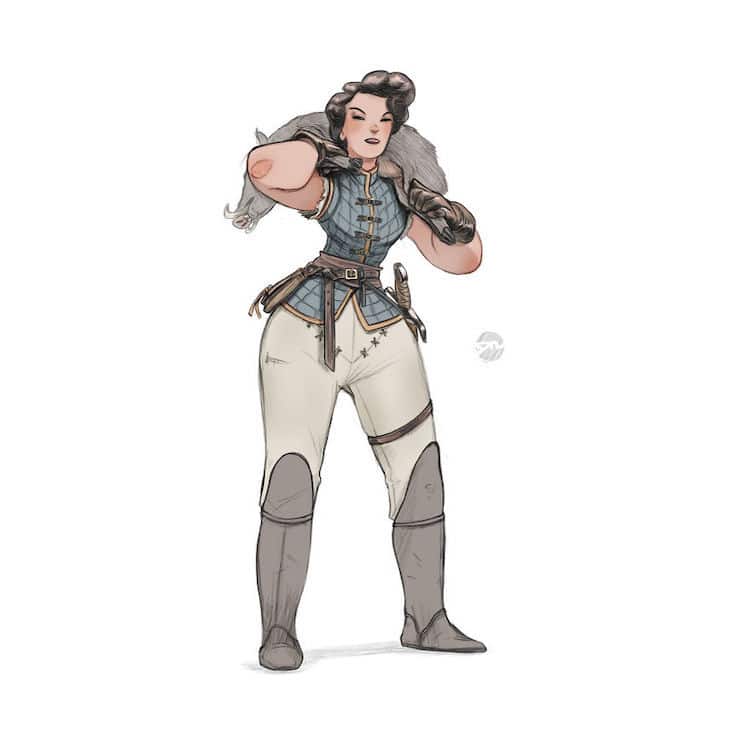
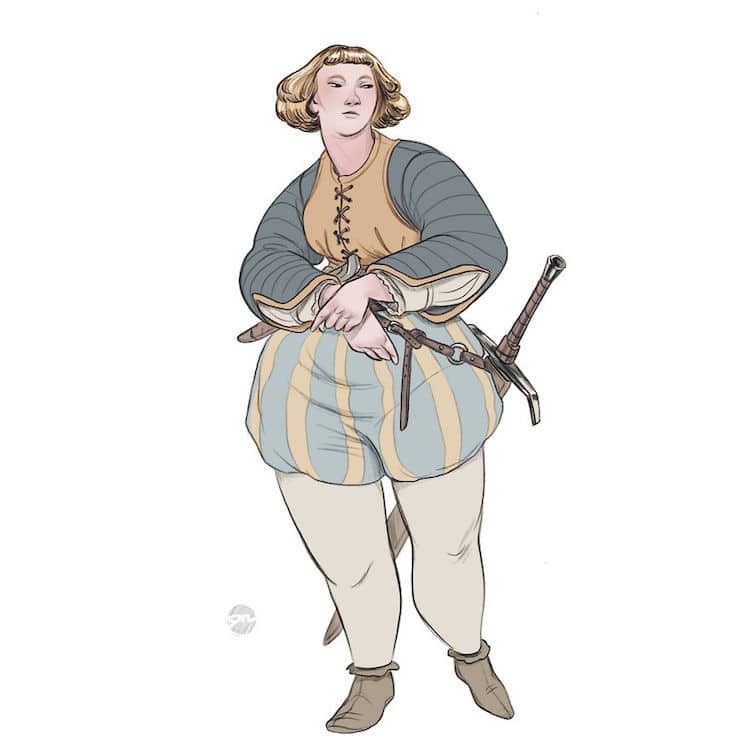
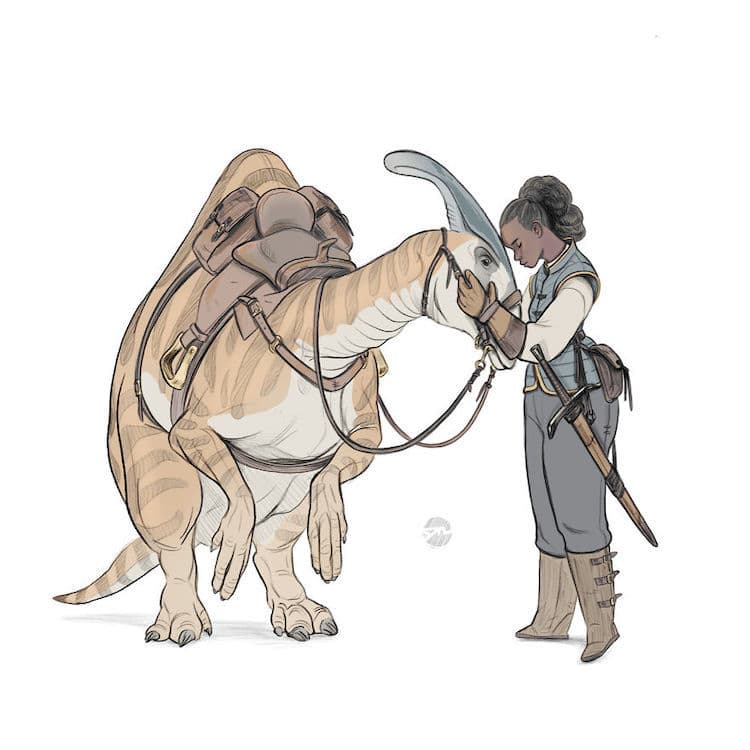
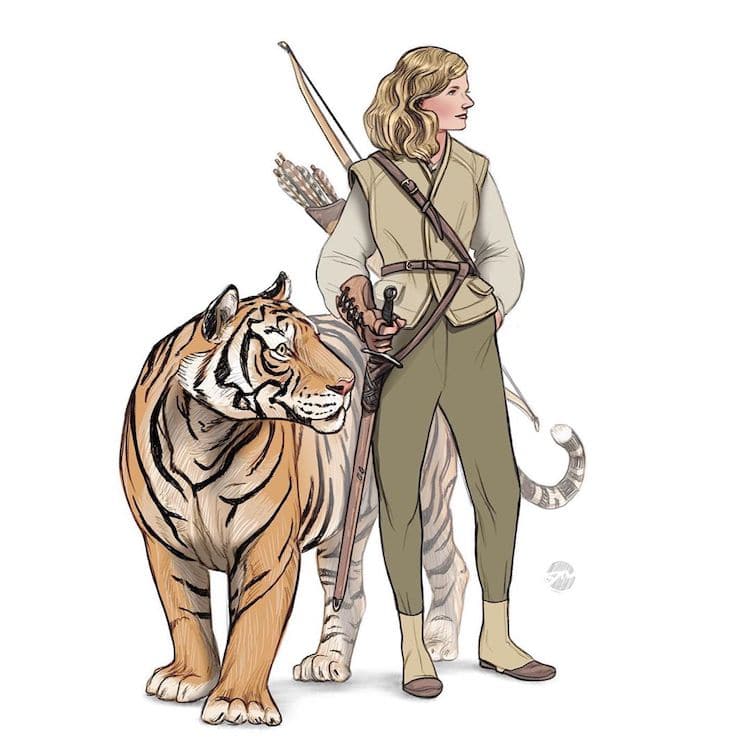
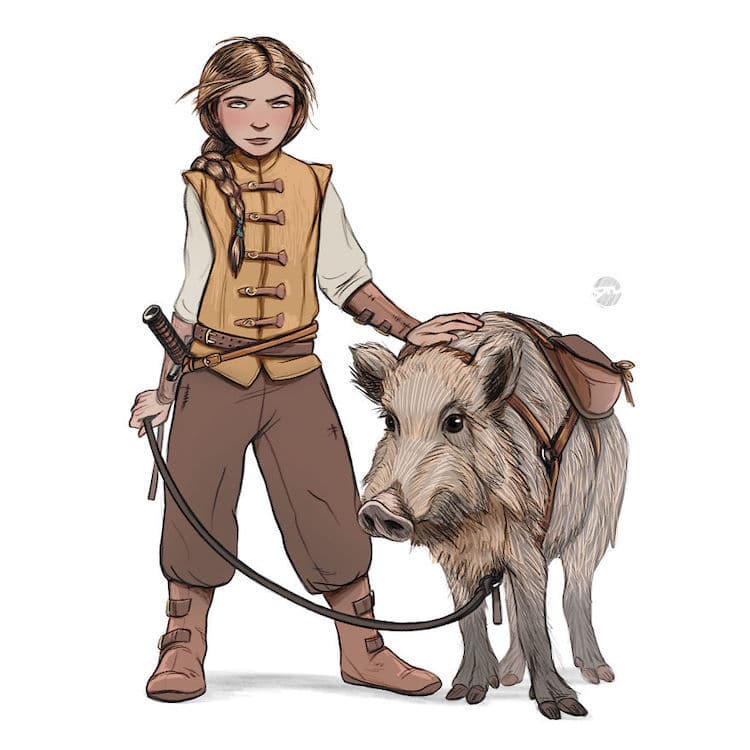
From Disney’s depiction of Mulan to Studio Ghibli’s Princess Mononoke, female warriors in animated films are undoubtedly legendary—but a rarity. Women in fantasy art and film are still vastly underrepresented, especially characters that embody diversity. Artist Yael Nathan seeks to change this. She’s created an illustrated series of powerful women warriors that represent many shapes, sizes, and skin colors.

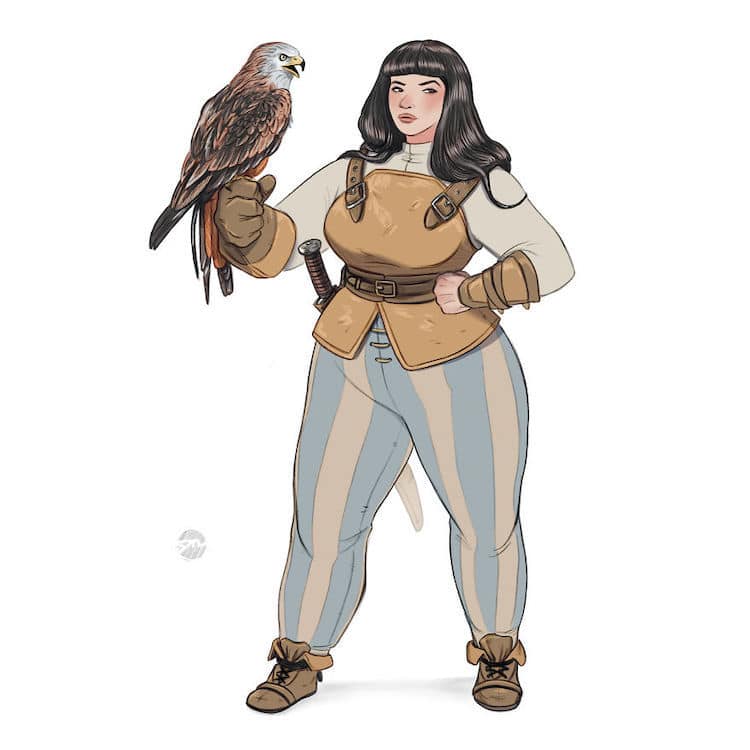
Female heroines are often depicted as young, physically fit, and attractive (by society's standards). However, Nathan’s illustrations showcase a far more realistic representation of women. From an elderly mountain ranger to a curvaceous eagle trainer, each character tells a story. Every warrior wears their own battle-ready costume and holds their weapon of choice. Many even have their own animal sidekick, such as one character who rides on a dinosaur. But regardless of their design, Nathan’s series shows that women of all kinds are strong, empowered, and worth celebrating.

We recently caught up with Nathan to ask her more about her Warriors series. Read on for My Modern Met’s exclusive interview. And if you love this series, you can download a free PDF of all of the artists' illustrations here.

Female Warrior Illustrations by Yael NathanWhen did you first start illustrating?

I started drawing as a kid, like most children. I just never stopped. I studied animation at the Bezalel Art Academy in Jerusalem and when I graduated I went on to work in an animation studio, then onto high-tech and game studios. However, throughout my professional career, I’ve always drawn and created personal illustrations and comics.

Woman Warrior Illustrations by Yael NathanWhy do you enjoy illustrating?

I love the ability to easily tell a story with my art. I usually start a drawing or comic frame with a general idea of the final result I want to achieve, but as I draw, ideas begin to develop that will help me tell a better story—whether it’s the staging of the frame, the character’s expression, interactions with other characters, or even small details that will enrich the character.

Woman Warrior Illustrations by Yael NathanWhat inspired your women warriors series?

My own journey to self-acceptance. And I also started to view the world and people in it as powerful and worthy—no matter how they look. Everyone has a journey and we all overcome difficult things. I spent many years convinced of certain truths about people and saw the world as black and white. Through a journey of introspection and exposure to the body-positivity movement online, I saw so many great examples of courageous women, unafraid to live their lives as they wanted and I slowly began to change my beliefs and started to draw more women. At first, they were very stereotypically pretty, but then I started seeing beauty in the diversity of shapes and to see the power in all those women.

Woman Warrior Illustrations by Yael NathanHow long have you been working on the series?

Not long, just in the past few months. But the journey that led me to these characters has taken years.

Are you inspired by any real women in your life? Or are the characters entirely fictional?

Each illustration is usually an amalgamation of real women in my life and photos that inspire the pose or attitude. I'm also influenced by various fashion items and weapons. They help me create a little story I have in mind about the woman I’m painting.

Female Warrior Illustrations by Yael NathanCan you describe the backstories of some of the characters?

They don’t really have backstories, it’s more of a general idea of their profession or location. For example, the older woman with the large dog is a ranger who lives alone in the mountains, helping those who are lost. Her dog is her companion and her guard.

Woman Warrior Illustrations by Yael NathanDo you have any new projects you're working on and would like to share?

I’m currently working on a personal comic that is loosely based on the aesthetic of my warrior women. I’ll release it in parts on my Instagram soon. You can also see all of my comics with writer Ehud Lavski here.

Woman Warrior Illustrations by Yael NathanWoman Warrior Illustrations by Yael NathanFemale Warrior Illustrations by Yael NathanFemale Warrior Illustrations by Yael NathanFemale Warrior Illustrations by Yael NathanFemale Warrior Illustrations by Yael NathanFemale Warrior Illustrations by Yael NathanFemale Warrior Illustrations by Yael NathanWoman Warrior Illustrations by Yael NathanFemale Warrior Illustrations by Yael NathanWoman Warrior Illustrations by Yael NathanFemale Warrior Illustrations by Yael NathanWoman Warrior Illustrations by Yael NathanWoman Warrior Illustrations by Yael NathanWoman Warrior Illustrations by Yael NathanWoman Warrior Illustrations by Yael NathanFemale Warrior Illustrations by Yael NathanWoman Warrior Illustrations by Yael NathanYael Nathan: Website | Facebook | Instagram | Twitter

My Modern Met granted permission to feature photos by Yael Nathan.

Related Articles:

15+ Feminist Fashions to Empower the Strong Women in Your Life

Disney Princesses Are Reimagined as Modern-Day Women in Glam Transformations

Mattel Unveils More Barbie Dolls to Celebrate the Diverse Beauty of Black Women

Growing Database of “Women Who Draw” Spotlights 5,000+ Female Illustrators

READ: Illustrator Imagines Powerful Warriors as a Diverse Group of Strong Women [Interview]

20 Aug 09:45

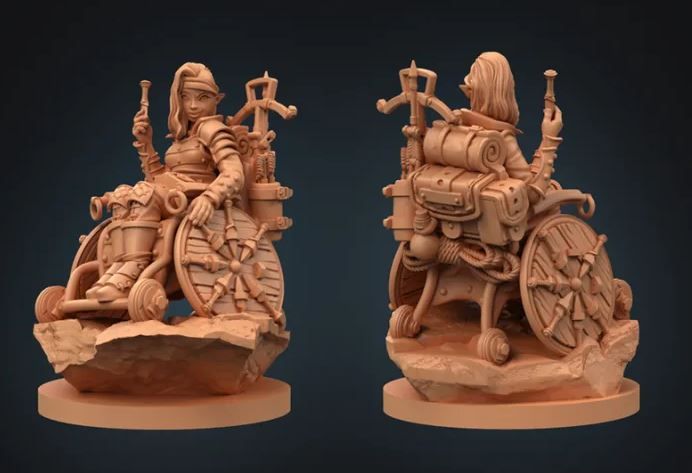
Wheelchair Miniatures for Dungeons & Dragons

by John Farrier
Suko

OMG- wheel of DAGGERS!!! That's amazing.

Mike Fahey of Kotaku reports that Strata Miniatures now offers a line of 3D printed Dungeons & Dragons miniatures for tabletop fun. They depict fantastic combat wheelchairs and their users who are fully prepared for the challenges of any quest. Fahey, a role-player who uses a wheelchair, is delighted:

My personal favorite, and the one I’ve purchased, is the elf rogue. She looks nothing like me, but her sly little grin is all me. I love playing the sneaky rogue in RPGs. I bet her chair has a silence spell of some sort cast on it. Look at those dagger-lined wheels! That is one badass wheelchair user.

Image: Strata Miniatures

19 Aug 23:15

Boat Puzzle

Suko

This captures a lot about the bewildering onslaught of 2020.

'No, my cabbage moths have already started laying eggs in them! Send the trolley into the river!' 'No, the sailing wolf will steal the boat to rescue them!'
19 Aug 20:54

Mask Update: Lose The Contact Cement; We Can Stitch Craft Foam!

by Jen
Suko

As my one reluctance to try out this pattern was the contact cement (I've worked with it before and it does not smell good) this is very exciting! I had assumed it would tear if you sew it but it looks very sturdy.

Note: This post will only make sense if you've seen my last mask-making tutorial. So check that out if you missed it!

 *****

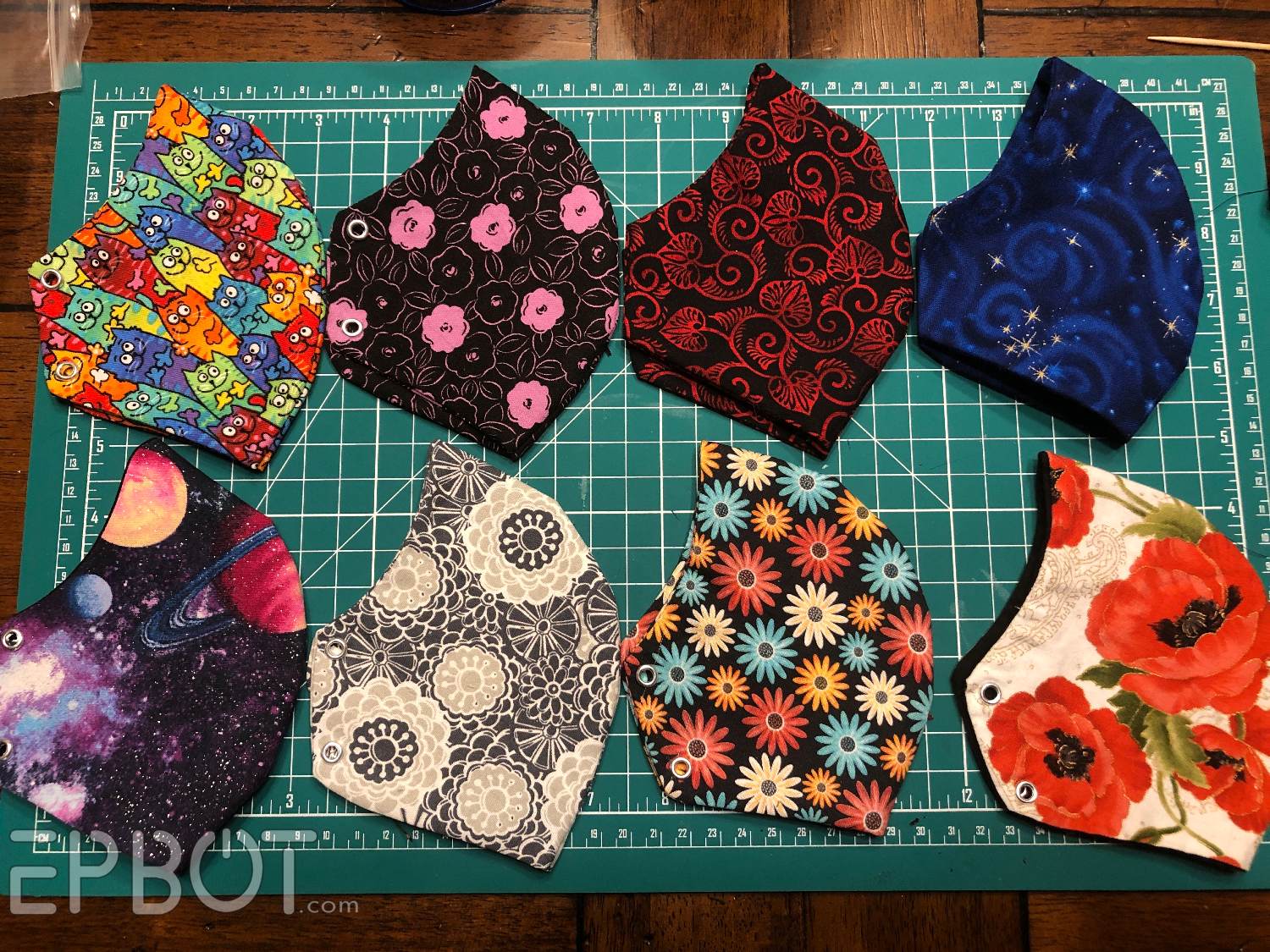
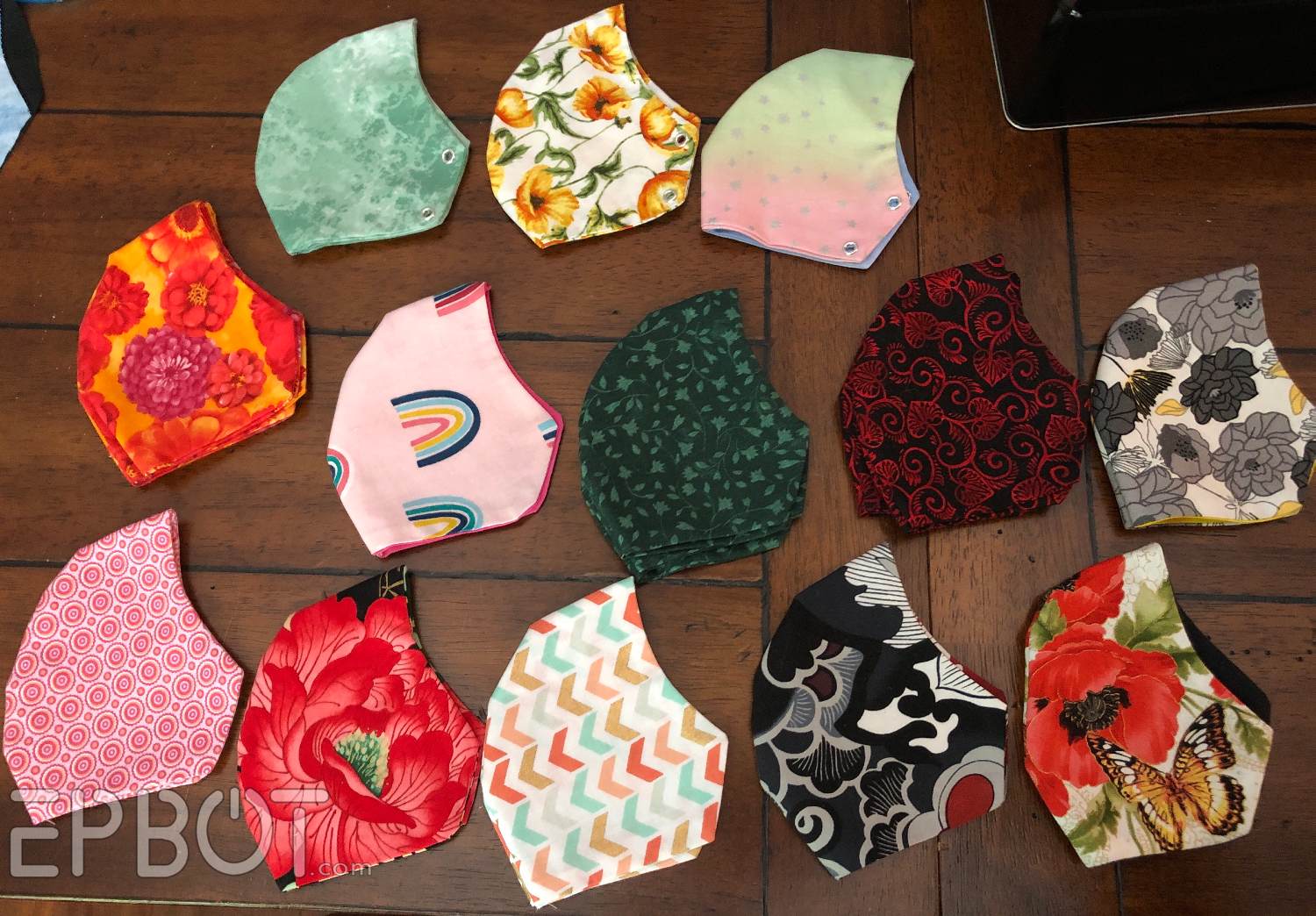
I'm still a mask-making machine over here, though I only think to take a picture when I'm sending fabric choices out for people to pick their favorites:
  

I work on masks most nights to relax, while I listen to Critical Role. Not to sell -  so sorry to those who've asked! - but to give away. Right now I'm supplying the teachers I know, family, close friends, and everyone we work for during the week. Teachers get the largest sets: 2 frames and 5-6 covers each, so that's been keeping me busy.

Once I'm caught up I'll be making custom sets for any of you Squeegineer winners who want one, so be sure your e-mail entries are in for this month's give-away. Then YOU could get pics like this to choose your favorites:


Here's my latest batch of prints, can't wait to dive in to these beauties:


I'm beginning to understand why people end up with huge fabric hoards. Even with our JoAnn's mostly sold out, there are SO MANY PRETTIES. And I want them alllll.

More importantly - and the reason for this update - thanks to your suggestions our foam frame design keeps getting better and better. 


OH YEAH. Check this out:
» Read More
17 Aug 08:12

OK So with the shit with the USPS going on:

gallusrostromegalus:

1. Check your Voter registration to make sure everything is up to date.  If you can, request a Mail-In Ballot.  I live in CO, where all elections are Mail-In only now, so I get one anyway.

2. Fill out your ballot per the instructions on your Ballot.  Some Notes:

  • Read Instructions thoroughly, and fill out your Ballot in private.
  • Do NOT post pictures of your Ballot as this may invalidate it.  DO Post pictures of your “I Voted” sticker.
  • Make sure to vote for all the offices up for election- as important as the presidential election is, your mayor, governer, local school board and sherrif have a MUCH bigger impact on your immediate safety and quality of life.  Google your candidates, look up the Leauge of Women Voter’s Guides for a reliably Impartial rundown of your local candidates. 
  • Remember also that it is better to have someone in office that is only moderately incompotent, than it is to have someone that actively wants you dead.  It is the first step to having someone worthwhile next time.
  • If you wanted a third party option, your local elections are the best place to do this- my own city council has several Green Party members and it got me city-sponsored single-stream recycling! Its also moving the state legislature significantly farther left.

3. INSTEAD OF MAILING IT- LOOK UP WHERE YOUR BALLOT DROP-OFF LOCATIONS ARE. 

They’re boxes you drive or walk or bus or bike or whatever up to and drop your ballot in, and the elections officials will have it that evening. Pros of Ballot Drop-Off:
  • Can be turned in the same day you reccive your ballot, if you want to get this over with ASAP
  • Open 24/7, so you can drop it off whenever
  • Absolutely guaranteed to get your vote counted, regardless of what Donald does with the Post Office.
  • No waiting in line
  • No exposing yourself to the coronavirus

Most cities will have several ballot Drop-Off locations, at places like the grocery store, the county courthouse, city hall, at high schools etc.  Google your town or county name and “Ballot Drop Off Locations” and it’ll give you directions even.

Absolutely Save the USPS, but this is the BEST way to make sure your vote gets counted this

13 Aug 07:53

chess-blackfyre:klabautermanns:#my lord what EXACTLY is ms Beifongs role in these meetings #a...

Suko

I would watch this mini-series.

chess-blackfyre:

klabautermanns:

#my lord what EXACTLY is ms Beifongs role in these meetings #a nervous nobleman asks after the third time she interrupts them with stupid commentary #zuko with perfect deadpan: she’s my scribe

voidcenturyscholar:

Post canon Toph who doesn’t want to go back to her shitty parents so she just decides to stay in the Fire Nation and bum off Zuko’s hospitality.

Zuko’s like no, yeah, I totally get it, and just makes her one of his advisors. At first it’s just so she has a good excuse to stay but after the first meeting Toph storms out shouting about how EVERYONE was lying why would you even need to lie about what kind of tea you want??

Zuko: I mean they’re politicians…..but also who, and when, and in what way

They make a subtle Morse code system so Toph can warn him when someone is lying to him without tipping anyone off that she can sense lies.

Zuko gets a reputation for somehow being both extremely socially inept and yet somehow disgustingly perceptive?? You can’t get ANYTHING by him???

You CAN’T leave that in the tags

#LISTEN THO#zuko and toph bonding over shitty parents?#toph being entirely rough around the edges with this polititians#UNTIL the day comes when some big emisary is coming and zuko is so nervous#she can feel it#and she’s like don’t worry i got this#and pulls out all of her high society bullshit to charm them#and everyone#zuko included#is like WTF toph#but also what if toph’s parents show up one day#because they want to exploit the fact that their daughter is advisor to the firelord#to get better deals or something#and then zuko gets all protective big brother#even though they both know she doesn’t need it#but it’s still nice right? and he’s still the freaking firelord so he puts them through quite a bit of bullshit#also also also omg years down the line when the rest of the gaang visit#and zuko and toph are like THE WORST with their little inside jokes#talking with the morsecode they use in meetings#laughing their assess off at the smallest gesture of the other#listen they deserve to be each other’s sibling after all they’ve lost and been put through (tags via princessamericachavez)

12 Aug 19:51

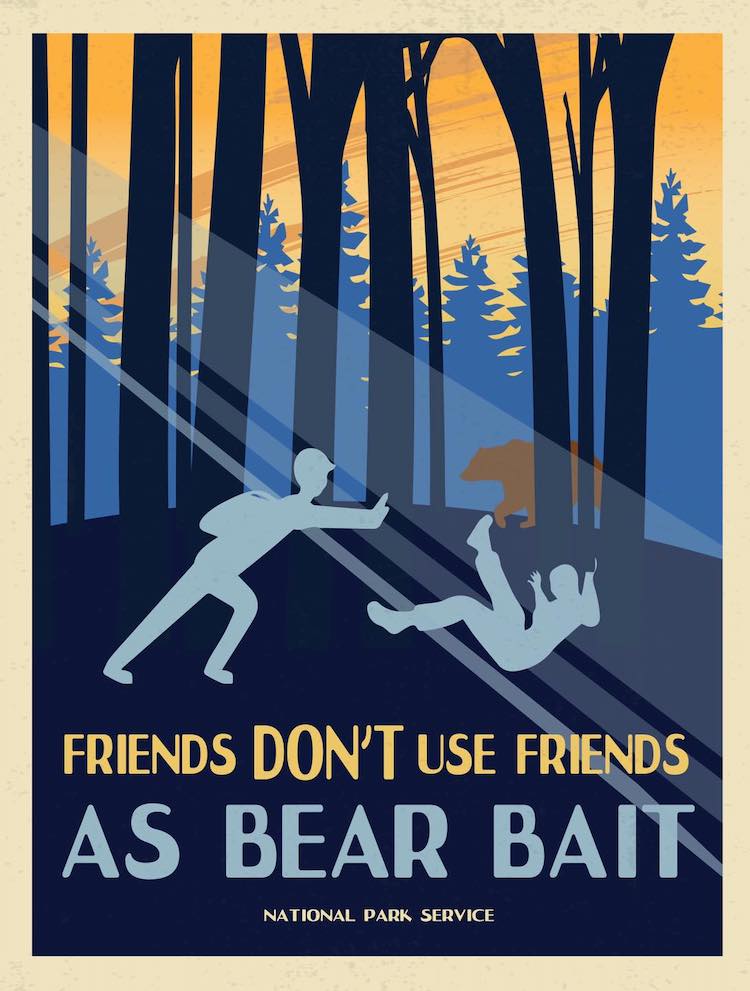
National Park Service Designs Hilarious PSA Poster About Bear Safety

by Madeleine Muzdakis

View on My Modern Met
Funny PSA Poster by National Park Service

If you're hiking in the woods and you come across a bear, what do you do? You might be tempted to panic and run, pushing your slower friends behind you as an offering to the giant omnivore, but this is not the right course of action. In fact, the bear experts at the National Park Service (NPS) have created a hilarious PSA to make sure you know that this is wrong. The vintage-style NPS poster clearly reads: “Friends don't use friends as bear bait.” It's a clear-cut reminder to hikers to “stay calm and remember that most bears do not want to attack you; they usually just want to be left alone. Don’t we all?”

Bears can be shy just like humans. However, they sometimes approach humans out of curiosity. It is important to stay calm. The NPS advises people to appear as (calmly) “human” as possible by talking. “Move away slowly and sideways” from a stationary bear. Running and tree climbing are both dangerous as bears can pursue much faster than a human can escape. As running is a bad idea, it is not necessary to sacrifice the slowest sprinter in your friend group. Everyone should stay calm and move slowly. Special caution should be taken around mother bears with cubs as they are very protective of their offspring.

If a bear attacks, the appropriate response depends on the type of bear. For brown bears and grizzlies, a hiker should lie face down with hands folded over the back of the neck. Spreading your legs can also help prevent the bear from flipping you over to get at the soft stomach area. If the bear continues its attack (and seems like it wants to eat you), fighting back is necessary.

Grizzly Bear Sitting In A Field

Photo: skeeze

Faced with an aggressive black bear, the best tactic is to first try to reach a car or building. If the bear attacks, fight back and target the bear's face. While this all may sound scary, the good news is bears very rarely “hunt” humans. Their aggression is usually a reaction to feeling threatened. Keeping a safe distance from bears should always be the first step in practicing bear safety. Remind yourself that it's a bear's world, we all just hike in it.

For more safety information regarding bears in National Parks, see the National Park Service website. For more “beary” good content, follow the National Park Service on Instagram and Facebook, where the NPS is known for using sassy puns and witty commentary to promote wilderness safety and preservation. In particular, be sure not to miss their annual fall bracket of grizzly bears packing on the pounds for winter hibernation!

Bears usually keep to themselves in the wild, but they can be curious about humans.

Close Up Of A Grizzly Brown Bear

Photo: Free-Photos

Here's one curious bear hovering around a group. Luckily, the humans knew to stay still.

Never try to escape a bear by climbing a tree. They are expert climbers.

Black Bear Climbing A Tree

Photo: ArtTower

Another NPS bear safety tip: give extra space to any mothers with their cubs!

Black Bear Mother and Cub

Photo: skeeze

Follow the National Park Service for more bear safety tips and to watch bears put on weight for the winter.

h/t: [Mashable]

Related Articles:

Photographer Spends Years Capturing Incredible Up-Close Photos of Brown Bears

Early Highlights of the 2018 Comedy Wildlife Photography Awards

Designer Creates Hilarious Travel Posters for America’s National Parks Based on Their 1-Star Reviews

You Can Take Virtual Tours of the U.S. National Parks While You’re Social Distancing

READ:

View on My Modern Met

11 Aug 05:41

kneworder:someone said that luther and diego have opposite himbo energies this season which got me...

Suko

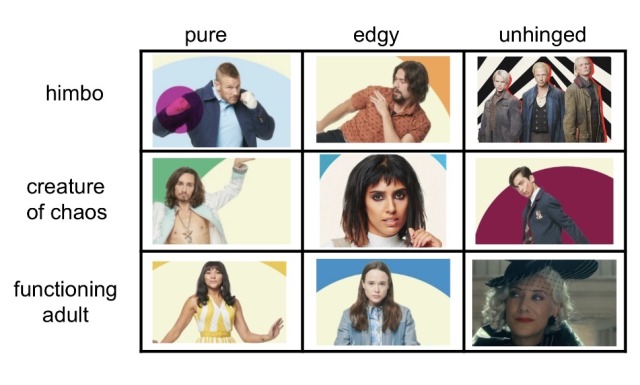
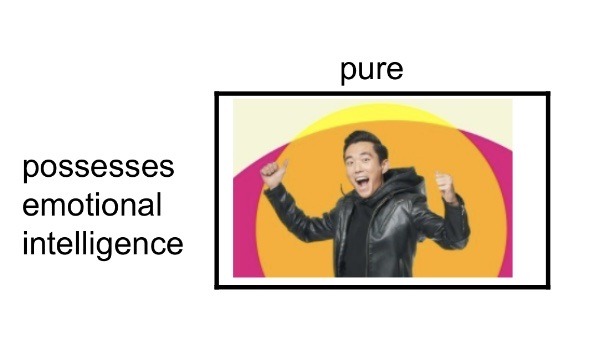
Pure Himbo is so Luther.

kneworder:

someone said that luther and diego have opposite himbo energies this season which got me to making this

plus ben

i will not be taking criticism at this time

10 Aug 07:23

provst: “Bilingualism strikes me as a kind of synesthesia. Instead of seeing colors associated with...

provst:

“Bilingualism strikes me as a kind of synesthesia. Instead of seeing colors associated with letters and words, instead of hearing melodies, what I hear with language is the play and echo of the other language. The option to say it differently, and thus to live it differently. Language is not only a means of communication or description. It’s a framework in which we process existence. Yi writes: “It is hard to feel in an adopted language, yet it is impossible in my native language.” As every bilingual person and translator knows, there are certain words—a feeling, a way of being—that is absent in one language but perfectly brought to life in another. A word that, by existing, gives permission to be. What if you need that which does not exist in your language?”

— Yoojin Grace Wuertz, “Mother Tongue”

05 Aug 06:52

Scientist Tech Help

Suko

SO TRUE!

I vaguely and irrationally resent how useful WebPlotDigitizer is.
03 Aug 06:54

Billowing 424-Foot Net Floats Above a Florida Park in Remembrance of the Past

by Jessica Stewart

View on My Modern Met

Janet Echelman's Bending Arc at Pier Park in St. Petersburg

Photo: Brian Adams

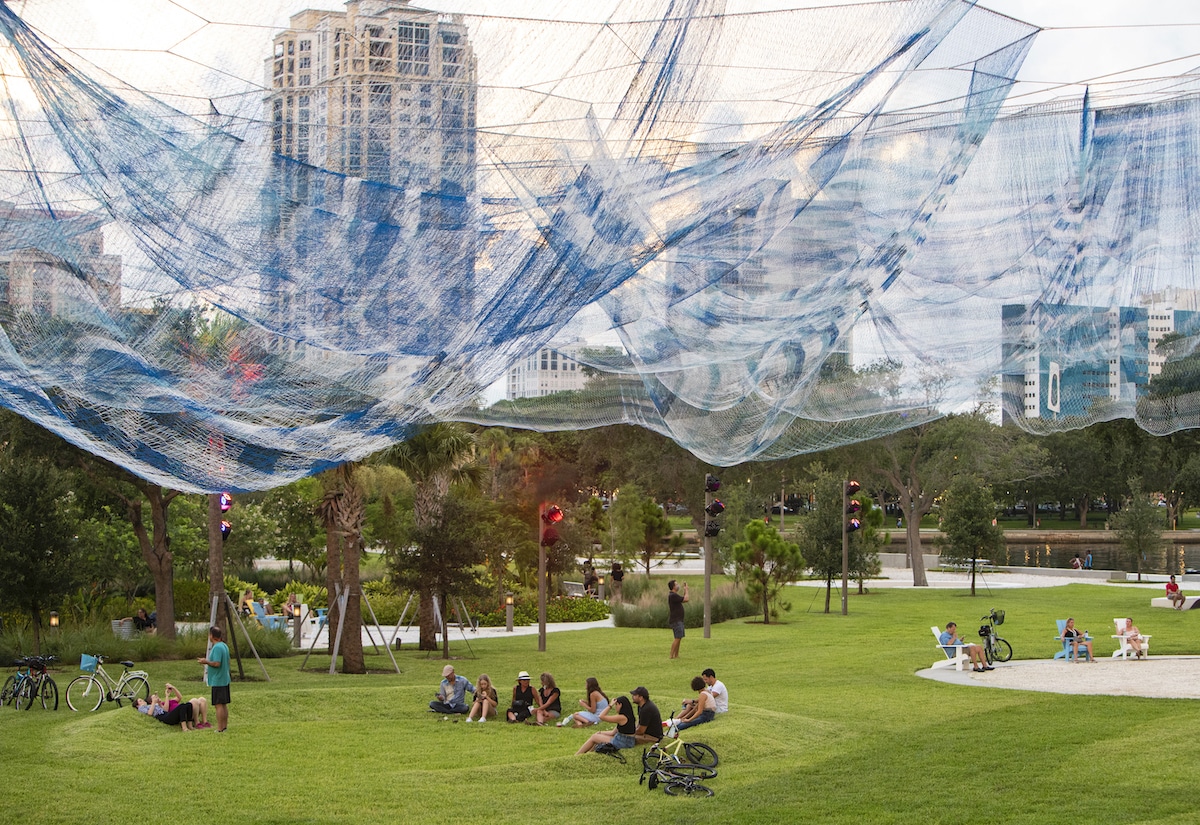
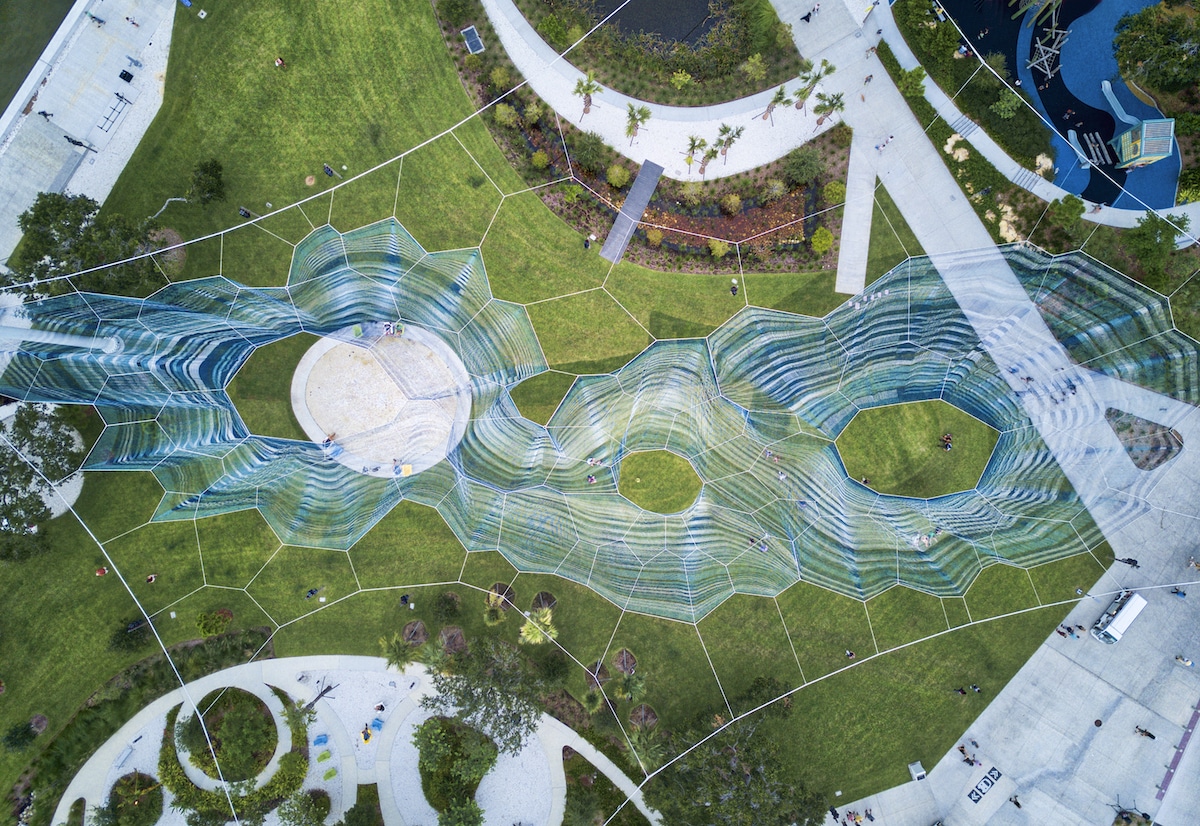
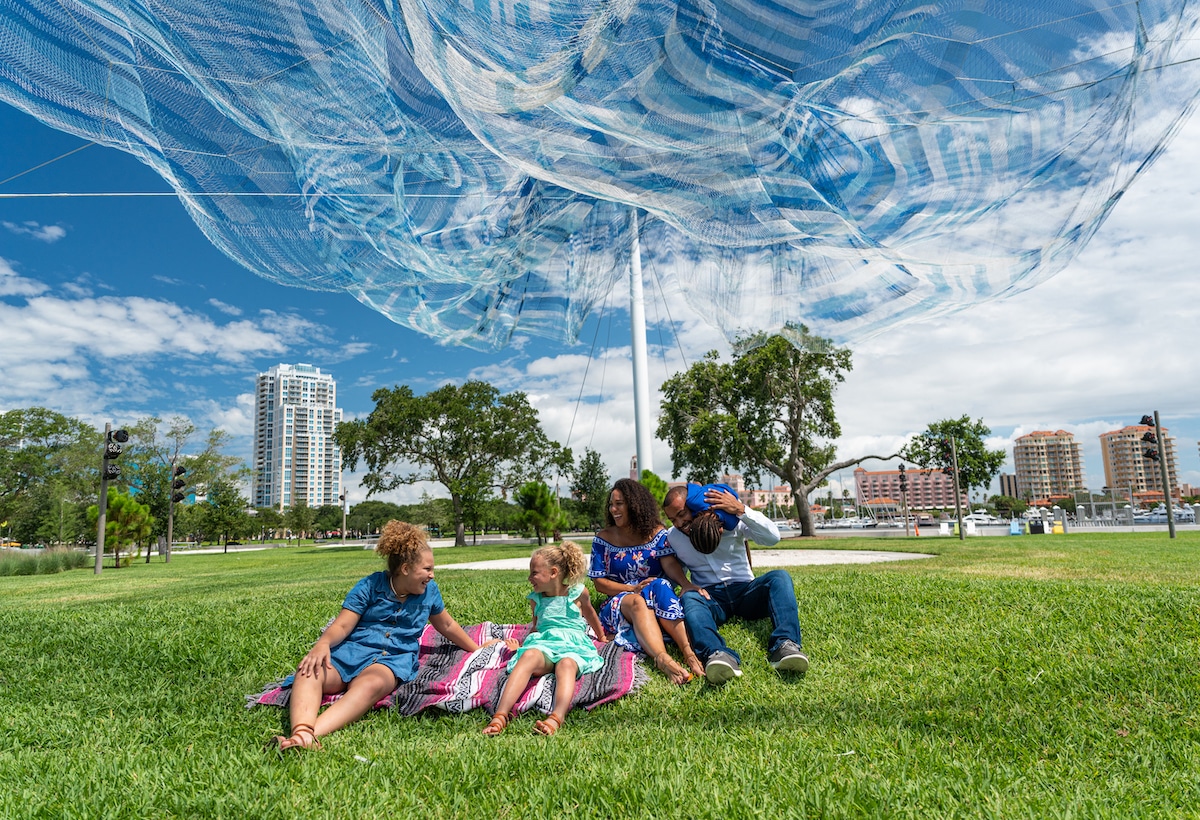
Artist Janet Echelman is known for her extraordinary installations, and her latest work in St. Petersburg, Florida is no exception. Bending Arc is a billowing aerial sculpture composed of 1,662,528 knots and 180 miles of twine. Spanning 424 feet and measuring 72 tall at its highest point, the permanent installation is a focal point of the city’s new Pier Park.

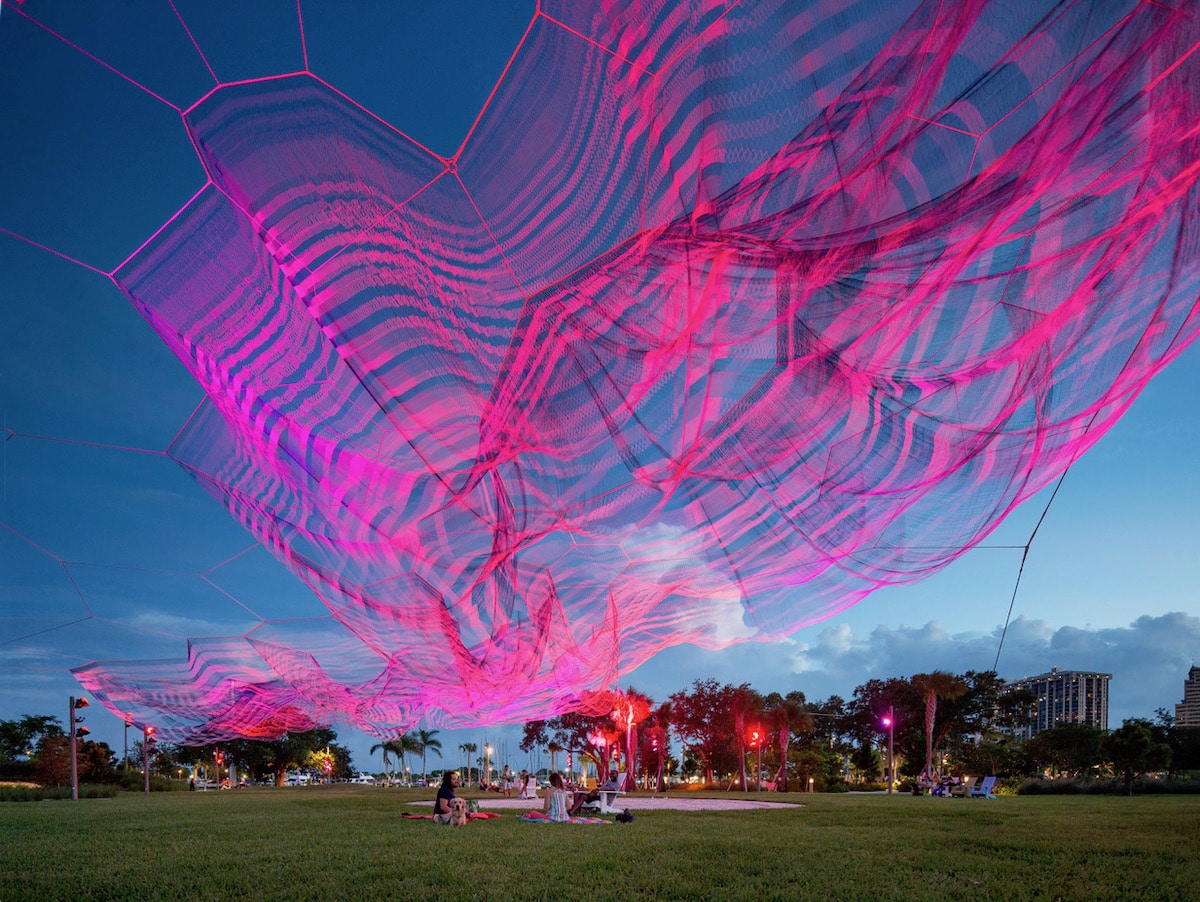
As the sculpture dances in the wind, it casts shapes and shadows across the park, embracing its visitors. And at night, it’s lit by magenta and violet light, which transforms it into something even more magical. Echelman, who was raised nearby on the shores of Tampa Bay, was initially inspired by the blue and white beach parasols she saw on historical postcards. The geometric shapes of barnacles growing on the underside of the pier also shaped her ideas.

But as she dug in further, Echelman found a new significance to her work. She discovered that the location for the project was an important site in the Civil Rights Movement. It was there that citizens peacefully gathered to protest against the city’s policy of keeping municipal pools segregated, even after the landmark 1954 case Brown v. Board of Education, in which the Supreme Court ruled that segregation was unconstitutional. In 1955, after being denied access to the public pool, Dr. Fred Alsup and five other black community members sued the city. They won their case, even though the fight continued until 1957 when the Supreme Court declined to hear the city’s appeal.

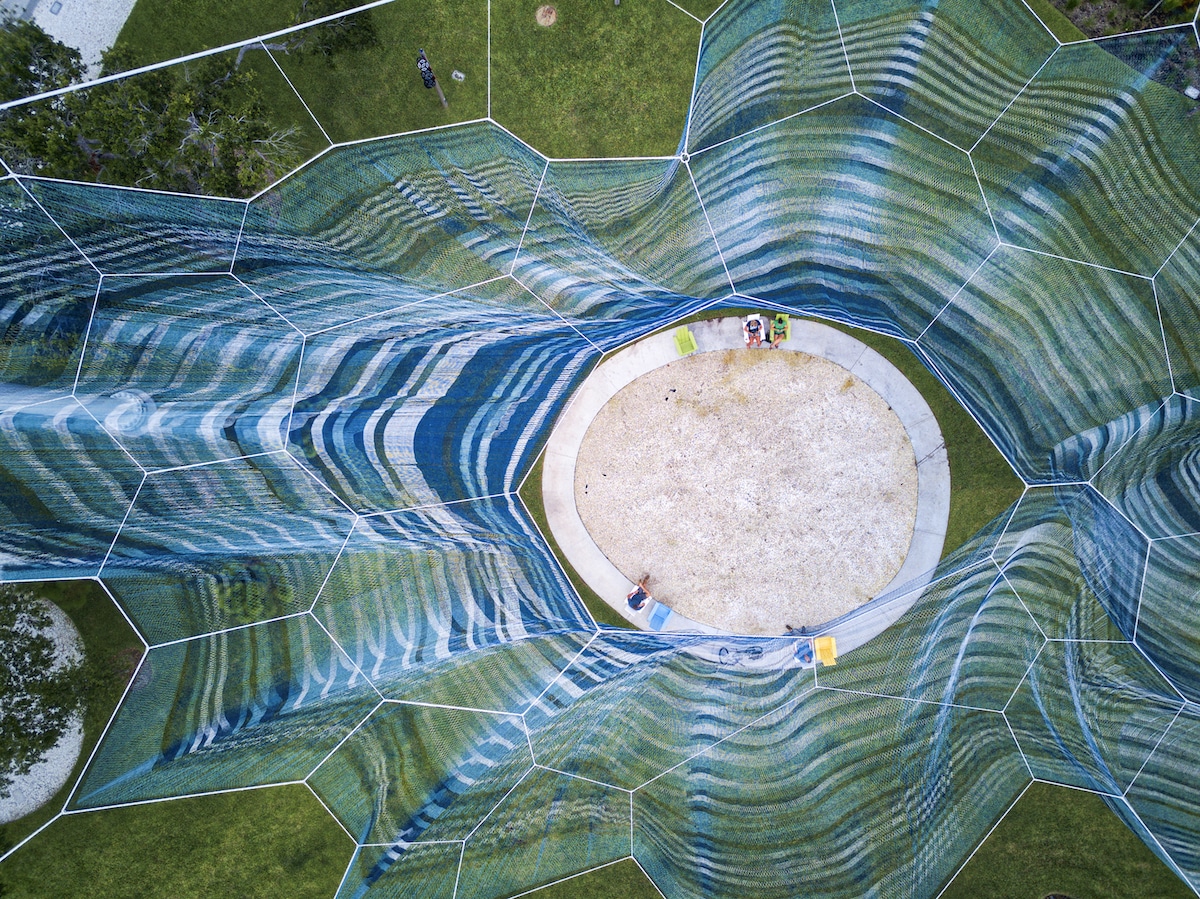
Aerial View of Janet Echelman's Bending Arc in St. Petersburg

Photo: Brian Adams

Upon learning of this historical significance, Echelman decided to name the work Bending Arc. The phrase comes from a 1968 quote by Dr. Martin Luther King Jr.: “The arc of the moral universe is long, but it bends toward justice.” While the march toward racial equality still continues today, Echelman can take heart in the fact that families of all races will be able to freely enjoy her work.

The massive undertaking of bringing Bending Arc to life was made possible thanks to a collaboration between the private and public sectors. The sculpture was funded entirely by private donors, while the sculpture’s infrastructure was part of the new Pier District project. Thanks to the partnership, the public will be able to enjoy the piece for years to come.

Echelman’s lightweight sculpture is built to last. The rope is made from fiber used by NASA to tether the Mars Rover, so there’s no risk of breakage; it is able to withstand winds of up to 150 miles per hour. (In fact, the rope is 15 times stronger than steel.) And so now it floats gently above the new park, creating a focal point for citizens to gather and remember the history of their city. In doing so, they can look back and learn in order to do better in the future.

Bending Arc is a new permanent installation in St. Petersburg by renowned artist Janet Echelman.

Family Enjoying Pier Park in St. Petersburg

Photo: Visit St. Pete-Clearwater

The 242-foot long floating net is made from 1,662,528 knots and 180 miles of twine.

Aerial View of Janet Echelman's Bending Arc in St. Petersburg

Photo: Brian Adams

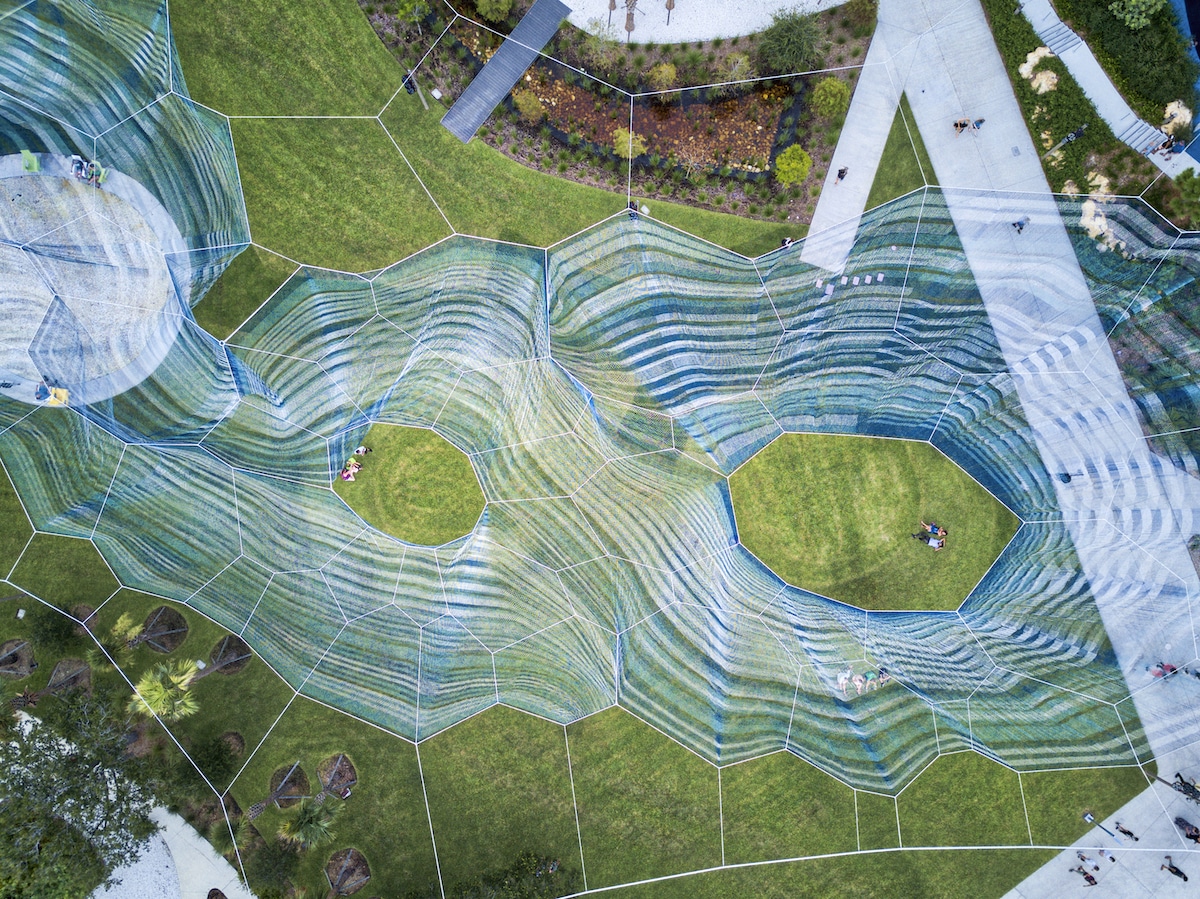
Echelman named the piece after a quote from Dr. Martin Luther King Jr. after discovering that the site was home to peaceful Civil Rights protests in the 1950s.

Aerial View of Janet Echelman's Bending Arc in St. Petersburg

Photo: Brian Adams

To enhance the drama, at night the installation is lit in magenta and violet.

Pier Park's Bending Arc Lit at Night

Photo: Amy Martz

Janet Echelman's Bending Arc Installation Lit Up at Night

Photo: City of St. Petersburg

Bending Arc in St. Petersburg Lit Up at Night

Photo: Brian Adams

Janet Echelman: Website | Facebook | Instagram

My Modern Met granted permission to feature photos by Janet Echelman.

Related Articles:

8 Contemporary Artists Taking String Art to the Next Level

Monumental Interactive Net Sculpture Floats in the Sky

Artist Suspends 600,000 Tied Knots Over a Historic Plaza in Spain

Colorful Net Sculpture “Drops In” from High Above the Streets of Hong Kong

READ:

View on My Modern Met

03 Aug 06:53

How Sister Plautilla Nelli Became the First Woman Artist to Paint ‘The Last Supper’

by Margherita Cole

View on My Modern Met

The Last Supper by Plautilla Nelli

Plautilla Nelli, Detail of “The Last Supper,” c. 1560s (Photo: Wikimedia Commons [Public Domain])

It’s no secret that the Italian Renaissance is one of the most influential movements in Western art history. We think of this time as being dominated by mostly male artists like Leonardo da Vinci, Michelangelo, and Raphael, but there were a few famous women painters who left their mark. Among them was Sister Plautilla Nelli (c. 1524-1588), the first woman to render The Last Supper.

Nearly a third of recorded women artists in Renaissance Italy were Dominican nuns. Sister Plautilla’s convent, Santa Caterina, was where she taught herself to paint in the style of other religious artists like Fra Bartolomeo. Her talent and passion for image-making lead her to become the head of an artistic workshop within her convent. In fact, Sister Plautilla was so successful during her time that she was one of the few female artists included in Giorgio Vasari’s historical text, the Lives of the Most Excellent Painters, Sculptors, and Architects.

Here, we explore the artistic legacy of Sister Plautilla Nelli, and how she became the lead painter of her convent.

Learn about the accomplished art of Renaissance nun and painter Sister Plautilla Nelli.

Sister Plautilla’s Early Life

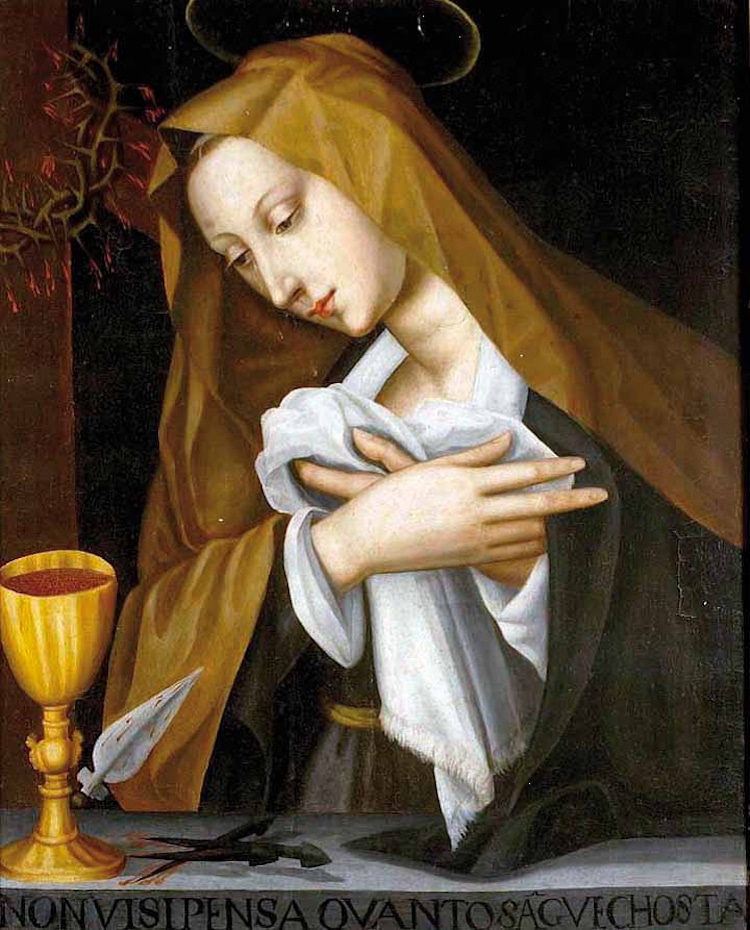
Madonna by Plautilla Nelli

Plautilla Nelli, “Madonna Addolorata,” c. 1500s (Photo: Wikimedia Commons [Public Domain])

Sister Plautilla Nelli was born Pulisena Margherita Nelli around 1524 to a wealthy family in Florence, Italy. When she was 14 years old, she was placed at the convent of Santa Caterina di Cafaggio and adopted the new name of Plautilla. This was not uncommon during the 16th century, as many prominent families placed their daughters in convents to avoid paying a costly dowry.

Santa Caterina was managed by the Dominican friars and lead by the spiritual leader Girolamo Savonarola (1452-1498). He encouraged the nuns to create religious art to express their devotion to God. Sister Plautilla taught herself how to paint by studying the High Renaissance-style paintings of Fra Bartolomeo (c. 1472-1517), a Dominican friar who also worked for Savonarola, as well as the Mannerist paintings of Agnolo Bronzino (1503-1572). As a woman, Sister Plautilla was not permitted to study the male figure, so she learned how to render men by studying art and sculpture.


Establishing an All-Woman Art Workshop

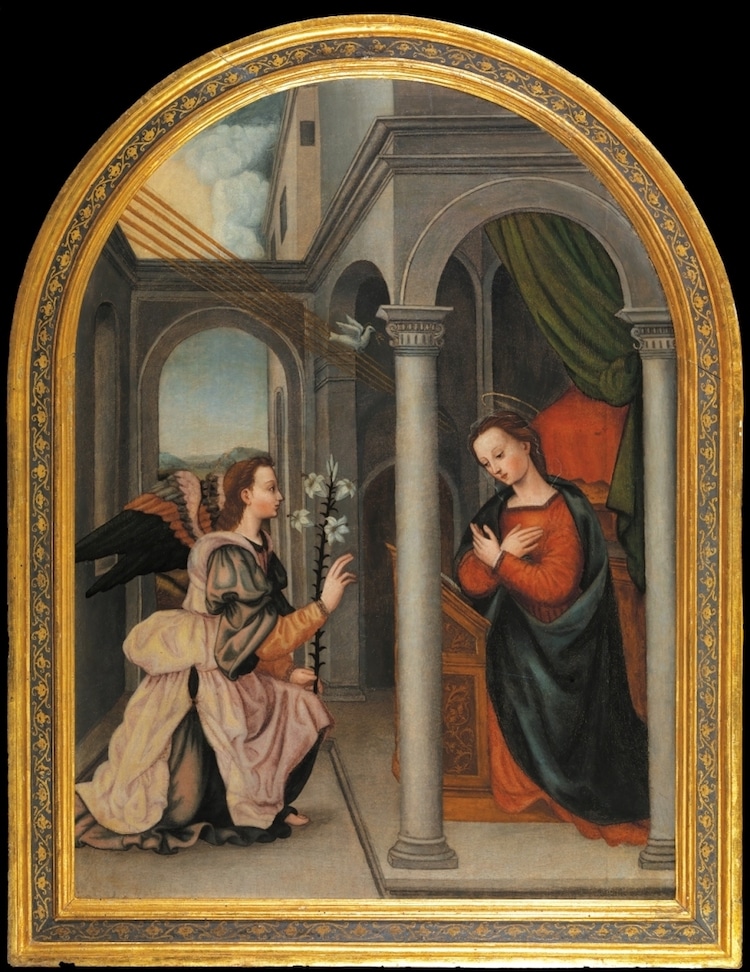
Annunciation by Plautilla Nelli

Plautilla Nelli, “Annunciation,” c. 1500s (Photo: Uffizi Galleries Wikimedia Commons [CC BY-SA 4.0])

Sister Plautilla’s talent as a painter soon garnered attention within the wealthy circles of Florence, and many families commissioned her religious artwork to hang in their home. She founded an all-woman art workshop within her convent and taught other nuns how to paint. Together, they were able to take on large-scale commission work and become financially independent.


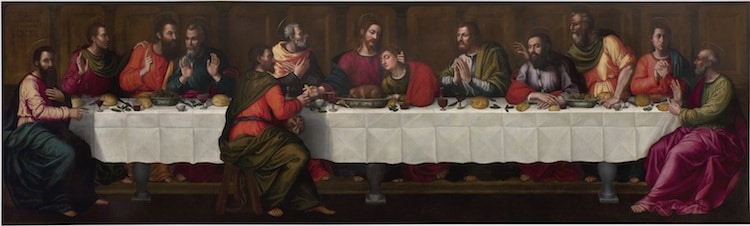
The Last Supper Painting

The Last Supper by Plautilla Nelli

Plautilla Nelli, “The Last Supper,” c. 1560s (Photo: Wikimedia Commons [Public Domain])

In the 1560s, Sister Plautilla created her most ambitious painting yet: a seven-meter long (or 22 feet) depiction of The Last Supper. She is the first recorded woman artist to render the well-known religious subject. It marks a huge departure from Nelli’s other artistic endeavors (which were largely miniatures for the home) and exemplified her talents as a painter.

The Last Supper by Plautilla Nelli

Plautilla Nelli, Detail of “The Last Supper,” c. 1560s (Photo: Wikimedia Commons [Public Domain])

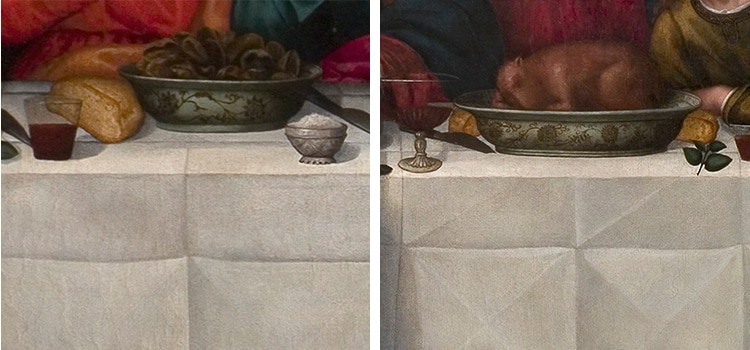
In particular, historians note the nun’s keen attention to detail. The starch white table cloth, for example, has neatly ironed creases and is set with turquoise ceramic bowls, fine China platters, and embellished glasses. Additionally, the food depicted is typical of Tuscan cuisine.

The Last Supper by Plautilla Nelli

Plautilla Nelli, Detail of “The Last Supper,” c. 1560s (Photo: Wikimedia Commons [Public Domain])

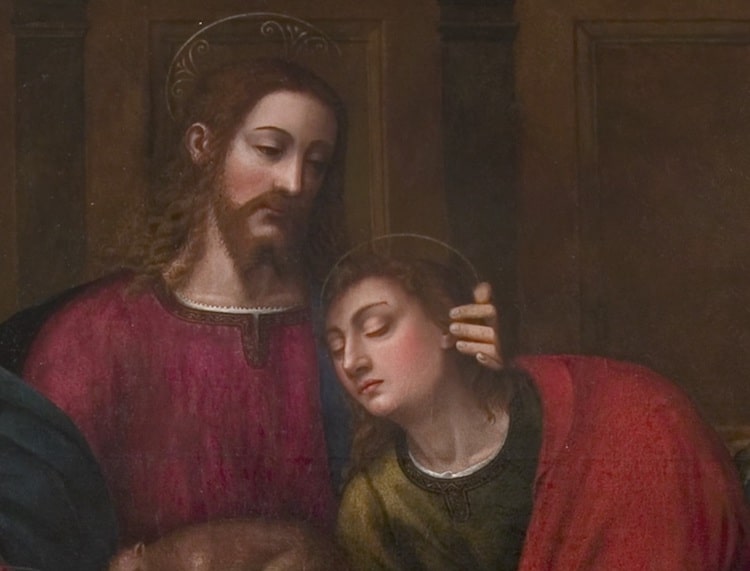
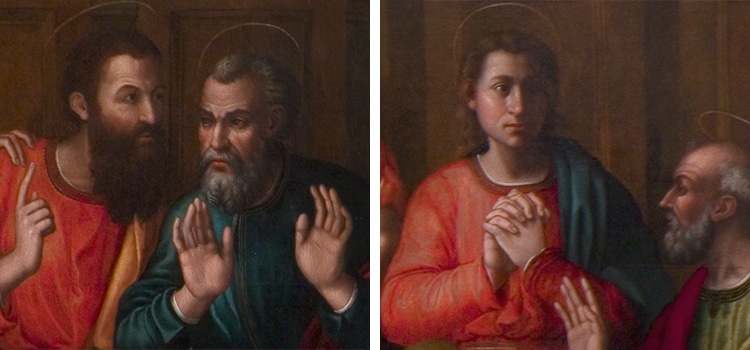
Sister Plautilla embued the figures with emotionally-charged expressions and emphatic body language. At the center of the table, a serene-looking Jesus cradles John in one hand. On the left side, two apostles (possibly Thomas and Peter) appear to be in a rigorous discussion, as evidence by their wrinkled foreheads and raised hands. Similarly, on the left side, an apostle looks away as he clasps his hands in reverent prayer.
The Last Supper by Plautilla Nelli

Plautilla Nelli, Detail of “The Last Supper,” c. 1560s (Photo: Wikimedia Commons [Public Domain])

Restoration of The Last Supper


View this post on Instagram


A post shared by Advancing Women Artists (@advancingwomenartists) on

In 2017, the US-based organization Advancing Women Artists Foundation (AWA) started a crowdfunding campaign to restore Sister Plautilla’s painting of The Last Supper. The deteriorating artwork had been in hiding for 450 years and hanging in the refectory of the Santa Maria Novella monastery for the last 200 of them.

AWA managed to raise $67,000 for the conservation of Sister Plautilla’s only surviving painting. To reach their goal, they offered donors the option to “adopt” one of the 12 apostles depicted in the painting for $10,000 each.

Lead conservator Rossella Lari had to remove layers of overpainting from previous restorations to reach the original artwork. Despite Sister Plautilla’s lack of artistic education, Lari contends that the painting shows “powerful brushstrokes” and “a great sense of energy and determination.”

One of the most notable details is the inscription Sister Plautilla made beneath her signature. It says, “Orate pro pictora,” or “pray for the paintress.” By including it under her name, the nun confirms her identity as a woman artist.

After four years of restoration, The Last Supper is on public view in the Santa Maria Novella Museum in Florence where visitors can finally witness its remarkable size and composition.

Related Articles:

8 Interesting Facts About Raphael, Master of the Italian Renaissance

Learn About Masaccio, the Italian Renaissance Painter With a Short Life but Long Legacy

Learn How Donatello’s ‘David’ Statue Paved the Way for Sculptors in the Renaissance

Fra Angelico and the Annunciation: How the Ethereal Event Inspired the Early Renaissance Artist

READ:

View on My Modern Met

28 Jul 08:17

I have been thinking of the ways we tell people things. My father’s hands shake, but he holds...

I have been thinking of the ways we tell people things. My father’s hands shake, but he holds the phone up so I can watch the video from six feet away. My mother emails me the recipe of her beef stroganoff at 6 in the morning with the comment - woke up and didn’t want to forget to do this! On the highway, we sing so loudly my voice grows hoarse; on the beach I sneak nice rocks into people’s hands so they have something to hold; on the floor we all sit quietly in the same agreeable silence. We are all saying the same thing.

My friends say “Oh you know, keeping busy.” This means they are having a hard time but making themselves survive it. I ask them to help me walk me dog; this is me telling them it’s okay sometimes to just be present and talk about young adult fiction. When I cancel again because I can’t get out of bed, she tells me she’s on her way with cookies.

I point out the sunset. She shares her fork before I ask for it. He calls me at 1 AM just because I’m on the road alone, we talk about stupid shit. She waits for me to get indoors safely before driving away. He says - nah, forget it, I’m happy to do it for free.

People are saying it, you know? They say it often and loudly. Sometimes, you know - you just have to be listening.

28 Jul 07:32

Artist Turns Dollar Coin Into Incredible Sculpture With Hidden Movable Mechanics

by Emma Taggart
Suko

Wow!

View on My Modern Met

Mechanical Hobo Nickel by Roman Booteen

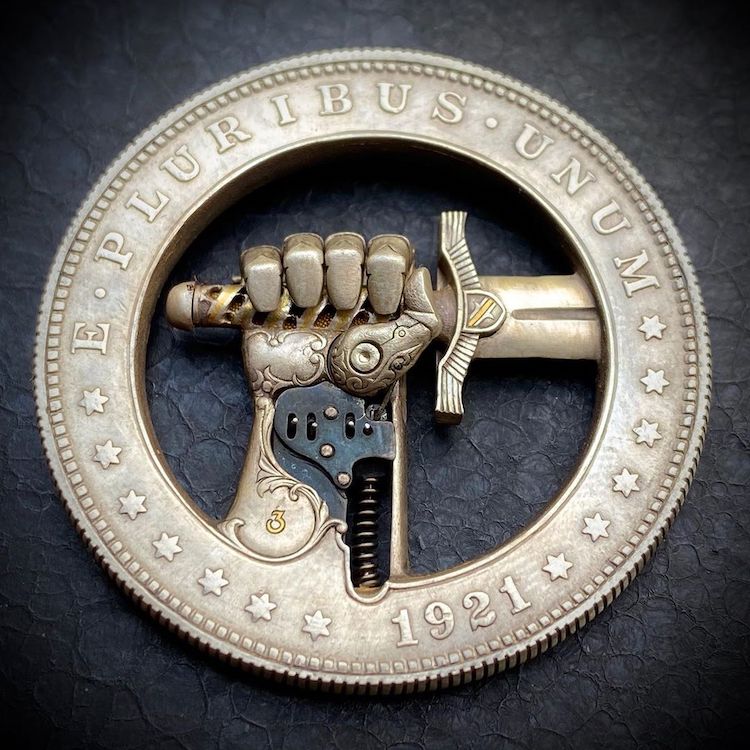
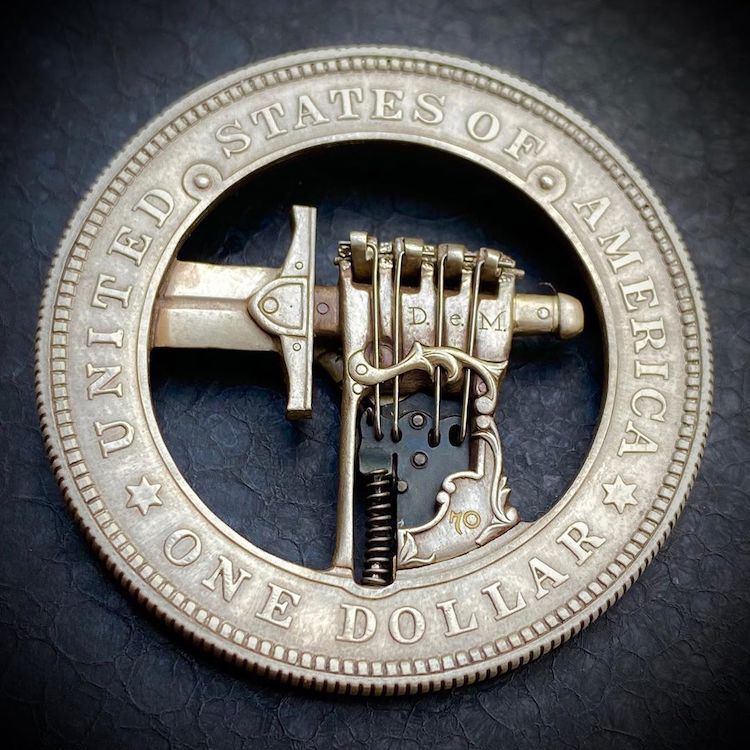
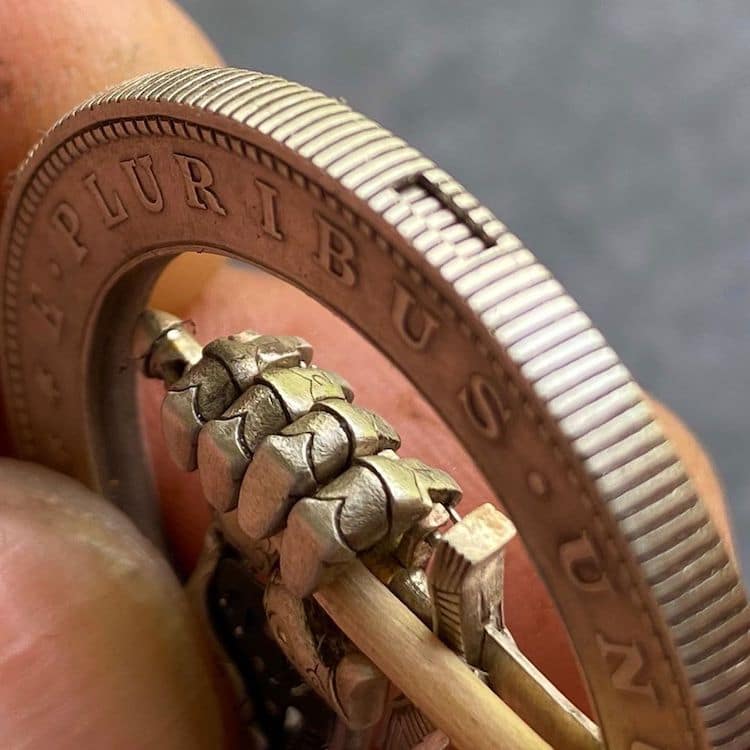
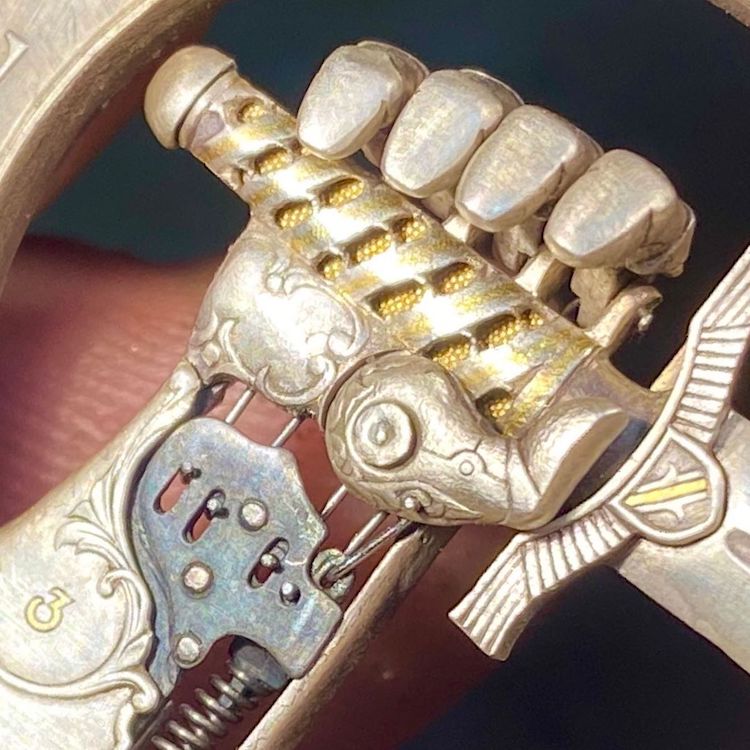
The ancient art of the hobo nickel has been around since the 18th century, but Russian artist Roman Booteen keeps the craft alive with his extraordinary coin carving designs. From a gold bug with moving wings to a mechanical beating heart, Booteen is a modern master at turning old coins into extraordinary bas relief sculptures. His latest design is no exception—he’s meticulously modified a U.S. dollar coin (from 1921) to feature a 3D glove and sword with a secret mechanism.

Hand-cut and engraved from the center of the coin, Booteen’s incredibly intricate design features a metal armor glove with decorative, hand-engraved details. The glove is holding onto a sword that seems to be plunged into the side of the coin. The piece is already impressive as a still sculpture; however, once the hidden button on the outer edge of the coin is pressed, the metal components come to life. An integrated spring allows the fingers of the glove to move, as if it’s gasping the sword’s handle.

Check out Booteen’s incredible hobo nickel below, and find more from his ever-growing portfolio on Instagram.

Russian artist Roman Booteen transformed an old U.S. dollar coin into this incredibly intricate hobo nickel design.

Sword Hobo Nickel by Roman Booteen

The miniature bas relief sculpture features a hidden button on the side that triggers a secret mechanism.

Mechanical Hobo Nickel by Roman BooteenSword Hobo Nickel by Roman Booteen

Watch the metal components come to life!


View this post on Instagram


A post shared by Roman Booteen (@romanbooteen) on

Check out more of Booten’s extraordinary hand-carved coins.

Roman Booteen: Facebook | Instagram

My Modern Met granted permission to feature photos by Roman Booteen.

Related Articles:

Artist Hand-Engraves Incredible Gold Bug Coin with Mechanical Wings

Artist Hand-Engraves Elaborate Coin with a Mechanical Beating Heart

Artist Creatively Reveals Pop Culture Portraits Within Coins

Woman Accidentally Discovers Rare 2,000-Year-Old Roman Coin While Hiking

READ:

View on My Modern Met

28 Jul 07:29

Chanson Profonde

by Miss Cellania
Suko

Very profound

(heh)


Sandra Boynton presents a delightful cat singing in French. The song is about singing in French ("Chanson Profonde" means "Profound Song"). You might enjoy it without reading the captions, but you will enjoy more if you do. The music is performed by Yo-Yo Ma, Michael Ford, and Weird Al Yankovic. -via Metafilter

03 Jul 19:18

The World's Smallest Knitted Sweaters

by Miss Cellania
Suko

I think my hands are cramping just looking at them. She does socks and mittens too:
https://www.messynessychic.com/2020/06/30/oh-just-the-worlds-tiniest-hand-knitted-sweaters/


Nice sweaters, but what are they sitting on? It's a hand! Those are some small sweaters, but they didn't shrink in the wash; they are made that way. Althea Crome is a micro knitter. She knits sweaters so tiny that they are in danger of getting lost in your hands, but just look at how detailed they are!


Crome explains how she does it.

Crome uses a fine silk thread and fashions her own knitting needless from surgical wire. According to her website, they’re sometime as small as 0.01 inches and can “accommodate more than 80 stitches per inch.”

Read more about Crone's micro knitting at Messy Nessy Chic.

See more of Crome's work at Instagram and at her shop.

03 Jul 03:34

thewindowofthesummerhouse: Adrian Borda

Suko

I feel like Sithel might like this.

02 Jul 06:25

gothhabiba: “Another myth that is firmly upheld is that disabled people are dependent and...

gothhabiba:

“Another myth that is firmly upheld is that disabled people are dependent and non-disabled people are independent. No one is actually independent. This is a myth perpetuated by disablism and driven by capitalism - we are all actually interdependent. Chances are, disabled or not, you don’t grow all of your food. Chances are, you didn’t build the car, bike, wheelchair, subway, shoes, or bus that transports you. Chances are you didn’t construct your home. Chances are you didn’t sew your clothing (or make the fabric and thread used to sew it). The difference between the needs that many disabled people have and the needs of people who are not labelled as disabled is that non-disabled people have had their dependencies normalized. The world has been built to accommodate certain needs and call the people who need those things independent, while other needs are considered exceptional. Each of us relies on others every day. We all rely on one another for support, resources, and to meet our needs. We are all interdependent. This interdependence is not weakness; rather, it is a part of our humanity.”

— AJ Withers, “Disability Politics and Theory” (via vulturechow)

30 Jun 20:36

Lifelike Human Sculptures Are Submerged in Underwater Museum at the Great Barrier Reef [Interview]

by Jessica Stewart

View on My Modern Met

Coral Greenhouse by Jason deCaires Taylor

For over 10 years, sculptor Jason deCaires Taylor has dedicated his artistic practice to the enhancement and conservation of the underwater world. He has created underwater museums in Europe and spread his art throughout the Caribbean, and his latest project takes him to the Earth’s most famed marine ecosystem.

Australia’s Great Barrier Reef is the world’s largest coral reef and, now, Taylor will have a part in raising more awareness about its beauty thanks to his work with the Museum of Underwater Art (MOUA).

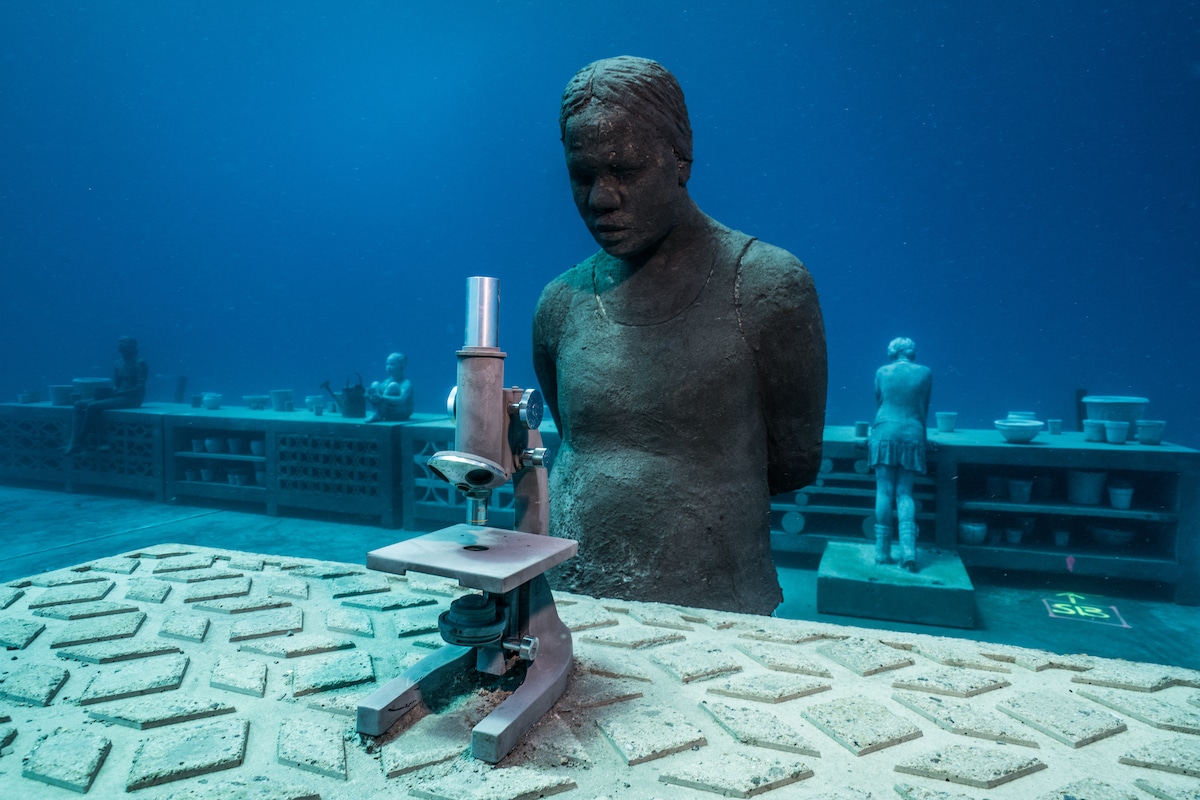
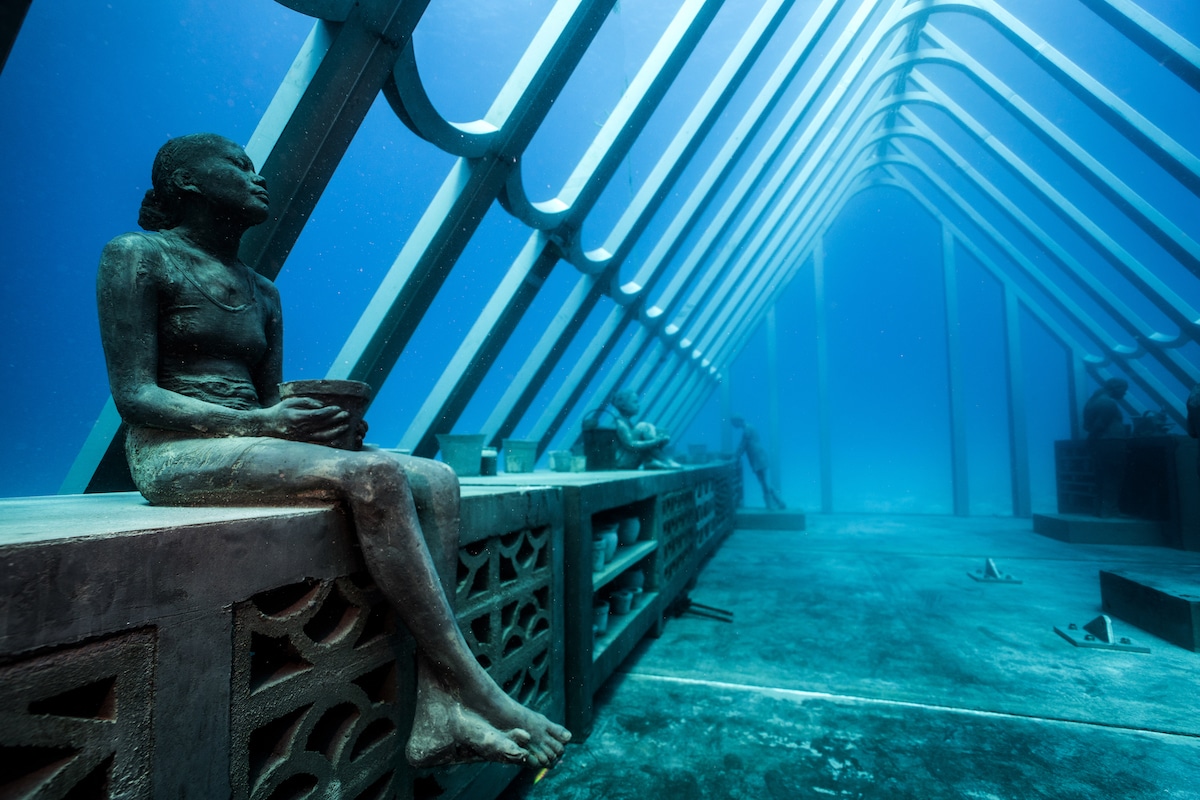
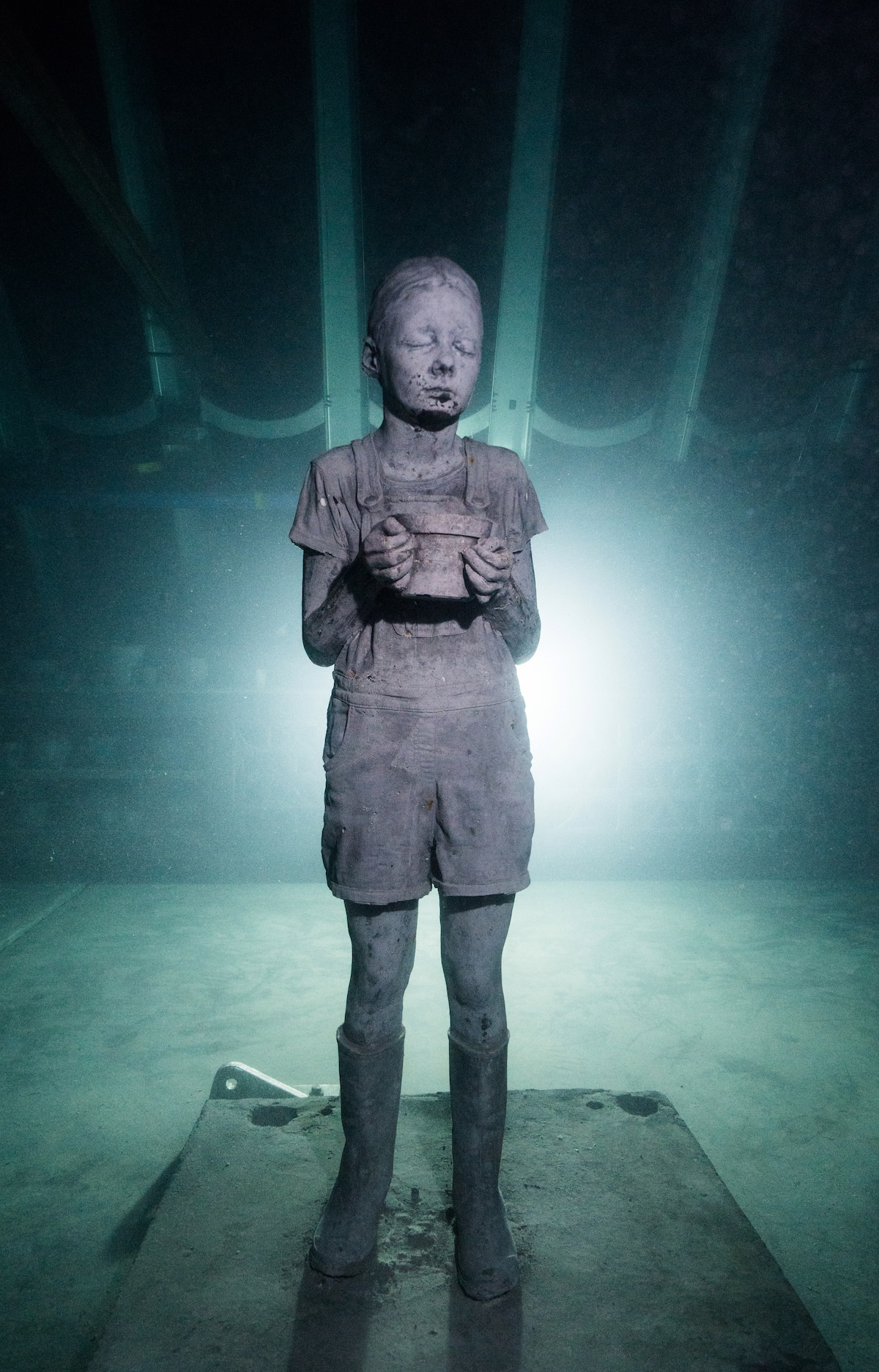
In collaboration with scientists at James Cook University and the Australian Institute of Marine Science, Taylor spent years gaining permissions to install the first artificial reef in these waters. The result is Coral Greenhouse, a collection of hyperrealistic underwater sculptures inspired by the community’s youth. It’s these young people that Taylor hopes will become engaged and take their role as the future conservators of this precious ecosystem seriously.

This work is coupled with Ocean Siren, an interactive sculpture that stands as a beacon just beyond Townsville’s Strand Jetty. Rising from the water, the figure was modeled after 12-year-old Takoda Johnson, a local indigenous girl from the Wulgurukaba tribe whose families once owned local lands. The sculpture changes color in conjunction with the ocean’s temperatures and was made possible by close collaboration with scientists.

In merging art, science, and conservation, the Museum of Underwater Art wants to bring more people to these waters. And by increasing awareness about the Great Barrier Reef and the incredible coral that still thrives in many areas, they’re hoping to inspire greater conservation efforts. Plans to build up the museum are ongoing. There are two further installations that Taylor will create for the project, though the initial portions of the museum should open to the public shortly.

We had the chance to speak with Taylor about this important project and his experiences with the local community. Read on for My Modern Met’s exclusive interview.
Museum of Underwater Art in AustraliaYou’ve worked in so many ocean environments. How was working in the Great Barrier Reef different?

There are obviously many, many different things. It’s the first time I have really worked in the Pacific Ocean, and just the variety and the diversity of life there are some of the best in the world. The various different types of coral and marine species are so incredible—there are so many colors and forms and shapes. It was a huge privilege to work there, and it’s something that’s been a personal ambition of mine for quite some time.

The trajectory and ambition of the project were also very different. Previously, working in the Caribbean, there are not so many reefs. They’re smaller in scale and quite fragile. And the objectives have been about taking people away from natural areas and creating this artificial reef. Whereas working in the Great Barrier Reef, it’s such a vast structure and it’s so endless, there’s not a problem with over-tourism and high-impact numbers and you don’t need to divert people away from it. So, it had a kind of different objective.

It was more about getting more people to go and see it because it has experienced some bleaching over recent years, but mainly in the northerly parts, and two-thirds of it is still incredibly pristine and beautiful, but there’s this misconception that it’s dying or it’s already dead. That’s not the case. Actually the area where we built the museum has some of the best coral I’ve ever seen in my life, so we wanted people to see that and we wanted to help motivate people to want to conserve it.
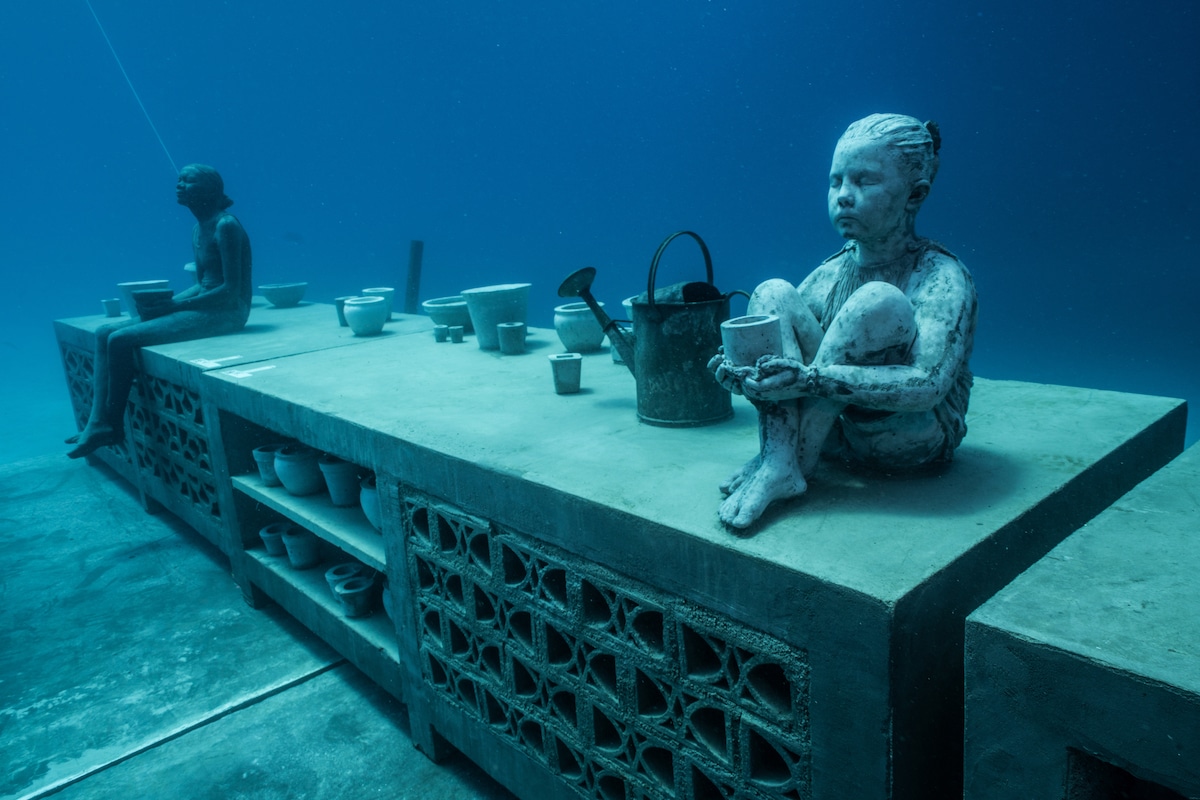
Underwater Sculptures in the Great Barrier ReefHow did the collaboration with the Museum of Underwater Art come together to begin with?

I first started in Townsville, Queensland, which is home to one of the largest marine research laboratories in the world—the James Cook University—as well as AIMS (Australian Institute of Marine Science). It is a real hub for science.

Local marine biologists Paul Victory and Adam Smith, who have been following my work for some time, were quite interested in how to communicate science better and in a more mainstream way. So, they first got in touch with me almost four years ago and it slowly developed from there. It’s been quite a lengthy project. Working on the Great Barrier Reef, we’ve had to do an incredible amount of research and the permitting application was one of the most complicated I’ve ever been part of. It was something relatively new for the authorities, so it’s taken three years to get to this point.
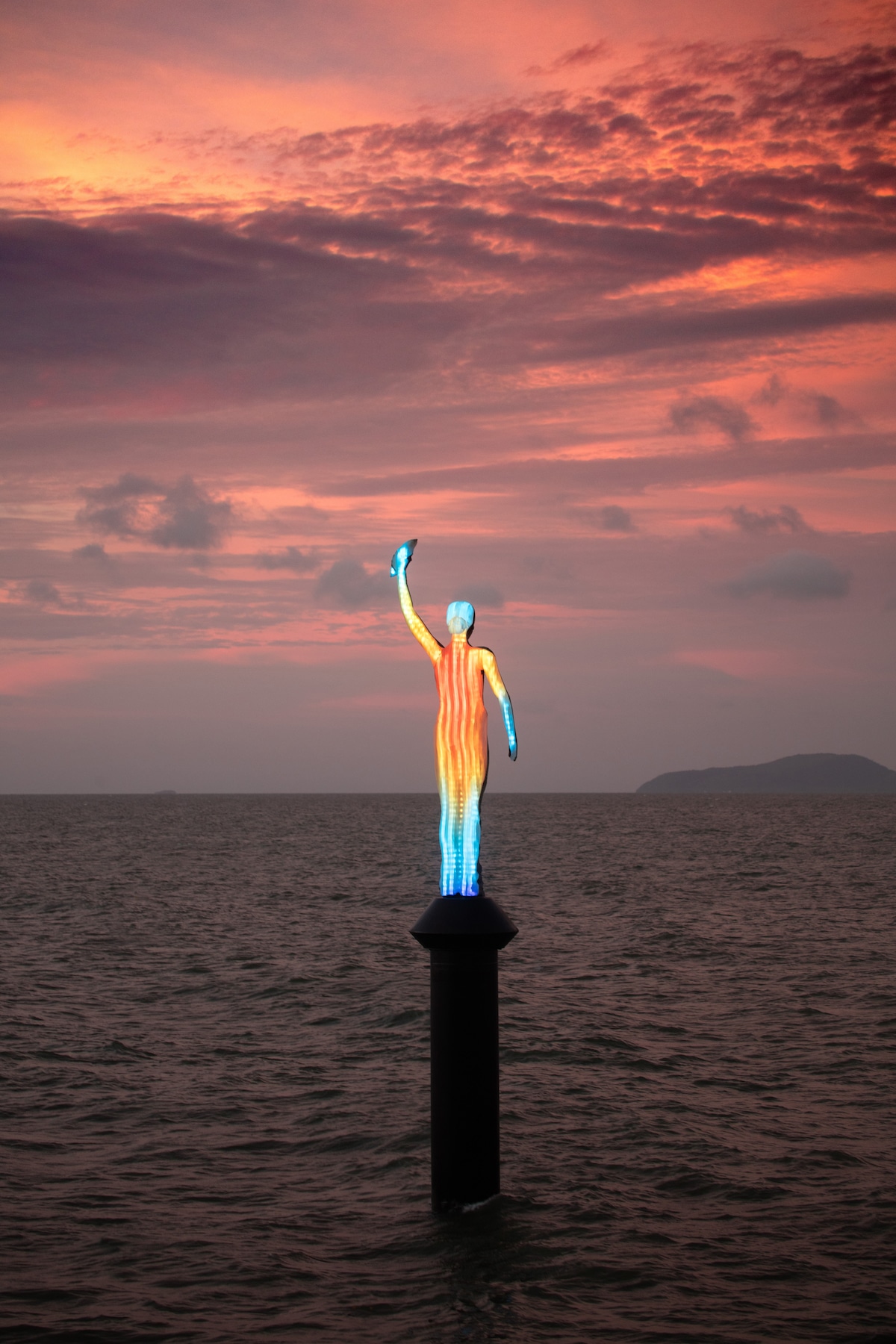
Ocean Siren by Jason deCaires TaylorIt’s interesting that the project was kicked off by scientists. Obviously your work mixes art and science quite a bit. This is particularly evident here with the Ocean Siren sculpture that greets people in Townsville. How did that concept come together? 

I’ve very much been interested in ways to tell stories about the marine environment online and in urban environments—bringing it into the kind of spaces where people aren’t really connected to the ocean. And I really like this idea that something that was happening underwater, far outside the Great Barrier Reef but could be felt in real-time and witnessed by everybody.

How did you work with scientists to bring your vision to life?

It’s actually an idea I’ve had for some time, but I’ve not been able to implement it just because I haven’t found the right location and the technical aspects were quite complicated. But, obviously, Townsville was the perfect place because there are already weather stations positioned on lots of different parts of the Great Barrier Reef and these stations monitor water temperature, salinity… lots of different metrics. So it was actually possible for me to be able to do that by working with AIMS Institute to connect that data and then share it on the sculpture.
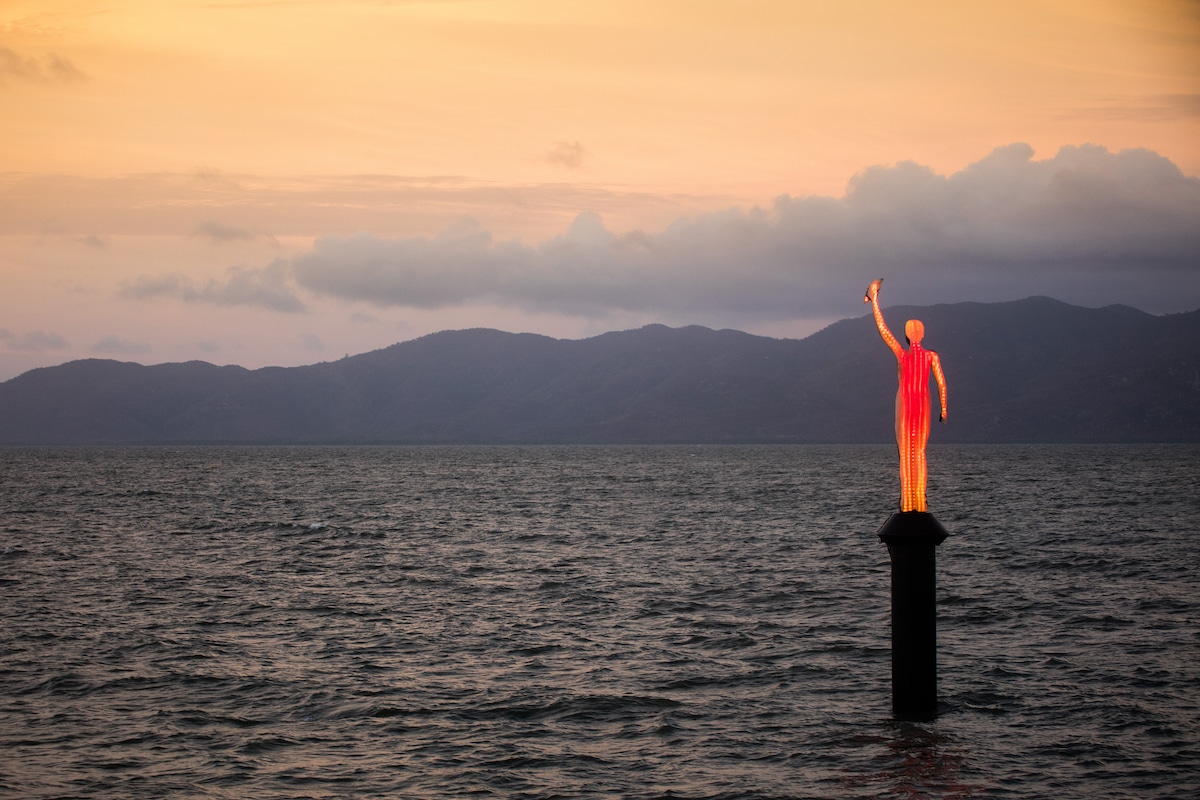
Ocean Siren by Jason deCaires TaylorIt’s really wonderful because, as you said, sometimes it’s difficult for people to make sense of this intangible data, and with the sculpture, they’re able to visually see what’s happening below the surface in a quite beautiful way.

I was really inspired by a quote by Gus Speth, U.S. Advisor on Environment and Climate Change: “I used to think that the top environmental problems were biodiversity loss, ecosystem collapse, and climate change. I thought that 30 years of good science could address these problems. I was wrong. The top environmental problems are selfishness, greed, and apathy, and to deal with these we need a cultural and spiritual transformation. And we scientists don’t know how to do that.”

I think the world’s changed in the last few years and where you would think that common sense or logic and facts would prevail, they haven’t. You could argue that people are much more swayed by emotional and spiritual arguments than they are behind facts and figures.
Underwater Sculptures in the Great Barrier Reef

Certainly, the visual arts have the ability to tap into people’s emotions and perhaps cause them to get more involved with a social cause they might never have cared about otherwise. I know you tried to engage the public when you did workshops with the local community. How did those turn out and did you achieve that you expected?

So most of the models for the projects I have completed are part of community workshops. I feel that’s a really important part of the process. The local community becomes the sculptures; they become ambassadors or guardians for the reef. And I think that’s really critical for them, especially children growing up. They feel like they have a sense of ownership and a sense of responsibility to protect the reef.

In Australia, I really wanted to make sure that the indigenous community was represented in the artworks. So it was very important to get the local community to join in and be part of it. In fact, Ocean Siren was a young indigenous girl whose family are the traditional owners of the land. She looks out to sea, and she also looks out on the island of her great grandfather.
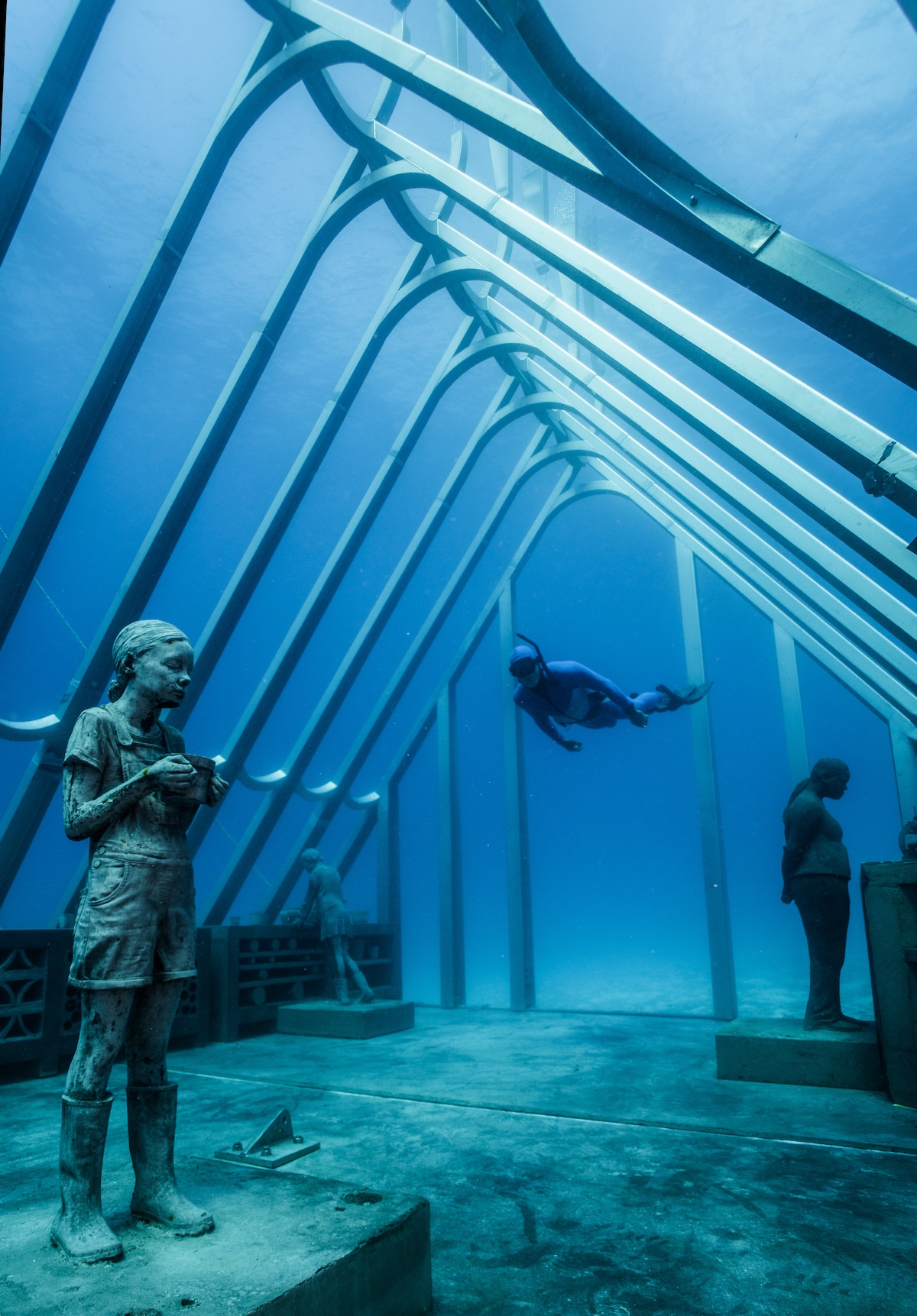
Museum of Underwater Art in AustraliaHow did the overall vision for Coral Greenhouse come together?

One of the overriding objectives was that we wanted young people to be inspired by marine science and fascinated by it. And want to have an active interest in the health of the reef and to be able to explore it in a fun and dynamic way.

One of the big objectives was to create this space encompassing many areas, to be not only a space for art and culture but only about marine science and to use it as a portal or access point to explore the Great Barrier Reef.

Boat Towing Art to the Great Barrier Reef

Photo: Richard Woodgett

So you’ve already mentioned that the permitting was a big hurdle. But that aside, what were some of the other challenges you faced with this installation?

Yeah, it was pretty difficult. There are many, many factors. One of them being the occurrence of big cyclones on the Great Barrier Reef. So you had to plan the structures for a category four cyclone and that was very challenging—very difficult to do, especially with the scale of the project.

It’s also, I think, around 70 kilometers (43 miles) away from the shore, which is a very long way, especially when you’re towing hundreds of tons of artwork. It took us 16 hours to get there.

So there were some challenges, but there were also some very helpful things. I was very lucky in Australia to have incredible logistical help, the operators there—the machinery and the cranes—the experience there is really second to none. It has a very rich diving history. So I was fortunate in many respects.

Underwater Sculptures by Jason deCaires Taylor

Photo: Richard Woodgett

So for people who may not understand how these things work, can you share a bit about how these installations end up providing a good habitat for marine life?

Sure. So take the Coral Greenhouse, for instance, this is situated on a patch of sand in a kind of underwater channel at the northern part of the reef. It is flushed by a nutrient-rich current which is an ideal area for corals and marine life to flourish.

Because the sculpture is quite high, it spans all different areas of the water column. And so, in the lower parts, we have all these different habitat spaces for marine life. This includes a series of workbenches and modules which have a different type of hollowed space tailored for different types of creatures. So some of the holes are very small and just allow juvenile fish to get inside and be protected. Some of them are much larger for crustaceans and larger species. And so all this area beneath the lower end, it creates this artificial reef habitat—an area for fish to spawn and to take refuge.

Then, as the structure moves up, it starts to go into the kind of high current area where there’s a lot of nutrients flowing through the water. And from that part, it offers a really good substrate for all the different species that are filter feeders that extract all the nutrients from the water. So all the different types of hard and soft corals or crinoids, they can all attach to the structure and start sieving it for food. It becomes a large tree community. The smaller species very quickly attract larger species that then predate on them so, in a very short space of time, you get a very healthy reef system revolving around it.
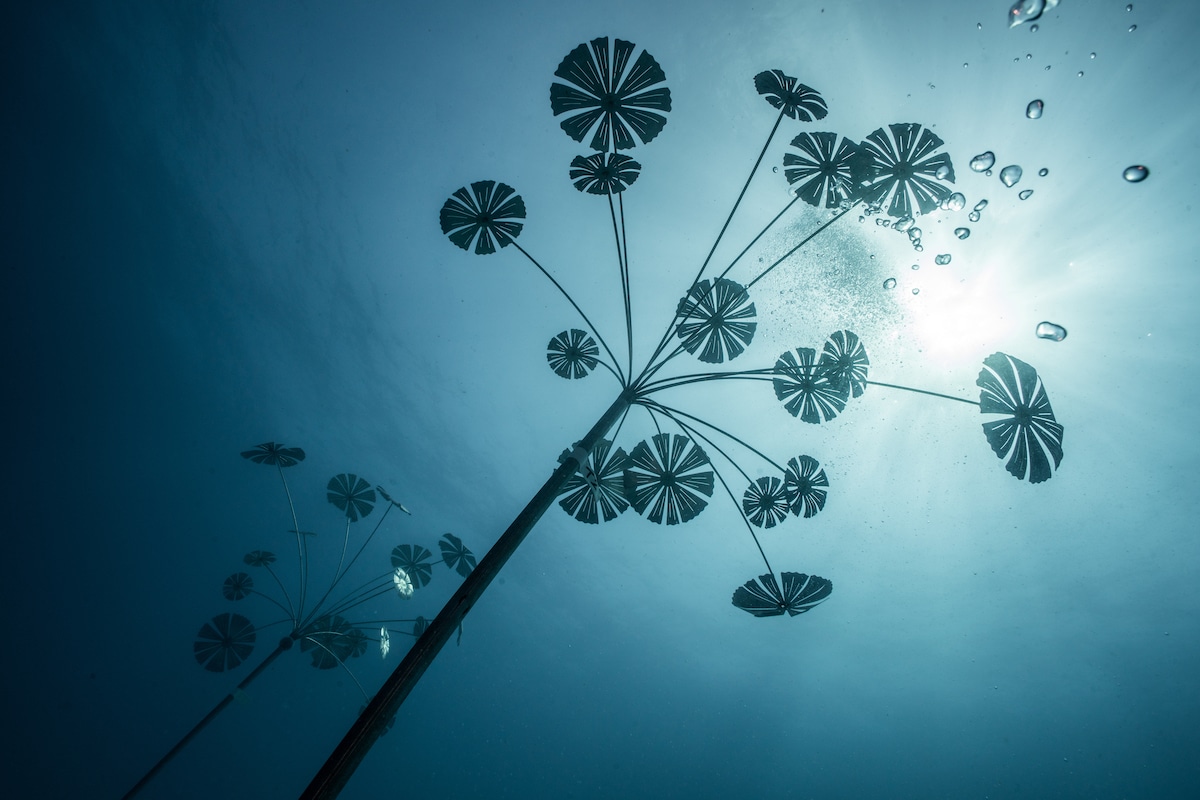
Museum of Underwater Art in TownsvilleWhat do you hope that people take away from your work at the museum in Australia?

First of all, I hope the people who come to Townsville make the trip out and go to see the Great Barrier Reef in itself. Where it’s positioned, as I mentioned, it’s actually next to some of the most spectacular reefs I’ve seen. So I hope that people go out there and snorkel and dive and see how incredible the reef is and how beautiful and diverse it is, and also get to see how we can actually live in some kind of symbiotic relationship in harmony with nature. It’s not a matter of us being conquerors of the natural world, it’s much more about interconnectedness. I hope people leave with that kind of sense.
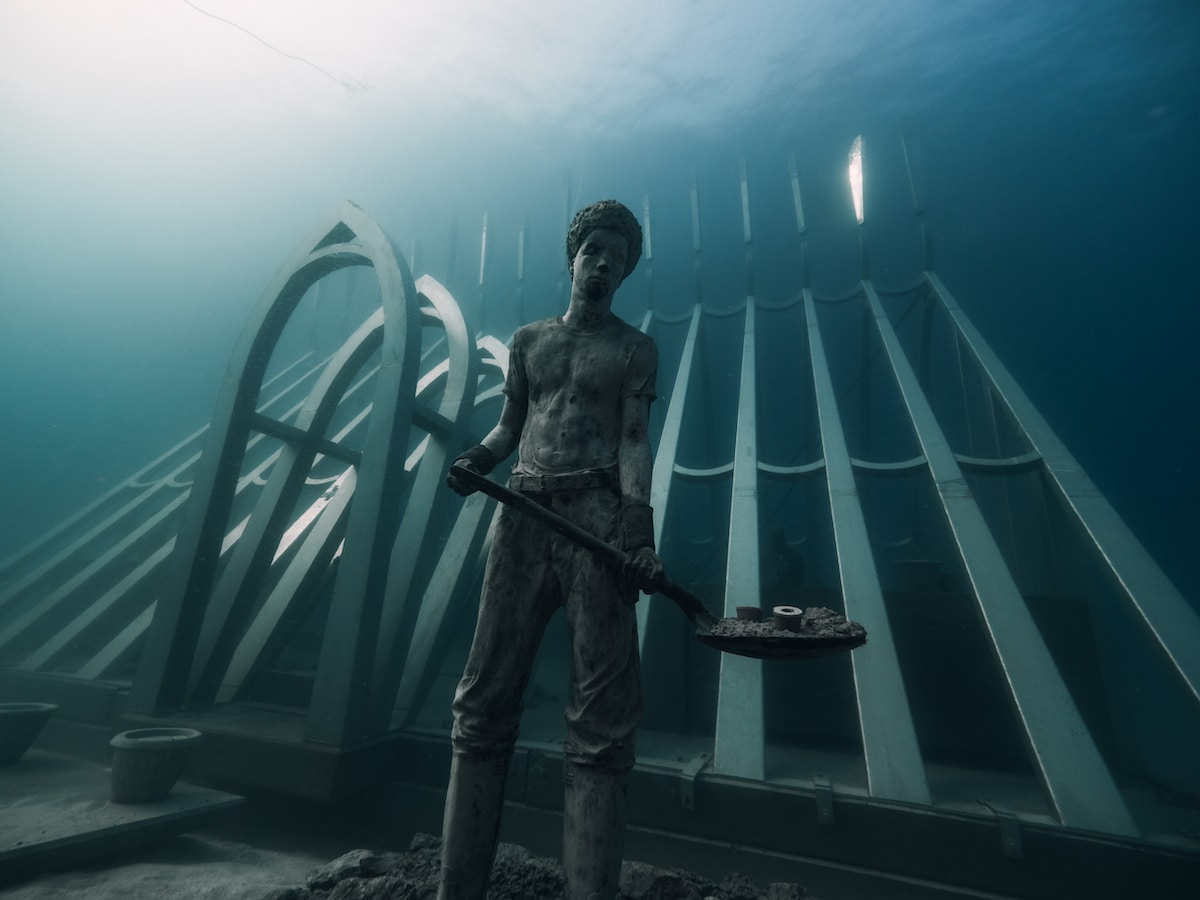
Artificial Reef Sculptures by Jason deCaires Taylor

Photo: Richard Woodgett

So I know that things might be on pause at the moment, but what’s next for you?

I was in mid-roll with a few different projects. For instance, the Australia project wasn’t finished so I still have to return. And we are in the process of installing, I think, 4,000 corals into the greenhouse. We also want to expand the project into a Palm Island, which is a very beautiful Island just off the coast and is home to a large indigenous community. The idea is to create some large scale artworks for the community whilst helping to provide more local jobs and economic stimulus. We’ve been planning this for the last two years and we’ve raised the finances for it. We’re in the process now of just deciding the design with the local community. There are actually four phases to the Australia project. We finished the first two, so we’ve still got another two to go.

Jason deCaires Taylor: Website | Instagram | Facebook

My Modern Met granted permission to feature photos by Jason deCaires Taylor.

Related Articles:

World’s First Inter Tidal Art Gallery Opens in the Maldives

400 Cement Sculptures Submerged Underwater by Jason de Caires Taylor

Underwater Sculptures Celebrate Life on Earth and Protect Aquatic Ecosystems

Hyperrealistic Human Sculptures Submerged in Europe’s First Underwater Art Museum

READ:

View on My Modern Met

28 Jun 10:06

Read this:

texnessa:

“I want to tell a story about an invisible elephant.

Once upon a time, when I was in graduate school at UCSB, the department of religious studies held a symposium on diasporic religious communities in the United States. Our working definition for religious diaspora that day was, “religious groups from elsewhere now residing as large, cohesive communities in the US.” It was a round table symposium, so any current scholar at the UC who wanted to speak could have a seat at the table. A hunch based on hundreds of years of solid evidence compelled me to show up, in my Badass Academic Indigenous Warrior Auntie finery.

There were around 15-20 scholars at the table, and the audience was maybe fifty people. There was one Black scholar at the table, and two Latinx scholars, one of whom was one of my dissertation advisors. The other was a visiting scholar from Florida, who spoke about the diasporic Santería community in Miami. But everyone else at the table were white scholars, all progressively liberal in their politics, many of whom were my friends. Since there was no pre-written agenda, I listened until everyone else had presented. I learned a tremendous amount about the Jewish diaspora in the US, and about the Yoruba/Orisha/Voudou, Tibetan Buddhist, Muslim, and Hindu communities, and even about a small enclave of Zoroastrians.

As they went on, I realized my hunch had been correct, and I listened to them ignore the elephant, invisible and silent, at that table.

So I decided to help her speak the hell up. “Hello, my name is Julie Cordero. I’m working on my PhD in Ethnobotany, Native American Religious Traditions, and history of global medical traditions. I’d like to talk about the European Catholic and Protestant Christian religious diaspora in the United States, as these are the traditions that have had by far the greatest impact on both the converted and non-converted indigenous inhabitants of this land.”

Total silence. And then several “hot damns” from students and colleagues in the audience. I looked around the table at all the confused white faces. My Latinx advisor slapped his hand on the table and said, “Right!!?? Let’s talk about that, colleagues.”

The Black scholar, who was sitting next to me, started softly laughing. As I went on, detailing the myriad denominations of this European Christian Diaspora, including the Catholic diocese in which I’d been raised and educated, and the brutal and genocidal Catholic and Protestant boarding schools that had horribly traumatized generations of First Nations children, and especially as I touched on how Christians had twisted the message of Christ to try and force people stolen from Africa to accept that their biblically-ordained role was to serve the White Race, her laughs grew more and more bitter.

The Religious Studies department chair, who’d given a brilliant talk on the interplay between Jewish and Muslim communities in Michigan, stopped me at one point, and said, “Julie, I see the point you are so eloquently making, but you’re discussing American religions, not religious diasporic communities.” I referred to the definition of diaspora we had discussed at the start of the discussion, and then said, “No, Clark. If I were here to discuss religions that were not from elsewhere, I’d be discussing the Choctaw Green Corn ceremony, the Karuk Brush Dance, the Big Head ceremonial complex in Northern California, the Lakota Sun Dance, or the Chumash and Tongva Chingichnich ritual complex.”

It got a bit heated for a few moments, as several scholars-without-a-damn-clue tried to argue that we were here to discuss CURRENT religious traditions, not ancient.

Well. I’ll let you use your imagination as to the response from the POC present, which was vigorously backed by the three young First Nations students who were present in the audience (all of whom practice their CURRENT ceremonial traditions). It got the kind of ugly that only happens with people whose self-perception is that they, as liberal scholars of world cultures with lots of POC friends and colleagues, couldn’t possibly be racist.

Our Black colleague stood and left without a word. I very nearly did. But I stayed because of my Auntie role to the Native students in the audience.

I looked around at that circle of hostile faces, and waited for one single white scholar to see how unbelievably racist was this discursive erasure of entire peoples - including my people, on whose homeland UCSB is situated.

Finally, a friend spoke up. “If we are going to adhere to the definition of diaspora outlined here, she is technically correct.”

And then my dear friend, a white scholar of Buddhism: “In Buddhist tradition, the Second Form of Ignorance is the superimposition of that which is false over that which is true. In this case, all of us white scholars are assuming that every people but white Americans are ‘other,’ and that we have no culture, when the underlying fact is that our culture is so dominant that we’ve deluded ourselves into thinking it’s the neutral state of human culture against which all others are foreign. Even the Black people our ancestors abducted and enslaved we treat as somehow more foreign than ourselves. And, most absurdly, the peoples who are indigenous to this land are told that we belong here more than they do.”

People stared at their hands and doodled. The audience was dead quiet.

And you know what happened then? The elephant was no longer invisible, and my colleagues and I were able to have a conversation based on the truths about colonialism and diaspora. We were THEN able to name and discuss the distinctions between colonial settlements and immigrant settlements, and how colonial religious projects have sought to overtake, control, and own land, people, and resources, while immigrant and especially refugee diasporic communities simply seek a home free from persecution.

As we continue this national discussion, it is absolutely key to never, ever let that elephant be invisible or silent. You are on Native Land. Black descendants of human beings abducted from their African homelands are not immigrants. European cultures are just human cultures, among many. And the assignation of moral, cultural, racial superiority of European world views over all non-Euro human cultures is a profound delusion, one that continues to threaten and exterminate all people who oppose it, and even nature itself.

I hope that this story has comforted the afflicted and afflicted the comfortable.”

- Julie Cordero-Lamb, herbalist & ethnobotanist from the Coastal Band of the Chumash Nation

20 Jun 08:56

emerpenny: any other fandom ever: I love this show but wish this character wasn’t so...

Suko

Pretty much.

emerpenny:

any other fandom ever: I love this show but wish this character wasn’t so problematic

artemis fowl fandom: if disney makes our rich, snobby trash boy a decent human being we will riot

19 Jun 01:14

marshmalleaux-queen: youlovetoseeit: Unrealistic
17 Jun 19:43

49, Zuko

49. Cold + Zuko 

Zuko sat and watched the turtle-seals for hours before he slipped under the water. The cold he was sure he could handle, but there was the question of air. Turtle-seals were mammals– they’d gone over such things in his and Azula’s lessons back home, prepping them for the lands they’d one day rule over. Turtle-seals gave live birth, had a fine coat of fur, and they breathed air. 

But they could, Zuko expected, hold their breath a lot longer than one shivering royal firebender could. 

So he wrapped his coat tighter around him and settled down to watch. A seal slipped under the surface and he sucked a lungful of air in and held it. He counted, listening for his heartbeat in his ears and for the sound of a seal’s fat body coming up on the far side of the wall. 

He noted their markings, their beady eyes and scars and twisted flippers. He tried to tell one from another, so he could see how long they stayed under, see when one popped up and another vanished. 

Snow was seeping into his boots and the ankles of his pants. He could warm it up, but then it would just be water, re-freezing rapidly in this frigid polar air, and anyway he couldn’t risk the steam being spotted. 

A seal slipped under the water. Zuko caught his breath, and counted. He could wait. He could clamp down on his lungs like he had iron bands to hold them there. He could ignore the burn in his chest, the cold seeping into his ankles. He  could hold perfectly still, one more patch of grey and black in this monochrome landscape, and keep count. 

There were things worth waiting for. There were things worth aching for. There was a twelve year old boy inside this icy fortress and Zuko was meant to find him. He’d been walking in his wake for months, past the bereft carnage of hijinks, past volcanoes redirected, temples destroyed, valleys flooded, villages saved. 

The Avatar had hidden for a hundred years from the might of the Fire Nation. The Avatar had run away from home at the age twelve and gotten lost in a storm. Zuko had pulled his ship into the eye of a storm, once, and let the Avatar fly free, to save his crew. Zuko had found himself swept into that same polar sea, once, when two inexperienced kids and a giant flying bison had showed up to rescue their friend from being dragged back to Zuko’s childhood home in chains. 

Zuko’s lungs were straining, the waters surging at the feet of the snowy land. He pushed the feeling down– the desperation, the panic of a body trying to reach for what it needed, the shiver and the shake of it. A seal surfaced, but not his– this one smaller, sleeker, a smatter of black dots on its rump. 

Zuko let the air rush out of his gaping chest and then flood back in– fresh, cold, burning gratefully. The seals dove down into a crack in the wall– he could see them. There must be some place they surfaced, later, for the air they needed as much as he did. The question was– how long until then? How far did they swim buried in cold waters, only ice above them?

Had it been cold, when Aang hit the water, a hundred years ago? Of course it had been cold. But had he felt it, all that time, the ice seeping into his bones? When he woke, how long before he felt warm again? 

Zuko shifted his weight, rising. He still didn’t know how long a seal could submerge for, except that it was likely longer than he could. But he knew a rough count, at least, of how long he could hold his breath before he burst. If he swam in and found no air before half that count was gone, he could turn back. He’d still have enough in him to get back here to breathe. If he swam well. If he didn’t get turned around. 

If he got halfway through his air, and there was no sign of an exit, no escape, he’d turn back. Zuko let fire start to roil in his belly, getting ready for the plunge. Once he was halfway through his count, he’d decide. He’d turn back while he could still make it back. He wouldn’t bar his lungs tighter and push on, scrambling forward through icy currents until he clawed his way out to the surface or died trying. He’d turn back. 

Surely, just this once in his life, he’d figure out how to give up on something. 

17 Jun 00:54

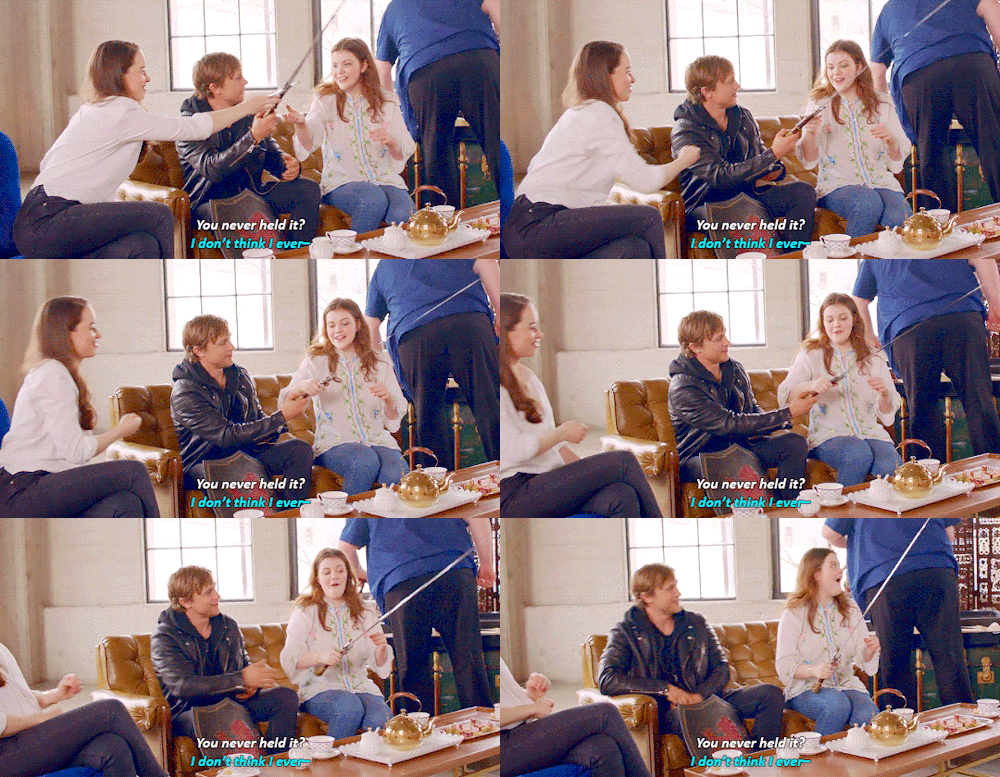
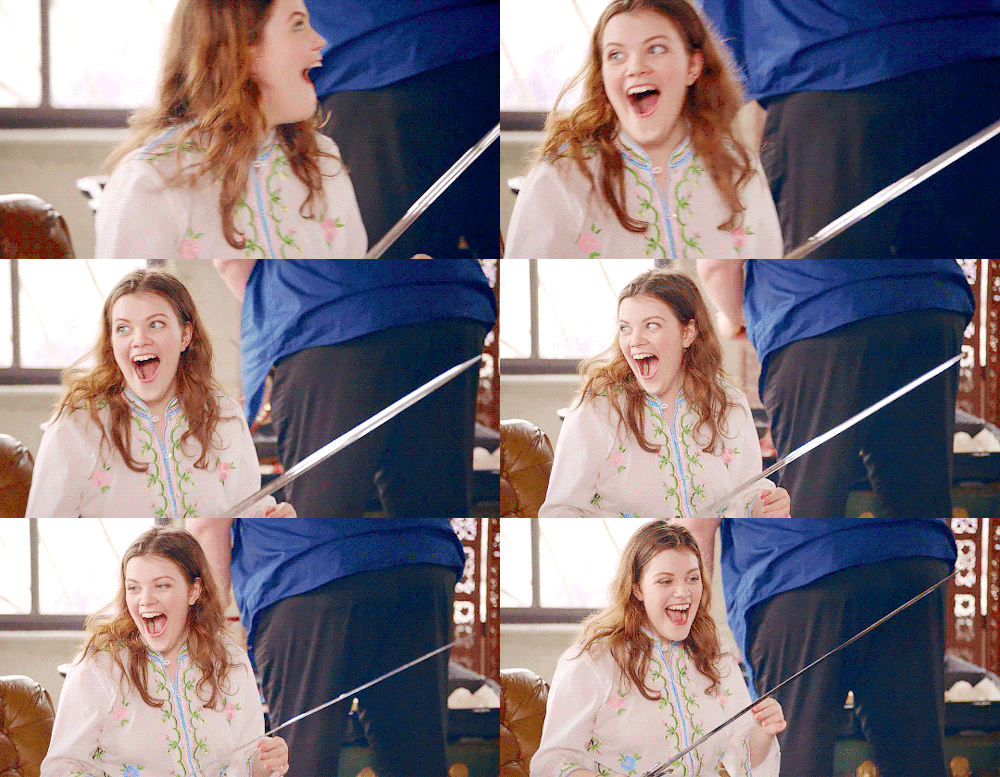
mabelsguidetolife: rattle-my-stars: i love how joyfully...

Suko

This checks out.


mabelsguidetolife:

rattle-my-stars:

i love how joyfully powerful she obviously feels the second they hand her the sword because that’s what i would do if given a cool weapon

10 Jun 19:06

Naomi Osaka, Illustrated by her Sister Mari Osaka

by Johnny
Tennis star Naomi Osaka appeared in GQ Japan’s June edition, in a cover that was drawn by her older sister Mari Osaka. A tennis player herself and also apparently a talented illustrator, Mari Osaka depicted her younger sister in a series of bold, beautiful and strong portraits. Naomi Osaka appears in a mask with the […]

04 Jun 18:20

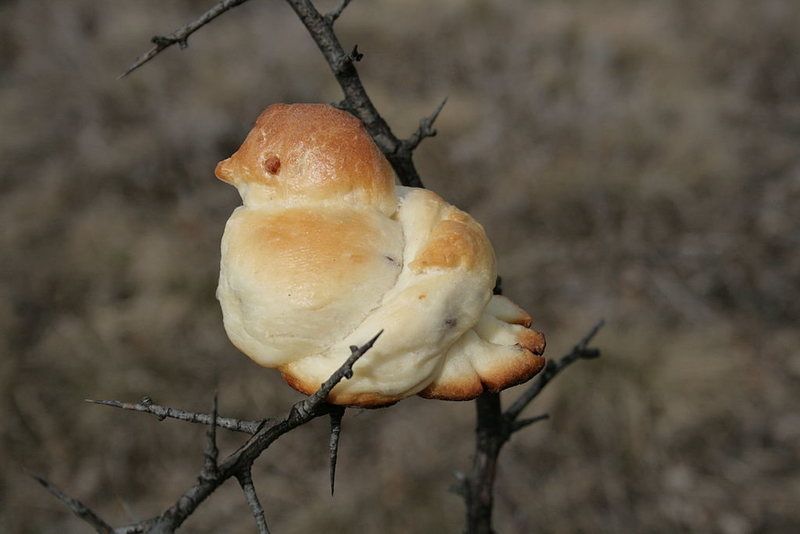
The Frog Bread And Other Artful Breads You Can Bake At Home

by Franzified
Suko

Little bread-birds!

On January 18, 2005, the recipe of the Frog Bread was released online via the Fresh Loaf website. As the name implies, the bread is supposed to take the shape of a frog. Not only does the bread look good, it also tastes amazing (at least, that’s what one of the commenters said on the Fresh Loaf website).

Now, after over 15 years, someone has discovered the recipe and made it viral online, as baking has become a new hobby for many people who stay indoors.

…thousands have crafted their own golden, crusty amphibians, proudly posting the results despite distended eyes and spiky limbs.

The Frog Bread is not only the artistic bread that you can bake while you stay indoors. Atlas Obscura also features other artistic breads like the Zhavoronki, and the Hiyoko. Check them out over at the site.

(Image Credit: The Fresh Loaf)

(Image Credit: Atlas Obscura)

26 May 16:13

Traveling Artist Paints Exquisite Watercolors Immortalizing Europe’s Old World Architecture

by Jessica Stewart
Suko

Holy crap. I have a hard time making my watercolor skies and land not mush together into a muddy mess. Her precision is crazy good.

Traveling Artist Paints Exquisite Watercolors Immortalizing Europe’s Old World Architecture

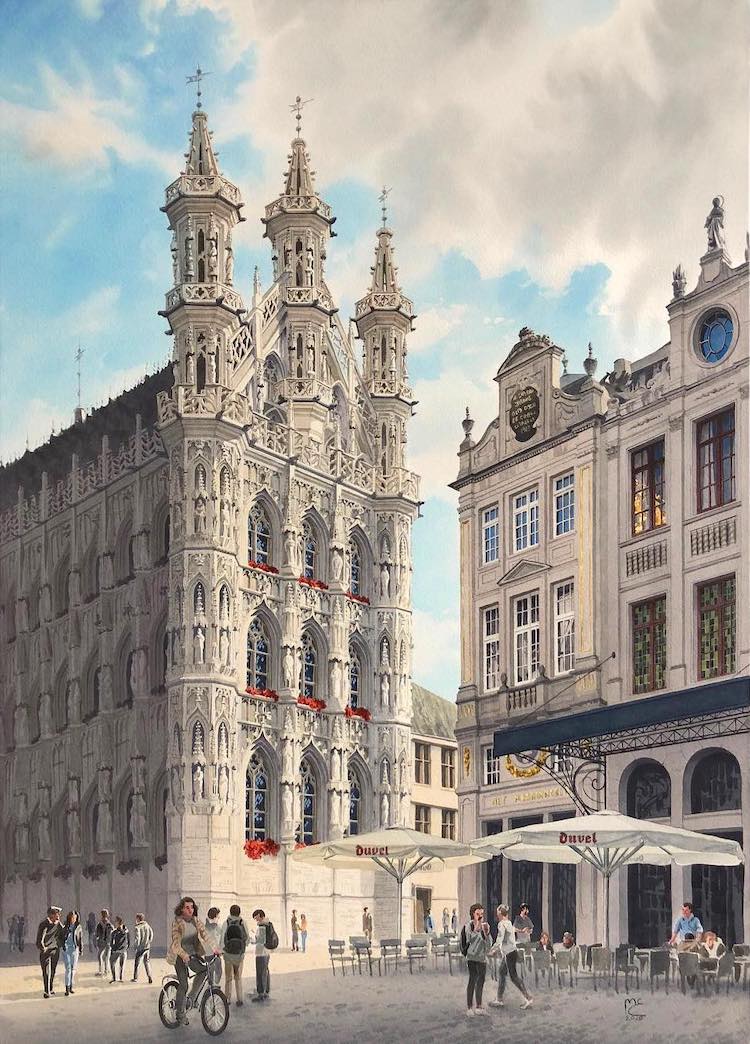
Watercolor painting of Aachen Cathedral

This post may contain affiliate links. If you make a purchase, My Modern Met may earn an affiliate commission. Please read our disclosure for more info.

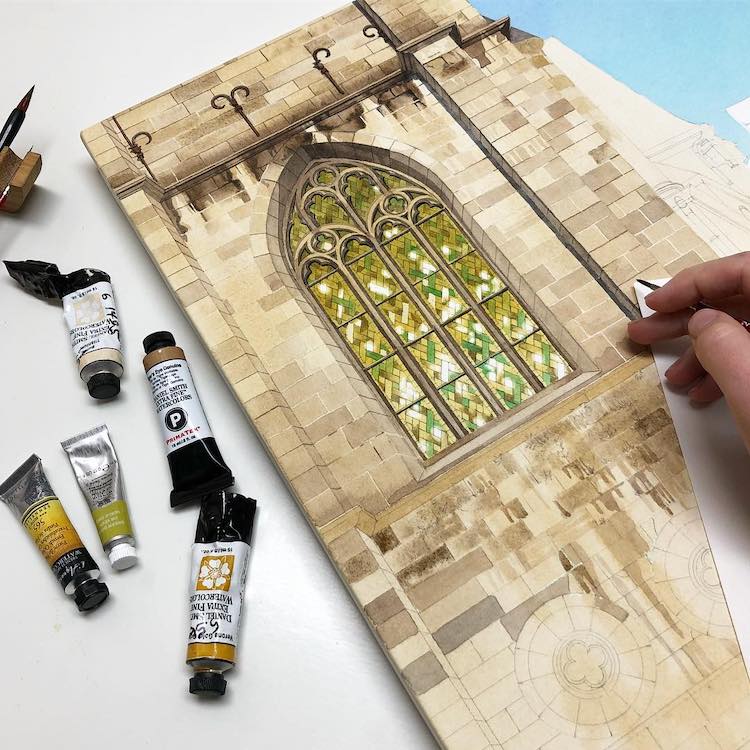
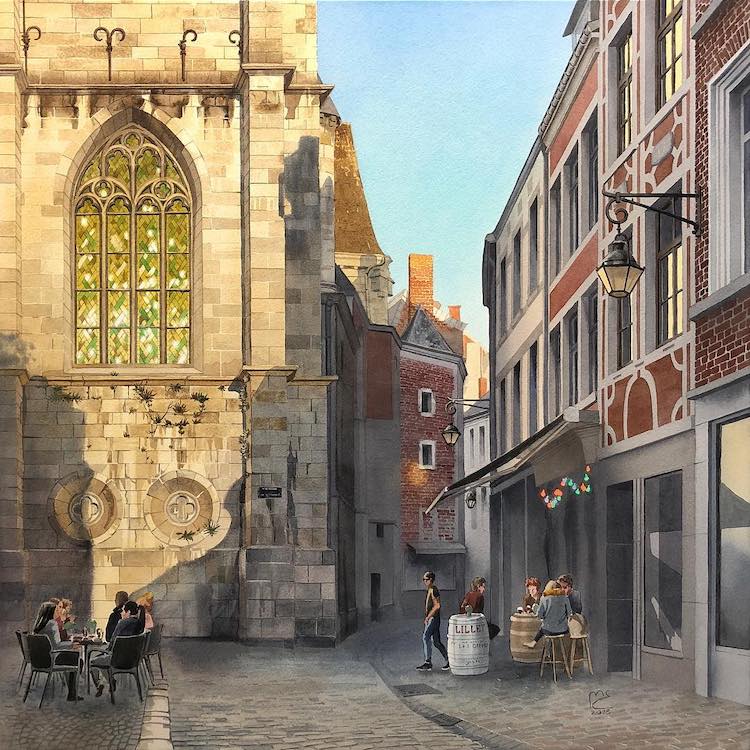
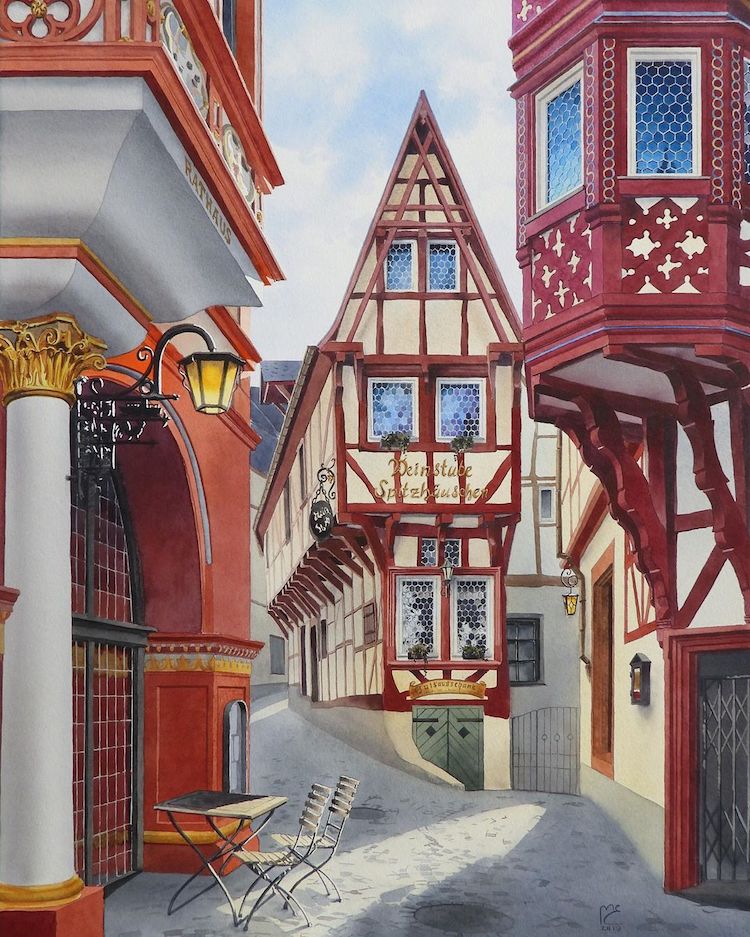
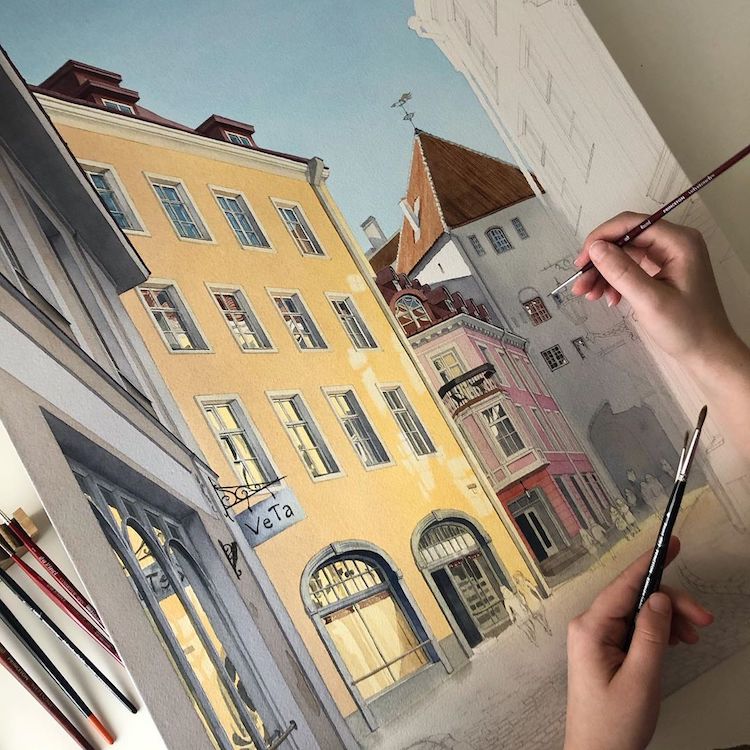
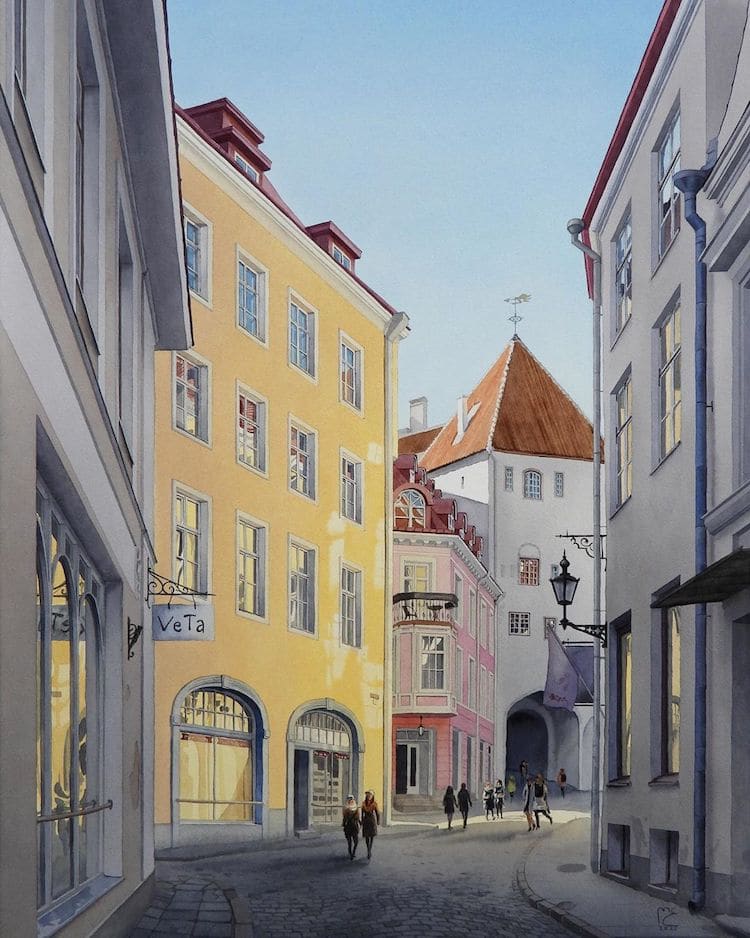
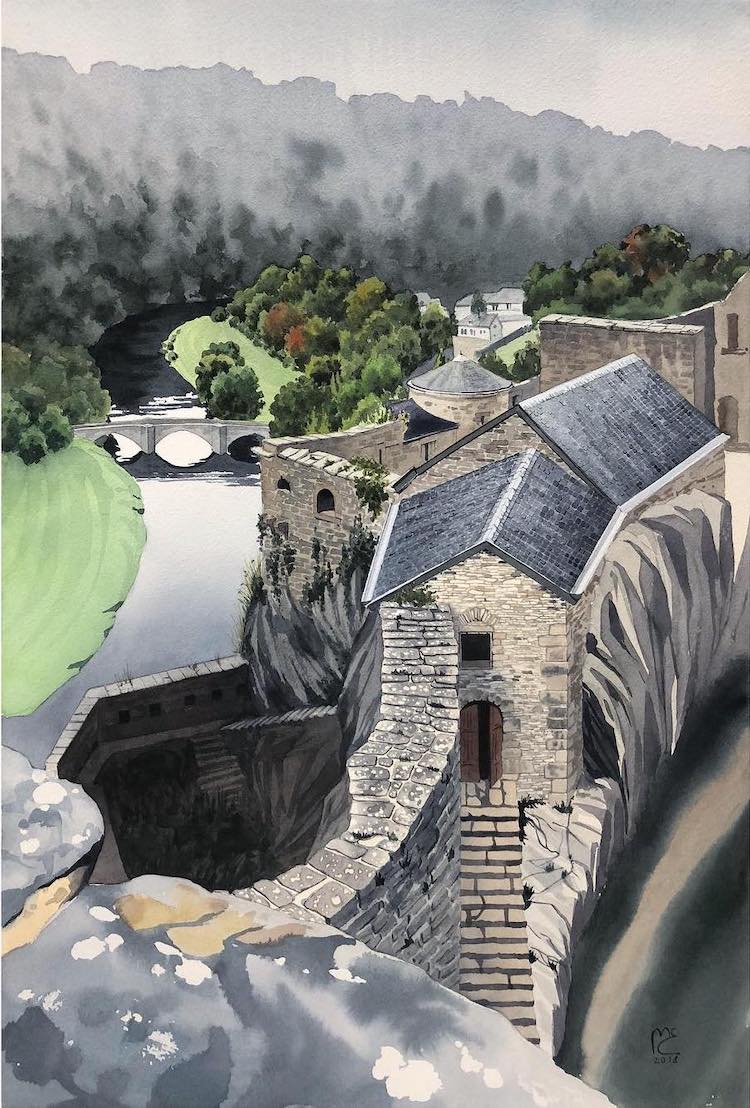
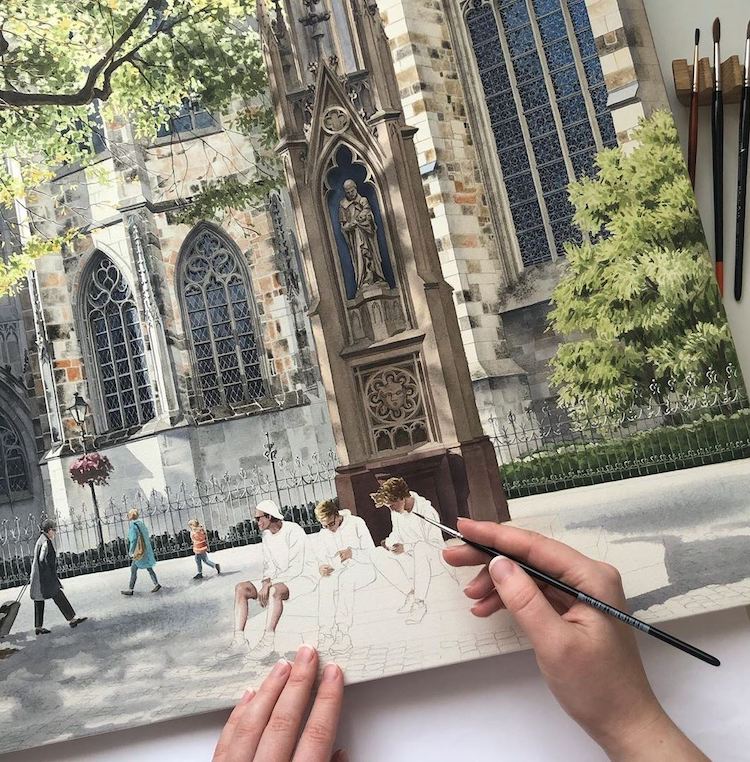
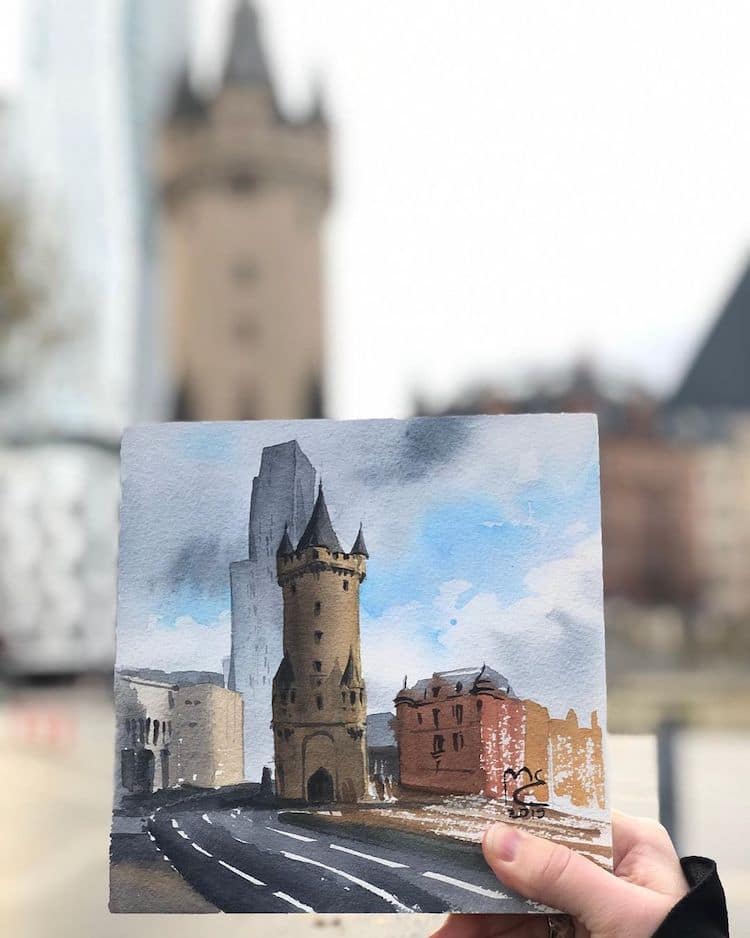
Russian graphic designer and watercolor painter Eleanor Mill has a knack for capturing the spirit of place. Through her architectural watercolor sketches, she documents buildings with exacting detail. At the same time, Mill imbues her work with the color and light that gives each environment character. This allows viewers to come along with her as she places the memories of her travels down on paper.

Typically focusing on old-world European architecture, Mill is intrigued at how these buildings stand as a testament to history in the face of change. “Buildings and constructions once created by people but now fallen into oblivion have an inspirational value for me,” Mill tells My Modern Met.They are silent witnesses of history. These giants towering over densely populated cities preserve the memories from the moment of their creation until the last stone drops off their walls.”

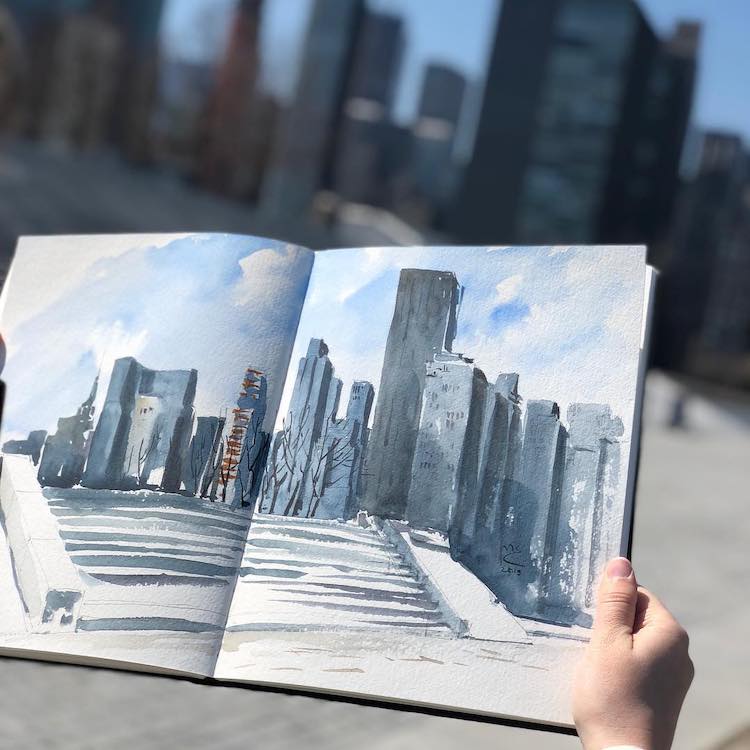
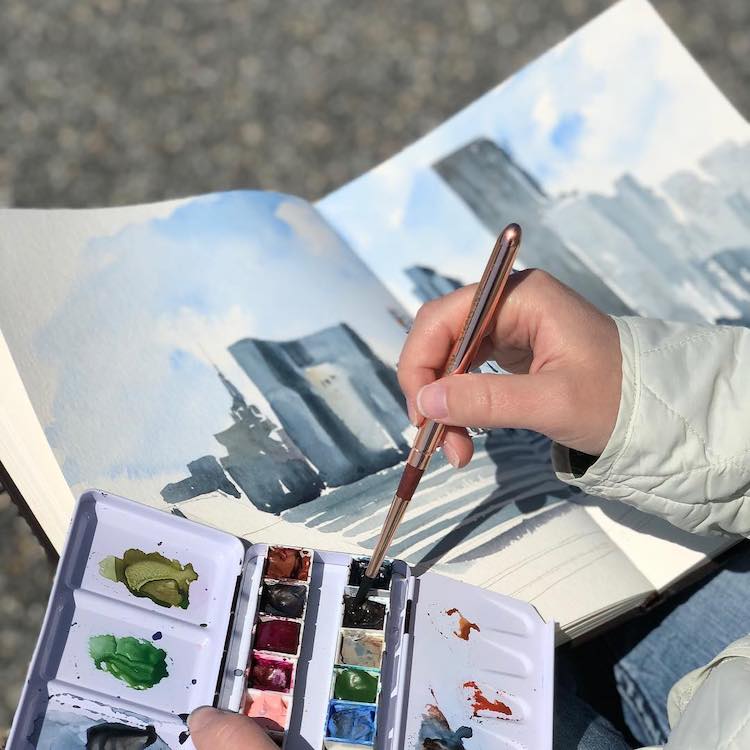
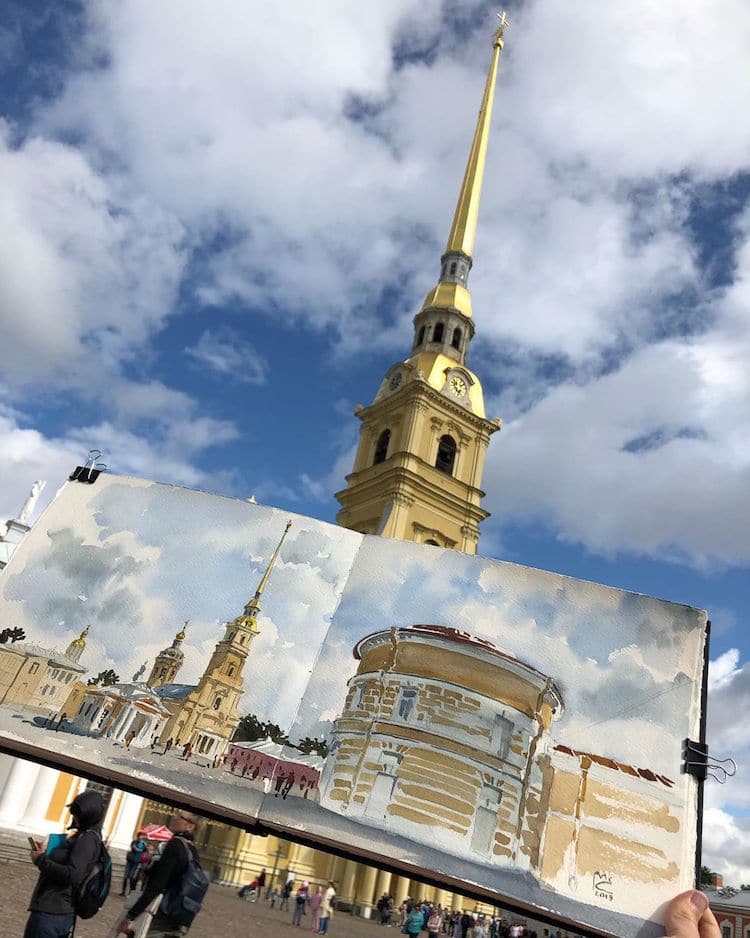
Mill starts her creative process out in the field, drawing in watercolor as she travels. “Sketching while traveling is a special kind of exploration of a new space, a subjective opinion expressed by the artist through different styles and accents,” she shares. “An ordinary photograph captures the moment while a work of art is an opportunity to view the world through the eyes of the artist. Similarly, sketches represent my subjective opinion and capture my personal impressions.”

Back in the studio, she uses these sketches to help lay out what will become a fully realized watercolor painting. Not content with copying her direct observations, Mill enjoys recalling the emotions she felt when sketching as well as bringing some hypothetical scenarios to each scene. “I visualize my imagination: what if people disappear from a big city? How ephemeral are we before the hundred-year-old giants created by our fellow tribesmen? Do we complement the greatness of nature?”

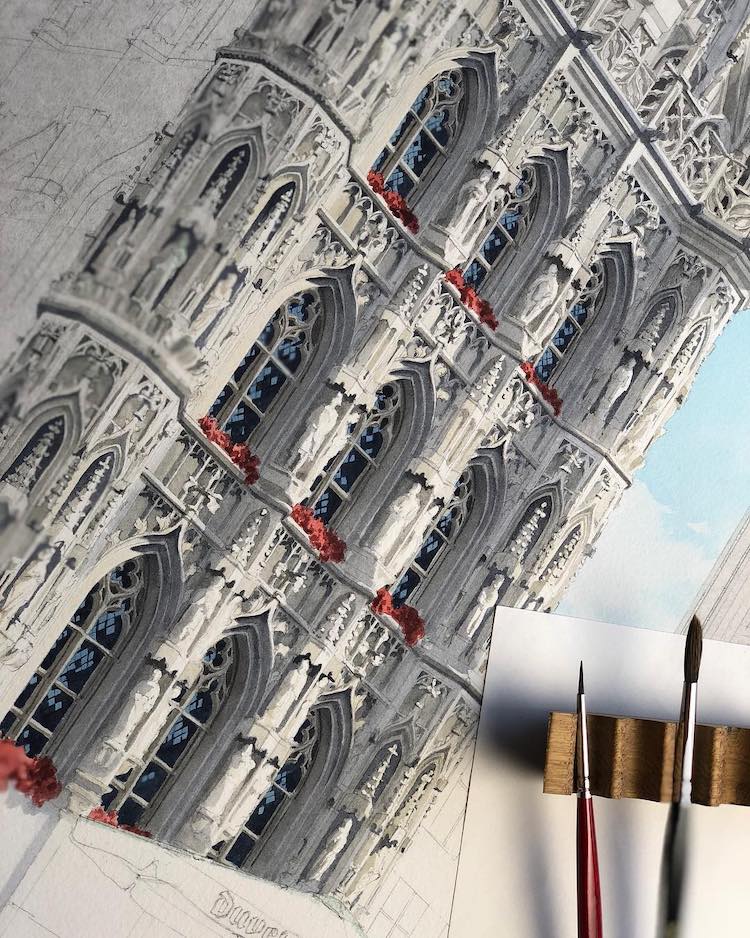
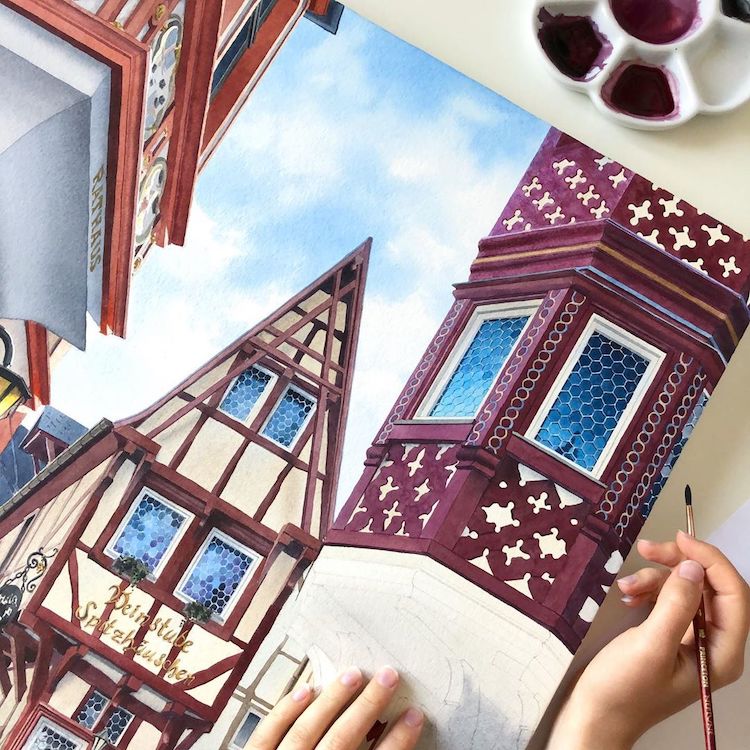
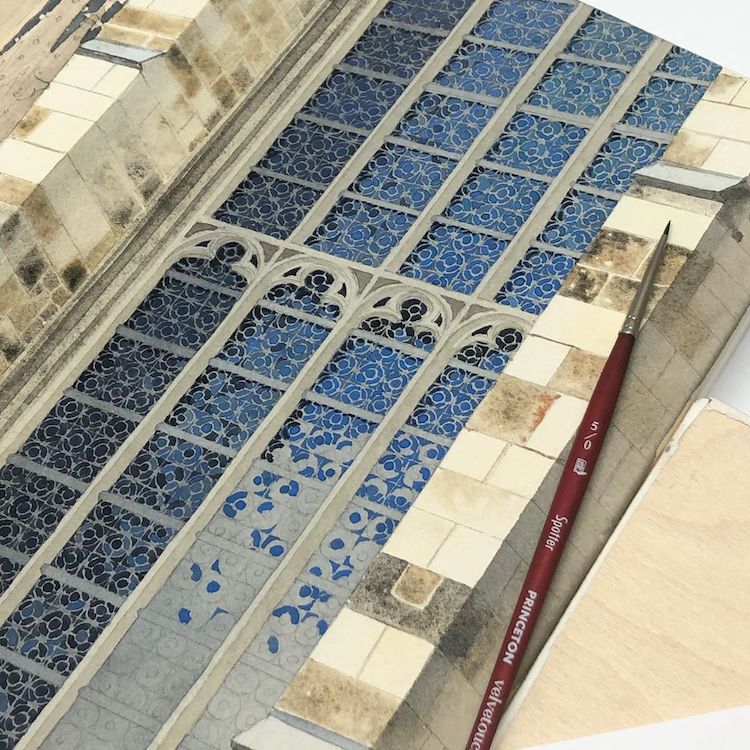
Fans of watercolor painting will appreciate that Mill documents her work extensively on Instagram, giving them the opportunity to see how each piece develops. These in-progress photographs also demonstrate the thought and care that goes into Mill’s work. From the color palette to the selection of the correct brush, each decision is carefully weighed in order to bring her vision to fruition.

For those interested in owning a piece of Mill’s work, she sells her prints and originals on Etsy.

Watercolor artist Eleanor Mill is known for her incredible architectural paintings.

Leuven Town Hall Watercolor Painting by Eleanor MillWatercolor Painting of Leuven Town Hall in Progress by Eleanor MillWatercolor Painting of Namur, Belgium by Eleanor Mill in ProgressWatercolor Painting of Namur, Belgium by Eleanor MillWatercolor painting of Bernkastel-Kues, Germany by Eleanor MillWatercolor Artist Painting ArchitectureWatercolor Painting of Namur, Belgium by Eleanor MillWatercolor Painting of Namur, Belgium by Eleanor MillWatercolor Painting of Walls of Bouillon in Belgium by Eleanor Mill

She often documents her creative process on Instagram, from sketch to finished watercolor.

Architectural Drawing of Aachen by Eleanor MillArtist Eleanor Mill Painting Picture of AachenWatercolor detail of Gothic Window

Mill is inspired by the sketches and drawings she creates while traveling.

Watercolor Sketch of Roosevelt Island by Eleanor MillWatercolor Sketch of Roosevelt Island by Eleanor MillWatercolor Drawing of Frankfurt by Eleanor MillWatercolor Sketch of Saint Petersburg

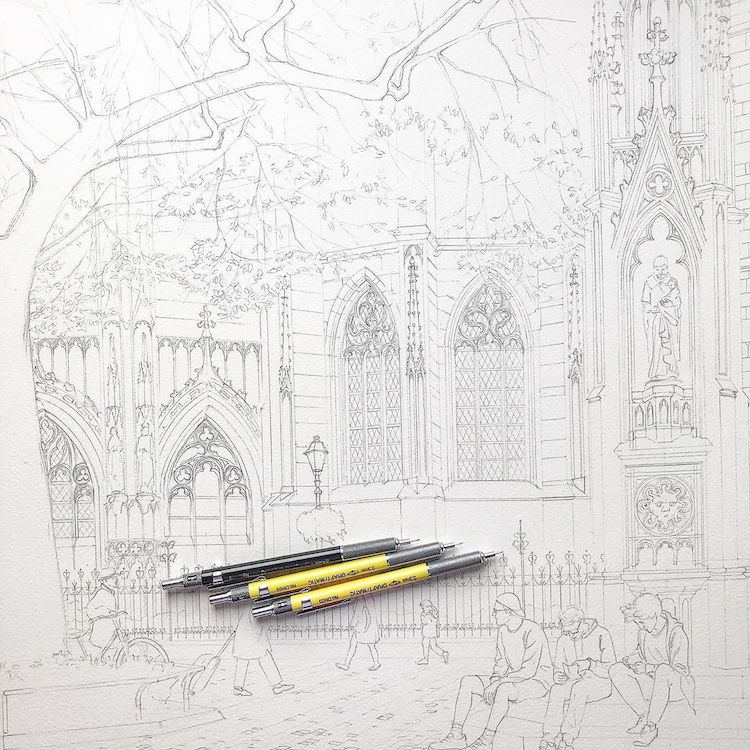
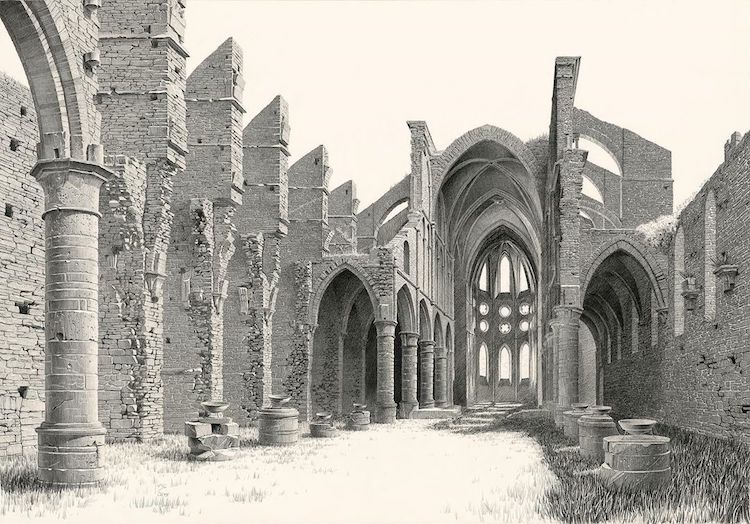
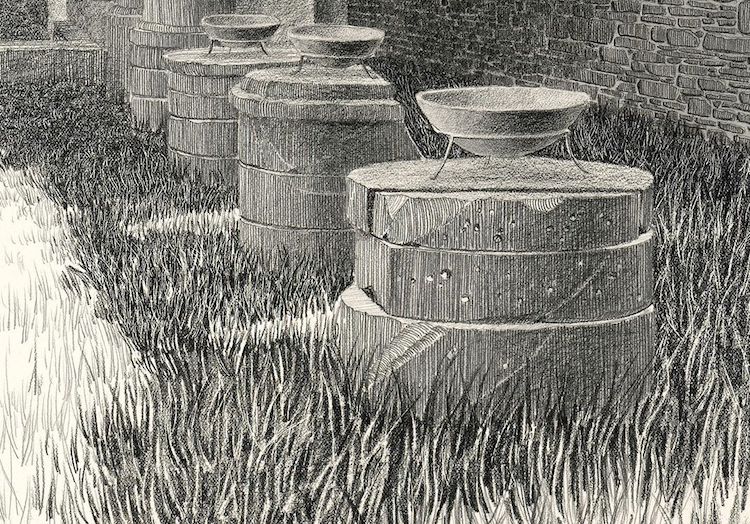
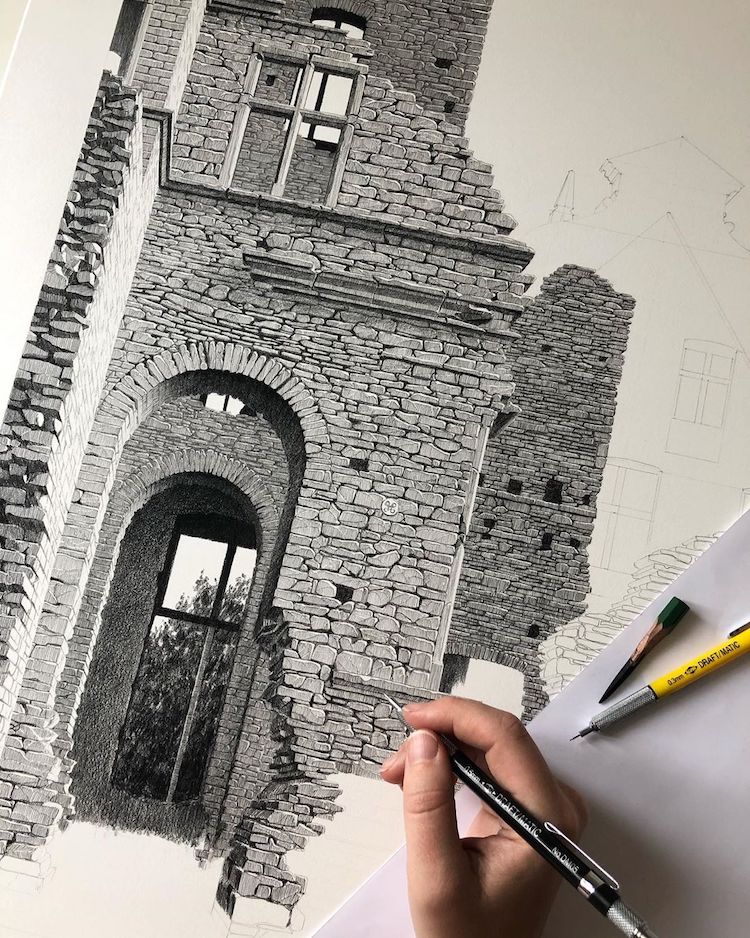
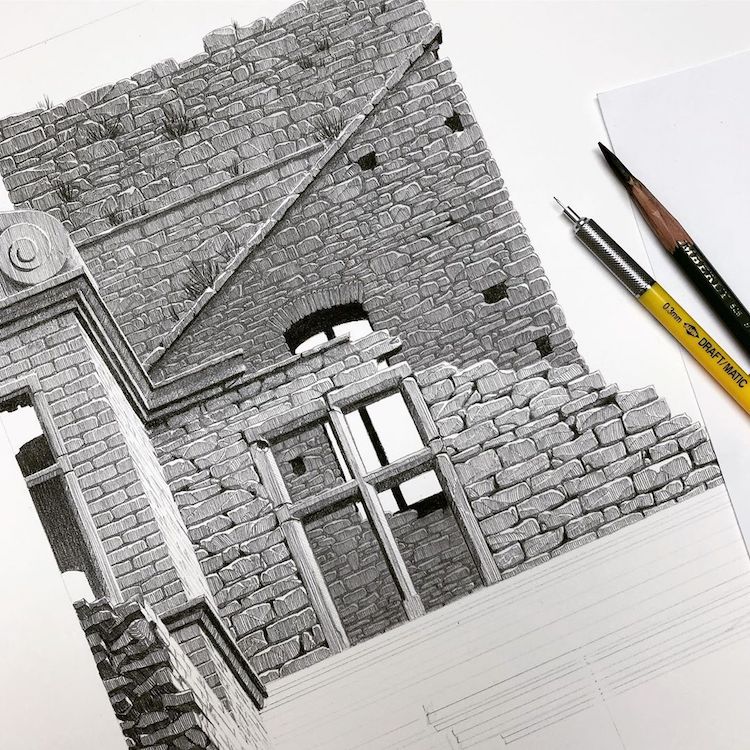
Not limited to watercolor, she also creates stunning architectural pencil drawings.

Architectural Drawing of Abbaye de VillersDetail of Architectural Drawing of Abbaye de VillersPencil Sketch of Ungru Manor in Estonia by Eleanor MillPencil Sketch of Ungru Manor in Estonia by Eleanor MillEleanor Mill: Website | Instagram | YouTube | Etsy 

My Modern Met granted permission to feature photos by Eleanor Mill.

Related Articles:

Colorful Watercolor Paintings Immortalize Tokyo’s Historical Storefronts

Artist Uses Her Own Body as a Canvas for Her Detailed Architecture Sketches

Watercolor Paintings Capture the Beloved Monuments of Cities Around the World

Spectacular Watercolor Paintings Illustrate the Captivating Elegance of Cities Around the World

READ: Traveling Artist Paints Exquisite Watercolors Immortalizing Europe’s Old World Architecture

26 May 16:10

Playful Duo Captures the Fun and Joy of Interacting With Architecture

by Sara Barnes
Suko

So pleasing.

Playful Duo Captures the Fun and Joy of Interacting With Architecture

Quirky Architectural Photography

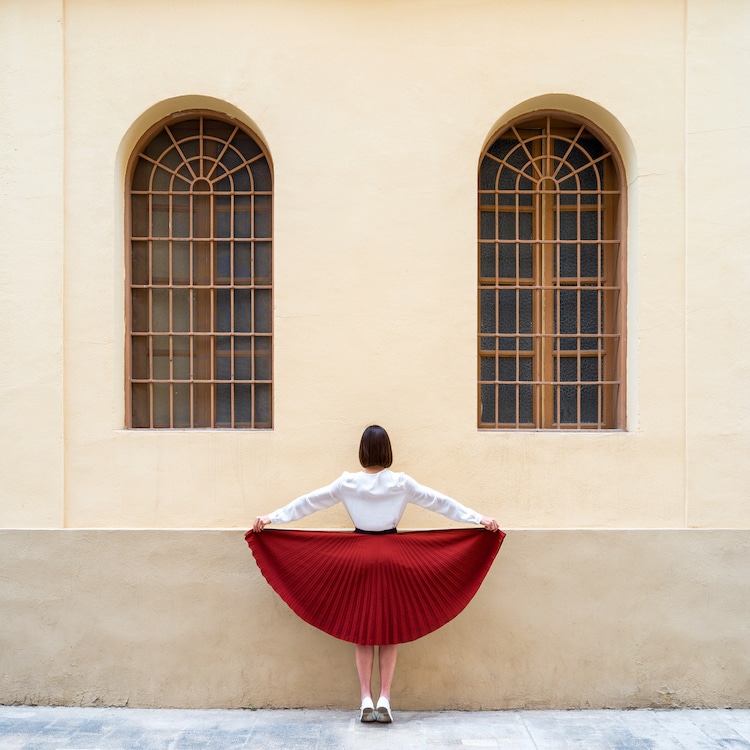
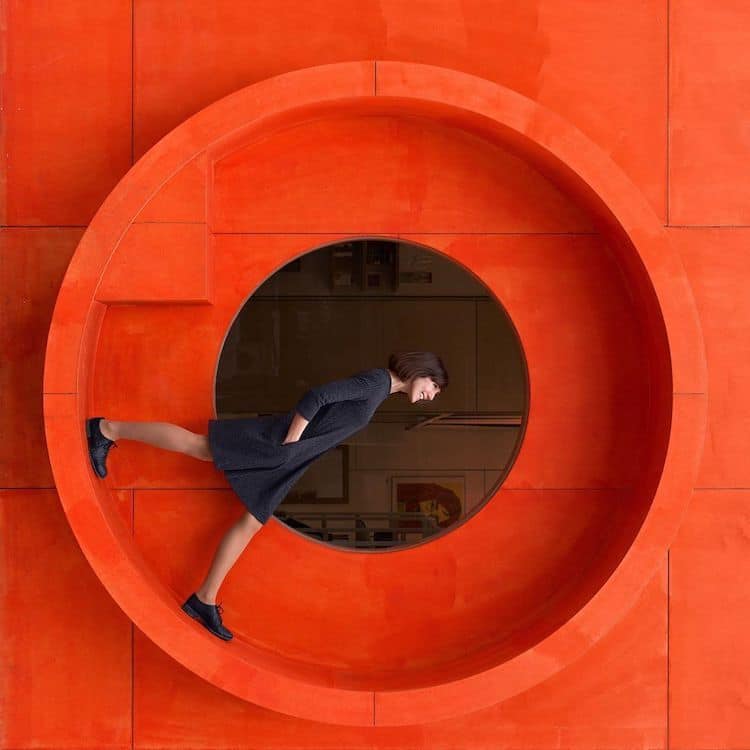
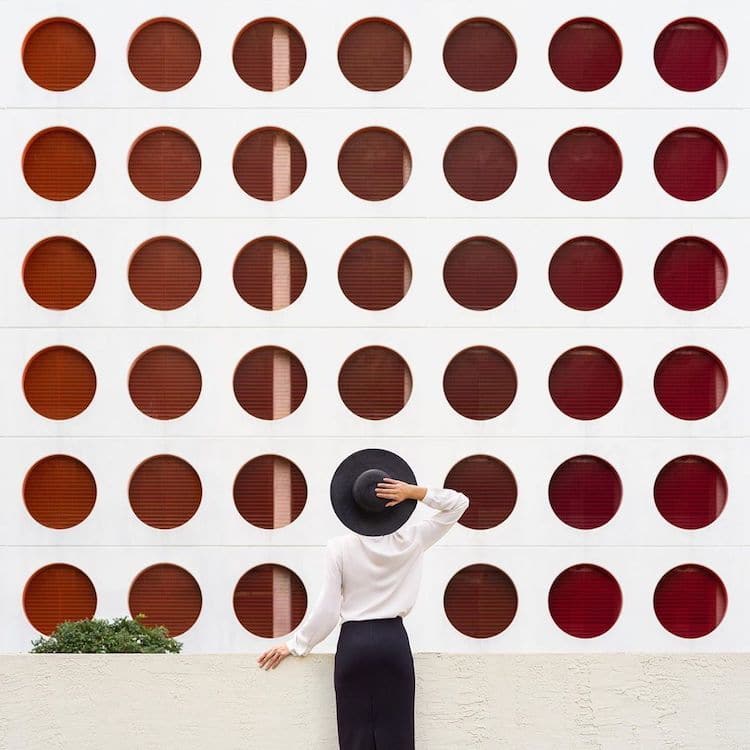
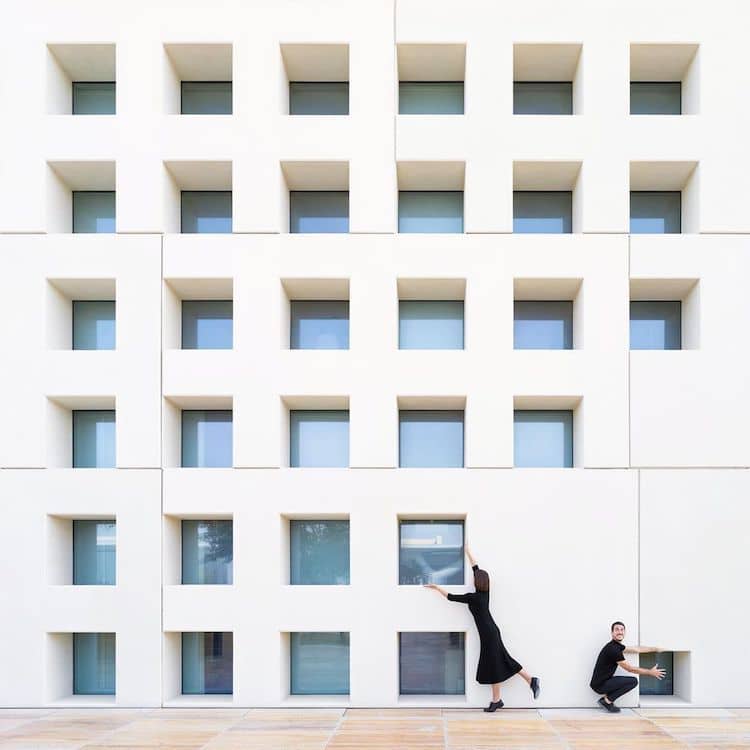
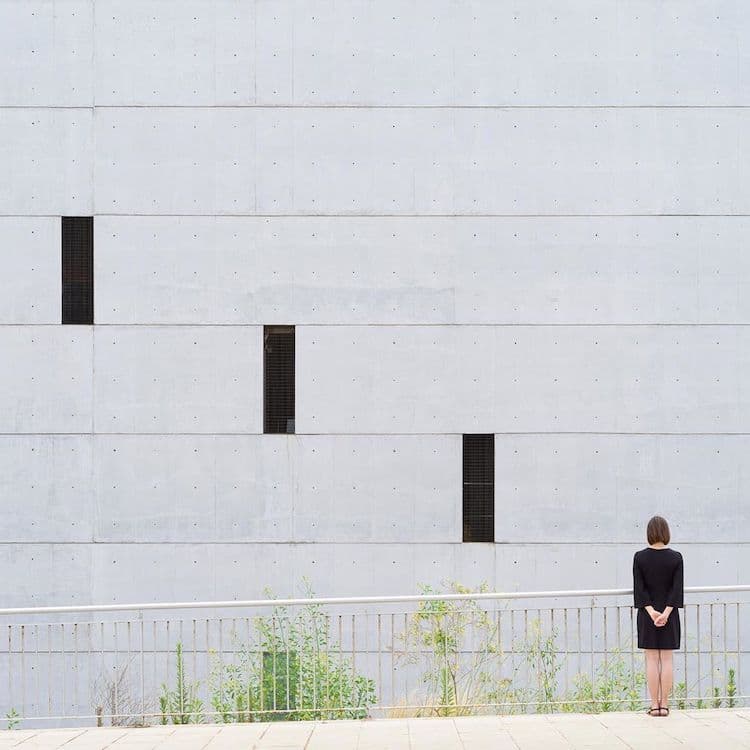
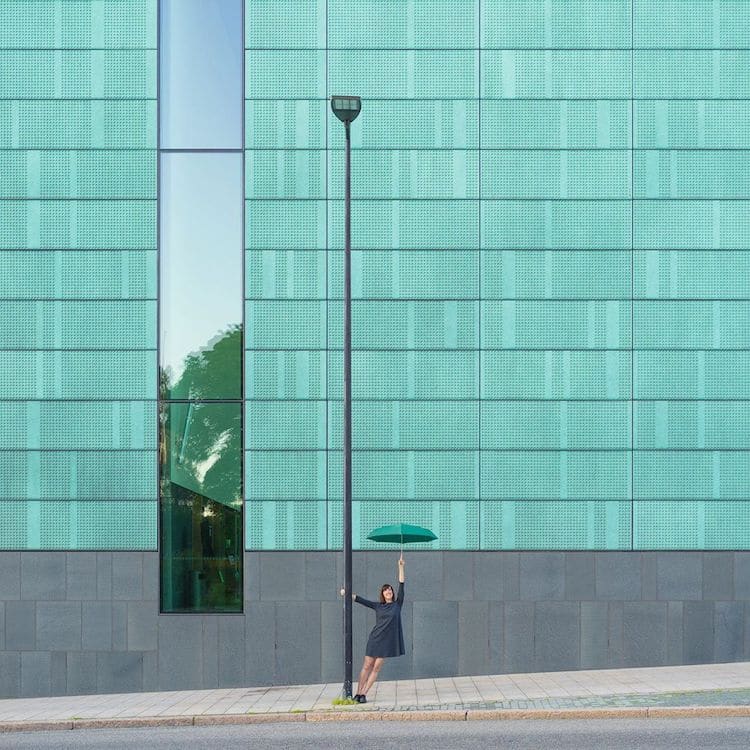
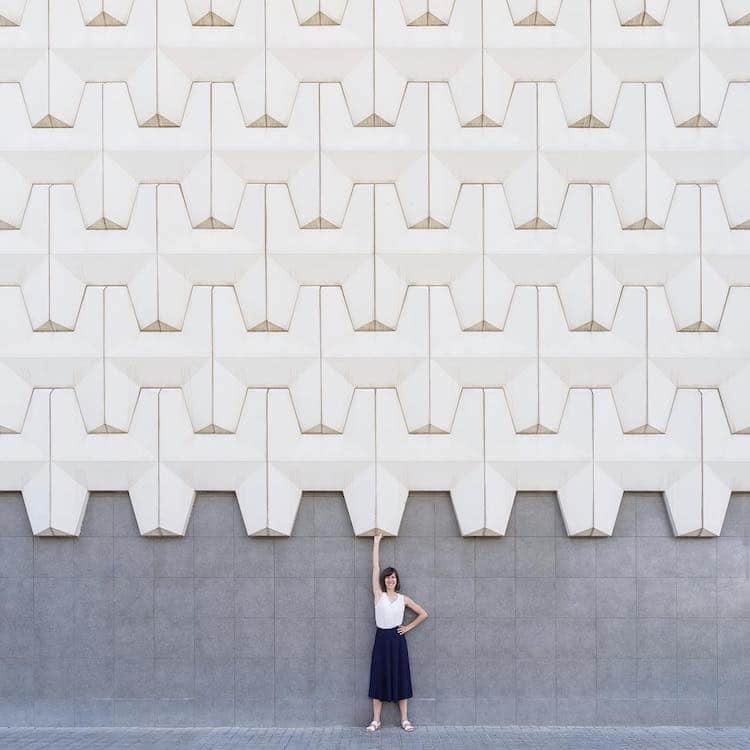
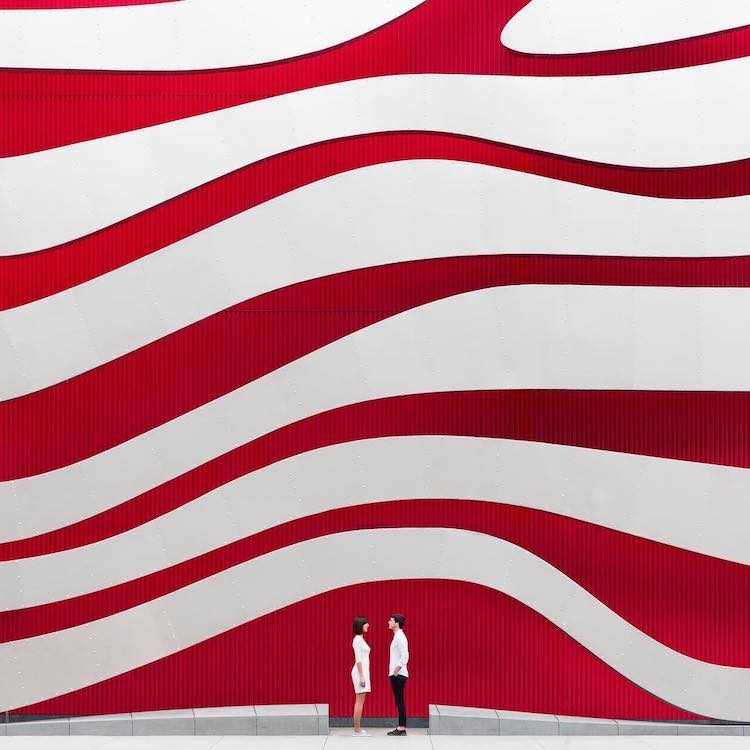
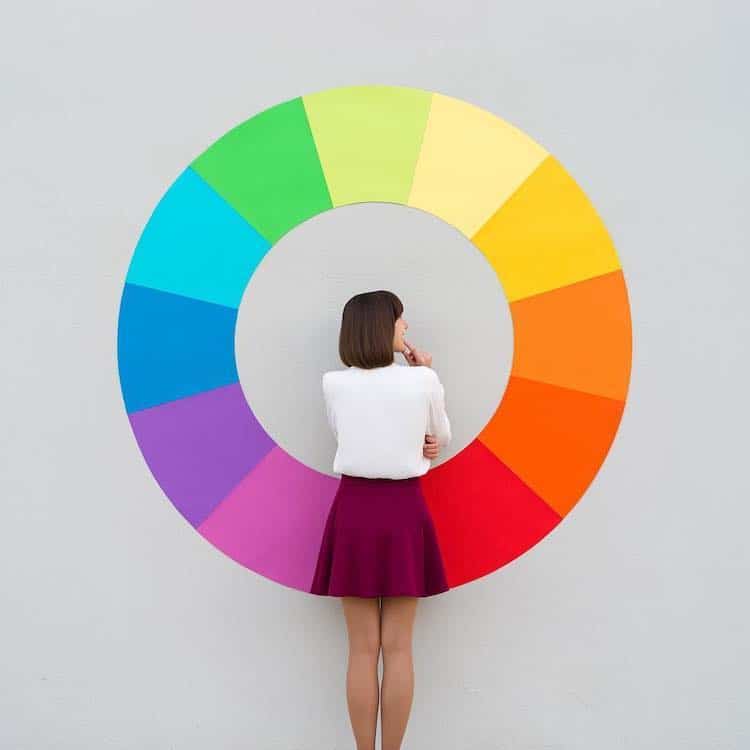
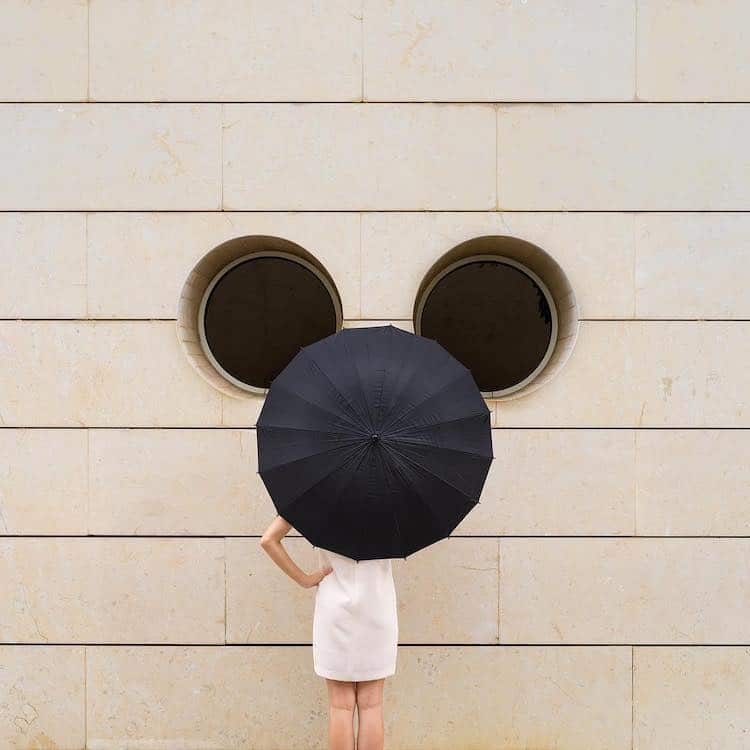
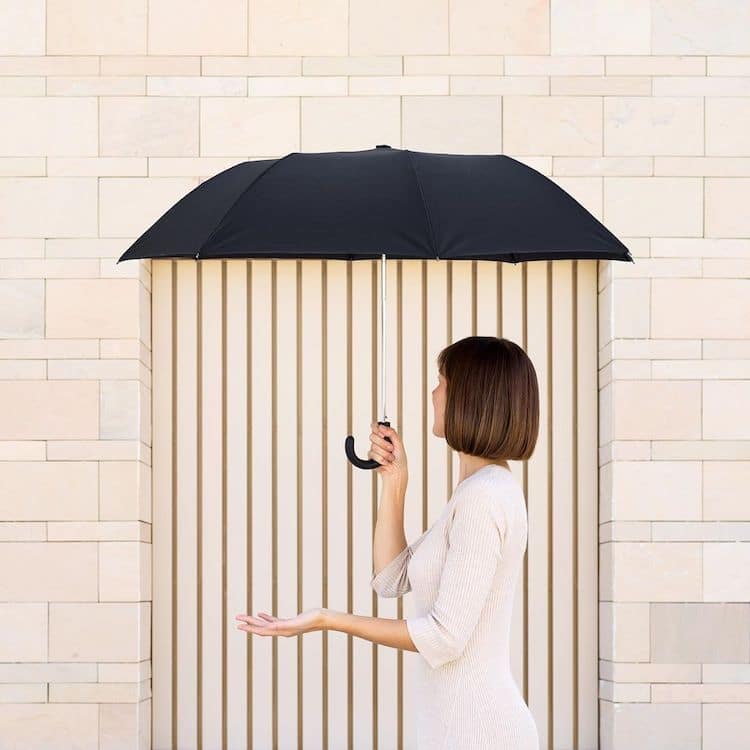
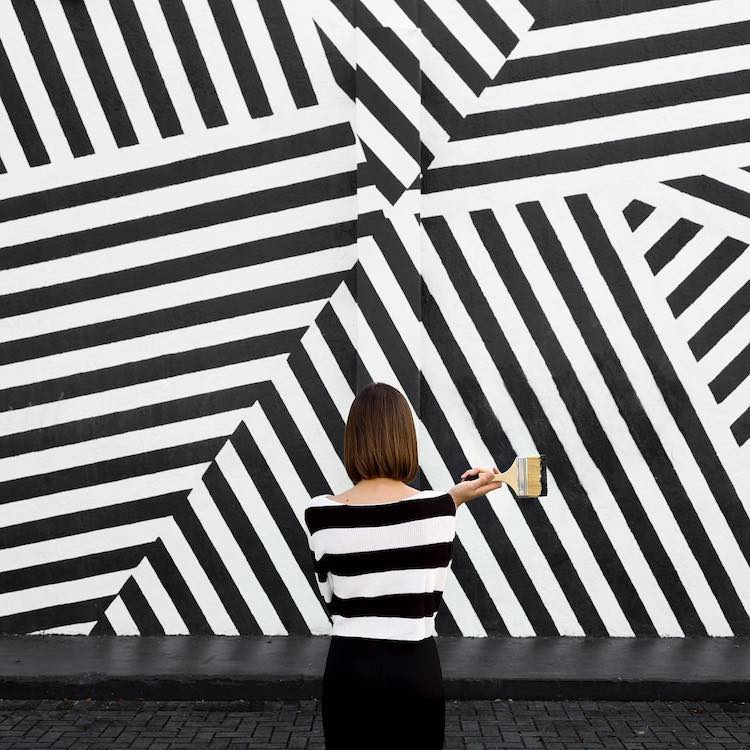
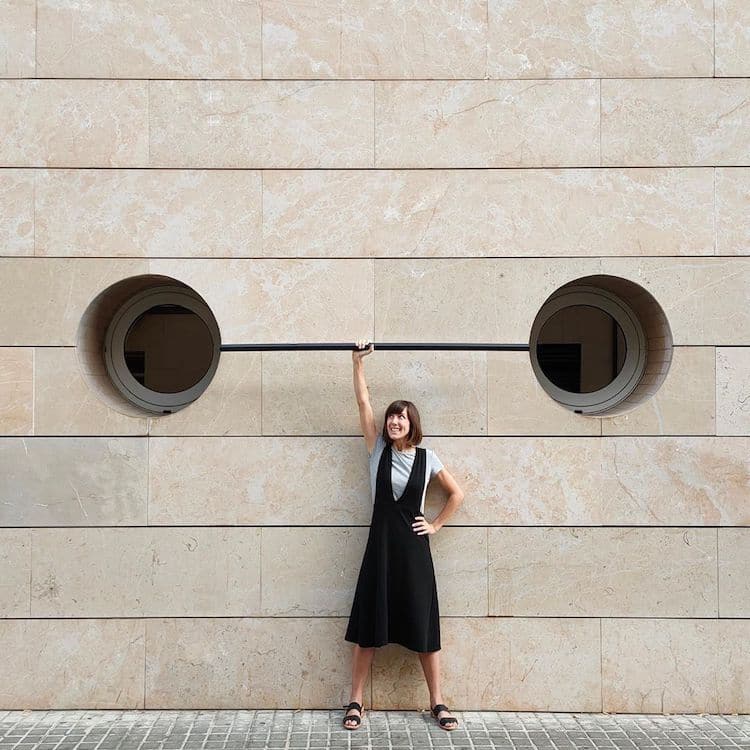
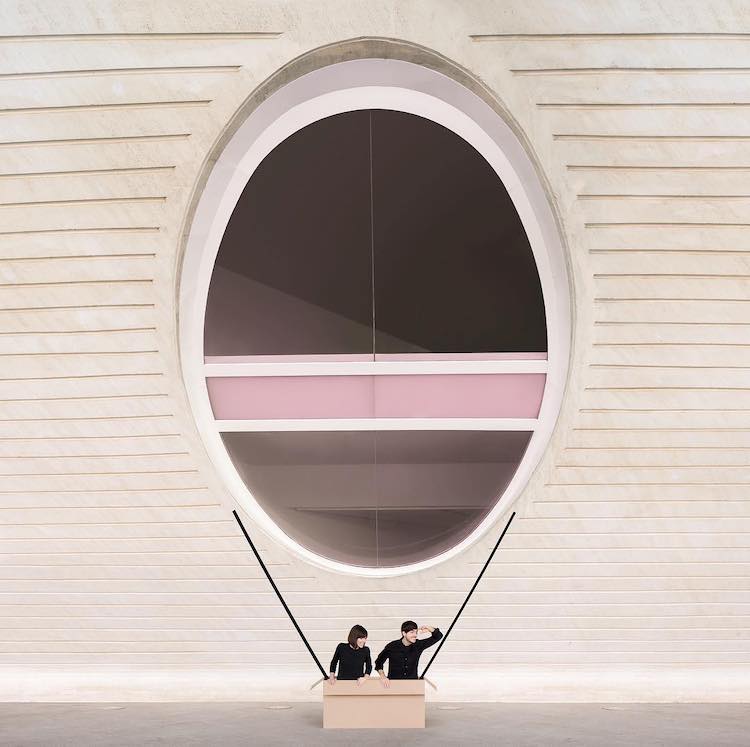
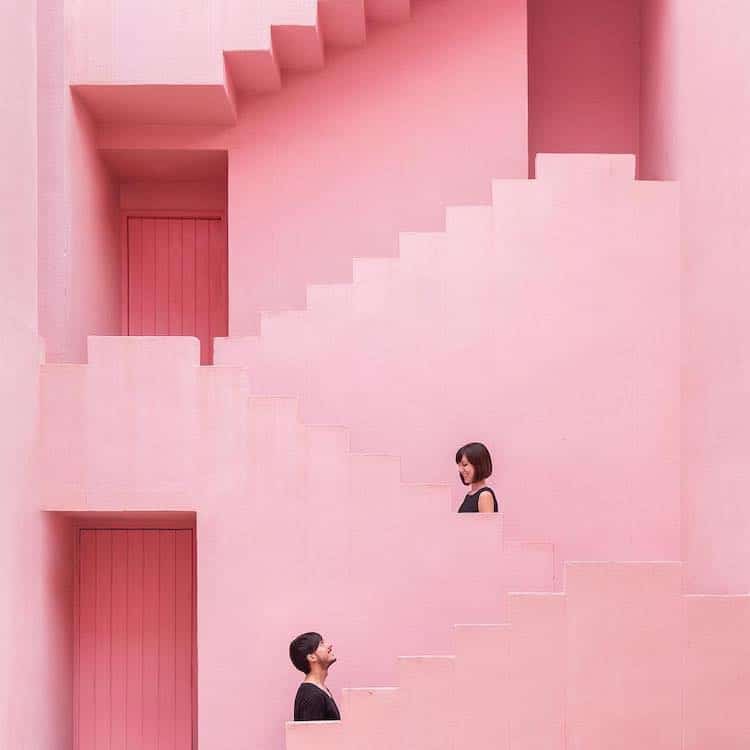
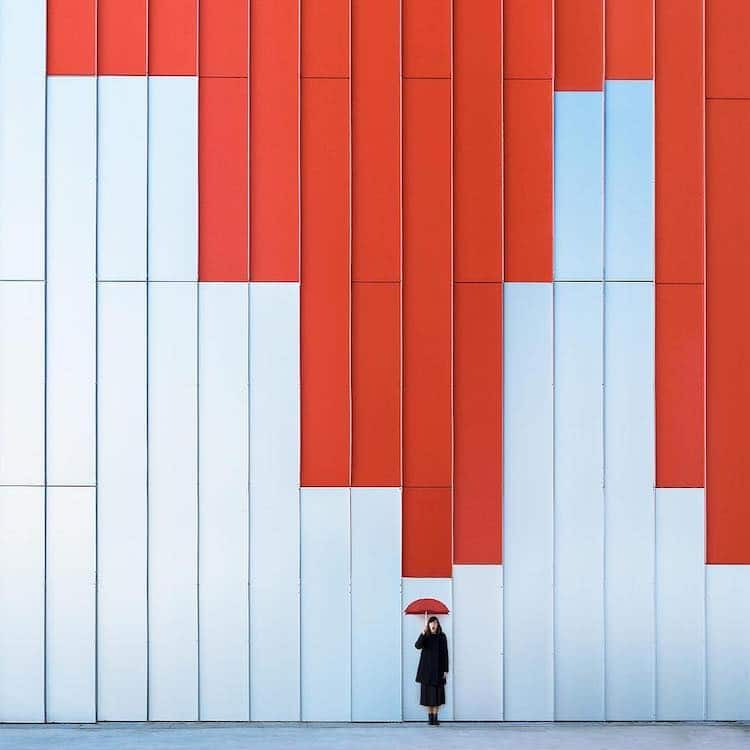
Creative duo Daniel Rueda and Anna Devís find wonder in seemingly ordinary places. As two former architects, they incorporate elements of buildings into their whimsical compositions in which a model (often Devís) is perfectly coordinated with different facades or blends into the scenery.

“Our backgrounds in architecture have completely shaped our way of seeing the world,” Rueda tells My Modern Met. “As a matter of fact, I’m pretty sure we wouldn’t be doing this if we hadn’t studied that particular degree.” Travel, even if it’s within the same city, is an integral part of Rueda and Devís’ process. “For us, every image has to tell a different story and, in order to do so, it needs a unique location to be told in.”

The photographs also depend on precision. A model, for instance, must be standing in a specific spot, in a certain place, to maintain the illusions that are an essential part of their work. “There’s nothing random or fortuitous in our work,” Rueda reveals. “We get to decide every single element and how it affects the narrative of the image. This also allows us to chase a certain type of mood and tone that helps us build a cohesive portfolio of images where, even though every photograph tells a different story, it does so in a very homogeneous way.”

Because planning is required, all of the compositions start with a sketch. They brainstorm the project, and Devís translates it into “little drawings” that turn ideas into reality. “In this part of the process, we usually realize we need something that has to be produced, like a human-sized Tetris piece or a rainbow-colored paint roller, for example. All of our props are handmade, that’s why some of our images take so long to bring to life!”

A common feeling that comes from Rueda and Devís’ work is that of marvel—you can’t help but wonder how they find so many amazing spots. “As important as the props needed for the image are other things like the outfit of the model and the location of the set. These two variants always fulfill a very important role in our work, that’s why we spend so much time scouting for unique places and clothes even when we are not working on a particular project.”

So while the images might look “simple,” they are anything but that. “At first glance, one would probably think that most of our images are not very difficult to capture because of their modest appearance. But, with the passing years, we’ve learned that achieving this level of simplicity is really, really complicated; which makes the process of creating each image a completely different and unique adventure!”

Creative duo Daniel Rueda and Anna Devís showcase the beauty of buildings in their quirky architectural photography.

Quirky Photography by Daniel RuedaQuirky Architectural PhotographyQuirky Photography by Daniel RuedaQuirky Photography by Daniel RuedaQuirky Photography by Daniel RuedaClever Photography by Daniel RuedaClever Photography by Daniel RuedaQuirky Photography by Daniel RuedaQuirky Photography by Daniel RuedaQuirky Photography by Daniel RuedaQuirky Photography by Daniel RuedaQuirky Architectural PhotographyQuirky Architectural PhotographyQuirky Photography by Daniel RuedaPink BuildingClever Photography by Daniel RuedaDaniel Rueda:  Website | Instagram
Anna Devís: Instagram

My Modern Met granted permission to feature photos by Daniel Rueda.

Related Articles:

18 Best Online Photography Classes Guaranteed to Improve Your Creativity

Interview: Photography-Loving Sea Captain Captures the Quiet Beauty in Everyday Moments

Quirky Couple Travels Around the World to Playfully Interact with Architecture

READ: Playful Duo Captures the Fun and Joy of Interacting With Architecture