in the future everyone will be tumblr famous for 15 minutes
in the future everyone will be tumblr famous for 15 minutes


Read more of this story at Slashdot.






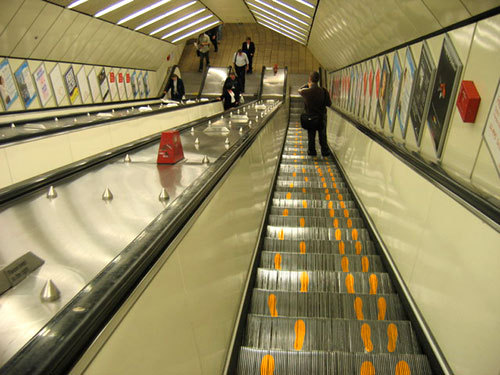
An important reminder that the universe has three spatial dimensions and is best appreciated with all three engaged*.
*engage fourth as needed for EXTREME MODE
god dammit people tag your porn
FUCK THIS IS SEXY

Silhouettes of Alfred Hitchcock and Cary Grant on the set of Notorious, 1946.

Hatris (Video System - arcade - 1990)
Flyer for Hatris, which as the name suggests is Tetris but with hats.
Government and industry have betrayed the Internet, and us.
By subverting the Internet at every level to make it a vast, multi-layered and robust surveillance platform, the NSA has undermined a fundamental social contract. The companies that build and manage our Internet infrastructure, the companies that create and sell us our hardware and software, or the companies that host our data: we can no longer trust them to be ethical Internet stewards.
This is not the Internet the world needs, or the Internet its creators envisioned. We need to take it back.
And by we, I mean the engineering community.
Yes, this is primarily a political problem, a policy matter that requires political intervention.
But this is also an engineering problem, and there are several things engineers can -- and should -- do.
One, we should expose. If you do not have a security clearance, and if you have not received a National Security Letter, you are not bound by a federal confidentially requirements or a gag order. If you have been contacted by the NSA to subvert a product or protocol, you need to come forward with your story. Your employer obligations don't cover illegal or unethical activity. If you work with classified data and are truly brave, expose what you know. We need whistleblowers.
We need to know how exactly how the NSA and other agencies are subverting routers, switches, the Internet backbone, encryption technologies and cloud systems. I already have five stories from people like you, and I've just started collecting. I want 50. There's safety in numbers, and this form of civil disobedience is the moral thing to do.
Two, we can design. We need to figure out how to re-engineer the Internet to prevent this kind of wholesale spying. We need new techniques to prevent communications intermediaries from leaking private information.
We can make surveillance expensive again. In particular, we need open protocols, open implementations, open systems -- these will be harder for the NSA to subvert.
The Internet Engineering Task Force, the group that defines the standards that make the internet run, has a meeting planned for early November in Vancouver. This group needs to dedicate its next meeting to this task. This is an emergency, and demands an emergency response.
Three, we can influence governance. I have resisted saying this up to now, and I am saddened to say it, but the US has proved to be an unethical steward of the Internet. The UK is no better. The NSA's actions are legitimizing the internet abuses by China, Russia, Iran and others. We need to figure out new means of internet governance, ones that makes it harder for powerful tech countries to monitor everything. For example, we need to demand transparency, oversight, and accountability from our governments and corporations.
Unfortunately, this is going play directly into the hands of totalitarian governments that want to control their country's Internet for even more extreme forms of surveillance. We need to figure out how to prevent that, too. We need to avoid the mistakes of the International Telecommunications Union, which has become a forum to legitimize bad government behavior, and create truly international governance that can't be dominated or abused by any one country.
Generations from now, when people look back on these early decades of the Internet, I hope they will not be disappointed in us. We can ensure that they don't only if each of us makes this a priority, and engages in the debate. We have a moral duty to do this, and we have no time to lose.
Dismantling the surveillance state won't be easy. Has any country that engaged in mass surveillance of its own citizens voluntarily given up that capability? Has any mass surveillance country avoided becoming totalitarian? Whatever happens, we're going to be breaking new ground.
Again, the politics of this is a bigger task than the engineering, but the engineering is critical. We need to demand that real technologists be involved in any key government decision making on these issues. We've had enough of lawyers and politicians not fully understanding technology; we need technologists at the table when we build tech policy.
To the engineers, I say this: we built the Internet, and some of us have helped to subvert it. Now, those of us who love liberty have to fix it.
This essay previously appeared in the Guardian.
EDITED TO ADD: Slashdot thread. An opposing view to my call to action. And I agree with this, even though the author presents this as an opposing view to mine.
Read more of this story at Slashdot.


Recent leaks about the NSA's Internet spy programs have sparked renewed interest in government surveillance, though the leaks touch largely on a single form of such surveillance—the covert one. But so-called "open source intelligence" (OSINT) is also big business— and not just at the national/international level. New tools now mine everything from "the deep Web" to Facebook posts to tweets so that cops and corporations can see what locals are saying. Due to the sheer scale of social media posts, many tools don't even aim at providing a complete picture. Others do.
For instance, consider BlueJay, the "Law Enforcement Twitter Crime Scanner," which provides real-time, geo-fenced access to every single public tweet so that local police can keep tabs on #gunfire, #meth, and #protest (yes, those are real examples) in their communities. BlueJay is the product of BrightPlanet, whose tagline is "Deep Web Intelligence" and whose board is populated with people like Admiral John Poindexter of Total Information Awareness infamy.
BlueJay allows users to enter a set of Twitter accounts, keywords, and locations to scan for within 25-mile geofences (BlueJay users can create up to five such fences), then it returns all matching tweets in real-time. If the tweets come with GPS locations, they are plotted on a map. The product can also export databases of up to 100,000 matching tweets at a time.
Read 8 remaining paragraphs | Comments

    
|

invader - Kabuki Quantum Fighter (Human - NES - 1991)
 OnlyMrGodKnowsWhy
hmmm
Gary Carr on Downton Abbey via. Mail.co.uk
Downton Abbey boss Julian Fellowes has slammed the depiction of black actors in TV. The writer said the first black face in the ITV period drama will instead be very much a positive role model.
Jazz singer Jack Ross, played by Gary Carr, makes his debut in the fourth series which hits our screens next month.
And Julian, 64, said: “I was very keen he should be a positive character. I feel this quite strongly. So many black characters in TV drama are victims and things are not going well for them. Even when they’re positive, even when they’re sympathetic, everything’s terrible. I feel for black young men and women. It’s very important that you see people on the screen who are not victims. This guy is not a victim. He is a very successful entertainer, a very positive guy, very attractive, and there’s no negative side, and that was important to me.”
– “Downton Abbey Creator Julian Fellows Slams Depiction of Black Actors on TV,” The Mirror UK, September 6, 2013
Subscription music service Rdio plans to create an ad-supported free music service as part of a new partnership with radio broadcaster Cumulus Media that could help it keep pace with Spotify and other competitors. The deal is expected to be announced on Monday, according to The New York Times, which first reported the news.
As part of the agreement, Cumulus, which owns more than 500 radio stations, will take a "significant equity" stake in Rdio's parent company, and in exchange will sell advertising for Rdio's new free service, the Times reported. Cumulus will also give Rdio "broad access to its programming," as well as "promote Rdio on its stations." Cumulus' interest in Rdio is to help expand its online presence. "This is our digital play," Cumulus CEO Lewis Dickey Jr., told the Times.
Rdio needs a shot in the arm
With competition in web music space heating up, Rdio needs a shot in the arm. Spotify launched its ad-supported, free service in the United States two years ago and is the sector's top player. Free music helped Spotify attract 24 million users and more than six million paying subscribers, believed to be the most among online music subscription services. Spotify's strategy is to attract users with the offer of free, and then persuade them later to upgrade to the company's paid service. There's little doubt that it's Spotify's success that is pressuring competitors to match its offer of free songs.
Up to now, accessing Rdio's music cost $5 to $10 per month. Rdio, created by the duo who founded Skype and Kazaa, doesn't release subscriber numbers, but most analysts believe the size of the company's audience is far smaller than Spotify's. Rhapsody, the oldest subscription music service, has struggled to build its audience, and may be rethinking its reluctance to offer free songs. Sources told The Verge last week that the company is looking to replace John Irwin, the company's president and someone who has been very critical of music giveaways.
Cumulus is handing over $100 million worth of content and services
Though some of these services offer songs without charge to users, the music isn't free. The companies pay big bucks to license the songs. Spotify's losses are said to be mounting and the word out of Europe is that the startup is again looking for additional funding.
In the partnership between Cumulus and Rdio, no money exchanged hands and the deal was a trade, the Times reported. Still, the paper said that Cumulus is handing over $100 million worth of content and services. This could help Rdio as the cost of competing in subscription music continues to rise. The deal is also an endorsement, at least from Cumulus. It shows that at least some in traditional radio would rather join the subscription services rather than compete with them.

Read more of this story at Slashdot.

 |
popular
shared this story
from  Marginal Revolution. Marginal Revolution.
|
CBS News uncovers a frightening new trend, unregulated dinner parties:
As you sit down to dinner, this story illustrates eating out like you have never experienced before. We are talking about super-secret, illegal dining experiences hosted in homes.
CBS 2 investigative reporter Tamara Leitner went undercover to see firsthand how this underground world works.
It may look like a dinner party, but it’s really an underground supper club.
The diners are a mix of New Yorkers and tourists. CBS 2’s undercover cameras captured one experience — eight people who didn’t know each other eating a meal in a stranger’s home.
Horrifying. CBS, however, missed an even bigger story. It’s one thing when adults subject themselves to danger but surely even libertarians with their heads stuck in the 19th century must recognize that it is something else again when the least powerful among us are subject to these same dangers without their consent. Intrepid economistArt Cardenhas the story of abuse and shame that has remained hidden for too long:
…children–children, mind you–are being fed food that’s prepared in unregulated, uninspected, and possibly less-than-sanitary conditions.
firehosevia Russian Sledges
firehosevia GN
attn: otters' hypothetical D&D campaign

Photo: JessyLou D'Aprile of Louography
Welcome, dear adventurer, to the Land Of Music! A mystical and mysterious land where you are one of HUNDREDS OF THOUSANDS of musicians are battling the beasts of poverty, hunger, debt, poor credit, rocky relationships and bad business practices, all in the name of someday succeeding. And EVERYONE can succeed, if your ambitions are humble enough!
Work together as a tight-knit community of like-minds, or against the other players as cutthroat, solipsistic prima donnas to achieve (and maintain) a Living Wage! Will your class be acoustic, or electronic? Will you incessantly play concerts or will you be a mysterious hermit who records one insanely good album every decade? Will you live in the quaint charm of Smalltownsbergville, the populous but unfashionable Middle City, or the overwhelming bustle of Mecha-Metropolis? The path towards achieving a Living Wage is yours to choose!
. . .
CHAPTER 1: MUSICAL TAXONOMY, or CHARACTER CREATION; CHOOSING AND CHANGING YOUR RACE AND CLASS [Skip]
CHAPTER 2: HOW TO SURVIVE, or HEALTH, NOTORIETY, BANK ACCOUNT & THE WILL TO CONTINUE [Skip]
CHAPTER 3: SEX, DRUGS & VINTAGE TUBE AMPS, or YOUR ITEMS & EQUIPMENT
CHAPTER 4: HOW TO PLAY THE GAME, or THE MANY STAGES OF SUCCESS
Now that you’ve chosen your race, and you’ve learned about the counters that can either keep you alive or threaten your adventure’s continuation, you’re ready to actually play the game!
STAGE 1: BOOKING
The first stage of your turn is the Booking Stage. You may choose to roll a six-sided die: If you get a 6, congratulations! You got booked at a venue. You will lose no Will To Continue points this stage. At the end of your fifth turn, you will have an extra Performance Stage (See chapter 7). If you get a 5 on your Booking roll, you receive a polite decline and lose only 1 Will To Continue point this turn. I mean, at least they cared enough to respond! If you roll 1-4, you receive no response and lose 3 Will To Continue points because of a creeping, gnawing doubt of self-worth.
If you choose not to roll for Booking, you may proceed directly into Free Time.
STAGE 2: FREE TIME
Free Time is when you may cast creativity spells such as Practice Old Material and Write New Material, or promotions spells like Distribute Posters and Update Web Presence; you may purchase new Equipment; you may use an Item in your hand; or you may engage in an Activity such as Busking (acoustic races only), or Work A Day-Job. There are 15 units of Free Time, and each activity takes up a different amount of time. If one exceeds the Free Time limit, your character is losing sleep and deducts 2 points of health for each hour over the limit. Watch the clock, kids! You got to take care of yourselves.
Some actions taken in Free Time, like Promotional Spells, can be collaborative. You may ask for the assistance of other players! Those players can contribute their roll bonuses or items to the action. But on that player’s next turn, they will subtract an amount of Free Time equal to half of the original action’s time suck. Helping other people is hard work, so do it for love or do it with a contractual obligation!
STAGE 3: CHAOS CARD
When you have spent all of your free time, draw a card from the Chaos pile and follow its instructions. It may be a Fortune Card, where good networking gets you a connection at a booking agency, record label or PR firm; or a friend offers you an awesome gig or an invitation to join on a more successful act’s regional tour; a talented photographer offers you a session for cheap or free; or an online post goes viral, increasing your Notoriety. When these things happen, it’s an amazing feeling of elation, and it helps you justify your choice to pursue this strange career.
The card you draw may also be a Tragedy Card, where you get injured and require an expensive hospital visit; you may lose your government benefits due to filing error, or become evicted; get a pill slipped into your drink at a bar; lose a gig due to venue closure; break an important piece of equipment; lose an important connection due to a bad blood; accidentally write a Christmas song, or otherwise get screwed over by life.
Your character’s life is a life of near-complete uncertainty. Good luck with that!
STAGE 4: PERFORMANCE STAGE
See chapter 7. This gets complicated.
STAGE 5: THE LIVING WAGE
If, at the end of your turn, you have increased the value in your bank account by at least 50% after receiving deductions for your housing, travel expenses and food costs, you get a Credit token. If you fail to do so, you lose a Credit token. These are important for achieving a status of Living Wage, though each Primary Virtue you choose will have different requirements. For example, the Rebellion and Artistic Merit virtues limit the amount of Day-Job hours can be used in a single turn while giving boosts to Creativity Spells. The virtue of Materialism helps in acquiring money, but losses of Credit tokens also deduct more points from your Will To Continue. Just like real life!
THE 3 CORE SKILL TREES
Performance Stages are exciting and challenging, and if you play your cards successfully and roll the right dice, you get a big boost to Notoriety and Will To Continue. However, the time, money and effort it takes to ensure a successful Performance Stage also make it nigh impossible to also ensure a Living Wage (this is called The Performer’s Conundrum). Also, between Notoriety levels 3 and 10, booking too many shows in any given city risks overdrawing one’s community of fans. Remember: You are competing for time and attention against TV, movies, books, blogs, vlogs, podcasts and every other concert that’s happening on the same night. So, no pressure.
Luckily, there are three skill trees common to all races and classes that can help with this conundrum and put some extra money in your Bank Account gauge, and get you that much closer to Living Wage status and VICTORY!
THE CORE SKILL TREES ARE AS FOLLOWS
TOURING: Take this show on the road! In this skill tree, you level up passive traits that improve your ability to book at venues that have never heard of you and don’t care what you do, your logistical planning and Budgeting Spells, and Spells of Self-Promotion. No single concert can make a living wage, but if you have a string of them on the road, you can might just enough money to support you while your body recovers from inevitable exhaustion that follows a tour!
LICENSING: Want to hear your songs at the movies, on a popular TV series, or in commercials? Level up your Licensing skills! Spells in this skill tree increase the odds of making money without ever leaving home. Writing proposals and scanning contracts for Traps are prominent in this tree, and your odds of making a Living Wage are higher for those who put their focus here, though many skills are incompatible with characters that select Artistic Merit as a primary virtue.
THEATRICS: Your audience will pay more for your show if you give them more for their money. So make your show more of an elaborate performance, with characters, costumes, orchestras, video artists, and more! It is important to note, however, that without hiring a Stage Manager minion, the upper-tier theatrical skills can add too many Stress tokens to your character, which hurt your Will To Continue.
Develop these skill trees individually, or become a jack-of-all-trades, either way, these abilities will help you in times of need and in times of plenty. Be mindful of your choices. Have at least some semblance of a plan. The skills you attain will only help you if you know what you want out of them.
WHAT IS WINNING?
That’s the big question, isn’t it? How can one quantify success? For the sake of this game, it’s acquiring five Credit tokens. That’s it.
But what about real life? Is it when one is finally able to make ends meet strictly through doing what we love? Or when one receives a sufficient number of awards and accolades? Or is it when one’s degree of fame reaches a certain precipitous point? Life, unlike a game, doesn’t end suddenly with a glorious success or a monstrous failure; life just ends. Success and failure are subjective assessments of value for specific moments within a vast network of actions and reactions. Rather than ask, “Have I won,” you should ask yourself, “Am I satisfied with what I have achieved? And what more do I want out of this work?”
But those are hard questions to ask. For now, just stick to the five Credit tokens.
CHAPTER CONCLUSION:
The Land of Music is a strange place. You may find yourself in strange situations, opening for eating competitions, playing mood music for sex parties (in which you are not allowed to participate), and other circumstances too strange for words. It can be easy to spend so much time promoting, emailing and otherwise working on the business end of things that you forget to create the art that you’re supposed to be promoting. Never stop casting Practice Spells. Never stop casting Writing Spells. Never stop reaching higher for more ambitious quests, because seeking challenges will make you stronger. You will level up quicker, you will unlock bonus levels, you will become better. You will be that much more deserving of the Notoriety levels you’re after.
Next chapter: ARTIST GRANTS & SUBSIDIES IN THE USA, or HOW TO GET UNEMPLOYMENT AND FOODSTAMPS
~~~
Character Profile:
Aaron J. Shay (Level 2 Notoriety)
Race: Acoustic
Class: Songwriter & Performer
Primary Virtue: Crowd-Pleaser
Secondary Virtue: Artistic Merit
Items: Ukulele, Banjo, A Nice Hat
Aaron J. Shay is a writer and performer from Seattle, WA, who writes and records music under his own name and with the scrappy street folk trio The Mongrel Jews. When not performing music, Mr. Shay writes fantastical fiction, a few blogs about what it's like to be an ambitious performer in the online age, and the occasional, exceptional tweet. For more information, check out aaronjshay.net.
firehoseKanye’s phone rings. This is when I knew he was gonna be famous.
He answers the phone, he goes, “Hello. Huh? What? Uh uh, I can’t. I can’t. Cause, I’m at Dave Chappelle’s show watching sketches that nobody’s ever seen before.”
And then he says, “Cause my life is dope, and I do dope sh*t,” and then he hung up the phone.
For those of you keeping score at home, this is now the number two Most Kanye West story ever, sliding in just behind this paragraph from his 2010 cover story in XXL:
“How many times have people taunted me because of a color that I had on or how tight my pants were? It’s nothing. I’m at the point now where I can go to ABC Carpet and spend five hours picking out sheets, ’cause I love colors, like teal and taupe and salmon … When I visited Wayne at Rikers Island, I had a suit on with some slippers, and the guard said, ‘Man, those shoes are amazing.’ And I said, ‘Yes, they are. I’m Kanye West.’”
firehosevia Dmitry Krasnoukhov
1. Your Coworker
It’s happened to me over and over: I’ll spend hours trying to track down a problem. In frustration, I’ll ask a coworker to look at the code and frequently they will point out the problem in seconds. It’s called situational blindness and it means that you will often overlook the bug right in front of your eyes because you’ve looked at it so much, your mind has started to ignore it.
Your coworker has another valuable trait: they are different than you. They think differently and have a different set of knowledge. A hard bug for you to find might be easy for them. Next time you’re frustrated, call over a coworker and see what happens.
2. Your Creative Side
It’s happened to me over and over: I’ll build something with a flaw that doesn’t quite work right. I’ll go to sleep frustrated and wake up the next morning knowing exactly what the problem is.
It’s well known that we think in two different manners: creatively and logically. When focused on details (such as debugging a problem), we’re 100% logical as we jump from thought A to B to C. But it’s your creative side that can jump from thought A to thought Z via intuition. Like your coworker, your creative brain thinks differently from your logical brain. By going to sleep, you’re calling over that “creative coworker” and asking for help.
3. Your Mental Model of the System
If you don’t know the software tools and APIs you are using to solve problems really well, you’ll find yourself endlessly debugging. When learning a system like Ruby on Rails for the first few years, debugging is often really just learning how the system works. Software is insanely complex and every level of the stack is insanely complex. Abstractions hide much of the complexity and understanding those abstractions well allows you to fit it all within your head.
Malcom Gladwell’s maxim that expertise comes with 10,000 hours of practice holds here too. After 5 years of full-time experience (40hrs/wk * 50 wk/yr * 5), you’ll have a very strong understanding of your system of choice. That knowledge is very valuable.
Pro tip: read the documentation for a library that you are going to use, implement your first attempt at using that library, and then read the documentation again. The first time will give you an overview and things to look for but frequently you won’t comprehend certain aspects due to your inexperience with the library. You almost certainly will comprehend more when you read it the second time.
Conclusion
All of these things have one thing in common: thought. Debugging is thinking through the execution of code in your head. By improving your knowledge and looking at the problem from different angles, you can much more effectively debug those hard problems that can be so frustrating.