Shared posts

29 Jun 04:49

thebicker: something-out-there211: sassymontparnassy: did anyone realize that california laws...

by cute-gurls-club
Courtney shared this story from The Babe Brigade.

thebicker:

something-out-there211:

sassymontparnassy:

did anyone realize that california laws went into effect today that allows trans* youth to pick which bathroom and sports team they feel comfortable with in school

i think that’s the bee’s knees

Don’t let this go unnoticed. The fact that gay marriage is legal is absolutely something to celebrate, but so is this

Well done, California.

29 Jun 04:48

After the ruling, corporate America and $ame $ex marriage were locked in a profitable embrace

by By Bruce Newmanbnewman@mercurynews.com
Courtney shared this story from Local News:
Seriously, rich gays and lesbians + capitalism, I don't understand why right wing people were against this.

From breakfast cereals to credit card companies, businesses were eager to show their support for the Supreme Court decision making marriage legal for everyone.
29 Jun 04:46

Aaron Rodgers is practicing his sword fighting skills during the NFL off season

by James Dator

Learned some new tricks...

A video posted by Olivia Munn (@oliviamunn) on

Aaron Rodgers has some down time before training camp opens, but girlfriend Olivia Munn has no time off. She's in the middle of filming X-Men: Apocalypse where she'll be playing the role of Psylocke -- something that requires plenty of sword fighting skills.

It's nice to see Rodgers joining in. Sword fighting is a skill that will never come in handy until the zombie apocalypse, but he'll at least know what to do.

28 Jun 23:40

Photo

Courtney shared this story from Super Opinionated.


28 Jun 23:39

Photo


28 Jun 23:39

Photo


28 Jun 23:39

Photo


28 Jun 23:39

Photo


28 Jun 23:39

Photo


28 Jun 23:38

Recommend any sourcebooks for 1920s or 1930s Boston?

by mrlost
firehose

they're called history books

So on Saturday I ran a Pulp Trail of Cthulhu game set in Boston circa 1930. I used an old issue of Unspeakable Oath which has a map and synopsis of Boston during that era to adapt the Kidnapping scenario from Arkham Detective tales. While the game was a great success, and the players were able to solve the mystery and recover the kidnapped baby in about 2 hours...shooting and killing two Mythos creatures with hardly any loss of Sanity or Stability, most of the other adventures I have for Trail of Cthulhu are set in New York and I'd rather adapt them to Boston.

So I understand that the North End of Boston was the bad part of town during that era. Is that correct?

I'm also wondering if there are any other source books that I could use for additional information on the city especially during the depression.
28 Jun 23:38

Second New York Prison Escapee Reportedly Shot And Captured

The confrontation with David Sweat, near the town of Constable, N.Y., came two days after a federal agent shot and killed the other escaped prisoner from a maximum-security prison in New York, Richard W. Matt
28 Jun 23:38

awwww-cute: Birthday boy


awwww-cute:

Birthday boy

28 Jun 23:38

yogopanda: still stuntin’ how you love that


yogopanda:

still stuntin’ how you love that

28 Jun 23:37

Photo


28 Jun 23:37

Photo


28 Jun 23:36

Photo


28 Jun 23:35

Kevin Feige Confirms The Wasp Will Feature in the Marvel Cinematic Unvierse

Speaking at a press event, Feige said The Wasp is definitely in the cards, but stopped short of revealing whether she has a role in "Ant-Man."
28 Jun 23:35

Things We Saw Today: James Gunn Reads Chris Pratt’s Speech at the Saturn Awards, Hilarity Ensues - That cat sweater, though.

by Jessica Lachenal
firehose

https://www.facebook.com/jgunn/videos/10152772618791157/

if all bros were Chris Pratt we would not have a bro problem in this country

Chris Pratt won a Saturn award for his work in Guardians of the Galaxy. He couldn’t make it to the ceremony, so he had James Gunn accept it on his behalf. Of course, this being Pratt, he couldn’t help but have fun with it, so he wrote Gunn a speech to read verbatim. It’s fantastic. (via Nerdist)

  • Tough break for the SpaceX folks today as their Falcon 9 “reusable rocket” exploded shortly after takeoff. No humans were on board, just a bunch of cargo for a resupply mission to the International Space Station. (via The Verge)
  • Dreamworks recently optioned a Michael Crichton story for a possible movie: Micro, which focuses on a group of students who find themselves shrunk in the middle of a rain forest. Think Honey I Shrunk the Kids, but with more freaky bugs. (via io9)

#SDCC #TheForceAwakens Stormtrooper figure packaging confirms First Order are new on the scene in Episode 7 @starwars pic.twitter.com/YPSD45V2oV

— Eric Goldman (@TheEricGoldman) June 27, 2015

Thanks to some legwork by /Film’s Eric Goldman, there are some neat new details about the First Order, the villains of The Force Awakens. There isn’t a whole lot to go on there, but it does tease a bit. If you want to try to cop one of these figures yourself (good luck), they’ll be on sale at San Diego Comic-Con.

  • The University of Washington just held a study where they found that dudes tend to lie about themselves when they’re made to feel week. Question someone’s dudeliness, get a lie in return. Hmm. (via Jezebel)
  • A test solar plane has taken off from Japan in an attempt to be the longest distance travelled by a solar-powered plane. It’s scheduled to land in Hawaii within the week. Next up: Birdman’s solar ray shooty-band-thingies. Yeah, that’s what they’re called. What? (via BBC)

For those of you celebrating Pride today, we hope you have just the grandest time. Enjoy the day, party hard (and smart!), but remember the struggle isn’t over quite yet. There’s work still to be done, and it’ll be waiting for us after this weekend is over. But until it is, enjoy yourselves!

Dance party in the comments, let’s go!

—Please make note of The Mary Sue’s general comment policy.—

Do you follow The Mary Sue on Twitter, Facebook, Tumblr, Pinterest, & Google +?

28 Jun 23:32

Sick Teenager Becomes A TIE Pilot In The Best Way Possible

by Andrew Liptak

Get your tissues out: in December 2013, Matthew Tillyer came down with severe case of pneumonia, paralyzing him from the neck down, confining him to a wheelchair. When he attended Star Wars Celebration this past spring, members of the 501st Legion took notice, and pitched in to help.

Read more...


28 Jun 23:31

Photo


28 Jun 23:31

Photo

firehose

https://www.google.com/maps/@-27.590086,25.5391756,7z

only works if he names his next kid bloemfontein


28 Jun 23:29

Photo


28 Jun 23:27

marllyjane: Where’s the lie


marllyjane:

Where’s the lie

28 Jun 23:21

fuckyeahillustrativeart: Metamorphosis  by Sara...


fuckyeahillustrativeart:

Metamorphosis 

by Sara Ljeskovac 

Follow them on Tumblr! 

28 Jun 23:20

elo-cin: Ok but why haven’t I seen anyone talking about the...


elo-cin:

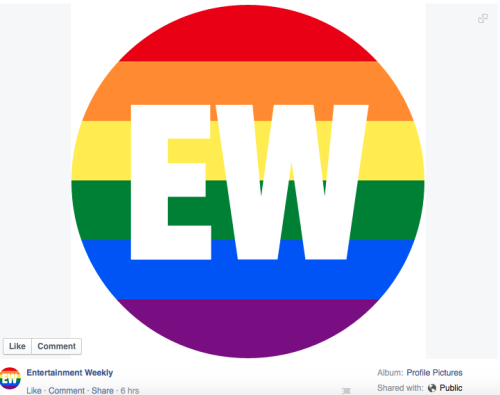
Ok but why haven’t I seen anyone talking about the hilariously awful graphic Entertainment Weekly set as their profile picture yet 

like someone at the Entertainment Weekly headquarters was requested to make this image and they did and got it approved by their supervisor probably who sent it to their PR department and to the person that runs their facebook page where it was posted. And not one person for a second was like “hey…..does this seem like….off….to any of you or”

28 Jun 23:18

Art of War

firehose

via Osiasjota

Appear strong when you are weak, and weak when you are strong; Sun Tzu on strong vs. weak type systems. |
Treat your men as you would your beloved sons, and they will follow you into the deepest valley; Sun Tzu on dragging your team to Silicon Valley for a funding round. |
In the midst of chaos, there is also opportunity; Sun Tzu on PHP.
164

Art of War - June 25, 2015, 9 a.m.

If I had less self control, this comic would be 100% ripping on PHP. php

Share Url: http://cube-drone.com/comics/c/art-of-war

Share on TwitterShare on Facebutts

Expanded from Cube Drone by XPath Expander.
28 Jun 23:16

360 Video for Tau Day

by Vihart
firehose

vi hart beat

A spherical video for Tau Day! 360 degrees of video, or is it?

More vlogs in 360: https://www.youtube.com/watch?v=prpc3xV6eVw&list=PLMOkPN93Z3huoace5h4NGesuPePjgII-h

I've been doing spherical video and VR stuff for over a year now, with Emily Eifler and Andrea Hawksley as the VR research group eleVR. A year ago we had to build our own camera and stitch video by hand and write our own video player but now I can just film with this little camera and post it online, it's awesome!

We have other stuff on our eleVR channel too: https://www.youtube.com/channel/UCGSW-G716AyjUlNJCNl-mAg
And we have lots of research content on our website: http://elevr.com

If you're ever too confused about where I am and what I'm doing, there's always my twitter @vihartvihart and my website http://vihart.com

Song is here on soundcloud, you can download it or whatever https://soundcloud.com/vihartvihart/a-song-about-a-circle-constant-1

The original Tau song: https://youtu.be/FtxmFlMLYRI
I particularly like this remix: https://youtu.be/0dSXHQ4utCA
Don't know what Tau is? see "Pi is (still) Wrong" https://youtu.be/jG7vhMMXagQ
28 Jun 23:11

"Cops standing in front of big drug seizures look great on the evening news. But it sells a lie that..."

firehose

via ThePrettiestOne

Cops standing in front of big drug seizures look great on the evening news. But it sells a lie that we’re winning, just like George Bush on an aircraft carrier declaring that a war was over that still rages on today.

It’s not only that we can’t win this war, it’s that we’re destroying ourselves fighting it. We are literally addicted to the War on Drugs. A half-century of failed policy, $1 trillion, and 45 million arrests has not reduced daily drug use—at all. The U.S. still leads the world in illegal drug consumption, drugs are cheaper, more available, and more potent than ever before.

Our justice system is a junkie, demanding its daily fix of arrests, seizures and convictions. It needs drugs. It’s as hooked as that guy sticking a needle into his arm even though he knows it’s killing him.


- It’s Time to Legalize Drugs: An Open Letter to Congress and the President - The Daily Beast
28 Jun 23:10

northgang: Bree Newsome takes down the Confederate Battle...

firehose

via ThePrettiestOne
followup w/GIFs


northgang:

Bree Newsome takes down the Confederate Battle Flag at the South Carolina State Capitol [x

28 Jun 23:10

AEP : 15 classic science fiction and fantasy novels that publishers rejected

firehose

via Albener Pessoa

15 classic science fiction and fantasy novels that publishers rejected

Science fiction's greatest authors have brilliant ideas, storytelling mojo... and plenty of stubbornness. Many of the field's greatest writers were buried in rejection slips, before they finally broke in. Here are 15 classic novels that publishers didn't want to touch.

When we were doing our list of 10 science fiction classics that the publishers originally considered a failure last week, we came across tons of examples of authors whose most well-known and beloved books were rejected over and over. So we decided to do a separate list of those.

Some of science fiction/fantasy's classic books failed to win over readers at first. And the… Read more Read more

1) The War of the Worlds by H.G. Wells (1897)

This alien invasion classic was rejected by publishers before it was serialized in Pearson's Magazine in 1897. One publisher's rejection letter described the book as "An endless nightmare. I do not believe it would 'take'...I think the verdict would be 'Oh, don't read that horrid book.'" Also, Wells' The Time Machine was rejected by one publisher with the note that it was "not interesting enough for the general reader and not thorough enough for the scientific reader."

15 classic science fiction and fantasy novels that publishers rejected

2) Animal Farm by George Orwell (1945)

This rejection story's got everything: a crusader against censorship being censored, a Soviet spy, and famous poet T.S. Elliot. When Orwell first shopped the book around in 1944, everyone viewed it as excessively critical of the USSR, while the USSR was helping Britain defeat Nazi Germany. Four publishers rejected Animal Farm, including Orwell's regular publisher. Another publisher accepted the novel, but then rejected it at the request of Peter Smollett, an official working in the British Ministry of Information. Smollett was later revealed as a Soviet spy. Faber and Faber also rejected the book, with T.S. Eliot penning the letter himself. Refusing the book for being "generally Trotskyite," he added, "We have no conviction that this is the right point of view from which to criticise the political situation at the current time." In fact, the book would not be published until WWII was over.

After finding a publisher, Orwell wrote a preface to Animal Farm, "Freedom of the Press," about self-censorship during the war. In it he stated that, "Anyone who challenges the prevailing orthodoxy finds himself silenced with surprising effectiveness." The preface was not published. Source: Taylor, David John (2003). Orwell: The Life. H. Holt. p. 197. (Animal Farm cover by Shepard Fairey.)

15 classic science fiction and fantasy novels that publishers rejected

3) Fahrenheit 451 by Ray Bradbury (1953)

The short story version, and even the original novel, had little trouble getting published. But back in the early 1950s, if you wanted eyeballs on your words or to get readers interested in your book you got it serialized. Not to mention that serialization rights sales meant you got paid again (sometimes more) for the same book. But nobody was willing to serialize Fahrenheit 451. Except Hugh Hefner. When no one else would serialize it, Fahrenheit 451 was published in Playboy magazine. Hefner and Bradbury recently appeared on stage together to discuss the history of this novel (video here) and Hefner explained that he'd just started Playboy in late 1953, and Bradbury's novel was already out in book form, but nobody had serialized it. "You have to realize what the 1950s were like. A story about book-burning in the future seemed so perfect for its time, and so perfect for the magazine that I was planning on publishing, that all I could do was contact Mr. Bradbury," says Hef. The novel appeared in the third, fourth and fifth issues of the magazine. Adds Bradbury in this other video, "So all of you young men who have stacks of Playboy under your bed, I put them there!"

15 classic science fiction and fantasy novels that publishers rejected

4) The Once and Future King by T. H. White (1958)

White finished his masterpiece about King Arthur in 1941, only to have it rejected because the final section was considered too pacifist — and therefore against the British war effort. Various sections appeared in print thereafter, like The Sword In The Stone. White waited out the war and the publishers, and the book was finally published in its complete form in 1958. Source: Clute, John, and John Grant. The Encyclopedia of Fantasy. New York: St. Martin's Griffin, 1999. Pg 1010.

15 classic science fiction and fantasy novels that publishers rejected

5) A Wrinkle In Time by Madeleine L'Engle (1962)

This classic children's novel of time travel was rejected 26 times by publishers. Not only did it win the Newberry Award, it helped lure in a new generation of science fiction lovers (especially girls). And it sold some eight million copies.

15 classic science fiction and fantasy novels that publishers rejected

6) Dune by Frank Herbert (1966)

Every book publisher — 23 of them — rejected Herbert's masterpiece before it was accepted, for almost no money, by Chilton, a small Philadelphia publisher of business magazines and automotive manuals. Writes Dune's friend Frederik Pohl:

No book publisher was interested in acquiring the hardcover rights to this rapidly expanding mass of manuscript, however, until an editor at the quite small publishing house of Chilton Books managed to stitch the several existing stories into a single huge novel. He called it Dune, and when he published the result, it became a runaway bestseller, said to be the most profitable sf book ever written.

Dune won the Hugo Award and the first ever Nebula Award. And it has gone on to sell some 40 million copies. (Dune cover by Tony Easley)

15 classic science fiction and fantasy novels that publishers rejected

7) Nova by Samuel R. Delany (1968)

John W. Campbell rejected the serialization rights to Nova, Delany's ninth book. Delany had already won his first Nebula Award, and was nominated for two more that year. Campbell's reason for rejecting Nova? American readers weren't ready to read science-fiction with a black main character. And yet American readers turned Nova into a bestseller. It was also nominated for the Hugo. Delany writes about this rejection, as well as other race-related experiences in the science-fiction world in this fantastic essay.

15 classic science fiction and fantasy novels that publishers rejected

8) The Left Hand of Darkness by Ursula K. Le Guin (1969)

Yes, this book won both the Nebula and the Hugo, but at least one editor didn't think it was worth publishing. Le Guin has the letter up on her website. The highlight?

The book is so endlessly complicated by details of reference and information, the interim legends become so much of a nuisance despite their relevance, that the very action of the story seems to be to become hopelessly bogged down and the book, eventually, unreadable. The whole is so dry and airless, so lacking in pace, that whatever drama and excitement the novel might have had is entirely dissipated by what does seem, a great deal of the time, to be extraneous material. My thanks nonetheless for having thought of us. The manuscript of The Left Hand of Darkness is returned herewith.

15 classic science fiction and fantasy novels that publishers rejected

9) The Forever War by Joe Haldeman (1974)

The Forever War wasn't just a best seller — it also won both the Hugo and the Nebula. And 18 publishers regret that they turned it down. Writes Haldeman in the foreword to one edition:

It was rejected by eighteen publishers before St. Martin's Press decided to take a chance on it. "Pretty good book," was the usual reaction, "but nobody wants to read a science fiction novel about Vietnam."

The book wasn't just rejected by book publishers, though — John W. Campbell rejected serializing the novel for Analog, because it had women fighting alongside men. His successor, Ben Bova, had no such qualms and agreed to serialize the book — but wouldn't publish the middle section, "You Can Never Go Back," because it was too grim. (That middle section first appeared in print, in a new edition of the book in 1991.)

15 classic science fiction and fantasy novels that publishers rejected

10) Carrie by Stephen King (1974)

Stephen King's first published novel sold four million copies in paperback. And garnered 30 rejections from publishers. One of them wrote, "'We are not interested in science fiction which deals with negative utopias. They do not sell." Tired of rejection slips, King reportedly threw the manuscript into the garbage — but his wife fished it out again, and he decided to try one more time.

15 classic science fiction and fantasy novels that publishers rejected

11) The Female Man by Joanna Russ (1975)

Russ wrote her second novel in 1970, but it took five years to find a publisher. Publishers rejected this classic of New Wave science fiction, writing things like: "We've already published our feminist novel this year, so we don't want another," and "I'm sick and tired of these kinds of women's novels that are just one long whiny complaint." Source: Larry McCaffery, ed., Across the Wounded Galaxies, (Chicago: University of Illinois Press, 1990), p. 194-195.

15 classic science fiction and fantasy novels that publishers rejected

12) Kindred by Octavia Butler (1979)

Butler writes that she had "years of rejection slips" before her first novel saw print. According to her obituary in the Seattle Post Intelligencer:

Kindred was repeatedly rejected by publishers, many of whom could not understand how a science fiction novel could be set on a plantation in the antebellum South. Butler stuck to her social justice vision - "I think people really need to think what it's like to have all of society arrayed against you" - and finally found a publisher who paid her a $5,000 advance for Kindred.

Kindred became the most popular book by the MacArthur Genius award winner.

15 classic science fiction and fantasy novels that publishers rejected

13) Harry Potter and the Philosopher's Stone by J.K. Rowling (1997)

The number bandied around the internet is that 12 major publishers rejected the first Harry Potter book, before someone was willing to take a chance. Rowling recently told Oprah Winfrey,

My agent knows better than I do... It was a lot of people. A lot of people just sent it back, virtually by return post. It was like a boomerang. I did really believe in it. I just though, This is a good story.... For some reason, I can even remember being quite pleased with the rejection letters. "F. Scott Fitzgerald got these. It's all part of being a writer!"

One publisher held onto it for six months before finally rejecting it — and then when Bloomsbury decided to take it on, this other publisher suddenly decided they wanted it too. But Rowling decided that she should go with the publisher that wanted the book right away, rather than the one that kept her waiting and then turned her down. According to the BBC, the entire series has sold more than 400 million books worldwide.

15 classic science fiction and fantasy novels that publishers rejected

14) Farthing by Jo Walton (2008)

Even after this book was published in the US, Jo Walton had trouble finding a publisher. At least 10 UK publishers rejected this alternate history classic, which is set in a Britain that entered a peace treaty with Nazi Germany. Wrote Walton, "'Slipstream' and 'Interstitial' clearly aren't as in as people tell you they are, at least not in Britain." The book was nominated for a Nebula Award, the Locus Award, John W. Campbell Memorial Award for best science fiction novel, a Quill Award and the Sidewise Award for Alternate History.

15 classic science fiction and fantasy novels that publishers rejected

15 This Immortal by Roger Zelazny (1966)

This book tied with Frank Herbert's Dune for the Hugo Award for best novel in 1966, but it had a slightly rough road to publication — although not as hard as Dune's. Piers Anthony writes in his book How Precious Was That While that an editor at Doubleday had rejected this book, originally titled And Call Me Conrad. And then after someone else published the book and it won the Hugo, this same editor wrote to Zelazny to chide him for not showing the Doubleday editor the book before sending it elsewhere. Writes Anthony:

Zelazny looked from one hand to the other, as if comparing the two letters from that editor: what was he to make of that?

Source: Anthony, How Precious Was That While, p. 275.