Read more of this story at Slashdot.

Read more of this story at Slashdot.
Friday Night Tykes is not the kind of public relations boost the NFL needs right now. The Esquire documentary series follows five Texas Youth Football Association (TYFA) teams competing in the Rookie division (8- to 9-year-olds) around San Antonio, Texas. It doesn’t focus much at all on the titular kids on the teams. Even shows like Toddlers In Tiaras give the kids a chance to talk for themselves, but Tykes focuses mostly on the storylines of the adults in charge. It’s a sociological examination of how far adults will go to have leadership control over a sport that has woven into the fabric of American identity. Friday Night Tykes can be horrifying and fascinating in equal measure, depicting parents who believe football will teach their children the value of hard work and determination, but cede total authority to militaristic coaches who yell profusely at eight-year-olds to rip other kids’ ...

The other major benefit to the users of the chair (besides the ease of travel and lifestyle) is the total integration of the occupant’s virtual social life, personal life, fashion (or lack-thereof), and basic needs in one device. Passengers are seen talking with friends remotely, not-so-remotely, playing games, getting updated on news, and receiving basic status updates. The device also serves as a source of advertising (try blue! it’s the new red!).


A slight digression: What are the ads there for? Considering that the Axiom appears to be an all-inclusive permanent resort model, the ads could be an attempt to steer passengers to using resources that the ship knows it has a lot of. This would allow a reprieve for heavily used activities/supplies to be replenished for the next wave of guests, instead of an upsell maneuver to draw more money from them. We see no evidence of exchange of money or other economic activity while on-board the Axiom…
OK, back to the social network.
It isn’t obvious what the form of authentication is for the chairs. We know that the chairs have information about who the passenger prefers to talk to, what they like to eat, where they like to be aboard the ship, and what their hobbies are. With that much information, if there was no constant authentication, an unscrupulous passenger could easily hop in another person’s chair, “impersonate” them on their social network, and play havoc with their network. That’s not right.
It’s possible that the chair only works for the person using it, or only accesses the current passenger’s information from a central computer in the Axiom, but it’s never shown. What we do know is that the chair activates when a person is sitting on it and paying attention to the display, and that it deactivates as soon as that display is cut or the passenger leaves the chair.


We aren’t shown what happens when the passenger’s attention is drawn away from the screen, since they are constantly focused on it while the chair is functioning properly.
If it doesn’t already exist, the hologram should have an easy to push button or gesture that can dismiss the picture. This would allow the passenger to quickly interact with the environment when needed, then switch back to the social network afterwards.
And, for added security in case it doesn’t already exist, biometrics would be easy for the Axiom. Tracking the chair user’s voice, near-field chip, fingerprint on the control arm, or retina scan would provide strong security for what is a very personal activity and device. This system should also have strong protection on the back end to prevent personal information from getting out through the Axiom itself.
Social networks hold a lot of very personal information, and the network should have protections against the wrong person manipulating that data. Strong authentication can prevent both identity theft and social humiliation.


While the total immersion of social network and advertising seems dystopian to us (and that’s without mentioning the creepy way the chair removes a passenger’s need for most physical activity), the chair looks genuinely pleasing to its users.
They enjoy it.
But like a drug, their enjoyment comes at the detriment of almost everything else in their lives. There seem to be plenty of outlets on the ship for active people to participate in their favorite activities: Tennis courts, golf tees, pools, and large expanses for running or biking are available but unused by the passengers of the Axiom.
In an ideal world a citizen is happy, has a mixture of leisure activities, and produces something of benefit to the civilization. In the case of this social network, the design has ignored every aspect of a person’s life except moment-to-moment happiness.
This has parallels in goal driven design, where distinct goals (BNL wants to keep people occupied on the ship, keep them focused on the network, and collect as much information as possible about what everyone is doing) direct the design of an interface. When goal-driven means data driven, then the data being collected instantly becomes the determining factor of whether a design will succeed or fail. The right data goals means the right design. Wrong data goals mean the wrong design.
Instead of just occupying a person’s attention, this interface could have instead been used to draw people out and introduce them to new activities at intervals driven by user testing and data. The Axiom has the information and power, perhaps even the responsibility, to direct people to activities that they might find interesting. Even though the person wouldn’t be looking at the screen constantly, it would still be a continuous element of their day. The social network could have been their assistant instead of their jailer.
One of the characters even exclaims that she “didn’t even know they had a pool!”. Indicating that she would have loved to try it, but the closed nature of the chair’s social network kept her from learning about it and enjoying it. By directing people to ‘test’ new experiences aboard the Axiom and releasing them from its grip occasionally, the social network could have acted as an assistant instead of an attention sink.

Moment-to-moment happiness might have declined, but overall happiness would have gone way up.
The best way for designers to affect the outcome of these situations is to help shape the business goals and metrics of a project. In a situation like this, after the project had launched a designer could step in and point out those moments were a passenger was pleasantly surprised, or clearly in need of something to do, and help build a business case around serving those needs.
The obvious moments of happiness (that this system solves for so well) could then be augmented by serendipitous moments of pleasure and reward-driven workouts.

As soon as the Axiom lands back on Earth, the entire passenger complement leaves the ship (and the social network) behind.
It was such a superficial pleasure that people abandoned it without hesitation when they realized that there was something more rewarding to do. That’s a parallel that we can draw to many current products. The product can keep attention for now, but something better will come along and then their users will abandon them.

A company can produce a product or piece of software that fills a quick need and initially looks successful. But, that success falls apart as soon as people realize that they have larger and tougher problems that need solving.
Ideally, a team of designers at BNL would have watched after the initial launch and continued improving the social network. By helping people continue to grow and learn new skills, the social network could have kept the people aboard the Axiom it top condition both mentally and physically. By the time Wall-E came around, and life finally began to return to Earth, the passengers would have been ready to return and rebuild civilization on their own.
To the designers of a real Axiom Social Network: You have the chance to build a tool that can save the world.
We know you like blue! Now it looks great in Red!


firehoseR.O.F.L
firehoseyasssss

firehose"her own Mr. Darcy popped the question"
I imagine this will end just as well as the book

firehose!
well, I might have to check it out
By Danielle Riendeau
on January 14, 2014 at 8:00p
| Game Info |
| Platform Win, Mac, Linux, iOS, XBLA, PSN |
| Publisher Stoic |
| Developer Stoic |
| Release Date 2014-01-14 |
The Banner Saga has the looks of an animated Disney film from the 40s or 50s. It's full of rich colors and expressive, exaggerated characters. But its beauty goes beyond its appearance and presentation.
Its colorful exterior hides an intense game of tactics, with combat that feeds into the rest of the game. There are numbers to crunch and stats to mull over while taking in the pretty pictures. The Banner Saga gets this marriage of mechanics and aesthetic right, stumbling only when its story can't quite live up to the promise of its world.
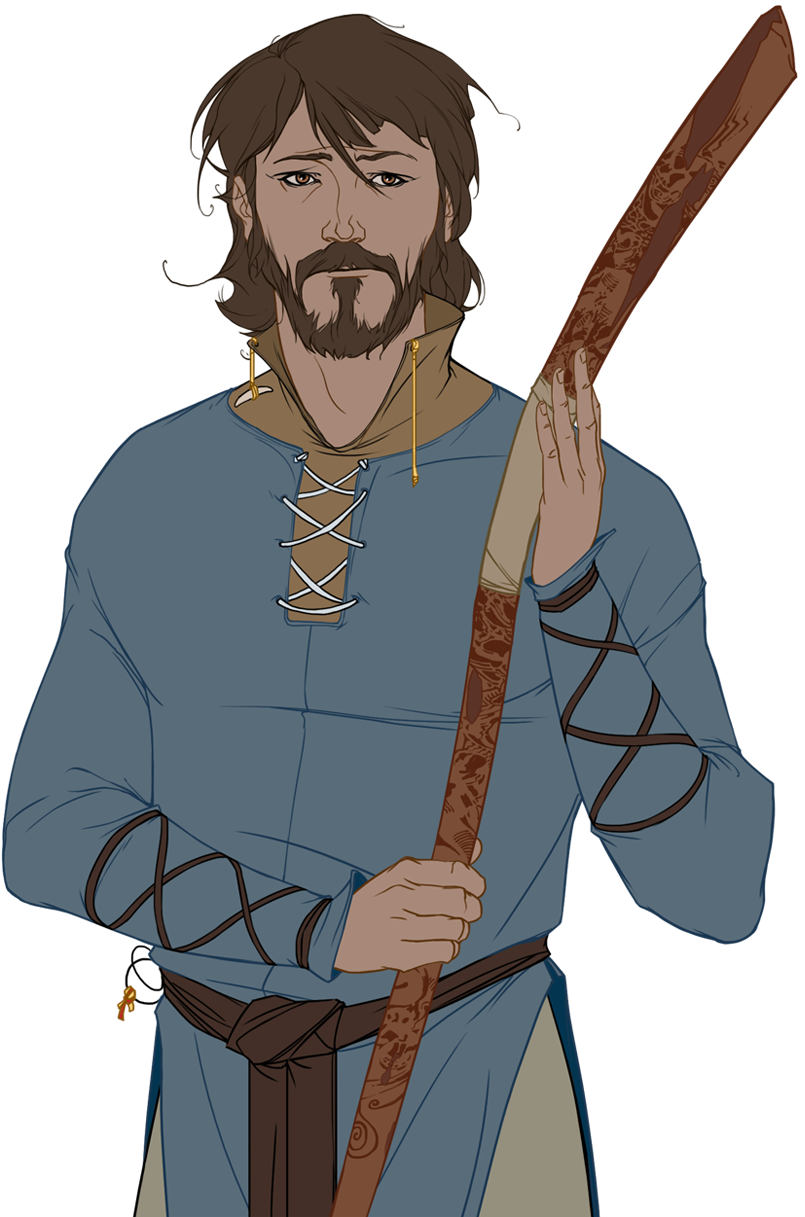
The Banner Saga is set in a Nordic fantasy universe where giants (named varls) live alongside humans. The game alternates between two intertwining stories — one starring human archers Rook and his daughter Alette, and the other following a varl consortium led by a brawler named Hakon.
Both Rook and Hakon lead caravans of fighters and clansmen throughout a bitter landscape, dodging mechanical soldiers called dredge. Even the world itself may be coming to an end. As the game opens, the narrator notes that the sun has been stuck in the sky for an unknown period of time — an omen underscored by disasters natural and otherwise that befall the varls and humans throughout The Banner Saga.
It's an appealing set-up supported by the game's two primary parts. The Banner Saga splits time between turn-based battles and dialogue trees, where I made all of my quest-related decisions. The choices I made here impacted everything — there were times I left or inadvertently killed a beloved character, or had to deal with a scandal among my troops. Wise decisions often netted me renown, the game's main form of currency. Poor choices left me completely screwed.
Every decision, no matter how small, had an impact on the story, and there were certainly a few times where I reloaded a previous save because a careless choice would've left me high and dry. And all of those choices, from my decision to let an old man join my caravan to the item I gave to my biggest bruiser, impacted my stats in battle.
Every decision, no matter how small, had an impact on the story and affected my stats in battle
The Banner Saga's combat requires you to strategize on the fly. You have a roster of about six heroes for each fight, whom you pick and equip before the skirmish. The rules are simple: On each turn, you position a fighter on a grid and choose to attack or rest. But those possibilities evolved into a dynamic system that required me to consider numerous options all the time.
During combat, Willpower can be spent on special moves unique to each hero character or increased movement on the field. Your management of will can make or break you in battle. It's subtle, but absolutely key, to mastering The Banner Saga's combat. I enjoyed the added depth of gathering and managing will alongside the standard attacks. And found it essential to orchestrate wins that earned me enough renown to properly outfit my heroes.
Renown is hard to come by — only success in battle will net you enough, and it's the only currency you can use to grab supplies and items. These, in turn, are necessary to keep you in fighting shape. So you need to do well in battle or your Banner Saga experience will be very short. It's a tough-but fair system that rewards diligent play.
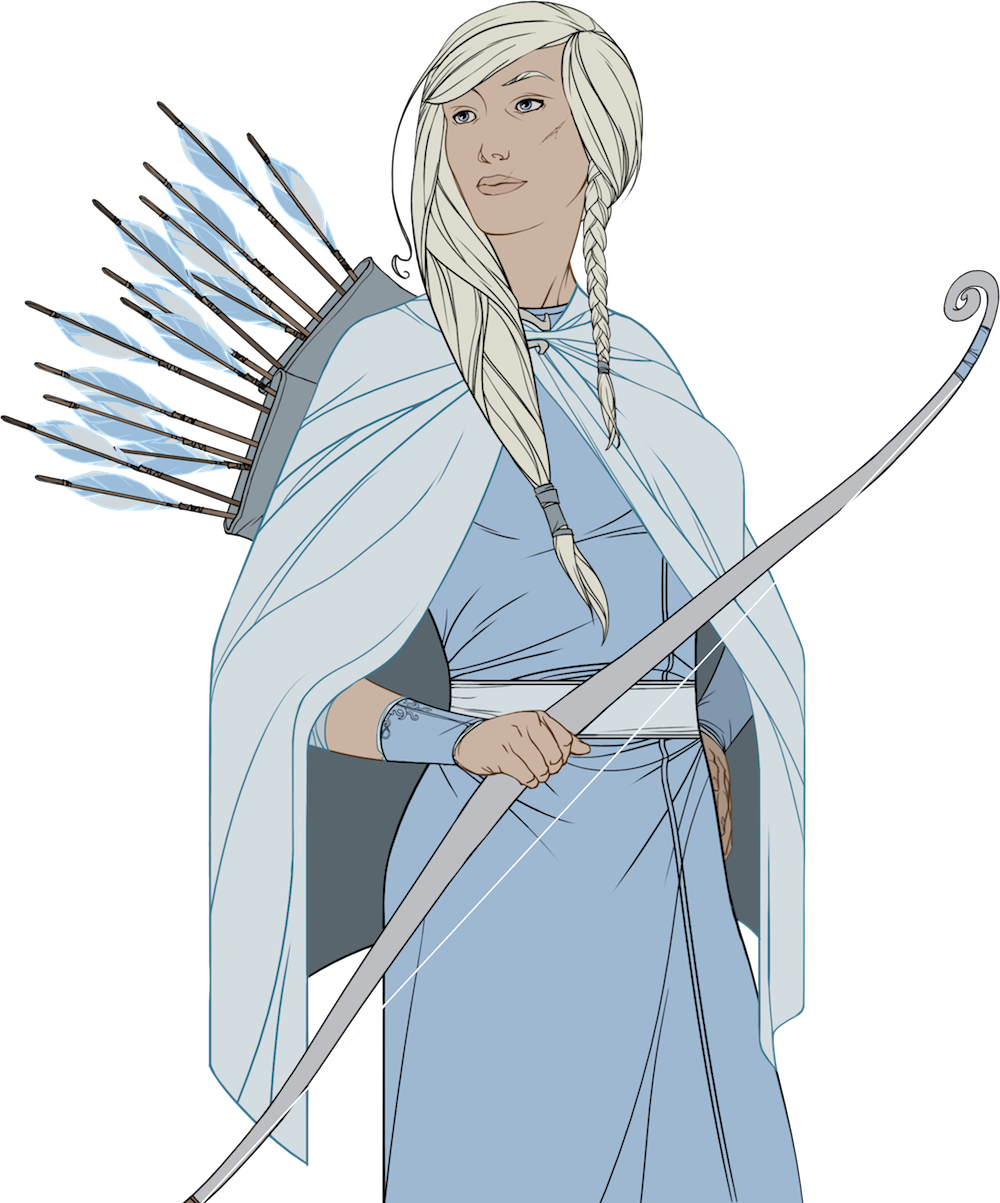
Gender is handled with care in The Banner Saga. While both the human and varl societies are male-dominated, with fewer apparent opportunities for women to make their mark, there are a number of important female warriors and a few story twists that allowed me to go against the usual gender stereotypes. At one point, there's even a surprisingly refreshing discussion about what it means to be a "strong woman". These small touches make The Banner Saga a more inclusive experience than I expected at first glance.
Every mechanic in The Banner Saga feeds directly into its combat. If you do well and have enough renown, you're able to keep your caravan well-stocked with supplies. High morale translates directly into more willpower on the battlefield. The same goes for strong choices in dialogue — you'll get into or out of many scrapes based on your ability to read the situation. I cursed the game occasionally, like when I found myself on a losing streak, unable to buy shiny new items for my warriors. But I appreciated the commitment to the theme. The Banner Saga wants you to have to fight to stay alive, and it's a stronger game for that strictness.
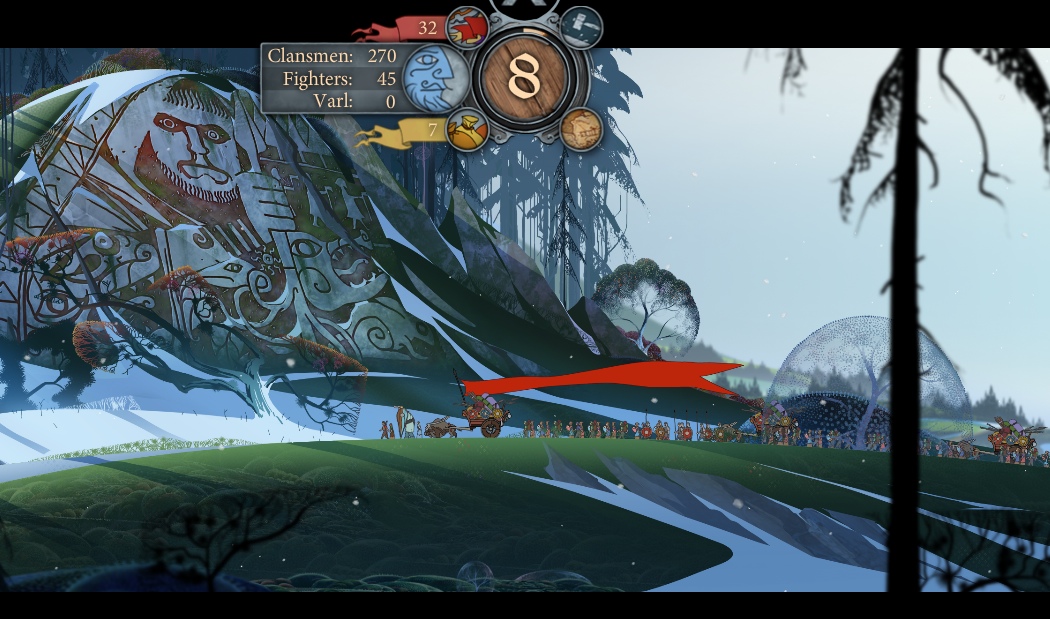
This chain of systems kept me invested where the story itself often failed. The characters are generally likable, but they never evolve much past stock stereotypes, and I often lost track of just who was who amongst my ranks. And they're even more unremarkable set against the world they populate. It's filled with dead gods, apocalyptic events and somber landscapes juxtaposed with beautiful shots of your caravan, all brought to life by breathtaking art and animations.
The Banner Saga is equally brainy and beautiful
Once the intricacies of its combat system were revealed to me, and The Banner Saga hit its stride, I couldn't put it down. There was enormous satisfaction in knowing that every little decision I made mattered, and that my choices as a player would not only be respected, but that I would be made to live with them. The Banner Saga made me fight for every inch of progress — and I loved it for that.
The Banner Saga was reviewed using downloadable code provided by Stoic. You can read more about Polygon's ethics policy here.
About Polygon's Reviews
The defensive FAQ by Nest to alleviate widespread fears about the Google acquisition has been quoted extensively. The whole thing (it’s short) is worth examining critically.
Before we dig in, I want to acknowledge what I consider the first great Nest partnership. I’m not talking about Google. I’m talking about the one between you and the team here at Nest.
How patronizing.
Let’s all give each other a big hug! We’re just a $3 billion company that just got acquired by a massive advertising conglomerate that controls, tracks, and records an ever-expanding amount of everything that people do with all modern technology. We’re all friends and everything’s great. Give yourselves a big round of applause for being such great customers!
Keep this next part in mind:
Will Nest and Google products work with each other?
Nest’s product line obviously caught the attention of Google and I’m betting that there’s a lot of cool stuff we could do together, but nothing to share today.
This is fairly straightforward and obvious: the division between Nest and Google products and services will blur, leading to merged products in the future. Of course. Why would Google buy them if they didn’t have something like that in mind?
The definitions of “products” and “services” can be broad. Maybe the thermostat is still a Nest-branded product, but the weather service it connects to is a Google service. Habit analysis and prediction could also be a Google service. (It already is.) Obviously, Google and Nest should be considered one entity with one product line and shared services in the future, regardless of whose name is painted on the front of the thermostat.
So when I see so many people only quoting this part and thinking it changes anything, it’s pretty easy to have a more cynical (and realistic) interpretation:
Will Nest customer data be shared with Google?
Our privacy policy clearly limits the use of customer information to providing and improving Nest’s products and services. We’ve always taken privacy seriously and this will not change.
Statements like this should be interpreted as if you’re a lawyer trying to find a loophole. (Because theirs will.)
“This will not change” only refers to “We’ve always taken privacy seriously”. In other words, the sentence only says “We will always take privacy seriously”, which doesn’t mean anything and should be disregarded. So we’re down to this:
Will Nest customer data be shared with Google?
Our privacy policy clearly limits the use of customer information to providing and improving Nest’s products and services.
The question in bold is not answered by the following sentence, or anywhere else. Asking a question without answering it is a diversion, containing no information, so it can also be removed. We’re left with only one sentence that actually says something:
Our privacy policy clearly limits the use of customer information to providing and improving Nest’s products and services.
It’s meant to sound reassuring, but their privacy policy can change whenever they feel like it. And remember, the definition of “providing and improving Nest’s products and services” can be very broad.
Think of how much more accurate your Nest thermostat’s predictions could be if it integrated with a few Google services.
If you’re using Google’s services enough to give them a pretty good idea of where you are and what you’re doing,1 Nest could automatically turn your heat on so it reaches the ideal temperature at exactly the time you’re most likely to arrive home based on your location, travel speed, the route you usually take, and current traffic conditions. How clever and impressive! It’s even environmentally friendly!
Google won’t break into your home. You’ll invite them in.
An interaction could be something implicit and obvious, like using Google search or Maps to navigate or find something. Or it could be something you don’t expect to give Google any tracking information, like viewing a web page with an AdSense or +1 embed, but that’s probably enough.
They have so much data about you, your browser, your phone, your computer, and your current IP address that it doesn’t take much for them to make a pretty good guess at who you are, where you are, and what you’re doing most of the time. ↩

Read more of this story at Slashdot.

firehoserofl
Users of Tweetdeck, and possibly other Twitter apps, take note: old settings can come back to trip you up. Digital media strategist Kate Gardiner learned this lesson first hand on Tuesday, when she inadvertently caused at least a dozen separate news-oriented Twitter accounts to tweet "f gwenifill" in unison.
The errant tweets quickly triggered suspicions of another hack involving the hijacking of a high-profile Twitter account, only in this case at least 12 accounts would have been taken over and used to poke fun at PBS News Hour anchor Gwen Ifill.
The cause turned out not to be a hack, but rather the mismanagement of the Tweetdeck application Gardiner had used for years to send tweets for a variety of different media outlets. In the course of clearing out the old credentials, she said, she accidentally sent out the tweet. Because her Tweetdeck was still associated with the Twitter accounts of her old employers or clients, it ended up broadcasting the "f gwenifill" tweet to all of them.
Read 3 remaining paragraphs | Comments
 |
submitted by simonpercy [link] [45 comments] |
firehosewhat

Let that wave of 8-bit '80s nostalgia wash over you.
RBI BASEBALL IS BACK.
Let's say you're a gamer of a certain age, which is to say, old. Or maybe you're just young with extraordinarily good taste in video games. You undoubtedly owned RBI Baseball and played it, say, constantly on your Nintendo, because it allowed you to play as your favorite team or create famous moments in Bill Buckner's life. Or just bunt with the bases loaded. Plus it was a lot better than any of the football choices at the time.
Sure, there were many baseball games that came out after it did in 1988. Graphics got better. Simulations got better. For some reason robots fought and rode around like a motorized unicycle. The scoreboard at Fenway Park looks more real than the real one.
But there was never another RBI Baseball. Until now.
MLB Advanced Media made the announcement Tuesday that the franchise will return for the first time in more than two decades when RBI Baseball 14 is released across all consoles, old and new, and on mobile this spring.
Hallelujah, choirs sing. Wait. We can do even better than that. 8-bit music.
Just listen to that. Over and over and over.
Or just listen once and sing it to yourself over and over and over. It's the theme song you never forget.

Well, this is awkward.
Jordan Peele, star of the excellent sketch show Key & Peele, made the mistake of announcing that he'd unfollowed Mark Cuban on Twitter:
I just unfollowed Mark Cuban, and it felt AMAZING.
— Jordan Peele (@JordanPeele) January 15, 2014
To be clear, unfollowing Mark Cuban isn't a mistake. Mark Cuban's pretty annoying on Twitter. Announcing it, though, was a bad idea, because it invited response:
. @JordanPeele damn. I watch the show all the time. Record it in my Neilson diary even when I don't watch. Wow. #bummed
— Mark Cuban (@mcuban) January 15, 2014
You see what you did? You made Mark Cuban #bummed. And now there's this awkward tension floating around the internet. You don't send the obnoxious kid in your class a letter saying he's not invited to your birthday party, and you don't announce to the world that you unfollowed the obnoxious guy on Twitter. Unfollow quietly, or suffer the consequences.
Also: 1. Is Mark Cuban really part of the Nielsen polling? 2. If he is, they should stop counting him because he just publicly admitted to misrepresenting his viewing habits. JUST SAYING.
Three days before President Barack Obama will allegedly announce major changes to the NSA's surveillance programs, The New York Times has a story addressing one particularly controversial practice: intercepting laptops purchased online to insert undetectable bugs that can phone home — or even give remote access — to the US government. According to the Times, not only do those devices exist, but they're currently installed in nearly 100,000 computers around the world as part of a program code-named Quantum. However, the publication's government sources say they aren't being used inside the United States, but rather to spy on allleged Chinese and Russian military hacker groups, Mexican drug cartels, European "trade institutions," and alleged terrorists. Since the devices have their own radios, they can allegedly tap into computers that aren't connected to the internet.
While officials reportedly told the Times that the devices are mainly intended for defense, their first big test was as part of an attack. According to the publication, the bugs were first used to map out the inner workings of the Natanz uranium enrichment plant in Iran, setting up for the Stuxnet computer worm that eventually sabotaged the facility's centrifuges and crippled Iran's nuclear program. The Times writes that it knew about the technology when it reported on Stuxnet in the summer of 2012, but withheld details at the request of US intelligence officials.
firehosevia multitasksuicide
Unlike juggaLOVE.
The post Date Edge, the Dating Website for Straight Edge People, is a Really Real Thing appeared first on MetalSucks.
 Vertigo
Part of the idea of an anthology is they break stories down to their basic components. They tell short stories that are often intended to represent a particular genre or storytelling device.
Perhaps that’s the reasoning behind the title of Vertigo‘s new anthology series, Vertigo Quarterly: CMYK, which is set to debut this spring. The letters of the title refer to the four colors that were, due to printing limitations, the basis of all color in comics for decades. Creators including Jock, Fabio Moon, James Tynion IV, Martin Morazzo, and Tony Akins will contribute stories to the first issue, all of which will relate to the theme the color cyan.
Along those lines, each of the issues coming out over the next year will have covers in one of the title colors, designed by artist Jared Fletcher.
From Vertigo’s solicitation info:
The four colors that are the basis of comic coloring—CYAN, MAGENTA, YELLOW, BLACK—serve as the inspiration for talent to push the boundaries of short storytelling in the VERTIGO QUARTERLY: CMYK anthology series.
Starting with stunningly simple, bold covers, CMYK will defy all conventions of traditional comic book anthologies. The unifying color may suggest a mood, a plot point, a coloring technique—limited only by the imagination of the incredible talent involved. Starting with CYAN this Spring with stories and art by Jock, Fabio Moon, James Tynion IV, Martin Morazzo, Robert Rodi and Javier Fernandez, Amy Chu, Joe Keatinge, Cris Peter, Shaun Simon and Tony Akins and more! Followed by MAGENTA in summer, YELLOW in fall and BLACK in winter, you’ll see color throughout the year as only Vertigo can deliver.
The series follows Vertigo’s recent tradition of thematic anthologies. Recent other examples include Time Warp, The Witching Hour, and Ghosts.
[Via Nerdist]
RESTAURANTS OF PORTLAND!
Pleeeeeaaaaasssseeeee do the world a favor and do not serve 1/2 # hamburgers; it's too much!
A 0.33333 lb burger is the maximum weight EVER required!
I'll eat a 12 oz steak, sure, but not on a bun with cheese, bacon, radioactive-giant-turnip-squid aioli, and an onion ring.
Lots of us LOVE burgers, but not the death knell feeling we get after finishing one of these monstrosities! And then there is the environmental destructiveness of beef production—YES, a few less ounces over xxx,xxx burgers/year DOES make a difference!
I'd like to go Michael Bloomberg on the burger world! 1/3 > 1/2!
P.S. LBBs are too small. Picky, I know!
firehosevia Osiasjota

Using data from linguistics research by Kostiantyn Tyshchenko, Teresa Elms clustered European languages in this network graph. If you look closely, you might wonder why English is considered a Germanic language. Elms explains:
So why is English still considered a Germanic language? Two reasons. First, the most frequently used 80% of English words come from Germanic sources, not Latinate sources. Those famous Anglo-Saxon monosyllables live on! Second, the syntax of English, although much simplified from its Old English origins, remains recognizably Germanic. The Norman conquest added French vocabulary to the language, and through pidginization it arguably stripped out some Germanic grammar, but it did not ADD French grammar.
firehoseR.O.F.L
Read more of this story at Slashdot.

The Olympian |
Texas politicians file campaign finance reports MiamiHerald.com AUSTIN, Texas -- Texas politicians are filing their campaign finance reports, providing a clue as to how well their doing ahead of the March 4 primaries. Texas law requires that candidates and officeholders tell the state Wednesday how much money they've ... Fundraising signals tough fight ahead in Texas governor's raceChicago Tribune Wendy Davis Raises Over $12 Million for Texas Gubernatorial BidTIME Davis edges Abbott in fundraising for gov raceHouston Chronicle Fox News all 127 news articles » |
Former German national team player Thomas Hitzlsperger on Wednesday became the first professional footballer in the country to acknowledge his homosexuality. The upcoming Winter Olympics in Russia, he said, was a reason for going public now.

Caption: Hitzlsperger played a total of 52 games for the German national team and took part in the 2006 World Cup and the 2008 European Championships.
Credit: Getty Images
firehosevia multitasksuicide

Above, Bart's "apology" on behalf of The Simpsons writers for referring to Judas Priest as "death metal" in a previous episode which infuriated the group's very vocal fans. From The Guardian:
The original slur came in a storyline where Homer starts illegally downloading music, leading to an anti-piracy investigation from the FBI and an escape to immunity in a Swedish consulate. The FBI counter by hiring the "death metal" Judas Priest to blast a piracy-themed rework of their track Breaking the Law, with the words changed to "Respecting the law: copyright law!""The Simpsons apologise to Judas Priest for calling them 'death metal'"

    
|
firehosevia Toaster Strudel
A U.S. district judge has ruled Oklahoma's ban on gay marriage unconstitutional. But same-sex couples can't head to the courthouse just yet, as the ruling is on hold pending appeals.

|
|