firehose
Shared posts
NYPD, FDNY Brawl At Charity Hockey Game
Mormon Church Doubles Down On Opposing Gay Marriage
Insisting on following the book

by Proteo5
Since you mentioned him, I thought I'd ask - WTF is that head-sock thing Gambit wears?
It’s a head-sock. He used to have two heads so they matched and it didn’t look so weird.
Blizzard, How About Allowing “Trans*” Diablo III Clan Names
By John Walker on April 7th, 2014 at 9:00 am.
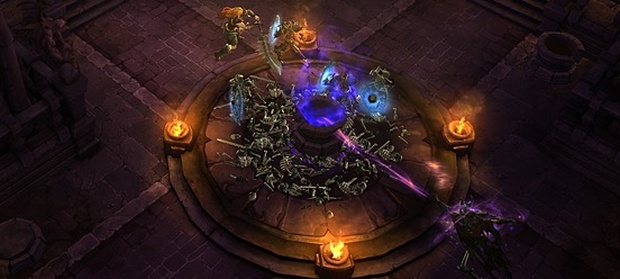
Diablo III has recently made some major updates, including closing the much-loathed auction house. Another of the new features was the addition of clans, essentially guilds for the online ARPG. Limited to 120 members, their intention was to create something smaller than the game’s “communities”, and also something private – invite only. However, for some reason the game’s filters are preventing anyone from creating a clan with variants of the word “trans” in their name.
The issue, raised by Lucian Clark on his GenderTerror blog, means that it’s currently impossible for trans* players to identify themselves as safe clans for other non-binary players. And why might this be important? Well, the results of his posting about it on the Diablo forums rather reveals the answer. Intense hostility, furious bigotry (the worst of which has been removed by mods), and some of the dumbest arguments imaginable immediately reveal quite what a threatening, pugnacious environment gaming can be for anyone who doesn’t remember to be straight, white, and cis-gendered male.
It’s also worth noting this filter bans groups named after the Transformers. Now everyone is united. (And “Transatlantic”, “Transcendental”, “Transhuman”, etc.)
Presumably Blizzard’s filter is in place to prevent abusively named clans in the first place – the block would be an attempt to stop discrimination. However, there is (and should be) a clan named Gaymers, and “gay” is acceptable in clan names. So it seems strange to not also allow “trans” through, and then moderate accordingly.
So, Blizzard, in light of the bilious hostility demonstrated by a section of Diablo players on the forums, there seems to be a fairly strong argument for an invite-only safe space for trans* players to know they won’t be receiving abuse should their vocal chords not match their chosen character name. Seems a simple fix that’s worth doing.
__________________
« You’re Going To Need A Bigger Aircraft Carrier, Battlefield 4 |


An Incredible 360-Degree Video Made Using Six GoPro Cameras
Germany-based journalist and photographer Jonas Ginter has created a mind-bending video using six GoPro cameras attached to a 3D-printed mount. After the cameras were done filming, Ginter stitched the footage together into incredible moving spherical panoramas. More about the process is available on Ginter’s website.

image via Jonas Ginter
African Grey Parrot Says He Doesn’t Want To Be Touched
Jasper, a gorgeous African Grey parrot, tells his human quite definitively “don’t touch me” in this video from 2009.
What is the evolutionary or biological purpose of having periods?
 |
popular
shared this story
from  Suzanne Sadedin on Quora. Suzanne Sadedin on Quora.
|
I'm so glad you asked. Seriously. The answer to this question is one of the most illuminating and disturbing stories in human evolutionary biology, and almost nobody knows about it. And so, O my friends, gather close, and hear the extraordinary tale of:
HOW THE WOMAN GOT HER PERIOD
Contrary to popular belief, most mammals do not menstruate. In fact, it's a feature exclusive to the higher primates, certain bats, and elephant shrews (dogs undergo vaginal bleeding, but do not menstruate). What's more, modern women menstruate vastly more than any other animal. And it's bloody stupid (sorry). A shameful waste of nutrients, disabling, and a dead giveaway to any nearby predators. To understand why we do it, you must first understand that you have been lied to, throughout your life, about the most intimate relationship you will ever experience: the mother-fetus bond.
Isn't pregnancy beautiful? Look at any book about it. There's the future mother, one hand resting gently on her belly. Her eyes misty with love and wonder. You sense she will do anything to nurture and protect this baby. And when you flip open the book, you read about more about this glorious symbiosis, the absolute altruism of female physiology designing a perfect environment for the growth of her child.
If you've actually been pregnant, you might know that the real story has some wrinkles. Those moments of sheer unadulterated altruism exist, but they're interspersed with weeks or months of overwhelming nausea, exhaustion, crippling backache, incontinence, blood pressure issues and anxiety that you'll be among the 15% of women who experience life-threatening complications.
From the perspective of most mammals, this is just crazy. Most mammals sail through pregnancy quite cheerfully, dodging predators and catching prey, even if they're delivering litters of 12. So what makes us so special? The answer lies in our bizarre placenta. In most mammals, the placenta, which is part of the fetus, just interfaces with the surface of the mother's blood vessels, allowing nutrients to cross to the little darling. Marsupials don't even let their fetuses get to the blood: they merely secrete a sort of milk through the uterine wall. Only a few mammalian groups, including primates and mice, have evolved what is known as a “hemochorial” placenta, and ours is possibly the nastiest of all.
Inside the uterus we have a thick layer of endometrial tissue, which contains only tiny blood vessels. The endometrium seals off our main blood supply from the newly implanted embryo. The growing placenta literally burrows through this layer, rips into arterial walls and re-wires them to channel blood straight to the hungry embryo. It delves deep into the surrounding tissues, razes them and pumps the arteries full of hormones so they expand into the space created. It paralyzes these arteries so the mother cannot even constrict them.
What this means is that the growing fetus now has direct, unrestricted access to its mother's blood supply. It can manufacture hormones and use them to manipulate her. It can, for instance, increase her blood sugar, dilate her arteries, and inflate her blood pressure to provide itself with more nutrients. And it does. Some fetal cells find their way through the placenta and into the mother's bloodstream. They will grow in her blood and organs, and even in her brain, for the rest of her life, making her a genetic chimera.
This might seem rather disrespectful. In fact, it's sibling rivalry at its evolutionary best. You see, mother and fetus have quite distinct evolutionary interests. The mother 'wants' to dedicate approximately equal resources to all her surviving children, including possible future children, and none to those who will die. The fetus 'wants' to survive, and take as much as it can get. (The quotes are to indicate that this isn't about what they consciously want, but about what evolution tends to optimize.)
There's also a third player here – the father, whose interests align still less with the mother's because her other offspring may not be his. Through a process called genomic imprinting, certain fetal genes inherited from the father can activate in the placenta. These genes ruthlessly promote the welfare of the offspring at the mother's expense.
How did we come to acquire this ravenous hemochorial placenta which gives our fetuses and their fathers such unusual power? Whilst we can see some trend toward increasingly invasive placentae within primates, the full answer is lost in the mists of time. Uteri do not fossilize well.
The consequences, however, are clear. Normal mammalian pregnancy is a well-ordered affair because the mother is a despot. Her offspring live or die at her will; she controls their nutrient supply, and she can expel or reabsorb them any time. Human pregnancy, on the other hand, is run by committee – and not just any committee, but one whose members often have very different, competing interests and share only partial information. It's a tug-of-war that not infrequently deteriorates to a tussle and, occasionally, to outright warfare. Many potentially lethal disorders, such as ectopic pregnancy, gestational diabetes, and pre-eclampsia can be traced to mis-steps in this intimate game.
What does all this have to do with menstruation? We're getting there.
From a female perspective, pregnancy is always a huge investment. Even more so if her species has a hemochorial placenta. Once that placenta is in place, she not only loses full control of her own hormones, she also risks hemorrhage when it comes out. So it makes sense that females want to screen embryos very, very carefully. Going through pregnancy with a weak, inviable or even sub-par fetus isn't worth it.
That's where the endometrium comes in. You've probably read about how the endometrium is this snuggly, welcoming environment just waiting to enfold the delicate young embryo in its nurturing embrace. In fact, it's quite the reverse. Researchers, bless their curious little hearts, have tried to implant embryos all over the bodies of mice. The single most difficult place for them to grow was – the endometrium.
Far from offering a nurturing embrace, the endometrium is a lethal testing-ground which only the toughest embryos survive. The longer the female can delay that placenta reaching her bloodstream, the longer she has to decide if she wants to dispose of this embryo without significant cost. The embryo, in contrast, wants to implant its placenta as quickly as possible, both to obtain access to its mother's rich blood, and to increase her stake in its survival. For this reason, the endometrium got thicker and tougher – and the fetal placenta got correspondingly more aggressive.
But this development posed a further problem: what to do when the embryo died or was stuck half-alive in the uterus? The blood supply to the endometrial surface must be restricted, or the embryo would simply attach the placenta there. But restricting the blood supply makes the tissue weakly responsive to hormonal signals from the mother – and potentially more responsive to signals from nearby embryos, who naturally would like to persuade the endometrium to be more friendly. In addition, this makes it vulnerable to infection, especially when it already contains dead and dying tissues.
The solution, for higher primates, was to slough off the whole superficial endometrium – dying embryos and all – after every ovulation that didn't result in a healthy pregnancy. It's not exactly brilliant, but it works, and most importantly, it's easily achieved by making some alterations to a chemical pathway normally used by the fetus during pregnancy. In other words, it's just the kind of effect natural selection is renowned for: odd, hackish solutions that work to solve proximate problems. It's not quite as bad as it seems, because in nature, women would experience periods quite rarely – perhaps as little as 7-10 times in their lives between lactational amenorrhea and pregnancies.
We don't really know how our hyper-aggressive placenta is linked to the other traits that combine to make humanity unique. But these traits did emerge together somehow, and that means in some sense the ancients were perhaps right. When we metaphorically 'ate the fruit of knowledge' – when we began our journey toward science and technology that would separate us from innocent animals and also lead to our peculiar sense of sexual morality – perhaps that was the same time the unique suffering of menstruation, pregnancy and childbirth was inflicted on women. All thanks to the evolution of the hemochorial placenta.
Links:
The evolution of menstruation: A new model for genetic assimilation
Genetic conflicts in human pregnancy.
Menstruation: a nonadaptive consequence of uterin... [Q Rev Biol. 1998]
Natural Selection of Human Embryos: Decidualizing Endometrial Stromal Cells Serve as Sensors of Embryo Quality upon Implantation
Credits: During my pregnancy I was privileged to audit a class at Harvard University by the eminent Professor David Haig, whose insight underlies much of this research. Thanks also to Edgar A. Duenez-Guzman, who reminded me of crucial details. All errors are mine alone.
See question on Quora
Protip: Earthquakes are logged by USGS
If you think we had an earthquake, don't get on here and ask a bunch of other people who think they felt an earthquake. Go here: http://earthquake.usgs.gov/earthquakes/map/
[link] [6 comments]
Mormon Women Turned Away From All-Male Priesthood Meeting - NBC News.com
Portland Egyptologist Conference: Scholar Says Looting in 2011 Revealed New Tombs » News » OPB
Giovanni Battista Nazari, Three Dreams on the Transmutation of...

Giovanni Battista Nazari, Three Dreams on the Transmutation of Metal, 1599
Adjust the Space Between a Drop Cap and the Next Letter with Kerning
firehose'If you place a non-joiner character between the drop cap and the second letter, you can then kern the space between that non-joiner and the following letter (the “c” in the example above). That brings just the first line in!'

Feminism | 4bf.gif
firehosevia Osiasjota


sarkyfancypants: Uuh… it’s hard to explain, it’s a burden that...


Uuh… it’s hard to explain, it’s a burden that just appears out of nowhere and fucks you up for days. Ignoring it is not easy. It takes over you and even tends to distort your perception of reality turning it into a living nightmare. It’s awful and terrifying.

PDX Nerds Win Book Match Against Seattle » News » OPB


Avid Adds Subscription Options to Media Composer
firehoseHA HA HA HA HA HA HA HA HA HA HA HA HA HA HA HA HA HA HA HA HA HA HA HA HA HA HA HA
These Awesome Area Rugs Bring Stargazing to Your Living Room

Weekends are for dreaming of interior design. This weekend, I'm gazing with covetous awe at Schönstaub's nebula area rugs. The three rug designs are photographs taken by the Hubble Space Telescope of nebulas in the small and large Magellanic Clouds.


t3hsiggy: nymphamortem: blue-author: runnerjive: thre3dprint:...

Open Source Clothing.
Now I feel it imperative to reblog this, because the project seems to have hit a snag: The video they put up has been taken down because of claims of 3rd-party content, whatever whatever corporate lawyer stuff internet throttling stuff. That makes me think that Bennetton or one of the others whose stores were glimpsed in the background got their hooks in Vimeo.
So I thought I’d tell you a yarn about how this thing works:
You download the open-source plans for the machine.
You build it.
You download their open-souce clothing-maker program.
You enter the desired measurements into the fields (the ones I remember from the video were arm and neck and chest measurements, so I’m sure they have waist and/or hips too)
You print out your sweater, or hat, or scarf, or cardigan, or whatever it was that you selected. It takes an hour to print out the sweater, working off of the two yarn spools that you can see in the bottom right corner of this .gif
That’s it. Custom-fit, custom-color clothing in an hour, for the price of yarn. Can you see why one of the clothing companies targetted in the video might have felt threatened enough to force the video to come down?I know if I sold overpriced manufactured clothes, I’d see this as a looming menace.
I WILL HAVE HAUTE COUTURE

Hieronymus Cock after Albrecht Dürer, St. Simon holding a saw,...
firehosest. simon's dick saw

Hieronymus Cock after Albrecht Dürer, St. Simon holding a saw, late 16th century
