Shared posts

20 May 02:42

Stop Signs Projected onto Water Curtains

by John Farrier

water curtain

Many tunnels in Sydney, Australia aren't tall enough to permit tractor trailers to move through safely. This animated gif shows a warning system that informs truck drivers when they're about to crash into a tunnel entrance. When sensors detect a vehicle that is too tall, the system pours water across the entrance to the tunnel and projects a stop sign onto that water curtain.

Link

20 May 01:27

A Baby Monkey, Lion Cub and a Couple of Tiger Cubs walk into a bar…

by Crazy Pants

And everybody’s head exploded cuz they could not withstand the Nexus of Cute Squad.


Via Yahoo News


Filed under: Uncategorized Tagged: Big Cats, Interspecies Snorgling, Kittens, Primates
17 May 16:00

Pet Meh

Pet Meh

Submitted by: Svokan

Tagged: cute , pet , Cats
17 May 15:50

photos by Brandon Stanton


“You look kinda like Ernest Hemingway.”
“And we’re both from Key West.”
“You’re from Key West?”
“Well, I used to smuggle coke out of there.”

Фотографии из проекта 'Humans of New York' американского фотографа Брэндона Стэнтона.


“Anniversary? Birthday?”
“Just because.”


“What’s your favorite thing about him?”
“No matter what, he makes the best of it.”
“What’s your favorite thing about her?”
“Her sense of adventure.”


“I want to draw cartoons.”


“She saved my life.”


“Who’s that on your shirt?”
“My ex-boss. We made these to make fun of him. Because he’s bald.”


“What’s the most romantic thing he’s ever done?”
“Oh God, he’s hopeless. During our first year of marriage, he celebrated our anniversary every single month.”


“If you could give one piece of advice, what would it be?”
“Be nice and like people!”


“What was the happiest moment of your life?”
“There are two: when my son was born, and last night.”


“Just sittin’ here contemplatin’ how I’m gonna get home.”


“What’s your favorite thing about your dad?”
“He lets me beat him up and doesn’t cry.”


“My town in Colombia is very beautiful. I don’t travel because I want to leave my home. I travel because I need to know why I’m staying.”


“I’ve been photographed in the same dress as Kim Kardashian. I wore it better, though. She was too short for it.”


“What’s your favorite thing about New York?”
“The women.”


She told me her name was “Edge-E-Sledgehammer,” then she started laying down some spoken word poetry.
“Is this stuff on the internet?” I asked.
“Nah,” she said, “I’m completely underground.”


“People see my buttons and think I’m a radical, but I just stand for peace! Except North Korea. We should handle them.”


“I did a little bit of everything. Was never great at anything… but I survived.”


“What’s the best day you’ve ever spent together?”
“Probably that day on the Ponts des Arts.”
“What’d you do?”
“Just held hands.”


“Back in 1978, she came knocking on my door to yell at me for using up three machines in the laundry room. We’ve been friends ever since.”


“Do what you want. Don’t listen to anyone else. Just do what you want.”


“When I was younger, I spent a lot of time wanting to be like ‘this guy’ or ‘that guy.’ Then at a certain age I realized that I’m probably going to stay me, and I should learn to be OK with that.’”


“When my husband was dying, I said: ‘Moe, how am I supposed to live without you?’ He told me: ‘Take the love you have for me and spread it around.’”


“I drive the truck.”


“You ever try a Vitamin B shot? That’ll get you high!”


When I asked for his photo, he asked for a few bucks to help him get lunch. I thought it was a fair trade. But a few minutes later, he chased me down and begged me to take it back. When I wouldn’t, he gave me a huge hug.


“I don’t understand her. And I love that.”


“What’s the best part about being a grandfather?”
“I get to love her so much.”


“He was training to be a surgeon when we got married. One night he came home from two days straight on the job, and I’d cooked him dinner. Right before he fell asleep in his plate of food, he asked me what movie I’d like to watch. I thought it was so sweet.”


“The only rules of the club are: you’ve got to be over 50, you’ve got to wear red, and you’ve got to like having fun.”


“I’m homeless, and I’m an alcoholic. But I have a dream.”
“What’s that?”
“I wanna go fishing.”


“I had heart surgery in October. Today I’m going to try to get on the train for the first time. Hope I don’t get knocked over!”


“We’ve been best friends since 1967.”


“You want me to hold my boys?”


“The neighbor’s dog got loose!”


After they finished kissing, she took off her blue cape, and laid it over a woman sleeping on a nearby bench. It was such an unbelievably poetic moment, I actually chased them down to fact-check my own eyes.
“Excuse me. Was that your blue blanket?”
“Yes.”
“And you just gave it to her?”
“….Yes, why?”
“Oh nothing.”


“Where are you hiking?”
“The liquor store.”


“We were both involved in the Civil Rights Movement. We met 47 years ago on a picket line.”


“What’s your favorite thing about your wife?”
“She’s sexy.”

17 May 14:57

May 17, 2013


16 May 15:48

Supporting the Scripture

by admin

14 May 15:14

pizzaforpresident: smartaleckette: February 13, 2013 - the day...


pizzaforpresident:

smartaleckette:

February 13, 2013 - the day Canada’s Parliament debated the zombie apocalypse. (x)

this is very important

13 May 11:02

The Dog's Sins


13 May 06:43

Birds and Dinosaurs

Sure, T. rex is closer in height to Stegosaurus than a sparrow. But that doesn't tell you much; 'Dinosaur Comics' author Ryan North is closer in height to certain dinosaurs than to the average human.
13 May 01:24

Mama Hug-O-Rama

by pyrit

Because Mom said so, that’s why.

8539344435_c9714a6f60_b

8539344771_ab5e300d0a_o

8539344825_db6a298384_b

8539344973_ed9b152a0d_b

8539345445_d4c32438c5_b

8540450442_48e91f97b4_b

8540450892_49c6302de4_b

8540451052_fe7fabf6e2_b

8540451112_fb14d8866a_b

8540451160_c6da886103_b

8540451302_a24f7a8054_b

8540451572_488fd146b7_o
Delivered to you by The Daily Mail


Filed under: Uncategorized Tagged: Unusual Animals
11 May 17:38

How to Build a Raspberry Pi Retro Game Console for $35 

by Thorin Klosowski

Since its release, the $35 Raspberry Pi mini-computer has been hailed as the perfect all-in-one retro game console. Now, it’s easier to do than ever, and it doesn’t take any Linux knowledge whatsoever. Here’s how to make your own retro game console in under 10 minutes.

Read more...

10 May 05:59

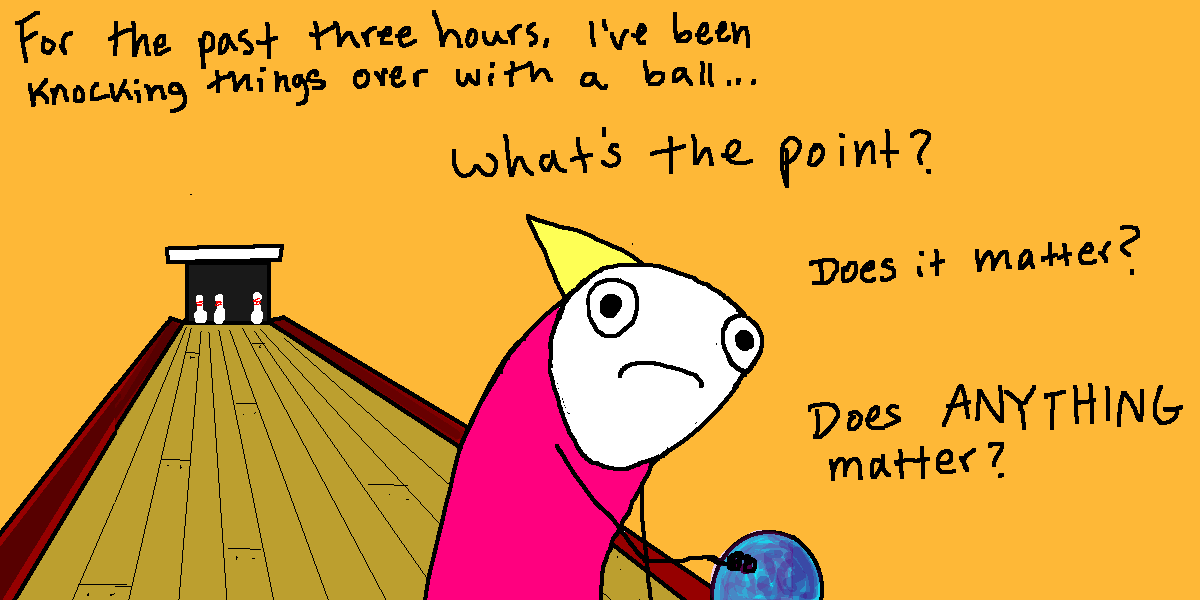
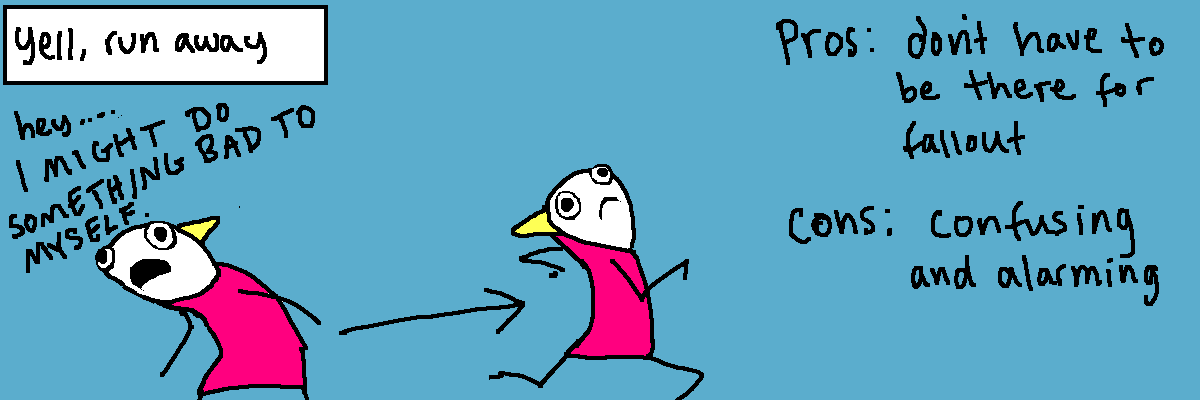
Depression Part Two

by Allie
I remember being endlessly entertained by the adventures of my toys. Some days they died repeated, violent deaths, other days they traveled to space or discussed my swim lessons and how I absolutely should be allowed in the deep end of the pool, especially since I was such a talented doggy-paddler.


I didn't understand why it was fun for me, it just was.


But as I grew older, it became harder and harder to access that expansive imaginary space that made my toys fun. I remember looking at them and feeling sort of frustrated and confused that things weren't the same.


I played out all the same story lines that had been fun before, but the meaning had disappeared. Horse's Big Space Adventure transformed into holding a plastic horse in the air, hoping it would somehow be enjoyable for me. Prehistoric Crazy-Bus Death Ride was just smashing a toy bus full of dinosaurs into the wall while feeling sort of bored and unfulfilled.  I could no longer connect to my toys in a way that allowed me to participate in the experience.


Depression feels almost exactly like that, except about everything.

At first, though, the invulnerability that accompanied the detachment was exhilarating. At least as exhilarating as something can be without involving real emotions.


The beginning of my depression had been nothing but feelings, so the emotional deadening that followed was a welcome relief.  I had always wanted to not give a fuck about anything. I viewed feelings as a weakness — annoying obstacles on my quest for total power over myself. And I finally didn't have to feel them anymore.

But my experiences slowly flattened and blended together until it became obvious that there's a huge difference between not giving a fuck and not being able to give a fuck. Cognitively, you might know that different things are happening to you, but they don't feel very different.


Which leads to horrible, soul-decaying boredom.


I tried to get out more, but most fun activities just left me existentially confused or frustrated with my inability to enjoy them.


Months oozed by, and I gradually came to accept that maybe enjoyment was not a thing I got to feel anymore. I didn't want anyone to know, though. I was still sort of uncomfortable about how bored and detached I felt around other people, and I was still holding out hope that the whole thing would spontaneously work itself out. As long as I could manage to not alienate anyone, everything might be okay!

However, I could no longer rely on genuine emotion to generate facial expressions, and when you have to spend every social interaction consciously manipulating your face into shapes that are only approximately the right ones, alienating people is inevitable.


Everyone noticed.


It's weird for people who still have feelings to be around depressed people. They try to help you have feelings again so things can go back to normal, and it's frustrating for them when that doesn't happen. From their perspective, it seems like there has got to be some untapped source of happiness within you that you've simply lost track of, and if you could just see how beautiful things are...


At first, I'd try to explain that it's not really negativity or sadness anymore, it's more just this detached, meaningless fog where you can't feel anything about anything — even the things you love, even fun things — and you're horribly bored and lonely, but since you've lost your ability to connect with any of the things that would normally make you feel less bored and lonely, you're stuck in the boring, lonely, meaningless void without anything to distract you from how boring, lonely, and meaningless it is.


But people want to help. So they try harder to make you feel hopeful and positive about the situation. You explain it again, hoping they'll try a less hope-centric approach, but re-explaining your total inability to experience joy inevitably sounds kind of negative; like maybe you WANT to be depressed. The positivity starts coming out in a spray — a giant, desperate happiness sprinkler pointed directly at your face. And it keeps going like that until you're having this weird argument where you're trying to convince the person that you are far too hopeless for hope just so they'll give up on their optimism crusade and let you go back to feeling bored and lonely by yourself.


And that's the most frustrating thing about depression. It isn't always something you can fight back against with hope. It isn't even something — it's nothing. And you can't combat nothing. You can't fill it up. You can't cover it. It's just there, pulling the meaning out of everything. That being the case, all the hopeful, proactive solutions start to sound completely insane in contrast to the scope of the problem.

It would be like having a bunch of dead fish, but no one around you will acknowledge that the fish are dead. Instead, they offer to help you look for the fish or try to help you figure out why they disappeared.


The problem might not even have a solution. But you aren't necessarily looking for solutions. You're maybe just looking for someone to say "sorry about how dead your fish are" or "wow, those are super dead. I still like you, though."


I started spending more time alone.


Perhaps it was because I lacked the emotional depth necessary to panic, or maybe my predicament didn't feel dramatic enough to make me suspicious, but I somehow managed to convince myself that everything was still under my control right up until I noticed myself wishing that nothing loved me so I wouldn't feel obligated to keep existing.


It's a strange moment when you realize that you don't want to be alive anymore. If I had feelings, I'm sure I would have felt surprised. I have spent the vast majority of my life actively attempting to survive. Ever since my most distant single-celled ancestor squiggled into existence, there has been an unbroken chain of things that wanted to stick around.


Yet there I was, casually wishing that I could stop existing in the same way you'd want to leave an empty room or mute an unbearably repetitive noise.


That wasn't the worst part, though. The worst part was deciding to keep going.


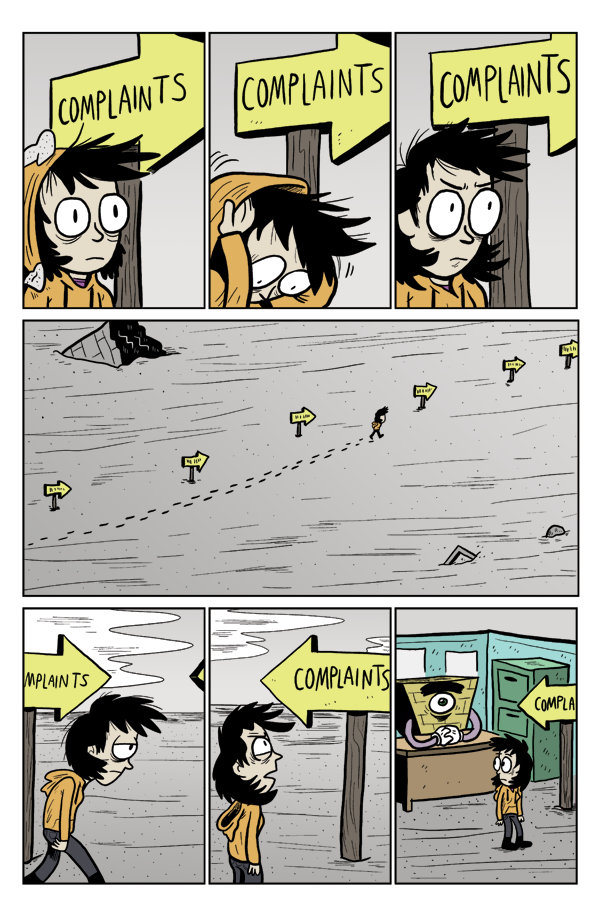
When I say that deciding to not kill myself was the worst part, I should clarify that I don't mean it in a retrospective sense. From where I am now, it seems like a solid enough decision. But at the time, it felt like I had been dragging myself through the most miserable, endless wasteland, and — far in the distance — I had seen the promising glimmer of a slightly less miserable wasteland. And for just a moment, I thought maybe I'd be able to stop and rest. But as soon as I arrived at the border of the less miserable wasteland, I found out that I'd have to turn around and walk back the other way.


Soon afterward, I discovered that there's no tactful or comfortable way to inform other people that you might be suicidal. And there's definitely no way to ask for help casually.


I didn't want it to be a big deal. However, it's an alarming subject. Trying to be nonchalant about it just makes it weird for everyone.


I was also extremely ill-prepared for the position of comforting people. The things that seemed reassuring at the time weren't necessarily comforting for others.


I had so very few feelings, and everyone else had so many, and it felt like they were having all of them in front of me at once. I didn't really know what to do, so I agreed to see a doctor so that everyone would stop having all of their feelings at me.


The next few weeks were a haze of talking to relentlessly hopeful people about my feelings that didn't exist so I could be prescribed medication that might help me have them again.


And every direction was bullshit for a really long time, especially up. The absurdity of working so hard to continue doing something you don't like can be overwhelming. And the longer it takes to feel different, the more it starts to seem like everything might actually be hopeless bullshit.


My feelings did start to return eventually. But not all of them came back, and they didn't arrive symmetrically.

I had not been able to care for a very long time, and when I finally started being able to care about things again, I HATED them. But hatred is technically a feeling, and my brain latched onto it like a child learning a new word.


Hating everything made all the positivity and hope feel even more unpalatable. The syrupy, over-simplified optimism started to feel almost offensive.


Thankfully, I rediscovered crying just before I got sick of hating things.  I call this emotion "crying" and not "sadness" because that's all it really was. Just crying for the sake of crying. My brain had partially learned how to be sad again, but it took the feeling out for a joy ride before it had learned how to use the brakes or steer.


At some point during this phase, I was crying on the kitchen floor for no reason. As was common practice during bouts of floor-crying, I was staring straight ahead at nothing in particular and feeling sort of weird about myself. Then, through the film of tears and nothingness, I spotted a tiny, shriveled piece of corn under the refrigerator.


I don't claim to know why this happened, but when I saw the piece of corn, something snapped. And then that thing twisted through a few permutations of logic that I don't understand, and produced the most confusing bout of uncontrollable, debilitating laughter that I have ever experienced.


I had absolutely no idea what was going on.


My brain had apparently been storing every unfelt scrap of happiness from the last nineteen months, and it had impulsively decided to unleash all of it at once in what would appear to be an act of vengeance.


That piece of corn is the funniest thing I have ever seen, and I cannot explain to anyone why it's funny. I don't even know why. If someone ever asks me "what was the exact moment where things started to feel slightly less shitty?" instead of telling a nice, heartwarming story about the support of the people who loved and believed in me, I'm going to have to tell them about the piece of corn. And then I'm going to have to try to explain that no, really, it was funny. Because, see, the way the corn was sitting on the floor... it was so alone... and it was just sitting there! And no matter how I explain it, I'll get the same, confused look. So maybe I'll try to show them the piece of corn - to see if they get it. They won't. Things will get even weirder.


Anyway, I wanted to end this on a hopeful, positive note, but, seeing as how my sense of hope and positivity is still shrouded in a thick layer of feeling like hope and positivity are bullshit, I'll just say this: Nobody can guarantee that it's going to be okay, but — and I don't know if this will be comforting to anyone else — the possibility exists that there's a piece of corn on a floor somewhere that will make you just as confused about why you are laughing as you have ever been about why you are depressed. And even if everything still seems like hopeless bullshit, maybe it's just pointless bullshit or weird bullshit or possibly not even bullshit.


I don't know. 

But when you're concerned that the miserable, boring wasteland in front of you might stretch all the way into forever, not knowing feels strangely hope-like. 


09 May 10:50

Sailor Zviane

by boulet


09 May 01:26

1074 – Sempre tem um…

by Carlos Ruas

2049

09 May 01:26

1075 – Pai e filho

by Carlos Ruas

2050

09 May 01:26

O lago rosa

by Carlos Ruas

lagoa1


lagoa5


lagoa2

lagoa2


lagoa4


lagoa3

lagoa rosa


O Lago Retba, no Senegal, está cor-de-rosa. A coloração é resultado de altos níveis de sal na água, e fica mais visíveis nas estações secas. Em algumas áreas, a concentração de sal chega a 40 %.

Senegaleses navegam diariamente nas águas do Retba, para coletar o mineral, que depois fica amontoado nas margens do lago. Assim como no Mar Morto, é bem fácil flutuar no Retba, por causa da alta concentração salina.

Segundo Michael Danson, microbiologista da Universidade de Bath, na Inglaterra, a cor é produzida por uma microalga, que se adapta e reproduz em meios com alta concentração de sal.

- Elas produzem um pigmento nesse tom que absorve e utiliza a luz solar para criar mais energia, deixando a água em tom rosa – explicou o especialista – Já chegamos a pensar que o Retba e o Mar Morto eram incompatíveis com formas de vida, mas eles são bastante vivos.

Fonte: http://extra.globo.com/noticias/saude-e-ciencia/lago-fica-cor-de-rosa-no-senegal-5112828.html#ixzz2SiOCexfG

07 May 02:57

The Stunning Instrument That Sounds Like an Orchestra

by Delana
[ By Delana in Gadgets & Geekery & Technology. ]

wheelharp

Stringed instruments have been played since time immemorial, and naturally as technology improves plenty of people are trying to recreate that kind of sound digitally. Of course, nothing compares to the rich, warm, sensual sound of an actual stringed instrument, and this is something that artist and artisan Jon Jones understands better than most people. That is why he created the Wheelharp, an incredible stringed instrument that manages to sound like the entire string section of an orchestra all on its own.

radial wheelharp

The beautiful instrument was inspired in 2001 by Jones’ hurdy-gurdy, an ancient stringed instrument that produces tones via a hand-cranked rosined wheel rubbing against strings. As much as Jones enjoyed the hurdy-gurdy, he wanted to know if he could create a full-scale chromatic instrument in which each string could produce a different sound when individually bowed on the rosined wheel. He set out to produce the first Wheelharp.

The result was an instrument of incomparable beauty and charm. Pressing on any of the Wheelharp’s keys moves a string toward the rosined wheel. Of the instrument’s two pedals, the right controls the speed of the motor which turns the wheel. The left pedal controls a damper system that extends across the strings. Although the instrument looks old-timey and low-tech, it also includes an electromagnetic pickup and a piezoelectric pickup, both of which allow the player to control the instrument’s amplification.

linear wheelharp

It would be impossible to describe the immense beauty and complexity of the music produced by the Wheelharp. It is truly an instrument like no other in the world. It is produced in two versions: a radial version (with the curved keyboard) and a linear model with a more familiar, traditional straight keyboard. Both models produce some of the most breathtaking music ever produced by a single instrument. It certainly doesn’t hurt that the Wheelharp is an object of beauty to look at, either. But if you want to give this incredible invention a try, be ready to pay for it: the least expensive version from Antiquity Music runs nearly $10,000.

Share on Facebook

[ By Delana in Gadgets & Geekery & Technology. ]

[ WebUrbanist | Archives | Galleries | Privacy | TOS ]


04 May 16:03

Musiquinhas

by Fábio Coala

musiquinhas

Agora é só dormir tranquilo…

O post Musiquinhas apareceu primeiro em Mentirinhas.

02 May 05:23

THIS JUST IN: Dimbi’s Debut

by pyrit

Or, as the Parc Zoologique & Botanique de Mulhouse in France would say, “Voila!”, which literally means, jeepers creepers where’d ya get those peepers?
Dimbi, the blue-eyed black lemur, a critically endangered species (boo, hiss), was born on March 8 (yay!) and just recently made his first public appearance.
See for yourself!

8664159334_4fe86ae0b5_b

8663060815_5d1ef7c889_b

8663060725_c76661360f_b

8664159424_3da31d47d0_b

8664159280_0144189ce3_b
Can’t…  look…  away…

8663060565_7cb7e76e27_b
And you can see even more about Dimbi over at Zooborns.


Filed under: Uncategorized Tagged: Lemurs, This Just In!, Unusual Animals
01 May 02:01

Confessions...

01 May 02:00

HTTP: The Protocol Every Web Developer Must Know – Part 2

by Pavan Podila

In my previous article, we covered some of HTTP’s basics, such as the URL scheme, status codes and request/response headers. With that as our foundation, we will look at the finer aspects of HTTP, like connection handling, authentication and HTTP caching. These topics are fairly extensive, but we’ll cover the most important bits.


HTTP Connections

A connection must be established between the client and server before they can communicate with each other, and HTTP uses the reliable TCP transport protocol to make this connection. By default, web traffic uses TCP port 80. A TCP stream is broken into IP packets, and it ensures that those packets always arrive in the correct order without fail. HTTP is an application layer protocol over TCP, which is over IP.

HTTPS is a secure version of HTTP, inserting an additional layer between HTTP and TCP called TLS or SSL (Transport Layer Security or Secure Sockets Layer, respectively). HTTPS communicates over port 443 by default, and we will look at HTTPS later in this article.

HTTP and HTTPS layers

An HTTP connection is identified by <source-IP, source-port> and <destination-IP, destination-port>. On a client, an HTTP application is identified by a <IP, port> tuple. Establishing a connection between two endpoints is a multi-step process and involves the following:

Connection Delays
  • resolve IP address from host name via DNS
  • establish a connection with the server
  • send a request
  • wait for a response
  • close connection

The server is responsible for always responding with the correct headers and responses.

In HTTP/1.0, all connections were closed after a single transaction. So, if a client wanted to request three separate images from the same server, it made three separate connections to the remote host. As you can see from the above diagram, this can introduce lot of network delays, resulting in a sub-optimal user experience.

To reduce connection-establishment delays, HTTP/1.1 introduced persistent connections, long-lived connections that stay open until the client closes them. Persistent connections are default in HTTP/1.1, and making a single transaction connection requires the client to set the Connection: close request header. This tells the server to close the connection after sending the response.

In addition to persistent connections, browsers/clients also employ a technique, called parallel connections, to minimize network delays. The age-old concept of parallel connections involves creating a pool of connections (generally capped at six connections). If there are six assets that the client needs to download from a website, the client makes six parallel connections to download those assets, resulting in a faster turnaround. This is a huge improvement over serial connections where the client only downloads an asset after completing the download for a previous asset.

Parallel connections, in combination with persistent connections, is today’s answer to minimizing network delays and creating a smooth experience on the client. For an in-depth treatment of HTTP connections, refer to the Connections section of the HTTP spec.

Server-side Connection Handling

The server mostly listens for incoming connections and processes them when it receives a request. The operations involve:

  • establishing a socket to start listening on port 80 (or some other port)
  • receiving the request and parsing the message
  • processing the response
  • setting response headers
  • sending the response to the client
  • close the connection if a Connection: close request header was found

Of course, this is not an exhaustive list of operations. Most applications/websites need to know who makes a request in order to create more customized responses. This is the realm of identification and authentication.


Identification and Authentication

HTTP is an application layer protocol over TCP, which is over IP.

It is almost mandatory to know who connects to a server for tracking an app’s or site’s usage and the general interaction patterns of users. The premise of identification is to tailor the response in order to provide a personalized experience; naturally, the server must know who a user is in order to provide that functionality.

There are a few different ways a server can collect this information, and most websites use a hybrid of these approaches:

  • Request headers: From, Referer, User-Agent – We saw these headers in Part 1.
  • Client-IP – the IP address of the client
  • Fat Urls – storing state of the current user by modifying the URL and redirecting to a different URL on each click; each click essentially accumulates state.
  • Cookies – the most popular and non-intrusive approach.

Cookies allow the server to attach arbitrary information for outgoing responses via the Set-Cookie response header. A cookie is set with one or more name=value pairs separated by semicolon (;), as in Set-Cookie: session-id=12345ABC; username=nettuts.

A server can also restrict the cookies to a specific domain and path, and it can make them persistent with an expires value. Cookies are automatically sent by the browser for each request made to a server, and the browser ensures that only the domain- and path-specific cookies are sent in the request. The request header Cookie: name=value [; name2=value2] is used to send these cookies to the server.

The best way to identify a user is to require them to sign up and log in, but implementing this feature requires some effort by the developer, as well as the user.

Techniques like OAuth simplify this type of feature, but it still requires user consent in order to work properly. Authentication plays a large role here, and it is probably the only way to identify and verify the user.

Authentication

HTTP does support a rudimentary form of authentication called Basic Authentication, as well as the more secure Digest Authentication.

In Basic Authentication, the server initially denies the client’s request with a WWW-Authenticate response header and a 401 Unauthorized status code. On seeing this header, the browser displays a login dialog, prompting for a username and password. This information is sent in a base-64 encoded format in the Authentication request header. The server can now validate the request and allow access if the credentials are valid. Some servers might also send an Authentication-Info header containing additional authentication details.

Authentication Challenge/Response

A corollary to Basic-Authentication is Proxy Authentication. Instead of a web server, the authetication challenge is requested by an intermediate proxy. The proxy sends a Proxy-Authenticate header with a 407 Unauthorized status code. In return, the client is supposed to send the credentials via the Proxy-Authorization request header.

Digest Authentication is similar to Basic and uses the same handshake technique with the WWW-Authenticate and Authorization headers, but Digest uses a more secure hashing function to encrypt the username and password (commonly with MD5 or KD digest functions). Although Digest Authentication is supposed to be more secure than Basic, websites typically use Basic Authentication because of its simplicty. To mitigate the security concerns, Basic Auth is used in conjunction with SSL.

Secure HTTP

HTTPS AddressBar

The HTTPS protocol provides a secure connection on the web. The easiest way to know if you are using HTTPS is to check the browser’s address bar. HTTPs’ secure component involves inserting a layer of encryption/decryption between HTTP and TCP. This is the Secure Sockets Layer (SSL) or the improved Transport Layer Security (TLS).

SSL uses a powerful form of encryption using RSA and public-key cryptography. Because secure transactions are so important on the web, a ubiquitous standards-based Public-Key Infrastructure (PKI) effort has been underway for quite sometime.

Existing clients/servers do not have to change the way they handle messages because most of the hard work happens in the SSL layer. Thus, you can develop your web application using Basic Authentication and automatially reap the benefits of SSL by switching to the https:// protocol. However, to make the web application work over HTTPS, you need to have a working digital certificate deployed on the server.

Certificates

Just as you need ID cards to show your identity, a web server needs a digital certificate to identify itself. Certificates (or “certs”) are issued by a Certificate Authority (CA) and vouch for your identity on the web. The CAs are the guardians of the PKI. The most common form of certificates is the X.509 v3 standard, which contains information, such as:

  • the certificate issuer
  • the algorithm used for the certificate
  • the subject name or organization for whom this cert is created
  • the public key information for the subject
  • the Certification Authority Signature, using the specified signing algorithm

When a client makes a request over HTTPS, it first tries to locate a certificate on the server. If the cert is found, it attempts to verfiy it against its known list of CAs. If its not one of the listed CAs, it might show a dialog to the user warning about the website’s certficate.

Once the certificate is verified, the SSL handshake is complete and secure transmission is in effect.


HTTP Caching

It is generally agreed that doing the same work twice is wasteful. This is the guiding principle around the concept of HTTP caching, a fundamental pillar of the HTTP Network Infrastructure. Because most of the operations are over a network, a cache helps save time, cost and bandwidth, as well as provide an improved experience on the web.

Caches are used at several places in the network infrastructure, from the browser to the origin server. Depending on where it is located, a cache can be categorized as:

  • Private: within a browser, caches usernames, passwords, URLs, browsing history and web content. They are generally small and specific to a user.
  • Public: deployed as caching proxies between the server and client. These are much larger because they serve multiple users. A common practice is to keep multiple caching proxies between the client and the origin-server. This helps to serve frequently accessed content, while still allowing a trip to the server for infrequently needed content.
Cache Topology

Cache Processing

Regardless of where a cache is located, the process of maintaining a cache is quite similar:

  • Receive request message.
  • Parse the URL and headers.
  • Lookup a local copy; otherwise, fetch and store locally
  • Do a freshness check to determine the age of the content in the cache; make a request to refresh the content only if necessary.
  • Create the response from the cached body and updated headers.
  • Send the response back to client.
  • Optionally, log the transaction.

Of course, the server is responsible for always responding with the correct headers and responses. If a document hasn’t changed, the server should respond with a 304 Not Modified. If the cached copy has expired, it should generate a new response with updated response headers and return with a 200 OK. If the resource is deleted, it should come back with 404 Not Found. These responses help tune the cache and ensure that stale content is not kept for too long.

Cache Control Headers

Parallel connections, in combination with persistent connections, is today’s answer to minimizing network delays.

Now that we have a sense of how a cache works, it’s time to look at the request and response headers that enable the caching infrastructure. Keeping the content fresh and up-to-date is one of the primary responsibilities of the cache. To keep the cached copy consistent with the server, HTTP provides some simple mechanisms, namely Document Expiration and Server Revalidation.

Document Expiration

HTTP allows an origin-server to attach an expiration date to each document using the Cache-Control and Expires response headers. This helps the client and other cache servers know how long a document is valid and fresh. The cache can serve the copy as long as the age of the document is within the expiration date. Once a document expires, the cache must check with the server for a newer copy and update its local copy accordingly.

Expires is an older HTTP/1.0 response header that specifies the value as an absolute date. This is only useful if the server clocks are in sync with the client, which is a terrible assumption to make. This header is less useful compared to the newer Cache-Control: max-age=<s> header introduced in HTTP/1.1. Here, max-age is a relative age, specified in seconds, from the time the response was created. Thus if a document should expire after one day, the expiration header should be Cache-Control: max-age=86400.

Server Revalidation

Once a cached document expires, the cache must revalidate with the server to check if the document has changed. This is called server revalidation and serves as a querying mechanism for the stale-ness of a document. Just because a cached copy has expired doesn’t mean that the server actually has newer content. Revalidation is just a means of ensuring that the cache stays fresh. Because of the expiration time (as specified in a previous server response), the cache doesn’t have to check with the server for every single request, thus saving bandwidth, time and reducing the network traffic.

The combination of document expiration and server revalidation is a very effective mechanism, it and allows distributed systems to maintain copies with an expiration date.

If the content is known to frequently change, the expiration time can be reduced—allowing the systems to re-sync more frequently.

The revalidation step can be accomplished with two kinds of request-headers: If-Modified-Since and If-None-Match. The former is for date-based validation while the latter uses Entity-Tags (ETags), a hash of the content. These headers use date or ETag values obtained from a previous server response. In case of If-Modified-Since, the Last-Modified response header is used; for If-None-Match, it is the ETag response header.

Controlling the Cachability

The validity period for a document should be defined by the server generating the document. If it’s a newspaper website, the homepage should expire after a day (or sometimes even every hour!). HTTP provides the Cache-Control and Expires response headers to set the expiration on documents. As mentioned earlier, Expires is based on absolute dates and not a reliable solution for controlling cache.

The Cache-Control header is far more useful and has a few different values to constrain how clients should be caching the response:

  • Cache-Control: no-cache: the client is allowed to store the document; however, it must revalidate with the server on every request. There is a HTTP/1.0 compatibility header called Pragma: no-cache, which works the same way.
  • Cache-Control: no-store: this is a stronger directive to the client to not store the document at all.
  • Cache-Control: must-revalidate: this tells the client to bypass its freshness calculation and always revalidate with the server. It is not allowed to serve the cached response in case the server is unavailable.
  • Cache-Control: max-age: this sets a relative expiration time (in seconds) from the time the response is generated.

As an aside, if the server does not send any Cache-Control headers, the client is free to use its own heuristic expiration algorithm to determine freshness.

Constraining Freshness from the Client

Cachability is not just limited to the server. It can also be specified from the client. This allows the client to impose constraints on what it is willing to accept. This is possible via the same Cache-Control header, albeit with a few different values:

  • Cache-Control: min-fresh=<s>: the document must be fresh for at least <s> seconds.
  • Cache-Control: max-stale or Cache-Control: max-stale=<s>: the document cannot be served from the cache if it has been stale for longer than <s> seconds.
  • Cache-Control: max-age=<s>: the cache cannot return a document that has been cached longer than <s> seconds.
  • Cache-Control: no-cache or Pragma: no-cache: the client will not accept a cached resource unless it has been revalidated.

HTTP Caching is actually a very interesting topic, and there are some very sophisticated algorithms to manage cached content. For a deeper look into this topic, refer to the Caching section of the HTTP spec.


Summary

Our tour of HTTP began with the foundation of URL schemes, status codes and request/response headers. Building upon those concepts, we looked at some of the finer areas of HTTP, such as connection handling, identification and authentication and caching. I am hopeful that this tour has given you a good taste for the breadth of HTTP and enough pointers to further explore this protocol.

References

30 Apr 14:24

Exotic fighting game locales become animated GIFs in this tour of the 16-bit world

by Jacob Kastrenakes

In the background of flurries of punching, kicking, and special moves, fighting games have a long history of taking players on an exotic tour of the world. Reddit user RudeBootie has put together a collection of 125 retro fighting game backdrops depicting locations everywhere from training gyms, to the Serengeti, to hot springs — all as animated GIFs that recreate their bumpy 16-bit animations. The settings are pulled from nine different games, including three titles from the Street Fighter series. Though many of the locales have mystic or ancient vibes, the more modern-day settings are often filled with wonderful details hidden and animated in the background.


6vfwhnv_medium

Davqlbo_medium

5zybvog_medium

30 Apr 10:47

mementomoriiv: Kevin Francis Gray - Ghost Girl I’ve seen this...


mementomoriiv:

Kevin Francis Gray - Ghost Girl

I’ve seen this posted before, but I had never seen the face…!

28 Apr 08:22

lilbumps: #90sproblems


lilbumps:

#90sproblems

27 Apr 09:28

Enodo mostra novamente do que a CryEngine 3 é capaz

by Dori Prata

enodo-25.04.13

Talvez vocês não se lembrem, mas no ano passado os franceses da Enodo chamaram a atenção dos gamers ao fechar uma parceria com a Crytek para utilizar a CryEngine 3 na construção de maquetes virtuais. A qualidade da criação dos caras mostrava que eles tinham total domínio sobre a ferramenta e embora não existisse a menor intenção da empresa se aventurar no mundo dos jogos eletrônicos, a primeira demonstração serviu para nos mostrar que seria possível ser criado com o poderoso kit de desenvolvimento.

Então, para deixar claro que os games podem ser utilizados também em outras áreas que não seja a do entretenimento, eles divulgaram outro vídeo muito impressionante que mostra mundos virtuais de tirar o fôlego e dessa vez, além de uma realista cidade ainda somos apresentados a uma savana que mesmo os mais fanáticos por games teriam dificuldade em identificar como sendo uma animação.

Contudo, por mais bonitas que sejam as maquetes criadas pela Enodo, o grande mérito delas é permitir que modificações sejam feitas em tempo real, possibilitando assim que os arquitetos possam mostrar os projetos aos seus clientes de maneira mais dinâmica, isso sem falar na quantidade de possibilidades que se abrem, como por exemplo podermos visitar um apartamento que temos interesse em comprar, mesmo sem precisar viajar metade do planeta para fazer isso.

É verdade que uma belezinha dessas não rodaria na maioria dos computadores, mas bem que eles poderiam disponibilizar essa demonstração para brincarmos um pouco.

[via Polygon]


25 Apr 15:15

ca-tsuka: “Kairos” animated trailer by La Cachette studio (for...

by mrjakeparker


ca-tsuka:

“Kairos” animated trailer by La Cachette studio (for the promotion of Ulysse Malassagne’s comic book)

This is pretty cool.

25 Apr 14:25

Pick’s Theorem

by Greg Ross

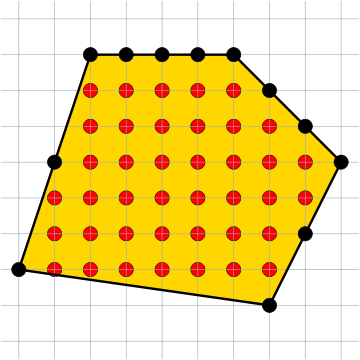
http://commons.wikimedia.org/wiki/File:Gitterpolygon.svg

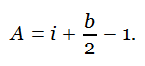
Georg Alexander Pick found a useful way to determine the area of a simple polygon with integer coordinates. If i is the number of lattice points in the interior and b is the number of lattice points on the boundary, then the area is given by

pick's theorem

There are 40 lattice points in the interior of the figure above and 12 on the boundary, so its area is 40 + 12/2 – 1 = 45.

(Thanks, Pål.)

23 Apr 08:49

Rainbow Illusion Will Illuminate Your Day

23 Apr 08:40

Bookcase/staircase/slide!

by Cory Doctorow


Architects Moon Hoon designed a house in Chungcheongbuk-do, South Korea, that uses a staircase as a slide, a library and a room-divider. My goodness, it is lovely.


The basic request of upper and lower spatial organization and the shape of the site promted a long and tin house with fluctuating facade which would allow for more differentiated view. The key was coming up with a multi-functional space which is a large staircase, bookshelves, casual reading space, home cinema, slide and many more…

The client was very pleased with the design, and the initial design was accepted and finalized almost instantly, only with minor adjustments. The kitchen and dining space is another important space where family gathers to bond. The TV was pushed away to a smaller living room. The attic is where the best view is possible, it is used as a play room for younger kids. The multi-use stair and slice space brings much active energy to the house, not only children, but also grown ups love the slide staircase…An action filled playful house for all ages…

Panorama House by Moon Hoon (via Neatorama)


22 Apr 15:20

4 Video Games That Help You Understand And Deal With Your Depression

by Phil Owen

The web has been abuzz about games with a focus on depression this year, Depression Quest in particular catching everyone's eye. But this very small subcategory of free games goes beyond just that title, and we can take in a true variety of experiences when exploring this space.

I'm going to discuss four such games, evaluating them both as the idiosyncratic games critic that I am and as a person who is depressed. I want to see what these games can teach us about this ubiquitous mental illness that we might otherwise miss in our daily lives, as well as whether gaming can be an effective means of promoting mental health discussions.

Depression Quest

This is a bit of a text adventure, and if you're familiar with Choice Of Games you'll feel right at home with the format. This work of fiction, though, is not fantastical. It’s about a regular 20-something guy with a steady girlfriend who works a shitty job and suffers from severe depression.

What follows the introduction to this character is a series of vignettes in which you must make decisions, either healthy or unhealthy or unhealthier. Though this story will likely not perfectly describe your own specific battle with depression, I found that—following the types of choices I made in my own life as I struggled to deal with my illness—this guy came out pretty much the same way I did, albeit in a seemingly more compressed timeline.

A quirk in the listed choices this game gives you that I'm not entirely comfortable with is the appearance of struck-through choices. For example, our hero comes home from work and wants to make some progress on a personal project, but he's feeling quite moody and mentally exhausted. So you'll have options like:

1. Hunker down and get to work

2. Watch some TV for a bit

3. Go to bed

I'm not a fan of including the “normal people” options, because it makes clear what is in truth a very deceptive situation. I'd prefer that if we're not going to be able to choose an option, we shouldn't even know it is an option, because that is the nature of depression. It's a trickster.

Even so, I found Depression Quest to be a laudable effort, and I think it can be an effective tool for teaching folks who don't have to deal with depression what it feels like.

Elude

The Singapore-MIT GAMBIT Game Lab created a very short game called Elude, which is a metaphorical representation of the depression experience. It begins in a dark forest, which is emblematic of the “default” mood of many depression sufferers: lethargic, cloudy, uninterested in the world. As the player character walks forward (this is a 2D experience), he encounters birds (things he enjoys), and he can “resonate” with them in order be able to jump higher than he could otherwise. The goal, then, is to progress upward by jumping on tree branches until you get above the treeline.

At this juncture, the game is basically Doodle Jump, and you'll keep going and going until you goof up, at which point you fall down to a place below where you started, which is painfully bleak and features sinkholes that drop you even further down. Eventually, though, you can pull yourself back up to the dark forest and begin again.

The second time I fell from the sky, however, I found myself on an incline, where trying to climb upward was slow and not particularly fruitful. I was unable to get back onto level ground. So I let myself slide down the hill until I fell into a pit, and that was game over.


"Falling hard enough can leave you in a hole too deep to climb out of."


The metaphor here is quite clear. A depressed person can pull himself out of the pits sometimes, but the slightest push will drop him down to the emotional depths with which all depressed people are familiar. And falling hard enough can leave you in a hole too deep to climb out of.

Actual Sunlight

This little top-down game looks pretty typical when you first start it up. But about five seconds in you realize it's not at all what it appears to be. In it, you are Evan, a fat guy who hates his life. The present arc of the story has Evan going about his day, but you're constantly shown what's going on inside his mind.

It's all so cleverly written, yes, and creator Will O'Neill is without a doubt an excellent writer with a keen wit. But the text he puts down in the form of story vignettes manages to be self-deprecating to the extreme and features a rather pathetic depiction of a human being.

But in no way is it a far-fetched one. I look at Evan and see a kindred spirit, someone who externally appears pretty normal but inside is full of deep turmoil. And, like me, he tends to be hyper-self-aware without really having any grasp on what's going on around him. He's paranoid. He thinks he has no friends.


"Depression tells you lies, and you believe them."


But he's wrong and we, as outsiders, can view his circumstances more objectively, which is how it always goes. Depression tells you lies, and you believe them. You need external perspectives, and while Evan is getting some in this game, he's not listening. He thinks what's in his head is right and everyone else is wrong. He's been living with his illness so long that's it may be too ingrained for him to overcome it. But you'll have to play the game to find out if that's really the case.

Inner Vision

A quick and dirty flash game, Inner Vision is about you talking to some depressed people who are considering suicide. Your goal is to talk them down. The game is not difficult, and my friend Phil Hornshaw over at Game Front, who pointed me to this game, thought it felt slight because of that. And it does make it seem entirely too easy to deal with somebody who is experiencing a major depressive episode, which Phil has done a few times when I've been in my dark moods.

But I don't think this game is for people who don't have depression. Rather, it's for people who do. In my experience, it's hard for me to find a clear solution to my problems when I'm experiencing a crisis, but if somebody else I know is going through the same thing, I have all the right words for them.

And so in this game, when you see somebody feeling the way you've felt, and you say the things that you know need to be said, and you see them react positively to your input, it can reveal how to deal with your own issues. If you don't have real people with whom you can experience this role reversal, I think Inner Vision can be a decent substitute even if it doesn't explore depression super deeply.


These four games are all interesting in their own ways, and they certainly demonstrate the range of art that can be produced within the parameters of a video game. Playing them is indeed a rewarding experience, whether you're depressed or not. But I think those who are can play these and gain greater context for the things happening in their minds. That's the true power of artistic media.

Phil Owen is a freelance entertainment journalist whose work you might have seen at IGN, GameFront, Appolicious and many, many other places. You can follow him on Twitter at @philrowen.