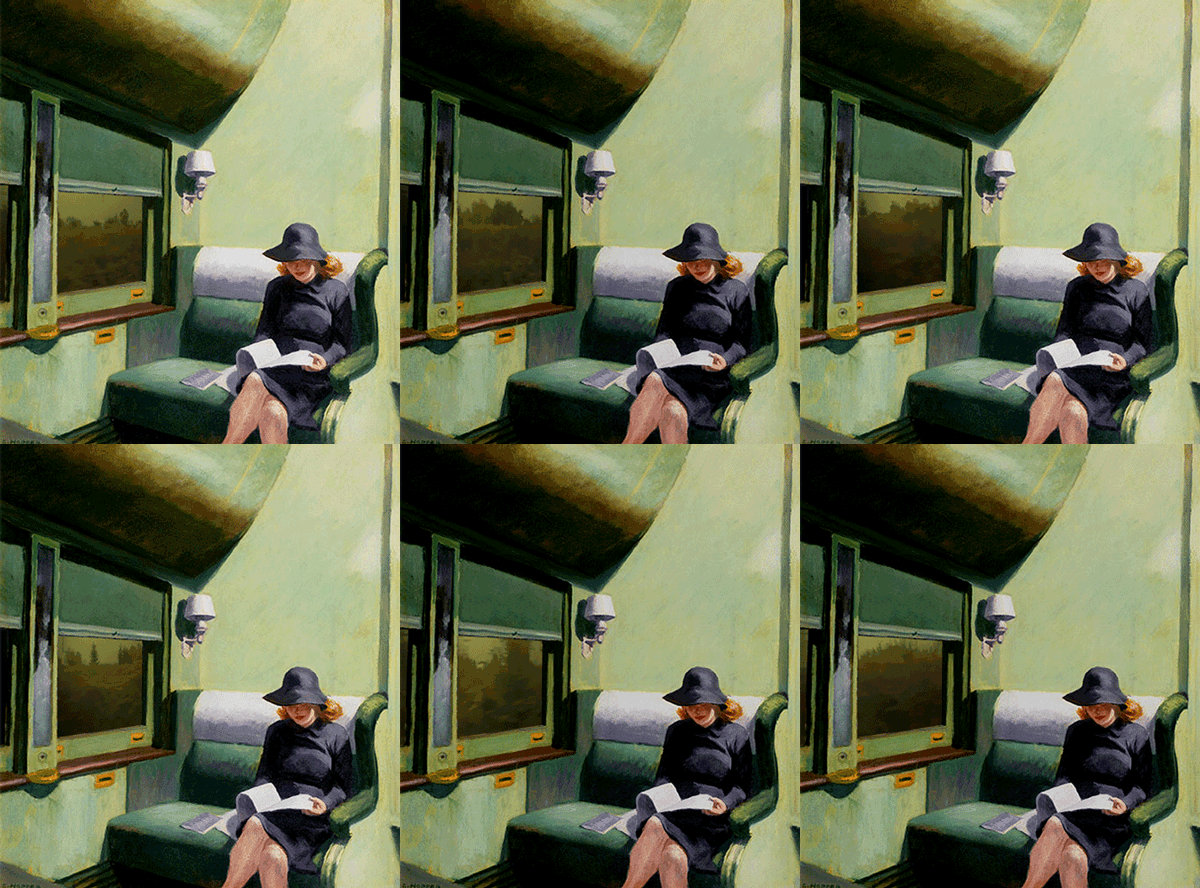
Noah Kalina has been taking a picture of himself every day since January 11, 2000. He posted time-lapse videos in 2007, 2012, and 2020. Last year was the 20th of the project.
Usually Kalina’s videos are a straight up time-lapse using every photo. But in this collaboration with Michael Notter, 7,777 Days shows a smoother passage of time. Notter used machine learning to align the face pictures, and then each frame shows a 60-day average, which focuses on an aging face instead of everything else in the background.
So this has actually been cited by academics as part of the major draw to online spaces is the fact that just existing in public is reacted to with hostility and punishment. Gretchen McCulloch discussed this is in her book Because Internet, citing research that shows teens and young adults want to be outside! We want to spend time in social places, it’s just that there aren’t any places to exist in public without being charged for it.
When I was homeless as a kid my little brother and I loved to go to the library. We would keep warm in there reading good books all day long. Until residents of the town complained about us “loitering” at the library each day. The library staff then told us we were no longer allowed to stay more than an hour at a time. Imagine seeing two homeless children spending their entire days quietly reading just to keep out of the cold and having a damn problem with it.
Even the fact that teens use all kinds of social networks at higher rates than twenty-somethings doesn’t necessarily mean that they prefer to hang out online. Studies consistently show that most teens would rather hang out with their friends in person. The reasons are telling: teens prefer offline interaction because it’s “more fun” and you “can understand what people mean better.” But suburban isolation, the hostility of malls and other public places to groups of loitering teenagers, and schedules packed with extracurriculars make these in-person hangouts difficult, so instead teens turn to whatever social site or app contains their friends (and not their parents). As danah boyd puts it, “Most teens aren’t addicted to social media; if anything, they’re addicted to each other.”
Just like the teens who whiled away hours in mall food courts or on landline telephones became adults who spent entirely reasonable amounts of time in malls and on phone calls, the amount of time that current teens spend on social media or their phones is not necessarily a harbinger of what they or we are all going to be doing in a decade. After all, adults have much better social options. They can go out, sans curfew, to bars, pubs, concerts, restaurants, clubs, and parties, or choose to stay in with friends, roommates, or romantic partners. Why, adults can even invite people over without parental permission and keep the bedroom door closed! (page 102-103)
I often heard parents complain that their children preferred computers to “real” people. Meanwhile, the teens I met repeatedly indicated that they would much rather get together with friends in person. A gap in perspective exists because teens and parents have different ideas of what sociality should look like. Whereas parents often highlighted the classroom, after-school activities, and prearranged in-home visits as opportunities for teens to gather with friends, teens were more interested in informal gatherings with broader groups of peers, free from adult surveillance. Many parents felt as though teens had plenty of social opportunities whereas the teens I met felt the opposite.
Today’s teenagers have less freedom to wander than any previous generation. Many middle-class teenagers once grew up with the option to “do whatever you please, but be home by dark.” While race, socioeconomic class, and urban and suburban localities shaped particular dynamics of childhood, walking or bicycling to school was ordinary, and gathering with friends in public or commercial places—parks, malls, diners, parking lots, and so on—was commonplace. Until fears about “latchkey kids” emerged in the 1980s, it was normal for children, tweens, and teenagers to be alone. It was also common for youth in their preteen and early teenage years to take care of younger siblings and to earn their own money through paper routes, babysitting, and odd jobs before they could find work in more formal settings. Sneaking out of the house at night was not sanctioned, but it wasn’t rare either. (page 85-86)
From wealthy suburbs to small towns, teenagers reported that parental fear, lack of transportation options, and heavily structured lives restricted their ability to meet and hang out with their friends face to face. Even in urban environments, where public transportation presumably affords more freedom, teens talked about how their parents often forbade them from riding subways and buses out of fear. At home, teens grappled with lurking parents. The formal activities teens described were often so highly structured that they allowed little room for casual sociality. And even when parents gave teens some freedom, they found that their friends’ mobility was stifled by their parents. While parental restrictions and pressures are often well intended, they obliterate unstructured time and unintentionally position teen sociality as abnormal. This prompts teens to desperately—and, in some cases, sneakily—seek it out. As a result, many teens turn to what they see as the least common denominator: asynchronous social media, texting, and other mediated interactions. (page 90)
Anyway, more people need to read It’s Complicated, danah boyd really takes young people and technology seriously and doesn’t patronize or sensationalize, and it was a huge influence on me in figuring out the tone for Because Internet so I want to make sure it gets credit!
Inspired by space-saving flat-packed furniture, scientists at Carnegie Mellon University have developed a technique for making pasta shapes that start out flat when dry but “morph” into their final 3D shapes when cooked. The secret is stamping different groove patterns into the pasta dough.
The solution: something Wang, Yao, and their co-authors term “groove-based transient morphing.” They found that stamping flat pasta sheets with different groove patterns enabled them to control the final pasta shape after cooking. According to the authors, the grooves increase how long it takes to cook that part of the pasta. So those areas expand less than the smooth areas, giving rise to many different shapes.
The team found that the pasta reached its maximum bending angle after about 12 minutes and retained this angle for around 20 minutes before it began to bend back. The researchers were able to produce simple helical and cone shapes, as well as more complex saddles and twists (the latter achieved by introducing double-sided grooves).
Any sufficiently advanced correlation is indistinguishable from causation
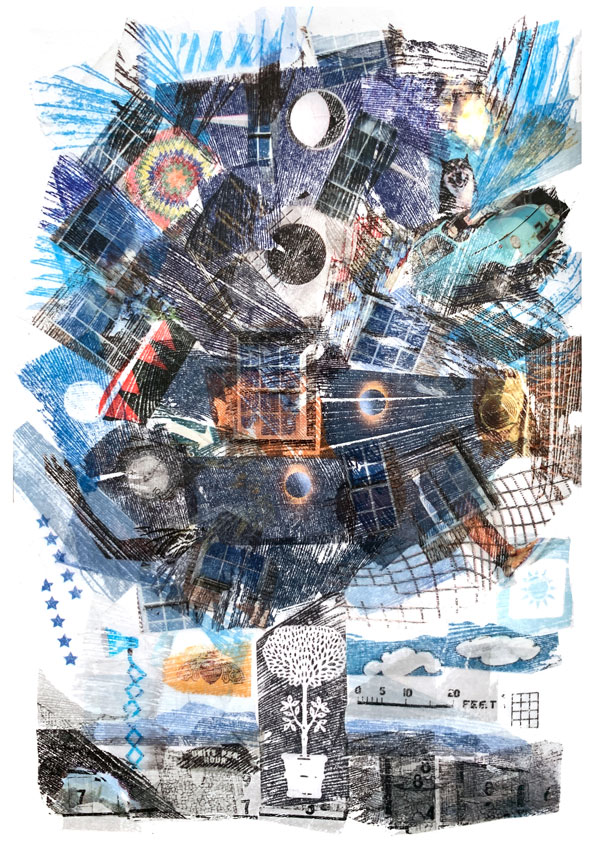
Here is a lightly-annotated collection of articles and papers, on or about the question of inference, that have struck a chord recently. And some drawings and pictures thrown in for good measure.
Most deep neural networks are trained by stochastic gradient descent. Now "stochastic" is a fancy Greek word for "random"; it means that the training data are fed into the model in random order.
So what happens if the bad guys can cause the order to be not random? You guessed it – all bets are off. Suppose for example a company or a country wanted to have a credit-scoring system that's secretly sexist, but still be able to pretend that its training was actually fair. Well, they could assemble a set of financial data that was representative of the whole population, but start the model's training on ten rich men and ten poor women drawn from that set – then let initialisation bias do the rest of the work.
Does this generalise? Indeed it does. Previously, people had assumed that in order to poison a model or introduce backdoors, you needed to add adversarial samples to the training data. Our latest paper shows that's not necessary at all. If an adversary can manipulate the order in which batches of training data are presented to the model, they can undermine both its integrity (by poisoning it) and its availability (by causing training to be less effective, or take longer). This is quite general across models that use stochastic gradient descent.
This was interesting to me for two reasons: 1) It is the kind of generic toolkit that could/should be applied to any number of interactive contexts in any number of museums 2) It highlights the lack of capacity across the sector to be able to take something like this and adapt it to its own specific needs. I expect that, inside of five years, at least one large institution will blow 6 or 7 figures hiring an external firm to implement this as a one-off which is... a missed opportunity, really.
One final lesson that one might be tempted to take is that the kernel is running a terrible risk of malicious patches inserted by actors with rather more skill and resources than the UMN researchers have shown. That could be, but the simple truth of the matter is that regular kernel developers continue to insert bugs at such a rate that there should be little need for malicious actors to add more. The 5.11 kernel, released in February, has accumulated 2,281 fixes in stable updates through 5.11.17. If one makes the (overly simplistic) assumption that each fix corrects one original 5.11 patch, then 16% of the patches that went into 5.11 have turned out (so far) to be buggy. That is not much better than the rate for the UMN patches.So perhaps that's the real lesson to take from this whole experience: the speed of the kernel process is one of its best attributes, and we all depend on it to get features as quickly as possible. But that pace may be incompatible with serious patch review and low numbers of bugs overall. For a while, we might see things slow down a little bit as maintainers feel the need to more closely scrutinize changes, especially those coming from new developers. But if we cannot institutionalize a more careful process, we will continue to see a lot of bugs and it will not really matter whether they were inserted intentionally or not.
All three papers are a reminder that almost all machine learning work is predicated on disproving the adage that past performance is not an indicator of future success, which... well, you know.
This is very impressive work but the phrase “It greens the parched grass and hills in Grand Theft Auto’s (GTA) California” sort of sums it up. It’s clear that GTA is a MacGuffin for the underlying work but it betrays a disservice to the material quality of the GTA’s aesthetics and the relentless focus on “style transfers” suggests that it’s just pumpkin spice lattes all the way down...
During the time that I was at Stamen we had started to talk about a bias knob for data visualizations. This was largely a rhetorical device since no one was quite sure what the technology to make such a thing possible would be. It is nice to see the use of machine-learning in the work that GSD is doing framed in similar terms, that it is a fast and efficient tool for applying pressures to different parts of a dataset and seeing what happens rather than a magic veil of truth. These are some of the things I wrote about this at the time:
One of the things I like about this image is that you can clearly see that Fort Funston, the place where H. goes to walk her dogs, is part of her San Francisco. You can see this not because of the roads on the beach; there are none. You can see this because the photos cause the neighbourhood around the beach to materialize.
In a lot of generative art works, and in game design, there is the idea of a "physics knob" that you can use to adjust the relationships between different objects and the environment in which they exist. I've always tried to imagine what it would mean to have a "bias knob" that you could use to affect how cause and effect, or in this case maps, are displayed.
In the past I've talked about producing and treating maps the same way you might work with a bolt of fabric but maybe it's also like making pasta where the data (and the choice of data) acts as a kind of extruder shaping the noodles. I don't really want to get lost in bad kitchen metaphors so I'm going to stop there and instead leave you with the image of the raw data acting as a kind of screen through which the squishy mass of history, of time and place, is passed to create a map.
What search-by-color and other algorithmic cataloging points to is the need to develop an iconography, or a colophon, to indicate machine bias. To design and create language and conventions that convey the properties of the “extruder” that a dataset has been shaped by.
The SAND Lab at University of Chicago has developed Fawkes1, an algorithm and software tool (running locally on your computer) that gives individuals the ability to limit how unknown third parties can track them by building facial recognition models out of their publicly available photos. At a high level, Fawkes "poisons" models that try to learn what you look like, by putting hidden changes into your photos, and using them as Trojan horses to deliver that poison to any facial recognition models of you. Fawkes takes your personal images and makes tiny, pixel-level changes that are invisible to the human eye, in a process we call image cloaking. You can then use these "cloaked" photos as you normally would, sharing them on social media, sending them to friends, printing them or displaying them on digital devices, the same way you would any other photo. The difference, however, is that if and when someone tries to use these photos to build a facial recognition model, "cloaked" images will teach the model an highly distorted version of what makes you look like you. The cloak effect is not easily detectable by humans or machines and will not cause errors in model training. However, when someone tries to identify you by presenting an unaltered, "uncloaked" image of you (e.g. a photo taken in public) to the model, the model will fail to recognize you.
Which bookends nicely with the paper on data ordering attacks.
Today is World Oceans Day and we’re sharing some of our favorite ocean shots to mark the occasion. This year’s theme — “The Ocean: Life & Livelihoods” — seeks to shed light on the wonder of the ocean and how it is our lifesource, supporting humanity and every other organism on Earth. We hope these Overviews inspire that feeling of wonder for you. Seen here are:
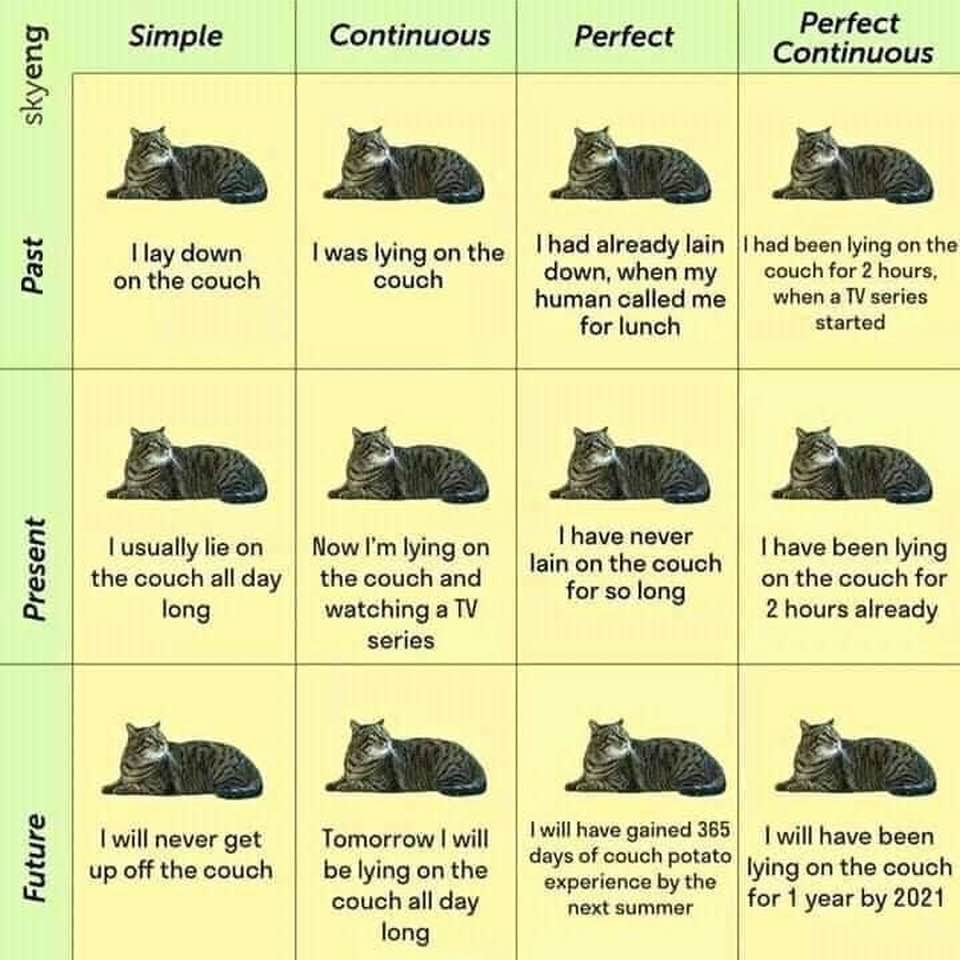
The timelessness of being a cat / L'intemporalité d'être un chat.
(Versions of the feline tense/aspect chart have been circulating since at least 2019, originally appearing in Russian on the English language-learning site Skyeng Magazine.)
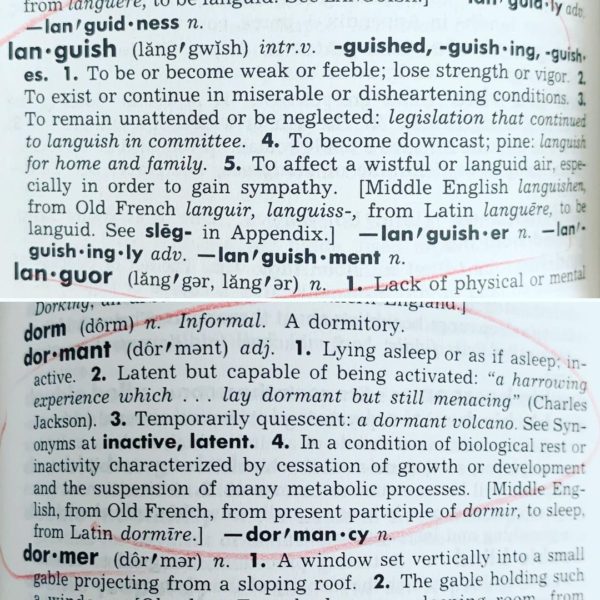
“Plants may appear to be languishing simply because they are dormant.” —Oxford Dictionary of English
A number of friends and colleagues have linked to Adam Grant’s piece, “There’s a Name for the Blah You’re Feeling: It’s Called Languishing.” In psychology, Grant says, “we think about mental health on a spectrum from depression to flourishing,” but a “term was coined by a sociologist named Corey Keyes” that describes the “void” in between them: “languishing.” It’s a state in which, Grant says, you’re not totally burned out, but you’re not full steam, either.
“Psychologists,” says Grant, “find that one of the best strategies for managing emotions is to name them.” But one has to remember that naming doesn’t just describe the world, it creates the world, too. As Brian Eno says, “Giving something a name can be just the same as inventing it.”
We tend to see what we’re looking for, so if you hear the name for something, you start seeing it everywhere, and your eyes get trained to see that particular thing, while you miss everything else. (That’s why Paul Valery said that real seeing “is forgetting the name of the thing one sees.”)
There’s also a danger that when you hear a term that sort of describes what you’re feeling, or seems right, you’ll be satisficed, and say, “Good, enough,” accept the term, and move on.
I disliked the term “languishing” the minute I heard it.
“Nature is a language / Can’t you read?”
—The Smiths
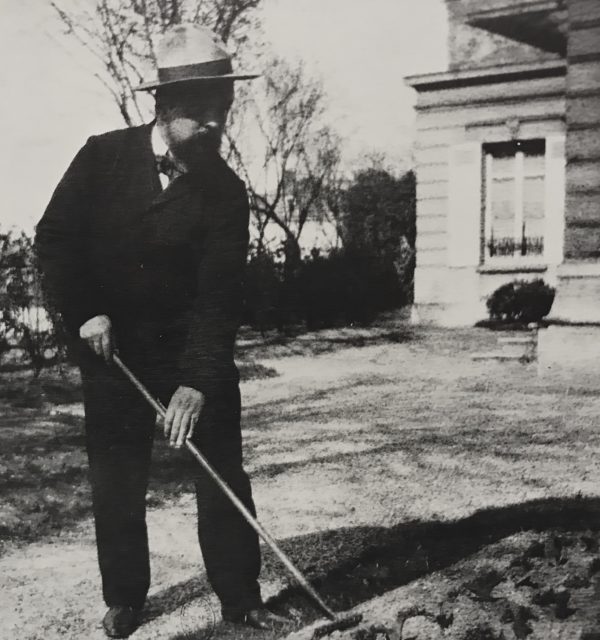
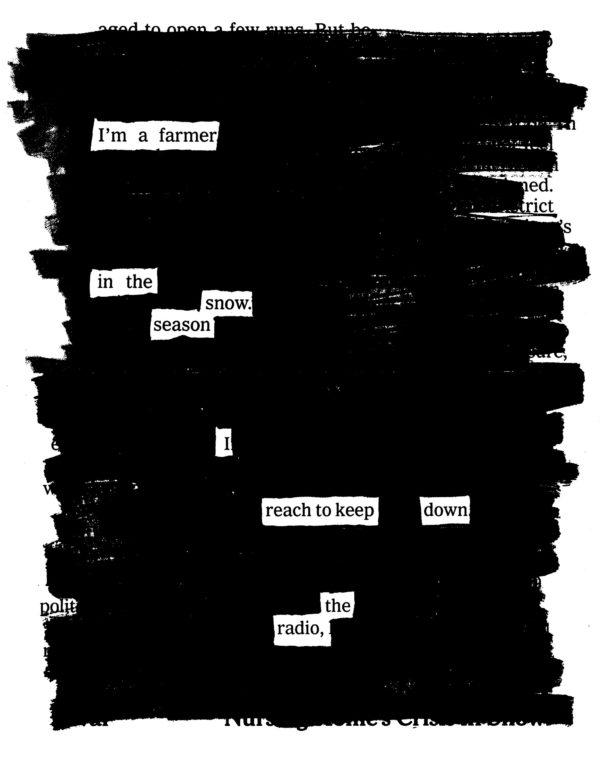
I feel very lucky to be married to a gardener, because gardening gives us rich metaphors for creative work that we don’t get from our business-focused productivity-obsessed culture. (I dedicated the last chapter of Keep Going, “Plant Your Garden,” to seasons and cyclical time.)
Gardening situates you in a different kind of time, the antithesis of the agitating present of social media. Time becomes circular, not chronological; minutes stretch into hours; some actions don’t bear fruit for decades.
Gardeners not only develop a different sense of time, they develop the ancient wisdom of knowing when to do things:
To every thing there is a season,
and a time to every purpose under the heaven:
A time to be born, and a time to die;
a time to plant, and a time to pluck up that which is planted;
A time to kill, and a time to heal; a time to break down, and a time to build up…
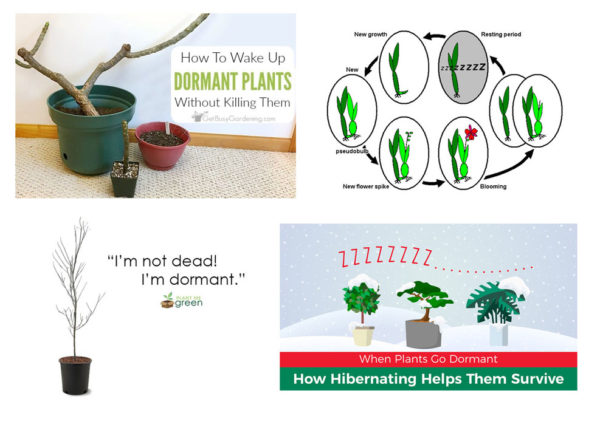
a collection of Google Image Search results for dormant plants
It seems to me that the reason that so many of us feel like we’re languishing is that we are trying to flourish in terrible conditions. It is spring outside — or the “unlocking” season — but it is still “Winter in America,” and, as any gardener knows, if you try to wake a plant out of dormancy too soon, it will wither, and maybe die.
For example: take the mountain laurels in our backyard. One of them died from the terrible ice storm. The others have put out leaves, but not blossoms. They’ve sensed that this year is not the year to create anything new. They’re waiting for better conditions.
I’m not languishing because I’m not trying to flourish.
“Barren days, do no planting.”
—The Farmer’s Almanac
It is a mistake and a misreading of nature to think that you, a living creature, will be flourishing all the days of your life.
My friend Alan Jacobs recently wrote about his exhaustion, and pointed to the work of a new favorite writer of mine, historian Ada Palmer, who has documented in several posts the ways famous historical creators have had to put their work on hold throughout history. (And how many a “golden age” is only golden in hindsight.)
In his autobiography he’s talking about this lawsuit that arose because of the della Rovere tomb project, in great detail, and then there’s a line that says Michelangelo realized that, while dealing with a bunch of lawsuits and Pope Adrian and such, he’d been so stressed he hadn’t picked up a chisel in four years. Because he spent the entire time just dealing with the lawsuit. (Anyone feeling guilty about being overwhelmed by stress this year, you’re not alone!) And we have four years worth of lost Michelangelo production, because he didn’t do any art that entire time, because he was just dealing with a stupid lawsuit. And that’s not the sort of thing that fits into our usual way of thinking about these great historical figures. We imagine Michelangelo in his studio with a chisel. We do not imagine him in a room with a bunch of lawyers being curmudgeonly and bickering and trapped in contract hell.
Or Isaac Newton, who people have held up as an example of what you can get done during a plague:
The true fact (historian here, this is my period!) is that Newton did theorize gravity while quarantining, but didn’t have library access, and while he was testing the theory he didn’t have some of the constants he needed (sizes, masses), so he tried to work from memory, got one wrong, did all the math, and concluded that he was wrong and the gravity + ellipses thing didn’t work. He stuck it in a drawer. It was only years later when a friend asked him about Kepler’s ellipses that he pulled the old notes back out of the drawer to show the friend, and the friend spotted the error, they redid the math, and then developed the theory of gravity. Together, with full library access, when things were normal after the pandemic. During the pandemic nobody could work properly, including him. So if anyone pushes the claim that we should all be writing brilliant books during this internationally recognized global health epidemic, just tell them Newton too might have developed gravity years earlier if not for his pandemic.
You may, indeed, be languishing, and I won’t try to take that word away from you. (I also don’t disagree with Adam Grant’s two suggestions for dealing with the feeling: “give yourself some uninterrupted time” and “focus on a small goal.”)
Me, I’m dormant.
I may even look dead, but like Corita Kent once described one of her own dormant periods, “new things are happening very quietly inside of me.”
Some good ones! My favourite: Every person you meet knows an amazing lot about something you know virtually nothing about. Your job is to discover what it is, and it won’t be obvious.
I have another birthday, and another bunch of unsolicited advice.
• That thing that made you weird as a kid could make you great as an adult — if you don’t lose it.
• If you have any doubt at all about being able to carry a load in one trip, do yourself a huge favor and make two trips.
• What you get by achieving your goals is not as important as what you become by achieving your goals. At your funeral people will not recall what you did; they will only remember how you made them feel.
• Recipe for success: under-promise and over-deliver.
• It’s not an apology if it comes with an excuse. It is not a compliment if it comes with a request.
• Jesus, Superman, and Mother Teresa never made art. Only imperfect beings can make art because art begins in what is broken.
• If someone is trying to convince you it’s not a pyramid scheme, it’s a pyramid scheme.
• Learn how to tie a bowline knot. Practice in the dark. With one hand. For the rest of your life you’ll use this knot more times than you would ever believe.
• If something fails where you thought it would fail, that is not a failure.
• Be governed not by the tyranny of the urgent but by the elevation of the important.
• Leave a gate behind you the way you first found it.
• The greatest rewards come from working on something that nobody has a name for. If you possibly can, work where there are no words for what you do.
• A balcony or porch needs to be at least 6 feet (2m) deep or it won’t be used.
• Don’t create things to make money; make money so you can create things. The reward for good work is more work.
• In all things — except love — start with the exit strategy. Prepare for the ending. Almost anything is easier to get into than out of.
• Train employees well enough they could get another job, but treat them well enough so they never want to.
• Don’t aim to have others like you; aim to have them respect you.
• The foundation of maturity: Just because it’s not your fault doesn’t mean it’s not your responsibility.
• A multitude of bad ideas is necessary for one good idea.
• Being wise means having more questions than answers.
• Compliment people behind their back. It’ll come back to you.
• Most overnight successes — in fact any significant successes — take at least 5 years. Budget your life accordingly.
• You are only as young as the last time you changed your mind.
• Assume anyone asking for your account information for any reason is guilty of scamming you, unless proven innocent. The way to prove innocence is to call them back, or login to your account using numbers or a website that you provide, not them. Don’t release any identifying information while they are contacting you via phone, message or email. You must control the channel.
• Sustained outrage makes you stupid.
• Be strict with yourself and forgiving of others. The reverse is hell for everyone.
• Your best response to an insult is “You’re probably right.” Often they are.
• The worst evils in history have always been committed by those who truly believed they were combating evil. Beware of combating evil.
• If you can avoid seeking approval of others, your power is limitless.
• When a child asks an endless string of “why?” questions, the smartest reply is, “I don’t know, what do you think?”
• To be wealthy, accumulate all those things that money can’t buy.
• Be the change you wish to see.
• When brainstorming, improvising, jamming with others, you’ll go much further and deeper if you build upon each contribution with a playful “yes — and” example instead of a deflating “no — but” reply.
• Work to become, not to acquire.
• Don’t loan money to a friend unless you are ready to make it a gift.
• On the way to a grand goal, celebrate the smallest victories as if each one were the final goal. No matter where it ends you are victorious.
• Calm is contagious.
• Even a foolish person can still be right about most things. Most conventional wisdom is true.
• Always cut away from yourself.
• Show me your calendar and I will tell you your priorities. Tell me who your friends are, and I’ll tell you where you’re going.
• When hitchhiking, look like the person you want to pick you up.
• Contemplating the weaknesses of others is easy; contemplating the weaknesses in yourself is hard, but it pays a much higher reward.
• Worth repeating: measure twice, cut once.
• Your passion in life should fit you exactly; but your purpose in life should exceed you. Work for something much larger than yourself.
• If you can’t tell what you desperately need, it’s probably sleep.
• When playing Monopoly, spend all you have to buy, barter, or trade for the Orange properties. Don’t bother with Utilities.
• If you borrow something, try to return it in better shape than you received it. Clean it, sharpen it, fill it up.
• Even in the tropics it gets colder at night than you think. Pack warmly.
• To quiet a crowd or a drunk, just whisper.
• Writing down one thing you are grateful for each day is the cheapest possible therapy ever.
• When someone tells you something is wrong, they’re usually right. When someone tells you how to fix it, they’re usually wrong.
• If you think you saw a mouse, you did. And, if there is one, there are more.
• Money is overrated. Truly new things rarely need an abundance of money. If that was so, billionaires would have a monopoly on inventing new things, and they don’t. Instead almost all breakthroughs are made by those who lack money, because they are forced to rely on their passion, persistence and ingenuity to figure out new ways. Being poor is an advantage in innovation.
• Ignore what others may be thinking of you, because they aren’t.
• Avoid hitting the snooze button. That’s just training you to oversleep.
• Always say less than necessary.
• You are given the gift of life in order to discover what your gift *in* life is. You will complete your mission when you figure out what your mission is. This is not a paradox. This is the way.
• Don’t treat people as bad as they are. Treat them as good as you are.
• It is much easier to change how you think by changing your behavior, than it is to change your behavior by changing how you think. Act out the change you seek.
• You can eat any dessert you want if you take only 3 bites.
• Each time you reach out to people, bring them a blessing; then they’ll be happy to see you when you bring them a problem.
• Bad things can happen fast, but almost all good things happen slowly.
• Don’t worry how or where you begin. As long as you keep moving, your success will be far from where you start.
• When you confront a stuck bolt or screw: righty tighty, lefty loosey.
• If you meet a jerk, overlook them. If you meet jerks everywhere everyday, look deeper into yourself.
• Dance with your hips.
• We are not bodies that temporarily have souls. We are souls that temporarily have bodies.
• You can reduce the annoyance of someone’s stupid belief by increasing your understanding of why they believe it.
• If your goal does not have a schedule, it is a dream.
• All the greatest gains in life — in wealth, relationships, or knowledge —come from the magic of compounding interest — amplifying small steady gains. All you need for abundance is to keep adding 1% more than you subtract on a regular basis.
• The greatest breakthroughs are missed because they look like hard work.
• People can’t remember more than 3 points from a speech.
• I have never met a person I admired who did not read more books than I did.
• The greatest teacher is called “doing”.
• Finite games are played to win or lose. Infinite games are played to keep the game going. Seek out infinite games because they yield infinite rewards.
• Everything is hard before it is easy. The day before something is a breakthrough, it’s a stupid idea.
• A problem that can be solved with money is not really a problem.
• When you are stuck, sleep on it. Let your subconscious work for you.
• Your work will be endless, but your time is finite. You cannot limit the work so you must limit your time. Hours are the only thing you can manage.
• To succeed, get other people to pay you; to become wealthy, help other people to succeed.
• Children totally accept — and crave — family rules. “In our family we have a rule for X” is the only excuse a parent needs for setting a family policy. In fact, “I have a rule for X” is the only excuse you need for your own personal policies.
• All guns are loaded.
• Many backward steps are made by standing still.
• This is the best time ever to make something. None of the greatest, coolest creations 20 years from now have been invented yet. You are not late.
• No rain, no rainbow.
• Every person you meet knows an amazing lot about something you know virtually nothing about. Your job is to discover what it is, and it won’t be obvious.
• You don’t marry a person, you marry a family.
• Always give credit, take blame.
• Be frugal in all things, except in your passions splurge.
• When making something, always get a few extras — extra material, extra parts, extra space, extra finishes. The extras serve as backups for mistakes, reduce stress, and fill your inventory for the future. They are the cheapest insurance.
• Something does not need to be perfect to be wonderful. Especially weddings.
• Don’t let your email inbox become your to-do list.
• The best way to untangle a knotty tangle is not to “untie” the knots, but to keep pulling the loops apart wider and wider. Just make the mess as big, loose and open as possible. As you open up the knots they will unravel themselves. Works on cords, strings, hoses, yarns, or electronic cables.
• Be a good ancestor. Do something a future generation will thank you for. A simple thing is to plant a tree.
• To combat an adversary, become their friend.
• Take one simple thing — almost anything — but take it extremely seriously, as if it was the only thing in the world, or maybe the entire world is in it — and by taking it seriously you’ll light up the sky.
• History teaches us that in 100 years from now some of the assumptions you believed will turn out to be wrong. A good question to ask yourself today is “What might I be wrong about?”
• Be nice to your children because they are going to choose your nursing home.
• Advice like these are not laws. They are like hats. If one doesn’t fit, try another.
Hi, new comic available here. I am not even close to being too cool to write about The Past Year, so this is largely on that theme. Honestly, i was writing the comic in the before times and then kept rewriting it as 2020 progressed, but it’s probably most surprising how little changed overall. Let us remember that the old normal sucked and we need a new one, to any degree. Thanks for waiting, and for reading..! As always, follow on Patreon to read these early and/or get exclusive apologies from me about taking so long..! -Wr
Novgorod (Russian: Новгород) was a monitor of the Imperial Russian Navy, built between 1871 and 1874. Novgorod and her sister ship Vitse-admiral Popov were highly unusual among warships in that they were circular, as can be seen in the model pictured on the right. By spreading its weight over a larger area the ship’s draft decreases, and it can navigate shallower waters. However, the circular shape also made the Novgorod less controllable, and she was prone to rotating. In particular, firing her guns induced her to spin. The Novgorod was taken out of service in 1903 and scrapped in 1911.
This past year has seen a rising interest in long-lost hobbies due to shelter-in-place, social distancing, and lockdown orders. Google Trends and Polygraph charted the hobbies that saw the biggest spikes each day of the year.
I’m surprised that sourdough or bread-making is on there, but maybe they didn’t fall under the hobby definition they used.

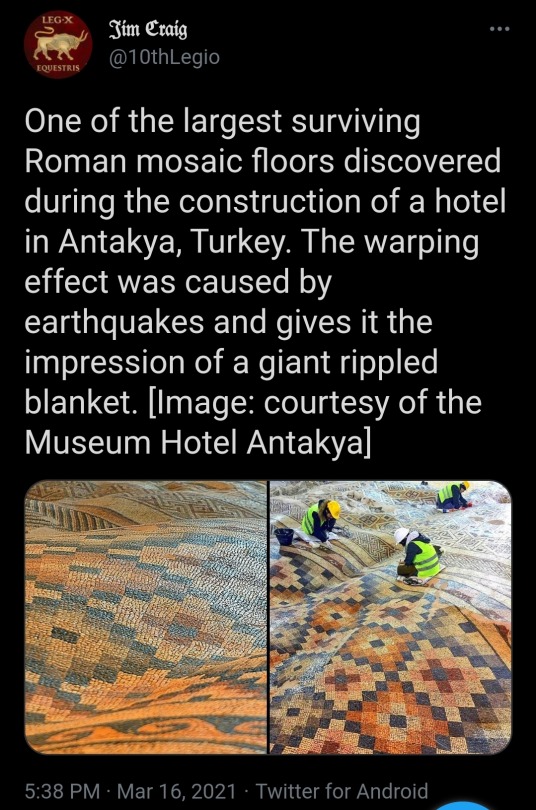

 It may look like a