Shared posts

16 Aug 16:21

Minha deficiência.

by historiasdasruas

Em uma praça em frente ao Cemitério de Americana encontrava-se um grupo de moradores de rua, todos homens. Chegamos onde eles estavam e começamos a conversar.
Todos foram muitos simpáticos e nos contaram histórias de vida incríveis. Hoje vou colocar aqui a história de um deles, que além de enfrentar a situação das ruas tem que passar por cima da deficiência física que tem.


“Vivo nas ruas há seis anos e me chamo Edinilson Donizete Sampaio.
Hoje estou com trinta e sete anos. Nasci na cidade de Piracicaba e fui criado lá. Infelizmente nasci com uma deficiência física na mão direita. Ela é atrofiada, o que causa uma aparência estranha para as pessoas que olham e uma limitação para mim.
Quando ainda criança eu não ligava muito para isso, não tinha noção do que eu iria passar quando entrasse na escola. Anos foram se passando e quando eu estava na quinta série do Ensino Médio, as brincadeiras de mau gosto começaram a acontecer. Eu era alvo de piadas por qualquer motivo.
Vivia excluído e ninguém queria conversar comigo, nem os meninos e muito menos as meninas.
Fui crescendo e dentro de mim eu era uma pessoa revoltada, eu mesmo não aceitava a minha deficiência. A partir dessa revolta eu comecei a me envolver com álcool e drogas. Foi nesse momento que minha vida começou a desandar.
Eu saía de casa às seis horas da tarde e voltava no outro dia às seis da manhã caindo de bêbado e louco por causa das drogas. Minha família sempre foi muito religiosa e não aceitava esse meu comportamento, meu pai começou a se revoltar comigo e me internou. Foram seis internações sem sucesso, eu ficava um tempo nas clinicas e quando saía eu voltava a usar tudo de novo.
Meu pai sem saber mais o que fazer para me ajudar, começou a sofrer muito e nessas minhas saídas de dias fora de casa eu acabei ficando nas ruas.
Hoje vivo com um grupo de cinco moradores que são como minha família. Vejo meus pais uma vez por semana quando consigo dinheiro para ir para minha cidade.”


Edinilson se mostrou ciente de tudo o que passava e nos respondeu como ele convive hoje com sua deficiência:

Hoje você se aceita do jeito que você é?
- “Sim, hoje já superei esse preconceito que eu tinha comigo mesmo. Hoje, para ser bem sincero, uso a minha deficiência para conseguir dinheiro nos semáforos vendendo balas.”

Você ainda é viciado em crack?
- “Não, o crack graças a Deus eu já não uso mais. Mas ainda bebo e não consigo parar”

Seus pais ainda tentam te ajudar?
- “Sim, só que eu não quero ajuda, quero conseguir retomar a minha vida sozinho.”


O que te faz mais falta?
- “Amor, não de pai nem de mãe, mas alguém que me ame como homem. Nunca namorei, as mulheres sempre me olhavam estranho por conta de minha deficiência. Sou uma pessoa muito carente, queria que alguém me desse atenção.”


Qual é o seu maior sonho?
- “Sonho em mudar de vida, conseguir sair do vicio do álcool e construir minha própria família, longe daqui, sem a minha família.”

Os outros moradores que vivem com você te tratam bem?
- “Sim, nós somos como uma família. Sempre estamos ajudando uns aos outros. O que um come, todos comem.”


Ao terminar de contar a sua história, os outros moradores começaram a conversar também e, em um gesto muito bonito, Vitor Pavan foi presenteado com um colar feito de lacres de latinhas.
Um gesto que mostra que mesmo que eles não tenham nada, ainda querem o bem dos outros.

É perceptivo como eles vivem como uma família, se ajudam e se respeitam, independente de suas diferenças.


FOTO: VITOR PAVAN (Colar que nos deram.)


10 Oct 12:50

Brasil

by soaressilva

A razão para os racionalistas é um instrumento para deixar de entender as coisas. Vão aplicando a razão a tudo e vão descompreendendo as coisas do mundo, uma de cada vez. “Não vejo sentido nisto, não vejo sentido naquilo. De um ponto de vista puramente racional, isto não faz sentido.” De razão em razão vão ficando de quatro a babar no capim. Porém, deixe dizer:

O argumento velho de que não faz sentido sentir orgulho do país em que se nasceu, porque não temos mérito disso. Ó meu senhor, tenha paciência. Em todo fórum, caixa de comentário, formspring um antipatriota está digitando isso mesmo, contente com o seu insight lá dele que é dele. Autores importantes fazem isso também, em entrevistas para a promoção de livros.

Em primeiro lugar, só o orgulho daquilo de que não temos mérito é bonito de ter. Ter orgulho daquilo de que temos mérito me parece um pouco satânico. Porque o primeiro orgulho é o orgulho dum presente que se recebeu, um caminhãozinho de plástico que lhe foi dado a troco de nada pelo Universo, e lá está você todo contente com ele. Pois que fique! Com estas mãos peludas, protejo de toda a rascorja vil o seu orgulho santo e bobo. Já o segundo orgulho é um orgulho malévolo porque todo justificado, todo mesquinhamente argumentado: vejam o que fiz. Não ganhei, fiz. Há um vídeo de eu fazendo. Deus nada tem a ver com isto, eu que fiz.

E em segundo, racionalistas, acompanhem: um patriota sente orgulho de ter nascido no Brasil não porque ache que concorreu com milhões de infelizes nepaleses e lascares pelo direito de nascer no Brasil e, acotovelando-os machamente, venceu, e como prêmio nasceu em Sorocaba: mas porque acha que depois de ter nascido no Brasil recebeu do ambiente à volta qualidades que acha supimpas, e que acha que os outros países e culturas não lhe dariam. E está certo nisso, completamente justificado, sim sim.

Países dão qualidades diferentes às pessoas. Não sei sambar porque sou brasileiro. Sendo brasileiro, de classe média, com menos de cinquenta anos, sambar me parece algo muito exótico, mas não tão exótico que me interesse. Se tivesse nascido alemão, capaz que sambasse todo vermelho no rosto, uma ou duas vezes por ano. Se fosse japonês, gostaria de gafieira, mas como sou brasileiro (sacudindo a camisa com garra) gosto de roquinho japonês. E por aí vai: quero aprender a dançar tango porque sou brasileiro. Porque sou brasileiro, quero aprender tap dancing.

Não sei, não sou a pessoa mais indicada a dizer, porque não sou patriota. Não sei bem quais qualidades o Brasil dá. No fundo só vejo uma certa bundamolice. Em aeroportos, se vejo alguém cuja cara parece indicar uma certa bundamolice, chuto que é brasileiro. Mas mesmo assim, outras qualidades o Brasil há de dar, e por Deus esses bunda-moles estão certos. Certos de ter orgulho de ter nascido em Blumenau, Olinda ou o que seja. São herdeiros de alguma coisa que eu não sei o que é, que infelizmente não tenho, ou tenho e não sei. E nenhum argumento racionalista abobalhado de zumbi lhes tirará das mãos a bandeira metafórica e gloriosa, que infelizmente é meio feia, é verdade.


10 Oct 12:42

Página rasgada

by noreply@blogger.com (Pedro Mexia)
Não se rasura o fim de um «regime» assim tão facilmente, o próprio esforço de eliminação deixa marcas, torna-se em memorial involuntário. O escritor americano Ian Frazier visitou há uns anos a cidade de Ekaterimburgo, nos montes Urais, à procura da casa onde os Romanov foram assassinados; mas a casa desaparecera, tal como a cave onde se deu a matança, e como outros vestígios concretos. Frazier achou tudo aquilo sinistro: «Lembrou-me uma borracha que apaga com tanta determinação que acaba por rasgar a página».
10 Oct 03:01

Brainless slime mold uses external spatial ‘memory’ to navigate complex environments

Photograph of P. polycephalum plasmodium showing (A) extending pseudopod, (B) search front, (C) tubule network, and (D) extracellular slime deposited where the cell has previously explored. The food disk containing the inoculation of plasmodial culture is depicted at (E). (Credit: Chris R. Reid et al./PNAS)

They only have a single cell — no brain, but slime molds “remember” where they’ve been.

How? The brainless slime mold Physarum polycephalum constructs a form of spatial “memory” by avoiding areas it has previously explored, researchers at University of Sydney and Université Toulouse III have discovered.

“As it moves, the plasmodium leaves behind a thick mat of nonliving, translucent, extracellular slime,” the scientists said in Proceedings of the National Academy of Sciences, October 8.

“As the plasmodium is foraging, we found. that it strongly avoids areas that contain extracellular slime. This avoidance behavior is a ‘choice’ because when no previously unexplored territory is available, the slime mold no longer avoids extracellular slime.”

 The finding is strong support for the theory that the first step toward the evolution of memory was the use of feedback from chemicals.

How to navigate a complex environment without a brain

“We have shown for the first time that a single-celled organism with no brain uses an external spatial memory to navigate through a complex environment,” said Christopher Reid from the University’s School of Biological Sciences.

“Our discovery is evidence of how the memory of multi-cellular organisms may have evolved — by using external chemical trails in the environment before the development of internal memory systems,” said Reid.

“Results from insect studies, for example ants leaving pheromone trails, have already challenged the assumption that navigation requires learning or a sophisticated spatial awareness. We’ve now gone one better and shown that even an organism without a nervous system can navigate a complex environment, with the help of externalized memory.”

Setup for the U-shaped trap navigational task. The red dashed line shows the predicted optimal path. (Credit: Chris R. Reid et al./PNAS)

The research method was inspired by robots designed to respond only to feedback from their immediate environment to navigate obstacles and avoid becoming trapped. This “reactive navigation” method allows robots to navigate without a programmed map or the ability to build one and slime molds use the same process.

The researchers used a classic test of independent navigational ability, commonly used in robotics, requiring the slime mold to navigate its way out of a U-shaped barrier.

When it is foraging, the slime mold avoids areas that it has already “slimed,” suggesting it can sense extracellular slime upon contact and will recognize and avoid areas it has already explored.

“This shows it is using a form of external spatial memory to more efficiently explore its environment,” said Reid.

“We then upped the ante for the slime mulds by challenging them with the U-shaped trap problem to test their navigational ability in a more complex situation than foraging. We found that, as we had predicted, its success was greatly dependent on being able to apply its external spatial memory to navigate its way out of the trap.”

In simple environments the use of externalized spatial memory is not necessary for effective navigation but in more complex situations it significantly enhances the organism’s chance of success, just as it does for robots using reactive navigation.

No support was found for the rumor that Ghostbusters were involved in the research. — Ed.


10 Oct 02:49

No exemplo abaixo, o Governo Federal está: ( ) Fornecendo bens públicos ( ) Corrigindo externalidades ( ) Incentivando a pesquisa básica ( ) Fornecendo bens meritórios

by noreply@blogger.com (Philipe Maciel)
Conta o Drunkeynesian no Twitter:

O projeto do Romario de facilitar importação de insumo pra pesquisas é muito bom. Lembra uma história engraçada:

Certo pesquisador precisava importar ratos geneticamente modificados para experimentos aqui. Os ratos chegaram, e, evidentemente (cont)

Pararam na alfândega / vigilância sanitária. O pesquisador foi notificado e foi ao Galeão ver o que podia fazer. Foi avisado que (cont)

a liberação podia levar vários dias, e se não conseguissem fazer depois de uma semana, os ratos teriam que ser sacrificados. Ele (cont)

pediu para ao menos poder ir lá todos os dias alimentar os bichos, foi atendido. Passou uma semana, ñ conseguiram liberar e os ratos (cont)

foram sacrificados. MAS... o pesquisador, carioca ixxxxperto, todos os dias levava um ratinho brasileiro "normal" no bolso e trocava (cont)

por um dos geneticamente modificados. E assim avançou a ciência do Brasiu. FIM.
09 Oct 20:44

A dose of Dilbert psychology — You have your opinions because they feel good

by Abraham Piper
09 Oct 16:57

Artfully skeletal ads promoting a calcium supplement [6 pictures]

by Abraham Piper
09 Oct 16:57

Para todo o sempre

by calote
Clique para aumentar
09 Oct 14:12

Pacto eleitoral evita sujeira nas ruas em cidade de MT

Enquanto a maioria das cidades brasileiras passou o domingo de eleições e até amanheceu ontem forrada de propaganda política nas imediações dos locais de votação, Rondonópolis --terceiro colégio eleitoral de Mato Grosso, com 138,8 mil votantes-- se surpreendeu com ruas e calçadas totalmente limpas. O motivo foi um pacto firmado entre os 284 candidatos do município (3 para a prefeitura e 281 para a Câmara) e o Ministério Público, parte de projeto do juiz eleitoral local Luiz Antônio Sari. Pelo acordo, que também limitou a contratação de cabos eleitorais e o uso de carros de som, os candidatos tiveram que entregar à Justiça, até as 18h da véspera do pleito, o excedente de material de campanha --aquele que normalmente vai parar nas ruas. Foram 3 toneladas, entre santinhos, adesivos e bandeiras. Leia mais (09/10/2012 - 05h40)
09 Oct 13:28

5000 users, starting iOS app, future plans, hopes & tears

One happy team

This is amazing. Incredible. Outstanding. And absolutely unexpected. We reached our personal milestone this morning. In early June Dmitry made a bet that he would start making an iOS app once The Old Reader hits 5000 registrations, and the team gladly accepted this challenge. We have not expected this to happen until early 2013 but in these last five days ~1900 new users registered. These are mostly some awesome people from Brazil who have found us and spread the word in Twitter with astonishing passion and lots of sincerity. 

We are sorry for some technical issues you might have experienced recently; importing your feeds should work much better now and we are trying various things to make it work perfectly. And thank you all for your patience, words can’t describe how important and touching it was to receive reassuring replies like “Ok, I can wait :)”.

So, 5000.

What does this mean for us?

The Old Reader is not even half-finished. We have lots of different tasks to do and the list is growing on a daily basis. All Dmitry talks about these days is different optimizations, while Anton silently opens terminal and starts typing, while Elena is trying to land us a sponsorship or a partnership. And, of course, we are looking forward to bookmarklet, mass-editing, sorting, and lots of other features you requested.

What does it mean for you?

The Old Reader is not even half-finished. But some day it will be.

What does it mean for all of us? 

As we promised earlier, along with other tasks we are going to start working on an iOS app. Yes, it’s a big deal for us.

Last month was not the best for our team in terms of our project: one of us changed jobs, some of us changed countries and all three of us are now unable to spend evenings and weekends coding, tweaking, fixing, writing emails, resolving issues, and generally having the best experience that friends can have: creating something together. But we will continue doing everything we can to bring The Old Reader to the new level.

We thank all our users for your interest, kind words, critique, suggestions, patience, and new challenges you give us. And thanks to our old and new friends for using The Old Reader to read, curate, and share the best content ever. Keep on going and we will keep on working. 

P.S. We knew that Elena can cry while reading emails and replies in Twitter, we witnessed her doing that multiple times during last few days, but apparently she is also able to write a post and cry at the same time. Hardcore multitasking.

09 Oct 12:28

Stray Thoughts on History and Politics

by noreply@blogger.com (Ben Alpers)
Former NPR reporter Andrea Seabrook recently debuted a new podcast called "DecodeDC" that promises to "decipher Washington's Byzantine language and procedure, sweeping away what doesn't matter so you can focus on what does."  So far, at least, it's a solid piece of work, worth listening to if you're interested in politics and have fifteen minutes or so to spare.  But what struck me about the first two episodes (all that have appeared so far) is that each begins with history.  Episode 1, House of (mis)Representatives, concerns the enormous number of people represented by each Congressperson today, and the political problems that arise as a result.  Why are there so few members of Congress for a nation of our size?  The answer (probably well known to readers of this blog) is that, after frequently increasing its size during its decennial reapportionment process as the nation grew, Congress froze its membership at 435 in 1911 and it's essentially stayed there ever since, while the country has grown from 92 million to 308 million people.  Episode 2, Mind Control, concerns the (non-rational) use of language as a political tool.  It starts with a history of the Republican habit of calling the Democratic Party "the Democrat Party."  Relying on an old William Safire column, Seabrook credits Harold Stassen with coining the term while working for Wendell Willkie's presidential campaign in 1940. After starting with history, each episode quickly moves on to other things. DecodeDC isn't about history, after all.  The second episode, in particular, doesn't make much out of the particular origins of the "Democrat Party."

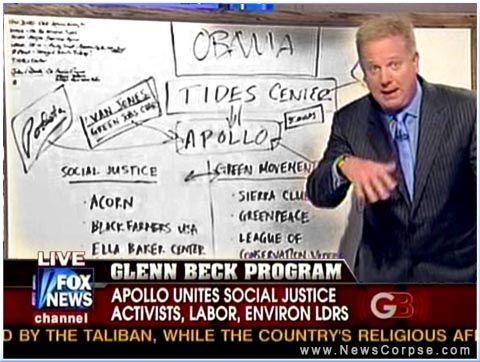
But DecodeDC's use of history in its inaugural episodes, is I think, symptomatic of at least one of the ways in which history is frequently referenced in contemporary American political discourse.  If one's goal is to "decode" or "decipher" American politics, one of the most popular methods of doing so is to reveal some (presumably obscure) fact from the past that will explain (or can be presented as explaining) why things are the way they are today.  In the case of DecodeDC, these reveals are pretty straightforward.  But this use of history comes in more baroque versions, too...such as Glenn Beck's infamous whiteboards.  In each case, one of the purposes of this use of history is simply to denaturalize the present: if something that we take for granted has a (quasi-secret) starting point, perhaps it can change in the future. In the more conspiratorial versions of this move, the genealogical reveal also shows a (quasi-surprising) person or force pulling the strings of the present from behind the scenes.


I've been thinking a lot about the role of history in politics (and vice versa) in light of the recent passing of Eugene Genovese, Eric Hobsbawm, and Henry May.  Though all three have been discussed on this blog, more attention has been given Genovese and May, presumably because, unlike Hobsbawm, they were Americanists.  Elsewhere online, however, Hobsbawm and Genovese seem to dominate the discussion. And what most clearly distinguishes them from May is that both were, more obviously and deeply than May, engagé historians, though the relationship between history and politics in their work was far more complicated than the history-as-code-ring we get from Andrea Seabrook (let alone Glenn Beck).

Both Genovese and Hobsbawm, of course, started their careers (and Hobsbawm ended his, as well) as Marxists.  Marxism provides a particularly rich theoretical connection between politics and history. And in the work of more sophisticated Marxist historians (a category that surely includes both Hobsbawm and the younger Genovese), the understanding of the historical record and of political theory mutually inform and shape each other.  Like its Hegelian predecessor, the Marxist understanding of history sees the possibility of reading the future out of the record of the past.  But for Hegel, unlike Marx, the future foretold by history was, essentially, the Prussian present. Leopold van Ranke, and the other German historians who helped create modern historical practice in the 19th-century, also tended to be politically conservative, essentially seeing history as proving that what is ought to be.

But for all of these thinkers, on the left and the right, history was complicated, though in an ordered way.  This complexity was preserved even when, on occasion, they engaged in a version of the decoding / debunking mode (I'm thinking, in particular, of The Invention of Tradition, which Hobsbawm co-edited).  Though history certainly involved recovering past things now forgotten, for history to be understood, let alone for it to serve a political purpose, it needed to be properly interpreted.   The job of the historian does not end at simply figuring out that Harold Stassen was the first person to say "Democrat Party."*

During my early years of graduate school, my fellow history students and I frequently told each other that much of what was wrong with American political life could be solved if only Americans could have a richer, more complicated understanding of history. I remember one student fantasizing that if historians were regularly invited on Oprah, they could totally transform the discourse on that show for the better. Another student, watching Reagan's farewell address with me during our first year in grad school, was simultaneously enraged and excited by Reagan's discussion of the importance of teaching history:  "we've got to teach history based not on what's in fashion but what's important."  Though he and I knew we didn't agree much with the President about the relationship between the "fashionable" and the important in history, we certainly shared his passion for teaching about the past...and his sense that teaching about the past could help mold the future.

While I continue to believe that doing (and teaching) history is important in many ways, including for our political life, I've long since lost the sense that simply doing good history is a panacea for the problems in our political culture.  To begin with, good history always has to compete with bad history. And though good history occasionally wins, bad history often has the political edge.  And simple history will almost always have an advantage over complicated history.  Invoking "Munich" (or "Vietnam") as codewords in a foreign policy debate is far easier than grappling with the complexity of European politics in 1938 or the American presence in Southeast Asia in the 1950s and 1960s.

However sympathetic one is (or isn't) with Hobsbawm's or Genovese's politics (and I imagine that few are sympathetic with both Genovese's youthful politics and the politics of Genovese's later years...though of course, Genovese managed the trick), it's hard not to conclude that their political understandings enriched their (and, by extension, our) understandings of the past.  Yet I think neither of them -- even Genovese, late in life, allied with a regnant conservatism -- had anywhere near as significant a political impact as an historiographical one.

____________________________________________________
* To be fair to DecodeDC, Seabrook does analyze Stassen's coinage, but in largely ahistorical terms. George Lakoff is the most important analytic voice in the podcast's second episode.

09 Oct 10:16

October 09, 2012


WOOP! Shooting in LA complete. Next mission: Defeat NYCC. You're all gonna come see me, right?


09 Oct 10:08

Goat Aurora Over Greenland

Sometimes it's hard to believe what you see in the sky. Sometimes it's hard to believe what you see in the sky.


09 Oct 10:07

SpaceX Falcon 9 lost an engine on the way up; Dragon on its way to ISS | Bad Astronomy

Last night (Sunday October 7), SpaceX launched a Falcon 9 rocket with a Dragon capsule full of supplies on a mission to the International Space Station. The Dragon was deployed successfully (as were its solar panels to give it power) and it’s on its way to ISS.

However, not everything went as planned. One of the nine Merlin engines powering the Falcon 9 had a failure 90 seconds into the flight. It’s not clear what happened just yet, but there is pretty dramatic footage of the engine failure; in the slow motion video below you can see some sort of flash and puff of flame at the 30 second mark (I’ve set the video to start 22 seconds in):

You can see a bright spot glowing on the upper right engine, then what looks like shrapnel blowing back as well, so it appears something catastrophic happened to the engine. I can think of many things that could’ve caused this – a crack in the engine bell that failed when it got hot, a faulty valve, something in the pipes – but I’m just spitballing; hopefully the folks at SpaceX will be able to determine the cause from the engine telemetry.

Although this looks scary, the engine nozzles are coated with Kevlar to protect them specifically in case something like this occurs, so the other engines continued working. Also, the onboard computer immediately shut down the failed engine, and then on the fly – literally – recalculated all the needed changes to the thrust of the other engines to compensate. In the end, the first stage boost lasted an extra thirty seconds to cover for the failed engine. It’s important again to note that the Dragon capsule was delivered on orbit and will rendezvous with ISS on Wednesday.

Having said that, there may have been another problem as well: my friend Jonathan McDowell of Jonathan’s Space Report is reporting the upper stage didn’t make its second burn, so an Orbcomm satellite that was carried as a secondary payload didn’t make the correct orbit. I don’t have any more information about that, but I’ll update this post when I hear more.

Elon Musk at SpaceX is expected to have an announcement later today about the launch. Again, I’ll update this post as info comes in.

09 Oct 01:45

allcreatures: Gollum the Gibbon at Khao Kheow Zoo, in Chonburi...


allcreatures:

Gollum the Gibbon at Khao Kheow Zoo, in Chonburi Province, Thailand.

Picture: Ashley Vincent/Solent News & Photo Agency (via Pictures of the day: 8 October 2012 - Telegraph)

08 Oct 18:31

Pô, agora vou ficar triste o dia todo...


Pô, agora vou ficar triste o dia todo :(

erickimberlinbowley:

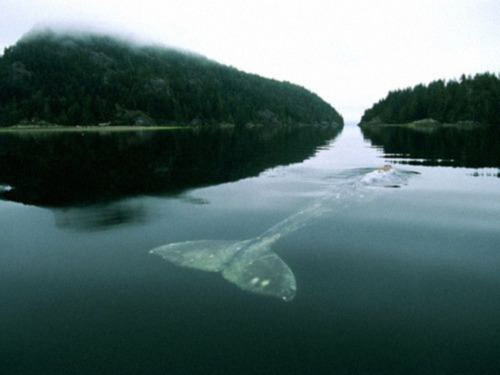
The Loneliest Whale in the World.

In 2004, The New York Times wrote an article about the loneliest whale in the world. Scientists have been tracking her since 1992 and they discovered the problem:

She isn’t like any other baleen whale. Unlike all other whales, she doesn’t have friends. She doesn’t have a family. She doesn’t belong to any tribe, pack or gang. She doesn’t have a lover. She never had one. Her songs come in groups of two to six calls, lasting for five to six seconds each. But her voice is unlike any other baleen whale. It is unique—while the rest of her kind communicate between 12 and 25hz, she sings at 52hz. You see, that’s precisely the problem. No other whales can hear her. Every one of her desperate calls to communicate remains unanswered. Each cry ignored. And, with every lonely song, she becomes sadder and more frustrated, her notes going deeper in despair as the years go by.

Just imagine that massive mammal, floating alone and singing—too big to connect with any of the beings it passes, feeling paradoxically small in the vast stretches of empty, open ocean.

08 Oct 13:07

xkcd 1110

by noreply@blogger.com (Philipe Maciel)
Adam Victor Brandizzi

Ainda bem que alguém fez isso!

O xkcd 1110 é quiçá a maior (literalmente) webcomic já feita.

Navegue-a usando esta incrível ferramenta.
08 Oct 12:56

We, the pioneers

by Wellcome Trust
Voyager 1 is preparing to leave the heliosphere and enter the interstellar medium.

Voyager 1 is preparing to leave the heliosphere and enter the interstellar medium

We’re publishing the shortlisted entries to the 2012 Wellcome Trust Science Writing Prize. Here, to coincide with World Space Week, Andrew Rushby on the romance of our furthest travelling interstellar space probe.

As the Voyager 1 space probe cradles the edge of our Solar System, poised to enter the vacuous expanse of deep space, we are approaching a milestone that many on this planet are not aware of. As this magnificent example of human engineering leaves the confines of the warm embrace of our Sun, at ~120 AU (astronomical units) a now faint and distant beacon in the enveloping darkness, we will become an interstellar species. The gravitas of this monumental achievement should not be overlooked.

Whilst it remains theoretically feasible that our universe may be teaming with life, intelligence of space-faring calibre may be exceedingly rare. We, the product of a knife-edge balancing-act between biological, geochemical and astronomical implausibility, are lucky to be here at all. The inordinate complexity, the innumerable coincidences and the result of 3 billion years of evolution, we stand on the peak of the impossible, gazing out into the void, with Voyager 1 as our first envoy to the stars.

It is unlikely, but not impossible, that any interstellar civilisation has come before us. Through the enormous ears of projects like SETI, we’ve been listening for our galactic neighbours for over 50 years but to no avail. No radio chatter, no xenoarchaeology, no ambassadorial spacecraft. Given the ubiquity of planet forming material, and what we consider the relative normality of our watery home, the emptiness – the silence – is paradoxical.

Our galaxy, the Milky Way, is estimated to be around 13.2 billion years old and our 4.5 billion year-old (estimated) solar system has orbited its centre ~25 times in that time. The Earth has been habitable for around 4 billion years, and, based on our best estimates, we have another half a billion years or so to go before the planet becomes uninhabitable. We’ve been hitching a ride through space for 50,000 years and have had space technology for one thousandth of that time (50 years). Assuming this is the case for most habitable planets, and knowing as we do that exponential colonial growth is impossible, it seems likely that if intelligent civilisations had arisen at any point in the history of our galaxy, and at some coordinate closer to the galactic core, there has been little evidence to suggest that they ever made it out this far. Given that colonisation infers a survival value, the fact that nearby planets give no indication of being inhabited leads to the conclusion that there are likely to be no other colonisers out there.

What conclusions can we draw from the silence? Conjecture abounds. Perhaps the galaxy is teaming with civilisations that have consciously hidden themselves from us until we overcome some technological or societal hurdle that would usher our entry into the ‘galactic club’ – perhaps superluminal travel or the formation of a world government? In the immediate future, and without too much speculation, we can possibly infer that we may be the only intelligent civilisation ever to have arisen, in this neighbourhood anyway. If so, that places quite a burden on us to protect our planet and each other until such time that we can make our own way through the stars. We, or most likely our distant descendants, may be the sole custodians of the true meaning of existence, nature and the universe; the formulators and keepers of the ‘theory of everything’. Their success, and ours in the meantime, depends on the decisions we make now.

We are the pioneers, but we are also most certainly endangered by our own machinations. Up to this point, some of those decisions have been rather poor and have possibly compromised the very habitability of the planet we draw life from. Others, like Voyager et al. have been great. This humble, unassuming vessel represents the first step of an infant civilisation adopting a truly Universalist, extrospective outlook. With 10 – 15 years of power left, Voyager will continue to take measurements and beam information back to Earth on the transition through the heliopause and the composition of the interstellar medium. After its batteries die and its instruments go silent Voyager will continue to obediently sail through the depths of space on a mission lasting an eternity; a mission with no end and no more formal objectives. The spacecraft will not decay in the vacuum of space and its form and technology will be preserved indefinitely as a time capsule to the stars. Long after the Earth has ceased to exist, Voyager will remain.

Andrew Rushby

Andrew Rushby

Andrew Rushby

This is an edited version of Andrew’s original essay. Views expressed are the author’s own.

Find out more about the Wellcome Trust Science Writing Prize in association with the Guardian and the Observer and read our ‘How I write about science‘ series of tips for aspiring science writers.

Over the next couple of months, we’re publishing the shortlisted essays from the 2012 competition. Read all, and the 2011 essays, in our archive.

Image credits: Wikimedia Commons, Wellcome Trust

Filed under: Public Engagement, Science Communication, Wellcome Trust Science Writing Prize Tagged: Astronomy, Milky Way, Science writing, Solar system, Space, Space probes, Space travel, Voyager 1, Wellcome Trust Science Writing Prize, Wellcome Trust Science Writing Prize 2012, World Space Week
08 Oct 12:18

Microsoft

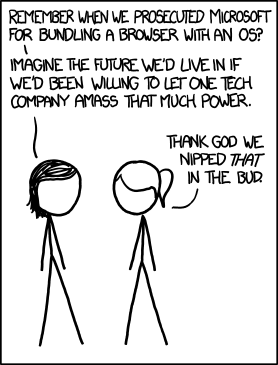
Facebook, Apple, and Google all got away with their monopolist power grabs because they don't have any 'S's in their names for critics to snarkily replace with '$'s.
08 Oct 01:28

theamericankid: Buy your cat a laser pointer, they said. It...


theamericankid:

Buy your cat a laser pointer, they said. It will be lots of fun, they said

> F*ck you, and your laser.
07 Oct 23:34

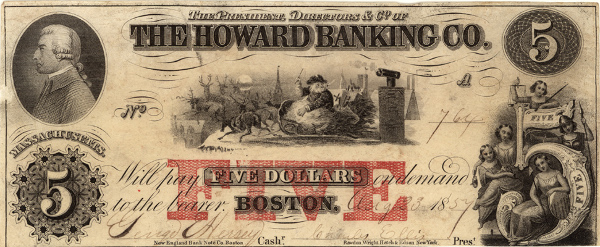
Stocking Money

by Greg Ross

santa claus bank note

The U.S. government did not issue paper money until 1861. Until then, private banks printed their own currency under charters to the states.

As a result, this $5 bill featuring Santa Claus was legal tender in the 1850s. It was issued by the Howard Banking Company of Boston.

A number of banks issued Santa-themed money in the same period — the most natural being the St. Nicholas Bank of New York City.

06 Oct 03:06

Descoberta bactéria que produz ouro puro

by Denise Helena

))imagem

Por ser tão raro, o Ouro possui um alto valor comercial, e segundo estudiosos, de acordo com as perspectivas de produção e consumo atuais, todo o Ouro existente na Terra deve durar até 2042, bem…isso era até Kazem Kashefi e Adam Brown criarem um laboratório compacto que utiliza a bactéria Cupriavidus metallidurans (anotem esse nome!) para transformar cloreto de ouro, um líquido tóxico que se encontra na natureza, em 99,9% de ouro puro.

Segundo os pesquisadores da Michigan State University, o ouro pode sobreviver em ambientes extremamente tóxicos e criar pepitas de ouro de 24 quilates. Ouro puro.

Kashefi, professor-assistente de microbiologia e genética molecular, e Brown, professor-adjunto de arte eletrônica e intermídia são os responsáveis pela “alquimia microbiana”, transformando “algo que não tem valor em um metal precioso sólido que é valioso”, bem, não vamos exagerar, afinal esse material tóxico que eles usam custa algum dinheiro, claro, embora muito menos do que o ouro.

A fábrica compacta dos pesquisadores (“A Grande Obra do Amante de Metal”) contém as bactérias, que recebem cloreto de ouro como alimento dos pesquisadores, e essa bactéria é extremamente resistente a este elemento tóxico. Na verdade, ela é 25 vezes mais forte do que se pensava anteriormente e bastou uma semana para as bactérias fazerem o seu trabalho, processar o material tóxico em metal precioso, e os pesquisadores acreditam que este é processo que acontece normalmente na natureza.

Via news.msu.edu

Foto Michigan State University/ reprodução


e-planning.net ad


05 Oct 22:24

The Photos Behind Norman Rockwell’s Iconic Paintings

by Jessica Czeck

In his 50 year career with The Saturday Evening Post, Norman Rockwell’s cover paintings became some of the most iconic images of everyday life in America. Today, prints of the romanticized paintings of a simpler time are popular wall decor in diners and grandparents’ homes and commonly referenced in movies and TV shows. It would be nearly impossible to find an American adult who has not been exposed to at least one of these famous works, therefore it’s quite exciting to find out that the characters in each painting were, in fact, real people. The Norman Rockwell Museum revealed them all when they featured a landmark exhibition of nearly 20,000 reference photographs that inspired his collections.

See Also CURRENT ARTISTS REINTERPRET NORMAN ROCKWELL

A natural when it came to narration, Rockwell thought out the stories behind each scene down to the smallest detail- from the perfect location to appropriate props to impeccably positioned models. Each of Rockwell’s scenarios were staged to the point that the reference photographs themselves are works of art. The archive was preserved by Ron Schick, a curator at the museum, who then created and authored the perfect gift for aficionados of the artist: Norman Rockwell: Behind the Camera.

↬ accidentalmysteries

05 Oct 22:17

Wikipedia’s testing a new sign-up page to entice would-be Wikipedians

by Paul Sawers
Wiki 520x245 Wikipedias testing a new sign up page to entice would be Wikipedians

Wikipedia has started testing a new account sign-up page as it looks to curb the decline in the number of registrations over the past couple of years.

If you’re reading this, there’s more than a good chance you’ve used Wikipedia.

Wikipedia has evolved into a major go-to destination for those in search of knowledge, be it to swot up on the films of Laurel & Hardy, or discover what E=MC2 really means. But have you ever actually taken the time to input your own knowledge and become a fully-fledged Wikipedian?

Now, if you’re merely browsing, you don’t in fact need to sign up for a Wikipedia account. And if you want to edit pages, you don’t really need an account either, but if you save your edits your IP address is publicly recorded in this page’s edit history. However, if you create an account, you can conceal your IP address and receive other benefits such as being able to create new pages and upload photos.

With that in mind, Wikipedia is testing a new sign-up page as it looks to encourage more people to make the leap from watcher to Wikipedian. You’ll likely see this page at the moment if you go to sign up:Wiki1 520x355 Wikipedias testing a new sign up page to entice would be Wikipedians

This wordy, clunky page is currently under review and some people will now be seeing a new design from this week, which is much more direct and less foreboding. The new look is being delivered 50% of the time as part of an A/B test…so you may see it sometimes, others not:

Wiki2 520x336 Wikipedias testing a new sign up page to entice would be Wikipedians

Wikipedia notes that the current design hasn’t been “given much love” in recent years, and could be contributing to the decline in registrations over the last few years. It says:

“We’ve updated the visual design to be far less cluttered and expose a clearer structure, and reduced the amount of instructional text that appears before the form. As a side benefit, mobile users should find the page easier to use, though our mobile team is working on further enhancements, too.”

This is currently only under review for the English Wikipedia, though it’s probably safe to assume that if successful, the new layout will be rolled out across more languages. And Wikipedia is also seeking to make the benefits of creating an account clear by listing them at the sign-up point.

Meanwhile, check out our interview with Wikipedia co-founder Jimmy Wales from last year, where he discusses censorship, the Wikipedian demographic…and why he hates the word ‘crowdsourcing’.

Feature Image Credit – Peter Macdiarmid/Getty Images

05 Oct 22:09

Vi isso nos “Trending” do The Old Reader então, sim,...


Vi isso nos “Trending” do The Old Reader então, sim, vale a pena frequentar lá também.

christiannightmares:

Will ‘Potato Jesus’ be this year’s hottest Halloween costume? (Found at Uproxx; For a related post, click here http://christiannightmares.tumblr.com/post/31462067505/premonition-newly-discovered-species-of-monkey)

04 Oct 03:39

Lair of the Trapmaster

http://oglaf.com/trapmaster/

04 Oct 03:06

Birthday Milestones

by Doug
Adam Victor Brandizzi

Então, pessoas, então me vendo?!

Birthday Milestones

Dedicated to Molly! Happy 21st birthday, Molly!!

You may remember Molly from my cartoon for her 16th birthday.

04 Oct 03:01

Why We Are So Rude Online

by Miss Cellania

fThere's something about typing your thoughts on the internet that makes some perfectly nice people act like jerks. It's not just the anonymity, because even on social networking sites where our identities are displayed to our contacts, arguments often devolve into name calling and bullying.   

According to soon-to-be-published research from professors at Columbia University and the University of Pittsburgh, browsing Facebook lowers our self control. The effect is most pronounced with people whose Facebook networks were made up of close friends, the researchers say.

Most of us present an enhanced image of ourselves on Facebook. This positive image—and the encouragement we get, in the form of "likes"—boosts our self-esteem. And when we have an inflated sense of self, we tend to exhibit poor self-control.

"Think of it as a licensing effect: You feel good about yourself so you feel a sense of entitlement," says Keith Wilcox, assistant professor of marketing at Columbia Business School and co-author of the study. "And you want to protect that enhanced view, which might be why people are lashing out so strongly at others who don't share their opinions." These types of behavior—poor self control, inflated sense of self—"are often displayed by people impaired by alcohol," he adds.

MIT professor Sherry Turkle says we often forget that when we comment online we don't feel as if we are talking to real people, but when we receive such thoughtless comments, we take it doubly hard.

And for Facebook, its very name is part of the problem. "It promises us a face and a place where we are going to have friends," says Dr. Turkle, author of the book "Alone Together: Why We Expect More from Technology and Less from Each Other." "If you get something hurtful there, you're not prepared. You feel doubly affronted, so you strike back."

Read more about research into online behavior at the Wall Street Journal. Link -via The Week