Adam Victor Brandizzi
Shared posts
06 May 19:24
Mundo tão desigual
by Drunkeynesian
Adam Victor BrandizziDeveras curioso.
Mapa roubado do Inca Kola News. O amigo Mineiro indicou, na mesma linha, este site.

Adam Victor Brandizzi likes this


06 May 19:16
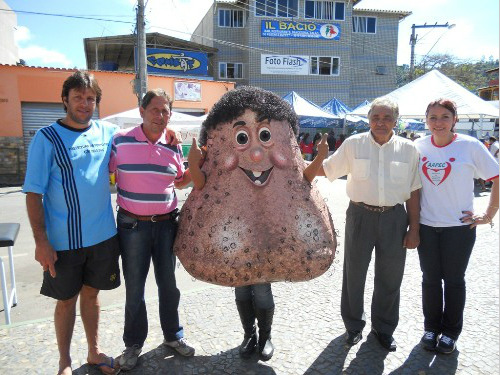
I present to you Mr. Testicle! [thanks thatwanderlust]
Adam Victor BrandizziAgora não dá mais para reclamar das zoações com o Zé Gotinha.



Adam Victor Brandizzi and -1 others like this

06 May 19:13
Cantando na seca
by Gomez
Adam Victor BrandizziHá uma semana fora e já tô com saudade da seca :(
E a seca chegou na cidade.....quadrinhos para o Correio Braziliense de hoje


Adam Victor Brandizzi likes this


06 May 19:10

everyday on the internet
everyday on the internet
Adam Victor Brandizzi and -1 others like this

06 May 19:05
Dumbfounding Client Feedback Turned Into Hysterical Posters
by Alex Wain
Have you ever visited Clients From Hell? If even the slightly bit artistic or creative, you’ll find it is without a doubt one of the funniest sites on the internet. The premise is simple, graphic designers and creatives submit genuine comments and feedback from clients anonymously.
Sounds ok so far doesn’t it?
But the requests and responses utterly defy belief at times! From the ludicrous & absurd to countless moments where you feel compelled to just bury your face in your hands, such is the idiotic nature of the questions. They serve as an amusing insight into the maddening world in which creatives have to work and the daily battles they face to make their clients happy.
Two Irish designers and Paddy Treacy & Mark Shanley knew exactly how that felt, so they decided to take the premise / concept further and turn those comments from clients into actual posters. They collaborated with numerous designers, illustrations and creative directors to collate all the feedback, highlighting the most dumb-founding requests and creating inventive & unique posters for each.
They’ve titled the series ‘Sharp Suits’ and below is a selection from their hilarious endeavour, you can find out more about the project via sharpsuits.net


Via sharpsuits.net
ENJOYED IT? SHARE IT!
Adam Victor Brandizzi and -1 others like this

06 May 18:55

Opposites Attract
by Greg Ross
In 1967 Dmitri Borgmann made his way from UGLY to BEAUTIFUL by means of dictionary definitions:
UGLY — OFFENSIVE
OFFENSIVE — INSULTING
INSULTING — INSOLENT
INSOLENT — PROUD
PROUD — LORDLY
LORDLY — STATELY
STATELY — GRAND
GRAND — GORGEOUS
GORGEOUS — BEAUTIFUL
Kipling called words “the most powerful drug used by mankind.”
mutantbex, Benjamin Tyler Holt and 3 others like this

06 May 18:49
pipud: ut4ps: Race matters. Must reblog.


Adam Victor Brandizzi, Christopher Lantz and 2 others like this


06 May 18:41
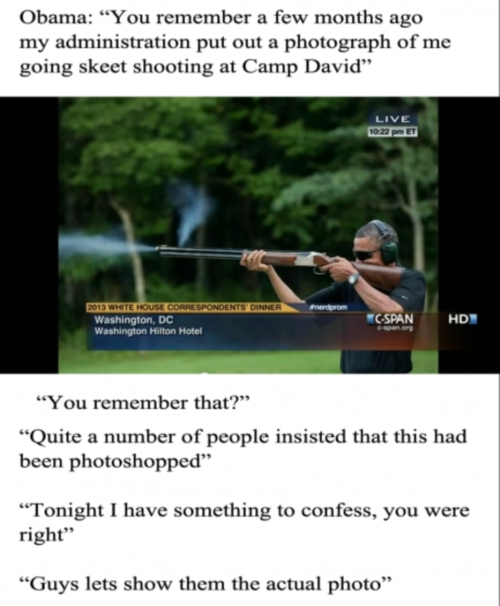
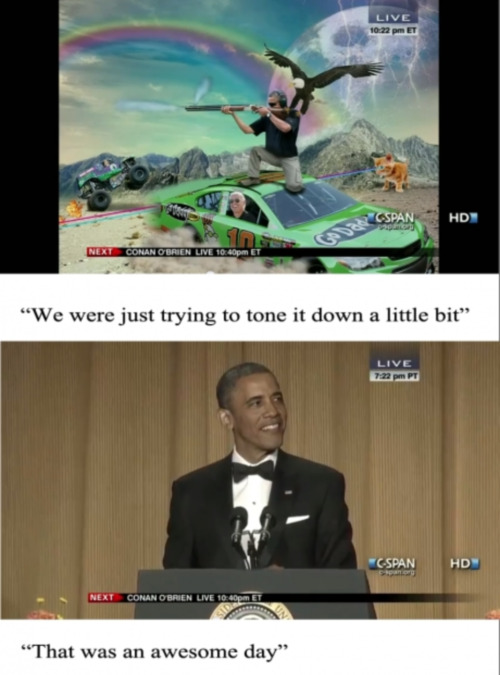
godisgaf: our president is a sarcastic motherfucker.
Adam Victor Brandizzi, Osiasjota and -1 others like this

06 May 18:18
Oposição, e NÃO Assad, teria usado armas químicas, segundo comissária da ONU
by Gustavo Chacra
Veja meu comentário sobre a Síria na Jornal das Dez da Globo News
Leia também o contexto dos bombardeios de Israel à Síria
A oposição síria, e não o regime de Bashar al Assad, teria usado armas químicas, de acordo com acordo com uma das mais importantes autoridades da ONU disse em entrevista. Este anúncio, que infelizmente tem repercutido pouco na imprensa americana, afundaria pelo menos um dos argumentos dos defensores de uma intervenção dos EUA na guerra civil na Síria.
Apenas para lembrar, Barack Obama afirmou que uso de armas químicas, por parte do regime, seria um divisor de águas e mudaria seus cálculos sobre a guerra civil na Síria. Semanas atrás, emergiu a informação de que estes armamentos teriam sido usados. Sem prova alguma, certas nações passaram a acusar o regime.
Nesta sexta, porém, a comissária da Comissão Internacional de Inquérito da ONU para a Síria, Carla del Ponte, afirmou ter “fortes evidências de que os rebeldes usaram armas químicas”, e não o regime. Portanto, mais uma vez para ficar claro, a oposição teria sido responsável, não Assad, pelo uso do arsenal químico – informações posteriores indicam que a ONU tampouco tem provas conclusivas sobre o uso pelos opositores, mas neste caso a própria Del Ponte precisaria se explicar.
Esta informação deve ser esquecida, infelizmente. Defensores da intervenção ignoram o relatório da ONU e cravam, sem provas, que Assad usou armas químicas. Ainda bem que Obama, no caso da Síria, mantém enorme cautela e foi claro em discurso na semana passada ao dizer que estes armamentos químicos foram usados, “mas não sabemos quando, onde e por quem”. A resposta das Nações Unidas – pela oposição, não por Assad.
ATUALIZAÇÃO – Paulo Sérgio Pinheiro, presidente da Comissão de Inquérito da ONU, publicou nota afirmando que não há provas contra o regime de Assad e TAMPOUCO contra a oposição. Carla del Ponte não voltou atrás na sua informação
Guga Chacra, comentarista de política internacional do Estadão e do programa Globo News Em Pauta em Nova York, é mestre em Relações Internacionais pela Universidade Columbia. Já foi correspondente do jornal O Estado de S. Paulo no Oriente Médio e em NY. No passado, trabalhou como correspondente da Folha em Buenos Aires
Comentários islamofóbicos, antisemitas e antiárabes ou que coloquem um povo ou uma religião como superiores não serão publicados. Tampouco ataques entre leitores ou contra o blogueiro. Pessoas que insistirem em ataques pessoais não terão mais seus comentários publicados. Não é permitido postar vídeo. Todos os posts devem ter relação com algum dos temas acima. O blog está aberto a discussões educadas e com pontos de vista diferentes. Os comentários dos leitores não refletem a opinião do jornalista
Acompanhe também meus comentários no Globo News Em Pauta, na Rádio Estadão, na TV Estadão, no Estadão Noite no tablet, no Twitter @gugachacra , no Facebook Guga Chacra (me adicionem como seguidor), no Instagram e no Google Plus. Escrevam para mim no gugachacra at outlook.com. Leiam também o blog do Ariel Palacios

06 May 18:13

Donald Trump Caterpillar
by Miss Cellania

You can see the resemblance, can't you? This is a Megalopyge opercularis, or flannel moth caterpillar. It was spotted by photographer Jeff Cremer and biologist Phil Torres in the Peruvian rainforest. They look furry, and will become a fluffy moth as well, but don't touch it! Its "fur" is made up of venomous spines that can cause painful swelling that lasts for days. Link -via the Presurfer
(Image credit: Phil Torres)
Tadeu, Adam Victor Brandizzi and -1 others like this
06 May 18:13

Google's decision to recognize Palestine could undermine peace efforts, Israel says
by Amar Toor
Adam Victor Brandizzi"Google, a mudança de uma palavrinha no seu site vai prejudicar os esforços de negociação de paz etc. etc."
Seeei...
Israel has asked Google to reconsider its decision to list Palestine among its selection of localized search pages, accusing the company of implicitly recognizing a Palestinian state. In a letter to Google CEO Larry Page, deputy foreign minister Ze’ev Elkin said the search giant's move could undermine efforts for peace in the region.
The company's Google.ps search page had previously been labeled "Palestinian territories," but was changed to "Palestine" on May 1st. Israel's foreign ministry had expressed concerns over the nomenclature, saying it "raises questions" about Google's intent. As the Jerusalem Post reports, Elkin has now adopted a more openly critical stance.
A threat to peace in the Middle East
"Such a decision is in my opinion not only mistaken but could also negatively impinge on the efforts of my government to bring about direct negotiations between Israel and the Palestinian Authority," the minister wrote, adding that the move would embolden Palestinians to "further their political aims through one-sided actions rather than through negotiating and mutual agreement." Elkin asked Google to reconsider its decision, while urging Page to discuss the matter with Israeli representatives.
In an interview with the BBC last week, Google spokesperson Nathan Tyler said the company decided to change the listing after consulting "a number of sources and authorities."
"In this case, we are following the lead of the UN, ICANN [the Internet Corporation for Assigned Names and Numbers], ISO [International Organisation for Standardisation] and other international organisations," Tyler said. The UN sent shockwaves across Israel late last year, when, by a vote of 138 to 9, it designated Palestine as a non-member observer state. Israel and the US were among those in opposition to the move, with an additional 41 countries abstaining from the vote altogether.
The Palestinian authority last week welcomed Google's name change, describing it as "a step in the right direction," but Elkin says the shift runs counter to the company's ethos of openness and communication.
"Google has brought about so many positive changes in the world by promoting connections between people and between peoples," he wrote. "This decision, however, is in contradiction to such aims, and distances the parties from real dialogue."
- Source The Jerusalem Post
- Related Items google politics israel middle east palestine larry page ze’ev elkin
Osiasjota likes this
04 May 13:57

Quick!
by Greg Ross
If you choose an answer to this question at random, what’s the chance that you’ll be correct?
(a) 25% (b) 50% (c) 0% (d) 25%
03 May 21:09
Ralph Nader and Bruce Fein Prod Obama to Release Guantanamo Detainees
by Jordan Bloom
Adam Victor BrandizziAssim esperamos.
Former presidential candidate Ralph Nader and constitutional lawyer Bruce Fein have released a letter today calling for President Obama to release the 86 detainees held at Guantanamo Bay that have been cleared for transfer.
“No statute or other legal limitation blocks you from this enlightened course of action, which you have commended as who we are as a people. We are supposed to be willing to take risks that other countries shun because we find imprisoning, killing, or otherwise punishing the innocent to be morally reprehensible,” the letter reads.
On Tuesday, Obama promised to reopen discussions with Congress over closing the installation, which he has promised to do since campaigning for president the first time.
The letter arrives in the midst of a hunger strike by Guantanamo detainees, which has led to cases of force-feeding. It comes under the imprimatur of the National Commission on Intelligence Misuse to Justify War, a relatively unknown entity about a year and a half old, registered to the same address as Grover Norquist’s Americans for Tax Reform. Tony Shaffer sits on its board.
Earlier this year, Nader and Fein also released letters calling for a pardon of whistleblower John Kiriakou and for the Harvard Law Review to take the president’s constitutional abuses more seriously.
Here’s the rest of it:
Adam Victor Brandizzi likes this
03 May 21:08
The False Promise of MOOCs
by Samuel Goldman
Adam Victor BrandizziSou superfã de MOOCs mas é VDD: quem consegue usar já tá muito preparado.
* * *
Ainda assim, é bom ajudar quem já é educado também, né?
In today’s Wall Street Journal, Michael S. Roth, the president of Wesleyan University, argues that students get real benefits from Massive Open Online Courses (MOOCs). Based on his experience teaching a MOOC on “The Modern and the Postmodern” for Coursera, Roth maintains that these benefits aren’t limited to the acquisition of technical skills: MOOC students can also engage in deep study of classic philosophical authors such as Rousseau and Kant. The op-ed is behind a paywall. But here is Roth’s conclusion:
Teaching this MOOC has shown me that online courses will be increasingly viable and valuable learning options for those who can’t make their way to campuses. Taking a course online is clearly not the same thing as integrating study with residential experience, but it is a powerful mode of learning that is already enriching millions of lives across the globe.
It’s probably an exaggeration to say that MOOCs are enriching “millions of lives”. But Roth provides anecdotal evidence that at least some of the nearly 4000 students who completed his course (of about 30,000 who registered) learned something from it.
The problem is, these were not the kinds of students that we should worry about helping. Roth’s anecdotes of positive engagement with course involve “a graduate student in the Netherlands”, “[a]nother adult student, in Germany”, and “[a]n American woman…taking the class with her husband and two other couples; all had Ph.D.’s”. In other words, Roth offers reasons to believe that MOOCs are a nice diversion for highly educated, highly motivated adults in rich countries. That’s fine, but no justification of all the excitement about MOOCs as an alternative, or even a meaningful supplement, to more traditional forms of higher education.
So what about students in this country who haven’t already earned a college degree? Peter Sacks offers a more realistic vision of the MOOCified future:
Well-off students will attend the few colleges and universities that are wealthy enough to eschew standardization and automation. They alone will have real relationships with great faculty. A second, less wealthy group of students will use online courses for their general education and attend “authentic” institutions for a short while. For poorer students, online learning could well become the main course. They will attend institutions that, strictly speaking, grant post-high school credentials to the coach class.
I don’t know if this scenario can be avoided. But I’m certain that it’s nothing to be celebrated. As the president of a rich college that serves mostly rich students, Roth can afford to offer free edu-entertainment to an international audience. But one wishes that he’d considered the consequences for the less fortunate institutions and students who dominate higher education here at home.
03 May 20:50
Por que Obama não fechou Guantánamo?
by Gustavo Chacra
Guantánamo é a maior vergonha de Barack Obama. O presidente fez campanha em 2008 prometendo que fecharia esta prisão americana em Cuba. Mas, já em seu segundo o mandato, o ocupante da Casa Branca enfrenta uma greve de fome de mais de cem prisioneiros que jamais receberam o direito de viver livremente ou de serem transferidos para prisões normais.
Eles não são condenados a nada. A maior parte deles já foi considerada inocente pela própria Justiça militar. Dos 166 detidos em Guantánamo, apenas seis foram condenados. Algumas dezenas são suspeitas, mas não há como promotores apresentarem casos contra eles. Os demais poderiam estar livres. E estariam, se Obama tivesse cumprido a sua promessa.
Mas Obama, lamentavelmente, não cumpriu. A pressão internacional e doméstica para fechar Guantánamo, existente contra George W. Bush, se reduziu depois da eleição do atual presidente. Muitos se esqueceram que existia esta vergonha prisão americana, na qual a Constituição dos EUA parece ter sido jogada no lixo, com os detidos sendo submetidos a tortura.
Em entrevista coletiva que marca o seu centésimo dia de mandato, Obama afirmou nesta quinta mais uma vez “que fechará Guantánamo” e voltou a culpar o Congresso pelo fracasso. Chega a ser patético. Por que não fechou antes? Por que cedeu a senadores e deputados em vez de cumprir o que prometeu na campanha e respeitar os direitos humanos? Por que acabou com o escritório responsável por elaborar um plano para fechar a pressão?
Como bem lembra Joe Nocera, colunista do New York Times, 56 prisioneiros de Guantánamo de origem iemenita estava prontos para ser libertados anos atrás. “Mas o Congresso, liderado pelos senadores John McCain e Lindsay Graham, aprovou leis que tornou impossível a libertação deles. Vergonhosamente, Obama assinou estas leis”, escreveu.
O presidente parece ter imaginado que o tema Guantánamo ficaria esquecido eternamente e, assim, poderia se concentrar em suas prioridades domésticas e mesmo externas, como os seus ataques seletivos com Drones, como são chamados os aviões não tripulados utilizados para bombardear o Paquistão e o Yemen.
A greve de fome, porém, trouxe de volta à tona o problema destes homens que vivem em um limbo, segundo as palavras do próprio presidente. É urgente que eles tenham direito à liberdade ou, pelo menos, um julgamento justo nos EUA.
Guga Chacra, comentarista de política internacional do Estadão e do programa Globo News Em Pauta em Nova York, é mestre em Relações Internacionais pela Universidade Columbia. Já foi correspondente do jornal O Estado de S. Paulo no Oriente Médio e em NY. No passado, trabalhou como correspondente da Folha em Buenos Aires
Comentários islamofóbicos, antisemitas e antiárabes ou que coloquem um povo ou uma religião como superiores não serão publicados. Tampouco ataques entre leitores ou contra o blogueiro. Pessoas que insistirem em ataques pessoais não terão mais seus comentários publicados. Não é permitido postar vídeo. Todos os posts devem ter relação com algum dos temas acima. O blog está aberto a discussões educadas e com pontos de vista diferentes. Os comentários dos leitores não refletem a opinião do jornalista
Acompanhe também meus comentários no Globo News Em Pauta, na Rádio Estadão, na TV Estadão, no Estadão Noite no tablet, no Twitter @gugachacra , no Facebook Guga Chacra (me adicionem como seguidor), no Instagram e no Google Plus. Escrevam para mim no gugachacra at outlook.com. Leiam também o blog do Ariel Palacios
Osiasjota likes this
03 May 20:14


A beira do rio
by historiasdasruas
Adam Victor BrandizziBlog tenso/lindo.

Depois de algum tempo sem colocar nenhuma história aqui no
blog, voltamos às origens!
De volta para o Brasil - onde o projeto nasceu -, voltei para a minha cidade, Americana – SP. Foi aqui que comecei de novo a busca de histórias dessas pessoas que vivem nas ruas, tentando antes de tudo, entender o que levaram elas à essa situação.
Fui ao centro da cidade, e de baixo de uma ponte, à beira de um rio e muita sujeira, avistei uma “casa” de papelão com algumas panelas fora, e junto, um homem sentado conversando com uma mulher. Pedi a permissão para me aproximar, e depois de concedida, nós começamos a conversar...
De volta para o Brasil - onde o projeto nasceu -, voltei para a minha cidade, Americana – SP. Foi aqui que comecei de novo a busca de histórias dessas pessoas que vivem nas ruas, tentando antes de tudo, entender o que levaram elas à essa situação.
Fui ao centro da cidade, e de baixo de uma ponte, à beira de um rio e muita sujeira, avistei uma “casa” de papelão com algumas panelas fora, e junto, um homem sentado conversando com uma mulher. Pedi a permissão para me aproximar, e depois de concedida, nós começamos a conversar...
“Meu nome é Rogério, tenho 31 anos e moro na rua há nove
anos. Sou natural de Porto Seguro e depois da morte dos meus pais, a minha vida
começou a ficar meio complicada. Meus pais sempre tiveram uma vida boa, me
formei no colegial e trabalhei em alguns “bicos” para conseguir o meu dinheiro,
mas nunca me faltou nada.
Comecei, desde aquela época, a usar maconha, como a maioria dos adolescentes. Foi aí que eu tive o contato com as drogas mais “pesadas”, o que, em partes, me levou onde eu estou. Depois da morte dos meus pais, o uso começou a ficar mais forte e desde adolescente tive problemas em ficar num lugar fixo por muito tempo. Não é da minha personalidade. Não digo que eu não gosto de trabalhar, afinal, trabalho muito para conseguir a minha comida, reciclando o lixo da cidade, mas não me agrada a ideia de ter sempre o mesmo emprego.
Comecei a viajar por alguns estados depois que me mudei para Ribeiro Preto, e como o dinheiro não era o suficiente para pagar uma moradia por onde eu passava, comecei a dormir na rua, e desde então, estou nela.
Nas ruas, a questão da droga piorou muito mais, mas sempre tive uma boa educação vinda de meus pais e nunca roubei nem fui preso, sempre batalhei do meu jeito para ter o meu dinheiro e sustentar as minhas coisas, até mesmo os meus vícios. Mesmo vindo de família rica, que tem condições de me ajudar, posso dizer que isso acabou sendo um comodismo e até hoje estou morando nas ruas, sempre em algum lugar diferente.”
Comecei, desde aquela época, a usar maconha, como a maioria dos adolescentes. Foi aí que eu tive o contato com as drogas mais “pesadas”, o que, em partes, me levou onde eu estou. Depois da morte dos meus pais, o uso começou a ficar mais forte e desde adolescente tive problemas em ficar num lugar fixo por muito tempo. Não é da minha personalidade. Não digo que eu não gosto de trabalhar, afinal, trabalho muito para conseguir a minha comida, reciclando o lixo da cidade, mas não me agrada a ideia de ter sempre o mesmo emprego.
Comecei a viajar por alguns estados depois que me mudei para Ribeiro Preto, e como o dinheiro não era o suficiente para pagar uma moradia por onde eu passava, comecei a dormir na rua, e desde então, estou nela.
Nas ruas, a questão da droga piorou muito mais, mas sempre tive uma boa educação vinda de meus pais e nunca roubei nem fui preso, sempre batalhei do meu jeito para ter o meu dinheiro e sustentar as minhas coisas, até mesmo os meus vícios. Mesmo vindo de família rica, que tem condições de me ajudar, posso dizer que isso acabou sendo um comodismo e até hoje estou morando nas ruas, sempre em algum lugar diferente.”

Contado um pouco do começo da história dele, perguntei se ele tinha filhos e a emoção foi inevitável.
- “Sim, tenho dois! Uma menina de 17 anos e um menino de 8. Hoje eu não tenho mais contato com eles, pouco nos falamos.”
Questionado o porque de ele quase nunca falar com os seus filhos, o mesmo olhou para baixo e começou a chorar – “Eu tenho vergonha deles, muita! Eu os abandonei!”
Um silencio tomou por algum tempo conta da conversa... Com a intenção de desviar desse assunto, vendo que aquilo não estava lhe fazendo bem, perguntei a ele a sua opinião sobre a política de hoje.
-“Sinceramente eu não tenho muito contatos com o jornal e não vejo TV, então não tenho uma opinião formada sobre isso.”
- “Sim, tenho dois! Uma menina de 17 anos e um menino de 8. Hoje eu não tenho mais contato com eles, pouco nos falamos.”
Questionado o porque de ele quase nunca falar com os seus filhos, o mesmo olhou para baixo e começou a chorar – “Eu tenho vergonha deles, muita! Eu os abandonei!”
Um silencio tomou por algum tempo conta da conversa... Com a intenção de desviar desse assunto, vendo que aquilo não estava lhe fazendo bem, perguntei a ele a sua opinião sobre a política de hoje.
-“Sinceramente eu não tenho muito contatos com o jornal e não vejo TV, então não tenho uma opinião formada sobre isso.”
A conversar continuou e mais algumas perguntas foram feitas
para ele:
Você já foi internado alguma vez por causa do seu vicio de
drogas?
-“Varias... Mas eu tenho a opinião de que, se você não quer ser ajudado, não tem como outra pessoa te ajudar, por isso não concordo com a internação forçada dos usuários.”
Das cidades de onde você passou, qual você achou a pior para morar?
- “Campinas, lá tem muita gente na rua, muitos usuários de drogas. Eu uso a minha droga, mas não incomodo ninguém, não faço mal para ninguém... E não gosto que venham roubar o que é meu também.”
-“Varias... Mas eu tenho a opinião de que, se você não quer ser ajudado, não tem como outra pessoa te ajudar, por isso não concordo com a internação forçada dos usuários.”
Das cidades de onde você passou, qual você achou a pior para morar?
- “Campinas, lá tem muita gente na rua, muitos usuários de drogas. Eu uso a minha droga, mas não incomodo ninguém, não faço mal para ninguém... E não gosto que venham roubar o que é meu também.”
Você tem religião?
- “Já frequentei muitas igrejas, evangélicas, católicas, mas hoje eu não frequento nenhuma, acredito em Deus e para mim isso basta. Não vejo necessidade de ir até uma igreja para Deus meu ouvir, converso com ele aqui do meu canto e tenho certeza que ele me ouve.”
- “Já frequentei muitas igrejas, evangélicas, católicas, mas hoje eu não frequento nenhuma, acredito em Deus e para mim isso basta. Não vejo necessidade de ir até uma igreja para Deus meu ouvir, converso com ele aqui do meu canto e tenho certeza que ele me ouve.”
Você acha que a sua vida, hoje, está assim por vontade de
Deus?
- “De jeito nenhum... Tenho total consciência de que eu só estou assim hoje por conta de minhas atitudes... A culpa é inteiramente minha!”
- “De jeito nenhum... Tenho total consciência de que eu só estou assim hoje por conta de minhas atitudes... A culpa é inteiramente minha!”
Qual é a melhor e a pior parte de morar na rua?
- “Não vou conseguir dizer qual é a melhor parte, mas eu sei que ela existe, para mim, tudo tem o seu lado ruim e o seu lado bom. A pior é ter que conviver com o desprezo e com o frio no inverno. É a pior época para quem mora nas ruas.”
- “Não vou conseguir dizer qual é a melhor parte, mas eu sei que ela existe, para mim, tudo tem o seu lado ruim e o seu lado bom. A pior é ter que conviver com o desprezo e com o frio no inverno. É a pior época para quem mora nas ruas.”
Você tem vontade de voltar a estudar?
- “Sim, acho que nunca é tarde... Um dia quero poder cursar direito.”
- “Sim, acho que nunca é tarde... Um dia quero poder cursar direito.”
Você acha que já fez amizades verdadeiras nas ruas?
- “Sinceramente, sim! Eu não sei quanto ao outro lado, mas de minha parte, era muito verdadeiro e considero até hoje.”
- “Sinceramente, sim! Eu não sei quanto ao outro lado, mas de minha parte, era muito verdadeiro e considero até hoje.”
Terminando a nossa conversa, ele nos levou para conhecer o
pequeno espaço onde ele dormia, e lá estava a sua mulher. Uma pessoa muito
tímida, que ele mesmo diz que parece um “bicho do mato”, não quis falar comigo
e também não quis ser fotografada. Um espaço pequeno, porém, acolhedor, dentro
das situações. Mesmo não tendo “nada”, ainda pediu desculpa por não poder
oferecer um café para acompanhar a conversa e disse que era muito bom ter
pessoas que ainda conversem com eles.
Compartilhou também, com um tom muito bem humorado, que durante a noite,
onde ele vive, existem muitas capivaras que vem junto com o rio. Junto com ele
vive um cachorro, que ele demonstrou todo o afeto que tinha pelo animal.
03 May 18:31

I’m still here: back online after a year without the internet
by Paul Miller
Adam Victor BrandizziQuase chorei com o final...
* * *
Lembrou-me (no tema mas não na execução) um texto recente e razoável (mas não ótimo) do Alexandre Soares da Silva: http://vip.abril.com.br/cultura/papo-vip/viva-menos-e-se-conecte-mais/
Por outro lado, os comentários desse mesmo texto são um argumento para pegar leve com a internet (embora sejam hilários).
I was wrong.
One year ago I left the internet. I thought it was making me unproductive. I thought it lacked meaning. I thought it was "corrupting my soul."
It's a been a year now since I "surfed the web" or "checked my email" or "liked" anything with a figurative rather than literal thumbs up. I've managed to stay disconnected, just like I planned. I'm internet free.
And now I'm supposed to tell you how it solved all my problems. I'm supposed to be enlightened. I'm supposed to be more "real," now. More perfect.
But instead it's 8PM and I just woke up. I slept all day, woke with eight voicemails on my phone from friends and coworkers. I went to my coffee shop to consume dinner, the Knicks game, my two newspapers, and a copy of...
Adam Victor Brandizzi, Jimaellis and one other like this