
Adam Victor Brandizzi
Shared posts

13 Dec 17:45

"I’ve been learning bagpipes for 23 years. Now guess how...
"I’ve been learning bagpipes for 23 years. Now guess how old I am."
“…. 26.”
“Nope! I’m 22. Both my parents played.”
Adam Victor Brandizzi, mkvande and one other like this
13 Dec 17:43


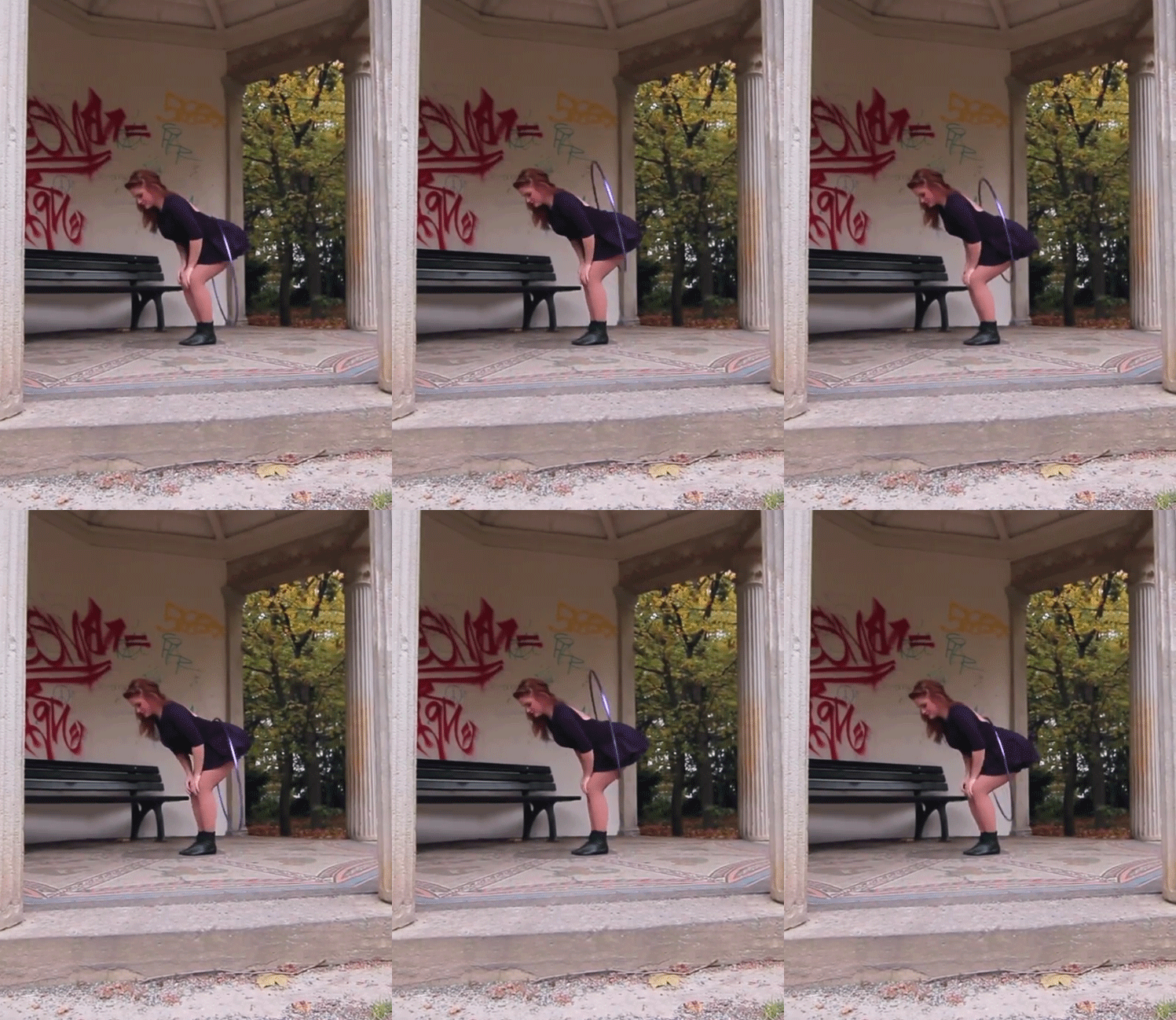
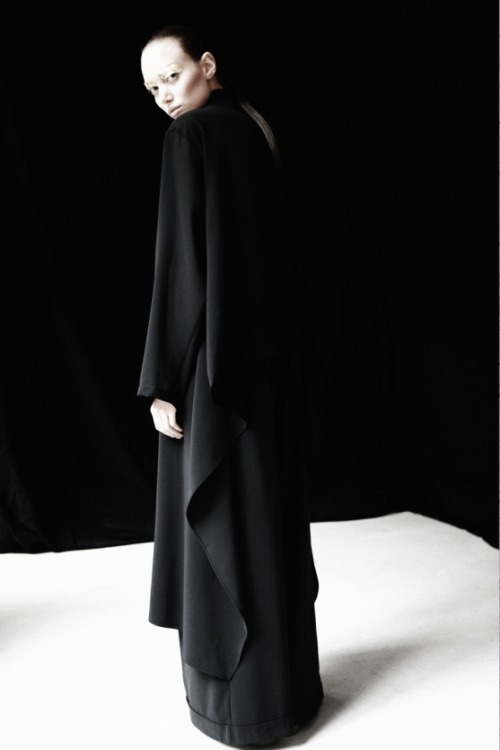
lamorchemoveilsoleelaltrestelle: Beauty has no age Yohji...
lamorchemoveilsoleelaltrestelle:
Beauty has no age
Yohji Yamamoto, ‘Cutting Age’ Fashion Show in Berlin, 25th April 2013
13 Dec 17:43
Comic for December 8, 2013
Dilbert readers - Please visit Dilbert.com to read this feature. Due to changes with our feeds, we are now making this RSS feed a link to Dilbert.com.
Adam Victor Brandizzi likes this
12 Dec 18:07

No crees que es realmente muy incómodo? por @LauraKebab
Tadeu, Adam Victor Brandizzi and -1 others like this
12 Dec 17:50

The Winner of Wiki Loves Monuments 2013 Is…
by Lodewijk Gelauff

1st prize winner: Picture of a locomotive with a push-pull train crossing the monumental Wiesener Viaduct over the Landwasser river in Graubünden, Switzerland.
Guest post by Lodewijk Gelauff. You can read the original post on the Wiki Loves Monuments blog. Lodewijk “Effeietsanders” Gelauff has been an active member of the Wikimedia community since 2005; over the years, he helped out as a steward and an administrator of several wikis as well as a board member of Wikimedia Nederland, member of the Chapters Committee and organiser of various internal Wikimedia activities.
Wiki Loves Monuments is over. And after a photo competition, there should be a winner. Through the month September, photos were uploaded of monuments in more than 50 countries and in October national juries decided which pictures were the best for each of the 51 competitions. They submitted up to 10 pictures to the international finale, which resulted in a pool of 503 magnificent and diverse images of cultural heritage.
The 2013 competition was in many ways a unique experience. Not only was it once again the largest photography competition (more than 365,000 submissions!), but there were also more countries participating in Wiki Loves Monuments than ever before: 52 countries in 51 competitions. Those countries were not only larger in number, but also more spread over the continents and cultures. For the first time we had Arabic countries participating, many Latin-American and Asian countries joined for the first time, and we also accepted images from Antarctica!
A jury of six members was set to the task to judge the finalists, and they did so with great care. You will find their process and deliberations described in the jury report linked at the bottom of this blog post. That jury report also includes the Special Awards we announced earlier and more background information about the monuments.
It is about time to announce the winners of the finale of Wiki Loves Monuments 2013! In this blog post I will only mention the top-10 pictures, but you can find more pictures and more details of the top-41 in the jury report.
The first prize (you can see it at the top of this blog post) is a picture of a locomotive with a push-pull train crossing the monumental Wiesener Viaduct over the Landwasser river in Graubünden, Switzerland. It represents a nice harmony between monument, human and nature, while the red train draws attention to the middle of the picture. The picture was submitted by David Gubler, who is also active on a Swiss website dedicated to photos of trains.
The second prize (below) goes to a wonderful photo of the 19th century Shi family abode in Lukang, Taiwan. The picture gives great attention to detail and captures the imagery, history, tradition and narration all in one photograph. The picture was submitted by Husky221, who submitted several other photos to the competition.

2nd prize winner: Shi Family Abode. Photo: Husky221, CC BY-SA
The winning picture for the third prize displays the eclectic University Library of Eötvös Loránd University in Budapest, Hungary. With this picture, photographer Thaler has impressed the jury by capturing almost all details possible, and making the viewer wonder why the library is so empty. It is a photo worthy of the room.

3rd prize winner: University library of Eötvös Loránd University, CC BY-SA
The fourth prize is a very intimate photo of a staircase in a 17th century weaver house (twice rebuilt) in the Polish city Nowa Ruda. The photo shows clearly that the residential staircase has been used very often in the centuries past, and plays with the light to showcase the architectural details. This is the highest scoring picture of a very successful photographer in this competition, Jarek Ciurus (Jar.ciurus) who sees four of his submissions rewarded with a place in the top-20 of this international finale.

4th prize winner: Staircase in weaver house. Photo: Jar.ciurus, CC BY-SA
The fifth prize is perhaps in many ways the opposite of the previous picture. It displays the grandeur of the congress and concert hall in the early 20th century spa in Wiesbaden, Germany. This picture by Martin Kraft is impressive, in part because of its wonderful symmetry. If you look closely in the left of the picture, you can see that he was not alone in photographing this hall – it was captured during a ‘Wikipedia takes’ event earlier this year.

5th prize winner: Friedrich-von-Thiersch-Saal. Photo: Martin Kraft, CC BY-SA
The sixth prize shows the Phra Nakhon Khiri Historical Park in the Phetchaburi province, Thailand. The park was a summer palace built during the reign of King Rama IV (19th century) and this picture from Kritmongkholrat Arunsuriya combines the rundown monument with the blurry frangipani flowers in the foreground and the equally golden sky in the back.

6th prize winner: Phra Nakhon Khiri Historical Park. Photo: Kritmongkholrat Arunsuriya, CC BY-SA
The seventh prize shows a monument that is still in active use: the Budapest Keleti Railway Station, the most important railway junction of the capital city of Hungary. The eclectic building was built in the 1880s and was then one of the most modern railway terminal in Europe with electric lights and an automatic railroad switch system. The photo by Németh Tibor has an attractive framing and perspective, giving it a natural and timeless look.

7th prize winner: Budapest Keleti Railway Station. Photo: Németh Tibor, CC BY-SA
The eight prize goes to an aerial view of the Zbraslav Chateau in Zbraslav, Czech Republic. Originally built as monastery, it was rebuilt in 1785 as a chateau and in the future it will become available for the National Library. Thanks to its angle the aerial view gives a good impression of the ensemble, which would be impossible from the ground. The picture by Zdeněk Fiedler almost makes the complex look as a miniature.

8th prize winner: Zbraslav chateau. Photo: Zdeněk Fiedler, CC BY-SA
The ninth prize goes once again to the Polish photographer Jarek Ciurus, with his misty photo of Wawel Hill and the heat and power station in Krakow, Poland. Wawel Hill is a significant place to the Polish people, as it was until 1611 the formal seat of the Polish monarchy and contains the place of coronation, a national pantheon and the mausoleum. The composition is full of art and well composed, giving a contrast between the historical hill and the modern power station.

9th prize winner: Wawel Hill. Photo: Jar.ciurus, CC BY-SA
And finally, the last picture in this series: the tenth prize is for a photo of the Biosphere in Montreal, Canada. The semisphere was originally built as a pavilion for the United States at the 1967 World Expo and now serves as a museum dedicated to the environment. The jury was impressed by the amount of detail that was captured by the photographer, guilhermeduartegarcia, and commended the excellent control of light in different places in the photo.

10th prize winner: Biosphere. Photo: Guilhermeduartegarcia, CC BY-SA
We hope you enjoyed this selection of the finest pictures from Wiki Loves Monuments 2013 as much as we did. We have published a somewhat larger selection in the jury report, and the full selection of finalists is available on Wikimedia Commons. In the coming weeks we will spend a bit more attention to the various national winners in a short series of blog posts. The Jury Report is now available on Wikimedia Commons: low resolution (pdf, 3 MB) (high resolution coming soon).
I would like to thank the jury for their excellent work, but even more so all the hundreds of volunteers all over the world that made this competition possible. Thanks to them we have been able to pull off this competition for a fourth time in a row, every year more amazing, more wonderful. With excitement we look forward to what the future will bring. Stay tuned to wikilovesmonuments.org for more news when it becomes available!
Lodewijk Gelauff
Adam Victor Brandizzi likes this

12 Dec 17:38
...vi Justin Bieber 'grafitando' as cidades por onde ele passava.
Ele:


Eu:

(by Andressa / whatshouldbetchescallme)
ninacsampaio and -1 others like this
12 Dec 17:37

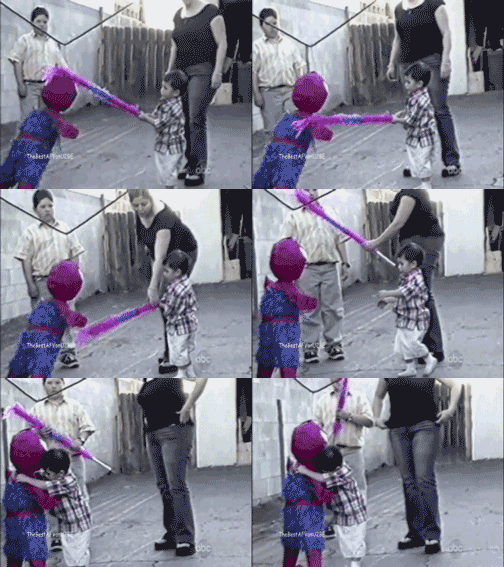
44 cm
grès
engobes/oxydes
Sous un peuplier un peu plié
by noreply@blogger.com (Anne-Sophie GILLOEN)

44 cm
grès
engobes/oxydes
Adam Victor Brandizzi and -1 others like this

12 Dec 17:30






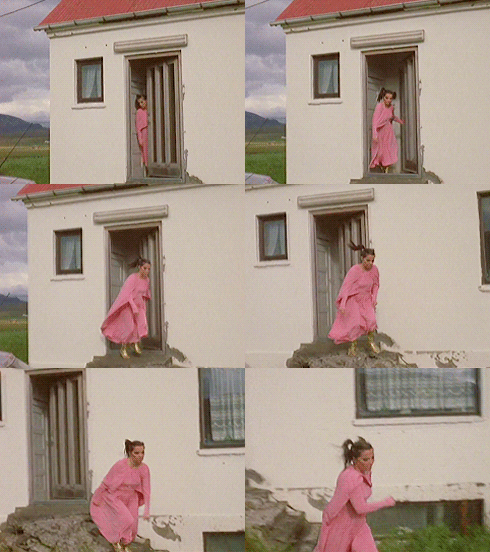
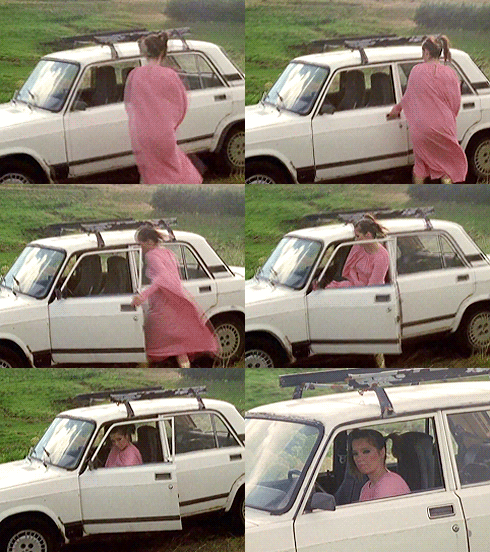

Que é isto? Um Bonde Chamado Desejo com Björk?
Que é isto? Um Bonde Chamado Desejo com Björk?
12 Dec 17:30
20 Breathtaking Winter Landscapes That Will Give You the Chills, Literally
by admin

Winter has crashed down upon us and settled in for a long stay, but that does not mean nature’s beauty has faded away. As you can see in this series of winter landscape photographs, nature plays no favorites with beauty. She is just as cunning of an artist with ice and snow as she is with green grass. flowers, and trees. She paints the trees with a dusting of frost. She creates icy mirrors from the still lakes to reflect the beauty of her creations. She creates sculptures with her icicles and snow drifts. She intermixes snow covered trees and ground with open waters filled with wild geese. She floats snow through the nighttime air creating twinkling flakes reflecting lights. Nature’s elegance stretches through the seasons. We are thrilled that some photographer dare the cold to capture some of nature’s most dramatic scenes.
Photo above by EarthPix

Photo by Lake Baikal

Photo by Hideyuki Katagiri

Photo by Marcin Ryczek

Photo by Kent Shiraishi

Photo by Jan Machata

Photo by Dmitry Dubikovskiy

Photo by Norbert Maier

Photo by deep21
 Photo by Friðþjófur M

Photo by Lars van der Goor


Photo by Thomas Zakowski

Photo by Edwin van Nuil

Photo by Evgeni Dinev


Photo by Mark Geistweite

Photo by Emmanuel Coupe

Photo by Peter From
 Photo by oskarpall


11 Dec 15:19


fashiognosis: Viktor & Rolf Haute Couture Fall 2013 After...
Viktor & Rolf Haute Couture Fall 2013
After 13 years, Viktor & Rolf back with a quite unusual way. That day in the show, the 2 designers walked out and sat down back to back, meditating for at least 5 minutes. After they done meditating, they went to the side of the stage and the models began to appear one by one.
20 models and 20 looks all in black fabric. I’ll say it again, all in black fabric. No embellishment and all. The model sat down and Snoeren pull the dress until she looks like a figure of a rock. It was repeated 19 times. The last model transformed, the 2 designers gave each other a bow and what’s in the stage is a landscape—a garden. “We’ve been running around for so long, we thought, let’s enjoy where we are. Our current state of mind is mindfulness,” said Viktor.
Confused? Yes. Shocked? Definitely. I didn’t expect this, or anyone wouldn’t have expect this from their comeback after 13 years. Some will say “What the fuck?” or “Is this Project Runway challenge?” or “What’s Haute Couture in this?” Yes. Black fabric and that’s it. But is Haute Couture merely a quality clothing with amazingly skilful techniques and expensive materials? Surely not. There’s art in Haute Couture. And even if what was V&R gave us this season isn’t art, it has their mind and concept in it. I won’t say i like this, but i surely appreciate this.

11 Dec 14:53
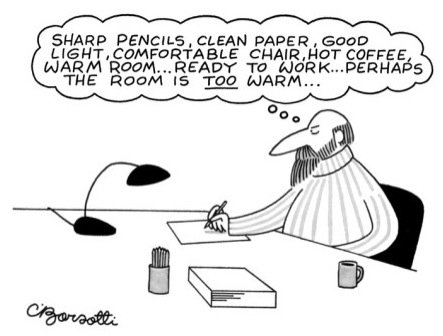
This comic was inspired by this classic Charles Barsotti New Yorker cartoon.
You can order a poster at my shop.
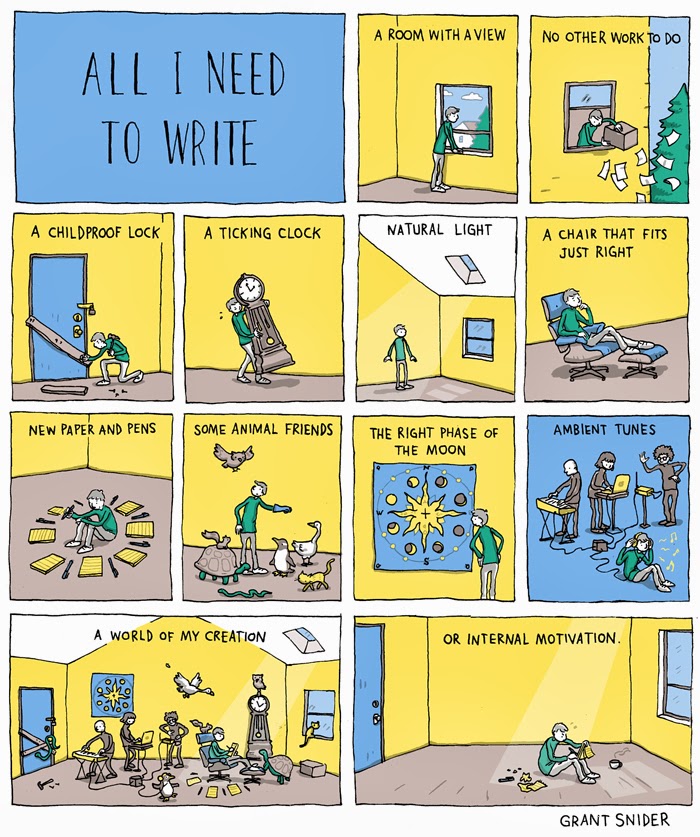
All I Need To Write
by Grant
This comic was inspired by this classic Charles Barsotti New Yorker cartoon.
You can order a poster at my shop.
Damiani.guilherme, Adam Victor Brandizzi and -1 others like this
11 Dec 12:52


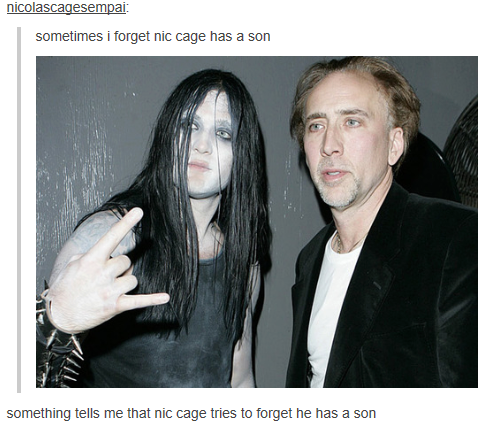
Photog Uses Face Paint to Create Stunning Portraits that Look Two-Dimensional
by DL Cade
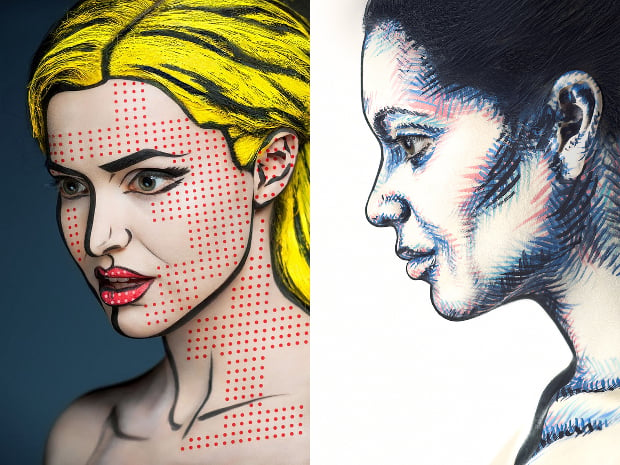
The 2D or Not 2D series isn’t the first time Russian photographer Alexander Khokhlov has dabbled in painting his models faces and taking striking portraits of the results. His Weird Beauty series got quite popular, with black and white designs jumping out at you from the faces of his made-up models.
2D or Not 2D, however, is different — and not just because he used color this time. It’s different because the point of each photo is to trick your mind into thinking you’re looking at a two-dimensional painting.
If the idea sounds familiar, that’s because Alexa Meade does something similar using entire scenes. Khokhlov’s series is different though, because it intentionally straddles the line between painting and reality, playing tricks on your mind, whereas Meade intends to fully convince you you’re looking at a painting and not a photograph.
The portraits in 2D or Not 2D sometimes look quite painted, and optical illusions frequently play a role in making you wonder if you’re looking at a two-dimensional object. But the majority of the photos give themselves away on purpose by leaving the models’ eyes open — two pools of reality in an otherwise two dimensional-looking object.
Here’s a look at the whole series:
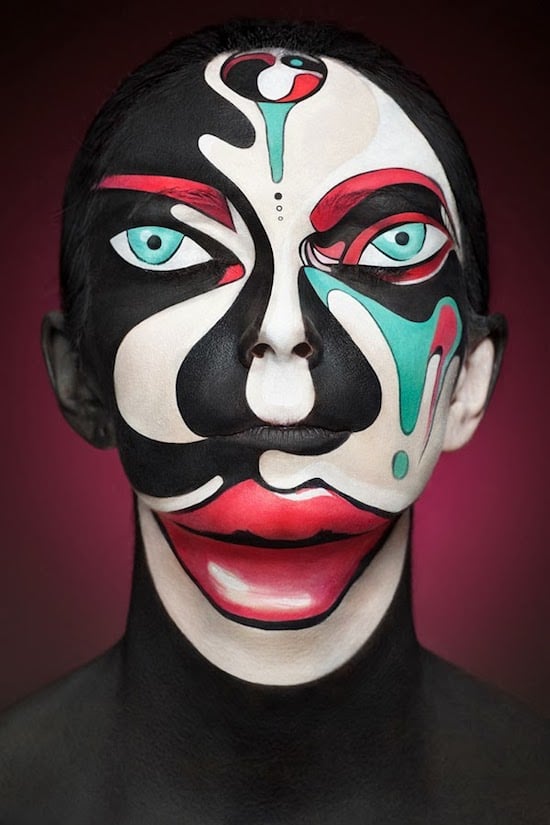


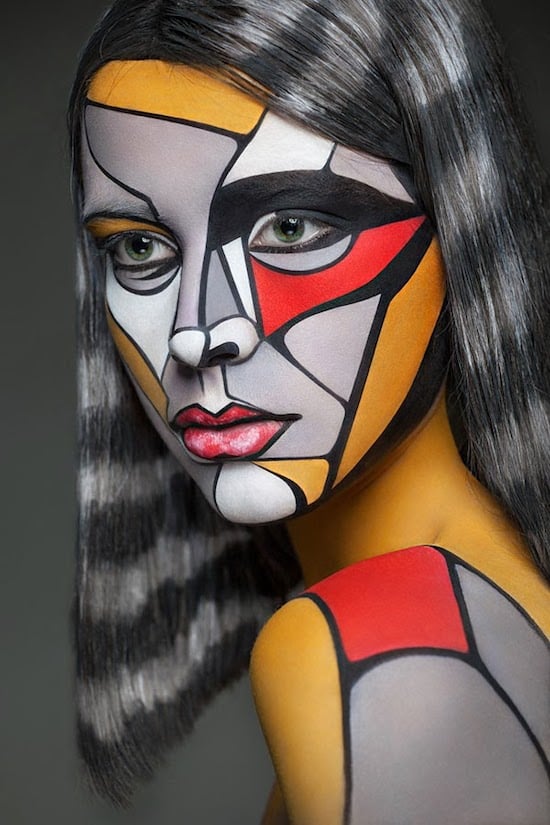
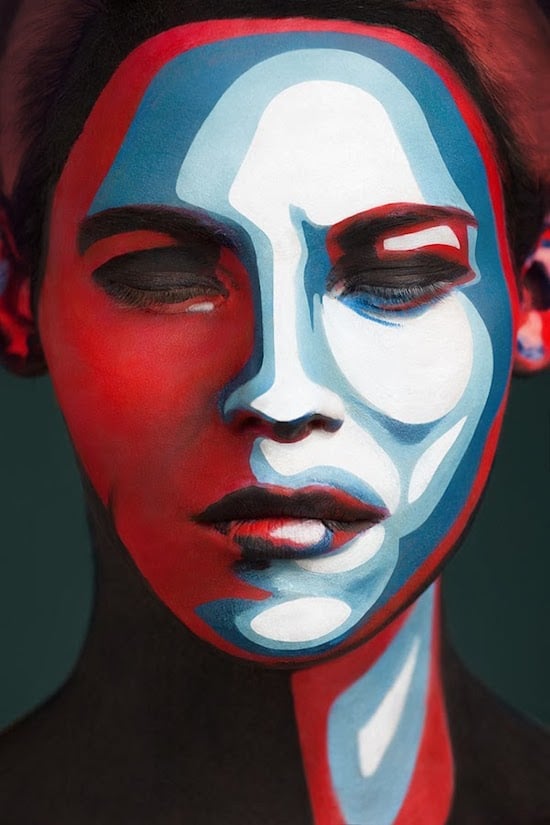
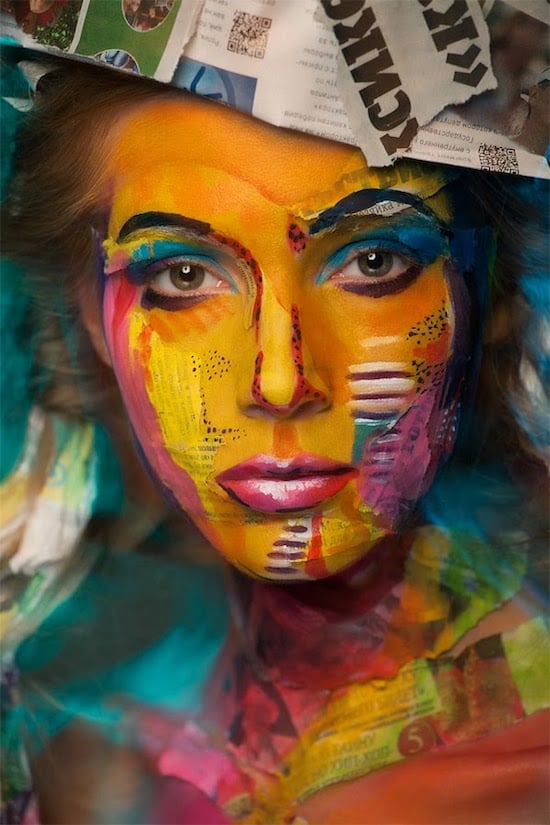
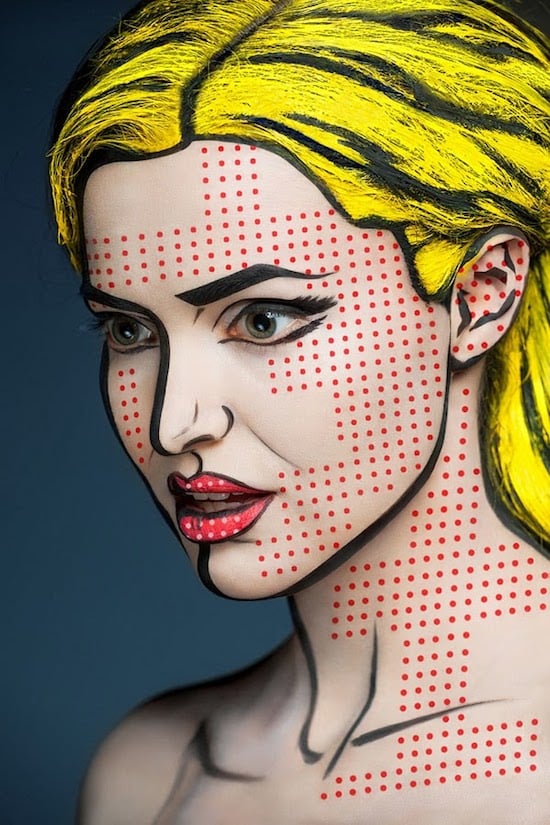
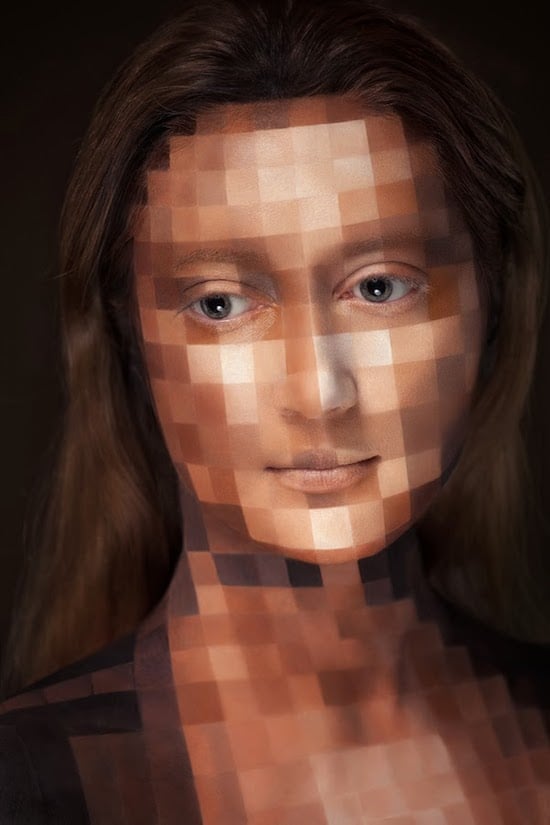
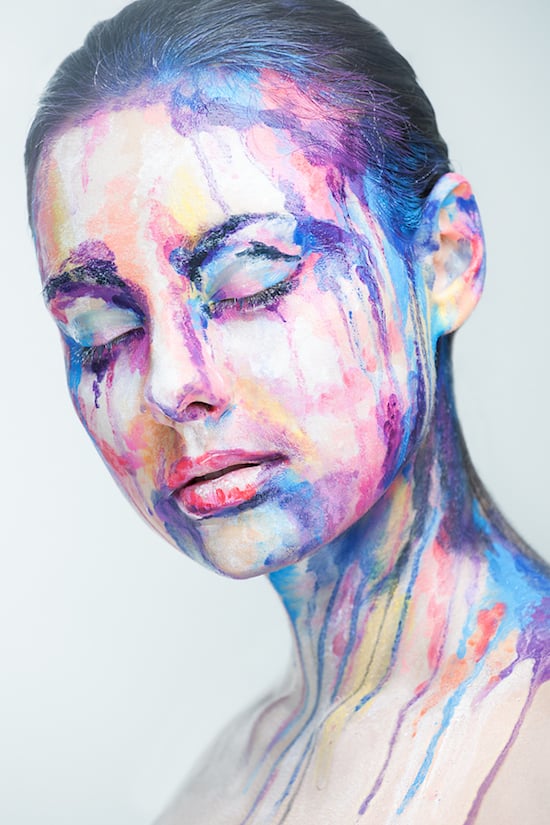
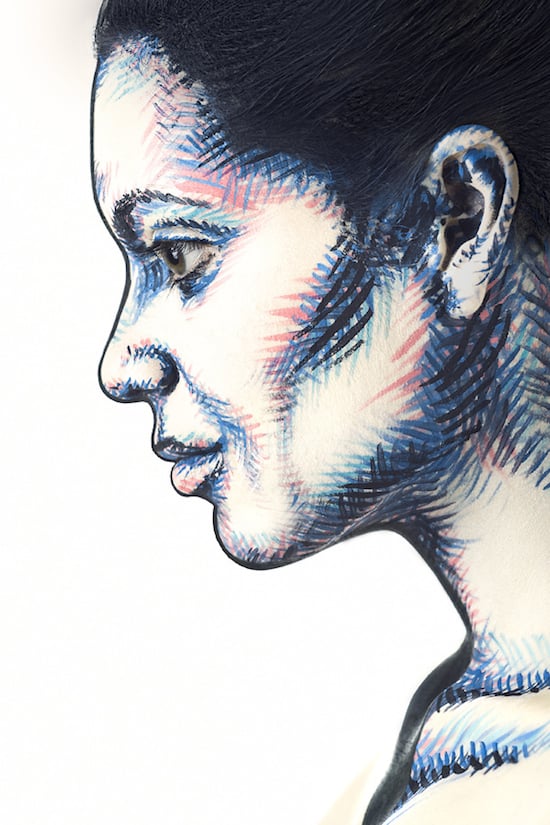
As with Weird Beauty, Khokhlov teamed up with Valeriya Kutsan, one of the best make-up artists in Russia, to create the designs on the models’ faces. To see more from Khokhlov, head over to our previous coverage of the Weird Beauty series or check out his website by clicking here.
(via Visual News)
Image credits: Photographs by Alexander Khokhlov and used with permission.
Ninadarkangel, ksyoo likes this
11 Dec 12:19
How to Find a Mutually Beneficial Solution
by Scott Meyer
Adam Victor BrandizziSó eu acompanho Basic Instructions?

Yeah, wrote this and sent it out to the subscribers over a month ago. In the time since, Monty Python has announced that they've reunited. In other news, it looks like they're makign another Beverly Hills Cop movie, so that's something.
Hey, just a reminder that any holiday gifts purchased through my Amazon Affiliate links (US, UK, Canada) would, in theory, throw a little money my way without costing you a dime extra! Just Sayin'.
Adam Victor Brandizzi likes this
11 Dec 05:43

File Extensions
Adam Victor BrandizziEu também sempre atribuo mais confiabilidade a PDFs, sempre.
gt98dja, Pedro.Aragao and 18 others like this

11 Dec 05:40

Sociologia Freestyle
by ricardo coimbra

Clique na imagem para aumentar
Adam Victor Brandizzi and -1 others like this



07 Dec 23:46
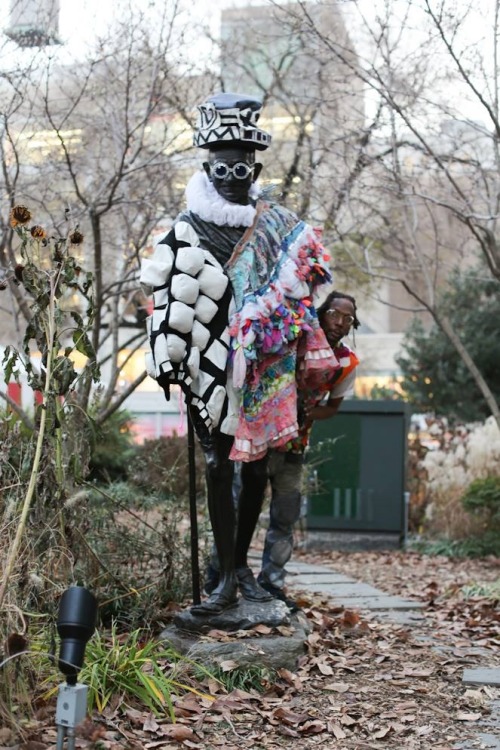
humansofnewyork: Wendell is hands down the greatest homeless...
Wendell is hands down the greatest homeless fashion designer who ever lived. He makes almost all his clothes from things he finds. I hadn’t seen him in awhile, so I was quite thrilled to walk up on him Tuesday, doing this to a Gandhi statue.

07 Dec 23:37

Testament
by Greg Ross
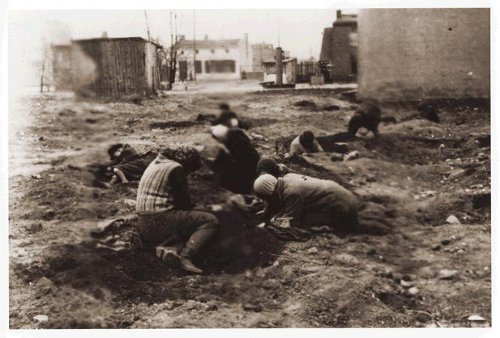
In July 1945, a former inhabitant of Poland’s Lódz ghetto, Avraham Benkel, returned to find his home in ruins. Lódz had been the last of 200 ghettos in German-occupied Poland, and as the war neared its conclusion tens of thousands of its inhabitants had been deported to death camps. When the Red Army reached it in January, only 877 survivors remained.
In the abandoned building next door to his own, Benkel found a book, François Coppée’s The Truly Rich, on whose endpages and margins an anonymous boy had kept a diary of his ordeal:
June 1, 1944: “I just finished my ‘loaf, which I had to have for eight days; today is the third. It may turn [out] to be lethal for me to behave in such a manner, but my will-power is so weakened and my ever increasing appetite so strong that I can’t help it. Is there no bread, dry unsavoury bread enough for me and my fellow-sufferers in this world?”
July 10, 1944: “I am exhausted, I have no more patience, my nerves are frayed. What I do have is an indescribable disgust toward the world and mankind, toward the masses and people, toward doctrines and dogmas. I do not believe, I do not believe in any change in the world, no! Anyone who can sink as low as the modern man has can be nothing more than an unsuccessful experiment of nature, which certainly regrets it!”
July 20, 1944: “I feel such a need to open my diary and to write in order to ease my bitter heart, about what hell we go through, how terribly we suffer. During the time when we had literally nothing to eat, we were willing to believe that the physical annihilation of men, women, and children of our nation had appeased the blond beast. But now it looks as if they have not had enough, and that they want to satisfy their thirst with the blood of the innocent.”
Almost nothing is known about the boy’s identity, age, background, schooling, or fate. Only the verb forms in his entries tell us that he was male. In all likelihood he was deported to Auschwitz as the Russians closed in.
“My God, why do you allow them to say that you are neutral?” he wrote in a final, undated entry. “Why will you not punish, with all your wrath, those who are destroying us? Are we the sinners and they the righteous? Is that the truth? Surely you are intelligent enough to understand that is it not so, that we are not the sinners and they are not the Messiah!”
(From Alexandra Zapruder, Salvaged Pages: Young Writers’ Diaries of the Holocaust, 2002.)
mkvande likes this