Shared posts

21 Oct 15:34

Como o governo de São Paulo subverte o conceito de civilização.

by Alexandre Versignassi

água-Alckmin

Não foi a humanidade que inventou a hierarquia. Qualquer espécie que vive em bando está dividida entre líderes e subordinados. Matilhas de lobos caçam seguindo os comandos do lobo-chefe. Chimpanzés se aliam para matar o macho alfa do grupo, quando sentem que podem usurpar o trono. Humanos que vivem em estado de barbárie, como crianças de condomínio, também elegem seus líderes. O chefe mirim do prédio pode ser a criança mais forte, ou a mais carismática. Ou, mais usual, a que é mais forte justamente por ser a mais carismática. Ninguém ensina isso para a molecada, nem para os macacos, nem para os lobos. A formação de grupos com líderes e subordinados é tão natural entre as coisas vivas quanto a formação de nuvens é entre as moléculas de vapor d’água suspensas no ar.

Mas a formação de cidades, estados, governos, não. Não é algo que brota da natureza. É algo que inventamos justamente para controlar a natureza. Até por isso a primeira civilização propriamente dita, com cidades e governos, surgiu num lugar onde a própria natureza nunca colaborou muito: a Mesopotâmia, onde hoje fica o Iraque.

Começou quando os proto-iraquianos hackearam o solo. Em estado natural, só 0,1% da biomassa de um terreno consiste de algo digerível por humanos. O resto das plantas e dos animais são ou veneno ou coisas que o nosso corpo não sabe converter em nutrientes (caso do capim, que exige quatro estômagos e muita ruminância para se transformar em calorias).

Mas quando a agricultura apareceu, você sabe, as coisas mudaram de figura. Ao selecionar e cultivar as plantas mais interessantes para o nosso estômago, os caras fizeram a quantidade de biomassa por metro quadrado saltar daqueles 0,1% para coisa de 90%. Além disso, a maior parte dessas plantas interessantes eram grãos (trigo, cevada). Grãos digeríveis na forma de pão e de cerveja, armazenáveis na de farinha e, de quebra, conversíveis em ração para animais. Aí pronto, a natureza estava oficialmente hackeada, e domesticada: a vida nômade, com a obrigação de matar um bisão por dia, se tornava obsoleta. E a humanidade ganhava tempo livre para desenvolver a mais profunda das formas de arte: a engenharia.

É que a maior parte do terreno da Mesopotâmia era árido (e ainda é). Só as áreas próximas aos rios prestavam. A agricultura para valer, numa extensão decente de terra, só seria possível se o pessoal construísse canais e reservatórios Mesopotâmia afora. Aí eles aproveitariam as eventuais cheias dos rios para transformar terra seca em solo arável. Foi o que fizeram, por volta de 4000 a.C. Esses canais e reservatórios se tornariam os primeiros projetos de engenharia da história. E marcariam o início de algo ainda mais importante do que isso: a Suméria, primeira civilização de todos os tempos.

O projeto mesopotâmico de irrigação só teve como sair do papiro porque contou com algo inédito até ali: centenas de indivíduos cooperando num plano de longo prazo. Longo mesmo, porque não bastava canalizar e armazenar água das cheias. Tão importante quanto era racionar o uso dos reservatórios nas épocas de chuvas magras. Sem esse controle não haveria como alimentar todo mundo. E quem fornecia esse controle era um comando central, dividido em vários níveis hierárquicos, cada um com funções pré-definidas. Era a primeira forma de organização que dava para chamar de governo. Ou seja: o próprio conceito de Estado surgiu na Terra justamente para controlar o suprimento de água.

Mas agora, 6 mil anos depois, essa ordem virou de cabeça para baixo. Outro Estado, o de São Paulo, trocou o gerenciamento da água pelo de outro recurso, menos nobre: seu projeto de manutenção de poder. Se as chuvas continuarem magras, talvez nem dê mais tempo de racionar o consumo – não vai sobrar água para consumo nenhum, nem esbanjado nem racionado. E tudo porque a palavra “racionamento” não soaria bem no meio da campanha. Ao deixar de lado a racionalização do suprimento de água por marquetagem, o governo Alckmin consegue uma façanha épica: subverte o conceito de civilização. E devolve seus próprios eleitores à barbárie.

12 Oct 03:34

Os paladinos e seus martelos

by Tiago de Thuin
A cooperação entre países que alhures se enfrentam usando os cadáveres dos outros  contra o Estado Islâmico da Síria e do Levante, ou Daesh, não deixa de ser impressionante. Os mesmos EUA que patrocinam o governo da Ucrânia contra os rebeldes patrocinados pela Rússia se alia à Rússia contra esses fundamentalistas. A mesma Rússia que patrocina o governo da Síria contra os rebeldes patrocinados pelos EUA se alia aos EUA contra eles. A própria Síria também coopera com os EUA que abertamente procuram eliminar seu governo. A Europa amotinada corre pra ajudar, seja ela conservadora ou socialista. Cá na remota província, a idéia de que bombardear não resolva, aventada pela presidenta, foi criticada como absurdo. É um tal nível de unanimidade na idéia de que é necessário um ataque vingador, uma bomba defensora, contra o Mal que se levanta, que parece que voltamos à cooperação dos Aliados contra o mal apocalíptico do nazismo. (E sim, apocalíptico cabe bem ao nazismo. Às vezes nenhum exagero é possível nem necessário.)


De que os vilões da vez são mesmo horrorosos, não resta dúvida. O grupo de fundamentalistas iraques que megalomanicamente se autointitula Estado Islâmico (tendo deixado de lado a especificação "do Iraque e do Levante" para anunciar suas pretensões universais) tem colecionado, além de triunfos contra o mequetrefe exército do governo de Bagdá, atrocidades de todo o tipo. Cheios de armas, doadas pelos EUA e Arábia Saudita com a intenção de derrubar o presidente-ditador hereditário da Síria, deram uma de gênio da garrafa e não se contentaram com os desejos de seus financiadores; numa espécie de inversão do dito de Marx, são a versão mais a sério da Talibã, num país mais rico, mais educado, e mais antigo do que o Afeganistão. Se no Afeganistão tribal e inóspito foram derrubados os budas de Banyan e conviviam shows de meninos-moça com o fundamentalismo, na Síria e no Iraque o número de patrimônios da humanidade destruídos pela iconoclastia wahabita (sem contar aqueles rebentados pelos azares da guerra em geral) já atinge proporções quase sauditas, e o mundo vai ficando mais estranho e pobre pela derrubada de obras de arte e pelo genocídio de grupos que sobreviviam, nas sombras e dobras da história, há séculos ou milênios.

Um desses grupos, e dos mais proeminentes no noticiário recentemente, o dos iázides, provavelmente seria mais familiar para nossos avós e bisavós que nos dias de hoje, e pelo mesmo motivo que os leva a ser objeto de especial ódio dos fundamentalistas do Daesh. É que a mitologia deles, uma das milhares de seitas gnósticas e neognósticas e antignósticas que surgiram no Oriente Médio no primeiro milênio (duas delas se chamam cristianismo e islã), inverte a narrativa islâmica da queda de Iblis-Lúcifer. Assim para os iázidis o demiurgo Melek Taus, rejeitando a ordem de Deus, de se ajoelhar perante sua nova criação, o homem, por muito amá-lo, é premiado ao invés de punido; essa diferença, mais todos os preceitos de pureza e isolamento comuns às tradições gnósticas, foram o bastante para que fossem considerados adoradores do demônio, e assim os Iázidis percorreram as páginas e telas de romances de aventura do começo do século passado. Fizeram figuração nas aventuras de Khlit, o Cossaco, que serviram de inspiração pro Conan e Cecil B. De Mille, em dúzias de pulps de menor nome... nas revistinhas, mais recentemente e até por isso menos distorcidamente, apareceram nas páginas do Corto Maltese (na Casa Dourada de Samarkand) e do Top 10 do Alan Moore. Sempre por conta desse mito de que são adoradores do demônio, seja o mito reproduzido ou explicado. Além de torná-los alvos para tudo que é fanático religioso, a religião deles também torna muito mais difícil safar-se através da diáspora, aliás; os preceitos estritos de pureza e contaminação são muito mais difíceis de seguir por indivíduos isolados num meio urbano multicultural do que quando se vive nas próprias aldeias; a tragédia do fim dos iázidis pode já ser fato consumado.

Um desses monumentos, curiosamente, é justamente a Igreja Memorial do Genocídio Armênio, o que não deixa de ser uma dupla morte. Os armênios eram boa parte da população do que hoje são a Turquia e o Iraque; foram massacrados, numa prefiguração do Holocausto, por um estado moderno e modernizante, militarizado, presidido por um líder carismático que prometia elevar sua nação acima da nódoa da derrota imperial na Grande Guerra. Eu disse prefiguração do Holocausto? O Hitler concorda comigo. Nas palavras do monstro, Unsere Stärke ist unsere Schnelligkeit und unsere Brutalität. Dschingis Khan hat Millionen Frauen und Kinder in den Tod gejagt, bewußt und fröhlichen Herzens. Die Geschichte sieht in ihm nur den großen Staatengründer. Was die schwache westeuropäische Zivilisation über mich behauptet, ist gleichgültig. Ich habe den Befehl gegeben – und ich lasse jeden füsilieren, der auch nur ein Wort der Kritik äußert – daß das Kriegsziel nicht im Erreichen von bestimmten Linien, sondern in der physischen Vernichtung des Gegners besteht. So habe ich, einstweilen nur im Osten, meine Totenkopfverbände bereitgestellt mit dem Befehl, unbarmherzig und mitleidslos Mann, Weib und Kind polnischer Abstammung und Sprache in den Tod zu schicken. Nur so gewinnen wir den Lebensraum, den wir brauchen. Wer redet heute noch von der Vernichtung der Armenier? (Nossa força está na nossa velocidade e na nossa brutalidade. Gengis Cã levou milhões de mulheres e crianças à morte, de coração ligeiro, mas hoje é lembrado pela História apenas como o fundador de um grande país. Não me importa se uma débil civilização ocidental me condenará. Dei a ordem - e mandarei fuzilar quem solte um pio de crítica - no sentido de que nosso objetivo na guerra não é atingir tal ou qual linha, mas a aniquilação física do inimigo. Assim deixei de sobreaviso minhas formações Caveira - por enquanto apenas no Leste - com ordens para levar à morte sem misericórdia e sem compaixão homens, mulheres, e crianças de extração e língua polonesa. Apenas assim conseguiremos o espaço vital de que precisamos. Quem, afinal, fala hoje da aniquilação dos armênios?)

Então, se há gente tão má no mundo, nada mais natural que as nações da terra se esqueçam por um momento do ódio de sua guerra e se juntem para dar fim aos monstros, não? Bem, não exatamente. Pra início de conversa, se eu disse que a relação entre o Daesh e a Talibã reverte o aforisma de Marx, por outro lado a comparação entre a Arábia Saudita e a Talibã deixa aquelas palavras do 18 Brumário bem no lugar de sempre. A Arábia Saudita, afinal, foi o primeiro resultado moderno da mistura de fundamentalismo islâmico e patrocínio por grandes potências estrangeiras - com o ingrediente adicional explosivo do imenso oceano de petróleo sob o Golfo Pérsico (o campo de Ghawar, em particular, seria sozinho o oitavo país com as maiores reservas do mundo; a usina de processamento de Abqaiq é maior do que a capacidade total do Reino Unido). Assim como os budas de Banyan ou a tumba do profeta Jonas, milhares de sítios históricos foram destruídos pelos sauditas, inclusive no Iraque, mas principalmente em Meca, desde o começo do reino até os dias de hoje, sendo que hoje em dia o fanatismo se mistura ao comercialismo, e vê-se shopping centers se erguerem sobre as ruínas de mesquitas "heréticas." Assim como o Daesh e a Talibã, a Arábia Saudita continua curtindo muito cortar umas cabeças de inimigos da fé em público. É bem verdade, a Arábia Saudita já cometeu seus genocídios no passado e não comete nenhum no momento. Bem, não diretamente. Acontece que a casa de ibn Saud não é apenas a precursora de todos os grupos fundamentalistas wahabbis no mundo, ela lhes patrocina, direta ou indiretamente, é a fonte ideológica e monetária. É dinheiro saudita que financia a pregação de ódio e intolerância da Nigéria à Indonésia, do Marrocos às Filipinas, E, claro, do Afeganistão ao Iraque.

Assim, é curioso que um dos aliados árabes dos EUA na nobre empreitada de bombardear esses monstros do Daesh é... a Arábia Saudita. Aliás, nossos amigos sauditas. Não apenas porque a comparação sabota a narrativa que opõe os nossos paladinos aos sarracenos deles, isso poderia ser confrontado com a simples explicação de que às vezes se precisa da aliança com um monstro para enfrentar outro; afinal, o mundo livre não se aliou a Stalin para enfrentar Hitler e acabar com o Holocausto? Bem, assim como naquela época, não exatamente. Na Segunda Guerra, nenhum dos aliados ligava para o Holocausto; a proposta de bombardear as linhas de trem que levavam seres humanos para Auschwitz foi rejeitada, apesar de demandar apenas meia dúzia dos milhares de bombardeios diários sobre a Alemanha. Enfrentaram Hitler porque este foi quem lhes declarou guerra. E hoje, a apresentação da urgência de se enfrentar o Daesh, e por que, é contraditória, com direito a nomes talvez inventados. Mais do que por também ser um vilão, a contradição inerente no apoio à Arábia Saudita é que ela é a fonte. Seria como se guerrear no Vietnã e ser aliado da União Soviética a comparação histórica mais apropriada. Ou, talvez, como ser anticomunista e se aliar à China para patrocinar o Khmer Vermelho contra o Vietnã. Se os EUA estivessem interessados em diminuir a quantidade de cadáveres produzidos pelo fundamentalismo islâmico, poderiam começar retirando o status de supermelhoramiguinho da Arábia Saudita. Quiçá até ameaçar-lhe com sanções se não parasse a brincadeira (o tamanho do reino no mapa do petróleo não deve ser problema se sanções simultâneas à Rússia e ao Irã são tranqs). No caso do Daesh, mais imediatamente, poderiam parar de armar e financiar a oposição na guerra civil síria, patrocinada desde o começo pelos EUA e de onde saiu o grupo. (E turbinada pelo aquecimento global.)

É claro, o problema disso é que não envolve bombas, e explosões, e decisões duras feitas por homens duros. Não é uma resposta forte, viril, heróica. Não utiliza todo o reluzente armamento que 700bn de dólares ao ano compram. Quando se tem um martelo desses, qualquer coisa mesmo vai começar a parecer um prego. Admita-se que a minha "solução" não é uma solução imediata; não vai ajudar muito as vítimas do presente, só as do futuro. Mas tampouco se tem lá tanta certeza de que os bombardeios sejam uma solução. Fazer ALGUMA COISA porque é um horror, tem que se fazer alguma coisa, é a teoria do martelo; ora, se eu estiver com uma dor de cabeça e sem aspirina à mão, prefiro continuar do que já chamei aqui de teriomania, afinal, convive muito bem com a realpolitik realmente real. Aquela em que o ataque ao Daesh pode dar uma esticadinha no Assad, em que pesquisas de opinião sorriem para presidentes guerreiros, em que ações de financiadoras de campanha sobem quando seus produtos estão em alta. Afinal de contas, paladinos também precisam comer, não?
com a dor de cabeça do que levar uma martelada. Isso tudo assumindo-se, claro, a melhor das intenções e que a Casa Branca e seus aliados realmente se preocupam com a sorte dos iázidis e outras minorias no norte do Iraque e na Síria, o que não é necessariamente verdade. A realpolitik do fetichismo pelo sacrifício,
10 Oct 23:25

The Man Who Fought the Synanon Cult and Won

Paul Morantz knew Synanon would try to kill him. He just didn't know how or when.

You probably don't know the name Paul Morantz. That's a shame. And if you know about Morantz at all it's likely because of what was done to him rather than what he accomplished in his career as a cult-busting lawyer; in the autum of 1978, he was nearly killed when members of the Synanon cult placed a rattlesnake (with the rattle removed) in his mailbox.

Much like Morantz himself, the rehab facility-cum-cult known as Synanon is largely forgotten today. But throughout the second half of the 20th century, it was one of most dangerous and violent cults America had ever seen, led by a larger than life character named Charles Dederich.

Paul Morantz helped bring Synanon down, the cost of which was a bizarre assassination attempt that very nearly succeeded. And I felt like I'd done a great disservice to readers by not going to meet with the largely housebound Morantz before publishing my brief history of Synanon's rise and fall back in April. I recently remedied that bout of laziness by driving up the Pacific Coast Highway to pay Morantz a visit.

Paul Morantz, 69, at his Pacific Palisades home in August 2014 by Matt Novak

Untold Stories in the Cult Capital of the World

"I like your Mickey Mouse collection," I half-shout to Paul Morantz from the living room of his home in the Pacific Palisades. He has an enormous display case filled with antique figurines and toys. Mostly Disney, and mostly Mickey Mouse.

"Yeah, a lot of them are from the 1930s," he replies from the kitchen as he makes us both some tea in the microwave.

Morantz moves slowly and is almost immediately apologetic about his appearance. For much of his life, he could boast of looking much younger than he actually was. Now, at 69, and in failing health, he's very clearly uncomfortable that he's not the athletic, dashing man seen on the back cover of his book, Escape: My Lifelong War Against Cults.

I spent about five hours talking with Morantz at his home in the Pacific Palisades, a community just north of Los Angeles proper. He calls L.A. the cult capital of the world, and I learn about his "double life" as the quintessential Angeleno, juggling beach bum sports and quirky hobbies with professional success and idealistic causes. And I learn about Morantz the optimist, the man looking for his own personal version of utopia.

Morantz is an incredibly driven man, whose professional passions (journalism and law) both required a kind of deep obsession. Once on a case, whether it was Synanon, or later against groups like est, the Moonies, Scientology, or psychotherapists abusing their patients, it consumed his life entirely.

I couldn't help but think of the obvious parallels to Charles Dederich, the founder of Synanon and Morantz's longtime adversary. It's a similar kind of obsession that drives people to create experimental communities like Synanon; a fixation on perfection, the quest to build a more fantastic world with like-minded people. And the desire for control. If not of other people's lives, then at least the control of your own.

Morantz's first true love was journalism, and he was determined to make a lucrative career out of telling untold stories. But he was encouraged by his father to pursue law, and seeing it as a kind of back-up, he went to law school and passed the bar exam.

Perhaps if he hadn't pursued law he would've continued writing freelance articles for local newspapers and the odd Rolling Stone profile here and there, as he had in the early 70s. But as a series of events would unfold during the mid-1970s, there was no question that Morantz had fallen into a niche for which he was particularly adept: busting people out of cults. It just happened to be a specialty that ran a particularly high risk of getting oneself killed.

Paul Morantz in the 1970s, photo supplied by Paul Morantz

From Skid Row to Synanon

Morantz's foray into advocacy for the powerless started in 1974, when he took on the case of Skid Row alcoholics who had been picked up off the street in downtown L.A. and effectively sold to mental institutions. They were kept drugged up to the point of incoherence so that the facilities could fraudulently bill Medicare. He spent over two years building his case, and ultimately won a tidy settlement for the victims.

At the same time, Morantz was also building his career as a writer and had no real intention of continuing to be a crusader for the vulnerable. But another case would come along just a couple of years later that he simply couldn't turn down.

In 1977, a woman in Venice, California who we'll call Terry (not her real name) was struggling with some very serious mental health issues. Suffering severe bouts of depression and paranoia, she went to a family planning clinic in search of a tranquilizer to calm herself down. Since it was just a family planning facility, they couldn't really help her, but one of the women working there had some experience with a group called Synanon and referred her to them. Terry took a taxi up from the Venice clinic to Synanon's Santa Monica compound.

When Terry arrived, the Synanites asked her three questions. First, if she'd ever used drugs before. Since she'd smoked marijuana in the past, Terry replied yes. Next, if she wanted their help. She again replied yes. And lastly, they asked if she would obey Synanon's rules. She said yes.

With that, Synanon considered Terry its latest recruit.

"They shaved off all her hair and then took her by the wrist and put her in an apartment building under lock and key across the street," Morantz tells me. From the beginning of Synanon in 1958, new male recruits to the drug rehab program would get very short haircuts as punishment. By the 1960s, some Synanites were shaving their heads voluntarily as a sign of solidarity. By the mid-70s it was mandatory—as were the vasectomies, abortions, and forced divorces imposed upon members after the death of Dederich's wife in 1977.

After learning where she'd gone, Terry's husband Ted traveled to the Santa Monica facility to find her, only to be told by Synanon members that he wasn't allowed to see or speak with her. He returned the next morning and discovered that she'd already been placed on a bus heading for a different Synanon compound north of San Francisco. He went to the local police, who said there was nothing they could do since she was an adult who had seemingly entered Synanon under her own free will.

Ted tried to see his wife again after making a trip to Synanon's Marin County compound but was again denied the right to see her. All the while, Terry was being told by Synanon that her husband didn't want to see her anymore, and that she was better off with Synanon. In turn, her captors told Ted that Terry didn't want anything to do with him.

Ted, desperate to get his wife back, began writing letters to local politicians, police, anybody in a position of power who he thought might be able to help. None of them did. And then, by chance, Ted met a guy who had been neighbor of Paul Morantz in Culver City, back when he had freed the Skid Row alcoholics from their nursing home prisons. This neighbor thought that maybe Morantz could help.

"At this time, I felt I had done my two and a half years of public service on the nursing home case," Morantz tells me. "I was engaged to be married, I had gotten a law office, I had sold a TV movie of the week that had gone into production. I thought that I was actually going to leave law and go full time into writing which was my number one love, and that I would never do some crusade like that again."

But this particular case that required some amount of experience with the politics and legalese of coercion and control, something for which Morantz was uniquely qualified. A distraught Ted told Morantz as much while crying over the phone. "I'll get her back," Morantz told him. "I promise you I'll get her back."

Morantz assumed that it would take little more than a phone call to the health department to get Terry released from Synanon's facilities. He was surprised to find, instead, that not only was Synanon not licensed to operate as a mental health or drug rehab facility, but that all attempts that had been made for government inspection had been rebuffed. Apparently no agency had really pushed the matter, and Synanon simply operated as it pleased without any state or local oversight of its methods.

"When I hung up, I just knew something was really wrong," Morantz said. "I didn't know what, but I knew something was really wrong. And I just had the sense that everything in my 31 years up until that point had happened for this moment... and that this was my moment."

Morantz pauses for maybe 10 seconds, clearly reflecting on some non-existent alternate timeline of his own path, "And that was the end of the life that I thought I was going to live."

Former Synanon HQ in Santa Monica (now a hotel) photographed in 2014 by Matt Novak

Screams Echoing Through Santa Monica

As it turns out, Morantz had already encountered Synanon over a decade earlier.

"My first memory [of Synanon] was my high school graduate party in '63 and we happened to be on the beach behind what was the National Guard Armory, which they were in. I got rip roaring drunk and I wandered off and got near the building. There was this large screaming coming from the building and I sort of stopped in my tracks," Morantz says.

Synanon had purchased the Santa Monica building in 1963 and was using it as their L.A. headquarters. What Morantz heard that night was probably the beating of a Synanite in the basement for some unknown infraction of the cult's code. Morantz recalls that a friend had explained at the time, "That's Syananon. They cure drug addicts."

"And I think I said 'good' but I was just scared," Morantz tells me, clearly still shaken by the sound of the screams he'd heard half a century ago. Untold numbers of people were beaten and abused in the basement of that building, now a swanky beachfront hotel. "I don't think I heard the word Synanon again until 1977," Morantz tells me.

Synanon promotional pamphlet photographed by Matt Novak

The Bait and Switch Rescue Mission

"Terry had gone completely psychotic," Morantz tells me about his rescue mission in 1977. "One of the reasons I was able to get her out was that they really didn't want her anymore." The cult had gotten really good at separating new recruits from their money. But it was in no way equipped to deal with real mental illness. By the late 1970s, Synanon was only interested in die-hard devotees who could actively contribute to their warped community in some way.

Synanon was ready to rid itself of Terry, but didn't want to be held accountable for any damages, should Terry or her husband sue. So the group demanded assurances in writing before she would be released. Morantz offered to write up the waiver, but pulled a clever bait and switch.

"What I [wrote in the waiver] was that it released them of all liability… for taking her out," Morantz says with a chuckle. All parties signed it, and Terry was released. "And this really pissed Dederich off."

Morantz sued Synanon on behalf of Terry and Ted and won $300,000 for them. Aside from the financial blow, Morantz's tactics had embarrassed the organization at a time when they were already becoming infamous in the press for physical violence against their neighbors. More importantly for Morantz was the earned reputation that he was the guy who could get things done, especially when it came to cults. He also earned an enemy for life.

Dangerous Opposition

In one of the worst attacks on an outsider, Synanon members viciously beat a trucker in Badger, California on November 11, 1977 after a benign road rage incident where the trucker supposedly cut off a car full of Synanites on the highway. Dederich reportedly shamed the four Synanon men involved for not physically attacking the trucker in retaliation. They remedied the situation by roaming the town with guns looking for the man, who turned out to be a guy named Ron Eidsen.

Once they found Eidsen, the group pistol-whipped him to a pulp in his own front yard, screaming that they were going to kill him. Eidsen's wife and five children could only watch on in horror. The Synanite thugs threatened to come back for his family if he ever messed with the cult again. Morantz knew that Synanon would not be above coming after him.

"[Dederich] was so much on the Wire [Synanon's internal radio system] about me that when people left they came to see me. So I was getting stories right off the bat," Morantz tells me. These communications were often recorded so that devotees could listen to them later, but this naturally came back to bite the organization in future litigation.

"I'll never forget the first person who came in and told me about the Imperial Marines and everything. When she left, I went to the head of the office and told them 'boy they've really got some nuts in there. You should hear the tale I was just told,'" brushing off the threats on his physical safety as outlandish, probably as a kind of coping mechanism. The Imperial Marines was Synanon's private fighting force, trained inside the organization and heavily armed.

"But it wasn't too long before I knew it was true," Morantz says. He had outsmarted Synanon and its team of lawyers. And Synanon, which is to say Dederich, was not happy about being made to look foolish.

Aerial view of one Synanon compound circa 1978 via Synanon.org

Stepping Up The Heat

The following months, Synanon would escalate its intimidation and reign of assaults on people outside of their organization. The group had always manipulated and abused many members inside, but by the 1970s they were circling the wagons for a full scale attack on outsiders. They had purchased a large cache of weapons; over $300,000 worth, by the FBI's 1978 estimates. And they had periodically beaten ranchers in Marin County with property adjacent to their headquarters.

Amazingly, this entire time, children were being sent to Synanon by local courts that believed Synanon was just the kind of tough love camp that at-risk youth needed. When kids would escape to the houses of neighbors on local ranches, the abuse inside was made pretty clear. But too often those kids would simply be returned to Synanon, to be abused again and again.

One woman, Doris Gambonini, who comforted Synanon refugees passed away earlier this month at the age of 80. Her husband Alvin was viciously attacked by Synanites in 1975. His crime in Dederich's eyes? Alerting authorities to the stories of abused teenagers and buying the kids bus tickets home when he could.

(It should be noted that I've reached out to people who were members of the organization in the 1970s and critical of my first blog post on Synanon. If you had experience with Synanon and would like to tell about your experiences, please email me.)

The Point Reyes Light, a weekly local newspaper composed of crusading journalists punching well above their weight, took up the cause of exposing Synanon's violence. Their story is told in the fascinating book The Light on Synanon (1980) by Dave Mitchell, Cathy Mitchell and Richard Ofshe. The Light would eventually win a Pulitzer for its coverage of Synanon, but just as Morantz's warnings about the organization were being ignored in southern California, so too were The Light's warnings to the north.

But maybe "ignored" isn't the right word. Some of the local police in Marin County were corrupt, and at least two deputies were Synanon members. Down in L.A., politicians had embraced Synanon early on in the 1960s, and once the 1970s rolled around they often refused to believe that there was anything shady going on. The Light's Pulitzer and Morantz's near-death experience would help make Synanon a national issue, but not before a lot more people were injured and a lot more people's lives were ruined.

One of those casualties was Phil Ritter, a former member who tried to get his young daughter out of the cult and engaged in a custody battle with his wife, who remained in the organization and fled to Detroit. Ritter sued, arguing that the cult was not a safe place for the child. So on September 19, 1978, members of Synanon tried to murder Phil Ritter in his own driveway. He spent a week in a coma and doctors thought he might not survive. Ritter eventually recovered, but no one was ever charged for the attempt on his life.

"When they did Phil Ritter, I knew that it was inevitable that they were coming for me. That was the hardest two weeks of my life," Morantz tells me.

An Unlikely Attempt

When the attempt on Morantz's life did come, the method was a complete surprise. On October 10, 1978, the anti-cult crusader opened his mailbox and stuck his hand inside, believing that what he couldn't quite see inside was a package of some sort. It was, in fact, a rattlesnake. The snake bit him. He ran shouting to his neighbors for help.

A rattlesnake seems like a difficult thing to hide, but two men had removed the rattle from a snake before placing it inside Morantz's mailbox. Neighbors later reported seeing a car circling the block, but had believed it to be police checking up on Morantz's house; he had recently warned his neighbors to look out for anything suspicious, and earlier that day had met with the police department to ask for special protection because he felt his life was in danger.

The two men who planted the snake, 20-year-old Lance Kenton and 28-year-old Joseph Musico, each received jail time. Dederich, who had called for the attempt on Morantz's life, escaped with just five years probation.

Paul Morantz in his hospital bed during a press conference after the snake attack (1978)

Interestingly, Morantz dedicates his Synanon book to Dederich because of his decision to use Synanon's Imperial Marines in the attempt on his life. You see, Dederich was too cheap to hire a proper hitman. When confronted with the $10,000 price tag for a professional killer, Dederich reportedly wondered aloud why they needed to hire someone at all when they had such competent men amongst their ranks. They had assembled and trained their own militia, the Imperial Marines, for just such missions.

Morantz says that Dederich being a "cheap bastard" saved his life. "You don't survive a hitman, so…" he trails off.

Recording Everything On the Wire

Morantz shows me a box of cassette tapes of Dederich's recordings. They're largely off-the-cuff ramblings of a narcissist commanding his flock. But some contain the screams of people being beaten—a warning for all Synanites to hear. Others directly call for violence against outsiders like Morantz, even giving out his address in the Pacific Palisades. And these are just the recordings that have survived.

Morantz has listened to nearly all of the tapes. I ask about what it's like to hear someone like that making threats against you and the people you love.

"I definitely have PTSD," Morantz says. "And in writing the book, when I got to the point of the violence, or I get to the point when my ex-fiancee comes to the hospital, I usually break out in tears."

But it's not just in the recordings nor in the newspaper clippings that he has to confront the emotional and physical terrorism that was thrust upon him by a sadistic cult. Hollywood has borrowed from and co-opted his story in so many ways throughout the years, recycling some of the most painful memories of his life for popular entertainment.

"There was a stupid Bruce Willis movie called Color of Night, and he opens his mailbox and a rattlesnake jumps out," Morantz says. Unfamiliar with the movie, I assume that he's talking about some distant memory from the 80s or 90s, but Morantz explains that he saw the movie on TV just two nights ago. The flick originally came out in 1994.

"The Player did it too," he said to my disbelief. The 1992 Robert Altman movie starring Tim Robbins (and nearly all of Hollywood's who's who in the early 90s making cameos) features a scene where someone tries to kill a Hollywood producer by placing a rattlesnake in his car. I'm slightly embarrassed that I'd forgotten that scene entirely, but even though it doesn't have a mailbox, it's clearly borrowing from Morantz's horrifying experience.

Aside from Hollywood's borrowing of the snake in a mailbox story (an episode of ABC's Lost was even called "Rattlesnake in a Mailbox") there have been several aborted attempts at making TV movies about Synanon. One of the first was a movie intended for ABC in 1982, but Synanon scared that project off with threats of litigation following some rather unflattering news reports. There was also a Showtime movie that was stuck in development hell for years and never got produced.

So far, Synanon's story hasn't been told properly on TV in documentary or fictionalized form. But it's not hard to imagine using the cult and its strange evolution from rehab facility to violent cult as the basis for a series. That is, if history doesn't forget it altogether.

Screenshot from the 1992 Robert Altman film The Player

His Voice Inside My Head

"I listened to so many of his tape recordings that I had a hard time getting his voice out of my head," Morantz says. "Sometimes I found myself thinking like him, and I would sort of have to catch myself."

The only time that Morantz found himself in the same room with Dederich was when he took his deposition for the civil trial over the attempt on Morantz's life. Morantz represented himself in his civil suit, putting him face-to-face with the cult leader who had called for his death.

"It was strange taking his deposition," Morantz says. They were marathon sessions, with Morantz setting traps for Dederich to contradict himself. Dederich was a cunning sociopath, but Morantz would catch him in moments claiming that he had absolutely no control over what a few bad apples in the organization might do, while just earlier claiming that nothing done in Synanon would happen without his approval.

"Dederich was an unusual circumstance in that he wanted to tell me everything," Morantz says. "He wanted me to know, yet he had to do it in a way that he couldn't create liability, but he did."

"The sum total of his testimony was: nothing happened in Synanon unless I approved it. What did I approve? I really don't remember."

"It was strange. I don't know how many people have deposed somebody who've ordered you murdered. It was a unique experience," Morantz says.

What's perhaps so strange about the violence at Synanon was that most of the proof that showed up in court didn't come from police reports. Most of the evidence of violence within Synanon was from their own internal memos and recordings.

One of the recordings that would come back to haunt Synanon was labeled "New Religious Posture — Don't Fuck With Synanon." On that tape was Dederich's booming voice saying, "Don't mess with us. You can get killed dead. Physically dead." Not much nuance there, of course.

Left: Santa Monica Synanites in 1975 with shaved hair; Right: Charles Dederich in 1979

Mr. Dederich Punches His Way to Washington

For all that he did to undermine Synanon, Morantz ended up watching its rapid downfall from the sidelines as he moved on to other cases. While the attempts on the lives of its enemies in 1977 and 1978 contributed to its unraveling, perhaps the group's biggest misstep wouldn't come until it tried to make a name for itself in Washington, D.C.

It started innocently enough, with Synanon making friends with Jimmy Carter's sister and other people close to political power. The group then leased office space in the nation's capital, planning to set up full-scale lobbying efforts. But Dederich had grown arrogant. And out of this arrogance came sloppiness. Unlike California in the 1960s and 70s, where alternative living communities and their strange ways had a deeper history, the establishment forces in the East didn't have time for hippy dippy bullshit. Especially hippy dippy bullshit that came with a side of thuggishness.

Once Synanon secured office space in D.C., it brought along its Wild West mentality and assumed that they could simply intimidate other tenants out of the building, making more room for themselves. This worked in a handful of cases, but caught the attention of the local press.

Whereas Synanon only had to deal with the local small town weekly newspapers in Marin County, they were about to learn what the D.C. press was capable of in a post-Nixon world. Reporters came knocking on Synanon's D.C. doors and Dederich himself, along with other top Synanites, attacked a photographer. Instead of standing to face charges, Dederich fled to Italy, where he reportedly started drinking again.

Dederich and his thugs, understanding that they would do best to just stay on the Left Coast where the national media largely regarded Synanon's transgressions as a local story, agreed to leave D.C. But being the "greedy bastard" he was, Dederich wanted his deposit back from the property rental company. The company declined, and they went to court. This was a huge miscalculation.

While demands had previously been made by Morantz and others to produce the tapes from the Wire, it was the D.C. court that finally procured them. What Synanon handed over was clearly heavily edited material, the cult claiming that most of the tapes had been recycled. Just as in the Nixon case, there were large gaps in some of the recordings. However, there was enough there to prove that Dederich knew what was going on within Synanon, and that the group was indeed terrorizing anyone who dared get near them.

"The courts said this was a fraud upon the court conducted by Synanon's legal department and that the remedy is that Synanon loses the case," Morantz tells me. This ruling essentially called Synanon a terrorist organization for its intimidation of other building tenants, and brought to light the destruction of evidence.

Every piece of litigation involving Synanon going forward was able to cite this ruling, Morantz explains to me as he drinks his tea. I clearly see the excitement build inside him as he recalls this sense of vindication.

And slowly but surely, the cases started rolling in during the 1980s. But even more devastatingly to Synanon's utopian community of horror and abuse, the tax man now wanted his cut. Coincidentally, the IRS case was overseen by Judge Charles Richey, the same judge who oversaw the Nixon Watergate break-in case.

Richey's 1984 ruling against Synanon didn't mince words, warning that the evidence presented raised, "serious questions concerning Synanon's financial operations and create a chilling portrait of an organization that advocates terror and violence."

Synanon could no longer claim tax-exempt status as a non-profit, but its for-profit business was still raking in enough to keep the IRS at bay and pay their back taxes. The bigger problem though? It continued to sell itself as a non-profit drug rehab group to large corporations, producing promotional items (lighters, paper weights, branded pens, etc) and saying that it was simply rehabilitating drug addicts. This presentation of a for-profit business as a charity was clearly fraudulent.

Meanwhile, Dederich and a small army at the very top of the organization were getting paid handsomely, with the organization still pulling in an estimated $30 million per year well into the 1980s. It wasn't until Forbes magazine more or less exposed the true nature of the for-profit scheme that huge companies like IBM and Heinz were shamed into cutting ties with Synanon, effectively a financial death sentence.

"After that, Visalia [the central California compound] essentially became a ghost town. It was falling apart. There was only a small group of fanatical people left," Morantz tells me. "Then the IRS took what was remaining and it closed."

Out of money by 1991, Synanon was done, disappearing not with some climactic shoot-out between the heroes and the baddies, but with a whimper of unpaid tax bills, property seizures, and diminished funds. But that fade out helped Morantz in small ways. Investigators invited Morantz to visit the Visalia compound after it was seized and he appreciated getting to look inside, if only as a way to maybe find some semblance of closure on that aspect of his life.

"It wasn't really a big news story when it closed in 1991. I remember my son was six years old then. I remember this sort of feeling that I guess I can kind of exhale now. I guess that he's safe and I guess I'm safe… and…" he says, trailing off thinking perhaps about the emotional trauma that he and the people in his life had endured.

Underside of a ceramic pot created by Synanon now in Paul Morantz's house

Regrets and the Course of History

When I ask Morantz if he has any regrets, he says that nearly everything is a double-edged sword. Sure, he never became the writer he dreamt of being, but he almost certainly served a greater purpose with his life as a lawyer rescusing people out of cults, even if it meant some drastic personal sacrifices.

He recalls a time that he was watching TV with his then-fiancee Trudy. It was not long before the snake attack, and Dederich was on TV making thinly veiled threats against reporters and lawyers who had crossed Synanon. In that moment, sitting in the glow of the TV, he knew the love of his life was going to leave. He also knew that however much it hurt, it was the best thing for her safety.

"I thought that I had the woman that I was going to marry, and I was never able to accept another woman," he says choking up. "On the other hand, if I could go back and do it over again it's not even a thought, because my son would not have been born."

Morantz would later marry another woman with whom he had one child. He's very proud of his son, speaking in glowing terms about his work at the Jet Propulsion Laboratory helping to get the Curiosity Rover on Mars. Morantz and his wife would later divorce.

"And in one sense, I'm very proud of what I did, so it's a mixed bag," he says. "I know I did something important and I know I saved a lot of people's lives — people we'll never even know because in some ways I changed the course of history."

His phrasing in this way may seem shockingly immodest, but it's true. And Morantz isn't one for false modesty. He understands what he did to help change the course of history. And he's the first to tell you that he didn't do it alone. But when you're one of the first to wage battle with an organization like Synanon and you feel like nobody's listening to you, it can be quite alienating. When he finally got a call from U.S. Department of Justice investigators he reportedly replied, "Where in the fuck have you guys been?"

Ultimately, Morantz isn't looking for sympathy. He explains that he lived a full life—a "double life" as he called it—where he was able to run to the beach and play volleyball one minute or commiserate with his group of fellow border collie owners, and yet still go back to the courtroom and fight the good fight, with neither world knowing anything about the other.

But he pauses again to reflect on the one that got away. "If I had my choice, my choice would've been Trudy. That hurt me the most."

Morantz speaks of personal pain, but it's rooted in this fear that human nature will never allow for the comfort or happiness that we so desperately work towards when trying to build our perfect worlds.

"That's the sad part of it," Morantz says. "It's always been a great dream, but I believe that Orwell, Lord of the Flies, Synanon, Jim Jones, Animal Farm, — every attempt at utopia — Cuba... how about this one, United States of America," he laughs. "....human nature just won't allow it."

Morantz understood the struggles of those who had joined Synanon looking for a better life. In fact, he became close friends with many Synanites after they left the cult. As the years have gone on, they've died off as older people do, leaving Morantz struggling to find others who understand what he endured.

"For a period of time, all my close friends were ex-Synanon members," he tells me. "It was really like they were the only ones who could understand what I'd been through. And there was a sort of need to talk the language."

For all the mental and physical anguish that he dealt with, Morantz may as well have been a prisoner of Synanon himself. Dederich joked with Morantz at his deposition that he always thought the lawyer would eventually join the Synanon cause. By helping to bring it down, he had to virtually become as much a Synanite as anyone else—and ultimately pay the awful price that comes along with that.

Davy Crockett lampshade and Synanon ceramic bowl sit on a desk in Paul Morantz's home photographed by Matt Novak (2014)

Publish or Perish

In 2007, doctors told Morantz that he didn't have much time left to live. By 2009, after having shopped around a screenplay about Davy Crockett, Morantz realized that the story he really needed tell was his own, and that a website would be the most effective way to bring it to a mass audience. There was an entire generation of people who had no idea what Synanon was, nor how dangerous they were. So he put aside his Davy Crockett script and started working on a book about his life, publishing large stories from it online as he finished different chapters.

"Even when I was famous, it was 'you were the guy who got bit by the rattlesnake.' It wasn't like they knew what I did," Morantz says of the late 1970s and early 1980s. This frustration for only being known as the guy who'd been attacked by a rattlesnake spurred him to tell the full story.

His first book was published by his alma mater—the University of Southern California, where he'd been the sports editor of the college newspaper—but his book was print-on-demand. They published just fifteen copies at a time to be placed in stores. He released a second edition through a self-publishing site, and became frustrated by the entire experience.

"It makes me want to puke," Morantz says of the self-publishing industry. "I'm still searching to find some company with any integrity."

More recently, Morantz just finished a new book that focuses solely on Synanon, but he has again struggled to find a reputable publishing home for his 600-plus page comprehensive history on the cult.

Scientology founder L. Ron Hubbard in 1959 via Getty Images

Scientology, Christianity, and The Future of Utopia

You can see the legacy of Synanon in the "tough love" youth boot camps of the 1980s and 90s. Some still operate today, the most egregious of which are physically abusive and practice things like gay conversion therapy. But aside from the residue of Synanon's methods, there's still the danger that more traditional cults can rise to manipulate people in horrific and abusive ways.

"Historically, cults have risen at times of unrest," Morantz says. He believes that the last decade was a more fertile ground for totalist movements than our own. He saw the economic instability, second Gulf War, and marches on Wall Street as worrying signs that people may become attracted to follow any charismatic guy who stands on a soapbox. "But things have calmed," he argues. But to be honest, I'm not so sure I agree.

Fascinatingly, Paul Morantz doesn't believe that cults with a history of violence can't necessarily morph into something more benign. He cites the violent origins of the Mormons and Christians, and even proposes that Scientology could one day be a much more respected organization on the world stage.

"Sometimes when the founder [of a cult] dies off you have a better chance to mutate and evolve," Morantz says. "But in Scientology's case, from Hubbard to Miscavige they may have gone from the frying pan to the fire."

Morantz is, of course, talking about the history of mental and physical abuse that was rampant in the organization during L. Ron Hubbard's reign until his death in 1986. In fact, the FBI file on Synanon makes comparisons to Scientology. And it's hard not to see the similarities. Synanon, unlike Scientology, didn't weather the storm brought on by the IRS. And by the realities of the information age.

"Scientology, it used to be like Synanon, that if you breathe this name, you were slapped with 48 lawsuits. And it controlled its enemies. But now so many books have been written, there's so much information, it's just a lost cause [for Scientology to sue everybody]."

"I was in court trying to get the truth out about their theories, that they were claiming were copyrighted. And I was saying the public has a right to know before they join about the volcanoes and the H-bomb and all that kind of stuff," Morantz says.

He's talking about Scientology's creation myth involving the intergalactic warlord Xenu capturing souls and dropping them in volcanoes here on Earth. Morantz believes that people have every right to join whatever group they like, as long as they know what they're getting into and maintain the freedoms guaranteed to them by U.S. law. By withholding the origin stories of Scientology, Morantz saw their dealings as outright fraud.

In 2005, Morantz's son showed him the infamous South Park episode " Trapped In The Closet," which pokes fun at Scientology by revealing its creation story to the world. These stories were considered (and still are considered) top secret by the church of Scientology. "And then finally one day my son sticks a cartoon show in and I'm watching it all on a cartoon!"

"I can't believe this!" Morantz remembers saying. Here was all of the top secret church information that Morantz had argued decades earlier that people had a right to know. And suddenly, in the mid-2000s the church had less power to intimidate outsiders as they had so often in the past. The flood of information was simply too overwhelming. "Scientology's main power for harassing was lawsuits, so that's kind of taken away. There's already a significant change."

In fact, Morantz sees hope for even the most extreme organizations, especially since many of our modern institutions have uncomfortably similar roots. "The Mormons, Christianity, they all went through in their early days stages like that," Morantz says. "So if its leadership dies off it could morph into something more mainstream. And then just because maybe it was a fraud to a lot of people who ran it doesn't mean that it's not a good faith belief to people thirty years later who join it."

This kind of shocks me, coming from a man who nearly died because of a violent cult. But he's absolutely right.

"I'm not saying it's going to change, I'm just saying that it could. Even Synanon, if it had survived Dederich's death, it could have morphed," Morantz concedes before reminding himself of the group's manipulative therapeutic tactics, which would have presented a tougher hurdle than he initially thought.

Palm trees in West Hollywood by Matt Novak

Last Stand in Shangri-La

Morantz recounts to me his last visit to the law offices where he once waged battles against not only Synanon, but the other cults that would convince their followers that theirs was the only way—the only path to redemption—and take advantage of that trust through abuse and manipulation.

He tells me that he sat on a stone bench outside those offices and did his best to remember what he had lived through; to remember what it had all been for. His voice trembles as he tells me about that day, when he could do nothing but cry over the battles that had been lost to history.

"I cried for myself, I cried for my staff," he says. "But most of all I cried because I knew that there'd never be a Camelot, Shangri-La, or Utopia."

I leave Morantz's house a bit shaken; his stories rattling inside my head. He is, very clearly, a man who has lived a full life. But his frustrations become my frustrations. What's the point? Did Morantz succeed, even if his legacy is that of a story largely left untold? What does success look like?

The personal and occupational sacrifices we make in life follow us everywhere. No one gets to "have it all," as the tired cliche goes, either individually or as part of a larger whole. Morantz struggles with that, as we all do. Ask him whether it was all worth it, and you're bound to get a different response on any given day.

After enough time, history eventually forgets us all. And despite his best efforts, Morantz will probably continue to be remembered simply as "that lawyer" (or even just "that guy") who was attacked by a snake. But while he never found his own utopia, he saved countless people from the pain of Synanon's abusive dystopia. His own life's lack of perfection, weighed against saving countless of other lives from despair. In the end, that has to be enough.

Image by Jim Cooke

Bookmarked at brandizzi Delicious' sharing tag and expanded by Delicious sharing tag expander.
07 Oct 03:36

Cutting the mustard

The browser is a hostile development environment and supporting a wide range of desktop browsers can be tough work.

One of the immediate challenges we discovered when we first started the responsive news prototype was the large range of devices that we would have to support. It terrified us. This article is about a solution we use to alleviate this problem.

Stats and market evolution

Looking at mobile devices that are accessing our service in the early stages of our project highlighted the challenge. We have ~80 significant browsers / operating system combinations regularly using our application across the globe and a long tail of hundreds more. In the four months since we first gathered the statistics there’s been many more releases and updates - Amazon’s Fire, Apple’s new iPad, Ice Cream Sandwich, Microsoft’s Mango.

To support everything on desktop we typically have to test a dozen different browsers with a multitude of different configurations and subtle differences between major and minor version numbers across three operating systems. But developers are used to this, we have coping strategies - multi-browser installs, virtual and remote environments - and it’s a fairly well trodden ground.

Responsive development stretches the problem further by introducing a more fragmented market across more axes. We have no multi-browser VMs available, we can’t remotely test a tactile UI, testing how your interface reacts when a phone enters a 3g network black spot is tricky.

To that extent creating complex UI for the number of devices that significantly trend, say, user agents with a greater than 0.5% share of our audience, of bbc.co.uk/news is impossible. IMPOSSIBLE! There’s just too many of them.

Another factor that makes developing for responsive design hard is the rate with which mobile users update their phones and browsers.

In the developed world the typical contract length for a smart phone is between 18 months and 2 years so there’s a fairly quick upgrade cycle from year to year. A good proportion of the market that will always be using the latest technology and expect the latest/greatest experience. Conversely, the other half of our audience are using low-end devices, some developing economies appear to be using exclusively Nokia phones (usually running Opera or the native s40 browser), a trip to your local phone shop will highlight that manufactures are still pushing a vastly different set of phones to their customers.

So this is the conundrum of our project from a technical perspective. How do we continue to support the vast number of older and less capable devices while delivering to our brief of creating a world class news experience tailored to smart phones and larger resolutions?

The answer for us is a two-tiered responsive solution.

Creating a core experience

We make this manageable in the same you and everyone else in the industry does it: by having a lowest common denominator and developing towards that. So we’ve taken the decision to split the entire browser market into two, which we are currently calling “feature browsers” and “smart browsers”.

Someone on the team started referring to them as “HTML4 browsers” and “HTML5 browsers”, which we find is easier to communicate the sentiment to non-technical people.

1. Comparison of the two states of the front page. On the left a simple ‘HTML4’ experience, on the right, an progressively enhanced UI. Click the image for a higher resolution graphic.

The first tier of support we call the core experience. This works on everything. I’ve seen it work on a Nokia E65, a Blackberry OS4, Kindle 1, a HTC Touch 2 running Win Mobile 6.5, a Samsung U900 Soul, a Commodore Vic20, my nan’s slipper and a toaster just selotaped to a TV. Likewise, GoogleBot, text-browsers like Lynx, folks that disable JavaScript and so on are all assured a good level of service.

The USP of the core experience is its speed. Our front page makes 1 request for the HTML document, a request graphic associated with the first story, then 2 CSS requests, a stats web bug (a GIF) and 2 branding images - 7 request in total, at approximately 21kb. Everyone gets this initial payload.

By comparison, our current wide-screen targetted desktop site currently measures in at ~500kb and 77 requests without javascript and ~700kb and 113 requests with javascript.

On top of this we layer our JavaScript application. Each page has a block of inline JavaScript that checks the capabilities of the browser before deciding whether to kick start the enhanced experience. Progressive enhancement, really, at heart. The JavaScript will include curl.js into the page and then AMD modules will load additional functionality into the page (our drop-down section navigation for example). The USP of this UI is that it provide a news service that tailored to new hardware/software.

Mustard

In previous projects across the BBC this split has been phrased in user agent terms. We pick IE6 as the minimum entry point and coerce, hack and shoehorn our code to fit that requirement. But these days, with such a long tail of user agents now accessing the site, this becomes a fruitless exercise. Feature detection is the obvious solution.

The single line of JavaScript that decides whether or not the browser is HTML4 or HTML5 is this:-

if('querySelector' in document
     && 'localStorage' in window
     && 'addEventListener' in window) {
     // bootstrap the javascript application
     }

As the application loads we earmark incapable browsers with the above code and exclude the bulk of the Javascript powered UI from them, leaving them with clean, concise, core experience.

Here’s the justification for each condition:-

  • document.querySelector - A large part of any JS library is its DOM selector. If the browser has native CSS selecting then it removes the need for a DOM selector. QuerySelector has been available in Firefox since 3.5 at least and has been working in webkit for ages. It also works in IE9.

  • window.localStorage - Although we are not using it yet, we are planning on making considerable use of it. Imagine that if you first came to the mobile site we downloaded all the stories straight away and stored them in localStorage. They’d then be available to use while you are going through an areas of sketchy bandwidth.

  • window.addEventListener - Another large part of any JS library is event support. Every browser made in the last 6 years (except IE8) supports DOM level 2 events. If the browser supports this then we know it has better standards support than IE8.

So what do you think of this? Mocking me is possible via the comment form at the bottom of the page. This hopefully isn’t too controversial, Lanyrd’s recently launched mobile product does a very similar thing. This test effectively breaks the web browser market into these two groups:-

HTML5 browsers:-

  • IE9+
  • Firefox 3.5+
  • Opera 9+ (and probably further back)
  • Safari 4+
  • Chrome 1+ (I think)
  • iPhone and iPad iOS1+
  • Android phone and tablets 2.1+
  • Blackberry OS6+
  • Windows 7.5+ (new Mango version)
  • Mobile Firefox (all the versions we tested)
  • Opera Mobile (all the versions we tested)

HTML4 browsers:-

  • IE8-
  • Blackberry OS5-
  • Nokia S60 v6-
  • Nokia S40 (all versions)
  • All other Symbian variants
  • Windows 7 phone (pre-Mango)
  • …and many more that are too numerous to mention

I call the test that determines what group a browser belongs to cutting the mustard.

Brave new world

As a web developer “cutting the mustard” provides me with an opportunity to wipe the client-side development slate clean and start afresh. Over the last few years I feel that our industry has gotten lazy because of the crazy download speeds that broadband has given us. Everyone stopped worrying about how large their web pages were and added a ton of JS libraries, CSS files and massive images into the DOM. This has continued on to mobile platforms that don’t always have broadband speeds or hardware capacity to render complex code.

With our mustard test we can now develop JavaScript solutions that use native implementations of features that we have grown accustomed to using without having to download polyfilling libraries.

The increasing popularity of mobile web browsing, and the availability of responsive web design has forced my team to refactor how we think a modern webpage should be built.

Our product is the future of BBC News online. It’s responsive, works on everything, looks great and is very fast.

Bookmarked at brandizzi Delicious' sharing tag and expanded by Delicious sharing tag expander.
04 Oct 02:26

liferuin: David MaljkovicUntitled, 2012


liferuin:

David Maljkovic
Untitled, 2012

04 Oct 02:24

Mountain-Climbing Traditions

by Greg Ross

https://commons.wikimedia.org/wiki/File:Kangchenjunga_view_from_Darjeeling.jpg

All climbers stop short of the peak of Kangchenjunga, the world’s third highest mountain. Joe Brown and George Band, who in 1955 became the first to climb the 28,169-foot Himalayan peak, stopped short of the summit to honor a promise given to the Maharaja of Sikkim that the top would remain inviolate. Every subsequent expedition has followed this tradition.

At 7,247 feet, Mount Townsend, below, is the second-highest peak in Australia, 63 feet shorter than nearby Mount Kosciuszko. By tradition each person who climbs it carries a rock to leave at the top, so that eventually it might surpass its neighbor.

In 2006 workers discovered a piano near the summit of Britain’s highest mountain, 4,409-foot Ben Nevis in the Scottish Highlands. “Our guys couldn’t believe their eyes,” conservation trust director Nigel Hawkins told The Guardian. “At first they thought it was just the wooden casing but then they saw the whole cast iron frame complete with strings.” Scots woodcutter Kenny Campbell came forward to acknowledge that he’d carried it up the mountain 35 years ago to support a charity. “When I got there,” he said, “I played ‘Scotland the Brave.'”

04 Oct 02:19

New Lamps

by Greg Ross

https://commons.wikimedia.org/wiki/File:The_Arabian_Nights_Entertainments_illustrartion_5.jpg

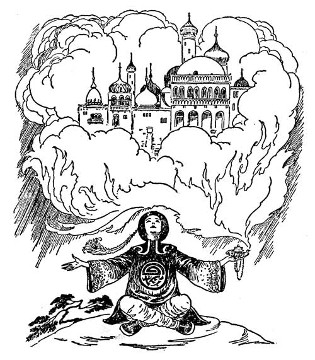
Aladdin, the best-known of the tales in the Arabian Nights, is not an authentic folk tale — it was written and inserted into the book by its French translator, Antoine Galland, in 1709.

Galland said that he’d heard the story from a Syrian monk, but there’s no precedent for it in the Arabic tradition — the story was unknown until Galland published it.

(Thanks, Joseph.)

03 Oct 18:30

The Toast Is A Business That Makes Money

by Mallory Ortberg

Were you aware that the Toast is in fact, a business? A business that is in the habit of making money? That Nicole and I are not just a pair of gals who decided to start a fun, free club in our spare time, but in fact Women of Business who self-funded our own media network? Rebecca Greenfield at Fast Company knows:

If The Toast were a typical Silicon Valley startup, and not a feminist website that analyzes the lesbian undertones in Grease and imagines texting convos with literary giants, it might position its growth story as something like this: millions of users in one year, massive engagement, and profits. And this week, The Toast announced its first major expansion, hiring Bad Feminist author Roxane Gay to lead its spin-off site, The Butter.

Read more The Toast Is A Business That Makes Money at The Toast.

03 Oct 18:24

[baconzombie]

03 Oct 18:20

Outside the Box

by Grant
 

You can order a poster print of this comic at my shop.
03 Oct 18:17

The world's loudest sound

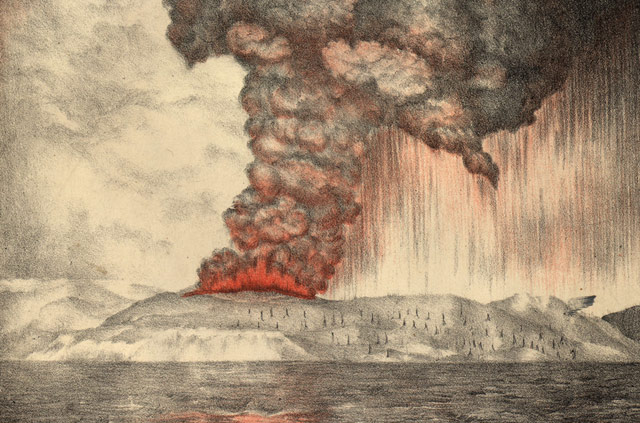
Krakatoa

The sound made by the Krakatoa volcanic eruption in 1883 was so loud it ruptured eardrums of people 40 miles away, travelled around the world four times, and was clearly heard 3,000 miles away.

Think, for a moment, just how crazy this is. If you're in Boston and someone tells you that they heard a sound coming from New York City, you're probably going to give them a funny look. But Boston is a mere 200 miles from New York. What we're talking about here is like being in Boston and clearly hearing a noise coming from Dublin, Ireland. Travelling at the speed of sound (766 miles or 1,233 kilometers per hour), it takes a noise about 4 hours to cover that distance. This is the most distant sound that has ever been heard in recorded history.

A much much smaller eruption occurred recently in Papua New Guinea. From the video, you can get a tiny sense of the sonic damage unleashed by Krakatoa:

Holy smoking Toledos indeed. On Reddit, a user details how loud a Saturn V rocket is and what the effects would be at different distances. At very close range, the sound from the Saturn V measures an incredible 220 db, loud enough to melt concrete just from the sound.

At 500 meters, 155 db you would experience painful, violent shaking in your entire body, you would feel compressed, as though deep underwater. Your vision would blur, breathing would be very difficult, your eardrums are obviously a lost cause, even with advanced active noise cancelling protection you could experience permanent damage. This is the sort of sound level aircraft mechanics sometimes experience for short periods of time. Almost twice as "loud" as putting your ear up to the exhaust of a formula 1 car. The air temperature would drop significantly, perhaps 10-25 degrees F, becoming suddenly cold because of the air being so violently stretched and moved.

Even at three miles away, the sound is loud enough to cause permanent hearing damage. But that's nothing compared to the Krakatoa sound. The Saturn V sound is ~170 db at 100 meters away while the Krakatoa explosion was that loud 100 miles away! What happens at 170 db?

...you would be unable to breathe or likely see at all from the sound pressure, glass would shatter, fog would be generated as the water in the air dropped out of suspension in the pressure waves, your house at this distance would have a roughly 50% chance of being torn apart from sound pressure alone. Military stun grenades reach this volume for a split second... if they are placed up to your face. Survival chance from sound alone, minimal, you would certainly experience permanent deafness but probably also organ damage.

The word "loud" is inadequate to describe how loud that is. (thx, david)

Bookmarked at brandizzi Delicious' sharing tag and expanded by Delicious sharing tag expander.
03 Oct 18:17

stormtrooperfashion: Cindy Bruna in “Extra Natural Indigo...


stormtrooperfashion:

Cindy Bruna in “Extra Natural Indigo Material” by Sasporta for Vision China, September 2014

02 Oct 22:34

Oh


Oh

02 Oct 22:34

http://brandizzi.tumblr.com/post/98911291219


http://pandawhale.com/post/15283/deal-with-it-sliding-ice-bro

02 Oct 22:33

Produto inovador promete consertar qualquer coisa da sua casa

Adam Victor Brandizzi

Eu, como amante de epóxi que sou, aspiro ferozmente pela chegada disso aí aqui.

Já pensou no quanto uma pequena porção de massa, feita com borracha de silicone, pode fazer por você? Está na hora de pensar – Sugru é o nome do produto, uma massinha colorida feita para moldar, colar e consertar coisas em sua casa – qualquer coisa na sua casa, segundo os fabricantes.

Tem um cabo ou fio de carregador quase rompendo? Um cabide quebrado? Um tênis de corrida furado? Nada disso é problema para o Sugru. Essa massa, que já chega a mais de 138 países e que está tendo um sucesso repentino, se gruda e se adapta ao objeto. Depois é só deixar secar e ela acaba servindo de proteção, graças à textura e resistência ( já que ela é ao mesmo tempo dura e flexível).

A revista americana Time considera esta a melhor invenção desde a fita adesiva. A criadora do produto, que levou meses de estudo e melhorias, a irlandesa Jane Ní Dhulchaointigh, diz que tudo começou com um pensamento: “eu não quero comprar coisas novas o tempo todo. Eu quero consertar as coisas que eu já tenho, de forma a que isso funcione melhor para mim”.

Veja alguns vídeos e imagens sobre a utilidade do Sugru e, quem sabe, se não se torna mais um dos cerca de 285 mil utilizadores do produto.

A história e os protagonistas:

Jane-Sugru

Sugru0(1)

Sugru1

Sugru2(1)

Sugru3

Sugru4

Sugru5

Sugru6

Sugru7

Sugru8

Sugru9

Sugru10

Bookmarked at brandizzi Delicious' sharing tag and expanded by Delicious sharing tag expander.
02 Oct 22:33

fer1972: The Dark and Macabre Illustrations of Paul Rumsey 


fer1972:

The Dark and Macabre Illustrations of Paul Rumsey 

02 Oct 22:32

mikkolagerstedt: Evening Mist http://www.mikkolagerstedt.com

02 Oct 21:36

Ciclos do pós-Guerra

Adam Victor Brandizzi

" A agenda desta eleição é a crítica à nova matriz econômica. O contrato social da redemocratização não está em discussão."

¡ISSO! (Ao menos entre os não delirantes)

02 Oct 21:29

Por que, ao se focar em Assad, Obama esqueceu do ISIS?

by Gustavo Chacra

O presidente Barack Obama culpa os seus serviços de inteligência pela falha em não prever o avanço do grupo ultra extremista ISIS (também conhecido como Grupo Estado Islâmico, ISIL e Daesh) na Síria e no Iraque. Mas a história não é bem esta. Primeiro, os serviços de inteligência americanos previram sim. Em segundo lugar, bastava observar os acontecimentos – tomada de Raqaa pelo ISIS na Síria e posteriormente de Fallujah no Iraque. Não era preciso ter informações de inteligência

Na verdade, o erro dos EUA foi ter se focado apenas em combater retoricamente Bashar al Assad por cerca de três anos, buscando enfraquecer o regime – mas não o suficiente para Assad cair e sim para aceitar negociar com a suposta oposição moderada. Como o ISIS era e é inimigo do Assad, apesar da estratégia de PR (relações públicas) da oposição síria querer dizer o contrário, o governo de Obama fechou os olhos e deixou os dois se matando – e não repudiou as mortes de cristãos, alauítas e outras minorias na Síria.

Desde outubro de 2011, quando estive na Síria, já era óbvio que parte da oposição síria estava se radicalizando, especialmente na fronteira com o Iraque e também em cidades mais centrais, como Hama e Homs – na época, Aleppo seguia intacta. O Brasil, Índia e África do Sul  alertavam no Conselho de Segurança sobre o perigo da oposição – acompanhei bem todo o processo, cobrindo para o Estadão os eventos na ONU.

Brasileiros, indianos e sul-africanos diziam que a resolução da ONU deveria condenar não apenas Assad, como também os opositores. Os EUA e a França não aceitavam incluir os opositores (tanto o capenga Exército Livre da Síria, como o ISIS e a Frente Nusrah, que na época eram uma coisa só). E a Rússia e a China não queriam condenar Assad.

Não sei como faz para publicar comentários. Portanto pediria que comentem no meu Facebook (Guga Chacra)  e no Twitter (@gugachacra), aberto para seguidores

Guga Chacra, comentarista de política internacional do Estadão e do programa Globo News Em Pauta em Nova York, é mestre em Relações Internacionais pela Universidade Columbia. Já foi correspondente do jornal O Estado de S. Paulo no Oriente Médio e em NY. No passado, trabalhou como correspondente da Folha em Buenos Aires

Comentários islamofóbicos, antissemitas, anticristãos e antiárabes ou que coloquem um povo ou uma religião como superiores não serão publicados. Tampouco são permitidos ataques entre leitores ou contra o blogueiro. Pessoas que insistirem em ataques pessoais não terão mais seus comentários publicados. Não é permitido postar vídeo. Todos os posts devem ter relação com algum dos temas acima. O blog está aberto a discussões educadas e com pontos de vista diferentes. Os comentários dos leitores não refletem a opinião do jornalista

Acompanhe também meus comentários no Globo News Em Pauta, na Rádio Estadão, na TV Estadão, no Estadão Noite no tablet, no Twitter @gugachacra , no Facebook Guga Chacra (me adicionem como seguidor), no Instagram e no Google Plus. Escrevam para mim no gugacha

02 Oct 21:27

Hybrid (Gilded)

Adam Victor Brandizzi

Digital Blasphemy ainda está de pé e ativo. AEEEEE

What started out as an update to "Hybrid" took a number of left turns and ended up someplace very different. This project was another exercise with Lightwave's instancing system (a la "Island in the Void"), but this time with solid objects.

My first version featured a sort of "frost" but I found the gold leaf to render much faster while also not being mistaken for mold or decay :-)

Either way this is a new technique for me so please let me know what you think!

02 Oct 18:41

Qual a estratégia de Assad para a Síria se o ISIS for derrotado?

by Gustavo Chacra

O ISIS, também conhecido como Grupo Estado Islâmico no Ocidente e Daesh no mundo árabe, atua principalmente no norte e no leste da Síria. Sua base está em Raqaa, a 440 quilômetros de Damasco. Para alguns analistas, se a organização for derrotada, o regime de Bashar al Assad passaria a ocupar o território. Pode ser. Mas, na minha visão, o cálculo de Assad é distinto.

O líder sírio é realista e sabe ser impossível controlar toda a Síria no futuro. Em vez disso, há algum tempo, o regime decidiu se concentrar em proteger Damasco e manter a ligação via Homs e Hama até o seu bastião na costa Mediterrânea, em Latakia e Tartus, onde a população cristã e alauíta é maior.

Além desta área, Assad ainda pretende voltar a controlar integralmente Aleppo, hoje dividida. Talvez consiga. O problema é que, em Aleppo, o líder sírio não tem a ajuda do Hezbollah – o grupo libanês atua principalmente na fronteira da Síria com o Líbano. Para ajudar suas forças militares, Assad, em Aleppo, conta apenas com milícias cristãs.

O custo para controlar Raqaa seria enorme para Assad. Aliás, este é o principal motivo de seu regime ter atacado mais outros grupos rebeldes do que o ISIS, e não uma estratégia maquiavélica para reduzir a opção do Ocidente no conflito para uma escolha entre ele ou o grupo radical.

Sem dúvida, existe a questão de petróleo. Mas mesmo assim o regime talvez pretenda priorizar as áreas onde tem relativo apoio popular, mais populosas e próximas à faixa de Damasco até a Costa Mediterrânea.

 Não sei como faz para publicar comentários. Portanto pediria que comentem no meu Facebook (Guga Chacra)  e no Twitter (@gugachacra), aberto para seguidores

Guga Chacra, comentarista de política internacional do Estadão e do programa Globo News Em Pauta em Nova York, é mestre em Relações Internacionais pela Universidade Columbia. Já foi correspondente do jornal O Estado de S. Paulo no Oriente Médio e em NY. No passado, trabalhou como correspondente da Folha em Buenos Aires

Comentários islamofóbicos, antissemitas, anticristãos e antiárabes ou que coloquem um povo ou uma religião como superiores não serão publicados. Tampouco são permitidos ataques entre leitores ou contra o blogueiro. Pessoas que insistirem em ataques pessoais não terão mais seus comentários publicados. Não é permitido postar vídeo. Todos os posts devem ter relação com algum dos temas acima. O blog está aberto a discussões educadas e com pontos de vista diferentes. Os comentários dos leitores não refletem a opinião do jornalista

Acompanhe também meus comentários no Globo News Em Pauta, na Rádio Estadão, na TV Estadão, no Estadão Noite no tablet, no Twitter @gugachacra , no Facebook Guga Chacra (me adicionem como seguidor), no Instagram e no Google Plus. Escrevam para mim no gugacha

02 Oct 18:38

16-08-2014

by Laerte

02 Oct 18:35

Comic for October 1, 2014

02 Oct 18:15

asmilinggoddess: this is probably my favorite joke from...


asmilinggoddess:

this is probably my favorite joke from futurama tbh

02 Oct 18:13

Whatsapp e o pornô

by Manoel Galdino

Suponho que todo mundo que tem whatsapp saiba que ele é, provavelmente, a maior rede de troca de arquivos pornô do Brasil. Em tempos de internet, o que não falta é conteúdo pornô à disposição. Tá certo que às vezes dá pra ter medo de pegar vírus. E o sucesso do whatsapp nessa seara pode ser um pouco por causa disso. Mas eu suspeito que o sucesso pornográfico do whatsapp reside em outro aspecto.

Quase todo dia eu recebo pornô no whatsapp seguido de fotos do facebook ou diálogos do whatsapp identificando a mulher das fotos, contando a história dela. Invariavelmente com o propósito de deixar bem claro a humilhação que ela está sofrendo. Ou seja, não se trata de compartilhar pornô anônimo. Esse nós encontramos na internet. O que querem é o pornô identificado, de preferência com doses sádicas de humilhação alheia.

Eu confesso que não entendo muito bem a psiquê desses compartilhamentos. E esse post é um pouco para compartilhar – eita verbo – minha incredulidade e estupefação diante desses fatos. Tudo se passa como se quiséssemos apontar os dedos coletivamente. Como se o gozo não se desse pelo pornô, mas pelo pornô seguido do apontar o dedo. Não é uma anônima, mas a Maria amiga do João.

A coisa funciona mais ou menos assim. Alguém manda umas fotos ou vídeos de mulheres fazendo sexo ou em poses sexuais, nuas. E, aqui é o registro mais curioso, muitas vezes acompanham fotos do facebook da menina, com nome, amigos, dados do perfil, de forma a poder identificar a história da menina e a própria menina na rede social. Não basta que as fotos sejam de anônimas. É preciso identificar o objeto da pornografa e permitir o linchamento virtual da pessoal. Em suma, queremos dar nomes aos bois.

Pensando sobre o assunto, lembrei que o post mais visitado do saudoso blog do Hermenauta foi, por muito tempo, sobre Leila Lopes e o pornô. Nele, o Hermenauta, analisando o processo de normalização do pornô no Brasil, diz a certa altura:

No fundo a história da Leila é algo cômica e algo triste, o que me faz pensar que a tal da “normalização” do pornô ainda vai demorar um pouquinho enquanto tiver que depender de ruínas humanas (grifos meus).

Ele estava falando de outra coisa, mas penso que ele acertou onde não viu. Esse pornô de humilhação e apontamento de dedos do whatsapp é um pornô que depende da ruína alheia. Eu não sei o que isso significa. O que eu acho que sei é que não diz coisa boa sobre quem compartilha esse tipo de coisa.

ps.: eu nunca sei como reagir quando recebo essas coisas. Eu tenho ficado em silêncio, mas é um silêncio que tem me incomodado bastante. Esse post, de certa forma, é uma maneira de dizer, sem nomear as pessoas, que seria bacana se elas parassem com isso. Mas duvido que chegue ao conhecimento delas esse meu incômodo. Só se, como n’O Hermenauta, esse meu post se tornar o mais acessado do Blog. Pra quem tem um post sobre maconha e outro sobre casamento muito procurado por evangélicos como posts mais visitados, não seria algo tão absurdo.


Arquivado em:Manoel Galdino Tagged: Hermenauta, Leila Lopes, porn, pornô, pornografia, whatsapp
01 Oct 15:58

Mother of God

by Laura Cok

My mother thinks I’m going to hell. That it is a real place (though not, she would qualify, full of brimstone; her idea of hell is dark, and chaotic, and utterly without God). My grandfather, when he was in hospice care, said between labored breaths how glad he was that all of his four grandchildren had made their Profession of Faith. He said about his daughter-in-law, my aunt, “I believe she knows the Lord, but I’d like to be a little more sure.” My mother held very still, her face turned away, though not so sharply that it would seem deliberate. He was wrong, when he said four. He was remembering me the way he would like me to be.

At his bedside my mother prayed. Always a gifted speaker, even then, eloquent and quietly devout. They spoke of the funeral service: which verses did he want, and which hymns. She didn’t look at me. The room was too hot, kept that way for the thin patients, who were freezing to death in the damp May air, their hearts pumping more and more slowly. He’d been confused all day, mistaking me for my mother, and my mother for his wife. I have not made Profession of Faith, and my mother has stopped asking. When she prayed out loud she didn’t suggest that I join in, as though it hadn’t occurred to her, although maybe it would have in other families, with other daughters.

My mother is a minister in the Christian Reformed Church of America, a denomination of less than 300,000 members. Women in ministry are a relatively new thing in this conservative denomination, and the fight for her ordination has been my silent twin, alongside me from birth. When I was eight years old, I walked home from school and found my mother upstairs in bed, the lights out and the curtains drawn against the relentless California sun. She had a washcloth laid over her face, which she handed to me.

“Can you make this cold again?” she asked me. I didn’t understand. “Run it under cold water, then wring it out.”

When I brought it back to her I asked, “What’s going on?” My younger brothers must have been home as well, playing with Legos in their room, but I don’t remember them. It was my mother and me, alone in the dark vaulted space at the top of the house.

She had been crying. “The council decided,” she said, “that the time isn’t right. They aren’t going to let me preach.” She turned her face away.

Read more Mother of God at The Toast.

01 Oct 13:10

The Federalist Pages: What Neil deGrasse Tyson and Conservative Bloggers Tell Us About Wikipedia and US Politics

by William Beutler

You might be surprised to learn that Wikipedia has a formal policy called “Wikipedia is not a battleground”. Not that anyone seems to have got the memo: although Wikipedia’s rules kindly suggest that its editors not use articles to advance ideological or partisan interests, in practice there’s no reason to think that it can work like that. And should we really want it to be otherwise?

This brings us to the latest partisan battle to make its way from the political blogosphere (if we still call it that?) to the pages of Wikipedia: Tyson-gate (or: Tyson-ghazi?). Earlier this month, a new-ish right-of-center web magazine called The Federalist (whose contributors, I should say, include several friends) started publishing a series of articles pointing out inaccuracies—or possibly fabrications—by the celebrated scientist, media personality and Colbert Report regular Neil deGrasse Tyson.

640px-Bill_Nye,_Barack_Obama_and_Neil_deGrasse_Tyson_selfie_2014Federalist co-founder Sean Davis made a pretty strong case that a quote Tyson attributed to former President George W. Bush did not in fact exist; Tyson eventually acknowledged the error, though it wasn’t quickly forthcoming. While subsequent events have made it clear that Davis had the goods on Tyson, his rhetorical style leaves much to be desired: Davis insists on words like “fabricated” implying an insight into the nature of Tyson’s error that he really can’t know. Davis isn’t alone in this; on the left, Media Matters routinely uses the unforgiving phrase “falsely claims” to describe conservative opinions all the time. This puts me in mind of another Wikipedia policy inconsistently observed: “Comment on content, not the contributor” Remember this point, because I’m going to come back to it.

Anyway, of course the battle made its way to the front lines of the war of ideas, Wikipedia. What happened over the last week was simple enough: one person added a lengthy summary of Davis’ allegations to Tyson’s Wikipedia bio; someone else reverted it very quickly, claiming that it went too far; another editor tried a shorter version; yet another editor removed it again for being “original research”; around and around it went like this from September 16 to 21. When I started compiling links on Tuesday the 29th, a fairly short, but also short-on-context version of this passage read:

Tyson has claimed that, following the 9/11 terrorist attacks, then-President George W. Bush said, “Our God is the God who named the stars,” in order to “distinguish we from they (Muslims)”.[59] Tom Jackson of the Tampa Tribune called it “… a vicious, gratuitous slander.”[60]

But then a longer version which appeared later in the day seemed like too much:

Tyson had claimed that, following the 9/11 terrorist attacks, then-President George W. Bush said, “Our God is the God who named the stars,” in order to “distinguish we from they (Muslims)”.[58] Neil Tyson has confirmed that he was actually referring to President Bush’s February 2003 speech on the Space Shuttle Columbia disaster and that he “transposed one disaster with another (both occurring within 18 months of one another) in my assigning his quote.” [59] In that speech then-President George W. Bush quotes Isaiah when he said “He who brings out the starry hosts one by one and calls them each by name.”[60] Then George W. Bush said, “The same Creator who names the stars also knows the names of the seven souls we mourn today.” [61]

As of this writing, all mention of the controversy has been removed, and the article has been temporarily locked to prevent further edit warring. Meanwhile, the debate on the Neil deGrasse Tyson discussion page has run to some 50,000 (!) words since mid-September, comprising at least one Request for Comment where the only real conclusion so far is: “This has become unproductive.”

Meanwhile, someone put The Federalist’s own Wikipedia article up for deletion, possibly out of spite, but also possibly because it seemed like a borderline eligibility case based on included sources at the time. Nevertheless, it seems likely that a very short version of the article will be kept once the arguing here is through. (And as more than one contributor has noted, the more attention this gets in the political media, the more “Notable” The Federalist likely becomes.)

Throughout this debate, Davis and The Federalist haven’t been doing themselves any favors. Sean Davis of course is as much reporting on his own fight with Tyson as he is reporting on Tyson, including multiple articles about the debate on Wikipedia.
This included an initial summary on September 18 that continued blithely pushing the “fabrication” claim and proudly quoted an unnamed Wikipedian saying “no version of this event will be allowed into the article” as if this unnamed editor spoke for all of Wikipedia. Worse still was a follow-up by Davis called “9 Absurd Edit Justifications By Wikipedia’s Neil Tyson Truthers” that pointed to fairly standard considerations for inclusion or exclusion of controversial material as if it was patent nonsense. For instance, these two comments:

It doesn’t matter if we can demonstrate it happened or not, many things happen in many people lives, we don’t write each of them into every persons biography. …

[T]his is being kept off because Wikipedia is deeply conservative in the non-political meaning of the word.

Davis may not like these answers, but they are anything but unreasonable points to make in a content dispute, especially about a living person whose reputation is (to some degree) at stake. Indeed, the same policy that points out Wikipedia is not a battleground also points out: “[N]ot all verifiable events are suitable for inclusion in Wikipedia.”

The problem is not that Davis is wrong; in fact, some of the objections to the topic’s inclusion were possibly mistaken, arrived at prematurely, or later invalidated by the emergence of new sources. The problem is not even that Davis is treating Wikipedia as a battleground—after all, Wikipedia is where we go to argue about such things. If Wikipedia is to be the “sum of human knowledge”, that very much includes contentious material related to political and ideological battles.

The problem is actually one of good faith—and here we come to a policy that is also frequently ignored on Wikipedia, but would it be followed better, we could have all been saved a few weeks and tens of thousands of words: “Assume good faith”. And as problems go, it is one that exists on both sides, although it tends to be the case that one side usually goes further—which either produces a decisive political victory or defeat. Davis has this territory pretty well staked out with this column that doesn’t accomplish anything but to “falsely claim” Wikipedia is a single entity entirely comprising lying liars of the left.

The political blogosphere was a source of fascination for me in the early part of my career, in particular writing about it in a sadly departed column called The Blogometer for National Journal’s Hotline. Starting in the late 2000s, I turned my focus more to Wikipedia, in particular writing about it on this blog. There are numerous parallels, but the least savory is the tendency of both to bog down in bitter recrimination. Witness also the fight over the Chelsea Manning Wikipedia entry from late last year.

Part of me thinks that Wikipedia shouldn’t worry about these fights, only about whether or not they continue to occur at Wikipedia; even an ugly debate is better than none at all, right? But considering the voluminous anecdotal evidence that Wikipedia’s eroding editor base and absurd gender gap owe something to its tolerance for incivility—despite the existence of a policy stating otherwise and a speech by Jimmy Wales at Wikimania this year calling for a renewed emphasis upon it—this is something the Wikipedia community had better take seriously.

Of course, this doesn’t exist in a vacuum: Sean Davis, The Federalist, left-leaning Wikipedia editors, and even Neil deGrasse Tyson with his bullshit political anecdotes (I am using Harry Frankfurt’s precise definition) aren’t quite the problem; they are merely avatars of it. Everything that’s wrong with US politics—where to start!—eventually finds its way to Wikipedia.

But there remains one important difference between the blogosphere and Wikipedia: rules. The blogosphere does not have them; Wikipedia does, and these rules shape the debate that occurs on its talk pages. Without these rules, it would just be endless edit wars of attrition. The problem with Wikipedia, then, is not its rules but how it enforces them. Wikipedia’s community should be asking itself: what kind of battleground do we want to be?

Photo via the White House / Flickr.

01 Oct 13:00

App Of The Day

by Andrew Sullivan
Adam Victor Brandizzi

Esperando ansiosamente que chegue aqui.

Claire Cain Miller has details:

Enter a San Francisco start-up called Shyp, which [expanded] to New York [yesterday]. For a small fee, it fetches, boxes and mails parcels for you. The other week, I had a get-well package to mail to my cousin. I opened the app, snapped a photo of the items I wanted to send and entered her address. Fifteen minutes later, someone was at my door — and that was it. No boxes, no tape, no weighing, no buying stamps, no standing in line. …

Technology has conditioned us to expect ease, efficiency and speed in almost everything we do. Once it came from sewing machines and dishwashers, later from Google and Kayak, and most recently from start-ups that provide on-demand services like Uber for cars, Instacart for groceries and Munchery for dinner. The post office, with its slow-moving lines and cumbersome packing supplies, offers exactly the opposite.

Update from a reader:

It is amazing to me that people know so little about Post Office services. You can pick up a box (or boxes); keep them at home; put the stuff you are sending in said box; go to USPS.com and click on “ship a package”. Fill out the info; print the label; pay the cost with a credit card or Paypal and either drop in a Post Office or give it to your carrier. You never have to leave home and the cost is the Post Office cost not an inflated app cost. I send all my packages this way. Maybe they should call it a “Post Office app” so people will use it!


30 Sep 18:32

bunnyfood: That face. Hipopótamos são grandes sapos mamíferos.


bunnyfood:

That face.

Hipopótamos são grandes sapos mamíferos.

30 Sep 15:05

Mining Bitcoin with pencil and paper: 0.67 hashes per day

Adam Victor Brandizzi

Ele não menciona o passo Σ(coisas a fazer) porque o resultado é claramente 0.
. . .
Contudo: deveras interessante ver o algoritmo na mão; só não é exatamente Bitcoin, é só o hash.

I decided to see how practical it would be to mine Bitcoin with pencil and paper. It turns out that the SHA-256 algorithm used for mining is pretty simple and can in fact be done by hand. Not surprisingly, the process is extremely slow compared to hardware mining and is entirely impractical. But performing the algorithm manually is a good way to understand exactly how it works.

A pencil-and-paper round of SHA-256

A pencil-and-paper round of SHA-256

The mining process

Bitcoin mining is a key part of the security of the Bitcoin system. The idea is that Bitcoin miners group a bunch of Bitcoin transactions into a block, then repeatedly perform a cryptographic operation called hashing zillions of times until someone finds a special extremely rare hash value. At this point, the block has been mined and becomes part of the Bitcoin block chain. The hashing task itself doesn't accomplish anything useful in itself, but because finding a successful block is so difficult, it ensures that no individual has the resources to take over the Bitcoin system. For more details on mining, see my Bitcoin mining article.

A cryptographic hash function takes a block of input data and creates a smaller, unpredictable output. The hash function is designed so there's no "short cut" to get the desired output - you just have to keep hashing blocks until you find one by brute force that works. For Bitcoin, the hash function is a function called SHA-256. To provide additional security, Bitcoin applies the SHA-256 function twice, a process known as double-SHA-256.

In Bitcoin, a successful hash is one that starts with enough zeros.[1] Just as it is rare to find a phone number or license plate ending in multiple zeros, it is rare to find a hash starting with multiple zeros. But Bitcoin is exponentially harder. Currently, a successful hash must start with approximately 17 zeros, so only one out of 1.4x10²⁰ hashes will be successful. In other words, finding a successful hash is harder than finding a particular grain of sand out of all the grains of sand on Earth.

The following diagram shows a block in the Bitcoin blockchain along with its hash. The yellow bytes are hashed to generate the block hash. In this case, the resulting hash starts with enough zeros so mining was successful. However, the hash will almost always be unsuccessful. In that case, the miner changes the nonce value or other block contents and tries again.

Structure of a Bitcoin block

Structure of a Bitcoin block

The SHA-256 hash algorithm used by Bitcoin

The SHA-256 hash algorithm takes input blocks of 512 bits (i.e. 64 bytes), combines the data cryptographically, and generates a 256-bit (32 byte) output. The SHA-256 algorithm consists of a relatively simple round repeated 64 times. The diagram below shows one round, which takes eight 4-byte inputs, A through H, performs a few operations, and generates new values of A through H.

SHA-256 round, from Wikipedia

One round of the SHA-256 algorithm showing the 8 input blocks A-H, the processing steps, and the new blocks. Diagram created by kockmeyer, CC BY-SA 3.0.

The blue boxes mix up the values in non-linear ways that are hard to analyze cryptographically. Since the algorithm uses several different functions, discovering an attack is harder. (If you could figure out a mathematical shortcut to generate successful hashes, you could take over Bitcoin mining.)

The Ma majority box looks at the bits of A, B, and C. For each position, if the majority of the bits are 0, it outputs 0. Otherwise it outputs 1. That is, for each position in A, B, and C, look at the number of 1 bits. If it is zero or one, output 0. If it is two or three, output 1.

The Σ0 box rotates the bits of A to form three rotated versions, and then sums them together modulo 2. In other words, if the number of 1 bits is odd, the sum is 1; otherwise, it is 0. The three values in the sum are A rotated right by 2 bits, 13 bits, and 22 bits.

The Ch "choose" box chooses output bits based on the value of input E. If a bit of E is 1, the output bit is the corresponding bit of F. If a bit of E is 0, the output bit is the corresponding bit of G. In this way, the bits of F and G are shuffled together based on the value of E.

The next box Σ1 rotates and sums the bits of E, similar to Σ0 except the shifts are 6, 11, and 25 bits.

The red boxes perform 32-bit addition, generating new values for A and E. The input Wt is based on the input data, slightly processed. (This is where the input block gets fed into the algorithm.) The input Kt is a constant defined for each round.[2]

As can be seen from the diagram above, only A and E are changed in a round. The other values pass through unchanged, with the old A value becoming the new B value, the old B value becoming the new C value and so forth. Although each round of SHA-256 doesn't change the data much, after 64 rounds the input data will be completely scrambled.[3]

Manual mining

The video below shows how the SHA-256 hashing steps described above can be performed with pencil and paper. I perform the first round of hashing to mine a block. Completing this round took me 16 minutes, 45 seconds.

To explain what's on the paper: I've written each block A through H in hex on a separate row and put the binary value below. The maj operation appears below C, and the shifts and Σ0 appear above row A. Likewise, the choose operation appears below G, and the shifts and Σ1 above E. In the lower right, a bunch of terms are added together, corresponding to the first three red sum boxes. In the upper right, this sum is used to generate the new A value, and in the middle right, this sum is used to generate the new E value. These steps all correspond to the diagram and discussion above.

I also manually performed another hash round, the last round to finish hashing the Bitcoin block. In the image below, the hash result is highlighted in yellow. The zeroes in this hash show that it is a successful hash. Note that the zeroes are at the end of the hash. The reason is that Bitcoin inconveniently reverses all the bytes generated by SHA-256.[4]

Last pencil-and-paper round of SHA-256, showing a successfully-mined Bitcoin block.

Last pencil-and-paper round of SHA-256, showing a successfully-mined Bitcoin block.

What this means for mining hardware

Each step of SHA-256 is very easy to implement in digital logic - simple Boolean operations and 32-bit addition. (If you've studied electronics, you can probably visualize the circuits already.) For this reason, custom ASIC chips can implement the SHA-256 algorithm very efficiently in hardware, putting hundreds of rounds on a chip in parallel. The image below shows a mining chip that runs at 2-3 billion hashes/second; Zeptobars has more photos.

The silicon die inside a Bitfury ASIC chip. This chip mines Bitcoin at 2-3 Ghash/second. Image from http://zeptobars.ru/en/read/bitfury-bitcoin-mining-chip (CC BY 3.0 license)

The silicon die inside a Bitfury ASIC chip. This chip mines Bitcoin at 2-3 Ghash/second. Image from Zeptobars. (CC BY 3.0)

In contrast, Litecoin, Dogecoin, and similar altcoins use the scrypt hash algorithm, which is intentionally designed to be difficult to implement in hardware. It stores 1024 different hash values into memory, and then combines them in unpredictable ways to get the final result. As a result, much more circuitry and memory is required for scrypt than for SHA-256 hashes. You can see the impact by looking at mining hardware, which is thousands of times slower for scrypt (Litecoin, etc) than for SHA-256 (Bitcoin).

Conclusion

The SHA-256 algorithm is surprisingly simple, easy enough to do by hand. (The elliptic curve algorithm for signing Bitcoin transactions would be very painful to do by hand since it has lots of multiplication of 32-byte integers.) Doing one round of SHA-256 by hand took me 16 minutes, 45 seconds. At this rate, hashing a full Bitcoin block (128 rounds)[3] would take 1.49 days, for a hash rate of 0.67 hashes per day (although I would probably get faster with practice). In comparison, current Bitcoin mining hardware does several terahashes per second, about a quintillion times faster than my manual hashing. Needless to say, manual Bitcoin mining is not at all practical.[5]

A Reddit reader asked about my energy consumption. There's not much physical exertion, so assuming a resting metabolic rate of 1500kcal/day, manual hashing works out to almost 10 megajoules/hash. A typical energy consumption for mining hardware is 1000 megahashes/joule. So I'm less energy efficient by a factor of 10^16, or 10 quadrillion. The next question is the energy cost. A cheap source of food energy is donuts at $0.23 for 200 kcalories. Electricity here is $0.15/kilowatt-hour, which is cheaper by a factor of 6.7 - closer than I expected. Thus my energy cost per hash is about 67 quadrillion times that of mining hardware. It's clear I'm not going to make my fortune off manual mining, and I haven't even included the cost of all the paper and pencils I'll need.

Notes

[1] It's not exactly the number of zeros at the start of the hash that matters. To be precise, the hash must be less than a particular value that depends on the current Bitcoin difficulty level.

[2] The source of the constants used in SHA-256 is interesting. The NSA designed the SHA-256 algorithm and picked the values for these constants, so how do you know they didn't pick special values that let them break the hash? To avoid suspicion, the initial hash values come from the square roots of the first 8 primes, and the Kt values come from the cube roots of the first 64 primes. Since these constants come from a simple formula, you can trust that the NSA didn't do anything shady (at least with the constants).

[3] Unfortunately the SHA-256 hash works on a block of 512 bits, but the Bitcoin block header is more than 512 bits. Thus, a second set of 64 SHA-256 hash rounds is required on the second half of the Bitcoin block. Next, Bitcoin uses double-SHA-256, so a second application of SHA-256 (64 rounds) is done to the result. Adding this up, hashing an arbitrary Bitcoin block takes 192 rounds in total. However there is a shortcut. Mining involves hashing the same block over and over, just changing the nonce which appears in the second half of the block. Thus, mining can reuse the result of hashing the first 512 bits, and hashing a Bitcoin block typically only requires 128 rounds.

[4] Obviously I didn't just have incredible good fortune to end up with a successful hash. I started the hashing process with a block that had already been successfully mined. In particular I used the one displayed earlier in this article, #286819.

[5] Another problem with manual mining is new blocks are mined about every 10 minutes, so even if I did succeed in mining a block, it would be totally obsolete (orphaned) by the time I finished.

Bookmarked at brandizzi Delicious' sharing tag and expanded by Delicious sharing tag expander.