Shared posts

11 Dec 07:43

The myth of religious violence | Karen Armstrong

As we watch the fighters of the Islamic State (Isis) rampaging through the Middle East, tearing apart the modern nation-states of Syria and Iraq created by departing European colonialists, it may be difficult to believe we are living in the 21st century. The sight of throngs of terrified refugees and the savage and indiscriminate violence is all too reminiscent of barbarian tribes sweeping away the Roman empire, or the Mongol hordes of Genghis Khan cutting a swath through China, Anatolia, Russia and eastern Europe, devastating entire cities and massacring their inhabitants. Only the wearily familiar pictures of bombs falling yet again on Middle Eastern cities and towns – this time dropped by the United States and a few Arab allies – and the gloomy predictions that this may become another Vietnam, remind us that this is indeed a very modern war.

The ferocious cruelty of these jihadist fighters, quoting the Qur’an as they behead their hapless victims, raises another distinctly modern concern: the connection between religion and violence. The atrocities of Isis would seem to prove that Sam Harris, one of the loudest voices of the “New Atheism”, was right to claim that “most Muslims are utterly deranged by their religious faith”, and to conclude that “religion itself produces a perverse solidarity that we must find some way to undercut”. Many will agree with Richard Dawkins, who wrote in The God Delusion that “only religious faith is a strong enough force to motivate such utter madness in otherwise sane and decent people”. Even those who find these statements too extreme may still believe, instinctively, that there is a violent essence inherent in religion, which inevitably radicalises any conflict – because once combatants are convinced that God is on their side, compromise becomes impossible and cruelty knows no bounds.

Despite the valiant attempts by Barack Obama and David Cameron to insist that the lawless violence of Isis has nothing to do with Islam, many will disagree. They may also feel exasperated. In the west, we learned from bitter experience that the fanatical bigotry which religion seems always to unleash can only be contained by the creation of a liberal state that separates politics and religion. Never again, we believed, would these intolerant passions be allowed to intrude on political life. But why, oh why, have Muslims found it impossible to arrive at this logical solution to their current problems? Why do they cling with perverse obstinacy to the obviously bad idea of theocracy? Why, in short, have they been unable to enter the modern world? The answer must surely lie in their primitive and atavistic religion.

A rosary hangs from a Ukrainian soldier's machine gun near the eastern Ukrainian town of Pervomaysk.
A Ukrainian soldier near the eastern Ukrainian town of Pervomaysk. Photograph: Photograph: Gleb Garanich/Reuters

But perhaps we should ask, instead, how it came about that we in the west developed our view of religion as a purely private pursuit, essentially separate from all other human activities, and especially distinct from politics. After all, warfare and violence have always been a feature of political life, and yet we alone drew the conclusion that separating the church from the state was a prerequisite for peace. Secularism has become so natural to us that we assume it emerged organically, as a necessary condition of any society’s progress into modernity. Yet it was in fact a distinct creation, which arose as a result of a peculiar concatenation of historical circumstances; we may be mistaken to assume that it would evolve in the same fashion in every culture in every part of the world.

We now take the secular state so much for granted that it is hard for us to appreciate its novelty, since before the modern period, there were no “secular” institutions and no “secular” states in our sense of the word. Their creation required the development of an entirely different understanding of religion, one that was unique to the modern west. No other culture has had anything remotely like it, and before the 18th century, it would have been incomprehensible even to European Catholics. The words in other languages that we translate as “religion” invariably refer to something vaguer, larger and more inclusive. The Arabic word din signifies an entire way of life, and the Sanskrit dharma covers law, politics, and social institutions as well as piety. The Hebrew Bible has no abstract concept of “religion”; and the Talmudic rabbis would have found it impossible to define faith in a single word or formula, because the Talmud was expressly designed to bring the whole of human life into the ambit of the sacred. The Oxford Classical Dictionary firmly states: “No word in either Greek or Latin corresponds to the English ‘religion’ or ‘religious’.” In fact, the only tradition that satisfies the modern western criterion of religion as a purely private pursuit is Protestant Christianity, which, like our western view of “religion”, was also a creation of the early modern period.

Traditional spirituality did not urge people to retreat from political activity. The prophets of Israel had harsh words for those who assiduously observed the temple rituals but neglected the plight of the poor and oppressed. Jesus’s famous maxim to “Render unto Caesar the things that are Caesar’s” was not a plea for the separation of religion and politics. Nearly all the uprisings against Rome in first-century Palestine were inspired by the conviction that the Land of Israel and its produce belonged to God, so that there was, therefore, precious little to “give back” to Caesar. When Jesus overturned the money-changers’ tables in the temple, he was not demanding a more spiritualised religion. For 500 years, the temple had been an instrument of imperial control and the tribute for Rome was stored there. Hence for Jesus it was a “den of thieves”. The bedrock message of the Qur’an is that it is wrong to build a private fortune but good to share your wealth in order to create a just, egalitarian and decent society. Gandhi would have agreed that these were matters of sacred import: “Those who say that religion has nothing to do with politics do not know what religion means.”

The myth of religious violence

Before the modern period, religion was not a separate activity, hermetically sealed off from all others; rather, it permeated all human undertakings, including economics, state-building, politics and warfare. Before 1700, it would have been impossible for people to say where, for example, “politics” ended and “religion” began. The Crusades were certainly inspired by religious passion but they were also deeply political: Pope Urban II let the knights of Christendom loose on the Muslim world to extend the power of the church eastwards and create a papal monarchy that would control Christian Europe. The Spanish inquisition was a deeply flawed attempt to secure the internal order of Spain after a divisive civil war, at a time when the nation feared an imminent attack by the Ottoman empire. Similarly, the European wars of religion and the thirty years war were certainly exacerbated by the sectarian quarrels of Protestants and Catholics, but their violence reflected the birth pangs of the modern nation-state.

Before the modern period, religion was not a separate activity, it permeated all human undertakings

It was these European wars, in the 16th and 17th centuries, that helped create what has been called “the myth of religious violence”. It was said that Protestants and Catholics were so inflamed by the theological passions of the Reformation that they butchered one another in senseless battles that killed 35% of the population of central Europe. Yet while there is no doubt that the participants certainly experienced these wars as a life-and-death religious struggle, this was also a conflict between two sets of state-builders: the princes of Germany and the other kings of Europe were battling against the Holy Roman Emperor, Charles V, and his ambition to establish a trans-European hegemony modelled after the Ottoman empire.

If the wars of religion had been solely motivated by sectarian bigotry, we should not expect to have found Protestants and Catholics fighting on the same side, yet in fact they often did so. Thus Catholic France repeatedly fought the Catholic Habsburgs, who were regularly supported by some of the Protestant princes. In the French wars of religion (1562–98) and the thirty years war, combatants crossed confessional lines so often that it was impossible to talk about solidly “Catholic” or “Protestant” populations. These wars were neither “all about religion” nor “all about politics”. Nor was it a question of the state simply “using” religion for political ends. There was as yet no coherent way to divide religious causes from social causes. People were fighting for different visions of society, but they would not, and could not, have distinguished between religious and temporal factors in these conflicts. Until the 18th century, dissociating the two would have been like trying to take the gin out of a cocktail.

By the end of the thirty years war, Europeans had fought off the danger of imperial rule. Henceforth Europe would be divided into smaller states, each claiming sovereign power in its own territory, each supported by a professional army and governed by a prince who aspired to absolute rule – a recipe, perhaps, for chronic interstate warfare. New configurations of political power were beginning to force the church into a subordinate role, a process that involved a fundamental reallocation of authority and resources from the ecclesiastical establishment to the monarch. When the new word “secularisation” was coined in the late 16th century, it originally referred to “the transfer of goods from the possession of the church into that of the world”. This was a wholly new experiment. It was not a question of the west discovering a natural law; rather, secularisation was a contingent development. It took root in Europe in large part because it mirrored the new structures of power that were pushing the churches out of government.

A US army soldier shhots at Taliban fighters A US army soldier shoots at Taliban fighters on the outskirts of Jellawar in the Arghandab Valley, Afghanistan. Photograph: Patrick Baz/AFP/Getty Images

These developments required a new understanding of religion. It was provided by Martin Luther, who was the first European to propose the separation of church and state. Medieval Catholicism had been an essentially communal faith; most people experienced the sacred by living in community. But for Luther, the Christian stood alone before his God, relying only upon his Bible. Luther’s acute sense of human sinfulness led him, in the early 16th century, to advocate the absolute states that would not become a political reality for another hundred years. For Luther, the state’s prime duty was to restrain its wicked subjects by force, “in the same way as a savage wild beast is bound with chains and ropes”. The sovereign, independent state reflected this vision of the independent and sovereign individual. Luther’s view of religion, as an essentially subjective and private quest over which the state had no jurisdiction, would be the foundation of the modern secular ideal.

But Luther’s response to the peasants’ war in Germany in 1525, during the early stages of the wars of religion, suggested that a secularised political theory would not necessarily be a force for peace or democracy. The peasants, who were resisting the centralising policies of the German princes – which deprived them of their traditional rights – were mercilessly slaughtered by the state. Luther believed that they had committed the cardinal sin of mixing religion and politics: suffering was their lot, and they should have turned the other cheek, and accepted the loss of their lives and property. “A worldly kingdom,” he insisted, “cannot exist without an inequality of persons, some being free, some imprisoned, some lords, some subjects.” So, Luther commanded the princes, “Let everyone who can, smite, slay and stab, secretly or openly, remembering that nothing can be more poisoned, hurtful, or devilish than a rebel.”

Dawn of the liberal state

By the late 17th century, philosophers had devised a more urbane version of the secular ideal. For John Locke it had become self-evident that “the church itself is a thing absolutely separate and distinct from the commonwealth. The boundaries on both sides are fixed and immovable.” The separation of religion and politics – “perfectly and infinitely different from each other” – was, for Locke, written into the very nature of things. But the liberal state was a radical innovation, just as revolutionary as the market economy that was developing in the west and would shortly transform the world. Because of the violent passions it aroused, Locke insisted that the segregation of “religion” from government was “above all things necessary” for the creation of a peaceful society.

Hence Locke was adamant that the liberal state could tolerate neither Catholics nor Muslims, condemning their confusion of politics and religion as dangerously perverse. Locke was a major advocate of the theory of natural human rights, originally pioneered by the Renaissance humanists and given definition in the first draft of the American Declaration of Independence as life, liberty and property. But secularisation emerged at a time when Europe was beginning to colonise the New World, and it would come to exert considerable influence on the way the west viewed those it had colonised – much as in our own time, the prevailing secular ideology perceives Muslim societies that seem incapable of separating faith from politics to be irredeemably flawed.

The reign of terror plunged France into an irrational bloodbath, in which 17,000 men, women and children were executed

This introduced an inconsistency, since for the Renaissance humanists there could be no question of extending these natural rights to the indigenous inhabitants of the New World. Indeed, these peoples could justly be penalised for failing to conform to European norms. In the 16th century, Alberico Gentili, a professor of civil law at Oxford, argued that land that had not been exploited agriculturally, as it was in Europe, was “empty” and that “the seizure of [such] vacant places” should be “regarded as law of nature”. Locke agreed that the native peoples had no right to life, liberty or property. The “kings” of America, he decreed, had no legal right of ownership to their territory. He also endorsed a master’s “Absolute, arbitrary, despotical power” over a slave, which included “the power to kill him at any time”. The pioneers of secularism seemed to be falling into the same old habits as their religious predecessors. Secularism was designed to create a peaceful world order, but the church was so intricately involved in the economic, political and cultural structures of society that the secular order could only be established with a measure of violence. In North America, where there was no entrenched aristocratic government, the disestablishment of the various churches could be accomplished with relative ease. But in France, the church could be dismantled only by an outright assault; far from being experienced as a natural and essentially normative arrangement, the separation of religion and politics could be experienced as traumatic and terrifying.

During the French revolution, one of the first acts of the new national assembly on November 2, 1789, was to confiscate all church property to pay off the national debt: secularisation involved dispossession, humiliation and marginalisation. This segued into outright violence during the September massacres of 1792, when the mob fell upon the jails of Paris and slaughtered between two and three thousand prisoners, many of them priests. Early in 1794, four revolutionary armies were dispatched from Paris to quell an uprising in the Vendée against the anti-Catholic policies of the regime. Their instructions were to spare no one. At the end of the campaign, General François-Joseph Westermann reportedly wrote to his superiors: “The Vendée no longer exists. I have crushed children beneath the hooves of our horses, and massacred the women … The roads are littered with corpses.”

Ironically, no sooner had the revolutionaries rid themselves of one religion, than they invented another. Their new gods were liberty, nature and the French nation, which they worshipped in elaborate festivals choreographed by the artist Jacques Louis David. The same year that the goddess of reason was enthroned on the high altar of Notre Dame cathedral, the reign of terror plunged the new nation into an irrational bloodbath, in which some 17,000 men, women and children were executed by the state.

To die for one’s country

When Napoleon’s armies invaded Prussia in 1807, the philosopher Johann Gottlieb Fichte similarly urged his countrymen to lay down their lives for the Fatherland – a manifestation of the divine and the repository of the spiritual essence of the Volk. If we define the sacred as that for which we are prepared to die, what Benedict Anderson called the “imagined community” of the nation had come to replace God. It is now considered admirable to die for your country, but not for your religion.

As the nation-state came into its own in the 19th century along with the industrial revolution, its citizens had to be bound tightly together and mobilised for industry. Modern communications enabled governments to create and propagate a national ethos, and allowed states to intrude into the lives of their citizens more than had ever been possible. Even if they spoke a different language from their rulers, subjects now belonged to the “nation,” whether they liked it or not. John Stuart Mill regarded this forcible integration as progress; it was surely better for a Breton, “the half-savage remnant of past times”, to become a French citizen than “sulk on his own rocks”. But in the late 19th century, the British historian Lord Acton feared that the adulation of the national spirit that laid such emphasis on ethnicity, culture and language, would penalise those who did not fit the national norm: “According, therefore, to the degree of humanity and civilisation in that dominant body which claims all the rights of the community, the inferior races are exterminated or reduced to servitude, or put in a condition of dependence.”

The Enlightenment philosophers had tried to counter the intolerance and bigotry that they associated with “religion” by promoting the equality of all human beings, together with democracy, human rights, and intellectual and political liberty, modern secular versions of ideals which had been promoted in a religious idiom in the past. The structural injustice of the agrarian state, however, had made it impossible to implement these ideals fully. The nation-state made these noble aspirations practical necessities. More and more people had to be drawn into the productive process and needed at least a modicum of education. Eventually they would demand the right to participate in the decisions of government. It was found by trial and error that those nations that democratised forged ahead economically, while those that confined the benefits of modernity to an elite fell behind. Innovation was essential to progress, so people had to be allowed to think freely, unconstrained by the constraints of their class, guild or church. Governments needed to exploit all their human resources, so outsiders, such as Jews in Europe and Catholics in England and America, were brought into the mainstream.
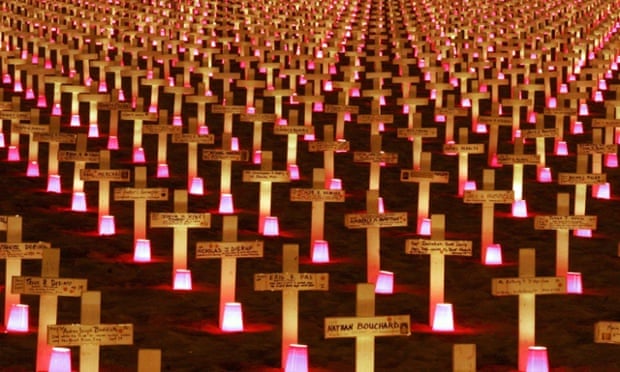
A candlelight vigil in 2007 at the Arlington West Memorial in Santa Barbara, California, to honour American soldiers killed in the Iraq war.
A candlelight vigil in 2007 at the Arlington West Memorial in Santa Barbara, California, to honour American soldiers killed in the Iraq war. Photograph: Sipa Press/REX

Yet this toleration was only skin-deep, and as Lord Acton had predicted, an intolerance of ethnic and cultural minorities would become the achilles heel of the nation-state. Indeed, the ethnic minority would replace the heretic (who had usually been protesting against the social order) as the object of resentment in the new nation-state. Thomas Jefferson, one of the leading proponents of the Enlightenment in the United States, instructed his secretary of war in 1807 that Native Americans were “backward peoples” who must either be “exterminated” or driven “beyond our reach” to the other side of the Mississippi “with the beasts of the forest”. The following year, Napoleon issued the “infamous decrees”, ordering the Jews of France to take French names, privatise their faith, and ensure that at least one in three marriages per family was with a gentile. Increasingly, as national feeling became a supreme value, Jews would come to be seen as rootless and cosmopolitan. In the late 19th century, there was an explosion of antisemitism in Europe, which undoubtedly drew upon centuries of Christian prejudice, but gave it a scientific rationale, claiming that Jews did not fit the biological and genetic profile of the Volk, and should be eliminated from the body politic as modern medicine cut out a cancer.

When secularisation was implemented in the developing world, it was experienced as a profound disruption – just as it had originally been in Europe. Because it usually came with colonial rule, it was seen as a foreign import and rejected as profoundly unnatural. In almost every region of the world where secular governments have been established with a goal of separating religion and politics, a counter-cultural movement has developed in response, determined to bring religion back into public life. What we call “fundamentalism” has always existed in a symbiotic relationship with a secularisation that is experienced as cruel, violent and invasive. All too often an aggressive secularism has pushed religion into a violent riposte. Every fundamentalist movement that I have studied in Judaism, Christianity and Islam is rooted in a profound fear of annihilation, convinced that the liberal or secular establishment is determined to destroy their way of life. This has been tragically apparent in the Middle East.

Very often modernising rulers have embodied secularism at its very worst and have made it unpalatable to their subjects. Mustafa Kemal Ataturk, who founded the secular republic of Turkey in 1918, is often admired in the west as an enlightened Muslim leader, but for many in the Middle East he epitomised the cruelty of secular nationalism. He hated Islam, describing it as a “putrefied corpse”, and suppressed it in Turkey by outlawing the Sufi orders and seizing their properties, closing down the madrasas and appropriating their income. He also abolished the beloved institution of the caliphate, which had long been a dead-letter politically but which symbolised a link with the Prophet. For groups such as al-Qaida and Isis, reversing this decision has become a paramount goal.

Ataturk also continued the policy of ethnic cleansing that had been initiated by the last Ottoman sultans; in an attempt to control the rising commercial classes, they systematically deported the Armenian and Greek-speaking Christians, who comprised 90% of the bourgeoisie. The Young Turks, who seized power in 1909, espoused the antireligious positivism associated with August Comte and were also determined to create a purely Turkic state. During the first world war, approximately one million Armenians were slaughtered in the first genocide of the 20th century: men and youths were killed where they stood, while women, children and the elderly were driven into the desert where they were raped, shot, starved, poisoned, suffocated or burned to death. Clearly inspired by the new scientific racism, Mehmet Resid, known as the “execution governor”, regarded the Armenians as “dangerous microbes” in “the bosom of the Fatherland”. Ataturk completed this racial purge. For centuries Muslims and Christians had lived together on both sides of the Aegean; Ataturk partitioned the region, deporting Greek Christians living in what is now Turkey to Greece, while Turkish-speaking Muslims in Greece were sent the other way.

The fundamentalist reaction

Secularising rulers such as Ataturk often wanted their countries to look modern, that is, European. In Iran in 1928, Reza Shah Pahlavi issued the laws of uniformity of dress: his soldiers tore off women’s veils with bayonets and ripped them to pieces in the street. In 1935, the police were ordered to open fire on a crowd who had staged a peaceful demonstration against the dress laws in one of the holiest shrines of Iran, killing hundreds of unarmed civilians. Policies like this made veiling, which has no Qur’anic endorsement, an emblem of Islamic authenticity in many parts of the Muslim world.

Following the example of the French, Egyptian rulers secularised by disempowering and impoverishing the clergy. Modernisation had begun in the Ottoman period under the governor Muhammad Ali, who starved the Islamic clergy financially, taking away their tax-exempt status, confiscating the religiously endowed properties that were their principal source of income, and systematically robbing them of any shred of power. When the reforming army officer Jamal Abdul Nasser came to power in 1952, he changed tack and turned the clergy into state officials. For centuries, they had acted as a protective bulwark between the people and the systemic violence of the state. Now Egyptians came to despise them as government lackeys. This policy would ultimately backfire, because it deprived the general population of learned guidance that was aware of the complexity of the Islamic tradition. Self-appointed freelancers, whose knowledge of Islam was limited, would step into the breach, often to disastrous effect.

Many regard the west’s devotion to the separation of religion and politics as incompatible with democracy and freedom

If some Muslims today fight shy of secularism, it is not because they have been brainwashed by their faith but because they have often experienced efforts at secularisation in a particularly virulent form. Many regard the west’s devotion to the separation of religion and politics as incompatible with admired western ideals such as democracy and freedom. In 1992, a military coup in Algeria ousted a president who had promised democratic reforms, and imprisoned the leaders of the Islamic Salvation Front (FIS), which seemed certain to gain a majority in the forthcoming elections. Had the democratic process been thwarted in such an unconstitutional manner in Iran or Pakistan, there would have been worldwide outrage. But because an Islamic government had been blocked by the coup, there was jubilation in some quarters of the western press – as if this undemocratic action had instead made Algeria safe for democracy. In rather the same way, there was an almost audible sigh of relief in the west when the Muslim Brotherhood was ousted from power in Egypt last year. But there has been less attention to the violence of the secular military dictatorship that has replaced it, which has exceeded the abuses of the Mubarak regime.

After a bumpy beginning, secularism has undoubtedly been valuable to the west, but we would be wrong to regard it as a universal law. It emerged as a particular and unique feature of the historical process in Europe; it was an evolutionary adaptation to a very specific set of circumstances. In a different environment, modernity may well take other forms. Many secular thinkers now regard “religion” as inherently belligerent and intolerant, and an irrational, backward and violent “other” to the peaceable and humane liberal state – an attitude with an unfortunate echo of the colonialist view of indigenous peoples as hopelessly “primitive”, mired in their benighted religious beliefs. There are consequences to our failure to understand that our secularism, and its understanding of the role of religion, is exceptional. When secularisation has been applied by force, it has provoked a fundamentalist reaction – and history shows that fundamentalist movements which come under attack invariably grow even more extreme. The fruits of this error are on display across the Middle East: when we look with horror upon the travesty of Isis, we would be wise to acknowledge that its barbaric violence may be, at least in part, the offspring of policies guided by our disdain. •

• Karen Armstrong’s Fields of Blood: Religion and the History of Violence is published today by Bodley Head. She will be appearing on 11 October at the London Lit Weekend at Kings Place


Bookmarked at brandizzi Delicious' sharing tag and expanded by Delicious sharing tag expander.
29 Oct 10:57

Dinosaurs on Noah’s Ark?

Summary

Behind the animatronic Adams and sexpot Eves that attract visitors to the Creation Museum is a humorless Australian named Ken Ham…

Searching for the elusive answer to a persistent question concerning the seeming gullibility of my fellow Americans—namely, why did 42 percent of adults surveyed this spring by Gallup say they believe that God created humans in their present form less than 10,000 years ago?—I recently found myself in the office of Ken Ham, the born-again Barnum behind Kentucky’s $35 million Creation Museum, debating a separate but related question, one whose existence I had not previously recognized but which became for me a source of instant paleontological delight: How could dinosaurs have coexisted with other animals within the teeming confines of Noah’s Ark? Because, you see, Noah’s Ark, in Ken Ham’s understanding of the world, was crammed stem to stern with dinosaurs. The cleverest creationists don’t deny the historicity of dinosaurs; they simply argue that they were alive at the start of the Flood, which, by their calculation, occurred approximately 4,350 years ago. (What happened to the dinosaurs after the waters receded is another story.) One sign of Ham’s genius—and he is, at the very least, a marketing genius—is his ability to shape a conversation on his terms, which is why I heard myself arguing against the possibility of a dinosaur-laden ark, rather than arguing against the notion that the ark itself was an actual thing that existed. My argument, in case you were wondering, is that the Tyrannosauruses would have eaten the sheep. QED, right? Except, no. “Many dinosaurs,” Ham says, “were smaller than chickens.”

But let’s not get ahead of ourselves. In the beginning, God created the heavens and the Earth. A short while later, Ken Ham found 40 acres of pastureland in northern Kentucky on which to build a museum devoted to the ideology of “Young Earth” creationism, which holds that the world is 6,000 years old, and which represents for a subset of evangelical Christians not only the most convincing explanation for how our planet, and the humans who rule it in God’s name, came into being, but also a potent weapon in the struggle against homosexuality and other modern ailments. What I didn’t understand until I visited Ken Ham is that his museum, which is devoted to a literal, historical reading of the first book of the Bible, is in itself a forward operating base in the conservative war against legalized abortion, gay marriage, and the belief that man is at least partially responsible for climate change (the creationists’ retort being that God will not allow man to destroy a world that he created).

Ham is Australian—a rare sort of Australian, in that he is religiously devout and completely humorless—but he possesses a specifically American talent, one on display in mega-churches and theme parks across the country, for staging emotion-saturated high-tech spectacles. And so his museum is filled with buff animatronic Adams and sexpot Eves (plastic breasts covered by waterfalls of extremely healthy hair) and writhing snakes and flying dragons and dinosaurs much larger than the average chicken. The museum’s core argument is posted near the main entrance: “The Bible is authoritative, without error, and inspired by God.” Its other message to the Christian tourist market is left unstated: the Book of Genesis, in addition to being the source of holiness and cosmic truth, is also a source of Epcot-quality fun.

Perhaps creationism might signal a preference for traditional social order, and not a rejection of science.

“Why shouldn’t we as Christians use the best technology we can?” Ham asked me, though I had not questioned Christians’ right to deploy Disney-level engineering in their museums. Ham is not only a creationist but an oppositionist. He knows that his ministry, Answers in Genesis, draws the scorn of sophisticates, and so he takes special delight in portraying himself as a rational Daniel in the lions’ den of militant secularism, the lions being the media and the scientific establishment and the ghost of Clarence Darrow and millions of liberal and even not so liberal Christians and pretty much anyone who disagrees with Ken Ham.

My sympathies, by the way, do not lie entirely where you might think. I find atheism dismaying, for Updikean reasons (“Where was the ingenuity, the ambiguity … of saying that the universe just happened to happen and that when we’re dead we’re dead?”), and because, in the words of a former chief rabbi of Great Britain, Jonathan Sacks, it is religion, not science, that “answers three questions that every reflective person must ask. Who am I? Why am I here? How then shall I live?” Like Ken Ham, I am appalled by the idea, as expressed by Richard Dawkins, that “the universe we observe has precisely the properties we should expect if there is, at bottom, no design, no purpose, no evil, and no good, nothing but blind, pitiless indifference.”

Luckily, I belong to a tradition that, in addition to creating the Bible (one of Ham’s colleagues was nonplussed to learn that I could recite passages of Genesis in the mother tongue), came to understand, per Maimonides, that the first chapters of Genesis contain stories meant to advance an understanding of universal, ethical monotheism, rather than scientific explanations for creation. A faith that demands uncompromising fealty to a literal reading of its origin story seems to me a perilously brittle faith.

Many of the Creation Museum’s exhibits are devoted to refuting the body of scientific knowledge accumulated over the past two centuries concerning the formation and development of our planet and its living beings. A full-size animatronic Noah, speaking English in a Count Chocula accent, answers questions about dinosaur husbandry. A placard alongside a mounted dinosaur bone poses a Smithsonian-worthy challenge: “Can you tell how old this fossil is? Fossils don’t come with tags on them that tell us how old they are. We have to study the clues we find to try to figure out their ages.” But then the next placards tell us that the answers are found exclusively in the Bible. “The Bible says God created everything in 6 days. He created people and land animals on Day 6,” and “Adam was the first man. He was created on Day 6. By adding up the ages of Adam, his sons, their sons, and so on, we see that the Earth is about 6,000 years old.”

The final sign reads: “A flood explains why we find billions of dead things, buried in rock layers, laid down by water, all over the Earth. Can you think of an event in the Bible where tons and tons of water flooded the whole Earth?” I toured the museum trailing a family of five from Ohio. The mother read the question to her three sons. They answered correctly. “Why did God send a flood?” The oldest boy answered: “To kill the wicked people.” She then asked: “Will he do it again?” No one answered. “God only punishes the unsaved,” she said. It was at this point that I should have introduced myself.

Instead I followed them to another exhibit, this one quite unlike those devoted to dinosaur apologetics. This exhibit presents with blunt force the case against godlessness, depicting the lives of modern families that have made the tragic error of rejecting the literal truth of God’s word. “In this 7 minute video,” one introductory placard reads, “the boy in the background is ‘on a killing spree’ on his video game. His older brother is looking at internet pornography and has a bag of drugs.” The mother said, “You have to listen to your parents.”

The Creation Museum is not a museum so much as it is a 3-D hellfire sermon with a food court.

Sitting with Ken Ham and Terry Mortenson, a historian of geology and a theologian on staff, I asked why it is so important to convince their visitors—more than 2 million since the museum opened seven years ago—that Genesis is a book of history. “There’s a slippery slope in regard to authority,” Ham replied. “If you say that the history in Genesis is not true, then you can just take man’s ideas as true. When you go outside of Scripture, why shouldn’t you just reinterpret what marriage means? So our emphasis is on the slippery slope regarding authority.”

Did he ever wake up in the morning and have doubts about the truth of the Bible?, I wondered. “No,” he said. “Show me another book in the world that claims to be the word of one who knows everything, who has always been there, that tells us the origin of time, matter, space, the origin of the Earth, the origin of water, the origin of the sun, moon, and stars, the origin of dry land, the origin of plants, the origin of animals, the origin of marriage, of death and sin,” he said.

Lord of the Rings?,” I answered, tepidly.

“Well, there’s no book so specific as the Bible,” he said.

Mortenson stayed on the subject of gay marriage. “The homosexual issue flows from this. Genesis says that God created marriage between one man and one woman. He didn’t create it between two men, or two women, or two men and one woman, or three men and one woman, or two women and one man, or three women and one man. If other parts of Genesis aren’t true, then how could this idea of marriage be true? If there were no Adam and Eve and we’re all evolved from apelike ancestors and there’s homosexuality in the animal world and if Genesis is mythology, then you can justify any behavior you want.” I found this preoccupation with gay marriage significant, because it suggests that perhaps at least some of those who profess a belief in creationism might simply be signaling their preference for a more traditional social order, rather than a rejection of modern science and free intellectual inquiry.

As I said goodbye, the co-founder of the museum, Mark Looy, brought me a shopping bag filled with books making the case for Young Earth creationism. “Happy early Hanukkah,” he said. As I left the museum, I saw the same family I had been trailing in the exhibit. I introduced myself to the mother. “What did you think of the museum?,” I asked. “It explains everything,” she said.

30 Sep 15:05

Too all of those who took these pictures: thank you! (from...


Too all of those who took these pictures: thank you! (from G1.com.br)

30 Sep 15:05

bunnyfood: (via reblog-gif:gifini)

30 Sep 15:04

Think You’re a Fraud? Think Again.

Meaghan Lewis is an imposter, and so are you. If you’re afflicted with Imposter Syndrome, as 70% of successful people are, you might feel like a fraud because your accomplishments are inadequate. Many people with Imposter Syndrome attribute their success to luck or timing, instead of their own hard work. They report “waiting to be found out.”

Ironically, imposters are the ones who are most likely to be high achievers.

In March 2014, ThoughtWorker and Quality Assurance Analyst Meaghan Lewis presented on the Imposter Syndrome and how it affects women of color at the National Society of Black Engineers. While our fellow imposters come from different races, genders, and socioeconomic classes, it does disproportionately affect women of color, especially in a male-driven industry like technology.

Meghan Lewis

I sat down with Meaghan  to discuss the phenomenon and ways to overcome the false feeling of being a fake.

Fiona Lee: What inspired you to give your talk on the Imposter Syndrome?

Meaghan Lewis: I never felt like I was good enough growing up. In school, I didn’t feel like I was being supported at times. I really just wanted to be good at whatever I applied myself to. At a time when I just wanted to fit in, I somehow felt different and that I wasn’t quite good enough. I discovered a few years back that there is a term for this feeling: the Imposter Syndrome.

It was important to open a discussion up with women and minority groups who felt the symptoms of the Imposter Syndrome. Some of us begin to feel like “imposters” because we don’t happen to look like our peers and colleagues. 

FL: Do you think the Imposter Syndrome disproportionately affects women and minorities?

ML: I would say so. While it’s certainly not something that applies to any one gender, traditionally it’s held women back more than men. Just to be clear: anyone can have these feelings of inadequacy, but I think it’s safe to say that women have had different challenges than men. Minority groups have been affected in the same way.

FL: What are some of the specific challenges women and minorities face?

ML:  The way men and women are viewed differently. For example, women are sometimes referred to as being “bossy,” whereas men may not feel the same sort of push-back when they try to demonstrate leadership qualities. The confidence gap starts at a very early age. I also believe it is something that can be combated even before kids start elementary school by showing girls that they are empowered and that they do have a voice.

FL: How do people internalize the effects of the Imposter Syndrome?

ML: The feelings I was discussing earlier tend to pop up when you come across new and unfamiliar situations. For example a new job or promotion, where you’re not entirely sure how to respond to new responsibilities can cause anxiety. You may start to feel like people are looking up to you and expecting a lot out of you, and you’re not sure that you can live up to these perceived expectations. I felt particularly impacted by Imposter Syndrome in school, where I was the only female in the engineering program. I began to feel like the men in my program were smarter and more on the ball than I was, which was completely illogical.

FL: How would you bridge this confidence gap?

ML: One thing that really helps is finding support systems inside your community. For example, a group of friends or people that you trust to share your feelings with. Just talking and getting it out there helps immensely. A big part of the Imposter Syndrome is that it takes place on an internal level and you keep these really negative thoughts to yourself. When you start talking to others about Imposter Syndrome, you can begin to share methods used to overcome it.

Having groups of people you can confide in is the key to bridging the confidence gap and helping to grow as an individual. You can find this alliance in friends, colleagues, meetup groups, or conferences. Whatever feels most comfortable to you. Just a couple weeks ago, ThoughtWorks hosted a breakfast for women of color in tech. We discussed topics that have affected us in their own ways. For example, one topic was 'How you want to be perceived in the workplace and if you are really perceived that way or not'. It was great for us to know other women out there feel the same way and interesting to see how they handled this challenge.

It’s also important to stress the power of positive thinking. There are always going to be times when you’re uncertain and there are always going to be times when you think you’re going to fail. It’s how you react to these feelings that will ultimately impact the outcome.

Check out Meaghan's presentation on the Imposter Syndrome here.

Join Us

If you're really bright, passionate about world-changing software and want to do something amazing, join us.

Bookmarked at brandizzi Delicious' sharing tag and expanded by Delicious sharing tag expander.
30 Sep 15:02

JS Parse and Execution Time

At Velocity NY, Daniel Espeset of Etsy gave a great talk about how Etsy profiles their JavaScript parse and execution time. Even better, after the talk, they released the tool on GitHub.

Daniel shared a few examples in his deck, but I couldn’t wait to take Daniel’s tool and fire it up on a bunch of random browsers and devices that I have sitting around.

For this test, I decided to profile just jQuery 2.1.1, which weighs in at 88kb when minimized. jQuery was selected for its popularity, not because it’s the worst offender. There are many libraries much worse (hey there Angular and your 120kb payload). The results above are based on the median times taken from 20 tests per browser/device combination.

The list of tested devices isn’t exhaustive by any means—I just took some of the ones I have sitting around to try and get a picture of how much parse and execution time would vary.

Parse and execution times of minimized jQuery 2.1.1
Device Browser Median Parse Median Execution Median Total
Blackberry 9650 Default, BB6 171ms 554ms 725ms
UMX U670C Android 2.3.6 Browser 168ms 484ms 652ms
Galaxy S3 Chrome 32 39ms 297ms 336ms
Galaxy S3 UC 8.6 45ms 215ms 260ms
Galaxy S3 Dolphin 10 2ms 222ms 224ms
Kindle Touch Kindle 3.0+ 63ms 132ms 195ms
Geeksphone Peak Firefox 25 51ms 109ms 160ms
Kindle Fire Silk 3.17 16ms 139ms 155ms
Lumia 520 IE10 97ms 56ms 153ms
Galaxy S3 Android 4.1.1 Browser 3ms 125ms 128ms
Kindle Paperwhite Kindle 3.0+ 43ms 71ms 114ms
Lumia 920 IE10 70ms 37ms 107ms
Droid X Android 2.3.4 Browser 6ms 96ms 102ms
Nexus 5 Chrome 37 11ms 81ms 92ms
iPod Touch iOS 6 26ms 37ms 63ms
Nexus 5 Firefox 32 20ms 41ms 61ms
iPad Mini iOS6 16ms 30ms 46ms
Macbook Air (2014) Chrome 37 5ms 29ms 34ms
Macbook Air (2014) Opera 9.8 14ms 5ms 19ms
iPhone 5s iOS 7 2ms 16ms 18ms
Macbook Air (2014) Firefox 31 4ms 10ms 14ms
iPad (4th Gen) iOS 7 1ms 13ms 14ms
iPhone 5s Chrome 37 2ms 8ms 10ms
Macbook Air (2014) Safari 7 1ms 4ms 5ms

As you can see from the table above, even in this small sample size the parsing and execution times varied dramatically from device to device and browser to browser. On powerful devices, like my Macbook Air (2014), parse and execution time was negligible. Powerful mobile devices like the iPhone 5s also fared very well.

But as soon as you moved away from the latest and greatest top-end devices, the ugly truth of JS parse and execution time started to rear its head.

On a Blackberry 9650 (running BB6), the combined time to parse and execute jQuery was a whopping 725ms. My UMX running Android 2.3.6 took 652ms. Before you laugh off this little device running the 2.3.6 browser, it’s worth mentioning I bought this a month ago, brand new. It’s a device actively being sold by a few prepaid networks.

Another interesting note was how significant the impact of hardware has on the timing. The Lumia 520, despite running the same browser as the 920, had a median parse and execution time that was 46% slower than the 920. The Kindle Touch, despite running the same browser as the Paperwhite, was 71% slower than it’s more powerful replacement. How powerful the device was, not just the browser, had a large impact.

This is notable because we’re seeing companies such as Mozilla and Google targeting emerging markets with affordable, low-powered devices that otherwise run modern browsers. Those markets are going to dominate internet growth over the next few years, and affordability is a more necessary feature than a souped up device.

In addition, as the cost of technology cheapens, we’re going to continue seeing an incredibly diverse set of connected devices. With endless new form factors being released (even the Android Wear watches quickly got a Chromium based browser), the adage about not knowing where our sites will end up has never been more true.

The truly frightening thing about these parse and execution times is that this is for the latest version of jQuery, and only the latest version of jQuery. No older versions. No additional plugins or frameworks. According to the latest run of HTTP Archive, the median JS transfer size is 230kb and this test includes just a fraction of that size. I’m not even asking jQuery to actually do anything. Basically, I’m lobbing the browsers a softball here—these are best case results.

This re-affirms what many have been arguing for some time: reducing your dependency on JS is not healthy merely for the minor percentage of people who have JS disabled—it improves the experience for everyone. When anything over 100ms stops feeling instantaneous and anything over 1000ms breaks the users flow, taking 700ms to parse your JavaScript cripples the user experience before it really has a chance to get started.

So what’s a web developer to do?

  1. Use less JavaScript. This is the simple one. Anything you can offload onto HTML or CSS, do it. JavaScript is fun and awesome but it’s also the most brittle layer of the web stack and, as we’ve seen, can seriously impact performance.

  2. Render on the server If you’re using a client-side MVC framework, make sure you pre-render on the server. If you build a client-side MVC framework and you’re not ensuring those templates can easily be rendered on the server as well, you’re being irresponsible. That’s a bug. A bug that impacts performance, stability and reach.

  3. Defer all the scripts. Defer every bit of JavaScript that you can. Get it out of the critical path. When it makes sense, take steps to defer the parsing as well. Google had a great post a few years back about how they reduced startup latency for Gmail. One of the things they did was initially comment out blocks of JavaScript so that it wouldn’t be parsed during page load. The result was a 10x reduction in startup latency. That number is probably different on today’s devices, but the approach still stands.

  4. Cut the mustard. I’m a big fan of “cutting the mustard”, an approach made popular by the BBC. This doesn’t solve the problem of low-end devices with modern browsers, but it will make a better experience for people using less capable browsers. Better yet, by consciously deciding not to overwhelm less capable browsers with excess scripts you not only provide a better experience for those users, but you reduce the need for extra polyfills and frameworks for modern browsers as well. On one recent project where we did this, the entire JavaScript for the site was about 43% of the size of jQuery alone!

There are certainly cases to be made for JS libraries, client-side MVC frameworks, and the like, but providing a quality, performant experience across a variety of devices and browsers requires that we take special care to ensure that the initial rendering is not reliant on them. Frameworks and libraries should be carefully considered additions, not the default.

When you consider the combination of weight, parse time and execution time, it becomes pretty clear that optimizing your JS and reducing your site’s reliance on it is one of the most impactful optimizations you can make.

Bookmarked at brandizzi Delicious' sharing tag and expanded by Delicious sharing tag expander.
30 Sep 13:14

yesawwwh: unamusedsloth: Even on an escalator. [Video] WHY...


yesawwwh:

unamusedsloth:

Even on an escalator. [Video]

WHY THE HELL DIDNT I THINK OF THIS.

30 Sep 12:33

Palestra e debate “Por que o Brasil cresce pouco? “

30 de setembro de 2014 por mansueto

Aqueles que moram em Brasilia poderão participar de um debate interessante para o lançamento do livro do economista Marcos Mendes: “Por que o Brasil cresce pouco?”.

O evento será será no dia 06 de outubro e, além da palestra do próprio autor, haverá um debate com os economistas Raul Velloso, Marcos Lisboa e Samuel Pessoa. Para tornar o evento ainda mais interessante a audiência poderá participar do debate. Abaixo os detalhes do evento e, por favor, compareçam e participem do debate.

Palestrante: Marcos Mendes, doutor em economia pela USP, Consultor do Senado e autor da obra Por que o Brasil cresce pouco? Editora Elsevier.

Abertura: Presidente do TCU, Ministro Augusto Nardes

Debatedores confirmados: Dr. Marcos Lisboa, doutor em economia pela Penn University, Dr. Raul Velloso, doutor em economia pela Yale University e Dr. Samuel Pessôa, doutor em economia pela USP.

Data: 06.10.2014 (segunda-feira)
Abertura: 14 horas
Local: auditório do edifício sede do TCU
Público alvo: servidores do TCU e do Senado/Câmara dos Deputados e demais convidados.

Curtir isso:

Curtir Carregando...

Relacionado

30 Sep 12:19

n-nightingale: Working in customer service


n-nightingale:

Working in customer service

29 Sep 19:00

Levy

by Daniel Lafayette

essa é pra você, Levy

levy-fidelix

29 Sep 18:37

Mantis shrimps can see cancer, and scientists have now created a camera that does the same

Adam Victor Brandizzi

Fico pensando quem foi que saiu pegando os bichos no aquário um por um para testar isso.
. . .
. . .
. . .

Obviamente, não estou falando sério.

Inspired by the eyes of mantis shrimps, Australian researchers have created sensors that can detect cancer and visualise brain activity.

shutterstock_150666980_web

Image: Jung Hsuan/Shutterstock

Scientists from the University of Queensland in Australia have discovered that mantis shrimp have an incredibly useful ability - the marine creatures are able to see a variety of cancers inside our bodies. And they've now replicated that ability in a camera that could eventually be put into a smartphone.

Mantis shrimp can see cancer, and the activity of our neurons, because they have unique eyes, known as compound eyes. This type of eye is superbly tuned to detect polarised light - a type of light that reflects differently off different types of tissue, including cancerous or healthy tissue.

“Humans can’t see this, but a mantis shrimp could walk up to it and hit it,” said Justin Marshall from the Queensland Brain Institute at the University of Queensland in a press release.

“We see colour with hues and shades, and objects that contrast – a red apple in a green tree for example – but our research is revealing a number of animals that use polarised light to detect and discriminate between objects.”

His team have now worked with international collaborators to create a camera that can replicate this ability - eventually they hope they could lead to smartphone cameras that would allow people to scan their body for cancers at home.

“The camera that we’ve developed in close collaboration with US and UK scientists shoots video and could provide immediate feedback on detecting cancer and monitoring the activity of exposed nerve cells,” said Marshall. 

They did this by revealing that the compound eye of the mantis shrimp contains groups of photocells called ommatidia. Each of these ommatidium has thin micro-villi that can filter polarised light, as well as light-sensitive receptors.

To mimic this in the camera, the scientists used aluminium nanowires to replicate the polarisation-filtering microvilli, and placed these on top of photodiodes, which convert light into electrical current. 

“It converts the invisible messages into colours that our visual system is comfortable with," said Marshall.

While current imaging systems already use polarised light to detect cancer, there are limitations to the size of tumours they can detect, and they require large equipment. By replicating the eyes of mantis shrimp, the scientists hope to improve our technology to the point where it could be included into a smartphone. This would reduce the need for more invasive cancer detection methods, such as biopsies, and could help detect cancer earlier.

Impressively, the sensors developed by the University of Queensland team have already been used to “see” the activity of neurons inside a brain in real time, as well as providing early diagnosis of cancerous tissues in mice.

Their research is published in Proceedings of the IEEE.

Bookmarked at brandizzi Delicious' sharing tag and expanded by Delicious sharing tag expander.
29 Sep 18:22

Western Political Charters Throughout History, Summarized

by Mallory Ortberg
Adam Victor Brandizzi

"Perhaps we were a bit too ambitious."
Haha

The Eternal Peace, 532

"This should do it."

The Fifty-Year Peace, 562

"Perhaps we were a bit too ambitious."

Magna Carta, 1215

"One man in charge of everything? That's absurd and despotic. There should be twenty-five men in charge of everything."

Golden Bull, 1222

"You don't have to listen to the king if you don't really want to."

Barons' Letter, 1301

"The Pope can't have Scotland."
"Wait. Better not send it after all. Might upset him."

Edict of Worms, 1521

"Nobody talk to Martin."

Read more Western Political Charters Throughout History, Summarized at The Toast.

29 Sep 18:20

Quote For The Day

by Andrew Sullivan

“Some would say, it is not fair or it is unjust to deny same-sex partners the civil “right” to marry. In reality, it is not unjust at all because marriage and same-sex unions are essentially different realities. Justice actually requires society to maintain its long standing definition of marriage. To uphold God’s intent for marriage, in which sexual relations have their proper and exclusive place, is not to offend the dignity of homosexual persons. Of course, a central issue with many same-sex partners are the social benefits that are received through marriage … In trying to think of an analogous situation that could cause a pastor to deny Communion, one might think of an involved Catholic parishioner who was then ordained as a Protestant minister. They would likely be acting according to their sense of conscience and they would probably be a very good person, but they would have broken their communion with the Catholic Church in a very fundamental way,” – Bishop Michael Warfel of Montana, explaining why he stripped an elderly gay couple of their communion after they got a civil marriage license.

My italics. One wonders how a Protestant minister would be able to attend mass regularly at a local Catholic church as well. The hierarchs had better find a better analogy than that – and I wonder if they actually can. Heterosexuals can privately commit sodomy all the time within a public marriage and never arouse any suspicion of scandal; devout gays who simply want to protect themselves in civil marriage – and who are in their sixties and seventies – have no such lee-way.

Which is to say that the church is no longer penalizing heterosexual parishioners for sin; they are uniquely penalizing homosexual parishioners for love. How much longer can this specific discrimination and persecution of a minority be sustained without wider and wider revolt? How many of the next generation will find it possible to belong to a church which singles out a small minority for persecution in this way?


29 Sep 12:32

Status: apelando para este vídeo para relaxar. (Mas agora tá...


Status: apelando para este vídeo para relaxar. (Mas agora tá tudo bem)

29 Sep 12:32

Cristovam vai propor liberação da maconha para uso medicinal

Pedro França/Ag. Senado

“Já tenho argumentos suficientes para ver que é preciso, sim, aproveitar o poder medicinal que essa erva tem", diz Cristovam

O senador Cristovam Buarque (PDT-DF), relator da sugestão popular que propõe regulamentar o uso da maconha, afirmou que, concluídas cinco audiências públicas sobre o assunto, já tem argumentos para admitir o uso medicinal da erva. Cristovam, no entanto, disse que ainda não chegou a uma conclusão sobre a autorização para o uso recreativo.

O debate sobre a legalização do uso da maconha para fins medicinais e recreativos vem sendo feito na Comissão de Direitos Humanos (CDH) e é fruto de uma sugestão popular apresentada por meio do Portal e-Cidadania que recebeu mais de 20 mil assinaturas de apoio. Para Cristovam, uma coisa já ficou clara com os debates de até agora.

“A proposta que aqui chegou trazia a discussão em torno do uso para fins recreativos e para fins medicinais. Com o debate feito até aqui, eu já tenho argumentos suficientes para ver que é preciso, sim, aproveitar o poder medicinal que essa erva tem. Não dá para deixar tanta gente sofrendo por causa de um preconceito sobre o uso de uma droga”, afirmou o senador.

O uso medicinal, entretanto, levanta uma série de questões que ainda precisam ser esclarecidas, segundo o relator da proposta. “Vai ser produzida em uma farmácia, como o remédio que se toma para dor, que veio do ópio, que é proibido como droga, mas que é usado como matéria-prima? E aqueles que usam maconha para se proteger durante os tratamentos de quimioterapia, que têm de tomar o chá? A gente vai deixá-los produzir ou não? Mas, se deixá-los produzir, como é que vai limitar o tamanho?”

Cristovam explicou que a CDH vai fazer mais duas audiências públicas. Aí ele terá condições de apresentar o relatório sobre a sugestão de regulamentação da maconha. “Eu, hoje, não tenho posição sobre se a regulamentação é um caminho melhor ou pior do que o proibitismo de hoje. Mas tenho uma conclusão, sim: o proibitismo não está funcionando.

Pesquisadores, membros do governo, Ministério Público, Judiciário, polícia, representantes da ONU, psicólogos e psiquiatras, além de dezenas de pessoas que tiveram oportunidade de usar da palavra, participaram dos debates até o momento.

Nas reuniões já realizadas, apesar da falta de consenso sobre a liberação da droga para uso recreativo, houve forte apoio à liberação da maconha para fins medicinais. O uso terapêutico de substâncias como o canabidiol (CBD) tem se mostrado eficiente em pacientes que sofrem de condições como epilepsia grave, esclerose múltipla, esquizofrenia e mal de Parkinson.

Leia ainda: Senado estuda proposta de legalização da maconha

Mais sobre drogas

Assine a Revista Congresso em Foco

Bookmarked at brandizzi Delicious' sharing tag and expanded by Delicious sharing tag expander.
29 Sep 12:31

Why Did Docker Catch on Quickly and Why is it so Interesting?

Docker has rapidly become “the new thing” for computing in 2014. Why did that happen so quickly, and how has a Linux application container become so popular? Broadly, I think Docker is a great example of how to build a viral, developer-oriented product.

  1. A developer can figure out what Docker does, install it and do something useful with it in 15 minutes. I first heard this “rule” from Marten Mickos when talking about why MySQL was so successful: low friction to try it out, a simple concept, and useful functionality.
  2. Docker is a great name and it has a cute logo It resonates with what the product does and is easy to remember. Engineering-oriented founders sometimes seem to think that names and logos don’t matter if the product is good enough, but a great name can turbocharge adoption and build a valuable brand.
  3. The Docker product came from a non-threatening source, a small startup (DotCloud) that was able to broadly partner across the whole industry. If the same product had come from an established enterprise technology player, there would have been much more push-back from that player’s competitors, and the market would probably have split into several competing technologies.

The rapid adoption rate took everyone by surprise, and now it’s too late to build a competitor. So everyone is having to cooperate around a single container solution. This is great for the developers and end users, but means that several platform as a service (PaaS) vendors have lost control of their destiny somewhat as Docker did an end-run around their strategy.

Even if you don’t know or care what Docker is, I think it offers a very relevant playbook for how to build a developer-led business model.

Get ubiquity first, become the category leader, then convert that into business value and revenue opportunities later.

That leaves the remaining question of, what does Docker do that is interesting, and who might it compete with? I have four separate answers:

  1. Portability: Docker is a portable container that packages any Linux application or service. A package that is created and tested on a developer’s laptop using any language or framework can run unmodified on any public cloud, any private cloud or a bare-metal server. This is a similar benefit to the Java “write once, run anyware” idea but is more robust and is generalized to “build anything once, run anywhere”.
  2. Speed: Start-up time for a container is around a second. Public cloud virtual machines (VMs) take from tens of seconds to several minutes because they boot a full operating system every time, and booting a VM on a laptop can take minutes. To counter this advantage, VMware has just announced (but not shipped) a technology called Fargo that clones an existing VM in a second or so.
  3. Configuration: The Docker container captures the exact configuration of a version of an application. To upgrade the application in production, the container is usually replaced with a new version, which takes a few seconds. The layers of components that go into the configuration are kept separate and can be inspected and rebuilt easily. This changes configuration management to be largely a build- time activity, so for example a Chef recipe might be used to build a Docker container, but at runtime there is no need to use the Chef services to create many identical copies of a Docker container. Used in this way, Docker removes much of the need to use tools like Cfengine, Puppet, Chef, Ansible or Saltstack.
  4. Docker Hub App-store: Docker containers are shared in a public registry at hub.docker.com. This is organized similarly to Github, and already contains tens of thousands of containers. Because containers are very portable, this provides a very useful cross platform “app store” for applications and component micro-services that can be assembled into applications. Other attempts to build “app stores” are tied to a specific platform (e.g. the AWS Marketplace or Ubuntu’s Juju Charms) or tool (e.g. the Chef Supermarket) and it seems likely that Docker Hub will end up as a far bigger source of off-the-shelf software components, and monetization opportunities.

One reason Docker is interesting is that all four answers are each individually useful, but can be used in combination. This causes cross-pollination of ideas and patterns. For example, someone might start using Docker because they like the speed and portability, but find that they end up adopting the configuration and Docker hub patterns as well.

The Docker technology is still fairly new; work is underway to add missing features, and a large ecosystem of related projects and companies is forming around it. There’s a lot of interest in the technology from the VC community, as we try to figure out whom to fund to do what, and how the story will play out in the longer term.

Adrian Cockcroft is a technology fellow at Battery Ventures.

Feature image via Flickr Creative Commons.

Bookmarked at brandizzi Delicious' sharing tag and expanded by Delicious sharing tag expander.
29 Sep 12:21

Dali Laser

Dali Laser

Submitted by: ToolBee

Tagged: gifs , lasers , mindwarp , dali lama
29 Sep 12:18

Photo ID

by Greg Ross

https://commons.wikimedia.org/wiki/File:44_Bill_Clinton_3x4.jpg

This is the official White House photograph of Bill Clinton. It was taken on Jan. 1, 1993. But Clinton wasn’t inaugurated until Jan. 20. Can this be said, then, to be a photo of President Bill Clinton?

To get an answer to this cosmic question, a reporter called the chairman of the New York University philosophy department, Roy Sorensen. Sorensen said yes.

“Think of it this way,” he said. “A photograph of Clinton does not need to be a photograph of the full spatial extent of his body. Just a representative part of his body will do. The same applies for temporal parts; a photograph of one stage of Clinton is a photograph of Clinton. Even a baby picture of Clinton is a picture of President Clinton.”

(From Sorensen’s A Brief History of the Paradox, 2005.)

29 Sep 12:04

There’ll Always Be an England

by Greg Ross

From the Daily Telegraph obituary of British Army major Digby Tatham-Warter (1917–1993):

Digby Tatham-Warter, the former company commander, 2nd Battalion, Parachute Regiment, who has died aged 75, was celebrated for leading a bayonet charge at Arnhem in September 1944, sporting an old bowler hat and a tattered umbrella.

During the long, bitter conflict Tatham-Warter strolled around nonchalantly during the heaviest fire. The padre (Fr Egan) recalled that, while he was trying to make his way to visit some wounded in the cellars and had taken temporary shelter from enemy fire, Tatham-Warter came up to him, and said: ‘Don’t worry about the bullets: I’ve got an umbrella.’

Having escorted the padre under his brolly, Tatham-Warter continued visiting the men who were holding the perimeter defences. ‘That thing won’t do you much good,’ commented one of his fellow officers, to which Tatham-Warter replied: ‘But what if it rains?’

27 Sep 04:18

You really can’t unsee this. #9gag


You really can’t unsee this. #9gag

27 Sep 02:01

victongai: A Cup of Salt Tears Victo Ngai Besides the fact that...


Final


同河童を釣るの法

victongai:

A Cup of Salt Tears

Victo Ngai

Besides the fact that Irene Gallo being one of the best ADs, I am always excited to work onTor.com short story art there’s no way to tell what kind of subject matter will come along. 

This piece accompanies Isabel Yep’s novelette A cup of Salt Tears - an eerie yet beautiful story. You can read it here. The audiobook of IQ84 by Murakami Haruki accompanied the working of this piece, it was quite the perfect track. 

Makino’s mother taught her caution, showed her how to carve her name into cucumbers, and insisted that she never let a kappa touch her. But when she grows up and her husband Tetsuya falls deathly ill, a kappa that claims to know her comes calling with a barbed promise. “A Cup of Salt Tears” is a dark fantasy leaning towards horror that asks how much someone should sacrifice for the one she loves.” 

While I was doing research for this project, I learnt a lot of interesting facts about Kappa (河童 ”river-child”), including their obsession with shirikodama (尻子玉 "Small Anal Ball"). It’s believed that kappa lure their victims into the water and gain power by taking their shirikodama, a mythical ball said to contain their soul which is located inside the anus. Check out the amazing manga by Hokusai titled 同河童を釣るの法 (“How to fish for Kappa”).

26 Sep 18:25

Baiana é finalista em concurso de Harvard

  • Luiz Tito | Ag. A TARDE | 17.9.2014

    Com os pais, Geórgia Gabriela comemora seleção do projeto que visa combate à endometriose

"Eu já quebrei paradigmas, pois sou negra, nordestina e de uma cidade do interior. Mesmo assim consegui ficar entre os finalistas desse concurso fora do meu país. Para mim, já é uma vitória". A frase é da jovem de Feira de Santana (a 109 km da capital) Geórgia Gabriela da Silva Sampaio, 18, que participa de um concurso da Universidade de Harvard, nos Estados Unidos, junto com estudantes do mundo todo.

Foram 40 trabalhos inscritos,  16 do Brasil, sendo o dela o único da Bahia. Uma votação na internet escolheu os 15 melhores trabalhos como finalistas, o de Geórgia foi o quinto mais votado. "Foi difícil chegar até aqui, pois os trabalhos podem ser feitos em grupo ou individualmente. Estou concorrendo com alguns grupos e isso não deixa de ser um ponto a menos para mim, que estou sozinha. Mas creio que chego lá", diz a estudante.

Geórgia sonha  cursar engenharia em uma universidade no exterior. O trabalho selecionado para o concurso é a criação de um kit para diagnosticar de forma rápida e barata a endometriose, doença que atinge nada menos que seis milhões de mulheres no Brasil e 170 milhões no mundo. A ideia surgiu com a experiência obtida com uma tia, que passou pelo problema.

"Comecei a pesquisar e notei que a falta de um diagnostico precoce é que aumenta o risco da doença e de outros estágios dela. Como o sintoma principal é a dor durante a menstruação, as mulheres passam muito tempo sem procurar tratamento", disse. "A média de atraso na busca de tratamento é sete anos. Enquanto isso, a endometriose avança e pode atingir outros órgãos. O tratamento e o diagnóstico são muito caros", explica.

De família humilde, a estudante conta que desenvolveu o trabalho pensando nas pessoas com menor poder aquisitivo. Dessa forma, investiu num kit que pudesse ser barato e acessível aos serviços públicos.

Questão social

"É uma questão social mesmo. Muitas mulheres não conseguem pagar o tratamento e correm risco de piorar a situação. O objetivo é fazer algo que possa dar a elas o direito a um diagnóstico e um tratamento adequado", frisa Geórgia.

Filha do comerciante Jorge Luiz dos Santos Sampaio e da cabeleireira Sidney da Silva Sampaio, a estudante sempre se destacou nos estudos e, por esse motivo,  era sempre convidada a participar de competições estudantis.

"Ela sempre se destacou. Em toda escola que ela passava era elogiada pelos professores. Até que fez um teste para um boa escola aqui e foi selecionada entre os primeiros candidatos, ganhando uma bolsa de estudos. Temos  orgulho do caminho que está seguindo", contou a mãe.

Sem conter a alegria, Jorge Luiz lembra que a filha foi aprovada em quatro vestibulares, nas universidades Estadual de Feira de Santana (Uefs) e Federal do Rio de Janeiro (UFRJ).

"Ela não quis cursar, pois  o sonho dela é estudar fora do Brasil. Enquanto em outros lares os pais brigam para que os filhos estudem, aqui a briga é para que ela aceite cursar uma universidade aqui no país. A educação é a maior riqueza que podemos dar aos nossos filhos, e esse é o sonho dela. Então, vamos fazer o que for possível para que seja realizado", diz o pai.

Com o ensino médio concluído no ano passado, Geórgia agora se prepara para concorrer em outros vestibulares no Brasil e tentar uma vaga em universidades fora do país. "Quero fazer um curso no exterior, pela abertura maior que eles nos oferecem", diz ela.

Engenharia

Geórgia Gabriela destaca que pode cursar engenharia e, ao mesmo tempo, desenvolver as pesquisas ligadas ao projeto científico.

"Tentei ser selecionada em duas universidades no exterior, mas, até o momento, não consegui. Acredito que esta participação no concurso em Harvard possa ajudar de alguma forma a realização do meu sonho", assinala.

A próxima etapa da seleção é ser entrevistada por uma banca examinadora (pela internet). O resultado final deve sair na primeira quinzena de outubro. "Estamos na torcida. Amo pesquisar e é interessante me ver produzindo conhecimento. A pesquisa dá a oportunidade de criação, e isto me estimula", diz ela.

comentários(0)

AVISO: O conteúdo de cada comentário é de única e exclusiva responsabilidade do autor da mensagem.

Bookmarked at brandizzi Delicious' sharing tag and expanded by Delicious sharing tag expander.
26 Sep 11:25

#SOMOS TODAS MULHERES DE QUEIMADAS: Relato de uma feminista que acompanhou o caso do estupro coletivo

by lola aronovich
Nem a Paraíba, nem o Brasil. Não esqueceremos

Hoje, dois anos e meio após um crime dos mais bárbaros, será julgado o principal acusado. 
Eu e todas as mulheres (feministas ou não) que conheço, e muitos homens, ficamos horrorizadas com o que aconteceu em Queimadas, cidade paraibana de pouco mais de 40 mil habitantes. Durante uma festa de aniversário, vários homens presentes vestiram máscaras, simularam um assalto, e estupraram cinco convidadas. Duas delas reconheceram os homens e foram assassinadas. 
Sete dos dez criminosos
Na época, escrevi um post sobre o caso, "Estupros como presente de aniversário", até hoje um dos mais lidos do blog. No dia seguinte, ainda arrasada com a crueldade, escrevi outro. Porque este caso é daqueles de perder fé na humanidade, ou pelo menos em metade da humanidade. Afinal, foi premeditado. Dez homens (sete adultos e três adolescentes) participaram dos crimes. DEZ HOMENS! Nenhum parou pra pensar que opa, estuprar não está certo. E não eram estranhas. Eram conhecidas, amigas!
Graças à pressão das feministas, nove dos dez criminosos já foram julgados e condenados, com penas que variam entre 26 e 44 anos de prisão para os adultos, e de até 3 anos para os adolescentes, que depois serão reavaliados. Hoje, no 1o Tribunal do Júri em João Pessoa, às 14h, é o julgamento do principal acusado, Eduardo Santos, que foi quem teve a ideia de "presentear" o irmão com estupros. 
O texto que publico abaixo, apesar de estar em primeira pessoa em alguns momentos, não foi escrito por uma só mulher, e sim por vários movimentos feministas da Paraíba. Essas ativistas não pararam de se mexer para alcançar justiça desde que o crime aconteceu, em fevereiro de 2012. Em homenagem à luta delas e às vítimas, e em nome de todxs nós que nos chocamos com a barbaridade, vamos divulgar a tag #SomosTodasETodosMulheresDeQueimadas.
Eis o texto dessas incansáveis guerreiras:

Sentar e escrever sobre o caso de Queimadas é uma tarefa no mínimo difícil para mim. Há dois anos, recém-formada do curso de Direito e ingressante nas fileiras do movimento feminista, me deparei com um crime de tamanha barbaridade que mesmo hoje custo a acreditar.
A casa da barbárie
Em 12 de fevereiro de 2012, na cidade de Queimadas no interior paraibano, dez homens premeditaram o estupro coletivo de cinco mulheres, culminando na morte de duas delas. Estes homens se organizaram com mais de uma semana de antecedência para planejar uma festa de aniversário onde simulariam um assalto e estuprariam as mulheres presentes. Este estupro foi organizado como um “presente” do principal mentor e dono da casa onde ocorreu o sinistro, Eduardo Pereira, a seu irmão Luciano Pereira.
Uma típica cena de terror. Durante a suposta festa, alguns dos presentes saem para comprar qualquer coisa; e retornam enquanto supostos assaltantes invadem usando máscaras de monstros. Foi só colocar o planejado em prática: havia sido comprado uma variedade de instrumentos para viabilizar a tortura: cordas, “enforca-gatos” etc.
As vítimas fatais: a professora Izabella
e a secretária Michelle
Ao retornarem e simularem o assalto, os criminosos -- criminosos sim porque todos eles já foram sentenciados, resta apenas o júri do mentor -– separam as vítimas dos demais “convidados”: os maridos de duas das vítimas e as mulheres dos envolvidos nos crimes. Ligam o som alto e a barbaridade acontece. Uma das vítimas se finge de morta/desmaiada e vê sua irmã ser violentada sucessivamente e depois ser raptada para ser assassinada a quilômetros dali. Duas das mulheres -– Izabella Pajuçara e Michelle Domingos -- reconhecem os agressores, e o mentor, o suposto autor, que vai a júri hoje, decide matá-las e assim o faz.
Luciano, o aniversariante, e seu
irmão Eduardo, o mentor de tudo
E como o objetivo deste texto não é trazer detalhes do caso (e podem acreditar que existem milhares de detalhes mais bárbaros do que estes poucos que mencionei), a questão é dizer que ouvir estas histórias minuciosamente, muitas vezes ouvir das próprias vítimas ou dos agressores, não foi a pior experiência que vivi em relação a este caso. O que nunca vou esquecer, e acredito que as companheiras do movimento feminista também não, é o rosto de pavor permanente das mães de Izabella e Michelle, bem como de seus familiares.
O corpo de uma das vítimas foi
deixado ao lado da igreja
O mais aterrorizante é que ainda haja em Queimadas manifestações de violência simbólica às vítimas e suas famílias. A primeira vez que ouvi falar do crime, soube dele como se as mulheres fossem prostitutas. Elas não eram. E nem cabe aqui dizer o óbvio de que tal informação é irrelevante. Prostitutas são mulheres, e portanto sujeitos de dignidade humana. Ponto.
Contudo, esses discursos justificadores da violência permanecem. As famílias das vítimas relatam que ainda ouvem que as “meninas” mereceram isso “porque eram metidas e não davam cabimento pra cara nenhum”. Então, vejamos. Nesse caso as mulheres merecem ser estupradas por serem prostitutas ou excessivamente castas!
Simona Talma, cantora do
Rio Grande do Norte
Nós, mulheres organizadas na Paraíba, desde que iniciamos nossa atuação no caso entendemos que assumir a luta das mulheres em Queimadas é gritar para os poderes públicos e para a sociedade brasileira que a cultura de estupro e a violência contra às mulheres é um problema de todas nós. Por isso, reivindicamos pela celeridade do julgamento do caso junto à Comissão Mista Parlamentar de Inquérito (CPMI) que investigava a aplicação da Lei Maria da Penha no Brasil em 2012. A intervenção da CPMI foi crucial para o apuramento rápido do caso.
Dessa forma, se comparado com outros casos, o caso de Queimadas já ruma para seu desfecho: seis dos dez homens se encontram sentenciados e os três adolescentes cumprem medidas sócio-educativas, restando apenas o júri do mentor Eduardo. A condenação desses homens pelos seus atos de violência e pelo machismo não apaga a dor nos nossos corpos e vidas, mas justiça é o mínimo que podemos exigir diante dessa monstruosidade.
Ana Alice Macedo, estuprada e
morta aos 16 anos, também em
Queimadas, PB
Infelizmente, nem todos os casos tem um desfecho “rápido”. No mesmo ano de 2012, na mesma cidade de Queimadas, houve o sequestro e estupro da adolescente e agricultura Ana Alice Macedo. O júri do acusado ainda não foi marcado. 
Se, nacionalmente, a mídia não deu publicidade ao caso, o papel dos movimentos feministas foi de mostrar ao mundo o nosso repúdio. Por isso, e tendo em vista que a auto-organização das mulheres é uma das poucas saídas para o enfrentamento da violência, estamos realizando uma campanha nacional nas redes sociais ao afirmarmos que somos todas e todos mulheres de queimadas. Além disso, hoje, dia do júri, realizaremos um ato de protesto e memória na capital da Paraíba, João Pessoa.
A juíza do caso
Um caso extremo como esse que nos deparamos é um exemplo nítido que ainda é preciso reivindicar do Estado o fortalecimento da rede de enfrentamento de violência: aumento no número de delegacias especializadas e casas abrigo, formação do Poder Judiciário para o tratamento adequado desses casos, o esforço em implementar uma educação não-sexista, assim como o cumprimento da punição de estupradores e assassinos de mulheres. 
Enquanto termino esse texto corrido, vejo na sala ao lado outras companheiras fazendo cartazes para o ato. Num deles leio: “o problema das mulheres sempre foi dos homens”. Digo mais: o problema das mulheres sempre será de toda a sociedade. A condenação dos estupradores e o desfecho deste filme do mais requintado horror nos deixa o ensinamento de que estupro coletivo jamais poderá se caracterizar como presente, já que as mulheres são sujeitos históricos e políticos, que desde a Revolução Francesa nunca mais cessaram de lutar de forma organizada. 
Enquanto existir violência contra as mulheres, construiremos enquanto militantes feministas a reivindicação de direitos entre mulheres e homens. Preencheremos as fileiras da luta social, popular e feminista de forma organizada, tendo como horizonte um mundo em que seja possível a verdadeira igualdade e a solidariedade entre os sexos, com a mesma força com que desejamos uma realidade livre de desigualdade entre classes, raças e etnias. 
Por fim, pedimos a solidariedade de todas e todos nesta emocionante campanha, que vem sendo realizada por intermédio das redes sociais. A nossa tarefa é, portanto, espalhar a hashtag #Somos Todas E Todos Mulheres De Queimadas [tudo junto] aos quatro cantos deste mundo. Deste modo jamais as mulheres de Queimadas terão as suas histórias e os seus gritos de resistência silenciados. 
Não esqueceremos: os estupradores não passarão!
Enquanto uma mulher for estuprada, seremos todas mulheres de Queimadas!
26 Sep 11:16

Sobre pássaros e predadores

by Mano Ferreira


Por Mano Ferreira

Imagine uma área do tamanho de 33 campos de futebol. Não dá pra dizer que é um terreno, é praticamente um bairro. Um bairro pobre, onde moram cerca de 20 mil pessoas*. Todas em suas casas, há pelo menos 30 anos – alguns até há 40. Esse bairro fica na divisa entre as cidades de Recife e Olinda, em Pernambuco. O nome da comunidade é sugestivo: Vila Esperança. E também há quem chame o bairro de Passarinho.

A Vila Esperança não costuma receber grandes volumes de investimentos públicos – nada que melhore significativamente a vida da comunidade -, mas a Companhia Pernambucana de Saneamento (Compesa), uma empresa estatal, já gastou R$ 2 milhões com a construção de um reservatório de água por lá.

Pois bem. Uma pessoa jurídica intitulada Indústria e Comércio de Pré-moldados do Nordeste (convenhamos, é difícil chamar isso de empresa) reivindicou a posse de toda essa área na Justiça, alegando desejo de vender as terras. O juiz José Júnior Florentino, da 12ª Vara Cível, achou o pedido legítimo e estabeleceu um prazo de 60 dias para a reintegração de posse, limite que se encerra no dia 9 de novembro.

Até a Polícia Militar emitiu parecer ao juiz informando que o impacto social da ação seria enorme e possivelmente incontrolável. Segundo o jornalista Ivan Moraes Filho, o juiz retrucou ao parecer ameaçando prender o major por desobediência.

Em entrevista ao LeiaJá, a moradora Arleide Cláudio Gomes externou sua impossibilidade de acreditar na situação: “Se pedissem a reintegração enquanto só existiam barracos, era compreensível, mas agora, depois do nosso suor para construir as casas, não dá”.

Arleide Cláudio Gomes mostra como não se deve subestimar a sabedoria dos humildes e como sempre devemos questionar o poder das autoridades. Ela entende o princípio liberal da propriedade, talvez a maior conquista da civilização ocidental, de forma muito mais profunda que o meritíssimo.

Propriedade não é o que está num pedaço de papel mofado, amassado – ou quem sabe até forjado -, distante da realidade. Já dizia Drummond: os lírios não nascem das leis. Propriedade é aquilo que é próprio às pessoas. E um pedaço de terra se torna próprio a alguém quando esse alguém mistura o seu suor e o seu trabalho com a matéria. Quando dedicamos nosso tempo e misturamos nossa vida com o espaço.

Papeis mofados só têm validade sob a força do porrete, sob o fogo do revólver, sob o mando do poder. E esse poder só serve aos que são seus próximos, oprime os que não são seus.

No Brasil, a mente patrimonialista das autoridades mostra que sequer chegou ao século XVII, mas segue impondo seu arbítrio sobre os destinos de milhares de universos humanos no século XXI. Por isso devemos ser contra toda e qualquer iniciativa privada dos ricos que for contra a propriedade privada dos pobres.

O dia 9 de novembro se aproxima e cada dia aflige aos moradores como a quem vê um penhasco se aproximando pelo desmonte da areia. Até lá, a ONG Action Aid e a advogada Mariana Vidal, representante dos moradores, estão tentando reverter a decisão na justiça. E o Mercado Popular está na torcida, com todo apoio e solidariedade.

manoferreiraMano Ferreira é jornalista, integrante do Café Colombo e co-fundador da rede Estudantes Pela Liberdade no Brasil. Tem interesse em filosofia política, comunicação, estética e comportamento. Admira a obra de Karl Popper, mas se percebeu amante da liberdade bem antes de conhecê-la, viajando além da conta num quadro de Magritte.

INFORMAÇÕES ADICIONAIS:

*Não há precisão quanto ao número de famílias atingidas pela decisão judicial. Algumas estimativas chegam a até 25 mil pessoas.

Veja também uma reportagem sobre o caso produzida pela TV Jornal, emissora local do Recife:


The post Sobre pássaros e predadores appeared first on Mercado Popular.

25 Sep 19:44

Dirtbag Zeus

by Mallory Ortberg

ZEUS: what is this
i dont like this
HERA: it's our son
that's our son, i've just given birth to him
i've named him Hephaestus--
[Zeus flings the newborn off Olympus]
ZEUS: what son
i dont see any son


ZEUS: wanna hook up
IO: aren't you married?
ZEUS: my wifes cool
we have an open thing
IO: wow
i guess ok then
[the sky darkens]
ZEUS: oh shit oh fuck
IO: what is it
ZEUS: my wife is coming
IO: i thought you said your wife was cool with--
ZEUS: shut up
i have to think
[ZEUS turns IO into a cow and casually leans against her]
ZEUS [whispering]: i am so sorry
i will change you back as soon as she leaves
HERA: what are you doing down here
ZEUS: I BOUGHT YOU THIS COW ISN'T THIS COW GREAT IT'S A PRESENT FOR YOU YOU CAN KEEP IT FOREVER AND EVEN KILL AND EAT IT IF YOU WANT
[whispering] i am so sorry

Read more Dirtbag Zeus at The Toast.

25 Sep 18:12

13-08-2014

by Laerte

25 Sep 18:07

Se você entender Aleppo, entenderá a decadência do Mundo Árabe

by Gustavo Chacra

O mundo árabe passa pela sua maior crise em séculos. Uma civilização que tanto contribuiu para a humanidade, hoje virou palco de ditaduras, guerras e radicalismo religioso. Para mim, Aleppo resume o colapso da região.

Por séculos, Aleppo foi uma das cidades mais cosmopolitas do planeta. Muçulmanos de diferentes braços do islamismo, cristãos ortodoxos, armênios, assírios e judeus coexistiam em uma cidade que por determinados períodos seria para o mundo o que Nova York é hoje. Centro comercial e cultural, foram milênios de história nesta fantástica metrópole síria.

Hoje Aleppo, depois de 10 mil anos, nunca esteve tão decadente e destruída. Um lado da cidade é controlado por rebeldes ultra radicais intolerantes ligados à Al Qaeda ou ao ISIS (Grupo Estado Islâmico ou Daesh). Do outro, um regime ditatorial laico nos moldes das ditaduras da América Central nos anos 1970.

Os judeus de Aleppo já partiram há décadas. Os cristãos, que apoiam Assad, tentam sobreviver. Mas muitos fizeram as malas e foram para a costa Mediterrânea da Síria ou para o Líbano temendo o radicalismo dos rebeldes. Os muçulmanos são massacrados pelos dois lados.

Aleppo, sinônimos de cosmopolita e multiculturalismo, se transformou em sinônimo de intolerância e destruição.

Não sei como faz para publicar comentários. Portanto pediria que comentem no meu Facebook (Guga Chacra)  e no Twitter (@gugachacra), aberto para seguidores

Guga Chacra, comentarista de política internacional do Estadão e do programa Globo News Em Pauta em Nova York, é mestre em Relações Internacionais pela Universidade Columbia. Já foi correspondente do jornal O Estado de S. Paulo no Oriente Médio e em NY. No passado, trabalhou como correspondente da Folha em Buenos Aires

Comentários islamofóbicos, antissemitas, anticristãos e antiárabes ou que coloquem um povo ou uma religião como superiores não serão publicados. Tampouco são permitidos ataques entre leitores ou contra o blogueiro. Pessoas que insistirem em ataques pessoais não terão mais seus comentários publicados. Não é permitido postar vídeo. Todos os posts devem ter relação com algum dos temas acima. O blog está aberto a discussões educadas e com pontos de vista diferentes. Os comentários dos leitores não refletem a opinião do jornalista

Acompanhe também meus comentários no Globo News Em Pauta, na Rádio Estadão, na TV Estadão, no Estadão Noite no tablet, no Twitter @gugachacra , no Facebook Guga Chacra (me adicionem como seguidor), no Instagram e no Google Plus. Escrevam para mim no gugacha

24 Sep 22:38

Photo


24 Sep 21:51

How Did Caffeine Come To Be?

by Andrew Sullivan

New research shows that “caffeine evolved twice in nature—once in coffee, and a second time, completely independently, in tea and cacao”:

The study was co-directed by Victor Albert, a genome scientist at the University of Buffalo, and it compared the genetic code of the robusta coffee plant with the genetic code of tea and cacao plants. The researchers found that robusta plants use one kind of enzyme—known as a “methyltransferase”—to produce caffeine, while tea and cacao plants use another. Two organisms using different genetic instructions to achieve the same end is an example of convergent evolution, and the odds of it happening are long.

Why would caffeine evolve at all, never mind evolve twice? Evolutionary biologists theorize it could be protective; when caffeine-laced leaves drop to the ground, they contaminate the soil and prevent other plants from sprouting in the vicinity. Another explanation is one that might feel quite familiar to many of us, Albert explained to Nature: “caffeine habituates pollinators and makes them want to come back for more.”


24 Sep 20:43

How the Toast disrupts with a literary flair

Adam Victor Brandizzi

Oba, entrevista com a Mallory Ortberg do The Toast.

With popular posts titled “On My Butchness” and the brilliant “Dirtbag Teddy Roosevelt,” the Toast is not your typical blog.

Needless to say, you won’t find the 118th recap of one of the “Real Housewives” installments. You also won’t find contrived outrage. Instead, the Toast tackles everything from literature to “Columbo” to the perils of the natural world, in a tone which is at turns humorous and earnest. It is a publication that’s different mostly because it doesn’t underestimate its readers’ intelligence.

For example, when Vanity Fair published its 20th annual “News Disrupters” feature, replete with the usual names and white faces, the Toast responded in kind with “A List of One’s Own,” a list of female writers and editors whom the Toast’s co-editor Mallory Ortberg believes deserved the spotlight alongside Vanity Fair’s disrupters. The site is as comfortable riffing on “Galaxy Quest” as it is on sending up every Canadian novel ever.

Only a year old, it averages 600,000 global uniques per month, according to Quantcast, and it has 15,600 Twitter followers and 12,600 Facebook likes. It may be dwarfed by women’s blog Jezebel, which commands 8 million average uniques, according to comScore, and The Hairpin, with 900,000 monthly global uniques, but it has already carved out a niche for itself as a publication that serves the needs of its very particular audience.

Toast co-editor Mallory Ortberg spoke with Digiday about what disruption really means, and how it fits within the Toast’s editorial mission. Excerpts:

What were your thoughts on the Vanity Fair piece?
Every couple of months, a list like this comes out, and they’re usually pretty predictable: It will be people you already know, people who have impressive jobs at big corporations, people who are generally white men. Occasionally, there will be one or two white women thrown in there for a smattering of diversity. There were so many women and queer people and women of color that I could think of in five minutes off the top of my head who were doing more interesting, innovative, disruptive things. It just seemed so lazy to me.

So what is media or news disruption, then?
Somebody made a super-good point about what disruption wasn’t, which was to start your job at a huge media concern, and then spin off your own blog under that umbrella or get a ton of VC funding. Anyone who’s starting their own project, like Mikki Kendall and Jamie Nesbitt starting Hood Feminism with their own money, on their own time, without anybody overseeing them — that, to me, looks more like disruption than “The New York Times gave me a lot of money to make this.”

How does your list fit in with The Toast’s editorial mission?
Part of The Toast’s mission is talking about women who are doing interesting things that they care a lot about. We’re not the kind of blog that covers everything that’s going on in the news, but when there’s a big enough story or something we missed, we do like to talk about it.

What prompted you and your co-editor, Nicole Cliffe, to start Toast?
It was very much between the two of us. We really got each other, and we thought it would be really fun to do a project together, but at the time, I had a full-time job and she had a full-time job. We were really inspired by Choire Sicha and Alex Balk at The Awl. We thought, “Well they just said that. If they can do it, other people can; so why not take them at face value?”

How does The Toast monetize?
It’s pretty standard ads, and we get enough traffic on a daily basis that we started turning a profit pretty early. We were able to pay our writers right away, which meant so much to us.

Why?
Writing is work, and that work deserves payment in our capitalist society. So we just thought, “Yeah, let’s pay everybody,” and if it failed, it failed. People seemed really happy that we were up front [about our budget]. Sometimes people would take their pieces elsewhere, and that’s wonderful. I think everyone should be getting as much money as they possibly can. But a lot of people appreciated that we were just making a gesture, even if it was $25 or $50. It’s not nothing, and that was our goal: to offer people not nothing.

You’ve also dabbled in sponsored content.
We did for JSTOR and for Warby Parker. It totally worked because cute glasses and reading academic articles are exactly what The Toast is about. There’s not a lot that’s off the table with us when it comes to different ways of making money. We would always have a conversation about it and we just go from there. We occasionally have readers sponsor pieces; we have a donate page. We will often do a little blurb at the beginning of the piece, “Here’s the person who sponsored this; here’s the reason why they did it. Let us know if you want to be part of this series.”

Can a niche site survive in the long term?
Because the Internet is fragmented, there are so many different communities and fandoms and special-interest sites that it’s built up in such a way that people want to seek out what they’re already interested in. It was sort of like, there was a community already in place, and we found it, and they found us. It just really clicked.

How would you characterize the average Toast reader?
Fucking delightful! I was so surprised when our publisher told us that a little over 30 percent of our readers are male. We do not actively cultivate men at all. So I’m amazed and delighted that so many men want to read our site. Obviously, the majority are women in their 20s and 30s; they are in college or graduate school, young professionals, generally living in cities but not always. They love to read, they love to talk about what they’re reading, they’re very engaged with politics, they’re very engaged in learning about the world of science and technology, they’re really intellectually curious and they’re very thoughtful. Really cool bunch of weirdoes.

As The Toast grows, how do you see its publishing offerings changing?
Right now, we have plenty of the sort of pieces you can see on a blog. We can afford that. We would love to see more long, reported pieces.

Bookmarked at brandizzi Delicious' sharing tag and expanded by Delicious sharing tag expander.