Shared posts

01 Sep 20:54

Talk to Your Kids

Kids in Providence’s program wear a device that records adult words, child vocalizations, and conversational turns. Kids in Providence’s program wear a device that records adult words, child vocalizations, and conversational turns. Credit Illustration by Leo Espinosa

One morning in September, Lissette Castrillón, a caseworker in Providence, Rhode Island, drove to an apartment on the western edge of town to visit Annie Rodriguez, a young mother, and her two-year-old daughter, Eilen. Castrillón and Rodriguez sat down on a worn rug and spoke about the importance of talking to very young children. They discussed ways to cajole a toddler into an extended conversation, and identified moments in the day when Rodriguez could be chatting more with Eilen, an ebullient little girl who was wearing polka-dot leggings.

“Whenever she’s saying a few new words, it’s important to tell her yes, and add to it,” Castrillón told Rodriguez. “So if she sees a car you can say, ‘Yes, that’s a car. It’s a big car. It’s a blue car.’ ”

Eilen suddenly said, “Boo ca!”

Castrillón looked at her and said, “Right! Blue car! Good job!”

Rodriguez noted that Eilen had recently become so enthralled by an animated show, “Bubble Guppies,” that she had become “stuck on that word ‘guppy.’ ” She went on, “Everything’s ‘guppy, guppy, guppy.’ So when she refers to something as ‘guppy’ I try to correct it—like, ‘No, that’s not a guppy. That’s a doll.’ ”

“Guppy?” Eilen said, hopefully.

Castrillón said, “Well, I think right now the important thing won’t be so much telling her no but just adding words and repeating them, so she’ll start repeating them on her own.”

Rodriguez is enrolled in a program called Providence Talks, the most ingenious of several new programs across the country that encourage low-income parents to talk more frequently with their kids. Once a month, Eilen wears a small recording device for the day, and the recording is then analyzed. An algorithm tallies all the words spoken by adults in her vicinity, all the vocalizations Eilen makes, and all the “conversational turns”—exchanges in which Eilen says something and an adult replies, or vice versa. The caseworker who visits Rodriguez’s home gives her a progress report, which shows in graph form how many words Eilen has been hearing, and how they peak and dip throughout the day.

Castrillón presented Rodriguez with the month’s report. She leaned over her shoulder and said, “See, this shows the percentage of adult words. There were over fifteen thousand words spoken in that day.”

“Wow!” Rodriguez said.

Castrillón noted that significantly more conversation took place when the TV was off, and that it had been off more that month than the previous one. “There was pretty high electronic sound last time,” she said. “This time, there was very little.” Rodriguez nodded, studying the printout.

In the nineteen-eighties, two child psychologists at the University of Kansas, Betty Hart and Todd Risley, began comparing, in detail, how parents of different social classes talked with their children. Hart and Risley had both worked in preschool programs designed to boost the language skills of low-income kids, but they had been dissatisfied with the results of such efforts: the achievement gap between rich and poor had continued to widen. They decided to look beyond the classroom and examine what went on inside the home. Hart and Risley recruited forty-two families: thirteen upper, or “professional,” class, ten middle class, thirteen working class, and six on welfare. Each family had a baby who was between seven and twelve months old. During the next two and a half years, observers visited each home for an hour every month, and taped the encounters. They were like dinner guests who never said much but kept coming back.

In all, Hart and Risley reported, they analyzed “more than 1,300 hours of casual interactions between parents and their language-learning children.” The researchers noticed many similarities among the families: “They all disciplined their children and taught them good manners and how to dress and toilet themselves.” They all showed their children affection and said things like “Don’t jump on the couch” and “Use your spoon” and “Do you have to go potty?” But the researchers also found that the wealthier parents consistently talked more with their kids. Among the professional families, the average number of words that children heard in an hour was twenty-one hundred and fifty; among the working-class families, it was twelve hundred and fifty; among the welfare families, it was six hundred and twenty. Over time, these daily differences had major consequences, Hart and Risley concluded: “With few exceptions, the more parents talked to their children, the faster the children’s vocabularies were growing and the higher the children’s I.Q. test scores at age 3 and later.”

Hart and Risley’s research has grown in prominence, in part because large-scale educational reforms like No Child Left Behind have proved disappointing. Addressing the word gap by coaching new parents sounds like a simpler intervention. Last year, Hillary Clinton announced a new initiative, Too Small to Fail, that emphasizes the importance of talking to infants and young children; in the fall, President Barack Obama convened a White House conference whose goal was to “bridge the word gap and put more young people on the path to success.” Other cities, including Cambridge, Massachusetts, have initiated programs similar to the one in Providence, and still others have begun public-awareness campaigns with radio spots and bus-shelter signs reminding parents to talk frequently to their kids. The notion of the word gap even turned up on “Orange Is the New Black,” when one of the inmates urged her boyfriend to talk with their new daughter, because “there’s all these studies that say that if you don’t talk to the baby they end up, like, fucked by the time they’re five.”

The way you converse with your child is one of the most intimate aspects of parenting, shaped both by your personality and by cultural habits so deep that they can feel automatic. Changing how low-income parents interact with their children is a delicate matter, and not especially easy. Lissette Castrillón was sensitive to the challenge, and she had an appealing informality: she listened carefully to Rodriguez, praised her efforts, and said admiring things about Eilen, all while sitting cross-legged on the floor. But, perhaps inevitably, there was an awkward moment.

Castrillón had brought an iPad with her, and she played for Rodriguez a video of a mother shopping at the grocery store while her toddler sat in the cart—just to show, Castrillón explained, that you could “talk aloud when you’re pretty much doing anything.” The mother onscreen was blond and fit, and wore white jeans; she looked like a character in a Nancy Meyers movie, and her patter was so constant that it became wearying. “Here’s our crunchy peanut butter, sweetheart!” she trilled, scanning an aisle filled with organic food. “Here’s the Wild Oats one. Roasted almond butter. Crunchy. Let’s get crunchy, Bubba.” The cart was piled high, and the items looked expensive. “Bubba, we’re running out of room. What are we going to do? Did Mommy buy too many groceries today? I think we should get the creamy, too, because Murphy does not like when I get that crunchy. And we like to have the peanut butter because peanut butter’s good for you. It’s got protein.”

Rodriguez watched the video with a serious expression. It was hard to imagine her holding forth with such preening gusto in the organics aisle. Castrillón said, “Well, you know, just—whatever the food is you’re buying, you can talk about color, shape, and texture.”

Cartoon“No need to come to order. The Honorable Justice Perkins is just tenderizing his porterhouse.”Buy the print »

In 2012, the mayor of Providence, Angel Taveras, heard about the Mayors Challenge, a new competition being offered to cities that proposed a bold idea for making urban life better. The prize was to be given by Bloomberg Philanthropies, the foundation started by Michael Bloomberg, the former New York mayor, on the premise that cities are “the new laboratories of democracy.” The city that won the grand prize would receive five million dollars to realize its project, and four other cities would be given a million each. As Taveras recalled, “They announced that challenge on Twitter, and right away I said, ‘We’re going to go for it.’ And I didn’t know exactly what it would be at the time, but I knew it was going to be on early-childhood education.”

Taveras’s focus was not unusual: these days, everyone from preschool teachers to politicians talks about infant brain development, and toy companies tap into parental anxiety about it. But Taveras had a personal investment in the subject. He is the son of immigrants from the Dominican Republic, neither of whom went beyond the eighth grade. He grew up in Providence, and his mother, Amparo, who raised him largely on her own, worked factory jobs to support him and his two siblings. When he was four, Amparo enrolled him in a local Head Start program, and he felt that it had made a decisive difference in his life. He went on to Providence public schools, and then attended Harvard University and Georgetown law school. Taveras calls himself the “Head Start to Harvard” mayor, and he still has his graduation picture from the program. “I wore a cap and gown, and it was so special for me,” he recalled.

In 2010, at the age of forty, Taveras became the first Latino mayor of Providence, a city that is nineteen per cent Latino, mostly Dominican. Tall and skinny, with rimless eyeglasses, Taveras is nerdier and nicer than you might expect of a Providence mayor. One of his predecessors, Buddy Cianci, was twice convicted of felonies while in office: once for racketeering, and once for assaulting a man—using a lit cigarette and a fireplace log—who was dating his ex-wife. Taveras, by contrast, wrote a children’s book called “How to Do Well in School” and seems genuinely to enjoy mayoral duties like dropping in for “story time” at a local library.

One day, while Taveras was mulling over what to propose for the Bloomberg competition, his policy director, Toby Shepherd, told him about Hart and Risley’s research—including their calculation that a poor four-year-old has heard thirty million fewer words from his parents than a wealthy one has.

That number had attracted a lot of attention in the press—to the point that Hart and Risley’s study was sometimes faulted for an overemphasis on the sheer quantity of words. But Taveras learned that Hart, who died in 2012, and Risley, who died in 2007, had also identified important differences in kinds of talk. In the recordings of the professional families, they found a “greater richness of nouns, modifiers, and past-tense verbs,” and more conversations on subjects that children had initiated. Catherine Snow, a professor at Harvard’s Graduate School of Education, who studies children’s language development, told me that these findings made sense, since quantity was often a proxy for quality. “Families that talk a lot also talk about more different things,” Snow said. “They use more grammatical variety in their sentences and more sophisticated vocabulary, and produce more utterances in connected chains.” Such parents, she noted, “don’t just say, ‘That’s a teapot.’ They say, ‘Oh, look, a teapot! Let’s have a tea party! There’s Raggedy Ann—do you think she wants to come to our tea party? Does she like sugar in her tea?’ ” Parents who talk a lot with their young children ask them many questions, including ones to which they know the answer. (“Is that a ducky on your shirt?”) They reply to those devilish “Why?” questions toddlers love with elaborate explanations. Erika Hoff, a developmental psychologist at Florida Atlantic University, has published studies about early language development whose results are similar to those of Hart and Risley. She recalled marvelling at “the young professor mothers” at a university childcare center: “Everything was a topic of conversation. If they had to get out of the building in case of a fire, they’d be so busy discussing the pros and cons with their toddlers that I kind of wondered if they’d make it.”

Among the more affluent families studied by Hart and Risley, a higher proportion of the talk directed at children was affirming, which was defined to include not just compliments like “Good job!” but also responses in which parents repeat and build on a child’s comments: “Yes, it is a bunny! It’s a bunny eating a carrot!” In those families, the average child heard thirty-two affirmations and five prohibitions (“Stop that”; “That’s the wrong way!”) per hour—a ratio of six to one. For the kids in the working-class families, the ratio was twelve affirmatives to seven prohibitions, and in the welfare families it was five affirmatives to eleven prohibitions. Hart and Risley included one extended description of a mother from the poorest group, at home with her twenty-three-month-old daughter, Inge:

The mother returns; Inge sits on the couch beside her to watch TV and says something incomprehensible. Mother responds, “Quit copying off of me. You a copycat.” Inge says something incomprehensible, and her mother does not respond. Inge picks up her sister’s purse from the couch. Her mother initiates, “You better get out of her purse.” Inge continues to explore the purse and her mother initiates, “Get out of her purse.” Inge does not answer; she begins to take coins out of the purse and put them on the coffee table. Her mother initiates, “Give me that purse.” Inge continues to put coins on the table. Her mother initiates, “And the money.” Inge does not answer but gives her mother the purse.

Hart and Risley noted that the mother was “concerned” and “affectionate” toward her child. Inge was dressed in nice clothes and fed consistently, and she was toilet trained; at one point, the mother picked her up and kissed her. But she made “few efforts to engage the child in conversation,” and did not “re-direct” Inge when she wanted her to stop doing something, or treat exploratory misbehavior as a sign of curiosity rather than defiance. Most of what the mother said to Inge was “corrective or critical.”

Hart and Risley also provided examples of various kinds of conversation—mostly, but not exclusively, among the professional families—in which parents prompted and encouraged children to talk:

The mother initiates, asking Calvin (24 months), “What did we do on Halloween? What did you put on your head and on your body? What did you look like?” When Calvin does not answer, she tells him, “You were a kitty cat.” Calvin says, “Wanna get. Where go?” His mother says, “What are you looking for? I know what you’re looking for. What used to be on the door handle?” Calvin says, “Where?” His mother says, “The trick-or-treat bag. We ate up all the candy already.” Calvin says, “Where the candy go?” His mother says, “It’s all gone in your tummy.” Calvin says, “Want some.”

CartoonBuy the print »

Mayor Taveras thought that such conversational strategies could be taught to new parents, and decided to address the word-gap problem with the Mayors Challenge. “Head Start is awesome,” he told me. “But we’ve gotta do something even before Head Start.” At the time, his wife was pregnant with their first child, and he “was reading and talking to my daughter in utero. I decided it can’t hurt. I’d come home and say, ‘It’s Daddy,’ and ‘How are you?,’ and everything else.”

Even though the Hart and Risley study had encompassed just a few dozen families, the transcribing and coding of all those tapes had been laborious. New technology, Shepherd told him, could make counting words much easier. In 2005, a research foundation named LENA (for Language Environment Analysis) had developed a small digital device that could record for sixteen hours and recognize adult words, child vocalizations, and conversational turns. Such distinctions were important, because researchers had determined that merely overheard speech—a mother holding a child on her lap but talking on the phone, for instance—contributed less to language development. The LENA recorder could also distinguish between actual people speaking in a child’s earshot and sounds from TVs and other electronic devices; children under the age of two appear to learn language only from other humans. The device was about the size of an iPod, and it fit into the pocket of a specially designed vest or pair of overalls. (Children soon forgot about the devices, though they occasionally ended up in the toilet or in the dog’s bed.)

LENA’s device had been used in academic research on language development and in interventions for hard-of-hearing, autistic, and developmentally delayed children. In 2009, a Chicago surgeon named Dana Suskind, who specializes in cochlear-implant surgery for deaf children, began using LENA’s technology in a program called the Thirty Million Words Initiative, which includes a study on the effects of encouraging low-income parents to talk more with their children. Suskind had come across Hart and Risley’s research after noticing divergent outcomes for her young patients. “Cochlear implants are truly a modern medical miracle,” she said. “But, after the implantation surgery, some of the kids we saw were reading and speaking on grade level, and others were much slower to communicate. The difference almost always had to do with socioeconomic status.”

Taveras named his proposed project Providence Talks, and decided that technology would be supported with counselling. During home visits with low-income parents, caseworkers would discuss the science of early brain development. They’d advise parents to try to understand better what their kids were feeling, instead of simply saying no. Parents would be told that, even when they were bathing a child or cooking dinner, they could be narrating what was going on, as well as singing, counting, and asking questions. The caseworkers would bring books and demonstrate how to read them: asking children questions about what was going to happen next and livening up the dialogue with funny, high-pitched voices and enthusiastic mooing and woofing.

For the mayor, it was important that Providence Talks did not seem exclusive. “I love it that you can do this in Spanish or any other language,” he said. “I love it that you can do it even if you’re not literate. Even if you can’t read them a book. You can still talk to them about what an apple is: ‘This is a red apple, this is a green apple, this is how you cut it.’ Just talking and engaging and having a conversation.”

In March of 2013, Taveras learned that Providence Talks had won the Mayors Challenge grand prize. The Bloomberg committee praised the city for its “direct, simple, and revolutionary approach.” Taveras wanted to jump up and down and scream, but, fearing that this wasn’t mayoral, he contented himself with fist-bumping Toby Shepherd and the rest of his staff.

A big part of the program’s appeal lay in its technology. Using LENA devices, caseworkers could show parents how much they’d been talking at various times of the day. Crucially, parents found the gadgets fun: they were like Fitbits for conversation. Andrea Riquetti, the director of Providence Talks, told me, “The fact that we have this report, in a graph form, makes it nonjudgmental.” Parents were likely to resist, she felt, if the program seemed scolding. “We can say, look, here’s the data. Look how much you were talking at eleven o’clock! How can we do this for another half hour? As opposed to a home visitor telling a parent, ‘You’re not talking to your child enough.’ ”

Providence Talks had its critics, some of whom thought that the program seemed too intrusive. The A.C.L.U. raised questions about what would happen to the recordings, and one of the organization’s Rhode Island associates, Hillary Davis, told National Journal, “There’s always a concern when we walk in with technology into lower-income families, immigrant populations, minority populations, and we say, ‘This will help you.’ ” She continued, “We don’t necessarily recognize the threat to their own safety or liberty that can accidentally come along with that.”

Others charged that Providence Talks was imposing middle-class cultural values on poorer parents who had their own valid approaches to raising children, and argued that the program risked faulting parents for their children’s academic shortcomings while letting schools off the hook. Nobody contested the fact that, on average, low-income children entered kindergarten with fewer scholastic skills than kids who were better off, but there were many reasons for the disparity, ranging from poor nutrition to chaotic living conditions to the absence of a preschool education. In a caustic essay titled “Selling the Language Gap,” which was published in Anthropology News, Susan Blum, of Notre Dame, and Kathleen Riley, of Fordham, called Providence Talks an example of “silver-bullet thinking,” the latest in a long history of “blame-the-victim approaches to language and poverty.”

To some scholars, the program’s emphasis on boosting numbers made it seem as though the quality of conversation didn’t matter much. As James Morgan, a developmental psycholinguist at Brown University, put it, obsessive word counting might lead parents to conclude that “saying ‘doggy, doggy, doggy, doggy’ is more meaningful than saying ‘doggy.’ ” Kathy Hirsh-Pasek, a psychologist at Temple University, told me that Hart and Risley had “done a very important piece of work that pointed to a central problem”; nevertheless, their findings had often been interpreted glibly, as if the solution were to let words “just wash over a child, like the background noise of a TV.” Her own research, including a recent paper written with Lauren Adamson and other psychologists, points to the importance of interactions between parents and children in which they are both paying attention to the same thing—a cement mixer on the street, a picture in a book—and in which the ensuing conversation (some of which might be conducted in gestures) is fluid and happens over days, even weeks. “It’s not just serve and return,” Hirsh-Pasek said. “It’s serve and return—and return and return.”

The original Hart and Risley research, whose data set had only six families in the poorest category, was also called into question. Mark Liberman, a linguist at the University of Pennsylvania, said, “Do low-income people talk with their kids less? Well, that’s a question about millions of people. Think of people in the survey business, trying to predict elections or develop a marketing campaign. They would find it laughable to draw conclusions without a large randomized sample.” Encouraging adults to talk more to children was all to the good, Liberman said, but it was important to remember that “there are some wealthy people who don’t talk to their children much and some poor people who talk a lot.”

Indeed, recent research that supports Hart and Risley’s work has found a great deal of variability within classes. In 2006, researchers at the LENA Foundation recorded the conversations of three hundred and twenty-nine families, who were divided into groups by the mothers’ education level, a reasonable proxy for social class. Like Hart and Risley, the LENA researchers determined that, on average, parents who had earned at least a B.A. spoke more around their children than other parents: 14,926 words per day versus 12,024. (They attributed Hart and Risley’s bigger gap to the fact that they had recorded families only during the late afternoon and the evening—when families talk most—and extrapolated.) But the LENA team also found that some of the less educated parents spoke a lot more than some of the highly educated parents.

Cartoon“He’s all business during the week, but on weekends he displays a playful humor. ”Buy the print »

Anne Fernald, a psychologist at Stanford, has published several papers examining the influence of socioeconomic status on children’s language development. In one recent study, Fernald, with a colleague, Adriana Weisleder, and others, identified “large disparities” among socioeconomic groups in “infants’ language processing, speech production, and vocabulary.” But they also found big differences among working-class families, both in terms of “the children’s language proficiency and the parents’ verbal engagement with the child.” Fernald, who sits on the scientific advisory board for Providence Talks, told me, “Some of the wealthiest families in our research had low word counts, possibly because they were on their gadgets all day. So you can see an intermingling at the extremes of rich and poor. Socioeconomic status is not destiny.”

In response to the privacy concerns, Mayor Taveras and his team volunteered their own households to be the first ones recorded. They also guaranteed that the LENA Foundation’s software would erase the recordings after the algorithm analyzed the data. Though this probably reassured some families, it also disappointed some scholars. “That’s a huge amount of data being thrown out!” James Morgan, of Brown, told me. “There were real concerns whether families would participate otherwise. But as a scientist it breaks my heart.”

To those who argued that Providence Talks embodied cultural imperialism, staff members responded that, on the contrary, they were “empowering” parents with knowledge. Andrea Riquetti, the Providence Talks director, told me, “It really is our responsibility to let families know what it takes to succeed in the culture they live in. Which may not necessarily be the same as the culture they have. But it’s their choice whether they decide to. It’s not a case of our saying, ‘You have to do this.’ ” Riquetti grew up in Quito, Ecuador, came to America at the age of seventeen, and worked for many years as a kindergarten teacher in Providence schools. In Latino culture, she said, “the school is seen as being in charge of teaching children their letters and all that, while parents are in charge of discipline—making sure they listen and they’re good and they sit still. Parents don’t tend, overall, to give children a lot of choices and options. It’s kind of like ‘I rule the roost so that you can behave and learn at school.’ ” The Providence Talks approach “is a little more like ‘No, your child and what they have to say is really important.’ And having them feel really good about themselves as opposed to passive about their learning is important, because that’s what’s going to help them succeed in this culture.”

Riquetti and the Providence Talks team didn’t seem troubled by the concerns that Hart and Risley’s data set wasn’t robust enough. Although no subsequent study has found a word gap as large as thirty million, several of them have found that children in low-income households have smaller vocabularies than kids in higher-income ones. This deficit correlates with the quantity and the quality of talk elicited by the adults at home, and becomes evident quite early—in one study, when some kids were eighteen months old. Lack of conversation wasn’t the only reason that low-income kids started out behind in school, but it was certainly a problem.

The biggest question was whether Providence Talks could really change something as personal, casual, and fundamental as how people talk to their babies. Erika Hoff, of Florida Atlantic University, told me, “In some ways, parenting behavior clearly can change. I have a daughter who has a baby now and she does everything differently from how I did it—putting babies to sleep on their backs, not giving them milk till they’re a year old. But patterns of interacting are different. You’re trying to get people to change something that seems natural to them and comes from a fairly deep place. I don’t know how malleable that is.”

After decades of failed educational reforms, few policymakers are naïve enough to believe that a single social intervention could fully transform disadvantaged children’s lives. The growing economic inequality in America is too entrenched, too structural. But that’s hardly an argument for doing nothing. Although improvements in test scores associated with preschool programs fade as students proceed through elementary school, broader benefits can be seen many years later. A few oft-cited studies have shown that low-income kids who attended high-quality preschool programs were more likely to graduate from high school and less likely to become pregnant as teen-agers or to be incarcerated; they also earned more money, on average, than peers who were not in such programs. Such data suggest that a full assessment of Providence Talks will take decades to complete.

On a cool, rainy morning in April, I went on a home visit with a young caseworker named Stephanie Taveras (no relation to the mayor), who had been assigned to Providence Talks. Two months earlier, the program had begun with fifty-eight families; the plan was to start adding many more families in the fall, with a projected, if optimistic, enrollment of two thousand families. The monthly recording and coaching visits would go on for two years. On earlier visits, Taveras had discussed a baby’s cognitive development by bringing a little wax model of a brain with her.

The family lived in an apartment in Southside, on a block of small, scrubby lawns, chain-link fences, and two-story wooden houses. It was a predominantly Latino neighborhood, where a third of the families have incomes below the poverty line. On a nearby street, there was a corner shop, Perla del Caribe, and a meat market, El Vecinos, but there was no one out on the street that morning, and it felt a little desolate.

Inside, Taveras greeted a seven-month-old girl, Skylah, who was smiling and gurgling while propped up in an ExerSaucer. Skylah’s parents, Maranda Raposo and Nicholas Mailloux, were seated on a couch in a gray-carpeted living room whose walls were mostly bare. In one corner, a cat was curled up. In another, a TV was showing an episode of “Law & Order: Special Victims Unit.”

Raposo, who was twenty-one, had long, magenta-tinted hair pulled back in a ponytail. She smiled sweetly but was soft-spoken and reticent with her guests. She had dropped out of high school when she was a freshman, after she got pregnant with her first child, Isabella, who was now five. Raposo was hoping to get her G.E.D., but in the meantime she was working two part-time jobs as a cashier, at Party City and at Sears. Mailloux, who was twenty-five and had a five-year-old son by a former girlfriend, was staying home with the kids. Raposo told me later that she had been willing to try Providence Talks because “it was something we could experience with Skylah—it could bring us closer as a family.” Just as she and Mailloux wanted to help Skylah stand out by giving her a name with an unusual spelling, they wanted to feel that the time they spent with her was special. “Some people don’t even bother talking to their kids,” Raposo said. “We talk to her.” Nevertheless, before enrolling in the program she hadn’t known “exactly how important that is.”

Taveras plopped down on the floor and, like Mary Poppins with her carpet bag, started pulling items out of her satchel. She handed Mailloux a board book, “Peek-a Who?,” and he put Skylah on his lap and started reading it to her: “Who do you think it’s gonna be?” Skylah patted the book and giggled.

Taveras showed them graphs generated by the previous month’s recording, noting that their words and conversational turns had gone down a bit. “I went to the nail salon that day,” Raposo recalled. “Everybody was talking to her, but she was just, like, staring.”

“She wasn’t in a talking mood that day,” Mailloux added.

“That happens,” Taveras reassured them. “What’s important is that you challenge yourself to do better the next time.” At one point, she asked, “Are there particular times of the day when you read to her? How many times a day, would you say?”

Both parents seemed a little vague on this point. After a moment, Raposo said, “We try to do it more than once.”

Taveras asked them what they thought Skylah was learning when they read to her.

“Colors, shapes, animals,” Raposo said.

“Yes, and also she’s learning about relationships,” Taveras said. “You’re teaching her that she’s important to you. You’re making her feel good about herself.” Both parents nodded. “And educational skills, too. When she gets to school, she’s gonna already be used to sitting still and paying attention.”

Taveras told them, “Babies at this age like books with large photos, bright pictures, simple drawings, and familiar things.” She recommended board books, noting, “Paper books she’s gonna want to tear and chew.”

Cartoon“Mr. Peanut is my dad€—you can call me Rick.”October 10, 2011Buy the print »

Taveras then offered some thoughts on how to read a book to a baby: “It’s a four-part interaction. Get your book, point to something in the book—‘Look, Skylah, a ball!’—ask a labelling question—‘What’s that? That’s a cow! Moo! Can you say moo?’—and acknowledge her response. Like, if she babbles or makes a noise, make it back to her, so she knows you heard her. And, if you correct, do it positively. If you say, ‘What’s that?,’ and she says, ‘A dog,’ you could say, ‘It looks like a dog,’ or ‘It’s brown like the dog, but it’s a monkey!’ That makes her feel good. Not just ‘No,’ or ‘No, that’s a monkey.’ ”

Raposo nodded again, but she seemed most comfortable quietly watching Taveras, who remained on the floor, singing and clapping with Skylah.

Though cultural factors may well explain why some low-income parents talk relatively little with their toddlers, the most obvious explanation is poverty itself. When daily life is stressful and uncertain and dispiriting, it can be difficult to summon up the patience and the playfulness for an open-ended conversation with a small, persistent, possibly whiny child. In 2007, Richard Weissbourd, a senior lecturer at the Harvard Graduate School of Education, helped establish a campaign in Boston that urged parents to talk to their kids, and he organized focus groups with low-income parents. “You had some people working three jobs or dealing with the steady drizzle of helplessness and hopelessness,” he recalled. “That makes it hard to have vibrant conversations with a baby. They’d say, ‘Look, when I get home I have to clean and cook and do the laundry.’ They’re exhausted. They’d say, ‘Sometimes we have to put our kids in front of the TV.’ ” Weissbourd said of interventions like Providence Talks, “Maybe we have the model wrong. Maybe what we need to do is come in and bring dinner and help with laundry and free up a parent to engage in more play with their child.”

Patricia Kuhl, a co-director of the Institute for Learning and Brain Science at the University of Washington, has studied “motherese,” the brightly inflected talk that mothers, whatever their native language, direct at their babies, and that babies love. (Fathers and other adults, of course, are equally capable of saying “Sooooo big!” in a singsong voice.) Kuhl told me, “Motherese, when you combine that with being one on one with a baby, is dynamite for language development.” Parents are paying full attention, speaking in that high, lilting voice for maximum reaction, giving babies a chance to babble and coo back. But, Kuhl added, “Motherese is, by nature, happy talk. If you’re stressed or depressed, it can be hard to get into that mode.”

Then, too, some parents may not see the point of talking to babies, who can’t yet speak, or even of talking much to toddlers, who do, but sometimes unintelligibly. Andrea Riquetti told me, “I think educated people are more aware of the importance of communication and interaction and language.” In some families, she said, “if a baby’s really ‘good’ they get to spend a lot of time alone in their crib.”

When I asked myself why I had talked a lot with my babies—and had read aloud favorite picture books to the point that I could recite them from memory—I realized that I hadn’t been driven mainly by knowledge of brain development or by pedagogical intent. It was just that talking made the daily labor of mothering more interesting. Long stretches of time with toddlers can be boring, and the unavoidable moments when you admonished and corrected them were, to me, the dullest. It was more fun if you satisfied your own intellectual curiosity along with theirs: reading books about African animals or Chinese New Year celebrations; trying to remember why the sky is blue; honing age-appropriate arguments for eating your carrots.

When a family places a very high value on discipline and respect for parental authority, there is often disapproval of talking back, which can inhibit conversation in general. To some extent, this attitude tracks with class, perhaps because many working-class parents, consciously or not, are preparing children for jobs and lives in which they will not have a lot of power or autonomy. The sociologist Annette Lareau, in her classic 2003 study, “Unequal Childhoods,” interviewed the parents of eighty-eight nine- and ten-year-old children, then closely followed twelve of these families in order to compare the child-rearing styles of middle-class parents with those of poor and working-class parents. The middle-class families she observed practiced what she called “concerted cultivation”: enrolling kids in various organized activities led by adults, but also engaging even young kids in a lot of back-and-forth conversation with adults. Working-class and poor families favored an “accomplishment of natural growth” approach. Their children’s lives were less customized to their preferences or to their parents’ notions of how to develop their particular talents; discipline came in the form of directives and, sometimes, threats of physical punishment; talk was less extensive and less geared toward drawing out a child’s opinions.

When I asked Lareau, who teaches at the University of Pennsylvania, about the language aspect of her research, she said, “The class differences in the amount of speech inside the families really surprised me.” She recalled that a white working-class girl in her study once brought up a weighty spiritual matter with her parents: “We were sitting in their completely comfortable, pleasant living room. The girl was all excited. She said, ‘Do you know what a mortal sin is?’ The parents said, ‘You tell us.’ They listened to her answer, said nothing in reply, and went back to watching TV.”

In middle-class families, Lareau frequently witnessed the kind of verbal jousting between parents and children that gives kids a certain intellectual confidence. One upper-middle-class African-American family she spent time with—Terry, a trial lawyer; his wife, Christina, a corporate executive; and their nine-year-old son, Alexander—was especially fond of these kinds of debate. In one conversation, Terry playfully challenged his son to defend his list of favorite cars: “Last time, you said the Miata, the Mercedes, and the Bugatti. Which one is it?” Alex replied, “This is America. It’s my prerogative to change my mind if I want to.”

Lareau did not see the middle-class approach as inherently superior. “The amount of talk in those households is exhausting,” she said. “It involves a lot of labor on the parents’ part, and sometimes parents are really not enjoying it. Sometimes kids use their verbal acuity to be really mean to each other.” She often found the kids in poor and working-class families to be more polite to their elders, less whiny, more competent, and more independent than their middle-class counterparts. Still, Lareau concluded, the kind of talk that prevailed in middle-class households offered better preparation for success in school and in professional careers. It taught children to debate, extemporize, and advocate for themselves, and it helped them develop the vocabulary that tends to reap academic rewards.

James Morgan, the Brown University linguist, told me, “If you’re mainly confined to ‘Eat your food,’ ‘Chew every bite,’ there are going to be fewer words heard at the dinner table. As opposed to starting a conversation with ‘Hey, did you hear the blue whales are making a comeback off California?,’ or ‘Oh, they just discovered a huge new dinosaur.’ And, after all, almost all little kids are interested in subjects like that.”

Asking such questions often depends on having an education. But it’s not just the topics—it’s the mode of inquiry. Anne Fernald said, “As an educated mother, you have more experience with teacher talk, which is necessarily more abstract, because kids don’t share common ground when they come to school. Education helps you learn how to make yourself clear to people who are outside your point of view.”

Last summer, I returned to Providence to see how the campaign was working for the families I’d met in April. Andrea Riquetti, the program director, and Stephanie Taveras, the caseworker, took me back to the home of Maranda Raposo and Nicholas Mailloux. Skylah was now ten months old, and even more adorable, but the latest data were disappointing: the number of conversational turns and the over-all word count weren’t as high as Taveras would have liked to see.

Mailloux told her, “As soon as that vest goes on, she quiets down.”

“Are you onto us, Skylah?” Taveras asked, smiling.

Mailloux pointed to an uptick on the chart. “I sang to her at ten o’clock.”

“Look at that!” Taveras said.

Raposo’s older daughter, Isabella, was sitting on Mailloux’s lap, watching the Disney Channel. Skylah crawled over to her and bopped her gleefully with the remote control.

“Stop being so mean!” Raposo told her.

Cartoon“We design them here, but the labor is cheaper in Hell.”August 30, 2004Buy the print »

Riquetti stepped in to offer a benign interpretation of Skylah’s behavior: “She’s saying, ‘Pay attention to me.’ ” Soon afterward, Skylah, grinning, dropped the remote control, and the batteries rolled under the couch. “This is the age where they’re trying to see how gravity works,” Riquetti explained. The remote was put back together and the TV was turned off. “It’s cause and effect. She’s trying to make you—”

Work,” Raposo said.

Riquetti laughed sympathetically, then asked her how much time they spent reading with Skylah. Raposo answered firmly: thirty minutes a day.

The TV was back on again. Riquetti had told me that asking families to leave the set off could seem intrusive and high-handed. The staff at Providence Talks had hoped that, once parents saw data showing how much less conversation took place when the TV was on, they would leave it off more often. But the habit wasn’t so easy to break.

On this visit, both parents seemed more attuned to Skylah’s efforts to express herself, and more confident in their efforts to guide her. It was hard to say if this was because Skylah was older and more vocal or because Providence Talks had taught them to interact with her in richer ways. When I asked them about the change, Mailloux gave the program credit. “It helps us learn more of how she understands things and reacts to them,” he said. “And . . .” He paused, flustered. “I don’t know how to put it into words. It’s in my head, but it won’t come out.”

As part of the visit, Taveras was going through a developmental checklist for Skylah. One of the questions was “Does she express pleasure and displeasure?”

Both parents nodded vigorously. “If there’s something she doesn’t want, she screams and throws it,” Raposo said. “It’s so funny.”

“Does she play with sounds, like vocal play?” Taveras asked. They nodded.

“What do you do when she does that?”

“Copy it,” Mailloux said.

“Perfect.”

Raposo picked up a board book that contained pictures of animals. “Where’s the mouse?” She took Skylah’s finger and gently placed it on the correct image. “Right there!” she said, in motherese.

Mailloux pointed to a picture of a messy room in the book. “That looks like your brother and sister’s room, doesn’t it?” he joked.

Riquetti said, “You’re pointing and labelling and talking to her constantly. It’s great. It’s so important that you do what you do. You’re making her smart when you talk to her.”

Mailloux looked a little sheepish. “It’s out of respect,” he told Riquetti. “You guys do your part, and we gotta do ours.”

In Angel Taveras’s proposal to Bloomberg Philanthropies, he promised that Providence Talks would have a research component. Its results would be monitored and studied by a Brown University professor of educational policy, Kenneth Wong. The results of that study won’t be published for some time, since the interventions are supposed to last for two years, and Providence Talks is only now expanding from its original pilot study of fifty-eight families. But there had been some analysis of the data from the first families, and Rob Horowitz, a spokesman for Providence Talks, told me, “We are seeing early but promising preliminary results. More specifically, families that started with low word counts are showing increases of about fifty per cent in daily word counts and thirty per cent in conversational turns. The improvement is not as marked for families that began the program with above-average word counts.”

Of course, the hard numbers are only part of what you’d want to know: to assess how successful an intervention like Providence Talks had been, you’d have to look at whether the kids in the program entered kindergarten readier to learn, with bigger vocabularies than those of children in a control group. Wong and his team are looking at these questions.

The caseworkers at Providence Talks had impressed me with their sunny, gentle directives, but I wasn’t sure if they could effect sweeping changes in the children’s lives. Many of the core aspects of a parent’s conversational style would be hard to alter, from grammar to vocabulary. And it didn’t seem easy to revise, say, a parent’s relationship to books. Riquetti had told me about a mother in the program who came to her crying because she had never read a book to her toddler. Since the child couldn’t read, she hadn’t seen the point of turning the pages together, looking at the pictures. Now she would try it, but she wouldn’t be drawing on what the linguistic anthropologist Shirley Brice Heath had described to me as the “romantic memory, the nostalgia, of books being read to you when you were a child.” Even if you succeeded in getting such parents to read books regularly, the effect of the intervention would be minimal compared with, say, helping somebody like Maranda Raposo go back and finish her education. The last time I spoke with Raposo, she told me that, with two jobs and her kids to care for, she didn’t have time to study for her G.E.D. When I tried, on several occasions, to contact the family again, I couldn’t reach them—their phones didn’t seem to be working—and Stephanie Taveras thought that they might have moved.

Providence Talks had more obvious value if you saw it as the beginning of a series of sustained interventions. Some of the children will likely attend preschool programs that will help them build on any language gains. Providence Talks will also help identify kids who could benefit from speech therapy and other support. Mayor Taveras told me he hopes that this integrated approach will become a model for the rest of the country.

The word “empowering” is overused, but a clear strength of Providence Talks is that it seemed to instill confidence in parents. Those rising graphs promised that parents could make a demonstrable difference in their children’s lives. The parents I met did not seem to feel chided by the data, and they liked the idea of competing with their partners or themselves to log higher word counts.

One night in Providence, I had dinner with Andrea Riquetti and Toby Shepherd, the official who had first told Mayor Taveras about the word-gap problem. “Providence Talks is not a panacea,” Shepherd said. “These families face all kinds of challenges—unemployment or whatever it is. My hope is that it’s a helpful tool.”

Riquetti said, “It’s a chance to talk with parents about how they can positively interact with their kids. Sometimes in their busy lives, their stressful lives, they miss out on that.” The goal, she said, was to help parents “feel they can make a difference when everything else kind of sucks.” ♦

Bookmarked at brandizzi Delicious' sharing tag and expanded by Delicious sharing tag expander.
29 Jan 00:05

Why Small Ideas Can Matter More Than Big Ideas

by Scott

chalk-smallAmericans are preoccupied by the size of things: big houses, big sandwiches, and big salaries. At leadership retreats, and in the bestselling books we buy, we seek grand thoughts. The basic logic we use is the bigger the idea, the bigger the value, but often that’s not true. There’s a myth at work here: the assumption that big results only come from radical changes. There’s good evidence for a counter-argument. The problems that plague organizations, or hold them back from greatness, are often small things that happen to be consistently overlooked. The lack of progress or greatness isn’t because there’s a grand idea missing. Instead the cause is a simple idea prevented by bureaucracy, killed out of ignorance, or buried under incompetence. If those simpler, smaller, ideas were set free, the effect would be as potent as any grand theory. Somehow we discount simple ideas for being playthings, for being too small to be worthy, not recognizing the surprising power hidden in what seem to be our smallest decisions.

The McDonalds brothers had a very simple idea. They made hamburgers at a few stands in San Bernardino, California. And as any reasonable owners would do, they wanted to run those stands efficiently. How did they do that? They tried to make the process for making food repeatable, an assembly line for food construction. Any homemaker or line cook of the 1950s made the same discovery, as making school lunches, or eggs over easy, again and again motivates this kind of thinking. Had you shown the McDonalds’ business plan to any of the great business minds of the day, they’d have thought you were insane: they’d have said the idea wasn’t big enough to warrant interest of any kind. Fifty years later, McDonalds has 30,000 locations and $22 billion in revenue. Certainly not all of that value can be attributed to the simple notion of creative efficiency, but dedication to the notion did enable their early domination of competitors. The point is simple: a small idea, applied consistently well, can have disproportionately large effects. Ray Kroc’s insight was not finding a big idea, but in seeing how a little idea, done right, could become big.

Put another way, what I’m describing is leverage. Rather than worrying about the size of an idea, which most people do, it’s more productive to think about the possible leverage an idea has. To do this requires thinking not only about the idea itself, but how it will be used. An idea can have a different amount of leverage depending on where, when and how carefully it is applied. One old idea from one team in your company, reused in the right way on another team unfamiliar with it, might just have transformative effects. In Atul Gawande’s book The Checklist Manifesto, he explains how the simple idea of a task list, something used by aircraft pilots for decades, has improved patient safety in surgery by 30% or more. Hospitals didn’t need a breakthrough technology. There wasn’t a new theory or grand vision. A simple act, with a simple, old tool, had incredible, and surprising, leverage.

There are many dubious stories in the history of innovation, and some, despite their improbability, make valid points about the nature of ideas. Charles Steinmetz (or Edison, or Tesla, depending on the version of the legend you hear), holder of over 200 patents, retired from General Electric. A complex system had broken, and no one could fix it so they hired him back to consult. Steinmetz found the malfunctioning part and marked it with a piece of chalk. He submitted a bill for $10,000. The GE managers were stunned and asked for an itemized invoice. He sent back the following: Making the chalk mark $1, Knowing where to place the chalk mark $9,999. Ideas are like chalk marks: as simple as they seem, knowing where, when, and why to use even the smallest ones can make all the difference in the world.

[Originally published at Harvard Business as Does Size Matter For Ideas? 5/2010]

[Mentioned by lifehacker and 99u]

14 Jan 12:02

Can Black Death explain the Industrial Revolution?

by Branko Milanovic

Every schoolchild knows that the Industrial revolution started in England. But the question no schoolchild knows the answer to is why did it start in England. One theory (Kenneth Pomerantz) sees it as a combination of serendipitous developments (invention of steam engine and presence of coal deposits), another (Daron Acemoglu and James Robinson) as the result of long-term institutional developments: limited franchise and protection of private property. David Landes thinks it was English culture. But to me the most persuasive explanation was offered in 2003 by Bob Allen’s “Poverty and progress in early modern Europe”: the Industrial revolution happened because capitalists had an incentive to substitute capital for labor since English labor was expensive. This led to the invention of labor-saving technology and technological revolution.


            The argument is relevant for the students of ancient economies too: to the famous question posed by Michael Rostovtzeff in 1926, why did not Roman economy directly transit to the commercial capitalism of the Renaissance if all the prerequisites were there? why a ten-century detour?, the answer, made already by Marx, is: because of the prevalence of cheap slave labor.


            (Allen’s 2005 paper also rejects two favorite shibboleths: that property was more secure in England than in pre-revolutionary France and that taxes were higher in France. Actually, the reverse is true for both.)  


            But Allen’s solution still needs to deal with an additional issue: why is it that labor in England was more expensive than elsewhere in Europe? In his 2001 paper, Allen has documented wage divergence between Northern and Southern European cities: while in the 14th century real wages were about the same in the North as in the South,  by 1800s, real wage in London and Amsterdam was thrice as high as in Vienna and Valencia.  What led to this?


            At a recent conference organized by Santa Fe Institute and Sam Bowles, a young Italian researcher, Mattia Fochesato proposed an intriguing answer to that problem. The reason why European wages diverged between the North and the South was the difference in the response to the Black Death-driven increase in real wages. (Sevket Pamuk was, I think, the first to argue that the North-South wage divergence started with the Black Death.)  In the South, where feudal institutions  were stronger,  land-owners responded to the increase in wages, caused by the decline in population, by renegotiating share-cropping contracts, restraining movement of labor, and doing everything they could to reduce wages through extra-market mechanisms. In the North where feudal institutions were weaker, the ability to check wage increase was less. Feudal laws that limited the movement of labor was not always implemented. Fochesato constructs more or less annual  series of population and real wages for Northern and Southern countries (England and Netherlands are the “North”; France, Italy and Spain are the “South”) and shows that the response of  real wages to a given increase in population (i.e., population recovery after the decimation due to the plague)  was very different. In the North, population increase had negligible influence on wages; in the South, population increase reduced wages, eventually back to their pre-1350 levels.


            There are of course still the questions that the paper in its present version (it is just a draft)  does not answers satisfactorily: what exactly were the feudal institutions responsible for the “wage squeeze”?, how did they function?, was feudalism In the North really that much weaker? Also, there must have been some underlying economic reasons (like increase in productivity) that allowed population to increase in the North without producing negative effects on wages. Obviously, these are the questions that Fochesato’s paper (or perhaps another paper) might try to address. But for now we have here a set of very interesting hypotheses that link the events of 1350s with those some four centuries later, and that were crucial for worldwide economic development.


            Combining this hypothesis with Allen’s nicely eschews the mono-causal explanations that are all too current. It is both institutions (as reflected in the response to the population decrease)  and capitalist incentives (as reflected in the substitution of labor by machines) that led to economic development. Any single story is bound to provide only a partial explanation.


14 Jan 01:43

Why Are Bagpipes a Part of Funerals?

by hodad

Remembrance Wreaths Placed At Arlington National Cemetery - Drew Angerer/Getty Images News/Getty Images
Drew Angerer/Getty Images News/Getty Images

Question: Why are bagpipes a part of funerals, especially firefighter and police funerals?

Answer: The history of funeral bagpipes is a fairly simple (though very sad) one. In traditional Celtic cultures, including both the Irish and Scottish cultures, bagpipes were an important part of a traditional funeral. After the Great Potato Famine of the mid-1840s, Irish immigrants came to the United States in huge numbers. Due primarily to racism and xenophobia, Irish people were often allowed to apply for only the most dangerous and difficult jobs, including the jobs of firefighter and police officer.

Work-related deaths for firemen and cops were not uncommon, and when one or more of these deaths would occur, the Irish community would hold a traditional Irish funeral, including the mournful bagpipes. Over the years, this tradition spread to firefighters and police officers who were not of Irish descent.

So if it's an Irish tradition, why are the Scottish bagpipes used?

In short, it's because the Scottish highland bagpipes are significantly louder than the traditional Irish uillean pipes. Though it's likely that either or both types of pipes were used at funerals in the 1800s, the Scottish highland pipes are now almost universally used.

Where do they find bagpipers to play at firefighter and police officer's funerals?

Fire and police departments in most major cities have a special brigade, usually as a division of an Irish fraternal group called The Emerald Society, who learn to play bagpipes and drums for the very purpose of honoring their fallen comrades. In some places, civilians may be members of the pipe and drum band, but generally, the members are active or retired firefighters and police officers.

Original Source

14 Jan 01:34

Trapped In His Body For 12 Years, A Man Breaks Free

Martin Pistorius sometime between 1990 and 1994, when he was unable to communicate. i i

Martin Pistorius sometime between 1990 and 1994, when he was unable to communicate.

Courtesy of Martin Pistorius

What would you do if you were locked in your body, your brain intact but with no way to communicate? How do you survive emotionally when you are invisible to everyone you know and love?

That's the first question asked by NPR's new program on human behavior, Invisibilia.

This 1987 photo is the last one to show the family before Martin fell ill. He is at the right.

The first show tells the story of Martin Pistorius, who fell into a mysterious coma as a young boy. He had only one thing left as his mind began to function again — his own thoughts. Here's a glimpse into his story.

It was the late '80s, and young Martin Pistorius, growing up in South Africa, was mostly thinking about electronics. Resistors and transistors and you name it.

But at age 12, his life took an unexpected turn. He came down with a strange illness. The doctors weren't sure what it was, but their best guess was cryptococcal meningitis.

He got progressively worse. Eventually he lost his ability to move by himself, his ability to make eye contact, and then, finally, his ability to speak.

His parents, Rodney and Joan Pistorius, were told that he was as good as not there, a vegetable. The hospital told them to take him home and keep him comfortable until he died.

But he didn't die. "Martin just kept going, just kept going," his mother says.

His father would get up at 5 o'clock in the morning, get him dressed, load him in the car, take him to the special care center where he'd leave him.

"Eight hours later, I'd pick him up, bathe him, feed him, put him in bed, set my alarm for two hours so that I'd wake up to turn him so that he didn't get bedsores," Rodney says.

That was their lives, for 12 years.

Martin at the day care center. i i

Martin at the day care center.

Courtesy of Martin Pistorius

Joan vividly remembers looking at Martin one day and saying: " 'I hope you die.' I know that's a horrible thing to say," she says now. "I just wanted some sort of relief."

And she didn't think her son was there to hear it.

But he was.

"Yes, I was there, not from the very beginning, but about two years into my vegetative state, I began to wake up," says Martin, now age 39 and living in Harlow, England.

He thinks he began to wake up when he was 14 or 15 years old. "I was aware of everything, just like any normal person," Martin says.

But although he could see and understand everything, he couldn't move his body.

"Everyone was so used to me not being there that they didn't notice when I began to be present again," he says. "The stark reality hit me that I was going to spend the rest of my life like that — totally alone."

Martin and his father, Rodney, in the 1990s. i i

Martin and his father, Rodney, in the 1990s.

Courtesy of Martin Pistorius

He was trapped, with only his thoughts for company. And they weren't particularly nice thoughts.

"No one will ever show me tenderness. No one will ever love me."

And of course there was no way to escape. He thought, "You are doomed."

So he figured his only option was to leave his thoughts behind.

That was his first strategy — disengaging his thoughts — and he says he got really good at it.

"You don't really think about anything," Martin says. "You simply exist. It's a very dark place to find yourself because, in a sense, you are allowing yourself to vanish."

But occasionally there were things that elicited thoughts he could not ignore.

Like Barney.

"I cannot even express to you how much I hated Barney," Martin says.

Since all the world thought Martin was a vegetable, at the special care center where he spent his days he was often in front of the TV watching reruns of the children's cartoon hour after hour, day after day.

Then one day, he decided he'd had enough. He wanted to gain some small measure of control over his day. So he figured out how to tell time by how the sun moved across a room. That was the start.

Eventually Martin found a way to reframe even the ugliest thoughts that haunted him. Like when his mother said, "I hope you die."

"The rest of the world felt so far away when she said those words," Martin says.

But he began to wrestle with it. Why would a mother say that?

Martin and his wife, Joanna. i i

Martin and his wife, Joanna.

Courtesy of Martin Pistorius

"As time passed, I gradually learned to understand my mother's desperation. Every time she looked at me, she could see only a cruel parody of the once-healthy child she had loved so much. "

Over time, Martin began re-engaging with his thoughts.

And slowly, as his mind felt better, something else happened — his body began to get better, too. It involved inexplicable neurological developments and a painstaking battle to prove that he existed.

To hear how Martin returned to life, listen to Invisibilia, NPR's newest program. It explores how invisible things shape our behavior and our lives. The program debuts this weekend on many public radio stations, and the podcast is available for download at NPR.org and on iTunes.

Martin Pistorius has published a memoir, Ghost Boy, of what it was like to be invisible for over a decade.

Bookmarked at brandizzi Delicious' sharing tag and expanded by Delicious sharing tag expander.
14 Jan 01:34

Photo


14 Jan 01:33

Artem Suprun

13 Jan 14:09

A literary appreciation of the Olson/Zoneinfo/tz database | Jon Udell on WordPress.com

Adam Victor Brandizzi

The tz database is one of the pillars of the modern civilization.

You will probably never need to know about the Olson database, also known as the Zoneinfo or tz database. And were it not for my elmcity project I never would have looked into it. I knew roughly that this bedrock database is a compendium of definitions of the world’s timezones, plus rules for daylight savings transitions (DST), used by many operating systems and programming languages.

I presumed that it was written Unix-style, in some kind of plain-text format, and that’s true. Here, for example, are top-level DST rules for the United States since 1918:

# Rule NAME FROM  TO    IN   ON         AT      SAVE    LETTER/S
Rule   US   1918  1919  Mar  lastSun    2:00    1:00    D
Rule   US   1918  1919  Oct  lastSun    2:00    0       S
Rule   US   1942  only  Feb  9          2:00    1:00    W # War
Rule   US   1945  only  Aug  14         23:00u  1:00    P # Peace
Rule   US   1945  only  Sep  30         2:00    0       S
Rule   US   1967  2006  Oct  lastSun    2:00    0       S
Rule   US   1967  1973  Apr  lastSun    2:00    1:00    D
Rule   US   1974  only  Jan  6          2:00    1:00    D
Rule   US   1975  only  Feb  23         2:00    1:00    D
Rule   US   1976  1986  Apr  lastSun    2:00    1:00    D
Rule   US   1987  2006  Apr  Sun>=1     2:00    1:00    D
Rule   US   2007  max   Mar  Sun>=8     2:00    1:00    D
Rule   US   2007  max   Nov  Sun>=1     2:00    0       S

What I didn’t appreciate, until I finally unzipped and untarred a copy of ftp://elsie.nci.nih.gov/pub/tzdata2009o.tar.gz, is the historical scholarship scribbled in the margins of this remarkable database, or document, or hybrid of the two.

You can see a glimpse of that scholarship in the above example. The most recent two rules define the latest (2007) change to US daylight savings. The spring forward rule says: “On the second Sunday in March, at 2AM, save one hour, and use D to change EST to EDT.” Likewise, on the fast-approaching first Sunday in November, spend one hour and go back to EST.

But look at the rules for Feb 9 1942 and Aug 14 1945. The letters are W and P instead of D and S. And the comments tell us that during that period there were timezones like Eastern War Time (EWT) and Eastern Peace Time (EPT). Arthur David Olson elaborates:

From Arthur David Olson (2000-09-25):

Most of this Talmudic scholarship comes from founding contributor Arthur David Olson and editor Paul Eggert, both of whose Wikipedia pages, although referenced from the Zoneinfo page, strangely do not exist.

But the Olson/Eggert commentary is also interspersed with many contributions, like this one about the Mount Washington Observatory.

From Dave Cantor (2004-11-02)

Early this summer I had the occasion to visit the Mount Washington Observatory weather station atop (of course!) Mount Washington [, NH]…. One of the staff members said that the station was on Eastern Standard Time and didn’t change their clocks for Daylight Saving … so that their reports will always have times which are 5 hours behind UTC.

Since Mount Washington has a climate all its own, I guess it makes sense for it to have its own time as well.

Here’s a glimpse of Alaska’s timezone history:

From Paul Eggert (2001-05-30):

Howse writes that Alaska switched from the Julian to the Gregorian calendar, and from east-of-GMT to west-of-GMT days, when the US bought it from Russia. This was on 1867-10-18, a Friday; the previous day was 1867-10-06 Julian, also a Friday. Include only the time zone part of this transition, ignoring the switch from Julian to Gregorian, since we can’t represent the Julian calendar.

As far as we know, none of the exact locations mentioned below were permanently inhabited in 1867 by anyone using either calendar. (Yakutat was colonized by the Russians in 1799, but the settlement was destroyed in 1805 by a Yakutat-kon war party.) However, there were nearby inhabitants in some cases and for our purposes perhaps it’s best to simply use the official transition.

You have to have a sense of humor about this stuff, and Paul Eggert does:

From Paul Eggert (1999-03-31):

Shanks writes that Michigan started using standard time on 1885-09-18, but Howse writes (pp 124-125, referring to Popular Astronomy, 1901-01) that Detroit kept

local time until 1900 when the City Council decreed that clocks should be put back twenty-eight minutes to Central Standard Time. Half the city obeyed, half refused. After considerable debate, the decision was rescinded and the city reverted to Sun time. A derisive offer to erect a sundial in front of the city hall was referred to the Committee on Sewers. Then, in 1905, Central time was adopted by city vote.

This story is too entertaining to be false, so go with Howse over Shanks.

The document is chock full of these sorts of you-can’t-make-this-stuff-up tales:

From Paul Eggert (2001-03-06), following a tip by Markus Kuhn:

Pam Belluck reported in the New York Times (2001-01-31) that the Indiana Legislature is considering a bill to adopt DST statewide. Her article mentioned Vevay, whose post office observes a different
time zone from Danner’s Hardware across the street.

I love this one about the cranky Portuguese prime minister:

Martin Bruckmann (1996-02-29) reports via Peter Ilieve

that Portugal is reverting to 0:00 by not moving its clocks this spring.
The new Prime Minister was fed up with getting up in the dark in the winter.

Of course Gaza could hardly fail to exhibit weirdness:

From Ephraim Silverberg (1997-03-04, 1998-03-16, 1998-12-28, 2000-01-17 and 2000-07-25):

According to the Office of the Secretary General of the Ministry of Interior, there is NO set rule for Daylight-Savings/Standard time changes. One thing is entrenched in law, however: that there must be at least 150 days of daylight savings time annually.

The rule names for this zone are poignant too:

# Zone  NAME            GMTOFF  RULES   FORMAT  [UNTIL]
Zone    Asia/Gaza       2:17:52 -       LMT     1900 Oct
                        2:00    Zion    EET     1948 May 15
                        2:00 EgyptAsia  EE%sT   1967 Jun  5
                        2:00    Zion    I%sT    1996
                        2:00    Jordan  EE%sT   1999
                        2:00 Palestine  EE%sT

There’s also some wonderful commentary in the various software libraries that embody the Olson database. Here’s Stuart Bishop on why pytz, the Python implementation, supports almost all of the Olson timezones:

As Saudi Arabia gave up trying to cope with their timezone definition, I see no reason to complicate my code further to cope with them. (I understand the intention was to set sunset to 0:00 local time, the start of the Islamic day. In the best case caused the DST offset to change daily and worst case caused the DST offset to change each instant depending on how you interpreted the ruling.)

It’s all deliciously absurd. And according to Paul Eggert, Ben Franklin is having the last laugh:

From Paul Eggert (2001-03-06):

Daylight Saving Time was first suggested as a joke by Benjamin Franklin in his whimsical essay “An Economical Project for Diminishing the Cost of Light” published in the Journal de Paris (1784-04-26). Not everyone is happy with the results.

So is Olson/Zoneinfo/tz a database or a document? Clearly both. And its synthesis of the two modes is, I would argue, a nice example of literate programming.

Like this:

2 bloggers like this post.

  • siking
  • Paul Gibbs
Bookmarked at brandizzi Delicious' sharing tag and expanded by Delicious sharing tag expander.
13 Jan 13:59

shared interests when i met him he was already years into...


starting


and me at level 5

shared interests

when i met him he was already years into gaming. i didn’t have an opinion one way or the other about this. it’d been the same if he was into soccer, fantasy baseball, or chess. hobbies are hobbies, and i’m glad folks have ‘em.

but now that he works in this field, and he’s in it for the long haul, i wanted to understand this better. i wanted to know what the hell a “level 85 paladin” was. and what exactly is the big deal about “for the horde!”. i wanted to understand his world.

so on friday i created my first wow character and i played the game.

he had me play on his computer (best equipped for this), while he played on my laptop. “he played” means he literally danced around my level 1 orc shaman with glee, as i learned the keyboard and navigated my first few quests.

and… i truly enjoyed myself.

so now i’m level 5. i have fancy britches and a vest that has +3 on attacks over what i started with. i’ve killed my fair share of scorpions and woken the lazy peons. i’m well on my way to actually doing something beyond the training run in this game, and i’m liking it.

he embraced travel, and art, and has supported my interests. now i’m taking a step into his world, with him by my side, and finding we have more shared interests that one would have thought.

not sayin’ i’m going to be jonesing to join a guild anytime soon or raid every weekend, but i can say that i’m looking forward to him getting home so i can login via his computer to level up and get even better britches.

13 Jan 13:58

These are the top-25 photos from Flickr in 2014

by Bhautik Joshi

From the hundreds of millions of photos uploaded on Flick in 2014, these 25 bubbled to the top.

Though beauty is in the eye of the beholder, we’ve compiled this list based on a number of engagement and community factors. The photos were scored by looking at a combination of social and interactive elements, including how often the photo had been faved and viewed, among others.

There were several community members who appeared in the list several times; we picked their top-scoring image. We saw three of the Flickr 20under20 winners represented in the list. And it was perhaps little surprise the the European Space Agency’s Rosetta Philae photo made the cut. We also included four honorable mentions because we loved them so much.

Congratulations to these amazing photographers!

***

Uploaded on 1/10/2014 by aleshurik

Nightly shower 130812 F4332

Uploaded on 2/17/2014 by PeteHuu

p e r s i s t | lofoten, norway

Uploaded on 4/13/2014 by elmofoto

Wherever you lay your head

Uploaded on 2/26/2014 by rosiehardy

John.

Uploaded on 4/24/2014 by LJ.

Lightbulb

Uploaded on 8/12/2014 by Alexandr Tikki

ixspreparation2

Uploaded on 5/19/2014 by yard2380

Night Reading

Uploaded on 1/21/2014 by laurawilliams

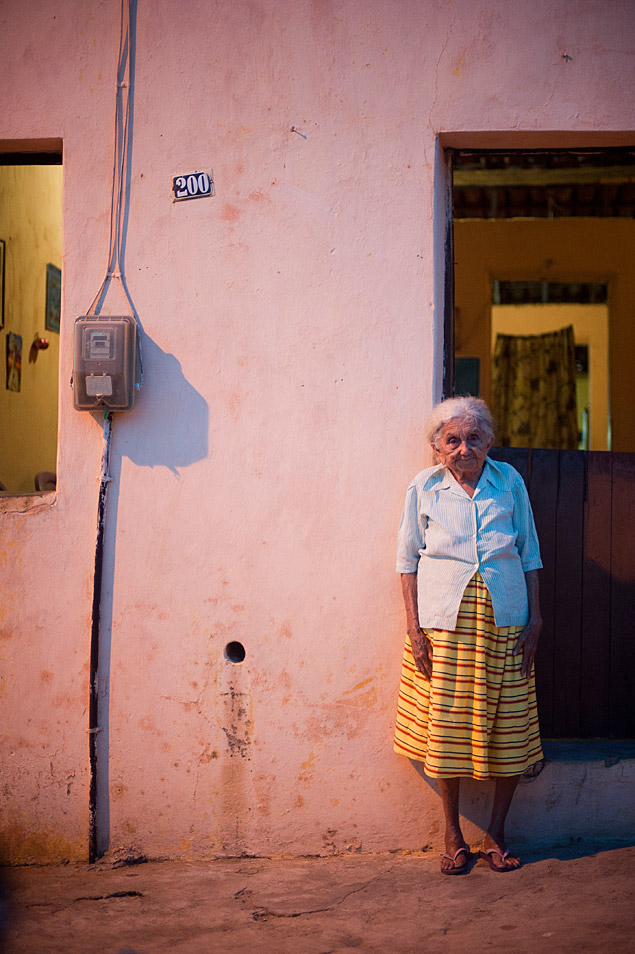
"Besides my dad, she was the only one in my family who was like this..."

Uploaded on 3/11/2014 by humansofny

loopy sky

Uploaded on 5/1/2014 by SoulRiser

Bear Lake - Pentax 67 + Portra 400

Uploaded on 8/1/2014 by http://www.trentonmichael.com

NAVCAM top 10 at 10 km – 10

Uploaded on 11/11/2014 by europeanspaceagency

Oil Pastels

Uploaded on 3/11/2014 by WideEyedIlluminations

Here, once again

Uploaded on 1/1/2014 by Deltalex.

Chinatown

Uploaded on 3/22/2014 by Masa

Such is the price of leaving

Uploaded on 4/28/2014 by Whitney Justesen

I will learn to love the skies I'm under.

Uploaded on 6/4/2014 by David Uzochukwu

on the neighbour's grounds

Uploaded on 3/20/2014 by Rosie Anne

The Dreamy Coast

Uploaded on 1/7/2014 by Rob Macklin

Bagel&Lox

Uploaded on 3/24/2014 by davideluciano

Little Sherlock

Uploaded on 1/19/2014 by Adrian Sommeling

Pyramid Barn

Uploaded on 1/14/2014 by stevoarnold

HIPA, a non-profit photography show for the east of England in 2015, we are currently trying to raise the profile of the event to attract sponsorship, so if you feel like visiting the site and 'liking' the page it would help hugely, many thanks

Uploaded on 4/24/2014 by rastaschas

Fim de tarde

Uploaded on 6/7/2014 by Johnson Barros

320/365

Uploaded on 8/8/2014 by alexcurrie

Red Anemone

Uploaded on 3/31/2014 by j man.

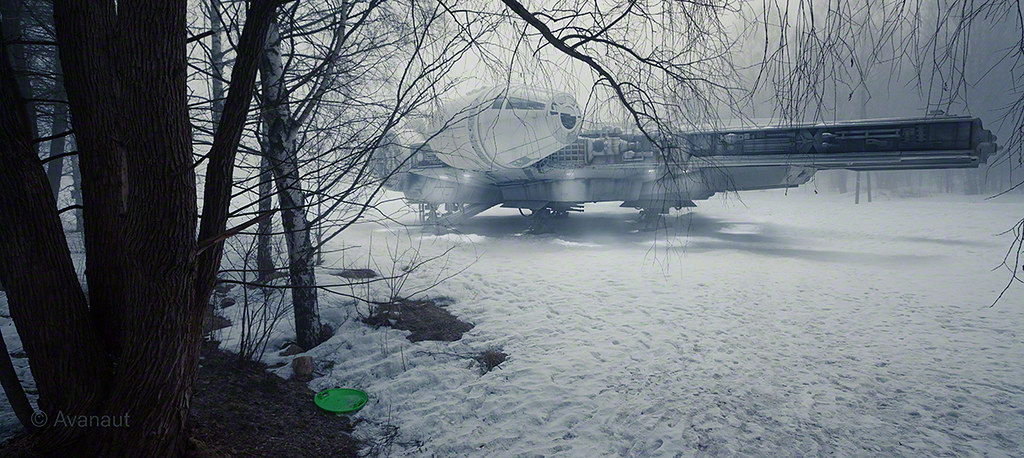
The Backyard Falcon

Uploaded on 1/14/2014 by Avanaut

"And when it all comes crashing down, who will you be?" - Miles Away

Uploaded on 6/14/2014 by The Change Is Me.

***

Uploaded on 2/27/2014 by oprisco


13 Jan 13:58

Photo


13 Jan 13:18

How much is a (micro)life worth?

by Tim Harford
Undercover Economist

‘Travelling 28 miles on a motorbike is four micromorts; cycling the same distance is just over one micromort’

The Rand Corporation was established in 1948 as an independent research arm of the US Air Force, itself newly independent and in its pomp as the wielder of the US nuclear arsenal. Rand’s early years were spent wrestling with the mathematics of Armageddon, and it has long struggled to shake off its reputation as the inspiration for Dr Strangelove.

Yet Rand’s most controversial research topic was its very first study — and its crime was to offend not the public but the top brass at the Air Force. Edwin Paxson, one of its top mathematicians, had been asked by the Air Force to think about the problem of an optimal first strike against the Soviet Union. How could the United States annihilate the Soviet Union for the smallest possible expenditure?

Paxson’s research was technically impressive, using cutting-edge analytical techniques. (The project is described in histories by David Jardini and by Fred Kaplan, and in a new article in the Journal of Economic Perspectives by Spencer Banzhaf.) His conclusion, published in 1950, was that rather than commissioning expensive turbojet bombers, the US should build large numbers of cheap propeller aircraft, most of which would carry no nuclear payload and would be little more than decoys. Not knowing which planes held atomic weapons, the Soviet defences would be overwhelmed by sheer numbers.

This conclusion infuriated the Air Force. No doubt this was partly because they viewed old-fashioned propeller aircraft as beneath their dignity. But the key offence was this: Paxson’s cost-benefit analysis gave no weight to the lives of air crew. Ten thousand pilots could be wiped out and it would make no difference to Paxson’s arithmetic. Under fire from senior officers, who had been wartime pilots themselves, Rand quickly adopted a more humble tone. It also diversified its funding by researching non-military topics.

Yet Paxson’s omission is understandable. A sensible strategist must weigh the costs and benefits of different tactics — but once one accepts the need for value for money in military strategy, what monetary value can we put on human life?

One possible approach to the problem is to value people according to some economic proxy — for example, the Air Force might value the cost of training new pilots. Courts have assigned damages after fatal accidents by looking at the economic output the dead person would otherwise have produced. But this suggests that the life of a retired person has no value. It captures the loss of livelihood, not the loss of life.

In the 1960s, a new approach emerged, most famously in Thomas Schelling’s 1968 essay “The Life You Save May Be Your Own”. Schelling, who much later won the Nobel Memorial Prize in Economic Sciences, had spent some productive time working at Rand. His student Jack Carlson was a former Air Force pilot. Carlson and Schelling found a way to finesse the treacherous question. As Schelling wrote: “It is not the worth of human life that I shall discuss but of ‘life-saving’, of preventing death. And it is not a particular death, but a statistical death.”

Rather than asking “What is the value of human life?” Schelling and Carlson asked what we are willing to pay to reduce the risk of premature death by spending money on road safety or hospitals. The value of a life was replaced with the value of a statistical life.

There is good sense in this bait-and-switch. The life of a named individual defies monetary valuation. It is special. Yet the prospect of spending money to widen and straighten a road and therefore fractionally reduce the chance that any one of thousands of road users will die — that feels like a more legitimate field for economic exploration.

For those who have not read Schelling’s elegant essay, simply inserting a qualifier into the phrase “the value of a [statistical] life” will not persuade. This presents a serious public-relations problem. From time to time it emerges that government bureaucrats have been valuing human life — outrageous! (The going rate for an individual life in the US is about $7m.)

As Trudy Ann Cameron, a professor of economics at the University of Oregon, comments, it would be helpful for economists to be able to report their research on the benefits of environmental or health policies “in a way that neither confuses nor offends non-economists”.

Here’s a possible solution: use microlives. A microlife is one millionth of an adult lifespan — about half an hour — and a micromort is a one-in-a-million chance of dying.

Sir David Spiegelhalter, my favourite risk communication expert, reckons that going under general anaesthetic is 10 micromorts. Travelling 28 miles on a motorbike is four micromorts; cycling the same distance is just over one micromort. The National Health Service in the UK uses analysis that prices a microlife at around £1.70; the UK Department for Transport will spend £1.60 to prevent a micromort. In a world where life-and-death trade-offs must be made, and should be faced squarely, this is a less horrible way to think about it all. A human life is a special thing; a microlife, not so much.

As Ronald Howard, the decision analysis expert who invented the micromort, put it back in 1984: “Although this change is cosmetic only, we should remember the size of the cosmetic industry.”

Written for and first published at ft.com.

13 Jan 13:17

Iranian Blogger Soheil Arabi To Be Executed For Posting ‘Insults’ On Facebook

by Chris

From The Huffington Post:

A man in Iran has been sentenced to death for “insulting the prophet of Islam” on Facebook.

Soheil Arabi, a 30-year-old blogger, was convicted in August after admitting posting “offensive” material on eight Facebook pages, under different names, including one titled ‘the generation that no longer wants to be the burnt generation’.

Arabi admitted posting the material but said that he wrote it “in poor psychological condition” according to the International Campaign for Human Rights In Iran.

The New York-based Human Rights Watch said that Arabi now faces “imminent execution” by hanging after the Supreme Court upheld the sentence.

And since we’re on the subject of blasphemy: Greek blogger sentenced to 10-month prison for insulting religion:

An Athens court sentenced blogger Filippos Loizos to ten months prison suspended for 3 years, after found him guilty of “insulting religion”. The blogger was known as Elder Pastitsios, who was making fun of the almost mythical monk Elder Paisios.

Philippos Loizos, 27, was arrested in September 2012 on charges of “malicious blasphemy and insulting religion” through Facebook. The arrest came “after thousands of e-complains from residents of different countries of the world”, so the police press release. The 27-year-old had created a page on Facebook named “Geron Pastitsios” (Elder Pastitsios), an mock name for Greek Athos monk, Elder Paisios (1924-1994), famous about his prophecies on Greece, the Greek nation and the Orthodox Christianity.

13 Jan 13:16

1459 – Encontrada torrada com a face do profeta Maomé

by Carlos Ruas

2598

13 Jan 01:47

(12) Tumblr

by walkman
12 Jan 21:42

Kids, the Holocaust, and "inappropriate" play

Adam Victor Brandizzi

"Some people fear that violent play creates violent adults, but in reality the opposite is true. Violence in the adult world leads children, quite properly, to play at violence"

On a strong recommendation from Meg, I have been reading Peter Gray's Free to Learn: Why Unleashing the Instinct to Play Will Make Our Children Happier, More Self-Reliant, and Better Students for Life. Gray is a developmental psychologist and in Free to Learn he argues that 1) children learn primarily through self-directed play (by themselves and with other children), and 2) our current teacher-driven educational system is stifling this instinct in our kids, big-time.

I have a lot to say about Free to Learn (it's fascinating), but I wanted to share one of the most surprising and unsettling passages in the book. In a chapter on the role of play in social and emotional development, Gray discusses play that might be considered inappropriate, dangerous, or forbidden by adults: fighting, violent video games, climbing "too high", etc. As part of the discussion, he shares some of what George Eisen uncovered while writing his book, Children and Play in the Holocaust.

In the ghettos, the first stage in concentration before prisoners were sent off to labor and extermination camps, parents tried desperately to divert their children's attention from the horrors around them and to preserve some semblance of the innocent play the children had known before. They created makeshift playgrounds and tried to lead the children in traditional games. The adults themselves played in ways aimed at psychological escape from their grim situation, if they played at all. For example, one man traded a crust of bread for a chessboard, because by playing chess he could forget his hunger. But the children would have none of that. They played games designed to confront, not avoid, the horrors. They played games of war, of "blowing up bunkers," of "slaughtering," of "seizing the clothes of the dead," and games of resistance. At Vilna, Jewish children played "Jews and Gestapomen," in which the Jews would overpower their tormenters and beat them with their own rifles (sticks).

Even in the extermination camps, the children who were still healthy enough to move around played. In one camp they played a game called "tickling the corpse." At Auschwitz-Birkenau they dared one another to touch the electric fence. They played "gas chamber," a game in which they threw rocks into a pit and screamed the sounds of people dying. One game of their own devising was modeled after the camp's daily roll call and was called klepsi-klepsi, a common term for stealing. One playmate was blindfolded; then one of the others would step forward and hit him hard on the face; and then, with blindfold removed, the one who had been hit had to guess, from facial expressions or other evidence, who had hit him. To survive at Auschwitz, one had to be an expert at bluffing -- for example, about stealing bread or about knowing of someone's escape or resistance plans. Klepsi-klepsi may have been practice for that skill.

Gray goes on to explain why this sort of play is so important:

In play, whether it is the idyllic play we most like to envision or the play described by Eisen, children bring the realities of their world into a fictional context, where it is safe to confront them, to experience them, and to practice ways of dealing with them. Some people fear that violent play creates violent adults, but in reality the opposite is true. Violence in the adult world leads children, quite properly, to play at violence. How else can they prepare themselves emotionally, intellectually, and physically for reality? It is wrong to think that somehow we can reform the world for the future by controlling children's play and controlling what they learn. If we want to reform the world, we have to reform the world; children will follow suit. The children must, and will, prepare themselves for the real world to which they must adapt to survive.

Like I said, fascinating.

Bookmarked at brandizzi Delicious' sharing tag and expanded by Delicious sharing tag expander.
12 Jan 21:42

Photo


12 Jan 21:42

wonderlandhasbeen: be—dauntless: miss—-cadaverous: dingle-dangle: A proud new dad sits down to...

wonderlandhasbeen:

be—dauntless:

miss—-cadaverous:

dingle-dangle:

A proud new dad sits down to have a drink with his father

"Well son, now that you’ve got a kid of your own, I think it’s time to give you this"

"Dad, you don’t mean-"

"Yes son, I do" *Dad pulls out copy of 1001 Dad Jokes, 5th Edition*

"Dad…I’m so honored"

"Hi honored, I’m dad

12 Jan 21:41

The Edinburgh Fairy Coffins

by Greg Ross

In early July 1836, three boys searching for rabbits’ burrows near Edinburgh came upon some thin sheets of slate set into the side of a cliff. On removing them, they discovered the entrance to a little cave, where they found 17 tiny coffins containing miniature wooden figures.

According to the Scotsman‘s account later that month, each of the coffins “contained a miniature figure of the human form cut out in wood, the faces in particular being pretty well executed. They were dressed from head to foot in cotton clothes, and decently laid out with a mimic representation of all the funereal trappings which usually form the last habiliments of the dead. The coffins are about three or four inches in length, regularly shaped, and cut out from a single piece of wood, with the exception of the lids, which are nailed down with wire sprigs or common brass pins. The lid and sides of each are profusely studded with ornaments, formed with small pieces of tin, and inserted in the wood with great care and regularity.”

Some accounts say that the coffins had been laid in tiers, the lower appearing decayed and the topmost quite recent, but Edinburgh University historian Allen Simpson believes that all were placed in the niche after 1830, about five years before the boys discovered them.

Who placed them there, and why, remain mysterious. Simpson suggests that they may be an attempt to provide a decent symbolic burial for the victims of murderers William Burke and William Hare, who had sold 17 corpses to local doctor Robert Knox in 1828 for use in anatomy lessons. But 12 of Burke and Hare’s victims were women, and the occupants of the fairy coffins are all dressed as men.

So investigations continue. The eight surviving coffins and their tiny occupants are on display today at the National Museum of Scotland.

12 Jan 20:52

A Fox Fur, a Unicorn, and a Christmas Tree

Discover the cosmos! Each day a different image or photograph of our fascinating universe is featured, along with a brief explanation written by a professional astronomer.

2015 January 5
See Explanation.  Clicking on the picture will download
 the highest resolution version available.

A Fox Fur, a Unicorn, and a Christmas Tree
Image Credit & Copyright: R. Colombari & Francesco Antonucci; Data: Subaru, ESO, & F. Antonucci

Explanation: What do the following things have in common: a cone, the fur of a fox, and a Christmas tree? Answer: they all occur in the constellation of the unicorn (Monoceros). Pictured as a star forming region and cataloged as NGC 2264, the complex jumble of cosmic gas and dust is about 2,700 light-years distant and mixes reddish emission nebulae excited by energetic light from newborn stars with dark interstellar dust clouds. Where the otherwise obscuring dust clouds lie close to the hot, young stars they also reflect starlight, forming blue reflection nebulae. The image spans about the diameter of a full moon, covering about 30 light-years at the distance of NGC 2264. Its cast of cosmic characters includes the Fox Fur Nebula, whose convoluted pelt lies on the lower right, bright variable star S Mon visible just above the Fox Fur, and the Cone Nebula on the image left. Given their distribution, the stars of NGC 2264 are also known as the Christmas Tree star cluster. The triangular tree shape traced by the stars appears here with its apex at the Cone Nebula on the left with its broader base near S Mon on the right.

Tomorrow's picture: hubble andromeda < | Archive | Index | Search | Calendar | RSS | Education | About APOD | Discuss | >

Authors & editors: Robert Nemiroff (MTU) & Jerry Bonnell (UMCP)
NASA Official: Phillip Newman Specific rights apply.
NASA Web Privacy Policy and Important Notices
A service of: ASD at NASA / GSFC
& Michigan Tech. U.

Expanded from APOD by Feed Readabilitifier.
12 Jan 20:51

100 Million Stars in the Andromeda Galaxy

Discover the cosmos! Each day a different image or photograph of our fascinating universe is featured, along with a brief explanation written by a professional astronomer.

2015 January 6
See Explanation.  Clicking on the picture will download
 the highest resolution version available.

100 Million Stars in the Andromeda Galaxy
Image Credit: NASA, ESA, J. Dalcanton, B. F. Williams, L. C. Johnson (U. Washington), PHAT team, R. Gendler

Explanation: What stars compose the Andromeda galaxy? To better understand, a group of researchers studied the nearby spiral by composing the largest image ever taken with the Hubble Space Telescope. The result, called the Panchromatic Hubble Andromeda Treasury (PHAT), involved thousands of observations, hundreds of fields, spanned about a third of the galaxy, and resolved over 100 million stars. In the featured composite image, the central part of the galaxy is seen on the far left, while a blue spiral arm is prominent on the right. The brightest stars, scattered over the frame, are actually Milky Way foreground stars. The PHAT data is being analyzed to better understand where and how stars have formed in M31 in contrast to our Milky Way Galaxy, and to identify and characterize Andromeda's stellar clusters and obscuring dust.

Tomorrow's picture: Pillars of Creation < | Archive | Index | Search | Calendar | RSS | Education | About APOD | Discuss | >

Authors & editors: Robert Nemiroff (MTU) & Jerry Bonnell (UMCP)
NASA Official: Phillip Newman Specific rights apply.
NASA Web Privacy Policy and Important Notices
A service of: ASD at NASA / GSFC
& Michigan Tech. U.

Expanded from APOD by Feed Readabilitifier.
12 Jan 20:28

Hubble 25th Anniversary: Pillars of Creation

Discover the cosmos! Each day a different image or photograph of our fascinating universe is featured, along with a brief explanation written by a professional astronomer.

2015 January 7
See Explanation.  Clicking on the picture will download
the highest resolution version available.

Hubble 25th Anniversary: Pillars of Creation
Image Credit: NASA, ESA, and The Hubble Heritage Team (STScI / AURA)

Explanation: To celebrate 25 years (1990-2015) of exploring the Universe from low Earth orbit, the Hubble Space Telescope's cameras were used to revisit its most iconic image. The result is this sharper, wider view of the region dubbed the Pillars of Creation, first imaged by Hubble in 1995. Stars are forming deep inside the towering structures. The light-years long columns of cold gas and dust are some 6,500 light-years distant in M16, the Eagle Nebula, toward the constellation Serpens. Sculpted and eroded by the energetic ultraviolet light and powerful winds from M16's cluster of young, massive stars, the cosmic pillars themselves are destined for destruction. But the turbulent environment of star formation within M16, whose spectacular details are captured in this Hubble visible-light snapshot, is likely similar to the environment that formed our own Sun.

APOD Talk: Friday, January 9 in New York City
Tomorrow's picture: across Corona Australis < | Archive | Index | Search | Calendar | RSS | Education | About APOD | Discuss | >

Authors & editors: Robert Nemiroff (MTU) & Jerry Bonnell (UMCP)
NASA Official: Phillip Newman Specific rights apply.
NASA Web Privacy Policy and Important Notices
A service of: ASD at NASA / GSFC
& Michigan Tech. U.

Expanded from APOD by Feed Readabilitifier.
12 Jan 20:02

What Every Good System Needs

by Oliver Widder
typo2.jpg
12 Jan 19:29

Geography

The place I'd least like to live is the farm in the background of those diagrams showing how tornadoes form.
12 Jan 19:24

A religião certa

by brunomaron

tirinha


tirinha publicada na Revista da Cultura de Janeiro


Arquivado em:dinâmica de bruto
12 Jan 18:52

Brand New Year

by Grant

12 Jan 18:46

UV

Hey, why stop at our house? We could burn down ALL these houses for the insurance money.
01 Jan 03:09

This 24-year-old high school dropout is tackling a problem every startup hates | VentureBeat | Business | by VentureBeat

Adam Victor Brandizzi

Minha heroína.

Jessica Mah, the founder and CEO of Indinero, was only 11 years old when she started her first business. Having learned how to code in fifth grade, Mah built websites for people and got paid a few thousand dollars a month.

That experience led her to do something more serious for her next business. She leased servers out of a few data centers and created a fully managed hosting service for small businesses, which she describes as a “cheaper version of Rackspace.” She had about four part time employees and generated six-figure revenues from it.

Although she had sales, Mah struggled to deal with cash flow and her server business eventually closed when she was 14 years old. By then, she was spending 40 hours a week on her business, and school was no longer a priority. Her grades were terrible and she ended up dropping out of high school.

“I was so stressed out,” Mah told Business Insider. “I remember thinking I was never going to start my own company and would never go into technology.”

But Mah was still smart enough to get into Simon’s Rock, an “early college” designed for students who want to get college education before graduating high school. It took her two years there to realize computer science was the only major she was happy with, and so, at age 17, she applied to UC Berkeley’s computer science program. After another two years, at 19, Mah graduated from UC Berkeley’s CS program.

Her time at Berkeley also brought back something she had been missing for a few years: her entrepreneurial drive. From her past experience running small businesses, Mah knew how the current accounting software were outdated. She knew accounting was an area ripe for innovation, but none of her fellow computer scientists were interested in the space because most of them had never dealt with it before. So by graduation, she created an accounting software called Indinero with her friend. “I wished there was some service like the ‘Google of accounting for small businesses,’” Mah says.

And the day after graduation, with a prototype, she headed down to Mountain View to join Y Combinator’s summer program. After 3 months, Mah raised $1.2 million for the seed round of Indinero. She was only 20 years old.

Indinero is a software that provides accounting, tax filing, and payroll management all under one service. It basically takes care of all the back office work by automatically importing data from the business owner’s financial accounts. It also has full-time professional accountants and tax specialists manually reviewing financial statements to make sure all the books are in order. “We just make it a lot more cost-effective and affordable because you have all these software layers doing so much of the work,” Mah says.

Indinero has been growing quite fast and now has 75 employees. It’s raised $8 million from angel investors, including 500 Startups’ Dave McClure, Yelp’s Jeremy Stoppelman, and Khosla Venture’s Keith Robois. Mah says over 500 companies use Indinero, including small businesses and bigger ones like some PR firms and law firms.

Despite all this success, Mah, now 24, says running a company has been a big challenge for her. “It’s my first company that’s doing millions in revenues, my first company that has full-time employees and a full office…So it’s been pretty difficult,” Mah says. But she still thinks it’s all worth the struggle. “It’s challenging at times. But it’s an incredibly rewarding job.”

Bookmarked at brandizzi Delicious' sharing tag and expanded by Delicious sharing tag expander.
01 Jan 03:08

Viagem pela memória de campos de concentração no Ceará

Adam Victor Brandizzi

Impressionante como algo assim pode ser esquecido... mas hoje ocorre coisa semelhante e nem é visto.

RESUMO Com as secas do início do século 20, famintos dirigiam-se à capital do Ceará, assombrando as elites que idealizavam uma Fortaleza "belle époque", moderna -e limpa. O governo criou campos cercados para confinar milhares de retirantes; hoje, alguns tentam evitar que a memória desses lugares se apague.

Uma coisa era certa: aquela gente fedida, piolhenta, faminta e desesperada tinha que ser mantida à distância. Era 1932, e Fortaleza não parecia disposta a olhar para trás. Na virada do ano, a capital cearense inaugurava o hotel Excelsior, seu primeiro arranha-céu. Em sua edição de 2 de janeiro, o jornal "O Povo" destacava o "terraço aprazibilíssimo, de onde se descortinam belíssimos panoramas do mar, das serras e dos sertões vizinhos".

O novo prédio anunciava novos tempos e contrastava com a precariedade da multidão imigrante dos "sertões vizinhos", que fugia de uma das piores secas já vistas no Nordeste. Alguém precisava fazer algo, e rápido, antes que a turba miserável eclipsasse a "loira desposada do sol", epíteto da capital oxigenada pela síndrome de "belle époque" brasileira. A resposta governamental foi confinar os que vinham de trem em sete currais cercados com varas e arame farpado, próximos à estrada de ferro.

Veja vídeo

Eram homens, mulheres, velhos e crianças, de cabeça raspada contra piolhos, alguns vestidos em sacos de farinha com buracos para enfiar o pescoço. Os mais robustos serviam de mão de obra em fazendas e obras públicas. Milhares morreram de fome, sede ou doenças. Com entrada compulsória e sem data para o "check out", esses depósitos humanos tinham nome: campos de concentração.

Só em 1933 os nazistas criariam seu primeiro campo, numa fábrica de pólvora reestruturada para encarcerar comunistas, sindicalistas e outros desafetos do chanceler Adolf Hitler. A prática de isolar os "molambudos" dos "cidadãos de bem" já era velha conhecida no Brasil de Getúlio Vargas -um país em que a população caminhava para os 40 milhões.

Dados oficiais contavam 73.918 aprisionados pouco mais de um mês após a abertura dos campos em seis cidades do Ceará (Crato, Ipu, Quixeramobim, Senador Pompeu, Cariús e Fortaleza), conforme relata a historiadora Kênia Sousa Rios, autora de "Campos de Concentração no Ceará: Isolamento e Poder na Seca de 1932" (Museu do Ceará, 2006). As duas aglomerações da capital viraram até atração turística: visitantes doavam uma certa quantidade de dinheiro aos enjaulados e dali saíam com "a sensação de dever cumprido".

"O risco de ter a cidade invadida pela 'sombra sinistra da miséria' parece seguido da compreensão de que a situação é trágica, portanto merece a atenção da burguesia caridosa e civilizada", escreveu a historiadora no artigo "A Cidade Cercada na Seca de 1932" (publicado no volume "Seca", Edições Demócrito Rocha, 2002).

ESMOLINHA

No romance "O Quinze", Rachel de Queiroz narra como a heroína Conceição "atravessava muito depressa o campo de concentração", trêmula ao ouvir a súplica: "Dona, uma esmolinha". Apertava o passo, "fugindo da promiscuidade e do mau cheiro do acampamento".

Algo de fato cheirava mal no Ceará, e desde a grande estiagem de 1877, a elite local sentia o odor. Sete anos antes, haviam sido estabelecidas normas de conduta "que identificavam a 'modernidade fortalezense' com a 'civilidade europeia'", fazendo da capital "um modelo asséptico para todas as cidades cearenses", escreveu o historiador Tanísio Vieira no artigo "Seca, Disciplina e Urbanização" (também coligido em "Seca"). Uma das proibições fixadas era a de sair às ruas sem "pelo menos camisa e calça, sendo aquela metida por dentro desta".

Imposições dessa ordem eram a última coisa a passar pela cabeça dos mais de 100 mil sertanejos em retirada da seca de 1877. Fortaleza, então com 30 mil habitantes, viu sua população se multiplicar por três. O governo, por sua parte, redobrou esforços para que a invasão bárbara jamais se repetisse.

Isadora Brant/Folhapress
Dona Carmélia, cujo pai trabalhava em um dos campos

Em "A Seca de 1915", o escritor Rodolfo Teófilo (1853-1932) descreveu o pioneiro campo do Alagadiço, nos arredores da capital, que serviria de piloto para os sete campos dos anos 1930: "Um quadrilátero de 500 metros onde estavam encurralados cerca de 7.000 retirantes". Lá, quando havia comida, ganhavam "reses que morriam de magras ou do mal [peste]", cozidas "em algumas dúzias de latas que haviam sido de querosene".

O jornal "O Nordeste" anunciava o 17 de fevereiro de 1923 como o Dia da Extinção da Mendicância. Ser mendigo seria, a partir dali, contra a lei. Se ruas e praças continuassem "expostas a graves perigos de ordem moral", os infratores seriam enviados ao Dispensário dos Pobres, sob os auspícios da Liga das Senhoras Católicas Brasileiras. A ideia, na prática, não foi longe, e as madames continuaram a ouvir: "Dona, uma esmolinha".

Nem toda a caridade cristã seria o bastante para dar conta da diáspora de 1932, quando jornais falavam do "exército sinistro de esfomeados" em marcha até a capital.

PAPA-FIGO

Ainda hoje, em Senador Pompeu, circula a lenda sobre um ente que surge de supetão para abrir seu bucho e roubar um pedaço do fígado. A fábula do Papa-Figo nasce de fatos reais. Carmélia Gomes, 91, que era uma menina em 1932, lembra do médico que extraía amostras do órgão de quem morria no campo e as mandava à capital para análise clínica.

Dentro de sua casinha, semelhante a tantas outras nas redondezas, dona Carmélia prende os cabelos brancos e senta-se numa cadeira de plástico roxo, logo abaixo de pôsteres dos papas João Paulo 2º e Bento 16. Ela conta que, até sofrer um assalto, vivia num terreno mais ermo, terra onde seu pai trabalhava 82 anos atrás.

Isadora Brant/Folhapress
Ruínas do campo de concentração de retirantes de Senador Pompeu

Antônio Gomes se despedia com um beijo na testa da mocinha de nove anos e partia para o ofício: vigiar os concentrados de Senador Pompeu. Voltava para casa contando sobre "lagartixas entrando na boca dos defuntos, tudim inchado por causa da fome". Alguns guardas eram tão temidos que viravam sinônimo de "coisa ruim". Caso do cabo Félix, que acabou nomeando o feijão servido ali, duro feito pedra da caatinga.

Senador Pompeu, à primeira vista, é uma cidade com problemas e hábitos corriqueiros; adolescentes tiram selfies na sorveteria, e casas metade verde, metade rosa exibem na fachada propagandas políticas pintadas à mão. Mas ali, como dona Carmélia, muitos se esforçam para lembrar o passado.

Em um blog que leva seu nome, Valdecy Alves, 51, apresenta-se em maiúsculas: ADVOGADO MILITANTE E MILITANTE DOS MOVIMENTOS SOCIAIS, com serviços prestados à Cáritas e ao Centro de Defesa dos Direitos Humanos Antonio Conselheiro. Filho pródigo de Senador Pompeu, hoje em Fortaleza, voltou à cidade natal para a romaria de 9 de novembro.

Com início marcado para as 4h30 daquele domingo, em frente à igreja, o cortejo reúne netos, pais e avós, todos de branco, para homenagear "as almas penadas da barragem", mortas no campo de concentração. Hoje, segundo a crendice do povo, elas viraram santas que atendem a promessas, numa versão, local e diminuta, do culto ao padre Cícero.

Na véspera, Valdecy Alves nos levara aos arredores da barragem onde os retirantes foram enclausurados. Existe ali um cemitério, ponto de chegada da romaria. O espaço é simbólico: foi erguido sobre uma das valas comuns, onde "até 40 defuntos eram sepultados sem atestado de óbito, em covas rasas o bastante para que urubus e cães cavassem e comessem os restos", diz Alves.

O cemitério, um quadrilátero de 1.089 m², tem no centro uma capela. À sua frente, visitantes acendem velas e empilham simbólicas garrafas d'água de 500 ml. Na entrada, alguns santinhos políticos e latas de cerveja se acumulam diante de duas mudas de árvore. Lê-se nos vasos de cimento: "Fale a Deus o tamanho do seu problema".

Isadora Brant/Folhapress
Cemitério em Senador Pompeu

Em sua moto preta com o rosto de Jesus estampado na buzina, Francisco de Assis, 48, chega ao local para pintar de branco os muros do cemitério. Ele é um dos que -garante- foram ouvidos pelos santos. Para quitar seu carnê espiritual, caminhou por uma hora, descalço, até o cemitério. Valdecy Alves frisa: "De cada dez pessoas que você encontrar nas ruas, metade deve promessa aqui".

A história do campo de concentração de Senador Pompeu já era ligada à seca desde antes desse destino infame. Em 1919, ingleses ganharam uma concorrência para levantar no local uma barragem para sanar os efeitos da escassez de chuvas. Por falta de verbas, as obras pararam. Em 1932, o governo integrou ao campo o casarão que fora construído para servir de morada aos estrangeiros.

A carcaça arquitetônica tem paredes amarelas pichadas com dezenas de falos, juras de amor (Stefanny, o Renato te ama) e até um Buda gordinho. Nos anos 1990, o lugar ainda era uma referência para retirantes. Famílias faziam filas quilométricas para obter a parte que lhes cabia nesse latifúndio –porções de farinha, charque, rapadura e café que o governo distribuía.

Valdecy cruza os braços sobre a camisa polo vermelha e ergue o queixo, um tanto solene. "Kant dizia que não há liberdade enquanto você tiver necessidade. O povo há séculos é vítima de uma seca previsível, cíclica. Então, o Estado é que está falido."

E desmemoriado também: o advogado cobra a preservação das ruínas e reclama de que "documentos gigantescos de uma época que não pode se repetir" estão à míngua. Procurado, o Instituto do Patrimônio Histórico e Artístico Nacional diz que "não há proposta de tombamento em nível federal". No plano municipal, a prefeitura abriu um processo com essa finalidade, ainda não finalizado.

CAMINHADA

Alves tem companhia no seu esforço de tirar o passado do armário. Enquanto outras cidades ignoram seus campos, em Senador Pompeu um carro de som alterna anúncios do "forrozão" e da "caminhada da seca".

De óculos escuros e celular acoplado a alto-falantes, o padre começa a romaria na madrugada de domingo. Há velhinhos de bengala, mulheres com crucifixos mergulhados em grandes decotes e estudantes que usam "abadá" –regata com a inscrição "32ª caminhada da seca - Eu fui" e a estampa de um polegar que reproduz o botão "curtir" do Facebook.

"O povo diz que quem morreu de fome vira santo", diz Yasmin dos Santos, 11, repetindo o que ouviu numa palestra na escola. Daiana Soraya, 12, é grata às "almas santas", que a ajudaram com uma briga de escola. "Um menino que já tinha namorada ficou falando comigo. Ela achou que eu estava a fim dele. Queriam me pegar, mas eu fiz uma promessa. Hoje tô pagando", diz a jovem devota, mostrando os pés descalços.

RELATOS

Já no Crato são poucos os que se lembram do campo projetado para 5.000 pessoas –e que chegou a receber quatro vezes isso, segundo relatos de sobreviventes.

"A mãe falava que a comida era tão ruim que não tinha quem comesse. Mas chegou um pessoal e quis as tripas de porco e gado que o vô usava para fazer sabão. Estavam até estragadas", conta Rita Lobo de Grito, 66, que andava por uma rua de terra próxima ao local do antigo campo cratense.

"Jogavam um em cima do outro quando o pessoal morria. No outro dia, de manhã, um pediu: Me tira daqui que eu não tô morto, não'. Tudo isso meu pai contava", diz Milton Pereira, 85, que recorda também a corrupção no controle dos mantimentos. "Enquanto uns morriam de fome, outros enricavam. O governo mandava trazer o gado e sumia a metade."

Com duas estátuas do padre Cícero ("primo do meu pai") no jardim, Rosafran de Brito Melo, 67, diz que os campos tinham razão de ser. "Pra não haver briga. Ou virava bagunça. Entre tantas famílias, sempre vem um meio danado."

Almina Arraes, 90, não via nada de danado na gente que aparecia no casarão de sua família, às vezes tomada por retirantes fugidos dos campos.

Em menos de cinco minutos, o sorvete de creme que nos serve vira uma papa amarelada dentro da taça de prata. O calor no Crato, definitivamente, não é para amadores, mas a irmã do ex-governador de Pernambuco Miguel Arraes (1916-2005) já está acostumada.

Hoje ela mora ali com uma irmã de 95 anos, que sofre de Alzheimer. E mantém uma "sala dos mortos", com retratos do ex-governador de Pernambuco Miguel Arraes (1916-2005), e do neto dele, Eduardo Campos (1965-2014). A poucos metros dali, na varanda com gnomos de jardim, ela conta sobre os sete irmãos Arraes que migraram da vizinha Araripe para estudar no Crato.

Lembra de brincar com "uma criança muito magrinha, que gritava quando via comida". Brincou com ela de xibiu, jogo com o coco de macaúba, palmeira da região.

Almina preserva suas memórias, mas a "amnésia" em relação ao passado prevalece.

"É um resquício da cultura coronelista", avalia Luciana de Medeiros Campos, 36, funcionária da Secretaria Municipal de Cultura que nos acompanha em passeio pela região. Não interessa à elite cratense mexer nessa ferida, afinal, muitos "vôs" e "vós" foram coniventes com o campo de concentração e o cemitério das valas comuns.

Hoje eles estão ocultos sob uma fábrica de papel e um singelo campinho de futebol.

Após a seca de 1877, o imperador dom Pedro 2º decretou: "Não restará uma única joia na Coroa, mas nenhum nordestino morrerá de fome".

Em 1933, voltaram as chuvas para o Ceará, e os sertanejos pra casa, com passagens bancadas pelo governo. Segue o seco.

DESTERRO Nos 600 km que cruzou, a reportagem foi acompanhada pela curadora Beatriz Lemos, 33, e pelo artista plástico Ícaro Lira, 28. Fortalezense radicado em São Paulo, Lira lançou na Bienal da Bahia, em maio, seu projeto "Desterro", que começou com Canudos e agora recupera o passado dos campos de concentração do Ceará. "Meu papel é trazer à tona o processo de apagamento oficial do Estado", diz o artista.

ANNA VIRGINIA BALLOUSSIER, 27, é jornalista da Folha. Assina o blog "Religiosamente" no site do jornal.

ISADORA BRANT, 28, é repórter fotográfica da Folha e produz, em sua Vibrant Editora, publicações independentes, como zines e fotolivros.

Bookmarked at brandizzi Delicious' sharing tag and expanded by Delicious sharing tag expander.
01 Jan 03:05

UX for the Enterprise

Adam Victor Brandizzi

Já tive a experiência - mas como desenvolvedor - e assino embaixo.

Imagine this scenario. You’re hired to design a product that has a guaranteed audience of 50,000 users, right out of the gate. Your clients have a dedicated support staff with a completely predictable technology stack. Best of all, your work directly improves the quality of your users’ lives.

Article Continues Below

Illustration:

Share This:

That’s enterprise UX.

Yes, those 50,000 people use your software because they don’t have a choice. And sure, that completely predictable technology stack is ten years out-of-date. But, despite its quirks, doing UX work for enterprise clients is an opportunity to spread good design to the industries that need it most.

Enterprise UX is a catch-all term for work done for internal tools—software that’s used by employees, not consumers. Examples include:

  • HR portals
  • Inventory tracking apps
  • Content management systems
  • Intranet sites
  • Proprietary enterprise software

Since switching from working with smaller clients to tackling the problems of the Fortune 500, I’ve fielded a lot of questions from designers mystified by my decision. Why choose to specialize in enterprise design when you could do more interesting work in leaner, more agile, t-shirt-friendly companies? Isn’t big business antithetical to design culture?

The answer is: yes, often. Working with enterprise clients can be an exercise in frustration, filled with endless meetings and labyrinthine bureaucracy. It can also be immensely rewarding, with unique challenges and creatively satisfying work. As designers, we live to solve problems, and few problems are larger than those lurking in the inner depths of a global organization. After all, Fortune 500s tend to have a “just get it done” attitude toward internal tools, resulting in user experiences that aren’t well designed or tested. By giving those tools the same attention to experience that you give consumer-facing products, you can improve the lives of your users and support the organization’s values and brand.

Why bother with enterprise work?

Enterprise UX is often about solving ancillary problems by creating tools that facilitate an organization’s primary goals. These problems are rarely as compelling or visible as the goals they support, but they’re just as necessary to solve. A company might build the best-designed cars in the world, but it won’t matter if its quality-assurance process is hobbled by unusable software. Good design enables enterprises to do the work they were founded to do.

Enterprise employees are also consumers, and they’ve come to expect consumer-level design in all the tools they use. Why shouldn’t a company’s inventory software or HR portal be as polished as Evernote, Pinterest, or Instagram? When a consumer app is poorly designed, the user can delete it. When an enterprise app is poorly designed, its users are stuck with it.

The stakes can be enormously high. The sheer scale of enterprise clients magnifies the effects of good and bad design alike. Small inefficiencies in large organizations result in extra costs that are passed on to the end user in time spent, money lost, and frustration increased. Likewise, when an enterprise prioritizes user experience for its internal tools, it becomes a more effective organization; a recently released business index shows that design-driven companies outperformed the S&P average by 228% over the last ten years.

A perfect example of the business value of enterprise UX is found in the article, “Calculating ROI on UX & Usability Projects”:

…if you optimize the UX on a series of screens so that what was once a 5 minute task is now a 2.5 minute task, then you’ve increased a person’s productivity by 100%. That’s huge. HUGE. If the company has 100 phone agents who have an average salary of $40,000 + benefits (~$8,000) (+ an unknown amount for overhead), you could either release or retask those agents on other activities with a savings of $2,400,000/year. (half of 100 agents x $48,000).

It’s simplified, but the point is dead-on. A company with 100 phone agents could result in millions of dollars of savings. Imagine the impact on a company with thousands of employees? Or tens of thousands?

We have an opportunity to set the tone in some of the largest industries on the planet. Many big organizations have been defined by engineering and business thinking, with any design being either incidental or unintentional. Now, as those companies wake up to the value of solid design, they have to contend with the years of cruft that have obscured their tools and processes. Design is essential to shedding the excess and building better, leaner, and more human organizations.

Working on enterprise projects

There’s no such thing as an average enterprise UX project. The variety of projects within even a single company can be dizzying. I’ve worked on sites with a million visitors in the first week, and apps that fewer than 12 people use in a year.

Projects that would be iterative in the consumer space may be a one-off in the enterprise space, so it’s crucial to get things right the first time around. Further, due to cost, culture, and the immense hassle of rolling out updates to tens of thousands of employees, enterprise clients are often bogged down with wildly out-of-date solutions. We’ve heard of huge companies begging Microsoft to extend the lifespan of Windows XP; that’s the rule, not the exception.

Designing internal tools for a Fortune 500 company requires adaptation, but it isn’t a seismic shift from the world of consumer-facing design. Though a set of universal rules governing enterprise UX might not exist, there are a few principles I wish I’d known when transitioning from working with smaller clients.

Design for the end user, not the client

As with many design jobs, the end users of your software probably aren’t the same people who commissioned it.

In large organizations, the divide between the user and the client can be vast. The director of operations might commission an inventory app for warehouse personnel, or someone from IT might commission a reporting tool for the sales team. In an enterprise-scale bureaucracy, the clients in charge of UX projects are often in higher-level management roles. And while they typically have an invaluable grasp of the big picture, they may not completely realize the everyday needs of the people who will use the software.

Conduct your stakeholder interviews to understand and agree on your client’s business goals, but don’t forget to gather user and empirical data too. Fortunately, that type of research is easier to do in an enterprise setting than in the consumer space. Corporations like to quantify things, so data on productivity and software use may already exist. And, unlike consumers who need an incentive to fill out a survey or participate in an usability study, enterprise users have an inherent investment in the end product—setting aside some time to answer your questions is part of their job.

A successful enterprise UX project considers the users’ needs, the clients’ goals, and the organization’s priorities. The best user experience sits at the intersection of these concerns.

Be an educator and advocate, but above all, be flexible

Being a designer is as much a consultative role as a practical one; to justify our design decisions, we need to explain to clients our guiding principles and teach them the basics of good user experience. Otherwise, we’re nothing more than pixel-pushers.

Most enterprise clients have their own procurement procedures and project management techniques that don’t jive with a healthy UX workflow. Designers often find themselves needing to shoehorn their process into an existing structure, an exercise which can be frustrating if not approached properly.

I was recently involved in redesigning a section of a large corporation’s website. My team was responsible for handling the visual design—the content was set, and a development partner had already been hired.

Ordinarily, we prefer to have plenty of overlap between the design and development phases, to ensure that the live site matches the intentions of the design. However, the tight deadline and the client’s existing workflow made this impossible. Instead, we handed off the final mock-ups to the developers and hoped that everything was implemented without a hitch.

We didn’t see the site again until a week before launch. Predictably, the soon-to-be-live site had numerous inconsistencies. Issues that would have been obvious with a glance from a designer—incorrect fonts, uneven margins, wrong colors—were left until the last minute to fix. The process provided ample room for the developers to do quality control (remember that ancient tech stack?), but not the designers.

We wrote a list of crucial changes, ordered by priority, to bring the site in line with our design and the client’s goals. Many items were fixed before launch, and the client fast-tracked a second iteration to fix the rest. But none of those design issues would have launched in the first place had we insisted on more interaction between the designers and developers. Some good did come out of this challenge: we recommended the client reevaluate their design/development workflow requirements, explaining why the two processes needed to overlap. We also examined our own workflow to figure out how to make it more accommodating to the peculiarities of enterprise work—adding a postmortem phase, for instance, enables us to give feedback to a third-party developer while maintaining a tight timeline. If we were asking our clients to be flexible, we needed to be flexible too. Sure enough, the client offered us a greater opportunity to set the terms of the process on the next project.

Needing to adapt to a new set of restrictions is an opportunity, not a hindrance. One of the most valuable things a designer can offer a large organization is insight into the design process and its importance. Design education and advocacy can extend beyond a single project, giving the client an understanding of how to better accommodate design thinking within the organization.

Learn the culture, speak the language

Designing internal tools for an organization requires an understanding of that organization’s culture, from the basic mindset to the quirks that make it unique.

Corporate clients are often forced into short-term thinking, which can make it difficult to push longer-term design goals. When dealing with enterprise clients, remember their priorities: meeting a quota by the end of the quarter, exhausting a budget so they can secure the same amount next year, or improving a metric to keep the boss happy. Corporate clients are less concerned with design trends or UX best practices—they just want something that works for them. It’s best to frame design decisions around the client’s goals to sell them on your thinking.

Of course, that’s easier said than done. It isn’t always obvious what the client cares about. Plenty of organizations pay lip service to values that haven’t really permeated the culture, making it hard to know what to aim for in the design process. It’s amazing how many enterprises describe themselves as “design-focused” or “innovation-driven” without anyone below the C-suite knowing what those terms mean.

So how do we figure out what an enterprise client is really about?

It takes some time, but one of the best ways is to pay attention to the language your clients use. Different organizations have different vocabularies, which reveal the way they think. You’ll likely encounter jargon, but your job is to listen—and help your clients translate that language into actionable goals. Do employees talk about “circling back” or “talking about this offline”? Structured communication may be important to that company. How about “value-add” or “low-hanging fruit”? Quick wins and return-on-investment are probably cornerstones of that organization’s culture.

No client wants to learn design lingo just to be able to communicate with you, and corporate clients in particular are busy with a million other things. Learn their language so they don’t have to learn yours.

Go ahead

Also in Issue № 408

Cultivating the Next Generation of Web Professionals

by Georgy Cohen

We designers live to solve problems, and enterprise organizations provide fertile ground. They present a different set of constraints than startups and smaller clients, and while some designers balk at the idea of their work being constricted by a bureaucracy, others remember that the best design flourishes within well-defined boundaries.

Working on enterprise projects is something every UX designer should try. Who knows? You may just like it enough to stay.

Bookmarked at brandizzi Delicious' sharing tag and expanded by Delicious sharing tag expander.