For the anniversary of the kids' TV show, the American Archive of Public Broadcasting has more than 100 episodes set to stream online. Original cast members are celebrating on, you guessed it, Zoom.
(Image credit: Courtesy of WGBH Archives)

For the anniversary of the kids' TV show, the American Archive of Public Broadcasting has more than 100 episodes set to stream online. Original cast members are celebrating on, you guessed it, Zoom.
(Image credit: Courtesy of WGBH Archives)

The limited-edition collections from Dolly Parton and Duncan Hines have been snapped up, but their Southern-inspired cake and frosting mixes are expected to hit grocery store shelves in March.
(Image credit: Conagra Brands Inc.)

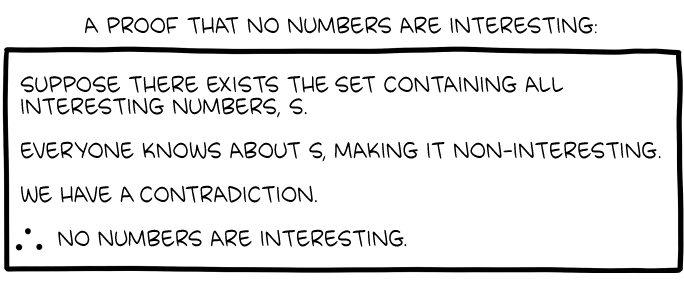
Hovertext:
Look, you can only alter the set by removing elements, which objectively makes it less interesting.
This post, do I have to wear makeup to look professional, my boss wants “fun” but pointless perks, and more , was originally published by Alison Green on Ask a Manager.
It’s five answers to five questions. Here we go…
1. Do I have to wear makeup to look professional?
I am a woman in my mid-twenties. Over the last year, I have grown more comfortable than I was before about going out without makeup. I never worked from home, as my role as a receptionist/administrative assistant isn’t conducive to that. But we have a laidback dress code and are located in a more rural area.
Several times recently, I’ve gone in to work dressed fairly casually (company hoodie, jeans, and sneakers) but the reactions I get when I have makeup done vs. not are startling. I am aware that makeup is a cultural norm but when did we start treating women who don’t wear makeup like they’re not fully dressed? I am clean, perfumed, hair brushed, and dressed like everyone else here. But if I’m not wearing makeup, I get treated differently. Aside from the usual “are you feeling okay?”comments, a few people treat me like I had the nerve to just roll out of bed and come in to the office. I get judgmental looks anytime I pass their work stations and have caught a few “facial expression conversations” between them.
I just recently got a decent raise and haven’t ever been spoken to about this by my supervisor, but our company president visits frequently enough that I’m nervous about it. I prefer not wearing makeup but am afraid I’m breaking some unspoken rule. If it matters, I am one of two women in an office of 20, in a male dominated field. So am I being considered “unprofessional” if I decide I don’t want to wear makeup on a given day?
You don’t need to wear makeup to be professional. There are some fields where a higher level of polish is expected, and makeup is often — although not always — part of that look, but if hoodies and sneakers are fine in your office, it doesn’t sound like you’re in one of those fields.
I suspect what’s happening is actually about the contrast; if you normally wear makeup and occasionally you don’t, people are responding to the difference in your appearance. Most likely, on the days without makeup, you look less “done” than how they’re used to seeing you. That doesn’t mean you’re less professional on those days; it just means that you look different than what they’re used to. If you stopped wearing makeup entirely, or hardly ever wore it, the contrast would disappear and the comments might stop.
That said, if hoodies and sneakers are pretty casual compared to what most people in your office wear, it might be the combination of super casual dress and no makeup. If that’s the case, you could try dressing up slightly more and see if no makeup registers differently when you do.
Regardless, though, anyone exchanging looks with someone else over your lack of makeup is an ass.
2. My office want to to offer “fun” but pointless perks
I work at a mid-size nonprofit that has a large budget and endowment. C-suite execs here make six figures. About 50% of our staff was remote before the pandemic, living around the country. The average age of our staff is mid-40s, and I’m one of the youngest.
Even as Covid continues, the board is pressuring the CEO to get the non-remote people back to the office. The CEO has also been concerned in the past about getting younger people to apply to work here. With that in mind, I’ve been asked by the CEO about what “fun” things we could get. Someone suggested a gaming system once Covid eases up. I found this idea ridiculous. We don’t even play regular games now.
Moreover, my manager is now tasked with getting our department something “fun.” Ideas include a coffee station (we only have generic nasty coffee that I wouldn’t touch with a 10-foot pole), popcorn machine, candy dispensers, healthy snacks, mini fridge, etc. I would love any of these. I asked if there would be a restocking budget and was told no. If we must bring in our own supplies, what’s the point? It’s just one more thing to clean and pay for. We got a coffee pod machine at my last organization. We had to bring in our own pods for and it was a mess, so experience tells me this will get old fast.
This is on the heels of the office cleaning schedule being reduced to once a week, the A/C and heating system not working for the past six months, and the parking lot completely covered in ice whenever the temperature drops below freezing. We are not lacking funds. We seem to be lacking common sense and safe and comfortable working conditions though. And it’s making people angry.
Should I say anything to my manager and/or the CEO about how tone deaf these “perks” sound? I have a good rapport with both of them, and they’ve appreciated my honesty in the past. When I asked to go back home last summer because of delta, they took notice of that and began offering it to other people as well.
Yes, tell them! Explain that perks that employees need to pay to stock won’t be seen as perks, and buying things like candy dispensers when the AC and heat still aren’t working will make morale worse rather than increasing it. You also should explain that “fun” won’t get people back to the office, and won’t generally attract younger employees either — to do the latter you need to look at bigger things like generous time off, flexible schedules, and, yes, remote work when roles allow for it. If you have the kind of rapport that let you be very blunt, you could also point out that this overall focus on “fun” risks causing real cynicism because (a) people will rightly question why that’s being prioritized when more pressing needs are ignored, and (b) it will make the org’s management seem out-of-touch with what people really care about.
(I can’t tell if the gaming system is still under consideration, but if it is, point out that few people want to play video games at work if it means staying at the office longer — which it does — and it’s likely to seem like pandering to someone’s idea of what young people want, rather than responding what they actually want.)
3. Do I need an official paycheck to put a job on my resume?
My husband and I have a family business (e-commerce). For various reasons that made sense at the time, we decided to have my husband’s name on the paychecks and W2s. When our first child was a baby, I quit my regular job to work our family business. That was nine years ago.
I do the bulk of the work for our business. (He has a different full-time job). My husband and I make larger decisions together, but the day to day running of it, the customer service, the accounting, the IT support, etc. — that’s all me. He takes a phone call here or there, but it’s basically my job. Paychecks still happen to have his name on them. We do all our finances together anyway, so personally it makes no difference and switching everything would be a hassle.
When I someday rejoin the workforce and need a resume, is there any reason this job can’t be listed? I honestly did the work, and paychecks were deposited to our (joint) account. I could demonstrate the skills and experience in an interview, but I don’t have any paper trail in my name to prove it.
You can still list the job; it’s your job, after all. But you should switch the paychecks over to your name now, for a whole bunch of reasons. One, it’s possible that some future employer will ask for W2s (it’s not super common but it happens) and it could be a problem if you don’t have them. Two, by reporting all your pay in your husband’s name, it’s counting toward his Social Security earnings and not yours. Three, you can’t predict the future and it’s possible that at some point you’ll want to rent an apartment, apply for a mortgage, or otherwise do things in your own name, without your husband, that require proving your employment. Whatever hassle it would be to correct the name on payroll (and it really shouldn’t take long) is dwarfed by any of those risks.
4. Another department keeps trying to poach me and I don’t want to be insulting
I work at a R1 school as a post award administrator. My department is one of the larger ones on campus with lots of grants so I have experience working with a lot of different funding sources.
Three times now, the head of sponsored research has sought me out to tell me about job postings in his department. It’s more money, he says. I’d be a great fit. Except I have zero interest in working there. They have a high turnover rate, it’s super stressful, they are not flexible about working from home or family situations. Also I know from former colleagues that work there that the office culture is awful.
I’ve said I’ll look at postings, but I’m happy where I am. And still he keeps asking. Normally I’d just be direct and say I’m not interested, but he’s a big up in the administration here and I really don’t want to piss him off and then it come back to bite me later.
Next time he asks, say this: “I’m flattered that you’ve encouraged me to apply, but I’m happy where I am right now and I don’t want to make a move for now. I’ll let you know if that changes at some point!”
That way you’re making it about being happy where you are (a positive) rather than not wanting to work in his department (a negative).
5. My employer won’t adjust time clock mistakes
My boss recently sent an office-wide email announcing that HR would no longer be adjusting time clock punches for people who don’t clock in or out correctly. She said that since the system is easy to use, no one should have any issues.
I’m not one to forget to clock in, and I feel like this is probably in response to a few chronic mis-punchers, but can they legally do this? What would enforcing this policy even look like? I’ve never known management here to be unfair or punitive so this move just seems really weird to me.
Nope, they cannot. Assuming we’re talking about non-exempt staff, employers are required by law to pay people for all the time they actually worked, even if they didn’t log it correctly because they forgot to clock in or out. They can discipline people for not clocking in or out correctly — hell, they can even fire them for it if they want — but they are legally required to pay for the time worked anyway.
Few vestiges of the past convey the same sense of kitschy, Seinfeld-era charm like an office fax machine. You might not believe it, but there are still thousands of fax machines still standing and serving nationwide. Why?

A few weeks back I wrote about my struggles with Amazon Pay, and $2300 of customer payments I was unable to move to my bank because of a mysterious recurring transfer failure. Amazon Pay’s customer support was initially so robotic and ineffective that I gave up hope for ever finding a resolution, or even finding someone who could understand what I was reporting. My first angry Amazon Pay essay attracted the attention of someone higher up at the company, who apologized and was very attentive to my case, but wasn’t able to do much to explain why all the bank transfers were failing. Now after seven weeks of trying, I’m happy to report that the long-expected money is finally in my bank account. Who identified the problem and fixed it – Amazon Pay support? My bank? Nope, it was me.
Here’s what happened: my business bank account number is 10 digits, but the attempted disbursement transfers from Amazon Pay were consistently coming in with only 9 digits in the ACH transfer data, with the last digit missing. This caused several days of delay for each attempted transfer, culminating in eventual failure and reversal of the funds. I confirmed with my bank that the 10 digit account number was the correct one to use, and this number works just fine for ACH transfers with several other business services that I use.
But… I also have a personal account at this same bank, and it has a 12 digit account number where the first two digits are zeroes. I asked the bank about this, and they said the zeroes aren’t required on their end, but it’s OK if they’re present. So I went back to Amazon Pay, re-entered my account number as a 12 digit number with two leading zeroes, and boom! Money delivered.
Why didn’t the regular 10 digit account number work here? I think the only possible explanation is a serious bug in Amazon’s payment systems. That seems tough to believe, given how many transfers a company like Amazon must process every day, and the size of their team dedicated to electronic banking. But I’m confident I didn’t mistype the account number at Amazon Pay the same way multiple times, and the regular 10 digit number works fine with other payment processing services, my payroll processor, the California tax authority, and electronic transfers to suppliers.
Maybe Amazon Pay doesn’t allow for the possibility that a single bank might have different types of accounts with different numbers of digits? I just don’t know.
Whatever the underlying cause, I can understand that bugs exist. My real gripe is the Amazon Pay customer service experience, which was initially so unhelpful that I couldn’t get anyone to even understand what I was describing. Over and over, I was told the same thing about how to set up my bank account, with agents reading from the same script. I explained that I’d already set up the bank info, and then the attempted disbursement transfer had failed, resulting in the automatic removal of the bank info, multiple times. But this didn’t seem to be a node in the customer support decision tree. And rather than getting a reply like “that doesn’t sound normal and I’m referring this case to a banking specialist”, I just got scripted replies for problems that were not my problem, while agents seemed to willfully ignore the specific details I was telling them. To make matters worse, my support case was twice closed by Amazon even though it wasn’t resolved, with no way to re-open it, so I had to open new support cases and start the whole song and dance over again.
After my first essay about this mess, I was contacted by someone higher up at Amazon Pay. He apologized for my bad experience, and said he would talk with the customer support team and review their procedures to help prevent something like this from happening again. He was very nice, and I appreciated his help. But if I hadn’t possessed enough minor internet fame to get decent attention on that first essay, would I ever have heard from this guy? Or would I have been stuck in tech support purgatory forever? What’s most concerning is that even after this new person intervened, he still wasn’t able to solve the problem or find any explanation for it. In the end, it was up to me to hit on the solution. The Amazon rep promised to share the details with the appropriate engineering team, so maybe the next customer of my bank who signs up for Amazon Pay won’t have the same trouble that I did.
This post, my boss made me fire my boyfriend … and then hired her cousin , was originally published by Alison Green on Ask a Manager.
A reader writes:
I have worked at a nonprofit as an executive assistant for more than three years and was hired right at the beginning, when there were only two employees. The founder is the CEO and oversees everything. This is her passion project so she’s very much involved in the operations. She’s also the kind of boss who likes to be friends with her employees. Within the first year, we realized we needed to bring in an accountant or financial manager. Because of my close relationship to the founder and the small team, I recommended my boyfriend, who I live with. He met the founder and she was thrilled and hired him. We were always clear about our relationship and how we worked together as a couple.
Today, the foundation has grown exponentially, and we’re now at the stage where the team is so big I no longer know everyone. Last month, during one of our first in-person meetings, my boss told me she was no longer comfortable with my boyfriend handling the finances. I guess she considered that my insider knowledge as her EA, plus his knowledge of the financial situation of the nonprofit, put us at an unfair advantage. I agreed it was a conflict of interest and my boss told me my boyfriend was being let go, but not when. I was put in charge of telling him, which of course made me quite upset. It was a tough position to put me in. But I did it and he was of course disappointed, but we’re handling that privately because we have always strived to be professional.
Now, my problem is that very shortly after this happened, we hired a new HR manager (which we had never had and were all thrilled to have). The hired person turned out to be the founder’s cousin, who she’s very close with. I’m incredibly upset because I feel this is a very hypocritical move. Is that not also a clear conflict of interest? I really want to bring this up to my boss but I’m not sure if it’s gonna look petty. My goal is not to get my boyfriend’s job back, but to have someone in HR who we can actually talk to. With her cousin in that position, we’re all certain she’s gonna go right to the boss and take her side any time. Should I try to tactfully address it or just let it go?
P.S. I’m already on the hunt for a new job. This isn’t the first time something like this has happened, where my boss blurs the lines to her convenience.
Your boss sucks.
She made you fire your boyfriend, when you’re not his boss or — it sounds like — in a job where firing people is part of your role. If she wanted to fire your boyfriend, she should have been the one to do it, rather than taking advantage of your relationship with him to make you do it for her. That’s wildly inappropriate.
But it’s also not surprising, given the entirety of your letter. Your boss sounds like she blurs boundaries whenever it suits her and then pretends to have them again when it doesn’t.
What exactly was the “conflict of interest” your boyfriend presented? It sounds like she just didn’t like the two of you combined having a significant amount of information about the organization, but that’s not inherently a conflict of interest. Any chance the “interest” in this “conflict of interest” was her interest in doing what she wants without a lot of accountability?
And then hiring her cousin to manage HR right afterwards? This is not someone who really cares about conflicts of interest.
I don’t think there’s much point in addressing it with your boss, though. She’s shown you she sucks, she’s unlikely to change, and she’s the founder and CEO. She presumably reports to a board of directors and in theory the staff could escalate some of this to them, particularly the cousin-as-HR … although (a) based on the details in your letter, I’d bet money this board was hand-picked by the founder to rubber-stamp her decisions and (b) even if the board did intervene on the cousin (already a big “if”), you’ll still be stuck dealing with all the other problems with the way this woman operates.
Sometimes a board is willing to take real action about fundamental management problems (either through sustained pressure on the leader to change, with real accountability to ensure they do, or by moving them out of their role altogether) so I don’t want to fully discount that possibility — but those outcomes tend to be the exceptions and they’re generally accompanied by a lot of staff turmoil, as well as risk to whoever escalates the issues.
If you’re really committed to the aims of the organization and you believe the board is one that would act, you could try it. But in most cases, you’re better off just focusing on getting out.
(Also, don’t recommend your boyfriend for jobs where you work in the future! There’s too much risk of mess.)
This post, my boss wants me to be positive and upbeat all the time … we work in disaster relief , was originally published by Alison Green on Ask a Manager.
A reader writes:
My new manager started in August. We’ll call him Sam. Sam is quite experienced in the field of government in which our team works, but hasn’t had a lot of supervisory experience to date.
In addition to my regular duties as part of Sam’s team, I get deployed to support disaster response. I report through a completely different chain of command when I’m doing that work. Unfortunately, 2021 was an awful year for disasters. I was deployed on two different disasters for several weeks between July and December, and I was also personally affected by one of the disasters.
I was just starting to get back to regular duties when Sam started to bring up mental health in meetings. When he wanted to discuss it in a team meeting, I said, “It’s been a hard year and it will take some time to recuperate” and thought that would be the end of it. So, I was upset when he brought it up again with me later that week in a one-on-one meeting and suggested that I had Seasonal Affective Disorder and that a light box might help. I told him SAD is not an issue for me.
At that point, I called up Sam’s supervisor (call her Gillian), who was my supervisor for a number of years before Sam and is often on our team calls. I said, “Given that you know me better than Sam, I’m just wondering how I’m coming across in phone and video conferences. Am I sounding more morose than usual? Because Sam keeps bringing up my mental health.” She said I had sounded down for a bit, but she had put it down to the stress of the disasters. She also told me that Sam had mentioned his concerns with my mental health to her, and she told him that I was a bit burnt out and likely just needed some time. I said that I appreciated that Sam was probably just trying to be a compassionate manager, but that the way he was going about it was starting to feel intrusive. Gillian agreed with this, and I suspect that she may have mentioned it to Sam, because he didn’t bring it up for a while.
However, the past couple of weeks, Sam has started to take issue with how I respond when he starts a conversation with “how’s it going?” If I say “good” or “okay,” he challenges me with “just good?” or “just okay?” I was feeling really tired and fed up the third time this happened and snapped back, “Do you want me to be completely manic all the time?” which probably wasn’t the best thing to say, but it did cause him to back-peddle a bit.
I once had an abusive employer who did expect me to be manic all the time and who even gave me a list of appropriate responses and a required tone of voice for responding to his “good morning” so I know I could be being hypersensitive to this. I do feel like I’m being shamed for not being my best self at the moment though. All of us on disaster response are currently getting critical incident support and counselling. I feel that I’m on track with my mental health, and although still very tired and exhausted right now, that I will recover in time. Any advice on how to get Sam to back off and give me the time and space to recover?
Asking “how are you?” and then responding with “just good?” has to be one of the top three most annoying/infuriating responses of all time. What does he want to hear — “truly magnificent”? “Vibrating with excitement”?
You’ve already taken one good step, which is to check with someone else about how you’re coming across. Sometimes a situation like the one you describe can happen because the person is coming across as far more negative than they realize, in a way that impacts the work they’re doing and the people around them. If that’s the case, their boss should address it head-on rather than hinting around with comments about SAD. But managers don’t always handle things well, so it’s smart to do your own reality check … which you’ve done.
At this point, it sounds like it’s time to address it directly with him, especially since it sounds like his boss has already primed him to hear the message. For example, you could say: “I get the sense that you’re looking for me to be more upbeat. As you know, the last year has been an awful one for disasters and I was personally affected by one of them. In my experience, it’s normal in our field to need some time to recuperate; it’s why we have support and counseling. If I am coming across in a way that is negatively affecting the team or getting in the way of my job, I definitely want to know that. But otherwise, I would like to have the space to recover without feeling that you’re scrutinizing my emotional state.”
You could say this the next time you get a “just okay?” comment, or you could lead into it by acknowledging that you snapped at him recently and wanted to explain why.
Since he’s probably already been warned by Gillian that he needs to back off, there’s a good chance that this will take care of it. But if it doesn’t, go back to Gillian, let her know what’s going on, and ask for help.
There’s a caveat to all this, which is that it does feel notable that this is the second time you’re encountering this from a manager. It could be unfortunate coincidence or an occupational hazard in your field … but it is worth looking at whether your responses to the stressful work you do are in line with colleagues’ or if they tend to be more visible to the people around you. More visible isn’t inherently wrong, but it can be problematic if it means that coworkers are afraid to approach you for things they need or that you’re stressing out everyone around you. My hunch is that this probably isn’t the case (if for no reason other than that a manager who dictates your tone of voice in response to “good morning” shouldn’t be a highly trusted source of feedback) but it’s worth making it part of that reality-check step above.
Good luck.

After brushing and flossing, mouthwash completes the trifecta of daily dental care. But do we really need all three steps? Dentists wouldn’t dare tell you to skip flossing or brushing, but it turns out they’re a lot more equivocal about mouthwash.
 Texas has an official state song, but no one really loves it. “Texas, Our Texas” is a song born of compulsion, not passion, pressed upon our freewheeling state like a stiff pair of dress shoes by the Texas Legislature way back in 1929. Since then, maybe you’ve sat politely through its brassy bloat at an elementary school recital or a Daughters of the Republic of Texas luncheon, but odds are you’ve never sought out the song on your own, nor caught yourself idly humming its dreary refrain. The melody, composed by former Texas Christian University choir director William John Marsh, has all the cowboy swagger of a deacon on Sunday. The lyrics, from Greenville poet Gladys Yoakum, are equally prim, offering a liturgical hosanna to the…
The post Eighty Years Later, We’re Still ‘Deep in the Heart of Texas’ appeared first on Texas Monthly.

"The Great Resignation" looks mostly like workers negotiating for a better deal.
(Image credit: Pixabay)

There are plenty of moments in a person’s life when they learn something surprising about themselves. In my experience, it’s happened in times of high stress or total banality, when I’ve been caught off guard and exposed to a potent combination of pleasure and/or pain. I found myself in a surprisingly pleasurable moment a few years ago, which bound me to an artist and an art genre to which I had never given a single thought.

Jan van Huysum, “Flowers in a Vase,” 1726, oil on panel. The Wallace Collection
I had been in London for some years working around the block from the Wallace Collection, a free-to-the-public aristocratic townhome-turned-museum. It holds the collection of Sir Richard Wallace, and is rife with, but not limited to, all-star Rococo paintings, Canalettos, highly stylized 18th-century gilded furniture, and multiple armories. The job I had was a bit stressful, so a regular lunchtime visit to the Wallace broke my day up nicely. For nearly two years I walked past a pair of paintings, both of fruit and flowers, and both, at first glance, wholly unremarkable. At least they were, until I finally decided to stop and have a long look. Once in position, I didn’t move for close to an hour and I knew everything had changed. I was 30 minutes late returning to work, but no one cared.

Jan van Huysum, “Fruit and Flowers,” c. 1720, oil on panel. The Wallace Collection
The two paintings, which are by Jan van Huysum, sit on either side of a doorway in the Dutch Masters room at the Wallace. Both have flowers, and one includes fruit. It was the fruit painting that forever tethered me to van Huysum’s picture-making; in particular, it was a single grape. Or, the reflection contained within a single grape, no bigger than a dime, of his studio window with clouds from that particular day, circa 1720. If that grape could see out, it would have seen a red-eyed, brain-dead man staring wide-eyed and slowly filling with anxiety and joy. From there it spread outward to every detail. But it didn’t stop; the entire painting was detail, down to what felt like a cellular level. I couldn’t understand it, I couldn’t wrap my head around van Huysum’s process, much less why this painting needed to exist. Noticeable next were the edges of a serrated leaf, each changing in a direction no less than a millimeter, all with no discernible brushstrokes. What was happening? How? I got that Dutch painters used lenses, but this was something else. This was tantric, and was the closest thing I’ve felt, since I was a kid, to humans being “in control” of the world.

Jan van Huysum, “Flowers in a Vase” (detail), 1726, oil on panel. The Wallace Collection
When back at the office, I tried to explain how important this grape was, how this artist was fused hip to hip with the leading scientists of his day. (I assume he must have been, but I don’t know.) The point is you have to see these paintings because they will do things to you. And after multiple lunch break pilgrimages with my colleagues, I am secure in knowing they at least saw them. I would return to the Wallace every day for another year and a half to look at just these two paintings. Nothing else was even close to these works’ mastery and devotion to their subjects. That is, until my visa went sideways, and I came back to Houston.

Jan van Huysum, “Flowers in a Vase” (detail), 1726, oil on panel. The Wallace Collection
Soon after I returned, I went to the new Kinder building at the Museum of Fine Arts, Houston. It is a beautiful space, and I absolutely loved seeing the institution’s holdings on display. But, the museum’s modern and contemporary collection isn’t what got my heart rate up. I walked through to the Beck building to visit some old friends. I wanted to say hello to those paintings and sculptures most Houstonians, and anyone who frequents the MFAH, have an affinity for.
But then it happened. I turn a corner and wouldn’t you believe it, a Jan van Huysum was there, sitting on the wall in gallery 210. While it feels like an exaggeration to say I went weak in the knees and that I almost fainted, both statements are true.

Jan van Huysum, “Still Life of Flowers and Fruit,” c. 1715, oil on wood. Museum of Fine Arts, Houston, Museum purchase funded by the Alice Pratt Brown Museum Fund and the Brown Foundation Accessions Endowment Fund
The piece: black frame, black background, high contrast light source. This new van Huysum painting was drastically different than the two at the Wallace in London. This one was way sexier.
I immediately knew the mental routine necessary when confronted with a van Huysum: don’t try and take it in all at once, find a spot, sink in, and dive as far into a single detail as possible. I decided to stare straight ahead and not expend any unnecessary neck energy trying to look around.
I am quite tall. In my eye line is a red flower — I’m not certain what kind it is, but it’s incredibly red. Staring at it, I could see the control and mind-numbing precision that is van Huysum’s recording process. He must have been so in sync with his eyes, his brain, and the world in front of him to allow his creations to assume such a natural effect.
After the brilliant display of red, I noticed the perfectly serpentine curving of the flower stem in the middle, containing a reflected red from the tentacled flower. Van Huysum’s handling of the stem’s width, while careening around these corners, is something that almost made me turn to the docent and ask him to come over and have a look. The artist demonstrates such control here, more than even when illustrating the tiny ants or flies wondering about within his scenes.
Another area where he just flat out shows off is his illustration of a snail, at the bottom left. Look at that shell; look how he rounds the corners with no obvious effort. What an absolute maniac! You can try to draw a spiral, but good luck painting one with this clarity. Want to up the complexity a bit? Have a look at the painting from the side — it is entirely flat. No raised paint or tricks of the trade. The viewing experience of van Huysum’s painting is absolutely a pleasure.

Jan van Huysum, “Flowers in a Vase” (detail), 1726, oil on panel. The Wallace Collection
Do yourself a favor: if you ever come across a painting by Jan van Huysum, or notably one by his predecessor, Rachel Ruysch (who may actually be better than JvH. I have only seen one of her works briefly, but it did feel particularly superior in ways I can’t articulate in my limited word count), sit in front of it and stay there for a while. I bet it will draw you in and swallow you whole. If not, you can do what my colleagues did and pat me on the head with an “atta boy.”
The post A Cure for All Your Troubles: Visiting Jan van Huysum appeared first on Glasstire.

Exterior of Centro de Artes Gallery. Image: San Antonio Department of Arts and Culture
The Centro de Artes Gallery, managed by San Antonio’s Department of Arts and Culture, will reopen on Wednesday, January 26, 2022. Due to the COVID-19 pandemic, the gallery has been closed since March 2020.
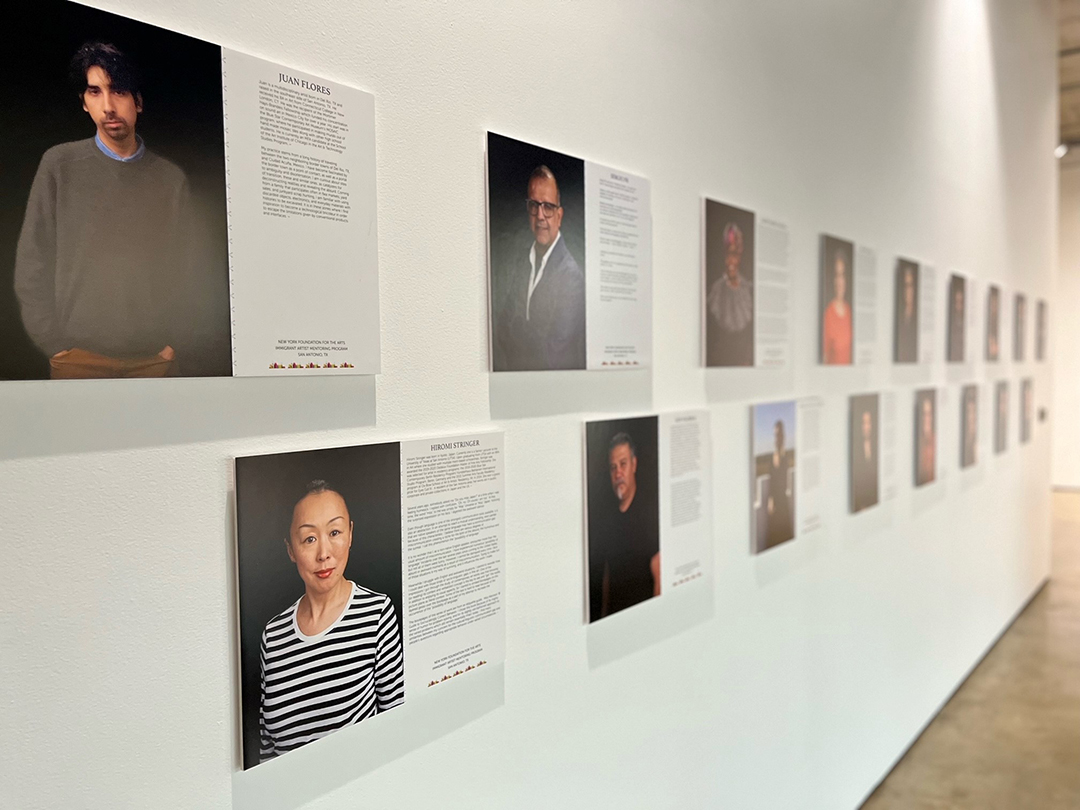
Installation image of artist headshots and bios. Image: San Antonio Department of Arts and Culture
The gallery reopens with an exhibition of works by thirty-four San Antonio-based artists who are connected to the New York Foundation for the Arts (NYFA) Immigrant Artist Mentoring Program. According to the NYFA website, this program, “pairs emerging foreign-born artists with artists who have received a NYFA Artist Fellowship and/or past participants of the program.” The mentors share their own experiences and provide guidance to help mentees achieve goals and learn about available resources.

Installation image of artwork by Ernesto Ibanez. Image: San Antonio Department of Arts and Culture
NYFA Immigrant Artist Mentoring Program Exhibition – Round 2, is a continuation of an earlier exhibition hosted by Centro de Artes in 2019. The exhibition was organized by Richard Armendariz, Kim Bishop, Luis Valderas, and Guillermina Zabala and features artists representing twelve countries, including Argentina, Chile, Czechoslovakia, France, Germany, Iran, Japan, Kenya, Mexico, and Venezuela.

Installation of sculptures by Naomi Wanjiku. Image: San Antonio Department of Arts and Culture
Participating artists include: Fernando Andrade, Ricky Armendariz, Jose Balli, Kim Bishop, Hayfer Brea, Francisco Cortes, Juan de Dios Mora, Anna De Luna, Juan C. Escobedo, Anel Flores, Juan Flores, Sergio Flores, Brandy González, Beatriz Guzman Velasquez, Ernesto Ibanez, Julya Jara, Sergio Mata, Barbara Miñarro, Yoko Misu, Merle Mory, Anastassia Rabajille, Andrea V Rivas, Caroline Royall, Jesse Ruiz, Gloria Sánchez Hart, Sabine Senft, Hiromi Stringer, Luis Valderas, Jorge Villarreal, Anne Wallace, Naomi Wanjiku, Anahita Younesi, Guillermina Zabala and Claudia Zapata.

Richard Armendariz, “Blown off Course, Guided by Spirits,” 2020,
oil on carved birch plywood, 48 x 48 inches. Image: San Antonio Department of Arts and Culture
In a press release, Department of Arts & Culture Interim Executive Director Krystal Jones shared, “We are delighted to reopen the gallery doors to the community with such a powerful, impactful and important exhibit. This exhibition reflects on the multilayered immigrant and first-generation experience shared by so many in our community. Centro de Artes provides a place for these stories to be told, stories that have historically been underrepresented in gallery spaces.”
Executive Director of NYFA, Michael L. Royce, added, “Many of the participating artists have already contributed to the cultural landscape in San Antonio. The Immigrant Artist Mentoring Program expands their ability to contribute, and this exhibition is the cumulation of what they have learned and created throughout the collaborative process.”
The exhibition will be on view from January 26 through July 3, 2022. To learn more about gallery hours and upcoming programs, visit the Centro de Artes website.
The post San Antonio’s Centro de Artes Gallery Reopens After Nearly Two-Year Closure appeared first on Glasstire.

Kristen Cochran in the TCU Moudy Gallery artist “studio.” Photograph by Colette Copeland
For two weeks, artist Kristen Cochran has transformed Texas Christian University’s Moudy Gallery into an in-situ studio space open to students and the public. The project title cleverly refers to a retrospective with the added connotation of the spectator. I met with Cochran to discuss some of her ideas, works-in-progress and notions of private vs. public space within the gallery context. I’m intrigued by this model within the academic context, as it presents an opportunity to demystify the artist’s process — one that offers art students insight into the life of a professional artist. I wish I had experiences like this during my studies. The gallery walls and floors are covered with photographic sketches, drawings, books, and assemblage sculptures, and while it resembles an artist’s studio space, it is still very clean and sterile.

Sketch photo. Photograph by Colette Copeland

“Assemblage 1,” a study in contrasts between soft and hard. Photograph by Colette Copeland
One of the key themes in Cochran’s work is the investigation between digital and physical spaces. She researched private islands for sale, printing screen shots and juxtaposing them with images from “free hot tubs” found on Craigslist. The idea of a personal oasis addresses physical and emotional desire and longing for rest, but also highlights how our wants are fueled by digital fantasy surfing. Many of the hot tub images showed tubs in various states of disrepair, emphasizing a ruptured fantasy, or how fantasy doesn’t hold up to reality.
At the end of the micro-residency, the artist will present her reflections to the university community in a lecture on January 27 at 12 pm. Expanding upon her ideas, the gallery will also feature her work in a solo exhibition in 2023.

A pull tab sketch references the pull tab advertisements so common in Brooklyn, where Cochran recently lived as an artist-in-residence. Photograph by Colette Copeland

A mannequin as spectator with a sleep mask for when she is tired of spectating. Photograph by Colette Copeland
The post Kristen Cochran’s “retrospectator” at TCU’s Moudy Gallery appeared first on Glasstire.
This post, being an environmentalist at a fossil fuel company, boss wants us to work from his house, and more , was originally published by Alison Green on Ask a Manager.
It’s five answers to five questions. Here we go…
1. I’m an environmentalist at a fossil fuel company
I’ve been concerned about climate change and global warming for years now. This past summer really emphasized that climate change is here and is affecting my area of the world. The problem is, I work at a company that sells fossil fuels. It’s only one business line that we do, but it is the business line that makes the most profit. I wasn’t fully aware of the scope of this when I first accepted the job years ago, but as I learned more through my employment, I became aware that it is their biggest cornerstone.
I hoped that the recent developments in my country of carbon tax and the transition to electric vehicles that management would see the writing on the wall and start to wind down production and increase efforts into other business lines. However, they seem determined to squeeze as much profit out of oil and gas while they still can.
I work in marketing, so I help with the development of campaigns that promote consumers and businesses to buy fuel. More and more, I feel sickened by some of the work that being asked of me to do. How can we continue to sell fossil fuels and pretend like the world isn’t on fire?
The culture seems to be that climate change is taboo. I rarely hear anyone talk about it, except for polite conversation about how the weather is acting strange lately. I feel like my job could be on the line if I speak out against what upper management is planning, or if I start declining to do the work that I’m morally against.
I like my coworkers and I have a great boss. I enjoy the work that I do when it’s not related to fuel. The pay and benefits are great. After a history of low-paying jobs, I’m hesitant to give this one up. I rationalized this by thinking that someone has to fill my position, it might as well have someone who cares about the environment, right? But I am just a small cog in the machine, so my power to make change is limited. I have reached out to some coworkers individually who feel similarly, so I’m not the only one who feels this way at least. Is there anything I can do, or do I have to find a new job? Help!
If you’re asking if there’s any way to convince your company its work is morally wrong or otherwise get it to change course … probably not. If you were in a different type of role, there might be opportunities to engage in harm reduction efforts, but that’s not likely to happen in marketing. If you had uncovered information that allowed you to act as a whistleblower, that could be a way to effect change but it doesn’t sound like the situation you’re in.
The crux of it, unfortunately, is that you’re working for a company whose work conflicts with your values. You’re feeling the same way some people might feel working for big tobacco or the gun lobby, and you’ve got to decide if you’re willing to do it or not. Some people are able to make peace with working at jobs that don’t align with their values and some aren’t … but it sounds like you’re probably in the second group.
2. My boss wants us all working from his house, but I’m allergic to his dogs
My company’s office closed permanently mid-pandemic, and we all worked remotely for a time. The owner decided he prefers people to work in person with him and has some people coming to his home to work there. I think he’s lonely and likes having people around. He’s alluded to the day when we’ll all come back to the “office” (now meaning his house).
However, he has dogs that I am allergic to, and my doctor said I should not be around them, even with medication. I’ve been able to do my job remotely and I’ve done well and received raises. I like my job and want to keep working at the company but not from his house!
My coworkers aren’t thrilled about working from the owner’s home, but it’s not a deal-breaker for any of them so I don’t think they will band together to push back. If he requires me to work from his home as a condition of employment, are there any principles of, say, accommodating my allergy that I could appeal with?
If your company has 15 employees or more, you’re covered by the Americans with Disabilities Act, and your employer would be required to accommodate you (in this case by not making you work from the owner’s home) unless it causes them “undue hardship” (which it doesn’t appear to thus far). If you have fewer employees than that (likely the case if he wants you all at his house), some states have disability laws that kick in at lower thresholds (google your state name plus “employee disability law,” without quotes).
Even without a law in play, though, with most employers you could simply explain that you have severe allergies and your doctor has told you not to spend time in homes with dogs. There’s a good chance that will be all you need to do, so start there!
3. I was left out of an appreciation initiative
This happened a year and a half ago but still kind of bothers me. I’m a teacher at a wonderful school. I’ve taught at a LOT of schools over my career, and this one is absolutely one of the best in every way. When the pandemic first hit and my state shut everything down, we pulled together in a really amazing way and our students only missed one day of instruction, which I think says a lot about both the school and us teachers! The administration wanted to thank us for our hard work, and at the end of the school year they drove around to every teacher’s house either late at night or early in the morning and left a yard sign on their front lawn. Everyone except me, anyway. They weren’t all delivered at once — every day for about a week there would be more teachers posting in our Google Chat that they woke up to a fun surprise! So every morning I woke up and went to my window, but I never got one. I do live 45 minutes away from the school, but other teachers who live 30 or 40 minutes away still got one. And (more importantly, in my opinion) I make that drive every single day for work, so is it really too far for one drop off?
I made a passing comment in our Google Chat at the time, but obviously never brought it up again because it’s such a small thing. It’s something that still kind of ticks me off though. Is that unreasonable of me? Of course I’ve let it go and am not going to do anything about it, but I’m wondering if I really had any right to be bummed about it at all, or if I should have assumed that a long commute would exclude me.
I think you were entitled to be bummed about it! I also think it was probably an unintentional oversight, not a deliberate decision to skip you, since people who lived just five minutes closer than you were included. (Also, if they had deliberately skipped you, I’d think they’d be likely to explain it to you, not just ignore you without comment.)
4. Should I tell my boss another company reached out to me?
I work at a small design firm, where I started as an intern and am now a full-fledged employee (and the longest tenured at that). My boss has been incredibly supportive through my time at her firm and we have a great relationship where I am not afraid to ask her for career advice or about general industry questions.
Today the owner of a rival firm (no bad blood, but similar size/projects) reached out to me on LinkedIn to propose a chat about my career and future, saying they had heard great things about me and there was no pressure, but they wanted to chat about my future. I have no interest in switching employers — I like our projects, the company culture, and the potential for growth at my current firm, and I get paid the high end of normal for my level (and my boss has always been very generous).
Should I tell my boss that this rival firm reached out to me to ask how to handle it? I am not interested in switching jobs but, as my mentor, would like her input on how to handle these conversations. I do want to take the meeting, if only because I have only worked at one firm and it would be helpful to network. I am not close enough with anyone else more senior at my firm to ask them. I don’t want her to worry that I am getting poached, but would appreciate her insight with 20+ years in the industry on how to handle this conversation with grace when I have no intention on leaving.
If you mention it to your boss, there’s a high chance she’ll assume the subtext is that you want her to know that you’re in-demand and she needs to do more to retain you. That’s usually the subtext when people mention this kind of thing, even if you don’t intend it to be.
This is an situation where your boss can’t really be your mentor; she has a conflict of interest because she presumably doesn’t want to lose you. (That will be true in other situations, too! Having a boss who mentors you is a great thing, but you should cultivate other mentors as well, because there will be times when it’s not in your interests to share something with your boss — or where you might need advice about her.)
As for what to do: If you want to take the meeting, go ahead and take it! You can be up-front that you’re happy where you are but interested in meeting with them and hearing them out — and if you remain uninterested in a job with them after that first meeting, you can let them know that you appreciated learning more about their work but have decided to stay where you are for right now.
5. When does a company start to need a dedicated HR person?
How many employees can a workplace have before it needs a dedicated HR person? If, say, you had a branch location of a midsize paper company with 20 people combined in the office and warehouse, would it need an HR person on-site? Would that be different if it were the same size but an independent small business?
You don’t generally need a dedicated HR person until you hit 50 employees or so (because that’s when you meet the threshold for FMLA, and that can immediately make your HR work more complicated) but a lot of companies don’t bring one on until they’re closer to 100. At fewer than 50 employees, there won’t be enough work for a dedicated HR person to do. You’ll of course need someone handling the more admin-ish pieces of HR, like payroll and benefits administration, but in small businesses that’s usually more of a clerk position than it is someone who’s doing higher-level HR work like legal compliance, policy, investigations, management coaching, etc. At that size, you can generally get by with outsourcing that more complicated stuff (like legal compliance) as needed.
Being a branch of a larger company changes the calculus, but if you’re asking about Toby on The Office, it was never clear to me why he was there.

Easy Bazaar Crafts
Gerald Knox, Ed.
Better Homes and Gardens
1981
I know craft fairs are a thing, and many people like the idea of hand made items for gifts or whatever. Not to take away any of the skill involved in creating these….things, but why would anyone want to spend time making or buying this stuff? I can honestly say I have never needed a hand shaped purse. (Although there are times that I would think a purse with a raised middle finger would be kind of funny…)
This type of book obviously isn’t for me, but I also question why we would need a book specifically geared to the bazaar or craft fair types? They don’t look particularly different or easier than other crafts. How are these crafts different from other general craft books? If you make dolls, I would think you would want a book geared to that particular topic.
Craft books at ALB are now numbering over 200 in the archive. This has made Holly and I unwilling students of crafting books. I don’t particularly think one-size-fits-all craft books are a reasonable investment for a budget. Stick to the general categories: papercrafts/cards, knitting, quilting, jewelry, etc. I think you will get more bang for the buck in the collection. Caveat: Of course your mileage may vary. Your knowledge of your users/community trumps anything a crabby librarian in Michigan says.
Yours in crafting,
The Crabby Librarian in Michigan


The post Bazaar (or Bizarre) Crafts appeared first on Awful Library Books.

Manas Sharma and Simon Scarr used satellite imagery to show the scale of the Tonga eruption, which spurted a 24-mile cloud that grew to 400 miles in diameter in an hour. Notice the little Manhattan in the bottom left corner in the image above.
However, instead of leaving it at that, Sharma and Scarr animated the eruption over familiar geographic areas to better see how big it was. The cloud was big enough to cover whole countries.
Tags: Reuters, satellite imagery, scale, Tonga, volcano
This post, why aren’t the companies “desperate” for workers doing the one thing that would attract them? , was originally published by Alison Green on Ask a Manager.
If you believe reports from employers, they’re desperate to find good employees but can’t lure them at any price. Dig deeper, though, and it turns out that many companies are still operating on a model of underpaying and overworking at a time when workers have much better options.
At Slate today, I wrote about employers that are still operating like they did a decade ago, without considering how they might need to change—to raise salaries, increase benefits, and generally make themselves a more attractive place to work. You can read it here.

Hovertext:
Why is the symbol for engineering always a gear and not a toaster running Doom?
This post, our motivational speaker got drunk and went off the rails , was originally published by Alison Green on Ask a Manager.
A reader writes:
My partner’s small company recently held their annual team retreat. Most years, they hire a facilitator to run standardized workshops for some of the retreat, and then have more casual “fun events” the rest of the time. This year, however, they hired a motivational speaker to MC and run a few lightweight team-building exercises.
On the first night of the retreat, they had a cocktail hour. I think you can guess where this is going. Unbeknownst to leadership, the speaker had a few drinks too many. They then called her up to introduce her, and she grabbed the mic and launched in. She spent the first few minutes bashing the new corporate ownership (the company was recently acquired), telling everyone that they’d “sold out.” That topic exhausted, she moved on to the three things she wanted them to balance in their lives: work, health, and sex. She then pointed at the female HR director and said, “and she should be in charge of all three!” She veered on from there, making masturbation jokes, until the CEO finally stepped in and cut her off. A number of the employees were so uncomfortable they immediately left for bed.
This was the beginning of the retreat, so this speaker (thereafter sober!) spent the next few days making welcomes, leading icebreakers, and trying to instill cheer. She mostly skipped the remaining social events, but didn’t acknowledge that she’d messed up (nor did the company). My partner says people were so turned off, however, that it soured the tone considerably.
My question is: what do you think should have been done after her inappropriate monologue? They’d clearly planned for her to MC, so I’m sure they didn’t know what to do if they sent her home (though someone could have easily stood in). Would you have given her a stern warning and kept an eye on her? Focused on employee comfort by having her leave?
Oh no.
She showed such bad judgment on the first night and made people so uncomfortable that I’m surprised the company didn’t decide to part ways with her after day one. She was presumably brought in to bring people together and build morale, and she did the opposite of that.
After day one, I don’t think she could do the job she was hired for anyway; she had already made people too uncomfortable. And by keeping her around, the company was conveying, “We think this person is still a good choice to lead our events.”
I’d say that of any speaker, but it’s made even worse by the fact that she’s a motivational speaker! It’s not like she was a subject matter expert whose input was needed for the week’s strategy sessions — her sole role there was about how people feel. And when her presence was clearly making people feel worse, not better, it didn’t make sense to have her continue on, and particularly not in such a visible and influential spot.
There are dozens (or perhaps hundreds) of excellent desktop Linux distributions that can be capable alternatives to Windows or macOS, but there are also a few systems that are outright clones of proprietary software products. One of them is AiryxOS, which aims to combine the interface and software design of macOS with the versatility of FreeBSD, which is currently in the early stages of development.
There are a number of open-source operating systems that aim to clone proprietary systems, usually with some level of binary support — ReactOS is a clone of Windows (specifically, Windows Server 2003 right now), Haiku is a continuation of BeOS, FreeDOS is an MS-DOS clone, and so on. The AiryxOS project is still in early stages, but it has some lofty goals. Zoë Knox is the main developer, who currently works as the Vice President of Engineering at the OpenNMS Group.
The readme document outlines plans to have source and binary compatibility with macOS applications (e.g. you could compile a macOS app or run an existing Mac app on Airyx), a Mac-like interface and folder layout, and a “pleasant to use, secure, stable, and performant” design. It also shares some code and resources with helloSystem, a FreeBSD distribution with a Mac-like interface.
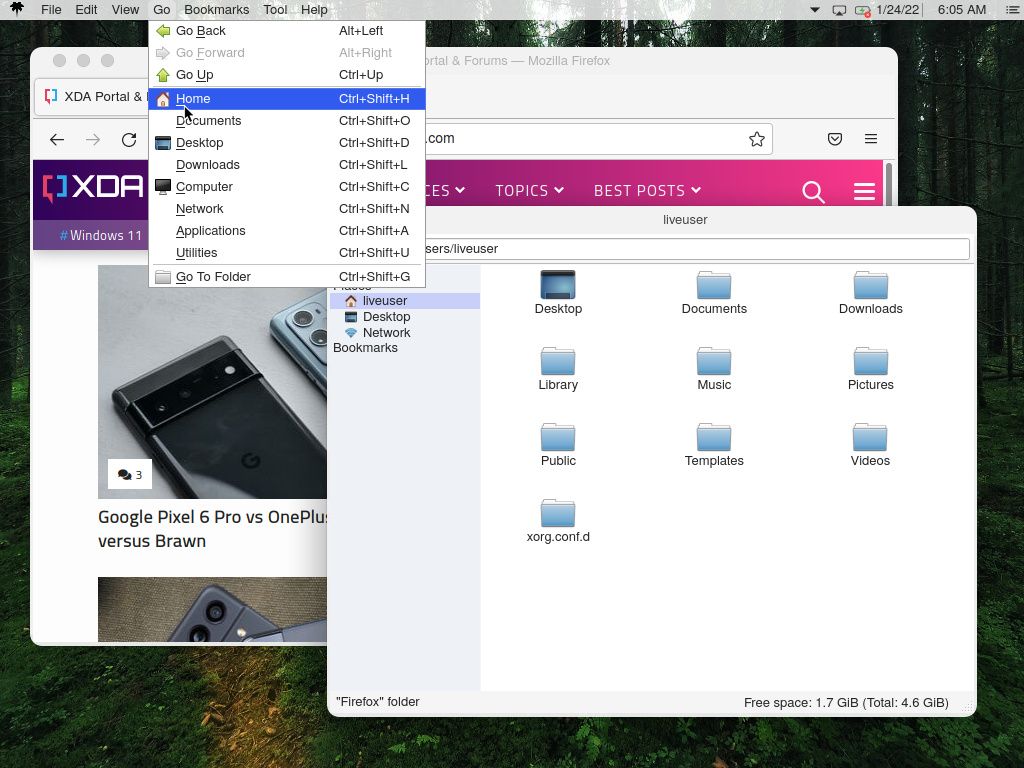

Full support for existing macOS software is likely a ways off, if it happens at all — there are thousands of developers contributing to the Wine project, and it’s still not a perfect compatibility layer for Windows applications. However, the FreeBSD base should make the task a little easier (the XNU kernel in macOS is partially based on BSD), and also opens the door for running native FreeBSD applications and some Linux software. For example, the included Firefox application is the FreeBSD version.
There’s not much you can do with the current v0.3.0 release, but the project has come a long way in a relatively short amount of time — the first developer release was in May of last year. If you want to give it a try, head on over to the official website at the link below.
The post AiryxOS wants to be an open-source macOS, complete with support for Mac apps appeared first on xda-developers.

A new year, a new instalment of our gaming on Ubuntu blog series! This month we’re covering Linux game development tools on Ubuntu Desktop, something that may be particularly useful for anyone taking part in the upcoming Global Game Jam.
Global Game Jam is the world’s largest game creation event taking place all around the globe. Participants run 48-hour game development hackathons, and every project is based on the same theme, announced during the Global Game Jam video keynote. It’s a great way to get started with game development if you’ve never tried it before. For veteran developers, it’s an opportunity to experiment or try out new ideas that might not be possible on their regular projects.
Whilst game development tools on Ubuntu are still maturing in a lot of ways, that doesn’t mean it’s impossible- or even that difficult- to create great games on Linux. In this post we’ll take you through two of our favourite game engines currently available on Ubuntu Desktop; Godot and Unity.

Godot is first on our list because it is free and open-source, which means that you have complete control over everything you make with it. The engine supports both 3D and 2D games, has a Python-like scripting language and exports to desktop, console, web and mobile platforms.
Godot is a really versatile tool and a good place to start learning game development. It also has an active and welcoming community if you’re looking for support or even to contribute!
It’s also the easiest app to install since you can find Godot in the Ubuntu Software app or on snapcraft.io.

Once you’re up and running check out the Godot Docs to view a range of tutorials that will help you get started!
Unity is the world’s most popular game development platform and is the foundation of many of the best PC and mobile games you can play today.
It’s also used for more than just video games. As a simulation environment, it integrates with tools like ROS for Robotics and also makes a great training environment for Machine Learning.
You can read more about ROS and Ubuntu here.
The Unity Hub is still in beta when it comes to Linux support. You can find it by going here and viewing the instructions for installing Unity Hub on Linux.

To save you some clicks, we’ve reproduced the Ubuntu-specific instructions below:
Run the following command to add the Unity Hub repository:
$ sudo sh -c 'echo "deb https://hub.unity3d.com/linux/repos/deb stable main" > /etc/apt/sources.list.d/unityhub.list'Add the public signing key:
$ wget -qO - https://hub.unity3d.com/linux/keys/public | sudo apt-key add -Update the package cache and install Unity Hub:
$ sudo apt update
$ sudo apt-get install unityhub
This will create a new icon in your applications menu that you can click to open.
To get started with Unity you’ll need to make an account. Don’t worry though, Unity is free for personal use (and offers even more free features for students). Click Sign in to progress once you have one.

After being presented with a brief ‘what’s new’ intro video you’ll then be prompted to download the actual Unity Editor.

Once you’ve finished installing you should be ready to start a new project!
Each new project is configured around basic presets based on the type of game you want to build (2D, 3D, VR, First-person). The Unity team have also collaborated on some demo projects to help you get to grips with the tools.

For further help getting started, check out Unity Learn for a range of tutorials and learning pathways that will take you through the basics of the editor and beyond. In addition, Raspberry Pi recently announced a new Introduction to Unity learning path on their website. This is designed to guide you through the fundamentals of game development. A great starting point for newer developers!
It wouldn’t be a blog post about Ubuntu Desktop in 2022 without a cheeky Flutter mention!
We know a lot of community members are already experimenting with Flutter when it comes to desktop applications, but we also think it has potential in the gaming space.

This month the Flutter team are running Flutter Puzzle Hack. This is a competition that asks developers to re-imagine the classic slide puzzle with prizes for the most creative submissions.
We’re also keeping an eye on Flame, a flutter-based game engine that delivers modular, game-specific components to users. Flame is definitely worth checking out if you’re a Flutter enthusiast.
Godot and Unity are powerful engines that allow users to develop highly polished multi-platform titles, but they’re also user friendly enough to get something up and running quickly. This makes them great foundational tools for Linux game development.
If you already develop games on (or for) Linux or decide to experiment with Ubuntu at an upcoming game jam, we’d love to hear about your experiences. Share your projects, tips and tricks, or tutorials with the community over on the Ubuntu Desktop Discourse.