Click here to go see the bonus panel!
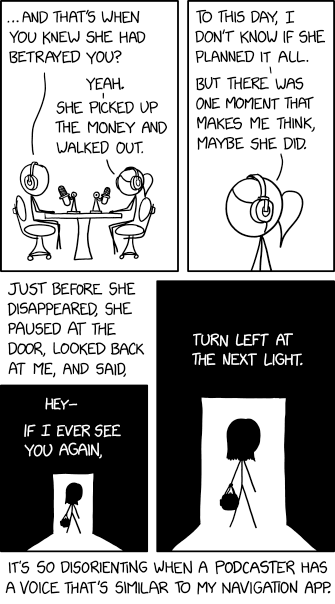
Hovertext:
The most-told story isn't the path of the hero. It's 'one time I got laid.'
Today's News:
Hovertext:
The most-told story isn't the path of the hero. It's 'one time I got laid.'

Peltola is drawing an unusual amount of national media attention as the first Alaska Native elected to Congress, and even more because of her special election win over Republican Sarah Palin.
(Image credit: Liz Ruskin/Alaska Public Media)

This post, the flasher, the scathing tirade, and other stories of magnificent rage-quits , was originally published by Alison Green on Ask a Manager.
The recent post revisiting the employee who quit by spelling out “I QUIT” in fish inspired me to round up some more epic quitting stories that have been shared here over the years. Here are 10 more good ones.
1. The flasher
“I was hired by a daycare to run their two classroom state-funded Head Start program. I had recently left a job at the local early childhood development program, so I was familiar with it. On my first day, I was told I could just review their set-up, meet with the teachers/kids, and review their paperwork. It was not good. I saw many mistakes that would need to be fixed and all the kids that had been enrolled were missing required paperwork and they were mixing funds and supplies with the regular daycare so it was a mess.
Anyway, at about 2 the owner told me she needed to run errands and since someone had called out, I needed to ‘run the front desk.’ I told her I didn’t think I could do that and she was very short with me and said all I needed to do was buzz parents in. Of course it all went to hell as soon as she pulled out of the parking lot. Parents who had lost custody and weren’t supposed to show up, parents who wanted to pay in advance, phone ringing off the hook, sick kids whose parent wouldn’t come get them.
I guess another employee who had her cell called her and she came skidding into the parking lot about 3:30. Once everything was settled, I was called into the office and thoroughly griped at. When she finally stopped, I basically said, ‘Yeah, this isn’t for me. This was my first day and you left me alone to handle all this, your Head Start program isn’t properly set up and it’s going to take someone weeks to fix it but it won’t be me because I quit.’ She started to blow up and I said ‘Bye’ and turned to leave. She said, ‘I’m going to need that shirt back’ (all employees were required to wear a red polo with the daycare name embroidered). I took it off, tossed it on her desk and walked out in just my bra. A couple of parents in the parking lot were shocked to see a shirtless person walking out of the daycare.
I still don’t regret it.”
2. The F-you
“I worked at a law firm where almost every single legal assistant rage quit. It was really fascinating. It was a complete toxic dump. The attorneys were horrible, the HR director had no spine. It was totally common for the entry level assistants to just burst into tears and go into HR’s office and tell them they were leaving, but we had one woman who did the whole stalk out in the middle of the day saying ‘F*** you’ to everyone she passed. She was considered a hero among us all. I was younger then and I left a note on HR’s desk and left one Friday and never came back.”
3. The tirade
“The best rage quit I ever witnessed: we had a weekly all-hands staff meeting with mandatory attendance. If you were on the road you were required to dial in. ‘Mike’ called in, and when it was his turn to speak he delivered a scathing tirade that was the stuff of quitting fantasies — absolutely A+ stuff. The big boss was so stunned he couldn’t respond at first… but then he pulled it together and hung up on Mike. But Mike was a step ahead — he’d dialed in on TWO lines, so he was STILL on the call, and got another couple of killer lines in before he got disconnected for good! Mike was a company hero for months after that.”
4. More fish
“I have another ‘resigned in fish’ story! The terrifying paralegal at Exjob brought a large side of raw salmon into the office, stashed it in her top desk drawer, and then crazy glued the lock. She then locked her office and crazy glued THAT lock. The hazmat teams were called by day 8. She was never pursued for this because she was … terrifying.”
5. The house fire
“I worked for a phone survey group for, like, an hour. Then I looked at my phone, made a dramatically concerned face, told my supervisor I’d just gotten a text that my house was on fire, and left, never to return.
(Eight months later, they sent me a W2 for my one hour, bless them.)”
6. The correction
“At a ridiculously toxic job, the VP was the worst person there, even by their standards. She demanded an absurd, Panopticon-level of surveillance in the CS department, played favorites and played people off each other, told us not to discuss our pay with each other (illegal), and tried to get an employee fired for being an out gay woman (illegal).
She also had the habit of shaming people in company-wide email and couldn’t write to save her life. Some people don’t have great grammar and would be well served by an assistant drafting emails, but this woman’s emails were so poorly written they were inscrutable.
So towards the end of the day, after a brief but unhinged full company email that used ‘your’ for ‘you’re,’ a hero in the claims department replied all with just, ‘ *you’re.’ 10 minutes later, he popped in to the customer service department to tell us he had gotten what he wanted (being fired) and asked if anyone wanted his stapler.”
7. The wrench
“Possibly an apocryphal one here, but when I worked on the oil rigs there was this story:
The background is that on an oil rig you drill using 30 feet sections of pipe, which you screw together and then insert down a hollow steel tube (we drilled at sea). When you drill down 12,000 feet, thats a lot of pipe. So when the drill bit on the end wears out it’s a long job. So one time they had pulled all the pipe out of the hole and were changing the drill bit when one of the blokes accidentally kicks one of the big steel wrenches across the drill floor and plop! it goes down the tube and sinks through the drilling mud all the way down – 12,000 feet. So they have to put a tool on the end of the pipe to catch/hook the wrench and put all the pipe back down and back up again. After three unsuccessful attempts they finally get the mangled bit of metal out onto the drill floor. This has taken a week and rigs cost about a million dollars a day to run.
So the “Company Man,” as the big boss is called, stomps over to the roughneck who kicked the wrench and unloads a torrent of swearing and abuse telling him to grab his stuff, he’s ‘run off,’ i.e. he’s on the next helicopter off the rig and he’s sacked and will never work for this company again. The guy stares him in the face saying nothing, then walks over to the mangled wrench and drops it back down the hole.”
8. The cough drops
“I had an employee run out to her car “for cough drops” on her first day, about two hours in and never return. I hadn’t even assigned any work yet, just gave her a manual to flip through.”
9. The long goodbye
“I don’t have a rage-quit story, but I have an awesome story of how someone left after being fired.
They did it at 3 pm on a Thursday … I have no idea why they didn’t wait until the end of the day.
As she left the conference room, she loudly yelled, ‘I JUST GOT FIRED!’ Cue everyone popping up out of their chairs like meerkats to see who it was (it was a cubicle farm, so no privacy at all). She walked towards her desk to grab her personal belongings, but on the way she stopped by each cubicle… ‘Did you hear, I was just fired!’ ‘Lovely working with you, won’t see you again because I’ve been fired.’
Her manager was trailing along behind her with his mouth just hanging open and eyes wide. He had NO idea what to do. HR ran off, I think to get someone else higher up to help. But I never saw them come back.
People were laughing and cheering for her. It was talked about forever. Randomly someone would say ‘I’m fired!’ from behind their cubicle wall and everyone would laugh.
She took about 30 minutes to gather her things, say goodbye to everyone, then finally leave. It was spectacular.”
10. The misunderstanding
“This isn’t quite a rage quit, but it’s close enough and a good story.
My brother-in-law was a manager of a fast food restaurant. He came in early one morning to find the place had been emptied out. All the tables and chairs, the food, the glassware, everything. The owners had decided to close the restaurant and move it to another town and ghosted both him and the employees. And it was payday!
He called the owners and got machines, then noticed they had forgotten to take the very expensive cash registers. He loaded them on his truck and took them to an undisclosed location and basically held them for ransom.
Once he did that, the owners were falling all over themselves to get in touch, claiming it was all a “misunderstanding” and checks would be mailed. He said no, the checks had better be delivered here, by noon, and I am going to drive everyone to the bank to cash them before I remember where your cash registers are.
So many sleazy restaurant owners screw their employees, it’s nice to see it can backfire.”
And in case you missed it, here’s a photo of that original resignation in cod.


A woman was arrested at St. Giles' Cathedral in Edinburgh on Sunday; in London, a protester holding a sign reading "Not my king" was led away by a group of uniformed officers.
(Image credit: Marco Bertorello/AFP via Getty Images)

This post, what’s up with the term “work wife”? , was originally published by Alison Green on Ask a Manager.
A reader writes:
I’m wondering what your (or your readers’) thoughts are on the term “work wife.” Recently a coworker referred to me (a woman) as another (male) coworker’s work wife, and it totally bugged me out. I brushed it off at the time but internally felt VERY icky about it.
Personally, I feel like the term implies a whole bunch of things I’d rather not have associated with my name at work — office romance/flirtation, unprofessional cliquey-ness, gender-based subjugation, gender roles, heteronormativity in general … (I’m queer and don’t want to be married, which might be part of my aversion to the term — but I’m not super open about this stuff at work.) I definitely get along well with the guy in question and chat with him a lot, but there are several coworkers I could name that I have the same type of relationship with. The only difference is that those coworkers are women.
I talked to a few friends about it, though, and the greater consensus is that it’s just a jokey name for coworkers who are really close with each other, and I probably have nothing to worry about in terms of how people view me at the office.
It seems like such a loaded term to me, but since other people only think of it as describing a particularly close work friendship, I’d love to hear other people’s feelings about the word. What do you think?
It’s one of those terms where some people are really squicked out by it and some people don’t have a problem with it because they don’t mean it in a squicky way. “Work wife” and “work husband” are generally used to mean “colleague with whom you have a very close work relationship.” And while they did originally seem to only get applied to colleagues of the opposite sex, they now get used for colleagues of the same sex too.
It’s not intended to imply any kind of romance or flirtation, although clearly when you’re using “husband/wife” it brings that up for some people.
Since “work husband” gets used too, I don’t see any particular gender-based subjugation in it — unless, crucially, it’s applied to a relationship that does contain problematic gender dynamics, or unless there only seem to be “work wives” and never work husbands in your circles, in which case, yes, totally objectionable.
But if it’s used to describe both parties in a close and equitable relationship, I’d argue the concept isn’t problematic, but it’s always going to be weird when you take words that describe something totally different and apply them to something else. It’s not surprising that some people will hear the connotations of the first usage carry over to the second.
Personally, I don’t love the term but don’t care if others use it to describe themselves — but it’s a bit weird to apply it to someone else without them doing it first. And if that happens to you, it’s definitely reasonable to say, “Ugh, I really hate that term, please don’t use it about me.”
This post, I quit my horrible job but they’re pressuring me to stay and I feel like a villain , was originally published by Alison Green on Ask a Manager.
A reader writes:
I work in the office of a small family business. I just hit my one-year anniversary here. I’m probably up there as one of the longest-tenured employees in here. We are severely understaffed on a good day. One coworker just finished up her two-weeks notice after being here for two months, and another coworker just straight up had enough and walked out halfway through the morning last week. She lasted four months. Her predecessor lasted one day. She’s also not the first person to walk out in the middle of the day in my tenure here.
As you can probably guess from that, the atmosphere in here is very, very toxic and I want to leave.
Or, at least, I’m incredibly torn. I love most of my coworkers. I’ve never worked anywhere this relaxed before. The work is fun and the atmosphere can be vibrant. The company also inspires great loyalty and there are lifers here who have worked decades at this place.
The biggest problem is that it’s run by one of the most dysfunctional families I’ve ever seen. Upper management all belongs to this family. They’re not shy about airing their dirty laundry publicly: airing grievances and straight-out fighting over the radios is a common occurrence. The entire place can sometimes get caught up in it. One upper manager is notorious for hiding behind the office staff and getting them to enact his decisions so that he doesn’t get caught by the fall-out. There’s another who spends an honestly stunning amount of time looking over everyone’s work and emailing detailed and backstabbing “corrections” to our direct manager. Everyone is so overworked that we’re snapping at each other, and I regularly have to work through lunch so hard that I forget to even eat at my desk.
There are also things that make me … uneasy. One person is leaving because whatever she does, she can’t get the invoicing to come out right. The person who walked out did so partly because it was implied she had stolen something … only to have the item in question turn up in the possession of the family member who had hinted she stole it. There is one member of the family who is the only person to understand the accounting practices in the building, and she gets vicious anytime anyone even asks her a question about it. Sometimes things are said to deliberately confuse the owner. Sometimes if we push back on something the owner wouldn’t want us to do, we’re told to just not tell him it’s happening.
I even gave my notice last week. I called out because I needed a mental health day after some bad news in my personal life and was pushed into coming in anyway halfway through the day, which … I guess is fair considering we’re working on less than skeleton staff and I wasn’t physically sick, but having to spend the day crying at my desk between getting called into meetings that turned into family arguments left me feeling so much more burnt out than ever and I barely got any work done anyway. At one point of blatant mismanagement, I snapped and ended up straight-up yelling at a certain member of the family over the phone about everything that has been going on in this place. For 18 minutes. I don’t think there’s any way I can really convey how NOT LIKE ME something like that is. I don’t yell at coworkers and I certainly don’t yell at my boss. I don’t know how I’m still employed. (There’s also no HR in this place. We have an outside vendor handle payroll and hire by getting whoever looks the least stressed to handle the online job postings.)
However, my new direct manager is a force of nature and has decided she is going to turn this place around single-handedly. And that plan involves my staying. And so she has decided she will motivate me to stay by trying to convince me several times a day that she needs me here. She actually delayed me giving my notice earlier by pleading that I need to stay “for her.” She doesn’t stop. I’ve called her on it, made jokes about it, asked her to stop.
When that wasn’t enough, she started holding what I’m calling Come-to-Jesus meetings. These take place seemingly by accident, but always when the coworkers I like the most and who don’t want me to leave just happen to be around … AND the owner of the company, who also doesn’t want me to leave. She’ll give a long, loud motivational speech about all the things she plans to change (including limiting the power certain family members hold over the office) and how she’s going to turn it around, and ending by asking me, in front of everyone, if I’ll stay. It’s hard to say no without feeling like a horrible villain.
Today I didn’t manage to stick to my guns, gave in, and said I’d stay. I feel awful about it. I cried at my desk after. This is a normal occurrence for people here. I am so burnt out that it’s hard to focus on anything, and if I stay I’m going to have to hold the workload of multiple people while training new people. And that’s assuming any of the big sweeping changes she’s talking about even make it past the planning stage, which they, uh, haven’t. Any of them. (Admittedly she’s only been here for a month and a half.)
I don’t know how to keep going at this job if I stay. I’m too burnt out to hold to a decision to leave in the face of the peer pressure I’m getting. I’m more than halfway to just … not showing up one morning, which honestly most of the people in my personal life are supporting, but that’s not something I’ve ever done in my life and would feel horribly guilty if I did. How on earth do I navigate this situation while trying to shore up my own burnout?
Gee, I wonder why people are walking out without notice.
But look: Do you want to leave the job? The answer is clearly yes, which means that you hold all the power here. All you have to do is stick to your decision.
You’ve already done the hard part — making your decision. Now all you need to do is watch your boss behaving like a loon (because this is loon behavior), let that be validation that you are doing the right thing, and steadfastly decline to change your mind for the next two weeks.
It is very, very normal to leave a job — even jobs that are wonderful in every way, pay you well, don’t overwork you, and are run by competent, supportive management. People leave those jobs all the time! There is nothing weird or shocking or villainous about you leaving any job, and not least one like this. None of your coworkers will be outraged that you left. They know why you’re leaving. They all get it. Some/most of them probably wish they could leave too.
In fact, if it helps, remind yourself that by holding fast and not being talked out of quitting, you are modeling healthy behavior for your coworkers. If you let yourself get pressured into staying, some of them are likely to fall victim to the same thing. That’s not the main reason you should stick to your guns, of course! But you’re feeling public pressure about your coworkers, so turn those feelings to your advantage instead.
When your boss continues to pressure you to stay, you have the option of saying, “I’m happy to work out my two-week notice period but my resignation isn’t up for ongoing debate. If you’re going to continue trying to talk me out of it, I will need to wrap up earlier.” Or you can just keep saying no. It’s up to you.
In case it helps you fortify yourself: Your new boss isn’t going to be able to make any of those sweeping changes she’s talking about! For one thing, the dysfunction comes from above her, and she doesn’t have the ability to make people above her change. For another, she’s bringing plenty of dysfunction to the party herself — declaring she will limit the power of the family members? (How?) Hassling you publicly multiple times a day? Continuing when you’ve clearly asked her to stop? She’s just bringing a new brand of dysfunction to the mix.
Stick to your resignation and get yourself out of this mayhem. Encourage your coworkers to follow suit.
And by the way — the bookkeeping doesn’t add up and the only person who understands the accounting gets angry when questioned about it? There’s a high probability that person is embezzling or engaging in other financial shenanigans.
Q: How many important issues in the news will be sidelined by vanity coverage of the Queen’s passing?
A: All of them. Thanks for your patience.
Q: How much will all this cost British taxpayers?
A: More than you could possibly imagine. There’s even a special train.
Q: Can you review the stages of mourning vis-a-vis attire? I don’t want to move on to a black armband when everybody else is still in muted gray tones, or whatever. And what’s half mourning?
A: The stages of mourning for a monarch are quite easy to remember:
Q: Why are people who weren’t subjects of the monarch in mourning?
A: The glorification of unearned privilege is a deep and persistent flaw in the fabric of human society. It knows no national boundaries.
Q: Isn’t it time to abolish the monarchy?
A: Apparently not!
Q: I’ve heard that the new monarch is quite liberal. Is that true?
A: Well, if by “liberal” you mean “liberally spends funds contributed by taxpayers in exchange for an accident of birth,” then yes.
Q: Do all these apparent royalists around me actually believe in the divine right of kings? Because that would be… weird… in the twenty-first century?
A: Your guess is as good as mine.
Q: Should the average citizen be concerned that meeting Liz Truss may be fatal?
A: No, most people who are between the ages of eighteen to sixty-five, not immunocompromised, and up-to-date on their vaccinations have nothing to fear from Liz Truss. Unless they own a British business. Or need to use the NHS. Or have children that go to a British school. Or live in Northern Ireland.
Q: What is happening in Ireland right now, anyway?
A: Not sure, but it looks exciting.
Q: When will the news return to coverage of literally any other topic?
A: After ten days or Vladimir Putin does something we can’t ignore, whichever comes first. Or if Olivia Wilde does anything new we can criticize.

Sometimes I'll inadvertantly flush out a bird while gamboling about in the Forbidden West, and it's fun to see if I can reflexively hit it in the air before it flies away and get some free Aloy snacks.
I do not always realize what weapon I have equipped when I do this.
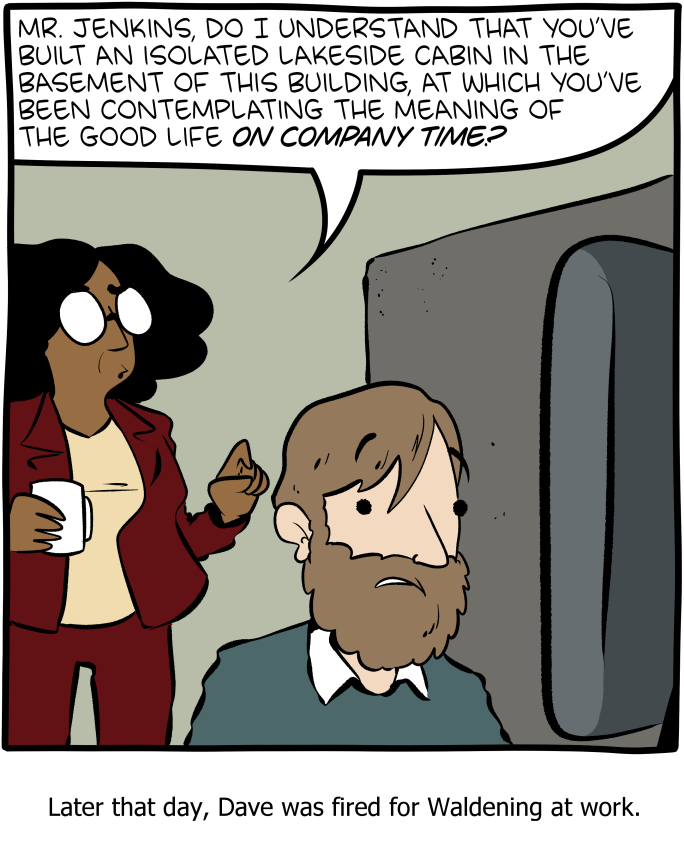
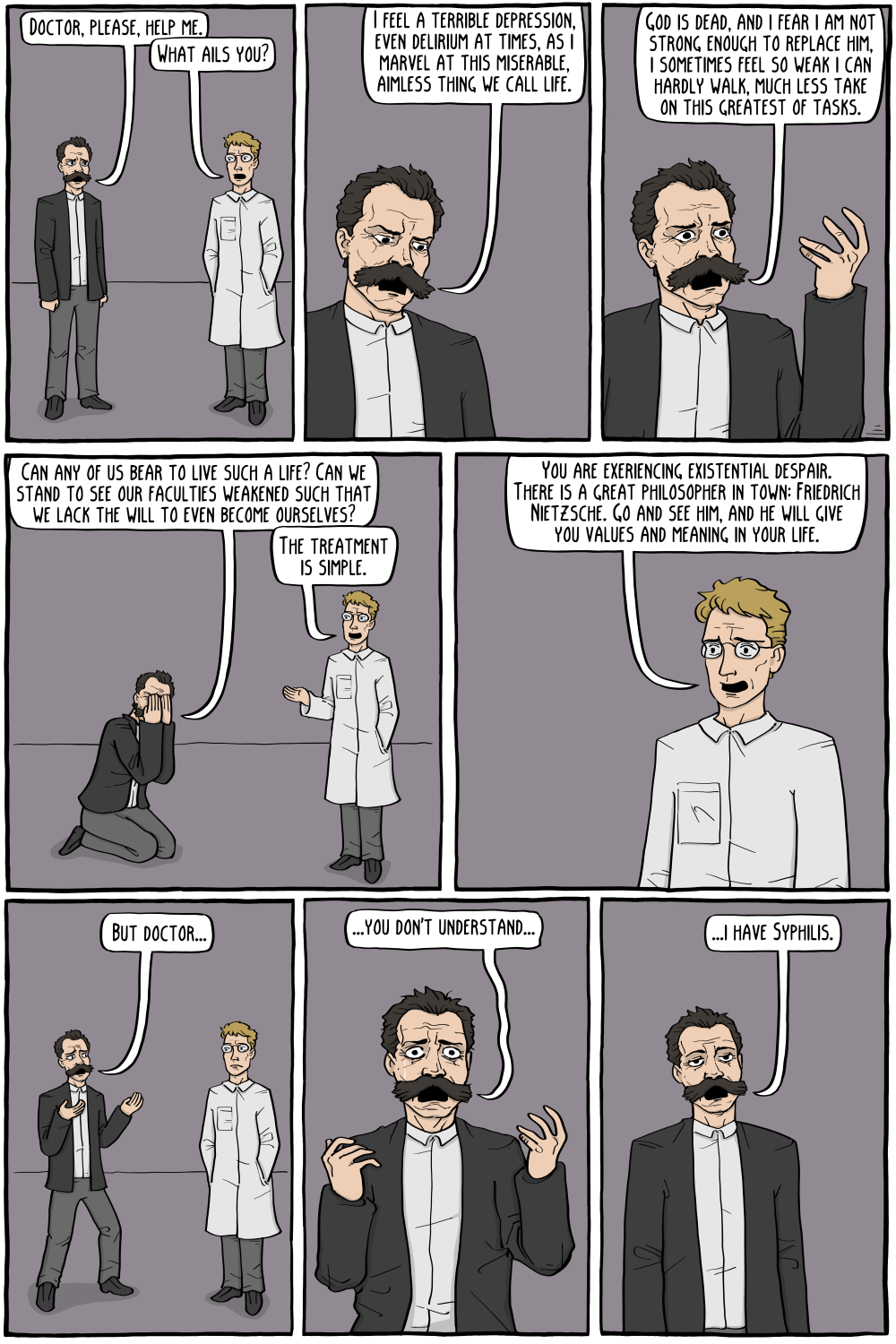
Hovertext:
I occasionally Quiet James Herriot when I should be working. Quiet EB Whiting is another problem I have.
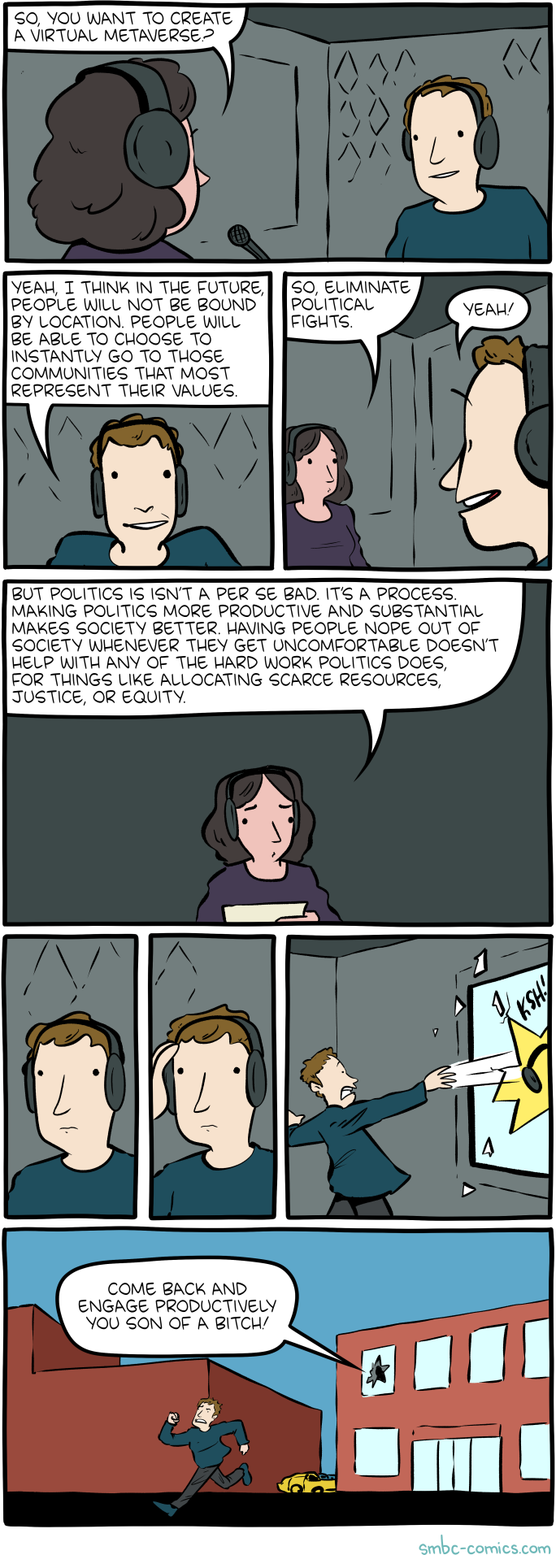
Hovertext:
Just kidding, nobody wants to use the metaverse! We can create social calamities with text and memes.
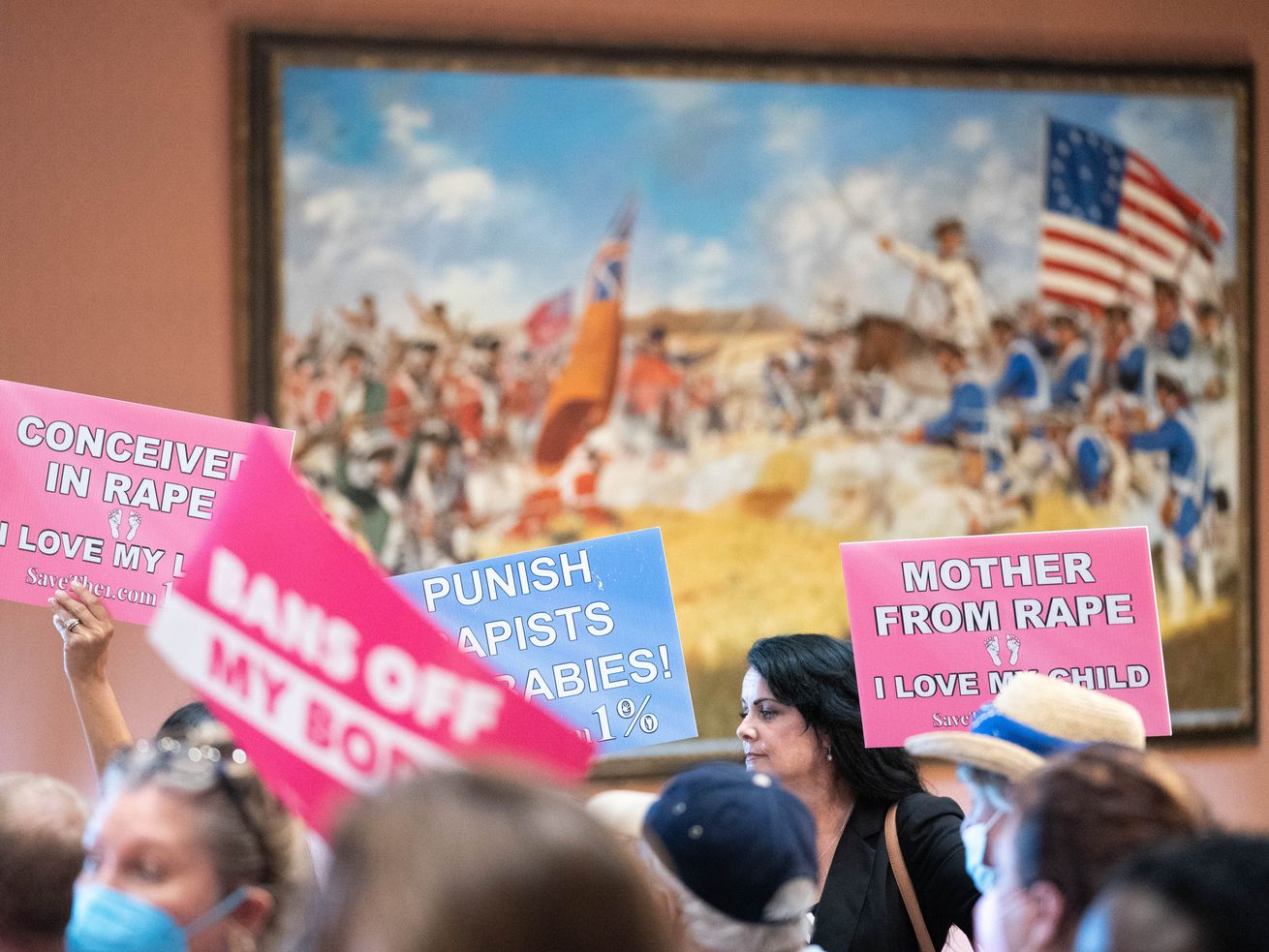
Ahead of the midterms, severe abortion restrictions are coming up against public opinion — and people’s real lives.
South Carolina’s state senate on Thursday refused to pass a bill that would outlaw abortion after fertilization, with some exceptions, despite a Republican majority in that body. In South Carolina, as in states like Michigan, Kansas, Idaho, and Indiana, the challenge of legislating such extreme bans is becoming increasingly apparent — and abortion is becoming a landmark issue for Republicans.
Five Republican senators joined Democrats in opposing the bill in South Carolina’s senate, with GOP Sen. Tom Davis threatening a filibuster should the measure as written come to a vote. Davis joined all three Republican women in the senate, as well as one male GOP colleague, in filibustering the House’s severe restrictions; Davis and one woman Republican senator, Penry Gustafson, voted in favor of the compromise measure.
South Carolina has already passed an onerous law banning abortion after six weeks, with exceptions up to 20 weeks in the case of rape or incest. The compromise legislation the senate did pass reduces that time period to 12 weeks and requires police to collect DNA from an aborted fetus.
It is more restrictive than the so-called Fetal Heartbeat Bill the General Assembly passed last year, before the Supreme Court decided the Dobbs vs. Jackson case, which overturned Roe v. Wade, but avoids the total ban with no exceptions that House Republicans initially attempted to pass. That ban is stayed while South Carolina’s Supreme Court hears a challenge to the law under the right to privacy, and the state’s pre-Dobbs 20-week ban is presently in effect, the Associated Press reported Thursday.
Thursday’s defeat of the South Carolina bill — as well as a number of legal challenges to similarly restrictive measures in states like Idaho, North Dakota, and Indiana and ballot measures to protect abortion rights in Michigan and Kansas — speaks to the practical difficulties in passing and enforcing abortion bans.
“We have a tendency to think of banning abortion as an on-off switch,” Rachel Rebouché, the dean of Temple University’s Beasley School of Law, told Vox on Saturday. But in a post-Dobbs landscape, “the amount of legal complexity is going to amplify.” That is playing out, she said, in states like Idaho and North Dakota where restrictions have faced court challenges, and in legislatures as the dangers of severely restricting abortion access become clear.
South Carolina’s House of Representatives wrote the thwarted bill banning abortion after fertilization; although it passed there, and the 30-member Republican majority in the Senate had enough votes to pass it, they didn’t have a filibuster-proof majority. Senate Democrats exploited that vulnerability and made a coalition with Davis as well as Sens. Katrina Shealy, Sandy Senn, and Penry Gustafson — all women — and one other Republican.
“Yes, I’m pro-life,” Shealy, who had previously voted for abortion restrictions, said during Thursday’s special session. “I’m also pro-life for the mother, the life she has with her children who are already born. I care about the children who are forced into adulthood that was made up by a legislature full of men so they can take a victory lap and feel good about it.”
Ultimately, Republicans had to go back to the negotiating table and came out with a six-week ban and more onerous restrictions on abortions after rape and incest. The original bill, which passed the House, had exceptions for rape and incest as well as the life and health of the mother, Rep. Neal Collins (R) told Vox. “The Senate ... passed a bill that bans abortion after six weeks, with the same exceptions as well as [exceptions for] fetal anomalies, which is pretty much the same exact bill that we passed last year, we called it the Fetal Heartbeat Bill.”
Now, the bill will have to go back to the House, which can either concur with the Senate version of the bill or not — in which case the General Assembly would have to form a committee of three Democrats and three Republicans from each chamber to try and come to a compromise that suits both chambers. That could happen as soon as next week.
The new bill restricts the exceptions for rape and incest to 12 weeks, a significant departure from the Fetal Heartbeat Bill that allows exceptions up to 20 weeks. The new bill also requires two doctors to affirm that fetal anomalies are fatal and mandates that DNA from an abortion due to rape and incest go to law enforcement. “I presume that’s for evidence-gathering in case they’re going after whoever is raping or committing incest,” Collins said.
The special session brought into stark relief what happens when the rhetoric of anti-choice politicians clashes with real life — real people’s problems, needs, and beliefs — after the Supreme Court demolished the legal guardrails of Roe v. Wade and Planned Parenthood v. Casey, Senate Minority Leader Brad Hutto (D) told Vox.
“[Anti-choice legislators] could make whatever political points they wanted to because they had a backstop,” he said. “They knew nothing they passed was ever going to go into effect. They could pass all they wanted to, and it didn’t matter — and it allowed them to let their rhetoric to just soar to the red meat of their party because they could gin up the party knowing that nothing they said was ever going to be enacted into law. Then, all of a sudden [...] it’s like the dog that caught the bus.”
South Carolina legislators are now understanding, as well, that a full abortion restriction is not popular with voters, Hutto said. National polling on the topic indicates as much; a Pew Research study released just prior to the Supreme Court’s decision to overturn Roe v. Wade, shows that 61 percent of Americans support abortion in all or some cases. Those numbers can be abstract when extrapolated to a legislative district. But legislators are now having to confront what those numbers mean in context; in a Facebook post dated August 30, Collins wrote that he polled his most conservative constituents regarding abortion access. Of the 43 surveys which were returned, “The results clearly show the vast majority of even very conservative people want exceptions to abortion,” he wrote.
“Even churchgoing, Southern Baptist, conservative ladies” by and large aren’t willing to impose their own beliefs about abortion onto others, Hutto said, challenging the monolithic concept of Southern voters and indicating that abortion could be a major issue in the November midterms — even in a conservative state like South Carolina. “The governor’s race in South Carolina is now competitive,” Hutto said. Gov. Henry McMaster, a Republican who ascended to the office when Nikki Haley left to join the Trump administration, indicated he would sign a total abortion ban if it came across his desk; with that statement on the record and abortion becoming an increasingly contentious issue for voters, Democrats have at least a chance at taking the governor’s mansion in November. “Choice is on the ballot,” Hutto said.
Among the several states with abortion bans on the books, only some have actually been able to go into full effect in the wake of the Dobbs decision. Mississippi, Louisiana, Arkansas, Oklahoma, South Dakota, Missouri, Idaho, and Tennessee all have in place bans on nearly all abortions, with only some states offering exceptions in the case of serious health risks to the parent. Six-week bans have taken effect in Ohio, Kentucky, and Georgia, but are being challenged in court, as is Florida’s 15-week ban, the Idaho, Louisiana, and Kentucky laws, and a Wisconsin ban dating from 1849, according to CNN.
Lawsuits are a meaningful method of fighting these laws, or at least delaying them, even after Dobbs, Rebouché told Vox. “Overturning Roe has not kept abortion out of courts,” she said, adding that “it’s a matter of time” before the bans enacted face a challenge of some sort. That could look like state-level legislation protecting abortion, referenda to codify abortion rights in state constitutions, and pressure from international human rights bodies and corporations, though neither of those bodies has any legislative or enforcement power.
“Some of our states are really outliers in the international order on abortion,” Rebouché said. “International rights bodies have taken countries to task over these kinds of things,” and “stigma and shame” can be very powerful motivators.
But securing the right to abortion right now depends on the interplay between voter participation and the courts, a dynamic that played out recently in Michigan. Voters will have a referendum on their midterm ballots in November, after the state’s supreme court knocked down a state election board’s decision to omit the measure from the ballot over typographical errors on petitions calling for the referendum, as the New York Times reported Thursday.
In August, Kansas voters soundly defeated the legislature’s attempt to inject language into the state’s constitution explicitly stating that it does not grant the right to an abortion, as the Associated Press reported at the time. The Kansas Supreme Court in 2019 had affirmed the right to an abortion under the state’s Bill of Rights; the August referendum upheld that judgment.
“Kansas was a shock to everyone’s systems,” David Cohen, a professor at Drexel University’s Thomas R. Kline School of Law and Rebouché’s coauthor on a paper about the post-Dobbs legal landscape called “The New Abortion Battleground,” told Vox. “I don’t think anyone saw what happened coming.” Michigan, though, “is going to give us a big look at the future,” in terms of how states might navigate around abortion bans and legally enshrine the right to abortion. California and Vermont have such referenda on their ballots this coming November, but the outcome in those situations is likely more predictable than in Kansas, Michigan, or Kentucky, which has a ballot initiative to eliminate Kentuckians’ right to abortion under the state constitution.
In the long term, the Supreme Court’s makeup will have to change before there’s any real challenge to Dobbs, Cohen said. “As soon as that happens, [progressives] will be the ones asking the court to overturn precedent,” which could take the form of arguments on the grounds of religious freedom, the vagueness of anti-abortion legislation, equal protection claims, and right to travel claims, Cohen said.
In the meantime, should support for abortion rights rally voters in November, as Democrats are hoping it will, the calculus of what’s possible at the federal level could change, too, Cohen said. While a number of Republican senators have tried to propose nationwide restrictions on the right to abortion, others, like Sen. Roger Marshall (R-KS) have discerned that the momentum and appetite for such measures aren’t there. “I just don’t see the momentum at the federal level,” he told the Washington Post on July 25 — before the anti-abortion measure in his own state failed.
As legislators are forced to confront how unpopular abortion bans actually are and how difficult they are to enforce, there’s potentially more room for pushback in the form of legal protections. The Women’s Health Protection Act, which failed in the Senate in May and which President Joe Biden has promised to sign should it pass, could have a chance if Democrats hold on to the House and pick up enough Senate seats. “Would I ever put money on that? No,” Cohen said. “But there’s a chance.”
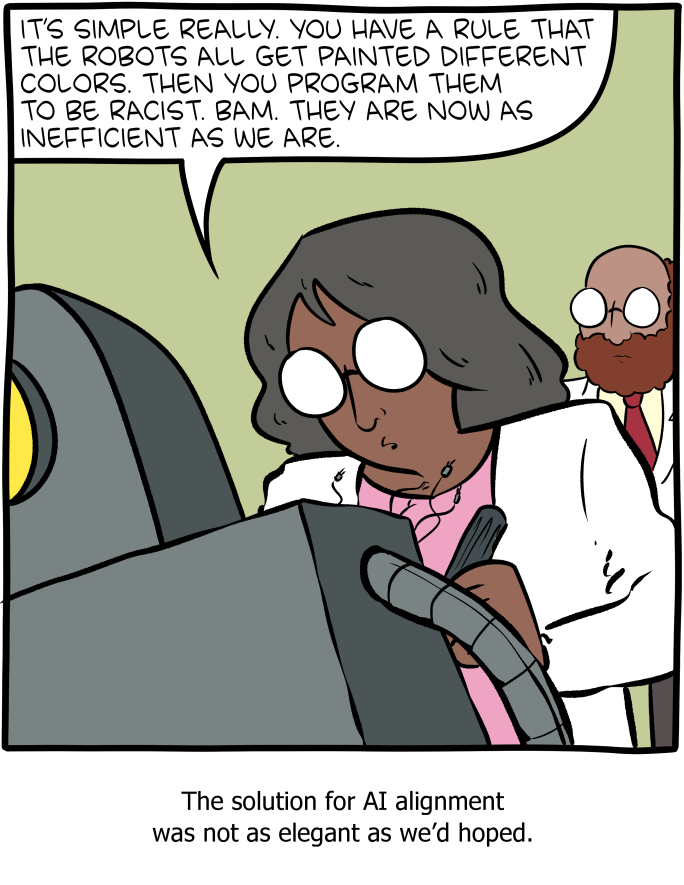
Hovertext:
We just have to create new bigotries faster than they can learn to live in harmony.


Read more of this story at Slashdot.

The Justice Department files an extraordinarily savvy response to the Trump judge’s “special master” order.
On Monday, Judge Aileen Cannon — a Trump appointee to the federal bench — issued a surprising order that effectively halted much of the Justice Department’s criminal investigation into classified records it recovered last month from former President Donald Trump. Cannon’s legal reasoning has been widely mocked by lawyers from across the political spectrum.
Today, the Justice Department made its first attempt to regain control over the classified documents.
In a motion asking Cannon to stay parts of her order, the Justice Department warns that the order risks “irreparable harm to our national security and intelligence interests” by sabotaging the intelligence community’s efforts to determine whether any of the sensitive information contained in the seized records has leaked beyond Trump. To understand why, you have to understand a bit about what makes Cannon’s order odd.
In her Monday order, Cannon ruled that she would appoint an official known as a “special master” to comb through the several boxes of documents the FBI seized from Trump’s Florida residence, and determine if any of those documents might be protected by attorney-client privilege or executive privilege. The FBI says it seized these documents from Mar-a-Lago as part of a criminal investigation into potential violations of several statutes prohibiting unauthorized retention of national security documents, including the Espionage Act. (Trump denies any wrongdoing.)
But that investigation hit a huge roadblock Monday, because Cannon also prohibited the Justice Department “from further review and use of any of the materials seized from Plaintiff’s residence ... for criminal investigative purposes” until the special master’s review is complete.
The DOJ’s motion seeks a partial stay of this order. It seeks permission to continue using the classified documents in its criminal investigation, as well as a ruling that the special master will not review the classified documents themselves.
Under the process that typically governs stays of a federal district court’s decisions, the DOJ must first ask Cannon to suspend parts of her order before it may ask a higher court for a stay. The DOJ indicated in its motion that it will seek such a stay from an appeals court “if the Court does not grant a stay by Thursday, September 15.” The government also formally announced on Thursday that it will appeal Cannon’s order.
The FBI took several boxes of documents from Mar-a-Lago, Trump’s Florida residence, 103 of which had classified markings. According to the Washington Post, these papers include “a document describing a foreign government’s military defenses, including its nuclear capabilities.”
According to the Justice Department’s motion, assessing the “potential damage to our national security and intelligence interests” of having these documents remain insecure for so long is of “vital importance.”
Technically, Cannon’s order permitted the intelligence community to continue its investigation into whether Trump’s alleged theft of these classified documents harmed national security. But, as the Justice Department explains in its Thursday motion, “the ongoing Intelligence Community (‘IC’) classification review and assessment are closely interconnected with — and cannot be readily separated from — areas of inquiry of DOJ’s and the FBI’s ongoing criminal investigation.”
The FBI is both a law enforcement body and “part of the Intelligence Community,” the DOJ explains. Indeed, the FBI is the intelligence agency with primary responsibility for conducting intelligence investigations within the United States. For this reason, “the same personnel from the FBI involved in the criminal investigation were coordinating appropriately with the IC in its review and assessment.” And the FBI often relies on criminal investigative tools, such as grand jury subpoenas or search warrants, to conduct intelligence investigations.
Thus, the DOJ argues, preventing the FBI from conducting a criminal investigation into the classified documents also frustrates its intelligence investigation. As the DOJ explains, “any FBI agent or analyst who investigated whether the classified records were improperly accessed, for instance, would by definition be gathering information highly relevant to — and thus in furtherance of — ‘criminal investigative purposes.’”
In her Monday decision, Cannon gave several reasons why she believed that Trump should be able to seek the return of some of the seized documents, and then referred to these reasons as justification for appointing a special master. Cannon claimed, for example, that “at least a portion” of the seized records include “medical documents, correspondence related to taxes,” “accounting information,” and “material potentially subject to attorney-client privilege” that Trump may need for his personal business.
The Justice Department’s motion announces that it will make several concessions to Trump, in an apparent effort to take some of Cannon’s objections off the table. Specifically, the DOJ reveals that it “plans to make available to [Trump] copies of all unclassified documents recovered during the search — both personal records and government records — and that the government will return [Trump]’s personal items that were not commingled with classified records and thus are of likely diminished evidentiary value.”
Thus, Cannon will no longer be able to argue that the FBI has deprived Trump of access to his personal documents. And, by returning at least some of the non-classified documents, the DOJ will also reduce the number of records that a special master could review.
Cannon’s Monday order was highly unusual and rested on extraordinarily dubious legal reasoning. Among other things, Cannon argued that Trump is entitled to special protections that are not ordinarily afforded to other criminal suspects because he used to be president. So it remains to be seen whether any concessions by the DOJ — or any warnings that Cannon is endangering national security — could move this judge to reconsider her earlier approach.
If Cannon does not reconsider, the next move will be to the US Court of Appeals for the 11th Circuit, where Trump appointees hold six of the court’s 11 active judgeships.
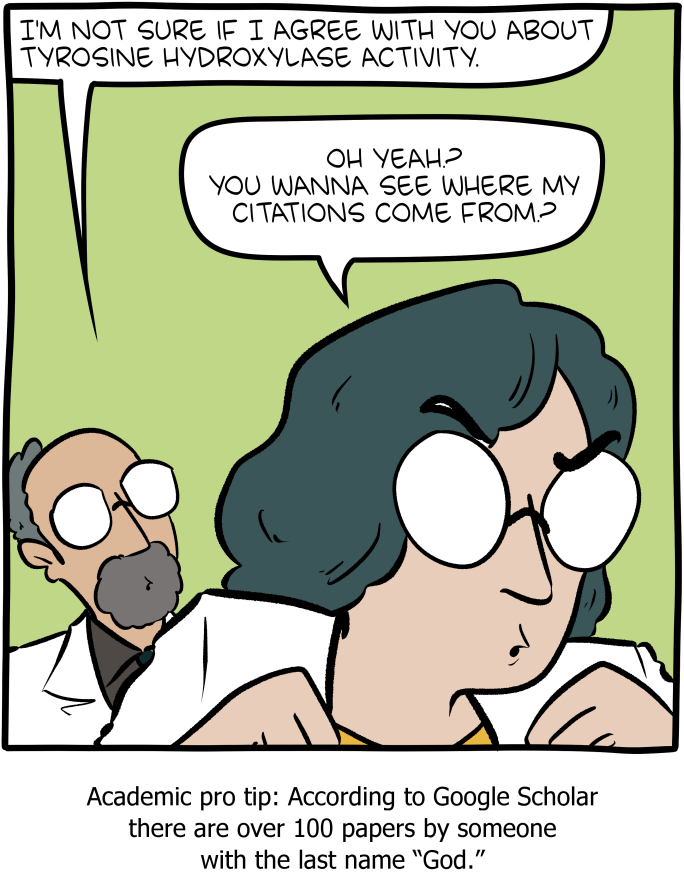
Hovertext:
Jesus Christ is listed as co-author in a few places. I tried to find his Erdos Number but couldn't figure it out. 4 Internet Points to anyone who does.


The queen served as the United Kingdom's monarch since 1952. Her reign spanned a remarkable arc in British history and was defined by duty to country — and considerable family pain.
(Image credit: AP)


Queen Elizabeth, who reigned for 70 years as Britain's monarch, died Thursday at Balmoral, her estate in the Scottish Highlands. She was 96. Her son Charles, 73, is now king.
(Image credit: Eddie Mulholland /WPA Pool/Getty Images)

/https://static.texastribune.org/media/images/2013/03/27/Toll-Roads.jpg)