Dark Souls 2 is the black sheep of the Fromsoft herd, beloved only by those rare, intelligent, and cultured individuals who understand that, as Miyazaki himself says, much of what made Elden Ring so great can be traced back to changes the ill-loved sequel made to the Dark Souls formula. But even its most devoted defender probably wouldn't disagree that its DLC bosses were like, stupid hard.
But not hard enough that you can't beat them by stabbing yourself in the gut about four dozen times, as demonstrated by Dark Souls 2 player DSelizabeth with an awe-inspiring and/or absurd NG+7 Sir Alonne Seppuku-only kill.
The arguable apex predator of the rogues gallery of rude DLC bosses is Sir Alonne from the Crown of the Old Iron King. If you're not familiar, Alonne is a whole pile of cool guy archetypes mashed into one suit of armor: he's a depressed Dark Souls knight, anda wandering samurai, and an enigmatic figure who departed for parts unknown at the height of his powers.
He was also, by 2014 Soulsborne standards, an absolute bastard. While it's now a common (and painful) feature of Fromsoft boss movesets, Alonne was one of the earliest, worst offenders when it comes to attacks with lengthy animation delays that bait you into rolling early.
He could dash across the length of his boss room and chunk most of your stamina bar with one attack. He had long-distance wave attacks. He could kick your shield guard and parry your attacks. He also had, I'm willing to wager, the most controller-snapping boss runback ever seen in one of these games. It was part of a DS2 DLC trend of co-op centric side-missions that were just brutal in singleplayer.
(Image credit: Bandai Namco)
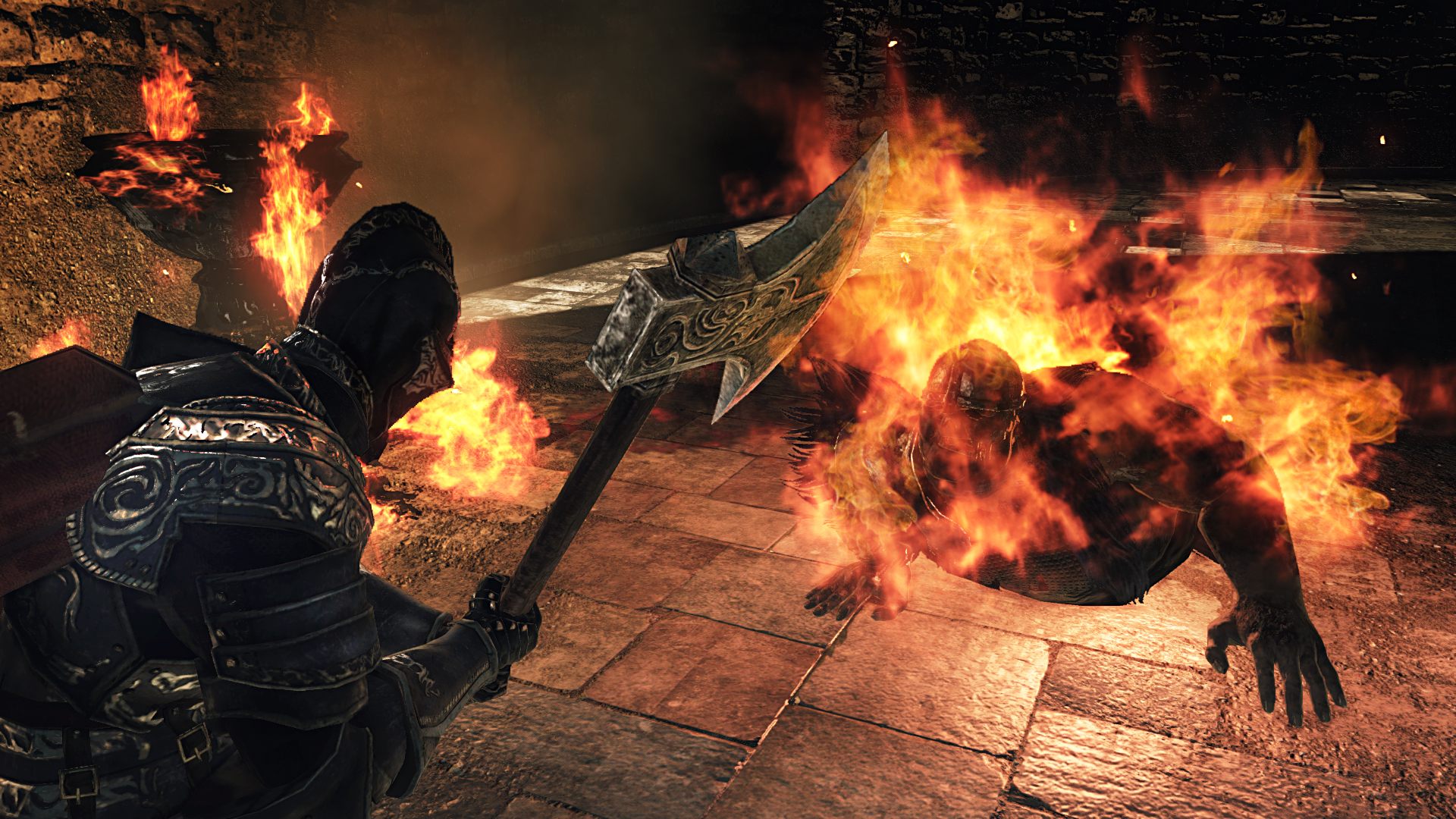
All those speedbumps didn't prevent DSelizabeth from stunting on him with what is probably the world's highest-concept execution of the "stop hitting yourself" theory of combat arts. Wearing Alonne's own armor set and using his own sword, DSelizabeth gradually whittled down his NG+7-enhanced health bar with his weapon's unique seppuku skill.
Unlike the typical parry action, hitting the parry button with the Bewitched Alonne Sword makes the player plunge the katana into their own stomach, taking a chunk of damage in exchange for increasing its AR scaling and its bleed damage build-up.
Those damage buffs are irrelevant here, however, because DSelizabeth isn't actually hitting Alonne. Instead, the heroic sicko is killing Alonne with what would be an afterthought to most players. When you stab yourself with Alonne's sword, it briefly activates a pulse that slightly damages nearby enemies.
(Image credit: Bandai Namco)
And when I say slightly, I mean slightly. To kill Alonne on NG+7, DSelizabeth had to commit seppuku 47 times. I counted.
A few of those were misses, admittedly. But it's still an impressive display of mastery over animation timings, character placement, lifegem and repair powders usage by the dozen, and the general coldheartedness necessary for killing a guy with the raw psychic damage of watching someone wearing his clothes disembowel themselves half a hundred times.
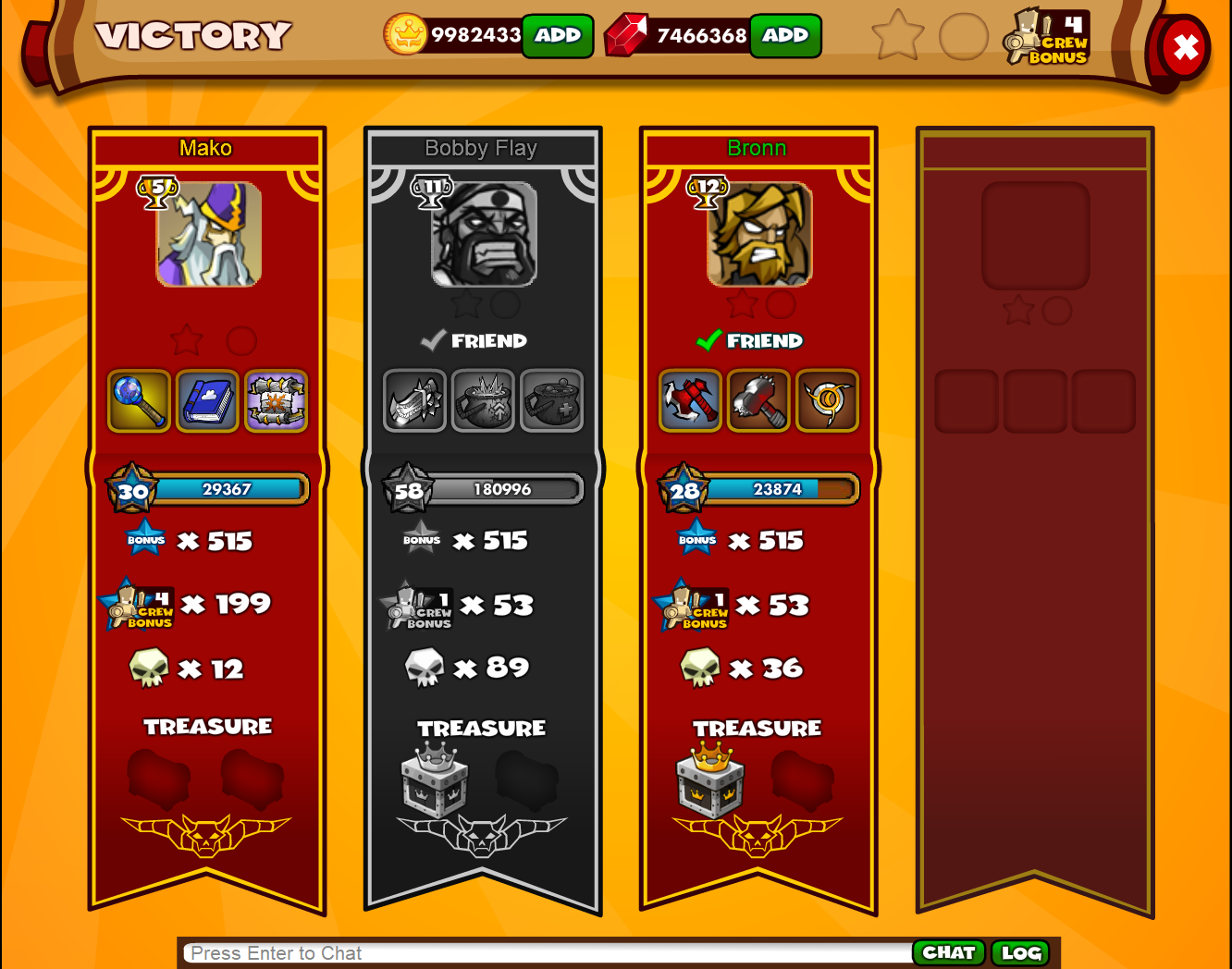
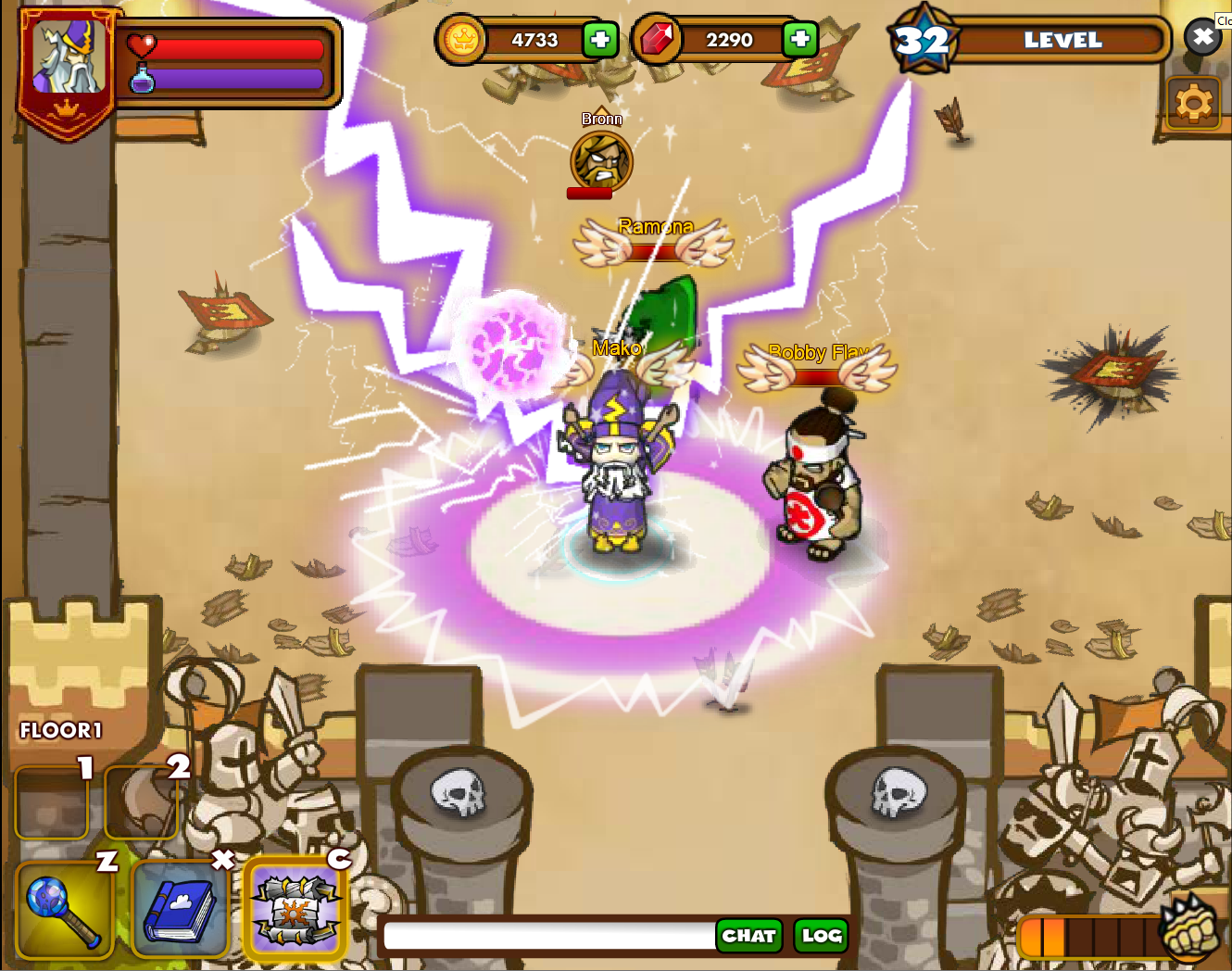
Angelos Mako was seven years old when he started playing Dungeon Rampage with his older brother, saving the good guys and slaying hordes of evil minions. A decade later, he also saved the game itself.
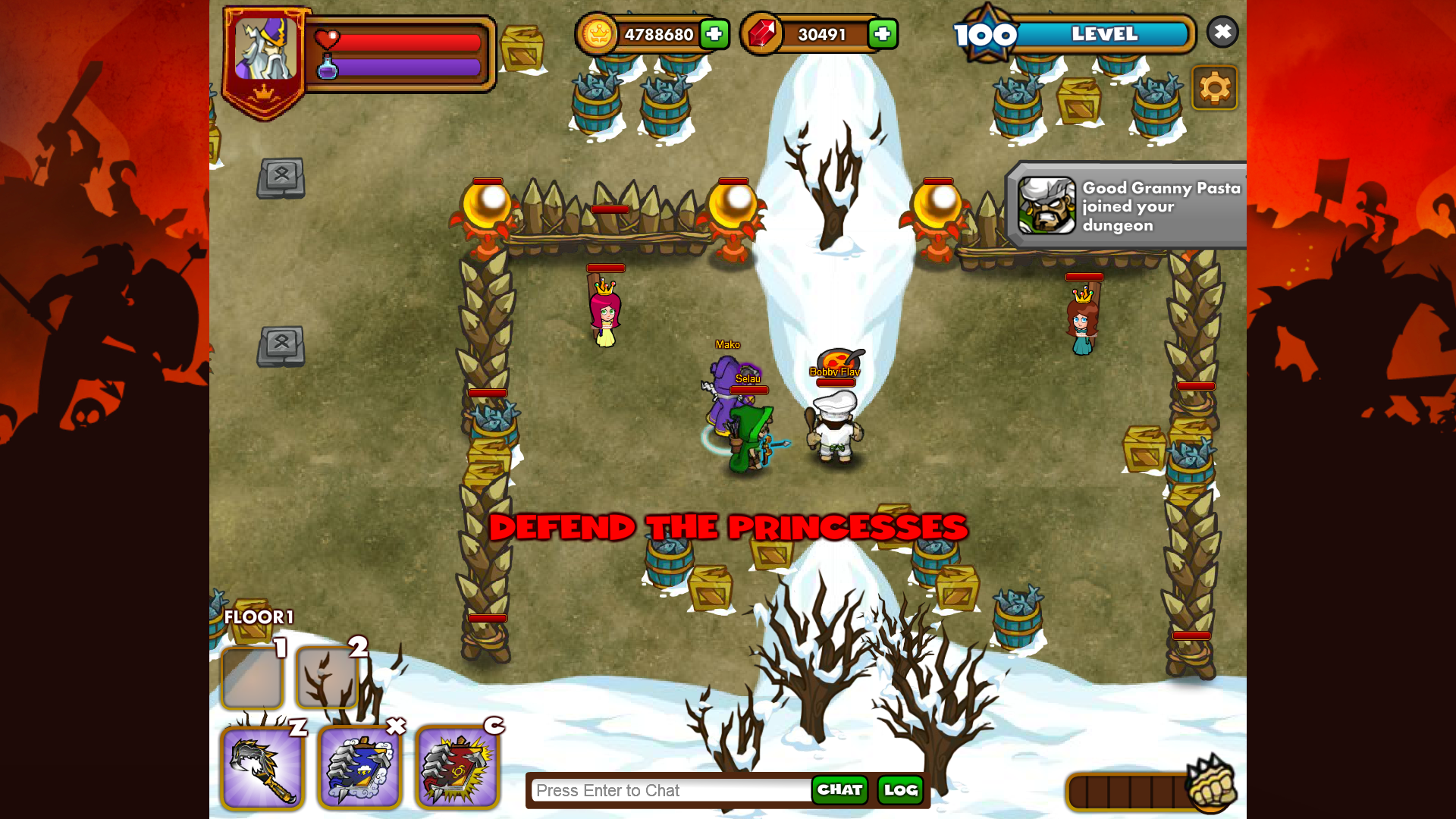
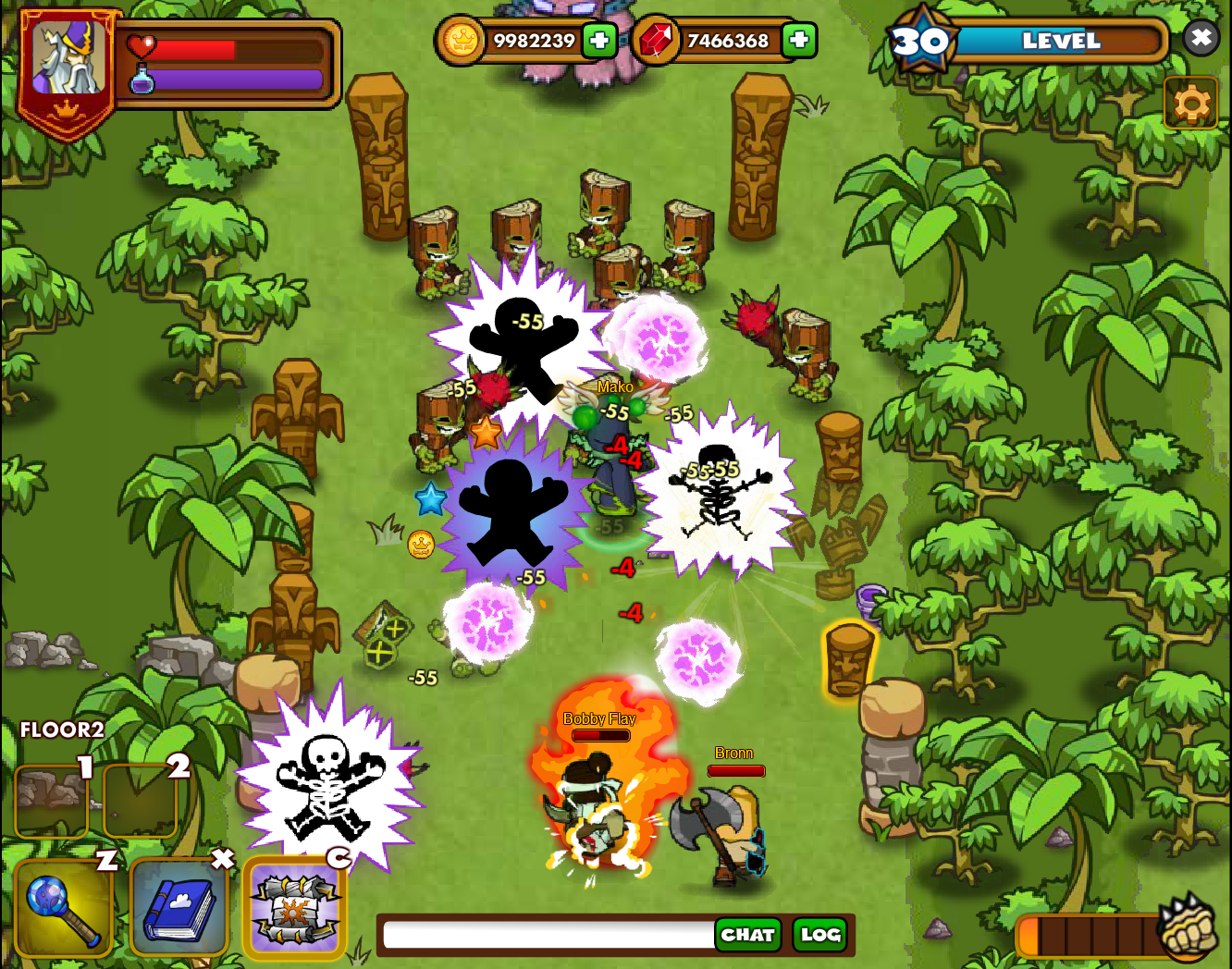
Dungeon Rampage was a simple Facebook game, a cartoony hack-n-slash that was procedurally generated, so the dungeons were always a little different. But for Mako, it was also an escape.
"My parents were going through a very nasty divorce. Dungeon Rampage was there for me. Every time they would fight, I would go into another room and I would play," says Mako, now 18, from his home in Greece. "It took care of me when when no one else could."
The end of the dungeon
Mako played DR daily, mostly on a computer he shared with his brother at home. It was a popular game in its time: More than two million people hopped in each month, and Mako was one of them for five years straight. Then the unthinkable happened.
"I came from school one day and saw a message Dungeon Rampage had shut down, and I was like, 'What?! Why?'" he says. "I couldn't fathom it. I couldn't understand why it happened. But even from that moment, I said that I'm going to find a way to get this back again. I had no clue how, but I had a dream."
Dungeon Rampage was played by millions back when Facebook games were thriving. (Image credit: Gamebreaking Studios)
I was fed up. I wanted this to come to life. I said, 'Okay, I'm starting from scratch. I'm taking initiative.'
Angelos Mako
Still, Mako was only 10, had school to attend, and the dream had to wait. He got into mods in Minecraft, played some Roblox, and years later met a creator in a Roblox game. They bonded, and he did some apprenticeships on that team's game, in Unity. While he was doing that, four years later, he ran across a Discord server that was trying to remake Dungeon Rampage and decided to join.
"I really liked the vision," he says. But practical problems and volunteer developers meant the group didn't make a ton of progress, and they were trying to reinvent the game, rather than restore the original. Mako took over the project in 2024.
"I didn't know that making a game is pretty hard," he says, laughing. At the same time, people were joining the server and asking a key question: What happened if the original developers chose to copyright strike the remake?
"We were like, 'Oh yes, that's a very big problem.' I was fed up. I wanted this to come to life," Mako says. "I said, 'Okay, I'm starting from scratch. I'm taking initiative.' And I went directly to try and get the copyright of Dungeon Rampage."
The sleuthing starts
Mako had the credits screen from the game, and decided that he'd make a LinkedIn account and message everyone he could find. "People replied, actually. That's the weird part."
He spoke with Jason Yeung, the original creative director, who said that the attempt to remake Dungeon Rampage was a cool project, but that he needed to speak with Mike Goslin, who had run Rebel Entertainment, the original Dungeon Rampage developer. One thing led to another: He spoke to Goslin on the phone, who then introduced him to the CEO of the parent company—and he got his license agreement.
Mako was ecstatic. Only one thing brought him back to earth: "Because I started from scratch again, we didn't really have a game," he says. So he talked with all the developers of the original game that he could find. The original lead artist got him some art source files. But no one seemed to have the code.
Image 1 of 3
(Image credit: Gamebreaking Studios)
Image 2 of 3
(Image credit: Gamebreaking Studios)
Image 3 of 3
(Image credit: Gamebreaking Studios)
About the same time, he had read the book Level Up! The Guide to Great Video Game Design, written by Scott Rogers. Buoyed by his recent success contacting people on LinkedIn, he attempted to connect with Rogers—who accepted. A short time later, Rogers posted a message on the platform saying Gamebreaking Studios was looking for clients for co-development.
Mako messaged him to ask exactly what that was, and before he knew it, they were discussing a deal to remake Dungeon Rampage as a Steam game using Unity. But the money just wasn't working out.
Gamebreaking Studios CEO Taylor Hellam (Image credit: Gamebreaking Studios)
"My first engagement was getting added to a LinkedIn message," Gamebreaking CEO Taylor Hellam said. "'Hey, Angelos is making this game. He wants our help. He wants to know how much it would cost to remake Dungeon Rampage.' The first thing I did was click on the Steam page and I'm like, this is a preexisting game. Does he actually have the IP license to this thing? My first reaction was suspicion. Pretend he does have the IP license, what would it cost us to make this from scratch?"
They couldn't come to an agreement that worked, and the project seemed destined to stall again. Mako had no budget, the studio had no capital for the project, and discussions with publishers were promising but not particularly fruitful.
A careful girl saves the day
Finally, Mako tracked down the last engineer on the project, and they started to chat.
It turned out he might have the files of the last build on a laptop—only he had given it to his seven-year-old daughter to play with.
...When we got the source code off of a laptop and were told that this hasn't been running in years, we were like, 'We could solve this thing.'
Gamebreaking CEO Taylor Hellam
Miraculously, the laptop—and the files—were still intact.
"We were very happy that she didn't accidentally delete the files," Mako says with a laugh.
At that point, Gamebreaking was intrigued, Hellam said.
"We're obviously really moved by Mako's story and his passion," he says, "but also we're a sucker for a good technical challenge. So when we got the source code off of a laptop and were told that this hasn't been running in years, we were like, 'We could solve this thing.' "
Gamebreaking agreed to partner with Mako to update the files and release the game, and got to work. It turned out to be a tougher challenge than they expected; it wasn't just a Flash game, it was Flash and C++ and a PHP backend, and when one part got fixed, it seemed one of the other pieces would break.
The first boot
Finally there came a day when it seemed like all three might be working, and Gamebreaking co-founder Sean Salehurged Mako to jump on a video call to give it a test. The studio and Mako had been talking for three months at that point.
At first, the game just threw another error. "I thought I was trolling," Hellam says. But then a magical thing happened: It ran. Salehrecorded the call—you can see the moment it started working below.
Once they were into the game's lobby, it was only a matter of minutes before they were playing the game. Buggy, misbehaving, occasionally perplexing—but it was alive again. Mako was a little teary-eyed. Hellam was ecstatic.
"I was like, finally we were holding up our end of the bargain!" Hellam says. "It was a really incredible moment watching him play for the first time. And then I didn't hear from him for two days because he was just playing nonstop." Mako says he "missed some dinners" that week. "It was a very emotional time."
Getting it ready for prime time
They set up a Kickstarter campaign that blew through its $25,000 goal. (It's at $61,000 now; that page includes free demos). The team got access to the original game's Facebook page and gave it a tweak, then watched the excited fans jump on the change.
The Gamebreaking Studios team. (Image credit: Gamebreaking Studios)
He was the first person to play this game in over a decade.
Taylor Hellam
"All we did was change the cover photo there and everyone reacted like crazy," Hellam says. "Everyone was like, 'Oh my god, is the game coming back? What's going on?' Over the next week, our wishlists doubled. It was insane."
The game was freemium when it was originally released, but will now be a complete, one-time purchase. It's headed to early access on Steam thanks to Mako and his Gamebreaking partnership. It's on more than 100,000 wishlists, Hellam says.
"He was the first person to play this game in over a decade, which is really cool," Hellam says. "He definitely deserved to be the one to play. He was the one who got it to come back."
"It's a very fun game and it's been a very fun game forever," Mako says. Those first days of playing again "were the first days of discovering fire as a caveman. That's my best analogy of this."
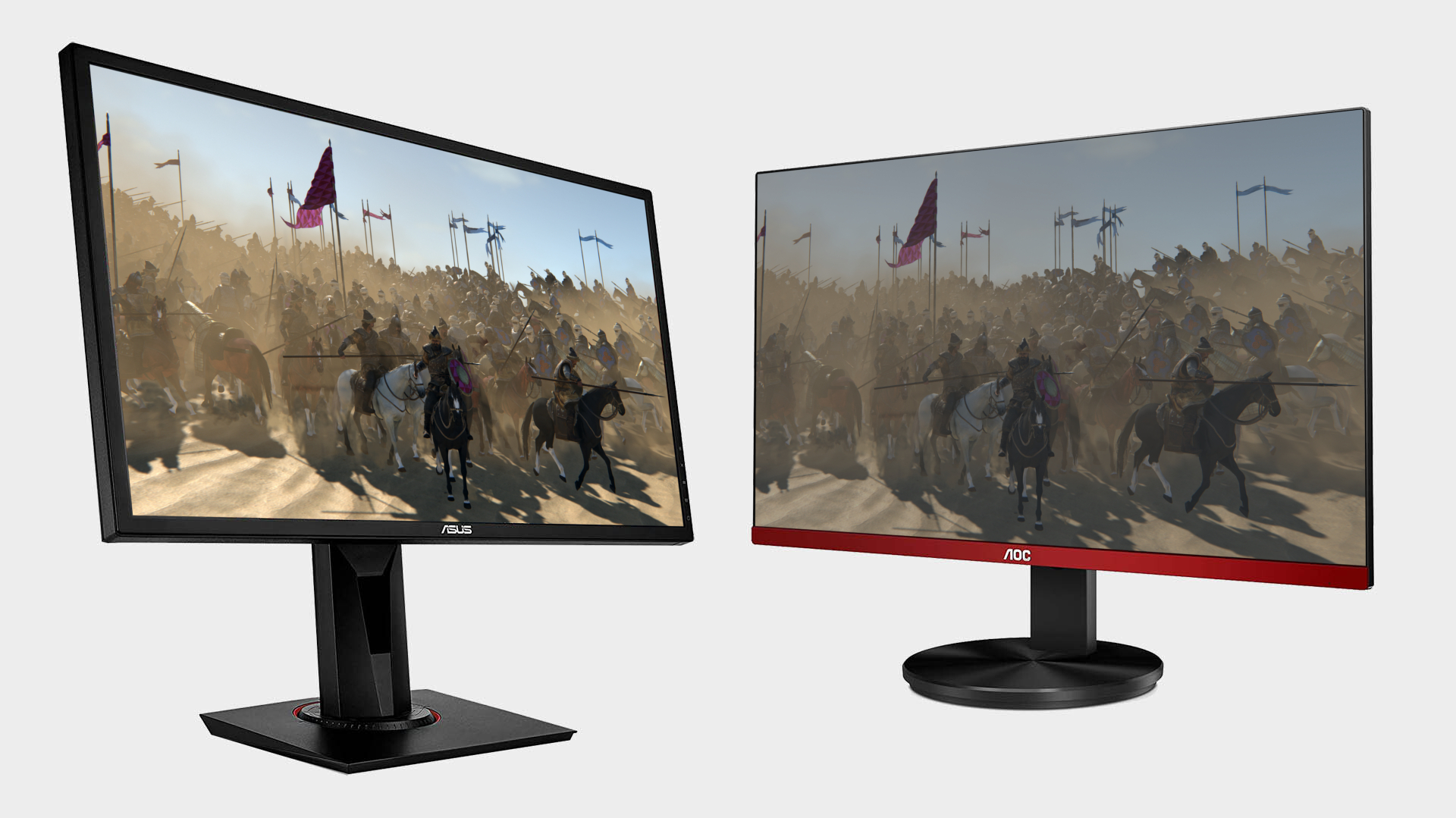
OLED is very nearly the perfect display technology. But two possible problems remain. The first, limited full-screen brightness looks like it's been cracked by Samsung and LG's next-gen panel tech. And now new evidence that burn-in isn't necessarily much of a worry is here.
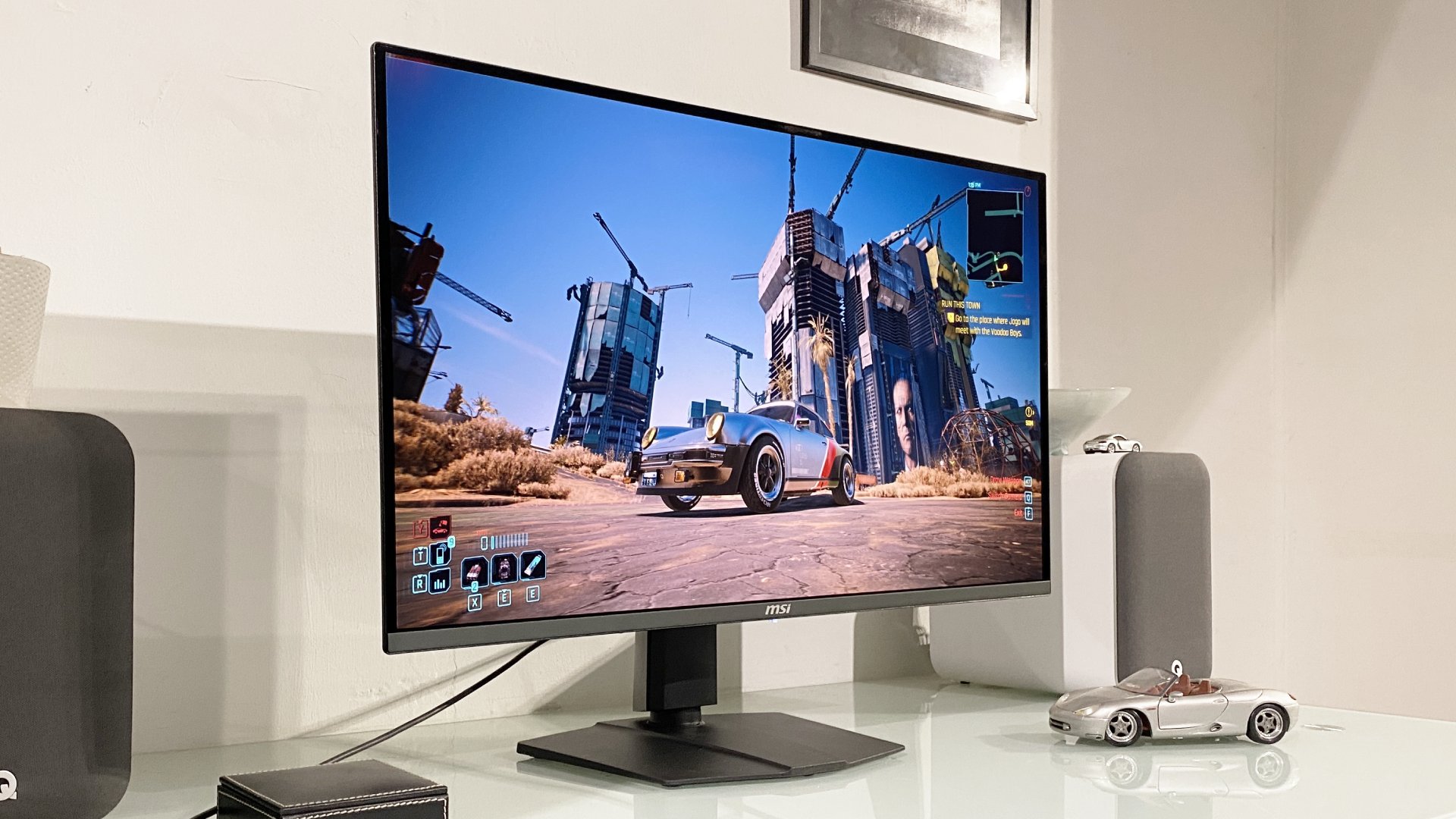
YouTube channel, Monitors Unboxed, has been running a long term test with MSI's MPG 321URX (we also reviewed the refreshed MSI MPG 322URX this week). It's a 32-inch 4K model running Samsung's QD-OLED tech.
Monitors Unboxed chose a 32-inch 4K monitor because the idea was to perform a worst-case scenario assessment of OLED burn in. Instead of gaming, then, the monitor was used for daily work duties involving lots of fairly static elements, including the Windows task bar and a regular setup of two application windows arranged side-by-side.
Mitigating measures, including auto-hiding the task bar or using dark mode across the Windows UI, were also not exploited. Monitors Unboxed did allow the monitor to run its built-in panel and pixel refresh routines, otherwise known as panel compensation cycles, but only overnight and not in a manner that interrupted usage.
Monitors Unboxed used the screen for about eight hours a day, but those cycles are supposed to run every four hours. Again, the idea here is worst-case scenario.
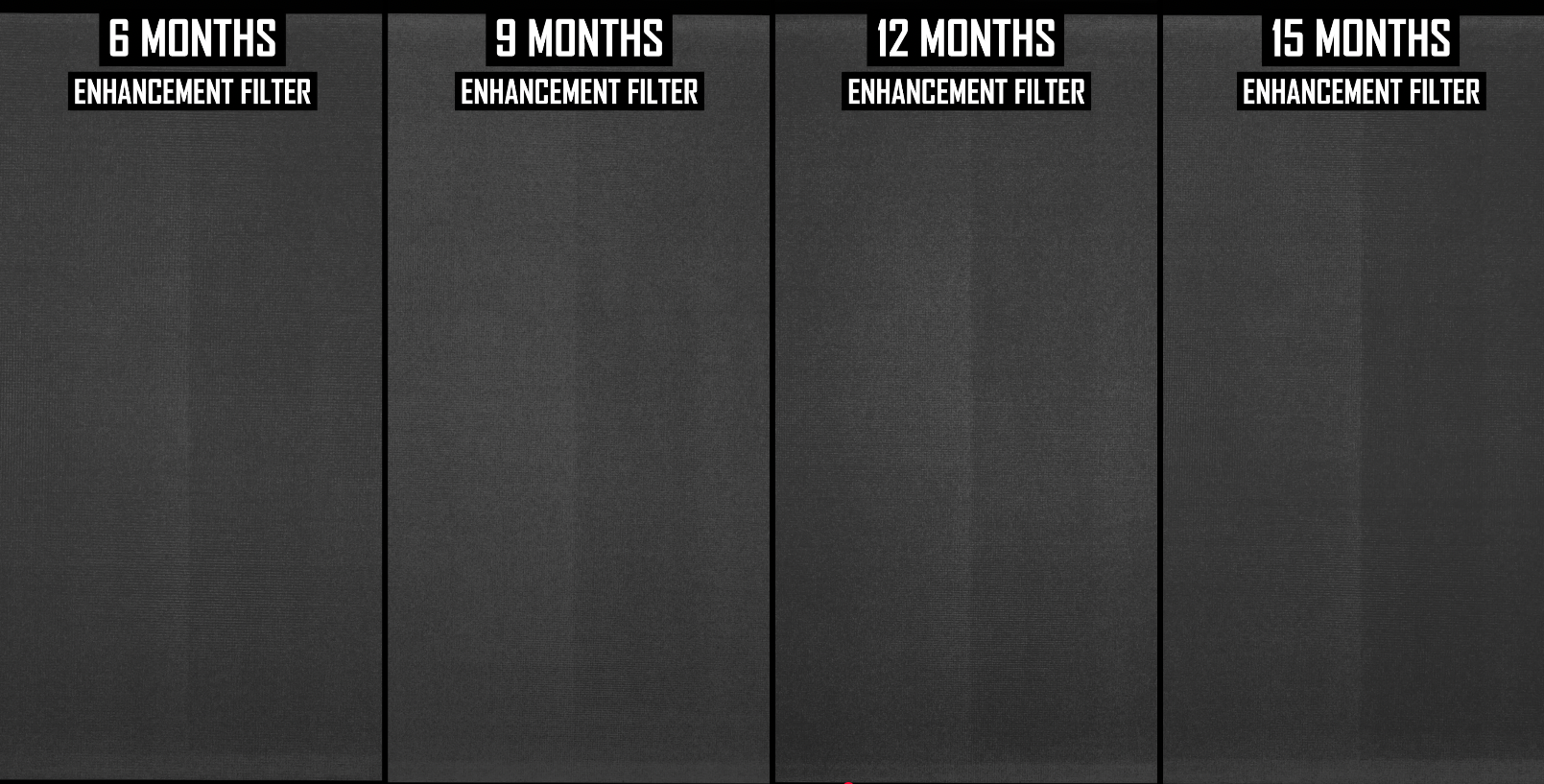
The image above has been enhanced to exaggerate the burn in, it's barely visible in reality. (Image credit: Monitors Unboxed)
Monitors Unboxed's testing has now hit the the 15 month mark, around 3,400 to 3,800 hours of unforgiving on-time and 413 panel compensation cycles. And the results? There is a little burn in and it has progressed slightly since it first become clearly apparent at the six month mark. But it's still only mild and is only noticeable—and then only just—over certain background colours.
Overall, Monitors Unboxed concludes that, "the outcome to the point has been relatively good. Burn-in has so far been quite minor."
Leading into this update, Monitors Unboxed was optimistic the 321RUX would have a level of burn-in after two years that isn't distracting for everyday use and believes the monitor is still on track to achieve that. At this point, the channel estimates the MSI panel should be good for around two to three years as used, though that estimate could be extended.
Given this testing is about as bad as it gets for an OLED panel, you can probably expect even better performance from more varied usage with plenty of gaming and other non-static content thrown in. So, three years plus and maybe as much as five years of fairly heavy usage.
Of course, most modern LCD monitors will easily give five to 10 years of reliable service. So OLED monitors still have something to prove. But Monitors Unboxed's testing largely squares with our experience with OLED monitors, which is to say we've seen little to no burn-in, including with OLED panels in laptops.
All of which is to say the OLED burn-in is almost, but maybe not quite, a complete non-issue. If you're hoping for something like 10 years usage, OLED probably isn't a good pick. But anything up to about five years of general use and gaming looks pretty plausible at this point.
It should be noted that this only directly applies to Samsung's QD-OLED panel tech as used in the MSI MPG 321URX. But broader experiences of LG's competing WOLED tech, including our own, suggests it offers burn-in resistance that's at least as good as QD-OLED. In general, then, it all looks pretty positive for OLED burn in.
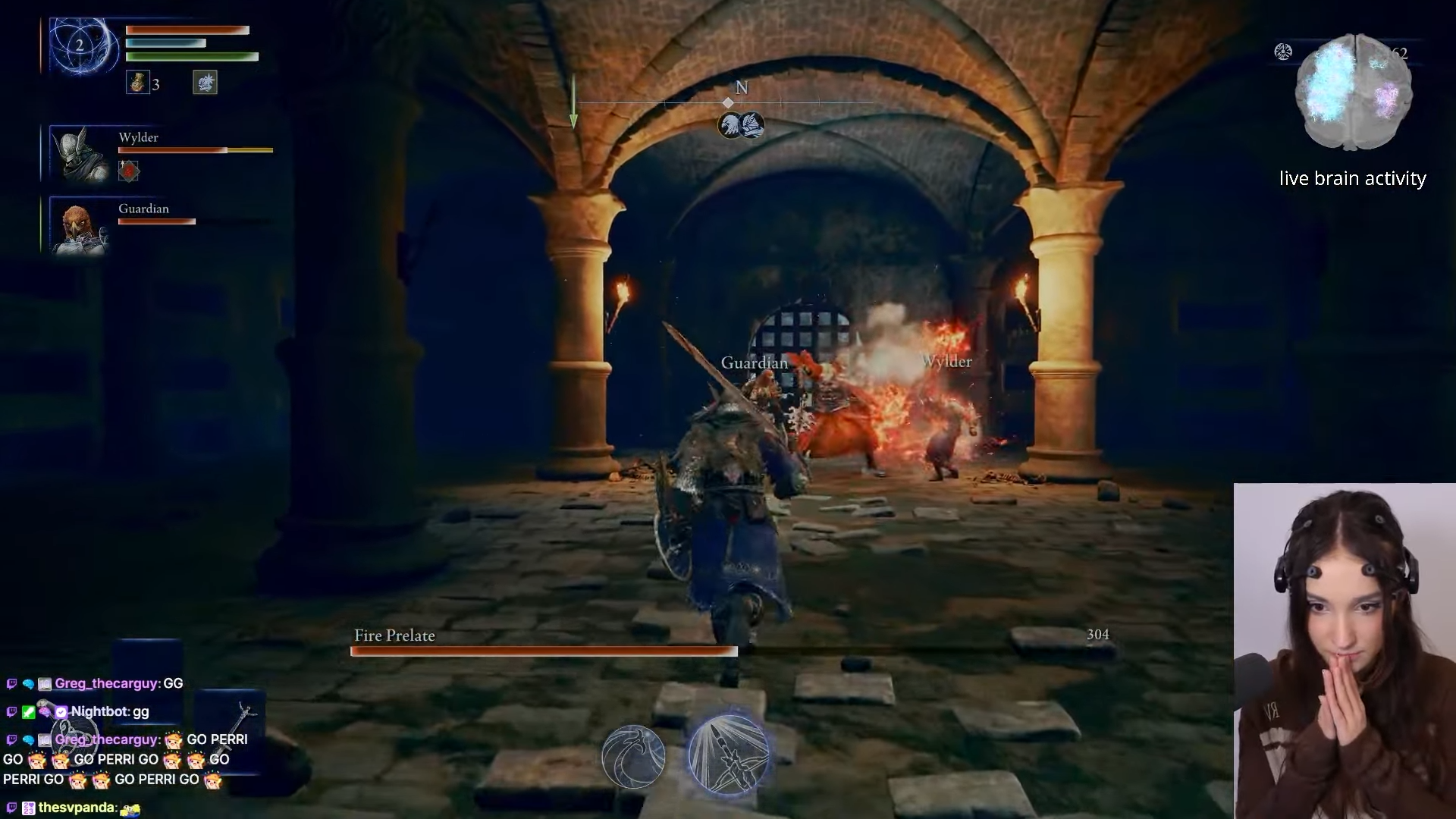
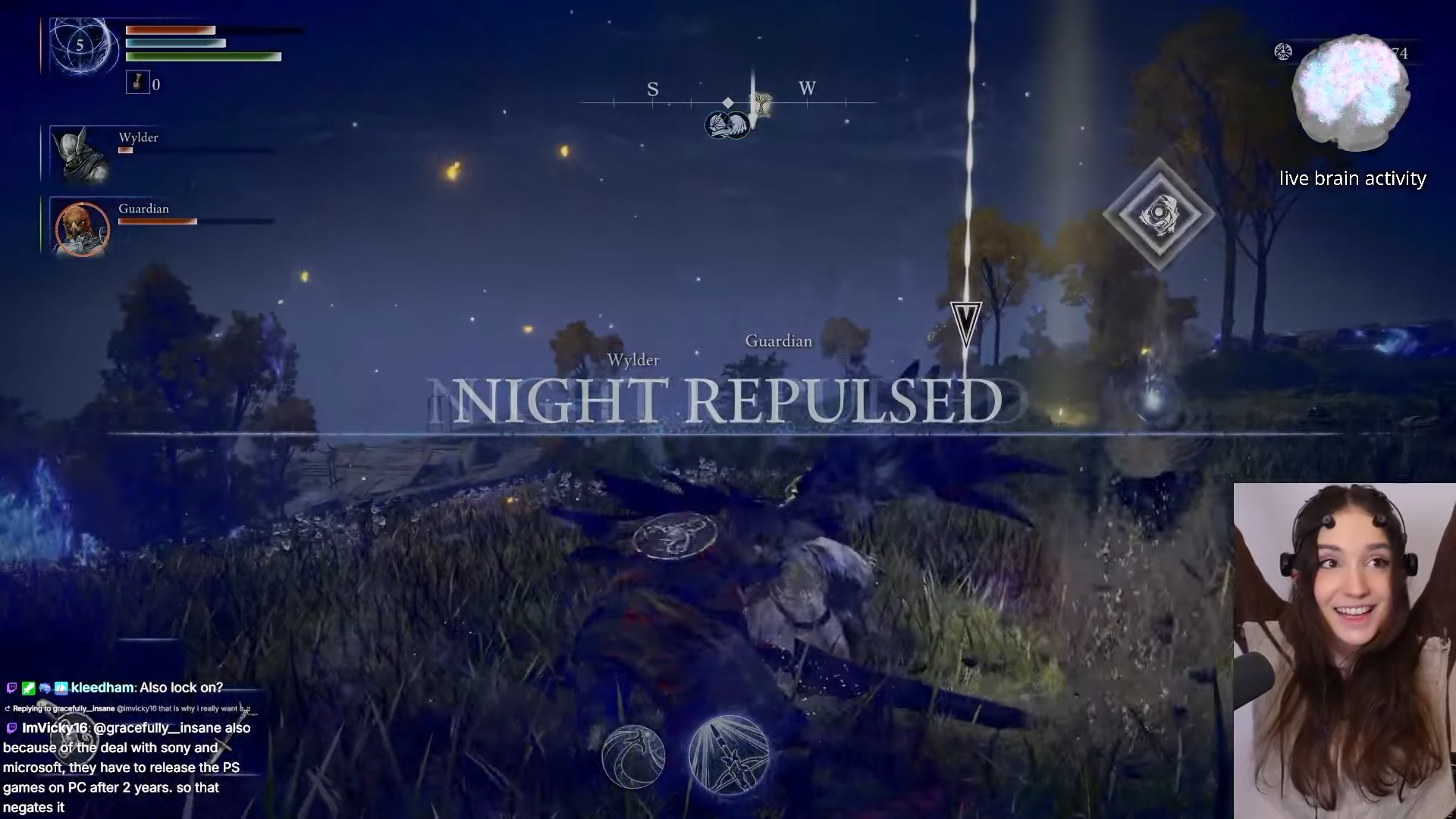
Most gamers have at least entertained the fantasy of going full Jesse Faden, tearing up the Oldest House in Control, and playing videogames with just your mind. Exceedingly few actually embark on a tech project that makes that a reality. Twitch streamer PerriKaryal has defeated many of FromSoftware's toughest customers using predominantly the power of her thoughts alone.
When I speak to PerriKaryal shortly before she flies to Rotterdam for TwitchCon Europe, I ask who has been her favourite Soulsborne boss to beat with her big brain. "Rykard [from Elden Ring]. 100% Rykard," she answers, going on to add that using mind control to dodge during the snake-face's second phase, "feels like flying."
"If you watch the live streams, I have a smile on my face the entire time."
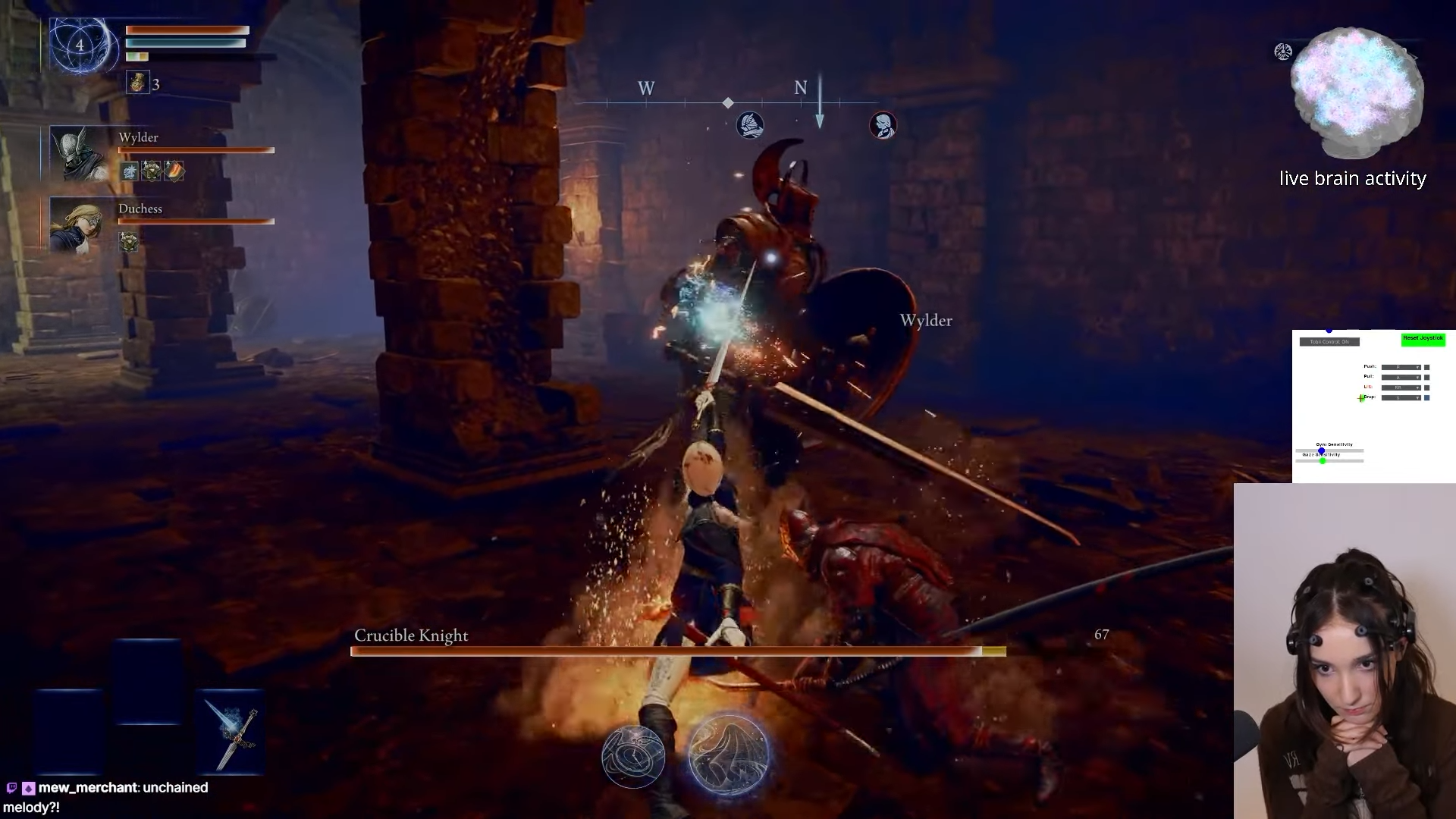
Across PerriKaryal's various online bios, she offers the phrase "I do ✨projects✨" by way of self-description, with her most wellknown tech adventure incorporating a consumer-grade EEG from Emotiv for a largely hands-free control scheme. Using Emotiv's brain-computer interface software, the streamer has essentially keybound specific spikes of brain activity to inputs on a virtual gamepad that has allowed her to beat Elden Ring using 'mind control'.
All of that said, it's nowhere near as straightforward as thinking about dodging and witnessing thy Tarnished instantly begin rolling all over the shop.
"There's a misconception that it's easy and that it's really intuitive because it's in your brain, it's your thoughts—and it's kind of the opposite," PerriKaryal says. The tech creator goes on to explain that rather than the steep cost of the EEG or the technical challenge of coding being the main obstacles, the reason you don't see more folks playing games with brain-computer-interface control schemes is simply "because it's really, really, really hard to do."
"It's really, really, really hard to do."
In order for the EmotivBCI software to register PerriKaryal's thoughts, the brain activity has to be markedly distinct. Thinking thoughts that activate distinct parts of the brain often requires a layer of abstraction; in Elden Ring: Nightreign, PerriKaryal imagines pushing a block forward to dodge and a cricket jumping while also pulsing her inner ear muscles to attack. But, as you may already be aware, this multiplayer game requires far more than just those two inputs.
A decidedly different beast compared to Elden Ring, Nightreign features a battle royale-style shrinking ring. You'll blitz through foes in the hopes of harvesting enough XP to take on the bosses that lie at the map's centre. For PerriKaryal, 1000 ms ping from her EEG device complicates even basic co-ordination with her teammates. But Nightreign is a step-up for the 'mind control' setup in particular as there's also "way more buttons"; different button combinations conjure different skills, but as the EEG control scheme can't register more than one input at a time, Nightreign is basically impossible to play purely via brain activity.
PerriKaryal's full setup can incorporate voice commands to manage trickier inputs, while eye and head tracking offer hands-free camera control. Still, watching PerriKaryal play Nightreign with this predominantly hands-free setup is no less impressive—especially as getting just one of these brain activity inputs to work even semi-reliably is far from a solved problem in the wider neurotech space.
"I've [spoken to] neurotech companies specifically about how the hell I've managed to get so many inputs working at the same time—they're like, 'We don't know how you've done this,'" the streamer shares, going on to add, "The answer is just sheer practice and willpower—and clearly, you know, too much time on my hands."
Brain Training
Besides time, PerriKaryal also has a Master's in Psychology. Alongside beating Elden Ring's bosses with just her brain, the streamer also shares her neuroscience knowledge with her Twitch audience through educational Just Chatting streams, taking things "trapped away in the steel box of rigorous academic institutions" and making them more accessible.
"I like to take news and analyse the psychology of it without forcing people to read academic papers," She explains, then jokes, "I read the papers and then I make it Girly Pop."
Despite what you may expect, the streamer describes her experiences on Twitch as being largely positive.
"Twitch is a very interesting platform, and you get a lot of good apples with [the] bad apples, as you do on all social media. And there is an opportunity when something's live for people to try and mess it up for you," she concedes, before then adding, "But my experience has actually been really, really positive, especially since I started doing tech projects like the mind control—people are really hyped for it in general! I really like the community that I built, because I think I've managed to drag people with similar interests into one place, and people are really nice."
"I read the papers and then I make it Girly Pop."
Indeed, during mind control challenge runs, it's not uncommon to see the streamer's chat flooded with encouraging messages to the tune of 'Go, Perri, go!' and 'You've got this!' Besides educational lectures and her headlining 'mind control' setup, the tech creator has also presented an interactive '3D stream' to her audience.
"Basically you can go around a [holographic] point cloud [representation of] me. All of the comments on Instagram [were like], 'Why is no one, you know, dive bombing into certain areas?' [...] There was, like, maybe 30, 40 people on the stream. There was no one doing that, because they were all very respectful. And that's kind of the community, and I really like it."
PerriKaryal streamed live from this year's TwitchCon Europe, playing Elden Ring: Nightreign at Bandai Namco's booth. The tech creator has also previously run 'mind control competitions' at similar in-person events.
For instance, during the long running annual LAN party The Gathering in Norway, PerriKaryal invited eventgoers to try their brain at a simplified Doom-like game.
She recalls this first tournament of thoughts, "People would just put on the headset— I taught them how to just get the one command fairly quickly, because that's not too tricky to do. It's not perfect, but it's doable! And then they tried the game a couple times, and whoever got the high score won a little headset that Emotiv gave me to hand out—which was really nice of them as well. And we were going all day, which was really, really, really fun."
She laughs when she remembers, "There was this guy that got really obsessed with it. I only let people have half an hour sessions, to be fair, but he just kept coming back—had to start again, but just kept coming back! He won, and he deserved it, so that was very, very fun."
Chipping In
The origin story behind both her streaming career and her 'mind control' setup began in her uni days.
"I got super into brain-computer-interfaces, because that's something I didn't do at uni. I just used the EEG to record data when people were scared or whatever it was [...] But BCI is really, really interesting."
For instance, a team at the Feinstein Institutes for Medical Research in New York have created a two-way BCI that not only allows patients to move paralysed limbs, but returns sensation as well. As for non-invasive BCI developments, Cognixion's Axon-R headset is attempting to leverage AR alongside machine learning to give locked-in-syndrome patients a voice again.
"So I don't know about you, but I'm a little bit concerned about getting a chip in my head."
But alongside these scientific advancements that may genuinely help more people one day, Elon Musk's Neuralink brain chip or Gabe Newell's BCI company Starfish have enjoyed big tech business buzz in recent years. I ask PerriKaryal about big tech's recent infatuation with so-called 'brain chips.' Though excited about the wider scientific field, she's also cautious, saying, "We're seeing [it a lot] with AI as well, [but] I think sometimes there's this big rush to do as much tech, tech, tech as possible, and not enough pulling back with safety. So I don't know about you, but I'm a little bit concerned about getting a chip in my head."
"And so I got super into that, and realised, 'Okay, you can make it record your pattern of brain activity. It can remember it. You can keybind it,'" she explains, before quipping, "And it just spiraled out of control."
it sucks that even todo lists get affected by the adhd ‘absorption of stationary objects into their environment thus leading to effective invisibility’ thing
yeah my to-do list is empty. what do you mean “what about those five items?” those are just part of the ui obviously
Support your friendly neighborhood independent comic strip: SIGN UP FOR THE INNER HIVE and you'll get each week's Tom the Dancing Bug comic at least a day before publication. Plus other exclusive content like extra comics, commentary, juicy gossip, puzzles, jokes, and insider theme park gossip. — Read the rest
Wall Street was turned upside-down by President Donald Trump's tariffs, but now we've been through a few rounds of him posting then withdrawing threats and trying to shake down foreign governments, things are settling down. They have a nickname for him, "Taco," to remind them where the puck always ends up. — Read the rest
This is what happens when cruelty becomes policy. The right keeps scapegoating immigrants while quietly gutting healthcare for working-class Americans. Don’t let them gaslight the public with xenophobic distractions–this is class warfare in plain sight.
Destroying democracy was a campaign promise, I guess.
Trump officials just destroyed the federal government's voting rights watchdog. By transferring all senior managers in the Department of Justice's voting section to a backwater office and halting every active investigation, the administration has effectively shut down the unit tasked with protecting voter access nationwide, as reported in The Guardian. — Read the rest
Support your friendly neighborhood independent comic strip: SIGN UP FOR THE INNER HIVE and you'll get each week's Tom the Dancing Bug comic at least a day before publication. Plus other exclusive content like extra comics, commentary, juicy gossip, puzzles, jokes, and triumphant tales of defeating fascism. — Read the rest
In a massive affront to the memory of all the people who died cleaning up the disaster at Chernobyl, Russia struck the two billion dollar "New Safe Confinement" with an explosive drone attack. — Read the rest
“Fear is a strange soil. It grows obedience like corn, which grow in straight lines to make weeding easier. But sometimes it grows the potatoes of defiance, which flourish underground.”
Great news, Americans! Thanks to your god-emperor and his loyal billionaire sidekick, your Freedom Milk, is now fortified with listeria and brain parasites!
The FDA just announced they're suspending their milk quality testing program because they fired too many people to actually do their jobs. — Read the rest
I think they were recreating the Citadel from HL2.
Around 83 miles northwest of Las Vegas lies Area 51, the classified military base where new aerospace technology is tested and—depending on your appetite for conspiracy theories—a high-tech facility where extraterrestrials chill on ice as their crashed craft are reverse engineered. — Read the rest











 ALT
ALT ALT
ALT ALT
ALT ALT
ALT ALT
ALT ALT
ALT ALT
ALT ALT
ALT ALT
ALT ALT
ALT


