
Shared posts
20 Feb 10:01


comic-chick: mccdi09: Plug It On The Window The Window...
The Window Socket offers a neat way to harness solar energy and use it as a plug socket. So far we have seen solutions that act as a solar battery backup, but none as a direct plug-in. Simple in design, the plug just attaches to any window and does its job intuitively.
Designers: Kyuho Song & Boa Oh
Oh my god
Cooper Griggs, bernot likes this


15 Feb 17:09

New Geometric Sandcastles from Calvin Seibert
by Christopher Jobson


New York-based sandcastle artist Calvin Seibert (previously) just returned from a 10-day trip to Hawaii where he completed a number of his abstract, geometric sandcastles. For the past 30 years Seibert has worked as a sculptor’s assistant and puts some of his acquired skills in construction and basic carpentry to use while executing these perfect, angular sand structures. You can see more of his recent work here.
Benjaminsavage, Markku.lempinen and 6 others like this
15 Feb 16:50

theweekmagazine: MIKE LUCKOVICH Copyright 2014 Creators...
MIKE LUCKOVICH Copyright 2014 Creators Syndicate
Sofía Henao, Cooper Griggs and one other like this
15 Feb 16:23

A Massive Inflatable String Jungle Gym by Numen/For Use
by Christopher Jobson


Created by Croatian-Austrian collective Numen/For Use, String Prototype is a design for an inflatable volume containing a network of cables that can be explored similar to a jungle gym. The design group is known for their large-scale interactive environments made from tape and netting and this is their first foray into what they call “large geometric inflated objects.” Via the project site:
When the volume deflates, the ropes get loose and lay on the ground enabling compression of the installation. When the object inflates, the ropes tense to a perfect line again, strained enough to carry the weight of a human being. Bodies entrapped in 3D grid, flying in unnatural positions throughout superficial white space, resemble Dadaist collages. Impossibility of perception of scale and direction results in simultaneous feeling of immenseness and absence of space.
The project is currently in development and you can see much more of it here. (via Designboom)
Benjaminsavage, bernot and 4 others like this
15 Feb 16:14
Sam Ectoplasm
by L.
Montreal-based artist Sam Ectoplasm’s vivid, fleshly pen-and-ink drawings explore anatomy, sexuality, and disintegration.


{“In my work, I rip open the body and let the anatomic parts flow….Explicit sexual images, explosion of the anatomy and vegetal elements, in a constant macro-micro zoom from the inside to the outside, are like surrealist illustrations of the human sensorial experience of life and decay.”}


12 Feb 23:49
the fallen
by kris

a thought i had, seeing a pug run in circles, as his owner pulled him away from urinating on a signal box
new podcast! new videos! new… answers… here’s part 1!
bernot likes this


07 Feb 02:56

Wanderlust | Tokyo’s Volcanic Crater Island Aogashima
by Johnny
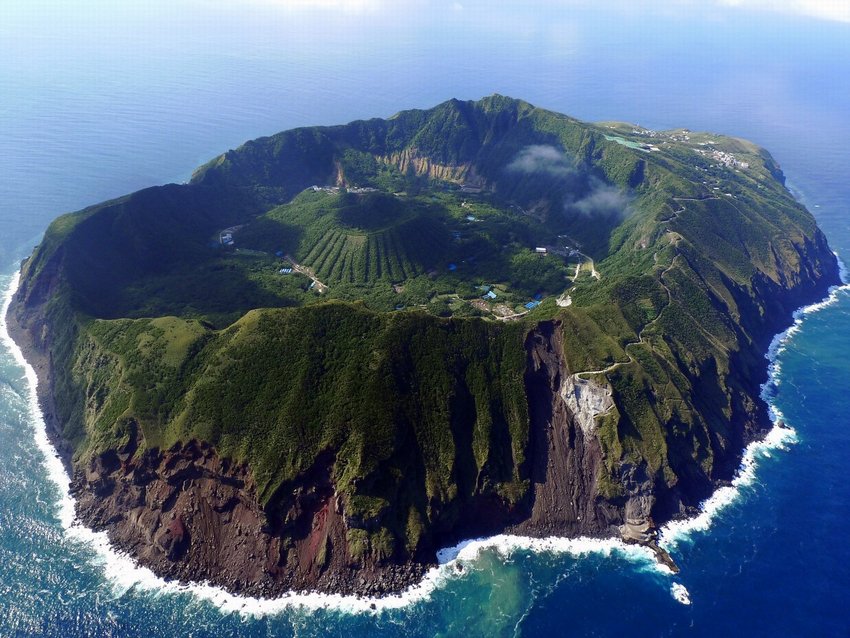 unless otherwise noted all photos by flickr user mh2718
Aogashima – the blue island
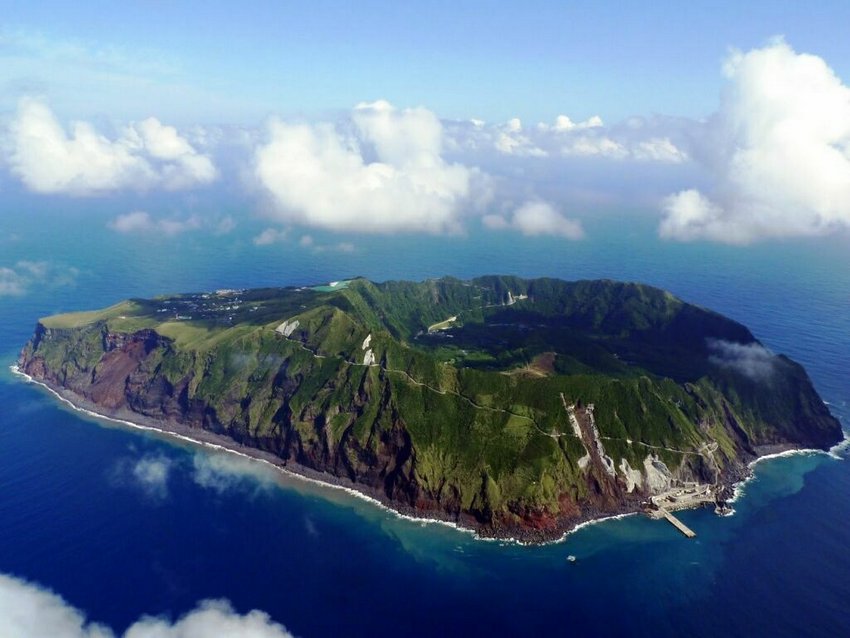
Despite being 222 miles south of Tokyo, Aogashima, a remote yet inhabited island, falls under the administration of Japan’s capital city. But the address is where the similarities end. As of 2010, the 9 square kilometer (about 1680 football stadiums, for all you Super Bowl fans out there) island has 98 households and a population of 165, making it the smallest village in all of Japan.
Looking almost like a Jurassic Park-like natural fortress, the volcanic island is known as a caldera. Within the large crater is a smaller crater – a cinder cone – that was formed after the larger explosion. The steep rugged cliffs of layered volcanic deposits rise up as high as 1388 feet.
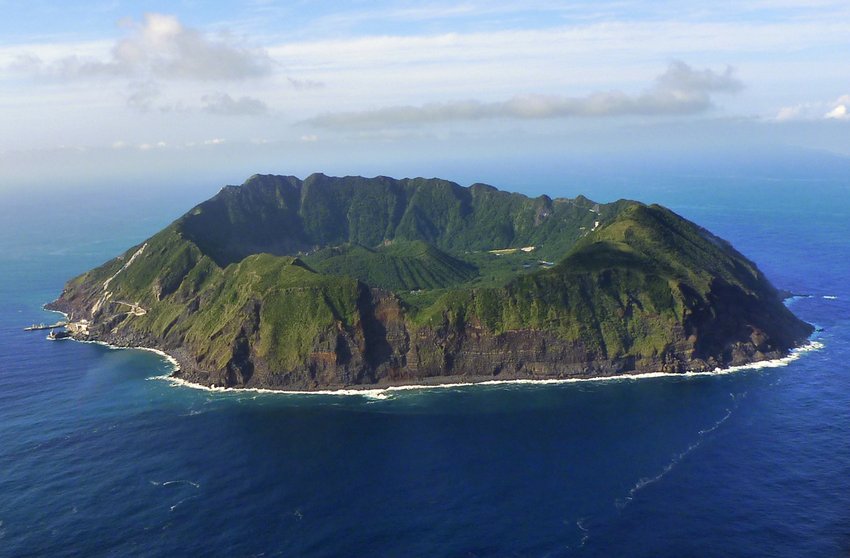
Origins Shrouded in Mystery
How people first ended up on the island is largely considered a mystery. The island’s own legend has it that the island was once forbidden to women because it was believed that man and women living together on the island would anger the gods. The first written records of the island appear around the 15th century and many of them are of shipwrecks so there’s a strong possibility that sailors may have taken refuge on the island and eventually made it their home.
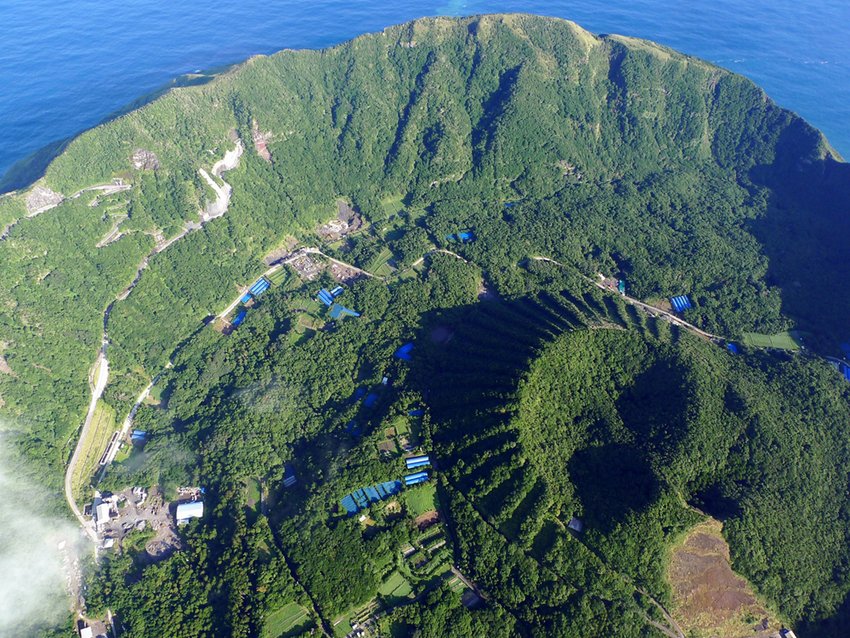
Returning Home After Tragedy
A series of earthquakes in 1780-81 was followed by volcanic activity 2 years later. Lava flows burned down all the houses and residents were forced to flee to the nearest island, Hachijojima. Unfortunately, about half of the 327 residents did not make it out in time and perished. Those who did survive were forced to live out the next 40 years of their life on Hachijojima. Some sought out new life elsewhere but others could never forget their beloved island. One of these people was Jirodayu Sasaki, who, after 18 years of planning, courageously led an expedition back to the island and successfully resettled in 1835. He’s considered a hero on the island and there’s even a statue of him.
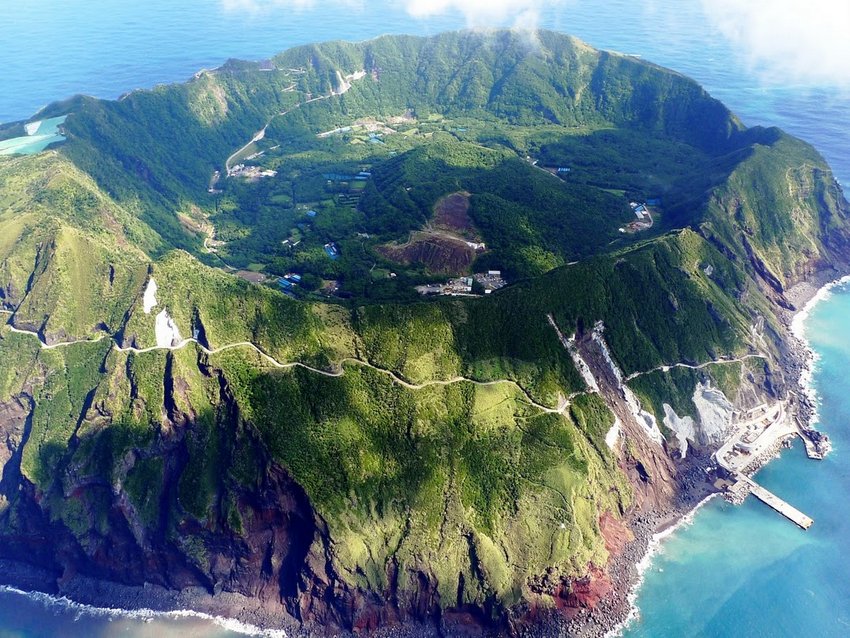
Traveling to Aogashima
In this day and age, getting to Aogashima is actually much easier than you might have thought. They even have their own heliport!
- First Class – fly from Tokyo to Hachijojima and then take a helicopter. A one way trip will take just a little over 2 hours and will cost about $240.
- Economy Class – sail from Tokyo to Hachijojima and then take a smaller boat. A one way trip will take 14 hours and will cost about $100.

Entertainment
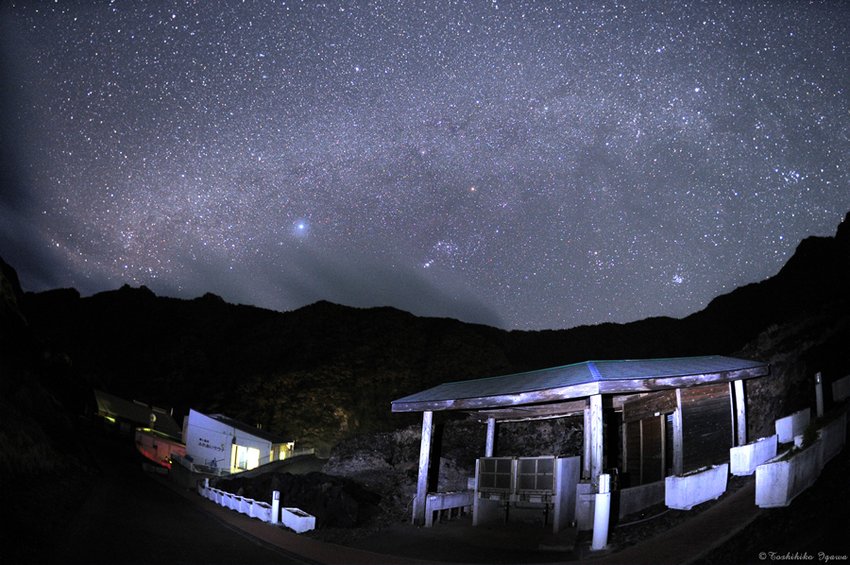
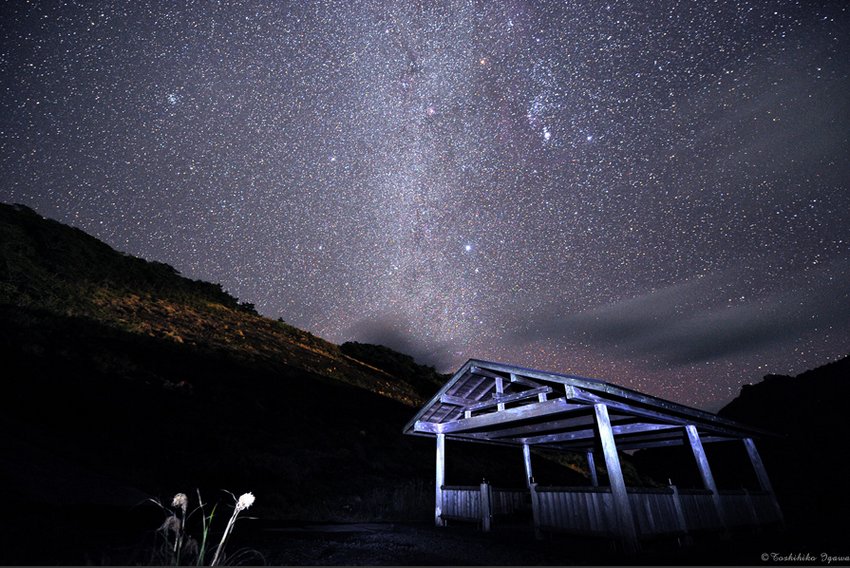
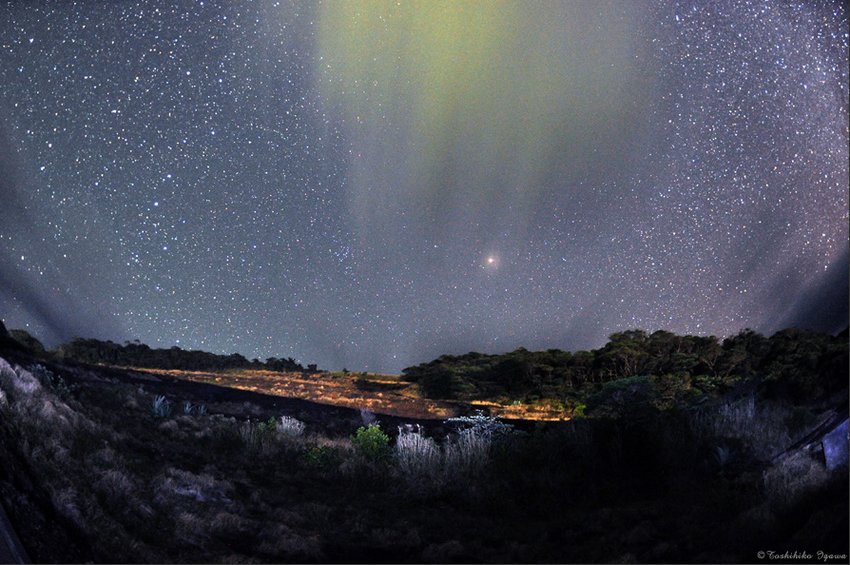
So what do you actually do once you get to this lost paradise? Well what it doesn’t have in beaches the island makes up in starry skies. Photographer Toshihiko Ogawa documented some of these fantastic starry nights. The photos were taken from the 2nd caldera, where many people will go to camp out. There is also a volcanic natural hot spring where you rest those muscles from all the rock climbing you did getting there.
Otherwise there’s plenty of fishing, hiking trails and shrines to see. And the internet is probably shoddy so it’s the perfect place to unplug.
Source: Aogashima Village | Blue Island | Wikipedia
Roslyn Cook, bernot and -1 others like this
07 Feb 01:11

Watch a Random Video Art Piece With Ubu Roulette
by Andy Cush
Ubu Web, the massive, Kenneth Goldsmith-helmed database of avant-garde art, can be difficult to dive into. That’s why Marie von Heyl and Joao Flux created Ubu Roulette, a site that randomly selects one of the many video artworks hosted on Ubu and plays it back for you. “Organize your own Ubu Roulette party…random art is a perfect way to trigger random conversations,” writes Flux on his website. Also seems like a pretty good thing to have for next time you’re stoned and staring into the internet.
Science Friction, a 1959 collage film by Stan Vanderbeek, was the first thing it gave me. It’s great. Heavy Monty Python vibes, and apparently that’s no accident.
The post Watch a Random Video Art Piece With Ubu Roulette appeared first on ANIMAL.
bernot likes this


25 Jan 02:32

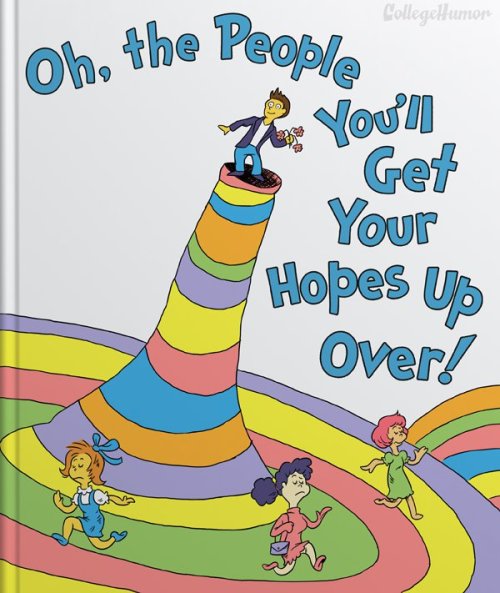



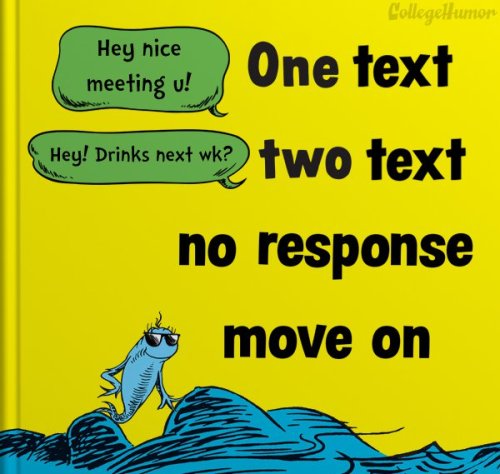

tastefullyoffensive: Useful Children’s Books for People in...
Useful Children’s Books for People in Their Twenties [more] [collegehumor]
Previously: NSA Surveillance Children’s Books
bernot likes this


24 Jan 04:29
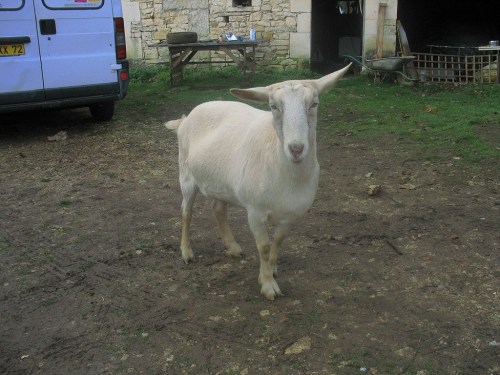

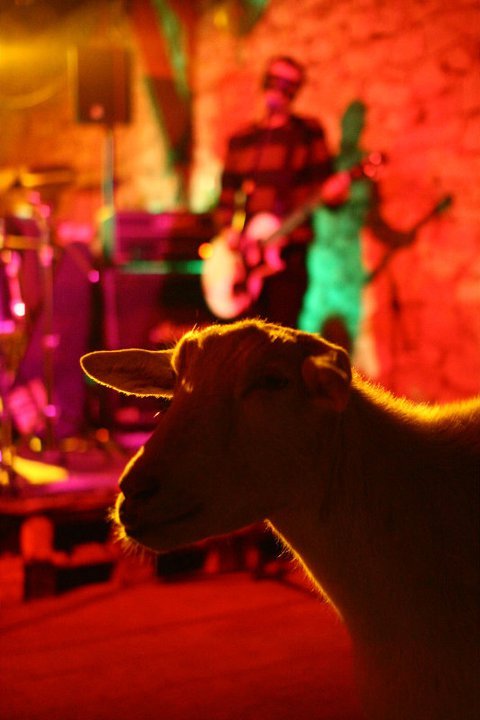




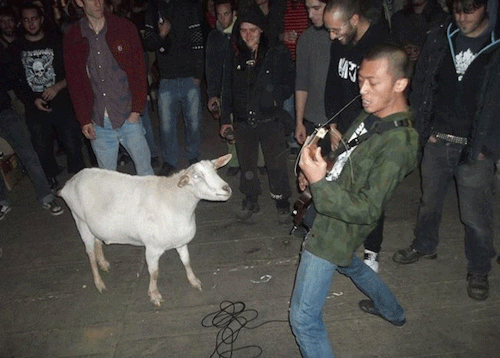
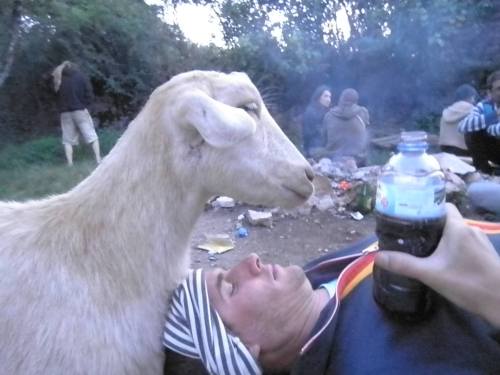
glitchbent: Biquette, the grindcore goat (who followed Wormrot...
Biquette, the grindcore goat (who followed Wormrot around like a dog) has died. Rest in PVs, lil’ lady.
David Pelaez, Cooper Griggs and 2 others like this

18 Jan 17:52


French PSAs Mash Up Emoji And Perverts
by Dan Seitz

The French have their problems, but they undeniably have some killer ad campaigns. Like this one, from Innocence En Danger, designed to raise awareness of the dangers of both letting your kids chat with random weirdos online and emoji. And also to keep you awake, deep in the night, shotgun at your side.
Designed by French ad agency Rosapark, the campaign boils down to “Do you know who your children are chatting with?” by asking what emoji would look like if they were actual people. And, as a way to raise both awareness and hackles, it works. Take, for example Noseless Heart Spitting Dude:

Or Gigantic Tears Businessman:

We also like that the types on display here are an old businessman, a bald shirtless guy, and a hipster. Apparently owning a woolen cap means something much different in France. These probably will not be hopping the pond to your nearest bus station or billboard, sadly, as the campaign seems largely limited to Europe. But, hey, there’s no reason we can’t appreciate a good Photoshopping. Now where did we leave that shotgun?
via Rosapark
bernot likes this


17 Jan 16:54

The Incredible Underwater Art of Competitive Aquascaping
by Christopher Jobson
 Forest Scent, Pavel Bautin. Russia. 2010 IAPLC Grand Prize Winner

Pale Wind, Takayuki Fukada. Japan. 2013 IAPLC Gold Prize

Whisper of the pines, Serkan Çetinkol. Turkey. 2013 IAPLC Top 27

Verve!, Chow Wai Sun. Hong Kong. 2011 IAPLC Bronze Prize

Way to heaven, Dmitriy Parshin. Russia.

Wild West, Stjepan Erdeljić. Croatia.

Georgi Chaushev, Bulgaria. 2012 IAPLC Top 100.

Francisco Wu, Spain. 2012 IAPLC Top 100.

Long Tran Hoang, Vietnam. 2012 IAPLC Third Place.

Pilgrimage, Shintaro Matsui. Japan. 2013 IAPLC Fifth Place.
No, these aren’t exactly your childhood goldfish bowls. The world of competitive aquarium design, or aquascaping, is just as difficult, expensive, and cutthroat as any other sport but requires expertise in many different fields to guarantee success. Aquarium designers possess large amounts of expertise in biology, design, photography, and excel in the art of patience, as individual aquascapes can take months if not years to fully mature into a completed landscape.
The world’s largest nature aquarium and aquatic plants layout competition is the International Aquatic Plants Layout Contest (IAPLC) which annually ranks hundreds of competitors from around the world with Asian and Eastern European countries generally dominating the top slots. While it’s somewhat difficult to track down galleries of winners from every year, above are some amazing entries from the last few years. To see more, oh so much more, check out: IAPLC Grand Prize Works, IAPLC 2011 Top 27, IAPLC 2013 Top 6, IAPLC 2012 Top 200 (or here), and the first Eastern European Planted Aquarium Design Contest.
Mahmoud, David Pelaez and 4 others like this
15 Jan 23:29

artjcf: “guns don’t kill people, guns CREATE...
by vectorbelly
“guns don’t kill people, guns CREATE people!” *fires 10 newborn babies out of a bazooka*
— Fred Delicious (@Fred_Delicious)
bernot likes this


