





In Nepal they have a festival that honours dogs and thanks them for being our loyal furry friends.
In Nepal they have a festival that honours dogs and thanks them for being our loyal furry friends.
bernotnsfw fairy wang


Today’s Gender of the day is: Anti-Cornbread sentiment
bernoti really like this photo, i have no idea why.

Submitted by M, the model and photographer.
“Trying out some new androgynous ear jewellery without having to permanently change my ears!”
bernothash tag alcohol poisoning
actually my feed was pretty happy, which was much appreciated
bernot6-27-13
prescient
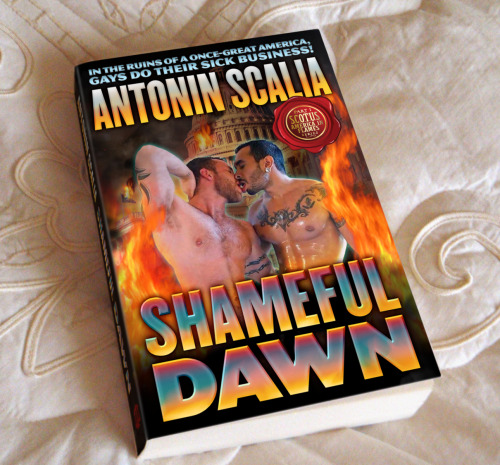
Shameful Dawn by United States Supreme Court Justice Antonin Scalia
“A terrifying look at America’s slick, glistening future…"—American Conservative


I’m a lifelong fan of role-playing games, but I rarely play them. Dungeons & Dragons. Call of Cthulhu. Vampire: The Masquerade. Cyberpunk 2013. Traveller. I’ve been enchanted by the words and illustrations, and drawn into the imaginary worlds of as many RPGs as novels. So I’m always surprised, and a little dismayed, when RPGs are left out of the popular discussion about books and reading.
Though the term didn’t exist back when I was a teenager, squatting on comic-book floors to thumb through expensive hardback editions, RPGs are an example of the kind of literature described by Espen J Aarseth as “ergodic”. These are books, like digital literature, computer-generated poetry and MUDs, where a “nontrivial effort is required to allow the reader to traverse the text”. And they are more common than you might think, especially in geek culture. Game books that allow you to “choose your own adventure” are ergodic, as are fantasy novels with extensive maps and world-building notes. But the RPG handbook pushes ergodic reading to its limit.
By putting aside simple narrative storytelling and replacing it with detailed description, the RPG offers the total immersion in an imaginary world so valued by geek readers. The elaboration of leading characters, political factions and major historical events is sometimes a very dry exercise in world building, but done with enough skill it can spark a deeply satisfying response.
For writers such as Junot Díaz, who often played Dungeon Master, RPGs were “a sort of storytelling apprenticeship”, where he “learned a lot of important essentials about storytelling, about giving the reader enough room to play”. China Miéville talks about a childhood playing RPGs – which gave him a “mania for cataloguing the fantastic” and a “weird fetish for systematisation”. For Miéville, the best weird fiction is at “the intersection of the traditions of surrealism with those of pulp”.
“I don’t start with the graph paper and the calculators like a particular kind of D&D dungeonmaster,” Miéville explains: “I start with an image, as unreal and affecting as possible, just like the surrealists. But then I systematise it, and move into a different kind of tradition.”
First published in 1974, Dungeons & Dragons became the first globally successful RPG because it encapsulated the genre of heroic fantasy. Stories of Robert E Howard, Fritz Lieber and Jack Vance were little-read in the 1970s, but Gary Gygax and Dave Arneson used them to provide the character archetypes and world for their game. In turn Dungeons & Dragons spawned a revival of heroic fantasy fiction and also inspired the video game makers who would create a swathe of massively successful computer RPGs.
Great RPG writers give players a sophisticated narrative framework, with which they too can be great storytellers. Epidiah Ravachol’s indie RPG Swords Without Master is a brilliant example of such expert game making. In just a few dozen pages Ravachol dissects the structure of heroic fantasy narrative into its archetypal parts. Swords Without Master is a very different game to D&D, reflecting the shift within RPG design away from rules and dice rolls, towards pure storytelling. As Ravachol says:
You do not take up sword and spell to tag along with someone else’s adventure. You do it to change the course of your destiny. To mould the world to your wants and desires.”
But the pleasures of reading Ravachol are not entirely abstract. The reader is drawn in to a world of “strange sorceries, brutal violence and astounding wonder” right from the first page:
Gather writing implements, scraps of paper, three or four of your cohorts, and two six-sided dice that you can easily tell apart to a table. A mahogany table adorned with thick, greasy candles and five human skulls. Failing that, a stout oaken table near a glowing hearth, replete with ale-filled steins and a succulent roast. Or, if you prefer, a tabletop chipped whole from a single obsidian stone, placed on the back of a coiled serpent of silver in a room high in a lonely tower shrouded in a prismatic fog.
You emerge from reading Swords Without Master not only convinced you understand every nuance of heroic fantasy, but also with the impression of having spent time in a world very different from our own.
Shock : Social Science Fiction by Joshua AC Newman performs a similar trick with the complex beast that is science fiction. Writers and critics of SF have argued for decades about what defines the genre, a Gordian Knot that Newman cuts through like a 21st-century Alexander the Great. Shock allows players to explore near future worlds which have been disrupted by “Shocks”. But what makes a shock a “Shock”?
It’s something big. Something that changes the world. It can be loud or quiet, but it can’t be meaningless. ‘Some people are androids’ is a Shock because, even though the world looks and sounds like the one we know, something different is going on that the players know about, whether or not the *Tagonists do. ‘Mind Transfer’ is a Shock because it’s a fundamental difference between the way we think of identity and the way it works in the story.
As players build *tagonists and conflicts are resolved, the reader’s head starts whirling with all the stories spinning off in every direction.
A gunfight breaks out. An emotional argument threatens a family. A worker decides whether to join the Revolution or feed his family. A priest’s faith is shaken.
It’s a fascinating, ambitious game I’d recommend to any SF fan, either to play or just to read.
These gems of indie RPG design are only the tip of what is now a very sizable industry. When the fifth edition of the Dungeons & Dragons Player’s Guide was published in 2014 it took the No 1 spot on Amazon.com.
Pulp adventure RPG Planet Mercenary recently became the latest in a long line of RPG-related Kickstarters to achieve success on a similar scale. And of course, RPGs continue to dominate the world of video games, expanding their audience into billions, far beyond the scope of any single novel.
Can the novel itself learn a few lessons from RPGs? The ergodic reading experience broke into the literary mainstream with Mark Z Danielski’s House of Leaves. But the novel remains stubbornly attached to traditional narrative structure. For all their pop culture aesthetic and emphasis on escapism, in these days of the mega-novel innovative reading experiences are to be found in the mysterious worlds of the RPG.
bernotme irl

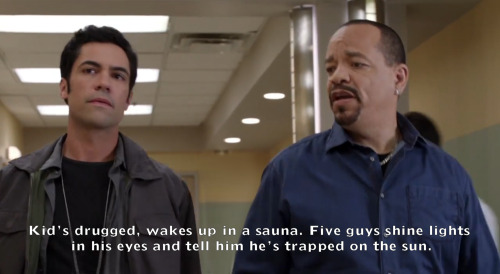

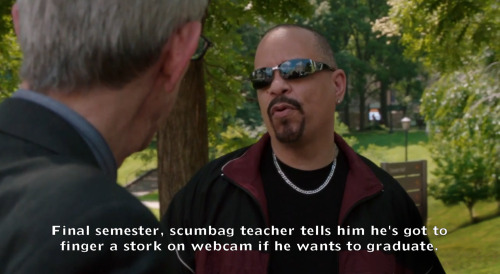
Ice-T Law & Order SVU Part II

Wonderella is live via satellite from a 1970s newsroom backdrop.
bernotsportzball jokez

It’s become common practice (not to mention another effective revenue stream) for an NFL team with a new stadium to give fans the opportunity to purchase a brick for a couple hundred bucks and have it included in a fan walk or an outdoor plaza. The new Vikings stadium, which has been remarkably easy to break into btw, is no different. Thankfully, some folks at r/NFL seized this trolling opportunity and condemned the Vikings to an association with Brett Favre forever. The sad thing is there are probably some Vikings fans who would not actually be bothered by this.


The Defender is a pepper spray that when sprayed takes a picture of the person you’re spraying and sends it the police along with your GPS location, user information, as well as flashing a bright light in the attackers face and emitting a loud alarm.
—->http://odditymall.com/pepper-spray-that-takes-a-picture-and-alerts-the-police
BRUH
Pass it along
I need this In my life.


SPOKANE, Wash. – After resigning from her post as president of the Spokane, Washington chapter of the N.A.A.C.P due to a highly publicized scandal regarding her race, Rachel Dolezal created even more controversy on Monday by claiming to be a founding member of legendary hardcore punk band Bad Brains.
The 37-year-old Dolezal claims to “have been there since day one” when describing her association with the band that formed in 1977 (when Dolezal was less than a year old).
Dolezal’s parents, who are white, have stated publicly that her daughter was no where near Washington D.C.’s punk scene in the late ’70s, or 171-A Studios, and that she has never expressed any interest in punk music until very recently.
“I… don’t understand… why people have a hard time… believing this,” stated a confused Dolezal when confronted by reporters. “Being in the Bad Brains shaped my entire identity, they are like family to me.”
Bad Brains frontman HR has remained relatively quiet on the situation, and refused to comment on a picture Dolezal produced of the two, which she says proves HR is her father.
Article by The Hard Times Staff. Photo courtesy of Rachel Dolezal & Greg Kolls.


Poorly Drawn Mammals of the Pacific Northwest by Dwight Uncleroy

I always liked this one. Click it.
bernottempting

With the seal of approval from tarot maestro Alejandro Jodorowsky, comes these beautifully illustrated tarot cards by artist Michael Eaton and arranged and edited by King Khan. “The Black Power Tarot” is a version of the Tarot De Marseilles...
bernotvideo only everywhere apparently
bernotgood, let's send more of them
Maryland Governor Larry Hogan took a trip to Yamanashi to try out Japan’s record-breaking Maglev (Magnetic Levitation) bullet train. Travelling with him was were executives from the Baltimore-Washington Rapid Rail LLC (BWRR), who, after enjoying a 27-mile-long ride, headed back to Baltimore with the intention of bringing the technology stateside.
 “There is no question that this is the future of transportation,” Hogan said.
The train can travel upwards of 374 miles per hour (590 kilometers per hour) but maintained a speed of 314 mph for Hogan’s trip.
Govenor Hogan announced that the state Maryland applied for a grant for US$27.8 million in Federal Railroad Administration (FRA) funds. The Japanese government will heavily back the project with a reported US$5 billion, as well as private investors. It does not require funds from the Maryland Department of Transportation’s (MDOT) Maryland Transportation Trust Fund. Both MDOT and and Maryland Economic Development Corporation (MEDCO) are co-applicants for the grant on behalf of BWRR.
The FRA has turned down Maryland’s request for funds in 2010, stating a maglev project was “not ready.”
 The funding was set up specifically to bring Maglev technology to the United States, including from Washington D.C. to Baltimore. Japanese Prime Minister Shinzo Abe already announced his desire to financially support bringing Maglev to the U.S., including a line from New York to Washington D.C. and has spoke with California Gov. Jerry Brown to set-up a high-speed railway between Los Angeles and San Francisco and is pushing trains to link Houston and Texas. Abe and Hogan met previously and both parties signed a Memorandum of Cooperation (MOC) that included provisions on Maglev trains.
If completed, the rail line would deliver passengers from Baltimore to Washington D.C. in 15 minutes. The overall cost of implementing the railway is unknown but estimated at least US$10 billion. The cost of the planned line from Tokyo and Nagoya is estimated at US$50 billion but it has the added cost of tunneling through the Japanese countryside’s mountains.
Thanks to Kun Sun Sweeley for the news tip.
Source: The Washington Post
More from Anime News Network
 Now see the maglev in motion: Just how fast is Japan’s new maglev train? See for yourself【Video】

Origin: Maryland governor seeks federal funding after riding Japan’s maglev train
Copyright© RocketNews24 / SOCIO CORPORATION. All rights reserved.