
Shared posts
10 Oct 23:59

Alcohol inequality
by Tyler Cowen
I double-checked these figures with [Philip] Cook, just to make sure I wasn’t reading them wrong. “I agree that it’s hard to imagine consuming 10 drinks a day,” he told me. But, “there are a remarkable number of people who drink a couple of six packs a day, or a pint of whiskey.”
As Cook notes in his book, the top 10 percent of drinkers account for well over half of the alcohol consumed in any given year. On the other hand, people in the bottom three deciles don’t drink at all, and even the median consumption among those who do drink is just three beverages per week.
The piece, by Christopher Ingraham, is interesting throughout. Here is my earlier post on “The culture of guns, the culture of alcohol”, one of my favorites.
Addendum: Via Robert Wiblin, Trevor Butterworth offers a good critique of the data.
09 Oct 14:43
Selfie of the Day: This Camel is All Smiles for This Amazing Selfie
firehose, Damiani.guilherme and -1 others like this
09 Oct 14:42
Where We're Going, We Don't Need Roads
firehose, Damiani.guilherme likes this
09 Oct 14:42
Be Careful What You Wish For
Damiani.guilherme likes this
09 Oct 14:10
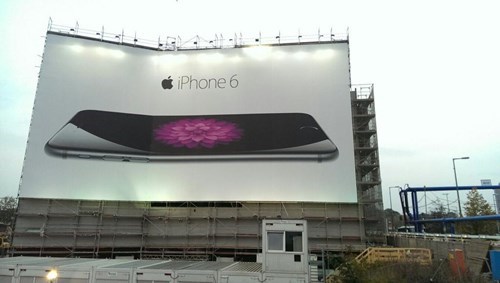


Okay, Who Bent the Giant iPhone 6 Billboard in Berlin?
Whether by serendipitous accident or purposeful satire, this ginormous billboard featuring the latest iPhone 6 is a little bit... well... crooked. My money's on that they put this billboard up before the whole bending controversy came to light. Funny how things just work out, don't they?
Submitted by:
firehose, Damiani.guilherme and -1 others like this
09 Oct 14:09
Quite a Different Spin on The Legend of Zelda
firehose likes this
09 Oct 13:10
And That's How You Open a Mike's Hard Lemonade
Damiani.guilherme likes this
08 Oct 22:47
Samsung Paid Microsoft $1 Billion Last Year
by John Gruber
Ina Fried:
Microsoft’s lawsuit against Samsung was unsealed on Friday, revealing that the software maker believes it is owed $6.9 million in unpaid interest from last year.
Microsoft sued in August, asking a federal court to rule that its Nokia purchase didn’t breach the company’s contract with Samsung. That contract calls for the Korean electronics giant to pay Redmond a royalty for each Android phone and tablet it makes.
A lot is at stake in the case, as is made clear by the details unsealed Friday. Microsoft notes in the suit that Samsung paid it $1 billion last year under the patent agreement.
That’s incredible. In all seriousness, could Microsoft be profiting from Android more than Google is?
06 Oct 13:28
NFL Players Banned From Wearing Beats Headphones on Camera
by Jordan Golson
Thanks to a new marketing deal with Bose, NFL players will no longer be allowed to wear Apple's line of Beats headphones around television cameras, according to Re/code. The restriction is in place for TV interviews during training camp, practice sessions and game day, running from before the game or event through 90 minutes after play has ended.
Many professional athletes have sponsorship deals with Beats, with the headphones frequently spotted around the necks of players both before and after games. Beats accounts for more than 60 percent of the premium headphone market.
Beats, which has seen significant success with its athlete endorsements, ran ads last year with NFL stars Colin Kaepernick and Richard Sherman tuning out opposing fans with Beats noise-canceling headphones.
Something similar happened during the World Cup when headphone sponsor Sony banned Beats from stadiums, but not from outside the arenas where players frequently used their preferred headphones. Many advertising industry experts said Beats still won the day with its star-studded "The Game Before The Game" video, portions of which ran repeatedly during World Cup commercial breaks.


Many professional athletes have sponsorship deals with Beats, with the headphones frequently spotted around the necks of players both before and after games. Beats accounts for more than 60 percent of the premium headphone market.
"Over the last few years athletes have written Beats into their DNA as part of the pre-game ritual," a Beats spokesperson said. "Music can have a significant positive effect on an athlete’s focus and mental preparedness and has become as important to performance as any other piece of equipment."
Beats, which has seen significant success with its athlete endorsements, ran ads last year with NFL stars Colin Kaepernick and Richard Sherman tuning out opposing fans with Beats noise-canceling headphones.
Something similar happened during the World Cup when headphone sponsor Sony banned Beats from stadiums, but not from outside the arenas where players frequently used their preferred headphones. Many advertising industry experts said Beats still won the day with its star-studded "The Game Before The Game" video, portions of which ran repeatedly during World Cup commercial breaks.


06 Oct 13:24

Such cool. Very relax. Much sand. Wow. #9gag
Such cool. Very relax. Much sand. Wow. #9gag
Roumen.ganeff, Damiani.guilherme and 3 others like this
05 Oct 22:23


Cyanide & Happiness #3703
 by
by 


|
||||||||||||||||||||||
Lori likes this

04 Oct 13:50
IBOPE: 98% dos eleitores comemoram o fim do horário eleitoral (a margem de erro é de 2%)
by @sensacionalista
A mais nova pesquisa IBOPE sobre as eleições 2014 teve seu resultado divulgado há pouco. 98% dos eleitores estão felizes e comemoraram o fim do Horário Eleitoral Gratuito imposto pela lei 9504/97. A margem de erro para esse resultado é de 2% para mais somente. Por causa do conteúdo apresentado nestas eleições, as emissoras estão procurando encaixar humorísticos e filmes de terror nos horários em que a propaganda gratuita era exibida.
L.Lanna
04 Oct 12:56
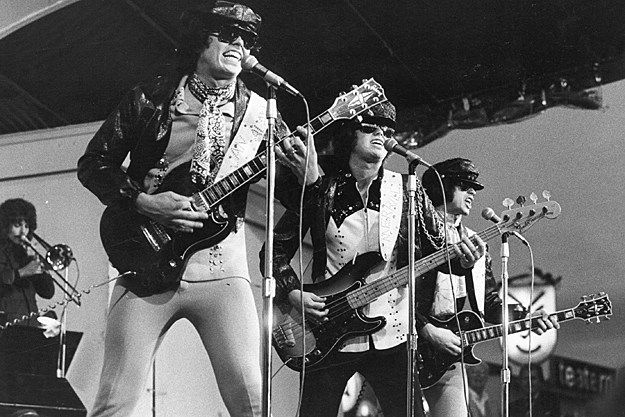
The Osmonds meet Led Zeppelin: A secret history of Mormon heavy metal
Oct 2, 2014
For a brief, blaring onslaught in the early 1970s, Utah’s most famous musical Mormons proudly put themselves in league with Satan. That’s right: the Osmonds went heavy metal.
For two albums—1972’s “Crazy Horses” in 1972 and the following year’s “The Plan”—the devoutly religious, relentlessly clean-living Brothers Osmond transformed from the Jackson 5’s white bread R&B competition into legitimate hard rockers, unleashing thunderous riffs, smoking grooves, and bombastic sonic firepower on par with the era’s heaviest begetters of the devil’s music—to the point that the Osmonds’ metal moment even won them converts among no less an infernal cabal than the mighty Led Zeppelin.
Hearing is believing. Check out the title track of “Crazy Horses.” It’s a berserk, whinnying, boot-stomping rave-up driven by a vast, crushing guitar walls and frenzied vocals baying out an anti-fossil-fuel message (the “Horses”, you see, are cars: “there they go/what a show/smokin’ up the sky!”).
The song (and most of the album) was obviously a mad leap away from the group’s expected sounds, making it impressive that it hit #14 at a time when they routinely topped the charts. “It was our version of hard rock,” Merrill Osmond said, “We gave them their music with our lyrics.” Adds Donny: “It was a very serious song.”
In the years since, “Crazy Horses” has endured as a rite of passage for extreme musical adventurers to cover (it’s not easy). Among the myriad versions are tracks by Butcher Babies (groove metal), the Sensational Alex Harvey Band (glitter rock), Tank (New Wave of British Heavy Metal), the Mission (post-punk goth), Lawnmower Deth (thrash), KMFDM (industrial), and Electric Six (Detroit dance punk).
The Osmonds have always embraced even the most outré “Crazy Horse” covers, but what truly mattered was whom the song impressed at first. “It was the influences of Paul McCartney and the Beatles that caused us to write the kind of music that we did,” Merrill noted. “The only other band that had that much effect on us was Led Zeppelin.”
The most direct evidence of Zep’s bearing on the Osmonds occurs on “Crazy Horses”’ album opener, “Hold Her Tight.” Many note that the song’s bass line is a direct copping of “The Immigrant Song” from “Led Zeppelin III”. That’s likely no coincidence. “Wayne really took to Jimmy Page,” Merrill said. “He harnessed that energy and came up with the riff to ‘Hold Her Tight.’ That was the heaviest thing we ever wrote.”
After “Crazy Horses”, Led Zeppelin returned the affection. “When we were on tour in Europe, Led Zeppelin invited us on stage for one of their big events,” Merrill recalls. “Later we hung out backstage and talked about how we really dug their entire music concept.” Zep’s madman drummer John Bonham also brought his young son Jason to an Osmonds show and met with them afterward. “Yes, Dad did take me to see the Osmonds,” Jason says. “They started with ‘Crazy Horses.’ They were on these wires and they came out across the audience back then, so Bon Jovi wasn’t the first guy to do it.”
The Osmonds relished the validation, as Jimmy Osmond has said: “It is really cool for us to know that people from top groups like Led Zeppelin have raised their hands and said, ‘Isn’t that a great riff’ or ‘They really did have amazing musical talent’.”
Emboldened by “Crazy Horses”, the Osmonds sought to pop their bubblegum image even more profoundly via “The Plan,” a massively ambitious concept album based on the Church of Jesus Christ of Latter Day Saints.
“The label hated The Plan,” Merrill says, “but I consider it our ‘White Album’.”
To convey the universal nature of Mormonism, “The Plan” hops song-by-song between as many music genres as can be contained on single vinyl long-player. Each massively mounted number is performed with cosmic commitment by hyper-charismatic Tiger Beat superstars at the peak of their combustive powers.
“The Plan” has it all: from the eerie instrumental opener “War in Heaven” to the thunder-riff acid jag of “Traffic in My Mind” to the evil retro-Weimar cabaret of “Music in My Mind” to the traditional Osmonds white-tooth soul of “One Way Ticket to Anywhere” to the bluesy doom of “The Last Days” to the show biz razzmatazz closer, “Goin’ Home.”
“The Plan,” perhaps not surprisingly, actually qualified as a hit only in England, where metal and progressive rock were hulking out in massive growth spurts. Stateside, the Osmonds reconvened with Donny stepping out on his own more often, and sister Marie scoring some sticky-sweet monster solo hits. Soon enough, they’d pair for the TV variety hour, “The Donny and Marie Show.” There, every week—amidst showgirl ice skaters, goofball comedy sketches, and rapid-fire pop music medleys—Donny would look straight in the camera and remind the world, “I’m a little bit rock-and-roll!”
Led Zeppelin, for one, knew that all along.
image via
03 Oct 17:56

Some data on the value of the airplane seat recline right
by Tyler Cowen
Christopher Buccafusco and Chris Sprigman report:
…we ran an experiment to measure how much people value the ability to recline compared to extra knee and laptop room.
In an online survey, we asked people to imagine that they were about to take a six-hour flight from New York to Los Angeles. We told them that the airline had created a new policy that would allow people to pay those seated in front of them to not recline their seats. We asked one group of subjects to tell us the least amount of money that they would be willing to accept to not recline during the flight. And we asked another group of subjects to tell us the most amount of money that they would pay to prevent the person in front of them from not reclining.
It turns out that Barro was right: Recliners wanted on average $41 to refrain from reclining, while reclinees were willing to pay only $18 on average. Only about 21 percent of the time would ownership of the 4 inches change hands.
But it also turns out that Barro was wrong and Marron was right. When we flipped the default—that is, when we made the rule that people did not have an automatic right to recline, but would have to negotiate to get it—then people’s values suddenly reversed. Now, recliners were only willing to pay about $12 to recline while reclinees were unwilling to sell their knee room for less than $39. Recliners would have ended up purchasing the right to recline only about 28 percent of the time—the same right that they valued so highly in the other condition.
Wait … what? How is it possible that people’s valuation of reclining vs. not being reclined upon depended so completely on which party (recliner or reclinee) held initial ownership of the property right? Shouldn’t the right to recline be worth the same to you whether you initially have it or not?
It is fair to call this an endowment effect, but I also view it as evidence for my earlier view that people do not want to bargain over this right.
For the pointer I thank Tim Harford.
firehose, Albener Pessoa likes this
03 Oct 17:54

Should all public officials wear cameras?
by Tyler Cowen
Albener PessoaIn the book The Circle from Dave Eggers the consequences are the other away around
Arnold Kling poses that question., and he writes:
Suppose that when they meet with bankers, for example, Fed officials had to wear cameras and audio recorders, which could be obtained by FOIA requests. Or suppose that IRS officials had to wear cameras, for example, when they wrote emails or engaged in discussions about dealing with tax-exempt groups.
The intended consequences of the camera rule would be, as with having police wear cameras, to make sure that public officials remember that they are being watched and to reduce instances where they are wrongly suspected of acting against the public interest.
What might be the averse unintended consequences of forcing high-level public officials to wear cameras and recording devices when engaged in their ordinary duties?
I believe this practice would induce some offsetting adjustments. First, public officials would much more frequently act as if they were on television. We more or less know what that is like.
Second, the unmonitored positions would rapidly become much more powerful. The monitored positions would become a bit like the British monarchy, namely of great ceremonial importance, and capable of causing a public scandal with ill-thought out remarks, but not the real decision-makers.
Third, the demand for unmonitored “private contractors” would go up. These contractors would attach themselves to individual politicians, and carry out their will with the outside world, receiving their instructions as those politicians were initiating their love-making, off camera of course.