The image of a copulating frog dressed in tight-fitting pants sounds quite silly, but it was done in the name of serious research. In fact, more than one biologist dressed up their frogs to solve the mysteries of fertilization.

    
|
The image of a copulating frog dressed in tight-fitting pants sounds quite silly, but it was done in the name of serious research. In fact, more than one biologist dressed up their frogs to solve the mysteries of fertilization.
|
|
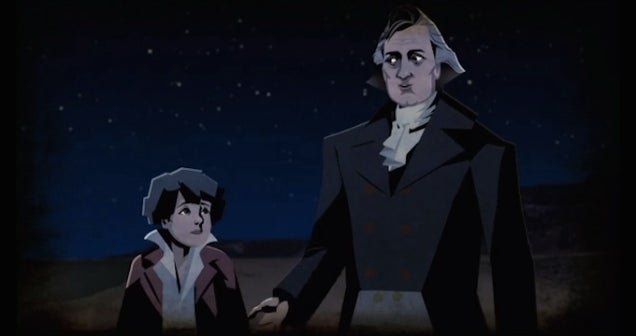
This Sunday, two talents who've spent their lives among the stars will join forces as Stewart star in an animated Cosmos segment. He'll be the voice of 19th century astronomer William Herschel, who explains to his young son about how time and gravity affect light — or, in layman's terms, SPACE GHOSTS.

|
|

Palmer Luckey, co-founder of Oculus, has been known to show up on Reddit to respond to fans since the virtual reality's Kickstarter first showed up two years ago. Yesterday, he took to Reddit again to reply to many angry fans about their concerns.

|
|

Visiting abandoned towns can be hazardous for a number of reasons, including crumbling structures and guards who will shoot trespassers on sight . But some ghost towns have toxic legacies due to chemicals, radiation, or even biological weapons.

|
|

Please grab your nearest salt shaker, and liberally sprinkle it both on and around yourself. Why? Because supposedly the character of Indiana Jones may be recast, and supposedly Bradley Cooper is up for the role.

|
|
Bunker.jordanWow... this is becoming more and more common.
The rise of 3D printing has turned body parts into a custom order. A 22-year-old Dutch woman who suffered from a rare disease which thickens her skull bone had her whole skull replaced by a 3D printed implant. The operation took place at UMC Utrecht in the Netherlands. According to the hospital, this is a revolutionary procedure that has never been done before.
This article World's first: Dutch patient has her skull replaced with 3D printed implant is first published at 3ders.org.
Bunker.jordan"According to the company, the material is up to 50 times more resistant to abrasion than conventional 3D printing materials and it is suitable for printing bearings. Combining the 3D printing with the tribo filament it is now possible to create plain bearings in any shape for special applications."
Igus, the tribo polymer specialist from Cologne, Germany introduced the world's first tribo-plastic (tribologically optimised special plastic) filament for 3D printers.
This article Igus introduces world's first tribo-plastic filament for 3D printers is first published at 3ders.org.


Bunker.jordanWell this is certainly overdue. Great idea!
 |
| The gearheads behind TheFuelist.com; Matt Hamilton, Dr.Thomas Rand-Nash, and Eric Maas, here with a Ducati 175 in their Berkeley warehouse/office |
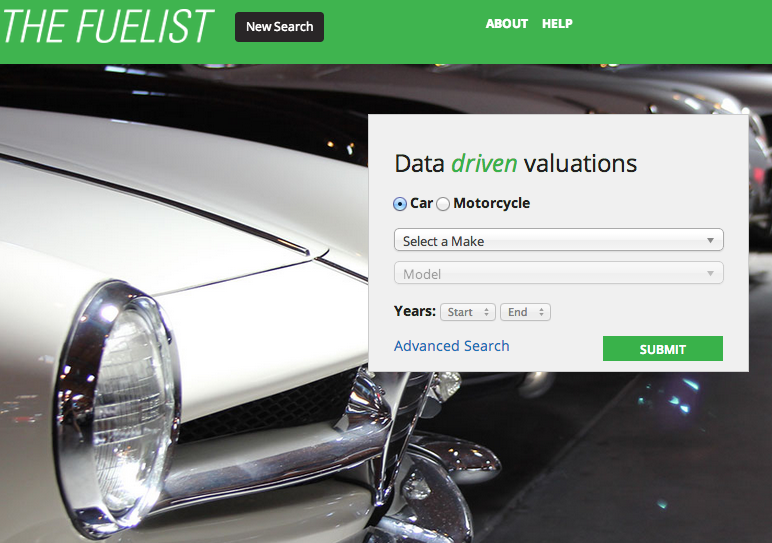 |
| Home page of TheFuelist.com; the start of your data search, and possibly the loss of many minutes of your time! |
 |
| Even at this early date, TheFuelist has nearly 1300 BSAs listed in their auction sales ranks over the past 10 years. |
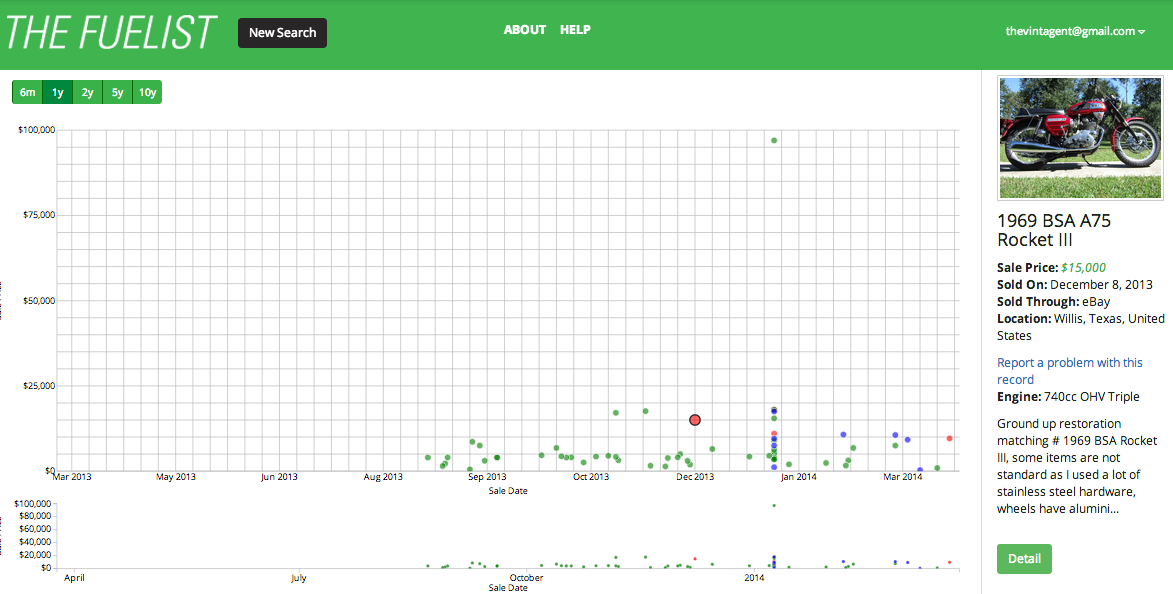 |
| Here's a Fuelist comparison on 750cc Triples from the 1970s; BSA Rocket III, Triumph Trident, and Kawasaki H2 |
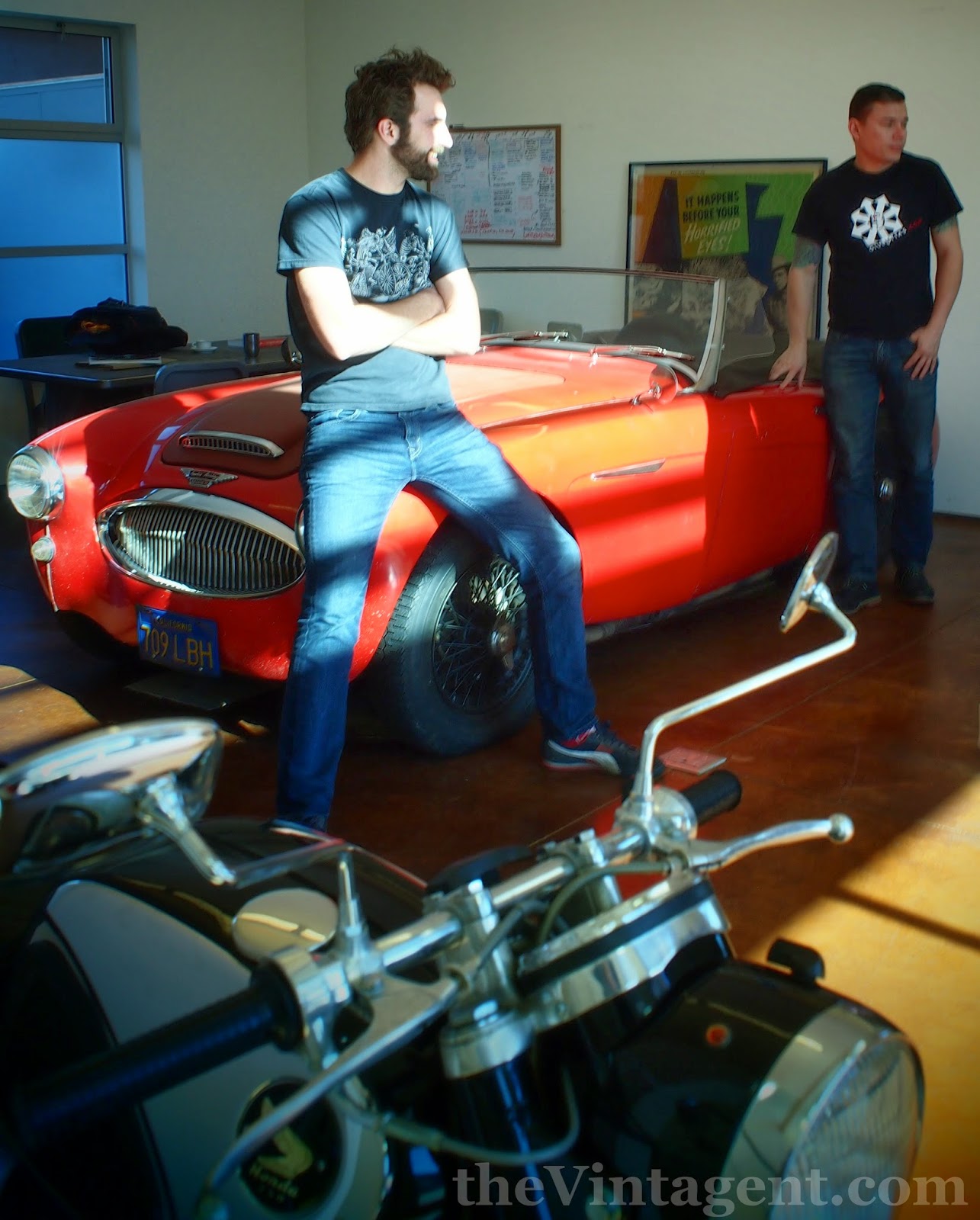 |
| TheFuelist.com office...gearheads one and all...with an Austin Healey 3000 keeping a Honda Super Hawk company |
Photographs of a large anarchist rally in union Square, New York City, with Alexander Berkman addressing the crowd
“Over 5,000 people attended the mass memorial meeting called by the Anti-Militarist League for Berg, Hanson, and Caron, the three anarchists killed in the Lexington Avenue explosion. Over 800 policemen monitored the meeting, while Berkman, Abbott, Edelsohn, Elizabeth Gurley Flynn, Carlo Tresca, David Sullivan and Charles Plunkett all spoke for their dead comrades.

“‘The Lexington Avenue bombing was the July 4, 1914 explosion of a bomb in an apartment at 1626 Lexington Avenue in New York City, killing four people and injuring dozens.

“In July 1914, two members of the Lettish section of the Anarchist Black Cross, Charles Berg and Carl Hanson began collecting dynamite they had obtained from Russia. Plotting with them was Industrial Workers of the World (IWW) member Arthur Caron. They stored the dynamite at the apartment of another Anarchist Black Cross member, Louise Berger. Berger was an editor of Emma Goldman’s Mother Earth News. Several meetings were held at the Ferrer Center, where they devised a plan in which Caron, Berg, and Hanson were to plant a bomb at John D. Rockefeller’s home in Tarrytown, New York.

At 9 a.m. on July 4, the bomb intended for Rockefeller exploded prematurely at Berger’s apartment, killing Hanson, Berg and Caron.’

Two recently restored statues of Amenhotep III were recently unveiled in Luxor, Egypt, along with a carved alabaster head from another Amenhotep III statue. Chunks of these artifacts had lain about for centuries, but they've finally been restored to give us a sense of their former glory.

|
|
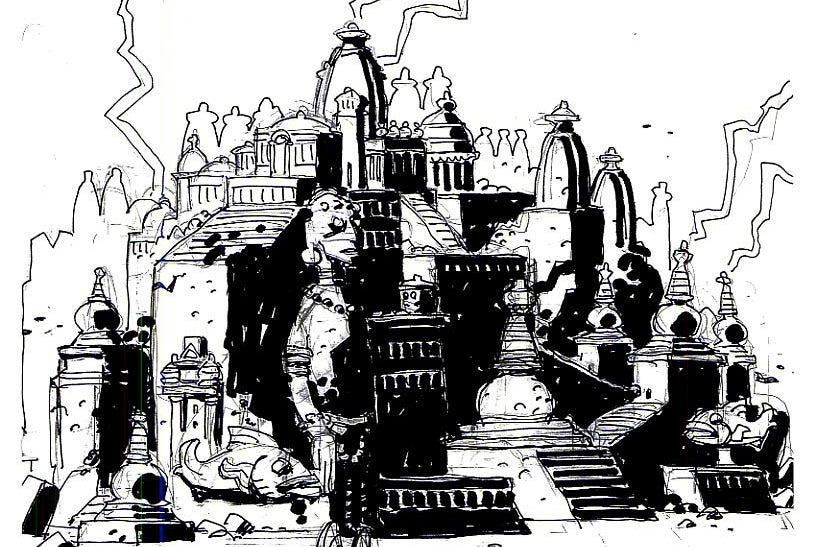
To create a mythic look to for the ancient sunken city and the Jules Verne-esque technology in Atlantis: The Lost Empire, Disney turned to Hellboy creator Mike Mignola to work on the film's production design.

|
|

Looking for a bit more variety in your female armor designs? One artist has created a web toy that offers prompts for drawing lady knights and shares some of his own designs.

|
|
Bunker.jordanThis guy always amazes me. This is awesome.
More exciting updates from Michael “Skimbal” Curry on his 3D printed vehicle project in progress. Not an RC car … a vehicle Michael intends to actually ride around. This is big news folks, as in 1:1 scale. 
3D Print This Car: The Rear Axle:
An update on the development of the suspension and drivetrain, also get a look at what is hopefully the final version of the rear axle.
Bunker.jordanI've been meaning to make one of these for years!

A new Kickstarter project has launched the RotoMAAK, a rotational casting machine. But what does this have to do with 3D printing?
Spin casting, or rotational casting is pretty straightforward: you have a hollow mold filled with a solidifying resin, then spin the mold around every which-way to coat the inner surface of the mold with the resin. When it hardens, remove the object from the mold. You’ve casted a hollow object - normal casting creates solid objects, which in many cases, can waste material.
Mark VanDiepenbos of Indiana invented a desktop spin caster, the RotoMAAK that to us seems to be a logical accessory for personal 3D printing. Here’s how it would work:
Here’s what this means:
You can make copies of your 3D prints in TEN MINUTES.
Of course, this will work only on certain geometries that are mould-friendly, but that still leaves a lot of potential. There are many times when you’d like to make multiple copies of a print but just can’t wait 68 hours for your printer to make them. The RotoMAAK could solve your problem.
It’s a simple device that spins the mould on two axes to ensure complete resin coverage of the inner mould surface. As of this writing, you’ll be able to get one for under USD$700 in kit form. This is very inexpensive for a device that can essentially turn your 3D printing operation into a mini-factory.
Via Kickstarter

Bunker.jordanI would love one of the hanging ones in the basement shop...
De Graaf’s “Species of Illumination” robotic lamps follow humans and find darkness. From Dezeen:
De Graaf‘s interactive lights, collectively called Species of Illumination, were given the ability to act like creatures via a series of sensors, motors and stretchable cables that allow them to freely determine their actions.
The series consists of two lights. Wallace uses sensors to go in search of the darkest spot in a room and bring light to it. Once it has done that, the lamp works out where the next darkest point is and moves on to repeat the process.
Wallace is affixed to the ceiling at one end and has three pieces of wire that support a head on the end of a long electrical cable, which is encircled by a series of rings with copper wire threaded through each one.
Darwin, meanwhile, is a desk lamp that uses solar power to generate its electricity. During the day it trundles around on wheels seeking out sunlight to charge its battery, but in the evening it wonders around the house looking for movement and accompanying people with its beam of light.
Sensors in Darwin’s head allow people to interact with it. When a hand is held directly in front of the light, it tracks the movement and follows. Take the hand away and the light stops moving.
Darwin features two wheels made from tightly coiled wire, a black body with a solar panel on its back and a bulbous white head.
“The interaction and emotional relationship Wallace and Darwin bring contribute to people’s wellbeing, in the same way that pets do,” explained de Graaf. “The movement of living creatures triggers sensations, emotions and communication.”
“I think my lights are very much animate objects,” he continued. “At this point I’m still pretty sure they are not alive, but I think there will be a moment where the boundaries become more blurred.” …


Bunker.jordanMy friends are weird
Bunker.jordanThe future is beginning to look really weird...
Models of a criminal's face may soon be generated from any trace of DNA left at the crime scenes. Anthropologist Mark Shriver of Pennsylvania State University has created a computer program that may one day be able to create virtual and 3D printed mugshots using a DNA sample, for example, a hair at a crime scene.
This article New tech allows us to create 3D-printed mugshots from nothing but DNA is first published at 3ders.org.


The next time you grab the toolbox for a quick home improvement project, forget boring old flat or Phillips head screws, these happiness-inducing screws are guaranteed to put a smile on your load bearing beam. Screw :) is a collaborative project between Japanese designer Yuma Kano and a screw factory called Komuro Seisakusho in East Osaka, Japan. Kano began thinking about the potential to infuse emotion into small, ubiquitous objects like screws, the design of which has rarely changed since its invention. Of course smiley face screws aren’t meant as a replacement for more standard designs, but would make a fun detail for smaller projects or areas where a screw might be more visible. You can see much more over on his website. (via NOTCOT, Designboom)
Bunker.jordan.... I want one of these, and I have no idea why.

Check out this sweet LED installation from gmunk, inspired by the film Enter the Void.
The main inspiration for the creative came from the DMT-Delicious moments in the super-favorite film Enter the Void… Munko has been on a tunnel infinite-void kick for some years now and wanted to build a practical, LED installation driven by graphic sequencing, utilizing the techniques learned from the FOTB Titles and applying them into a more densely packed setup called the PYRADICAL… Once the Pyrad was constructed, the aim was to capture the visuals with both high-resolution Film and Still cameras, which would generate a vast library of content to pull from to produce the artwork for the Conference Package..
He tapped super-friend and lighting genius Michael Fullman to help him execute the concept, which was to construct a triangular volume out of three LED panels, flanked on either end by a trio of Light Tubes that would complete the design. Once Munk and and Michael had the concept and build nailed down, he tapped frequent collaborators Kevin Gosselin and John Nguyen to capture the installation on the Arri Alexa and Nikon D800.
In building the actual structure for the Pyrad there were some pretty unique challenges to attain the desired aesthetic. We needed to not only communicate forward and backward motion but also communicate negative space and scale.
The structure itself is made up of two main elements. The LED Panels and the LED tubes. 3 LED panels were used to make up the walls, all controlled by video content from a control computer. This allowed us to have open ended control over the motion, color, and effects that were applied to the video content. In addition to the 3 LED panels, 6 LED tubes were used to border the structure at both the front and the back opening. These tubes were also controlled by a mapped video signal that corresponded with the content playing on the main panels. That way we could accomplish moments of punch and exclamation as the content traveled both toward and away from the camera. They also provided a really nice frame for the shot, showing us the beginning of the space and the end.
The real challenge was to trick the viewer into not realizing the scale of the actual structure. Which is really about the camera position, lensing, and light control in the structure, using both the presence and absence of light.
FITC Amsterdam 2013 PYRADICAL from GMUNK on Vimeo.


ESA 2010 MPS
NASA needs your help in developing algorithms and other resources that can better identify asteroids that have the potential to impact the Earth. Ground-based telescopes around the world are scanning the sky for asteroids, however, correctly identifying asteroids amidst other noise can be a challenge. There is so much data captured by modern telescopes, that scientists are unable to individually verify each potential asteroid detected. New ways of autonomously detecting asteroids are needed. This challenge calls for the development of algorithms and other resources that can be used by present-day and future telescopes that minimizes false positives while increasing detection sensitivity. The Asteroid Data Hunter project is part of the NASA Asteroid Grand Challenge, in partnership with Planetary Resources.
Project owners + coordinators:
Jason Crusan, NASA director
To learn more and participate by November 21, 2014, visit: http://topcoder.com/asteroids/asteroiddatahunter
To stay up-to-date on this project:
• follow twitter.com/nasa_ntl
The project has created a great video overview of the challenge:

We’re obsessed with this game that lets you collide elementary particles to try to generate the Higgs Boson. We got as far as z boson but unfortunately LHC broke down before we could beat the game and generate the Higgs Boson. Try it out yourself here and see how far you can get!
Collide these elementary particles and generate the Higgs Boson!
Note : Quarks will not appear for they are having a holiday with Muster Mark. Thanks to that! Otherwise it would be as difficult as dealing with the number 131072 in the original version! Σ( ̄ロ ̄lll)
HOW TO PLAY: Use your arrow keys to accelerate the particles. When two particles with the same type collide, they annihilate and a new particle would be generated!

Alexander Semenov’s underwater photography is some of the coolest we’ve seen. You can purchase his photographs here and see more of his stunning photography here. Here’s his bio:
In 2007, I graduated from Lomonosov’s Moscow State University in the department of Zoology. I specialized in the study of invertebrate animals, with an emphasis on squid brains. Soon after, I began working at the White Sea Biological Station (WSBS) as a senior laborer. WSBS has a dive station, which is great for all sorts of underwater scientific needs, and after 4 years working there, I became chief of our diving team. I now organize all WSBS underwater projects and dive by myself with a great pleasure and always with a camera.
When I first began to experiment with sea life photography I tried shooting small invertebrates for fun with my own old dslr camera and without any professional lights or lenses. I collected the invertebrates under water and then I’ve shot them in the lab. After two or three months of failure after failure I ended up with a few good pictures, which I’ve showed to the crew. It has inspired us to buy a semi-professional camera complete with underwater housing and strobes. Thus I’ve spent the following field season trying to shoot the same creatures, but this time in their environment. It was much more difficult, and I spent another two months without any significant results. But when you’re working at something every day, you inevitably get a lot of experience. Eventually I began to get interesting photos — one or two from each dive. Now after four years of practice I get a few good shots almost every time I dive but I still have a lot of things that need to be mastered in underwater photography.
And the most important thing — I love Sea.


What language and symbolism have to do with mood and how light exposure and sleep shape our mental health.
 “Depression is a disorder of the ‘I,’ failing in your own eyes relative to your goals,” legendary psychologist Martin Seligman observed in his essential treatise on learned optimism. But such a definition of depression, while true, appears somehow insufficient, overlooking the multitude of excruciating physical and psychological realities of the disease beyond the sense of personal failure. Perhaps William Styron came closer in his haunting memoir of depression, Darkness Visible, where he wrote of “depression’s dark wood,” “its inexplicable agony,” and the grueling struggle of those afflicted by it who spend their lives trying to trudge “upward and outward out of hell’s black depths.” And yet for all their insight into its manifestations, both the poets and the psychologists have tussled rather futilely to understand depression’s complex causes and, perhaps most importantly in terms both scientific and humanistic, its cures.
That’s precisely what psychologist Jonathan Rottenberg sets out to do in The Depths: The Evolutionary Origins of the Depression Epidemic (public library) — an ambitious, rigorously researched, and illuminating journey into the abyss of the soul and back out, emerging with insights both practical and conceptual, personal and universal, that shed light on one of the least understood, most pervasive, and most crippling pandemics humanity has ever grappled with. (A sobering note to the hyperbole-wary: At any given point, 22% of the population exhibit at least one symptom of depression and the World Health Organization projects that by 2030, depression will have led to more worldwide disability and lives lost than any other affliction, including cancer, stroke, heart disease, accidents, and even war.)
Rottenberg takes a radical approach to depression based not a disease model of the mind but on the evolutionary science of mood — a proposition that flies in the face of our cultural assumptions that have rendered the very subject of depression a taboo. He puts this bind in perspective:
Because depression is so unpleasant and so impairing, it may be difficult to imagine that there might be another way of thinking about it; something this bad must be a disease. Yet the defect model causes problems of its own. Some sufferers avoid getting help because they are leery of being branded as defective. Others get help and come to believe what they are repeatedly told in our system of mental health: that they are deficient.
[…]
People still feel inclined to whisper when they talk about depression. Depression has no “Race for the Cure”; this condition rarely spawns dance marathons, car washes, or golf tournaments. Consequently, the lacerating pain of depression remains uncomfortably private.
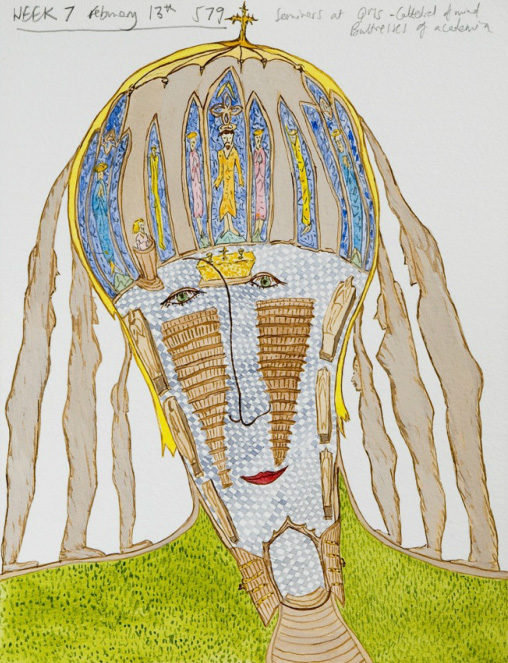
Illustration by artist Bobby Baker from 'Diary Drawings: Mental Illness and Me.' Click image for details.
Rather than subscribing to this broken deficiency model of depression, Rottenberg argues that affective science — the empirical study of mood — lies at the heart of understanding the condition. Defining moods as “internal signals that motivate behavior and move it in the right direction,” he argues that our bodies are “a collection of adaptations, evolutionary legacies that have helped us survive and reproduce in the face of uncertainty and risk” and paints the backdrop of understanding depression:
The mood system … is the great integrator. It takes in information about the external and internal worlds and summarizes what is favorable or unfavorable in terms of accomplishing key goals related to survival and reproduction.
[…]
Once a goal is embarked upon, the mood system monitors progress toward its attainment. It will redouble effort when minor obstacles arise. If progress stops entirely because of an insuperable obstacle, the mood system puts the brakes on effort.
Under this model, mood has an evolutionary function as a mediator of survival strategies. Rottenberg cites a number of experiments, which have indicated that negative mood incites one’s psychoemotional arsenal when a task becomes too challenging. For instance, when study participants are deliberately put in a negative mood and asked to perform a difficult task, their blood pressure spikes — a sign that the body is being mobilized for extra alertness and effort. But if the task is made insurmountably difficult, so much so that success stops being possible, the spike no longer occurs and the mood system dials down the effort. In that sense, mood — the seedbed of depression — isn’t an arbitrary state that washes over us in a whim, but a sieve that separates the goals worth pursuing from those guaranteed to end in disappointment.
Rottenberg argues that our relationship to the mood system is shaped by the way we talk about it and is mired in toxic cultural constructs that bleed into our language:
One of the amazing things about the mood system is how much of it operates outside of conscious awareness. Moods, like most adaptations, developed in species that had neither language nor culture. Yet words are the first things that come to mind when most people think about moods. We are “mad,” we are “sad,” we are “glad.” So infatuated are we with language that both laypeople and scientists find it tempting to equate the language we use to describe mood with mood itself.
This is a big mistake. We need to shed this languagecentric view of mood, even if it threatens our pride to accept that we share a fundamental element of our mental toolkit with rabbits and roadrunners. Holding to a myth of human uniqueness puts us in an untenable position. For one thing, it would mean that we deny mood to those humans who have not yet acquired mood language (babies) or have lost mood language (Alzheimer’s patients). Toddlers, goats, and chimps all lack the words to describe the internal signals that track their efforts to find a mate, food, or a new ally; their moods can shape behavior without being named. Language is not required for moods. All that is needed is some capability for wakeful alertness and conscious perception, including the perception of pain and pleasure, which is certainly present in all mammals.
Still, Rottenberg cautions, “what we say about our feelings is only one window on mood” — we need, instead, to examine a variety of evidence in the mind, brain, and behavior to paint a dimensional picture of mood and depression. In fact, part of the puzzle lies in the crucial difference between feelings, or emotions, and moods — emotions are more instantaneous and short-lived responses compared to moods, which take longer to germinate and longer to wither out. Moods, Rottenberg explains, “are an overall summary of the various cues around us [and usually] are harder to sort out.” Our deeper reliance on moods rather than feelings is one of the things that make us human and different from other species, a difference empowered by our use of language and symbolism:
Our heavy reliance on symbolic representation also makes the precipitants of low mood more idiosyncratic in our species than in others. We become sad because Bambi’s mother dies, because there are starving people a continent away, because of a factory closing, because of a World Series defeat in extra innings. Though there is a core theme of loss that cuts across species, humans’ capacity for language enables a larger number of objects to enter, and alter, the mood system.

Illustration by artist Bobby Baker from 'Diary Drawings: Mental Illness and Me.' Click image for details.
And yet for all our emotional sophistication, we remain strikingly blind to many of the real triggers and causes of moods, instead falling back on our penchant for psychological storytelling. Rottenberg ties this back to depression:
Despite our deep yearning to explicate moods, the average person cannot see many of the most important influences on mood. As the great integrator, the mood system is acted on by many potential objects, and many of the forces that act on mood are hidden from conscious awareness (such as stress hormones or the state of our immune system). Left to our own devices, the stories we tell ourselves about our moods often end up being just that. Stories.
[…]
We must understand the ultimate sources of depression if we are ever to get it under control. To do so, we need to step back and replace the defunct defect model with a completely different approach. The mood science approach will be both historical and integrative: historical because we cannot understand why depressed mood is so prevalent until we understand why we have the capacity for low mood in the first place, and integrative because a host of different forces (many hidden) simultaneously act on people to impel them into the kinds of low moods that breed serious depression.
But before we are tempted to file away low moods as an affliction to be treated, Rottenberg offers a necessary neutrality disclaimer, pointing out that both high and low moods have their advantages and disadvantages:
We are born with the capacity for both high and low moods because each has, on average, presented more fitness benefits than costs. Just as being warm blooded can be a liability, high moods are increasingly understood as having a “dark side,” sometimes enabling rash, impulsive, and even destructive behavior. Likewise the capacity for low mood is accompanied by a bundle of benefits and costs. Seen this way, depression follows our adaptation for low mood like a shadow — it’s an inevitable outcome of a natural process, neither wholly good nor entirely bad.
So what might be the evolutionary advantages of low moods? Several theories exists. One proposes that low moods help dampen agitation in confrontation, thus de-escalating conflicts — when a loser yields rather than fighting to the death, he or she is able to survive rather than perish. Another paints low mood as a “stop mechanism” that, just like the task studies suggested, prevent the person from exerting effort towards a goal that is either unattainable or dangerous. A different theory conceptualizes low mood as a tool for making better decisions, putting us in more contemplative mindsets better suited for analyzing our environment and solving particularly hard problems.
In fact, the latter is something repeatedly confirmed by experiments, most notably in the pioneering work of psychologists Lyn Abramson and Lauren Alloy, who termed this role of low mood depressive realism. Their work has inspired multiple other experiments, including this 2007 study:
Australian psychologist Joseph Forgas found that a brief mood induction changed how well people were able to argue. Compared to subjects in a positive mood, subjects who were put in a negative mood (by watching a ten-minute film about death from cancer) produced more effective persuasive messages on a standardized topic such as raising student fees or aboriginal land rights. Follow-up analyses found that the key reason the sadder people were more persuasive was that their arguments were richer in concrete detail [suggesting that] sad mood, at least of the garden variety, makes people more deliberate, skeptical, and careful in how they process information from their environment.
These positive uses of negative moods may seem at first counterintuitive, but Rottenberg reminds us that “multiple utilities are the hallmark of an adaptation.” He puts things in perspective:
One way to appreciate why these states have enduring value is to ponder what would happen if we had no capacity for them. Just as animals with no capacity for anxiety were gobbled up by predators long ago, without the capacity for sadness, we and other animals would probably commit rash acts and repeat costly mistakes.
In support of this conception, Rottenberg cites a wonderfully poetic passage by Lee Stringer from his essay “Fading to Gray,” found in the altogether fantastic 2001 volume Unholy Ghost: Writers on Depression:
Perhaps what we call depression isn’t really a disorder at all but, like physical pain, an alarm of sorts, alerting us that something is undoubtedly wrong; that perhaps it is time to stop, take a time-out, take as long as it takes, and attend to the unaddressed business of filling our souls.
(What gorgeous language, “the unaddressed business of filling our souls” — rather than an affliction, isn’t that the ever-flowing lifeblood of human existence?)

Cover illustration for P.M. Hubbard's 'Picture of Millie' by Edward Gorey. Click image for details.
Still, Rottenberg is careful to point out that severe depression, far from being evolutionarily beneficial, is absolutely crippling, marked by “distorted thinking that appears to be the polar opposite of depressive realism.” In fact, what is perhaps most perplexing about the condition is that scientists don’t yet have a litmus test for when low mood tips over from beneficial to perilous, no point on the mood spectrum that clearly delineates the normal from the diseased. Rottenberg proposes that mood science is the key to honoring the nuance of that spectrum. He differentiates between milder periods of low mood, which he terms shallow depression, and periods wherein the low mood is both long-lasting and severe, which he calls deep depression, and writes:
Shallow depression is adaptive, whereas deep depression is a maladaptive disease.
The strongest evidence for this spectrum model, rather than a binary division between wellness and disease, comes from the fact that shallow and deep depression share a set of risk factors, suggesting that mood, which varies along a continuum of intensity, is the common denominator. Rottenberg puts it elegantly:
Ignoring this would be like a weather forecaster using separate models to predict warm days and very hot days rather than considering general factors that predict temperature.
So what, exactly, seeds low mood? Rottenberg points to three distinct but interconnected triggers: explainability, evolutionary significance, and timing. He writes:
Modern psychological theories postulate that we recover more quickly from a bad event if we can readily explain it. We would expect, then, that events that generate mixed feelings and/or confusing thoughts would be a powerful impetus toward persistent low mood.
[…]
Events that present irresolvable dilemmas on themes that have evolutionary significance — like mate choice — are fertile seeds for low mood.
When the bad things happen also matters. Extensive research demonstrates that early life traumas, such as physical or sexual abuse, lay the groundwork for a slow creep of depression and anxiety.
He cites the example of a middle-aged woman suffering from lifelong “low-grade depression” and anxiety, who grew up with an alcoholic father in a household that vetoed any discussion of feelings. When a neighbor molested her at the age of thirteen, she kept the trauma to herself, believing that her mother would blame her and her father would explode in a rage. Rottenberg explains how these early experiences provide the psychoemotional backdrop for our adult lives:
Jan’s chronic feelings of anxiety and sadness are natural, the product of an intact mood system. In a world in which a child’s primary attachment figures — parents — are emotionally unavailable and unable to help when a trusted neighbor turns into an attacker, the mood system is ever forward looking. It assumes that, if the worst has already happened, it can and will happen again. Best to be prepared. Anxious moods scanning for danger (especially in relationships) and sad moods analyzing what was lost and why serve as the last lines of defense against further ruin.

Illustration by Edward Gorey from 'Donald and the…' Click image for details.
Triggers notwithstanding, Rottenberg points out that individual temperament is an essential component in people’s mood responses to the same events. He cites a study conducted after the 9/11 attacks which found that a month later Lower Manhattan residents who had been there on September 11 experienced wildly different degrees of depressive symptoms, ranging from crippling major depression to hardly any symptoms compared to their respective state on September 10.
This variation, once more, can be traced back to early childhood. Rottenberg cites the work of psychologist Jerome Kagan who has spent decades studying infants and found that temperament can be detected as early as in nine-month-olds, who exhibit “reasonably consistent and strong fear reactions to a variety of potentially threatening situations.” These early differences in temperament, Rottenberg argues, are likely to be heavily influenced by genes.
And yet, just like the mood spectrum, temperament isn’t a black-and-white game but an evolutionarily wise strategy:
Experiments by evolutionary biologist David Sloan Wilson also demonstrate that there is no “single best temperament.” In one condition, Wilson dropped metal traps into a pond containing pumpkinseed sunfish. A subset of the fish showed boldness and interest in investigating a novel object. This was a really bad move, as they were immediately caught, and had Dr. Wilson been a real predator, it would have meant the end of their genes. Another group of fish were wary and stayed back from the traps; they were not caught. This situation favored the wary fish.
In a subsequent condition, all the fish were scooped up, brought into a new environment, and then carefully observed. Here the previously wary fish had great difficulty adapting to novelty. They were slower than their bold compatriots to begin feeding, taking five more days to start eating. In this situation the survival of the bold fish was favored.
Noting that the single most indicative depression-prone personality trait is neuroticism, Rottenberg adds:
Like depression itself, temperaments that seed depression are neither wholly good nor wholly bad.
Pointing to two distinct sets of influences on mood — forces that make us vulnerable to long periods of shallow depression and ones that deepen existing shallow depression — Rottenberg makes a poignant observation about our culture’s growing fetishism of happiness:
Our expectations about happiness have changed dramatically, and as they rise, ironically, are making low moods harder to bear than ever before.

Illustration by Edward Gorey from 'The Green Beads.' Click image for details.
In fact, a number of our modern fixations have taken a toll on our vulnerability to depression, including our cult of productivity, which accelerated after the invention of artificial light. But while routines may be the key to creative discipline, they may also put us at hazard for depression:
Mood is about the mundane. Day-to-day routines — how we spend our time, how we care for our bodies and minds — continually shape our moods and can have a strong influence on whether low mood persists. Routines that build up physical and mental resources can raise mood. Other routines, woven into the fabric of modern life, are grossly misaligned with evolutionary imperatives and have the potential to seed low mood. Many of our most familiar routines seem almost perversely designed to wreak havoc on the mood system.
We already know that REM sleep is intimately linked with depression and that insufficient exposure to natural light is perilous to our well-being. Rottenberg sheds light on the scale and intensity of the problem:
One mundane influence on mood is daily light exposure. After all, mood evolved in the context of a rotating earth, with its recurrent twenty-four-hour cycle of light and dark phases. Our species is diurnal, and the best chance of finding sustenance and other rewards was in the light phase (think about the challenge of identifying edible berries or stalking a mammoth). Consequently, we are configured to be more alert during the day than at night. Consistent with the link between light and mood, some clinically serious low mood is triggered by the seasonal change of shorter daylight hours. The onset of seasonal affective disorder, a subtype of mood disorder, is usually in winter.
Our newfound reliance on indoor light has effectively turned most people into cave dwellers. Artificial light is much fainter and provides fewer mood benefits than sunlight. When small devices that measure light exposure and duration were attached to adults in San Diego, one of the sunniest cities in the United States, it was discovered that the average person received only fifty-eight minutes of sunlight a day. What’s more, those San Diegans who received less light exposure during their daily routines reported more symptoms of depression.
(My reliance on this light-therapy device, which has gotten me through many dreary New York winters, suddenly seems less trivial and less of a placebo effect.)
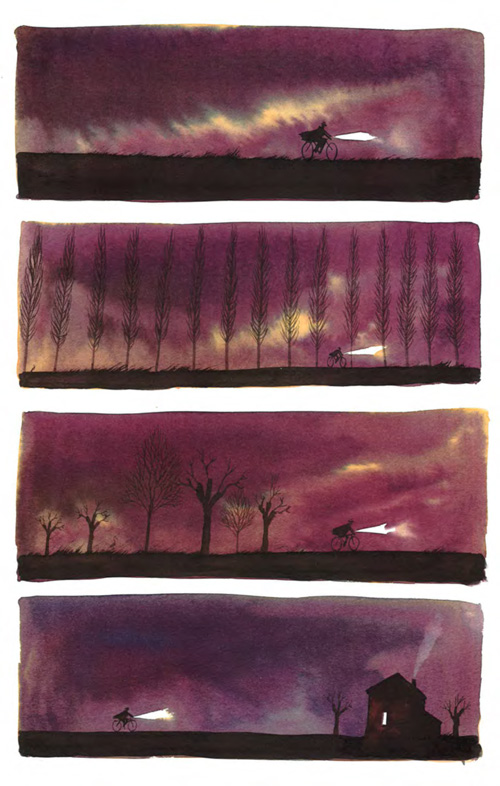
Illustration by Alessandro Sanna from 'The River.' Click image for details.
As a champion of sleep, I especially appreciate the sobering evidence Rottenberg cites from a number of sleep studies:
Mood is lower after even one night of sleep deprivation. Moreover, brief experimental sleep restriction induces bodily changes that mimic some aspects of depression. It’s important to ponder the consequences of sleep deprivation now happening on a mass scale: more than 40 percent of Americans between the ages of thirteen and sixty-four say they rarely or never get a good night’s sleep on weeknights, and a third of young adults probably have long periods of at least partial sleep deprivation on an ongoing basis. Over the last century average nightly sleep duration has fallen. In 1910 Americans slept an average of approximately nine hours; that average had dropped to seven hours by 2002.
Part of the answer to the riddle of low mood, then, lies in contemporary routines that increasingly feature less light, less rest, and more activities that are out of kilter with the body’s natural rhythm.
In the rest of The Depths, Rottenberg, who has battled depression himself for much of his life, goes on to explore how the multiple seeds of the condition cross-pollinate each other, why other species may hold the key to understanding human depression, and what we can do, both as a culture and as individuals, to loosen the grip of this unrelenting oppressor. Complement it with this simple and effective exercise to increase your well-being and lower depression from Martin Seligman, founding father of Positive Psychology, then revisit this provocative read on how antidepressants affect identity-formation.
Thanks, Amelia
Donating = Loving
Bringing you (ad-free) Brain Pickings takes hundreds of hours each month. If you find any joy and stimulation here, please consider becoming a Supporting Member with a recurring monthly donation of your choosing, between a cup of tea and a good dinner.
| ♥ $7 / month♥ $3 / month♥ $10 / month♥ $25 / month |

You can also become a one-time patron with a single donation in any amount.

 Brain Pickings has a free weekly newsletter. It comes out on Sundays and offers the week’s best articles. Here’s what to expect. Like? Sign up.
Brain Pickings takes 450+ hours a month to curate and edit across the different platforms, and remains banner-free. If it brings you any joy and inspiration, please consider a modest donation – it lets me know I'm doing something right.

The F-F-Fiddle is an FFF (fused filament fabrication) full size 3D printable electric violin that can be produced using any desktop 3D printer. Mechanical Engineer David Perry from Portland, Oregon started the project with his friend and industrial designer Dan Nicholson, after visiting a New York Maker Faire.
This article F-F-Fiddle: a fully 3D printed electric violin made on a home 3D printer is first published at 3ders.org.