×You need to sign in to continue.

Shared posts

20 Jul 17:38

No, Surveys Do Not Use Overly Broad Definitions Of Sexual Assault

by Guest Writer

This is a guest post by Carla, which originally appeared on her blog Writing in Water, and appears here with her kind permission.

definitionofrape

A favourite tactic of critics of sexual violence surveys is to claim they inflate their results by wording questions too broadly. Three surveys in particular have attracted their attention: Mary Koss’s 1987 survey of college students, NIJ’s 2007 Campus Sexual Assault Survey (CSA) and the CDC’s 2011 National Intimate Partner and Sexual Violence Survey (NISVS). The first of these, Koss’s survey—the original source of the “one in four” statistic—is now almost thirty years old, but it still looms large in the minds of rape truthers, who continue to try to debunk it. More recently, the White House’s focus on violence against women has drawn attention to CSA and NISVS. These surveys are the source of the White House’s claims that one in five women will be sexually assaulted while in college and that nearly one in five women will be victims of attempted or completed rape respectively.

Since critics of these surveys have mostly concentrated on questions asking about incapacitated rape or sexual assault, a prefatory note is in order. Rapists unsurprisingly favour the most vulnerable victims they can find. A woman incapacitated by drugs or alcohol—that is, a woman who is unable to resist—is a vulnerable target for a rapist. (This is in no way to blame women who drink to excess; rapists who target incapacitated women are as responsible for their crimes as those who use physical force.) In environments where drugs and binge drinking are common, such as on university campuses, it is not just unsurprising that a high proportion of rapes would involve incapacitation: we should expect that this would be the case.

MARY KOSS

Mary Koss’s seminal survey of experiences of sexual violence among female college students revealed shockingly high rates of sexual assault—12.1% disclosed being raped since the age of 14 and a further 15.4% disclosed being victims of attempted (but not completed) rape. Koss’s research was groundbreaking in the way it lifted the veil on acquaintance and date rape, which until then were not part of the national lexicon. In addition, her rigorous approach, with its detailed, explicit questions, revolutionised the way in which surveys of sexual assault are designed. Almost thirty years after it was first published, its validity has never (whatever Wikipedia says) been challenged by researchers in the field of sexual violence.

Koss’s research soon attracted negative attention in the media. One of the most persistent criticisms of her research has been the claim, originating in a 1992 essay in the journal Society,1 that the incapacitation question captured events that were not rape. This focus on the incapacitation question is misleading, because removing it from the survey does not alter the results substantially—the number of women disclosing rape or attempted rape falls from one in five to one in four. Nonetheless, criticism of these questions has helped convince many that Koss’s estimates of sexual violence prevalence are wildly inflated.

For reference, the question that Koss asked her respondents was:

Have you had sexual intercourse when you didn’t want to because a man gave you alcohol or drugs?

The mention of drugs or alcohol given “by a man” may seem odd, but it was worded this way because it was designed to mirror Ohio law which, like many other jurisdictions at the time, only recognised incapacitated rape when the drugs or alcohol were administered by the rapist. (Since Koss did not ask about events where the victim drank or took drugs of her own accord, this is a highly conservative definition of incapacitated rape.) According to the Society essay, “as [it] stands it would require a mind reader to detect whether an affirmative response” to this question “corresponds to a legal definition of rape.” For example, “[i]t could mean that a woman was trading sex for drugs or that a few drinks lowered the respondent’s inhibitions and she consented to an act she later regretted.” We might think about what it means for someone to be sceptical about the scale of sexual assault uncovered by Koss’s survey while simultaneously believing that her numbers can be accounted for by women prostituting themselves for drugs or being unable to tell (or lying about) if they actually consented to an act or not.

However, we don’t need to guess if Koss’s survey participants were able to interpret the question correctly. Her rigorous testing of her survey questions (called the Sexual Experiences Survey, or SES) was one of the reasons why her research was so groundbreaking. None of Koss’s critics has found fault with the methods she used to test the reliability of her questions; the most they have been able to do is to imply—in an utterly unwarranted attack on her professional integrity—that she might be misleading the public about including the incapacitation questions in her testing (they were).2 At any rate, any question about the reliability of Koss’s questions should have been put to rest by the fact that more recent surveys using more explicit questions to ask about incapacitated rape have consistently yielded comparable results to her 1987 survey.

CSA

CSA surveyed over 5000 undergraduate women at two large universities. 28.5% of the participants disclosed experiencing attempted or completed sexual assault in their lifetimes and 19.8% of seniors disclosed experiencing completed sexual assault since entering college.3 |4 Because CSA focuses on sexual assault, a figure for lifetime prevalence of rape isn’t given, although 3.4% of all respondents (that is, not just seniors) disclosed being victims of completed physically forced rape and 8.5% disclosed being victims of completed incapacitated rape since entering college (note that these figures are not mutually exclusive).

Taking their cue from criticisms of Koss’s research, critics of CSA have claimed the question about incapacitated sexual assault is so broad it captures all sexual encounters under the influence of alcohol. For example, an article in USA Today described the incapacitation question as including any “sexual encounters while intoxicated,” while one in the National Review characterised it as “broad and ambiguous” and “includ[ing] questions about sexual contact that occurred in cases where someone was ‘drunk,’ not only in cases where the person was ‘incapacitated.’” According to another critic, “What might be dismissed as a foolish drunken hookup is now felony rape.” One critic goes even futher, claiming that not only does the incapacitation question capture people who are “just drunk enough to go along with something he or she wouldn’t do when sober,” but that the questions asking about physically forced sexual assault are “worded so ambiguously that they could refer to a clumsy attempt to initiate sex, even if the ‘attacker’ stops once rebuffed.”

Most critics avoid quoting the actual question on incapacitated sexual assault. Its wording is in fact very explicit. The question is in two parts. First, respondents were asked:

Has someone had sexual contact with you when you were unable to provide consent or stop was happening because you were passed out, drugged, drunk, incapacitated or asleep?

Positive responses to this question then prompted the respondent to be asked if the “sexual contact” included:

*Forced touching of a sexual nature

*Oral sex

*Sexual intercourse

*Anal sex

*Sexual penetration with a finger or other object.

This question plainly does not ask about any and all sexual encounters where the respondent was intoxicated. It asks about sexual contact that occurred when respondents had been drinking so much that they could not consent or stop what was happening. In other words, it captures people who were incapacitated. It strains credulity that a reasonable person would interpret this as including consensual drunken sexual encounters, particularly given its context in a survey explicitly asking about unwanted sexual activity and its position immediately after a question on physically forced sexual contact.

The question about physically forced sexual contact, incidentally, begins with the following preamble:

The questions below ask about unwanted sexual contact that involved force or threats of force against you. Force could include someone holding you down with his or her body weight, pinning your arms, hitting or kicking you, or using or threatening to use a weapon against you.

Respondents were then asked:

Has anyone had sexual contact with you by using physical force or threatening to physically harm you?

And:

Has anyone attempted but not succeeded in having sexual contact with you by using or threatening to use physical force against you?

Finally, they were asked the questions listed above describing specific sexual acts.

The idea that this question is “worded so ambiguously that they could refer to a clumsy attempt to initiate sex, even if the ‘attacker’ stops once rebuffed” is baffling. Perhaps for some a crisis of inept men whose attempts at seduction cannot be distinguished from attempted physically forced rape is more plausible than a crisis of sexual assault of young women.

NISVS

Unlike the previous two surveys, which focused on college students, NISVS surveyed women in the general non-institutionalised population. It had a sample size of almost 10,000 randomly selected women, of whom 18.3% disclosed completed or attempted rape over the course of their lifetime. Broken down further, 12.2% reported completed forced penetration, 5.2% reported attempted forced penetration and 8.0% reported incapacitated rape (note that these categories are not mutually exclusive).

NISVS has attracted less attention than the other two surveys. Many critics of it (see, for example, here, here and here) actually seem to be unaware that it is an entirely different survey from CSA. Most other critiques of NISVS rely on a 2012 Washington Post article in which it is claimed the survey defines sexual violence in “impossibly elastic ways” and, more specifically, that the question about incapacitated rape includes all “sex while inebriated.”

The actual wording of the incapacitation question in NISVS is slightly different from CSA. First, the respondents were read the following preamble:

Sometimes sex happens when a person is unable to consent to it or stop it from happening because they were drunk, high, drugged, or passed out from alcohol, drugs, or medications. This can include times when they voluntarily consumed alcohol or drugs or they were given drugs or alcohol without their knowledge or consent. Please remember that even if someone uses alcohol or drugs, what happens to them is not their fault.

They were then asked:

When you were drunk, high, drugged, or passed out and unable to consent, how many people have ever had [vaginal sex etc. with you]?

Significantly, the Washington Post article quotes only the second part of the question; the implicit claim is that the question could be interpreted as asking about four separate scenarios that include being 1) drunk 2) high 3) drugged and 4) passed out and unable to consent. But this is obviously not how the question is supposed to be interpreted. As this blogger points out, the preamble makes it clear that the phrase “unable to consent” is supposed to modify all four of the adjectives “drunk,” “high,” “drugged” and “passed out.” What’s more, as with Koss’s survey, we know this is how respondents were likely to interpret it because, like all the questions in NISVS, it underwent cognitive testing to ensure it was interpreted correctly. It’s simply fanciful to suggest that the (admittedly shocking) rates of rape revealed by this survey are the result of misunderstanding of the incapacitation question. After all, anyone determined and creative enough can find alternative interpretations for almost any question, but that doesn’t mean people actually taking the survey are likely to do so—otherwise we might as well give up administering surveys altogether.

Of course, no survey is perfect and getting people to disclose sensitive events like sexual assault is particularly challenging (although perhaps not for the reasons that critics of sexual violence surveys imagine). Questions should be, and are, tested, refined and improved. It’s distressing, however, that people with no expertise in sexual assault research are given public forums to make baseless claims about the methodology of these surveys. Yes: it’s shocking to learn that sexual violence is experienced by so many women. It may defy our personal sense of what is reasonable or believable. But it is precisely these preconceptions—our desire to believe that the world is a certain way—that should force us to be critical, especially when confronted with laypeople purporting to debunk established, peer reviewed research.

  1. Gilbert, N (1992), ‘Realities and Mythologies of Rape,’ Society 29.4: 4-10.
  2. Gilbert 1992.
  3. This sentence has been corrected. Originally it said “19.8% of seniors experienced attempted and completed sexual assault while at college,” but it should have said “completed assaults” only.
  4. An addendum from Carla: [CSA researcher] “Chris Krebs also told me that when you take out sexual battery (that is, you only measure completed rapes) the number falls from 1 in 5 to 1 in 7.”
20 Jul 17:34

Now all the odds are in my favor, something’s bound to begin.

by Sophia, NOT Loren!

August 2012. Last time I was fucked by a phallus made of flesh instead of sculpted from silicone.

January 2011. Last time anyone came inside me.

I’ve had more sex in the last year or so, more consistently, with more wonderful women, than in the entirety of my relatively short sexually active adult life, and I have several wonderful people helping me with that in the present — Lime is distant but travels on occasion, Again is around plenty, and even sometimes has had Crowbar and Pout along with.  SoCal has been a gift from… well, I wouldn’t accuse her of being from heaven, she might be offended by that — but she’s definitely been a wonderful thing in my life since she recently came into it.

With all of that, and all the associations that they have, I would hope that I can make something happen. But as it is, I’m still not getting anywhere near the amount of sex I need, let alone the kinds of sex.

But, as the title of this post references… maybe this time, I’ll be lucky.

Really wish it would happen soon.


Filed under: General
20 Jul 17:08

Art by Tara McPherson

by Violet Blue

C7F118

The incredible work of painter, illustrator and artist extraordinaire Tara McPherson first entered my sphere when I included this tweet in a sex news post:


. @instagram apologized for removing this image by @taramcpherson, says painted boobs are OK. https://t.co/v8sTHtyokA pic.twitter.com/jPHVMCU48L

— ANIMALNewYork (@ANIMALNewYork) March 2, 2015

Now that I’ve had time to fully explore her portfolio, I’m a huge fan. She’s got all kinds of stickers, silkscreens, lithos, t-shirts, rock posters, etc. available for sale so it’s a snap to support this fab, female indie artist. You can also follow her on Twitter.

Tara McPherson

Faith Tara McPherson

This painting is a favorite:

Lilitu Tara McPherson

And back in 2011; based on this character, she did a ‘Lilitu’ Vinyl Toy for Kidrobot Black, which sadly doesn’t exist anymore.

kidrobot-black-tara-mcpherson-toy-1-397x630

If you liked this post, don’t miss the erotic art section.

The post Art by Tara McPherson appeared first on Violet Blue ® :: Open Source Sex - Journalist and author Violet Blue's site for sex and tech culture, accurate sex information, erotica and more..

20 Jul 16:54

How Women Artists Have Explored Nature’s Unruly Side

by Allison Meier
Ysabel LeMay, "Reflection" (2014), color print diptych, 61 x 72 in. (courtesy of the artist)

Ysabel LeMay, “Reflection” (2014), color print diptych, 61 x 72 in. (courtesy of the artist, all images courtesy National Museum of Women in the Arts)

WASHINGTON, DC — Dual exhibitions at the National Museum of Women in the Arts (NMWA) in Washington, DC, challenge the artistic interpretation of nature by women as something always beautiful and fragile. These exhibitions suggest that for many artists nature is an unrefined realm for examining the cycle of life and death, destruction in an industrial world, and the natural world’s feral spirit.

National Museum of Women in the Arts (photo by the author for Hyperallergic)

National Museum of Women in the Arts (photo by the author for Hyperallergic)

Organic Matters—Women to Watch 2015 and Super Natural opened last month, the former featuring 13 emerging artists who work with nature as a theme in their art, and the latter concentrating on historic and modern creators. Although organized as separate exhibitions, they flow together in their joined galleries like one (no photography allowed, so you’ll have to imagine). Each of the 13 artists in the Women to Watch biennial was selected through regional NMWA outreach committees by curators in the United States, Chile, France, Italy, and the United Kingdom.

Rachel Ruysch, "Roses, Convolvulus, Poppies, and Other Flowers on a Stone Ledge" (late 1680s), oil on canvas, 42 1/2 x 33 in. (National Museum of Women in the Arts, gift of Wallace and Wilhelmina Holladay)

Rachel Ruysch, “Roses, Convolvulus, Poppies, and Other Flowers on a Stone Ledge” (late 1680s), oil on canvas, 42 1/2 x 33 in. (National Museum of Women in the Arts, gift of Wallace and Wilhelmina Holladay)

The exhibitions are arranged aesthetically, but it’s worth stepping back chronologically to the earliest pieces in the 25-artist Super Natural, when still lifes and botanicals were considered mild and appropriate themes for women. Yet there is subversion and decay embedded in this work. Seventeenth-century Dutch artist Rachel Ruysch was the daughter of anatomist Frederik Rusych, famed for his complex and macabre dioramas of human and other natural specimens. Her dark, detailed flower compositions like “Roses, Convolvulus, Poppies, and Other Flowers on a Stone Ledge” from the late 1680s capture realistic moments of life, where insects creep on flower petals and curled leaves, their edges a withering brown. Another artist, 17th-century German naturalist Maria Sibylla Merian, meticulously illustrated animal specimens, particularly insects, on independent journeys to South America. While male scientists overlooked her work at the time, although partly because it was published in German and not Latin, it accurately and dynamically identified new species and their life processes.

Maria Sibylla Merian, Plate 69 from "Dissertation in Insect Generations and Metamorphosis in Surinam," 2nd Ed (1719), hand-colored engraving on paper, 14 1/4 x 20 1/2 in. (National Museum of Women in the Arts, gift of Wallace and Wilhelmina Holladay)

Maria Sibylla Merian, Plate 69 from “Dissertation in Insect Generations and Metamorphosis in Surinam,” 2nd Ed (1719), hand-colored engraving on paper, 14 1/4 x 20 1/2 in. (National Museum of Women in the Arts, gift of Wallace and Wilhelmina Holladay)

Monika E. de Vries Gohlke, "'Caiman' After Maria Sibylla Merian and Daughters" (2012), etching and aquatint, hand colored, on paper, 11 1/4 x 15 1/4 in. (National Museum of Women in the Arts, gift of the artist)

Monika E. de Vries Gohlke, “‘Caiman’ After Maria Sibylla Merian and Daughters” (2012), etching and aquatint, hand colored, on paper, 11 1/4 x 15 1/4 in. (National Museum of Women in the Arts, gift of the artist)

Leaping forward a few centuries, paintings of flowers and landscapes endure as stereotypically feminine work. Ysabel LeMay, whose “Reflection” (2014) print is a whirl of birds and flowers collaged between two waterlines, states on the exhibition’s interactive site:

Nature is omnipresent in my work. I strive not only to honor its beauty, grace, and power, but also to go further, to explore and learn from nature’s consciousness, its infinite procession of interrelationships.

In Organic Matters, nature is overall a way of understanding life. Rachel Sussman  journeyed around the world to photograph the planet’s oldest living organisms; and Polly Morgan’s “Systemic Inflammation” (2010) has a a flock of dead finches flying above a steel cage. The taxidermy is a way of people trying to bring back an appearance of life, an attempt to understand something of the birds’ wild nature.

Polly Morgan, "Systemic Inflammation" (2010), taxidermy and steel, 51 1/8 x 44 1/2 x 44 1/2 in. (private collection, London; photo by Tessa Angus)

Polly Morgan, “Systemic Inflammation” (2010), taxidermy and steel, 51 1/8 x 44 1/2 x 44 1/2 in. (private collection, London; photo by Tessa Angus)

Other artists examine this tension between the natural and artificial world, such as duo Sara Goldschmied and Eleonora Chiari’s “Nymphease #12″ (2007), where waterlilies are formed from discarded plastic bags in the Tiber River. Even the easier metaphors on nature, like its decomposition and cycles reflecting on mortality, have surprising moments. In the Super Natural exhibition, Janaina Tschape traveled the world for her 100 Little Deaths series, taking self-portrait photographs where she lay down in different landscapes, a sort of traveling corpse, but also suggesting how we give up something of ourselves to each place we experience.

Between the two exhibitions hosting some 38 artists, it’s impossible to contain everyone beneath one neat idea. Yet as in past NMWA biennials that focused on textile art and figure painting, Organic Matters both deconstructs and celebrates preconceptions of femininity in nature-inspired art.

Janaina Tschäpe, "Livia 2" (2003), color print, 40 x 50 in. (on loan from the Tony Podesta Collection)

Janaina Tschäpe, “Livia 2″ (2003), color print, 40 x 50 in. (on loan from the Tony Podesta Collection)

Goldschmied & Chiari, "Nympheas #12" (2007), color print, 49 1/4 x 131 1/8 in. (courtesy of the Tony Podesta Collection)

Goldschmied & Chiari, “Nympheas #12″ (2007), color print, 49 1/4 x 131 1/8 in. (courtesy of the Tony Podesta Collection)

Lara Shipley, "In the Ozarks There Are Lights (Devil’s Promenade)" (2013), inkjet print, 30 x 37 in. (courtesy of the artist)

Lara Shipley, “In the Ozarks There Are Lights (Devil’s Promenade)” (2013), inkjet print, 30 x 37 in. (courtesy of the artist)

Rachel Sussman, "Spruce Gran Picea #0909-11A07 (9,500 years old; Fulufjället, Sweden)" (2009), archival pigment print on photo rag paper, 44 x 54 in. (courtesy of the artist)

Rachel Sussman, “Spruce Gran Picea #0909-11A07 (9,500 years old; Fulufjället, Sweden)” (2009), archival pigment print on photo rag paper, 44 x 54 in. (courtesy of the artist)

Mary Tsiongas, "The Mercurial Dog Anticipates Her" (2013), LED monitor, 2-minute HD video loop, media player, and wooden frame, 33 x 24 x 4 in. (courtesy the artist and Richard Levy Gallery

Mary Tsiongas, “The Mercurial Dog Anticipates Her” (2013), LED monitor, 2-minute HD video loop, media player, and wooden frame, 33 x 24 x 4 in. (courtesy the artist and Richard Levy Gallery

Maggie Foskett, "Rain Forest" (1996), cliché-verre, 20 x 15 3/4 in. (National Museum of Women in the Arts, gift of the artist)

Maggie Foskett, “Rain Forest” (1996), cliché-verre, 20 x 15 3/4 in. (National Museum of Women in the Arts, gift of the artist)

Louise Bourgeois, "Hairy Spider" (2001), drypoint on paper, 19 x 16 in. (on loan from the Holladay Collection; Art © The Easton Foundation/Licensed by VAGA New York; photo by Lee Stalsworth)

Louise Bourgeois, “Hairy Spider” (2001), drypoint on paper, 19 x 16 in. (on loan from the Holladay Collection; Art © The Easton Foundation/Licensed by VAGA New York; photo by Lee Stalsworth)

Kerry Miller, "Pflanzenleben des Schwarzwaldes (Plant Life of the Black Forest)" (2015), mixed media and hand-cut assemblage, 15 x 14 1/2 x 4 in (on loan from the artist)

Kerry Miller, “Pflanzenleben des Schwarzwaldes (Plant Life of the Black Forest)” (2015), mixed media and hand-cut assemblage, 15 x 14 1/2 x 4 in (on loan from the artist)

Patricia Piccinini, "The Stags" (2008), fiberglass, automotive paint, leather, steel, plastic, and rubber, 69 3/4 x 72 x 40 1/4 in. (National Museum of Women in the Arts, gift of Heather and Tony Podesta Collection, Washington, D.C.; photo by Graham Baring)

Patricia Piccinini, “The Stags” (2008), fiberglass, automotive paint, leather, steel, plastic, and rubber, 69 3/4 x 72 x 40 1/4 in. (National Museum of Women in the Arts, gift of Heather and Tony Podesta Collection, Washington, D.C.; photo by Graham Baring)

Organic Matters—Women to Watch 2015 and Super Natural continue through September 13 at the National Museum of Women in the Arts (1250 New York Avenue, NW, Washington DC).

20 Jul 16:20

The Problem With the “Hypocrisy” Justification

by Scott Lemieux

Attempting to defend the now-retracted Gawker story, Maria Bustillos tweets:

@irin @max_read It's very easy to condemn this story. But are you saying it's better to protect hypocrisy of public figures?

— Maria Bustillos (@mariabustillos) July 17, 2015

As applied to this specific case, the two massive holes in the argument are immediately evident. First, it uses a far too expansive definition of “public figure.” (As Greenwald says, any definition capacious enough to include an executive accountant for a privately held company would surely include Bustillos, who I’m guessing doesn’t believe every aspect of her private life to be fair game for high-traffic websites.) And second, if there’s any “hypocrisy” angle the story doesn’t even make any attempt to establish it.

Still, the Geithner non-story is an easy case. What interests me are are the broader, more widely shared premises underlying the argument, which as I said the last time there was a similar controversy remain problematic.

One thing we should notice is that “hypocrisy” arguments are as plastic as originalism — you can manipulate levels of abstraction to justify almost any story really motivated by a prurient interest under a “hypocrisy” pretext. Bustillos later tries to do this: don’t all c-suite executives implicitly pretend to a certain bourgeois respectability? But the problem is that pretty much everyone who isn’t a nihilist or sociopath is a hypocrite. People who are able to adhere with perfect consistency to the principles they aspire to are rare indeed. If a “hypocrisy” is defined in broad enough terms there’s no privacy.

Perhaps the bigger problem with the argument is that it assumes that “hypocrisy” per se is a major issue, when it fact it’s a relatively trivial one. I don’t disagree that an inconsistency between personal behavior and values that a powerful public figure is trying to impose on others, hypocrisy is potentially newsworthy. But we shouldn’t lose sight of the fact that its the bad values, not the hypocrisy, that are the major problem. The legal disabilities Larry Craig sought to impose on gays and lesbians would be just as indefensible if he was a 0 on the Kinsey Scale. On the other hand, if the values one is acting inconsistently with are good values, the hypocrisy doesn’t invalidate the values.

On the story at hand, there is one important underlying issue: the fact that someone like Geithner is enormously unlikely to face any legal sanctions, while sex workers always labor under the fear of legal sanction. Criminalizing sex work is really, really terrible public policy. But stories like this with an explicit or implicit hypocrisy angle not only fail to make this point — they rely on the stigma against sex work for a substantial measure of their alleged newsworthiness. Focusing on hypocrisy is more likely to impede clear thinking than to promote it.

20 Jul 16:05

Short Supply

by weeklysift

By easing tensions with Cuba and now Iran, President Obama is “recklessly squandering America’s precious supply of enemies,” the leader of a conservative think tank said on Tuesday.

— Andy Borowitz “Obama Squandering America’s Precious Supply of Enemies

This week’s featured articles are “Trump is the New Palin” and “So What About Polygamy Anyway?“. The previous featured post “You Don’t Have Hate Anybody to be a Bigot” has sprinted out to become the third most popular post in Sift history, with over 90K views in its first two weeks. It’s been creeping up on 100K in a Zeno-like fashion.

This week everybody was talking about the deal to limit Iran’s nuclear program

The criticisms of the deal are all basically of the form: “I would have dictated harsher terms to Iran.” The problem is that sovereign nations don’t let you dictate terms to them. If you want that kind of power, you’ll have to win it in war. Unless and until you do that, you’ll have to accept outcomes less appealing than the ones you would have dictated.

So the right question isn’t: “Does this agreement give us everything we want?” but “Is there any better alternative?” The Atlantic‘s Jeffrey Goldberg — in a roundtable with David Frum and Peter Beinart — summarizes:

I put great stock—sorry, David—in the argument that opponents of this deal should be forced to come up with a better alternative. I haven’t come up with anything. I do think, in the absence of a deal, we would be looking at an Iran soon at the threshold, or at a military operation to delay the moment when Iran could cross the threshold. (Delay, not defeat, because three things would happen in the event of an American military strike: Sanctions would crumble; Russia would become Iran’s partner; and the ayatollahs would have their predicate to justify a rush to the bomb. Only more bombing could stop them, and then, of course, we would be talking about a never-ending regional war.)

To me, it looks like the Obama administration has threaded a very difficult needle: The only reason we were able to get any concessions at all from Iran was that the administration — thanks, Secretary Clinton — assembled a global coalition around a tough set of economic sanctions. Russia and China were not excited about joining that coalition, and even our NATO allies are not as gung-ho against Iran as we are. But the sanctions held long enough to get Iran to the negotiating table, where they have agreed to hamstring their own nuclear program for 10-20 years.

Critics of the deal (like David Frum) effortlessly project those sanctions (or possibly harsher ones) indefinitely into the future, and argue that Iran should have paid a higher price to end them. But support for the sanctions could have lapsed in any number of ways, and then we’d be nowhere.


The NYT had a good explanation of which issues the negotiations hung on, and how they were resolved.

and the Greek crisis

Greek banks are open again, sort of. But it’s not over.

and another shooting

This one in Chattanooga.

and (believe it or not) still the Confederate flag

The KKK rallied in front of the South Carolina Capitol Saturday to make the point that “the Confederate flag does not represent hate”. At least that’s what I think the guy making gorilla noises at the black protesters was trying to say. (Don’t ask me; I don’t speak Gorilla.)


The flag issue showed up in a different way in the House of Representatives. Democrats had attached an amendment to the bill funding the Interior Department next year, saying that the Confederate flag would not be flown over federal cemeteries. Republicans were going to try to reverse that amendment, and then John Boehner — realizing that the Confederate flag is not the hill he wants his party to die on —  decided to pull the bill off the floor instead.

This may not sound like a big deal, but it throws a monkey wrench in Republican plans for another government shutdown come October. Now that they control both houses of Congress, they were able to pass a budget that Democrats hate. The plan was to follow with the 10-12 appropriation bills that fund the government, daring President Obama to veto them. They believe this will put them in a stronger position for a shutdown than they were in 2013, when the House and Senate couldn’t agree.

But the Interior bill was one of those appropriations, and if they can’t pass it, the plan starts to come  apart. In particular, it shows a weakness that will probably undo other appropriation bills: Trying to pass bills with no Democratic support only works if the Republicans are united, and so small numbers of Republican congressmen can hold out for concessions like defending the Confederate flag.


Historian Douglas Blackmon explodes all the “heritage” myths about the Confederate flag:

No, the seeming immovability of that symbol over the past half century has been about something very different from an appreciation of actual history.  The modern resurrection and defense of the flag was wholly a product of the civil rights struggles since the 1950s, and the need for a rallying point for defenders of segregation and apologists for white discrimination and white privilege.  The flag wasn’t even flying in most southern states until the 1960s, and then it was hoisted with the explicit intention of telling the rest of the country, finally emerging from its own racial dark ages, to go to hell. And wherever that flag was invoked, it was accompanied in those days by explicit defenses of the most virulent racism and ethnic hate.

but I was thinking about the revolving door

The “revolving door” refers to people who work in industries regulated by the government, leave to take a job as a regulator, then return to the industry at a high pay rate. It’s a time-honored tradition in this country, and it sucks, whether it’s practiced by Republicans or Democrats.

The latest high-profile example of the revolving door is former Attorney General Eric Holder, who returned to his partnership at the law firm Covington and Burling. Matt Taibbi sums up in a Rolling Stone article brilliantly titled “Eric Holder, Wall Street Double Agent, Comes in from the Cold

Here’s a man who just spent six years handing out soft-touch settlements to practically every Too Big to Fail bank in the world. Now he returns to a firm that represents many of those same companies: Morgan Stanley, Wells Fargo, Chase, Bank of America and Citigroup, to name a few.

Collectively, the decisions he made while in office saved those firms a sum that is impossible to calculate with exactitude. But even going by the massive rises in share price observed after he handed out these deals, his service was certainly worth many billions of dollars to Wall Street.

Even if you give Holder the benefit of the doubt and assume that all of his decisions as Attorney General were made in good faith, by going back to work for Wall Street he has undermined the public’s confidence in the government, and shown all future prosecutors which side their bread is buttered on.

and Bernie Sanders

Here’s the worrisome thing about Sanders as a presidential candidate: When he faces hostility, he gets preachy. He talks louder and talks down to the audience. As quickly as he can, he goes back to his talking points. For example, look at his presentation at the Netroots Nation conference this week.

Read Eclectablog’s account:

At times he plunged on, talking over the protesters as if they weren’t there. While he is largely a supporter of civil rights and is, in general, right on the issues of the Black Lives Matter movement, he came across as a self-important know-it-all who has better things to do than to listen to uppity black kids who are disrupting HIS speech. In the end, he took off his microphone and left the stage without as much as a wave to the audience.

For the record, I disagree with the tactic of trying to shout speakers down, so I don’t support the audience interruptions. I also agree with the talking points Sanders is trying to get back to.

But recall how skillful politicians like Bill Clinton or Barack Obama have handled situations like this. You’re never going to satisfy the kind of people who come prepared to shout you down, but at the same time you want the people who agree with the shouters to feel like you at least heard their concern and want to respond to it.

Sanders doesn’t communicate that. And that lack of skill is especially going to hurt him when he reaches out to the black and Hispanic communities, as he must if he’s going to mount a serious threat to Hillary Clinton. (It will also hurt him in debates, if an opponent can taunt him into exposing his preachy side.) Blacks in particular will be watching how he interacts, not just listening to what he says. It’s not going to be enough to quote proposals from his platform, no matter how good they might be. He’ll need to get across that he respects the non-white communities and is listening to what they say, even when he disagrees.

When I saw him in Portsmouth in May, the room was enthusiastically on Sanders’ side, so his argumentative side didn’t show. But look at this clip from a townhall meeting that went off the rails last summer.

Here’s an issue (Israel/Palestine) where I disagree with Sanders, and I come away feeling that he didn’t hear the audience concerns at all. Their rudeness made him mad, so he talked louder and talked down. (“As some of you may have noticed, there’s a group called ISIS.” Really, Bernie? That had completely gotten past me. Thanks for pointing that out.)

A skillful politician understands that he’s not just arguing with the people who are shouting at him; he’s talking to the whole world, including people who agree with the shouters even if they deplore the rudeness. Sanders doesn’t seem to get that.

So while I agree with Sanders on most issues, and I want somebody to put progressive economics on the 2016 agenda, I question whether he has the skills to run a successful presidential campaign. I’m leaning towards voting for him in the New Hampshire primary, because the early primaries are the time to be idealistic and issue-oriented. But if I were a delegate to the Democratic Convention next summer, I think I’d prefer Clinton, because she’ll run a better general-election campaign. I’m not willing to go down to defeat just to maintain ideological purity. The damage that a Republican president could do in four years — to ObamaCare, to the Iran deal, to immigration reform, to the Supreme Court — is too great.

you also might be interested in …

The real news: Bloom County is back.


Don’t miss John Metta’s essay “I, Racist“.

White people and Black people are not having a discussion about race. Black people, thinking as a group, are talking about living in a racist system. White people, thinking as individuals, refuse to talk about “I, racist” and instead protect their own individual and personal goodness. In doing so, they reject the existence of racism.

But arguing about personal non-racism is missing the point.

Despite what the Charleston Massacre makes things look like, people are dying not because individuals are racist, but because individuals are helping support a racist system by wanting to protect their own non-racist self beliefs.


Is this the year when ObamaCare rates sky-rocket? A lot of people want to convince you that it is, but probably not. By and large, rates will increase, but by modest amounts.


By a 4-2 vote, the Wisconsin Supreme Court has ended an investigation into Scott Walker breaking election laws during his 2012 recall election. TPM explains why this is such a disturbing precedent.

Collectively, those four justices have thus far received just under $6 million from Wisconsin Manufacturers and Commerce, and about $2 million from Wisconsin Club for Growth – the two groups being investigated for wrongdoing and who, along with the Walker campaign, launched the case against their prosecution.

The groups helped pick the judges. Then one of the groups was allowed to rewrite the state’s rules so those judges could sit on cases where they are a party. Then the groups persuaded those judges to shut down an investigation into whether they broke campaign finance laws by declaring those laws unconstitutional.

and let’s close with a prank

What’s in a single letter, anyway?


20 Jul 16:02

Mosaic Possibly Depicting Alexander the Great Found in Ancient Synagogue

by Laura C. Mallonee
Royal figure in Huqoq mosaic

A mosaic depicting a figure that might be Alexander the Great (photo by Jim Haberman, image courtesy Jodi Magness)

There’s a curious Jewish legend about Alexander the Great. The story goes that after taking Gaza, the infamous Greek conquerer met with the Jewish High Priest, sacrificed to the god of the Jews, and allowed them to live peacefully according to their ancestral customs. Whether or not it really happened, it appeared in historian Josephus’s first-century account of the Jews and has also been repeated in Rabbinic literature.

As it turns out, the tale might also have been illustrated in a strikingly well-preserved mosaic recently discovered in Israel. According to The Daily Mail, a joint team from the University of North Carolina at Chapel Hill and the Israel Antiquities Authority that has been excavating ancient Huqoq since 2012 found the mosaic inside a 1,500-year-old synagogue there. Lead archaeologist Jodi Magness said that if the mosaic truly shows Alexander, it would be the first pictorial representation of a non-Biblical story ever found in a Jewish house of worship.

Detail, elephant mosaic, from the Huqoq Exploration Project, Jodi Magness Director.

A detail of the battle elephants (photo by Jim Haberman, image courtesy Jodi Magness)

The evidence seems convincing. The vibrantly colored mosaic depicts a meeting between two important men. The presumed high priest has gray hair and a beard and wears a white ceremonial tunic and mantel; he’s followed by men in similar dress with sheathed swords. The other man looks to be a mighty, bearded general. He’s clad in royal purple, leads a bull by its horns, and is accompanied by an impressive procession of soldiers and battle elephants. “Battle elephants were associated with Greek armies beginning with Alexander the Great,” Magness explained.

Whatever it reveals about the pervasiveness of Josephus’s story, the group’s findings are among the most fascinating archaeological finds to come out of Israel in recent years. In addition to the alleged Alexander mural, the recent excavation turned up images of mythological creatures, winged cupids with masks, roosters, muscular male figures wearing pants, and also plaster columns painted with an ivy-leaf design.

“The images in these mosaics — as well as their high level of artistic quality — and the columns painted with vegetal motifs have never been found in any other ancient synagogue,” Magness said.

Theater mask in the Huqoq synagogue mosaic.

A theater mask motif (photo by Jim Haberman, image courtesy Jodi Magness)

20 Jul 14:21

What coffee does to your body

by Rob Beschizza
Sophianotloren

via Burly.Thurr

CoffeeCaffeine is the world's most widely-used psychoactive drug. Four cups a day is, for average adults, about as much as it's safe to take, because of the mildly unpleasant things it does to us.

20 Jul 14:20

AEP : Entrepreneurs don't have a special gene for risk—they're rich kids with safety nets

Sophianotloren

via Luke.Stirling

We’re in an era of the cult of the entrepreneur. We analyze the Tory Burches and Evan Spiegels of the world looking for a magic formula or set of personality traits that lead to success. Entrepreneurship is on the rise, and more students coming out of business schools are choosing startup life over Wall Street.

But what often gets lost in these conversations is that the most common shared trait among entrepreneurs is access to financial capital—family money, an inheritance, or a pedigree and connections that allow for access to financial stability. While it seems that entrepreneurs tend to have an admirable penchant for risk, it’s usually that access to money which allows them to take risks.

And this is a key advantage: When basic needs are met, it’s easier to be creative; when you know you have a safety net, you are more willing to take risks. “Many other researchers have replicated the finding that entrepreneurship is more about cash than dash,” University of Warwick professor Andrew Oswald tells Quartz. “Genes probably matter, as in most things in life, but not much.”

University of California, Berkeley economists Ross Levine and Rona Rubenstein analyzed the shared traits of entrepreneurs in a 2013 paper, and found that most were white, male, and highly educated. “If one does not have money in the form of a family with money, the chances of becoming an entrepreneur drop quite a bit,” Levine tells Quartz.

New research out this week from the National Bureau of Economic Research (paywall) looked at risk-taking in the stock market and found that environmental factors (not genetic) most influenced behavior, pointing to the fact that risk tolerance is conditioned over time (dispelling the myth of an elusive “entrepreneurship gene“).

Resilience is undoubtably a necessary trait for success; many notable entrepreneurs experienced success only after leading failed ventures. But the barrier to entry is very high.

For creative professions, starting a new venture is the ultimate privilege. Many startup founders do not take a salary for some time. The average cost to launch a startup is around $30,000, according to the Kauffman Foundation. Data from the Global Entrepreneurship Monitor show that more than 80% of funding for new businesses comes from personal savings and friends and family.

“Following your dreams is dangerous,” a 31-year-old woman who runs in social entrepreneurship circles in New York, and asked not to be named, told Quartz. “This whole bulk of the population is being seduced into thinking that they can just go out and pursue their dream anytime, but it’s not true.”

So while yes, there’s certainly a lot of hard work that goes into building something, there’s also a lot of privilege involved—a factor that is often underestimated.

20 Jul 14:18

Photo

Sophianotloren

via Carnibore


20 Jul 14:18

Photo


20 Jul 14:17

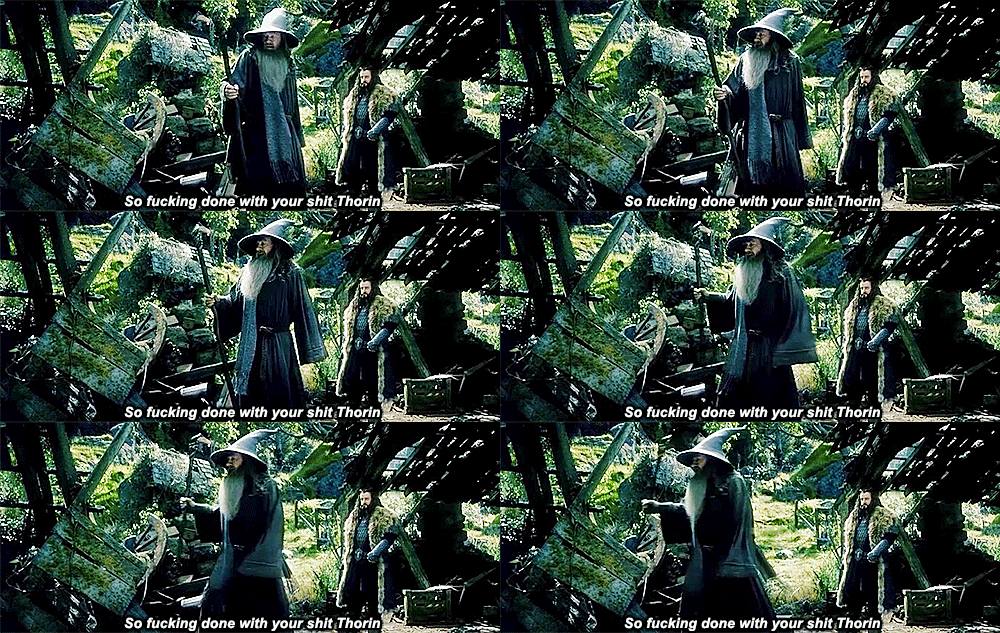
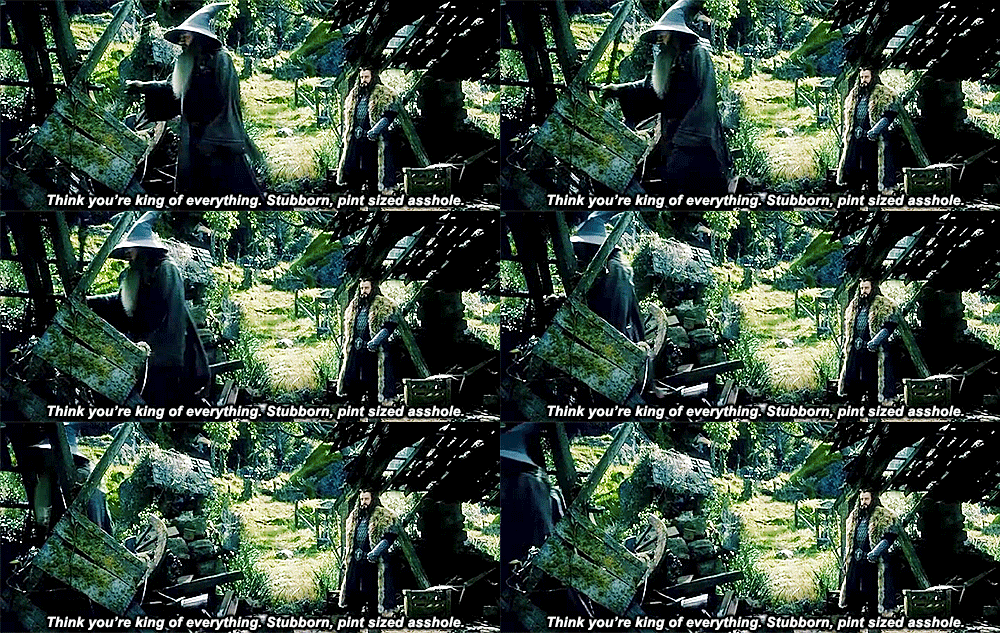
When Thorin gets hormonal, he is literally a pint-sized asshole...


When Thorin gets hormonal, he is literally a pint-sized asshole who thinks he’s king of everything

20 Jul 14:16

magictransistor: Roman Karmen. Moscow Illuminations, 1927.


magictransistor:

Roman Karmen. Moscow Illuminations, 1927.

20 Jul 14:16

Photo


20 Jul 14:15

Anxiety Manifest: My Skin Picking Problem

by kittystryker

So anyone who’s followed my blog for any length of time knows that I have an anxiety disorder. This has manifested in a few different ways in my life- I’ve come out about my jealousy issues, my ongoing eating disorder struggles and other difficulties with food, my fight against hoarding. I plan to write more extensively about my experiences with medication, having been medicated for depression most of my life and really only in the last 3 years realizing that my diagnosis was likely off. I like to be open about what I’ve discovered along the way in the hopes it helps others.

But there’s one thing I’ve felt really uncomfortable sharing about, as a sometime professional pretty person-

I am a really, really chronic skin picker.

I’ve always been a cuticle biter, to the point where I have had infections and other major problems. In fact even while writing this I’ve had to stop myself multiple times from worrying at any little bits of dry skin. It’s unconscious, but it’s constant. It’s why I keep my nails painted most of the time, because then at least I don’t want to mess up my polish. No amount of gross tasting formulas have been able to stop me.

For most of my life I’ve been blessed with pretty clear skin, so my enjoyment of popping pimples and squeezing out blackheads happened on other people, usually tolerant partners who would let me groom them. I’m even one of those freaks who would watch those gross skin channels on Youtube for particularly bad blackheads. There was something soothing and satisfying about seeing the blockages cleared.

Now in my 30s I’m getting a lot more whiteheads and pimples, and it SUUUUUCKS. I have such a hard time leaving them alone! And as I don’t actually know much about foundation or coverup, I end up slapping on a fair amount of makeup to hide the redness I leave behind with my anxious fussing, which then clogs my skin and makes more blemishes. I got a set of tools supposedly for helping clear up these things, but I don’t know how to use them yet. So in the meantime I’m just using my nails and ending up with overly rosy cheeks and irritated skin.

I often feel as a fat woman that there’s a lot of pressure to look on point whenever I leave the house. I rarely go out without my makeup done, and almost never in leggings and a shirt- not because I don’t want to, but because I am deeply self conscious of looking like a “slob”. Having any kind of facial blemish, then, makes me excessively anxious, because I associate acne with grease and grease with fatty foods and even though there’s little logic to it, I begin to feel even more ashamed of my body and how other people perceive me. I pick at my skin obsessively, trying to get every little bump to flatten. I powder my skin like a French aristocrat to hide the redness. My quest to be a pretty fat person ends up being a lot of pressure to not let down the side. Which makes me more anxious. Which makes me pick more.

I’m still trying to figure out the best ways to manage my anxiety.  I don’t want to peel my own skin off when I’m feeling stressed. A lot of anxiety meds have bad side effects though, things like brain zaps or losing my libido. It took me YEARS to get my libido even halfway recovered from years of SSRIs, and I’ll be damned if I give it up now! So for now, I just try to breathe through it, eat decently well, and be mindful of what I’m doing. It’s really difficult, though, and frankly I still feel a lot of anxiety being seen in a no-makeup selfie on the Internet. Do be kind, please!

I’m hoping that coming out about this issue I can not only help others feel less alone but be held accountable to being kind to my skin so I can break this harmful habit before I end up scarring myself! Do you have trouble with skin picking or nail biting? How do you manage it?

20 Jul 14:14

DETHJUNKIE*

by turn
20 Jul 14:14

Photo


20 Jul 14:13

Art Saves

by Lauren Purje

artsaves1-2-1280

20 Jul 14:13

Trump is the New Palin

by weeklysift

Whether you love him or hate him, it doesn’t matter. He’s bluffing.


After John McCain showed the bad judgment to make Sarah Palin a national figure in 2008, every few months a flurry of excitement/panic about Palin’s political future would erupt in the media. She was anointed the early Republican front-runner in the 2012 presidential cycle, to the point that Ross Douthat devoted a whole column to denying her front-runner status. When that speculation faded (because by the spring of 2011 she’d made no moves to build an organization in Iowa or New Hampshire), she went on a national bus tour to fan the flames again. She didn’t officially bow out until October, 2011.

Then she was going to run for the Senate in 2014, but that didn’t pan out either. This January she said she was “seriously interested” in a 2016 run, and proclaimed herself “ready for Hillary” at the Iowa Freedom Summit. But in a year when it seems that every Republican with a pulse is running for president, Palin isn’t.

I’ll take some credit for seeing through the Palin hype. After the 2010 mid-terms, I looked ahead to 2012:

Unlike New York Magazine, I don’t expect Palin to run. I expect her to keep people guessing for as long as she can, but to find an excuse to back out.

Sarah wants to be famous and make a lot of money and not work very hard. (If that’s a vice, a lot of us have it.) Teasing about running for office served those goals well, but actually running would require effort, not to mention answering the lamestream media’s gotcha questions, like “What newspaper do you read?

And that brings me to Donald Trump.

Trump is not exactly Palin — he loves hostile questions, for example — but the same phenomenon is at work. He really has no interest in being president, and when the campaign gets serious he won’t be there. So if his candidacy is getting you either excited or riled, don’t waste your energy.

Like Sarah Palin, Donald Trump lives off his image. That image is all about leadership, so of course he wants to be seen in terms of the ultimate leadership job, President of the United States. If you buy Trump’s image, you think he’d be a great president: making the tough decisions, banging heads together until everybody gets in line, cutting through the BS of the vested interests, and doing the common-sense things we all know need to get done. Who wouldn’t want to call up ISIS leader Abu Bakr al-Baghdadi and say, “You’re fired”?

It’s a great fantasy. But actually being President? What a headache that would be. Even the Donald’s hairpiece would go grey.

In previous cycles, bluffing about running for president has served him well. But Trump understands something that seems to have escaped Palin: To keep people interested, you have to keep raising the bar. Except for a small group of rabid fans, the public has lost interest in Palin, because we’ve seen it all before. So she can hint about running, but until she starts acting like a serious candidate — building an organization, appearing in debates, pushing some signature issues beyond the buzzword stage, and so on — nobody is going to pay much attention.

If Trump hinted about a 2016 race and then backed away from it, nobody would pay attention to any future bluffs. So he raised the bar: This time he actually declared his candidacy, and he’s giving speeches and interviews. He’s still not building an organization in primary states or raising money for a serious campaign, but he’s on top of the recent polls (with 18% of Republicans in a very divided field), and he’ll probably be on the stage in August when the first debate happens. Chances are good he’ll get a lot of attention during that debate and be in the headlines the next morning.

A big piece of the current bluff is that he doesn’t need to raise money: He’s very, very rich — as he keeps telling us — and so he can self-finance.

And that’s where the bluff is going to break down. The kind of campaign he’s run so far — flying around and giving speeches — isn’t very expensive. The big money in primary campaigns goes two places: Early, it goes into hiring staff and opening campaign offices in early-primary states, and then later it goes into TV advertising. He’s not doing either.

The kind of money Trump has spent so far — and foregone as business partners run away from him — is a recoverable investment. He’s building the Trump brand, which will net him future earnings in book sales and TV ratings. The campaign — at least the way he’s run it so far — will keep his act fresh for years to come.

By November, though, a serious candidate will have to start putting serious money into Iowa and New Hampshire. Not thousands, millions. TV time on the Boston stations that cover southern New Hampshire is not cheap. The idiosyncratic process of the Iowa caucuses requires a ground game. And if you survive the Iowa/NH/South Carolina winnowing in January and February, you just need more money to compete nationwide in March.

That’s not an investment any more. It would take maybe $100-200 million to win the Republican nomination, and even more to run a serious third-party campaign in the fall if he isn’t nominated. That’s money he can never get back.

And I don’t even believe he has it. Trump’s empire has always been a precarious structure built on debt. (That’s why he’s been involved in four bankruptcies.) Whatever he might be worth on paper, he doesn’t have hundreds of millions of ready cash available to blow on a whim.

So this campaign is a more elaborate bluff than he’s run in previous years, but it’s still a bluff. Look for him to find an exit sometime in December.


20 Jul 14:12

lightspeedsound: sale-aholic: baronessvondengler: keptonice: ...


lightspeedsound:

sale-aholic:

baronessvondengler:

keptonice:

fuckin-nastyxxx:

👏👏👏 lol

This is actually really important because his role is to make Republicans seem reasonable in comparison. This is a really great decision.

Oooh 🔥

This is Huge!!!

I DIDN’T BELIEVE IT BUT TIS’ ACTUALLY LEGIT http://www.huffingtonpost.com/entry/a-note-about-our-coverage-of-donald-trumps-campaign_55a8fc9ce4b0896514d0fd66

20 Jul 14:11

Photo


20 Jul 14:11

gameraboy: That explains the laser raptor.Kung Fury...


gameraboy:

That explains the laser raptor.

Kung Fury (2015)

https://www.youtube.com/watch?v=bS5P_LAqiVg

20 Jul 14:11

palestinianliberator: setfabulazerstomaximumcaptain: sonic-hip-a...


palestinianliberator:

setfabulazerstomaximumcaptain:

sonic-hip-attack:

canikon-bokeh:

Exactly. 

Imagine a wall full of circular holes, that circles can keep walking in and out of with no difficulty.

Now imagine that the triangles manage to get the resources together, after years of not being able to fit through the circle’s holes, to drill a single triangle space into the wall.

Now imagine that the circle — who previously supported the triangle’s efforts because they are well-rounded (har) and value equality —  comes along and sees the construction project. But instead of being happy, they get angry.

“Well, I won’t be able to fit through your hole!!!!” the circle cries.

“I helped you get the drill!!!!” the circle shrieks.

“Make it fit me too!!!!” the circle demands.

The triangles, barely holding it together enough to get a triangle hole together, stare at the circle in confusion. 

“You have all the holes you need,” the triangles explain. “This is for us. You don’t need to fit through our hole, too.”

“YOU’RE BEING UNEQUAL AND HURTING MY FEELINGS!” the circle wails. “I DON’T SUPPORT YOUR HOLE IF IT DOESN’T FIT ME TOO. GIVE ME MY DRILL BACK.” 

“It’s not your drill, it’s our drill. You helped us get it, because you said you cared.”

“I ONLY CARED WHEN I THOUGHT YOU’D MAKE A HOLE EVERYONE COULD FIT THROUGH. YOU’RE PERPETUATING INEQUALITY!!!”

“Why is it up to us, the small group that has never been able to fit through the wall at all, to make a hole everyone can use? Why isn’t it up to you, the people who have been able to cross back and forth at will for years? We just want to see the other side; why are you yelling at us?”

“I DIDN’T ASK TO BE BORN A CIRCLE, OMG. I’VE HAD TO WORK HARD ALL MY LIFE TOO. YOU’RE JUST BEING BIGOTED AGAINST ME BECAUSE OF SOMETHING I CAN’T CONTROL, JUST LIKE EVERYONE IS AGAINST YOU.”

“You are interfering with our project and asking us to comfort you while we’re trying to make progress. Please leave.”

“I’m going to tell everyone about this,” the circle warns. “Nobody will support you now.”

“Apparently nobody ever did,” the triangles sigh, getting back to work.

It’s kind of sad

That we have to draw comics using colorful shapes

To explain systematic inequality to people

Reblogging again because yes good

20 Jul 14:09

Out of Sight in Brooklyn

by Erik Loomis

out_of_sight_final

Time for another round of Out of Sight promotion! Specifically, I wanted to let all our New York readers know that on Wednesday, July 29, at 7 pm, I will be having a book event at Local 61 in Brooklyn. It will be a conversation with Sarah Jaffe about Out of Sight, outsourcing, and possibly dead horses, who knows. Other than listening to me ramble and meeting Sarah, there are two additional reasons why you should come. First, Local 61 is also a bar with a good tap selection. Second, the event will be filmed by CSPAN for its BookTV channel. So that’s pretty cool. That may mean I shouldn’t be drinking that tasty beer during the conversation. Or maybe I should! So if you are in the area, come on out!

I will also soon have announcements for an event in Cambridge, and hopefully one or two more for you residents of the Keystone state.

I’ll also mention that the book is now discounted on Amazon to a Jamestown starvation price of $16.08 so, you know, Christmas is coming.

…Also, I was on the Heartland Labor Forum out of Kansas City last week. Here’s the interview if you want to listen.

20 Jul 14:09

Drones hindered firefighting efforts in California

by Mariella Moon
The aerial firefighters deployed to put out a large wildfire in San Bernardino County on Friday were forced to jettison their loads and ultimately land their planes and helicopters. Why? Because a handful of drone owners thought it would be a great i...
20 Jul 14:09

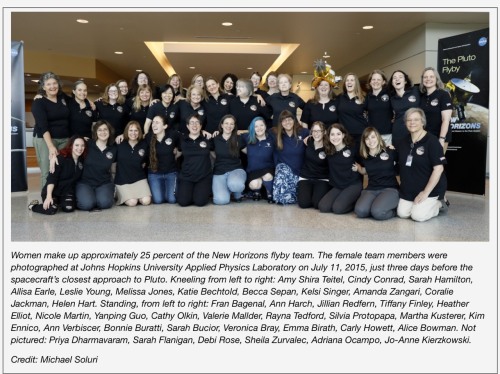
sorayachemaly: Women scientists made up 25% of the Pluto fly-by...


sorayachemaly:

Women scientists made up 25% of the Pluto fly-by New Horizon team. Make sure you share this, because erasing women’s achievements in science and history is a tradition. Happens every day.

. http://pluto.jhuapl.edu/News-Center/News-Article.php?page=20150712

more of this.

20 Jul 14:08

The Story of Reviving a Community Art Center in Battambang, Cambodia

by Ben Valentine
Kids playing at Sammaki.

Kids playing at Sammaki (all photos by the author for Hyperallergic)

I arrived in Battambang, Cambodia, late last year via a 5-hour bus ride from Siem Reap. Battambang is hot, small, and there is nothing immediately impressive about the city listed on the tourist guides. There is, however, a burgeoning arts scene that I was determined to catch a glimpse of before continuing on to Thailand.

As a writer and curator interested in art outside or left of the mainstream art world, what I found was a dream. Within hours I met several artists and gallerists who went above and beyond to help connect me to their community. Phone calls were made, studio visits were arranged, motorcycles were borrowed, and in no time I was doing studio visits, interviews, and eating at the homes of artists. Recalling the cold indifference of gallerinas in New York City, I felt remarkably lucky.

Kids drawing and playing at Sammaki.

Kids drawing and playing at Sammaki

Of all the people I met and spaces I worked with, one that quickly stood out was Sammaki, a community art center in downtown Battambang that was being managed by Mao Soviet. Mao is a contemporary artist and founder of Make Maek gallery, which was just down the street and is one of Cambodia’s only Khmer-founded art spaces. Sammaki excited me for being a more accessible community space that could be for both children and professional artists.

Time and time again during my interviews and travels from Beijing to Mynamar I was told of the importance of alternative art spaces in serving communities that were largely outside of the support of larger markets. This was definitely true in Battambang, and Sammaki embodied the best of the community art centers I had seen.

I fell in love with Battambang and ended up quickly returning to stay five months. I was so exhausted with constant traveling to new cities with new languages that I craved to stay in one spot, learn the language a little, and really get a more in-depth look at an arts scene so different than the ones I’m more familiar with in Indianapolis, New York City, and the Bay Area.

Mask making workshop for kids from Battambang province.

Mask-making workshop for kids from Battambang province

At the time, Battambang had six important arts institutions, which for a town of 250,000 was very impressive. Battambang’s position at the center of Cambodia’s tiny arts renaissance is largely thanks to Phare Ponleu Selpak (PPS), an arts school on the edge of town that grew out of a Khmer Rouge refugee camp on the Thai border. After the Khmer Rouge systematically killed one quarter of Cambodia’s population — with artists and intellectuals as primary targets — the role that PPS has played in revitalizing the arts since then merits a book.

However, shortly after my return to Battambang, Sammaki amicably lost its funding from the local nonprofit Cambodia Children’s Trust due to difficult budget decisions. Afterwards, Mao moved to Thailand for better work — an all-too-common story for Cambodians in a poor economy. In one fell swoop, two of Battambang’s most exciting spaces were shuttered.

My experience in working in galleries, museums, and various publications prompted a handful of locals to ask whether or not I would reopen Sammaki. My Khmer language was quickly improving but my fluent English and experience in writing about and curating art exhibitions were most attractive — the market was, after all, almost entirely funded by foreigners. I said no many times.

Heak Pheary doing community outreach for Sammaki.

Heak Pheary doing community classes beyond Sammaki’s doors

I didn’t want to be a white guy running and defining a local art space in a community I was completely foreign to. While my Khmer was better than most immigrants’ (I prefer that term over expat) in the city, I was far from fluent. There were already misconceptions and hesitancies about the space’s foreignness amongst local artists. All of the original founders except Mao Soviet were foreign. But after a few weeks of nobody else stepping up, I agreed.

I became the artist-in-residence and something like a coordinator, and I was paid with a free room in the back. I told everyone who would listen, “This is not my space I’ve only just come here and I leave in two months, this is for you and people here will have to get more involved for it to survive.” The two-month time frame made me feel much better about my potentially problematic involvement.

I asked a lot of questions. What did they need? Did they want Sammaki to stay open? Why? What should I do? Do you want to help?

Yorn Young and Sastra Keo performing at Sammaki's four year anniversary party.

Yorn Young and Sastra Keo performing at Sammaki’s four-year anniversary party

At first I felt increasingly helpless. The local artists, arts professionals, and the community that has grown up around the arts in Battambang liked Sammaki and wanted it to continue. They saw it as an important space for artists to exhibit during or after studying at PPS — a space that could nourish the local art scene and be a stepping-stone to more white cube galleries in Phnom Penh or abroad.

“Sammaki” roughly translates to communal trust and aid, and is considered to be one of many things nearly destroyed by the Khmer Rouge. To that end, Sammaki had played an important role as a space for local non-arts professionals who weren’t trying to become professionals — a space for creativity, play, and free expression most art spaces were too exclusive to provide. These sentiments were repeated by many, but when I asked, “Well, who should run it?” or, “Do you want to help out?” Crickets.

In one of the poorest countries in Southeast Asia, asking people to volunteer or be paid little to work on a community project is an understandably hard sell. My doubts crept in. Was I, a white foreigner, just trying to keep a space open more for people like me than the local community? Is my concept of art spaces irrelevant in an economy like this?

Until then I had mostly been working closely with Khchao Touch, a local painter and former art teacher at PPPS, her husband Darren Swallow, owner of Lotus Bar and Gallery, and Chov Theanly, a local, self-taught painter. Finding others with the time, energy, and skill was proving harder than expected until I met local artist Puth Male and Heak Pheary, also a local artist and art teacher who had previously worked at Sammaki before going to study painting in Phnom Penh. Together we worked hard to set up a local board, hiring Heak Pheary as Sammaki’s manager and teacher, and Sammaki sprang back to life after the month-long pause. Since then, we’ve been applying for grants and searching for more stable funding streams.

Instead of an art show that features a conceptual theme or the best work of one artist, I tried to combine Sammaki’s community focus with its exhibition mission. The first exhibition after Sammaki’s brief closure was an open call for any and all Battambang artists to share one recent work. We wanted everyone to feel like this was their space. Fifteen artists exhibited and, with a high turnout, positive visitor feedback, and a healthy number of sales from the exhibition, we considered the show a huge success.

While I had been trying to teach drawing to kids from the neighborhood and foster creativity, Heak quickly proved how mediocre of a teacher I am. When Heak first worked at Sammaki, she often gave free art classes for children. After she left for school, Sammaki became more focused on professional artists with its exhibitions, residency, and workshops than on the community aspect. Together with the board, we sought to reverse that and recommit to the local community.

Puth Male and Heak Pheary working at Sammaki.

Puth Male and Heak Pheary working at Sammaki

Since she returned, Heak has had many kids show up for Sammaki painting and crafting classes on a daily basis. After noting the classes’ popularity, we teamed up with a local Peace Corps volunteer and brought village kids to Sammaki and Sammaki to them. With the new board supporting the space, and Heak on staff, we hope Sammaki can continue to be a place where anyone can come and be creative.

Now I’m halfway around the globe in Iceland preparing for an exhibition in a museum. My time at Sammaki feels far away, but I hope to return in the fall to stay tangentially involved. My hope for Sammaki is that it can become a self-reliant institution, but it undeniably remains an international space.

But maybe that’s okay. The world is increasingly connected and there are people like me moving between borders more fluidly than ever. My experience working with Sammaki taught me a lot about what it means to do this responsibly, mostly through making mistakes. Refusing to get involved on an international level would only stifle Sammaki’s potential benefit to the local community. Finding how to balance these connections and relationships to the benefit of Battambang is the challenge, and Sammaki continues to gracefully walk that line.

20 Jul 14:08

So What About Polygamy Anyway?

by weeklysift

After same-sex marriage, is polygamy a further slide down the slippery slope, the next step of progress, or a separate issue entirely?


For the last 10-15 years, people who brought polygamy into a discussion were usually talking about something else. Polygamy was supposedly the next stop on the slippery slope we would step onto if we legalized same-sex marriage: Once you start fiddling with the definition of marriage, the doomsayers prophesied, there is no clear place to stop. In the Supreme Court’s recent marriage decision, Chief Justice Roberts brought that argument into his dissent:

One immediate question invited by the majority’s position is whether States may retain the definition of marriage as a union of two people.

Slippery-slope arguments are often a way to create flashy distractions from the issues that are actually present: If you have no coherent case to make about why a loving, committed same-sex couple shouldn’t be married, you talk instead about legalized polygamy, incest, pedophilia, and bestiality. Maybe no one is actually making those proposals yet, but they could at some point down the road.

On the other hand, some slippery-slope arguments actually are prophetic. In his Lawrence dissent in 2003, Justice Scalia warned:

This reasoning leaves on pretty shaky grounds state laws limiting marriage to opposite-sex couples.

Twelve years later, here we are.

And sometimes, when we look back on prophets of doom, our modern eyes see them as unintentional prophets of progress. The downward slide they feared, we recall proudly. For example, shortly after the Civil War, Rev. R. L. Dabny published a retrospective justification of slavery and secession: A Defence of Virginia. In it he warned the North of the horrors its abolitionist notions would ultimate bring to pass:

But other consequences follow from the abolitionist dogma. “All involuntary restraint is a sin against natural rights,” therefore laws which give to husbands more power over the persons and property of wives, than to wives over husbands, are iniquitous, and should be abolished. The same decision must be made upon the exclusion of women, whether married or single, from suffrage, office, and the full franchises of men. … But when God’s ordinance of the family is thus uprooted, and all the appointed influences of education thus inverted; when America has had a generation of women who were politicians, instead of mothers, how fundamental must be the destruction of society, and how distant and difficult must be the remedy!

Wives owning property! Women voting and running for office! Surely society must collapse from the unnatural strain of such abominations. Why didn’t we listen when Dabny warned us? If only we’d kept blacks in slavery, we could have avoided all this.

[You knew that was sarcasm, right?]

So OK: But for a few dead-enders, same-sex marriage is a done deal now. So polygamy’s usefulness as a slippery-slope horror is over. But are the predictions correct? Is that where we’re heading next? And if we get there, will it be a downward slide or an upward climb?

In Politico Magazine, Fredrik deBoer got right to work with “It’s Time to Legalize Polygamy“. Jonathan Rauch then answered with “No, Polygamy Isn’t the Next Gay Marriage“. And deBoer responded on his blog with “every bad argument against polygamy, debunked“. Another worthwhile piece promoting polygamy (with a better collection of links) is William E. Smith’s “Who’s Scared of Polygamy?” on Religion Dispatches.

I’m not going to take a pro or con position, but I would like to shape the discussion a little.

If you’re worrying (or hoping) that some judge will legalize polygamy next week, stop. Think about how hard it would have been to implement same-sex marriage during the Washington administration: At the dawn of the American Republic, men and women had different legal rights, and husband and wife were unequal legal roles. Same-sex marriage would have been absurd then, because women were legally incapable of playing the husband role, and before they could become wives, men would have to give up inalienable constitutional rights. To make same-sex marriage legal then, the whole legal relationship of men and women — which was embedded in countless laws — would have had to change.

But everything was different by 2003, when the Massachusetts Supreme Court considered the question. Massachusetts had passed an Equal Rights Amendment into its Constitution in 1976, so men and women were equal under the law. The U.S. Supreme Court had thrown out Louisiana’s Head and Master law in 1981, so husband and wife were legal equals. All that really had to happen to make same-sex marriage a reality was to change the forms from Husband and Wife to Spouse and Spouse.

(You can accurately describe American marriage after 1981 in a lot of ways, but “traditional marriage” is not one of them. I don’t know of any traditional society where husbands and wives have been equal under the law.)

Polygamy today resembles same-sex marriage in the Washington administration. Changing the forms to allow an indefinite number of spouses wouldn’t come close to defining it. Are we talking about Biblical (or Mormon) polygamy, where one man marries several women? Jacob and Leah and Rachel, say, or Solomon with his “seven hundred wives of royal birth and three hundred concubines“? Or a group marriage where everybody listed is married to everybody else? Or maybe a chain marriage, where Bob marries Carol marries Ted marries Alice, but Bob and Alice are just friends? Or is some central couple the prime relationship, with other spouses secondary? The possibilities are endless, and the law would have to account for them.*

However you picture it, giving polygamy legal recognition would mean establishing legal infrastructure to answer questions that don’t come up in binary marriages. In a group marriage, can one spouse divorce the others, or does the whole relationship dissolve and need to be reformed? What’s the property settlement look like? Do all spouses have equal rights and responsibilities regarding the children, or do biological parents have a stronger legal bond? In a Biblical polygamous marriage, are all the wives equal, or does the first wife have a special role?

In any of the polygamy models, it doesn’t take much imagination to spin out questions that may not be unanswerable, but aren’t answered in any obvious way by current law. Such questions go all the way down to the most trivial level: What fee should a clerk charge for a plural marriage license? Are current fees based on per-person or per-marriage logic? That question never comes up as long as all marriages are between two people, but someone would need to decide God-knows-how-many minor issues like that.

Consequently, a court can’t simply order to a county clerk to issue a three-person marriage license. The judge would have to rewrite big chunks of the legal code, which a judge is not equipped to do, even if one thought he or she could get away with asserting that kind of power.

Is polygamy a legal right? A somewhat more realistic fantasy/nightmare goes like this: A judge might find that three or more people have a right to the legal advantages marriage offers, even if the judge can’t say exactly how that right should be implemented. That would have to go through a legislature, which is equipped and empowered to rewrite large chunks of the legal code.

So a judge could order the legislature to rectify the situation within a specified time. The legislature would probably refuse, and then the judge could assess damages against the state, which the governor could refuse to pay, and from there who knows where it all goes.

A key part of that scenario, though, is that the legal argument for a right to polygamy is sitting there inside the same-sex-marriage jurisprudence, waiting for some bold judge to notice it. In spite of John Roberts’ dissent, I don’t think that’s true.

In order to have this discussion, though, we need to set aside the particular opinion Justice Kennedy wrote, which really is as bad as the dissents claim. (I covered that when it came out.) It’s not at all typical of marriage-equality opinions, and it contains little in the way of a legal framework that could be extended to polygamy or anything else. I suspect it will have the same kind of influence that Kennedy’s similarly mushy DOMA opinion had: In subsequent lower-court decisions, judges made their rulings consistent with the outcome of the DOMA case, but didn’t attempt to apply Kennedy’s reasoning, such as it was.

The way pro-marriage-equality judges other than Kennedy have approached the issue is through the equal protection of the laws, a position I summarized in May: The opposite-sex marriage laws create an advantageous institution (marriage) and extend its benefits only to opposite-sex couples, when same-sex couples could be included by simply editing the license form, and no credible evidence suggested that negative consequences relevant to the mission of the government would ensue. (The possible offense to God claimed by anti-gay activists is not something the Constitution instructs the government to take notice of. Read the Preamble.) Under those circumstances, there’s really no way to claim that gays and lesbians are being granted the equal protection of the laws promised by the 14th Amendment.

What lies in the background of that argument is that the separation between gays/lesbians and the benefits of marriage is not something the affected individuals can easily fix on their own. Sexual orientation may or may not be innate, but it is not generally changeable in adulthood. And while legally, a gay or lesbian person could enter into a marriage with someone of the opposite sex, it’s hard to see that as a satisfactory solution. Consequently, because of who you are, you might be unable to take advantage of the marriage laws.

That argument is much harder to make for polygamy, which feels more like a lifestyle choice than an innate orientation. The government set up an advantageous path hoping to induce you to live one way, but you decided to live another way. I would defend your right to make that choice, but I don’t see how it gives you a right to the advantages of the other lifestyle.

Maybe some other legal argument for a right-to-polygamy is possible, but I don’t know what it is. I think you’d need to show that favoring binary relationships is an irrational thing for the government to do, and can’t conceivably lead to any social benefit the government might reasonably want to achieve. Constructing such an argument would be much harder than just cutting and pasting from the same-sex marriage arguments.

If polygamy isn’t a right. If polygamy isn’t a right inherent in the laws currently on the books, then if people want it, they need to convince legislatures to pass new laws. And that means convincing a large chunk of the electorate (who may or may not have polygamous fantasies) that a society that openly includes polygamous households is better — or at least no worse — than the society we have now.

If we’re debating in a legislature rather than before a judge, then I think the burden of proof shifts a little on both sides. To win in court, a polygamy supporter would need to show that banning it is completely irrational. To win in a legislature, they’d just need to argue that allowing it makes more sense than banning it. deBoer sums up:

my argument for polygamy is that there are people in the world who want it, and I recognize the inherent and total equality of the dignity and value of their relationships in comparison to two-person relationships.

As in same-sex marriage, we’re talking about real people doing real things. What’s our basis for telling them not to? I’m not saying there is no basis, I just can’t explain what it is off the top of my head.

On the other side, a legislature would have to debate a real proposal, not just an idea. Exactly what relationships are we giving legal form? How do all the details work? In particular, a law shouldn’t create holes in the system, which would be easy to do. (If my health insurance plan covers my spouse, maybe I could establish universal health care by marrying everybody. Or maybe I could solve the immigration problem by marrying all of the undocumented immigrants. Yes, those examples are ridiculous. But it’s not hard to imagine more realistic unintended scenarios, where groups might redefine themselves as marriages to take advantage of a poorly phrased law.) deBoer argues that the difficult logistics of polygamy isn’t a reason not to do it. But a real proposal would have to deal with those logistics.

In short, I would tell both deBoer and Rauch the same thing: I’m convincible, but I’m not convinced. The anti-polygamy argument isn’t sharp enough, and the pro-polygamy argument isn’t detailed enough. But however the issue eventually comes out, it will do so on its own merits, and will not follow automatically just because gay couples or lesbian couples are getting married.


* I’ve questioned whether I should even use the word polygamy to cover all these possibilities, since it often refers specifically to Biblical polygamy, with polyandry referring to a woman with many husbands. But the articles I’ve referenced are comfortable with that usage, so I have reluctantly followed it.


20 Jul 14:08

Photo


20 Jul 14:08

dailyaffirmationotter: #otters #dailyaffirmation

by villeashell


dailyaffirmationotter:

#otters #dailyaffirmation