Shared posts

31 Jul 23:12

Letter to ONAP, 2015

by bppp
Douglas M. Brooks, Director
Office of National AIDS Policy
The White House
Washington, DC 20502
Re: Policy Recommendations

Dear Director Brooks:

We are writing to you to ensure that the perspectives of sex workers and sex worker-led organizations are included in discussion of HIV/AIDS policy nationally, specifically in terms of updating the National HIV/AIDS Strategy. The Best Practices Policy Project is a national organization dedicated to supporting rights based approaches to policy and harm reduction work with sex workers, people in the sex trade and related communities in the United States. We produce materials for policy environments, address research and academic concerns and provide organizations and advocates with technical assistance. Everything that we do is guided by principles that protect the rights of people who engage in commercial sex in all its forms. The Best Practices Policy Project works with a wide network of organizations across the United States. This letter was written in consultation with the New Jersey Red Umbrella Alliance (NJRUA) and Desiree Alliance. NJRUA is a sex worker led group that has a focus area of preventing HIV among sex workers in New Jersey, and Desiree Alliance is a national sex workers rights organization dedicated to the decriminalization of sex work and elimination of ineffective HIV policies by empowering those most impacted to have a voice in the decisions that directly impact them.

We are pleased that the National HIV/AIDS Policy will be soon updated this year and would like to provide our input into the process and be included in forthcoming processes. The current National HIV/AIDS policy makes no mention of sex workers at all, despite the fact that sex workers in many different locales across the country have organized together for years in order to address factors that can increase their risk of HIV/AIDS.

Background and barriers: Across the United States, the harsh policing of anyone assumed to be, or profiled as a sex worker, directly undermines the ability of sex workers to protect themselves from HIV and, in a broader sense, alienates these communities from the support they need to defend their health and rights. Sex workers, and people the police assume to be sex workers, are harassed, assaulted, sexually assaulted, extorted, and falsely arrested by police. The law enforcement practices of using condoms as evidence and/or destroying condoms, confiscating medication(s), and seizing safe sex materials directly contravenes efforts to halt the spread of HIV in the United States. People of color, transgender people, immigrants, homeless people and youth of color are disproportionately affected by these law enforcement activities. People living with HIV who are profiled as being in the sex trade are subject to additional harassment, harsher policing and intensified legal sanctions (including felony convictions) in many jurisdictions across the US.

Different forms of U.S. anti-trafficking legislation and policies affect sex workers in the United States and globally. Federal U.S. anti-trafficking policies undermine the health and rights of sex workers both domestically and internationally by requiring that many organizations seeking funding adopt a policy against sex work (“Anti-Prostitution Loyalty Oath”). This requirement is applied to many seeking funds from the President’s Emergency Plan for AIDS Relief (PEPFAR). Organizations within the U.S. have also been subject to the pledge under the Trafficking Victims Protection Reauthorization Act. These restrictions mean that many organizations are confused about what kinds of services they can provide to sex workers and have, in some situations, lead to shuttering of excellent harm reduction services. New forms of state level legislation to end “domestic trafficking” focusing on “ending demand” for prostitution have been proposed and/or adopted in many U.S. States, intensifying policing of sex workers and their clients. Instead of improving working conditions for sex workers and people in sex trades, these laws lead to more arrests and imprisonment of sex workers, and erode their abilities to utilize tools and strategies they need to keep safe.

1 – In terms of how to reduce new HIV infections in this context, we recommend:

  • addressing the root causes that marginalize sex workers–such as criminalization, stigma, and police violence–from treatment and prevention services.

  • ending the criminalization of condoms for sex workers, trafficking victims and those profiled as such, and ensuring adequate access to condoms for all

  • providing funding for harm reduction and rights-based health care services for sex workers of all genders (including men and women, those who are transgender, and gender non-conforming people,) and all ages

  • Lifting all restrictions on federal funding for harm reduction programs, including the ban on syringe exchange programs, and expanding funding for evidence-based health approaches to drug use, including harm reduction and drug treatment.

2-  In terms of how can we increase access to care & improve health outcomes for people living with HIV, we recommend:

  • training healthcare professionals to end stigma and discrimination against those who are involved in the sex trade

  • providing funding for harm reduction and rights-based health care services for sex workers of all genders and all ages

  • encouraging states to remove laws and enhancements to standard sentencings that criminalize people living with HIV; expunging the records of those arrested and charged under such laws that mandate sex offender registration; and removing people charged under these laws from sex offender registries.  In addition, the U.S. Government should adopt a bill such as H.R.1843/S.1790 REPEAL HIV Discrimination Act, in order to bring the U.S. in line with international law standards to end criminalizing based on HIV status

  • Encourage dialogue between national borders and migrant sex workers to ensure HIV-related health care is provided to those detained in ICE facilities, with a view to ending their detention and ensuring post-release treatment

3 – In terms of how to reduce HIV-related disparities & Health inequities, we recommend:

  • providing support for community mobilization of sex workers to respond to violence and discrimination and urging states to work toward the decriminalization of commercial sex

  • eliminating policies that prevent and hinder individuals with commercial sex- and drug-related convictions from applying for and/or receiving student loans public housing or housing assistance, public assistance, or other government-funded social services.

4 – In terms of how to achieve a more coordinated national response to the HIV epidemic, we recommend:

  • including sex workers as a priority in the National HIV/AIDS Strategy, clearly describing the barriers faced by sex workers and people in the sex trade, and listing these groups in prevention and treatment priorities

  • clearly stating in all policies the needs and priorities of the transgender community and ending the practice of misgendering transgender women as “men who have sex with men” (MSM)

  • improving communications between government agencies working on HIV and communities affected by HIV (recognizing sex workers and drug users in this dialogue), paying particular attention to meaningfully including voices of people impacted by these policies

  • modifying or eliminating existing federal policies that conflate sex work and human trafficking and prevent sex workers from accessing services such as healthcare, HIV prevention and support

  • repealing and removing “anti-prostitution pledge” requirements entirely for U.S. global AIDS funds and anti-trafficking funds.

Thank you for your leadership and consideration of these important matters. We look forward to working with ONAP to expand access to treatment, care and prevention for sex worker communities. We are committed to reducing the number of HIV infections across the United States through prevention and education initiatives. We urge you to adopt these policy resolutions to advance the objective of reducing the HIV/AIDS pandemic.

Sincerely,

Best Practices Policy Project

Desiree Alliance

New Jersey Red Umbrella Alliance

31 Jul 23:12

Thanks for the Mention? Sex Work and the National HIV/AIDS Strategy for the United States

by bppp

Today, the Office of National AIDS Policy (ONAP) released the “National HIV/AIDS Strategy for the United States (Updated to 2020)” and once again fails to address the needs of sex workers. The rights of sex workers and the movement to fight HIV are interconnected in very real ways, yet government agencies continue to erase the needs and rights of sex workers by excluding them from community consultation sessions and refusing to hear what sex workers have to say. When ONAP sought community consultation to update the National HIV/AIDS Strategy, not one word was mentioned to sex worker advocates. They asked leaders in the fight against HIV/AIDS to give their opinions about various topics related to addressing the HIV/AIDS epidemic, but somehow failed to find sex workers important enough to hear out their opinions. In response, the recently established research team directed by Best Practices Policy Project and Desiree Alliance to author “Nothing About Us, Without Us: HIV/AIDS-Related Community and Policy Organizing for US Sex Workers,” the nation’s first report on HIV and sex work with a particular focus on people who are transgender, sent a letter to ONAP to voice our concerns.35 my feet and some signs

In our letter we noted that the 2010 National HIV/AIDS Strategy makes no mention of sex workers, despite the fact that sex workers have been organizing for decades around these very issues. The updated policy is almost the same in this regard, taking a tiny step to mention the term “sex work” once, but nothing regarding the systematic exclusion of sex worker organizations from HIV policy decisions has changed. Cris Sardina, the director of Desiree Alliance, viewed the live streaming of the release of the policy today. “They mentioned over and over that stigma needs to be removed, yet one of the most vulnerable populations were excluded from these discussions,” she concluded. “Sex workers are stigmatized within stigmatized populations. Sex workers affected by HIV/AIDS didn’t have a voice in the national discussions today. That these voices, so important a component to these policy-making platforms, were merely an afterthought on a couple of pages is disheartening.” Our joint letter to ONAP already expressed our disappointment to policy makers that the very communities they claim to be helping are left out of the consultation process. Finding barriers to preventing the spread of HIV are impossible to find without working with communities living with and affected by HIV. Despite this, sex workers are continually left out as a community partners and transgender women are continually misgendered by the Centers for Disease Control as being classified as “Men who have sex with Men” – an inappropriate classification that ignores the profound sociological (and biological) differences between transgender women and gay, bisexual, or questioning men.

The letter also addresses concerns about the continued criminalization of the sex trade, as it has caused numerous health consequences for those involved and perceived to be involved as sex workers. Undoubtedly, the President’s goal to reduce HIV incidence is hindered by law enforcement policies across the nation to continue using condoms as evidence of prostitution and human trafficking related cases. Without proper labor rights and working conditions, sex workers may make decisions that affect their health. When accessing health care, sex workers face open discrimination and poor medical counseling due to their status for working in the sex trade. These are serious health considerations that impact addressing HIV in the United States, but apparently not relevant enough to be included in the United State’s National HIV/AIDS Strategy. Sex worker organizations that engage in grassroots harm reduction–often entirely without funding to do so because of the erasure of our communities as leaders in prevention strategies–have long recognized the gulf between what is said in the national policy and the lived experiences of sex workers. A representative of SWOP Maryland and harm reductionist working with migrant sex workers and survival workers who are often homeless, read over the new policy this afternoon. “They said the word ‘sex work’ in the policy, I liked that. I jumped up when I saw it,” she said, “but the policy is contradictory and fails to analyze the implications of certain interventions for criminalized groups. They are talking about testing people and their partners, but if you are a sex worker, what does it mean that  you are going test me and my partners? How will that work since we are criminalized and stigmatized?”

Thanks to Derek Demeri and NJRUA for this blog post with input from Penelope Saunders (BPPP), SWOP MD and Desiree Alliance
31 Jul 23:11

I support Amnesty International’s draft policy on sex work

by stavvers

Content warning: this post discusses whorephobia and violence against women.

If you’ve been following the news, you’ll know that a bunch of Hollywood celebrities who are not sex workers have recently started attacking human rights campaign group Amnesty International. You see, Amnesty have taken the very welcome step of considering sex workers human and prioritising their human rights by supporting decriminalisation of sex work.

In their draft policy, they say that the purpose of this is to “prevent and redress human rights violations against sex workers” as well as pointing out that policies involving criminalisation “make those who sell sex vulnerable to human rights violations”. This succinctly sums up a position which current sex workers have been advocating for.

Despite wilful point-missing by those who wish to attack Amnesty for understanding that sex workers need to be protected from human rights violations, Amnesty are explicitly against trafficking, and make some fairly basic suggestions which are Too Hard for those who’d sooner throw vulnerable women into prison than make structural changes. From Amnesty’s list of underlying principles of their document:

5. Amnesty International’s longstanding position that trafficking for the purposes of sexual exploitation should be criminalised as a matter of international law; and, further that any child involved in a commercial sex act is a victim of sexual exploitation, entitled to support, reparations, and remedies, in line with international human rights law, and that states must take all appropriate measures to prevent sexual exploitation and abuse of children.
6. Evidence that some individuals who engage in sex work do so due to marginalisation and limited choices, and that therefore Amnesty International should urge states to take appropriate measures to realize the economic, social and cultural rights of all people so that no person enters sex work against their will, and those who decide to undertake sex work should be able to leave if and when they choose.
7. The obligation of states to protect every individual in their jurisdiction from discriminatory policies, laws and practices, given that the status and experience of being discriminated against are themselves often key factors in what leads people into sex work.
8. States have a duty to ensure that sex workers from groups at risk of discrimination and marginalisation enjoy full and equal protection under relevant international instruments, including for example, those pertaining to the rights of Indigenous Peoples and ethnic, religious and linguistic minorities.

I am quoting this here, because Amnesty’s decriminalisation draft policy has been misrepresented repeatedly in the media.

I support decriminalisation because current sex workers say it would make their work safer, allowing them to self-organise in unions for labour rights, facilitating access to health and safety measures, and allowing involvement of the police in the unfortunate situations where they do face sexual or physical violence.

I have taken two actions to support Amnesty’s draft policy on decriminalisation on request of sex workers.

Firstly, I have signed this petition–this takes two minutes, and you don’t really have an excuse not to!

And secondly, I have sent the email below to Amnesty International Secretary General Salil Shetty:

Subject: I support AI’s draft policy on sex work

Dear Mr Shetty,

I am writing to support Amnesty International’s Draft Policy on sex work. I myself have never worked as a sex worker, but like your organisation, I have taken the time to listen to current sex workers talking about what would make their work safer, and reached the conclusion that decriminalisation is the best route towards accepting their dignity and humanity, as well as increasing safety.

I am aware that your organisation has faced a lot of pressure from high-profile individuals who do not respect these principles, and I am writing to express my support for what you are doing. Struggles for human rights often meet with stubborn resistance with those who would rather things remained the same, with some groups pushed to the margins. I have long respected Amnesty’s stance of pushing against this resistance, and I hope that your organisation will stand firm in the face of this and continue to maintain your evidence-based and human rights-focused approach towards sex worker rights.

Many thanks for what you are doing.


31 Jul 23:11

Sum of the Arts

by Allison Meier
Library card given this month to Yoda the Owl from the University of Bath, in thanks for keeping the intrusive seagull population at bay (via University of Bath)

Library card given this month to Yoda the Owl from the University of Bath, in thanks for keeping the intrusive seagull population at bay (via University of Bath)

Inspired by the Harper’s Index, Sum of the Arts is a periodic tabulation of numbers floating around the art world and beyond.

31 Jul 23:11

Mysteria Misc. Maxima: July 31st, 2015

by Sarah Veale

CTH
Mysteria Misc. Maxima is a weekly feature which brings together links on religion and esotericism from around the internet.

Photo by Wiredforlego.

31 Jul 22:51

danisntonfleek: aphromanito: my friend told me that i need to stop singing i’m a believer because...

danisntonfleek:

aphromanito:

my friend told me that i need to stop singing i’m a believer because it was getting annoying and i laughed because i thought she was kidding

but then i saw her face

NO

31 Jul 22:51

Billy Corgan addresses his trip to Disneyland: “What the fuck do you want from me?” | Consequence of Sound

by OnlyMrGodKnowsWhy
31 Jul 07:41

Photo


31 Jul 06:48

Artworks Cobbled Together from Immigrant Experiences

by Benjamin Sutton
Installation view of 'Made in USA / Some Parts Imported' at Tiger Strikes Asteroid New York

Installation view of ‘Made in USA / Some Parts Imported’ at Tiger Strikes Asteroid New York (all photos by the author for Hyperallergic)

Art about identity politics, personal history, and cultural heritage is seen all too rarely in Bushwick galleries, where formal and material concerns tend to dominate. Made in USA / Some Parts Imported, a group show curated by Naomi Reis and Heidi Lau at Tiger Strikes Asteroid New York, remedies this tendency toward cultural placelessness with works by 10 artists who are based in the US but were born or raised in other countries. Though their experiences of mixed heritage and cultural hybridity don’t manifest in one specific aesthetic trend, there are some recurring approaches.

For instance, Daisuke Kiyomiya and Jenny Cho render familiar iconography with very specific cultural associations in unsettling or unconventional ways. Kiyomiya’s contribution is a freestanding marble archway three feet tall. The artist was born in Japan and now makes a living restoring landmark buildings in New York City, hence his interest in isolating architectural features. Divorced of any purpose, this miniature archetype of Greco-Roman architecture has no interior or exterior; it is all threshold — and, given its height, it would make a perfect doghouse doorway for Cerberus, the three-headed dog of Greek mythology. In this context, though, it echoes the condition, familiar to all the artists featured here, of simultaneously belonging to two different cultures but not fully inhabiting either. For her part, Cho, a Korean artist who grew up in suburban Los Angeles and Houston, riffs on the history of European painting in three canvases. The largest, “Suburbia: Cul-de-sac” (2013), presents a disorienting sequence of horizontal, Google Street View-style suburban vistas in a painted, trompe l’oeil circular frame, and with an M.C. Escher-esque (or Koonsian, depending on your frame of reference) mirror ball at its center. At once a parody of landscape painting and, in a way, an earnest portrayal of the US landscape, the painting’s unconventional format and beguiling centerpiece cast the entire image in an ominous light, evoking the threateningly empty streetscapes of Giorgio de Chirico paintings. Like Kiyomiya’s classical doorway to nowhere, Cho’s paintings suggest the critical distance of someone not fully at home in the place he or she inhabits.

Ignacio Gonzalez-Lang, "Sweeter than Salt" (2014), recycled US Marines and Army uniforms, beads, US coins, glass, silver thread, crochet, lace, metal bells

Ignacio Gonzalez-Lang, “Sweeter than Salt” (2014), recycled US Marines and Army uniforms, beads, US coins, glass, silver thread, crochet, lace, metal bells

A more expected solution to the problem of portraying cultural hybridity is art that features a literal hybridity of forms or materials. A number of artists in Made in the USA employ this tactic, none more potently than Ignacio Gonzalez-Lang. The Puerto Rican artist’s piece “Sweeter than Salt” (2014) is a little girl’s dress made from US military uniforms and accessorized with, among other things, pierced ¢25 coins. Inspired by a Pashtun folk tale about an Afghan princess, the piece’s form is initially disarmingly endearing. Only then do its charged materials and themes of war, exploitation, and sexual violence hit you. The two sculptures by Jamaica-born artist Arthur Simms, on the other hand, perform no such gradual reveal. Their cobbled-together materials are immediately evident: the animal ribs and vertebrae encased in a wire cage and set atop a vintage roller skate in “Skunk” (2011); the feathers, rock, and rugged stick that make up “Beaver Stick” (2010/15), which looks either like an eccentric sorcerer’s staff or a homespun approximation of a palm tree. Both pieces seem imbued with mystical energy, though the answer is less straightforward than the allusion to Afro-Caribbean religions viewers might be tempted to read into the Jamaican-American artist’s work. The animal bones in “Skunk” were sent to Simms by friends in Montana and the large rock with a beaver’s teethmarks in “Beaver Stick,” gifted to him by students at Skowhegan, lend the sculptures an emotional weight. The artist’s dual heritage becomes relevant in how these objects are turned into sculptures, a practice Simms likens to the way Jamaican children craft toys from the materials at their disposal. The sculptures are literal hybrids of his lives in the US and Jamaica, though which elements represent which part of his bicultural identity is not always clear.

Heidi Lau, "Lithos Sarkophagus" (2015), glazed ceramics

Heidi Lau, “Lithos Sarkophagus” (2015), glazed ceramics (click to enlarge)

Much of the work in Made in USA addresses the awkward or contradictory interaction of two cultures — that of the US and the artists’ origins — but several pieces go further and imagine a kind of endless proliferation and piling up of selves. Co-curator Heidi Lau‘s small ceramic sculptures have a fungal quality to them, one bolstered by her choice of brown and green glazes. Set atop a pedestal and partially wrapped around its base, her two pieces here, with their innumerable tendrils, crevices, and cracks, also evoke barnacles, mussels, and oysters. They resemble, in short, a succession of different creatures, identities, and selves, piled atop one another into an uneasy and precarious whole. And, fittingly, Lau’s own heritage matches her many-faceted sculptures: born in Macau, she lived through the tiny peninsula’s transition (just 16 years ago) from a Portuguese colony to a Chinese province, before moving to the US. Similarly accumulative are Nicole Awai two mixed media wall sculptures. The Trinidad-born artist’s work, though most easily classified as bas relief sculpture, draws on the lineage of landscape painting with sharp diagonal lines that suggest off-kilter horizons. It’s hard not to look at her pieces, with their mix of natural tones, grassy forms, glossy black patches, and flashes of neon color, and not think of the oil and trash floating about in the seas and oceans. But, like Lau’s sculptures, they also evoke an uneasy fusion and coexistence of disparate elements and influences. The artworks suggest objects (and identities) that are still in the process of being made, the relationships between their constituent parts still being negotiated. Perhaps, then, a more accurate title for this rich exhibition would have been “Assembled in USA / Some Parts Imported.”

Arthur Simms, "Skunk" (2011), roller skate, wire, bone, wood, screws

Arthur Simms, “Skunk” (2011), roller skate, wire, bone, wood, screws

Installation view of 'Made in USA / Some Parts Imported' at Tiger Strikes Asteroid New York

Installation view of ‘Made in USA / Some Parts Imported’ at Tiger Strikes Asteroid New York

Armita Raafat, "Untitled 1" (2012), plastic, resin, mirrors, paint

Armita Raafat, “Untitled 1″ (2012), plastic, resin, mirrors, paint

Christopher K. Ho, "Acceptance Letter" (2013), handmade paper, three bottles of l'eau d'Issey, one bottle of l'eau d'Issey concentrée, color print beneath watermarked paper, scent

Christopher K. Ho, “Acceptance Letter” (2013), handmade paper, three bottles of l’eau d’Issey, one bottle of l’eau d’Issey concentrée, color print beneath watermarked paper, scent

Nicole Awai, "TK Asphalt" (2015). acrylic paint, graphite, nail polish, bubble wrap, construction foam, polyester mesh, resin, and flocking on synthetic paper

Nicole Awai, “Audacious Asphalt” (2015). acrylic paint, graphite, nail polish, bubble wrap, construction foam, polyester mesh, resin, and flocking on synthetic paper

Made in USA / Some Parts Imported continues at Tiger Strikes Asteroid New York (1329 Willoughby Avenue, #2A, Bushwick, Brooklyn) through August 9.

31 Jul 06:48

From Obsessive Drawings to Sound Sculptures, Mark Mothersbaugh’s Unexpected Art Career

by Sheila Regan
Mark Mothersbaugh Anita’s First Boyfriend, 2004 Corrected photograph Edition four of twenty 11 x 11 in. Courtesy the artist

Mark Mothersbaugh, “Anita’s First Boyfriend” (2004), corrected photograph, edition four of twenty, 11 x 11 in. (courtesy the artist)

MINNEAPOLIS — Mark Mothersbaugh is so much a part of pop culture that even if you aren’t a fan of his punk band Devo, you’re probably familiar with his music. Composer for Pee-Wee’s Playhouse, a string of Wes Anderson movies, and a slew of Hollywood TV shows and films, Mothersbaugh’s art is part of the fabric of American culture.

Which is saying something for a guy who just wanted to be an artist back in his Kent State days, where he attended at the time of the Kent State massacre. His pop-star status may have been kind of an accident, but in Myopia, an exhibition that opened at the Museum of Contemporary Art Denver last year and is now on view at the Minneapolis Institute of Arts (MIA), Mothersbaugh’s output is portrayed as not just that of a rockstar and cultural icon, but as a subversive creative force worthy of a museum’s attention.

When Mark Mothersbaugh and his friends created the band Devo, they meant it as performance art. For their first performance at the Creative Arts Festival at Kent State in 1973, they described their work as “polyrhythmic tone exercises in de-evolution.” Mothersbaugh wore a pink gorilla mask and a white lab coat, while Bob Casale wore a butcher’s coat.

“I didn’t mean to be in a band,” Mothersbaugh said at a media preview for Myopia. “We thought we were doing agitprop.” They imagined they were doing their own version of Andy Warhol’s “Factory,” except they were in a real factory town — Akron, Ohio, where some of the band members were from. But then they got a record deal, which pulled the group down a path of record deals and record companies. “It was something we hadn’t anticipated, that was a lot more limiting and less satisfying than I expected,” Mothersbaugh said.

via instagram.com/maehanzlik

Installation view of postcards at ‘Mark Mothersbaugh: Myopia’ (via instagram.com/maehanzlik)

Eventually, Mothersbaugh was led into the film and TV business, recording music for Pee Wee’s Playhouse. “That was a great creative outlet,” he said, because instead of writing 12 songs and then spending the next year recording them and taking them on tour, he would write 12 songs once a week. “I was like: sign me up for this job!” he said. “I love it — the idea of getting to keep creating new music every day was to me so exciting.”

When Mothersbaugh became a regular collaborator for Wes Anderson and other Hollywood directors, he also began to show his work — including drawings, prints, sculptures, photos — in alternative galleries. “It wasn’t in the cool district with the real, fancy galleries where all the doctors and lawyers went to buy their art, but it was in the industrial gallery area,” said Mothersbaugh.

But as an artist with a capital “A,” Mothersbaugh never won the embrace of established arts institutions until Adam Lerner, of the Museum of Contemporary Art Denver, discovered him in 2011.

Mark Motherbaugh The General, 2014 Vintage organ pipes, electronics, and steel 96 x 87 in. Photograph by David Lekach

Mark Motherbaugh, “The General” (2014), vintage organ pipes, electronics, and steel, 96 x 87 in (photo by David Lekach) (click to enlarge)

Lerner wanted to interview him about another artist, but within 15 minutes, he realized “this is the most creative person I’ve ever met,” Lerner said, as well as “one of the most important forces of our creative culture in the last 40 years.”

“It was amazing to me no one had told his story,” Lerner added. “Somehow no museum curator had thought it appropriate to include in an exhibition.”

At the Minneapolis Institute of Arts, the Mothersbaugh is paired with an exhibition featuring Leonardo da Vinci’s “Codex Leicester,” seeking comparison between the two. There are certain abstract threads that aligns Mothersbaugh with Leonardo da Vinci — a creative spirit, certainly, a prolific output, and a willingness to fail, but comparing one of the most creative geniuses of all time to Mothersbaugh might be a bit of a stretch.

When asked about the comparison, Mothersbaugh said that while he was sure in a challenge Leonardo da Vinci would outdo him in drawing of a “beefy naked man,” “if I said, who can write any style of music, I could write a better piece of music than him. So it depends on who goes first in the challenge.”

The most delightful pieces in the exhibition are Mothersbaugh’s “Orchestrations” — sound sculptures made out of old organ pipes and birdcalls. These conglomerations of pipes and wood blossom like scraps of flowers, making a chilling but oddly comforting sound.

His mirror-image portraits made out of found daguerreotypes, some of which are so small you have to squint to see them, are intriguing, as are the larger mirror-image sculptures of horse butts and cars. Basically, he’s taking images that have come out of popular culture (from long ago, in the case of the daguerreotypes) and by mirroring just one part of that image, turns the figures into monstrous mutants, falling in line with the “devolution” aesthetic of Devo.

The exhibition also showcases elements of the art that came out of Devo: archival videos, photographs, and objects, such as the Booji Boy masks Mothersbaugh used to wear for concerts. Unfortunately, as often happens when museums try to take performance and show it within the walls of a gallery, it doesn’t really quite capture the experience by turning something that was alive and vibrant into a static historical piece.

Mark Mothersbaugh My Little Pony, 2013 Ceramics, 53 x 59 x 33 in. Courtesy the artist

Mark Mothersbaugh, “My Little Pony” (2013), ceramics, 53 x 59 x 33 in (courtesy the artist)

Though he has an art degree, there’s something of the outsider artist in Mothersbaugh’s work, particularly in his feat of creating 30,000 postcard-sized drawings, many of which the MIA has on display. Every day, Mothersbaugh makes “a couple to a whole bunch” of these diary entries. How many he creates “depends on how much angst I have or what particularly frustrated me or freaked me out,” he said. “I wake up a couple of times during the night. Things stick in my head that I remember or I’m concerned about — like a character in a movie or lyrics or something.”

The postcards are full of crude drawings of haggard men, warped cartoons, nightmares, and a dark, adolescent sensibility. Most impressive by their sheer numbers than by any one image, they are the product of someone whose impulse to create should give any artist inspiration.

“It’s kind of obsessive,” he says of his drawings. “ I would be super buff if I was working out as much as I draw.”

Mark Mothersbaugh: Myopia continues at the Minneapolis Institute of Arts (2400 3rd Ave S, Minneapolis) through August 30. 

31 Jul 06:48

Idyllic Illustrations of Daily Postwar Life

by Claire Voon
John Berry, Illustration from "Tricks and Magic" (1962) (all images (c) Ladybird Books Ltd, reproduced by permission of Ladybird Books Ltd.)

John Berry, Illustration from “Tricks and Magic” (1962) (all images (c) Ladybird Books Ltd, reproduced by permission of Ladybird Books Ltd.)

In 1915, during World War I, the printing company Wills & Hepworth began publishing “pure and healthy literature” for children marked with a ladybird logo, giving rise to the London-based publishing company now known as Ladybird Books. From fairytales to adventures to its Key Words Reading Scheme, Ladybird brought countless books to families in Britain and, starting in the 1960s, across the world. The texts helped children learn to read through imaginative stories, but each title also came colored with engaging, full-page illustrations. With many specially commissioned from well-known artists like naturalist painter Charles Tunnicliffe and comics illustrator Martin Aitchison, these accompanying pictures are works of art in their own right, and a selection is currently on view in Ladybird by Design at London’s House of Illustration to celebrate Ladybird’s centennial.

The exhibition features over 120 works from classic books drawn from Ladybird’s golden era, which spanned from the late 1950s through the early ’80s. It marked a period when the books had not only adopted a specific pocket-sized format familiar to their readers but also presented — especially through their illustrations — a stable and comforting view of family and working life.

Harry Wingfield, "Shopping with Mother," (1958) (click to enlarge)

Harry Wingfield, “Shopping with Mother,” (1958) (click to enlarge)

“If you think about the kind of turbulent changes that were taking place in society through the ’60s and ’70s, Ladybird presented a utopian view of the world that very much was postwar,” co-curator Lawrence Zeegen said.

Imagery of the traditional family unit is pervasive, with everyone set in his or her traditional roles: fathers wash the car; mothers wash the dishes and go grocery shopping with the children, who are dressed impeccably and flash white teeth as they wait patiently rather than throw fits. Each scene is orderly and harmonious, from a verdant forest home to speckled deer and a variety of birds to an illustration of toy blocks, perfectly stacked to form a basic but balanced arc.

The working life, too, is shown as one of ease, with illustrations emphasizing the camaraderie between workers. From farmers to policemen to nurses, each character is shown as genuinely content in his or her role and with the task at hand.

“There’s fantastic illustrations in The Miner which are showing guys hard at work in really grueling circumstances, but there’s a kind of pride in the simplicity of the job,” Zeegen said. “Here, the working class aren’t portrayed as heroes but honest, hardworking folk that work for their communities, work for their families.”

The titles of the books encapsulate this simplicity of life as well: from Exploring Space to People at Work to Shopping with Mother, they were straightforward and short, leaving no room for surprise at their contents. However, the style of their covers and the illustrations within were far from rudimentary; although the books were designed to fit tiny hands, adults read them as well — a fact Ladybird was attune to and tied into its visual aesthetic. As Jenny Pearce, the daughter of former editorial director Douglas Keen explained, Keen was alert to the inequality of access to education, especially in the 1940s and ’50s, and he wanted to make reading not only available but also enjoyable to all.

“He was also aware that there were quite a lot of adults around who were aware that there were gaps in their knowledge, and he didn’t want them to sort of be ashamed of reading what would look like a children’s book,” Pearce said. “So the books, although they were ostensibly children’s books, were not something that adults would be worried about being seen with.”

That’s perhaps why Ladybird put commercial artists through rigorous tests, as Zeegen noted, before each could take on commissions for entire books, which held 24 illustrations and were, therefore, major commitments. Furthermore, even though it hired many established illustrators, Ladybird managed to keep its literature affordable, with no regular price increase implemented from the mid-40s to the ’70s. Printed from just one sheet of paper that yielded 56 pages, the books could be readily produced through a cost-effective process.

Today, Ladybird publishes stories in all formats — ebooks included — but its vintage classics offer a glimpse through their illustrations into an idyllic life cherished by previous generations. They are sweet and quaint, but they stand out especially now, when we are accustomed to manipulated imagery, spliced and collaged by digital tools.

John Berry, illustration from "Tricks and Magic" (1962)

John Berry, illustration from “Tricks and Magic” (1962)

Gerald Whitcomb, illustration from "Sound and Pictures: Book Four" (1976)

Margaret Elise Gagg, illustration from “Numbers” (1959)

G. Robinson, illustration from "Things to Make," (1963)

G. Robinson, illustration from “Things to Make,” (1963)

E.L. Grant Watson, illustration from "What to Look for in Spring" (1961)

E.L. Grant Watson, illustration from “What to Look for in Spring” (1961)

Richard Bowood, illustration from "The Story of Flight" (1960)

Richard Bowood, illustration from “The Story of Flight” (1960)

Eric Winter, illustration from "Puss in Boots" (1967)

Eric Winter, illustration from “Puss in Boots” (1967)

Ladybird by Design continues at the House of Illustration (2 Granary Square, King’s Cross, Kings Cross, London) through September 27.

31 Jul 06:45

seananmcguire: verdantwinter: verdantwinter: The...


seananmcguire:

verdantwinter:

verdantwinter:

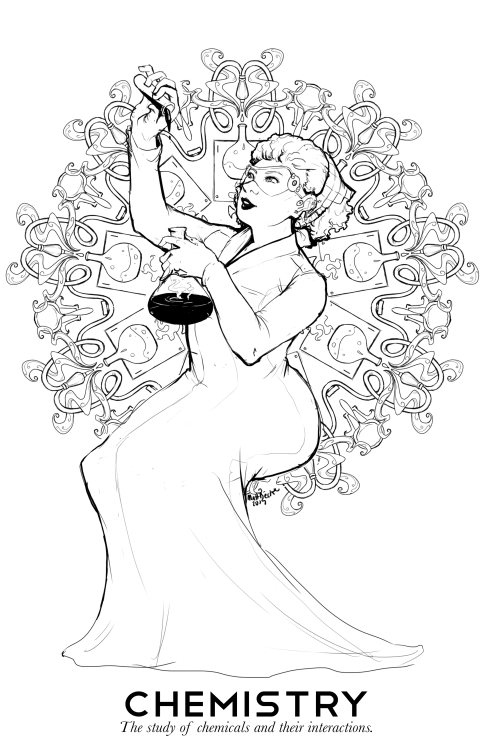
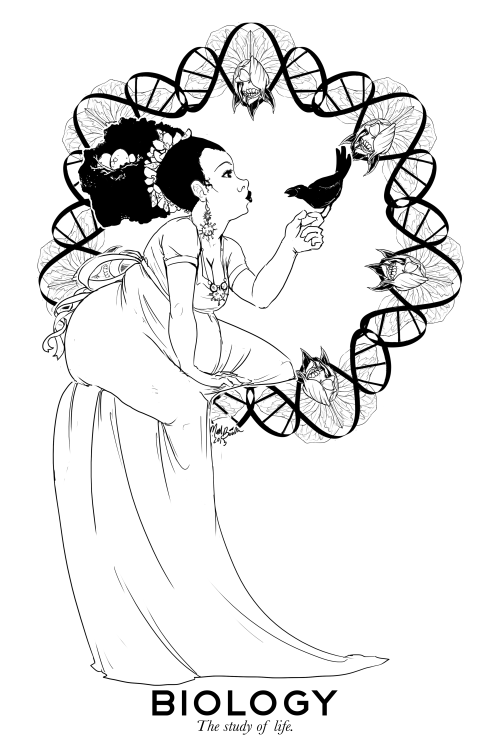
The sciences!

These are hopefully part of a larger project i’m doing, and these are done as lineart so that they’ll collage easily. 

These have references galore. I’m not sure anyone will get them but myself. 

Also, the concept is shamelessly ripped off of Alphonse Mucha and his The Arts series. But all the designs are mine. 

Edit: Updated the pictures so they have captions! Hopefully they’ll be easier to understand now. 

The Discipline Directory

The Sciences: 1 2 3 4 5

The Mystic Artes: 1 2

Now that the Mystic Artes all have titles, I’m updating the Sciences to have them too!

Holy shit.

31 Jul 06:45

Photo


31 Jul 06:44

NASA space telescope discovers Earth's closest rocky neighbor

by Andrew Tarantola
NASA researchers working with the Spitzer Space Telescope announced on Thursday that they had indeed found the closest rocky exoplanet to our own. It's a tiny burg called HD 219134b that's just 21 light years from Earth in the Cassiopeia constellatio...
31 Jul 06:44

MAN WITH A SPADE - dribbblepopular: Inside Out...

by reindesign
31 Jul 00:40

Vandal Who Smashed Colorado Town Sculpture “Destroyed the Fun”

by Claire Voon
Tom Holmes, "Arc of History" featuring mini dinosaur additions (photo by @ /Instagram)

Tom Holmes, “Arc of History” featuring mini dinosaur additions (photo by @929thepoint/Instagram)

A public sculpture in Durango, Colorado, that has divided and entertained residents of the small town since its installation last August was destroyed earlier this week, and the vandal remains at large, according to the Durango Herald. A driver found “Arc of History” (2014), a curved stack of flat, natural rocks created by sculptor Tom Holmes, in pieces after an apparent pick ax or rock pick attack. Standing at the crossroads of US highways 550 and 160, “Arc of History” had regularly made local headlines for the strong opinions it elicited as well as a series of antics to embellish it that has turned it into a playful, local joke. Now that it’s destroyed, however, the town feels it has lost a significant source of community fun.

“Whoever destroyed the Arc destroyed the fun we were having as a community,” local resident Karen Zink told the Durango Herald. “The city and the police were very gracious about allowing us to have the fun.”

Mixed reactions to the sculpture, installed after Holmes won a public art contest, began to emerge soon after its unveiling. Many residents denounced its $28,000 price tag and questioned its aesthetic value. Sculptural edits also began appearing to enliven it, from a large dinosaur head placed over one of its extremities and a similar use of a dragon head to a large nest complete with eggs — which one of the world’s leading bird experts attempted to identify. An article about the public sculpture titled “What do you think of this art?” drew over 300 heated comments, and letters to the editor poured in, including one from a woman who called it a “powerful public work of art” and another from a man who said he was ready to pack up and leave for “a saner city.”

A Chinese New Year dragon hit placed on Tom Holmes' "Arc of History" (photo by @durangoarts/Instagram)

A Chinese New Year dragon hit placed on Tom Holmes’ “Arc of History” (photo by @durangoarts/Instagram)

Police officers are currently examining video footage for clues, but the search is ongoing. City officials are contemplating asking Holmes to create a new “Arc of History,” but some believe that the original work, with its rich history of community interaction and embellishment, is irreplaceable.

“I will miss it,” Durango Herald columnist Mike Smedley said. “It’s part of the local lore. The thing that was magical about the Arc was that it was a font for people’s creativity and a focal point for jokes and humor and good fun.”

31 Jul 00:22

Wish this were a dream — but no, it isn’t.

by Sophia, NOT Loren!

Stress dream #1 — wake with heart pounding, short of breath.

Was watching a sketch comedy video… think Key & Peele, CollegeHumor, MadTV. Except add as much racism, homophobia, poop jokes, and lazy attempts at being “funny” by being as crude and “shocking” and “edgy” as possible. I’m ashamed to even mention much detail, but the basic premise was President Obama fucking Rush Limbaugh in the ass. It was really offensive. Don’t know where my subconscious came up with this, but I didn’t like it at all. Seriously, what the fuck, brain?!

Finally got back to sleep — I’d only had about 4 and a half hours of rest at that point.

Stress dream #2 — wake again with heart pounding, short of breath.

Face to face with my dad. My mom was there, off to the side. I knew something was wrong, but wasn’t sure what. I think I was somehow living there at their place…

My dad asks me “is your collar up?” in an accusatory tone.

“I don’t understand. What do you mean?” I ask.

“Your collar,” he repeats, as though he had been perfectly clear the first time, and was rapidly losing patience with what must be my stupidity, “do you have it. Is it in your possession. Are you aware of its location. Am I making myself clear yet?!”

“Yes. It’s in my purse.”

“Destroy it. Cut it up into tiny pieces. Now,” he orders.

Adrenaline flowing, I meekly shake my head, and stammer, “N-no… it was a gift, it… it was hand-made for me by, by someone I used to kn-know, it’s special. I won’t. I won’t ruin it.”

“Good,” he laughs, “I thought you’d make that mistake!” He advances towards me, and starts slapping my face — rapid, back-and-forth, mixing light with full-force blows from his open hand. My mom is still there watching, and giggling with amusement — immensely enjoying the spectacle.

I begin to cry, which seems to encourage him; he only lands the hardest blows now. I don’t even try to move, don’t make any attempt to get away.

And then I wake up.

And in real life, there’s the neighbor’s dog barking, as it does at all hours of the day and night, there’s the ka-chack, ka-chack, ka-chack of the staple gun from the house being built up the road, there’s the loud neighbors on their patio yelling at each other, and there’s The Rabbit and her spouse (who I’ve come to call Queen of the Universe or QotU for short — everything here revolves around her wants and needs and schedule) yakking in the next room, interrupted repeatedly by the phone ringing — which actually is the aggregate cacophony of at least three different phone ringers at full volume because even though they have an answering machine, they refuse to ever let it be used. There is a panicked rush stomping up or down stairs, through the halls, to grab one of the cordless receivers (total of three which get left randomly around the house) or one of the wall phones (one in the office next to the room I’m in, one in the kitchen.) Each of the wall phones has its own ringer, which can be heard anywhere in this building, and the set of cordless phones also has a loud digital bleeping.

So, from heart-pounding stress dream to heart-pounding reality with no break, no respite, no chance to breathe. I hate this place. I hate this place. I hate this place.


Filed under: General
31 Jul 00:05

Spotlight: Audrey Knight’s “How Not to Be Raped”

by Audrey Knight
31 Jul 00:04

Morrissey Claims TSA Officer Groped Him

by Kevin
Morrissey_autobiography_1
"Approve of the meat industry and you approve of Auschwitz. There is no difference."

Here's something else the new TSA administrator needs to prioritize: the investigation into the recent alleged groping of Morrissey's junk at San Francisco International Airport.

On his blog, True to You (via Pitchfork, Stereogum, and Jim) the fantastically talented yet perpetually maudlin artist ("Earth Is the Loneliest Planet," "You Have Killed Me," "I Have Forgiven Jesus," "Life Is a Pigsty," "Dear God Please Help Me," "My Life Is a Succession of People Saying Goodbye," so many others) related his version of the incident, which he says took place July 27 as he was trying to catch a flight to London. It is worth a read:

Before I could gather my belongings ... I was approached by an "airport security officer" who stopped me, crouched before me and groped my penis and testicles. He quickly moved away as an older "airport security officer" approached.

The officer who sexually assaulted me was identified as the General Manager On Duty. Luckily I was accompanied by two members of British Airways Special Services, who were horrified at the sexual attack and suggested that I lodge a complaint. I asked if there would be any point in lodging a complaint since, as with any complaint against a figure in "authority," the complaints are simply collected in order to protect the guilty officer should the matter go further. The British Airways Special Services employees assured me that a complaint was worthwhile, and so I filed the appropriate information. However, before doing so, the guilty "officer" was confronted, and the conversation went thus:

You have just sexually groped this man.

Officer: That's just your opinion.

What you have done is illegal.

Officer: That's just your opinion.

You have no right to do what you have just done.

Officer: That's just your opinion.

Apart from "that's just your opinion," he would not comment, even though, since the penis and testicles were mine and no one else's, then my opinion must surely have some meaning. But, of course, what the airport security officer was saying was: your opinion will never count in the eyes of the law....

In the interests of imperishable bureaucracy my submitted complaint against this 'officer' will obviously be either unread or ignored because, as we all know, on matters of officialism it is not possible to be pleasantly surprised by anything at all. However, what is clear is that, should you find yourself traveling through San Francisco International Airport, you should expect sexual abuse from the so-called 'security officers' who, we are unconvincingly warned, are acting only for our security.

Do people have minds?

Morrissey
29 July 2015

(Emphasis Morrissey's.) Do people have minds? Sometimes you think they do. Then you go and you stand at SFO, and you leave SFO, and you go home, and you cry and you want to die. It probably won't be any different this time.

Update: In a shocking development, a TSA spokesthing has denied that the Morrissey Incident involved any misconduct. Actually, I guess it didn't quite say that—it told Rolling Stone that "[u]pon review of closed circuit TV footage, TSA determined that the supervised officer followed standard operating procedures in the screening of this individual."

I can think of at least three ways that statement could be literally true and yet not contradict Morrissey's story at all. Two are probably obvious; the third requires knowledge that last year, some drunk guy infiltrated (i.e. walked into) a checkpoint at SFO, put on some gloves and managed to grope two women before anybody noticed him. So it's entirely possible that the "supervised officer" (apparently they have unsupervised officers there too) did follow SOP in Morrissey's case, but whoever they let sneak into the checkpoint did not.

31 Jul 00:02

LA Times Drops Political Cartoonist After Blog Post About Police

by Matt Stromberg
One of Ted Rall's recent cartoons, tweeted by Greg Palast (via twitter)

One of Ted Rall’s recent cartoons, tweeted by Greg Palast (screenshot via @Greg_Palast/Twitter)

LOS ANGELES — Earlier this week, the Los Angeles Times terminated its relationship with political cartoonist Ted Rall based on “serious questions about the accuracy” of a May 11 blog post by him. In that post, Rall, an outspoken critic of the LA Police Department, recounted an episode from October 3, 2001, in which he was ticketed for jaywalking in West Hollywood. He alleges police misconduct, stating that “a motorcycle officer zoomed over, threw me up against the wall, slapped on the cuffs, roughed me up and wrote me a ticket,” before throwing Rall’s license in the sewer. The cartoonist also recalled that “a couple of dozen passersby” had gathered and were yelling at the officer, who released Rall only after another motorcycle cop arrived and questioned the initial officer’s actions. Rall filed a formal complaint at the time — only for being falsely charged, not for being manhandled — which he says was dismissed without him ever being contacted by the LAPD.

Audio recording of Ted Rall’s jaywalking stop. Rall’s encounter begins around 6:30.

After Rall’s post went up, the LAPD released an audio recording of the incident apparently made by the officer. (We spoke with Officer Mike Lopez of LAPD Media Relations, who said that even 15 years ago, it was not uncommon for officers to carry their own audio recording devices, especially during traffic stops.) Earlier this week Nicholas Goldberg, editor of the Editorial Pages at the Times, posted an Editor’s Note stating that the “audiotape of the encounter recorded by the police officer does not back up Rall’s assertions.” Goldberg also cited an LAPD call log reportedly showing that police made repeated unsuccessful attempts to contact Rall regarding his complaint. As a result of these discrepancies, Goldberg wrote, “Rall’s future work will not appear in The Times.”

Rall fired back with his own lengthy blog post, accusing the Times of bowing to pressure from the LAPD to fire him. (Sources we spoke to at the Times made it very clear that Rall was not fired, since he was a freelancer, albeit one with a staff page who had been a consistent contributor since 2009.) As Rall notes, the audio quality of the recording is quite poor, and just because you can’t hear him being handcuffed or his license hitting the ground doesn’t mean it didn’t happen. Furthermore, since the officer knew he was being recorded, he certainly would not make any breach of proper conduct audibly obvious. As for the lack of crowd noise, it’s quite conceivable that an audio recorder in a shirt or pants pocket wouldn’t pick up sounds outside of the immediate area, especially with all the wind and noise on the tape. Rall says the Times also asked why his original complaint was only for being falsely charged, to which he answered that he was a talk show host at the time and “and certainly didn’t need any public scuffles with the LAPD.” Finally, the paper questioned why he asked the officer for a restaurant recommendation after the encounter, which Rall chalks up to Stockholm Syndrome.

Setting aside the thorny question of whether the LAPD pressured the Times to dismiss Rall, it’s troubling that a lauded (though no doubt controversial) political cartoonist was let go based on “evidence” from a very old and very poor quality audio recording of unverifiable provenance. Another issue this raises is what Rall would have to gain by making the story up. His allegations are not so outrageous that they would tarnish the LAPD any more than recent episodes already have. The Times should by all means “remain vigilant about what we publish,” as Goldberg says, but they also must recognize how it looks to dismiss a vocal police critic, with questionable proof, in light of the current discussions regarding police brutality and misconduct in this country.

30 Jul 23:56

UAW Affiliate Wants Police Union Kicked Out Of AFL-CIO

UAW Affiliate Wants Police Union Kicked Out Of AFL-CIO:

Claiming police have “utilized union resources to defend brutality and anti-Blackness,” United Auto Workers Local 2865’s Black Interests Coordinating Committee (BICC), penned a letter calling on the AFL-CIO to end its affiliation with IUPA.

In its letter, the UAW affiliate states:

We, UAW Local 2865, call on the American Federation of Labor and Congress of Industrial Organizations (AFL-CIO) to end their affiliation with the International Union of Police Associations. It is our position that this organization is inimical to both the interests of labor broadly, and Black workers in particular. Historically and contemporarily, police unions serve the interests of police forces as an arm of the state, and not the interests of police as laborers. Instead, their “unionization” allows police to masquerade as members of the working-class and obfuscates their role in enforcing racism, capitalism, colonialism, and the oppression of the working-class. We ask that the AFL-CIO recognize this history and take steps to serve the interests of its Black workers and community members.

The letter goes on to state that “police unions fail to meet the criteria of a union or a valid part of the labor movement.”

While it is true that police are workers, and thus hypothetically subject to the same kinds of exploitation as other laborers, they are also the militarized, coercive arm of the state….The police force exists solely to uphold the status quo.

Policing in the U.S. has always served the needs of colonialism, racism, and capitalism by protecting the property of those who would steal land and exploit the labor of others. Neither the property of indigenous people nor the products of the labor of both workers and slaves has ever come under protection of the institution of the police. It has only ever been the property of the powerful that the police protect. Maintaining this system of relations is the so called “order” that police have sworn to defend.

“If labor is to ever truly exert its power and challenge the corporate rule of the U.S.,” the UAW affiliate writes, “we will need to break the illusion that the police are part of the family of unions that make up organized labor.

30 Jul 23:46

soloontherocks: muchlikebear:if-you-see-gay-me: gotitforcheap: ...

Sophianotloren

I prefer places that have a canister of sugar so I can time my pour. If I have to, I'll sit and rip open a couple dozen packets of sugar... but even better is just asking for simple syrup added to the beverage by the baristas.

All of these methods often get me funny/dirty looks, but my standard response is, "I don't drink anything that isn't AT LEAST as sweet as *I* am!" accompanied by batting my eyelashes and generally looking as cute as possible.

And adding sugar (and/or cream, etc.) to coffee before tasting it is NOT THE SAME THING as grabbing ketchup to pour all over the dish you just got from the kitchen at a fancy restaurant. You're not insulting the person who just brewed the coffee -- they didn't pick the beans, select the varieties to go into the blend, roast the beans, etc. They added hot water.


soloontherocks:

muchlikebear:

if-you-see-gay-me:

gotitforcheap:

chucklebot:

I am going to find this cafe and burn it down.

*locks eyes with the barista as I spray whipped cream into my coffee* 

motherfucker I am PAYING for caffeine and the right to enjoy it any way I want I will cut it with sugar and mainline it right here don’t try me

image

“natural sweetness of coffee”

that’s not sweetness that’s your tastebuds dying off from your dirty bean water

I will add as much sugar and cream to my coffee AS I WANT. 

On some days, I will add caramel sauce. Or chocolate.

And if any hipper-than-thou barista tries to give me an attitude, I will very obviously and deliberately hand a tip TO ANOTHER EMPLOYEE AT THE COFFEE SHOP. 

30 Jul 23:37

Photo


30 Jul 22:51

A 17th-Century Stanchi Painting Reveals the Rapid Change in Watermelons through Selective Breeding [Updated]

by Christopher Jobson

painting-1
Giovanni Stanchi (Rome c. 1645-1672). Oil on canvas. 38 5/8 x 52½ in. (98 x 133.5 cm.) / Courtesy Christie’s

watermelon-1

Old master work paintings are frequently cited for their depiction of historical events, documentation of culture, or portraiture of significant people, but there’s one lesser known use of some paintings for those with a keen eye: biology. One such instance is this Renaissance still life of various fruits on a table by Giovanni Stanchi painted sometime in the 1600s that shows a nearly unrecognizable watermelon before it was selectively bred for meatier red flesh.

Horticulture professor James Nienhuis at the University of Wisconsin tells Vox that he’s fascinated by old still life paintings that often contain the only documentation of various fruits and vegetables before we transformed them forever into something more desirable for human use. You can read a bit more about the science behind the changes in watermelons over the last 350 years here. (via Kottke)

Update: Greg Cato writes: “The painting depicts a rare outcome of sub-par growing conditions, known as ‘starring.’ It’s perfectly normal, still happens, and is not the result of selective breeding (although it would be cool if it were).” You can see an example here.

30 Jul 22:51

Photographer Stephen Orlando Captures the Movement of Musicians Through Light Painting

by Kate Sierzputowski
Bach Cello Suite No. 1 Prelude

Bach Cello Suite No. 1 Prelude

Photographer Stephen Orlando (previously) captures the nearly imperceptible movement one makes when quickly sliding a bow along strings, the senses typically drawn to the sounds rather than appearance of the instrument being played. By using carefully placed LED lights and a long exposure Orlando can track these movements through space, following arms and bows with light trails that extend out from the body and instrument. These bright ghostly marks are captured through his photographic technique and not altered with Photoshop, making their distinct patterns all the more spectacular.

The Ontario-based artist was inspired by the lighting painter Gjon Mili, who also experimented with violins in 1952. Orlando explains:

A relative motion between the performer and camera must exist for the light trails to move through the frame. I found it easier to move the camera instead of the performer. The LEDs are programmed to change color to convey a sense of time. The progression of time is from left to right in the viola and violin photos and from top to bottom in the cello photos. Each photo is a single exposure and the light trails have not been manipulated in post processing.

You can see more of Orlando’s lit rainbow pieces on his Instagram and Facebook.

Viola III

Viola III

Violin I

Violin I

Seitz Concerto No. 2, 3rd Movement

Seitz Concerto No. 2, 3rd Movement

Viola - Bach Cello Suite No. 1 - Three Bowings

Viola – Bach Cello Suite No. 1 – Three Bowings

30 Jul 22:50

OnStar hack remotely starts cars, GM working on a fix

by Jessica Conditt
Hacker Samy Kamkar unveiled his latest triumph this morning: OwnStar, a tiny box that acts as a Wi-Fi hotspot and intercepts commands sent from a driver's OnStar RemoteLink app, allowing an unauthorized user to locate, unlock or start the vehicle. Si...
30 Jul 22:49

AT&T rejects $100 million fine, claims it followed the rules

by Mariella Moon
AT&T refuses to pay the FCC the $100 million fine it got slapped with, claiming that it didn't keep data throttling a secret from its subscribers at all. Ma Bell was given with such a hefty penalty, because the agency determined that it slowed down s...
30 Jul 22:48

Some of the cars on Uber's maps don't really exist

by Jon Fingas
If you've ever wondered why Uber will show you a horde of available cars but still quote you an oddly long wait time for a ride, you now have an explanation: some of those cars don't exist. Motherboard has learned through a study that the app's map a...
30 Jul 22:48

"When I meet other people my age and tell them what I do for a living (only after unsuccessfully..."

When I meet other people my age and tell them what I do for a living (only after unsuccessfully avoiding it), after the usual what kind of music, name of the band questions, etc., things turn to my thoughts on the merits or lack of in today’s pop music. Sometimes I think they want me to reassure them that they are not just turning into old assholes. Saying the same things old assholes said about them and their music. In order to determine if you’re turning into an old asshole, you have to accept the fact that the rate at which a society progresses can be measured by the rate at which it’s old assholes die or accept their irrelevance. Since we can’t change your life expectancy let’s focus on relevance.

Why was your music all that anyway? If you’re thinking “because they played their own instruments” you may be becoming an old asshole.

Why?

Ted Nugent plays an instrument. What is he? You guessed it. I was even young enough once to think he had something meaningful to offer the world.

Basically every generation deserves a chance to get it wrong! And if you think the one coming up is going to get it any more wrong than yours did; congratulations!

You’re an old asshole.

Don’t be an old asshole.


- Mike Cooley, poptimist (via thepretender)
30 Jul 22:47

universalkeys: Birthday girl


universalkeys:

Birthday girl