The Right nearly stormed the White House over fake Benghaaaazi and fake IRS scandals.
The Right has shut the federal government down because Freedumb!
The Right has nodded sagely as unarmed black men have been killed by cops.
The Right made a hero out of a mooching bigot because he and his lunatic pals responded to the cops coming to collect a tax bill by brandishing weapons and yawping about Liberty.
The Right been opposed any attempt at sane gun control in this country.
The Right impeached Bill Clinton over trivia.
The Right fingers it's arsenal and mutters ominously about "The Blood of Tyrants" and "Second Amendment Remedies" every time it stubs its toe.
So does anyone doubt that the minute the Kenyan Usurper Race Baiter Muslim Brotherhood Uppity-Negro-In-Chief announces that Conservative Superhero Dick Cheney is going to be tried for war crimes, there would be an armed uprising in this country the likes of which we haven't seen since 1861?
“There’s a time when the operation of the machine becomes so odious, makes you so sick at heart, that you can’t take part! You can’t even passively take part! And you’ve got to put your bodies upon the gears and upon the wheels…upon the levers, upon all the apparatus, and you’ve got to make it stop! And you’ve got to indicate to the people who run it, to the people who own it, that unless you’re free, the machine will be prevented from working at all!”
-
—Mario Savio, Dec. 2, 1964 Berkeley Free Speech Movement
This is a very seasoned detective, 15 years in a sex crimes unit. When I asked him sort of what happens when victims come in to report an assault to the criminal justice system, this is what he said. He said: “The stuff they say makes no sense” — referring to victims — “So no I don’t always believe them and yeah I let them know that. And then they say ‘Nevermind. I don’t want to do this.’ Okay, then. Complainant refused to prosecute; case closed.”
So now let’s loop in the rape victim advocate perspective: “It’s hard trying to stop what police do to victims. They don’t believe them and they treat them so bad that the victims give up. It happens over and over again.”
So now let’s loop in the victim’s perspective. In reference to her interactions with her law enforcement officer, she said the following. She said: “He didn’t believe me and he treated me badly. It didn’t surprise me when he said there wasn’t enough to go on to do anything. It didn’t surprise me, but it still hurt.”
Professor Campbell’s research was an attempt to investigate why the police could be so certain that most of the victims reporting rape and sexual assault were lying, while she was so certain that most were not.
What she found was that there are certain neurological events during a sexual assault that explain most of the officer’s complaints:
Tonic Immobility, also known as “rape-induced paralysis”:
…the most marked characteristic of tonic immobility is muscular paralysis. A victim in a state of tonic immobility cannot move. She cannot move her hands. She cannot move her arms. She cannot move her legs. She cannot move her torso. She cannot move her head. She is paralyzed in that state of incredible fear.
Research suggests that between 12 and 50 percent of rape victims experience tonic immobility during a sexual assault, and most data suggests that the rate is actually closer to the 50 percent than the 12 percent.
How stress hormones make it difficult for the brain to encode and consolidate memories:
That’s why memory can be slow and difficult — because the encoding and the consolidation went down in a fragmented way. It went down on little tiny post-it notes and they were put in all different places in the mind. And you have to sort through all of it, and it’s not well-organized, because remember I told you to put some of them in folders that had nothing to do with this. I told you to put one in the pencil jar. It’s not where it’s supposed to be. It takes a while to find all the pieces and put them together. So that’s why victims, when they’re trying to talk about this assault, it comes out slow and difficult.
“Flat affect” and “strange emotions” from victims:
So the behavior that they see is due to a hormonal soup. Remember how we talked about how those hormones can sometimes even be working at cross-purposes. Which hormones are released at which levels? We don’t know yet. We don’t have data on that, but we know that there’s a lot — that those are the four main ones that are being released and that they can kind of put the body at cross-purposes. So what is often interpreted as a victim being cavalier because she’s just sitting there or interpreted as lying because she seems so cavalier and not upset about it, is very likely attributable to the opiate levels in her body, because those will be released at the time of the assault and they can stay very elevated for 96 hours post assault. So the key thing that practitioners need to know is that there is, in fact, a wide reaction of emotional reactions to sexual assault, and it can be helpful to normalize those reactions for victims, because they don’t understand why they’re behaving that way either.
What I’d ask for commenters is:
Please read the transcript or watch the video
Please don’t be a jerk. That doesn’t mean agree, but it does mean that if you disagree, please disagree in a non-jerky way.
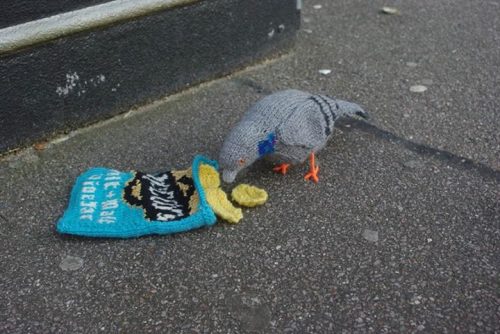
I thought that only the bag of chips was knitted so I was like lmaoo fucking idiot bird got owned then I saw that the bird was knitted as well then I realized I was the fucking idiot bird getting owned
A defining feature of this Ebola epidemic has been the significant resistance of some of the affected communities to treatment and prevention measures by foreign aid workers and their own governments. Many local people, suspicious and fearful, have refused to go to treatment centers or turn over bodies for safe burial, and whole communities have prohibited the entry of doctors and health teams.
As the months have gone by that resistance has been less reported upon, and there are signs t
“Will you deny that your jails are filled with the children of the poor, not the children of the rich? Will you deny that men steal because their bellies are empty? Will you dare to state that any of those lost sisters you speak of enjoy going to bed with ten and twenty miserable men in one night and having their insides burn like they were branded?
I will not rise to your reform bait. This is your society judge Atgeld; you helped to create it, and it is this society that makes the criminal… And if the workers unite to fight for food, you jail them too… No, so long as you preserve this system and its ethics, your jails will be full of men and women who choose life to death, and who take life as you force them to take it, through crime.”
-
Lucy Parsons
She shouted this at the Governer of Illinois, John Altgeld, at a forum, while the upper class attendees booed and hissed at her. This was sometime during the 1890’s.
New submitter stephenpeters writes The AdNauseam browser extension claims to click on each ad you have blocked with AdBlock in an attempt to obfuscate your browsing data. Officially launched mid November at the Digital Labour conference in New York, the authors hope this extension will register with advertisers as a protest against their pervasive monitoring of users online activities. It will be interesting to see how automated ad click browser extensions will affect the online ad arms race. Especially as French publishers are currently planning to sue Eyeo GmbH, the publishers of Adblock. This might obfuscate the meaning of the clicks, but what if it just encourages the ad sellers to claim even higher click-through rates as a selling point?
There are people who seem to believe that releasing this information somehow endangers Americans here and abroad. Since this report details things that actually happened, I would say that the actual program of torture run by an agency of the United States government is what was actually harmful. Much of the information had already been reported in news publications; this report is just filing in the blanks. For that matter, this is just what was unclassified after certain details had been scrubbed, leaving the possibility that there are things yet worse that we don’t know—but what is here is pretty starkly disgusting.
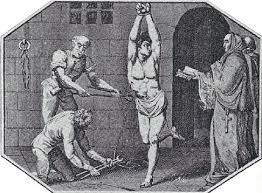
It has never escaped my notice that the use of torture is not reliable and has the potential for severe blowback—this was authorized by people who should have known those things. The program was devised by people who should have known better (and got paid some $81 million to not know better). If torture was used by the Inquisition to get people to confess to cavorting with demons, or by the Reds to get false confessions out of captured soldiers, why would it somehow become a force for getting truthful confessions from detainees in the GWOT? It simply makes no sense that battered and broken people who are dissociated by their treatment are now going to impart reliable intelligence. Because why? Because we’re so nice? No! They’ll lie their asses off to save what remains of their hides! And as far back as the Revolutionary War, George Washington had stern things to say about torture—he believed it brought disgrace on the nation. And so it does.
The fear of discussing this doesn’t seem to be about repercussions from terror groups like ISIL, who don’t love us to start with, and are a nice little pack of torturers, beheaders, slavers and rapists anyway, and so have no huffy high ground to claim. It’s rather about confronting the evil that was carried out in our name for no good reason, which lowered us to the level of the things we hate, and put into question our very idea of American Exceptionalism.
I’ve said before, if American Exceptionalism is to mean anything, it can not mean something like “Wars of choice, indefinite detentions without charges, and torture are criminal…except when we do them”. To be a great example among nations, it’s no good to simply have great values. We have to also stand up for those values, or the result is sheer hypocrisy—an insult to our national reputation on top of the injury to our national conscience. Siding with the program, after it has been revealed to be disgusting, haphazard, ineffective, and full of lies, is nothing more than tending to a wounded amour-propre having found one’s idols were made of molded chicken shit.
Speaking of poultry-manure-based golems, former Vice-President Cheney has dismissed the report as “hooey”. His gripe is that the CIA was not rogue, but that the entire operation was “authorized”. So much for any attempt to play at being “out of the loop”. Cheney himself does seem to have been well in the loop on this. Which, as he’s been one of the torture program’s biggest cheerleaders, surprises me very little. Since the program itself is hair-raisingly illegal, I have to feel a certain frisson of deja vu in a sort of Nixonian “when the President does it, it isn’t illegal” kind of way about his phrasing. But to return to my libretto—torture gets false information, as it did when Ibn al-Shaykh al-Libi made a connection between al-Qaeda and Saddam Hussein under torture. Which became the basis of a war that was at the very least, lucrative to his former (?) company. (Although ever so much more could be said about that.)
If the principals involved in making the decision to permit these actions truly believed that they had been doing the good and right things in this country’s interests, they wouldn’t want to hide their light under a bushel. But these things were not done for wholesome and noble reasons of “keeping us safe”, so they prefer those deeds stay in the dark. And anyhow, however were those tactics ever thought to get good results? Was becoming more grotesque than “the enemy” supposed to somehow make us “more right”? Since anyone knowing well enough how to do proper interrogation would have disdained these very tactics for the quackery they were, who championed them? How was it supposed to work, really, to keep us safe? To get good humint seems besides the point. To exploit the flesh at hand per discouragez les autres? As some great prophylactic fetish charged with human misery? Can someone tell me how “forced rectal feeding” was supposed to “keep us safe”?
To be exceptional, I think, is to make no exception in the law for elites who practice this kind of bullshit and to this day, defend it in the teeth of evidence it was of no practical value, and even a source of (expensive and long-lasting) harm.
99.8% of the $735 million paid out by in 9,225 large-city police misconduct settlements came from tax revenues; 0.2% was paid by the officers who committed the infractions. In more than 80 small/mid-sized cities studied, police officers contributed nothing to settlements for their misconduct.
Read the rest
How much is your student debt really worth? Probably less than you think. Most people are not aware that creditors sell off defaulted debt for pennies on the dollar to a shadowy market of debt buyers and collectors who then try to collect the full amount from the debtor. A New York–based activist collective, Strike Debt, created the Rolling Jubilee fund to buy debt on this secondary market just as debt collectors do. Only instead of collecting on that debt, Strike Debt erases it. Rolling Jubilee has now forgiven almost $4 million in student loans for the bargain price of a little more than $100,000.
Since 2012, Strike Debt has bought up almost $15 million in medical debt — obligations that people incur when they are sick or have an accident but can’t pay their medical bills. This is an admittedly minuscule amount in a multibillion dollar market, but the point of the Rolling Jubilee is to illustrate that debts are written off all the time, just not typically in favor of the debtor. Further proof of the power of creditors is that the government guarantees profits on most kinds of student loans, so they are not for sale on the secondary market. However, we found that some forms of private tuition debt are available for purchase.
Once people realize how little student loans are really worth to the creditors who sell them for pennies on the dollar, they might ask why they should pay the full amount.
Our most recent purchase was a portfolio of private student loan debt held by 2,761 people who attended Everest College, a division of the Corinthian Colleges (CCI) for-profit network. There are over 100 Everest campuses and online degree programs in two dozen states. Since the 1990s, Corinthian has enrolled hundreds of thousands of people in pricey vocational programs, encouraged them to take out student loans and then used those dollars to enrich officials and shareholders — a business model that is little more than legalized theft that funnels money from public to private hands. During its heyday, Corinthian received more than $500 million annually from the federal Pell Grant program, more than the entire University of California system.
Earlier this summer, Corinthian was finally pushed off a financial cliff when the Department of Education (DOE), along with more than a dozen other federal and state agencies, launched an investigation into the company’s deceptive tactics, including lying about graduation rates and employment options for degree holders. An official in the California attorney general’s office testified that the company engaged in the “most persistent, egregious and widespread” abuse of students she had ever seen. And when the DOE temporarily cut off Corinthian’s access to federal funds, the college announced that bankruptcy was imminent.
By abolishing the private debt of Everest College students, we hope to illustrate how the federal government, through its support of market-based reforms in higher education, is more interested in protecting for-profit schools than students.
When CCI announced its bankruptcy, rather than rushing to the aid of students, the DOE stepped in to save Corinthian from collapse, appointing a monitor to help the company negotiate the sale of most of its 107 campuses to an unnamed buyer.
The sale is part of the federal government’s ongoing effort to bring market-based reforms to higher education at all levels. The DOE says it is protecting taxpayers from having to reimburse students who would be eligible for a debt discharge if their campus shut down. But why should students have to pay while the company that defrauded them gets a helping hand?
Instead of answering that question, the DOE has been focused on requiring colleges to ensure their value to consumers. Colleges whose graduates don’t find jobs and repay their student loans in a timely fashion would be ineligible for federal funds. The proposed college rating system would treat education as a commercial product and students as customers who simply need better information to choose a college — the way they choose a brand of cereal.
The thinking behind President Barack Obama’s higher education policy is also behind the DOE’s effort to save Corinthian. If Corinthian is just a bad brand in an otherwise healthy education market, then assuring the sale of the campuses is in the best interest of students. Yet according to federal rules, students whose campuses are sold will be rendered ineligible for a discharge of their loans. Those with the most to lose have had no voice in the debate about what happens to Corinthian. Defrauded students are at the mercy of the DOE as it pursues a strategy of weeding out bad brands instead of defending their interests.
The federal government’s response to the Corinthian debacle should push us to ask deeper questions about the role of college in helping people achieve economic security.
In addition to being buried by debt, many people find themselves under- or unemployed even after earning a college degree. The widening gap between the rich and poor is a bigger problem than the gap between those who attended college and those who didn’t. As the Economic Policy Institute recently reported, “Education is not the cure for high unemployment or for income inequality.” Tressie McMillan Cottom has further explained that “for those of us looking for economic security who are not fortunate or able enough to be fast-tracked into the good jobs, there isn’t much college can do.”
Policies that encourage broad access to quality higher education are worth fighting for, but they shouldn’t blind us to the reality that a diploma produces an economic benefit only when access to the resources one needs to thrive, including a fair income, are available.
If one takes a step back and looks at the economy as a whole, it’s clear that Corinthian is not just a bad operator in an education marketplace that provides struggling students and families with a path to dignity and security.
Instead, CCI’s alleged crimes provide a startlingly clear example of a crisis of inequality that can’t be solved by ensuring that colleges operate according to market-based logic. Nor can it be solved by protecting Corinthian from the outcome of its actions, at the expense of students who deserve to have their debts discharged.
People with private loans from for-profit colleges are not the only ones who ought to have their debts canceled. In fact, all students should have the right to learn and prepare for careers without the burden of a lifetime of debt. To offer this kind of real value, public higher education should be free. Current debtors should have the opportunity to negotiate a write off of their debts, just as creditors do. Strike Debt bought student loans for pennies on the dollar. The question student debtors around the country should start asking is, “Why should we pay more?”
Does America need a Left? Yes, very much. We need a Left that rejects a vision of politics based on the expansion of an unjust economic system, which is to say that we need a Left that rejects James Livingston’s advice that we “compromise with the world as it actually exists.” This is not a call to reject pragmatism, but rather to acknowledge that the “world as it actually exists” has for too long been defined through reactionary terms. We argue instead for an activist, avowedly anti-capitalist Left, one that seeks to tear away the constraints that have impeded necessary, fundamental change.
The Left, which for too long has capitulated to rules of engagement established by conservatives, needs to work to find alternatives to our present debt-financed society.
Unfortunately, this Left, though it exists in fragments, is overshadowed in the United States. Those who would claim the mantle of the Left have tried for too long to advance their goals by appeasing the Right, hoping, misguidedly, to find common cause and to compromise their way into a better world. The progressive movement—the institutions, think tanks, pundits, and politicians that currently stand in as the serious spokespeople of the Left—speaks of “good jobs,” “economic growth,” and “regulated markets,” appealing to a mythical middle ground that has never and cannot exist. By capitulating the very terms of engagement to conservatives, progressives have distorted their message and acted against the interests they purport to serve.
America needs a Left that does not, as Michael Lerner noted, approach the question of social change in an “economistic” fashion. The progressives that dominate political discussion and action share in common a vision of change as emerging via market mechanisms. This mainstream Left is beyond rehabilitation. We believe, like Eli Zaretsky, that “progress is blocked by the same internal capitalist dynamic that created progress in the first place.” We must counter capitalism not by appealing to it, but by opening space for people to no longer be dominated by its logics. The demand for such a Left is undeniable. What’s missing is only the political will to see it through.
Read the rest of this article (co-authored with Henry Ostrom) in Tikkun.
My name is Petunia Winegum and I’ve never had a debt in my life. One of those statements is true, and as this essay is not about nom-de-plumes, I take it you can guess which one. I’m actually the only person I know who never has had a debt in their life. Firstly, I didn’t engage in any further education and therefore never had to cope with loans or tuition fees; secondly, I’ve never owned my own home, so have never had to struggle with a mortgage; and thirdly, I’ve never had a credit card. Ah, yes – your flexible friend.
In the 1970s and for most of the 80s, the credit card was a coveted luxury of the wealthy; I certainly don’t recall any TV ads for credit cards showing a harassed housewife doing her weekly shop at Spar; these passports to the jet-set were always employed as payment in a casino or five-star hotel, promoted by gentlemen whose cigarettes were kept in a silver case and ladies whose virtue was kept in an eighteen-hour girdle. This was a time when the cheque book retained an air of elitism about it, after all, and there were few hints then that the credit card would descend the social ladder and threaten the stranglehold notes and coins still had on the average shopper. Although the genesis of the credit card can be traced back as far as 1920s America, it wasn’t until as late as 1966, with the launch of Barclaycard, that credit cards began to become tools of exchange in Britain. The American Express charge card had been introduced in the UK three years previously, limited to 3,000 British outlets, but Barclaycard was the first recognisably modern all-purpose credit card to be issued in Britain. This revolutionary format had appeared in 1958 with the Bank of America’s pioneering BankAmericard, an advancement on the range of different charge cards that were, in most cases, restricted to a handful of specific businesses at a time.
It’s interesting to note, however, that the problems this system would eventually lead to in the UK had already occurred in the States. Almost immediately after it was launched, the BankAmericard was mailed out to customers viewed as low credit risks, a move which resulted in the racking up of astronomical debts when the card inevitably fell into the hands of those who imagined they had been delivered a winning lottery ticket. This unsolicited scheme was outlawed in 1970, by which time over 100 million Americans had received a BankAmericard through the post.
British distribution of the credit card at least learnt from this disaster, and Barclaycard was introduced cautiously, its initial beneficiaries being men of business and the generally affluent. Even in the US, the spread of credit cards as a legitimate, universal method of acquiring goods was restricted by legislation that prevented banks from operating in more than one State; Bank of America was licensed in California, but found a way around federal laws by licensing the BankAmericard to banks based outside California. When Bank of America expanded its operations on an international scale in the late 60s, the BankAmericard was licensed to foreign banks, with the sole issuer in Britain being Barclaycard. Indeed, due to the minority use of credit cards in the UK at the time, Barclaycard held a monopoly on the market until the Access Card was introduced in 1972.
Within twenty-five years of the arrival of the Access Card, Britain underwent a monetary revolution, with ‘invisible money’ becoming the prime source of purchasing across the board, regardless of social standing. The increased availability of the credit card by the time of New Labour’s ‘Boom without Bust’ boast meant it had by now ceased to be the golden ticket of the wealthy and enabled even the poorest households to acquire the chattels that had been marketed as life-saving necessities in the eternal struggle of keeping up with the Jones’s. Students were also now a favoured target for banks and building societies; faced with outrageous tuition fees for an education that their parents had received free of charge, students were sold the credit card as a means of easing their passage through university, and with more young people than ever before entering Academia – courtesy of Tony Blair’s zealous drive to democratise higher education – there was a huge untapped audience available to be fleeced by unscrupulous banks and credit card companies. Debts incurred from a credit card would combine in an unholy alliance with debts incurred from tuition fees to render an entire generation in hoc for the majority of their adult lives. Any rules and regulations that had previously existed to prevent the exploitation of the penniless and financially vulnerable were swept aside as the public were told it was their duty to spend.
High street spending was integral to the economic stability Blair and Brown presided over, prompting the Iron Chancellor to make his famous proclamation that Labour had ended the cycle of boom & bust that had tarnished the economic reputations of their predecessors. Low interest rates and low inflation contributed to this climate, and as housing prices soared, householders were saving less and spending more; in order to spend as much as was required of them, borrowing increased and the credit card was the essential tool in purchasing goods without the ready cash for them being available. Oddly enough, nobody during this era of hedonistic acquisitiveness seemed capable of seeing any further than the next item on their shopping list, although hindsight shows this was a situation that was simply unsustainable. The country was living on borrowed time, just as its citizens were living on borrowed money.
When the whole country had been surviving on credit, residing in homes they’d been led to believe they owned and surrounded by goods they’d purchased without paying for them, the extravagance of bankers didn’t seem out-of-step; the generating of wealth and the alleged democracy of it was crucial to the boom era, and as long as everybody benefitted from it, why should conspicuous consumption and the flaunting of affluence be seen as remotely vulgar or overtly ostentatious? Thatcher’s boom had largely been limited to a small section of society, whereas Blair’s boom had been more widespread and the gap between the haves and the have-nots – however superficial – appeared to be narrowing. Indeed, why should someone engaged in menial work on the minimum wage have been offended by the sight of a City boy quaffing champagne when he or she could nip into their local supermarket and purchase the same brand of bubbly on their credit card and effectively replicate the pose?
However, when the credit crunch began to bite, when businesses began to go bust, when workers began to be laid off, when interest rates began to rise, when homes began to be repossessed and when the kind of lifestyle Joe Public had become accustomed to had to be reluctantly relinquished, it was the bankers and Gordon Brown who were seen as the men who had got their sums wrong. But then, so had everybody else.
Four years on from the mother of all busts, I approached my bank with the intention of opening an account that would enable me to buy goods online, for which I needed a card. At first, my application was rejected due to the fact that a credit check revealed I had no debts hanging round my neck. One would imagine that would have worked in my favour, but apparently not. It was almost as though I was viewed as suspect for not having any debts; what the hell was wrong with me? The problem was eventually sorted, but this initial obstacle said more to me about the state of financial affairs in this country than any exhaustive examination on ‘Panorama’. Maybe it’s my age, but I still feel debt has shame attached to it; most younger than me don’t appear to. They have accepted it as part of life. But by making a soft target such as bankers the cartoon villains on whom to pin the blame for Britain’s economic ills, the public are effectively absolved of their part in what has happened since 2008. If debtor’s gaols were still with us, however, the allure of your flexible friend may have been less irresistible.



 facebook
 reddit

 8
8
 0
0 

















![KGrHqViMF3Z-kKBQZvMGro60_35[1]](http://annaraccoon.com/wp-content/uploads/2014/12/KGrHqViMF3Z-kKBQZvMGro60_351.jpg) My name is Petunia Winegum and I’ve never had a debt in my life. One of those statements is true, and as this essay is not about nom-de-plumes, I take it you can guess which one. I’m actually the only person I know who never has had a debt in their life. Firstly, I didn’t engage in any further education and therefore never had to cope with loans or tuition fees; secondly, I’ve never owned my own home, so have never had to struggle with a mortgage; and thirdly, I’ve never had a credit card. Ah, yes – your flexible friend.
My name is Petunia Winegum and I’ve never had a debt in my life. One of those statements is true, and as this essay is not about nom-de-plumes, I take it you can guess which one. I’m actually the only person I know who never has had a debt in their life. Firstly, I didn’t engage in any further education and therefore never had to cope with loans or tuition fees; secondly, I’ve never owned my own home, so have never had to struggle with a mortgage; and thirdly, I’ve never had a credit card. Ah, yes – your flexible friend.