credit: amanda

Handy aperture, shutter speed and ISO graphic.
Neat little info graphic to teach beginners how aperture, shutter speed and ISO affect a photo.

Hovertext: Tell me I'm not a remarkably predictable unit in an economic system beyond my control!
SEK wanders out of THE BAR after saying many fond farewells one of his oldest friends only to find THE COP hunched over the side of his car in what appears to be a puking position.
SEK: Are you all right?
THE COP: Fine, fine — just had a bad Sprite.
SEK: I don’t think that’s a thing.
THE COP: Must have been bad.
SEK: Are you sure you’re alright?
THE COP: (grabbing his side) Yeah sure — you can just — I can —
SEK: Bad Sprite’s not a thing. When my wife grabbed her side like that she had to have her appendix re —
THE COP: I’ll be — I’m — just you —
SEK: I’m calling 911. (calls 911) I’m with a police officer and he’s in a lot of pain —
911 DISPATCHER: Where are you located?
SEK: I’m at [location]
THE COP’S CAR: Officer [In Extremis] are you OK?
THE COP: (moans)
911 DISPATCHER: Is the officer OK?
SEK: He doesn’t seem to be. Should I tell the person in the car that?
THE COP: I’M OK!
SEK: He’s not. Don’t listen to him.
911 DISPATCHER: Keep him still — help is coming.
SEK looks at THE COP, who is now moaning on the ground in pain not borne of bad Sprite.
SEK: I’m — on it?
911 DISPATCHER: This is on you now. Keep him talking.
SEK: So tell me more about this bad Sprite…
Sophianotloren<3 <3 <3 Kelly Sue.
Absolutely NC.

Kelly Sue DeConnick, ‘Bitch Planet #1’ (all images courtesy the artist)
A comic book industry veteran for the last decade, Kelly Sue DeConnick first earned her chops adapting manga to English, and graduated to co-authoring scripts with Marvel comics powerhouse Brian Michael Bendis. But DeConnick has created a powerful universe in her own right, launched on the strength of her 2012 Captain Marvel series, which saw Carol Danvers, the original Ms. Marvel, take up the mantle of Captain Marvel, a glass-ceiling-shattering move that found support in an ever-growing army of Danvers cosplayers and superfans, nicknamed the Carol Corps. DeConnick followed this with a pair of creator-owned books for Image Comics. Since 2013, she’s authored Pretty Deadly, a mythic Western in which Death walks the plains, and in December of last year, debuted Bitch Planet, a wildly popular, sci-fi, prison-set femmesploitation series that, while only on the brink of its fourth issue, already has DeConnick’s fans doubling down on her message of female defiance. We sat down for a talk about the current wave of Bitch Planet enthusiasm and the wellspring of rage bubbling beneath the surface.
* * *
Sarah Rose Sharp: I was looking at exploitation as a genre, and it’s based the idea that you’re using a low-budget mechanism that relies on exploitation of a particular cultural milieu. So, how would you characterize what exactly you’re exploiting with Bitch Planet?
Kelly Sue DeConnick: Rage-sploitation? Is that a thing? Maybe a thing.
SRS: Yes!
KSD: Righteous indignation. Indignitsploitation? It doesn’t roll off the tongue. Yeah, I’m trying to use the established tropes from the -sploitation genres, but subvert them and use them to instead underscore how these things are damaging, and some of the more subtle ways that this dehumanization of women — particularly women of color, but also women of size — marginalizes, criminalizes these women for just being who they are. Trying to use those tropes to put a spotlight on how that hurts us all.
SRS: So sort of exploitation-exploitation?
KSD: Yeah, really. That’s like a Christopher Nolan piece.

Kelly Sue DeConnick
SRS: And do you think putting it in the context of a prison is hyperbolic, or is it actually pretty reflective — because there’s also been a wave of focus on prisoner rights and women’s prisons …
KSD: Well, we just sent a woman to prison for miscarrying and not being appropriately upset about it, or not handling it in the way we wanted her to, in Indiana.
SRS: So maybe it’s not hyperbolic?
KSD: I mean, I think — and I realize to some people this will make me sound like I’m wearing a tinfoil hat — but I think the most disturbing thing about Bitch Planet is how it’s meant to be a ludicrous satire, but it’s really not all that far-fetched.
I mean, the space travel part — we’re really not ready for that. But the classic sci-fi elements aside, it ain’t that far off.
SRS: Well, and that’s sort of what sci-fi is good for, right? We can offer social critique while saying, ‘No, it’s the future.’
KSD: Right. You know, I think the most effective sci-fi for my taste is the stuff that you recognize and you see your world in it. And that is actually — I have to give Val [Valentine De Landro, Bitch Planet artist] more credit for that than me, because I had really intended for the book to look more crazy futuristic, you know, like distant future, and then when the art started coming in, it was like, men wearing suits that look just like men wear now, you know? And Val’s thing was that if you look back, men’s fashion hasn’t really evolved all that much — basically that sort of uniform sticks. I came around because I think recognizing the world helps you see that this is really only 10 minutes down the road.
SRS: I thought what was interesting, too, is who the story is about. The first character whose backstory you really get into is this big woman, and that is a constantly marginalized figure — basically, the fat chick.
KSD: Yeah, I read an interesting comment online from a woman who said that, as a fat woman, she wished that Penny’s size acceptance hadn’t been her origin story. And I think I understand that, but at the same time, this is a book about engaging with the ways that women are shamed and marginalized and depowered, and to not deal with her size would be incredibly false. And it’s not that Penny’s mind gets changed — Penny doesn’t, like, come to love herself. Penny always loved herself; she always knew there was nothing wrong with her. And I think that’s the point of Penny, this idea that, ‘nope, this is just who I am.’

An infographic from ‘Bitch Planet #4,’ which explains the rules of the game Megaton
SRS: And that’s super disruptive in and of itself, because I think for women it’s just standard that there’s something you want to change about yourself. Everyone is unhappy on some level or another.
KSD: I realize that men have body issues as well, and so on and so forth, but I don’t think it’s a fair comparison. I think there is a much broader range of types that are acceptable as men, and men are not put under the brutal cultural judgment and dismissal that women are. And you are entitled to your opinion if you disagree, but I don’t think it’s close.
The sad part of that is the reduction, how women disappear from popular culture in their 40s — they’re just gone. And it’s gotten worse. I had my assistant pull the film stats for 2014, and she pulled one that I hadn’t been aware of before, which was the number of women aged 40 to 60 [appearing in movies]. Whereas the percentage of female characters declined dramatically from their 30s to their 40s (30% to 17%), the percentage of male characters increased slightly, from 27% in their 30s to 28% in their 40s. And then you get into how you’re just as likely to see a woman from another planet as you are to see a Latina or Asian woman. We’re 50.8% of the population in the United States, but 12% of the protagonists in last year’s films, which is down 3% from the year before, which was down 1% from ten years before. We’re holding constant at 30% of speaking roles, though, so woo-hoo! And those are statistics that can’t really be argued with, but what gets argued is, well, why does that matter? Women can cross-identify. But the thing is that if you show women that they are supporting characters in everyone else’s stories, they start to see themselves that way; you limit their contributions, and then you hold us back culturally. Like, as an organism, human beings, if we are not all able to contribute to the height of our gifts, we are held back. I think it makes us ill.
Heidi MacDonald from The Beat did an analysis, and the page count that was given to women cartoonists in The Comics Journal was laughably low. And the response was, ‘Oh, we don’t look at gender.’ Like, you do. You really, really do, and you have a bias.
I have to do a talk at 99U, and I’m trying to figure out what I want to talk about, and their way of differentiating themselves is, ‘We’re not about inspiring, we’re about practical steps, you know?’ And so the thing that was suggested to me was how to make art that promotes social change, and that felt really presumptuous to me — I don’t know if I’m promoting social change.

Kelly Sue DeConnick, ‘Bitch Planet #4’ (click to enlarge)
SRS: It’s a lot to carry.
KSD: But I think what I want to talk about is how to make people uncomfortable. Or how to be uncomfortable.
SRS: How to accept that it’s OK to make people uncomfortable. I was talking to a friend who works in a corporate environment where she’s very successful, and she was talking about how she organized the women at her office to do what’s called the “alley-oop,” which is when in a meeting a women says something, it’s ignored, and then a man says the same thing and receives credit for the idea — that there’s an agreement with the women in her office that a different woman will be like, ‘Didn’t Erica just say that?’
KSD: Oh, good.
SRS: Because you, as a woman, can’t of course be like, ‘Yeah, I just said that.’
KSD: Well, you can.
SRS: But that’s the thing, right? We’re so trained to not rock the boat —
KSD: Because then you’ll get called a bitch, and now you’re a bitch, and now you can’t be worked with, and now you’re against the team.
SRS: And they’ve developed this technique that works around that, but that was exactly my point — to just say it outright would be really uncomfortable.
KSD: Yeah, that is a smart technique, but the piss and vinegar in me is like, ‘yeah, fuck that.’ You know, it’s like that whole thing, ‘I’m sick of talking about sexism.’ You know, I’m fucking sick of talking about it, too.
SRS: Exhausting, right?
KSD: You know what I don’t enjoy? This. But if we don’t talk about it, it doesn’t get any better, sorry.
SRS: So I was thinking about — in the first issue of Bitch Planet, I really fell for the bait-and-switch, in terms of the identity of the central character. If you started from a character basis for this story, which character did you start from?
KSD: Kam has always been the lead in my head, but in Pretty Deadly, even though Ginny has always been the lead in my head, I can’t stop myself from telling everyone else’s story too. I have trouble with the classic protagonist model, and so Kam is the leader for the long game, but there are other very important characters whose stories we’re going to spend time on. We’re committed to 30 issues, and we could go long if it’s going well, and I really want to just be able to take my time and look at all of them. I’m letting out in dribs and drabs how we got here — what happened politically to get us to this point.

Meet Kamau Kogo. Don’t piss her off. From Kelly Sue DeConnick’s ‘Bitch Planet #1′
SRS: Do you think that ensemble storytelling is more of an inherently female approach?
KSD: I don’t know — I would say not, because the person I think of with this in film most frequently is actually Tarantino. You know, nobody’s just a waiter in a Tarantino film. Everybody has a story.
SRS: Another creator who leverages genre appropriation.
KSD: Yeah, and I think of it as novel style. I think it’s a very novelistic kind of storytelling, and it requires some breathing room, to have some space, which is why, that he’s able to do that in the relatively small amount of space that is a feature film is pretty amazing.
SRS: So, what can we expect upcoming?
KSD: We had a lot of problems with issue #4, because there’s two sex scenes, and trying to do an exploitation sex scene that is — you know, at the end of #3, we’re like, “Next Issue: Lesbian Shower Scene!” And I wanted to live up to that, but at the same time to construct that scene so it wasn’t for the male gaze, you know?
SRS: Right. ‘What is that? Body wash?’
KSD: Yeah. So, it’s harder than you think. And Val was busting his ass and turning in really beautiful pages, but it was like, dude, it’s too porny, you know? It was hard to figure out, how do we de-porn this and still have it be what it’s supposed to be? And then there’s another sex scene at the end, but that one is a seduction, that one is false, so it’s done very conventionally. Anyway, it was a hard issue.
SRS: Now, I heard a rumor that you’ve recently gone Hollywood.
KSD: Yes, yes.
SRS: And I wonder if you’re thinking about moving into a screen medium, TV or movie?
KSD: I write for the team. I write Pretty Deadly for Emma [Emma Ríos, Pretty Deadly artist], and I write Bitch Planet for Val, and it’s about — Pretty Deadly is about trying to figure out how we use myth to help us deal with these painful realities in life, and Bitch Planet is about my rage.
You know, but Pretty Deadly changed tremendously in the making, and I expect Bitch Planet is going to change somewhat. The endgame, I will tell you, all of my collaborators are not on board for. I’m getting this kind of, ‘All right, we’re trusting you, but … ’
SRS: She settles down with a nice man and gets married?
KSD: [laughs] Yes!
SRS: Just the complete antithesis of what your book is about.
KSD: She has the “N” taken off the “NC.” [All the prisoners are branded with “Non-Compliant” tattoos.] Yeah, no, not that. All these fans with [matching] tattoos just read this part and are like, ‘Auuugh.’ Oh, that has been fascinating.

Fans with ‘Bitch Planet’ “non-compliant” tattoos
SRS: The tattoos! I was going to ask about this.
KSD: The tattoos have been fascinating, and what has also been fascinating is how angry people get about the tattoos, particularly dudes.
SRS: Really?
I know, go figure. But there are a couple of dudes on Twitter, and they claim to be supportive of the book, but they are indignant and upset about people getting these tattoos when “that book is only three issues out, and you don’t know what’s going to happen.” And what’s really fascinating to me about it is, first of all, how patronizing it is. This assumption that the people who have made this choice are somehow not aware that there are only three issues out, or that tattoos are permanent — and that this decision has clearly been made from a place of ignorance. But what’s also interesting to me is, as readers and supporters of a book that makes a point of how you should not police women’s bodies, you are policing women’s bodies and making judgments that they cannot make choices for themselves, and are entirely missing it. You don’t see that you’re doing it at all.
And the thing is, the people who get the tattoos, I don’t think it’s about the book at all. If we stopped at three issues, that tattoo would still mean the same thing to them. I think a large part of the fervent love of this is about giving them a community to be angry with. And it isn’t about me, it isn’t about our story, it isn’t about Val, it’s just about giving them a place to be angry and say, ‘I am not broken. I am not criminal for my skin color or my size or the fact that I don’t want to fucking smile at you.’ And to hear you’re not crazy. A whole lot of us are super pissed off.
Bitch Planet #4 will be released by Image Comics on April 29.

Oh Walmart. You are so evil.
Wal-Mart suddenly closed five stores in four states on Monday for alleged plumbing problems.
The closures could last up to six months and affect roughly 2,200 workers in Texas, California, Oklahoma, and Florida, CNN Money reports.
Wal-Mart employees say they were completely blindsided by the news, having been notified only a couple hours before the stores closed at 7 p.m. Monday.
“Everybody just panicked and started crying,” Venanzi Luna, a manager at a store in Pico Rivera, California, told CNN Money.
All workers will receive paid leave for two months. After that, full-time workers could become eligible for severance, according to CNN Money. But part-time workers will be on their own.
Local officials and employees have questioned Wal-Mart’s reasoning for the closures.
Why were these stores closed? Because they had activist employees.
The United Food and Commercial Workers International Union (UFCW) said it planned to seek an injunction from the National Labor Relations Board on Monday compelling retailer Wal-Mart to rehire 2,200 employees at five recently closed stores.
The UFCW claims that Wal-Mart Stores closed its Pico Rivera location — one of the five stores — in the Los Angeles area in retaliation for protests by workers there in recent years seeking higher pay and benefits.
The voice of a worker at the Pico Rivera store:
“This is a new low, even for Walmart,” said Venanzi Luna, an eight-year Walmart worker and long-time OUR Walmart member. “It’s just so heartless to put thousands of your employees out of a job with no clear explanation on just a few hours’ notice. We know that Walmart is scared of all we have accomplished as members of OUR Walmart so they’re targeting us. Through OUR Walmart, we’re going to keep fighting back until the company gives us our jobs back. It’s unfortunate that Walmart has chosen to hurt the lives of so many people, just to try to conceal their real motives of silencing workers just like they’ve always done.”
I suspect there will be more details about these Walmart closings coming out in subsequent days.


Originally posted 2015-04-22 09:17:30. Republished by Blog Post Promoter
throated adriana chechik source: droolingfemme.

Much like the parochial vocabulary it strives to catalogue, the Dictionary of American Regional English is in danger of extinction. A stopgap crowdfunding campaign is currently open to support the project in the short term, but the long-term forecast for the entity protecting such gems as “flumadiddle” (nonsense), “slippery jims” (pickles), and “rantum scooting” (going out with no definite destination) is grim. The Guardian has more on Dare’s various research projects, and their hopes for expansion into the digital realm.

Should people in History Ph.D. programs stop taking students because of the job crisis? American Historical Association president Vicki Ruiz is making that decision:
I remain hopeful that our efforts will widen opportunities for current Ph.D.’s. However, this optimism is tempered when I reflect on the job prospects for my recent doctoral graduates. Out of four accomplished junior historians (with seven prestigious research prizes and fellowships among them), only one has secured that elusive tenure-track position. Of the others, one has retreated from view, while the rest remain freeway flyers and/or part-time administrators. Trite as it may sound, it breaks my heart to watch them struggle.
With an additional four mentees in the pipeline, I have placed a personal moratorium on Ph.D. recruitment. I respect and support colleagues who desire to guide a new generation, but my priority remains on the career paths — inside and outside the academy — of people with whom I have a longstanding mentoring relationship. My personal moratorium embodies my hope that the association’s Career Diversity project will stimulate the retooling of graduate programs to prepare our students for wider opportunities. That will take time. In the interim, some of us are likely to slow the pump of history Ph.D.’s into the overflowing adjunct pool.
I have complex feelings about this. A couple of notes. First, I am somewhat associated with the American Historical Association pilot project Ruiz mentions to get programs to rethink graduate training because I am an alum of the University of New Mexico, one of the included schools because it punches way over its weight when it comes to placing PhDs in both academic and nonacademic positions. In February, I went back to UNM to talk about some of the things I do, joining a group of fellow alumni and a few others discussing their experiences. I really don’t know if it was helpful for current Ph.D. students there, but I hope it was. I do have to say that I took verbal exception to what AHA head Jim Grossman had to say and didn’t say at this event, which was basically to a) ignore the fundamental reasons why there are no jobs (the disappearance of history lines and adjunctification) and b) to tell every history PhD to basically be a business major and learn how to read a spreadsheet and learn to budget (a worthy enough skill, but no answer to the problem). On the other hand, it is absolutely vital that we assume that PhD students will not get an academic job, whether at Harvard, New Mexico, or South Carolina. This should be the assumption of every PhD advisor and every PhD student. Sometimes the student will strike it rich and win the lottery from any of these schools! I did and I know some people from all these schools who have in recent years. But usually they won’t. To me, that’s the first step advisors must take. What are students being trained for? Can advisors or other mentors offer skills that will get students actual jobs?
But even outside of that, I think the assumption that we shouldn’t take PhD students is a bit more problematic. Not that I disagree with Ruiz per se, as she takes an obviously defensible position. But the reality is that there aren’t good jobs anywhere in this economy outside of select fields. And some of us–myself included–are very smart in some ways, but not in the ways that this capitalist economy values. So the moral question around accepting PhD students I think revolves around whether they are funded or not. I would not be comfortable accepting students that are not funded. But if they are funded, at least they aren’t going into debt, or much anyway. To me, this is the fundamental difference between the PhD and law school. If the student is just delaying their income earning potential, such as it is in this stage of American capitalism, then that’s one decision and a potentially defensible one. If they are going into debt for that PhD, that’s a horrible idea. I find that a compelling dividing line.
But then I don’t know. There aren’t good answers. And the balance between giving students the opportunity to pursue their intellectual dreams and career goals versus placing them at a disadvantage in their lives going forward is not an easy one to maintain. I figure many of you will have thoughts on this.
 Dark matter (maybe) ruins everything.
Here are those 1920s Soviet Constructivist movie posters you asked for.
Perhaps you have wondered: sup with clouds?
Perhaps you have wondered: sup with human body hair?
Very fast Japanese trains (like, so fast).

In a nation that places many injustices and indignities on the poor, it’s good to see at least one of those be alleviated in one place:
But the city where first impressions count for everything is about to make the job market a little less judgmental. New York’s City Council just voted overwhelmingly to outlaw the common practice of letting employers prejudge people based on their credit history—passing an unprecedented ban against employers use of workers’ credit background data.
The legislation, which passed last Thursday following an extensive grassroots campaign by local and national labor and community groups, restricts a boss, prospective employer or agency from “us[ing] an individual’s consumer credit history in making employment decisions.”
The final version incorporates some compromises pushed by the business lobby, such as carve-outs for positions that could involve handling “financial agreements valued at $10,000 or more,” police and national-security related jobs, or workers with access to “trade secrets.” While business groups cited these provisions as wins in a bill they otherwise chafed at, economic justice advocates have nonetheless hailed the law as a promising boost for an emerging nationwide movement.
Sarah Ludwig of the New Economy Project says, “It’s a strong law…and it’s going to cover most New Yorkers [and] most jobs by far and away. It’s a real civil rights victory.”
Enforcement of the law will be driven by a complaint process, which makes it a tricky game for the city authorities relying on workers to come forward. But Ludwig adds, advocates hope the system provides a platform for the city’s Human Rights Commission to gain new prominence under the de Blasio administration’s leadership, since the city has “this unbelievably strong human rights law” on paper but not necessarily in practice.
Not perfect, but a significant improvement. Of course, this should be a nationwide law, for what possible valid reason is there to allow employers to access job applicants’ credit histories, unless the goal is to create a permanent underclass.
SophianotlorenLooks pretty fun -- sadly it's only available for Apple. :( I might try it otherwise.

Scene from playing ‘FLOMM! THE BATTLE For MODeRN 1923′ (all screenshots by the author for Hyperallergic)
What would a video game developed in 1923 by a bunch of angry modern artists look like? That’s the alternate future hypothetical Steve Mehallo sought to answer when creating FLOMM! THE BATTLE For MODeRN 1923, an iOS game released in February for iPhone and iPad in which you battle through the resistance of tradition as a warrior for the avant-garde.

Scene from ‘FLOMM!’ (GIF by the author for Hyperallergic via Vimeo)
The game’s touch controls are pretty simple, and allow you to guide your modernist spirit symbol of choice — whether it be the red Bruno Munari-esque “positavo” or yellow “ByBy” plane — and shoot whatever blocks your way. Opponents on the battlefield include classical columns — the “shadows of antiquity” — rococo blobs of “rotting extravagance,” and expired parking meters that serve as “enforcers of time and place.”
Mehallo told Jess Joho at Kill Screen that the game was inspired by his arcade experiences in the 1980s and teaching design history in California colleges. The depth and variety of the graphics in the game make it continuously visually compelling, whether you’re soaring over heavy Bauhaus sans-serif block letters or collages of imagery that seems inspired by Kurt Schwitters’s newspaper clipping assemblages. I found the gameplay initially frustrating, as just the slightest touch against an impeding objects makes your avatar explode into a colorful cloud and the shooting didn’t always seem to work. However, as the game’s manifesto reads (and how many video games have a manifesto?): “If it’s not working, start over. If that doesn’t work, start over again. Repeat.”
Turning the tension between new and traditional art into an actual conflict is a fun idea for a game, and the final screen seen by losing players — “Tradition Wins!” — encourages you to keep fighting. Although you aren’t going to learn much about art history just plowing through the enemies, FLOMM! includes a thorough online component where you can explore the influences behind it.

Game Over in ‘FLOMM! THE BATTLE For MODeRN 1923′

Playing ‘FLOMM! THE BATTLE For MODeRN 1923′

Playing ‘FLOMM! THE BATTLE For MODeRN 1923′

Enemies in ‘FLOMM! THE BATTLE For MODeRN 1923′

In-game manifesto from ‘FLOMM! THE BATTLE For MODeRN 1923′

‘FLOMM! THE BATTLE For MODeRN 1923′
FLOMM! THE BATTLE For MODeRN 1923 is available for iPhone and iPad.
[On second thought, this was not well-argued and I’m withdrawing it until I can more fairly and accurately make the point I want to make. Will update when I do. In the meantime, note to self: Don’t write screeds when operating under lack of sleep — JS]



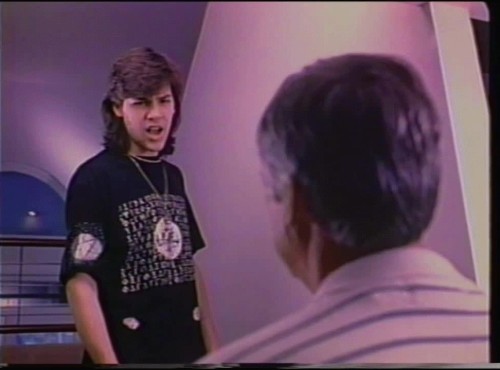
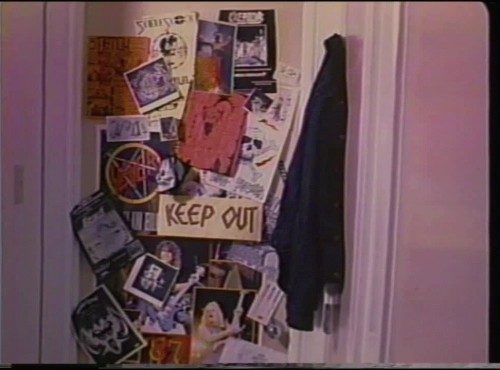
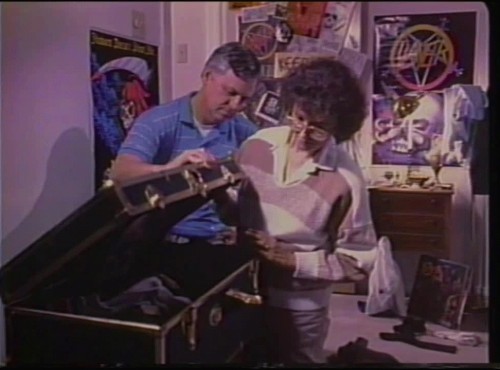
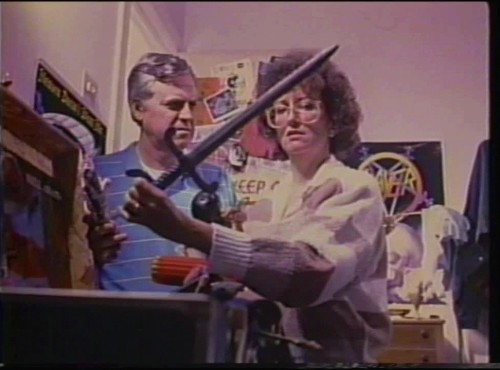
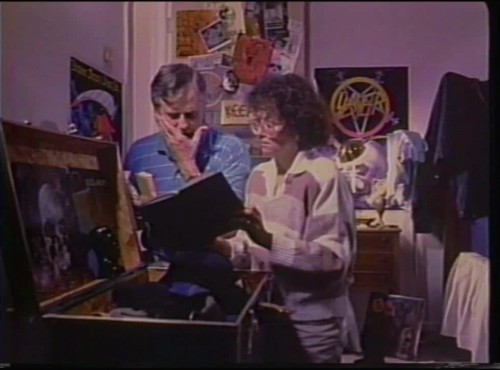
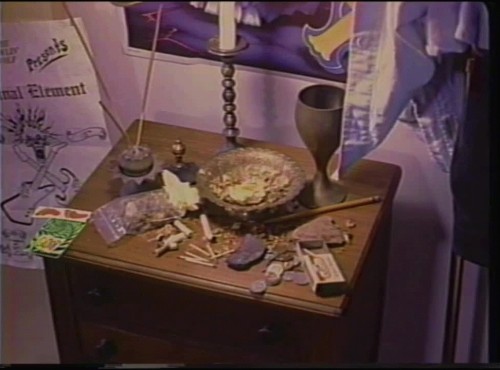
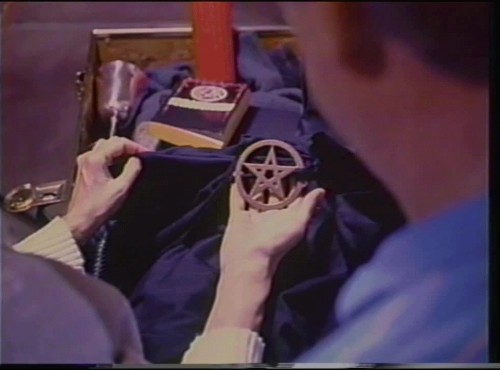
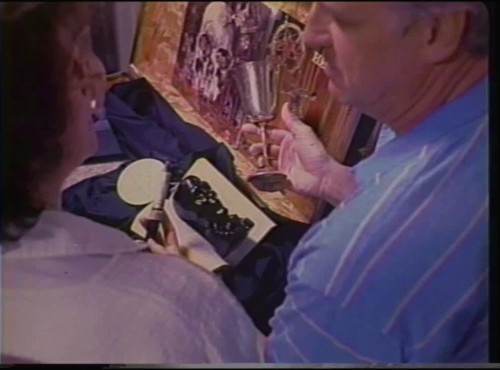
Warning Signs of Satanic Behavior. Training video for police, 1990
the perfect photoset


Read more of this story at Slashdot.


The awkward moment when you make a bullshit sexist meme about “fake geek girls”, but aren’t quite geek enough yourself to know that Spock did hold the rank of Captain from Star Trek II to VI, making the “fake geek girl” in this scenario 8,000 per cent more legit geek than you.
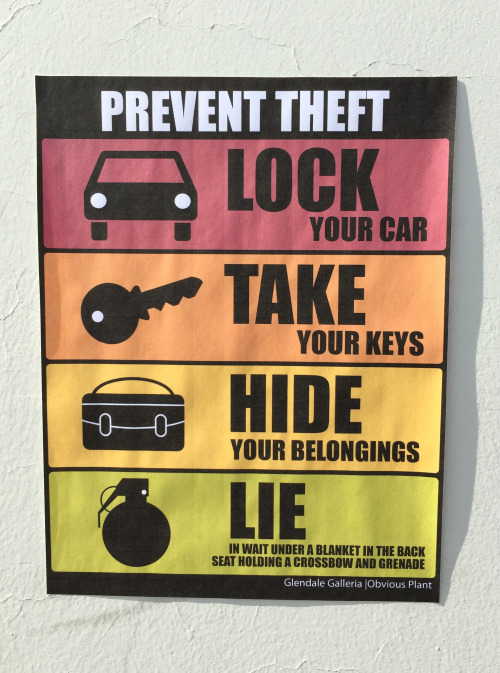
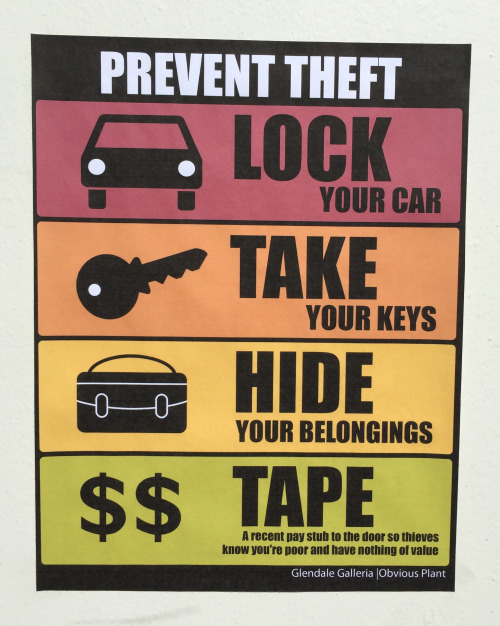
Last week, New York Times columnist Nick Bilton took to Twitter to let the world know that two kids broke into his car before his very eyes. What made the break-in a little more remarkable was the fact that, according to Bilton, the perps used an electronic device to simply unlock his Toyota Prius, rather than doing things the old-fashioned way with a slim jim, coat hanger, or brick.
Bilton has elaborated on the event in his column, where he postulates that the young miscreants gained entry to his car (and those of several of his neighbors) by amplifying the signal between his keyless entry fob and car. Keyless entry systems typically only communicate with their remote fobs over the distance of a few feet, but he thinks that the gadget is capable of extending this range, fooling the car into thinking that the remote is within range even though it was actually in Bilton's House, about 50 feet away. He arrived at this theory after he consulted with Boris Danev, a Swiss-based security expert:
"It's a bit like a loudspeaker, so when you say hello over it, people who are 100 meters away can hear the word, 'hello,'" Mr. Danev said. "You can buy these devices anywhere for under $100." He said some of the lower-range devices cost as little as $17 and can be bought online on sites like eBay, Amazon and Craigslist.
This isn't the first time that signal repeaters have been linked to car burglaries in California. In 2013, we reported on a similar spate of thefts in Long Beach, California, that left local police 'stumped.' And it’s not the only way of gaining entry to a supposedly secure car; The Register has previously covered devices that can eavesdrop on the signal between a BMW and its remote, allowing miscreants to program a blank remote for later use.
Read 1 remaining paragraphs | Comments

Jennifer Victor has a very useful addition to the debate. Since people are oddly defensive about the idea that gerrymandering is responsible for polarization, let’s start here:
Gerrymandering does not cause political polarization. The U.S. Senate is the best example here: there is no gerrymandering in the Senate because state lines are not often redrawn, yet the Senate has become increasingly polarized in recent years, just like the house. The causes of political polarization are complex and interactive; redrawing districts may play some role but it is not the boogeyman of politics that it is often made out to be.
That’s pretty much checkmate. Also note that even to the very modest extent to which the House is more polarized than the Senate, most of that is about redistricting, not gerrymandering. Even if districts were drawn in an entirely nonpartisan manner, legislators representing local constituencies would be expected to be more polarized than those represented statewide constituencies.
Gerrymandering is potentially relevant to American politics because it distorts electoral outcomes. It’s not relevant because of “polarization.”
I also wanted to repeat something I said in comments about this:
There will never be a viable third party in the U.S. The number of parties in any democracy is determined by its electoral rules. The U.S. has one representative for each congressional district (rather than many) and the candidate who earns the most votes wins. This combination of rules nearly always produces a system with two parties. Third party movements in the U.S. have a tendency to get absorbed by existing strong parties. Political scientists refer to this as Duverger’s Law.
In addition, even if it were possible to have a multiparty system in Congress — and I don’t think it is given the separation of the executive and legislative branches and the electoral college — it’s never really clear what problems third parties are supposed to solve. From the left, calls for third parties are fundamentally a means ignoring the fact that votes (particularly as distorted by the Senate’s malapportionment, single-member house districts, and the electoral college) just aren’t there. Putting the leftmost members of Congress into a new Magic Pony Party Just For You, The Valued Customer party doesn’t make the median vote in the Senate any more liberal. There’s no problem worth solving that dividing the Democratic coalition into multiple parties would actually solve. Indeed, I think it would probably act as an additional veto point that would make things worse — if you thought that the Democratic Congresses under Carter were too productive, you’d love a Congress controlled by an ad hoc multi-party coalition that had to assemble a coalition for every issue without a strong party apparatus.
We cannot be reminded too much that conflict is what politics is about:
Electing the right person to a position of power in Washington will not “fix” politics. While our politics has never been more divided, the divisions are natural and perhaps “true” representations of differing ideologies, beliefs, and preferences. Our government is designed, in some ways, to foster division and (dis)agreement, and to encourage slow, incremental, and glacial progress. The alternative would leave us all dizzy with constant change and lurching policies. The Messiah being elected president would not change this. Disagreement is a natural by-product of democracy, so we should learn to value it more.
Just so. And, finally, it’s always important to be reminded that “mandate” is a Latin word meaning “bullshit.”
There is no such thing as a political mandate–I don’t care how much you won your election by. This is true for more than one reason, but mostly it’s true because people elect candidates not platforms. Also, Condorcet and Arrow tell us that even when a majority has chosen something, it doesn’t mean that thing is the “will” of the group. This is because a different majority could have chosen a different, just as legitimate, option.
I remember having more than one earnest conversation in 2000 with people who assured me that it wouldn’t matter if Bush won because he wouldn’t really have a “mandate” to do anything. One thing Bush did understand is that it’s pretty much all nonsense.
Few details are available regarding this incident, but then how many do you need?
Last week in Tulsa, a woman noticed a man "covered in blood" stumbling around the parking lot of an apartment complex at about 1 a.m. When police arrived, the man told them that he and his roommate had been fighting, and police found that both men had cuts all over their bodies. The fight had begun, they said, because they had been "arguing over their mobile phones."
Most reports of this incident describe it as an argument about whether "iPhone or Android" is better, but that isn't strictly true, at least according to the KTUL TV report (link above). In the clip, the reporter says that Man #1 told police that "he and his roommate got into a heated debate over whether the iPhone or the new Samsung smartphone is better." Emphasis added. "Android," of course, is an operating system, not a phone, although the term is often used as shorthand for any device that runs that system. But the reporter's more specific statement suggests that the debate was about the merits of the iPhone 6 versus the Samsung Galaxy S6 in particular, not an argument over their respective operating systems.
Which of course would have been equally stupid.
According to the report, "Officials say the roommates' argument escalated, and they ended up stabbing each other with broken beer bottles." One had also smashed a beer bottle over the other's head, presumably before the broken-bottle stabbings proper got underway. The reporter added, unnecessarily, "Police believe alcohol played a big role in that fight."
Both knuckleheads are expected to make full recoveries.
KTUL ended its article by stating, "Police did not respond when our photographer asked which phone is better." That's funny, but given how some cops feel about smartphones in general these days it was also brave. "You mean, which phone is better for potentially recording us beating the crap out of a photographer?" the police might have answered him, and then everyone would share a laugh. Good times.
I noticed that Apple Insider's coverage of the smartphone incident was carefully neutral on the iPhone-v-Android debate, which I found amusing but probably also wise.


Originally posted 2015-04-21 16:43:54. Republished by Blog Post Promoter
sarah vandella throated source: droolingfemme.


One day after a Michael Brown memorial tree was planted in Ferguson, Missouri, someone appears to have slashed it in half.
A memorial stone placed at the foot of the tree is also missing, according to a local news channel, which was planted by members of the Black Caucus of the American Library Association
Caucus members had planted the tree in January Wabash Memorial Park on Saturday. But just one day later, community members found it cut. Police say they have no idea who desecrated the memorial.
More about Memorial, Police, Shooting, Missouri, and Us WorldMike Brown tree dedicated yesterday, decimated today pic.twitter.com/JmyHBgtRbH
— Mo Costello (@mocostello60) April 20, 2015 Read more...