Shared posts

14 Sep 10:05

Things new submissive guys should probably know, part 2 of many

by Stabbity

In which Stabbity continues to rework advice into blog posts :) The first installment is over here if you’re interested.

Last time I talked about really common things new submissive guys worry about, this time I’d like to start with a slightly less common worry. I’m sad to say it’s unusual to see a guy worry about whether it’s topping from the bottom just to ask his partner if she’s interested in doing a particular kink with him. What I’ve usually run into is guys leading with their kinks to the point where I feel like a fetish vending machine. If you’re actually worried about whether you’re being pushy when you don’t mean to be and can conceive of the possibility that your partner isn’t interested in all the same kinks you are, then honestly you’re probably fine.

As well documented as my loathing of being treated like a life support system for a whip is, once you’re actually in a relationship with someone who you treat like a human fucking being, listening to and caring about your desires is pretty much the least you should settle for in a partner. Guys, if your dom doesn’t like you enough to even considering doing stuff you like some of the time, you’re dating the wrong woman! And women, if you don’t like your sub enough to do something that makes him happy once in a while, for fuck’s sake dump him and find someone you do like. Everyone: life is too short to date people you don’t like.

Also, I actually really like it when my play partner gives me ideas. Smart assed masochists with bad ideas are basically the most fun ever :) It’s a lot of work to come up with all the ideas all the time, and I’ve had a lot of fun trying out stuff that I wasn’t super into but wasn’t opposed to because someone I liked wanted to give it a shot. Things you didn’t think you would really like can turn out to be pretty awesome if you get a chance to try them in a low key scene where it’s cool to change your mind at any time. That low key scene where it’s cool to change your mind at any time part is really important, though. If I don’t feel like I have the opportunity to stop doing something that isn’t working for me, I’m going to default to saying no to anything I’m not already sure I like.

Really, it is good and helpful and normal to share ideas about fun things you could do with your partner. Hot roleplay scenes aside, anyone who doesn’t care what their partner wants is an asshole and you should dump them.

On a related note, it is simply not true that there are dozens or hundreds of submissive men for everyone dominant woman. I’ve yelled about that before and I’m going to keep doing it until people get the hint. Awesome submissive men are rare and precious. Your competition for the most part is the miserable douchebags who inspired the rant above about guys treating female doms like life supports system for whips. If you can treat a dominant woman like a human fucking being, spell halfway competently, and make the slightest effort to meet people online or off, you are golden. It is really, really easy to impress dominant women. Other men have already set the bar so dismally low that we’re happy if you just manage not to message us a picture of your dick that we haven’t specifically asked for.

To reiterate the advice from my last post, you are probably going to be fine.

14 Sep 10:05

Add-on promises to stabilize video from nearly any camera

by Jon Fingas
It's possible to stabilize your phone videos through Hyperlapse, and dedicated video editors can smooth out other shaky clips with enough time and effort. But what if you want a simple way to eliminate jitters no matter which camera you're using? S...
14 Sep 10:04

Sandy Clay and Gravel Residences in Australia

by Léa

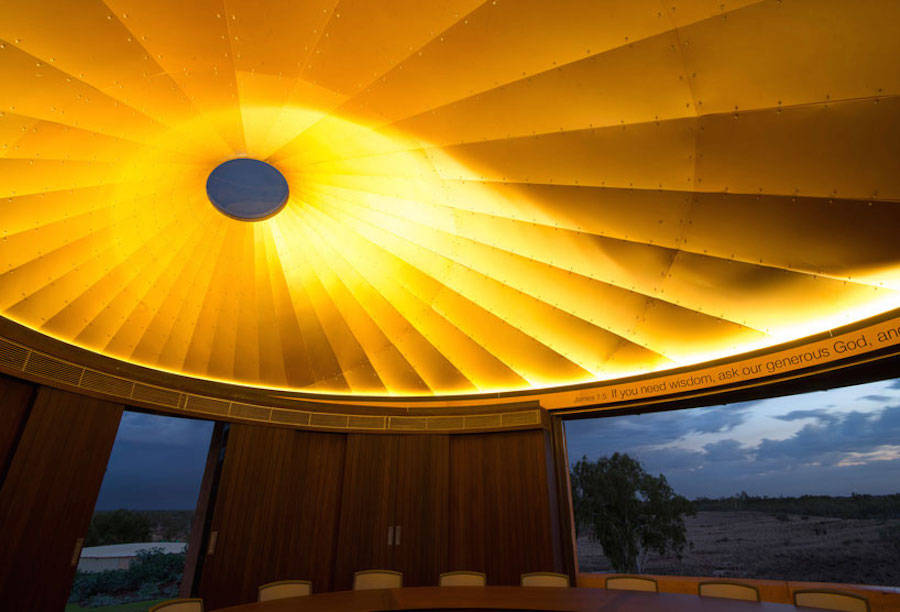
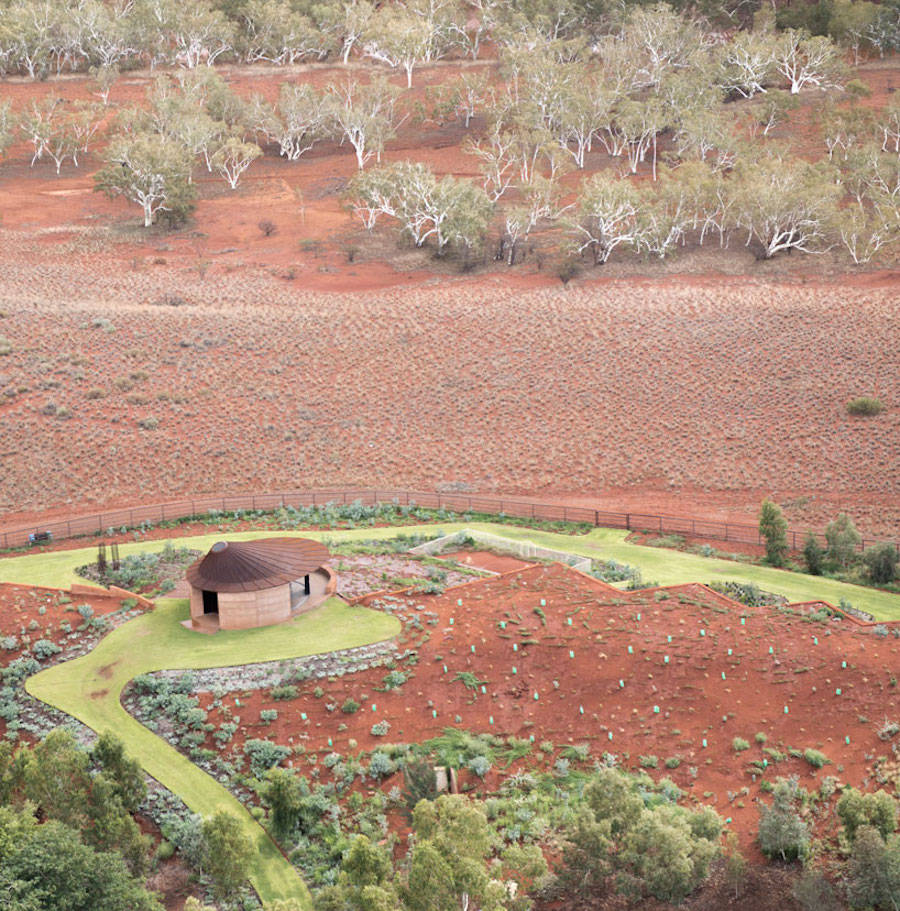
L’architecte Luigi Rosselli a construit un ensemble de douze résidences érigé à partir de terre et de sable directement extraits du terrain sur lequel se trouve la construction. Long de 230 mètres, c’est le plus grand ensemble d’habitations de ce type dans le monde. Grâce à sa composition, l’ensemble architectural est auto-suffisant au niveau thermique.

SandyClayandGravelResidencesinAustralia10 SandyClayandGravelResidencesinAustralia9 SandyClayandGravelResidencesinAustralia8 SandyClayandGravelResidencesinAustralia7 SandyClayandGravelResidencesinAustralia6 SandyClayandGravelResidencesinAustralia5 SandyClayandGravelResidencesinAustralia4 SandyClayandGravelResidencesinAustralia3 SandyClayandGravelResidencesinAustralia2 SandyClayandGravelResidencesinAustralia1
14 Sep 10:04

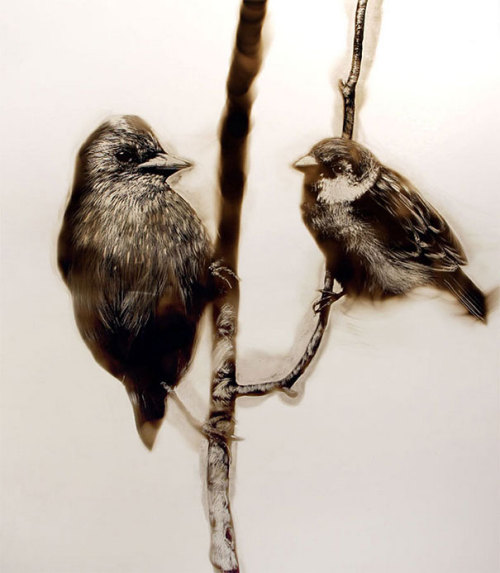
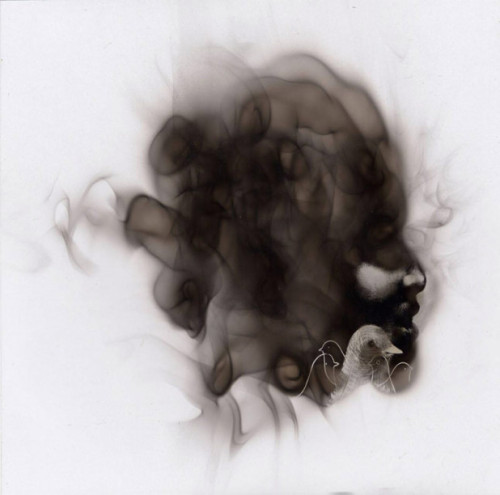
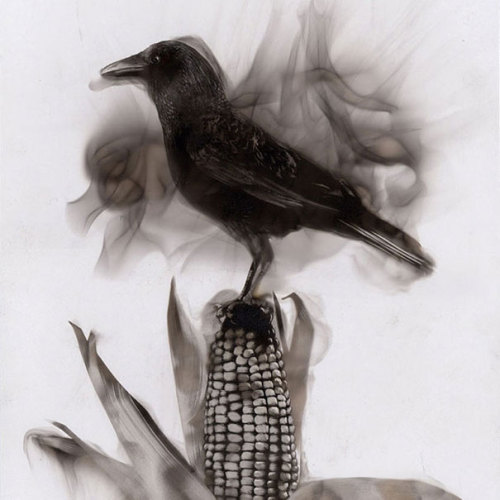
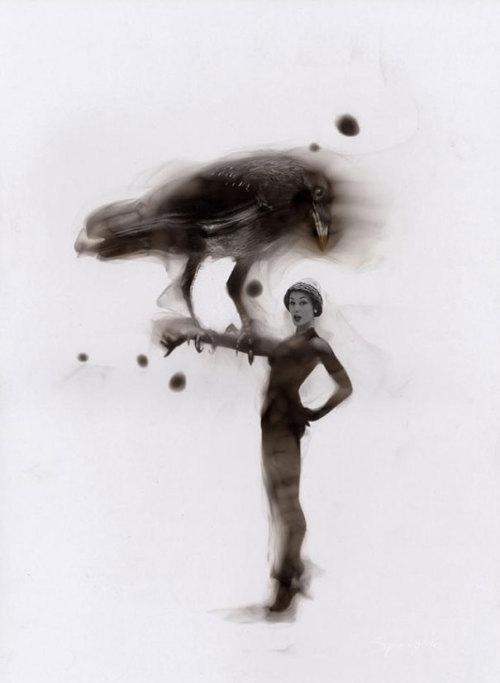
asylum-art-2: Fire Paintings Draws With Flames And Soot  by...


asylum-art-2:

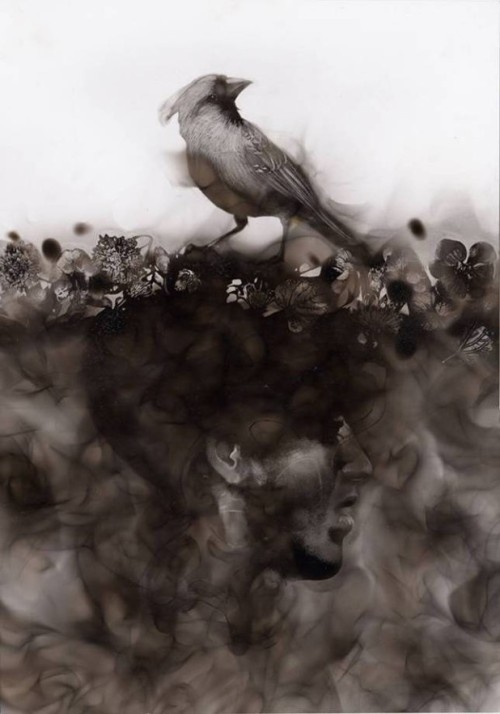
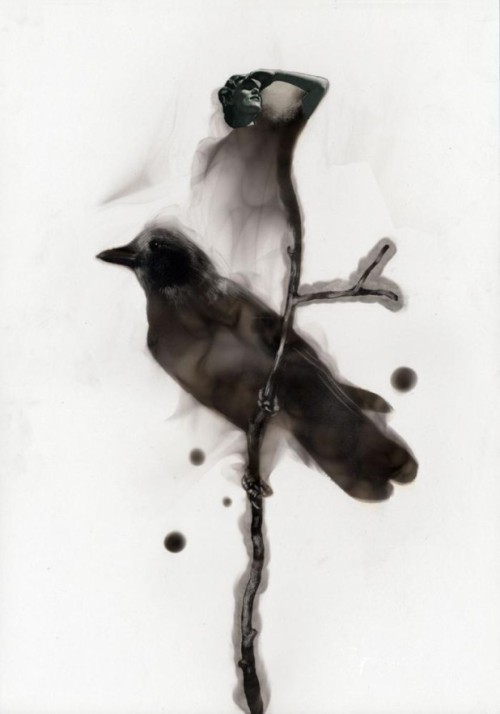
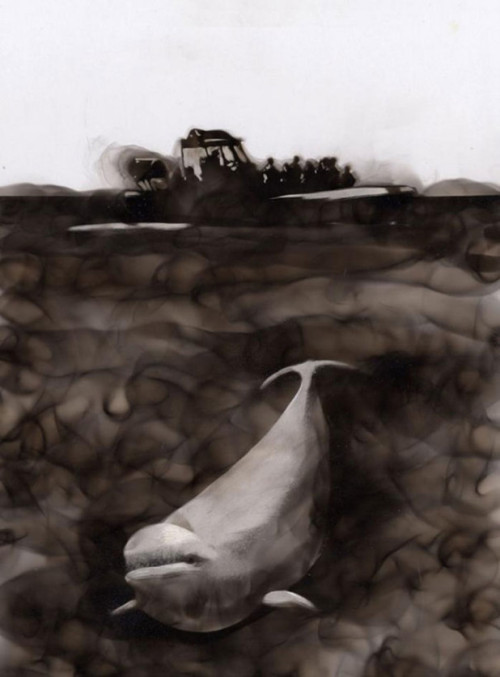
Fire Paintings Draws With Flames And Soot  by Steven Spazuk

More info: spazuk.com | Youtube | Facebook

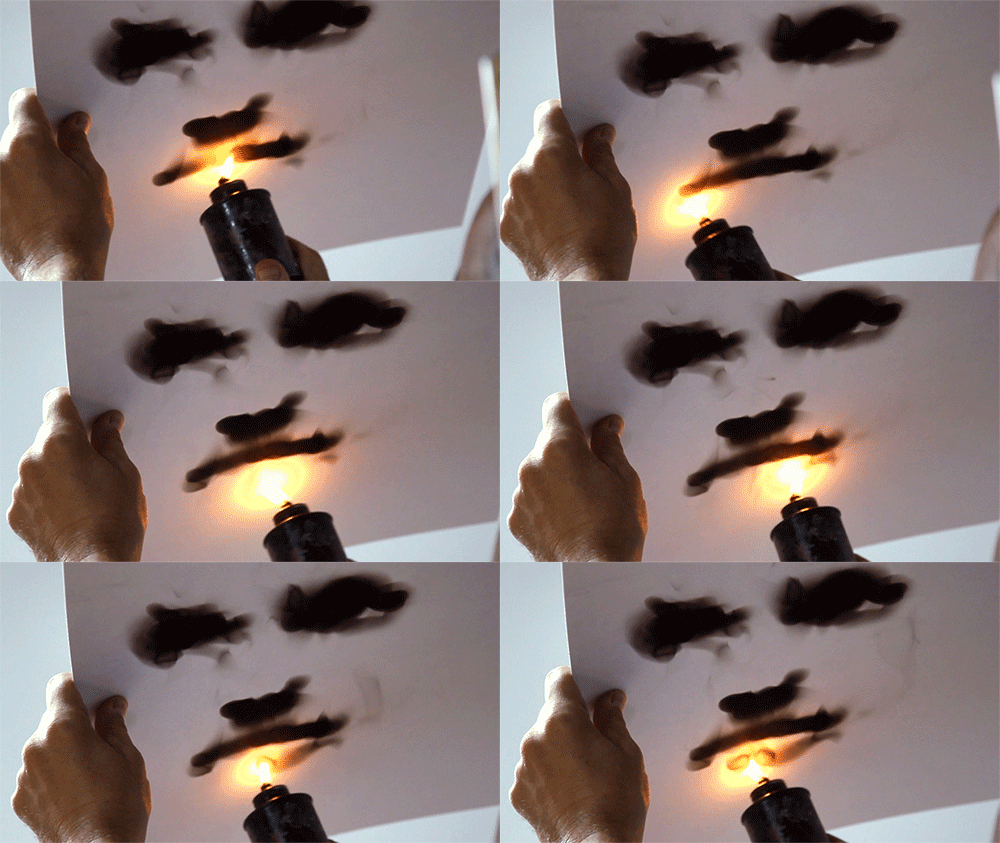
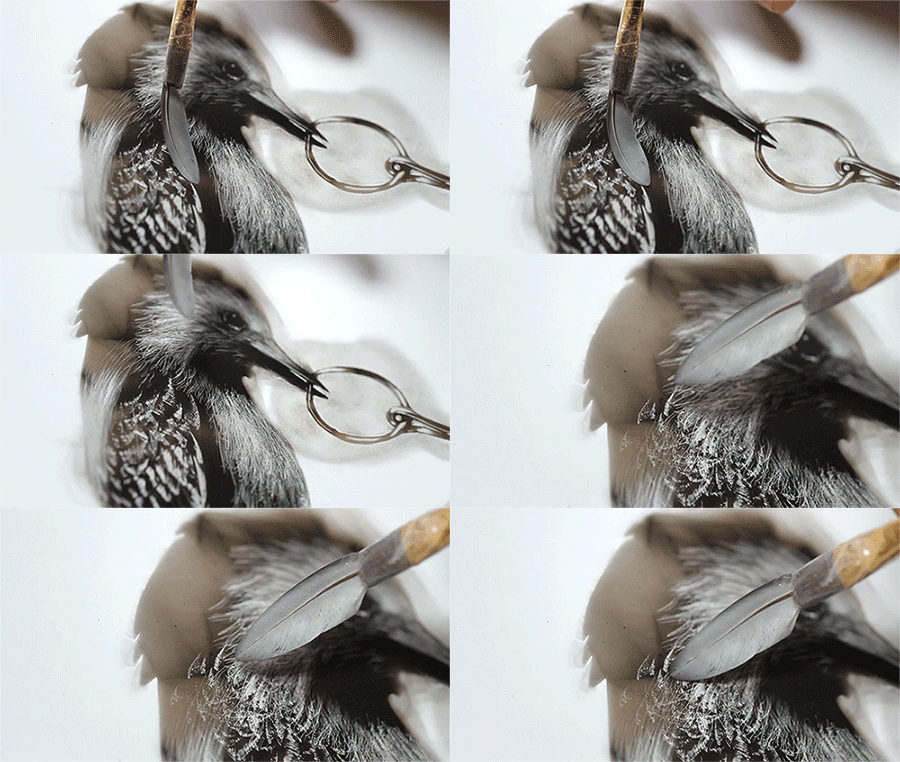
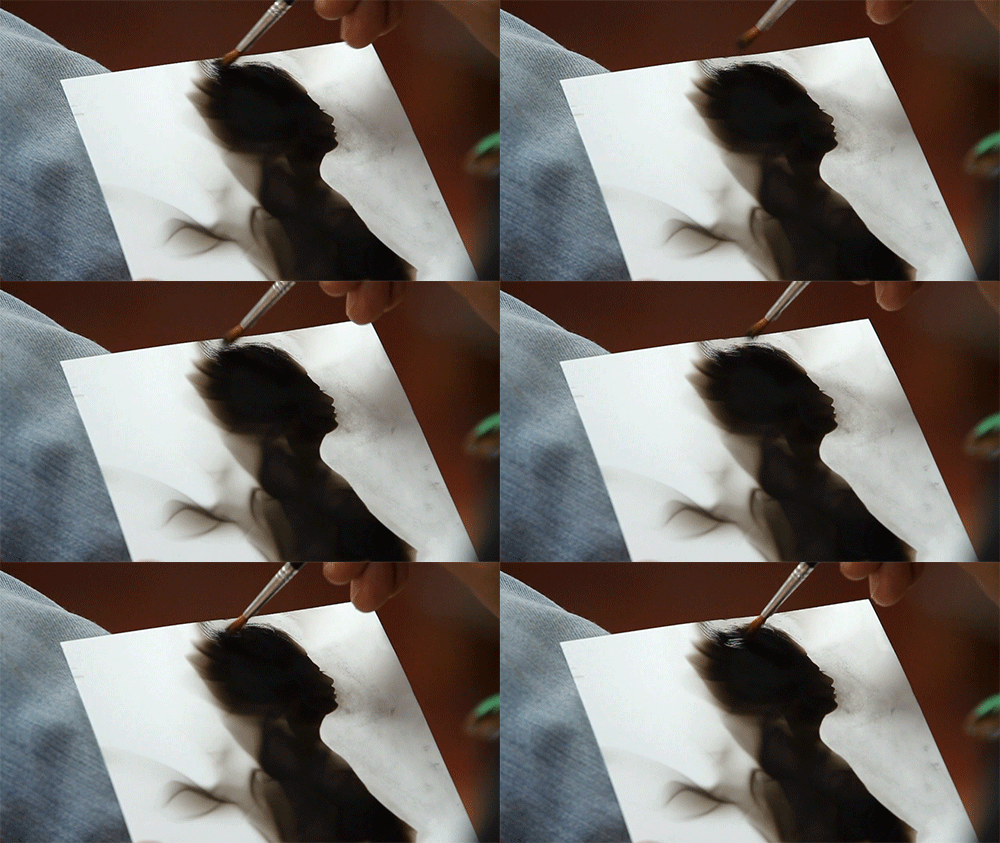
Steven Spazuk is a Canada-based artist who uses candle soot to create elegant drawings. After depositing soot on his media with a candle or torch, he etches lines and patterns in the soot with  pencils and feathers.

Though Spazuk has spent the last 14 years developing and perfecting his soot painting technique, the creation process always has an element of random spontaneity and improvisation. via: boredpanda

14 Sep 10:04

gifsboom: Burning methane trapped under the ice. [video]


gifsboom:

Burning methane trapped under the ice. [video]

14 Sep 10:03

consumed-wanderlust: This is a ‘where are you visting from?’...


consumed-wanderlust:

This is a ‘where are you visting from?’ board at a local restaurant

14 Sep 10:02

Photo


14 Sep 10:02

Ephemeral(Buy a print of this comic)

14 Sep 10:02

will5nevercome: TWIST ENDING (Buy a print of this...


will5nevercome:

TWIST ENDING

(Buy a print of this comic)

Someone on Facebook recommended reading today’s comic backwards. I have to say I agree

14 Sep 09:56

A Deeply Upsetting Personal Heat Index

by Mallory Ortberg

All heat waves are emotionally devastating as well as physically uncomfortable, especially in Northern California, where there is no central air conditioning ("No central air conditioning? Surely some public establish –" NO CENTRAL AIR CONDITIONING). I can handle the winter, or what we have in the way of it here. I can turn on the heat, or drag my cat onto my lap, or double up on socks. But a heat wave! Friends and lovers, heat waves are spiritually ruinous. There is nothing more debilitating to my sense of personal consistency than discovering it only takes a few days in a row over 95° for me to experience a complete and total loss of ego integrity.

"How hot is it, Mallory?"

Read more A Deeply Upsetting Personal Heat Index at The Toast.

14 Sep 09:55

laughingbear: It’s finally here!! Animal Crackers, our little...


laughingbear:

It’s finally here!! Animal Crackers, our little game, is released!

Play it here: http://3hg.itch.io/animal-crackers

Today’s the President’s birthday! As one of the only Independent members of the Animal Congress, it is up to you, an adorable tie-wearing mouse, to break the gridlock and ensure the President has the greatest party ever!

You can find much of the music on Louie’s bandcamp, so please support his work and art! 3 Halves Games will also have more cool stuff to come, so stay tuned with that as well! It’s exciting to finally complete this project of ours, especially in the past few days, so we hope you enjoy it!

i pretty much never reblog stuff, but here’s a great lil game some talented folks made that has some of my music in it! i also wrote a title theme specifically for it. check it out!

14 Sep 09:53

Burning Man's public Fleshlight

by Cory Doctorow


Some funny stuff from this year's burn.

If that's too risque for you, how about a community tongue-scraper?

Here's the rest of my Burning Man 2015 pix, including the gorgeous security cameras of the trash-fence.

13 Sep 23:10

(ง︡’-‘︠)ง

13 Sep 23:10

Why is a Raven Like a Writing Desk?Animation experiment from...


Why is a Raven Like a Writing Desk?

Animation experiment from Gene Kogan applies the neural net Stylenet technique to a scene from Disney’s ‘Alice In Wonderland’ using 17 Fine Art examples:

A reanimation of the tea party & riddle scene from Alice in Wonderland (1951), restyled by 17 paintings.

Created with code by Justin Johnson, based on the paper on style transfer from Gatys, Ecker, and Bethge at the University of Tübingen in Sep 2015.

Paintings by: Pablo Picasso, Georgia O'Keeffe, S.H. Raza, Hokusai, Frida Kahlo, Vincent van Gogh, Tarsila, Saloua Raouda Choucair, Lee Krasner, Sol Lewitt, Wu Guanzhong, Elaine de Kooning, Ibrahim el-Salahi, Minnie Pwerle, Jean-Michel Basquiat, Edvard Munch, and Natalia Goncharova.

More Here

13 Sep 23:10

Photo


13 Sep 22:43

Paradise Regained, If Only for the Night

by John Yau

Kyle Staver, “Waterfall and Rex” (2014), oil on canvas, 68 x 58 inches (all images courtesy Steven Harvey Fine Art Projects)

I had not seen Kyle Staver’s frieze-like clay sculptures before encountering two of them in Kyle Staver: Tall Tales, her current show at both Lower East Side spaces of Steven Harvey Fine Art Projects (September 9 – October 11, 2015). One clay was titled “Study for Icarus” (2015), which suggests that the artist’s painting, “Icarus” (2015), was based on the small, bas-relief sculpture mounted within a box-like frame. However, with another pair of works, according to their dates, “Study for Red Fox” (2015) was completed after the painting to which it bears a striking resemblance, “ Waterfall and Red Fox” (2014). In either case, the marriage of flat shapes and deep space in the paintings feels in keeping with the frieze-like sculptures. As for their subject matter, which is often derived from Greek myths, Staver shares something with Charles Garabedian: both believe in the beneficial power of the imagination. More importantly, both are adept at including the odd but touching detail, which adds a lively twist to their staged pictorial dramas.

Kyle Staver, “Unicorn and Shooting Star” (2015), oil on canvas, 42 x 36 inches (click to enlarge)

In “Unicorn and Shooting Star (2015), a lambent blue unicorn is barely contained by the painting’s edges. A garlanded, zaftig nude has draped one arm over his back, while caressing his foreleg with her other hand. She has turned to look over her shoulder at a shooting star streaking across the sky. A brighter, larger star shines just in front of her pointy nose. Meanwhile, the unicorn’s blue tail becomes a six-fingered hand caressing the woman’s butt. These two details elevate the painting out of any sweet mire of kitsch it may seem destined to land.

The distinct strings of the unicorn’s tail, in addition to the hand, can also be read as the strands of a whip. Moreover, the direction and placement of the tail and of the woman’s hand echo each other, establishing an internal visual rhyme. Staver further inflects this rhyme by mirroring the kneeling nude with one of the unicorn’s legs. In “Leda” (2015), the shape of the swan’s neck and head, bending to touch the wing’s outspread feathers – again I am reminded of a cartoony, abstract hand, this time with eight fingers – is both abstract and quirky. Draped across the swan’s back, Leda grasps one of the bird’s skinny, glowing orange legs in her sleep. The moment is intimate and comic. All the violence associated with the original myth and its subsequent retellings, including William Butler Yeat’s famous poem, “Leda and the Swan,” has been wiped away by this sweet, post-coital moment.

Kyle Staver, “Study for Red Fox” (2015), clay, 14 x 12 inches

It is in the details that Staver’s gift for re-envisioning these myths shines. Often, her creatures – which range from unicorns, fauns and birds to lampreys and dragons – are made of curving rubbery shapes that seem to be the result of the artist good-naturedly spoofing gestural painting and big, juicy, expressionist swaths. A fox shaped like a boomerang stretches across the bottom of “Waterfall and Red Fox” (2015) carrying a bloody dove in its maw. The paint handling is simultaneously incommodious and direct and, more importantly, all her own. The abstract shapes out of which she defines her creatures share something with the compositional approaches of Judith Linhares and Dana Schutz.

Kyle Staver, “St. George & the Dragon” (2012), oil on canvas, 70 x 58 inches

Staver is the master of incongruous elements: a black dog wears a red bow around its neck, while barking at Pandora, asking for attention; or St. George wears the kind of low pointy, transparent black boots that were derisively called “shit kickers” in my adolescence. Meanwhile, the dragon breathes flames on St. George’s crotch, and the damsel in distress, who is chained to a tree stump, is seemingly about to grasp his horse’s tail, as if to say that he need not try and rescue her. This could be a scene from a comic opera by Gilbert and Sullivan. Nothing adds up quite the way you might expect, but somehow it all holds together and even makes some kind of sense.

A number of paintings take place at night or in the evening. The sky is a dark or electric blue. In “Ganymede” (2015), even though it is daytime, the sky is a deep blue overlaid with glowing, puffy white clouds seemingly made from spun sugar. Ganymede is a symbol of the beautiful young man who attracts male desire, in this case Zeus, who disguised himself as an eagle so he could carry him to Olympus.

Kyle Staver, “Ganymede” (2015), oil on canvas, 68 x 58 inches

By revising a variety of well-known myths, and focusing on a moment other than the ones we are familiar with, Staver seems intent on positing a fresh angle, another possibility regarding our understanding of intimate relationships. In this regard, she is a utopian who doesn’t take herself too seriously, doesn’t devolve into the ponderous or didactic. She prefers the comic and a light touch. There is an innocence to these dramas that is Chaplinesque. Like Chaplin, she seems to be on a rescue mission fraught with perils. She wants Leda and her other creatures to escape unscathed, even as a red fox stretches across the canvas carrying a dead bird in its mouth or lampreys rise out of Pandora’s box. Beneath the humor and eccentricity that animates Staver’s work, there is a current of dignity and somberness that imbues it with a depth of feeling. It is a rare artist who can be comedic and serious at the same time, while stirring up our sympathy for her creatures’ plight. Staver belongs to that small group.

Kyle Staver: Tall Tales continues at Steven Harvey Fine Art Projects (208 Forsyth Street, Bowery, Manhattan/237 Eldridge Street, Bowery, Manhattan) through October 11.

13 Sep 22:42

Talking About Talking About “Neo-Victorians”

postcardsfromspace:

The public conversation around Sarah Chrisman fascinates me. Subtextually, it’s clustered around the line between actions and presentation and contextualization of those actions: a situation where people aren’t doing something wrong, but are describing what they’re doing in ways that are both wildly inaccurate and ethically iffy.

My take, for the curious: There’s absolutely nothing wrong with living a fetish-y anachronistic life. Get on with your weird selves! But when you choose to present that life publicly, to make it the centerpiece of your presentation as a public figure, the way you frame and discuss that life–in context of both the present you’re living in, and the half-accurate past you’re fetishizing–matters both practically and ethically. Using an icebox and kerosene lamps and wearing fancy corsetry are all fine if you have the time and resources. Presenting those choices as morally superior while ignoring context–and JFC, presenting your bent for anachronism as *analogous to gender dysphoria*, which Chrisman has done repeatedly–is not fine. And factually misrepresenting history is not so cool for reasons that overlap somewhat (but not entirely) with the above.

(And, somewhat cattily: The whole way Chrisman presents her life strikes me as an incredibly elaborate exercise in rationalization by someone who has trouble just being into what she’s into without justifying it as fundamentally morally and academically superior. It’s like the dubious-history equivalent of “They’re not COMICS. They’re GRAPHIC NOVELS,” taken to the nth degree.)

Anyway. It’s been an interesting conversation to follow.

This sums up my feelings of that article really well I think.

(Context for those that don’t know: http://www.vox.com/2015/9/9/9275611/victorian-era-life)

13 Sep 22:40

Weekend Words: Science

by Weekend Editors

Unknown cabinetmaker, Italian, “Books and scientific instruments” (c. 1476), wood intarsia. Palazzo Ducale, Urbino (Image via Web Gallery of Art)

On Wednesday, Intel announced that it was “dropping its longtime support” of the Science Talent Search, “the most prestigious science and mathematics competition for American high school students,” according to the New York Times.

The Science Talent Search was started in 1942 and “counts among its past competitors eight Nobel Prize winners, along with chief executives, university professors and award-winning scientists.”

The article goes on to state that the contest costs the company about $6 million a year, “about 0.01 percent of Intel’s $55.6 billion in revenue last year,” and describes the move as “puzzling.”

Art is science made clear.

—Jean Cocteau

To overturn orthodoxy is no easier in science than in philosophy, religion, economics, or any of the other disciplines through which we try to comprehend the world and the society in which we live.

—Ruth Hubbard

You bring me the deepest joy that can be felt by a man whose invincible belief is that Science and Peace will triumph over Ignorance and War, that nations will unite, not to destroy, but to build, and that the future will belong to those who will have done most for suffering humanity.

—Louis Pasteur

I am actually not at all a man of science, not an observer, not an experimenter, not a thinker. I am by temperament nothing but a conquistador

—Sigmund Freud, letter, The Complete Letters of Sigmund Freud to Wilhelm Fliess

After all, science is essentially international, and it is only through lack of the historical sense that national qualities have been attributed to it.

—Marie Curie

Advertising may be described as the science of arresting the human intelligence long enough to get money from it.

—Stephen Leacock

As for types like my own, obscurely motivated by the conviction that our existence was worthless if we didn’t make a turning point of it, we were assigned to the humanities, to poetry, philosophy, painting — the nursery games of humankind, which had to be left behind when the age of science began. The humanities would be called upon to choose a wallpaper for the crypt, as the end drew near.

—Saul Bellow

Science never solves a problem without creating ten more.

—George Bernard Shaw

To know the history of science is to recognize the mortality of any claim to universal truth.

—Evelyn Fox Keller, Reflections on Gender and Science

Before you leave these portals
To meet less fortunate mortals,
There’s just one final message
I would give to you.
You all have learned reliance
On the sacred teachings of science,
So I hope, through life, you never will decline
In spite of philistine
Defiance
To do what all good scientists do.

Experiment.
Make it your motto day and night.
Experiment
And it will lead you to the light.
The apple on the top of the tree
Is never too high to achieve.

—Cole Porter, “Experiment”

Science is organized knowledge. Wisdom is organized life.

—Immanuel Kant

13 Sep 22:40

17 Years

by John Scalzi

On this day seventeen years ago I sat down and wrote the first-ever blog post on Whatever (or “the Whatever”; the disposition about the indefinite article was not resolved for a number of years). I’m still doing it, on a more or less daily basis. It’s the longest amount of time that I’ve ever kept time with something, excepting my marriage, and basic functions like respiration; even my daughter is younger than this blog by about three months. I’ve said this before and it continues to be true: In many ways, this blog is my life’s work.

More accurately, it chronicles a very specific time in my life. I started the blog in 1998, after I had been laid off at America Online and I had begun freelancing, first (ironically) for AOL and then for a number of other companies, and also for various newspapers and magazines. Two years in I published my first book; four years in I posted Old Man’s War, which then got bought and was published when the blog was six and a half. Before the blog, I was employed by a company, first the McClatchy newspapers and then America Online. The blog covers what happened when I became “my own man,” entirely responsible for whether I was working or not.

Oddly, until today I never really thought about it in that way. Obviously, I was aware when I started the blog, and the context in which the blog existed. I just hadn’t tied it to being a chronicle of this particular era of my life in any explicit way. But it is, and in that light is even more interesting to me because of it.

I’m not the same person I was when I started it. I’m older, of course (by seventeen years), but my position in the world is also rather a bit different. I was struggling when I started the blog, albeit, and significantly, that struggle was more for notability than financial stability, which fortunately came early. I don’t expect I could be said to be struggling in any sense today. I wrote things then that I probably wouldn’t write now; many of the things I would say I might phrase differently. I think I’ve generally become more tolerant, although specifically there are people who I am less tolerant of, mostly people superficially like me, whose monstrous sense of entitlement I find both appalling and wearying. I’m more comfortable with the idea that my opinions are not necessarily an accurate model of How The World Really Is For Everyone. I’m definitely balder.

I feel a direct connection with the John Scalzi of seventeen years ago, who started this blog; he was me. But I am me now, and I like me today. I think he’s probably a better person in some critical ways. There’s always room for improvement, mind you. I hope in another seventeen years(!) future John Scalzi sees the same sort of forward motion.

Last year at this time, I noted that how I use Whatever was changing, in part because of other social media (notably, for me, Twitter) and in part because of the circumstances of my life changing — me getting busier, basically. This continues to be the case, and I’m also experiencing something like fatigue on a number of topics, most clearly politics. I find it difficult to write about politics these days because what I mostly feel about them is exasperation, and exasperation is kind of a Twitter thing, which is to say, nicely expressed in 140 characters, somewhat dreary after that. I do imagine I will write more about it the closer we get to the presidential election; I don’t imagine it will become less exasperating, but it might have more daily relevance for my life, and that will help, in terms of kvetching about it here.

And once again, no matter what form Whatever takes in the next year, I do intend to keep writing it. I’ve been doing this for seventeen years, after all, and for as long as I’ve been in this part of my career. It’s an integral part of my life. I can’t imagine not doing it.


13 Sep 22:39

Photo


13 Sep 22:39

smilingribs:How Calicos Give Birth. Based on a dream my...


smilingribs:

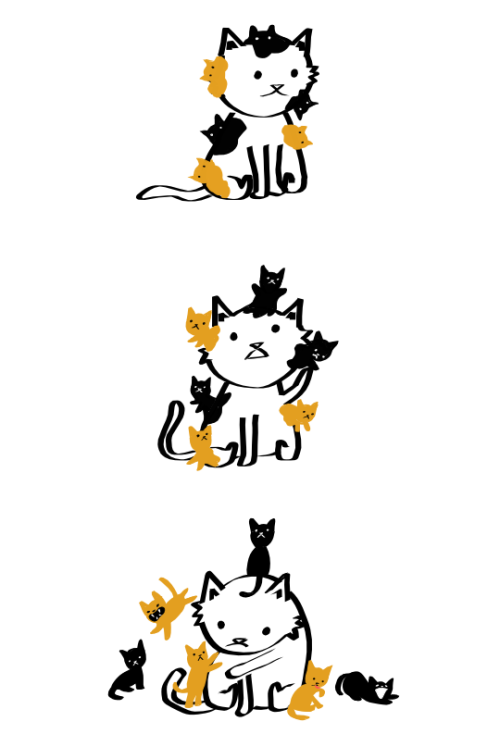
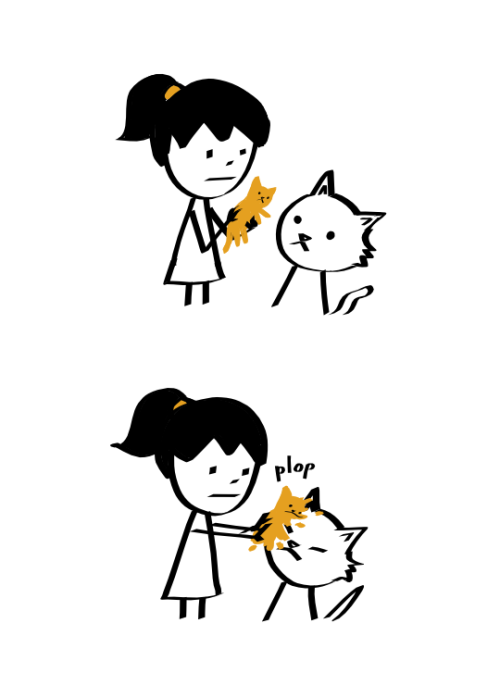
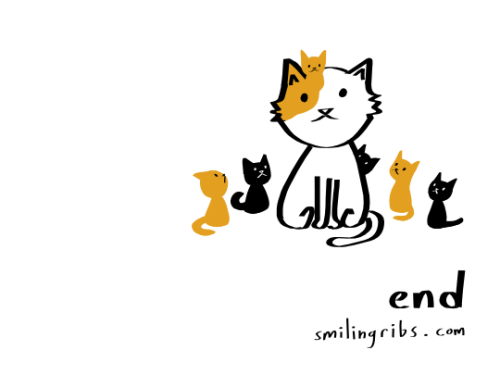
How Calicos Give Birth. Based on a dream my girlfriend had.

more of my comics on tumblr / twitter / facebook

13 Sep 22:38

eirstegalkin: the main difference b/w bi women and lesbians, besides who we are attracted to, is...

eirstegalkin:

the main difference b/w bi women and lesbians, besides who we are attracted to, is that bi women use dual wield weapons and lesbians use one larger weapon. the dps is about equal but lesbians excel at single target and bi women are good at aoe, so i would suggest having at least one of each in your party for endgame discourse

13 Sep 22:37

Photo


13 Sep 22:37

Required Reading

by Hrag Vartanian
The new Broad Museum is slated to open and William Poundstone of LACMA on Fire reminds us that the Guerrilla Girls have already taken the LA collector to task for his collection. (via LACMA on Fire)

The new Broad Museum is slated to open in LA, and William Poundstone of LACMA on Fire reminds us that the Guerrilla Girls have already taken Eli Broad to task for his collection. (via LACMA on Fire)

This week, did Duchamp appropriate a woman’s artwork, Naomi Wolf compares Kathryn Bigelow to Leni Riefenstahl, how photojournalism is changing, Guerrilla Girls critical of Broad collection, and more.

 A new book asks if the revolutionary “Fountain” was created by a feminist artist and later appropriated by Marcel Duchamp:

Her work was championed by Ernest Hemingway and Ezra Pound; she was an associate of artists including Man Ray and Marcel Duchamp, and those who met her did not forget her quickly. Yet the Baroness remains invisible in most accounts of the early 20th-century art world. In the eyes of most of the people she met, the way she lived and the art she produced made no sense at all. She was, perhaps, too far ahead of her time.

… But is it true to say that Fountain was Duchamp’s work? On 11 April 1917 Duchamp wrote to his sister Suzanne and said that, “One of my female friends who had adopted the pseudonym Richard Mutt sent me a porcelain urinal as a sculpture; since there was nothing indecent about it, there was no reason to reject it.” As he was already submitting the urinal under an assumed name, there does not seem to be a reason why he would lie to his sister about a “female friend”. The strongest candidate to be this friend was Baroness Elsa von Freytag-Loringhoven. She was in Philadelphia at the time, and contemporary newspaper reports claimed that “Richard Mutt” was from Philadelphia.

If Fountain was Baroness Elsa’s work, then the pseudonym it used proves to be a pun. America had just entered the First World War, and Elsa was angry about both the rise in anti-German sentiment and the paucity of the New York art world’s response to the conflict. The urinal was signed “R. Mutt 1917”, and to a German eye “R. Mutt” suggests armut, meaning poverty or, in the context of the exhibition, intellectual poverty.

 In a very provocative piece, Naomi Wolf compares filmmaker Kathryn Bigelow to Nazi-funded filmmaker Leni Riefenstahl because of Zero Dark Thirty and its apology for torture:

In a time of darkness in America, you are being feted by Hollywood, and hailed by major media. But to me, the path your career has now taken reminds of no one so much as that other female film pioneer who became, eventually, an apologist for evil: Leni Riefenstahl. Riefenstahl’s 1935 Triumph of the Will, which glorified Nazi military power, was a massive hit in Germany. Riefenstahl was the first female film director to be hailed worldwide.

It may seem extreme to make comparison with this other great, but profoundly compromised film-maker, but there are real echoes. When Riefenstahl began to glamorize the National Socialists, in the early 1930s, the Nazis’ worst atrocities had not yet begun; yet abusive detention camps had already been opened to house political dissidents beyond the rule of law – the equivalent of today’s Guantánamo, Bagram base, and other unnameable CIA “black sites”. And Riefenstahl was lionised by the German elites and acclaimed for her propaganda on behalf of Hitler’s regime.

But the world changed. The ugliness of what she did could not, over time, be hidden. Americans, too, will wake up and see through Zero Dark Thirty’s apologia for the regime’s standard lies that this brutality is somehow necessary. When that happens, the same community that now applauds you will recoil.

Like Riefenstahl, you are a great artist. But now you will be remembered forever as torture’s handmaiden.

RELATED: Here is the shocking Vice story on how the CIA helped produce Zero Dark Thirty.

 Critic Christopher Knight considers why the Broad Foundation’s “generous” lending program may not work:

The ultimate problem is this: The hybrid concept is at cross-purposes with itself. Museums cherish permanence, while lending libraries value transience.

We live in an age of hybridization, from vehicles that run on gas and electricity to artistic genres that blur once-distinct boundaries between media, or else cross-breed art with other disciplines, including technology, philosophy, science and political action.

But some hybrids are oil and water. They don’t mix.

 Sarah A. Chrisman decided to act out her Victorian fantasies by living as if it were over a hundred years ago:

Five years ago we bought a house built in 1888 in Port Townsend, Washington State — a town that prides itself on being a Victorian seaport. When we moved in, there was an electric fridge in the kitchen: We sold that as soon as we could. Now we have a period-appropriate icebox that we stock with block ice. Every evening, and sometimes twice a day during summer, I empty the melt water from the drip tray beneath its base.

Every morning I wind the mechanical clock in our parlor. Each day I write in my diary with an antique fountain pen that I fill with liquid ink using an eyedropper. My inkwell and the blotter I use to dry the ink on each page before I turn it are antiques from the 1890s; I buy my ink from a company founded in 1670. My sealing wax for personal letters comes from the same company, and my letter opener was made sometime in the late Victorian era from a taxidermied deer foot.

But many people weren’t having it, and writer Rebecca Onion has a great response:

There are many irritating things about this article. The irony of congratulating yourself on sticking to 1880s technology in a piece circulated on the Internet is an obvious place to start. The author has also published two books, and will publish a third this fall; this feat was presumably accomplished with at least some assistance from computers and the Web. Certainly the note at the bottom of the Vox article directing readers to her website provoked its share of raised eyebrows.

… The Chrismans also take a preposterously rosy view of their favorite era, choosing to recall the quaint elements of Victorian life and ignore its difficulties. Chrisman complains that people are sometimes cruel to her and her husband for their period predilections: “We live in a world that can be terribly hostile to difference of any sort. Societies are rife with bullies who attack nonconformists of any stripe.” This was true for their precious late-19th-century decades as well. Ask Ida B. Wells, driven out of Memphis in 1892 for protesting lynching, or a Chinese laborer prohibited from entering the United States under the terms of the 1882 Exclusion Act.

Even if an 1890s version of Chrisman, or of her husband, would have lived a comfortable and privileged life, they could not have lived it in a vacuum, as the 2010s Chrismans are attempting to do. The social world around them would have demanded that they take some kind of a stance on the mores and ideologies dominant at the time. Would you accept the fact that immigrant children in your town worked in a factory, or protest against it? If you’re female, would you drop your education when your family thought you’d had enough? These are choices that the sealed world of the Chrismans’ re-enactment doesn’t demand of them.

 Hyperallergic Senior Editor Jillian Steinhauer’s cat essay for the Walker Art Center’s newly released book is on Longreads, and you should definitely read it:

Our relationship with animals is long, deep seated, and complex, but what seems to carry consistently across the millennia is an attitude of reverence. The ancient Egyptians venerated cats; cows are an important symbol in Hindu scripture. In critic John Berger’s telling, “Animals first entered the imagination as messengers and promises.” Think of all the folktales and fables that use animals as a path to knowledge and wisdom. (There are countless examples, from Aesop’s “The Hare and the Tortoise” and the tales of Brer Rabbit to E. B. White’s Charlotte’s Web, contemporary movies like Finding Nemo, and arguably even George Orwell’s Animal Farm.)

In the modern world, Berger says, our relationship with “animals of the mind” (as opposed to of the flesh, i.e., meat) manifests in two ways: as family and as spectacle. We keep, in other words, both our pets and our zoos (as well as our cartoon characters). In both cases, although we confine the animals, we cherish them.

 The world of photojournalism is changing:

In the voluble and often swashbuckling community of photojournalists, the contest uproar pushed many questions to the fore. Who sets the boundaries of what defines photojournalism? What are industry standards when some of the techniques accepted in magazines are generally forbidden in news pages, and when such distinctions are increasingly blurred online? When technology makes it so easy to manipulate images, how much manipulation is acceptable? With viewers more sophisticated and skeptical than ever before, how can photojournalists preserve their integrity and maintain trust?

 One of the best aspects of social media is how it can take people to task, like this:

tweet-migrant-big

 These are the songs that Clear Channel advised its stations to stay away from after 9/11. They include:

  • Billy Joel’s “Only The Good Die Young”
  • Megadeth “Dread and the Fugitive”
  • Metallica “Seek and Destroy”
  • All Rage Against The Machine songs
  • Nine Inch Nails “Head Like a Hole”
  • Soundgarden “Blow Up the Outside World”

 Here are the places in the world with less than 10% internet penetration:

OII-Disconnected_countries-1280

 Super Mario Brothers has turned 30, and this is how it has evolved over the years:

Required Reading is published every Sunday morning ET, and is comprised of a short list of art-related links to long-form articles, videos, blog posts, or photo essays worth a second look.

13 Sep 22:35

This Giant Abandoned Soviet Spaceship Made of Wood Looks Like the Ultimate Children’s Playground Feature

by Christopher Jobson

11138017944_cd6649293f_b

While exploring an abandoned corner of the Zhukovsky airfield (Ramenskoye Airport) in Moscow two years ago, aviation photographer Aleksander Markin stumbled onto a forgotten relic of Russia’s Buran Space Program. This decaying wooden spacecraft was used as a wind tunnel model in the 1980s for the VKK Space Orbiter, the largest and most expensive Soviet space exploration program conceived as a response to the United States’ Space Shuttle. Despite its scientific purposes the wooden ship has the appearance of a fantastic children’s playground feature.

According to Urban Ghosts, this 1:3 scale replica was just one of 85 wind tunnel models used to test various aerodynamic properties of the orbiter. The testing would eventually reveal that NASA’s prototype for the Enterprise was ideal for spaceflight and the VKK Space Orbiter would take a similar design as a result.

Despite the ambitious size and scale of the Buran Space Program, the final craft would fly only a single unmanned mission in 1988 before being scrapped completely in 1993 due to lack of funding and political instability (and yet only modern Russia retains the ability to send people to the ISS today). Markin mentions in comments along with his photographs that this particular wind tunnel model has since been destroyed and no longer exists. (via Urban Ghosts)

10220942796_7d459956bd_b

10264989626_f9025eb7bc_b

10403061416_003969df9b_b

11137546953_2022b0ba08_b

11137924623_1de5c4ca2b_b

11147195896_0a92f7310e_b

13 Sep 22:34

The Walking Dead | 877.jpg

877.jpg
13 Sep 22:33

My Almost Certainly Ill-Advised Proposed Award Voting Process

by John Scalzi

In light of recent events and posts, I’ve been asked, if it fell to me to create a literary award, how I might work the voting process.

My response is, first, I think I would rather pull out my own teeth with pliers than to take on the work and aggravation of helming an award, and this is from someone who was (only very nominally, and insulated by a couple of layers of extraordinarily competent people) previously in charge of the Nebulas. I’m super-impressed with anyone who can handle an award on the front lines. It’s not a gig for me.

Second, if you put a gun to my head and made me do one, or, alternately, put the gun to my head but then promised me that someone else would have to actually run the things so that all I had to do was think up the process, then here’s what I would do, for the process of a popularly-voted award.

1. Categories: Doesn’t matter, think up any category or categories you want, as the process would be the same no matter how many categories there are. I would suggest that every category would have to have a minimum number of initial voters to be considered; say, 500.

2. Who votes: Anyone can vote. Each voter gets their own ID, which can be used only by them. Stupidly obvious attempts to game the system can be disallowed by the poor bastards who actually have to run the system at any step in the process, but for reasons that will become obvious in a second, stupidly obvious attempts to game the system here doesn’t offer much long-term benefit.

3. How the vote works: There are three voting rounds: Nomination, long list, and finalist.

Nomination: Everyone votes for one and only one work (or person, if it’s that sort of category) in the category. The top ten or twelve vote-getters are sent to the long list stage (ties, etc are fine but the goal would be to get number of long list nominees as close to the ideal long list number as possible).

Long List: Everyone votes for up to three works on the long list, none of which can be the single work they originally nominated. That’s right! You have to choose something else in this stage, and hope enough other people like the work you originally nominated to include it among their own selections!

But what if people choose not to make selections in the stage in the hope that their lack of selection of other work will bump up the chances of their preferred work? Well, I would consider making a rule that says failure to participate in this round counts as a point against your original choice’s score in this round — which is to say if you don’t vote in this round, a point is deducted for your original choice’s score in this round (presuming it made the long list at all). You’re better off voting if you want your original selection to make it to the final round.

In this round, the top five or six vote-getters graduate to the final round. Hope your original choice made it!

Finalist: This vote is done “Australian Rules” style, where each voter ranks the works from first to last choice. “No Award” is an option in this round, so if you hated everything in the long list round, this is where you may register your disapproval. The winner is the one which collects the majority of votes, in either the first or subsequent balloting rounds.

Why would I do the voting this way? Because it emphasizes both individual choice and community.

  • Picking a single work in the first round makes you really think about what you loved that year and forces hard choices early; knowing that you will have to rely on other people to carry your choice into the final round also makes you think about what you believe others will find worthy.
  • Picking an initial single work also avoids obvious slating, while a long list allows for the possibility of a wider diversity of choices for the finalist round.
  • Forcing people to make a selection other than their original choice in the long list round makes them consider what else out there might be worthy of consideration, and also again punishes attempts at obvious slating.
  • Three choices for a finalist slate of five or six also again cuts down on obvious slating and allows for diversity in the finalist round of voting.
  • “Australian Rules” in the final round allows for a consensus vote for the best work in any particular category.

If you want to further reduce any chance of slating you could employ EPH to the long list round, but you get the idea.

Would this work? Got me. And as I noted I’m not going to go out of my way to implement them, because: Ugh, effort. But if anyone wants to try it and see how it works for them, knock yourself out. Could be fun. As long as someone else but me does the work.

Now: Pick it apart in the comments!


13 Sep 22:32

The Privileged Poor

by John Scalzi

A (to me) fascinating article in the New York Times today, talking about “the privileged poor,” which in this case means poor students who were fortunate enough to attend elite high schools, and the advantages they have over other poor students when both groups went on to college. The article was fascinating to me because I was very much “privileged poor” — I attended a private boarding school in high school and was so well prepared for college because of it that it literally took me a year and a half at college before I was dealing with something I couldn’t just dip into my high school experience to deal with, and I went to the University of Chicago, not exactly a grunt school.

This is a topic I’ve addressed before, indeed very recently: The idea that my life had been manifestly changed because my high school let me in despite being poor; my upward trajectory in life started my freshman year in high school. It was, to be sure, an incredibly tough year, as I adjusted to the school and its expectations (the fact I was a willful little brat didn’t help any). I try to imagine that year of wrenching adjustment happening when I was eighteen rather than fourteen. I don’t know that it would have gone as well for me.

I don’t think you need to go to an elite high school to be reasonably prepared for college; lots of people don’t go to one and get along just fine. But the article does reinforce my belief that a good education leading up to college really is important. You can’t just chuck someone into the deep water of college– any college, not merely an “elite” one as noted in this article — and expect them to swim. If there’s one thing I would absolutely change about the US, it would be an immense overhaul of how we do schooling and how we prep our kids for the future. How it happens matters. It matters a lot.


13 Sep 22:31

Black people have a superpower

by PZ Myers

So chrome! So shiny! Soap dispensers work for him 100% of the time!

So chrome! So shiny! Soap dispensers work for him 100% of the time!

It’s invisibility! Various technological gadgets, like soap dispensers and facial recognition software, don’t detect them, because they were never properly tested with diverse users.

On the one hand, this is disgraceful — it tells us that biases in the tech sector lead to blind spots. On the other hand, when SkyNet takes over and decides to exterminate the population, it’s only going to shoot the white people.

13 Sep 01:30

Your mom was right about... sunscreen.

The first in a weekly series about your parents being right (and wrong) about stuff. ________________________________________________ Subscribe: http://bit.l...