“Between January and September 2021, 24 legislatures across the United States introduced 54 separate bills intended to restrict teaching and training in K-12 schools, higher education, and state agencies and institutions. The majority of these bills target discussions of race, racism, gender, and American history…” (Source)
Half of the top ten banned books for 2021 were banned in part for “LGBTQIA+ content.” (Source)
“In the last few years states have advanced a record number of bills that attack LGBTQ rights, especially transgender youth.” (Source)
“An NPR analysis of this fast-changing landscape found that over the past two years, state lawmakers introduced at least 306 bills targeting trans people, more than in any previous period.” (Source)
“…in recent years, more than 400 anti-voter bills have been introduced in 48 states. These bills erect unnecessary barriers for people to register to vote, vote by mail, or vote in person.” (Source)
“…at least 19 states have so-called “anti-critical race theory” laws or regulations—despite the fact that CRT is rarely taught below the graduate university level. Even more school boards enacted policies or changed curricula in an effort to restrict how teachers talk to their students about race and diversity.” (Source)
In general, it feels like the people complaining the loudest about “cancel culture” are the ones with big platforms (Hi, J. K. Rowling!) and huge followings. Wouldn’t it be nice if they could use those platforms to speak up on behalf of the people who are actually being suppressed and silenced?
New research suggests that users of top-of-the-line Android devices sold in China are getting their personal data pilfered left, right and center, according to new research. The collection, which is happening without notification or consent, could easily lead to the persistent tracking of users and the easy unmasking…
Oh hello there! The Marvel Cinematic Universe’s Scott Lang (a.k.a. Ant-Man, a.k.a. the never-aging Paul Rudd) has a memoir coming out! For real! It’s called Look Out For the Little Guy and you can even buy it.
“This once movie prop is now available for purchase wherever books are sold. How’s that for meta?” Paul Rudd/Scott Lang says in a video promoting this very much real book, that presumably has coherent words strung together into sentences for 256 pages.
The memoir that Rudd says “was almost certainly not written by me,” explores Ant-Man’s experience as an Avenger and, more importantly, as a dad. The book is most certainly a marketing ploy to promote the upcoming MCU film, Ant-Man and the Wasp: Quantumania, as the fictional version of this memoir shows up there, and we’ll see it in action on-screen when the film premieres in theaters on Friday, February 17.
While marketing ploys can often be cringey, I have much respect for the dedication to this one, where some lucky ghostwriter got to pretend to be Scott Lang and write about his ex-convict, Avenger-ing ways. Given it shows up in Quantumania, it’s a good guess that the book will only cover Scott’s story up to the events of the third Ant-Man film. How will he recount that epic airport battle in Civil War? Fighting Thanos? Going back in time? Being pals with Captain America? We’ll have to wait and read it to find out.
Look Out For the Little Guy comes out on September 5, 2023. You can pre-order this totally real book here.
Netflix har uppdaterat sin supportsida för att förklara vad som gäller angående kontodelning. I skrivande stund finns den nya sektionen i hjälpcentret endast i Nordamerika, så det är möjligt att kontodelningen och användandet kommer kunna fortsätta som vanligt i Sverige ett tag till.
Utvecklaren skriver att konton får delas men endast inom hushåll. För att försäkra att enheter förknippas med den primära platsen behöver användare ansluta till Wi-Fi och titta på Netflix i hemmet minst en gång var 31:a dag.
Netflix will prompt users who try to sign into your account elsewhere to sign up for their own account instead and block their access until they do.
Ett konto är endast avsett för ett enskilt hushåll. Ifall någon försöker logga in på kontot någon annanstans kommer den personen hindras från att logga in och istället uppmanas att skaffa ett eget konto.
För de som reser kan det bli problem att logga in på nya enheter. Netflix erbjuder ett sätt att tillfälligt ta sig runt detta. Användare kan begära att få en temporär kod för att exempelvis logga in på en smart-tv på ett hotell eller på en företagslaptop. Koden ger tillgång till Netflix på den nya platsen och enheten i högst sju dagar i följd.
Netflix uses information such as IP addresses, device IDs, and account activity to determine whether a device signed into your account is connected at your primary location.
Netflix avgör huruvida en enhet är ansluten i hushållet eller inte genom IP-adresser, enhets-ID och kontoaktivitet. Enheter kommer anses som trovärdiga av Netflix ifall de ansluter till hushållets Wi-Fi minst en gång under en 31-dagarsperiod. Eventuellt skulle det alltså gå att dela konton med personer som inte bor i hushållet så att de kan titta på exempelvis en surfplatta eller mobil, så länge de besöker hushållet då och då och ansluter där.
Uppdatering: Reglerna ovan gäller Chile, Costa Rica och Peru. Netflix råkade av misstag publicera reglerna på amerikanska supportsidan.
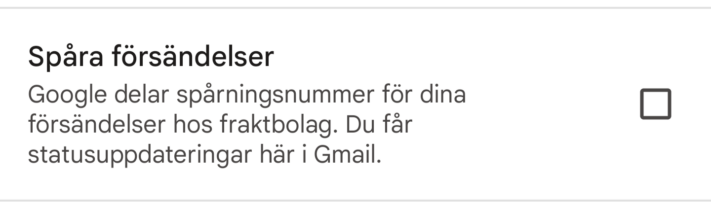
Gmails nya finess för att spåra försändelser direkt i appen ska nu ha blivit allmänt tillgänglig, efter att ha introducerats i november förra året. Finessen aktiveras genom att gå till Gmails inställningar (öppna sidomenyn och scrolla längst ned) och trycka på den adress du vill spåra försändelser för.
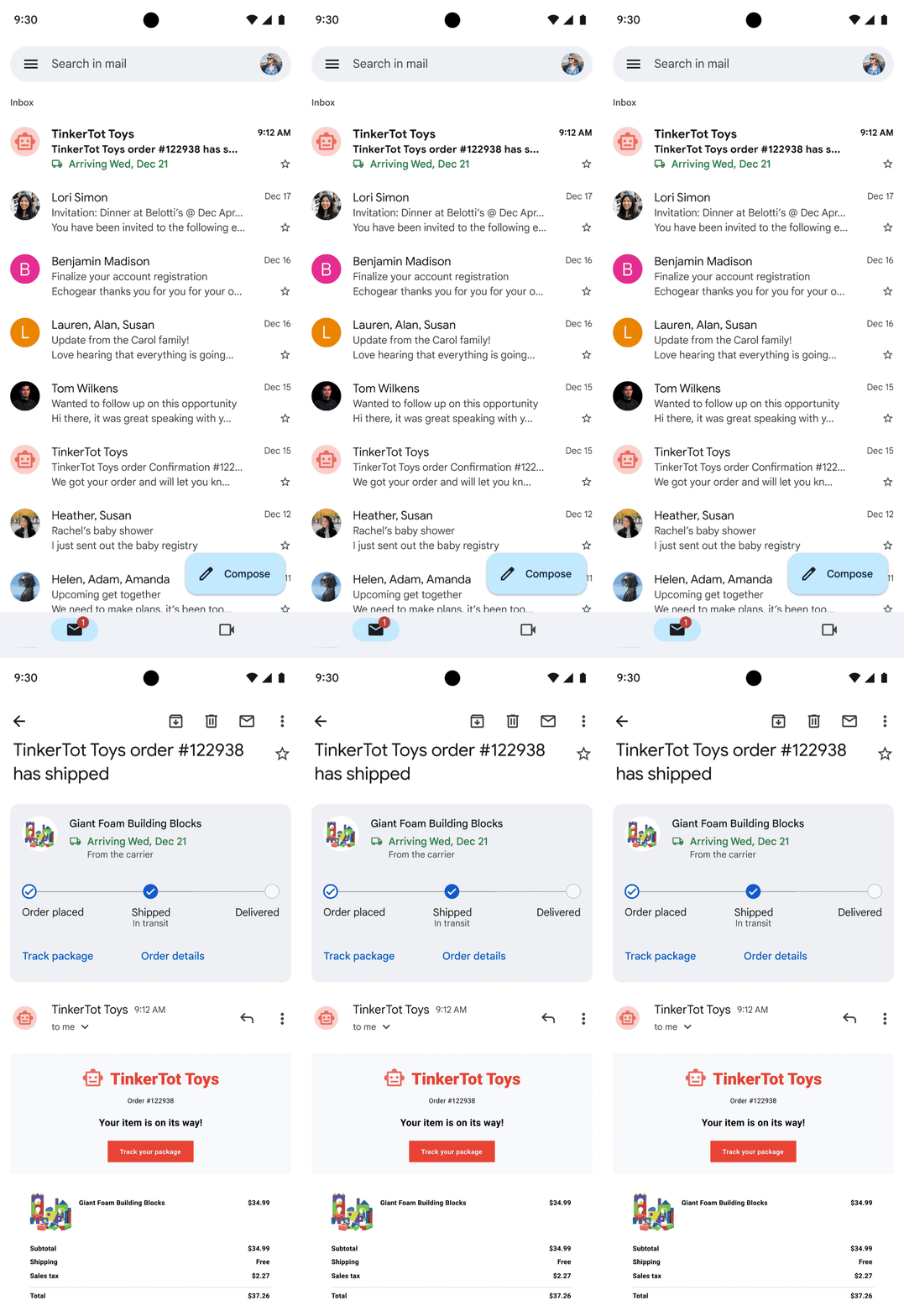
Inställningen heter just ”spåra försändelser” och ligger en bit ned i listan med alternativ. Enligt funktionens beskrivning i Gmail delas spårnings-ID för användares paket med fraktbolag, vilket gör att användare kan få statusuppdateringar direkt i Gmail.
Hur spårningen kan se ut visas i GIF-animationen nedan som Google bjöd på i samband med tillkännagivandet i höstas.
Netflix kommer börja ta betalt för kontodelning mer allmänt i slutet av första kvartalet, efter inledande tester i vissa regioner. Kunder i många länder kommer kunna betala extra om de vill dela sitt konto med personer de inte bor tillsammans med.
Strömningstjänsten räknar med att vissa kunder kommer reagera på ändringarna genom att säga upp abonnemanget, men anser att det kommer löna sig på sikt att minska mängden gratistittare. Netflix har inte meddelat något specifikt datum eller vad det kommer kosta att betala för extra hushåll.
(The actual celebrity and famous writer sits back in his rocking chair, surveys the world of Tumblr, from his porch. He chews meditatively on a straw, and then he says:)
TACAFW: Y'see, I’ve been here for nigh on twelve years now, which in new-fangled internet years is about four hundred years… yup, I remember when all this wuz just folks trading photos of cats, and I remember when over there, where it’s now just waste land, that whole part of town was whut we used to call ‘Not safe for work" – hooey, I don’t know where those folks went, when they got driv out of town – but me, through those twelve years, I’ve just been in this old rockin’ chair on this old porch, and I’ve seen 'em come and I’ve seen 'em go… I guess I mus’ just’ like it here…
An end-to-end encrypted chat app that collects almost no data and requires no personal information to sign up? Sounds like a dream come true for privacy enthusiasts. The only problem is that Threema, the Swiss privacy company behind the messenger in question, has been using an unreliable cryptographic protocol, whose…
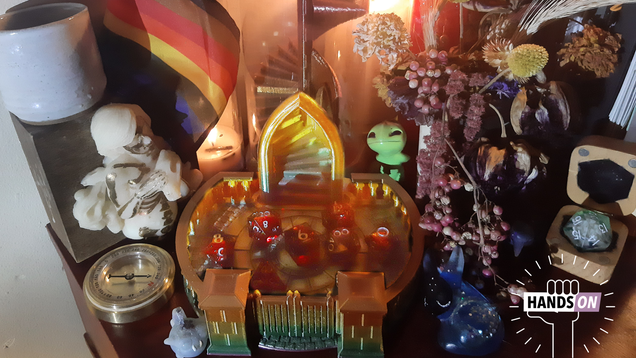
Earlier this week, while preparing for a tabletop role playing game, I was perusing my dice, trying to pick out a set of polyhedral dice (which consist of seven dice: a D4, D6, D8, two D10s, D12, and a D20) that would best fit my Dragonborn Monk, Teimuraz. I found a set still in its packaging—my red-and-silver Crimson…
Easily one of the worst things to come out of the digital age is discourse completely detached from reality. You might have heard the phrase “chronically online,” which is pretty much exactly what it sounds like, but more specifically can refer to the idea of someone who has no/very little attachment to the way the…
Everyone should start blogging again. Own your own site. Visit all your friends' sites. Bring back the artisan, hand-crafted Web. Sure, it's a little more work, but it's worth it. You don't even need to stop using social media! It's a "yes, and" situation, not a "no, but" one. https://t.co/BzHYh59F36
“But Scalzi,” I hear you say, “How do we bring back that artisan, hand-crafted Web?” Well, it’s simple, really, and if you’re a writer/artist/musician/other sort of creator, it’s actually kind of essential:
1. Create/reactivate your own site, owned by you, to hold your own work.
2. When you create that site, write or otherwise present work on your site at least once a week, every week.
3. Regularly visit the sites of other creators to read/see/experience the work they present there.
4. Promote/link the work of others, on your own site and also on your other social media channels where you have followers. Encourage your followers to explore more widely, beyond the algorithmic borders of “social media.”
Now, why should we bring back that artisan, hand-crafted Web? Oh, I don’t know. Wouldn’t it be nice to have a site that’s not run by an amoral billionaire chaos engine, or algorithmically designed to keep you doomscrolling in a state of fear and anger, or is essentially spyware for governments and/or corporations? Wouldn’t it be nice not to have ads shoved in your face every time you open an app to see what your friends are up to? Wouldn’t it be nice to know that when your friends post something, you’ll actually see it without a social media platform deciding whether to shove it down your feed and pump that feed full of stuff you didn’t ask for?
Wouldn’t that be great?
“But Scalzi,” I hear you say, for a second time, “I spent all this time on social media and all my people are there! You’re asking me to start from scratch!” Well, see: You don’t have to leave Twitter or Facebook or TikTok or wherever. Stay as long as you like, and post whatever you like there. Just carve out some of that doomscrolling/toiletscrolling time for your own space, that you control, too. And when you do, then link to your own site from that other social media, and invite your followers on those services to visit you in your own place. And link to other people’s personal sites, so your followers can visit them, too. Make social media work for you, and not just for the amoral billionaires.
That said, yes, it will take some work. Setting up a site, or reactivating it, takes a bit of time. Writing or presenting work exclusive to your own site takes some work. Getting your followers on social media used to the idea of leaving those walled gardens of content takes some work. It’s an actual project. But look at this way: You have just spent years building an audience on a platform someone else owns. Why not take a little time to do it for yourself? And to help others build their own platforms, too. No rush! Let it build over time. But put in the time.
Your platform, one post a week. It’s not too hard, and the upside is less reliance on other people’s platforms, and a healthier, more varied Web. Stay on social media! Make it work for you, not you work for it.
Build a better Web. An artisan Web. A handcrafted Web. Take the time to get people used to it. We’ll all benefit from it. We just have to decide to do it.
It’s hard to explain, especially because the original post has now vanished. But I have searched the web, from lowest to highest, and found this for you, which will, I hope, explain everything.
Amid all the recent drama surrounding Don’t Worry Darling, Olivia Wilde’s sophomore film that relies on a plot device that the Turkey City Lexicon calls “The Jar of Tang,” there has been a flurry of comparisons to other films: The Truman Show, Pleasantville, Never Let Me Go, and M. Night Shyamalan’s 2004 folk horror film, The Village.
Like Don’t Worry Darling, The Village featured a stacked cast and a winning director paired with oodles of atmosphere, but still suffered the wrath of its critics. Roger Ebert gave it one star, calling it “a colossal miscalculation, a movie based on a premise that cannot support it, a premise so transparent it would be laughable were the movie not so deadly solemn.” This is a reasonable critique: the premise of The Village pops like a soap bubble if you so much as breathe on it. It is, in fact, as absurd in its worldbuilding as the series its title alludes to: 1967’s The Prisoner. In The Prisoner, a secret agent is abducted to an idyllic small town cut off from the rest of the world. It’s a colourful place where anything anyone could ever want is in abundance, not unlike the setting of The Good Place (2016). And like the Good Place, it is a bad place. In between interrogations, the secret agent’s captors refer to it as “The Village.”
The Village takes place in an isolated community somewhere in America. The houses are made of stone and heated by flame. Roger Deakins lights the film with dying autumn sun, flickering candles, and blazing lanterns. We have no idea if the story takes place before the arrival of electricity, or if the community has eschewed it for religious or environmental reasons. What we do know is that everyone is White, and everyone wears natural fibres like homespun cotton and wool, and the girls dress modestly in long sleeves and long skirts. (Always skirts. Never trousers.) When one character requests her father’s blessing to pursue her beloved, her father inquires why “the boy” is not at her side. That her beloved might not be a boy is never entertained as a possibility. Residents refer to “the towns” beyond the surrounding forest as “evil.”
And occasionally, huge red-cloaked figures with claws for hands come in, and leave behind the bodies of skinned animals. The villagers refer to them as Those We Don’t Speak Of, and seemingly every tradition they maintain is intended to uphold “the truce” between the two groups. Boys man the watchtower every night. (Always boys. Never girls.) Even the colour of the cloaks is forbidden: a sprig of rebellious red flowers must be buried, on sight. “There are secrets in every corner of this village,” Joaquin Phoenix’s character tells his mother, played by a surprisingly tender Sigourney Weaver.
Maybe this is the past, thinks the viewer. Maybe they’re Amish. Maybe this is Shyamalan’s exploration of Pennsylvania Dutch life, after years of filming in Philadelphia. Maybe it’s a cult. Maybe this place is Brigadoon. Maybe it’s Summerisle. Maybe it’s the Matrix.
It’s a lie.
Screenshot: Touchstone Pictures
Near the end of the film, we learn that the village is at the centre of a nature preserve funded by old family money, a legacy of the town elder played by William Hurt, who years ago invited the members of his bereavement support group to listen to “an idea” of his. The “idea” is as old as the idea of America itself: the intrusion of White settlers on the natural world, and the exclusion of all others who aren’t in on the joke. In this context, all the talk of “the bad colour” takes on a new meaning: Those We Don’t Speak Of are red, a colour which, until it became synonymous with how a state voted, was short for threats to the (White) American way of life posed by either its original Indigenous inhabitants—who were forcibly displaced or killed—or Communist ideas seeping into the cultural foundations upon which American individualism, competition, and unfettered growth were built.
Shyamalan, who knew exactly what film he had written and directed, makes his signature Hitchcockian cameo as the only Brown person in the film, the camera briefly focusing on his reflection in a plate of glass. The film’s gaze can’t even look at him directly. An early draft of the script leaked in 2003, and its final line of dialogue is spoken by the truck driver who helps Bryce Dallas Howard’s character obtain the medicines she has spent her life being denied. “Crazy-fucking-white people,” he says, and drives away.
The film was released in 2004, in that delicate slice of decade between the fall of the towers and the fall of the market. It was before Facebook or Meta, before Pinterest, before Twitter, before even Reddit, before a Russian company bought LiveJournal, when the internet was simply Something Awful, when phones flipped open and doors slammed shut on AOL. It was when Spider-Man was Tobey Maguire and Daredevil was Ben Affleck. It was when Netflix sent customers DVDs by mail, three at a time, and the next films in the customer’s queue didn’t arrive until the previous ones were returned. The people who first saw The Village saw it in theatres, and they had no digital town square within which to reveal the twist to a growing horde of strangers. “Word of mouth” was actually spoken out loud.
Viewers complained that The Village was “not really a horror film,” because it contained no supernatural or paranormal elements. This complaint conveniently ignores the fact that the definitive folk horror film of the twentieth century, 1973’s The Wicker Man, has no supernatural or paranormal elements either. There are no ghosts or goblins in The Wicker Man: only people, people so righteous in their faith that burning a virgin policeman (and several bleating animals) alive seems the only solution to their problems.
The ultimate horror of The Village is much the same. The village is a cross between a LARP and a Revolutionary War re-enactment: it is a theme park these people chose to live in, where they would never have to deal with anyone different, and where, as Hurt’s character says, “innocence” can be protected. It’s not a revolution. It’s just a homeowners’ association. A group of otherwise-reasonable adults chose to live on a nature preserve financed by private money, cosplaying a nostalgic brand of early Americana that never really happened, all so they might raise their children without the benefit of electricity, indoor plumbing, painkillers, abortion, journalism, antibiotics, media, or vaccines.
“My brother was slain in the towns. The rest of my family died here,” Brendan Gleeson’s character says. The film opens with him burying his last child. The plot hinges on Bryce Dallas Howard’s character going to “the towns” for “medicines,” that would be unavailable otherwise. One character’s sudden childhood blindness might be the sign of a life-threatening illness, but it’s never addressed. Another character’s developmental differences, which cause him visible frustration, could be explored, but aren’t. This community deliberately brought itself backward to a past where every infection, every pregnancy, every bad tooth or bad fall, might result in suffering and death.
This was the utopia they fought for. This was their escape hatch. This was their answer to the problems of contemporary life: to abandon it entirely for the ultimate gated community, a well-curated, aesthetically-consistent American experience of homogeneity where everyone dresses the same, eats the same, believes the same, fucks the same, dies the same.
Screenshot: Touchstone Pictures
Critical re-appraisals of the film have viewed it through a variety of topical lenses. For Emily St James it was about the Iraq War. For Chris Evangelista, it was about grief. For Carlos Morales, it was a love story. And it is indeed that. Most critics agree that the film’s most powerful image is of Bryce Dallas Howard holding out her hand in the presence of danger, waiting for Joaquin Phoenix to take it. (For that is love: blindly holding out a trembling hand in the dark, not knowing if it will be kissed or bitten.) It is a capital-R Romantic film, in which William Hurt says, “The world moves for love. It kneels before it in awe.”
But in addition to being a film about romantic love, it is also a horror film about smothering parental love: the kind of love that insists keeping one’s children away from public education, advancements in medicine, or other experiences of life is somehow a measure of affection. It’s about the performance of community and family, about how social bonds depend on a group inhabiting the same fictional narrative. It’s a folk horror film in which the folk are the monsters, quite literally: Those We Do Not Speak Of are the town elders dressed up in disguise. The monsters that parents warn their children about are, in fact, themselves.
Buy it Now
For a film about people lacking access to the Internet, The Village is remarkably prescient about the Internet. Written at a time before platforms devoured chat rooms and bulletin boards and blogs, when the Internet was a coral reef and not a phish farm, it accurately anticipated the hardening of social and cultural borders brought about by algorithms that showed people “more like this,” and nothing else. It anticipated the retreat of lively conversation into curated “circles” or “groups,” the transition from free radio waves to subscribed podcasts, the shift from open publications to closed newsletters. It anticipated, perhaps better than any other film before or since, the hermetic sealing of the commons: public parks displaced by private shopping malls, public libraries competing with Amazon, public transit stalled by rideshares. It revealed the lie at the core of every trad-wife Pinterest spread, years before Pinterest taught Americans to eat everything from Mason jars. It accurately foresaw the tidy subdivision of an entire cultural landscape into a series of media fiefdoms in which how you feel about a woman swinging a laser sword is a reliable indicator of how you vote.
In its prescience about the Internet, The Village also saw the end of the Internet as we now know it. The splintering of social media platforms into market demographics (Facebook for Boomers, Twitter for Millennials, TikTok for Gen Z, various crypto Discords for ex-boyfriends of every age) has reduced what was once a dense cosmopolis into a series of ever-smaller towns. Villages, if you will. Small Slacks, miniature Mastodons, even tiny Teams and zygotic Zooms. The online spaces in which we once met people from all walks of life are now walled gardens at the level of culture, software, and mathematics: we are shown only our mirrors, and the sensation is akin to being trapped in a funhouse after too much cotton candy. With the possible end of Twitter on the horizon, the public square—and indeed, the idea of a public space at all—might finally have perished, replaced by, as Bruce Sterling himself called it, islands in the net.
The Village isn’t the only horror film to speculate accurately about the social impact of the Internet. In the late 1990s, Japanese horror films like Ringu,One Missed Call, Pulse, Cure, and The Suicide Club all spoke to a deep (and some might say valid) anxiety about what would happen to humanity when everyone suddenly had access to the innermost thoughts and feelings of everyone else. (Spoilers: it’s not great.) But whereas those films speak to the viral spread of information—and how we would all some day dread answering our phones—The Village speaks to the airless insularity of any niche that can’t survive the arrival of another generation.
Moreover, it does so seductively: Deakins’ peerless lighting, James Newton Howard’s score, and the endless progression of cable knits and flower crowns make the whole film #fallvibes personified. “The Village” is what someone might imagine the world was like before the Internet, before cancellation, when you didn’t have to worry about every tiny thing you said, and if the others got uppity you could always hang them or burn them or take their children and their land, and nobody made it into a whole thing. “The Village” is the dream of every brandcaster who wants you to buy gold and quit your meds and memorize the age of consent. For all its imperfections, The Village exists to remind us that the dream is a lie—it always has been.
Madeline Ashby is a science fiction writer and strategic foresight consultant based in Toronto. Her trilogy about killer robots, The Machine Dynasty series, began with vN and continues in the sequels, iD and ReV. She is also the author of the cyber-noir novel Company Town. and a contributor to How to Future: Leading and Sensemaking in an Age of Hyper-change, from Kogan Page Inspire. Her essays and criticism have appeared at BoingBoing, Slate, io9, MIT Technology Review, Wired, Tor.com, and The Atlantic.
Sometimes I ask myself if humans are good or bad or somewhere in the middle. I wonder if we are worthy of the world, if civilization was worth its cost. Then I remember that humans invented the leafblower, and I decide I can’t wait till the octopuses and crows take over.
Right now, as I type this, a neighbor — not even a next-door neighbor, but one several houses removed — has a landscaping service featuring a trio of young white jabronis with leafblowers. These are gas-powered leafblowers. The property is, I’d guess, around a half-acre in size.
They have been there for an hour and a half. Leafblowing this entire time.
It is incredibly loud.
It sounds like this:
vvvvWWAAAHHHHHHHH
mmmMWMAAAAAAWAAAAHHHHH
NNNNAAAAHHHHHHHHHH
VVMMMAAAAAAAAHHHHHHHHHHH
brum brum brum brum
HYYYAYAAAAAAAHHHHHHHNNNNHHHHNNN
It is the sound of machines screaming. Angry hot hell-machines screaming their torment into the world. And, for an extra bonus, I’ve watched these fucking dickheads doing their leafblowing, and it is, as anyone who has ever used a leafblower knows, wildly fucking inefficient. It’s like herding butterflies. It’s just trying to move a swarm of bees with a box fan. You watch these shitheads wave their black tubes around, blasting clouds of leaves and dust into the air — leaves that will not be so casually commanded, oh no. Leaves that the wind gladly puts right back from whence they came. They’re not moving leaves in a straight line. It’s chaos theory. It’s water on back of Ian Malcolm’s hand. It’s limbs akimbo, a nightmare dance of nothing done.
I watched a guy (different lawn) two weeks ago herding about a half-dozen small leaves back and forth, back and forth, with his leafblower. He’d blast them one way, but then they’d escape his intended path, so he’d go the other way, and end up back where they came from. He would’ve been more efficient had he blindfolded himself and used a pair of fucking chopsticks to do the job.
Listen.
It’s a come to Jesus moment.
Fuck your gas-powered leafblower.
Get rid of it.
Your gas-powered leafblower is a fucking nightmare. It’s a nightmare first and foremost for the environment. Just on a basic exhaust level, the pollutants a two-stroke engine leafblower emit into the world are hundreds of times worse than a goddamn automobile. (Source: Sierra Club.) I need you to reckon with that because it’s worse than even I, a person who Deeply Detests Leafblowers, expected. From Edmunds: “A consumer-grade leaf blower emits more pollutants than a 6,200-pound 2011 Ford F-150 SVT Raptor.” Also from that article: “The hydrocarbon emissions from a half-hour of yard work with the two-stroke leaf blower are about the same as a 3,900-mile drive from Texas to Alaska in a Raptor,” said Jason Kavanagh, Engineering Editor at Edmunds.com. “As ridiculous as it may sound, it is more ‘green’ to ditch your yard equipment and find a way to blow leaves using a Raptor.”
Holy fucking shit. That’s awful. It’s like the leafblower was a device designed by an actual demon in order to help destroy the world.
Plus, the noise pollution is bad for people and for nature. For extra fun, the leafblowers just kick up everything you really don’t want kicked up. Dust? Yup! Mold and spores? Absolutely! Pesticides you don’t wanna breath in? Sure! Aerosolized raccoon shit? Hell yeah, bro! Time to take a big ol’ lungful of POSSUM DUNG. Mmmm. Get that all up in you.
And here’s the thing: leaves? They’re supposed to be there. They fall from trees for a reason. It’s not fucking random! They’re not mad at us and puking leaves onto our lawns because they hate us (though trees should definitely 100% hate us). Nature is a circuit! A glorious, sometimes-simple, sometimes-elaborate circuit. Trees soak up all these nutrients, some of those go into the leaves, the leaves fall to the ground, and ta-da, they redistribute those nutrients into the ground. The health of the ground is based on this very cycle. It is an essential loop. You further will discover that there are other natural necessities that come with leaf cover and leaf litter, as well. Little wonderful creatures like to chill out over the winter under leaf litter. You know how we’re killing all the insects in an insect apocalypse? Yeah. This is part of that. You ever lament the loss of fireflies (around here, we call ’em lightning bugs)? You say, “Gosh, I don’t see as many of those little glowing butts these days.” Well, this is part of why you don’t. They love those leaves. They need those leaves. (Also, they don’t need the pesticide. Relax with the fucking pesticide.) And then the birds are happy too because sometimes they like to eat those bugs.
And here someone says, “But the leaf cover kills my lawn!”
Riiiight, yeah, here’s the thing, your lawn is also bad. It is a weak, whimpering monoculture. It is a sad, non-native, largely-lifeless inert carbon-useless golf-green that has somehow become The Way Our Lawns Must Look. The reason leaf cover kills it is because your lawn is shit. It’s thin piss. It is landscaping gruel. You ever walk through a forest, an actual forest, and lament how the leaves have killed the grass there? No? You know why? BECAUSE THAT’S HOW IT’S SUPPOSED TO LOOK. That’s just nature! It’s supposed to be that way! The leaves fall! It’s fine! It’s good, even! Even if you really really want that lawn, did you know there are native grasses you can use? And you don’t even need to use grasses? Our lawn is a diverse nonsense array of dozens and dozens of different plants that we don’t fertilize and we don’t spray with pesticide or herbicide and even on drought days it’s green and healthy-looking and yes, some of it is invasive, and I combat the invasive stuff with aggressive native spreaders, and turns out, those native spreaders have flowers and they bring bugs and pollinators and birds who want the bugs and who want the seeds and it’s really pretty and I love it and I don’t ever have to strap a soot-belching silence-murdering jet engine to my back to protect it from the big mean leaves that fall from the big mean trees. What a wonder!
(Oh, and we get so many fireflies it is legit like a religious experience.)
And yes, I acknowledge here that sometimes you have to move some leaves around. You want to clear walkways. You want to clear some ditches and drains. You may even want some yard space where kids can run without slipping on wet leaves. I acknowledge this.
But have you ever considered… using a rake? Hell, okay, even if you really love the (in)efficiency of a leafblower, they make electric ones! They’re really good now! And super quiet! And not barfing shit into the air! It’s amazing!
Anyway.
To sum up:
You’re literally killing the world to crappily usher leaves around, leaves that should be largely left alone because they’re supposed to be there.
Stop trying to control nature. You’re a part of it, not above it, not separate from it, you are not its master. We have to start learning to live in synchronicity with the world, because right now? We are the invasive species.
Your gas-powered leafblower is shitty and bad and should be banned.
The end.
P.S., the leafblowers finally stopped. It took them almost two hours. Christ.
Inte för att jag tror att du har missat detta, men... ;)
Not a day goes by without Twitter owner Elon Musk stirring up a shitshow on his new platform. Over the weekend, it appears the billionaire was not amused when comedian Kathy Griffin changed her name to “Elon Musk” and swapped her profile picture to one of his. Griffin mocked him and began encouraging people to vote…









![Spacetime Soccer, known outside the United States as '4D Football' is a now-defunct sport. Infamous for referee decisions hinging on inconsistent definitions of simultaneity, it is also known for the disappearance of many top players during... [more]](https://imgs.xkcd.com/comics/spacetime_soccer.png "Spacetime Soccer, known outside the United States as '4D Football' is a now-defunct sport. Infamous for referee decisions hinging on inconsistent definitions of simultaneity, it is also known for the disappearance of many top players during... [more]")