What an amazing time at GaymerX.

Con la muerte de Google Reader surgieron muchas alternativas dispuestas a sustituirle. Una de las más importantes, The Old Reader, hace unos días anunciaba su cierre desbordada por los nuevos usuarios. Ahora, gracias a una "entidad corporativa" anónima, revive y anuncia mejoras.
Sólo han pasado un par de días desde que The Old Reader anunciaba que cerraría su versión pública al verse desbordados por la cantidad de cuentas que se estaban activando. Y apareció el milagro: The Old Reader permanece abierto al público gracias a un equipo más grande y "significativamente más" recursos, las dos cosas gracias a una "entidad corporativa" estadounidense.
La muerte de Google Reader a principios del mes de julio supuso un drama para todos los que éramos usuarios de la plataforma. Rápidamente surgieron algunas alternativas dispuestas a reemplazar el servicio de Google. The Old reader, junto a Feedly, fue una de las plataformas que más usuarios arrastró y ese fue, al parecer, uno de los motivos que propició la noticia de su cierre.
Se desconocen los detalles sobre esa "entidad corporativa" generosa, lo único que se sabe es que fue anunciado por un tal "Ben Wolf", quien promete que su equipo está compuesto por "grandes fans y usuarios" de The Old Reader, los cuales quieren ayudar a que "crezca y mejore" en los próximos años. Esas mejoras podrían empezar a conocerse en las próximas semanas.
Es una buena noticia para todos los usuarios de la plataforma. La verdad, cuando se anunció la muerte de Google Reader empecé a buscar un reemplazo y The Old Reader fue una de las alternativas que rápidamente captó mi atención. Su interfaz minimalista la hace muy agradable e ideal para evitar distracciones mientras consultas las novedades de tus RSS favoritos. Lo que hizo que finalmente me decantara por Feedly fue que ofrecía un proceso de migración desde Google Reader muy sencillo, y sobre todo, su presencia en aplicaciones de terceros. Esperemos que el nuevo equipo y los recursos que ahora están destinados a The Old Reader ayuden a que ésta se conecte con más aplicaciones y servicios, convirtiéndola así en una candidata a competir contra Feedly.


 Aunque hoy en día nos parezca un acto natural, durante siglos, incluso cuando los seres humanos ya dominaban el fuego y lo usaban para cocinar alimentos, el uso de ollas y recipientes específicos para alojar la comida (o el agua hirviendo) fue algo de difícil implantación.
En primer lugar porque era difícil encontrar recipientes que resistieran el fuego y permitieran cocinar el alimento. En segundo lugar, porque el agua era la antítesis del fuego. Podéis leer más sobre todo esto, así como las formas en las que algunos pueblos cocinaban usando la energía de la Tierra, aquí.
Los polinesios que viajaron a las islas del Pacífico más orientales durante el primer milenio, llegando a Hawai, Nueva Zelanda y la Isla de Pascua desde Samoa y Tonga, por ejemplo, sabían fabricar ollas: desde el 800 a. C. elaboraron piezas de alfarería. No obstante, al llegar a las islas Marquesas, alrededor del año 100 de nuestra era, abandonaron la alfarería y decidiendo cocinar de nuevo sin ollas.
La humanidad se resistía a abandonar los métodos de cocción tradicionales, y consideraban las ollas algo inferior, incluso innecesario, sobre todo si se comparaba con los hornos de piedras calientes, que eran un método excelente para alimentos voluminosos, entre otras cosas, tal y como explica Bee Wilson en La importancia del tenedor:
Otro de sus puntos fuertes era que permitía ingerir un buen número de plantas salvajes que de lo contrario no habrían sido comestibles. Los alimentos cocinados tradicionalmente al calor lento y húmedo de estos hornos de tierra solían ser bulbos y tubérculos ricos en inulina, un hidrato de carbono que el estómago humano no puede digerir (y presente en las castañas de tierra, de ahí sus notorios efectos flatulentos. La cocina con piedras calientes transformó estas plantas por medio de la hidrólisis, un proceso que libera la fructosa digerible del hidrato de carbono. En algunos casos, estas plantas tenían que ser cocinadas durante sesenta horas antes de que se produjese la hidrólisis. Sin embargo, la cocción lenta y húmeda tenía un agradable efecto secundario: estos bulbos salvajes, tan poco apetecibles en un principio, adquirían un fantástico sabor dulce.
Según un grupo de investigadores de la Universidad de Harvard, la capacidad de cocinar y procesar alimentos permitió al Homo erectus, a los neandertales y a los Homo sapiens llevar a cabo un gran salto evolutivo que les diferenció de otros chimpancés y primates.
Este estudio se basa en el hecho de que cocinar comida con fuego y herramientas implica un mayor número de calorías consumidas y menos tiempo necesario para rebuscar y comer. Además de una reducción en el tamaño de los molares y un aumento de la masa corporal.
Al cocinar un alimento estamos predigiriéndolo de algún modo, así que, más tarde, apenas necesitaremos una hora para digerirlo. Los chimpancés, por ejemplo, tarda cinco o seis horas en masticar y digerir sus alimentos. La energía que ahorraron nuestros antepasados en la digestión fue aprovechada evolutivamente para alimentar un cerebro en proceso de expansión.
Cocinar a gran altura también supone un desafío, porque el punto de ebullición del agua desciende considerablemente y el alimento se cocina más lentamente. Al estar a una presión de 1 atmósfera, el agua hierve a 100 grados. Pero a una presión de 217 atmósferas, el punto de ebullición alcanza su valor máximo: 374 grados. Así que imaginad lo lento que puede llegar a ser cocinar un guiso a 5.000 metros de altura.

    
|

DOG 1: FUCK THIS SHIT… DOG 2: okay
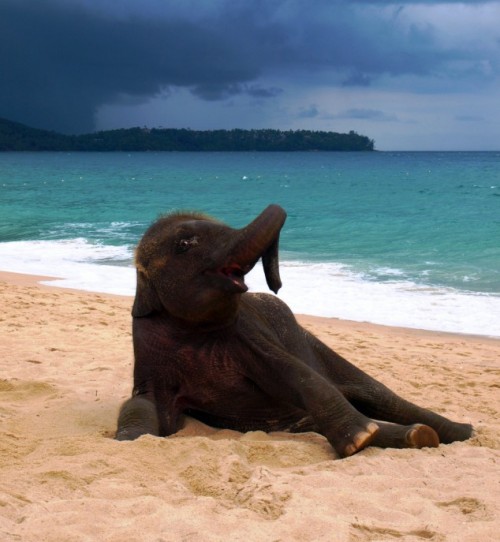
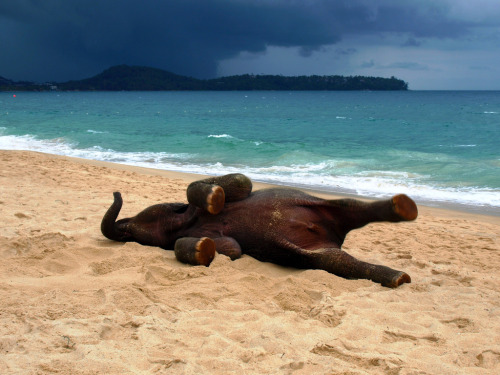
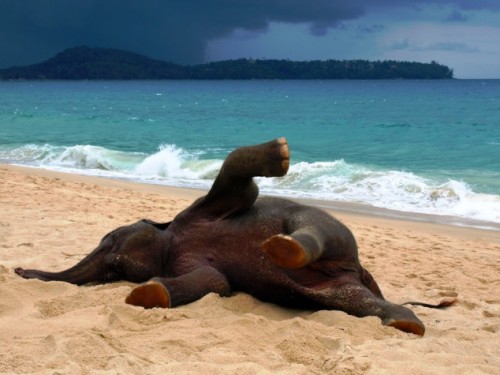
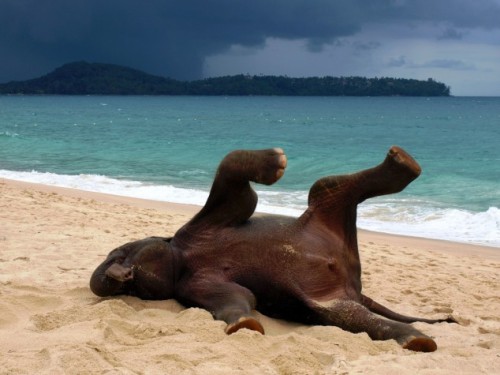
Filhote de elefante sensualiza na praia.
Young elephant playing on a beach in Phuket, Thailand by John Lindie
phuket
NuguilerNo se dejan pasar esas oportunidades

Típico usuario de HD
Grumpy Cat, Shocked Cat, Lil Bub – their images are the currency of the web, passed between friends, family, and co-workers. When they go viral, funny cat pictures heal daily drudgery with a dose of furry, cuddly cheer. But, in terms of the reverence they receive, these cats are hardly the first of their kind. Ancient cultures had cat memes too, and archaeologists have their own term for them: feline motifs.
The word meme, itself a meme, feels ultra-modern, but was coined in the 1970s by Richard Dawkins to refer to any non-genetic unit of replicated information. And it would be chronocentric to presume this term applied only to the proverbial Caturdays following its contemporary articulation. Some archaeologists, known as evolutionary archaeologists, incorporate memetics into their explanations of cultural transmission and change. In their view, cultural evolution, or the speciation of different cultures, happens by selective forces acting on cultural memes, motifs and styles.
We can look back about two thousand years and see cat memes on objects made in the Americas before Columbus set boot here. In fact, the feline motif is a powerful point of acccess to Pre-Columbian cultures, as it was a common from the Mississippi to the tip of South America.
Take a dour little kitty artifact that resides in the American Museum of Natural History. He is Grumpy Cat’s distant cousin. Let’s call him Old Grumpy Cat, or OGC. Museum officials call him a ceramic bottle, and say he probably came from Northern Peru. Created about 2,000 years ago, he was likely used for special ceremonies, then part of a burial. Centuries later, he was dug up by grave looters and sold to collectors, ultimately making his way to his museum home and an afterlife of staring at the world from behind glass.
The vessel was not excavated by academics, so we don’t know exactly where, or when, he is from. Since soil accumulates in layers year after year, archaeologists usually determine age of objects that can’t be carbon-dated by their relation to other objects within the same depositional. No such luck with Old Grumpy.
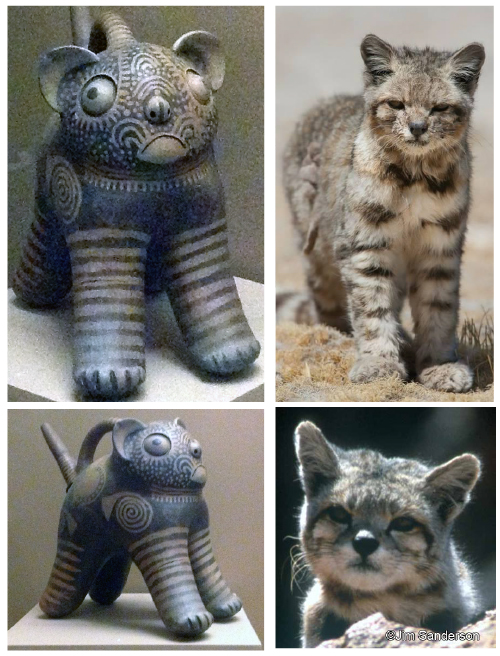
LEFT: Old Grumpy Cat at the American Museum of Natural History. Photo: Kevin Wiley. RIGHT: Andean cats. (TOP RIGHT: Antonio Nuñez-Lemos / BOTTOM RIGHT: Jim Sanderson)
Knowing what species is represented could offer a critical clue, but Old Grumpy is ambiguous. This line of thought, however, can still lead to useful insights.
For example, wild cat conservationists in South America point out that historically-rooted feline reverence makes cat-hunting less likely, helping preserving the ecosystems they inhabit. Even if not sacred per se, cats can be symbols of the regions they inhabit, a source of pride, which, conservationist argue, can save cats’ lives.
Archaeology can also provide data for biologists, as in a recent case in Mediterranean fish biology. Conservationists identified groupers, a species now endangered in the area, in pre-Christian mosaic art. This allowed estimates of the size of ancient groupers and their historic ranges, thus putting an endangered species into a bigger timeline.
Archaeologists like to group cultures by their ceramics. In Northern Peru, steep mountain ranges abut Pacific beaches. Ancient peoples thrived along rivers that run perpendicular to this coastline. Coastal cultures rose and fell in these valleys over thousands of years, each with a signature style of pottery.
Nearly a dozen archaeologists that I spoke with agreed that the color and pattern of Old Grumpy Cat suggest the Virú river valley in Northern Peru.
OGC’s creators used a technique called resist glazing, in which wax was pressed onto a fired pot to make a design. It was then dipped into liquid glaze, which could not adhere to the waxed areas. When the pot was fired, the glaze became glassy and the wax melted away, leaving behind the design. Archaeologists most often attribute resist style to a group that inhabited the Virú valley between 500BC and 1000AD; however, there is ambiguity. On the North coast, resist style was also used by a slightly earlier culture called the Salinar, the later cultures of Chavín and Moche, as well as a culture up the coast called Vicús.
Beyond this decorative style, the people of the Virú valley are known also to have used small, not so fierce looking feline motifs in their ceramics. OGC represents a small spotted cat with striped front legs. This motif had wide currency in the region, as it is also found far to south in petroglyphs associated with the Wari people.
The feline meme evolved, and the time of the Inca (about 1400AD), the most commonly depicted cat was a jaguar, whose meme was so stylized it could be represented by its fangs alone. Some archaeologists propose that meditation on the jaguar meme became a shamanistic ritual, in which ceramic bottles held corn beer called chicha: OGC’s little tail is actually a drinking spout.
Old Grumpy Cat was probably not meant to be a realistic portrait. Even 2,000 years ago, it’s unlikely there were cats with spiral spots. There were no housecats (domesticated Felis sylvestris) in the Americas then, but there were small wild cats. Was Old Grumpy Cat meant to depict one in particular?
There are now ten species of wild cat in South America, eight found in Peru. Each species can look a little different depending on age and location. So, although he doesn’t look much like an adult jaguar (Panthera onca), for example, OGC could be a jaguar kitten. Or a puma (Felis concolor), an ocelot (Leopardus pardalis), or even a margay (Leopardus weidii).
However, the striping on his front legs of suggests one of two species in particular.
The Andean mountain cat (aka Leopardus jacobita) is the rarest small wild cat in the world, and the only endangered wild cat in the Americas, according to the International Union for Conservation of Nature. If Old Grumpy Cat was modeled on this species, he might now have good reason to be frowning. The very existence of living L. jacobita was only confirmed in the past 20 or so years, and its high and dry mountain habitat is very rapidly disappearing as climate change melts the glaciers of the Andes.
DNA evidence confirms modern Andean cat scat about 200km south of the Virú valley, near the scene of the meme.
The other possible species is the Andean cat’s cousin, the Pampas cat (aka Leopardus colocolo). Pampas’ appearance is more variable than the Andean cat, but at the Northernmost reaches of their range Pampas cats tend to have striped legs and tails, with some spots on the back, just like OGC. Indeed, biologists often use genetic tools to definitively distinguish between Andean and Pampas cats, by analyzing DNA that is sloughed off from the cats’ intestines into their droppings.
Even if their historic ecological range brought them near the Virú valley, could the makers of Old Grumpy cat have distinguished Andean cats from Pampas cats by eye?
Besides the handful of biologists who have seen them in the wild, local herders and villagers in the Andean mountains know the difference.
From 1998 to 1999 and 2001 to 2002, a conservation study in Bolivia quizzed mountain residents with photos of the two cats. They lump all small wild cats together into a group they call “titi,” but researchers found that about 18 percent of people considered there to be two different kinds of titi. Moreover, they had different names for the two titis, and described them as living in different habitats with distinct mannerisms.
The Pampas cat was called gato chaskoso, or scruffy cat, while the Andean cat was called gato sonso, or silly cat. The rare sighting of either cat is considered to bring good fortune, but seeing scruffy cat is good luck in general while silly cat brings a good harvest and protects livestock. In fact, according to researchers, locals believe that accidentally killing a silly cat creates a debt to nature that must be atoned annually, and the stuffed pelt is decorated with streamers and kept as household talisman. This modern cat reverence tracks with archaeological hypothesis about the roots of cat worship. Ancient farmers observed that small wild cats killed rodents that would otherwise eat up their crops. Cat health and well-being was a concern of these early agricultural societies.
Taxonomy is a way of charting relationships between things. It is a modern and scientific way of seeing the world. In terms of the lumping and splitting of ancient cultures or modern cat species, descendants of Andean cultures might have another perspective. When asked what species OGC is, archaeologist Nick Saunders points out that the Western urge for taxonomy is not always in sync with indigenous reality.
In ancient, and modern, Andean cultures, “either a one-for-one identification is inappropriate, or different features of different felines (and/or other animals) are recombined in ways which made eminent sense to their creators but totally confuse us,” he wrote.
For example, jaguar spots could be painted on a depiction of another animal, to endow that animal with jaguar powers.
Taxonomy means saying an object or animal is THIS and NOT THAT. In modern Andean cultures, there’s evidence of a less binary way of thinking. The Aymara language (spoken by about two million people throughout Peru and Bolivia) conceptualizes time with the future behind and the past is laid out in front of a person, analogous to being a passenger in a rear-facing train seat. Speakers point to their back when gesturing about future events, and forward when describing the past.
Aymara also uses a three-part, or ternary, logic system. In addition to TRUE and FALSE there is a third, equally valid option, meaning something similar to "not enough information." This has also been called Andean logic. Ternary logic systems can be really useful in describing the universe, be it the universe of perception or a set of data: consider the NULL state, used in databases to distinguish an entry that does not exist from one that represents nothing.
It is only fitting, then, that Old Grumpy Cat defies categorization. He pops out of his museum case, suddenly seeming more relevant because of his resemblance to Grumpy Cat. Maybe he has something to say about climate change effects on wild cats of the Andes, or maybe he tells of sophisticated and underappreciated indigenous people of the Americas, both ancient and modern. Maybe the spiral on the side of Old Grumpy Cat represents time, and overlap of culture and generations in the same physical space. If we assume time will continue into the future (whether we envision that as in front or behind us), perhaps future archeologists will find a Grumpy Cat coffee mug 2,000 years from now and wonder about us. 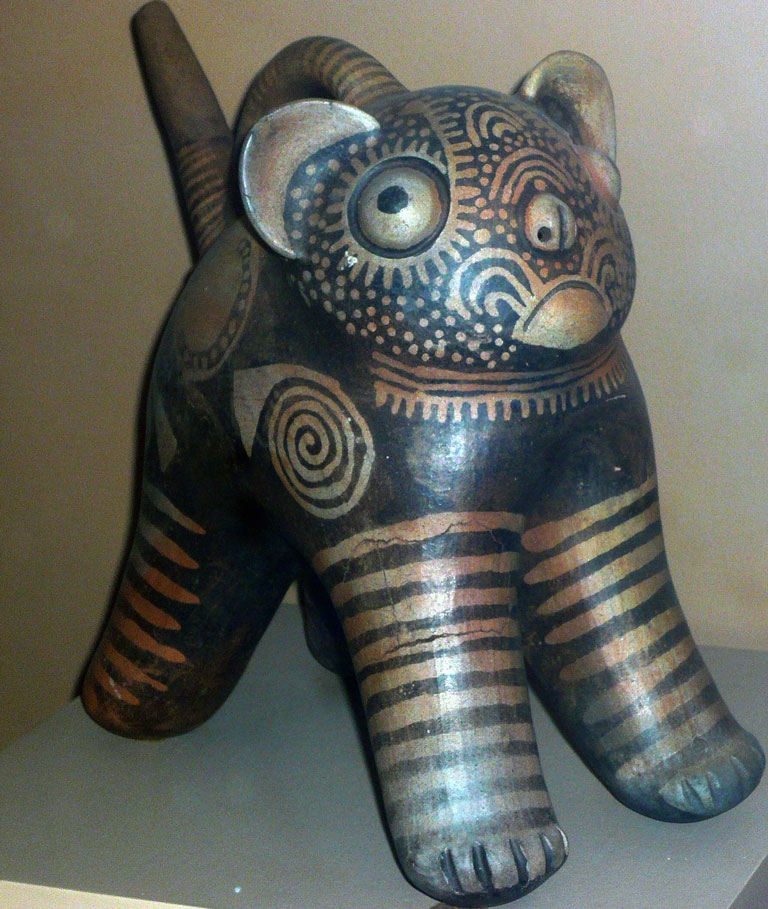

|
|