Hello everyone! Welcome to SFAM’s 2015 Guest Week. I’m on vacation with my family, so today’s strip was written and assembled by my good friend Dante Shepherd from the superb photocomic Surviving The World! Go check it out.
A road diet is a great way for cities to reclaim some of the excess street space they’ve dedicated to cars—generally preserving traffic flows while improving safety and expanding mobility to other modes. But just as food dieters have Atkins, South Beach, vegan, and any number of options, road diets come in many flavors, too. Urban planner and Walkable City author Jeff Speck, in collaboration with graphic artist Spencer Boomhower, takes us on a tour of four types of street diets in a deliciously clear new video series. Here’s a taste.
In this case we have three traffic lanes flanked by two parking lanes. That’s an awful lots of city street space for cars, so here Speck proposes a “3-to-2” road diet: by removing one traffic lane and narrowing one parking lane, a city can make room for a protected two-way cycle track beside the curb. The 3-to-2 diet preserves travel times while increasing safety; as Speck point out, a similar design change made in Brooklyn reduced injury crashes by 63 percent.
The most classic road diet converts four lanes of traffic into three lanes: one in each direction, plus a left-turn lane in the middle. By eliminating one full car lane, the “4-to-3” diet also leaves room for bike lanes on both sides of the street—though this extra space can be used for sidewalk extensions or even dedicated transit lanes, too. A 2013 study of 4-to-3 diets found major safety benefits: a 47 percent drop in crashes in small metros, and a 19 percent dip in big cities.
"Bike lanes are good; a cycle track is better, and requires no more roadway,” says Speck in the road diet’s voiceover. Take the road that we ended up with after the 4-to-3 diet, for instance. In this design, bike lanes run beside car traffic on either side of the street, increasing the potential for collision. But by sliding one parking lane off the curb, this diet makes room for a two-way cycle track protected from moving traffic by a buffer strip as well as a lane of street parking.
This time we focus on a 40-foot street with two 12-foot lanes of opposing traffic and two parking lanes at the curb. Many cities have adopted 12-foot lanes with the assumption that they move more traffic; in fact, as Speck has argued at CityLab before, they present a major safety hazard for cities by encouraging faster driving. He recommends slimming them down to 10 feet—a design configuration that leaves room for a bike lane and makes the street safer, even as it more or less preserves traffic flows.
Copyright expert and professor Pam Samuelson, one of the most respected scholars of copyright law, has published a short paper explaining what she calls the "three fundamental flaws in CAFC's Oracle v. Google decision." As you may recall, that ruling was a complete disaster, overturning a lower court decision that noted that application programming interfaces (APIs) are not copyrightable, because Section 102 of the Copyright Act pretty clearly says that:
In no case does copyright protection for an original work of authorship extend to any idea, procedure, process, system, method of operation, concept, principle, or discovery, regardless of the form in which it is described, explained, illustrated, or embodied in such work.
But CAFC got super confused, and basically ignored 102 while misunderstanding what an API actually is. After the White House itself got confused, the Supreme Court refused to hear the case. This means that the CAFC ruling stays in place, despite it being at odds with lots of other courts. And this might not be a huge problem, since most copyright cases won't go to CAFC. The only reason the Oracle case went to CAFC was because it started out as a patent case, and CAFC gets all patent appeals, even if the appeal has nothing to do with patents. Except... of course, now there's incentive to toss in a bogus patent complaint along with a questionable "interface copyright" complaint just to get it into CAFC's jurisdiction.
Samuelson's paper is a good read (and we'll get to it), but I'd actually argue it's a bit too tame, and leaves out the really fundamental flaw in the CAFC ruling and in the White House brief: these non-programmers don't realize that an API is not software. Almost all of the mistakes stem from this simple fact. They assume that an API is software. And this is highlighted very clearly in the CAFC ruling where they quote Pam Samuelson out of context and then completely miss what she's actually saying. Here's from that ruling:
Google argues that “[a]fter Sega, developers could no longer hope to protect [software] interfaces by copyright . . . Sega signaled that the only reliable means for protecting the functional requirements for achieving interoperability was by patenting them.” ... (quoting Pamela Samuelson, Are Patents on Interfaces Impeding Interoperability...). And, Google relies heavily on articles written by Professor Pamela Samuelson, who has argued that “it would be best for a commission of computer program experts to draft a new form of intellectual property law for machine-readable programs.” Pamela Samuelson, CONTU Revisited: The Case Against Copyright Protection for Computer Programs in Machine-Readable Form.... Professor Samuelson has more recently argued that “Altai and Sega contributed to the eventual shift away from claims of copyright in program interfaces and toward reliance on patent protection. Patent protection also became more plausible and attractive as the courts became more receptive to software patents.”...
Although Google, and the authority on which it relies, seem to suggest that software is or should be entitled to protection only under patent law—not copyright law— several commentators have recently argued the exact opposite. See Technology Quarterly, Stalking Trolls, ECONOMIST, Mar. 8, 2014, http://www.economist. com/news/technology-quarterly/21598321-intellectualproperty- after-being-blamed-stymying-innovationamerica- vague (“[M]any innovators have argued that the electronics and software industries would flourish if companies trying to bring new technology (software innovations included) to market did not have to worry about being sued for infringing thousands of absurd patents at every turn. A perfectly adequate means of protecting and rewarding software developers for their ingenuity has existed for over 300 years. It is called copyright.”); Timothy B. Lee, Will the Supreme Court save us from software patents?, WASH. POST, Feb. 26, 2014, 1:13 PM, http://www.washingtonpost.com/blogs/the-switch/wp/ 2014/02/26/will-the-supreme-court-save-us-from-softwarepatents/ (“If you write a book or a song, you can get copyright protection for it. If you invent a new pill or a better mousetrap, you can get a patent on it. But for the last two decades, software has had the distinction of being potentially eligible for both copyright and patent protection. Critics say that’s a mistake. They argue that the complex and expensive patent system is a terrible fit for the fast-moving software industry. And they argue that patent protection is unnecessary because software innovators already have copyright protection available.”).
But this is just wrong. If you actually look at Samuelson's quotes, she's talking about interfacesnot software. Notice in every quote she is not actually talking about the software itself, but "interfaces," "functional requirements" and "program interfaces." The absolute worst is the first quote, where Samuelson writes "interfaces" and CAFC inserts a "[software]" to imply that it's the same thing. It's not. The two paragraphs are not actually at odds. It is entirely reasonable to argue that interfaces shouldn't be protected by copyright (thanks to Section 102) and that software should not be patentable.
It only looks like they're disagreeing if you're confused and you think that an API is the same thing as the software itself. But that's like saying a recipe is the same as a meal or that a dictionary is the same as a novel that uses those words. It's not the same thing.
So while Samuelson's new paper is great, I still feel like she holds back on that key issue, which is so just blatantly wrong, and seems to underline why non-technical people (including the judges in this case) got so confused. Of course software is copyrightable. The argument is over whether or not an API necessary for interoperability is copyrightable. And, as Samuelson's paper notes, it had been widely accepted prior to the CAFC ruling that the answer is no because they're "procedures, processes, systems and methods" under Section 102.
A second flaw was the CAFC’s overbroad view of the extent to which the “structure, sequence and organization” (SSO) of computer programs are protectable by copyright law. During the 1980s, some courts regarded program SSO as having a broad scope of protection under copyright law. But in the last two and a half decades, courts and commentators have recognized that the SSO concept is too imprecise and misleading to be useful in software copyright cases. The SSO concept does not help courts make appropriate distinctions between protectable and unprotectable structural elements of programs. Procedures, processes, systems, and methods of operation, almost by definition, contribute to the SSO of programs that embody them. However, this does not make those elements protectable by copyright. The design of many program structures, including APIs, is inherently functional and aimed at achieving technical goals of efficiency. This disqualifies them as protectable expression under U.S. law.
Anyway, the rest of the paper is a good read, and hopefully it means that eventually this issue will get back to the Supreme Court -- and one hopes, at that time, someone can at least get through to them that an API is not software.
For the first time this year, the US Army opened its Ranger School to women applicants; 381 men and 19 women got approved to undergo the training program, and two women made it to graduation alongside 94 male peers. Unfortunately, it’s not yet clear what awaits these women upon completion of the course; women are not yet permitted to join the 75th Ranger Regiment, an elite special operations force.
Those unfamiliar with the US Army’s long history of gender essentialism may be surprised to learn that even now, the United States government does not allow women to perform most combat roles; it’s possible that the Pentagon may change their position now that women have proven their physical ability.
We’ve all heard that old statistic about how men supposedly can accrue more upper arm strength than women, but any statistical finding by definition doesn’t account for everybody. (What’s more, women tend to be discouraged to lift weights in American culture, given our weird standards for femininity; those expectations and standards might change if everybody were encouraged to lift a bunch.)
Women weren’t given the opportunity before to disprove the Army’s hypothesis that they wouldn’t be able to keep up with the other Rangers. Now, we know the answer: some of them sure can. It’s possible that others can, too. Won’t know until you let ’em try, right? But, please … give them a job after they graduate, or else they’ll have no reason to bother.
The recent conversation between Hillary Clinton and Black Lives Matter activists after an event in Keene, New Hampshire, is a fascinating look at a mainstream political candidate’s attempts to engage with a burgeoning activist movement, and vice-versa — especially now that there’s video of it. In the brief clips available so far, Black Lives Matter’s Julius Jones recounts the American government’s long history of racist policies and argues that Clinton is complicit in them due to crime and drug-related bills passed by Bill Clinton, then asks her to search her feelings about that. Clinton’s response comes from a very different place:
Look, I don't believe you change hearts. I believe you change laws, you change allocation of resources, you change the way systems operate. You're not gonna change every heart. You're not. But at the end of the day we can do a whole lot to change some hearts and change some systems and create more opportunities for people who deserve to have them to live up to their own God-given potential ... You can keep the movement going, which you have started, and through it you may actually change some hearts. But if that's all that happens, we'll be back here in ten years having the same conversation.
Daunasia Yancey, another one of the activists in the video, later went on Melissa Harris-Perry’s show and said that since the hope was for a personal reflection from Clinton, “her response really targeting on policy wasn't sufficient for us.”
It should be obvious that no attempt to bridge the racial divide in America is only going to involve either policy change or white people reflecting on their role in maintaining structural racism. But this debate does neatly highlight historical tendencies within activist movements and some of the challenges they face in the attempt to take their message mainstream.
Back in 1965, in an issue of Ebony magazine dedicated to “The White Problem in America,” Lerone Bennett Jr. wrote that "When we say that the white American is a problem to himself, we mean that racism is a reflection of personal and collective anxieties lodged deep in the hearts and minds of white Americans." It’s not only a powerful sentence, it’s a prescient one — in the years since then, reams of psychological research have underscored the reality that racism isn’t just terrorists running around in hoods. It can take on all manner of subtle, more hidden, and unconscious forms, and can even embed itself in institutions that claim to be “color-blind,” as Michelle Alexander brilliantly showed in her book The New Jim Crow.
In many activist and academic communities, this realization has led to a focus on white privilege — the idea that white Americans continue to enjoy certain benefits that people of color do not. Interrogating white privilege and asking would-be white allies to reflect on it becomes a major priority. Without this, some activists say, real progress isn’t possible. The focus on “checking your privilege,” while easy to caricature, reflects the reality that a lot of people don’t understand how cultural and economic inheritance on a societal level shapes their opportunities.
The policy-minded counterargument to this approach was recently stated by Oliver Willis, an African-American blogger and Media Matters for America fellow: “You meet with the Democratic frontrunner for president, right now the person in the field in either party with the highest likelihood of being president, and the best you can do is ask her about her feelings?” To Willis, the content of Clinton’s heart is unimportant: “No offense to Secretary Clinton, but I don’t care about her feelings on this issue as much as I am interested in her and other leaders — of either party — getting behind concrete reforms to stop — STOP — the policies and tactics that have led to such problems for our fellow Americans.” In other words, who cares what people think if we can fix policies that lead to racist outcomes? (It should be pointed out that another meeting Clinton had with Black Lives Matter activists, including DeRay Mckesson, one of the group's leaders, did appear to be more policy-focused.)
It’s clear these ideas are in tension, at least at the extremes — if you focus mostly on white people and their need to reflect on their privilege, you might miss out on important policy considerations; if, on the other hand, you focus on policy at the expense of reflection, there’s a chance you won’t change the underlying attitudes that give rise to racist institutions in the first place.
Where does that leave us? Social science can help, and here are a few key findings:
1. White Americans don’t tend to agree that the country has a race problem. One of the underlying problems in addressing America’s racial divide is that many white people don’t acknowledge its existence. As the work of researchers like Michael I. Norton has shown, white people are much, much less likely to acknowledge that there are racial discrepancies in policing, access to resources, and other issues. In fact, some recent polls have shown that white people think anti-white bias is a bigger problem in society than anti-black bias (a view that is, suffice to say, not borne out of any actual data). Even white millennials aren’t as tolerant as one might hope.
One way to interpret all this is that while some white “allies” of Black Lives Matter are ready to talk about anti-black bias and their own privilege, many Americans might not be (more on this soon). In cases where they aren’t, Clinton’s talk of needing to find “common ground” may be more important than mere politician-speak — it might reflect the reality that if white people can’t even acknowledge discrimination against black people is a problem, there’s no hope of “changing their hearts.”
2. White-privilege conversations are vital, but psychologically threatening to white people. Eric Knowles, a social psychologist at NYU, told me that white people “often feel defensive when told that they’re members of a group that has just factually perpetrated historical wrongs, and that they’re currently enjoying privileges.” No one wants to be part of a “bad” group, and no one wants to have their accomplishments called into question, because an individual may well feel like they’ve earned everything they have without the help of white privilege, or they might be dealing with struggles that don’t lead them to feel privileged in the first place. (It should be said that this isn’t unique to white people: One of the core truisms of research into persuasion is that arguments that elicit defensiveness in the receiver are less likely to succeed. On the other hand, “When people have their self-worth validated in some way, they tend to be more receptive to information that challenges their beliefs,” Peter Ditto, a psychology professor at the University of California, Irvine, told me last year.)
Recently, a team led by Knowles proposed what they call a “3-D” system for conceptualizing white people’s reactions to the idea that they are a privileged group. Writing in Perspectives on Psychological Science, the researchers argued that such reactions fit into one of three categories: deny, distance, or dismantle. Those in the first group deny the existence of white privilege altogether, and sometimes reach for arguments about anti-white bias instead; those in the second group acknowledge white privilege but claim it doesn’t apply to them (because of their class, for example — it’s worth pointing out here that class is obviously a major factor in questions of who gets what, but can’t fully explain society’s discrepancies); and those in the third agree that white privilege is a problem that needs to be, well, dismantled.
Black Lives Matter wants white people to land in the “dismantle” camp. But Knowles said that since this is a new model, researchers don’t yet know exactly what causes a white person to favor one or the other approach. Knowles told me that he suspects that things like a white person’s political orientation and past educational experiences play a role, but that more research is needed.
Richard Harvey, an instructor at St. Louis University, said that given all the potential for white people to react negatively to these sorts of messages, it’s important to take an individualized approach.“I kind of subscribe to what I would call a developmental continuum,” he said. “That is, you kind of have to see where people are with regard to their development [on race and privilege issues] to decide which kinds of techniques are going to work best with them.”
That means that asking for moral self-inquiry might only work on people who’ve already thought about this stuff a little. “Frankly, I think that confronting people with white privilege and implicit biases requires they be a little further along on the developmental continuum in order to truly receive that. I do think it’s ultimately needed, but it wouldn’t be my first ‘date,’” Harvey said. In other words, a little coddling might help, at least early on.
The response to which might be: Haven’t white people been coddled enough? Isn’t it time they just finally face up to the privilege they’ve enjoyed for so long? Knowles says: “My reaction to that is, in the world today social change on a large scale is going to require the buy-in of the most powerful racial group — it’s a side effect of an unequal and unfair power structure that you’re going to achieve the most durable change if you can engage the most powerful people in that process of change” — that is, white people — “and I think that’s really obvious.” In other words, as in any other activist effort, some message-tailoring will be necessary. “You want to open people’s minds to the possibility that they’re at the top of a hierarchy without engaging all of their psychological defenses, like denial, disengagement, and just not listening,” said Knowles.
3. Segregation is still a huge factor, and integration may help reduce the number of white people who reject notions of white privilege and institutionalized racism. Lisa Spanierman, an Arizona State University psychologist who researches, among other things, white reactions to arguments about privilege and racism, told me that one effective way to encourage self-reflection about race among white people is through having meaningful interactions with black people. This “contact hypothesis” idea dates back to the pioneering social psychologist Gordon Allport, but it’s a challenging goal given the United States’ persistent segregation problem, particularly — but not exclusively — in schools. “We” — that is, white people — “can really avoid people of color, and we do it unconsciously by living in quote ‘safe’ neighborhoods and adopting other practices that don’t feel like they’re contributing to the racial divide, but which are,” said Spanierman.
This notion can be overstated: Just as the old idea that listening to the music and eating the food of other cultures will magically open minds hasn’t really panned out, it’s not as simple as just mashing black and white people together and, voilà!, societal progress. But on the question of whether meaningful interactions and relationships between groups can reduce prejudice, there’s strong evidence that they can. A recent two-part "This American Life"episode powerfully showed white resistance to the integration of school systems, but also the benefits — including meaningful interactions — that can occur once it’s achieved. If Knowles, Spanierman, and other researchers are correct, these interactions may well open white people up to those aforementioned, psychologically threatening conversations about race. Policy, in other words, can lead to self-reflection.
Ugh...not again. You get home at the end of the day, and sit down to stream a new movie or upload vacation photos — and your Wi-Fi slows to a crawl or just stops working. Instead of relaxing in front of the screen or sharing those photos with friends, you spend it unplugging and re-plugging cords, trying to decipher blinking lights, or contemplating a call to customer support.
While we count on Wi-Fi more than ever to be entertained, productive, and stay connected, we’re streaming and sharing in new ways our old routers were never built to handle. So today, with our partner TP-LINK, we’re launching OnHub, a different kind of router for a new way to Wi-Fi. Instead of headaches and spotty connections, OnHub gives you Wi-Fi that’s fast, secure, and easy to use.
Designed for the Home Many of us keep our router on the floor and out of sight, where it doesn’t work as well. We replaced unruly cords and blinking lights with internal antennas and subtle, useful lighting, so you’ll be happy placing OnHub out in the open, where your router performs its best.
Starts Fast, Stays Fast During setup, OnHub searches the airwaves and selects the best channel for the fastest connection. A unique antenna design and smart software keep working in the background, automatically adjusting OnHub to avoid interference and keep your network at peak performance. You can even prioritize a device, so that your most important activity — like streaming your favorite show — gets the fastest speed.
A simple mobile app OnHub makes it simple to set up and manage your Wi-Fi, all from the Google On app, available on Android or iOS. The Google On app tells you how much bandwidth your devices are using, lets you run a network check, and if there’s an issue with your Wi-Fi, the app offers suggestions to help. And, instead of lost passwords and sticky notes, it even reveals your password with a single tap and lets you text or email it to friends.
Just gets better OnHub automatically updates with new features and the latest security upgrades, without interrupting your connection. In the future, OnHub can support smart devices that you bring into your home, whether they use Bluetooth® Smart Ready, Weave, or 802.15.4. We also plan to design new OnHub devices with other hardware partners in the future. Stay tuned for news from our second partner, ASUS, later this year.
Starting today, OnHub is available for pre-order for $199.99 from online retailers in the U.S. including the Google Store, Amazon, and Walmart.com. It will be available for sale in retail stores in the U.S. and in Canada in the coming weeks.
At the end of the day, we want our Wi-Fi to just work, so that we can do all the things we love to do online. Here’s to Wi-Fi with the reliability, speed, and security you want at home, without the frustrations you don’t.
Posted by Trond Wuellner, Group Product Manager
Instead of headaches and spotty connections, OnHub gives you Wi-Fi that’s fast, secure, and easy to use.
Adding solar panels to your roof is a frustrating process, since it's often difficult to work out if your home receives enough light to justify your initial investment. Google, however, has mapping, satellite and sunlight data for every property in the world, so it's ideally placed to let you know how many rays hit your home. That's why the firm is launching Sunroof, a database of how much solar energy hits a building in a city to create a "treasure map" of future green energy projects -- including how much money you'd make each year.
To begin with, Project Sunroof is only starting in a few places: Boston, San Francisco and Fresno, but if it's successful, will roll out to the rest of the country, and the rest of the world, in the future. Once you've worked out how much you're likely to generate in energy savings, the Sunroof website will put you in touch with a local installer.
We tested the service out on Aol's building in San Francisco, and it told us that it received 1,841 hours of usable sunlight per year. The site was also able to tell us that we have roughly 15,461 square feet of available space that we could use to install solar panels into that space. It then took us through our options, letting us know that we'd save $14,000 if we leased the hardware from a third party, or $24,000 if we bought them outright.
But, there are rules—usually for specific chart types meant to be read in a specific way and with few exceptions—that you shouldn't break. When they are, everyone loses. This is that small handful.
Bar chart baseline must start at zero
The bar chart relies on length to show data. Shorter bars represent lower values, and longer bars represent greater values. Compare bar lengths to compare values. That's how it works.
When you shift the baseline, you distort the visual.
For example, look at the graphic above. The first bar chart on the left compares 50 and 100, and it has a zero-baseline. Good. The bar that represents 100 is twice the length of the bar that represents 50, because 100 is twice the magnitude of 50.
But when you shift the baseline to a higher, non-zero value, the length of the first bar decreases. The length of the other stays the same. The 100-value bar is no longer twice the length of the 50-value bar. Keep on going, and the left bar disappears completely, suggesting that 100 is infinitely greater than 50.
The March 31 goal of 7,066,000 is 17.8% greater than 6,000,000, but the second bar is almost three times the length of the first.
One might argue that the focus is on the difference of the two values rather than on the two values themselves. Even so, a bar chart would be the wrong choice. A time series that shows a monthly cumulative would likely be better.
Don't go overboard with pie slices
Some say to avoid pie charts completely. Maybe they're right, and maybe not. Some might argue that pie chart usage in itself is an unforgivable violation. I would argue against that. In any case, the fact is that people use them regardless, so we can at least push for correct usage.
Avoid using too many slices, because it eventually becomes unreadable.
What is "too many" slices though? That's a judgement call, but if it's hard to tell that one slice represents twice the value as another or smaller slices start to look the same, it's time to scale back. Consider clumping the smaller categories into a larger "Other" group. The same goes for donut charts.
The chart on the left already has a lot of slices, but then there's a breakout pie chart for smaller countries that provides even more. There are a lot of ways to go about showing this data, such as a treemap, properly scaled symbols, or just a regular map. The meager pie chart just isn't built for datasets that are more than a handful of values.
Respect the parts of a whole
Charts that represent parts of a whole should be used to show data that represents parts of a whole. This includes stacked bar charts, stacked area graphs, treemaps, mosaic plots, donut charts, and pie charts. Each section in these charts represents a separate, non-overlapping proportion.
The most common occurrence of this violation is when a survey question allows for more than one answer. For example: "What mode of transportation have you used in the last week? Check all that apply." Account for the overlap, where people select more than one answer, or you can't chart the proportions straight up.
Example
This pie chart, courtesy of a Fox News affiliate, shows three percentages that aren't parts of the same whole:
Instead, each value is a standalone percentage out of 100, so three stacked bars (or regular bars) would be more useful in this case.
Show the data
This is the point of visualization. If you don't show the data, it defeats the purpose of the chart. This often happens when you show too much data at once, and you obscure the area of interest.
This is a classic over-plotting problem, and there's plenty of research on the topic. But for your basic charts, there are a few simple solutions.
Change symbol sizes so that each dot (or whatever else) doesn't take up as much space. You're basically trying to increase white space.
Use transparency so that symbols still appear when another is placed on top.
Break up the population into subgroups either by sampling or using actual categories in the data. From there, you can go the small multiple route so that there are fewer points per chart.
Aggregate the data into bins.
In summary: Show the data.
Example
Here's a chart for every shot the Golden State Warriors took during the 2008-09 season.
You end up with the shape of a court and a slight idea of where players shot the most — close to the basket, mid-range, and three-point. But the difference is subtle and you can't see the true magnitude of the differences. Aggregation would help.
Explain encodings
When you "show the data", you encode it to shapes, colors, and geometries. For that to work though, you and others need to be able decode back to the values. The classic example is unlabeled axes.
Sometimes encodings don't need to be explained. For example, your audience likely knows how to read a bar chart, so you don't have to explain that bar length represents values. But you do need to explain the data, namely the units and the subject at hand.
So label your axes. Provide a key or legend. Explain encodings.
There you have it. At the end of the day—to make sure you don't break the most basic of visualization rules—it's all about understanding the encodings. If you understand how data translates to geometry, you can make your own things and establish your own visualization types. But when it comes to specific chart types that are meant to be read in a specific way, there's little to no leeway.
In summary: Learn data encodings. Then figure out the difference between a suggestion and a rule.
Joe Patrice at Above the Law has snagged a rather humorous opinion issued by Judge Charles Breyer. Breyer had the [mis]fortune of presiding over a long-running dispute between Hewlett-Packard and its shareholders. Running almost three years and involving more than 400 filings, a settlement had finally been reached and it looked as though Breyer could put this one in the rearview mirror.
Unfortunately for him, Hewlett-Packard still had some unfinished business. It wanted to have a number of documents sealed, despite the fact that the documents in question were already heavily-redacted and likely contained very little of use to anyone other than the parties involved in this case. Eight motions in total were filed by HP during the waning days of the legal battle. All eight have been denied by Judge Breyers… because [REDACTED].
The order, which looks more like an FBI FOIA response than an entry on a district court docket, doesn't completely prevent HP from requesting the sealing of documents, even if the explanation for Breyer's refusal leaves almost everything to its lawyers' imaginations. There's a footnote on the final page that provides a few curt instructions for HP to follow if it wishes to have any documents locked away from the public's eye.
No motion for reconsideration will be entertained unless HP identifies within three days "a limited amount of exceptionally sensitive information that truly deserves protection" under the "compelling reasons" standard of Kamakana v. City and Cty. of Honolulu [...] outlined by page and line number and including "specific factual findings" for each. See O'Connor v. Uber Technologies, Inc. In light of the "public interest in understanding the judicial process" as it relates to the settlement of these claims, the Court will not countenance arguments that public filing would put HP at a competitive or legal disadvantage.
HP seems to like its black ink. Judge Breyer just gave them a taste of their own redaction. This certainly won't stop HP from making another attempt to seal submitted exhibits, but at least it gives the company a succinct depiction of Breyer's thoughts on its multiple motions.
So I was rereading Harry Potter, when I came across this and thought- what if instead of Cedric Diggory, Cassius Warrington had been chosen to compete in the Triwizard Tournament?
Imagine Dumbledore calling out the name of the Hogwarts champion and it isn’t a Gryffindor, or a Ravenclaw, or even a Hufflepuff, but it’s a Slytherin. A student from a House most people hate.
Imagine Cassius Warrington getting up, and three out of four Houses are booing at him and shouting things like “NO!” or, “We can’t have a Slytherin champion!” or demanding a retry. But he’s a Slytherin- he’s been dealing with this shit since he got sorted, so he keeps his head high and joins the other champions.
Imagine Harry trying to catch Warrington alone because he doesn’t really want to associate with Slytherins (plus Malfoy has this tendency of being around the guy ALL THE TIME since he got chosen), but at the same time he’s also fair enough not to want him to walk into the first task unprepared.
Imagine Warrington walking over to Harry a few months later, and Ron and Hermione both jump into a protective stance, wands out, but instead of attacking Harry he just tells him to stick the egg underwater. (Because Slytherins don’t forget those who helped them out).
Imagine Warrington and Harry helping each other out in the labyrinth.
Imagine Harry being devastated when Peter kills Warrington- because Voldemort doesn’t care what house they’re form, a spare is a spare.
Imagine the uproar that causes among the Slytherins, because some of their parents really are Death Eaters and they know what really happened.
Imagine Slytherins fighting in the Battle of Hogwarts and shouting “This is for Cassius!”
Imagine Harry returning with Warrington’s body, and the crowd realizes what’s happened, but Warrington’s parents don’t show up. There’s no one to mourn him, to cradle him in their arms and cry for their son. The Slytherins know why. His parents were Death Eaters, too.
Imagine Slytherins reaching out, asking for help from classmates from other houses. They’re terrified, truly terrified because the being their parents claimed would never hurt them because they’re pureblood, they realize that he does not care.
Imagine Slytherins in the 5th book sneaking off to join Dumbledore’s Army, to learn more about who Voldemort is without their parents acting as a filter.
Imagine the shock when they’re told what he’s really done.
Imagine that a few talented Slytherins went with Harry and the others into the Ministry of Magic. The others are a bit wary but they prove themselves as friends.
Imagine them being confronted by Lucius Malfoy in the the Hall of Prophecy, and when the Death Eaters descend, they know that any one of them could be their parents.
Imagine the shocked gasp of a Death Eater as they realize their own child, a pureblood, is standing defiantly with Harry Potter. They choke back a cry. They can’t let their child know that they were about to duel to the death.
Imagine a DA Slytherin facing off against their own Death Eater parent. That they make the decision to let their child defeat them, because in that moment, they realize that they love their child more than they fear Voldemort. They go down, mask unveiled, and the Slytherin kid has to be dragged from the fight before he gets killed.
Imagine Book 6 Slytherins getting more friendly and cooperative with the other houses. Two years of Voldemort terrorizing the muggle and Wizarding world, two years where their parents just up and leave some days, cringing from the pain in their arm, two years after the death of the first Slytherin pureblood, Cassius Warrington, killed by Voldemort’s right-hand man, and they’re slowly hitting the breaking point.
Imagine Slytherin kids keeping tabs on their parents, sending the information to Harry, who shares it with the Order of the Phoenix, and hoping that their parents won’t be killed.
Imagine Book 7 Slytherins low-key rebelling against the new oppressive Hogwarts staff.
Imagine the final siege on Hogwarts, where Slytherins stand proudly by their fellow houses, knowing full-well they could be fighting their own parents. Some Slytherins know their parents were in the fighting. They hope to find them first and sneak them away. Their fellow students understand. Professor McGonagall allows 7th Year Slytherin, Pansy Parkinson, to duel a death eater in her stead; her father is under that veil. She knows it.
Imagine the aftermath of the battle; every house suffered loses. Slytherin students crying over the deaths of friends they made in every house.
Imagine
a Cassius Warrington statue made in his honor, the first Slytherin to fight and die nobly with Harry Potter, the boy who lived, in the face of ultimate evil. He was a true Slytherin, and it’s in his name that Slytherin children and their families have cut all ties with the Death Eaters, denounced Voldemort, and are finally living in peace.
Imagine a story in which Harry wasn’t in love with his fellow champion’s girlfriend, but after her boyfriend’s death just hugs her so long, so hard, and says “he wanted to win for you. You should know–you should know he won, he did it for you” and gives her the best hug and shoulder he knows how to be because her parents aren’t there either and she must know why.
Imagine Harry staring over her head at everyone else until Hermione steps up–it doesn’t take long, but it takes long enough that when she does all eyes are on her as a source of motion–and says “we’re never going to forget this. They’re not going to get away with it” and the girlfriend just latches onto Hermione and everyone is in wands-out stance convinced she’s about to attack the shit out of Hermione, and then the girlfriend stares into her eyes and says “do you promise me” and Hermione just gives her this super-firm nod and says “I promise” and the girlfriend just collapses on her, sobbing.
Imagine Dumbledore trying to give some flowery speech about inter-wizard solidarity while glossing over why, because Slytherins have always been a touchy subject, and Ron gets to his feet and says “Professor, I need to say something important” and Dumbledore is so surprised he just cedes the floor, and Ron–after that awkward moment when he realizes everyone is staring at him–says he didn’t know Warrington particularly, but he knows how Warrington and Harry played. That each was always cheering on the other. Both wanted to win, but neither was willing to undercut the other by underhanded means. He finishes up saying “I think–I think it’s important everyone should know he died being what a champion should be. Because he could have abandoned Harry and instead he stood up with him to play the game the honest way, and he died for it. And–and Slytherin House should be proud, and we should all be proud, because Warrington was a good bloke.” He sits back down all flustered because he didn’t actually stand up meaning to make a speech. And then Pansy Parkinson stands up before Dumbledore can take back control of the room and says “I want to tell Weasley thank you.” And all of Slytherin House raises a glass–to Warrington, to Weasley, to Potter–and the other houses follow suit. Many years later, Wizarding scholars will say that was the moment Voldemort truly lost.
Imagine later that summer. Harry gets several owls on his birthday, all unsigned. The birds are plump and pretentious and well-cared-for. He will never know which Slytherins sent him their treasures: parchments with hexes developed by the Death Eaters; a strange locket that will only open if he whispers a special spell but that always shows him the picture he most needs to see; a page torn from a potions book that, brewed properly, will allow him extra time to summon a Patronus by giving him a few crucial seconds not just of happiness but of bliss. It doesn’t matter. Harry knows these gifts not as birthday gifts but for what they really are, and he treasures the locket and copies out the potion to send to Hermione and Mrs. Weasley, and when first summoned by the Order of the Phoenix he marches straight up to Dumbledore with the hexes and says “I can’t tell you where I got these, Professor. But they’re in use by the Death Eaters and I think you should have them.” Months later, Sirius will recognize the spell Bellatrix shoots at him, and will dive out of the way just in the nick of time.
The final battle. Everyone is there. Sirius somehow ends up herding a group of Slytherins. They all stare at him and he at them, across a centuries-old divide Voldemort has only succeeded in deepening. Then he remembers the hexes. Harry’s locket, now tucked under Sirius’ shirt because Harry’s friends are with him in this battle but most of Sirius’ are dead. The moment that happiness potion saved Remus’ life, his very soul. Snape’s final words to Harry, finally seen not as mockery but real true advice. What Harry said Voldemort said–his first words in his new form. They are kids, and they are sharing the same kind of hurt he once wouldn’t admit to, watching his mother burn his name off the family tree. “When we go in there, it’s going to be hell,” he tells the Slytherins. “Some of you are probably going to die. I might go down too, and if I do I want your best curser in the front. But I want you all to remember one thing. There are no spares.” Later retellings of the battle never fail to mention the moment a group of angry, screaming teens burst into the Great Hall, wearing their green and silver as the badge of honor it should be, shouting NO SPARES, NO SPARES at the tops of their voices in between hexes and curses and the occasional physical punch. When Hermione is present, she always interrupts the storyteller to be sure everyone knows about the moment Blaise Zabini shoved her to the floor, dropped on top of her, fired off three curses in rapid succession and said “stay alive, Granger, we need you” before jumping back to his feet and vanishing into the melee–how, for all anyone knows, those may have been his last words, and she will not let his sacrifice go unnoted.
The aftermath. Malfoy holds out a hand to Sirius, badly injured on the floor. Sirius asks how Malfoy is willing to trust him. Malfoy nods at his chest. “You’ve got my godfather’s locket,” he says, and when Sirius and Harry finally speak after the battle Harry gives his full agreement to the very first thing out of Sirius’ mouth. They give the locket to Malfoy. Sirius grits his teeth and closes his eyes and opens them and says “He probably saved my life, giving Harry that.” He doesn’t say thank you. Malfoy hears it anyway.
The school reopens under a single banner: the four Houses united. The House rivalry is reduced to just that–a competition in fun–with those deep divides slowly healing to scars, and eventually away to nothing at all.
Last week, Techdirt wrote about Google's refusal to comply with France's order to apply the "right to be forgotten" -- actually, a right to be removed from search results -- globally. Perhaps because the issue seems easy to understand, many have offered their opinions on the rights and wrongs of Google's move, both for and against. Writing in The Guardian, Julia Powles has provided a good summary of the two main positions. First, without the "right to be forgotten," the internet would become a "database of ruin":
Some meaningful rights to delist old, irrelevant or incorrect information from monolithic databases are important, in order to give us a small, imperfect measure of privacy and dignity. They offer a minor speed bump on asymmetric routes of power, like the one that says you have no rights or say over Google’s presentation of search results.
The opposing camp, which includes Jonathan Zittrain, says we must not give in to this natural desire to remove links in this way, because doing so would create a "Swiss cheese internet":
Even if we might see some merit in Europe’s data laws, Zittrain is not at all happy about them being used to carve holes out of Google search. To counter the database of ruin argument, he says we are creating a “swiss cheese internet”.
The nub of Zittrain’s concern is that the practice of shaping what stays and what goes from the database is hopelessly individualistic. By allowing the delisting of information that is incorrect, outdated or harmful for individuals, who knows what else will follow. It sets us on a path, Zittrain claims, where the internet becomes the lowest common denominator result of what all the world’s countries and courts are prepared to leave behind.
Both of these positions, and countless variations on them, have been expounded many times over the last few days, and Techdirt readers will doubtless have their own views. But Powles goes on to make a new and interesting point that connects the battle over the "right to be forgotten" with the copyright industry's war on sharing:
Google’s argument that "no one country should have the authority to control what content someone in a second country can access" is appealing, but it is also misleading. Currently, US copyright law is relied on to remove content from Google’s global index, no matter where an alleged incident occurs, and at a rate at least three orders of magnitude greater than partial delistings under data privacy laws. The respective rates of approval are 97% for 345 million copyright requests and 41% for one-quarter million privacy requests, in a comparative period.
Google's behavior here suggests that it is more important to enforce copyright takedowns globally than to do the same to protect personal privacy. That means the issue of "the right to be forgotten" is even larger than it seems at first sight. As Powles rightly notes:
The complex challenges involved in global enforcement of laws demand us to ask what kind of society we want to live in. Are trademark and copyright law really that black and white? Is it appropriate for global brands to block sites on the other side of the world, which are neither ambiguous in their origin or misleading to consumers, and may engender creativity and meaning in their own right? Can we balance, with equal force, human rights as much as economic rights?
According to official estimates, the average French person throws out 20kg-30kg of food a year – 7kg of which is still in its wrapping.
Photograph: Christopher Thomond for the Guardian
French supermarkets will be banned from throwing away or destroying unsold food and must instead donate it to charities or for animal feed, under a law set to crack down on food waste.
The French national assembly voted unanimously to pass the legislation as France battles an epidemic of wasted food that has highlighted the divide between giant food firms and people who are struggling to eat.
As MPs united in a rare cross-party consensus, the centre-right deputy Yves Jégo told parliament: “There’s an absolute urgency – charities are desperate for food. The most moving part of this law is that it opens us up to others who are suffering.”
Supermarkets will be barred from deliberately spoiling unsold food so it cannot be eaten. Those with a footprint of 4,305 sq ft (400 sq m) or more will have to sign contracts with charities by July next year or face penalties including fines of up to €75,000 (£53,000) or two years in jail.
“It’s scandalous to see bleach being poured into supermarket dustbins along with edible foods,” said the Socialist deputy Guillaume Garot, a former food minister who proposed the bill.
In recent years, French media have highlighted how poor families, students, unemployed or homeless people often stealthily forage in supermarket bins at night to feed themselves, able to survive on edible products which had been thrown out just as their best-before dates approached.
But some supermarkets doused binned food in bleach to prevent potential food-poisoning by eating food from bins. Other supermarkets deliberately binned food in locked warehouses for collection by refuse trucks to stop scavengers.
The practice of foraging in supermarket bins is not without risk – some people picking through rotten fruit and rubbish to reach yoghurts, cheese platters or readymade pizzas have been stopped by police and faced criminal action for theft. In 2011, a 59-year-old father of six working for the minimum wage at a Monoprix supermarket in Marseille almost lost his job after a colleague called security when they saw him pick six melons and two lettuces out of a bin.
It's scandalous to see bleach being poured into supermarket dustbins along with edible food
Guillaume Garot, former food minister
Pressure groups, recycling commandos and direct action foraging movements have been highlighting the issue of waste in France. Members of the Gars’pilleurs, an action group founded in Lyon, don gardening gloves to remove food from supermarket bins at night and redistribute it on the streets the next morning to raise awareness about waste, poverty and food distribution.
The group and four others issued a statement earlier this year warning that simply obliging supermarket giants to pass unsold food to charities could give a “false and dangerous idea of a magic solution” to food waste. They said it would create an illusion that supermarkets had done their bit, while failing to address the wider issue of overproduction in the food industry as well as the wastage in food distribution chains.
The law will also introduce an education programme about food waste in schools and businesses. It follows a measure in February to remove the best-before dates on fresh foods.
The measures are part of wider drive to halve the amount of food waste in France by 2025. According to official estimates, the average French person throws out 20kg-30kg of food a year – 7kg of which is still in its wrapping. The combined national cost of this is up to €20bn.
Of the 7.1m tonnes of food wasted in France each year, 67% is binned by consumers, 15% by restaurants and 11% by shops. Each year 1.3bn tonnes of food are wasted worldwide.
The Fédération du Commerce et de la Distribution, which represents big supermarkets, criticised the plan. “The law is wrong in both target and intent, given the big stores represent only 5% of food waste but have these new obligations,” said Jacques Creyssel, head of the organisation. “They are already the pre-eminent food donors, with more than 4,500 stores having signed agreements with aid groups.”
The logistics of the law must also not put an unfair burden on charities, with the unsold food given to them in a way that is ready to use, a parliamentary report has stipulated. It must not be up to charities to have to sift through the waste to set aside squashed fruit or food that had gone off. Supermarkets have said that charities must now also be properly equipped with fridges and trucks to be able to handle the food donations.
A report earlier this year showed that in the UK, households threw away 7m tonnes of food in 2012, enough to fill London’s Wembley stadium nine times over. Avoidable household food waste in the UK is associated with 17m tonnes of CO2 emissions annually.
Last minute evidence that completely turns a legal case on its head doesn't come about all that often -- despite what you see in Hollywood movies and TV shows. The discovery process in a lawsuit generally reveals most of the evidence revealed to everyone pretty early on. And yet... in the high profile lawsuit over the copyright status of the song "Happy Birthday," the plaintiffs "Good Morning to You Productions" (who are making a documentary about the song and are arguing that the song is in the public domain) have popped up with a last minute filing, saying they have just come across evidence that the song is absolutely in the public domain.
And, here's the real kicker: they discovered this bit of evidence after two questionable things happened. (1) Warner/Chappell Music (who claims to hold the copyright for the publishing, if it exists) suddenly "found" a bunch of relevant documents that it was supposed to hand over in discovery last year, but didn't until just a few weeks ago, and (2) a rather important bit of information in one of those new documents was somewhat bizarrely "blurred out." This led the plaintiffs go searching for the original, and discover that it undermines Warner Music's arguments, to the point of showing that the company was almost certainly misleading the court. Furthermore, it definitively shows that the work was and is in the public domain.
If you haven't been following the issue closely, there is actually a lot of evidence, much of it put together by Robert Brauneis, that the song really should be in the public domain. There are all sorts of questions raised about how it became covered by copyright in the first place. Everyone agrees the song was originally written as "Good Morning to All" in the late 1800s, but from there, there's lots of confusion and speculation as to how it eventually was given a copyright in 1935, granted to the Clayton F. Summy company. People have argued that the 1935 copyright was really just on a particular piano arrangement, but not the melody or lyrics to Happy Birthday To You -- which had both been around long before 1935.
Warner/Chappell has long argued that Summy Co never published or allowed anyone else to publish the lyrics to Happy Birthday, but that seems undone by this new evidence. And, again, it seems a bit odd that magically Warner/Chappell suddenly "found" a bunch of new evidence. As Good Morning to You Productions notes:
On July 13, 2015, Defendants gave Plaintiffs access to a database of approximately 500 pages of documents, including approximately 200 pages of documents they claim were “mistakenly” not produced during discovery, which ended on July 11, 2014, more than one year earlier.
So over a year later, and just weeks before the court was likely to rule on the matter, suddenly Warner finds stuff that was missing before? Okay. But it gets even stranger. Because one of the things in this very late data dump is a 1927 publication of the song Happy Birthday in "The Everyday Song Book." And, as the plaintiffs in the case note, there's a line right under the title song that "is blurred almost beyond legibility -- curiously it is the only line in the entire PDF that is blurred in that manner." Hmmm. Here's the image: Here's a closeup of the title and the "blurred line" right beneath the title: The plaintiffs found this odd and went on a search for the original copy of the Everyday Song Book, finding the edition that was shown in the documents (the 15th edition) as well as a few earlier editions, and a much clearer version: From there, you can see that the "blurred" line says that the song is published via:
Special permission through courtesy of The Clayton F Summy Co.
As the plaintiff notes, this is evidence that there is no copyright on the song. They also went back and found that this particular edition was not the first one in which the song appeared. Instead, it first appeared in the 4th edition, published in 1922, well before 1935. The key issue: the lack of a copyright notice. Today that wouldn't matter. But under the 1909 Copyright Act it matters quite a bit.
In other words, it appears that the song was put into the public domain by 1922 at the latest. The plaintiffs argue that the lack of a copyright notice on the work shows that Patty Hill (who wrote the song) likely put the work into the public domain years earlier:
Publication of the Good Morning and Birthday Song in The Everyday Song Book in 1922 and thereafter, with Summy’s authorization but without a copyright notice, is fully consistent with Plaintiffs’ position that the Happy Birthday lyrics had been dedicated to the public many years before then. Because the lyrics were in the public domain, there was no reason for a copyright notice to be set forth in the song book. Moreover, the authorized publication of the Good Morning and Birthday Song in 1922 without a copyright notice also is fully consistent with Plaintiffs’ position that the 1935 copyrights (E51988 and E51990) covered only the specific piano arrangements written by Summy’s employees Orem and Forman (as well as the second verse written by Forman). Since the lyrics were already in the public domain long before 1935, there was nothing else to be copyrighted other than the new work that Summy’s employees contributed when those copyrights were registered.
The filing also notes that while the copyright on the compilation for the 1922 and 1927 publications could only cover the overall compilation, rather than the individual works, even so both copyrights have long since expired, so Warner/Chappell can't even claim that the copyrights for either compilation now lead to the copyright today.
In other words, there's pretty damning conclusive evidence that "Happy Birthday" is in the public domain and the Clayton Summy company knew it. Even worse, this shows that Warner/Chappel has long had in its possession evidence that the song was at least published in 1927 contrary to the company's own claims in court and elsewhere that the song was first published in 1935. We'll even leave aside the odd "blurring" of the songbook, which could just be a weird visual artifact. This latest finding at least calls into question how honest Warner/Chappel has been for decades in arguing that everyone needs to pay the company to license "Happy Birthday" even as the song was almost certainly in the public domain.
It's been reported for years that the company brings in somewhere around $2 million per year off of the song -- and it's looking like none of that money should have been paid.
Earlier this week, we noted that NY City mayor Bill de Blasio appeared to pick a fight with Uber that he couldn't possibly win. The plan was to create a taxi medallion-like system for car hailing apps like Uber and Lyft, but which would cap the number of such cars that could be on the road. The PR campaign against this effort was tremendous (obviously, some of it pushed by Uber and Lyft -- but much of it by the happy users and drivers on those platforms). De Blasio and his staff apparently believed that there really wasn't popular support for these platforms, which was just wrong. As the negative publicity continued to mount, including having various celebrities weigh in on how stupid the plan was, it appears that de Blasio has backed down and agreed to drop the plan, at least for the time being.
The agreement brings a temporary end to a fractious struggle that had consumed City Hall for several days, and inundated parts of the city with mailers, phone calls, advertisements and even celebrity endorsements.
Under the agreement, according to three people familiar with the agreement, the city will conduct a four-month study on the effect of Uber and other for-hire vehicle operators on the city’s traffic and environment.
To save face, the mayor's office is also claiming that this is a "victory" because Uber agreed to share some data with the mayor's office about usage of the platform. However, this is pretty clearly a victory for Uber, its drivers and the people who use the service. There are some legitimate questions about how these companies operate and what they mean for the cities and residents where they exist, but this move, from the beginning, was clearly about paying back taxi cab companies who had supported de Blasio's election, rather than any legitimate concern for the city.
Even in my single-digit years, I really wanted a job. It didn’t matter what it was – teacher, waitress, office assistant – pretty much as soon as I figured out that I needed money to obtain more beanie babies, and money was acquired through having a job, I wanted in on the game. I asked my dad about it, and he explained to me that I had to work for money. He said it was something a person earned.
“So let me work, then,” I said.
“School is your work,” he answered.
“Well, OK. Pay me for school.”
“That’s not…” he started, stopped, and sighed. “…No.”
I told him the job system was rigged, and he told me to go to bed because I was giving him a headache. This is how my father and I spent most of my formative years, actually: eternally locked in a battle of “pay me for school because I want money” pitted hopelessly against his “no, that’s not how any of this works. Go to your room; I’m trying to watch the news.”
It wasn’t until the summer after my sophomore year of high school that I finally got my wish. On and off for three months in the middle of a humid, flesh-melting southern summer, I was paid to help install double-paned windows inside the cavernous, suburban homes of Houston, Texas. I earned $100 a day, and I worked on a per house (per project) basis. While it was incredibly uninspiring work, I got to punch out the glass from the old windows with my fist and snoop through strangers’ homes without it being illegal. Plus, I walked away at the end of every day with cash.
When you first start working, a stack of paper money is one of the most gratifying feelings in the world. I can’t say I ever had a moment though, while watching various monetary denominations pile up in my sock drawer, that I wondered where all my girls were at. Lincolns, Jacksons, Hamiltons – it didn’t matter to me. Money was money. During the summer, I worked with a male boss and male colleagues punching out windows, and during the school year, I was a sound technician for the theater department with several other male technicians. As only girl with two brothers, I had been long accustomed to male representation in both positions of authority and of equal status. Being the only girl didn’t faze me, in fact – it was preferred. It made me different, which made me special. And being special is a good thing, right?
Well, maybe special is the wrong word, but I was special. I was the 67% kind of special. When I succeeded the graduating male senior as the lead sound technician my junior year of high school, I found out that he had been making $15 an hour to my newly offered $10. At first I was confused – the job hadn’t changed, why had the pay? After I presented an argument on the matter, the school administrator explained to me, in that careful, measured sort of way I’m lamentably familiar with now, that the rules had changed, and that no one would be making $15 an hour anymore.
He said there wasn’t anything to be done; it was just the way it was going to be. I accepted this answer, and I did the job to the best of my abilities. I figured I should be happy to have the $10 an hour that I had been offered because $10 an hour was better than nothing. I wanted to work so I could earn money, and I had found someone willing to pay me. All of my experience to that date had left me with a single conclusion: just be grateful for what you can get. I was 67% special, and any opportunity I could trick someone into giving me should be considered good fortune.
It didn’t occur to me until much later on in life that I might have been able to circumvent some of the obstacles I faced on the road to professional confidence and self-respect if I had been surrounded with more female representation as a child. If I had been stacking up Tubmans instead of Jacksons next to my spirit socks, would it have felt more natural to seek employment in the STEM fields I was interested in? Would my employers have been more inclined to pay me a full rate if Harriet Beecher Stowe had been just as equally celebrated as George Washington? If I hadn’t watched the media marginalize both Hillary Clinton and Monica Lewinski during President Clinton’s cheating scandal, would I have known inherently that I didn’t deserve to be marginalized either?
In 2009, about five years after my first encounter with the wage gap, the US House of Representatives approved a bill called the Paycheck Fairness Act, written to be an extension of the laws created by the Equal Pay Act of 1963. Less than a year later, it fell dormant on the floor of the US Senate. The bill had three major components: to make wages more transparent, require businesses to prove that wage discrepancies were tied to legitimate qualifications and not gender, and prohibit companies from retaliating against employees who raise concerns about gender-based wage discrimination. Two more times the bill was presented to the Senate, in 2012 and 2014, and two more times it died under the inexplicably obtuse weight of a Republican filibuster. Critics of the Paycheck Fairness Act argue that the wage gap exists for a multitude of reasons, and can not be blamed entirely on gender discrimination. It’s said that the bill gives employees the unjust opportunity to blame their poor negotiating skills on gender discrimination, instead of taking ownership for being bad at asking for more money. As someone who had been asking for money since the age of 6, I can promise it wasn’t my negotiating skills that lost me that $5 an hour. Insofar as I could see, the wage gap existed because that’s justhow it was going to be.
So a few months ago, when the US Treasury declared that, in 2020, they would put a woman’s portrait on the new printing of the $10 bill, my eyes began to roll in that way that my mom used to tell me they’d get stuck if I didn’t cut it out. I had just watched Ellen Pao lose her gender discrimination case in Silicon Valley, and I had just finished lamenting Time Magazine’s botched attempt to ban the word “feminist” from our 2015 vocabulary. And here comes the Treasury Department to save the day and give us all hope for a better future. <Insert Heroic Trumpet Noise Here> In true American fashion, the timing and choice of bill for this breakthrough in gender equality is wholly a matter of convenience, and therefore almost entirely inconsequential; 2020 was already set as the year for the new printing, and the $10 was already set as the bill to be redesigned.
I sound pessimistic, I know. It’s not that I don’t think it’s a cool idea, but my point is this: If women still won’t be paid the same as men for doing the same work in our country, does the face on the money actually count as progress?
Progress in political and social movements is hard to measure from the middle. The successes are minor, advancements are halting, and often it feels that for every step forward, we’re digging our heels in the dirt to keep from moving two steps back. For every Sheryl Sandberg who leans in, we watch an Ellen Pao get pushed out. I don’t believe for one second that we shouldn’t bother with increasing the representation of women in our culture, because the very concept of equality demands it. What I believe is that we shouldn’t allow this occurrence, whether it be progress or not, to assuage our frustrations with the wage gap and the existence of gender inequality in our culture and in our workplace. If Eleanor Roosevelt ends up in my wallet, then great, but that isn’t nearly enough.
Mark Ruffalo wrote an open letter on his Tumblr account this year to the girls and women posting images and messages for the “Women Against Feminism” campaign. In his letter, he reminds us of the women who fought for the basic freedoms we have today, freedoms taken for granted by most of the Women Against Feminism contributors, such as the right to own property, to vote, to divorce, even to work. He remarked that claiming to be against feminism was spitting on their legacies, on everything they fought to acquire, if not for themselves, for us. I don’t recommend spending much time on the Women Against Feminism hashtag or Tumblr accounts, especially not if you have a history of rage blackouts, because the majority of it is uniformed, contradictory nonsense. (“I don’t need feminism because I believe men and women are equal.” I’m going to start buying dictionaries in bulk and mailing them out like penny saver flyers one of these days.) In the last 100 years, those who have marched before us have established foundations on which to stand, but not to rest. Whether or not we call the new face on the $10 bill progress is as inconsequential as the Treasury Department’s timing. If anything, we should use it only as another step in the on-going fight to actualize gender equality.
In a piece for the New York Times that David Brooks wrote, entitled, “The Moral Bucket List,” he offers the concept that people of genuine character have committed themselves to a task that is greater than what can be achieved in a single lifetime. He says, to fight for something that is greater than the span of our own mortality requires a web of relationships, of support, and of unconditional loves.
This individualist worldview suggests that character is this little iron figure of willpower inside. But people on the road to character understand that no person can achieve self-mastery on his or her own. Individual will, reason and compassion are not strong enough to consistently defeat selfishness, pride and self-deception. We all need redemptive assistance from outside.
Maybe that’s what the new $10 bill can give us: a source of continued connectedness. It will be a link that joins us to the suffragettes who were imprisoned, force-fed, and beaten for demanding a political voice equal to their male peers, a link to the 28 women who banded together in 1967 to form the National Organization for Women, and a link for future generations to our Hillary Clintons, to our Ellen Paos, to all of us who know that this is a fight worth fighting, even if we never get to see the win.
One of my greatest joys in life, still, is to work – though not for the superficial, monetary reasons as before. I work because I believe in what I do, because I believe it serves a greater purpose, and because I want to contribute to establishing a normalcy that represents all walks of life. I work to be that female representation that I lacked. In all likelihood, my work will never be more than a small wave in the ocean, but I will fight to be part of the current that pushes our culture towards a new future, where ten dollars is ten dollars to anyone, no matter who is on the bill, and that’s just how it’s going to be.
The 7.80 Dollar Bill 7.18.15
Eleanor Thibeaux is a San Francisco Bay Area-based writer and audio post-production engineer originally from the Lone Star State. A tech geek, science fiction/fantasy fanatic, and dessert enthusiast, Eleanor is the kind of Type A person who puts “finish season 4 of Battlestar Galactica” on her to-do list. It’s important to have priorities. You can find her other works via her website, or follow her every important thought on Twitter: @ethibeaux
Muckrock has a story of Alex Richardson, seeking information on the IRS's Whistleblower Office, which has been receiving some scrutiny lately. Richardson filed a bunch of FOIA requests and discovered that the IRS apparently would like to make his life as difficult as possible. First he got an infamous GLOMAR "neither confirm nor deny" response -- which was supposed to be limited to national security issues. However, with at least one request, a package with a CD just arrived... and Richardson was dismayed to find the contents of the CD encrypted. That seems a bit strange for a response to a FOIA request, since whatever is being delivered is supposed to be public, but whatever. The letter accompanying the CD explains, for reasons unknown, that while the IRS was only returning 6 of the 23 pages that had been located, it was doing so with encryption, and it would send the key separately. Again, this seems like weird operational security for public documents. Now, also, in the response letter, it noted that the reason only 6 pages are included is because the rest were withheld under FOIA exemptions: So you had to imagine that in those 6 pages, there should at least be some relevant information. Nope. It appears that the IRS went through all that to give a final middle finger to Richardson, because when he finally decrypted the documents... they're all redacted too. Six pages, entirely blacked out. Which makes you wonder why the other 17 were "withheld" in the first place. What difference could it have made?
As Muckrock notes at the end of its piece:
Just GLOMAR us next time, IRS. Save us both a lot of grief, and it's a lot less cruel.
Hoping to have an errant charge resolved, O'Reilly Media author Jonathan Zdziarski recently reached out to Verizon Wireless on Twitter. While Twitter support can help put a friendly face to a massive, often-times unwieldy conglomerate, anyone that has actually interacted with one of these support agents has likely found the quality of these interactions to be decidedly hit or miss. In Zdziarski's case, the Verizon Wireless support agent in question thought it would be perfectly acceptable for him to prove his identity over Twitter, since the platform is such a "secure means of communication":
Except for the fact that's not remotely true. Back in late 2013 in the wake of reports on the NSA's ballooning skulduggery, Twitter claimed they'd start encrypting direct messages, though by 2014 that initiative appears to have been forgotten. As such, what Verizon's calling a "secure means of communication" is about as secure as a safe made out of paper mache and tin foil. When pressed about this lack of secure transit for personal data, Zdziarski was apparently informed that everything was ok, because "most users are ok with it":
Verizon defended asking social security numbers over Twitter "because most customers are OK with it": teaching customers to become victims.
Of course "most users" don't know a gigabit from a garrote, so it's not entirely clear that "most people aren't bright enough to know this isn't a good idea" should be used as a security standard moving forward.
So we had just written about Newegg -- after waiting 20 months for a ruling in a patent case -- going to the Court of Appeals for the Federal Circuit (CAFC) to ask for an order telling the district court in East Texas to actually do its job. The move worked, getting Judge Rodney Gilstrap to finally issue the order (overturning a jury award on a bogus patent), but still taking the time to scold Newegg for daring to go above his head. We quoted Newegg's top lawyer Lee Cheng pointing out that if, as Gilstrap stated, part of the issue was his overwhelming schedule, then Gilstrap and other East Texas judges should be much more willing to grant transfer requests to courts outside of East Texas. As has been known for the better part of a decade, patent trolls love to file in East Texas because the courts there are super friendly to trolls. There is no legitimate reason for them to be in Texas, though some of the trolls set up fake empty offices in Texas just to pretend.
Either way, it looks like Google took Newegg's idea and decided to run with it as well. It, too, has now gone to CAFC to seek a writ of mandamus telling the East Texas court to rule on its request to transfer a patent troll lawsuit to Northern California:
This petition arises out of a patent infringement suit filed against Google by Brite Smart Corp. in July 2014, which was assigned to a magistrate judge. On October 24, 2014, Google moved to transfer the case to the United States District Court for the Northern District of California. The magistrate judge received Brite Smart’s response on November 10, 2014, and Google’s reply and Brite Smart’s surreply by December 1, 2014, but has yet to rule on the motion. Nonetheless, the magistrate judge has ordered the parties to engage in extensive discovery, including the taking of depositions and exchanging infringement and invalidity contentions, and held a Markman hearing.
At times, a lengthy delay in ruling on a request for relief can amount to a denial of the right to have that request meaningfully considered....
[....]
Here, Google filed its motion to transfer approximately eight months ago. Yet, despite the obligation to “promptly conduct” such proceedings, ... there has been no ruling, not even a hearing. Meanwhile, the magistrate judge has pressed forward with the case, proceeding through to the close of discovery and conducting both a Markman hearing and a hearing related to several discovery disputes. Brite Smart makes much of the fact that Google moved to supplement its motion to transfer. However, Google’s supplement amounted to less than two pages highlighting seven lines of deposition testimony. It does not account for the previous months of district court indecision. And Google expressly asked the district court to deny the request if it meant further delay on the transfer motion.
Given this passage of time and magistrate judge’s ordering of substantive development of the case, Google has made a compelling case that the magistrate arbitrarily refused to consider the merits of its transfer motion. We therefore direct the magistrate to rule on the motion to transfer within 30 days and to stay all proceedings pending completion of the transfer matter. We remind the lower court that any familiarity that it has gained with the underlying litigation due to the progress of the case since the filing of the complaint is irrelevant when considering the transfer motion and should not color its decision.
Again, it seems that there is no excuse for this, other than that the East Texas courts are buried under all these patent lawsuits, and the easiest way to deal with that problem is to promptly transfer out cases that don't belong there.
Right. By now you've heard about Reddit's new content moderation policy, which (in short) is basically that it will continue to ban illegal stuff, and then work hard to make "unpleasant" stuff harder to find. There is an awful lot of devil in very few details, mainly around the rather vague "I know it when I see it" standards being applied. So far, I've seen two kinds of general reactions, neither of which really make that much sense to me. You have the free speech absolutists who (incorrectly) think that a right to free speech should mean a right to bother others with their free speech. They're upset about any kind of moderation at all (though, apparently at least some are relieved that racist content won't be hidden entirely). On the flip side, there's lots and lots and lots of moralizing about how Reddit should just outright ban "bad" content.
I think both points of view are a little simplistic. It's easy to say that you "know" bad content when you see it, but then you end up in crazy lawsuits like the one we just discussed up in Canada, where deciding what's good and what's bad seems to be very, very subjective.
I'm a big supporter of free speech, period. No "but." I also worry about what it means for freedom of expression when everyone has to rely on intermediaries to "allow" that expression to occur. At the same time, I recognize that platforms have their own free speech rights to moderate what content appears on that platform. And also that having no moderation at all often leads to platforms being overrun and becoming useless -- starting with spam and, if a platform gets large enough, trollish behavior or other immature behavior that drives away more intelligent and inspired debate. This is different than arguing that certain content shouldn't be spoken or shouldn't be allowed to be spoken -- it's just that maybe it does not belong in a particular community. Obligatory xkcd: So Reddit is free to do what it wants, and Reddit's users are free to do what they want in response, It's a grand experiment in learning what everyone values in the long run. People will write about it for years.
However, in thinking about all of this (and the similar struggles that Twitter, in particular, has been having), I've been wondering if perhaps the problem is when we put the burden of "protecting free speech" on platforms, when that's not the best role for those platforms. The various platforms serve a variety of different purposes, all of which seem to get conflated into one larger purpose. They are places to post content (express), for one, but also a place to connect as well as a place for discoverability of the content.
And if we're serious about protecting free expression, perhaps those things should be separated. Here's a thought experiment that is only half baked (and I'm hoping many of you help continue the baking in the comments below). What if, instead of being full stack platforms for all of those things, they were split into a protocol for the expression, which was open and distributed, and then the company could continue to play the other roles of connecting and helping with discoverability. This isn't necessarily an entirely crazy idea. Ryan Charles, who worked at Reddit for a period of time, notes that he was hired to build such a thing, and is apparently trying to do so again outside of the company. And plenty of people have discussed building a distributed Twitter for years.
But here's the big question. In such a scenario is there still room for Reddit or Twitter the company, if they no longer host the content themselves? I'd argue yes and, in fact, that it could strengthen the business models for both, though while opening them up to more competition (which would be a challenge).
Think of it this way: if they were designed as protocols, where you could publish the content wherever you want -- including on platforms that you, yourself, control, then people would be free to speak their mind as they see fit using these tools. And that's great. But, then, the companies would just act as more centralized sources to curate and connect -- and it could be done in different ways by different companies. Think of it like HTTP and Google. Via HTTP anyone can publish whatever they want on the web, and Google then acts to make it findable via search.
In this world that we talk about, anyone could publish links or content via an Open Reddit Post Protocol (ORPP) or Open Tweet Protocol (OTP) and that includes the ability to push that content to the Corporate Reddit or the Corporate Twitter (or any other competitors that spring up). And then the platform companies can decide how they want to handle things. If they want a nice pure and clean Reddit where only good stuff and happy discussions occur, they can create that. Those who want angry political debates can set up their own platform that will accept that kind of content. In short, the content can still be expressed, but individuals effectively get to choose whose filtering and discoverability system they prefer. If a site becomes too aggressive, or not aggressive enough, then people can migrate as necessary.
This isn't necessarily a perfect solution by any means. And I'm sure it raises lots of other problems and challenges. And the companies doing the filtering and the discoverability will still face all sorts of questions about how they want to make those choices. Are they looking to pretend that ignorant angry people don't exist in the world? Or are they looking to provide forums to teach angry ignorant people not to be so angry and ignorant? Or do they want to be a forum just for angry ignorant people that the reset of the internet would prefer to, as xkcd notes, show the door.
And, of course, this would eventually lead to more questions about intermediary liability. Already we see these fights where people blame Google for the content that Google finds, even when it's hosted on other sites. If this sort of model really took off and there were really successful companies handling the filtering/discoverability portions, it's not hard to predict lawsuits arguing that it should be illegal for companies to link to certain content. But that's a different kind of battle.
Either way, this seems like a potential scenario that doesn't end up with one of the two extremes of either "all content must be allowed on these platforms even if it's being overrun by trolls and spam" or "we only let nice people talk around here." Because neither is a world that is particularly fun to think about.
It’s been a weird few weeks. The Supreme Court ruled in favor of health care subsidiesandmarriage equality, which is a bit like a drunken hippopotamus sweeping a gymnastics competition with perfect scores all around.
But there’s one thing that wasn’t solved, and that was gun violence. Yet another mass shooting came and went, with no policy changes of any kind, nor any hope that such a thing could possibly happen. For whatever weird reason, it sparked the removal of the Confederate battle flag from all sorts of buildings, and that’ll perhaps lead to an incremental improvement in matters of entrenched racism, but it certainly won’t solve the underlying problems related to gun violence.
You see, the United States has a problem with guns. Despite 6 in 10 Americans thinking guns make us safer, the evidence is overwhelmingly the opposite. As gun ownership rates rise or fall, gun homicides follow the same pattern precisely. As gun ownership rates vary by region or state, gun homicides vary right along with them. More guns = more murder.
“Woohoo! We’re #1! In a shitty category!”
This shouldn’t come as much of a surprise, except for those 6 in 10 Americans who think the exact opposite of reality. If you’re one of those people, you’re simply wrong. And your wrongness is destroying America.
But this is a problem that can be solved.
With racism.
You see, if there’s one Americans hate more than the metric system, it’s weird foreigners. Just take a look at the last century of American cinema, with Russian villains all over the place.
FYI: This man has an IQ of 160.
Outside of film, we even have entire color-coded paranoia movements, like the Yellow Peril and the Red Scare. Remember “No Irish Need Apply?” And segregation?!?
This fear is misplaced, of course. Terrifying though Dolph Lundgren may be, it’s the Americans who are killing you. But Americans have pretty much made a national pastime out of being scared of the wrong thing. Just look at Shark Week.
As for guns, the problem for quite some time has been that gun-loving Americans view easy access to gun ownership as fundamentally good. And how can we possibly get gun-loving Americans to view easy access to gun ownership as fundamentally bad?
Easy. Get Muslims to do it.
Take a look:
This photo comparison made the rounds on the internet, generally under the title “Explain the Difference.” But a lot of gun lovers claimed they could explain the difference, and quite easily, because one is a freedom-loving American, while the other is a freedom-hating Muslim.
As far as this plan goes, it doesn’t matter if they’re right or wrong. The only thing that matters is that they view only one of these as fundamentally dangerous. They’re happy to see white people getting guns, but they’d be absolutely horrified to find a bunch of Muslims doing the same thing.
Hence, bunch of Muslims:
Start doing the same thing.
Load up on as many guns as you can. Tweet about it all day, every day. Talk about how easy it is to get assault rifles and grenade launchers from the neighborhood vending machine without even having to show an ID of any kind. Post photos of your kids holding assault rifles with captions like “isn’t it so cute how they can barely lift them?!” You can even use toy guns, since they look the same anyway. Go ahead and mention how it’s practically impossible to get a gun in your home country, but here in America it’s soooo easy!!!
In fact, you don’t even have to do it. This’ll work even just saying so. Go ahead and write letters to NRA members thanking them for ensuring the ease of your many assault rifle purchases, and mention how you’ve recently expanded your collection with high-capacity magazines, explosive rounds, laser scopes, and bullet-proof vests so no one can stop you. Oh, and make sure to sign it Muhammed. That’ll get their attention!
Heck, you don’t even have to be Muslim. Americans can barely tell them apart from Sikhs and Hindus anyway, and I’d be willing to bet that anyone of Mediterranean or Latin American descent with an especially nice tan could scare the hell out of white America just as well as anyone. And Iranians?! Do I even have to mention how terrified Americans are of Iranians?!?! This plan practically writes itself!
Besides, you don’t even have to be within the US to do this. You can even borrow photos already posted by whichever paramilitary group is making headlines this week, and just start passing them around online, claiming they got all the guns at a Wal-Mart in El Paso, laughing and shouting “Can you believe they didn’t even do a background check?!! Thanks Obama!!!”
Yes, make sure to throw an Obama in there. And remember to call him Barack Hussein Obama, and mention how when he personally handed you your assault rifle and map of nearby elementary schools, he said, “It doesn’t matter if you have a criminal history. That’ll just be our…no, your little secret,” and he winked at you, and a tear streamed from your eye.
We’d have gun control in 5 minutes.
Do it, guys. Do it for America. We’ll never be able to do it without your help. We’ll thank you later, by making you the super-cool villain in every action movie for the next 50 years.
A few years ago, Google seemed to downgrade its patent search features, pulling away a separate "Google Patents" section and mixing it back into the main Google search. This seemed like a major step backwards, especially given how terrible the US Patent Office's own patent search engine was. Google has tried to do a few things like launching a "prior art finder" and teaming up with StackExchange to help crowdsource prior art. I'm not quite sure how well either program has gone, but Google has now upgraded its patent search efforts yet again to create a service that one would have hoped the patent office would have built itself, though it has not:
The new Google Patents helps users find non-patent prior art by cataloguing it, using the same scheme that applies to patents. We’ve trained a machine classification model to classify everything found in Google Scholar using Cooperative Patent Classification codes. Now users can search for “autonomous vehicles” or “email encryption” and find prior art across patents, technical journals, scientific books, and more.
We’ve also simplified the interface, giving users one location for all patent-related searching and intuitive search fields. And thanks to Google Translate, users can search for foreign patent documents using English keywords. As we said in our May 2015 comments on the PTO’s Patent Quality Initiative, we hope this tool will make patent examination more efficient and help stop bad patents from issuing which would be good for innovation and benefit the public.
Of course, it's not clear if USPTO examiners are even allowed to use tools like this, but it seems like providing better tools to examiners, and widening the corpus that they're allowed to search (right now they focus on past patents and limited journal searches) can only serve to stop at least some bogus patents from getting through.
Last week we wrote about an incredible situation in East Texas, where Judge Rodney Gilstrap had not issued a ruling in 20 months on a filing by Newegg concerning a ridiculous jury decision. As we had noted, everything about the case was fairly ridiculous. The patent in question, 5,412,730, was ridiculous and never should have been issued in the first place. The troll who owned it, TQP, should never have been allowed to shake down hundreds of companies by claiming that anyone encrypting web traffic infringed. TQP was able to bring in $45 million in settlements from this one bogus patent alone. Newegg brought out the biggest names in encryption to point out that the patent was bogus, and also pointed out that even if the patent was valid, it clearly did not infringe. No matter, the East Texas jury still sided with the troll, because that's East Texas.
Newegg, in response, asked Judge Gilstrap to basically overrule the jury, and issue a "Judgment as a Matter of Law" (JMOL) which is basically the judge saying that the jury got the law wrong in determining its verdict. And then... nothing. As new things happened in related cases, Newegg filed updates with the court, as kind of a nudge. Newegg had vowed to appeal the case, but was procedurally unable to do so until Gilstrap ruled one way or the other on the JMOL. So, eventually, last week it took the somewhat extreme step of filing a Writ of Mandamus with the appeals court, basically asking it to order Judge Gilstrap to do his job and issue an order.
TQP quickly filed a weak and silly opposition to the writ, not addressing the actual issues raised (because what are they going to argue -- that the judge should never rule on the case?). And before Newegg could reply, it appears that someone in Judge Gilstrap's office finally woke up and issued an order, siding with Newegg in the JMOL. In short, after doing nothing for 20 months, leaving everyone hanging on a jury verdict over this bogus patent, and ordering Newegg to pay $2.3 million, the court said, "Oh yeah, jury wrong, no infringement":
The Court concludes that under either Newegg's or TQP's interpretation there was not a showing of substantial evidence that the claim limitation is infringed.
In other words, no infringement, the jury was just wrong, everyone get on with their lives. Seems like this could have happened quite a long time ago, no? At the end of the filing, Judge Gilstrap finally addresses this issue and rather than being apologetic, he appears to be pretty angry at Newegg. As for why this happened? Well, that gets buried in a footnote:
After Newegg’s Petition for Mandamus was docketed in this case, the Court, among other actions, immediately asked the District Clerk to investigate why its systems had failed in this case, both to understand the issue and to, hopefully, determine a way to prevent such an occurrence in future. District Clerk David Maland forwarded his findings to the Court:
I am responding to your inquiry of July 8th as to why defendant Newegg's posttrial motions have not been appearing on the 6 month CJRA pending motion report. Upon inquiry, it was discovered that an order staying Case No. 2:11-cv- 428, a case with a similar number, was inadvertently docketed in the instant case on June 7, 2013 (docket entry #242 - see attached screen shot; erroneous order also attached). A note was made by the docket clerk at that time that the stay order was filed in error, but she neglected to lift the stay flag in the database. The bottom line is that a stay was created when the erroneous order was entered in this case and the stay flag remained in place until it was discovered and removed on July 8, 2015. This prevented any pending motions in this case from showing on your pending CJRA motions report during that time period.
Please accept my deepest apology for this situation. We have advised the deputy clerk in question of her error and have taken curative actions designed to avoid repetition of this kind of error. Please contact me if you have any questions.
So, yes, there's an apology there from the court clerk, but you'd think that the judge might want to issue one as well. But, no, he goes... the other way, scolding Newegg.
The Court is aware that more time has passed since the briefing has been complete on Newegg’s Motion than is optimal. However, although approximately 20 months have passed since the trial in this case, the time at which Newegg’s Motion for JMOL was fully briefed and Newegg’s Supplements were before the Court—the point in time where these matters typically would have been decided—was approximately 12 months ago. While Newegg did file an electronic notice with the Clerk’s office during this time (approximately 8 months ago), this is the sole action that Newegg has taken. Never once in this time has counsel for Newegg directly contacted the Court’s staff inquiring about this matter. How this situation could simultaneously be so prejudicial that a resort to mandamus might be considered while, at the same time, Newegg could not be troubled to pick up a phone and call the Court’s staff is baffling.
Finally, the Court intends to address, by written opinions, the issues that it has carried within a reasonable time. The Court, like most courts, has a busy docket, which periodically may cause more time to pass in a particular case than is optimal. In the future, the Court suggests that the parties themselves would be better served (and costs reduced) if they elected not to shoot first and ask questions later.
This is both misleading and ridiculous. First of all, Newegg repeatedly (four times) had filed additional information with the court, which you'd think should be sufficient to remind the court that it has a pending issue to attend to. And while it is true that Newegg's lawyers did not call the court clerk to find out what's up, Newegg's chief legal officer, Lee Cheng, says that's because basically everyone warned them that the East District Court does not look kindly on parties reaching out to the court in such a manner. Cheng tells me:
I asked my counsel to do everything possible to expedite judgment. Since pretty much the verdict was delivered. I’d specifically inquired whether we could/should call and/or write and/or file a notice on a monthly basis politely reminding the Court that we were awaiting judgment, if for nothing else but to build a record. I was specifically advised by counsel and local counsel (based on his knowledge of local practice) that the Court would likely not look kindly on repeated reminders to issue a judgment. We reminded the Court as frequently as we dared—4 times.
We asked. We asked. We asked. We asked. We were advised strongly to avoid ex parte and/or repetitive (after 4 attempts) requests. Then we filed a very respectful Mandamus petition, almost 15 months after the final briefing on a renewed JMOL motion. Newegg did not attribute any ill intent or will as the cause of delay. Hardly a “shoot(ing)” and not even remotely, under any objective standard, premature.
Separately, Cheng responded to Gilstrap's closing whine that his docket is so busy that this one slipped through the cracks, by noting that there are ways to deal with that:
I would continue to suggest, with utmost respect, that his incredibly busy docket could be lightened if he were to grant venue transfer motions more frequently that are almost certainly supported under binding Supreme Court precedent, and if he and his clerks didn’t have to deal with extra motions seeking permission to file Section 101 challenges to patent validity permitted under Alice.
In other words, maybe it's time for East Texas to give up its reputation as welcoming patent troll lawsuits at every opportunity and send those lawsuits, that are clearly about jurisdiction shopping, to other courts where they can be handled more efficiently.


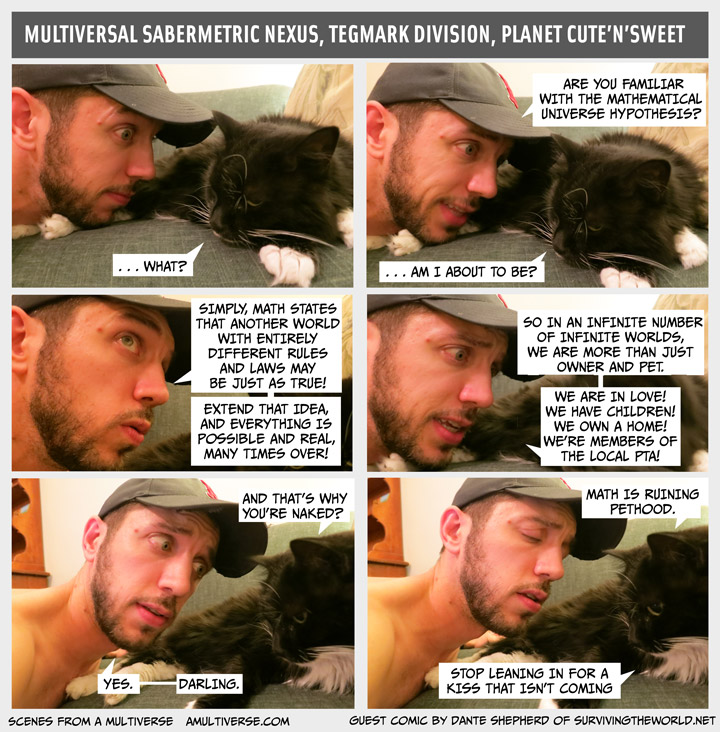








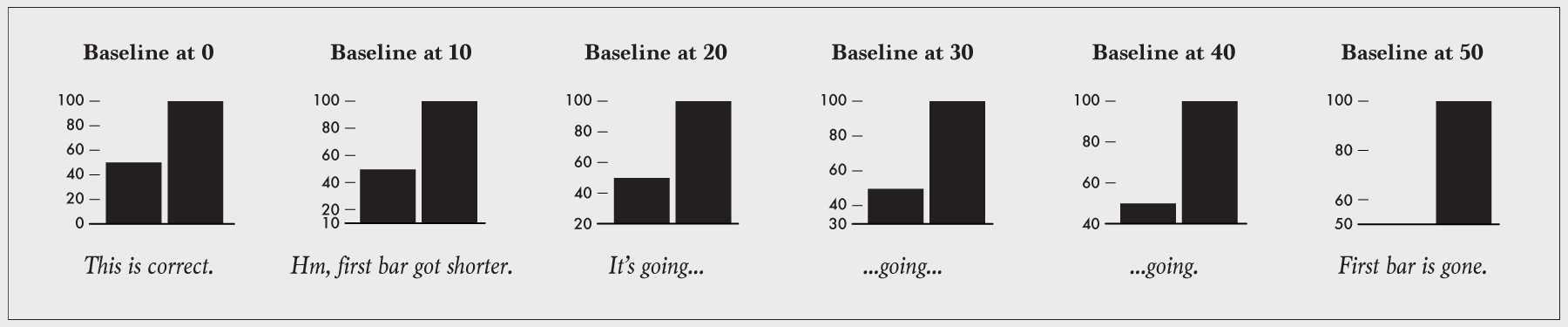
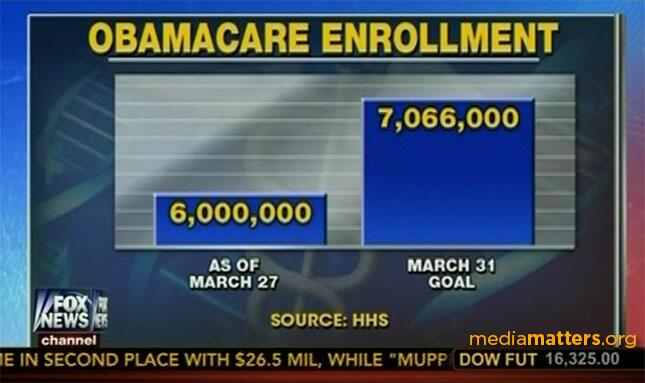
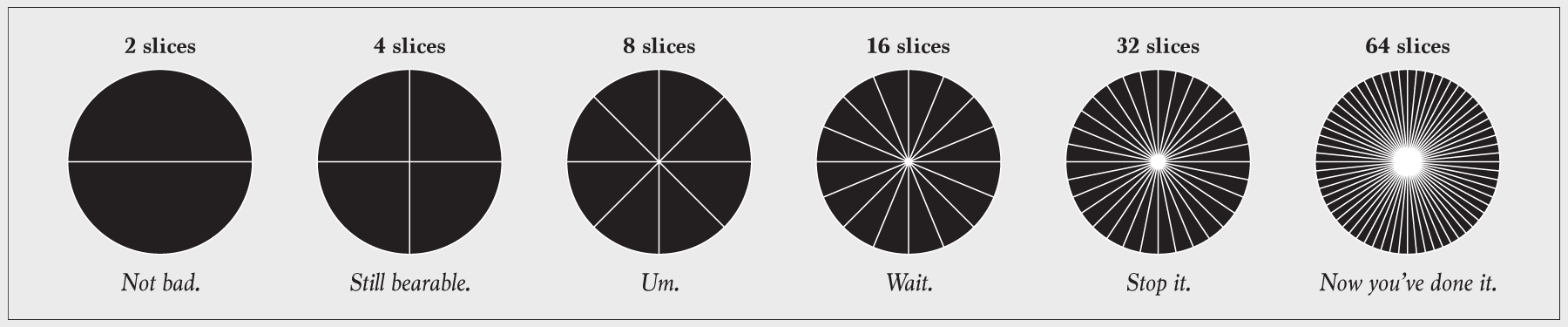
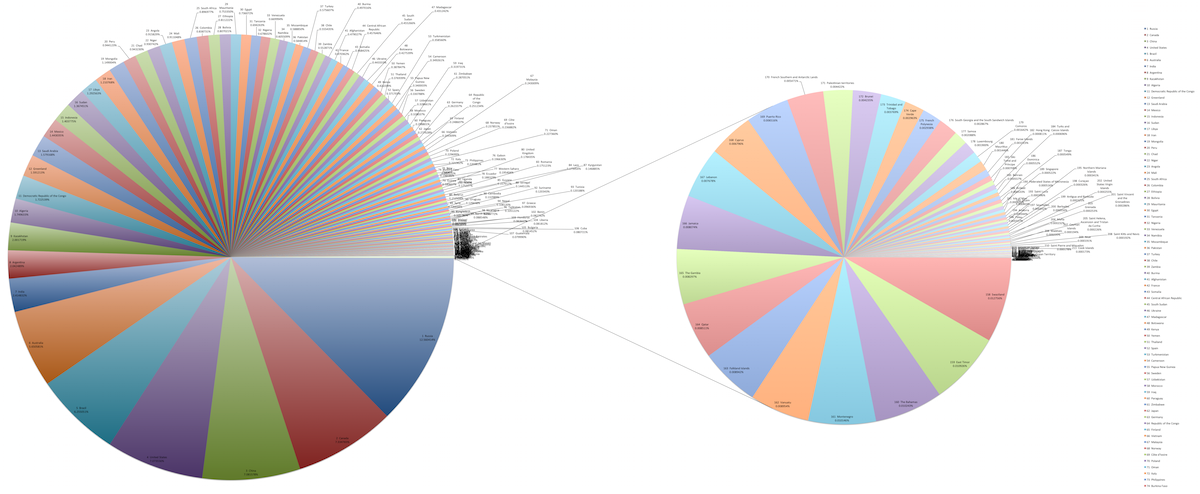
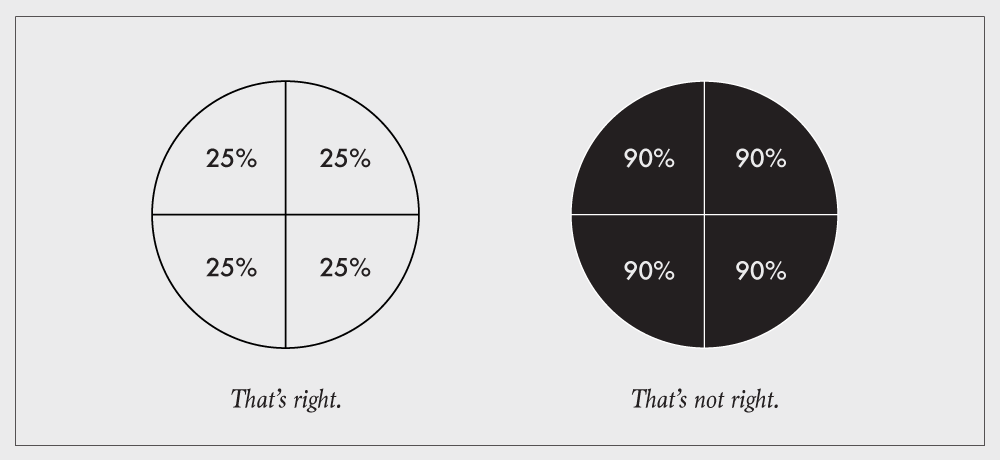
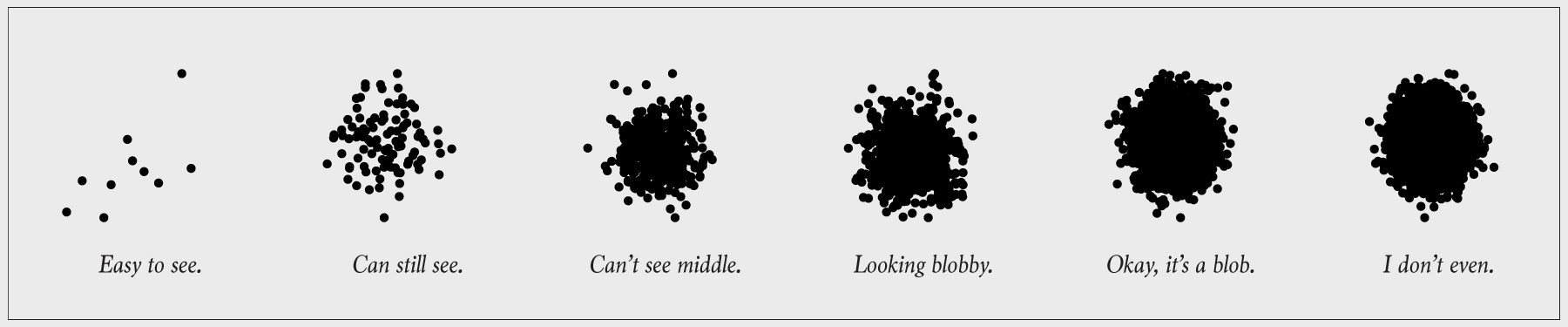

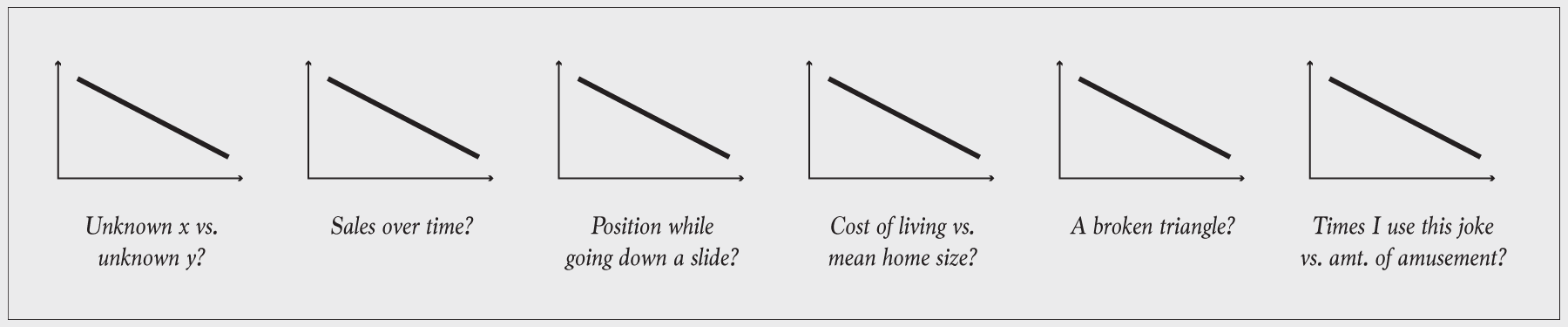
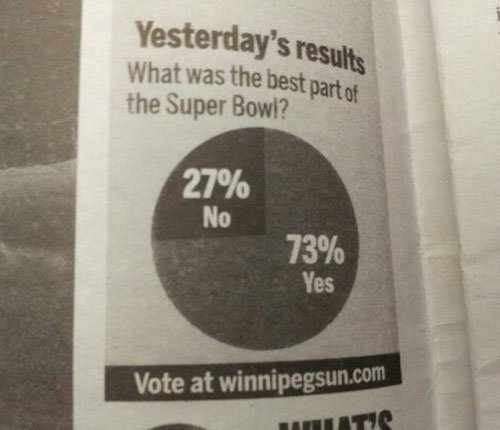


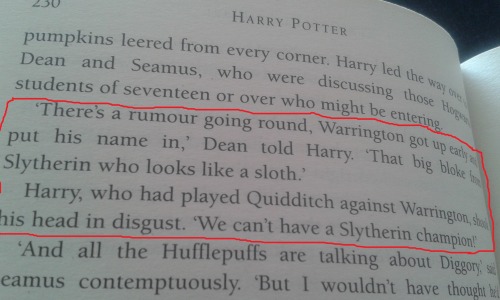





 Here's a closeup of the title and the "blurred line" right beneath the title:
  The plaintiffs found this odd and went on a search for the original copy of the Everyday Song Book, finding the edition that was shown in the documents (the 15th edition) as well as a few earlier editions, and a much clearer version:
  From there, you can see that the "blurred" line says that the song is published via:


 That seems a bit strange for a response to a FOIA request, since whatever is being delivered is supposed to be public, but whatever. The letter accompanying the CD explains, for reasons unknown, that while the IRS was only returning 6 of the 23 pages that had been located, it was doing so with encryption, and it would send the key separately.
  Again, this seems like weird operational security for public documents. Now, also, in the response letter, it noted that the reason only 6 pages are included is because the rest were withheld under FOIA exemptions:
  So you had to imagine that in those 6 pages, there should at least be some relevant information. Nope. It appears that the IRS went through all that to give a final middle finger to Richardson, because when he finally decrypted the documents... they're all redacted too. Six pages, entirely blacked out. Which makes you wonder why the other 17 were "withheld" in the first place. What difference could it have made?


 So Reddit is free to do what it wants, and Reddit's users are free to do what they want in response, It's a grand experiment in learning what everyone values in the long run. People will write about it for years.


 So Reddit is free to do what it wants, and Reddit's users are free to do what they want in response, It's a grand experiment in learning what everyone values in the long run. People will write about it for years.


