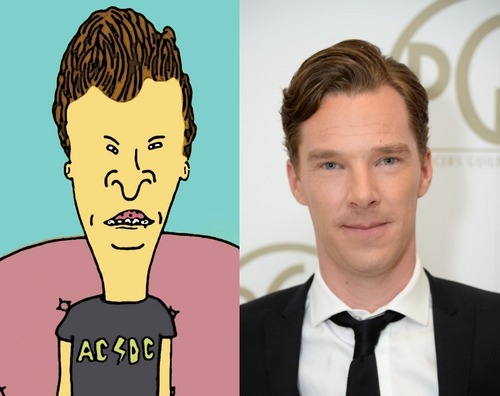
 Between W., Nixon, JFK, Born on the Fourth of July and Platoon, it's safe to say that Oliver Stone has a reputation as being a political film-maker. It shouldn't come as a surprise, therefore, to see that the director has signed up to helm a movie...


Like Olympic skiers racing in single file to reduce air resistance, two 18-wheeler trucks in Nevada recently proved that uncomfortably close convoys can save drivers fuel and money. The key, instead of bold Olympic athleticism, is robotic assistance. A computer-assisted truck was able to follow closely behind a human-driven truck perfectly, maintaining exactly 33 feet of distance between the vehicles. The promise is a future of safer, more fuel efficient, and more robotic trucking.
While Nevada is a friendly state for driverless cars, the system tested is only partially automated, with a driver in the computer-assisted truck still responsible for steering. In a way, that makes this a very, very advanced cruise control. The technology, developed by Peloton Tech, uses radar and a wireless link so that the following trucks travel at the same speed, braking simultaneously for safety, and doing so on an automated system that doesn't have the delays of human reaction time. In addition, the drivers of both vehicles also have a video display, expanding both drivers' vision and reducing blind spots.
Besides safety, the major selling point of this system is that the reduced drag saves fuel costs. Peloton says the "technology saves more than 7% [of fuel] at 65mph – 10% for the rear truck and 4.5% for the lead truck," which is tremendous because "Long-haul fleets spend 40% of operating expenses on fuel, accounting collectively for over 10% of U.S. oil use and related carbon emissions." These savings come primarily from reduced aerodynamic drag.
In Europe, countries have been testing a similar, albeit more autonomous, technology for a few years now. Dubbed SARTRE (Safe Road Trains for the Environment), it lets a vehicle find a leader, link up, and then follow along autonomously. No word yet if it inspired existential angst in the human drivers who are no longer needed.
Watch video of the trucks in action below. It goes really well with C.W. McCall's 1975 novelty hit "Convoy," which inspired the similarly odd 1978 trucker film "Convoy."


 Dyson is near-synonymous with household electronics like vacuums and fans these days, but we're learning that it could have gone in a very different direction. The company tells The Next Web that it had been developing a Google Glass-like augmented...

One of the interesting dynamics in the mobile device industry is the integration of several form-factors in the same device. ASUS has been a major proponent in this, with their FonePad, PadFone and Transformer Book. Coupled on top of this is the use of Windows and Android in various forms across the systems, so naturally there should be one device to cover all usage models, right? This is the Transformer Book V, a five-mode capable, three-in-one converged laptop, smartphone and tablet.

To be clear, the five modes are:
The three parts are a 12.5-inch tablet, a 5-inch smartphone that docks into the tablet, and keyboard that also docks into the tablet. The tablet component uses a next-generation Intel Core processor (suggestions are pointing to low-powered Broadwell) with up to 1TB of storage. There was no indication of resolution, but the panel is IPS.
The smartphone is a 5-inch LTE device with an Intel Atom quad-core device, powered by Kitkat 4.4 and a 2500mAh battery. Storage is set for 64GB eMMC with 2GB LPDDR3. The tablet segment has 128GB eMMC storage with 4GB of LPDDR3, which suggests that the tablet dock contains the 1TB as a secondary drive. A small button on the tablet helps switch between Android and Windows.
Given the suggestion that the device is aimed at Broadwell and the lack of specifications for the resolution, DRAM storage and so on, release would presumably occur based on Intel’s timeframe.



After one of the most brutal winters in over 30 years, Chicago’s streets are pockmarked with an estimated 600,000 gaping potholes, making some streets almost impassable and raising the ire of residents citywide. The issue is so prevalent that the city even created a dedicated Pothole Tracker that shows potholes patched by the Department of Transportation over the last seven days. But some Chicagoans are more proactive and aren’t content to wait for help. One such person is artist Jim Bachor who has taken to filling potholes with original tile mosaics.
Inspired in part by trips to view ancient art in Italy during the 1990′s, Bachor has been creating mosaic work for several years, though of a much more whimsical nature. Think mosaics of coffee cups, twinkies, and boxes of cereal. For his pothole project Bachor has filled about 7 potholes with his original artwork that borrows from the design of the Chicago flag. While some of the mosaics simply read POTHOLE others are given unique ID numbers or include the phone number to nearby auto repair shops (the city has received 1,100 claims of car damage due to potholes this season). Bachor says the tongue-in-cheek approach is meant more as a sense of civic pride than a form of complaint against the city, as the potholes are an inevitable part of living in Chicago.


Photo by Kate Sierzputowski courtesy Hyperallergic
Bachor hopes to do a few more pieces in the near future, though each mosaic costs around $50 to make and takes a considerable amount of time to prepare and install. Also, the resulting patch is temporary; these aren’t meant as a permanent fix. You can read more about the project over on Hyperallergic, and you can see more of Jim’s work at the Thorndale Red Line stop in a few months. (via Hyperallergic)


In Edge of Tomorrow, exoskeletons play a critical role in humanity’s desperate last stand against alien invaders. It would be easy to assume the futuristic systems are digital illusions, mapped to the actors’ movements, but they’re actually elaborate props. The modeler, Pierre Bohanna, made each suit from 350 to 400 discrete components that together form a fully articulating device. The materials include standard nylon, high-grade aluminum, and a lightweight polymer created specifically for the film. “It’s not a costume,” Bohanna says, “it’s a machine.”
Unfortunately for the actors, the humans power the suits, not vice versa. They had to sprint through battle scenes lugging 72 to 132 extra pounds. “These things were incredibly hard work, and all of the actors and stunt guys had to do boot camp in them,” says Bohanna. That sweat on Tom Cruise’s brow? It’s real too.

The Answer: There’s nothing mysterious about Hollywood’s love affair with humanoid aliens. It’s easier to throw prosthetics and face paint on actors than it is to fabricate (or animate) menageries of wildly inhuman characters. But if we apply lessons from our own evolution to other worlds, then filmmakers might not be so far off.
According to Stuart Sumida, a biologist at California State University at San Bernardino who served as a consultant on Guardians of the Galaxy, an alien advanced enough to master space travel would need to have a large brain. “If you have a big brain, you need a way to protect it,” Sumida says. That means a skull, which rules out whole taxonomies of worms, slugs, and other potential invertebrates. And because exoskeletons would become untenable as they scale up in size, collapsing under their weight in all but the lowest gravities, insects can be reasonably ruled out. Throw in the ability to manipulate tools, and our otherworldly companions start to look pretty familiar.
But even with prominent brains, bones, and dexterous appendages, there’s no reason to assume that distant species would look like slight variations of us. “The fact that we have four appendages is an accident of evolution,” says Seth Shostak, senior astronomer at the SETI Institute in Mountain View, California. “Most of the critters on our planet have six.” Natural selection could produce aliens with a more efficient physiological layout: Instead of walking on two legs, for example, which enables humans to hold babies and tools while on the move, an extraterrestrial might have more speed and stability on four or more lower limbs. They could have more arms for manipulating tools, ground-hugging postures to better hide from predators, or any number of features that don’t mesh with the Wookiees, Klingons, and other near-humans that make up science fiction’s interspecies melting pot.
Inspired by Guardians of the Galaxy
The Plot: After stealing a mysterious orb from the wrong guy—an alien hell-bent on galactic domination—a group of criminals become unlikely heroes. Although the swashbuckling sci-fi flick is part of Marvel’s combined cinematic universe (along with The Avengers), most of its larger-than-life characters aren’t superhumans but humanoid aliens.
Sci-Fi Debut: H.G. Wells’ 1901 novel, The First Men in the Moon, features the dwarfish, insectoid Selenites, who wear clothes, use tools, and don’t take kindly to visits from Earthlings.

New Orleans in mid-July is no place for a chimp. The sweltering, mosquito-assaulted set of Dawn of the Planet of the Apes is a minor marvel of engineering, a three-story habitat with interlacing tree trunks, recessed rooms and passages, and a flowing aqueduct that’s turned the ground level into a swamp of pooling water and sucking mud. The filmmakers call it Ape Village, and it really does look like something hyperintelligent, domineering apes might construct. Until, that is, you notice the dozens of motion-capture cameras dotting the structure, and the guys in gray full-body suits, broiling in the merciless sun and steamy humidity. They’re the sweatiest, most miserable make-believe chimps imaginable.
And then they start to move. Two of the gray suits scramble up the sides of the habitat, grabbing camouflaged handholds, without the benefit of safety harnesses or mats. They leap between set elements like trained acrobats, which, in fact, they are. While Rise of the Planet of the Apes (released in 2011) relied on stunt people, the sequel to the sci-fi reboot has cast Cirque du Soleil performers. “Instead of a VFX [visual effects] guy trying to make up what it would be like for a chimpanzee to fly from limb to limb, now we have guys that can actually jump the 20 feet,” says producer Dylan Clark.
From a VFX standpoint, Dawn of the Planet of the Apes isn’t a single leap of faith but a series of them. The first movie redefined what was possible with performance capture, turning Caesar, a chimp played by Andy Serkis, into a believable full-computer-generated (CG) character. Dawn features a much larger cast of apes, and their expanded screen time makes for a much bigger challenge. Standard procedure for performance capture is to confine actors to indoor green-screen environments and rely solely on head-mounted cameras to film their actions. For Dawn, VFX supervisor Joe Letteri decided to gather data on an outdoor set by surrounding the actors with constellations of small motion-capture cameras.

The cameras track LED-lit balls Velcroed to the actors’ suits and reflective markers applied to their faces. “Then we use a learning algorithm to give us the best guess of what all the points of the face are doing in three dimensions,” Letteri says. The result is performance capture that’s extremely detailed and flexible, as multiple cameras pick up nuances of expression and chemistry between actors that might otherwise be lost. With more data at their disposal, animators can imbue the entire supporting cast of 3-D–modeled primates with the same uncanny flicker of intelligence that made Caesar an instant CG star.
It’s this mixture of practical and digital, human and inhuman, that will make or break Dawn. Because unlike the monsters, mutants, and other VFX-enhanced flights of fancy populating sci-fi flicks, apes (even smart ones) aren’t imaginary. “We want the chimpanzees to act and look and be photorealistic,” Clark says. “We want this movie to feel real. If we pull this off, it’ll be supercool.”

The Answer: The filmmakers of Jupiter Ascending augmented human characters with animal genes to make them more physically imposing. In reality, human-animal hybrids have never been people with animal traits but, rather, animals tweaked to host or benefit from human biology. The first documented example occurred in 2004, when the Mayo Clinic injected human stem cells into fetal pigs, creating swine with human blood in order to study how viruses jump between species. Last year, neuroscientists at Stanford University boosted the intelligence of mice with human brain cells. In both cases, researchers sidestepped any actual genetic engineering by simply introducing foreign tissue and letting it take root.
In theory, similar experiments on humans could yield incredible results, such as modifying photoreceptors to enable catlike night vision, or borrowing a newt’s ability to regrow amputated limbs. But even if blithely injecting human fetuses with feline or amphibian cells weren’t an ethical black hole (and it absolutely is), the brute-force approach could easily backfire: The body’s immune system typically attacks alien tissue. The Stanford team avoided rejection by permanently suppressing their subjects’ immune systems,
a solution that would leave humans vulnerable to catastrophic disease and infection.
According to Randy Lewis, a biologist at Utah State University, the problem with chimeric enhancements is their complexity. It’s one thing to flip a single protein, as he did to create transgenic goats that produce spider-silk protein in their milk. But adding complex traits like strength or regeneration? “To do that requires a tremendous amount of genetic engineering,” says Lewis. Until scientists achieve a profound understanding of human and animal genomes, superhuman hybrids will remain little more than a cinematic confection.
Inspired by Jupiter Ascending
The Plot: The universe is filled with human-animal hybrids and ruled by an intergalactic monarchy (news to Earthlings). When an unassuming janitor is targeted for assassination, a part-human, part-canine mercenary comes to her rescue.
Sci-Fi Debut: The Beast Folk lurching through H.G. Wells’s 1896 novel, The Island of Dr. Moreau, are created through grisly surgical experiments.

The most technically challenging scene in Jupiter Ascending shows the movie’s hero (Channing Tatum) zipping through the city in antigravity boots, fleeing a spaceship in pursuit of his cargo (Mila Kunis). “Most people will probably think it’s digital, but it’s not,” says VFX supervisor Dan Glass. Rather, the sequence features stunt doubles suspended from a helicopter as it banks through Chicago’s urban canyons.
Glass’s team had only 15 minutes a day to film the scene—a tiny window of predawn light—so they created a camera capable of squeezing more photography into each shoot. Mounted to the nose of a helicopter, the six-camera rig (called the Panocam) could capture nearly 180 degrees of footage.
By stitching together multiple overlapping angles, the filmmakers could effectively pivot and swing through the action in postproduction, regardless of the helicopter’s actual flight path. Not surprisingly, the innovation quickly attracted the attention of other directors. “That rig is now used on most of the movies that followed us,” says Glass.

The Answer: The giant alien robots in Michael Bay’s Transformers franchise aren’t built in factories. They’re grown in egglike pods and referred to as hatchlings, and they exhibit the kind of physical and behavioral diversity that implies something closer to biological reproduction than mass assembly. Just as no two humans are identical (with the exception of twins), each Autobot and Decepticon is unique in character and form, whether it’s a humorless tractor-trailer or a hot-tempered Tyrannosaur.
The Transformers, in other words, seem to be products of evolutionary robotics, a burgeoning field of research that applies biological principles to the creation and behavior of robots. Rather than simply engineering a bot to perform a given task, such as moving toward a light, researchers can plug that goal into a computer program and let genetic algorithms automatically breed a variety of designs. And since those algorithms mimic nature, modeling the effects of mutation, selection, and other biological processes, the designs they produce are often surprising. “The computer will evolve machines for us that have shapes we would never have thought of,” says Josh Bongard, an evolutionary roboticist at the University of Vermont. Even with very few parts and motors at their disposal, bots born from algorithms have eked out efficient locomotion from such varied forms as an undulating fish and a shuffling pyramid.
In other words, robots that evolve, whether by gestating in eggs or via genetic algorithms, could benefit from the same diversity and convenient mutations that make some living species so resilient. But just as unchecked Transformer reproduction could be bad news for any humans caught in the inevitable crossfire, machines could be dangerous too, Bongard cautions, if they were to evolve without strict guidance. “Self-reproducing robots would, by definition, be a runaway process,” he says. “They could surprise us in unpleasant ways.”
Inspired by Transformers: Age of Extinction
The Plot: The fourth installment in the Transformers series continues the story of a race of robots at war with itself. Joining the battle this go-round is the species’ most exotic specimens yet, the Dinobots.
Sci-Fi Debut: Karel Capek’s 1920 play, R.U.R., ends with a pair of factory-built lovers seemingly destined to become the new, world-populating Adam and Eve.

The Answer: Science fiction has long relied on mutation as an evolutionary shortcut. Sometimes it’s the work of external forces, as with the atomic testing that gave rise to Godzilla in the original 1954 film, and the glowing “ooze” that turned garden-variety turtles into man-size martial artists. At other points it’s a naturally occurring hiccup, like the “X-Gene” that allowed superhumans to manipulate brain waves or magnetic fields. The common thread is speed: Within a single generation, the protagonists are transformed.
It’s an interpretation that’s correct in spirit: Genes can mutate spontaneously or be manipulated in the lab to create new traits. Take, for example, the ability of most adult humans to process lactose in dairy products. Researchers believe this mutation, a kind of gastrointestinal superpower, began in Europe some 7,500 years ago. The sudden change led to a significant long-term benefit for our species, enabling us to add a range of nutritional options. While humanity owes a debt to that mystery mutant, cheese-eating is a minor ability compared to the laser beams and claws erupting from X-Men.
Bruce Demple, a biochemist at Stony Brook University, cites more dramatic examples of single mutations—“the kind of things that screenwriters might think about,” he says. “But mostly you see these things in experimental settings.” With targeted chemical mutagens, geneticists have pulled off feats both impressive, such as increasing the circumference of macaque monkeys’ thigh muscles by 15 percent, and flat-out disturbing, like making legs sprout from the heads of fruit flies. Researchers have also used radiation to increase random mutations.
But the difference between these lab-grown mutants and their Hollywood counterparts comes down to luck. Movie characters didn’t just win the mutation lottery once, gaining a single incredible ability without chemicals or radiation mortally fraying their DNA. They won again and again, packing on good traits, dodging bad ones, and transforming into creatures that would normally require multiple generations and countless failed attempts. In reality, the road to monstrous success would be paved with the corpses of almost-Godzillas and near–Ninja Turtles.
Inspired by Godzilla, TMNT, X-Men: Days of Future Past
The Plots: Godzilla clashes with even more malevolent titans, the Teenage Mutant Ninja Turtles fight crime in (and under) New York City, and the X-Men send Wolverine back in time to prevent a robot uprising. In all three films, mutation unleashes the organism’s inner badass.
Sci-Fi Debut: Radiation exposure transforms The Metal Man of Jack Williamson’s eponymous 1928 short story into the progenitor of today’s fictional mutants.

Let’s assume the worst: that aliens exist, and they’re invading our humble home world. What sort of high-tech weapons would a desperate human race rush out of the lab and into battle? We asked Suveen Mathaudhu,
a program manager and materials scientist at the U.S. Army Research Office, what we could plausibly throw at such a doomsday scenario.
Combat exoskeletons, like the ones in Edge of Tomorrow, could enable infantry to carry increased firepower, Mathaudhu says. Guns that would normally generate too much recoil for the human body could instead be mounted on the suit, distributing that force throughout the frame. Today’s exosuits are too power-hungry to be effectively fielded, but the use of titanium, magnesium, and other ultrastrong, ultralight alloys could reduce their energy consumption. “You’re going to have lower fuel usage because you’re not carrying around a steel exoskeleton,” Mathaudhu says.
If the common cold can repel Martian occupiers in The War of the Worlds, why not hurl even more virulent, weaponized bugs at the enemy? Although bioweapon stockpiles are in short supply (with very good reason), Mathaudhu is confident that geneticists could synthesize whatever new plagues seem useful. “If we assume that life evolved similarly in other parts of the universe, wherever these creatures came from, our tools may work similarly on them,” he says. The technology that has revolutionized genetic analysis, allowing for whole-genome sequencing of human DNA, could also enable a precision pathogen of last resort.
When push comes to shove, we’d shove robots onto the front lines. “If we were forced into some sort of Apollo moment by a massive war, the majority of the efforts would go toward unmanned ground vehicles and robotics,” Mathaudhu says. A robot army might be less versatile than a living one, but the bots would excel as cannon fodder during the early stages of conflict, providing intel on alien weapons and tactics before being blown to bits. “The hesitation to put a soldier in the field against an unknown threat would be countered by robotic technology,” Mathaudhu says. Who needs nerves of steel when your soldiers are made of it?
This article originally appeared in the July 2014 issue of Popular Science.


Last night, SpaceX unveiled the Dragon V2 capsule, destined to eventually carry astronauts to the International Space Station.
Although the previous version of the Dragon capsule was flightworthy enough to deliver supplies, its life support system wasn’t sufficient for human passengers. Dragon V2, on the other hand, will be able to carry seven astronauts for seven days.
When the capsule reaches the ISS, it will dock with the station autonomously. Unlike its predecessor, it won’t need the ISS’s robotic arm to reach out and grab it.
And this isn’t the only improvement. To land back on Earth, version one slowed its speed with parachutes before splashing into the ocean. This is now a backup technique for the new capsule (because the V2 can use its engines to land propulsively).
“You’ll be able to land anywhere on Earth with the accuracy of a helicopter,” SpaceX CEO Elon Musk announced at the unveiling. “Which is, I think, something that a modern spaceship should be able to do.”
The Dragon V2’s landing ability will make it quickly reusable, an ability Musk hopes will cut the cost of space voyages. “As long as we continue to throw away rockets and spacecraft, we will never have true access to space. It will always be incredibly expensive.”
So how much will reusability reduce prices? According to Ars Technica, NASA pays Russia about $71 million per astronaut for trips to the ISS. Musk thinks he can drop that number to $20 million or less.


by @maximilienriehl
 Virgin Galactic's plans to charter its first space flights by the end of the year have been given another huge boost after it got the green light to begin planning launches. The company, which is now deep in its testing phase, signed a deal with the...
 We've seen plenty of modders build gaming PCs into their desks, but what about those of us without any DIY skills? Lian-Li has stepped in, offering the DK-01 and DK-02, a pair of Table PC chassis that straddle the intersection between high-end...
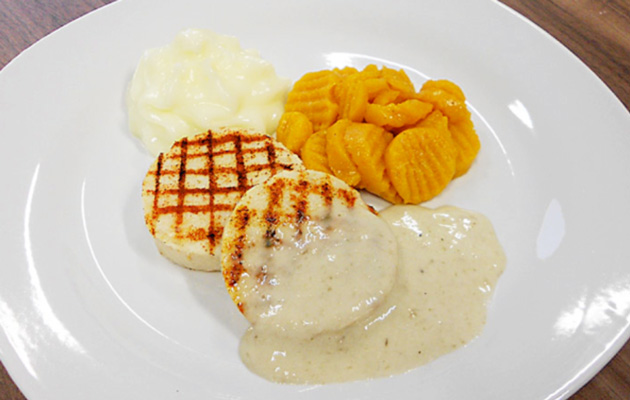 See that meal up there? All of it was crafted on a 3D printer. Smoothfood is a project designed to provide better meals for both the elderly and sufferers of dysphagia -- an inability to swallow food. The process requires freshly-cooked ingredients...
 While many will tell you that there isn't much diversity among technology workers, it has been tricky to back up that claim with real, hard numbers. Well, Google now has some evidence: it just published diversity figures for its own staff, broken...
 Lead LulzSec hacker Sabu (aka Hector Xavier Monsegur) was no doubt hoping for leniency when he turned informant, and it looks like his gamble has paid off. A federal court has sentenced him to the time he served in 2012, letting him walk away a free...
 Tonight at Code Conference, Microsoft CEO Satya Nadella brought his Skype team onto the stage to prove that his company's got the next big thing. Taglined "the pre-beta of magic," the service, called Skype Translator, turns your real-time...
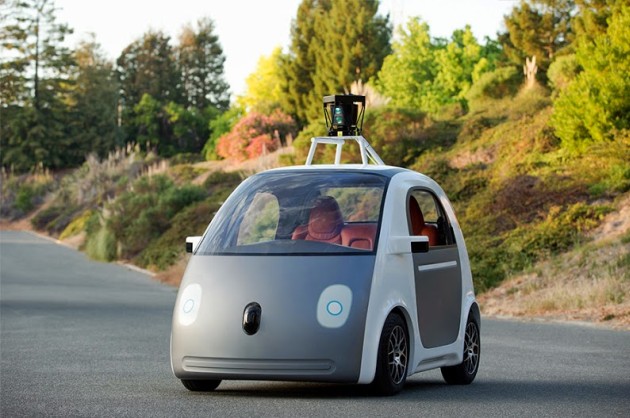 Google has been tweaking its self-driving car project for years, but now it's taking another big step. Later this summer it will start testing prototype vehicles it's designed from the ground up, instead of merely retrofitting existing vehicles....
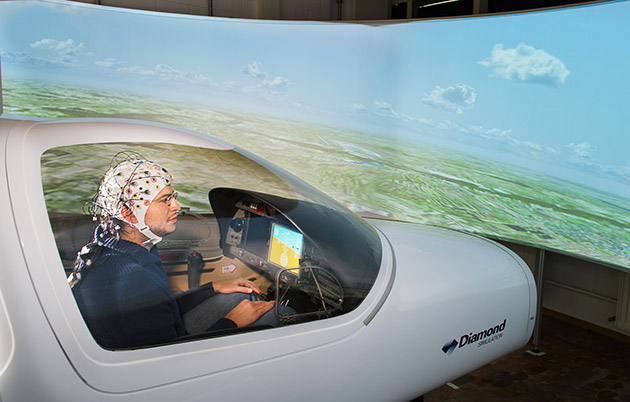 Mind control technology gives you the capability to do things you didn't think possible -- like piloting a plane even if you have zero flying experience. A team of researchers from the Technische Universität München and the TU Berlin in Germany...
 Google spits out about 4 million search results per minute (among many other duties), which consumes a lot of energy. According to a recent blog, it cut its electrical bills significantly by applying the same kind of machine learning used in speech...
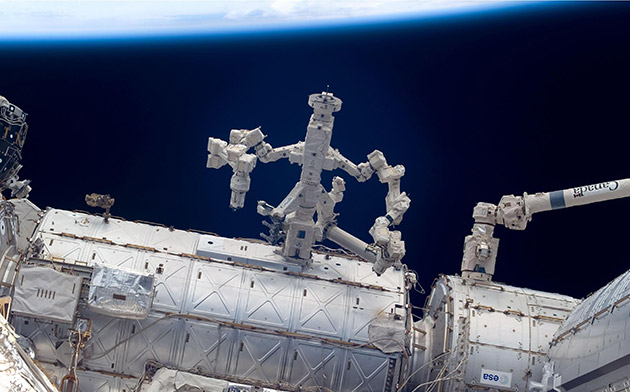 When something goes wrong with the ISS, astronauts usually don their suits and brave the harsh conditions of space to do what needs to be done. But the space station's Canadian robotic arm (aptly called Canadarm2) is currently attempting to fix...