Shared posts
Defender scores and saves in shootout win
Is Dyson going to release a robotic vacuum cleaner?
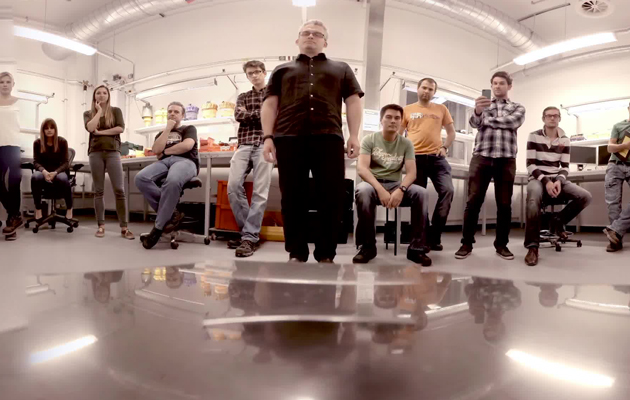 When companies tease a product, there's sometimes a subtle clue or two hidden within the video or images. Sometimes, however, a company can reveal too much, and Dyson's "Project N223" certainly seems to hint, pretty strongly, that we're going to see...
Sneaky Panda Fakes Pregnancy For Extra Treats And Attention

Ai Hin was all set to be a star. The 6-year-old giant panda had shown signs of pregnancy last month, and staff at the Chengdu Breeding Research Centre in China had planned to film her labor in the first ever live broadcast of a panda giving birth.
Now that momentous occasion has been cancelled, as it turns out Ai Hin’s pregnancy was all just a clever ruse. Chengdu staff revealed that the panda had experienced a “phantom pregnancy” and had likely faked symptoms to get extra attention and food.
"After showing prenatal signs, the 'mothers-to-be' are moved into single rooms with air conditioning and around-the-clock care. They also receive more buns, fruits and bamboo,” Wu Kongju, an expert at Chengdu, tells Xinhua.
Signs of pregnancy for pandas include a reduced appetite, less mobility and an increase in progestational hormone. However, after a two-month observation, Ai Hin’s “behaviors and physiological indexes returned to normal.”
According to Kongju, phantom pregnancy is somewhat common among endangered bears, as they notice the special treatment other bears receive when they exhibit signs of pregnancy. Many other animals, such as dogs, cats and mice, also can suffer phantom pregnancy after they've been in heat (or "estrus").
The incident is also reminiscent of Münchausen syndrome, in which individuals fake certain health issues for attention or sympathy. Perhaps Ai Hin just needed somebody to care.
[Xinhua]

High-res imaging satellite shows off with crystal clear pics of Madrid
 DigitalGlobe's WorldView-3 satellite has only been in space for less than half a month, but it's already proven itself capable of shooting high-res images just like the company promised. Just a few days after Lockheed Martin flew it to orbit, the...
Here's how digital effects give 'Game of Thrones' its grand scale
 We've already seen how digital effects make Game of Thrones' world more believable, but there were some spectacular scenes in the show's fourth season: giant city-states, an undead horse and battles involving thousands of cavalry. Want to know just...
LG G Watch R gets unveiled with round P-OLED display

After teasing it a couple of times, LG took the wraps off the decidedly premium G Watch R. The Android Wear device will be showcased at the company's booth during the upcoming IFA convention in Berlin. The main feature of the LG G Watch is its display. As the R letter in the name kindly suggests, the screen is a 1.3" fully circular Plastic OLED display with a resolution of 320 x 320 pixels. The Korean manufacturer took a jab at Motorola's Moto 360 by pointing that the screen of the G Watch utilizes 100% of its face (the screen of the competitor doesn't). LG G Watch R packs a Qualcomm Snapdragon 400 SoC with 1.2GHz CPU and 512MB of RAM. The rest of the device's specs include 4GB of built-in memory, 410mAh battery, and the usual bevy of sensors (gyro, accelerometer, compass, barometer). The smartwatch is IP67 dust and water-resistant. It is available only in black. LG G Watch R will begin rolling out in key markets in early Q4 (in time for the holiday shopping season). Pricing and exact availability will be announced during the device's local launch....
8TB hard drives have arrived
 We're sorry to break the bad news, but that 5TB hard drive you bought last week? Yeah, it's already obsolete. Seagate has started shipping the first-ever 8TB desktop hard disk, doubling the 4TB capacities that seemed huge just a couple of years ago....
Twitch the latest target for DDoS attack [Update: Battle.net, League of Legends also hit]
Update 4: With a handful of users ceding to Lizard Squad's demands, Twitch, Battle.net, and League of Legends all appear to be up and running again. Shacknews will continue to monitor the situation and await the next chapter in this unfortunate saga.
Update 3: Lizard Squad has indicated that they will be targeting League of Legends servers in North America. Servers have since been taken down.
Update 2: It appears that the attacks are spreading, once again. Hearthstone and Diablo 3 servers are down and Blizzard is claiming to be the victims of DDoS attack. Lizard Squad has yet to take responsibility for these attacks, so they may be unrelated.
[NA] - We are currently looking into some issues with D3 and Hearthstone. Updates to follow.
— BlizzardCS (@BlizzardCS) August 27, 2014
Update: Twitch is addressing the source of the attacks.
We're currently investigating issues with the site. Please stay tuned
— Twitch Support (@TwitchSupport) August 27, 2014
Original story: Lizard Squad is at it again. This time, they've targeted Twitch, hitting the streaming giant with a DDoS attack, with no sign that they'll bring it back up anytime soon.
As with many of their other attacks, they've claimed responsibility on their Twitter account.
Lizard Squad previously issued DDoS attacks to Battle.net, PlayStation Network, Xbox Live, and a slew of others. They also reported a phony bomb threat that grounded Sony Online Entertainment president John Smedley's American Airlines flight. The FBI had been confirmed to be investigating, but it appears that the terror has not stopped.
Shacknews has reached out to Twitch representatives for comment.
LG kicks off the Ultra HD OLED TV revolution with 65-incher
Roumen.ganeffMaybe I'll change my plasma in 3-4 years after all.
-470-75.jpg)
Ahead of their showing at IFA 2014 in the first week of September, LG has officially announced the release details of its first two Ultra HD OLED TVs, the 77EG9700 and 65EC9700.
Ultra HD TVs have been as common as bad action movies this summer, but the LG 65EC9700 and 77EG9700 are a bit special. They're not LCD TVs, but the first Ultra HD OLED TVs that you'll actually be able to buy, as a normal, non-famous person.
You will still need a nice and full wallet or purse, though, as they won't come cheap. The 65-inch 65EC9700 is expected to cost around £5999 ($9999), and the 77-inch 77EG9700 around £20k.
The TVs will go on pre-order first in South Korea shortly, before becoming available in the UK and US a little further down the line. We're still waiting on an exact date for the UK.
"I feel confident when I say that 4K OLED is a bona fide game changer," says LG Home Entertainment CEO Hyun-hwoi Ha. However, like previous OLED TVs, it's only going to change the game for a select, flush few.
We should also point out that these TVs are not actually 4K, but Ultra HD. Normal 4K is a broadcast standard of 4096 × 2160, where Ultra HD actually falls slightly below 4000 horizontal pixels with a resolution of 3840 × 2160.
There's a fact tech pedants can annoy friends with.
A brief history of OLED
These TVs further reinforce LG's reputation as one of the pioneers of OLED TVs. Several have been produced, but hardly any have been available to buy.
The LG 55EA980W is the most readily-available OLED TV to date, and these days costs around £3000. It's rather special, offering black levels even plasma TVs can't touch.
Like that TV, the LG 65EC9700 and 77EG9700 adopt a slight screen curvature and use LG's RGBW matrix. Instead of using red, green and blue pixels, the TVs use white pixels and RGB colour filters, designed to combat the OLED deterioration issue that's a real concern with full RGB OLEDs like the Samsung KE55S9C.

Watch A Robot Ride A Hovercycle

A white plastic robot zooms a hoverbike over the English countryside, grains blowing beneath the bike's four fans. The robot's 3-D printed body is lightweight, and where its face would be there’s a GoPro camera instead, filming the flight. This isn't a scene from a dystopian science fiction movie; The bike is less than four feet long, and combined robot and bike weighs a maximum of 15.4 pounds. Created by Malloy Aeronautics, the Drone 3 hoverbike is a 1/3rd scale model of the version ultimately intended for human pilots and passengers.
The hoverbike is available as a reward for Kickstarter backers pledging just shy of $1000 USD. The campaign, which concludes on August 31st has already surpassed its goal. Making and selling Drone 3 is just the first part of the plan for Malloy Aeronautics. The company, founded in Australia and transplanted to England, envisions hoverbikes using the sky alongside helicopters the same way cars and motorcycles share the same roads. In particular, and in strikingly Australian fashion, the hoverbike makers say it could be used for "one man operational areas like cattle mustering and survey," replacing the more conventional helicopters that presently perform this role.
Malloy Aeronautics’s first hoverbike used two large ducted fans for lift, something it had in common with other hoverbike designs. The new version, as seen in Drone 3, is instead a quadcopter, using four rotors in a sleeker, more balanced fashion. The fans partially overlap, and the whole drone can fold up to fit within a special backpack carrying case. Drone 3 is remotely piloted, but the hoverbikes it finances will fly both manned and unmanned.
Watch it in flight below:

A fight about seat reclining privileges grounded a flight today
 If you've ever flown coach, you know that it doesn't provide much legroom -- in an effort to maximize passenger loads, airlines make a conscious effort of eliminating the divide between seating rows, often cutting out the customer's leg-room in the...
Emergency Fund Will Bankroll Ebola Research To Help In The Current Outbreak

Public and private donors in the U.K. have launched an emergency fund for researchers studying Ebola. They want a quick turnaround time for the research they bankroll. Applications for the fund are due September 8 and funders are hoping studies will finish within two months, the Guardian reports. The tight timeline is designed to make a difference in the current outbreak in West Africa, which Doctors Without Borders expects to last longer than six months.
The Guardian describes what kind of research they're looking to fund:
And:
This is the latest push to speed up Ebola research. The World Health Organization has declared that it is ethical to use experimental drugs in this outbreak––allowing some potential treatments to skip clinical trials that would validate the drug's safety and efficacy––and U.S. federal agencies want to fast-track human trials of a promising vaccine. If all goes well, the vaccine may be available sometime in 2015, Anthony Fauci, director of the National Institute of Allergy and Infectious Diseases, told USA Today.
The U.K. fund comes from a pool worth $10.8 million (6.5 million British pounds), although it's unclear exactly how much funders will use at this time. The pool comes from the Research for Health in Humanitarian Crises program, which is a joint effort of the Wellcome Trust and the U.K.'s Department for International Development.
Experts from the United Nations, the World Health Organization and universities will review grant applications, the Guardian reports.

Amazon Acquires Twitch for $970 Million


Heterochromia – The Eyes Have It





Destiny takes the Ice Bucket Challenge, Bungie donating store proceeds to ALSA
 Here's something you don't see every day: a fictional character performing a meme to fight a real-world disease. Our little buddy Ghost from Destiny has been hard at work helping the Guardians protect the solar system, and as thanks for his efforts,...
Updated: 4K TV and UHD: Everything you need to know about Ultra HD

4K
Like HD before it, 4K (otherwise known as Ultra HD, or simply UHD) has become all anyone in the television business is talking about.
With four times the resolution of traditional HD displays, 4K offers a massive improvement in picture clarity over existing HD resolutions.
The reason for this has to do with the amount of pixels a 4K TV contains. Whereas traditional HD is limited to 1920 vertical columns and 1080 horizontal rows of pixels, 4K has a total resolution of 3840 pixels by 2160.
We're used to being slightly wary of new television technologies that try to entice us into parting with our hard-earned cash (thanks 3D), but when it comes to 4K there are relatively few downsides aside from the lack of native 4K content out there right now.
It used to be the case that you'd have to part with thousands in order to purchase a 4K set, but as technology has improved, prices are rapidly falling with even budget sets now being 4K-compatible.
At the end of the day it might not be the raw resolution of 4K that tempts you into your next TV purchase, but the inclusion of other cool technologies like High-Dynamic Range, Quantum Dot and OLED panels. Before we get into the specifics of each technology, here's a video outlining 4K in a nutshell.
YouTube : https://www.youtube.com/watch?v=OiOEgz2eG_cWhat is 4K?
Pure and simple, 4K means a clearer picture. It's more pixels (8,294,400 to be exact) on the screen at once that creates images that are crisper and capable of showing more details than standard HD.
That's it?
That's it.
What is the resolution of 4K?
4K resolution, at least the way most TVs define it, is 3840 x 2160 or 2160p. To put that in perspective, a full HD 1080p image is only a 1920x1080 resolution. 4K screens have about 8 million pixels, which is around four times what your current 1080p set can display.
Think of your TV like a grid, with rows and columns. A full HD 1080p image is 1080 rows high and 1920 columns wide. A 4K image approximately doubles both those numbers, yielding approximately 4 times as many pixels total. To put it another way, you could fit every pixel from your 1080p set onto one quarter of a 4K screen.

Why is it called 4K?
Because the images are around 4,000 pixels wide. And before you ask, yes, the industry named 1080 resolution after image height, but named 4K after image width. For extra added fun, you also might hear this resolution referred to as 2160p. Welcome to the future. It's confusing here.
Do all those extra pixels matter?
They matter very much. More pixels means more information. More information means sharper pictures. Sharper pictures are more engaging. More engaging content is more fun. And fun... well fun is the thing, isn't it?
So I'll see a huge difference?
That's where it gets sticky. We're talking about a similar jump in resolution as the one from SD (480 lines high) to HD (1080 lines high). And 4K screens are noticeably sharper than 1080p screens. But there are a few reasons you might not feel the same thrill you did when you upgraded your old CRT to a flatscreen.
When most people went from a 480 to a 1080p set, there was a good chance they were making a big jump in TV size as well. In terms of wow factor, display size is more powerful than any resolution jump could ever hope to be. Last time around most people got big jumps to both screen size and resolution. But this time screen sizes are staying about the same, with the most popular models falling in the 40 inch to 70 inch range.

Most importantly, though, you'll only be able to see the resolution difference on a 4K set if you're 1) watching 4K content through it and 2) you're sitting close enough.
Sitting close enough?
Yup. Remember when Apple made a big fuss about "retina" displays a few iPhones back? "Retina" refers to screens that have sufficient resolution that at a normal viewing distance your eye can't make out individual pixels. Get far enough away from a 1080p set and, hey presto, It's a retina display! More importantly, at that same distance, your eyeballs won't be able to squeeze any more detail out of a 4K image than a 1080 one. If you're at "retina distance" from your 1080p set now and don't plan on moving your couch closer, upgrading to 4K may not make a big difference to your experience. This chart shows how close you need to sit at any given screen size to see the difference.
So I should sit closer?
Oh my yes. The ability to get up close to the screen without the image breaking down is one of the most intoxicating things about 4K. Sitting closer allows the same sized screen to fill more of your visual field, which yields greater immersion. The up-close factor is one of the reasons 4K computer monitors have become one of the technology's fastest growing sectors. 4K monitors remain pin-sharp even when you're just a foot or two from the screen, as you are when you're sitting at your desk.
Difference between Ultra HD and 4K
Technically, "Ultra High Definition" is actually a derivation of the 4K digital cinema standard. However while your local multiplex shows images in native 4096 x 2160 4K resolution, the new Ultra HD consumer format has a slightly lower resolution of 3840 X 2160.
This is one reason why some brands prefer not to use the 4K label at all, sticking with Ultra HD or UHD instead. However, the numerical shorthand looks likely to stick. As a broad brush label it's so much snappier!
Why should I care about 4K Ultra HD?
There are many reasons why 4K should make you rethink your next TV purchase (actually, there are eleven and you can read about them here), not all of them immediately obvious.
Photographers who routinely view their work on an HD TV are seeing but a fraction of the detail inherent in their pictures when they view them at 2160p.
A 4K display reveals so much more nuance and detail – the difference can be astonishing. While 3D has proved to be a faddish diversion, 4K comes without caveats. Its higher resolution images are simply better.
The higher pixel density of a 4K panel also enable you get much closer without the grid-like structure of the image itself becoming visible –this means you can comfortably watch a much larger screen from the same seating position as your current Full HD panel. Currently all available 4K Ultra HD TVs are in excess of 50-inches.
Ultra HD Premium
If you're sitting there thinking that all these new technologies and acronyms sound confusing then you'd be right. That's why a group of companies decided to form the UHD Alliance with the expressed aim of defining what technologies should be included in the next generation of TV sets.
The UHD Alliance is comprised of 35 companies including television manufacturers such as LG, Panasonic, Samsung, Toshiba, Sony, Sharp, audio companies such as Dolby, and film and television production companies such as Netflix and 20th Century Fox.
The idea then is that if everyone can agree on what features they think UHD should include then Disney (an example member of the alliance) can produce a movie that Netflix will be able to stream through a Samsung TV, and the eventual image will be exactly what the director at Disney intended.
The result of this alliance was the UHD Premium specification announced at CES 2016. The specification comprises a list of features that should be included in products like TVs and Blu-ray players to ensure maximum compatibility with other content and hardware produced.
Currently, in order to adhere to the UHD Premium specification a product must have:
- A resolution of at least 3840x2160
- 10-bit color depth, allowing for 1,024 shades of each of the three primary colors red, green and blue, as opposed to the 256 allowed by the current 8-bit standard.
- Be capable of displaying pixels at a certain brightness and darkness for HDR purposes (technically this light level is from 0.05 to 1,000 'nits' for LEDs and 0.0005 to 540 'nits' for OLED sets for all you number lovers out there). Adhering to these standards means blacks should look truly dark as opposed to just milky black and whites should really pop.
Now that this standard has been defined it should just be a case of checking that your next purchase has the 'Ultra HD Premium' logo and not having to worry about your set being incompatible with the slew of 4K content that's about to emerge over the next few years.
Except of course it's not that simple.
Samsung and Panasonic are embracing the new standard, with both of their flagship lineups wearing their UHD Premium badges with pride. Sony however have decided to go down a more confusing route and have decided to stick with their internal '4K HDR' label despite their sets all actually meeting the required specification. Philips won't be using the alliance's badge, but its sets don't currently meet the specification anyway.
It's only natural that while a technology is still emerging these problems will continue to exist, but we hope that soon we'll be able to recommend looking for a UHD Premium set without reservation. Until the whole industry unambiguously backs the standard however, we'd still recommend you tread carefully to ensure maximum compatibility.
You also said "and up." Can UHD also designate higher resolutions than 4K?
Yes. This is the slightly confusing part. An 8K display would also be UHD.
What is this 8K you speak of?
It's the next resolution standard up from 4K. Basically it doubles the pixel height and width again to yield approximately 32 million pixels. It's a regular pixel party.
That sounds awesome. Should I just get one of those?
Absolutely not. The 8K standard is primarily for the exhibition market (aka movie theaters). To make that many pixels matter, you need to be feeding a truly gigantic screen and sitting right in front of it. Besides, you can't buy an 8K screen today without having it custom built, which would cost approximately seven hojillion dollars. And there's no commercially available 8K content. You'd need to get movies directly from distributors the same way theaters do. You do not need this unless you are Jerry Bruckheimer. (If you are Jerry Bruckheimer, though, give me a call. I know a guy.)

My friend told me about 4K OLED. What's that?
More acronyms! Isn't this fun? OLED - organic light emitting diodes - have been around for some time, but producing big screens using this technology has proven to be prohibitively expensive, something which has so far prevented OLED television from being a mainstream proposition.
It's a real shame because OLED technology can be stunning, offering vibrant colors, deep blacks and bright whites. But don't give up hope just yet. Several companies (most prominently LG) are laboring away to bring OLED to 4K televisions. We recently took a look at LG's new 4K OLED sets, but while they're gorgeous, pricing remains sky high. Hopefully that will change soon, though. "I believe the price and yield rate will be higher immediately and the price will be down," Mr K I Kwon, president of LG Electronics UK, told TechRadar recently. We hope his predictions hold and we aren't ruling out OLED as a big player in the next generation of televisions.
I've heard Netflix is going to start streaming in something called HDR. What is that?
HDR, UHD, OLED ... there's no shortage of acronyms in home entertainment.
HDR, or high dynamic range, is a concept borrowed from digital imaging which combines three images - one with normal lighting, one with underexposure and one with overexposure - to give more contrast to an image or video. Netflix will be the first content provider to release HDR video in 2015.
You won't necessarily need a UHD screen to get it, but to really see a difference in picture quality you'll want to step up to the higher resolution.
Quantum Dot sounds like theoretical physics
It does indeed. But unlike some problems in theoretical physics, the solution is already here. Quantum Dot displays (QD for short) are simply LED panels with a thin film of nano-crystals in between the backlight and the display. Manufacturers like LG and Sony claim that this increases color depth by around 30% without adding extra pixels or implementing a wacky algorithm to digitally manipulate the display.
We went hands on with a few QD panels at CES 2015, including the LG UF9400 Quantum Dot 4K UHD TV and Samsung SUHD Curved TV, which uses a variation of Quantum Dot. We liked what we saw, mostly, and especially on the Samsung SUHD. The LG had some issues with oversaturation ... but that may be fixed by the time the TV comes to market in Q2 2015.
What about 4K content? Can I get that?
Yeah, about that... There's actually not much 4K content to be had right now.
Why not?
Because every 4K frame contains four times the information of HD, 4K content is four times more bulky than regular HD content in terms of its raw file size. That makes it a challenge to get it to you. Broadcast TV hasn't made the 4K switch yet (indeed, it's only recently that hard drive sizes have gotten big enough to manage DVRing HD programs comfortably). There is a 4K Blu-ray standard coming, but the Blu-ray disc association is only just finishing it and won't start licensing it to manufacturers until early 2015. Victor Matsuda, chairman of the Blu-ray Disc Association Global Promotions Committee told us we should see 4K players and discs in time for the 2016 holidays.
On the streaming side, bandwidth is a definite issue. The internet's bandwidth is already dominated by Netflix's traffic, prompting ISPs to go after them for extra cash, and that's with most of its streams at SD and HD levels. Upping everything to 4K doesn't sound like a reasonable option just yet. And even if it were possible to stream 4K content to everyone without breaking the internet, streaming 4K content requires a 25Mbps or faster downstream internet connection, which is faster than most people have at the moment.
So what can I watch?
The good news is many new films and some TV shows are now filming in 4K as a future-proofing measure. The bad news is all that content will have to wait until we have established avenues for getting it to people. Your best UHD options right now come from Sony and Netflix, with Amazon to follow suit this fall.
Sony launched its Video Unlimited 4K service in 2013, which offers more than 70 films and TV shows for rental or purchase. It requires Sony's 4K Ultra HD Media Player, the FMP-X1 ($350), which comes with a 2TB hard drive and is only compatible with Sony 4K TVs. 24-hour TV show rentals are $4 and 24-hour film rentals cost $8. Film purchases are $30. It's not exactly instant gratification, though. Once you rent or buy something, it needs to download to your player, which Sony estimates can take 8 to 15 hours, depending on your Internet connection, so you'd better think ahead if you're planning a 4K movie night.
If you want to watch right away, Netflix is leading the 4K streaming waters with select shows (House of Cards, Breaking Bad, The Blacklist) and films (Ghostbusters, The Smurfs 2). Currently, however, the content selection is limited at best. And contains The Smurfs 2. Netflix requires new subscribers to be on the highest tier four-stream Family Plan in order to access 4K content. Existing subscribers will be grandfathered into 4K for two years on their existing lower-tier plans.
That said, Amazon has also gotten into the 4K UHD streaming game by offering some of its highest-rated shows – Transparent, Mozart in the Jungle, Man in the High Castle and Mad Dogs – in Ultra HD.
Both streaming services say even more content is on its way and expects the roll-out to ramp up once more TV watchers make the jump to the higher-resolution standard.

Is it me or are those options are almost comically limited?
It's not you.
Why are we even talking about 4K then?
Because it's awesome. Seriously, the pictures look amazing. You're going to love it.
How does that help if there's nothing to watch?
It's a fair point. There is definitely a chicken and egg problem here. No one wants to spend money putting out 4K content until there's enough significant demand for it, and that means 4K sets showing up in homes. But 4K sets are a tough sell if there's nothing to watch on them except regular HD content. Which means we've been in this weird in-between time, waiting for significant numbers of people to make a relatively illogical decision to buy an extra-expensive TV that will only look marginally better than their old one for the next year or two.
That's really dumb.
Hey, let's be careful with our mean words! Still, you've got a point. The current situation is a little silly. But 4K is legitimately awesome. And we're going to get there. We went through a similar transition a few years back with the move to HD (which came complete with the HD-DVD/Blu-ray format war and massive marketplace confusion) a few years back. Luckily that transition was eased a bit by the simultaneous move to the flatscreen form factor and a significant jump in screen sizes.
What about gaming in 4K?
We've had 4K gaming on the PC for a while now, but this year at E3 2016 4K took off in a big way with the announcement of Microsoft's 4K Xbox code-named Project Scorpio. Alongside the Scorpio, Microsoft also has the Xbox One S which will upscale HD content to 4K as well as play Ultra HD Blu-ray discs.
Microsoft isn't the only console manufacturer with a 3840 x 2160 resolution on its mind, however. Sony also has a 4K console up its sleeve which it's calling PlayStation Neo.
We're expecting to learn more about the systems in the coming months and have our fingers crossed for an early 2017 – or even late 2016 – launch date.
What kind of cables will I need for 4K?
The two standard cables you're most likely to use are either a standard HDMI or if you're connecting a PC to a Ultra HD monitor, DisplayPort.
HDMI cables now come in four flavors: high speed with ethernet; high speed without ethernet; standard speed with ethernet and standard speed without ethernet. Standard speed cables are capable of 1080i, but aren't able to handle the bandwidth of 4K. High speed cables can do anything higher than 1080. Now, as long as you're using the same class of cable, there is no distinguishable difference in terms of performance between one manufacturer's set of cables and another's.
The speed of your connection will depend on the types of connectors, which includes HDMI 1.4, HDMI 2.0 and HDMI 2.0a. HDMI 1.4 connectors support a 3820x2160-resolution at 30 frames per second, while HDMI 2.0 is the latest spec and can output video at Ultra HD resolution at 60 frames per second. (But more on that below!) HDMI 2.0a is capable of HDR, which is limited to a very specific range of televisions from each manufacturer.
The other type of cable you can use is DisplayPort. DisplayPort carries 4K image and audio signal from most high-end graphics cards to monitors without any noticeable artifacts or delays.
So should I buy a 4K set now or should I wait?
It depends. If you want the absolute best TV you can get right now and don't mind paying a premium for it, it's a 4K set. If you're buying from one of the top tier manufacturers, you're going to get a good product that's reasonably future-proofed. As we said before, the sets look great. However, don't expect to be watching most of your video content in 4K for another two to three years. And make sure any set you buy has HDMI 2.0 ports (the first wave of 4K TVs used the previous HDMI 1.4 standard).
On the other hand, if you're price sensitive or want to wait until the content side of the equation is a bit more solved, it absolutely makes sense to wait. The UHD Premium specification is still in its infancy, and although we're moderately sure and it remains to be seen if the entire industry will eventually adopt it.
In terms of content you're not missing out on much at the moment. There are incredible values to be found in generously-sized 1080p sets right now. And 4K sets are only going to get cheaper.
Scott Alexander originally contributed this article
Blizzard, PlayStation Network, and more under wide DDoS attack [Update: FBI now investigating]
Update 6: All appears to be up and running. No further problems have been reported with PlayStation Network, Xbox Live, Battle.net, or any of the other services affected. We will continue to monitor the situation here at Shacknews and will report on any further attacks.
Update 5: Battle.net has been hit once again, according to Blizzard customer service. The attack was foreshadowed when Lizard Squad pointed to a Twitch user playing Hearthstone. Minutes later, the group targeted a Dota 2 stream. A portion of Dota 2 servers have been affected, but there does not appear to be widespread outage at this time.
Update 4: Lizard Squad has now set their sights on Xbox Live. Xbox Support confirms that service has been affected.
Update 3: A Sony Online Entertainment representative has issued a statement to Shacknews in regards to SOE President John Smedley having his flight diverted over a fake bomb threat. The statement reads "I can confirm that at this time the FBI is handling this directly." The rep added that no specifics could be offered, as this has now become a matter of national security.
Update 2: An update has been posted on PlayStation.Blog confirming that no personal information has been stolen in these attacks. The DDoS attacks are persisting and the team is looking to resolve the matter as soon as possible.
Update: Sony has acknowledged the attacks on Twitter.
Network update: our engineers are aware of the issues and are working to resolve them. We'll keep you posted - sorry for the inconvenience
— PlayStation (@PlayStation) August 24, 2014
We are aware that PSN is currently down - please try again later. Thanks for your patience as we look into this!
— Ask PlayStation (@AskPlayStation) August 24, 2014
In addition, since the time of this post, Sony Online Entertainment's servers have been hit, as well. SOE President John Smedley confirmed the attack early Sunday morning.
We are under attack by a large scale ddos. Being dealt with but it will impact games until its handled.
— John Smedley (@j_smedley) August 24, 2014
The attacks have even gone beyond the realm of DDoS, as Lizard Squad targeted Smedley's San Diego-bound flight with a phony bomb threat. Smedley's flight was diverted to Phoenix for security reasons.
We will continue to issue updates as they come in.
Original story: Several gaming servers have been at the receiving end of DDoS attacks over the past several hours. Blizzard's Battle.net servers, Riot's League of Legends, Grinding Gear Games' Path of Exile, and PlayStation Network are among those under attack by a group of hackers calling themselves Lizard Squad.
Several tweets have gone up throughout Saturday evening, in which Lizard Squad has taken responsibility for the attacks. The group started with Blizzard's servers that include Hearthstone, Diablo 3, World of Warcraft and others. The group quickly spread to League of Legends and Path of Exile before deciding to spread their terror to PlayStation Network. The latter's outage is not related to the scheduled maintenance set to begin Monday morning.
The situation is ongoing, as the various staffs work hard to get the servers active again.
SpaceX rocket malfunctions and explodes during 'complex' test
 No one ever said rebooting spaceflight was going to be easy. The SpaceX team might know that better than anyone, especially on a night like this: one of the company's experimental F9R rockets malfunctioned in a test flight over McGregor, Texas and...
Weapons Can Be Carried Easily Through The TSA's Full-Body "Naked" Scanners

As it turns out, the scanners are actually pretty easy to fool.
On Thursday, security researchers from UC San Diego, the University of Michigan, and Johns Hopkins presented results from a months-long study that show how someone can hide weapons from the scanners through a number of simple tricks. From using Teflon tape to cover an object or just strategic placement of an object around the body, to more cunning approaches like installing malware onto the scanner's console, a person could get away with a concealed weapon or explosive with little trouble.
Although the scanners the researchers tested – the Rapiscan Secure 1000 machines – haven’t been used in airports since 2013, they are still widely used in federal buildings like jails and courthouses. It cost taxpayers over $1 billion to have them installed in more than 160 airports.
Wired has more details on the study. One of the more striking aspects is how the researchers approached their testing, which differs from past experiments:
Unlike others who have made claims about vulnerabilities in full body scanner technology, the team of university researchers conducted their tests on an actual Rapiscan Secure 1000 system they purchased on eBay. They tried smuggling a variety of weapons through that scanner, and found—as [blogger Jonathan] Corbett did—that taping a gun to the side of a person’s body or sewing it to his pant’s leg hid its metal components against the scan’s black background. For that trick, only fully metal guns worked; An AR-15 was spotted due to its non-metal components, the researchers report, while an .380 ACP was nearly invisible. They also taped a folding knife to a person’s lower back with a thick layer of teflon tape, which they say completely masked it in the scan.
If all it takes is some money spent on eBay to acquire a full-body scanner, there’s no telling what a motivated group of would-be attackers with time on their hands could learn, especially if they had access to more advanced physical and digital equipment. The researchers are imploring the TSA and other security agencies to conduct more of the type of aggressive, "adversarial" testing the researcher's themselves ran.
“These machines were tested [by the TSA] in secret, presumably without this kind of adversarial mindset, thinking about how an attacker would adapt to the techniques being used,” says [study-coauthor J. Alex] Halderman […]“They might stop a naive attacker. But someone who applied just a bit of cleverness to the problem would be able to bypass them. And if they had access to a machine to test their attacks, they could render their ability to detect contraband virtually useless.”
So far, the TSA has yet to comment substantively on the study or its results.
[Wired]

Fighter Pilot Films First Person View Of Flight Over Fjords

Fortunately for everyone who isn't a fighter pilot, John Kristensen, a Danish Air Force pilot who flew missions in Afghanistan between 2002 and 2003, brought along his GoPro for a flight in an F-16 Fighting Falcon over Greenland. The resulting video is stunning, as he races past icebergs, glaciers, ice floes, snow-covered plains, and fjords. There's a lot that's frozen on the Greenland ice sheet, it turns out. He also flies in formation with other pilots from Fighter Wing Skrydstrup.
Watch the video below:
Interested in more headspinning flight captures? Check out this Slovenian airplane undergoing a spin test.

Canine Pool Party

Spielberg is developing a 'Minority Report' TV show, according to reports
 According to reports from both The Wrap and Deadline, Steven Spielberg is trying to resurrect Minority Report as a TV series. The original movie was a science-fiction styled thriller set in the near-future - and its ideas on gesture-based interfaces...
Sony's secretive new idea division is trying to turn around '20 lost years'
 It's been tough times for Sony, and it's very much aware of it. While we hear all about the company cutting loose unsuccessful parts (whether it's PCs or e-readers), the other side of the coin is ensuring Sony can make another hit. Nikkei has done a...
Selfie cameras that look like perfume bottles are going to be a thing
 It's no secret that girls in China are obsessed with taking selfies, but there's also a local trend of slapping a Chanel perfume bottle case onto their phones. No, we don't understand, either. Nevertheless, Sony is seizing this opportunity by...
Plans leak showing Google’s YouTube streaming plan called ‘Music Key’

YouTube has been rumoured for a while to be exploring the music streaming business and it looks like plans for Google to make such a service happen have leaked early. Due to be called YouTube Music Key, the service is set to be aligned with a renamed Google Play Music Key, and will cost the... Read more »
The post Plans leak showing Google’s YouTube streaming plan called ‘Music Key’ appeared first on AndroidGuys.
Manul – the Cat that Time Forgot











 The Manus has not been studied a great deal in the wild, where it is classified as near threatened. This is because it is distributed very patchily throughout its territory, not to mention the fact it is still hunted despite protection orders made by the various governments who create human law in its range. Before it was legally protected tens of thousands of Manuls were hunted and killed each year, mostly for their fur.



Microsoft's Azure cloud restored after suffering a major outage

Website backends fail
