Corvus.corax
Shared posts
Russia's Problems Are Everyone's Problems
Corvus.corax"Whatever Russia does next, we'd better hope it works. Because if not, the rest of us may be using our newly cheaper gasoline to fuel up for a very bumpy ride."
Most decade-specific words in Billboard popular song titles, 1890-2014
Corvus.coraxUncle Josh!
Twist, baby.

The inspiration for this post came from my being too lazy to set my iPod to shuffle, and then noticing it played a bunch of songs in a row from the 1930s and '40s that started with the letters "in" ("In the Wee Small Hours of the Morning," "In the Still of the Night", etc.) Naturally, being a data nerd, my first thought was to quantify the phenomenon.
Observations about the results:
- The 2010s seem both more vulgar ("hell" and "fuck") and more inclusive ("we" instead of the "you", "ya" and "u" of the 1990s and 2000s).
- The 1990s and 2000s were the decades of neologisms, with "U", "Ya" and "Thang". "U" was so popular it occurred twice (but see the note on decade-binning on prooffreaderplus.)
- Fun! Lots of the decades can be made into intelligible five-word sentences. For example: "Hell Yeah, We Die, Fuck!" (2010s). "Ya Breathe It Like U" (2000s), "You Get Up, U Thang" (1990s), "Don't Rock On Fire, Love" (1980s), "Sing, Moon, In A Swing" (1930s)
- As anyone who listens to the radio in December knows, all the Christmas songs are oldies, and that shows in the results for the 1950s, with "Christmas" and "Red-nosed".
- You can track genres with the keywords: "Rag" (1910s), "Blues" (1920s), "Swing" (1930s), "Boogie", "Polka" (1940s), "Mambo" (1950s), "Twist" (1960s), "Disco" (1970s), "Rock" (1970s and 1980s). After that, people realized you don't have to actually name the genre in the song title, people can figure it out by listening. (N'Sync must not have gotten that memo for 2001's "Pop".)
- Who knew Billboard song rankings went back to the 1890s? It was a surprise to me. That fact, and the fact that there are fewer songs then, but not so few as to be negligible, influenced a lot of the choices into how I presented this data (read more here if you want). But those early decades seem to be more focused on first names ("Michael", "Reuben", "Casey"), familial relationships ("Uncle", "Mammy")
- The first two decades -- the oldest ones compared to now -- both have the keyword "old". I blame time travel.
- I find it interesting that there are short, common articles, adverbs, prepositions and pronouncs in the list; these have a higher bar for keyness, since they're present in other decades: "When" (1900s), "A" (1930s), "In" (1930s), "On" (1980s), "Up" (1990s), "It" (2000s)
Now if you'll excuse me, I'm going to hunt through my iPod to see if there's even one song with "gems" in the title; it seems to have been popular in the 1910s.
One chart that explains why Russia's currency is collapsing
Corvus.coraxis it too much to expect this new media group to avoid misleading charts with truncated y-axes?
#disappointed
http://giphy.com/gifs/disappointed-twin-peaks-audrey-horne-SKWNp3TM8EjWE

The price of oil has dropped enormously since the beginning of November with great consequences for the American economy but bad consequences for oil-exporting nations.
And so far, nobody's been hit worse by the oil price slide than Russia. The price of rubles has fallen even faster than the price of oil, and it's now the worst-performing currency of 2014 — below even Ukraine's battered hryvnia. In a desperate effort to prop the currency up, Russia's central bank hiked interest rates from 10.5 percent to 17 percent to try to tempt foreign investors to buy ruble-denominated assets even at the price of a potentially devastating recession.
For any oil-dependent country, the ability to weather a price decline ends up largely coming down to how much foreign currency reserves you built up when the going was good. Russia has a big stockpile — not as big as Saudi Arabia's (they have over $700 billion) but bigger than the other Gulf states — but it's falling fast:
/assets.sbnation.com/uploads/chorus_asset/file/2553030/Russian_Currency.0.png)
For context, even at the depths of the 2008 recession (which caused world oil prices to tank, among other things) Russia's reserves never fell as low as they stood at the end of November. Over the past two weeks, the price of oil has only kept tumbling so there's no reason to expect this trend to turn around.
On some level, this is what the Great Ruble Meltdown is all about. Currency traders seem to be betting that at this pace Russia will run out of reserves before oil prices get high again.
Jeb Bush is "actively exploring the possibility" of running for president
Corvus.corax"The last time the Republican Party won a presidential election without a member of the Bush family on the ticket was 1972"
Wow.

Jeb Bush posted on Facebook today that he is "actively exploring the possibility" of a 2016 presidential bid, and starting a Leadership PAC to facilitate the financing of aspirations.
/assets.sbnation.com/uploads/chorus_asset/file/2554494/Screen_Shot_2014-12-16_at_10.09.34_AM.0.png)
The last time the Republican Party won a presidential election without a member of the Bush family on the ticket was 1972.
Blade Runner 2 Script Done, Harrison Ford Says "the Best Ever"
Corvus.corax@BurlyThurr- you probably saw this already, but in case you didn't...


Read more of this story at Slashdot.

Swirling Photographs of Mixed Paint by Mark Lovejoy
Corvus.coraximage 2 reminds me of this leaf-hopper:
http://rgdudley.smugmug.com/Macro/Macro-close-up/i-Kvj82w6

Working from his studio in Alpine, Texas, artist Mark Lovejoy creates richly textured images of mixed paint, but although he’s somewhat secretive about his process, one thing is clear: they aren’t just photographs of mixed paint. The act of creating the color formations alone sounds more like an act of chemistry than art as he mixes resins, oils, diluents, waxes, and drying agents to create the gloppy textures you see here. Portions are then photographed, reworked, and reshot. In the end, we’re left staring at beautifully colorful images that exist somewhere between salt water taffy, Jackson Pollock paintings, and an alluring industrial accident. Whatever they are, Lovejoy is extremely proficient, cranking out several images each day which he shares on his website. Prints are available of every image. (via It’s Nice That)


Aliens Are Probably Everywhere, Just Not Anywhere Nearby
Corvus.coraxthis guy needs to read the praxtime explanation of timescale
Read more of this story at Slashdot.

2014 Mayo Transform: Dr. David Katz on lifestyle medicine
Corvus.coraxheard a snippet of Katz on the way home this week- and while i'm sharing here so I can send it to beyondpod, it still seemed apropos of our Tues. night health discussion so take or leave duders.
Part 1: Dr. David Katz of the Yale University Prevention Research Center says there's a short list of lifestyle factors that give us incredible power over our medical destinies.
Dr. Katz told the Mayo Clinic Center for Innovation's 2014 Transform Conference that lifestyle is the best medicine, and culture is the spoon. DNA is not our medical destiny, dinner is.
Part 2: Dr. Prabhjot Singh of Columbia University speaks about the value of community health workers.
MPR's Healthy States initiative is a sponsor of the 2014 Mayo Tranform conference.
US Navy Authorizes Use of Laser In Combat
Read more of this story at Slashdot.

Six Photographs: René Burri
Corvus.coraxgreat little piece.

Photographer René Burri reflects on a career of turning evanescent moments into indelible artifacts
The post Six Photographs: René Burri appeared first on Aeon Magazine.
Formulating Science in Terms of Possible and Impossible Tasks
Corvus.coraxWow. WOW.
Gents- we've heard little from Deutsch of late, and this 'interview' sheds some light on what he's been up to. Echoes of Beginning of Infinite throughout...
You may choose to read the transcript. I watched the 30 min. video.
It turns out that in the constructor theoretic view, humans, as knowledge creating systems, are quite central to fundamental physics in an objective, non-anthropocentric, way. This is a very deep change in perspective. One of the ideas that will be dropped if constructor theory turns out to be effective is that the only fundamental entities in physics are laws of motion and initial conditions. In order for physics to accommodate more of physical reality, there needs to be a switch to this new mode of explanation, which accepts that scientific explanation is more than just predictions. Predictions will be supplemented with statements about what tasks are possible, what are impossible and why.
CHIARA MARLETTO is a Junior Research Fellow at Wolfson College and Postdoctoral Research Assistant at the Materials Department, University of Oxford; Currently working with David Deutsch.
Chiara Marletto's Edge Bio Page
THE REALITY CLUB: NEW Arnold Trehub
FORMULATING SCIENCE IN TERMS OF POSSIBLE AND IMPOSSIBLE TASKS
I’ve been thinking about constructor theory a lot in the past few years. Constructor theory is this theory that David Deutsch proposed—a proposal for a new fundamental theory to formulate science in a completely different way from the prevailing conception of fundamental physics. It has the potential to change the way we formulate science because it’s a new mode of explanation.
When you think about physics, you usually describe things in terms of initial conditions and laws of motion; so what you say is, for example, where a comet goes given that it started in a certain place and time. In constructor theory, what you say is what transformations are possible, what are impossible, and why. The idea is that you can formulate the whole of fundamental physics this way; so, not only do you say where the comet goes, you say where it can go. This incorporates a lot more than what it is possible to incorporate now in fundamental physics.
Natural gas: The fracking fallacy
Corvus.coraxA little more pessimistic of a view compared with the more general frack baby frack mood of late.
Gets pretty into the model details after the graphic jump, but I thought it worth the time. Related to the vox video that burly shared earlier and reminded me of something over at marginal revolution last week about thinking in terms of half-cycle production costs rather than break-even prices- http://marginalrevolution.com/marginalrevolution/2014/11/claims-about-oil.html?utm_source=feedburner&utm_medium=feed&utm_campaign=Feed%3A+marginalrevolution%2Ffeed+%28Marginal+Revolution%29
Also found it a little funny that the author spent time writing "Then the shale boom caught everyone by surprise" when talking about pessimistic forecasts 5 years ago, and failed to allow for some other potential technological leap (no one saw the XXX energy revolution coming) and instead opted to highlight the scary quotes like "we're setting ourselves up for a major fiasco" and “The bottom line is, no matter what happens and how it unfolds,” he says, “it cannot be good for the US economy.”
Still worth seeing how EIA and others may be rah-rahing a bit too hard on fracking.
The United States is banking on decades of abundant natural gas to power its economic resurgence. That may be wishful thinking.
Nature 516 28 doi: 10.1038/516028a
Five case studies in politicization
Corvus.coraxhaven't read the linked piece but the quoted portion above caught my eye.
This is a fascinating Scott Alexander take on tribalism and how political issues are framed, starting with Ebola. As Robin Hanson would say, “politics isn’t about policy.” Here is the segment on how climate change issues might be marketed to the Right:
Global warming has already gotten inextricably tied up in the Blue Tribe narrative: Global warming proves that unrestrained capitalism is destroying the planet. Global warming disproportionately affects poor countries and minorities. Global warming could have been prevented with multilateral action, but we were too dumb to participate because of stupid American cowboy diplomacy. Global warming is an important cause that activists and NGOs should be lauded for highlighting. Global warming shows that Republicans are science denialists and probably all creationists. Two lousy sentences on “patriotism” aren’t going to break through that.
If I were in charge of convincing the Red Tribe to line up behind fighting global warming, here’s what I’d say:
In the 1950s, brave American scientists shunned by the climate establishment of the day discovered that the Earth was warming as a result of greenhouse gas emissions, leading to potentially devastating natural disasters that could destroy American agriculture and flood American cities. As a result, the country mobilized against the threat. Strong government action by the Bush administration outlawed the worst of these gases, and brilliant entrepreneurs were able to discover and manufacture new cleaner energy sources. As a result of these brave decisions, our emissions stabilized and are currently declining.
Unfortunately, even as we do our part, the authoritarian governments of Russia and China continue to industralize and militarize rapidly as part of their bid to challenge American supremacy. As a result, Communist China is now by far the world’s largest greenhouse gas producer, with the Russians close behind. Many analysts believe Putin secretly welcomes global warming as a way to gain access to frozen Siberian resources and weaken the more temperate United States at the same time. These countries blow off huge disgusting globs of toxic gas, which effortlessly cross American borders and disrupt the climate of the United States. Although we have asked them to stop several times, they refuse, perhaps egged on by major oil producers like Iran and Venezuela who have the most to gain by keeping the world dependent on the fossil fuels they produce and sell to prop up their dictatorships.
We need to take immediate action. While we cannot rule out the threat of military force, we should start by using our diplomatic muscle to push for firm action at top-level summits like the Kyoto Protocol. Second, we should fight back against the liberals who are trying to hold up this important work, from big government bureaucrats trying to regulate clean energy to celebrities accusing people who believe in global warming of being ‘racist’. Third, we need to continue working with American industries to set an example for the world by decreasing our own emissions in order to protect ourselves and our allies. Finally, we need to punish people and institutions who, instead of cleaning up their own carbon, try to parasitize off the rest of us and expect the federal government to do it for them.
Please join our brave men and women in uniform in pushing for an end to climate change now.
The piece is interesting throughout, hat tip goes to MR commentator Macrojams.
What research says about cats: they're selfish, unfeeling, environmentally harmful creatures
Corvus.coraxCATS ARE AN ENVIRONMENTAL DISASTER
For years, dog and cat owners have been bickering over the relative merits of each type of pet.
But in recent years, scientific researchers have started to weigh in — and most of their findings so far come down firmly on the side of dogs.
cats don't have the same sort of emotional attachment to their owners
Compared to dogs, scientists have found, cats don't seem to have the same sort of emotional attachment to their owners, and show genuine affection far less often than you might think. Further, they're an environmental disaster, killing literally billions of birds in the US every year — many of them from endangered species.
Most alarmingly (and as explained in this 2012 Atlantic article), there's compelling evidence that a parasite often found in cat feces can subtly change people's personalities over time, increasing rates of neuroticism, schizophrenia, and perhaps even suicide.
In other words, research is telling us that cats are selfish, unfeeling, environmentally devastating creatures. If you need to convince someone not to get a cat, here's the research you need to show them.
Your cat probably doesn't love you

Daniel Mills, a veterinary researcher at the UK's University of Lincoln, is a cat lover. You can see his cat in the photo on his faculty page on the university's website. But experiments he and colleagues have conducted at the university's Animal Behaviour Clinic suggest that cats, as a whole, do not love their owners back — at least not in the same way that dogs do.
The researchers adapted a classic child psychology experiment called "the strange situation," in which a parent slips out of a room while a baby or young child is playing and then later returns. The child's behavior upon being abandoned and reunited with the parent is observed and analyzed. This sort of thing has been also done with dogs several times (including by Mills), and the experiments have found that dogs demonstrate an attachment with their owner — compared to a stranger, the dogs become more disturbed when their owners leave, and interact with them more when they return.
By contrast, Mills' cat experiments — which are still ongoing and haven't yet been published, but were featured in a BBC special last year — haven't come to the same conclusion. On the whole, the cats seem disinterested both when their owners depart and return. "Owners invest a lot emotionally in the cat relationship," Mills told the BBC. "That doesn’t mean that the cat’s investing in the same sort of emotional relationship." At the time, he said the results were inconclusive, but at the very least, it's safe to say that they haven't yielded the same obvious results that the dog studies have.

Cats, aloof as ever. (Tom Wicker)
Meanwhile, other experiments carried out by a pair of Japanese researchers have provided evidence for a fact already known to most cat owners: they can hear you calling their name, but just don't really care. As detailed in a study published last year, the researchers gathered 20 cats (one at a time) and played them recordings of three different people calling their name — two strangers, plus their owners.
Regardless of the order, the cats consistently reacted differently upon hearing their owner's voice (in terms of ear and head movement, as graded by independent raters who didn't know which voice belonged to the owner). However, none of them meowed or actually approached the speaker, as though they'd be interested in seeing the person.
Why are cats so different from dogs in this way? The researchers speculate that the difference can be explained by evolutionary history: dogs were domesticated an estimated 15,000 years ago, compared to just 9,500 years for cats. Additionally, it's believed that dogs were actively selected by humans (to guard and herd animals), whereas cats likely selected themselves, spending time near people simply to eat the rats consuming grain stores. This difference — along with the extra evolutionary time — could explain why dogs are so much more interested in responding to the human voice.
Your cat isn't really showing you affection

A cat feigns affection to mark its territory. (Erik Tjallinks)
Cat lovers will probably respond here that their pets do show affection, purring and rubbing up against their legs. But there's good reason to believe that, much of the time, these sorts of behaviors that look like affection are conducted with entirely different goals in mind.
Many cats, for instance, will rub up against the leg of their owner (or another human) when the person enters a room. It's easy to construe this as a sign of affection. But many researchers interpret this as an attempt, by the cat, to spread his or her scent — as a way to mark territory. Observations of semi-feral cats show that they commonly rub up against trees or other objects in the exact same way, which allows them to deposit pheromone-containing secretions that naturally come out of their skin.
semi-feral cats commonly rub up against trees and other objects to mark territory
Purring, in some cases, also seems to mean something different than what you imagine. As part of 2009 study, researchers at the University of Sussex recorded the purring sounds made by 10 different cats in two types of situations: when they wanted food, and when they didn't.
As it turned out, the food-related purrs were noticeably different: the otherwise low-toned noises had a spike in the 220 to 520-hertz frequency, which is similar to a baby's cry. Human study participants also rated these purrs as more urgent and less pleasant.
What may be going on, the researchers concluded, is that cats have figured out how to purr in a way that triggers humans' parenting instincts. They don't always purr this way, but they do so when they want food, because they know it'll get results.
Finally, there's some evidence, turned up by Mills, that many cats don't actually like being petted by humans at all. In a 2013 study, he and other researchers measured levels of stress hormones in cats, with the intention of figuring out whether having multiple cats in the same household is a bad idea. That didn't turn out to be true, but they did find that the cats who allowed themselves to be petted had higher stress levels afterward than the cats who disliked it so much that they simply ran away.
Cats are an environmental disaster

An invasive cat destroys its local environment. (Etienne Valois)
In the US, domestic cats are an invasive species — they originated in Asia. And research shows that, whenever they're let outside, cats' carnivorous activity has a devastating effect on wild bird and small mammal populations, even if the cats are well-fed.
Of course, dogs are likely a net negative for the environment too. There isn't as much data available, but researchers note that dogs spread diseases (such as rabies) and also prey on various species, including many types of birds, as well.
cats kill somewhere between 1.4 and 3.7 billion birds annually in the us
But in terms of raw numbers, it seems unlikely they can match the impact of cats. A study published last year found that cats kill far higher numbers of songbirds and mammals than previously thought: somewhere between 1.4 and 3.7 billion birds, and 6.9 and 20.7 billion mammals annually. Many of the mammals might be mice and rats (species that have no problem sustaining their numbers), but the prey also includes many endangered bird species.
This isn't just a symbolic problem — it's a truly significant one. The best data we have on birds killed by other sorts of threats, from the Fish and Wildlife Service, isn't great (it's a little old, and the estimates are rough), but a comparison indicates that cats kill as many birds as collisions with buildings, and kill more birds than collisions with cell phone towers, power lines, cars, and wind turbines combined.
Cat owners can do a few simple things to easily cut down on this threat. Research indicates that leaving cats inside at night, or tying a bell around their neck (so prey hear them coming) means they kill significantly fewer birds and mammals. But right now, few cat owners do this, whether because they want their pets to get the pleasure of killing, or out of sheer laziness.
Your cat might be driving you crazy

A cyst filled with Toxoplasma gondii parasites, as seen in a mouse brain. (Jitinder P. Dubey)
Finally, there's the weird, unsettling connection between cats, a parasite called Toxoplasma gondii, and litter boxes.
This parasite can infect pretty much any sort of animal — including humans — but it can only sexually reproduce when inside the intestines of cats. In order to get there, it's been found to alter the behavior of infected rodents, making them less fearful of predators. In other words, when T. gondii gets picked up by a mouse, it increases the chance that the mouse will get eaten by a cat, so the parasite can reproduce once again.
This may seem bizarre enough, but over the past few years, some scientists have begun to suspect that the parasites alter human behavior in a similar way. Humans often pick up T. gondii from handling cats' litter boxes (because the parasites can be found in their feces), and there's an increasing amount of evidence that the resulting long-term, latent infection can subtly change a person's personality over time.
When parasites found in cat litter infect humans, they seem to subtly change personality over time
Of course, we're not rodents, so the parasites aren't successful in getting us eaten by cats. But the actual consequences are just as troubling. People who have been infected have greater rates of neuroticism and schizophrenia, and have slower reflex times in lab experiments. As a result, it seems, they get into traffic accidents more often. There's evidence that they have higher rates of suicide. All this, it seems, are unintended results of the parasite's ability to alter a mouse's brain to increase the chance of predation.
Now, everyone who owns a cat doesn't get infected by T. gondii, and there are other ways of getting the parasite (like eating undercooked meat). And the infection itself doesn't seem to cause these behavioral changes in everyone — they just occur at slightly higher rates among the millions of people worldwide who are infected.
Still, if you needed one more reason not to house an animal that doesn't love you, manipulates your emotions to get food, and helps to eradicate endangered species, it's a pretty damn good one.
Further reading: Kathleen McAuliffe's eye-opening article in the Atlantic: How Your Cat Is Making You Crazy
How to suck at your religion
Corvus.corax"every time a man touches your nipples, jesus sets fire to a school bus"




TheOatmeal.com was lovingly built using CakePHP
Google To Require As Many As 20 of Its Apps Preinstalled On Android Devices
Corvus.coraxanother reason to learn how to root yer phone in 2015?
Read more of this story at Slashdot.

Amazon is doing the world a favor by crushing book publishers
Corvus.coraxan interesting view here. although the number of typos make me think that the Vox copy editors need to get more sleep

News broke Thursday morning that Amazon has settled its long-running dispute with the book publisher Hachette. This brings months of sniping to an end, but the structural conflict between publishers and the retail giant isn't going away. And here's a little real talk about the book publishing industry — it adds almost no value, it is going to be wiped off the face of the earth soon, and writers and readers will be better off for it.
The fundamental uselessness of book publishers is why I thought it was dumb of the Department of Justice to even bother prosecuting them for their flagrantly illegal cartel behavior a couple of years back, and it's why I'm deaf to the argument that Amazon's ongoing efforts to crush Hachette are evidence of a public policy problem that needs remedy. Franklin Foer's recent efforts to label Amazon a monopolist are unconvincing, and Paul Krugman's narrower argument that they have some form of monopsony power in the book industry is equally wrongheaded.
What is indisputably true is that Amazon is on track to destroy the businesses of incumbent book publishers. But the many authors and intellectuals who've been convinced that their interests — or the interests of literary culture writ large — are identical with those of the publishers are simply mistaken.
Books are published by giant conglomerates

The CEO of Simon & Schuster's parent company earned $67 million in 2013 (David Shankbone)
Wisdom on this subject begins with the observation that the book publishing industry is not a cuddly craft affair. It's dominated by a Big Four of publishers, who are themselves subsidiaries of much larger conglomerates. Simon & Schuster is owned by CBS, HarperCollins is owned by NewsCorp, Penguin and RandomHouse are jointly owned by Pearson and Bertelsmann, and Hachette is part of an enormous French company called Lagadère.
These are not tiny, helpless enterprises. Were their owners interested in the future of books and publishing, they could invest the money necessary to make their own e-reading apps and e-book store and render Amazon entirely superfluous. But the managers of these conglomerates don't really care. If they can get famous authors to lobby the government to stop Amazon from killing them for free, then they're happy to take the free labor.
But they don't want to invest actual money and energy in competing with Amazon, they'd rather wring whatever remaining profit there is out of book publishing and dedicate the money to dividends or other industries they're also involved in.
Amazon faces lots of competition
It is undeniably true that Amazon has a very large share of the market for e-books. What is not true is that Amazon faces a lack of competition in the digital book market. Barnes & Noble — a company that knows something about books — sells e-books, and does so in partnership with a small outfit called Microsoft. Apple sells e-books and so does Google.
These are not obscure companies. It is not inconvenient for customers to access their products. And since these are companies that are actually much bigger and more profitable than Amazon, there is absolutely no way Jeff Bezos can drive them out of business with predatory pricing.
Amazon's e-book product is much more popular than its rivals because Amazon got there first, and the competition has not succeeded in producing anything better. But consumers who prefer to buy a digital book from a non-Amazon outlet have several easy options available, and thus a book publisher who chooses to eschew Amazon will not actually be unable to reach customers.
Publishers are superfluous
In the traditional book purchasing paradigm, when a reader bought a book at the store there were two separate layers of middlemen taking a cut of the cash before money reached the author: a retailer and a publisher. The publisher, in this paradigm, was doing very real work as part of the value-chain. A typed and printed book manuscript looks nothing like a book. Transforming the manuscript into a book and then arranging for it to be shipped in appropriate quantities to physical stores around the country is a non-trivial task. What's more, neither bookstore owners nor authors have any expertise in this field.
Digital publishing is not like that. Transforming a writer's words into a readable e-book product can be done with a combination of software and a minimal amount of training. Book publishers do not have any substantial expertise in software development, but Amazon and its key competitors (Apple, Google, and the B&N/Microsoft partnership) do.
Publishers would like writers to believe that the pressure they are feeling from Amazon will trickle down and hurt authors as well. But there is a big difference. Even in the brave new world of e-publishing, authors are still making a crucial contribution to the industry by writing the books. Publishers are getting squeezed out because they don't contribute anything of value.
Book publishers are terrible at marketing

Who will get you to read these things? (Shutterstock)
When I was a kid, my father was a novelist as were both of my grandparents. So I heard a lot of stories about how useless publishers are at marketing books. Then I got to know other people who wrote books and they had the same complaints. Then I wrote a book, and their complaints became my complaints. But it's easy to whine that other people aren't marketing your product effectively. It took the Amazon/Hachette dispute to conclusively prove that the whiners are correct.
After all, imagine a world in which publishers were good at marketing books. Then it would be almost trivial for Hachette to get what it wants out of Amazon. It could just not sell its books on Amazon! Unlike in the old days when it might have been inconvenient for someone who lived in a town with a Borders but no Barnes & Noble to go get a book that Borders didn't sell, it's trivially easy to click on some non-Amazon website to order a book. But you do need a customer who actually wants to buy the book.
In his column, Krugman compares Amazon's large market share to Standard Oil's. But books aren't undifferentiated commodities the way oil is. If you want to buy Paul Krugman's new book, then you can't just substitute some other book. Hachette, however, seems (appropriately) to have almost no confidence in its own ability to market books.
The real risk for publishers is that major authors might discover that they do have the ability to market books. When George RR Martin's next iteration of the Game of Thrones series is released, I will buy it. If I can buy it as an Amazon Kindle book, I will buy it that way. If he decides that the only way people should be able to read the book is to get Powell's to mail them a copy, then I will buy it that way. And I am not alone. Nor is Martin the only author with the clout to not worry about the terms of distribution.
But for a publisher to team up with a celebrity author in this way to bypass Amazon would merely reveal how easy it would be for a celebrity author to bypass the incumbent publishers. In the old days, even the most famous author would need a publishing partner to actually make the physical books. Today that's not the case. Martin needs a software platform to sell books, but publishers don't have one. He could easily hire one or more editors to work with him on the copy if he wants to.
Advances aren't charitable contributions
The final role of the modern book publisher is as a payer of advances. The way the money end of books work is that the person who wrote a book gets paid a royalty on each copy sold — a sum that is generally much less than half the retail price of the book, and dramatically lower than the 70% that Amazon is willing to pay to authors who bypass the publishing incumbents. In addition to royalties, a publisher will typically pay you an advance. The advance is a special kind of loan. When your book first starts selling copies, the royalties you would be owed are kept by the publisher to repay the advance. If you sell a lot of books, you'll fully repay your advance and start seeing money. If you sell very few books, you'll never repay your advance and are under no obligation to do so.
To Foer, ultimately, the case against Amazon comes down to advances, which he sees as "the economic pillar on which quality books rest, the great bulwark against dilettantism." At the same time, he believes that "no bank or investor in its right mind would extend that kind of credit to an author, save perhaps Stephen King." Thus "it won't take much for this anomalous ecosystem to collapse" if publishers are pushed too hard by Amazon.
My best guess is that this is too pessimistic about the financial logic behind giving advances. It is not, after all, just a loan that you may or may not pay back. An advance is bundled with a royalty agreement in which a majority of the sales revenue is allocated to someone other than the author of the book. In its role as venture capitalist, the publisher is effectively issuing what's called convertible debt in corporate finance circles — a risky loan that becomes an ownership stake in the project if it succeeds.
But what really matters here is that book publishers are not charities. They are for-profit business enterprises. If advances don't make financial sense, then they will die off regardless of what happens to Amazon. If they do make financial sense, then they will live on as financial products even as the rest of the industry restructures.
A bounty of affordable reading

It's fundamental (Shutterstock)
When all is said and done, the argument between Amazon and book publishers is over the rather banal question of price. Amazon's view is that since "printing" an extra copy of an e-book is really cheap, e-books should be really cheap. Publishers' view is that since "printing" an extra copy of an e-book is really cheap, e-books should offer enormous profit margins to book publishers. If you care about reading or ideas or literature, the choice between these visions is not a difficult one. The publishing incumbents have managed to get some intellectuals sufficiently tangled-up to believe that it is. But ask yourself this — do you regret the invention of the printing press? Of the paperback? Do you think public libraries devalue books and reading? The idea is absurd.
Of course a world where more people can get more books more conveniently is a better world. It is true that some individual authors may earn less in the new era, while others authors may earn more. But there is no reason to believe that authors as a whole will get less money. Indeed, as Amazon and other digital distributors gobble up some of the publishers' slice of the revenue, it's likely that authors will also get a share and see their total income rise. Beyond money, no book worth writing is undertaken for purely pecuniary motives. In the new regime it will be easier for writers to find readers and reach larger audiences. They just won't find them through the exact same set of middlemen who currently sit astride the pipeline. Tough on them.
Just the Facts
Corvus.coraxdrama at samharris.org...
hard to understand why a "serial plagiarist" would poke the hive like that unless he wanted to get caught- maybe he was unhappy with the lies.
Weirdly, the modest mouse song playing on my amazon prime radio had this apt observation: "everyone's unhappy, everyone's ashamed, we all just got caught looking at someone else's page..."
1. C.J. Werleman, a writer for Salon and Alternet, has made a habit of publicly misrepresenting my views.
2. When I first noticed this behavior, I contacted him, initiating a brief and unpleasant email exchange.
3. After that exchange, Werleman went on to misrepresent my views with even greater fervor.
4. Werleman was subsequently discovered to be a serial plagiarist.
5. His response to this public humiliation was to accuse me of being a plagiarist too. Specifically, I am alleged to have plagiarized the work of Mark Steyn.

6. Evidence for this charge has been presented on a blog that seems to have been created yesterday for this purpose by “Stephanie Cranson” (who also joined Twitter only yesterday). Note that this is two days after Werleman claimed to have knowledge of my stealing Steyn’s work. I shall let readers make of this timeline what they will.
7. This newborn blogger has noticed that a passage in Letter to a Christian Nation (2006) seems suspiciously similar to one in Steyn’s book America Alone (2006)—which, we are told, was published six months earlier.
8. However, the suspicious passage also appears in my first book, The End of Faith, published two years earlier still (2004). It can be found on page 26 of both the hardcover and paperback editions.
9. Another passage I am alleged to have plagiarized from Steyn also appears in The End of Faith (p. 133). For that, I cited the following source in an endnote: “From the United Nations’ Arab Human Development Report 2002, cited in Lewis, Crisis of Islam, 115–17.”
10. “Stephanie Cranson” makes other allegations on “her” blog that are equally unfounded. For instance, she claims that I plagiarized from my friend Richard Dawkins, on the basis of similarity between the following passages:
Dawkins: “Although Martin Luther King was a Christian, he derived his philosophy of non-violent civil disobedience directly from Gandhi, who was not.”
Harris: “While King undoubtedly considered himself a devout Christian, he acquired his commitment to non-violence primarily from the writings of Mohandas K. Gandhi.”
The Dawkins quote appears on page 307 of The God Delusion. Mine can be found on page 12 of Letter to a Christian Nation. As readers can learn on Amazon, these books were published a day apart in September of 2006. And, needless to say, this observation about King’s debt to Gandhi has been made many, many times before.
11. This will be the last thing I ever write about C.J. Werleman.
Nigeria Says Boko Haram Will Release Kidnapped Girls
Corvus.coraxcan't imagine their lives will ever be the same, but a good development nonetheless
Nigerian officials claim that the terrorist group Boko Haram has come to an agreement to release of over 200 kidnapped school girls. The news comes almost six months to the day since the schoolgirls were abducted from Chibok, Nigeria, leading to international outcry and the #BringBackOurGirls social media campaign.
Alex Badeh, the military chief of defense, told BBC News that the agreement comes as part of a larger truce. Nigeria's military has been battling with Boko Haram since 2009 and the group was declared a terrorist organization by the United States in 2013.
It is believed the the hostages are being held on the border of Nigeria and Cameroon in the Sambisa forest. Officials from the bordering nations held a security meeting over the course of three days and revealed the truce on the final day, however, the truce took about a month to fully negotiate. Government officials met with Boko Haram members twice during that time before they were able to reach a "unilateral ceasefire" and receive the approval of Abubakar Shekau, Boko Haram's leader.
A third meeting is scheduled between the terrorists and government officials in Ndjamena, Chad, to discuss details of the hostage release. Boko Haram has not confirmed the ceasefire agreement, but Nigerian presidential aide Hassan Tukur has said he is "cautiously optimistic."
This article was originally published at http://www.theatlantic.com/international/archive/2014/10/nigeria-says-boko-haram-to-release-kidnapped-girls/381621/

Warner Brothers Announces 10 New DC Comics Movies
Corvus.corax*yawn*
Read more of this story at Slashdot.

White House Wants Ideas For "Bootstrapping a Solar System Civilization"
Corvus.corax"Ultimately what we need to do is to evolve a complete supply chain in space, utilizing the energy and resources of space along the way. "
"I think the next step is to integrate multiple technologies, holding a regular series of field tests where robotics and manufacturing units work together to do more complex operations. For example, we could meet on a volcanic deposit or in desert terrain and have robotic excavators delivering regolith into solar-powered materials processing units, which create feedstock for 3D printers to make spare parts, so assembly robots can install the parts back onto the excavators. "
I found this part interesting too: "Second, we should create the framework for participation. The challenge needs to have an identity and a front door. We need to define specific activities where people can invest their time and their resources in portions that are reasonable yet enough to make measurable difference."
Crowd-solving like this reminds me of the complex adaptive systems thoughts I had while reading later chapters of Deutsch.
Read more of this story at Slashdot.

Chemists Grow Soil Fungus On Cheerios, Discover New Antifungal Compounds
Corvus.coraxrock on General Mills
Read more of this story at Slashdot.

Freedom from food
Corvus.coraxBjorno- how did your experiment with this go?
This article wanders all over the place, so curl up (like you used to with books Burly).
What would you do with an extra 90 minutes each day? Read? Write? Sleep? Watch TV? All you have to do is stop spending time on food… more»
Independent Researchers Test Rossi's Alleged Cold Fusion Device For 32 Days
Corvus.coraxnews on the energy front... it's either good news or a hoax.
Read more of this story at Slashdot.

Expected Fatality Rate for That Mars Reality Show: 100 Percent
Corvus.corax"But there isn’t technology yet to vent oxygen separately from nitrogen"
This guy needs a little optimism- maybe in the intervening EIGHT YEARS someone will work to address this problem and it can be solved?
Mars One, an organization based in the Netherlands, has been recruiting amateur astronauts to send on a one-way, televised trip to Mars, with the hopes of building a colony there. The organization says that the technology to do this exists, or will be ready by the time of its expected 2022 launch date.
Not so fast, says a group of strategic engineering graduate students at MIT. A simulation of the Mars One plan shared with the public at the recent International Astronautical Congress reveals the colonization project will likely end in disaster unless expensive changes are made.
Mars One plans on sending crews of four every two years to the Red Planet, where they will live inside space capsules and inflatable habitats, wringing water from the Martian soil and growing much of their own food. The researchers took into account the various factors necessary for survival—maintaining a breathable atmosphere, avoiding starvation and dehydration, preventing fire and depressurization—to see what the colony would need.
It takes 68 days for the first crew member to die.*
That projected fatality is the result of suffocation, space-style: The researchers found that growing plants would increase the amount of oxygen in the air to the point where it would need to be vented outside of the habitat to avoid increasing the pressure within the life support unit.

But there isn’t technology yet to vent oxygen separately from nitrogen, and indiscriminate venting would quickly cause the colonists to run out of the nitrogen used to maintain pressure, creating a situation where there will not be enough air pressure for crew members to breathe, but enough oxygen in the habitat to create serious fire danger.
And did I mention that humidity in the capsule will hover around 100 percent, thanks to the agricultural efforts?
These failures sent the researchers back to the drawing board, considering options that would avoid this problem by bringing all of the food needed for the colonists or growing it in a completely separate habitat. Both of these options are more feasible, but require far larger shipments of supplies than Mars One’s organizers have planned.
Ironically, it’s more efficient to simply bring food to Mars than attempt to grow it, since the additional infrastructure for the plants will require far more replacement parts. Ultimately, supporting the first crew of four on Mars will require about 15 launches of a heavy rocket like SpaceX’s forthcoming Falcon Heavy, costing about $4.5 billion on their own.
Given that Mars One’s projected budget for the first crew—including launches, years of training, supplies, specially built spacecraft and habitats, ground control, communications technology, and a Martian rover—is $6 billion, they’d better start thinking up new fundraising tactics, or hope the costs of space access drop dramatically in the next eight years.
* Bas Lansdorp, CEO and co-founder of Mars One, disputes this analysis, writing to say that “lack of time for support from us combined with their limited experience results in incorrect conclusions.” Lansdorp believes that adapting medical oxygen concentrators will address atmosphere control issues and that the MIT researchers over-estimate the weight of their components, but was unable to share any other details about his Mars plan.
This article was originally published at http://qz.com/278312/yes-the-people-going-to-mars-on-a-dutch-reality-tv-show-will-die/

People Having Fun With Statues (Part 2)Previously: Part One
Corvus.corax@Lev- the one above the Killebrew statue @targetfield could almost be your wife and sister-in-law


How to Make the World’s Best Paper Airplanes
Corvus.coraxI have fond memories of the paper airplane my dad taught us when we were small. it was hard to do, likely harder than the hammer, but the payoff was great. I just made one this weekend to check that I still know how.
There are many skills fathers should pass on to their children: how to ride a bike, how to skip a stone, and of course, how to make a paper airplane. When it’s time to show your kids how to fold a humble piece of paper into a soaring jet, don’t stumble around and hastily construct one from the poor memory of your youth — one that takes a disappointing nosedive as soon as it leaves your fingertips. Instead, teach them the art of making a plane that can truly go the distance.
The three designs below are tried and true (you wouldn’t believe some of the science behind paper airplanes) and are perfect beginner, moderate, and expert level models to play with. They go in order from easiest to hardest, so there’s something for every age level — including adult; don’t act like you’re not going to try these out in the break room.
The Bulldog Dart
This paper airplane is a warm-up of sorts. It’s simple, requires few folds, and flies well. It’s just not going to win you any contests or style points. If it’s your kid’s first time making a real paper airplane, this is a good place to start.
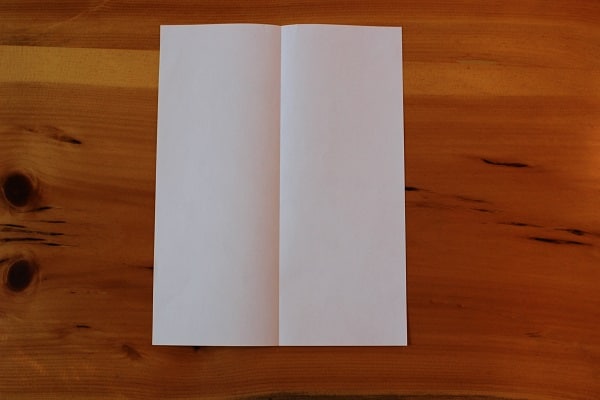
First you fold the paper in half lengthwise, and then unfold. This initial crease is simply a guideline for the next folds.
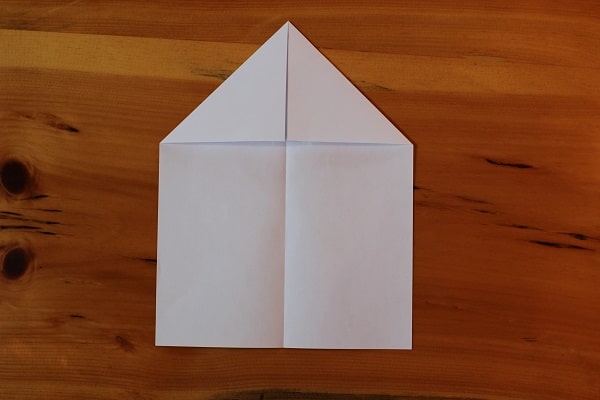
Fold the top two corners down so they meet the center crease. This is the classic way to start a paper airplane, and probably what you first learned as a kid.
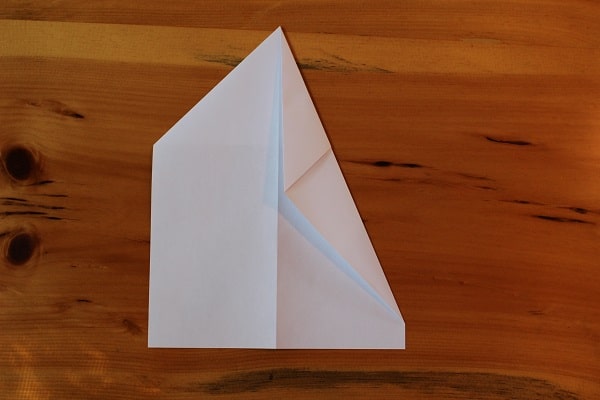
Flip the plane over, and fold the corners in again to the center crease. You want the diagonal line coming off the top of the plane (on the left side) to be lined up with the middle (like on the right side).
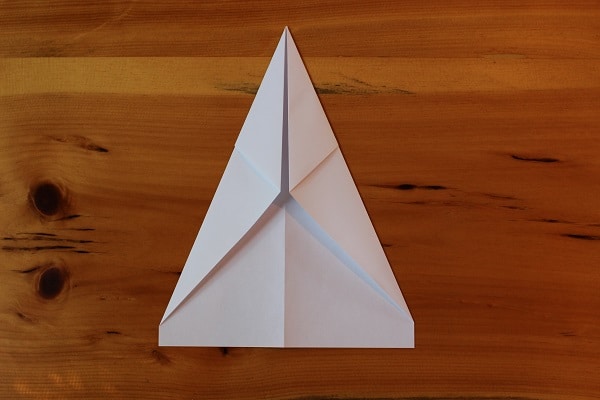
After both folds are completed.
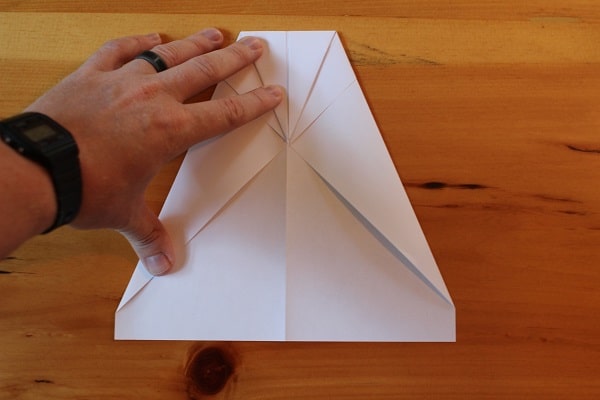
Fold the top point down so that the tip meets the bottom of where the previous folds come together.
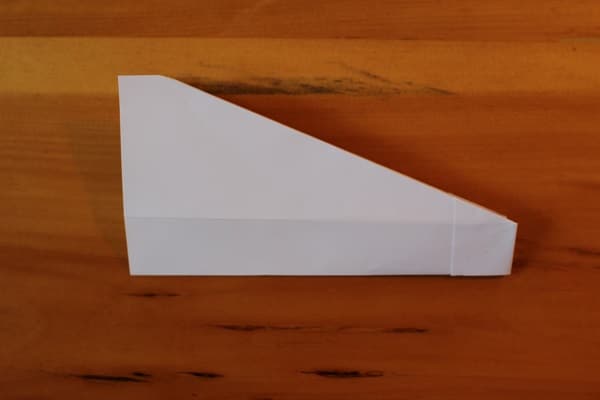
Fold the entire plane in half, in on itself. This creates the snub nose, which gives the Bulldog Dart its name.
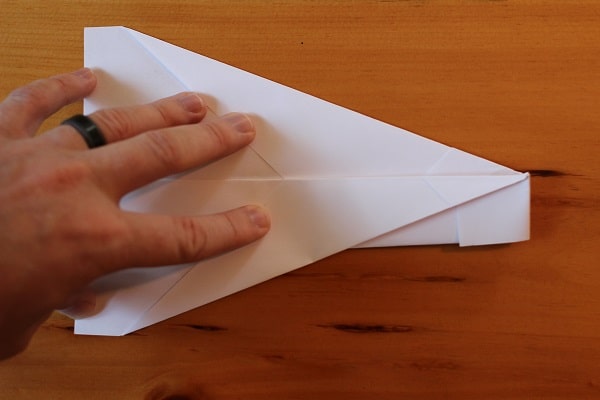
Fold the wings down so that you’re making a straight line across from the top of the snub nose. Repeat on the other side.
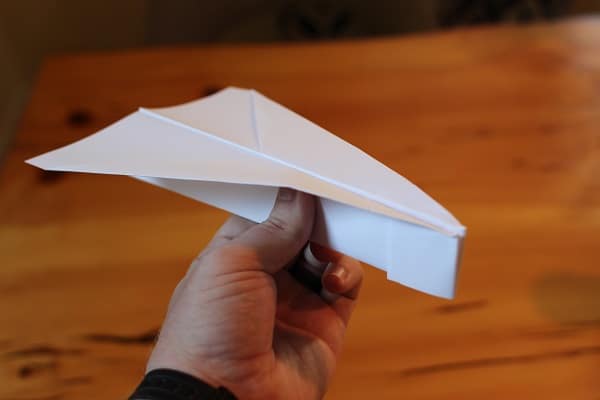
The finished Bulldog Dart. This flies better when thrown at lower speeds. Your tendency is to launch it, but the heavy nose will just fly it into the ground. Give it a softer throw and you’ll have better luck.
The Harrier
This is a slightly more advanced paper airplane. There are a few more folds, and it flies a bit better than the above Bulldog Dart. This is the perfect middle ground between simple and complex recreational paper aircraft.
Start the same way you did with the Bulldog. Fold in half lengthwise and then unfold. Again, this center crease is just a guide for future folds.
Fold the top corners in so they meet at the center crease.
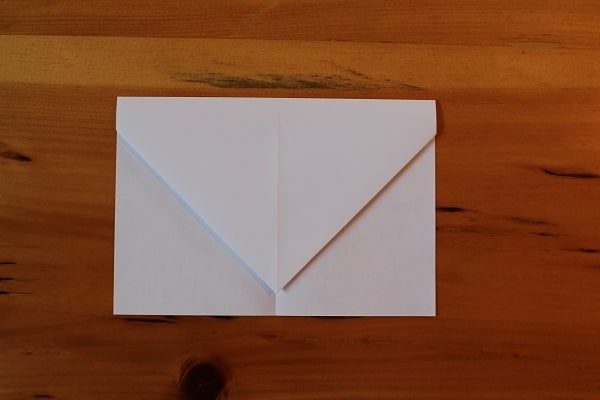
Fold the entire top down so that it resembles an envelope. Make sure you leave a half inch or so at the bottom — you don’t want the top point to evenly meet the bottom edge.
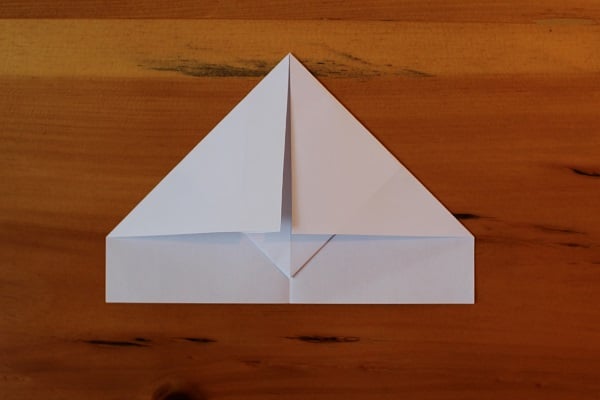
Fold the top corners in so they meet at the middle. There should be a small triangle tail hanging out beneath these folds.
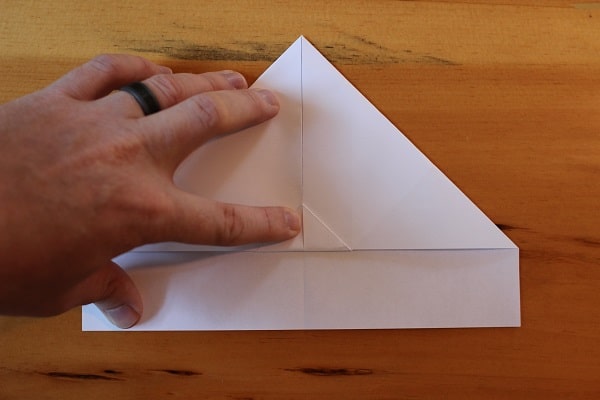
Fold that small triangle up to hold those previous folds in place.

Fold in half, but make you sure you fold it outwards on itself, not inwards. You want the previous triangular fold to be visible on the bottom edge.
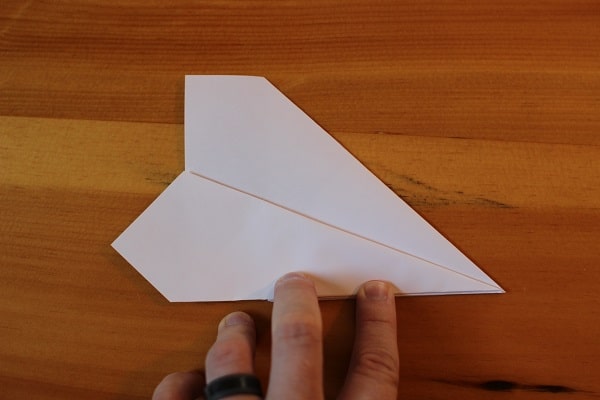
Fold the wing down so its edge meets the bottom edge of the airplane. Repeat on the other side.
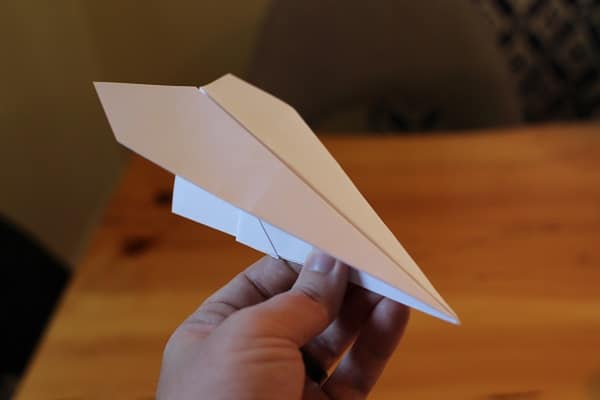
The finished Harrier. It has cool pointed wings and has great stability because of the triangle on the bottom.
The Hammer
While there are far more advanced paper airplanes, this one, in my opinion, is the perfect balance of complexity and accessibility for the Average Paper Airplane Joe. It has far more folds than the previous two models, and also flies the best and farthest. Pay attention with this one, folks, and the payoff is well worth it.
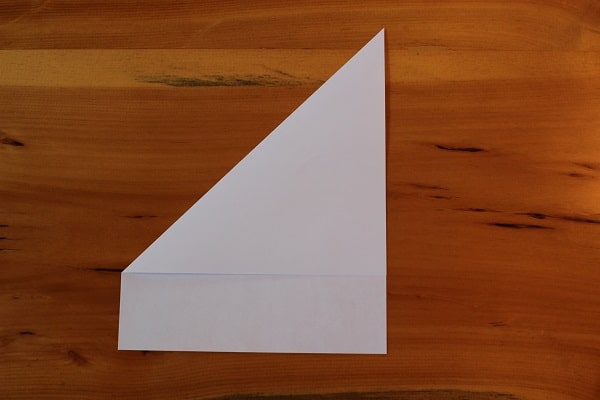
This one starts a little differently than your average paper airplane. First, fold the top left corner all the way down so it meets the right edge of the paper. You’ll then unfold, as this will be a guiding crease.
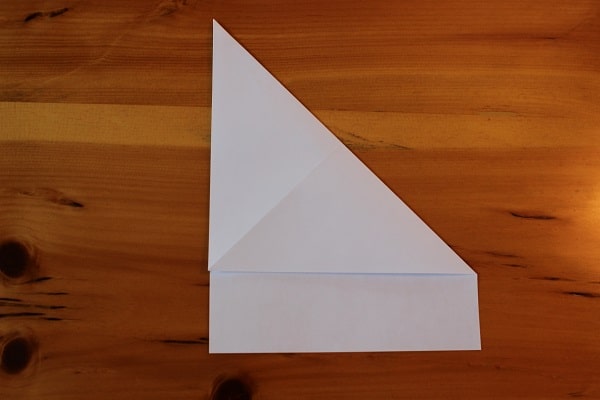
Repeat the same thing with the top right corner and unfold.
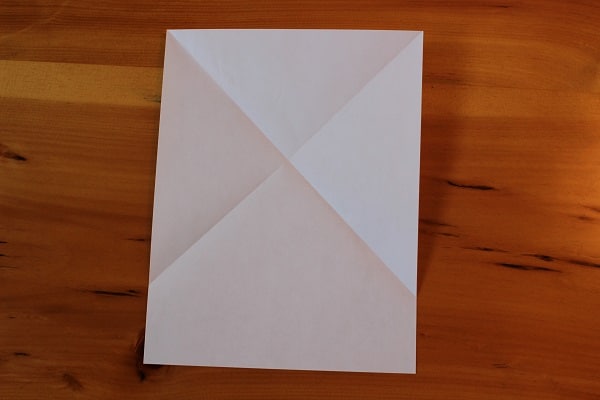
You should end up with an unfolded sheet of paper with two creases forming an X.
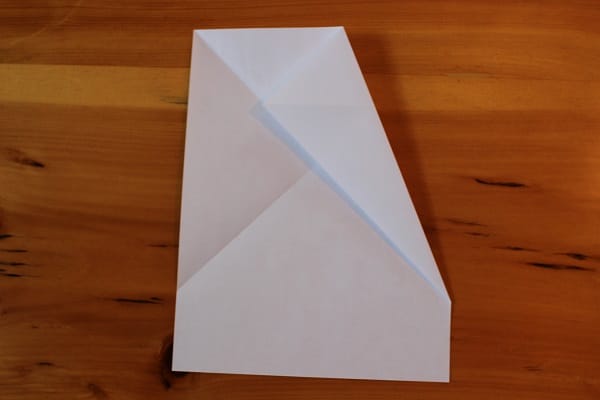
Now, fold the top right corner down so that its edge meets the crease that goes from top left to bottom right.

Do the same with the left corner. The top left point should exactly meet the diagonal right edge of the airplane.
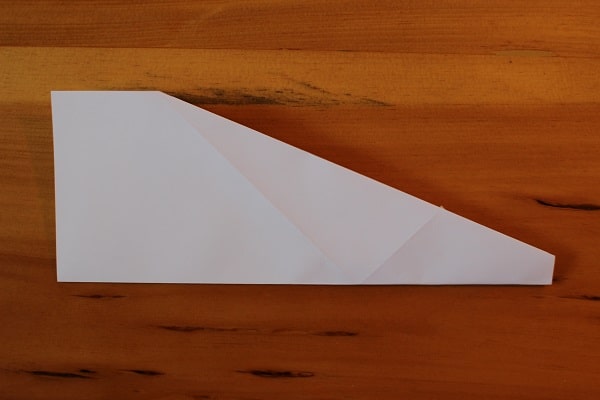
Fold the plane in half in on itself, then unfold. You’ll use that middle crease as a guide.
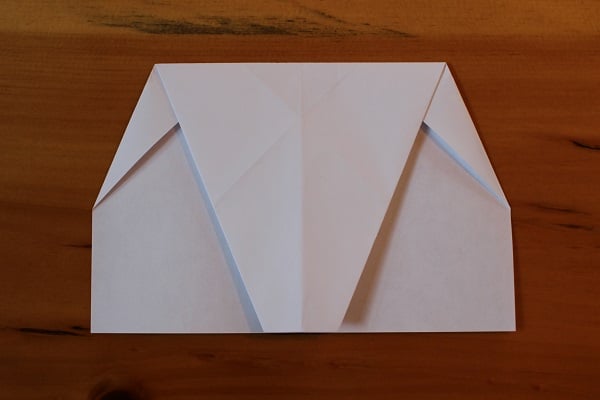
After you’ve unfolded the previous step, fold the top down so that its edge meets the bottom edge.

Fold the top corners down so that their points meet at the middle crease.

Unfold — as with many steps in making this airplane, these creases are a guide.
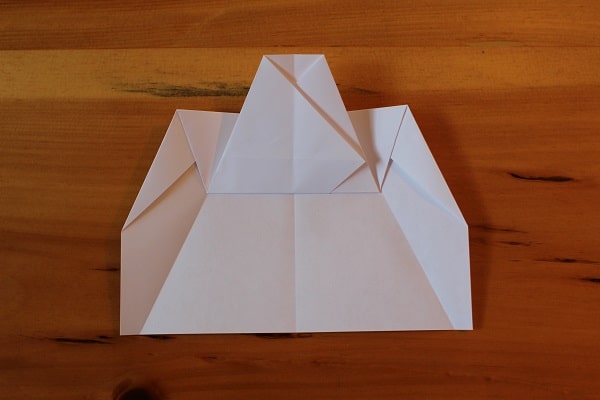
Now take what was the top edge that you previously folded down (3 images back) and fold it back up at the point where its edge meets the creases from the previous step.
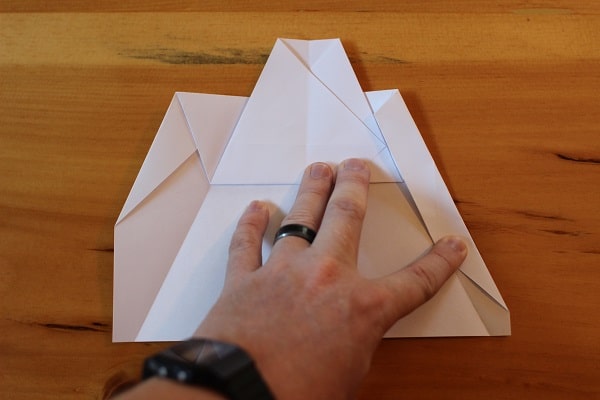
Fold the corners in yet again so that their edge meets both the edge of the top flap and the crease from two steps ago.
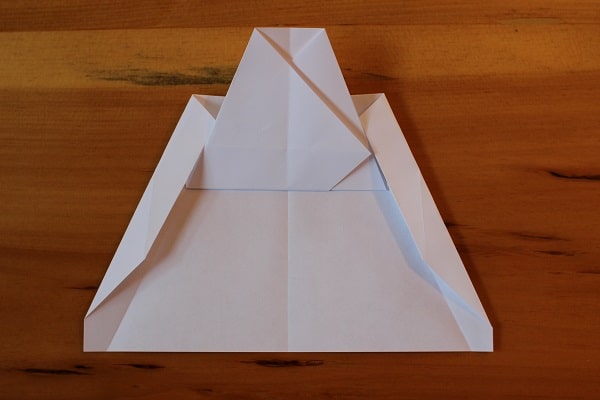
Both corners folded in, meeting both the top flap and the previously-made creases. These are ultimately the wings.
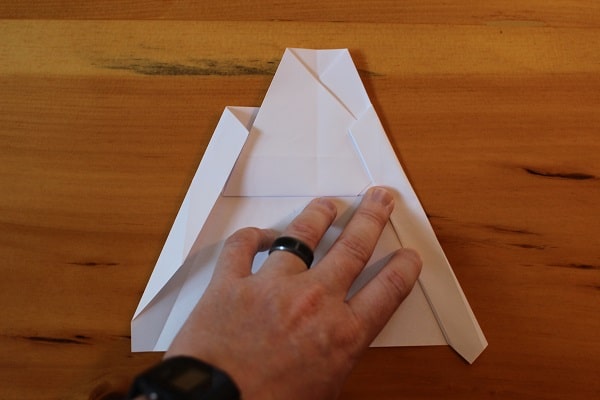
Fold the wings in once more, this time simply folding along the crease that you already made. After this step your plane should have straight lines down from the top to the bottom.
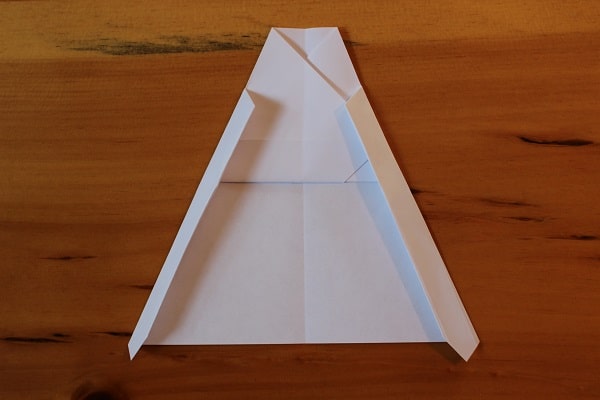
Both wings folded in again; straight edges from top to bottom.

Fold the top down from where it meets the top of the wing flaps you created in the previous step.
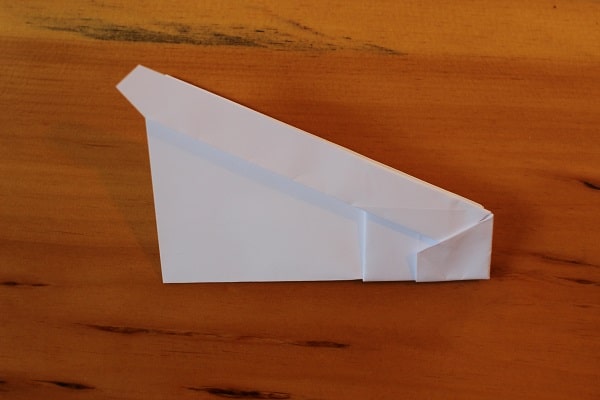
Fold the whole thing in half outward. You want all the paper flaps on the outside of the craft. At this point, folding can become a little tricky because of the thickness of the paper, so take extra care in making good, clean folds.
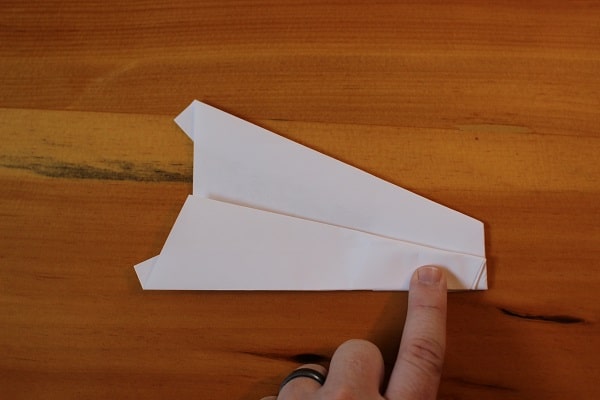
Fold the wings down so that their edge meets the bottom edge of the plane. This creates a small snub nose. Again, this can be a tough fold, so be precise and take your time if you have to.
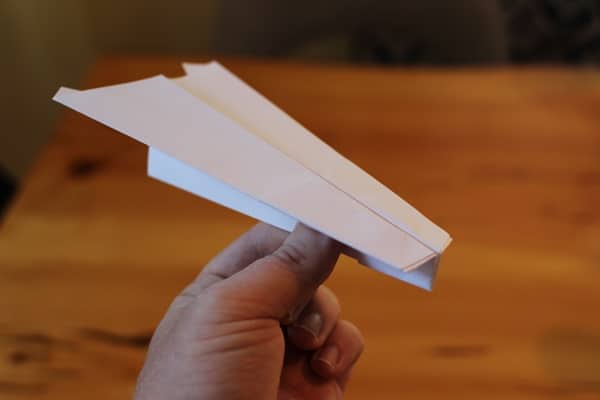
The finished Hammer. This bad boy flies like a dream.
Forest Service Wants To Require Permits For Photography
Corvus.coraxI'm trying to understand why the Forest Service would do this.
http://www.oregonlive.com/environment/index.ssf/2014/09/forest_service_says_media_need.html
Read more of this story at Slashdot.

The Sounds of Aerobatic Paragliding
Corvus.coraxsome of my favorite films at the Banff Mountain Film Festivals I attended in years past were the aerobatic parasailers. When I lived in Salzburg there were always gliders/sailers jumping off the smallish Geisberg behind my flat. Always wanted to try it...

First: put on your headphones or turn up the volume, otherwise the beauty of this clip might be lost. Sounds of Paragliding is a new video from director Shams (previously), and sound engineer Thibaut Darscotte who took special equipment into the skies above France to record the sounds of Théo de Blic’s aerobatic paragliding. Instead of amping up the music and intensity like so many high-speed stunt/wingsuit/skydiving videos these days, Shams instead slows everything down to focus on only the sounds created by Blic’s parasail whipping through the air at incredible speed. It doesn’t really get going until after 2:00, but is completely worth it.
After Dallas Ebola Diagnosis, CDC Raises Estimate of Patient's Possible Contacts
Corvus.coraxcrazy crazy to ponder the what-ifs...
And I have tickets to Texas at the end of Nov...
Read more of this story at Slashdot.
