
Soft Eggs with Mediterranean Salsa
(Want more? See Tasteologie and NOTCOT.com)

I can’t remember how I first heard about Krav Maga, but I do remember being immediately intrigued. All martial arts have an appeal to most men and their fighting spirit, but Krav Maga’s draw owes less to the mystique of many of the traditional disciplines and more to a distinct aura of bad-assitude. It’s a simple and effective “street fighting” self-defense system that’s more martial than art. A well-trained practitioner of Krav Maga is basically a walking human weapon.
Wanting to learn more about Krav Maga, I first looked for a reputable gym that taught the system in my area, but I unfortunately came up short. So I got a set of Mastering Krav Maga DVDs for Christmas last year to familiarize myself with some of its basic principles. Wanting to know still more, I then called up David Kahn, the badass dude who made the videos and the Chief Instructor of the U.S. Israeli Krav Maga Association, to get his insights firsthand.
What I discovered is that Krav Maga is a brutally effective tactical mixed martial art/combative and self-defense system that lives up to its reputation. If you too have ever wondered what Krav Maga is all about, here’s your primer.
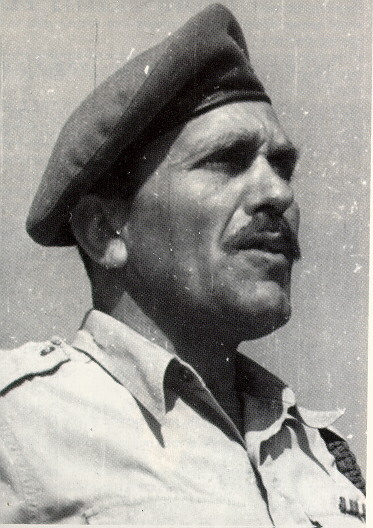
Imi Lichtenfeld, founder of Krav Maga.
To fully appreciate Krav Maga, David says, you need to know its history.
The origins of Krav Maga can be traced to pre-World War II Czechoslovakia (present-day Slovakia) and a young Jewish athlete named Imi Lichtenfeld. Imi was a nationally and internationally renowned boxer, wrestler, and gymnast. Beginning in the mid-1930s, fascist and anti-Semitic groups rose to power in Czechoslovakia and began inflicting violence on Jewish communities. Feeling duty-bound to protect his neighbors, Lichtenfeld organized a group of young men to patrol his community and defend against would-be attackers. He quickly learned, however, that his training in sport martial arts was no match for the anti-Semitic thugs he encountered. Fighting for points in a match and fighting for your life in a street fight require a different mindset and different techniques. To effectively defend himself and his community, Imi began synthesizing his martial art knowledge and started placing an emphasis on attacks that quickly disabled and neutralized a threat.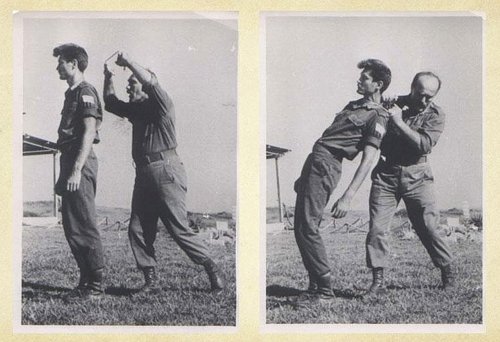
By 1940, Imi found himself living under a Nazi-allied puppet regime and decided to head for Palestine to join the Zionist Movement and fight for a Jewish state of Israel. When he moved to Palestine in 1942, he joined the Haganah, a pre-Israel Jewish paramilitary organization with a mission to protect Jewish settlers from locals who did not welcome the new arrivals. Israeli military leaders quickly noticed Imi’s fighting skills and his ability to teach those skills to others. They put him in charge of training the military’s elite fighting forces, including the Palmach (elite strike force), the Palyam (marine commandos), and the Haganah.
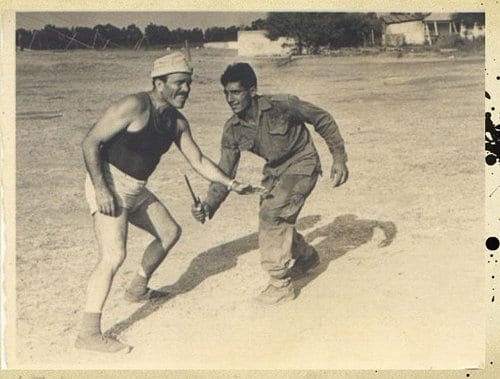
After Israel gained statehood in 1948, these separate fighting forces were merged into the Israel Defense Forces (IDF), and Lichtenfeld was named the Chief Instructor of Physical Fitness at the IDF School of Combat Fitness. It was in this role that he developed what today is known as Krav Maga. Lichtenfeld needed a combative system he could teach new military recruits in just three weeks — one that was simple, efficient, and effective, and could be applied in a number of lethal situations. To create such a system, Lichtenfeld combined the most effective techniques of boxing, aikido, judo, wrestling, and jujitsu into a single, fluid, fighting military discipline that emphasized continuous motion, simultaneous defense and attack, and attacks to an assailant’s soft tissue and pressure points. He called his self-defense system “Krav Maga,” meaning “contact combat” in Hebrew. It quickly became the official combative of the IDF and continues to be today.
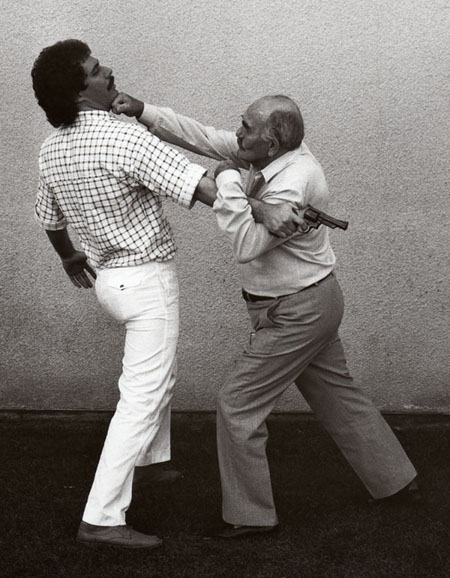
After retiring from the IDF, Lichtenfeld began teaching Krav Maga to Israeli citizens.
Imi taught Krav Maga for nearly 20 years in the IDF. After retiring from military service in 1964, he began devoting his time and energy to modifying and teaching the self-defense system to civilians. Imi opened two Krav Maga studios in Israel where he taught thousands of students and instructors, all while continuing to add and improve upon the fighting discipline he had developed in the military. In 1974, Imi founded the Krav Maga Association, a non-profit dedicated to promoting and teaching Krav Maga in Israel and throughout the world.
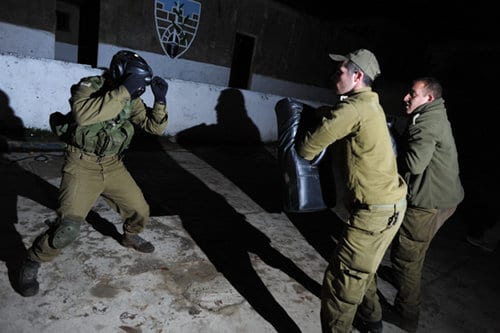
Krav Maga is still the official combative system of the Israeli Defense Forces.
A few of Imi’s early disciples brought Krav Maga to the United States, and it quickly became a preferred close-combat system in many U.S. military and police forces. Several commercial Krav Maga organizations have formed over the years to teach and promote Krav Maga in the U.S., each with a counterpart in Israel. Each of these organizations claim to be the “true” heir and guardian of Imi Lichtenfeld’s original Israeli Krav Maga, and go out of their way to show their connection to Krav’s founder.

As mentioned above, Krav Maga is a tactical mixed-martial art/combative and self-defense system that combines boxing, judo, jujitsu, and aikido. In recent years, other martial arts have been incorporated into Krav Maga such as muay Thai and Wing Chun.
Neutralize the threat. The primary goal in Krav Maga is to neutralize your threat as quickly as possible. This overarching goal governs all the other principles of Krav Maga. Because your aim is to dominate and incapacitate your attacker as soon as possible, pretty much anything goes in Krav Maga. You can’t worry about fighting etiquette when your life is on the line. You do whatever you have to do to preserve your life.
Keep it simple. There aren’t katas or patterns in Krav Maga. Just strikes, holds, and blocks. Krav Maga was designed so that it could be put to use as soon as possible.
Simultaneous defense and attack. Many martial arts treat defensive and offensive moves as separate and discrete actions, e.g., first you block (defensive), then you kick when you find an opening (offensive). The downside of this approach is that it’s reactive and you typically just end up in a cycle of never-ending defensive movements. In Krav Maga, the fighter looks to combine an offensive movement with every defensive movement — he wants to disrupt the attack and simultaneously counterattack. For example, if an attacker goes for your throat, you’d not only try to deflect his attack, but also simultaneously counterattack by going for his eyes, groin, or throat. The goal is to neutralize your threat as quickly as possible. (Sidenote: Wing Chun also has a similar simultaneous defensive/offensive principle.)
Retzev, or continuous motion. Related to the principles of simultaneous defense and attack is retzev, a Hebrew word for “continuous motion.” David Kahn describes retzev as a “seamless explosion of violence,” in which the goal is to neutralize your attacker with a continuous series of aggressive defensive and offensive movements. As your attacker reacts to your counterattacks, you’ll respond with more punches, kicks, and headbutts until the attacker is no longer a threat. Retzev requires a fighter to work from instinct and not rely on a pre-set routine. A well-trained practitioner of Krav Maga will know how to react to any type of threat without hesitation.

Use of weapons of opportunity. You can easily incorporate firearms and knives into Krav Maga. Besides these traditional weapons, Krav Maga also teaches practitioners to improvise and use any object at their disposal as a weapon. Keys, pens, belts, and chairs can all be incorporated into Krav Maga techniques in order to neutralize your opponent as quickly as possible.
Weapon defense. Besides teaching students how to use weapons, Krav Maga also shows how to defend yourself from an armed attack.
Focus on vulnerable soft tissue and pressure points. A well-known principle of Krav Maga is its emphasis on attacking vulnerable soft tissue and pressure points. Many counterattacks involve eye gouging, groin attacks, and strikes to the throat. Some criticize Krav Maga for this, arguing that “it’s not manly to punch a guy in the nuts.” I brought this criticism up with David during our conversation and this was his response: “Krav Maga’s goal is to neutralize a dangerous attacker as quickly as possible. Plain and simple. Sometimes a strike to the groin is the best option to neutralize an attack. When you’re violently attacked in the street, the person attacking you isn’t following some sportsman’s code of chivalry — he wants to hurt, maim, or possibly kill you — so why should you give him the courtesy of not punching below the belt? You can’t worry about fighting etiquette or what’s ‘manly’ when your life is at stake.”
Subduing techniques. In addition to striking attacks, Krav Maga also utilizes subduing techniques in order to de-escalate a violent confrontation. Joint locks and various grabs are used to exert control over your attacker and put you in a position to end the threat.
Join a Krav Maga gym. The best way to get started with Krav Maga is to join a Krav Maga gym. “Krav Maga, like any martial art, is best learned in a group and under the guidance of a well-trained instructor,” says David. Because Krav Maga is designed to prepare you for real-life attacks, you need to have people who can help simulate those situations for you in a gym. It’s hard to practice how to defend and counterattack a headlock if no one is there to put you in a headlock.
David did have one caveat about joining a Krav Maga gym. Because of Krav’s growing popularity in the United States, there are a lot martial arts studios saying they teach Krav Maga in order to get new students, even though the instructors sometimes have little or no formal training in the system. “Do your research and make sure the instructors are legit,” David says. If the instructor has trained in Israel, that’s a good sign.
As mentioned above, there are several competing Krav Maga organizations that claim to be teaching the “true” Krav Maga of Imi Lichtenfeld. It’s a touchy subject among Krav Maga followers and there have been lawsuits between the groups. David is the Chief Instructor of the U.S. Israeli Krav Maga Association (IKMA), a non-profit formed in 1978 by Imi Lichtenfeld to govern and promote the teaching of Krav Maga. There are gyms across the country that associate with U.S. IKMA. David teaches at the gym in New Jersey. If you’re in the area, stop by and check it out. David is a super nice guy and you’ll learn a lot.
Buy videos and books. If you can’t find a reputable Krav Maga gym in your area, there are plenty of instructional books and DVDs on the subject. Watching a DVD is definitely no substitute for actually training in a gym, and you shouldn’t try out moves you’ve learned solely by video in a street fight, but the DVDs will give a basic overview of Krav Maga and its techniques. I highly recommend David’s set of DVDs, Mastering Krav Maga. They’re very well-done and David does a great job explaining and demonstrating the methods and movements.
Related posts:

    
|
Here's a super quick and fun project you can make with your inner kid (or your real kid, if you have one): make perfectly green slime that oozes and gets gooey in all the right places. It's Nickelodeon in a homemade toy. It's realistic mutant plasma that makes you feel as if you've murdered an alien. If you have a soul inside you, you cannot hate this.

|
|
And here you were thinking that swimming with stingrays was the ultimate in cool (and photobombs).
On the Bahamian archipelago of Exuma sits Big Major Cay (also known as Pig Island and Major Cay). Legend has it that sailors dropped the pigs off on the island with the intention of coming back to eat them, but never returned. Now the pigs essentially rule the roost (get it?) on what's been called Pig Beach. Locals and tourists alike feed the pigs, who have been known to swim up to incoming boats. There are tours that head to the beach, too.


John St-Onge started playing with Lego many years ago as a way to bond with his then-young children.

|
|
 Quite by accident, the house I’m spending time in this summer is equipped with an ice cream maker – something I’d never used before. Since I happened to show up with too much tea (imagine that), I decided to combine the two and found that there’s nothing like smooth and creamy gelato infused with loose-leaf tea.
If you have an ice cream maker (old-style makers start at $10, and fully automatic ones are $50 – $60), steep and churn a tea-themed homemade dessert at your next summer party. You can experiment with sorbet, gelato, custard, and even frozen tea-infused chocolate truffles. Tea sorbets are nuanced and sophisticated. Enjoying the flavor of a familiar tea in a new texture can renew your appreciation for it.
The Earl of Grey gelato recipe that I’m sharing here is in a world of its own. I made one version with fat-free half-and-half, and no one would have ever guessed. Although I’m generally not one to add milk to tea when I’m drinking it, there is something to be said for getting the most extraction of fat-soluble flavor compounds in milk. If you try the steep and churn approach, you’ll likely keep your ice cream maker busy all season long and never go back to the grocery store freezer for another pint!
Earl of Grey Gelato
Yields 4 servings
Ingredients:
1.75 cups whole milk and 0.25 cup heavy cream (mixed together)
1/3 cup sugar
2 T cornstarch
1 T Earl of Grey tea leaves
For the fruit swirl (optional):
0.5 cup fruit of your choice (I used blueberries)
1 T sugar
1 t cornstarch
Instructions:
Pour 1-1/4 cups whole milk and 1/4 cup of cream into a heavy saucepan. Add the sugar and heat over a medium heat until near boiling. Remove from the heat, add tea leaves, and steep for 6 minutes. Strain out the tea. Add the cornstarch to the remaining 1/2 cup of milk and whisk to combine. Pour this into the saucepan and whisk again. Return to a medium heat, stirring with a wooden spoon to make sure the milk doesn’t burn. Once the mixture is the consistency of thin gravy, take it off the heat and put it in a bowl to cool to room temperature. Then put the bowl in the refrigerator to cool completely. Follow your ice cream maker’s directions to freeze the gelato. When it’s finished, swirl in the blueberry mixture with a spatula, if desired.
For the swirl, just combine the ingredients in a saucepan over a low heat. Stir constantly and crush the blueberries, making sure the cornstarch blends in well. Increase the heat to medium and cook, stirring continuously, until the sauce has thickened. Cool to room temperature and then keep it in the fridge until you’re ready to use.
The post Tea gelato appeared first on T Ching.
Hello. Hola. Bonjour. Ni Hao. We all say things differently because each language has their own words. Like, duh. But what about how different languages think animals sound? We're not exactly saying words as much as we are simply enunciating simple sounds and yet, different languages have their own take on each animal sound too.

|
|

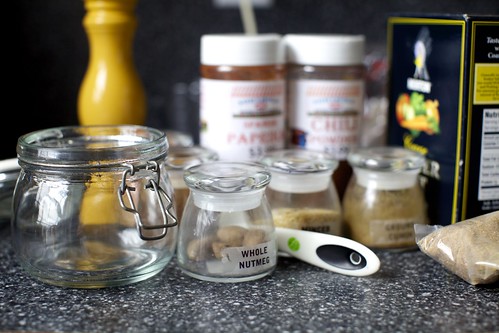
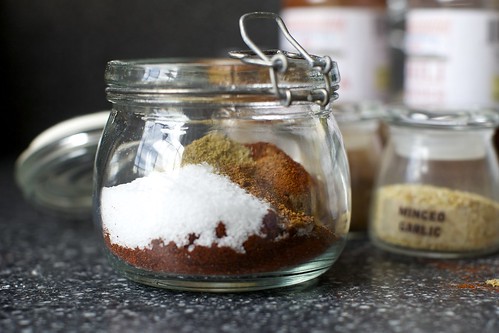
Under my friend Molly’s tutelage, I learned the error of my ways. The thing is, no matter how unappealing the word “dry” may sound against meat of any sort, the results are anything but. While a wet sauce just wants to roll or evaporate off your meat as it cooks, the dry rub spices adhere themselves to it, almost crusting in the meltingly tender meat within as it cooks slow-and-low over a the grill. It loses none of its punch, no matter how long it cooks. You might have some barbecue sauce around when you’re done as a dip for the meat, but there’s so much flavor from that spice crust, you probably won’t need it.
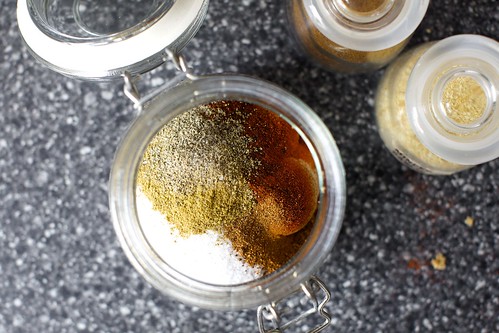
... Read the rest of slow-and-low dry rub oven chicken on smittenkitchen.com
© smitten kitchen 2006-2012. | permalink to slow-and-low dry rub oven chicken | 213 comments to date | see more: Grilling, Meat, Photo, Poultry, Summer


|
|
Bluebox Security some time ago discovered a vulnerability in nearly every Android device released in the last four years that allowed attackers to modify code of legitimate applications without breaking their cryptographic signature. Hackers can exploit the vulnerability for all kinds of malicious activities, including data theft or abusing infected devices as botnets.
You can read up on the technical details of the vulnerability on the Bluebox website. Google in the meantime has created a patch for the issue which it delivered to Android device manufacturers. It is however up to each individual manufacturer to deploy the patch, so that your device may have received it already, or is still vulnerable to the exploit.
Bluebox has released a new application for Android that checks whether your smartphone or tablet is vulnerable or patched. Simply go to Google Play and install the Bluebox Security Scanner application from there.

All you have to do then is to run the application on your phone or tablet to find out if it is patched or not:
The scanner cannot scan apps in the copy protected folder under /mnt/asec/ due to operating system limitations.
You do not need to do anything if your device is listed as patched. If it is unpatched, you cannot really do a lot about it either. What you should do however is be very careful in regards to new application installations, especially if they come from sources outside the Google Marketplace.
From the looks of it, it appears that Samsung has already pushed out the update to its devices, and that HTC has already patched at least some of the company's devices as well.
Verdict
The application highlights if your system has been patched or not which may ease your mind if it is already patched or at least make you aware of the issue if it has not been patched yet. You can uninstall the application if the vulnerability has been fixed on your device, but may cling on to it if it has not. (via Caschy)
The post Find out if your Android is vulnerable to the MasterKey exploit appeared first on gHacks Technology News | Latest Tech News, Software And Tutorials.
 This instructable will tell you how to remove PDF password security and print, edit, copy, and extract a restricted PDF file. PDF is a file format that is universally used because it can be opened using a number of different programs. Typically an individual does not have to download a special prog...
We all have those days. The day is absolutely awful. Today sucks. Nothing is going your way. Maybe something objectionably catastrophic has happened, or your brand-new shoes are ruined, thanks to a very deceptive weather forecast.
The severity and validity of your feeling the blues is not really what counts. What counts is your ability to keep your emotions in check, to cheer yourself up and to know that tomorrow is another day.
The good news: We've all got something that lifts our spirits. Ironically, it's when we need our bad-day-remedies most that we forget what they are.
So consider this list your starting point for cheering up. Come back whenever you need to take your mind off of things.
This Picturesque Scene For When You Can't Get Outside
This Entire List Of 'Rage GIFS'
(For When You Want To Flip Your Desk But Will Have To Settle For This Vicarious Version)
This GIF Of A Llama Who Will Take Sass From NO ONE
This Serene Beach For A Quick, Mental Getaway 
The Saddest Song That You Always Listen To When You’re Sad
(Don't have a list of your own? Here's one to help start the waterworks.)
But When You’re Done With That, The Songs That Remind You That Life Is Inherently Good
David Foster Wallace's Perspective-Shifting 2005 Commencement Speech That Has Since Been Animated
This Sleeping Dog Who Knows How To Take Napping To Next-Level Hideous
This Truth That Should Make You Not Care If Napping Looks Ugly
(You really should go take a nap.)
This Pocket Cat Who Agrees With The Above
Credit: terriblycute
For more on happiness, click here.
When browsing through Barnes & Noble's psychology section, one Redditor discovered a wonderful act of kindess in the pages of a book on depression.
(Story Continues Below)
In the photos posted by jtate2016, someone appears to have written inspiring messages, including "You are loved!" and "Have a nice day!"
Sometimes, it's the little things.

We're all busy people, but if there's one thing you should always make time for, it's to get to the doctor for regular checkups and age-appropriate preventative tests. Still, it can be difficult to know which types of tests you should ask your doctor about at what stage of your life. This graphic breaks it down nicely.

|
|
"Big Brother" has attracted a lot of headlines this season as a result of the racist, homophobic and misogynistic comments several of the houseguests have been overheard saying on the live feeds.
"Big Brother" host Julie Chen spoke out about the controversial comments during a live taping of CBS' "The Talk" after the show was off the air for a week. She explained that when the show puts 16 strangers from all over the country in a house together "they know they have zero privacy and everything they say and do is being monitored."
Chen added: "When I first found out that Aaryn, who is a 22-year-old girl, made anti-gay, anti-black and anti-Asian comments, I have to be honest, the Asian ones hit me the most ... It stung. I took it personally. You know, I’m a human being and the really sad part was it took me back to the '70s when I was growing up in Queens and when I was 7-years-old getting bullied, being called a chink and people pulling their eyes. But it took me back so many years and I thought to myself, 'Wow, I haven't heard comments like that [in years].' The year is 2013 ... and then I felt ignorant. I felt like thought, 'Wow. There are still people who live in this country who feel that way and act that way? Yes, there is. Yes, there is. And afterwards, it just made me sad because she’s 22 and she’s college educated ... It felt mean-spirited. It felt ugly and it felt mean."
Chen was referencing comments made by "Big Brother" contestant Aaryn Gries. "Dude, shut up, go make some rice," Aaryn said of Helen, an Asian-American contestant. Later, GinaMarie added, "Andy was like, 'I'm gonna punch her in the face,' and I was like, 'Maybe that'll make her eyes straight.'"
“Be careful what you say in the dark," Aaryn said of African-American houseguest Candice at another point. "Might not be able to see the b****.”
Aaryn and GinaMarie's comments about gay, black, Asian and Jewish cast members as well as their frequent use of the word "retarded" got them fired from their day jobs.
"Big Brother" airs Wednesdays at 8 p.m. ET, Thursdays at 9 p.m. ET and Sundays at 8 p.m. ET on CBS.
Prairieland Antiques isn’t easy to stumble upon. The address points to a building on the corner of Waukegan Road and Birchwood Avenue. But the sign on the front door instructs customers to take a nearby alley to the door behind the building. There, another sign points out an otherwise unmarked door. But the inconspicuous location hasn’t hurt the antique seller. For the past eight years, Prairieland Antiques has been selling most of its furniture, art and other antique objects. These days, most of its business comes from its online store, but Prairieland still attracts customers from all over United States …


The post When people hurt you over and over appeared first on Quotes Pictures, Inspirational Images with Quotes | SayingImages.com.

Google has a great built in service to transfer your email to a new Gmail account, but it only works with Gmail. If you're taking your email somewhere else, tech blog Digital Inspiration created a script to make the transfer process easy.

|
|

We've seen tons of homemade charging stations. They make for great DIY projects because they only require a basic skill level to put together. That said, you ought to know a few things to make an effective and well-rounded nightstand charger that keeps quiet while you sleep.

|
|

When you make a purchase online, or are providing an email address to someone you don't quite trust, it makes sense to provide a disposable email address. While it's certainly not the only service of its kind, MailDrop is a clean, easy to use service that keeps the junk out of your real inbox.

|
|

|
|
A new study published at Plos One reveals that cockatoos can pick complicated locks, with one bird unraveling the five interlocking components without being given a demonstration beforehand. Jon M Chang, for ABC News:
Alex Kacelnik, a professor of zoology at Oxford University ... and his colleagues, Alice Auersperg and Auguste von Bayern at the University of Vienna, placed a cashew nut behind a window fastened shut by a thin metal bar. The birds had to get through four additional locks that required them to pull a pin, turn a screw, remove a bolt, and rotate a wheel to reach the reward. More importantly, they had to do those actions in the correct order. If a cockatoo completed the first task, the scientists then rearranged the order of the four locks. They wanted to see whether the birds could modify their lock-picking behavior by doing the same four actions but in a different sequence.
Previously features at Boing Boing were the death metal cockatoo and Oscar the naked cockatoo. 
|
|
Every Friday, a DIY expert spares us a trip to the grocery store and shows us how to make small batches of great foods at home.
Today: The easiest way to feel like a kid on the Fourth of July? Make Rocket Pops at home with this recipe from Ashley of Edible Perspective.

Growing up, Rocket Pops were my favorite summer treat. They’re juicy, they're refreshing -- but they’re also filled with a long list of unnecessary ingredients. So I've made a fruit-heavy, lightly sweetened treat that you will enjoy all summer long -- starting with the Fourth of July. It may not look exactly like the traditional Rocket Pop, but it also won’t include made-up fruit like the infamous blue raspberry.
These are perfect for cooks of any age -- and they're especially great for the kiddos to get involved with. If you don't have an ice-pop mold, don't worry! These can easily be made using small paper cups. Just freeze the mixture as directed in the instructions, then peel the paper away just before eating.

If you want to serve these to a crowd -- say, on the Fourth of July -- but you only have one set of popsicle molds, here's what to do: make a batch of popsicles, then remove them from the molds, wrap them in parchment paper, and place them on a baking sheet in your freezer. Then make another batch, and repeat, continuing to stack them on the baking sheet until you've made enough to serve your guests.
A few notes:
Homemade Berry Rocket Pops
Makes four 3.5-ounce pops
1 cup hulled strawberries, partially frozen
1/2 cup blueberries, partially frozen
1/2 cup blackberries, partially frozen
1 to 1 3/4 cup coconut water, divided
2 to 3 tablespoons agave nectar or honey, divided
2 to 3 tablespoons lime juice
1 teaspoon lime zest


You want to start with berries that are either frozen then partially thawed, or partially frozen. In your blender, blend the strawberries, 1/4 to 1/2 cup coconut water, and 1 1/2 to 2 teaspoons sweetener. You want the mixture to be thick, so use the smallest amount of coconut water possible. And add your sweetener last to avoid it sticking to the bottom of your blender.

Empty the strawberry mixture into a bowl or glass and freeze for about 30 minutes -- it should start to thicken. Rinse your blender, then repeat with your blackberries, blueberries, coconut water, and sweetener: blend and freeze.

Rinse your blender, then blend the crushed ice, lime juice, lime zest, 1/2 to 3/4 cup coconut water, and 1 tablespoon sweetener, again adding the sweetener last and using as little coconut water as possible. Taste for sweetness. Place in a bowl in the freezer for about 30 minutes, until starting to thicken.

You want your purées to reach a texture where you can spoon them on top of one another without them mixing -- like a thick slushy. After all mixtures have thickened, fill your popsicle molds about 1/3 of the way up with the strawberry mixture. Tap on the counter to level.

Spoon in the lime mixture next making sure there are no air pockets (lightly poke with the top end of the spoon to help fill gaps), then top with the blackberry/blueberry layer and level off the top.
Place popsicle sticks in the ends (your mixture should be thick enough that they remain standing) and freeze until solid, about 4 to 5 hours.
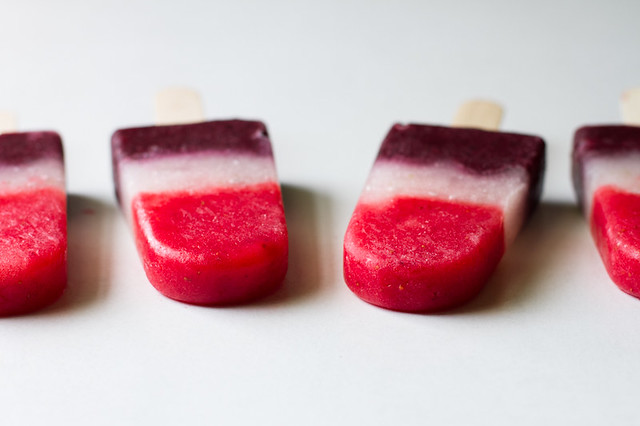
Serve your popsicles once frozen. They may need to thaw for about 5 to 10 minutes before you're able to remove them from the molds. Grab one, and you'll feel like a kid again. Happy Fourth of July!
See the full recipe (and save and print it) here.
Photos by Ashley McLaughlin
All week long, Mark Bittman has served as our Guest Editor. He chose a Wildcard winner, answered our questions, and shared 4 recipes from his upcoming Cooking Basics app.
Mark Bittman cooks the way that he writes: efficiently and straight to the point. His tips are simple and they don't mess around -- and neither do his recipes. The dishes he shared with us this week are the reliable kind, the kind we know will deliver when our day has been long and we just need something good. And they're all made with basic, healthy ingredients. Leave it to Mark to show us that minimalist recipes can often be the most satisfying.
Green Beans with Crisp Shallots


For more of Mark's recipes, enter to win a copy of his new Cooking Basics app!
Photos by Romulo Yanes
