Shared posts

23 Mar 06:50

Welcome to Mali

by Gregory Mann
Bamako airport (Photo by @glennagordon for everydayafrica.tumblr.com)

Bamako airport (Photo by Glenna Gordon for everydayafrica.tumblr.com)

Bamako doesn’t feel like the capital of a country at war. True, people are stressed, and the pace of life might have slowed. The city’s building frenzy has subsided. Ça va pas, but things are calm, even if late in March, far from cool. In the distant North, a fifth French soldier died over the weekend, and my tantie, a venerable hajja, cried for him. While the government here expresses its gratitude for French sacrifices — and its citizens their shame at having others fight for them — it refuses to say how many of its own soldiers have died in the most recent fighting, which is led mostly by French and Chadian troops. The press here gives the impression that the army’s battles remain first and foremost political and inwardly directed. Meanwhile, more than two months after French helicopters attacked jihadi Salafist fighters on the road to Sevare, more than one war is being fought in the distant Malian Sahara. 

Necessary as it was, France’s intervention never offered a real solution to any of Mali’s problems. It did, however, create a preferable set of problems to the ones this country would otherwise have faced. The arrival of French troops both stopped the advance of a coalition of mujahideen on the vital town of Sevare and quashed what looked to be the imminent threat of another coup d’état by Mali’s still powerful junta against the interim civilian government it was forced to accept — however partially — last April. How dire would the situation have been if the army had come back to power, if Sevare had fallen to the Salafists, or both? Or worse? Some say that Bamako was the real aim of the offensive, although this seems unlikely to me and there’s no real evidence for it. Whatever the case may be, for an exceptional moment in January, French and Malian interests converged, and the enduring popular support for the intervention suggests that many people here agree with that assessment.

The two governments had shared enemies and — at least in the short-term — shared interests. They fought an alliance of jihadi Salafist fighters made up of AQMI, MUJAO, Ansar Dine… For reasons internal and external, Mali’s army could not face them alone, in spite of a common and comforting fairytale claiming that it could. But if they shared enemies, the two countries did not share the same objectives, much less the same war. The question in the wake of French advances is how dramatically those objectives will diverge.

They have already begun to do so, in spite of the best efforts of Paris and Bamako to harmonize their discourse, if not their actions. The clearest evidence of this divergence is the ongoing, ambivalent relationship of French forces to the Tuareg separatist movement, the MNLA, which continues to control the important northern town of Kidal and to insist that the Malian army has no place there. Civilians in Kidal — the largest predominantly Tuareg town in Mali — fear reprisals if the army returns, and quite understandably so. It’s not clear that anyone controls the Malian army as a whole — even if different officers clearly have a handle on part of it — and its soldiers have targeted Tuareg and Arab civilians in both the distant and the very recent past. Knowing that history well, many people in the North feel that the French army is their best protection (many in the South feel the same way, albeit for different reasons). Just as France wants to use the MNLA, the MNLA wants to use France. Having failed to persuade France to consider it as a proxy army, for the moment the MNLA has come out rather well from the French intervention, which elevated the movement from defeat to relevance and positioned it to absorb many of the fighters abandoning Ansar Dine. All this jibes badly with the shared commitment to Mali’s ‘territorial integrity’ proclaimed in Paris and Bamako. Put differently, the essential challenge to Malian sovereignty posed by the French intervention might not be the fact that it happened, but the specific form it takes in Kidal and its broader region, where the thorny question of proper governance has to be seized, and if possible resolved.

So if French and Malian interests have begun to diverge, the question is how greatly and for how long they will do so. The answer to those questions depends on another, deceptively simple one: How many wars are being fought in the Sahara?

Mali’s war seeks to restore the power of the central state and its core traits of secularism (laicité) and territorial integrity, both of which remain live and nonconsensual issues. This war is far from over. Not too long ago — but before the fifth French death — Prime Minister Django Cissoko argued that, militarily, “the hardest part is behind us” and that the “essential (most vital part) has been done”. Never mind the desire to put on a brave face, this was a shameful thing for the Prime Minister of a country ‘liberated’ by foreign forces to say. No truce or cease fire has been established, and some 400,000 of his fellow citizens have been chased from their homes. They have only begun to return. Vast swathes of the North, including Kidal, remain outside government control, as do factions within the army. The government itself is long past the expiration of its short-term legitimacy, but elections promised for July threaten to be too much too soon. Clearly “the essential” has not been done, whether in the North or in the South.

Launched in haste but persecuted effectively, the French war is not the Malian war; it merely envelopes one conflict inside another. As West African forces arrive, a European Union training mission finds its feet, and the UN tries to work out how to be legitimate without being responsible, French departure might become possible. Yet the central fact remains that no one wants to own or to pay for what has become France’s problem.

Although French President François Hollande claims that France forces will draw down soon, he is being willfully optimistic. Much remains to be done. If hostages provided one motivation for France to intervene, more have since been taken; if territorial integrity was the aim, it remains undetermined; if it was to ‘end’ terrorism, the jihadi Salafists targeted by that phrase have yet to be caught (reports of recent deaths of leaders remain unconfirmed), and, according to the French Minister of the Interior, more have been recruited; if it was to secure future access to uranium, it was a bad bet, they are in the wrong place, and they ought to know that the peaceful model is likely to be more effective, as Niger’s recent if delicate experiences suggest.

Third, there is the war of the mujahideen. In spite of heavy losses in their ranks, the war itself is not yet lost. AQMI, at least, has claimed to want a long one, and for years has broadcast its to draw France in particular into a Saharan war. It is too soon to tell whether or not, having got what they wanted, the mujahideen — especially their new recruits — have changed their minds. But the current moment might be only the end of the beginning, and too tight a focus on this ‘big’ war only obscures the smaller, more essential conflicts that enable it.

The most important of these is the war launched by the MNLA in January 2012, the one which sparked the others, and which still rattles around within the shells meant to contain it. The Tuareg separatists claimed to have won it in April, lost it to their erstwhile allies amongst the mujahideen in June and July, and must now be hoping that France might win it for them after all. They have more reason to be optimistic than does François Hollande, who commands the troops without controlling the situation. His Minister of Defense Jean-Yves leDrian has lately been arguing that before being deployed to Kidal, Mali’s army must be restructured, retrained, and submitted to civilian authority. Moreover, by his reckoning, disarmement of the MNLA would only be appropriate after a process of national dialogue and reconciliation has taken place. All that would take months, if not years, and would give local diehards every reason to promote instability. Whatever scenario le Drian has in mind, the French Minister of Defense seems to be coming awfully close to laying down the limits of his weaker partner’s sovereignty. It is up to President Traore and Prime Minister Cissoko to set some boundaries of their own, a fact that once again brings the Mali crisis back to the need for the government at Kuluba to establish control over the garrison at Kati.

Finally, both France and Mali both claim to be fighting a war against terrorism. Here again, they speak the same language but mean different things. France means the hostage takers who target their citizens for ransom and threaten worse. For many Malians, the term ‘terrorist’ refers to the MNLA. When national television proclaims that the country is fighting a war against terrorism, they think of the war that began in January 2012, not the conflict with AQIM and its allies, which ex-President ATT once dismissed as “other peoples’ wars.”

None of this is very pretty, but two facts emerge from it. First, the French might be only ones who want France to leave Mali any time soon. Almost every other actor would seem to have a vested interest in having them stick around for a while. That fact in and of itself might provoke future violence. The second, more important, point, is this: France can make war in Mali; it has done so in more ways than one, and (counting Nicolas Sarkozy’s presidency) more than once. But France can not make the peace. That will be up to the better angels of people in Kuluba, Kati, Kidal, and beyond. While waiting for those angels to appear, it is looking ever more likely that France will claim to win its war while Mali fails to win its own.


22 Mar 15:20

"Anyway, I looked up chop and screw. He’s right. It’s a mixing technique… It..."

“Anyway, I looked up chop and screw. He’s right. It’s a mixing technique… It remixes hip-hop music, which I’m told developed in Houston. Well, the chop and screw developed in Houston, not hip-hop. The chop and screw technique remixes hip-hop music with the kind of music that was in Houston in the 1990s in the hip-hop scene. And it’s done by slowing down the tempo and skipping beats. It ends up sounding like a chopped up version of a tune, and so it’s called chop and screw. There’s even an app for it.”

- Rush Limbaugh
22 Mar 05:25

I Been On (Ratchet): Conceptualizing a Sonic Ratchet Aesthetic in Beyonce’s “Bow Down”

by crunktastic
Guest Post by Regina N. Bradley at Red Clay Scholar    

While listening to Beyonce’s latest single “Bow Down/I Been On” an eyebrow raised in amusement along with a low “woooooord?” I couldn’t believe that Beyonce, Mrs. “Girls-Run-the-World” was talking to bitches and – gasp! – demanding they bow down.

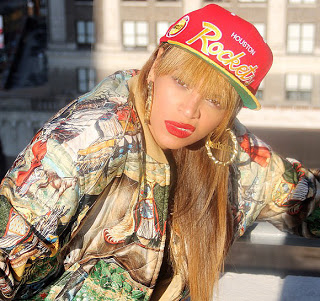
Beyonce-RatchetBut it wasn’t Bey’s emphatic singing and ad libs that caught my attention. It was the track itself. The track, in all its “H-town vicious” glory, that briefly pulled Beyonce back south off her global stage.

I contextualize Beyonce as a dichotomy of grit and grace, two polarized representations of black femininity that only co-exist via performances of alter ego(s) – i.e. Beyonce/Sasha Fierce. Aisha Durham’s discussion of Beyonce in her article “Check On It” provides a pliable framework for my discussion here. Durham writes: “Beyonce successfully performs a range of Black femininities, speaking at once to the Black working and middle class sensibilities while fulfilling her dynamic roles as both a hip hop belle and a U.S. exotic other globally” (35). The discourses of respectability that Beyonce frequents and consistently navigates are those of visual culture, often limited to what we see of and about Beyonce rather than what we hear.  Durham’s categorization of a belle parallels not only the Madonna/whore complex frequently imposed upon women in popular culture but the antebellum aesthetic of respectability that continues to dictate southern women. An oppositional parallel for black women excluded from this niche of finer womanhood is the highly visible and commodified form of expression that we have come to recognize as (the) ratchet. As scholars like Treva Lindsey, Heidi Lewis, and Brittney Cooper point out, ratchetness is an intervention of sliding contemporary politics of respectability currently in place against women (of color). And, for the sake of this essay, I’d like to hone in on the understanding of ratchet as a southern export, one which frequents popular expression like hip hop. It in this regard that I posit Beyonce broaches a type of “sonic” ratchet in “Bow Down,” using sound to signify not only her southern “ruts” (roots) but utilize an aesthetic that allows her to vindicate her southern black womanhood while sustaining her (visual) global image.

The track opens with a video game sample (I’m thinking Donkey Kong. Nintendo scholars help me out here!) and an autotuned voice declaring “I’m from the H-town/Coming (coming) down/ dripping candy on the ground.” The video game sample signifies not only the ‘game’ of hip hop/popular music but possibly alludes to a similar use of video game sampling seen in Houston rapper Lil Flip’s break through single “Game Over.”  Beyonce’s declarations of being from Houston and the allusion to “dripping candy” on the ground hint at the prominent car culture (“candy paint”) associated with Houston (hip hop) culture. A digression away from Beyonce’s usual declaration of the finer things in life like high priced labels and global jet setting, her declaration of returning to H-town and its cultural “essentials” re-situates her within not only Houston’s but a southern narrative.

**Side-note: let me take a moment to, er, bow down to one of the trillest hip hop scholars in the game and expert on Houston hip hop Langston Wilkins. His work can be found here.**

Aside from her growling of “bow down bitches!” there is a section of the track where it seemingly “remixes itself” parallel to a melodic – and familiar – rendition of Beyonce’s ad libbing. This remix simultaneously changes the track while re-rendering Beyonce’s sonic narrative and the song continues in the Texan hip hop aesthetic of chopped and screwed. It is here that we can formally recognize Beyonce as her newest alter-ego BaddieBey, whose distorted voice is masculine and fragmented in such a way that dishevels the listener’s understanding of Beyonce as the “good girl.” The (hyper)masculinization of Beyonce’s voice in this track signifies her attempt to situate herself not only in hip hop’s masculine discourse but southern hip hop and its renderings of the south as a similarly masculine space. The sonic intonations of chopped and screwed give Beyonce a pass to dabble in ‘ratchet-speak,’ sonically alluding to images of “baby hair and dookie braids.’ We hear ratchet rather than see it.

It is her roll call of prominent Texas rappers like Willie D and Pimp-C, however, that particularly struck me. In her shout-out to Pimp-C of UGK fame, she says she declares having to “sneak and listen to that UGK.” Harkening back to Durham’s discussion of Beyonce’s treading between black working class and middle class sensibility, Beyonce’s delivery of this line speaks to the tensions that exist between her attempting to be down while sustaining the respectability of her middle class upbringing (think New-New from the movie ATL). It also provides a quick glimpse into the reality of Beyonce’s performance of ratchet as just that – a performance instead of her reality. Still, Beyonce’s acknowledgement of having to “sneak” and listen to Houston rappers is further signified by the narrative persona of BaddieBey than Beyonce herself, sustaining the distance necessary to keep her from teetering over the edge.

I am not suggesting that the track does not have a few sore spots – folks are for real pissed at her liberal use of bitches and tricks. If nothing else, “Bow Down” provides insight into the clever ways Beyonce’ uses instrumentation and sound production to fragment her persona limited by investments in her visual image. It blurs clean-cut negotiations of black women’s identity and respectability as literal discourse by introducing the concept of sound as an alternative form of black (feminist?) expression and its analysis.

21 Mar 20:38

"Since Sunday, a trio of Bitcoin apps have soared up Spain’s download charts, coinciding with news..."

“Since Sunday, a trio of Bitcoin apps have soared up Spain’s download charts, coinciding with news that cash-strapped Cyprus was planning to raid domestic savings accounts to pay off a $13 billion bailout tab. Fearing contagion on the other end of the Mediterranean, some Spaniards are apparently looking for cover in an experimental digital currency.”

- Jittery Spaniards Seek Safety in Bitcoins - Businessweek, via @jaymo, @n_srnck
21 Mar 05:54

Nozomi Ishiguro Tambourine

Johan Palme

AKA the postapocalyptic sea creature collection

We're posting runway pictures from Fashion Week Tokyo. See the full list of designers here. To read our daily reports on the collections, visit our Style File blog. And don't miss our street-style coverage.
20 Mar 16:17

Twerk, twerp, and other tw-words

by Alice

By Anatoly Liberman


I decided to throw a look at a few tw-words while writing my previous post on the origin of dance. In descriptions of grinding and the Harlem Shake, twerk occurs with great regularity. The verb means “to move one’s buttocks in a suggestive way.” It has not yet made its way into OED and perhaps never will (let us hope so), but its origin hardly poses a problem: twerk must be a blend of twist (or twitch) and work (or jerk), a close relative of such verbs as squirm (possibly a blend of dialectal squir “to throw with a jerk” and worm) and twirl (? twist + whirl). When blends are coined “in plain sight” — as happened to brunch, motel, and Eurasia — no one has questions about their descent. Nowadays, blending has become a tiresome custom, and the stodgy products of grafting one word on another are usually as transparent as Texaco or Amtrak and equally inspiring. But no one can prove that twirl is indeed a sum of twist and whirl. Its origin will forever remain “unknown.” Be that as it may, twerk does look like a blend, even though we don’t know who, where, and when launched it into the linguistic space of North America.

Most people sense an element of sound symbolism in words like twerk, even regardless of its rhyming partners jerk, quirk, and shirk. By the way, dictionaries inform us that quirk is also of unknown origin and that jerk is a symbolic formation. Shirk is obscure and, according to some authorities, may have experienced the influence of German Schurke “scoundrel; rogue.” I have moderate trust in the shirk-Schurke connection. Initial j- is such a common expressive substitute for sh- that I wonder whether jerk is a doublet of shirk or vice versa. In English, tw- suggests something fidgety and inconsequential: compare, in addition to the words cited above, tweak, twitter ~ Twitter, tweet, tweedle ~ twiddle ~ twizzle. As with blends, sound symbolism cannot be “proved.” Some speakers hear derogatory or humorous overtones in tw-, while others do not, especially because, for example, tweed and twill are perfectly respectable. It would be too much to expect that some combination of sounds would occur only in semantically related words. I once mentioned the symbolic (perhaps onomatopoeic, frightening) character of English gr- (grim, grind, growl, grueling, and so forth) and had to defend my unoriginal idea against the presence of grace, the gentlest word one can imagine.

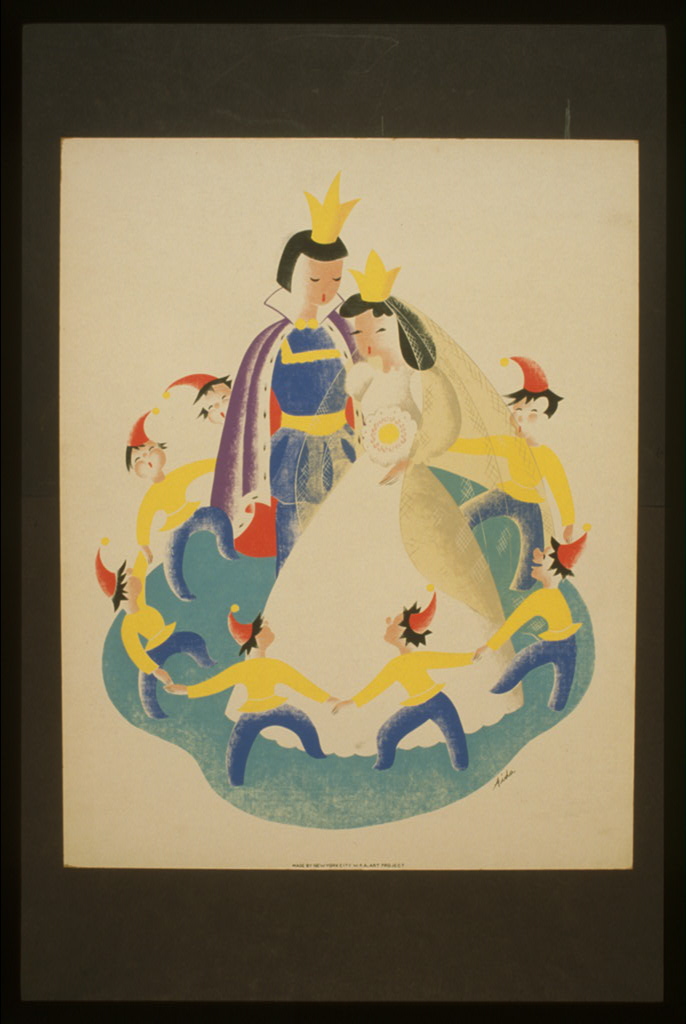
Snow White and the Seven Twerps.

Viewed from this perspective, the history of twerp also presents some interest. Two of its rhyming partners (slurp and burp) are even less attractive than those of twerk. (Chirp is not too dignified either; the Latinism stirp is bookish and occurs rarely.) No citations of twerp in OED predate 1923. Two of the citations (both written decades after the word was in use) trace it to a blend of a given and a family name (T.W. Earp). This hypothesis is not improbable (compare namby-pamby “lackadaisical”, based on Ambrose Philips, or dunce, among hundreds of “words from names”) but perhaps a little too good to be true. Perhaps twerp ~ twirp “midget; fool; an obnoxious person” had some currency at Oxford soon after the First World War, and the name T. W. Earp (a real person and an Oxonian) gave rise to a witticism no one could resist. The word gained universal currency as low slang soon after its first attestation. This fact also speaks against the jocular origin of twerp among a coterie of university friends.

Unfortunately, two “serious” etymologies of twerp do not carry conviction. According to one, twerp owes its origin to Danish tvær “running all the way across, diagonal.” This etymology was rejected as soon as it was suggested and for good reason. How could a twentieth-century English slang word (a noun) be a phonetic alteration of a Modern Danish adjective? According to another guess, twerp is a doublet of dwarf. The senses correspond perfectly, but the path from dwarf to twerp cannot be reconstructed. Dwarf, although lacking cognates in the rest of Indo-European, has existed in the Germanic languages forever, as evidenced by Old Engl. dweorg ~ dweorh, Old Icelandic dvergr, Middle High German getwerk, plural; Modern German Zwerg, and other similar forms. Twerp could not be a borrowing; that is, it could not come from an outside source (such a source does not exist; reference to Danish is a bad joke, and, incidentally, the same word exists in Swedish and Norwegian), and no process known to English historical phonetics would have changed dwarf to twerp. A striking coincidence, an ingenious conjecture, but an unacceptable etymology.

It shouldn’t come as a surprise that the modern verb twerk has a variant twerp: such coinages usually have “inconsequential” variants. However, the most common English words beginning with tw- are of course those akin to the numeral two. In Modern English, only the spelling reminds us that centuries ago two was pronounced with tw-. (Despite my steady aversion to etymological spelling, I would perhaps retain w in two, to preserve it affinity with twelve, twenty, twin, twilight, twine, twice, and twain ~ Twain.) Twist belongs here too. The noun designates a rope made of two threads, a twirl, and refers to various distortions. Hence the verb twist “to intertwine; curve; wring.” Especially characteristic are the Germanic congeners of twist: German Zwist ~ Low German twist “quarrel, discord”; Norwegian, Swedish, and Danish also have tvist (the same meaning). Twig “a small shoot of a tree” seems to be akin to some words for “fork.” If this is true, then a twig once denoted a forked branch, an object with two prongs. How it acquired its modern meaning remains unclear. German Zweig does not conjure up a picture of a tiny branch, though it is smaller than an Ast “bough.” (Did Dickens hint to the vicissitudes in the fate of his hero when he called him Twist? After all, it was he, rather than Mr. Bumble, who invented the name.)

It is anybody’s guess whether the idea of being divided into two parts influenced the semantic development of twirl, twitch, and the rest. Such ties can seldom be reconstructed with confidence. Some tw-words have nothing to do with those being discussed here. Among them are twill and tweed (mentioned above), the other twig (“to understand”) traditionally derived from Irish, and twit (“find fault with”) from Old Engl. æt-witan (read æ like a in Engl. at), which lost its prefix and today looks like a simplex. Compare mend from amend. (James A. H. Murray of OED fame coined the term aphetic for such words.) Tweezers has a rather complicated history. Twee- in it is an aphetic form of French étuis “case,” but I wonder whether the fact that doctors used to carry a pair of ’twees, with twee so conveniently resembling two, played a role in the word’s development. However, a detailed discussion of such nuances would take us too far afield. In this post, we, merry twerkers, have been mainly interested in things not going beyond the understanding of Tweedledum and Tweedledee.

Anatoly Liberman is the author of Word Origins…And How We Know Them as well as An Analytic Dictionary of English Etymology: An Introduction. His column on word origins, The Oxford Etymologist, appears here, each Wednesday. Send your etymology question to him care of blog@oup.com; he’ll do his best to avoid responding with “origin unknown.”

Subscribe to Anatoly Liberman’s weekly etymology posts via email or RSS.
Subscribe to the OUPblog via email or RSS.
Image credit: Poster depicting Snow White with the prince surrounded by the Seven Dwarfs by Aida McKenzie. New York City W.P.A. Art Project, [between 1936 and 1941]. Public domain via Library of Congress.

The post Twerk, twerp, and other tw-words appeared first on OUPblog.

18 Mar 18:50

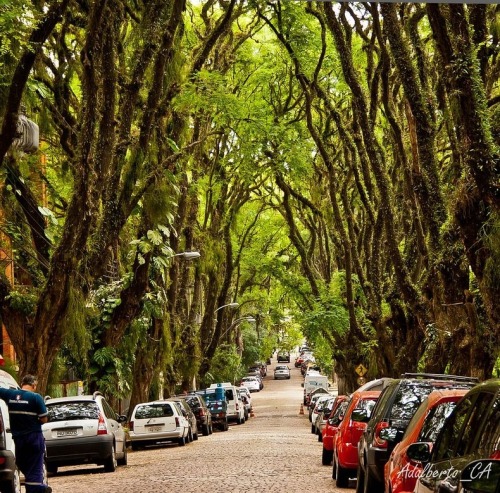
Rua Goncalo de Carvalho: Most Beautiful Street in the World via...


Rua Goncalo de Carvalho: Most Beautiful Street in the World via Amusing Planet

15 Mar 18:39

Google Reader Still Drives Far More Traffic Than Google+

Johan Palme

Oh Google you fool

The beloved but doomed Google Reader is still a healthy source of traffic. Google+, on the other hand…

According to data from the BuzzFeed Network, a set of tracked partner sites that collectively have over 300 million users, Google Reader is still a significant source of traffic for news — and a much larger one than Google+. The above chart, created by BuzzFeed's data team, represents data collected from August 2012 to today. (Yesterday, Google announced that it would close Reader in July.)

We should add that this data isn't complete. Google Reader traffic became much harder to measure last year when Google began defaulting users to SSL encryption in such a way that masked referral data. And this doesn't include data from apps that use Google Reader as a sync service, such as Reeder. In other words, it's likely that we're actually missing some Reader traffic here.

The second graphic* shows measured Reader and Google+ referrals over time. This one, too, requires qualification: The changes in Reader's numbers can be explained mostly by the addition of new sites to BuzzFeed's partner network, not growth in Google Reader (the total number of visitors to partner sites increased, in other words).

But the relative numbers are still surprising: Despite claims that it has over 100m monthly active users, Google+ barely moves the needle for sites across the network, while Reader is a healthy source of readers.

*For reference: in August of 2012, according to the same data, Facebook drove over 70m visitors to sites in the network while Google Reader was well under 10m.

View Entire List ›

15 Mar 17:42

“What a difference 8 years makes. St. Peter’s Square...


“What a difference 8 years makes. St. Peter’s Square in 2005 vs. 2013.” (via Photo by nbcnews • Instagram)

As noted by blech: “the first photograph is actually of John Paul II’s funeral, rather than Benedict’s election, but there is one rogue phone camera in the bottom corner, so it still looks as if it’s the availability of technology, not the type of event, that dictates the difference in camera usage.”

Plenty of cameraphones in this photograph, also via blech:

“Mourners taking pictures with cellphones of Pope John Paul lying in state in St. Peter’s. Their photo opportunities lasted just 30 seconds.” from the New York Times, 8 April 2005. Photograph: Patrick Herzog.

12 Mar 21:24

What part of Africa is that dance from?

atane:

So my friend’s Aunt is in town from Cameroon. She’s been on an exercise regimen for the last few months, and doesn’t feel she should stop because she’s in the US for 2 weeks. So he took her to a gym and she saw they were offering African dance class and she was interested. She got into it with the gym staff and trainer. I’m paraphrasing what my friend told me was said.

Aunt - What kind of African dance do you have?

Gym staff - Oh we have different levels of African dance. Are you a beginner?

Aunt - I don’t mean different levels of dancing skills. You say it’s African dance. What kind of dance? I’m from Douala, Cameroon. Where is your dance from?

Gym staff - It’s from Africa.

Aunt - But where in Africa?

Gym staff - Let me get the trainer. She should be able to assist you.

Aunt - Ok.

Trainer - Hello. How may I help you?

Aunt - Hello, I am inquiring about your African dance. What kind of African dance are you offering?

Trainer - We have different levels of African dance. Is this your first time?

Aunt - Is this my first time dancing as an African?

Trainer - I meant is this your first time taking an African dance class.

Aunt - Why aren’t you people telling me where in Africa your dance is from? I’m sure they don’t dance like where I’m from in many other African countries. Is there a dance class for Europe and Asia?

Trainer - It’s most likely a hybrid of African dances. It’s really a terrific workout!

Aunt - You’re most likely offering hybrid African dances?

Trainer - It’s a wonderful way to get in shape. Should I sign you up?

Aunt - You don’t know where this dance you are teaching is from do you? How do you know it’s even African? I’m not going to pay you to instruct me on African dance if you don’t know where in Africa it’s from. I want to know before I spend my money.

My friend said his Aunt walked out after that. I asked him why he didn’t say anything the entire time, and he said it looked like his Aunt had a handle on things and he was too busy trying to hold his laughter in. Aunties don’t play.

bwahahahahahahahahahaha

I can see and hear the entire thing playing out in my mind: her accent, her eternal side-eye.

12 Mar 21:22

News article about pope selection and smoke puffs, annotated to make more sense

by Xeni Jardin
12 Mar 16:21

On Feb. 26, Denmark’s TV2 needed an over-the-shoulder shot for a report on the conflict in...

On Feb. 26, Denmark’s TV2 needed an over-the-shoulder shot for a report on the conflict in Syria, and some production assistant gave the control room a screengrab from the original Assassin’s Creed (which features the city prominently) Apparently it’s this one, from the game’s unofficial wiki site. That’s supposed to be the city’s skyline as it appeared about 720 years ago, by the way.

Someone Put an Assassin’s Creed Screengrab In a TV Report on Syria - Kotaku (via Tom A)

For a piece on Amnesty and the United Nations Security Council’s response to events in Syria last week, it seems the BBC’s production crew needed a graphic for the international body. So they went to Google. And got…well, what they thought was the logo for the UN’s Security Council (which doesn’t really have one), but which in fact is the logo of the United Nations Space Command, humanity’s protectors in the Halo universe.

The BBC Might Have Confused Halo With the United Nations - Kotaku

12 Mar 08:38

Bilateral gynandromporphism - half female, half male.. This...


Bilateral gynandromporphism - half female, half male.. This genetic anomaly is usually restricted to arthropods, but has been known to express itself in birds as well. 

12 Mar 07:38

vsthepomegranate: Sheila E.


vsthepomegranate:

Sheila E.

12 Mar 07:33

Five women songwriters who helped shape the sound of jazz

by OwenK

By Ted Gioia


The songwriting business offered few opportunities to women in the early 20th century. And jazz bandleaders, despite their own experiences with discrimination, were hardly more tolerant of female talent. Although audiences expected the leading orchestras to showcase a ‘girl singer’, women were rarely allowed to serve in other capacities, either on the bandstand or writing arrangements and compositions.

Yet a handful of women managed to overcome the obstacles, and leave a lasting mark on both fields—gettings songs published that became both commercial hits and successful vehicles for jazz. In honor of Women’s History Month, I’d like to call attention to five women who helped shape the sound of jazz with their songs.

Irene Higginbotham (1918-1988) got so little attention for her contributions to jazz during her lifetime, that many scholars and critics confused her with another lady.  She was often described as the wife of jazz pianist Teddy Wilson, but that was a different Irene—Irene Kitchings (1908-1975). Yet Higginbotham was hardly an amateur: ASCAP has her registered as composer of almost 50 songs. But she is best known for one of them—“Good Morning Heartache,” a poignant ballad first recorded by Billie Holiday in 1946, and enjoying even more popularity when Diana Ross featured it in the 1972 film Lady Sings the Blues. The soundtrack album topped the Billboard chart in April 1973, and “Good Morning Heartache” was a surprise hit single more than a quarter of century after it was composed. Higginbotham was still alive at the time, but apparently no one thought to ask her what she thought about this unexpected turn of events.

Suggested listening:
Billie Holiday: “Good Morning Heartache”
Diana Ross: “Good Morning Heartache”

Ann Ronell (1905-1993) first encountered the world of songwriting via George Gershwin, whom she interviewed for a student publication when she was an undergraduate at Radcliffe. After her graduation, Gershwin helped her make connections in the New York music publishing industry, but Ronell found it hard for a woman to break into this male-dominated field. However, the success of Ronell’s 1932 song “Willow Weep for Me,” a bluesy pop tune that was a huge hit for Paul Whiteman, established her reputation as both composer and lyricist. Ronell’s next best-known song “Who’s Afraid of the Big Bad Wolf?”—showcased in the 1933 Disney cartoon Three Little Pigs—has also shown tremendous staying power, and has been recorded by artists as diverse as Barbara Streisand to LL Cool J.

Suggested listening:
Nancy Wilson: ”Willow Weep for Me”
Irene Taylor (with Paul Whiteman): “Willow Weep for Me”

Dorothy Fields (1905-1974) wrote lyrics for over 400 songs, and worked with many of the leading musical talents of her day. She contributed to the Cotton Club revues in the 1920s, where her songs were performed by Duke Ellington. With Jerome Kern, she wrote “The Way You Look Tonight,” which won the Oscar for Best Song in 1936, and with Jimmy McHugh she was responsible for future jazz standards “Exactly Like You,” “On the Sunny Side of the Street” and “I Can’t Give You Anything But Love.” At his first presidential inauguration, Barack Obama referred to one of Fields’s most famous lyrics—“Pick Yourself Up” from 1936—when he announced: “Starting today, we must pick ourselves up, dust ourselves off, and begin again the work of remaking America.”

Suggested listening:
Betty Carter: “The Way You Look Tonight”
Ella Fitzgerald: “I Can’t Give You Anything But Love”

Lil Hardin Armstrong (1898-1971) is probably best remembered as wife to jazz legend Louis Armstrong.  Their marriage lasted from 1924 until 1938, and Hardin played a key role in advancing her husband’s career during these years.  But her place in jazz history would be assured even without this connection.  She was pianist with King Oliver’s Creole Jazz Band, which I rank as the best jazz band of the early 1920s, and her most famous composition “Struttin’ with Some Barbecue” has been featured in more than 500 jazz recordings.  Her other songs include “Doin’ the Suzie Q,” “Just for a Thrill” (later recorded by Ray Charles) and “Bad Boy” (featured as title song a 1978 Ringo Starr album).

Suggested listening:
Louis Armstrong’s Hot Five (with Lil Hardin Armstrong): “Struttin’ With Some Barbecue”
Lil Hardin Armstrong: “Doin’ the Suzie Q”

Billie Holiday (1915-1959) was best known as a performer, not a songwriter. But several songs she composed or co-wrote have become standards. The ASCAP strike of 1940, which prevented radio stations from playing the songs of most of the well-known American tunesmiths of the day, presented Holiday with both the necessity and opportunity to develop her own songwriting skills. In collaboration with Arthur Herzog, Jr. she wrote “God Bless the Child,” which was a radio and jukebox hit in 1941. Other Holiday compositions include “Don’t Explain,” also written with Herzog, and the blues “Fine and Mellow.”

Suggested listening:
Billie Holiday: “God Bless the Child”
Dee Dee Bridgewater: “Fine and Mellow”

Ted Gioia is the author of eight books on music. His most recent book is The Jazz Standards: A Guide to the Repertoire.

Subscribe to the OUPblog via email or RSS.
Subscribe to only music articles on the OUPblog via email or RSS.

The post Five women songwriters who helped shape the sound of jazz appeared first on OUPblog.

11 Mar 11:44

ofoesaysit: #Style #Ghana #Cool Photography by Ofoe Amegavie,...

Johan Palme

Is that... Leather?


ofoesaysit:

#Style #Ghana #Cool

Photography by Ofoe Amegavie, 2012

YEESSSS O.

10 Mar 09:47

2 step guide to having a beach body!

beautyembrace:

1) Have a body.

2) Take it to the beach!

03 Mar 21:55

The Guardian’s thoughtless interview with Kony2012 creator Jason Russell

by Elliot Ross

Jason Russell
The Guardian’s Sunday edition, The Observer, have run the puff-piece nobody else wanted, a lengthy tête-à-tête with Jason Russell of Invisible Children infamy. “Jason Russell: Kony 2012 and the fight for truth” (illustrated by the photograph above) is a dreadful, half-assed piece of reporting that seeks to help resuscitate Russell’s broken credibility. 

Russell found an unexpected ally in a newspaper that is usually noisily secularist, publishing all sorts of guff by Richard Dawkins and joining in the HuffPo-style liberal guffawing at America’s Christian right with great gusto every election season. Memo to reporter Carole Cadwalladr: Invisible Children are an evangelical organisation who are just the most publicity-hungry of the many right-wing American evangelical groups to have fixated on Uganda (and particularly Ugandan children) in recent years.

Here’s what we wrote last year on “The Invisible Christians of Kony2012″:

“We view ourselves as the Pixar of human rights stories”, Jason Russell told the New York Times last week. But when he spoke last year at convocation at Liberty University (founder: Reverend Jerry Falwell, current chancellor: Jerry Falwell Jr.) he offered a wholly different model: “We believe that Jesus Christ was the best storyteller”, he said. (Other luminaries on the Liberty convocation roster last year included Michele BachmannRick Perry and Rick Warren, who obediently tweeted his support for Kony2012 having been picked out as one of IC’s key “Culture-Makers”.)

In a terrific report, B.E. Wilson at Alternet looked at IC’s tax filings and found that the group has been funded by a host of hard right Christian groups, including the National Christian Foundation and the Caster Family Foundation, one of the biggest backers of the campaign for the anti-gay Proposition 8 in California. (Although it is not straightforward: Wilson might also have pointed out that Rich McCullen, who sits on the IC’s all-white-male board of directors, is an openly gay pastor at Mission Gathering Christian Church in San Diego.)

… Jason Russell knows that presenting Invisible Children as an evangelical group will be bad for business. Like New Labour during the Blair years, Invisible Children have decided that for the purposes of their mass branding they “don’t do God.” During his address at Liberty University Russell explained:

“A lot of people fear Christians, they fear Liberty University, they fear Invisible Children – because they feel like we have an agenda. They see us and they go, ‘You want me to sign up for something, you want my money. You want, you want me to believe in your God.’ And it freaks them out.”

Filmmaker Roger Ross Williams recently put out a brilliant documentary, “God Loves Uganda,” which captures in detail the way in which American “missionaries” to Uganda and their obsession with homosexuality have brought deep and lasting harm to the country (the film has received significant press attention – for a taster see Williams’s “op-doc” for the New York Times here).

Kony2012 was plainly part of the same project, and continues to rely on the same constituency for its base support. The fact that Russell’s professed good intentions and trendy San Diego setting blind Cadwalladr to the deeper cultural implications of his organisation is pretty pathetic:

The sun is shining, the Pacific ocean is sparkling, there is fine artisanal fair-trade organic coffee to drink just steps away, and yet all these fresh-faced shiny people are spending their days worrying about a conflict so far removed from their own lives that it seems farcical. Or at the very least heroic. They not only care, they have achieved what is supposed to be impossible: they have made other people, ordinary Americans, care.

All very luvvy. Seduced by Southern California, by new media, by Americans who “care”, Cadwalladr gloriously misses the point.

There is nothing heroic about running a cushy, big-spending non-profit that works hand-in-glove with the CIA and the US military. Russell’s central proposition — parroted by Cadwalladr — that he has succeeded in making Joseph Kony famous, is completely absurd. The man has been the ICC’s most-wanted since 2005, and was globally notorious many years before that. As usual, there’s no mention of the fact that the US, alone among Western nations, still won’t ratify the Rome statute — why would that be relevant?

Critics of Kony2012 are caricatured and dismissed. Vicious online bullies of the well-intentioned chap who tried to organize America’s teenagers to take part in the world’s biggest manhunt. Cadwalladr hasn’t done a whole lot of thinking about Kony2012 and race, and she is clearly absolutely ignorant about Uganda. Teju Cole’s piece for The Atlantic, “The White-Savior Industrial Complex”, gets an unknowing shout-out by Russell himself (he seems to have been baffled by it and he preferred when Bono said he should get an Oscar), but Cole is dismissed by fellow-novelist Cadwalladr as “one Twitter commentator”.

There are no hard questions. Nothing, for example about why Invisible Children’s wonderfully hubristic “Move:DC” campaign was such a bust (for a media campaign, nobody reported on it and so it passed by unnoticed), just like their “Global Summit” of world leaders such as Harry Shum from Glee, and “Cover the Night” before that.

We’re used to the Guardian’s big weekend interviews not being great. Remember the last time Decca Aitkenhead met up with Christine Lagarde? If they’re serious about getting American readers, they have to stop with the puffy, single-sourced interviews and start carrying properly reported profiles.

Selected excerpts from the Jason Russell interview:

“On the one hand, there was Bono saying Jason Russell deserves an Oscar, and Oprah wants to fill stadiums for me, and Ryan Seacrest wants me on American Idol,” he says. “And on the other, there were people saying, ‘These people think they’re white saviours trying to save Africa’, and ‘the money goes to corrupt places’, and ‘there is a special place in hell for you’. They were so polar opposite. So extreme. And in my head, I wanted to reconcile them and I just couldn’t.”

“I opened up my laptop and the first article I read was all these terrible things. ‘Jason Russell … white saviour complex…military intervention … dubious finances … blond … yadda yadda yadda!’ And suddenly it was, wham, and I was right back in junior high.”

When I visited Invisible Children’s San Diego office last week, there were 60 staff members and 35 fresh-faced interns answering phones and plugged into computers in a cool, calm space. A year ago, says Chris Carver, the chief operations officer, it was another story.

“We had one PR person, Monica, who was an intern, a volunteer. She estimated there were never less than 4,000 emails in her inbox. In any one second, our website had 37,000 unique users. And we were taking hundreds of thousands of dollars of orders in our shop for the Kony2012 kits.”

“I hadn’t slept,” [Russell] tells me. “My mind was racing. I tried to relax and calm down. They said, ‘Take two days off’, so we [his family] went to Palm Springs. But we went to the pool and people recognised us and wanted to take photographs so we went and shut ourselves in the hotel room, closed all the windows and the doors, and just felt we were under attack.

“The next day was a bit better, we went out to see a movie, The Lorax, a Dr Seuss film. And I thought it was talking directly to me. I thought it was all about me. The character is wearing a stripy top like the one [his son] Gavin is wearing in the film and I was like, ‘That’s so weird!’ And the character is trying to protect these trees, and I thought it was me, and the trees were Rwandans.”


03 Mar 10:57

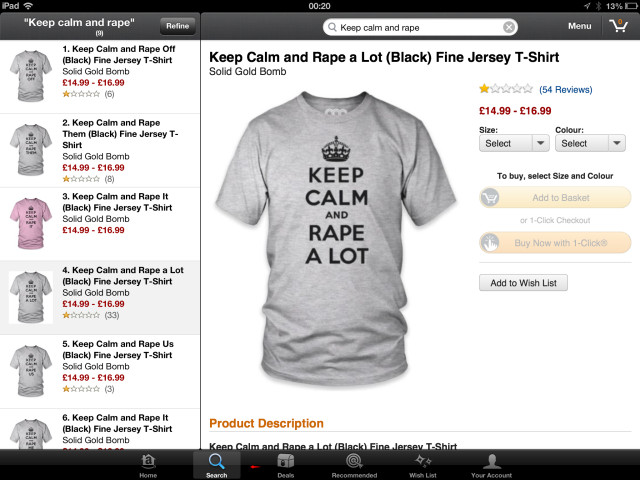
How an algorithm came up with Amazon's KEEP CALM AND RAPE A LOT t-shirt

by Cory Doctorow


You may have heard that Amazon is selling a "KEEP CALM AND RAPE A LOT" t-shirt. How did such a thing come to pass? Well, as Pete Ashton explains, this is a weird outcome of an automated algorithm that just tries random variations on "KEEP CALM AND," offering them for sale in Amazon's third-party marketplace and printing them on demand if any of them manage to find a buyer.

The t-shirts are created by an algorithm. The word “algorithm” is a little scary to some people because they don’t know what it means. It’s basically a process automated by a computer programme, sometimes simple, sometimes complex as hell. Amazon’s recommendations are powered by an algorithm. They look at what you’ve been browsing and buying, find patterns in that behaviour and show you things the algorithm things you might like to buy. Amazons algorithms are very complex and powerful, which is why they work. The algorithm that creates these t-shirts is not complex or powerful. This is how I expect it works.

1) Start a sentence with the words KEEP CALM AND.

2) Pick a word from this long list of verbs. Any word will do. Don’t worry, I’m sure they’re all fine.

3) Finish the sentence with one of the following: OFF, THEM, IF, THEM or US.

4) Lay these words out in the classic Keep Calm style.

5) Create a mockup jpeg of a t-shirt.

6) Submit the design to Amazon using our boilerplate t-shirt description.

7) Go back to 1 and start again.

There are currently 529,493 Solid Gold Bomb clothing items on Amazon. Assuming they survive this and don’t get shitcanned by Amazon I wouldn’t be at all surprised if they top a million in a few months.

It costs nothing to create the design, nothing to submit it to Amazon and nothing for Amazon to host the product. If no-one buys it then the total cost of the experiment is effectively zero. But if the algorithm stumbles upon something special, something that is both unique and funny and actually sells, then everyone makes money.

Dictionary + algorithm + PoD t-shirt printer + lucrative meme = rape t-shirts on Amazon

03 Mar 02:23

Tsumori Chisato

Johan Palme

Not sure about the lobsters, but it's fun

Do lobsters feel pain? What happens when we die? Is one polka dot a polka dot, or is it just a circle? These are a few of the philosophical questions raised by Tsumori Chisato's typically eclectic, but unusually chic, new collection. The fact that this collection made heavy use of a lobster motif—part of a larger marine reference—was par for the rather surreal Chisato course. Ditto the fact that the designer decided to elaborate the aquatic stuff with a friendly ghost print, and graphic checks and stripes that looked hand-painted. No, the strange thing here was the sophistication of Chisato's silhouettes. There was something imposing about her capes, and the dresses with long, slender bodices and fanning tails of ruffles or pleats, and a couple of lapel-free coats with patchwork waves of gold. A red peplum top with crystal-embroidered lobsters was really quite natty, as was an ocean blue quilted jacket with lobsters clawing at its oversize buttons. Inevitably, this Tsumori Chisato woman was a bit of an oddball, but she was an oddball with class.
—Maya Singer
02 Mar 14:45

MC Nego do Borel - Os Caras do MomentoThis is not my favorite...

Johan Palme

Cross-south connections, plus DJ KENT!


MC Nego do Borel - Os Caras do Momento

This is not my favorite Rio funk track but I’m stoked about the fact they are using this South African soulful house jam “Falling” by DJ Kent in the beginning of the video… I wonder where this idea came from? Funkeiros listening to smooth afro house… I had no idea!

02 Mar 13:59

So, has the media gotten anything right reporting the Pistorius murder case?

by Dan Moshenberg

We’ve blogged here about what’s been wrong about the coverage of the murder of the relatively unknown model Reeva Steenkamp by her boyfriend, Olympic athlete Oscar Pistorius. A ratings bonanza, coverage has ranged from frivolous to the ridiculous. The “international community” “rediscovering” that South Africa is dangerous, violent, even paranoid; or the media’s eagerness to demonstrate the ‘typicality’ of Pistorius. (See TO Molefe’s post from yesterday.) Reeva Steenkamp’s value is as statistic and as corpse, and not much else. (See Linda Stupart’s post here yesterday too.) But has the media gotten anything right? 

What does the event ‘highlight’? On the bright side, Pistorius’ oh so brief imprisonment highlights the plight of South Africa’s disabled prisoners. It would be good if the world, and even more if South Africans at large, paid more attention to the conditions in South Africa’s prisons. Meanwhile, locally, some have noted that the treatment of the Steenkamp case “highlight(s) the police’s general bungling of gender violence cases.”

Pistorius’ fixation, as some have called it, with guns “highlights the violence at the heart of South Africa, a country that suffers more than 15,000 murders every year … The truth is this: guns are us.”

The murder of Reeva Steenkamp “sheds light on the humongous problem of domestic violence, in particular femicide, which is murder of an intimate partner. There are so many cases that happen on a daily bases that don’t even get reported because so many of them that have been reported have just been thrown out of court. The numbers are astounding. And so people get discouraged. They don’t — they don’t report those cases, because there’s just no real justice for women at this point.”

Not every reporter has fallen for the highlight hype nor does every reporter recognize South Africa in the international descriptions, nor, by the way, in Pistorius’ self serving statements in court.

For example, Globe and Mail reporter Geoffrey York noted,

Even in the most dangerous cities, gun-wielding paranoia is not nearly as common as outsiders believe… Studies suggest that 12 per cent of South Africans own guns. It’s a relatively high percentage by global standards. But it still means that the vast majority of South Africans prefer not to have guns in their houses – mostly for safety reasons, since they realize how often guns can be stolen, misused, or accidentally fired.

And as development blogger Tom Murphy noted, homicide is actually down in South Africa. Furthermore, violent crimes tend to occur in areas with high unemployment and low income (as Molefe made the case here too), while property crimes tend to occur in areas of, well, property. This pattern is true for most of the world, and it suggests that those who live in wealthy areas have reason to protect their property, but not with lethal force.

Adriaan Basson, assistant editor editor at South African City Press, noted in Rapport newspaper (City Press and Rapport are part of the same company, so cross-post) that eight out of ten murder victims are killed by someone they know.

Who’s at risk? Women: “guns play a significant role in violence against women in South Africa, most notably in the killing of intimate partners.” So, it’s Reeva Steenkamp who’s typical, whose life and death should highlight something. That of course hasn’t happened.

But there’s still some bad stuff.

This sludge stew all came together the night of the murder, in an interview on PBS with Michael Sokolove, a New York Times reporter who had written an earlier, long profile of Pistorius. Here’s part of what he said:

Oscar liked his guns. Oscar felt under threat, and South Africa is a place that apartheid is over, but there’s a terrible chasm between rich and poor, income equality, and people with money, people with homes, tend to live behind walls, behind barbed wire, behind gates with guns. And this is not a pretty thing. It is somewhat understandable, but I think Oscar’s paranoia, if that’s what it was, was not uncommon to his class in South Africa … I think that perhaps even more than our own violent society and our own gun-soaked society, South Africa society is on a hair trigger. And I think it’s fair to say… that Oscar was on high alert. Oscar was on a hair trigger. Oscar had a paranoia about who might be coming into his house … I didn’t see malice from Oscar. I didn’t see him as a violent person. I did see him as a man of action, coiled, and on a hair trigger. And that has its own dangers.

So, that’s the story. The paranoia of the White master class explains violence. The hair trigger does what hair triggers do. High alert is high alert; ‘we’ are in a Code Red. And the facts be damned. What matters are the impressions, on the one hand, and the perception of malice. Because, as we know, the perpetrators of domestic violence, as of sexual violence more generally, are always recognizable. Aren’t they?


27 Feb 20:54

Classic Jukebox N°1: Nigerian Highlife

by Justin Scott

They just don’t make ‘em like they used to, at least when it comes to Nigerian highlife. Whether that’s good or bad is up for debate. Whatever the case, people get riled up when they’re talking about the issue. As for me, give me Victor Uwaifo or give me Wizkid – I dig them both. 

Celestine Ukwu — Ilu Abu Chi (1974). Nominally highlife, but Celestine Ukwu’s 1974 album with his Philosophers Band Ilu Abu Chi deserves its own analytic category. Rarely, if ever, has more spiritual guitar music been made.

Tunde Nightingale — Unknown (Early 1970s). With one of the highest registers you’ll ever hear, Tunde Nightingale, the “man with the golden voice,” made some of the most sublime highlife of the early independence era. Supposedly he kept a Nightingale in his home. This cut is from the early 1970s – let us know if you have any more info on it.

Rex Lawson — Sawale (late 1960s). Socially engaged highlife from one of the Igboland’s fiercest advocates. Upon being detained by the Nigerian military during the Biafra War, he defended the politics of his music, saying he wrote his songs to “uplift the rebels.” No doubt about that — one of his albums was titled “Hail Biafra.”

Dr. Orlando Owoh & His Omimah Band — Yabomisa Jawale/Wa Jo (1970). Originally a carpenter, Orlando Owoh thankfully decided to pick up a guitar at some point. This side, with its gradual inclusion of Yoruba talking drums, feels like a bridge between highlife and juju, but with a raucousness that sometimes gets lost in even the best juju. For those of you in the middle of the winter blues, let these harmonies ease your soul.

Fela Kuti — Just Like That (1989). Okay, this ain’t highlife, and it ain’t from the early independence era, but too often our Fela worship is limited to his high-period output from Shakara (1972) to Zombie (1977). This, one of his last releases, makes it clear his genius never waned even as his output slowed.

* This post is the first in what will be a series of nostalgia trips through West Africa. Next time we’ll run through some Ga cultural highlife from southern Ghana.


26 Feb 19:51

Thank You, Dr. King! (No Thanks, CPS)

by wayneandwax

Our 5yo brought this home from school this month. I don’t know where to begin.

Martin Luther King Jr.
He was a good...
He hoped for...
He helped change unfair...

I mean, obviously the last one takes the cake, but I’m also tickled by the first choice students are given: an airplaine vs. a picture of Martin Luther King talking. Hmmm, which one?

Admittedly, I’m finding it tricky to introduce my little girls to the sorrows and horrors of racism, but somehow we’ve got to do better than this. Come on, Cambridge. #smdh

25 Feb 23:44

How Important is the Barley?

by David Driscoll
Johan Palme

Okay, what the fuck, TOR?

This item turned up on my feed with a share note claiming I had shared it with the comment "Stranahan's is absolutely a whiskey that tastes of the grain, even though it's aged in insanely charred barrels. It's wonderfully vegetal.

Goddamnit I need a still."

Which I didn't and wouldn't. Mismarked spam? Database hiccup? Hacked account?

Single malt whisky is made from barley, just like Calvados is made from apples and Cognac from grapes. While my journeys to France have taught me much about the importance of agriculture in distillation, Scotland's distillers have never given much glory to their golden grain. Just how important is the barley to the ultimate flavor of a whisky, you ask? It all depends on how much the distillery allows the barley to speak. Is the quality of the apples important to the flavor of a Calvados? Do different types of apples have different flavors? The answer to both questions is "yes" and the more you visit different Calvados distillers, the more you'll see proof of this affirmation. However, the longer that the brandy spends time in a barrel, the more the Calvados becomes about the wood and less about the fruit. Single malt whisky works the same way, but while I've heard single malt producers call a whisky overly-wooded, it was never because the maturation was compromising the natural flavors of the barley.

When single malt whisky is aged in fresh Sherry barrels the richness of that sweet wine usually coats the inherent flavors of the white barley spirit. When it's aged in used Bourbon casks, however, or even refill Sherry butts, we can taste more of the barley itself. That being said, almost every distillery in Scotland is buying their barley from the exact same commercial maltsters, which means that every one of them is using the same base materials (like winemakers all starting from the same grapes). As a distillery, why focus on how unique or fantastic your barley is when it's really no different from everyone else's? Are there even superior types of barley anyway? Barley that, while more expensive to farm, malt, and mill, would result in a far tastier whisky?

Have you ever actually tasted a piece of malted barley? It's sweet, grainy, and mealy, but I never really think that translates over clearly into a whisky. There are a few whiskies that really taste like malted barley, Glen Garioch being one of them. However, where as eau-de-vie producers spend a lifetime trying to capture the essence of a pear, distilling the essential flavors out of barley is a conversation I've never once heard at a distillery. I've never heard Dr. Bill Lumsden say, "You know, David, we were really just trying to pay homage to that great Scottish barley we had at Glenmorangie last year." Single malt whisky has always been about the wood - the vanilla, the sweet sherry, the oak, and the richness that it provides to mellow the alcohol. The barley provides the creamier mouthfeel and texture. Bourbon is the same way. Who's really talking about that awesome crop of corn that came in last Fall and how you can taste it in Buffalo Trace's newest release? It's more of a canvass for the toasted wood.

Barley-specific whiskies are starting to gain notoriety in Scotland, but there have been local barley releases in the past. For the last few decades, Springbank distillery has been making limited releases of whisky using barley from local farmers. They've always been celebrated for their collectability, however, rather than their superior quality. Kilchoman has been releasing "100% Islay" single malt whiskies made from barley grown right next door to the distillery. The result has been exciting and quite different, but no one ever really told us why they tasted the way they did (and maybe we didn't really even care to know!). It was more of a novelty, about being able to say it's entirely Islay, through and through. Bruichladdich has also dabbled in the regional barley experiment with several micro-releases of localized barley expressions. They've been fun, educational, and even tasty and their organic barley whisky has been stabilized into a full-time item.

What totally blew my mind today, however, is the new "Bere" barley release from Bruichladdich - a 2006 vintage, six year old whisky aged in ex-Bourbon wood that has a creamy, full-bodied graininess unlike any other young single malt I have tasted. I sampled it along side the 2006 Islay Barley "Donlossit Farm" release (made and matured in the exact same way) and it was fascinating. Both were delicious, but the Bere barley was simply better in every way. It had an instant charm, a flavor that all whiskies should have, but making it wasn't easy from what I've heard. According to Bruichladdich, Bere barley is an ancient strain that was brought to Islay by Norse vikings back in the 9th century. It's a denser and thicker grain that flourishes in sandy, island soil, but results in crops less than half the size of what's being grown now in Scotland (hence, why no one is using it $$$$$). However, they also claim that Bere barley was used to make the early whiskies from Scotland's origin. They claim it gave their mill one hell of a beating, as well.

The Bere Barley from Bruichladdich will be coming into stock tomorrow (Friday) and we'll be getting every bottle we can get - about 150 total. It is something I think every whisky fan should consider investing in. It will be $70 and I'm going to limit it to one bottle per person so that we make them available to as many people as possible. Not only is this whisky freaking delicious (I'm serious, this is really good single malt whisky that anyone would enjoy), it's an example of what agriculture brings to our beloved booze. While I've waxed poetic about orchards and vineyards when it comes to brandy making, I've never tasted what quality barley can do to a whisky. The question is, however: is the Bere whisky so tasty because of the Bere barley, or was it simply a great batch by Jim McEwan? I want to know more. If this whisky tastes the way it does because of the grain, then I'm all for paying extra in the future to make it this way.

More Bere barley whisky please. I'll front you some cash to get it started.

-David Driscoll

24 Feb 20:26

Optical Calibration Targets

by Geoff Manaugh
[Image: "Three tri-bar targets remaining at Cuddeback Lake... the flat surfaces are peeling, crumbling and sprouting, producing dimensionality, and relief." Photo by and courtesy of the Center for Land Use Interpretation].

"There are dozens of aerial photo calibration targets across the USA," the Center for Land Use Interpretation reports, "curious land-based two-dimensional optical artifacts used for the development of aerial photography and aircraft. They were made mostly in the 1950s and 1960s, though some apparently later than that, and many are still in use, though their history is obscure."

These symbols—like I-Ching trigrams for machines—are used as "a platform to test, calibrate, and focus aerial cameras traveling at different speeds and altitudes," CLUI explains, similar to "an eye chart at the optometrist, where the smallest group of bars that can be resolved marks the limit of the resolution for the optical instrument that is being used."

[Image: A tri-bar array at Eglin Air Force Base, Florida; via CLUI].

Formally speaking, the targets could be compared to mis-painted concrete parking lots in the middle of the nowhere, using "sets of parallel and perpendicular bars duplicated at 15 or so different sizes." This "configuration is sometimes referred to as a 5:1 aspect Tri-bar Array, and follows a similar relative scale as a common resolution test chart known as the 1951 USAF Resolving Power Test Target, conforming to milspec MIL-STD-150A. This test pattern is still widely used to determine the resolving power of microscopes, telescopes, cameras, and scanners."

[Image: A "standard tri-bar test pattern on the Photo Resolution Range at Edwards that has been greatly expanded," CLUI writes; via CLUI].

CLUI points out that the history and location of the tri-bar patterns corresponds to the rise of high-altitude "flying cameras" developed during the Cold War—i.e. spy planes whose purpose was not to deliver ordnance to the far side of the world but simply to take detailed photographs.

[Image: An "especially exotic" expanded tri-bar array at Fort Huachuca, Arizona; via CLUI].

Further, "the largest concentration of calibration targets in one place is on the grounds of Edwards Air Force Base" in California, "in an area referred to as the photo resolution range, where 15 calibration targets run for 20 miles across the southeast side of the base in a line, so multiple targets can be photographed in one pass. There is some variation in the size and shape of the targets at Edwards, suggesting updates and modifications for specific programs. A number of the targets there also have aircraft hulks next to them, added to provide additional, realistic subjects for testing cameras."

A quick scan of Google Maps locates the photo resolution range relatively easily; broadly speaking, just go up to the right and down to the left from, say, this point and you'll find the targets.

[Image: Calibration targets from the photo resolution range, Edwards Air Force Base; from Google Maps].

Although I am truly fascinated by what sorts of optical landmarks might yet be developed for field-testing the optical capabilities of drones, as if the world might soon be peppered with opthalmic infrastructure for self-training autonomous machines, it is also quite intriguing to realize that these calibration targets are, in effect, ruins, obsolete sensory hold-overs from an earlier age of film-based cameras and less-powerful lenses. Calibrating nothing, they are now just curious emblems of a previous generation of surveillance technology, robot-readable hieroglyphs whose machines have all moved on.

(Via the Studio-X NYC Tumblr).
24 Feb 12:41

Photo


24 Feb 12:39

New meme: I AM BISEXUAL

by bidyke
Johan Palme

I like the first bit. As if those things were wrong.

iambi


24 Feb 11:41

Gracious K - Migraine Skank (2009)If someone doesn’t know...

Johan Palme

Genre construction: " It was called UK FUNKY but now it would go under UK AFROBEATS I’m sure"


Gracious K - Migraine Skank (2009)

If someone doesn’t know what’s the “migraine skank” Fuse ODG mentions on his song “Azonto” then here you go… This was my jam back in the day and still loving it… It was called UK FUNKY but now it would go under UK AFROBEATS I’m sure. I remember playing this at one of my early dj gigs in 2009 in Helsinki… UK Funky was never a big thing here but it was such an inspiration for me…

20 Feb 15:03

2 By Peter Bristol

by Michelle Linden


Everyone know that I love design with a sense of humor. These two pieces by Peter Bristol are just great...