Alex Blumberg in real life sounds just like Alex Blumberg on the radio.
If you've ever listened to This American Life, the massively popular weekly radio show, or Planet Money, NPR's excellent economy-explaining podcast, you know Alex Blumberg's voice. I certainly did. Today, as he stands in front of the laptop he's perched on a wooden chair atop a long table (a brilliant hack of a standing desk), it's hard not to close my eyes and just listen.
That is, of course, exactly what Blumberg is hoping for. Here in the brand-new offices of Gimlet Media, on the fifth floor of a downtown Brooklyn co-working building, amid piles of old furniture and terrifying art, Blumberg and his colleagues are attempting to build a big business out of podcasts. They've been chronicling their adventures in — what else? — a podcast, called StartUp. It offers an intimate, funny, and occasionally deeply awkward look at what it takes to start a company. The podcast quickly became popular, and so did Gimlet: Blumberg and his co-founder Matt Lieber raised $1.5 million in venture capital, hired a team, and honed their pitch. That pitch, in a nutshell: we're entering a golden age of audio, the first since we all sat around radio cabinets and listened to The War of the Worlds. The future of radio is here.
Podcasts are a decade old, but they're just starting to make noise
Podcasts aren't new, of course. Even the term has been around for a decade or so, and now feels hilariously dated. (What is a pod anymore? Or, for that matter, a cast?) They have traditionally been thought of as two people sitting at a table with microphones, chatting aimlessly about… whatever. ESPN, for one, has built a huge podcast network on the shoulders of Bill Simmons chatting with his friends on The BS Report and its many other shows focused deeply on a single topic or a single host. Yet Gimlet Media and others are betting that there's room for more. More production, more storytelling, more narrative. So far, it seems like they're right.
Hi my name is David and I am addicted to podcasts
Serial, the remarkable murder mystery told by Sarah Koenig (another This American Life alum), is the fastest-growing podcast in history. It's spawned discussion boards, truthers, deniers, other podcasts, and a level of fanaticism rarely seen this side of Lost.Radiotopia, a new network of shows anchored by the popular 99% Invisible, raised more than $600,000 on Kickstarter in an effort to create essentially an indie label for podcasters. The audience is growing larger and more dedicated, spending hours per day listening to shows about everything from fantasy football to terraforming.
As the shows and audience expand, the technology and infrastructure for podcasts is picking up as well. iTunes remains the behemoth of the podcasting industry, the place where most people find things to listen to. Apple now bakes a podcast app — and a decent one at that — into the iPhone, which has gone a long way toward making people aware of the fact that podcasts even exist in the first place. There are other great apps, too, like Overcast and Pocket Casts.
Jake Shapiro, CEO of PRX and Radiotopia
TuneIn and Deezer have both made commitments to podcasts, placing them among their more traditional radio offerings. Spotify, Pandora, and others are rumored to be doing the same. SoundCloud has done wonders for the podcast industry; more than one person told me that uploading and sharing audio online was an awful experience before SoundCloud made something universally embeddable. Apple's CarPlay and Google's Android Auto are poised to finally teach us how to connect our phones to our cars, meaning the hours a day we spend driving can be spent listening to what we want, not aimlessly scanning through FM frequencies.
Listening to podcasts is finally as easy as it should be
The opportunity for audio, at least according to Alex Blumberg, is huge. There's far more room for audio in our lives than even video; we can listen to podcasts while we do dishes, mow the lawn, ride the subway, even while we work. The tech is there, in our pockets. All we need now is something to listen to.
So Blumberg clears his throat and starts talking. He reads his part of the script he's written, then hits space on his computer and plays audio. Sometimes it's Blumberg's wife who begins to talk, other times it's Matt Lieber, who sits in the room taking notes while his voice comes from Blumberg's laptop. Blumberg soon stops the audio and speaks again, occasionally stopping and typing, editing his script on the fly. He apologizes every time he stumbles in his reading, which isn't often. He says things like "establishing sound here that I haven't pulled yet," and sneaks bites of his lunch while others' sound bites play.
After 20 minutes or so, he's gone through a rough cut of episode seven of StartUp, which the whole of Gimlet Media is nervous about. In it, Blumberg asks listeners for money. Money to make up the last $200,000 of the $1.5 million. He's offering a few lucky listeners a stake in the company, while warning them of the risks and the many, many regulatory hurdles to investing. (After the episode aired, Gimlet raised the money in less than an hour.) He finishes reading, makes a face at his team, and says, "Well, there you go." Everyone else furiously shares their Google docs with each other, and edits begin.
Making a podcast, even one about making a podcast, is hard work. But more than ever before, this is the right time to try. Podcasts won't kill AM and FM as we know it, at least not anytime soon, but they're on the precipice of becoming totally and utterly mainstream. They offer what we want, when we want, wherever we want. They're our own personalized radio, with every topic, every show, and every host you love on exactly your own schedule.
Everything podcasts were named for might now be dead, but podcasts are just starting to come alive. The future of radio is here, and it's awesome.
The US Food and Drug Administration announced new rules today that will oblige movie theaters, pizza parlors, and chain restaurants across the US to post calorie counts next to food items on their menus, reports The New York Times. The rules, which will take effect in a year, will also require that restaurants display the caloric content of pre-packaged alcoholic beverages like beer and wine.
"one of the most important public health nutrition policies ever to be passed."
About a third of what Americans consume comes from outside their homes, so the new rules are expected to have large implications for public health. "This is one of the most important public health nutrition policies ever to be passed nationally," Margo Wootan, director of nutrition policy at the Center for Science in the Public Interest, told The New York Times.
The rules won't affect all chain restaurants, however. Chains that have less than 20 outlets will be allowed to forgo the calorie counts. And mixed drinks — alcoholic beverages that often vary in content depending on the bartender — will be spared as well. But large grocery store chains that sell prepared foods like sushi or sandwiches intended to feed one person will need to implement menu labelling. And vending machine operators will also need to comply — calorie counts will have to be displayed on stickers or placards near selection buttons — although the FDA has said that it will give them an extra year to do so.
"We are disappointed that the FDA’s final rules will capture grocery stores, and impose such a large and costly regulatory burden on our members," the National Grovers Association told The New York Times.
The FDA's new rules have been floating around for three years now, following the signing of the Affordable Care Act in 2010. The statute includes menu labelling regulations, but opposition from pizza parlors and movie theaters created large delays, as critics maintained that the law was only meant to apply to restaurants. "No reasonable person is about to confuse a grocery store, convenience store or movie theater with a restaurant," Daren Bakst, a Heritage Foundation research fellow, told The New York Times.
Now that the FDA has released to final rules, theses criticisms are bound intensify. Still, many are rejoicing. "Right now, you are totally guessing at what you are getting," Wootan said. "This rule will change that."
You want to look away, but you can’t. You want to avoid shopping, but you can’t. All you can do is watch with extra helpings of self loathing.
Black Friday is here, again, to remind us that we are only just one small step up the evolutionary chain from most animals. It is the day when we recoil as our fellow humans plunge with Lord-of-the-Flies like glee into the aisles of shopping centers everywhere in the name of saving a few bucks.
One of America's biggest eating days is almost upon us, but before we eat all of the things, how much of the things can we really eat? Vsauce3's latest video has the answer to this and a smorgasbord of other eating inquiries.
Much of the country has been enjoying low gas prices lately, some states more than others. There are several factors contributing to this year’s dip, but gas prices are typically lower during the winter. If you ask your know-it-all uncle, he will probably tell you that gas prices drop when it gets cold because people are driving less, thus decreasing the demand for gasoline. To a certain extent, he’s right. People do most of their road trips during the spring and summer months. But that’s not the real reason gas is cheaper in the winter.
The Real Reason
The reason for the price change is that winter gasoline and summer gasoline are produced using a different formula of additives. The practice of using different gasoline grades for the seasons began in 1995 with the Reformulated Gasoline Program, or RFG if you prefer acronyms. Without getting too scientific, the summer heat brings increased levels of smog and ozone, so summer-grade gasoline is formulated to produce fewer emissions. The formula for summer-grade gasoline costs more to produce so it costs more at the pump.
The seasonal price change is not the same across the country. As we alluded to, a lot of factors play into the price you pay to feed your four-wheeled monster. In general, gas tends to be cheaper in areas that are close to oil refineries or other petroleum infrastructure. Proximity means lower transportation costs, but it also means that the local governments are incentivized to keep the gas companies happy. That’s why you’ll find the lowest state gas taxes in Alaska and New Jersey. State gas taxes can vary as much as 40 cents per gallon. If you want to see where your state fits in, check out our infographic on state gas tax.
The Transition
The change in fuel grade happens twice a year. The transition to summer-grade gasoline happens in the spring from April to June, and the transition back to winter-grade happens in September. Although the exact timing of the transition may differ based on the climate of the location. There are actually 20 different blends of gasoline sold in the United States to satisfy the regulations of each location. According to the EPA, the program has been significant in reducing air pollution, helping millions breath easier each year.
Overall, the Reformulated Gasoline Program has been cost-effective. However, the transition means that gasoline production facilities have to shut down for a time. This causes a disruption in the supply which pushes the price up. Oil refineries are already operating at maximum or near-maximum capacity, so every hour of downtime hurts the consumer.
The Effect on Your Car
Let’s say that you have a son or daughter that goes to college several hours away from home. They have a car to get around when they’re in town but they don’t take it with them to college. They fill up the tank (unlikely, but play along with us) in January before they leave for the Spring semester, and they come back for the summer and drive the car. Will running a car in the summer with winter-grade fuel have a negative effect? Probably not as much as putting the wrong gas in your car, but your car will most likely be less fuel efficient and generally run worse.
Winter-grade gasoline contains higher levels of butane (which is less-expensive, contributing to the lower price) which lowers the Reid Vapor Pressure, or RVP. This means that winter-grade gasoline builds up pressure more easily in the tank and evaporates, producing ozone (which is bad). Basically, if you know it’ll be a different season by the next time you drive the car, don’t fill up the tank. Finally your son or daughter has a valid reason for only putting $10 in the tank at a time.
Subscribe for car shopping alerts and advice
Get alerts with buying guides, car reviews and other tips for car shopping
This sea creature may look like some scary 3D animation of an underwater monster but it's not. It's completely real. What you're looking at is a deep sea anglerfish known as the Black Seadevil. This sea monster's existence shows that sometimes reality is crazier and more twisted than our scariest nightmares.
Deep-sea anglerfish are strange and elusive creatures that are very rarely observed in their natural habitat. Fewer than half a dozen have ever been captured on film or video by deep diving research vehicles. This little angler, about 9 cm long, is named Melanocetus. It is also known as the Black Seadevil and it lives in the deep dark waters of the Monterey Canyon. MBARI's ROV Doc Ricketts observed this anglerfish for the first time at 600 m on a midwater research expedition in November 2014. We believe that this is the first video footage ever made of this species alive and at depth.
It's the first time this particular species has been captured on video. Watch it below. Makes you wonder what else is down there.
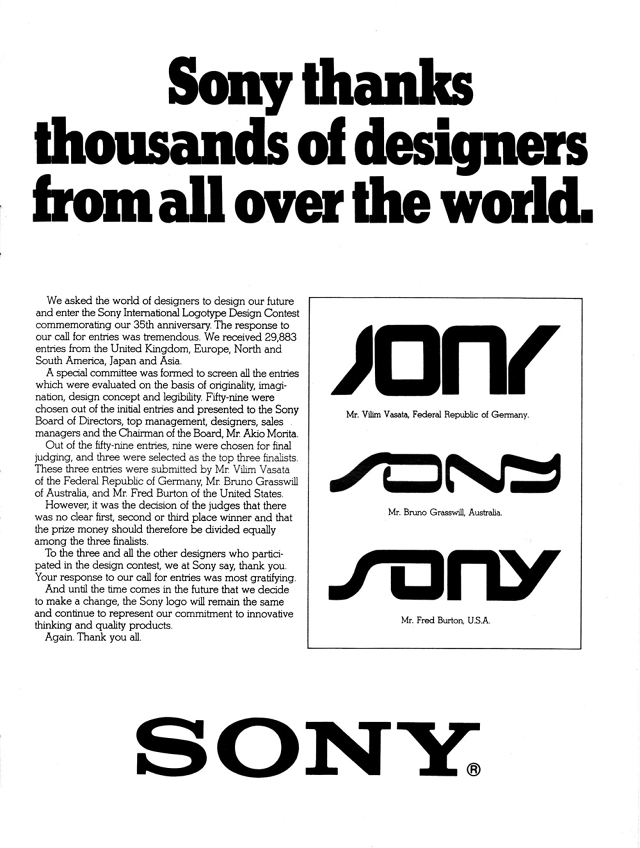
Except for some subtle refinements, Japanese electronics maker Sony has had the same logo since 1956. But to celebrate the company's 35th anniversary in 1981, someone at Sony had a brilliant idea: let's throw a contest, and get the unwashed masses to redesign our logo for us!
According to the ad, Sony received almost 30,000 entries for a new logo from the United Kingdom, Europe, North and South America, Japan, and Asia. They then narrowed these 30,000 entries down to three winners, and proceeded to not use any of them.
The three winning designs — recorded for posterity in this vintage ad from Time, and rediscovered by Greg Prichard — aren't just a fascinating look at a new Sony logo that never was, but serve as an object lesson on why you shouldn't try to crowdsource design.
"It was the decision of the judges that there was no clear first, second, or third place winner and that the prize money should therefore be divided equally among the three finalists," Sony's copy reads. "And until the time comes in the future that we decide to make a change, the Sony logo will remain the same and continue to represent our commitment to innovative thinking and quality projects." Because what better represents innovation than leaving things the same?
Yet with the hindsight of history, it's sort of hard to fault Sony. All three "winning" logos are super '80s in design, like they belong on the side of a VHS tape. That said, it's impossible to imagine any of them surviving the decade because they're virtually illegible. Comparatively, Sony's current logo -—rendered in Clarendon Bold Expanded, or something similar — seems timeless. It's simple. It's recognizable. It renders well in a number of different mediums. And it has class.
So while it seems like bad form to get 30,000 people to design a logo for you, only to shriek "PSYKE!" at the end, it's hard to argue Sony didn't make the right choice.
President Barack H. Obama
The White House
Washington, D.C. 20500
Dear President Obama:
It was late in the evening when we first learned of your decision Friday to deploy an additional 1,500 troops to Iraq. Sorry, we were catching up on the latest episode of “Lilyhammer.” But, seriously, is that a tradition in the States? Releasing such news late on a Friday with the fatuous hope people would forget by Monday? But on second thought, after perusing the American media, it’s possible such schemes may be effective. There appears to be more concern over one Ebola patient— in a country of 316 million people— than the news that your administration is invading Iraq all over again.
Did you forget the words you spoke in Chicago on October 2, 2002? “What I am opposed to is a dumb war. What I am opposed to is a rash war. . . That’s what I’m opposed to. A dumb war. A rash war. A war based not on reason but on passion, not on principle but on politics”. Were those your words or merely the pandering musings of a state senator with grander political ambitions? If so, you succeeded. Because in 2011, as President, you announced the “end” of the Iraq War, and you boasted “The tide of war is receding”. Was that a twisted joke? You have bombed 7 predominately Muslim countries. That’s not to mention the thousands killed because of your imperialist policies or the Americans you have targeted with military drones, and without due process.
Did you also forget your speech on that crisp December day five years ago next month? “Nevertheless, I am convinced that adhering to standards, international standards, strengthens those who do, and isolates and weakens those who don’t.” You certainly haven’t followed said standards; it doesn’t appear you ever even intended to. After all, your expansion of executive war powers will be the biggest stain on your floundering presidency. Worse than George W. Bush.
You are the most undeserving Nobel Peace Prize winner since the odious, war-mongering Henry Kissinger. What company you keep! We were delusional dupes for giving the Peace Prize to him and you both. That is all. Now, back to “Lilyhammer.”
The Norwegian Nobel Committee Drammensveien 19 NO-0255 OSLO Norway
It hasn't been a great day for Uber's PR team. Late last night, an Uber VP reportedly said that the company was considering spending $1 million to investigate journalists and dig up dirt on their personal lives, a comment that put CEO Travis Kalanick into damage control mode for most of the day. But a secondary controversy arose from this first PR mistake — Ellen Cushing, a journalist at San Francisco magazine said that Uber employees warned her that company executives were possibly looking at her rider logs to see which employees she was speaking to as part of her reporting for a story on Kalanick. While Cushing wasn't able to verify that claim, she did say it felt likely to her based on the recently-revealed statements about investigating journalists.
Now, Uber is doing its best to put out that new fire and reassure riders that their personal data is safe. In a statement, Uber said that it "has a strict policy prohibiting all employees at every level from accessing a rider or driver's data. The only exception to this policy is for a limited set of legitimate business purposes." It went on to note some examples of those legitimate business purposes, including "supporting riders and drivers in order to solve problems brought to their attention by the Uber community," "facilitating payment transactions for drivers," and "reviewing specific rider or driver accounts in order to troubleshoot bugs."
Of course, that "legitimate business purposes" exception is a pretty big one, giving the company leeway to look into user data as long as it can find some business justification. Between the Uber CEO's swift refutal of the claims it wants to dig up dirt on journalists and this public privacy statement, it's clear that the company is trying to assure riders their privacy isn't at risk — but regardless, it may take the company some time to shake off this latest bit of bad press.
Snapchat today announced it is partnering with Square to launch Snapcash, a new service for sending money to friends. Snapcash is initially only available to Snapchat users 18 years and up in the U.S., though it will presumably expand to other countries later.
The only other requirement you need to fulfill is having a Visa or MasterCard debit card. After you enter your debit card number into Snapchat, the company says it is securely stored by Square, which handles the actual payment processing.
Once you have that set up, all you have to do is swipe into chat, type the dollar sign and the amount you want to send (such as $1337.00), and hit the green Snapcash button that shows up to the right. Snapchat and Square take care of the rest.
This is a big deal for both companies. For Snapchat, it is the company’s first feature created in partnership with another company. Payments is a huge market to enter, and it’s smart of Snapchat not to enter it alone (the company says that “security is essential when you’re dealing with money,” and while it doesn’t mention its various security missteps, it does say “Square has a ton of experience in this area”).
For Square, this is the first time the company is dabbling in the social space. Square Cash already lets users send money by typing a dollar amount into the subject line of an email and send that off, but email simply isn’t a tool many young people use.
Snapchat says the feature was first born because its team is a fan of Square Cash, and it wanted to create something similar but that felt more “Snapchat-y.” The idea quickly blossomed:
So we built a Snapcash prototype and shared it with the team at Square. Luckily for us, they were just as excited as we were and wanted to build it together. The product you’re seeing today is fast, fun, and incredibly simple.
We’ve reached out to Square to see if the company has anything else to add to the story.
Update: A Square spokesperson confirmed Snapchat’s story above and told VentureBeat “we’ve been working with Snapchat for several months on the feature.”
When asked more about what this meant for the company, she added: “Our goal is to meet customers where they are, enabling anyone to send money to friends and family no matter what devices or services they use. Since our launch last year, Square Cash has made it easier than ever for anyone to send money whether via e-mail, phone number, Bluetooth LE, and now Snapchat.”
Evernote (or really, any note-taking app) is great for gathering your thoughts and organizing projects
. But it's even more useful as a personal database, where you store anything you might need at a moment's notice—and don't want to lose. What kinds of things do you file away?
From the 10th World Wushu Championships in Toronto (2009).
The martial art is Duilian, also known as Wushu. Based on this Wiki page, the spear she's slicing the air to shreds with is the Qiang, a flexible spear with red horsehair at the head.
Their screaming alone scares the hell out me.
[via]
I'm a horrible person who always laughs when people fail in YouTube videos. This collection of fails made me laugh even harder because it's been perfectly edited to splice in Mario and Luigi from Nintendo as the evil invisible force who cause all these screw ups in real life.
The sound effects are just perfect. The video was made by Pastek as part of his Super Bad Mario series.
Today Google unveiled YouTube Music Key, its long-awaited music subscription service starting at a promotional price of $8 per month.
Google says the new app will offer “ads-free music, background play, and offline viewing. It will also include a subscription to Google Play Music, with 30+ million songs, expert-curated playlists, and in the coming days, the ability to watch many YouTube official music videos right from the app.”
Google shares that the new service is only rolling out to its “biggest music fans first,” and will release it to everyone else later on. Here’s a closer look at the new service, only available in private beta:
Alongside this news, Google released an update to YouTube on mobile and web, introducing a music tab for storing your favorite songs and finding new playlists. Google says it will also add easier ways for users to view and listen to an artist’s full discography via YouTube “in the coming days.”
Thanks to Ms. Swift's recent actions, artist compensation from music streaming is quite the hot topic, and one company has a new option to lend a hand. Bandcamp has been a choice for musicians to sell their music and merchandise for years, and now it's looking to help sort streaming subscriptions as well. Each artist will be able to create a subscription-based plan for their music, allowing fans to access new tunes as they become available through the Bandcamp app. Listeners can download the tracks too, and acts can decide to offer parts of their existing catalog as a perk for opting in. New albums or songs can be released to subscribers only for a certain amount of time or remain exclusive, and the musicians themselves can set the cost of the plan. For its efforts, Bandcamp takes the same 15 percent cut that it does for regular sales -- a fee that drops to 10 percent once the $5,000 sales mark is reached. "The whole motivation here is that when you get to a point that you love an artist -- when you go from liking them to being a real true fan of theirs -- at some point you just want everything they make," the company's chief executive Ethan Diamond told The Guardian.
Let's talk about the physical realities of virtually blasting your brain into another world: People are falling on their faces and butts.
The first time I saw the video below (which is GIFed above), I laughed and laughed and laughed. Haha! That poor schmuck! He was just innocently getting his senses rearranged in some mall in Russia(?), when his buddy came up behind him and gave him a push. The victim falls and squirms and can't find his balance because he has no idea what's going on around him. It's a good chucklegoof. Everyone has a healthy laugh.
But now watch this next video. I'm guessing this fellow woke up one day not knowing about Oculus Rift, and by whatever chain of events, ended up in a chair trying something new. This is the virtual reality equivalent of skiing down the bunny hill for the first time. Ouch:
Luckily our friend above appears to be ok after his face plant initiation. So does this dad below. He's a good sport about it. My dad's not this cool:
Virtual Reality is crazy! It's frequently described as mind-blowing by proponents and disorienting by those who maybe didn't have such a good time. Sure. Fine.
In my experience the really good stuff is a short, controlled version of the trip from the mind-altering drugs people try in college. Strap on some goggles, put on some headphones, and you're transported somewhere completely different. The room your body is in and the people around you disappear. Sometimes when I peel off the goggles I'm hit by a discomfiting wave of self-consciousness. What did I do while I was gone? What did I look like?
That's good! Or at least, that's what this stuff is supposed to do. It's supposed to be immersive. We're supposed to get lost. Thanks to Oculus Rift, we've never been closer to realizing the futuristic experiences we've been dreaming about for decades. We're doing stuff we only ever saw in movies. It feels like a movie.
But cool as it might be, it's weird to strap on a headset as if it were just a Halloween mask, only find yourself peering into a different world, instead of at the candy apple in your hand. Especially the first time you do it. Everybody's first time is different, but it's always discombobulated. It doesn't always end in disaster. It's just thrilling and uncomfortable, like merging onto the highway for the first time with your dad in the passenger seat.
Like this:
And this:
If you're not in a certain techy sect, it's actually not that easy to get your head into the mask. Corporations exploit this by building virtual reality ads that people line up around the block to check out. Curious people will watch anything as long as it takes them to the next experience.
One publicist I spoke to recently is working on an Oculus Rift based marketing campaign. He told me that in his experience, about one in ten people who puts on a VR mask freaks out. It's too far away and not quite real enough. They can't deal. They want reality reality.
Eventually, we're going to learn that when strapping on perception altering goggles, we should just sit down. Higher resolution displays in headsets and better software for 3D rendering will make the experiences less nauseating. The spaces we wear other realities in will be perfectly tailored to brain travel. Fewer accidents will happen.
We'll get it right, but in the short term, someone could get hurt on the way to the uncanny valley.
For the past year I've been a terrible person. I've abused great power with great irresponsibility and savored every moment of it like the perfect last bite of a delicious meal. I abhor many aspects of trolling people, but I've given in and done it to other humans. Perhaps the only difference is that my motive has been to make them smile.
A commercial showing someone "smoking" will air on British TV for the first time in nearly 50 years tonight following regulation changes that have cleared the way for the depiction of e-cigarette use. The ad, run by a company called VIP, briefly shows a woman exhaling vapor and promotes both its e-cigarettes and e-liquids. It'll air on ITV1, shortly after 9PM local time. "Vaping has never been shown on a TV advert in the UK before, so this is a first for the country and I’m sure it will be a real conversation starter!" Dave Levin, VIP co-founder says in a statement.
"Our commitment is to make sure they are advertised in a responsible way."
The UK banned the advertisement of cigarettes back in 1965. It's still been possible to advertise e-cigarettes before now, but there was still a ban on actually depicting the device or the act of smoking. Now, both are able to be depicted, albeit subject to a number of restrictions. That includes bans from making ads that appeal to anyone under 18, banning the depiction of anyone who is or appears to be younger than 25, and banning the encouragement of any non-smokers to begin using an e-cig.
"We’ve moved quickly to put in place appropriate and clear regulation around e-cigarette advertising," Shahriar Coupal, director of the UK's Committee of Advertising Practice, says in a statement. "While the debate about e-cigarettes continues our commitment is to make sure they are advertised in a responsible way and that children are protected." This rule change doesn't just apply to TV ads: they will apply across other forms of media in the UK too. After one year, the agency will conduct a review of the rules and their effect on the public.
There's been an ongoing debate around the benefits and harms of e-cigs, with major health organizations announcing various levels of support and opposition. The World Health Organization has called for a ban on indoor use of e-cigs and fruity flavors — much like the bans on traditional cigarettes — while the American Heart Association believes that e-cigs are a good way to help people quit. There's not quite a consensus yet on the health impact of vaping.
VIP intends to continue airing the ad, in both 10- and 20-second versions, over the next five weeks. They'll all air later in the evening, when content that's deemed inappropriate for kids is allowed to be shown. The allowing these ads actually go into effect today, so VIP is getting into e-cig advertising as soon as possible. It isn't really hiding that its interest is, in part, in stirring up controversy around that too. Levin says, "It will be interesting to see how people respond to our advert’s debut this evening."
Correction: smoking a cigar could still be shown in British TV ads until 1991. This article previously stated that all smoking was included in the 1965 cigarette ad ban.
Legendary writer and director, Hayao Miyazaki accepted an honorary Oscar this weekend, highlighting his prolific career. While the road hasn't been smooth over the past few years for the Studio Ghibli head honcho, there's no denying the man's contribution to the world. He even manages to throw a bit of dry humor into his acceptance speech.
Miyazaki also spoke to press on his visit, mentioning that he will continue working on short films for the Studio Ghibli Museum, and continuing his manga projects. Wether not he returns to make feature films is still unseen. Let's hope not.
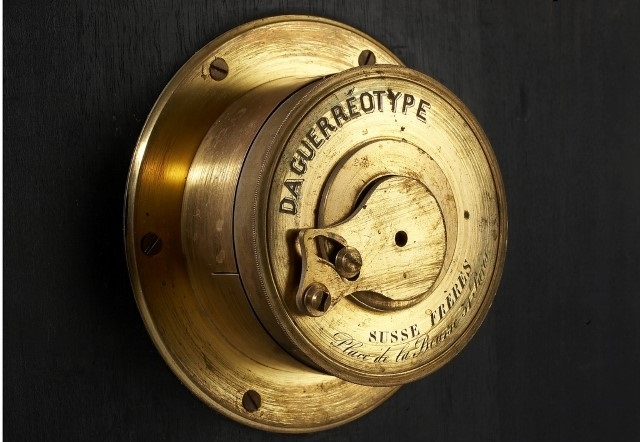
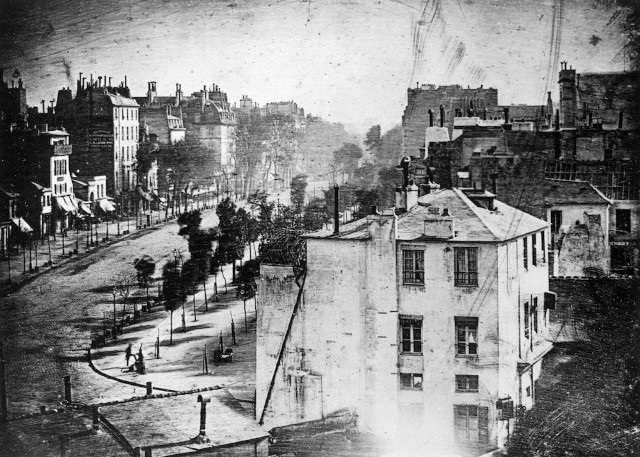
عام 1838، في باريس، فرنسا، تم التقاط أول صورة عرفها الإنسان، من قِبل المصور “لويس داجير”، والتي تعتبر أول صور ظهر فيها الإنسان بشكل جسدي، حيث استغرقت عملية التقاط الصورة أكثر من 7 دقائق، ولهذا السبب ظهر الشارع وكأنه خالي من الحياة، حيث كان كل شيء يتحرك بسرعة كبيرة.
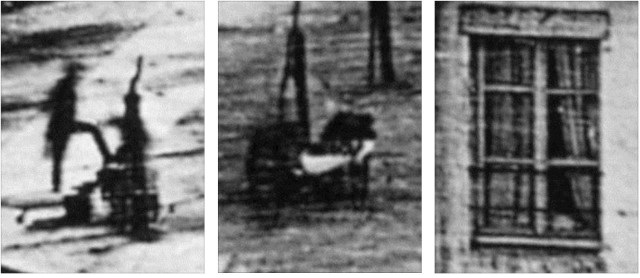
ولكن ظهر في الصورة رجل واحد، أسفل يسار الصورة، والذي ثبت على هذه الوضعية طيلة وقت التصوير دون أي حركة، ليظهر أخيراً في الصورة، وأيضاً يوجد شخص آخر يقوم بتنظيف حذاء هذا الرجل، ظهر هو الآخر بشكل شبه واضح.
هذا الشارع يطلق عليه اسم “دي تيمبل”، وهو معروف بكثرة المحلات التجارية والمقاهي والمسارح، وكان يشتهر بكثرة دراما الجريمة في مسارحه.
في عام 1853 قام نابليون الثالث بتغير معالم هذا الشارع، عن طريق إزالة الممرات الضيقة والمظلمة واستبدالها بالحدائق والمساحات الواسعة.
وفي دراسة مفصلة لهذه الصور فقد تم إيجاد أشخاص آخرين.


/cdn0.vox-cdn.com/uploads/chorus_asset/file/2499818/vrg_top_303_podcasts.00_07_35_20.still003.0.jpg)
/cdn0.vox-cdn.com/uploads/chorus_asset/file/2499814/vrg_top_303_podcasts.00_04_18_03.still002.0.jpg)
/cdn0.vox-cdn.com/uploads/chorus_asset/file/2499802/IMG_0534.0.PNG)