Shared posts

08 Feb 23:15

Sandy Subway 3D Chalk Drawing

by James Dean

I absolutely love posting up 3D chalk drawing optical illusions, because they never fail to completely impress me. Unfortunately, I don’t have a single artistic bone in my body. I’ve always wanted to be an artist, but I’m just not cut out for it. Therefore, I have massive amount of respect for anyone that can take something from their imagination and put it on a canvas. Some people take their artistic abilities off the paper and pump out some amazing 3D chalk art. This is one of those people. As you can see, someone used some chalk in a subway and made it look as if people are sitting on the beach and in the tide. Check it out by scrolling down.

Sandy Subway 3D Chalk Drawing

Now you can’t tell me that this isn’t one of the coolest things you’ve ever seen. Some people possess some amazing skills and that’s about all I can say. Did you like this drawing? If so, you should rate this thread and let us know how you feel. If you want to leave a more in-depth opinion, you could leave a comment below this post and we will definitely see it. Either way, I hope you enjoyed this beautiful piece of art.

The post Sandy Subway 3D Chalk Drawing appeared first on Mighty Optical Illusions.

21 Jan 15:14

flavorpill: 10 Gothic Short Stories You Can Read Online Right...

21 Jan 15:08

Rabbit hidden in Nelson Mandela's ear

by arbroath
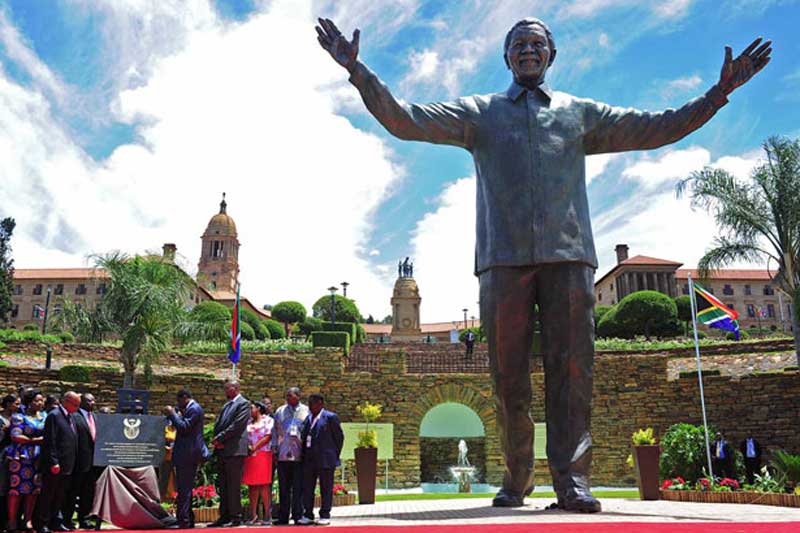
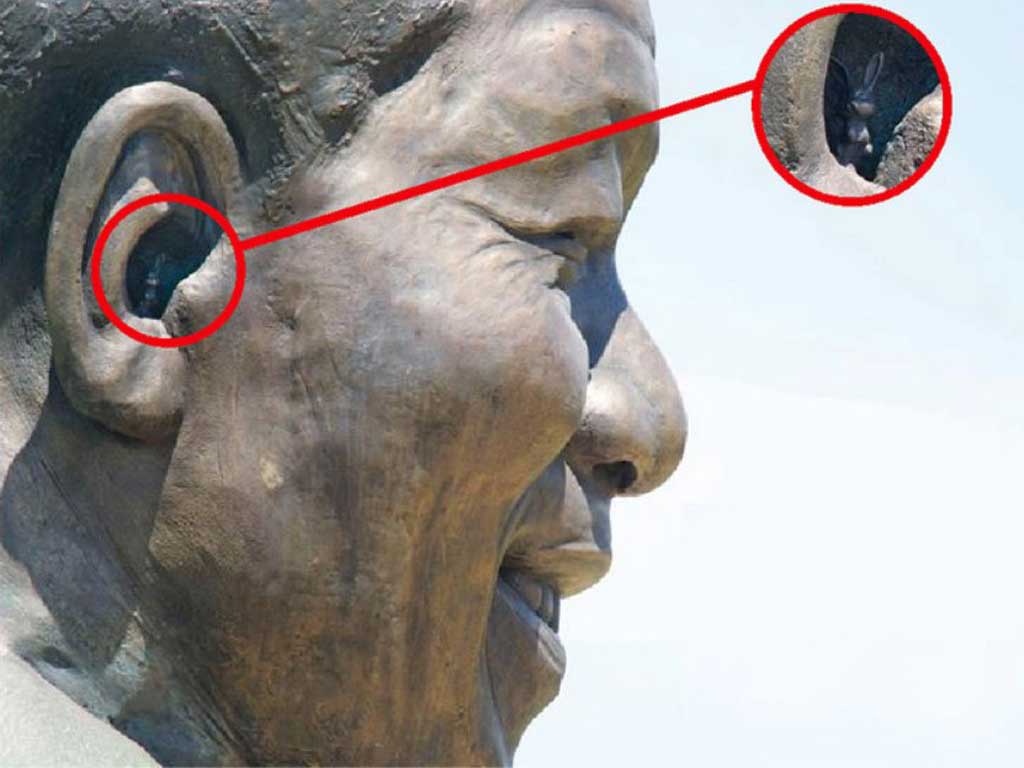
A rabbit has been hidden in right ear of the newly erected Nelson Mandela statue at the Union Buildings in Pretoria, South Africa. The sculptors of the nine metre bronze-plated statue, Andre Prinsloo and Ruhan Janse van Vuuren, secretly added the rabbit to the work.


The duo have said the rabbit was a “small trademark” of their work after the department of arts and culture did not allow them to engrave their signatures on bottom of the trouser leg of the statue. They said it also represented the tight deadline they were working under as rabbit in Afrikaans “haas” also means haste.


“The time factor was big and at times we had to work hard,” Prinsloo said, adding that the “small symbol” was hidden in the ear and it did not take anything away from the statue. “You need a long lens or binoculars to see it,” he said. “During the moulding process a lot of people had seen the statue up close and nobody noticed it.”


Department of arts and culture spokesman Mack Lewele said he was not aware of the addition to the statue and it would investigate the matter. “We can't comment until we have seen it with our own eyes,” Lewele said. He did not say whether the department would consider removing the rabbit.
21 Jan 14:35

Download Your Tax Return Transcripts Straight from the IRS

by Walter Glenn

Download Your Tax Return Transcripts Straight from the IRS

Tax returns are one of those documents you should hold onto. But in case you've misplaced some, don't feel like digging them out of storage, or would just like to have a digital copy, you're in luck. You can now download your tax transcripts from the new IRS service Get Transcript.

Read more...

19 Jan 18:02

German researcher discovers the NSA's security backdoors are open to anyone clever

by Alan Benard for Poor Mojo's Newswire

The problem with putting backdoors into everyone's systems is that at the end of the day there are backdoors in everyone's security.

Researcher describes ease to detect, derail and exploit NSA's Lawful Interception | ZDNet

While headlines from European hacking conference 30c3 featured speakers vying for U.S. National Security Agency revelation sensationalism, one notorious hacker delivered an explosive talk that dismantled one thing the NSA, law enforcement, and global intelligence agencies depend on: "Lawful Interception" systems.

And German researcher Felix "FX" Lindner did exactly that, in what was stealthily 30c3's most controversial bombshell of the conference.

In a talk titled CounterStrike: Lawful Interception, Lindner explained to a standing-room-only theater of 3,000 hackers how easy it is to find out if you're under legally imposed surveillance, detailing how easily a user can jam the shoddy legacy systems running Lawful Interception (LI).

In explaining how LI works, Lindner revealed the shocking lack of accountability in its implementation and the "perverted incentive situation of all parties involved" that makes it easy to perform interception of communications without any record left behind.

19 Jan 16:17

No. Way.

No. Way.

19 Jan 16:17

Craziness.

Craziness.

11 Jan 16:03

HOWTO prevent people from sending to your Gmail account via Google Plus

by Cory Doctorow
Google continues to try and cram its users into Google Plus, its also-ran social network. The latest move allows people who don't have your Gmail address to send email to your Gmail account by using your Google Plus ID. I have a Gmail account that's associated with my Android devices and the last thing I want is for people to start sending email there. Thankfully, there's a way to opt out (though it would have been much better if it was opt-in). Tl;dr: Gmail -> Settings -> Email via Google+ -> Off. (via Cnet)


09 Jan 02:54

Mental Health Break

by Andrew Sullivan

Cats serving their masters:

Update from a reader, who sees it differently:

Those cats are not massaging the dogs; they are tenderizing them in case they have to eat them later if their human is late coming home.

05 Jan 20:21

Time For A TED Take-Down?

by Andrew Sullivan

In the above TED talk, Benjamin Bratton questions the utility of the format itself. “TED of course stands for Technology, Entertainment, Design,” he says, adding, “I think TED actually stands for: middlebrow megachurch infotainment.” He calls for “more Copernicus, less Tony Robbins”:

Let me tell you a story. I was at a presentation that a friend, an astrophysicist, gave to a potential donor. I thought the presentation was lucid and compelling…. After the talk the sponsor said to him, “you know what, I’m gonna pass because I just don’t feel inspired … you should be more like Malcolm Gladwell.”

At this point I kind of lost it. Can you imagine? Think about it: an actual scientist who produces actual knowledge should be more like a journalist who recycles fake insights! This is beyond popularisation. This is taking something with value and substance and coring it out so that it can be swallowed without chewing. This is not the solution to our most frightening problems – rather this is one of our most frightening problems.

Heebie-Jeebie is unsympathetic, exclaiming, “TED talks are entertainment! The end.” Paul Fidalgo strikes a middle ground:

I suppose … there is a kind of “churchiness” about [TED talks], a gee-whiz awe-inducement about the Great Beyond which may or may not actually exist or come to pass. … In a way, it’s not entirely fair to TED-talkers. For one, they host plenty of talks grounded fully in reality and hard science. Other times, they host talks that genuinely spark new ways of looking at complex problems, or draw connections that deserve attention. But I suppose the point is that it’s hard to know which is which, and especially to the secular layperson, to decide requires a little too much faith.

Chad Orzel remains skeptical of TED naysayers, writing, “Sometimes, stuff that looks like speculative inspirational piffle in the moment turns out to be foundational for a whole new field.” He cites Richard Feynman’s 1959 speech “There’s Plenty of Room at the Bottom” to illustrate his point:

What’s amusing about this is that Feynman’s famous speech is, essentially, a TED talk. Okay, he does a few more order-of-magnitude calculations than you would expect from a typical TED speaker, and it’s way too long for TED, but in spirit, it’s pretty much exactly the sort of thing TED promotes and Bratton is inveighing against. It’s pure gee-whiz techno-optimism– Feynman himself says “What would be the utility of such machines? Who knows?”– with only hazy ideas about what this would accomplish, or how you would do it. The few suggestions he makes about concrete ways to proceed are mostly wrong, or at least bear very little resemblance to what people actually doing nanotechnology research do these days.

And for a very long time, none of the stuff Feynman talks about went anywhere. You could easily argue that we still haven’t done most of it. If you’d pointed to this talk in, say, 1979 and said it would be one of Feynman’s most enduring legacies, most physicists would’ve said you were crazy. It had basically zero practical impact for decades, but now is trotted out as an example of the prescience of genius, and an inspiration for all sorts of amazing new science.

Meanwhile, Keith Humphreys points to this Onion parody as “the ultimate takedown of the format.”

05 Jan 20:02

Chris Hayes Recounts Near Arrest For Marijuana

by Diane Sweet
MSNBC's Chris Hayes recalls his own brush with the law for possession of marijuana.

MSNBC host Chris Hayes responded Friday to New York Times columnist David Brooks' op-ed piece on why he doesn't smoke pot anymore, and gave a powerful account of how race and luck helped him escape arrest at a huge political event.


read more

01 Jan 23:00

“When You Bareback With the Internet, You Ride With the NSA”

by Yves Smith

You must watch this talk, even if some parts are a bit technical for mere mortals. No matter how bad you think the NSA’s information surveillance and capture is, I can just about guarantee that this will show you that it’s an order of magnitude worse than you imagined.

Jacob Appelbaum makes clear that the degree to which the NSA not only controls the Internet but on a routine basis inserts all sorts of surveillance tools into not just computers and smart phones but also communications infrastructure. He also provides an extensive list of service providers, manufacturers, and devices that have either been compromised or are active collaborators.

Appelbaum debunks the idea that you as an individual can take comfort in the idea that you are too small and insignificant to be of notice to the NSA…

If nothing else, watch the section starting at 48:30. Oh, and in case you missed it, the NSA can compromise “air gapped” (as in never connected to the Internet) computers. And don’t miss the part that starts at 56:00. And see the related Der Spiegel article here.

26 Dec 21:52

Impromptu sax battle on the MTA

by Cory Doctorow

When a sax player stepped onto this MTA car and started playing Michael Jackson's "Billie Jean," he inspired one of the passengers to whip out his own sax and join in. What followed was a jam session/sax battle that is a delight to watch.

SAX BATTLE IN NYC SUBWAY (original duh...) (via Reddit)


26 Dec 13:10

Here, hare, here

by arbroath
Electrikmonkrjs

Wait for it...

22 Dec 20:38

December 10, 2013

22 Dec 19:39

December 22, 2013

18 Dec 00:38

Edward Snowden's open letter to the people of Brazil, offering help in rooting out NSA spying in exchange for asylum

by Cory Doctorow


Edward Snowden has sent an open letter to the Brazilian people, offering to help them root out NSA spying in Brazil in exchange for asylum. The letter -- which is extremely well written, stirring material -- sets out the scope of US surveillance in Brazil today, and makes a moral case against it. It lauds Brazil for its commitment to privacy in the digital age, and condemns America for rendering Snowden stateless as punishment for exposing economic espionage dressed up as war on terror. It ends with this: "when all of us band together against injustices and in defence of privacy and basic human rights, we can defend ourselves from even the most powerful systems." Click through for the full text.

Six months ago, I stepped out from the shadows of the United States Government's National Security Agency to stand in front of a journalist's camera. I shared with the world evidence proving some governments are building a world-wide surveillance system to secretly track how we live, who we talk to, and what we say. I went in front of that camera with open eyes, knowing that the decision would cost me family and my home, and would risk my life. I was motivated by a belief that the citizens of the world deserve to understand the system in which they live.

My greatest fear was that no one would listen to my warning. Never have I been so glad to have been so wrong. The reaction in certain countries has been particularly inspiring to me, and Brazil is certainly one of those.

At the NSA, I witnessed with growing alarm the surveillance of whole populations without any suspicion of wrongdoing, and it threatens to become the greatest human rights challenge of our time. The NSA and other spying agencies tell us that for our own "safety" — for Dilma's "safety," for Petrobras' "safety" — they have revoked our right to privacy and broken into our lives. And they did it without asking the public in any country, even their own.

Today, if you carry a cell phone in Sao Paolo, the NSA can and does keep track of your location: they do this 5 billion times a day to people around the world. When someone in Florianopolis visits a website, the NSA keeps a record of when it happened and what you did there. If a mother in Porto Alegre calls her son to wish him luck on his university exam, NSA can keep that call log for five years or more. They even keep track of who is having an affair or looking at pornography, in case they need to damage their target's reputation.

American Senators tell us that Brazil should not worry, because this is not "surveillance," it's "data collection." They say it is done to keep you safe. They're wrong. There is a huge difference between legal programs, legitimate spying, legitimate law enforcement — where individuals are targeted based on a reasonable, individualized suspicion — and these programs of dragnet mass surveillance that put entire populations under an all-seeing eye and save copies forever. These programs were never about terrorism: they're about economic spying, social control, and diplomatic manipulation. They're about power.

Many Brazilian senators agree, and have asked for my assistance with their investigations of suspected crimes against Brazilian citizens. I have expressed my willingness to assist wherever appropriate and lawful, but unfortunately the United States government has worked very hard to limit my ability to do so -- going so far as to force down the Presidential Plane of Evo Morales to prevent me from travelling to Latin America! Until a country grants permanent political asylum, the US government will continue to interfere with my ability to speak.

Six months ago, I revealed that the NSA wanted to listen to the whole world. Now, the whole world is listening back, and speaking out, too. And the NSA doesn't like what it's hearing. The culture of indiscriminate worldwide surveillance, exposed to public debates and real investigations on every continent, is collapsing. Only three weeks ago, Brazil led the United Nations Human Rights Committee to recognize for the first time in history that privacy does not stop where the digital network starts, and that the mass surveillance of innocents is a violation of human rights.

The tide has turned, and we can finally see a future where we can enjoy security without sacrificing our privacy. Our rights cannot be limited by a secret organization, and American officials should never decide the freedoms of Brazilian citizens. Even the defenders of mass surveillance, those who may not be persuaded that our surveillance technologies have dangerously outpaced democratic controls, now agree that in democracies, surveillance of the public must be debated by the public.

My act of conscience began with a statement: "I don't want to live in a world where everything that I say, everything I do, everyone I talk to, every expression of creativity or love or friendship is recorded. That's not something I'm willing to support, it's not something I'm willing to build, and it's not something I'm willing to live under."

Days later, I was told my government had made me stateless and wanted to imprison me. The price for my speech was my passport, but I would pay it again: I will not be the one to ignore criminality for the sake of political comfort. I would rather be without a state than without a voice.

If Brazil hears only one thing from me, let it be this: when all of us band together against injustices and in defence of privacy and basic human rights, we can defend ourselves from even the most powerful systems.

Edward Snowden's 'open letter to the Brazilian people' – in full [The Guardian]

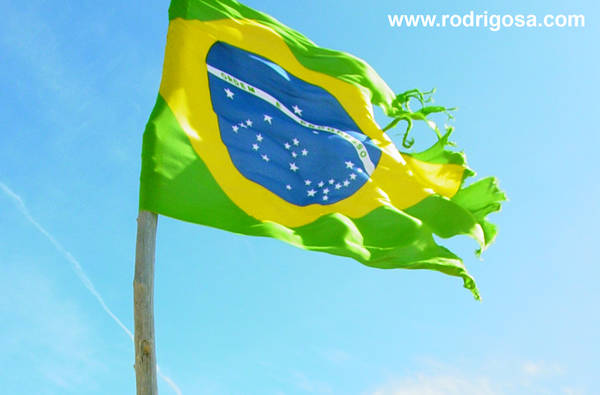
(Image: Rodrigo Sá Brazil Brasil Brazilian Music Brasileiro Braza Brazuca Brasilidade Flag Sky Blue Bandeira Brasileira, a Creative Commons Attribution (2.0) image from rodrigosa's photostream)


04 Dec 12:03

How much water and air we have. Fascinating.


How much water and air we have. Fascinating.

11 Nov 00:34

Who Was Vivian Maier? These Enigmatic Self-Portraits Only Add to the Mystery

by Mark Murrmann

If you open up Vivian Maier: Self-Portraits seeking answers as to who she was, prepare to be disappointed. Even when Maier turns the camera on herself, she doesn't offer much.

In death, as in life, Maier left few clues about who she was, why she pursued photography, or what she was thinking. Four years after her death, and six years after the discovery of her photos (which author Alex Kotlowitz wrote about for Mother Jones), very little is known about her. She was born in New York in 1926, worked as a Nanny in Chicago, and died in 2009. She spent her life compulsively taking pictures. Most of those who knew her never even realized she was a photographer. Then again, she may not have considered herself a photographer.

May 5, 1955

With this book of Maier's self-portraits, we hope for clues. We want to be a witness to her life. But we're really just spectators, seeing only what she lets us—often just her shadow. Sometimes it's almost like a game of Where's Waldo: You need to find her in the frame, catching her reflection in the corner of a mirror that's secondary to an otherwise great street photo. She is usually alone or with children. Rarely smiles. Mostly out in the world, on the street, experimenting with reflections, composition, shadows and shapes. We get more questions than answers.

The book, compiled by filmmaker and street photographer John Maloof, who first discovered Maiers' work in 2007 while researching a book on the history of a neighborhood in Chicago, contains 60 never-before-published images. Most are black and white, shot with a medium format camera. However, in the '70s and beyond, we see Maier more in color, shot on 35mm film. In the later work we see an aging Maier, generally even more alone than in earlier photos. 

June 1978, Chicago area

It's tempting to approach the book with a modern sensibility of the self-portrait, thinking of these as Maier's selfies. That would be a mistake. As Elizabeth Avedon puts it in her opening essay:

So often contemporary photography needs something…It demands an audience, requires funding. It needs someone to like it, share it or comment to it. Images today are not content to exist on their own, they constantly seek opinion and validation…Vivian Maier's work is extraordinarily different in that it only needed to be made.

According to Maloof, Maier almost never showed her work. Most of it she never even saw herself. The pictures "only needed to be made."

1956, Chicago area

Some people see a particular vanity in photographers' self-portraits. But with Maier's, it seems like a case of the photographer trying to figure out her subject. Given that she died with most of her film undeveloped and negatives unprinted, it's a safe bet that she never found the answers she may have been searching for.

May 1978, Chicago area

Vivian Maier: Self-Portraits by Vivian Maier, edited by John Maloof, is available from powerHouse Books.


11 Nov 00:04

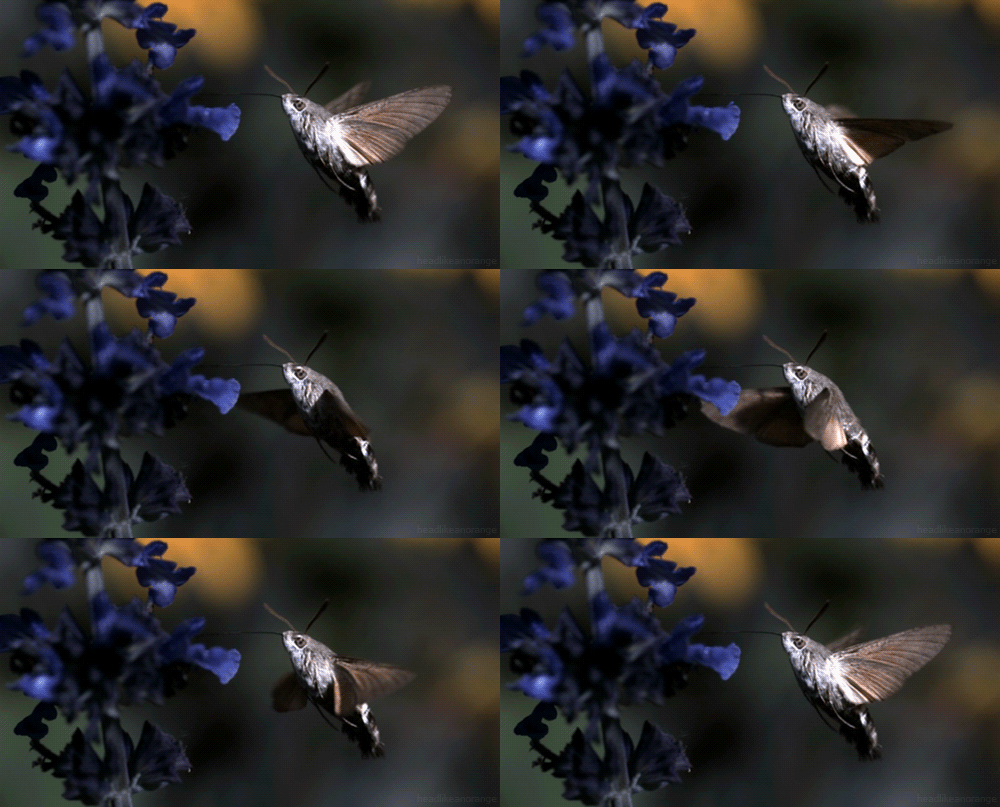
Hummingbird hawk-moth (Richard Hammond’s Invisible Worlds...


Hummingbird hawk-moth (Richard Hammond’s Invisible Worlds - BBC)

10 Nov 23:57

tumblr_msghw8rVLU1qzmsk6o1_400.gif (GIF Image, 256 × 231 pixels)

by ladybird13
22 Oct 01:16

Photo


19 Oct 23:13

☽☉☾

09 Oct 23:49

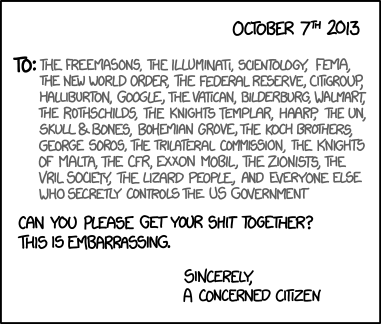
Open Letter

Are you ok?  Do you need help?
13 Sep 16:24

Slideshow

Electrikmonkrjs

Hey, Flickr, take the hint.

Points to anyone who hacks the Flickr devs' computers to make their text editors do this when you click on anything.
06 Sep 15:56

Photo


02 Sep 02:45

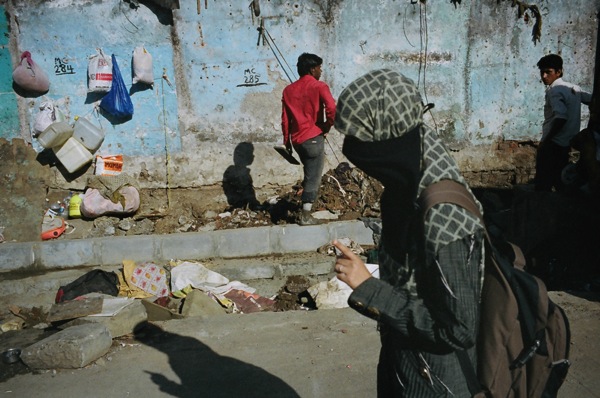
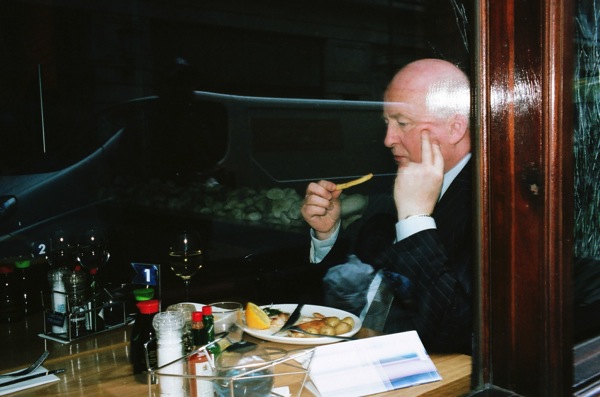
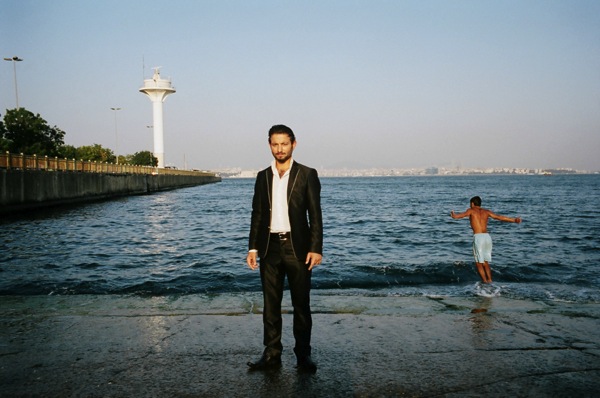
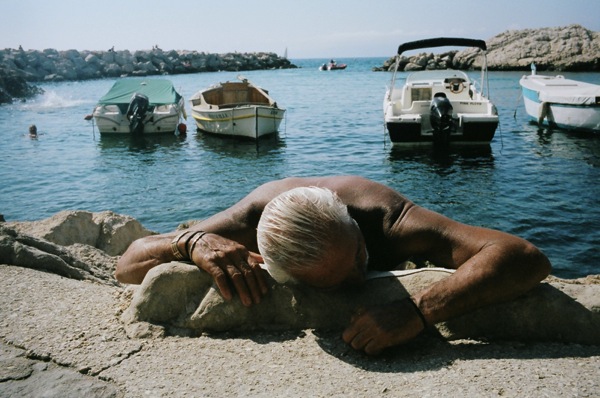
103 Things I’ve Learned About Street Photography

by Guest Contributor

By Street Photographer Eric Kim

Calcutta 2013 2

  1. A good photo asks more questions than provides answers
  2. 35mm as a focal length is generally ideal for most street photographers. 28mm is too wide (most people don’t get close enough) and 50mm is too tight.
  3. My keeper ratio : one decent shot a month, one shot I am proud of in a year.
  4. “When in doubt, click.” – Charlie Kirk
  5. When in doubt, take a step closer.
  6. You will become a better photographer by asking people what they don’t like about your shots (rather than what they like).
  7. A harsh and constructive critique is better than a pat on the back.
  8. A good photo critique needs (at least) 4 sentences online. Preferably 8 sentences or more.
  9. It isn’t the quantity of social media followers you have that matters, rather then quality of followed you have that matters.

Calcutta 2013 1

  1. Be consistent : stick with one camera, lens, film, or post processing approach to develop your style.
  2. Great photography projects generally take at least 5-10 years.
  3. Buy books, not gear.
  4. The only way money will make you happier in photography if you invest it into experiences (travel, workshops, teachers) rather than material things (cameras, lenses, gear).
  5. The best camera bag in street photography is no camera bag.
  6. “The decisive moment” is a myth. Even Henri Cartier-Bresson took at least 5 photos of scenes he found interesting and worked the scene to get the one memorable shot.
  7. Most famous photographers are only known for their 1-3 most popular images after they die. If you accomplish the same, you have done your job as a photographer.
  8. When shooting film, it is better to over expose than underexpose (film has more details in the highlights).
  9. When shooting digital, it is better to unexpose than overexpose (digital has more details in the shadows).
  10. Street photos of people just walking by billboards is boring.
  11. To become a great street photographer you must first understand what a great street photograph is. Study the masters.

Eric Kim Color 1

  1. When shooting street photography with a DSLR, micro 4/3rds, or a compact and you don’t want to worry about technical considerations, just use “P” mode at ISO 1600.
  2. Projects are more meaningful than single images.
  3. Creating a photo book is the ultimate expression of a photographer.
  4. Shoot as if each day were your last.
  5. One camera, one lens is bliss.
  6. Grain is beautiful, noise is ugly.
  7. My favorite films are Kodak Tri-X (for black and white) and Kodak Portra 400 (for color).
  8. Bokeh in street photography is overrated. Shoot at f8-16
  9. With film, your first 10,000 photos are your worst. With digital, it is more like your first 1,000,000 are your worst.
  10. The secret of a memorable street photograph : capturing emotion.
  11. A street photograph without emotion is dead.
  12. No amount of post processing will make a crappy photograph into a good photograph.
  13. Wait at least 6 months to a year before uploading your images to the Internet, to truly understand if is a good photograph or not.
  14. When it comes to editing, remember to “kill your babies.”
  15. Cheesy titles in street photographs don’t make them any better.

Calcutta 2013 11

  1. Watermarks in street photographs ruin the viewing experience for your audience.
  2. Buying a more expensive camera won’t make you a better street photographer.
  3. Shooting film will teach you more discipline in street photography (and may lead you to become a better photographer).
  4. Street photography is the most challenging genre of photography out there.
  5. A great street photograph needs strong content (what’s inside the frame) and form (composition).
  6. Shoot for yourself, not others.
  7. Spend less time on gear review sites and more time on Magnumphotos.com
  8. You can never spend too much money on photo books.
  9. You are your worst critic. Always get critique from others, they will help spot the holes in your photography.
  10. Sticking with one focal length for a long time will help you better pre visualize your shot and master framing.
  11. You are only as good as your worst (public) street photograph.
  12. Secret to good multi subject shots : don’t overlap your subjects and look for emotional gestures.
  13. How to improve your framing : don’t crop for a year.
  14. How to become a better editor : don’t upload photos to social media for a year.
  15. Try to shoot at eye level (or extremely above or below) your subjects. So crouch when taking photos of people sitting down, shorter than you, or kids. Or shoot from a very high vantage point.

Eric Kim Color 6

  1. 99% of street photographs are ruined by messy backgrounds.
  2. To get cleaner street photographs, first find a clean background and then wait for your subjects to enter the scene.
  3. If your mom likes your street photographs, your photos are probably generic and boring.
  4. Always carry a camera with you.
  5. Street photographs don’t have to have people in them (but generally are more interesting with them in it).
  6. You don’t need a Leica to shoot street photography. Be grateful for what you have and use what you got.
  7. Spend 99% of your time editing your photos (choosing your best images) and only 1% of your time post processing them.
  8. Style in street photography is a combination of having consistent equipment (camera and focal length) as well as “look” (film or post processing style) and content (the subjects you generally photograph).
  9. It is better to over shoot a scene then under shoot a scene.
  10. “Shoot from the gut, edit with the brain” – Anders Petersen
  11. It is always nice to have a shooting partner when out on the streets.
  12. “Shoot who you are.” – Bruce Gilden
  13. Taking a photo of an interesting character isn’t enough. Try to capture them in an interesting context or with a good gesture.
  14. Don’t take photos of homeless people and street performers. They rarely make good photos.
  15. Don’t worry if your photos qualify as “street photography” or not. Just aim to make meaningful and memorable images.

Eric Kim Color 2

  1. Telling the truth isn’t the job of a street photographer (it is for the photo journalist).
  2. Don’t be afraid to interact with your subjects when shooting on the streets. Not all of your photos have to be candid.
  3. You can make interesting posed street photographs. But don’t pretend to your audience that they are candid.
  4. There is no one “right” definition of street photography. Define it personally for yourself and just shoot.
  5. You often can’t control the scene when you are shooting in the streets, but you can control whether you share the image or not. Case in point : don’t make excuses for the small failures in your photos, just edit out those shots.
  6. Don’t respect the critique of other photographers unless you have seen their portfolio.
  7. Zoom lenses will prevent you from becoming a great street photographer (you will never master one focal length). Stick to primes (preferably a 35mm full frame equivalent). 28mm and 50mm are okay too (if you can use it well).
  8. A single photo can’t tell a story (it doesn’t have a beginning, middle, or an end). Only photo series or projects can do that.
  9. The photos you take are more of a reflection of yourself (than of the people you photograph).
  10. The importance of looking at great photos : you are what you eat. Fine french cuisine = great photos in books, galleries, or exhibitions. Junk food = most photos on Instagram, Flickr, Facebook (not always, but mostly).
  11. 99% of people on the Internet don’t know what a great street photograph is. Don’t always trust the comments, likes, and favorites you get from the Internet on social media sites. Rather, stick around in street photography critique groups (or private ones).
  12. You will find the best street photography opportunities in the least expected places.

Eric Kim Color 4

  1. When you see an interesting person or a scene, don’t just take one photo and move on. Aim to take at least 5 photos (or more if possible).
  2. Beware using telephoto lenses in street photography. Remember, “Creepiness is proportional to focal length.”
  3. Incorporate your own reflections and shadows in street photography. They often make interesting images (look up Lee Friedlander).
  4. Photos shot head on have more energy and drama than photos shot from the side.
  5. A brief list of great street photographers : Garry Winogrand, Lee Friedlander, Henri Cartier-Bresson, William Klein, Daido Moriyama, Diane Arbus, Weegee, Bruce Gilden, Alex Webb, Joel Meyerowitz, Martin Parr, Josef Koudelka,
  6. After taking a photo of a stranger, make it a rule to look at them, smile, and say thank you.
  7. I never regret taking photos. I always regret not taking photos.
  8. It is better to beg for forgiveness than ask for permission.
  9. Be confident while you are shooting and rarely will you have any issues. Be nervous while shooting and you will ruin into many problems.

  10. The only person you should try to impress with your photos is yourself.
  11. The benefit of getting eye contact in your photos : eyes are the windows to the soul.

Eric Kim Color 5

  1. Don’t make photos. Make connections.
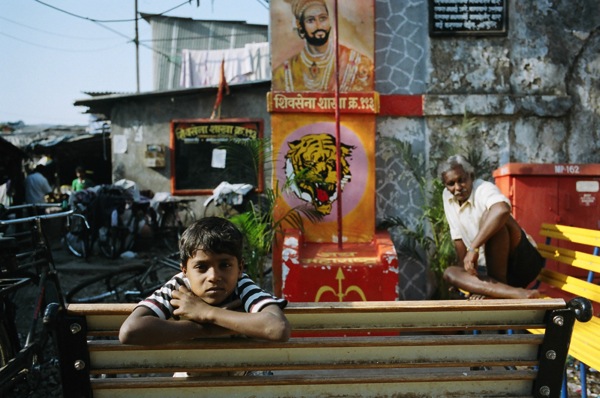
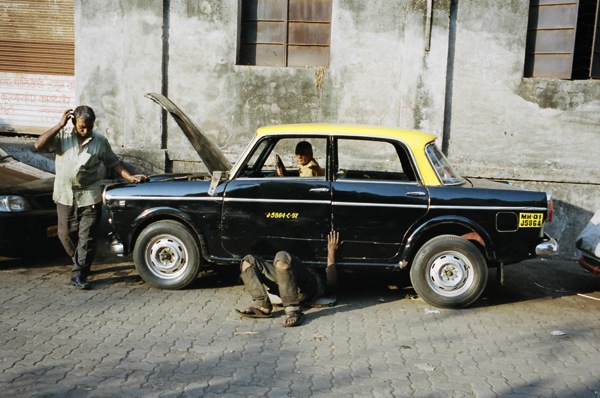
  2. The best place to shoot street photography isn’t New York, Tokyo, or Paris. The best place to shoot is your backyard.
  3. See your scenes with your eyes and shoot with your heart.
  4. If you are working on a project and photographers discourage you by saying “it has been done before” ignore them. Nobody has done it like you before.
  5. Street photography is applied sociology with a camera.
  6. If you aim to get recognition for your photography you will never get it.
  7. If someone gets upset when you take their photograph, offer to email them a copy. Carrying around business cards always come in handy.
  8. Don’t just look at photos, read into them.
  9. To double your success rate in street photography, double your failure rate.
  10. The photos you decide not to show are more important than the photos you decide to show.
  11. Rather than creating photos to please your audience, find an audience that will be pleased by your photos.

Eric Kim Color 12

  1. Street photography isn’t a contest about how many followers, viewers, followers, exhibitions, books, cameras, lenses, and fame you have. There are no winners and losers. Collaborate with one another instead of competing with one another.
  2. Giving away my prints and cameras has brought me more joy than selling it for money.
  3. The friendships I have made through street photography is mode valuable than any of the photos I have ever taken.
  4. Luck is when preparation meets opportunity – Seneca. Make your own luck.

Check out more from Eric Kim at his Blog, Facebook, and Twitter.

Post originally from: Digital Photography Tips.

Check out our more Photography Tips at Photography Tips for Beginners, Portrait Photography Tips and Wedding Photography Tips.

103 Things I’ve Learned About Street Photography

02 Sep 00:29

The Ultimate in Breakfast Taco Technology

The Ultimate in Breakfast Taco Technology

Submitted by: Unknown (via Neatorama)

02 Sep 00:27

sigmund-floyd: Without lifting the pencil from the...


sigmund-floyd:

Without lifting the pencil from the paper.

these are amazing

28 Aug 00:09

Octopus limbs have a mind of their own

by Maggie Koerth-Baker
Electrikmonkrjs

Short video on octopus brains and distributed functions.

A couple of years ago, I recorded a talk on octopus neurobiology. One of the freakiest things you'll learn, if you watch it, is that an octopus' "brain" isn't really a centralized thing the way ours is. The processing capacity is distributed throughout the animal's body. At io9 today, Annalee Newitz writes about a new study that backs up that idea, demonstrating that disembodied octopus arms react to threats in ways a severed human hand never could.