by Chris Bodenner
A dog playing with himself:

A dog playing with himself:
ElectrikmonkrjsHe was awesome
Phil Hartman auditions for Saturday Night Live:
Excerpts from a lively oral history of SNL auditions:
JIMMY FALLON: In makeup, they go, “Hey, Jimmy, some advice: Lorne Michaels doesn’t laugh when you audition. So don’t let that throw you.” Then the audio guy, he goes, “Hey, little advice — Lorne doesn’t like to laugh.” I’m like, “O.K.” Then Marci [Klein, a longtime “SNL” producer] comes out: “Jimmy, they’re ready for you. But hey, a little advice for you. If Lorne doesn’t laugh, be cool.” I’m like, what is this guy’s problem? He’s doing a comedy show. Why does he not like to laugh?
CHERI OTERI: I felt good because I heard Lorne laugh a little bit. I saw him out of the corner of my eye, laughing his very subtle, subtle laughter. Almost regal laughter.
RACHEL DRATCH: I didn’t get it that year [of her first audition]. They hired Horatio [Sanz], Jimmy [Fallon] and Chris Parnell, and they said: “We’re not taking any women this year. But maybe next year.” I was at peace with it.
SETH MEYERS: They flew me all the way back to New York to meet with Lorne. I realized later that he was doing a final personality vet. He said, “Do you think you can live in New York?” And I thought, “Does anyone blow it at this stage?” Does anybody get this far in the process, and then is like, “It’s definitely New York? Well, if you guys can’t be flexible on that, I’m not sure if I can be flexible on that.”
WILL FERRELL: [Mr. Michaels] never really has a moment where he says, “So, welcome to the show.” He phrases it, “So, we’re bringing you to New York.” And I thought, God, another audition? And he goes, “Cheri’s going to be there, too.” And that’s when it hit me: Oh, my God. I got the gig. But I didn’t have a celebratory moment with him. Then I got self-conscious, like it came across that I didn’t care about getting the job. So I stood up real quick, and I’m like: “Well, gosh, thank you. I just want to shake your hand.” And he said, “Do whatever you have to do.”
A collection of audition tapes viewable online is here.

This is either Gordon Lightfoot singing Dolly Parton's "Jolene" or Ms. Parton's original slowed down. Either way, it's fantastic. (Thanks, Sean and Jake!)
    
|
RSS represents the antithesis of this new world: it’s completely open, decentralized, and owned by nobody, just like the web itself. It allows anyone, large or small, to build something new and disrupt anyone else they’d like because nobody has to fly six salespeople out first to work out a partnership with anyone else’s salespeople.
That world formed the web’s foundations — without that world to build on, Google, Facebook, and Twitter couldn’t exist. But they’ve now grown so large that everything from that web-native world is now a threat to them, and they want to shut it down. “Sunset” it. “Clean it up.” “Retire” it. Get it out of the way so they can get even bigger and build even bigger proprietary barriers to anyone trying to claim their territory.
Well, fuck them, and fuck that.
Lockdown [marco.org]
|
|
I tried to register to vote three times when I was in college. Each time I failed to pass the “literacy" test. Only after the passage of the Voting Rights Act was I registered, and thank God Almighty, my parents voted as well. They were not activists but ordinary folks who wanted the same rights as the white people. Today, I feel the scabs coming off the old wounds and they are bleeding again. I knew people who were asked how many bubbles are in a bar of soap, or how many grains of sand are in a quart jar as part of their literacy test. I remember that the names of those who attempted to register were run in the local newspapers so that, by law, any registered (read white) voter could challenge their moral fitness to become voters. The real reason was to publicize who they were so their employers and Ku Klux Klan neighbors could take actions against them for having the nerve to think they should have the rights reserved for whites.
So much of our focus is on what the law did to help to emancipate generations of African Americans. However, the deep scars are still there in the form of emotional trauma (some friends of mine suffer from post-traumatic stress syndrome), loss of family to death, broken dreams, ruined lives, and consigned once again to second and third class citizenship.
This is why I mourn today because the conditions for so many have not changed that much. Moreover, the gains we won continue to erode as we see in the dismantling of the most important piece of legislation on racial equality of my lifetime.
”
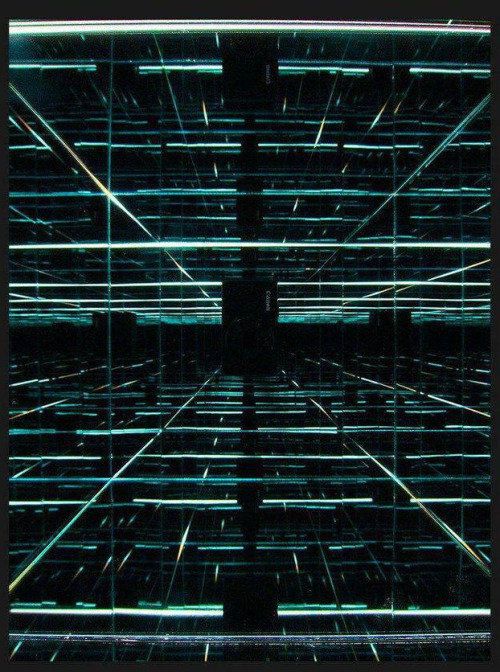
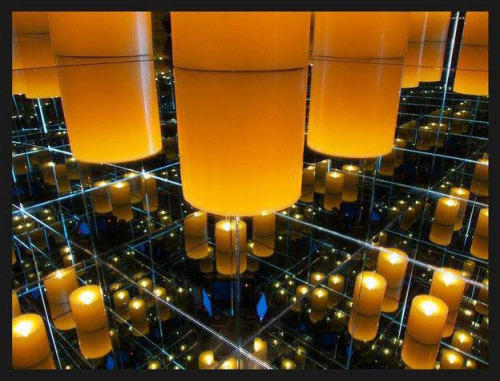
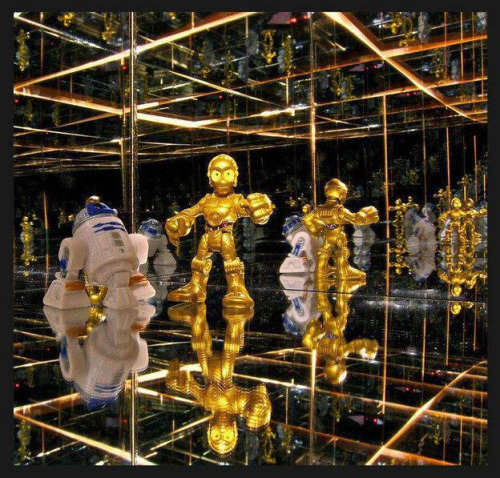

via thatscienceguy:
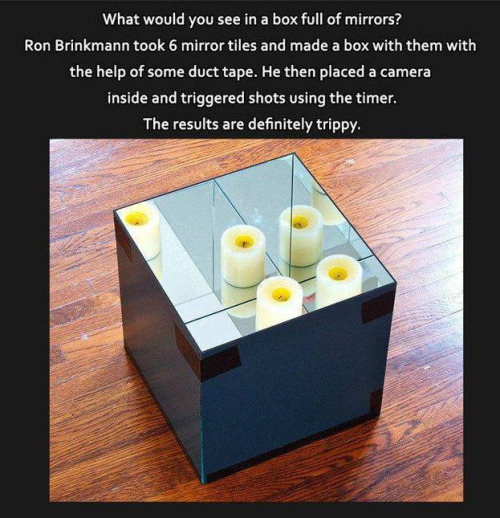
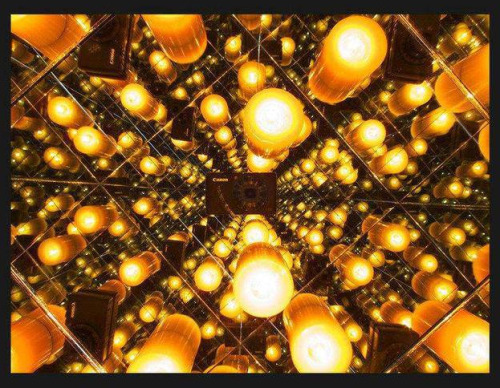
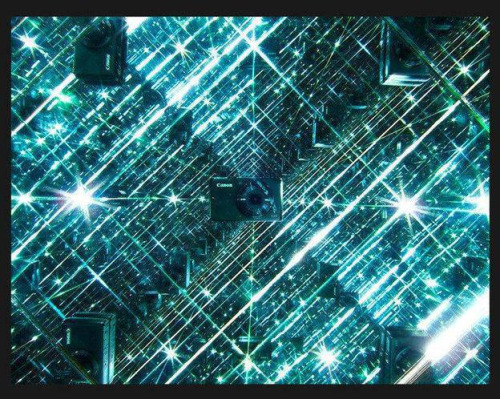
I have always wondered what would happen with an infinite loop in all directions…
Trippy.
If you think our recent “Single Shot Illusion” was amazing, this one will blow your mind! As you see, this colorful arrangement of household items (created by New York-based artist Bela Borsodi) appears to be a composition of four separate snapshots. Right? But once you see the photo taken from different angle (below) or do some closer inspection on your own, you will notice there is something a little off about the strategically placed lines dividing the image in 4 “separate frames”.
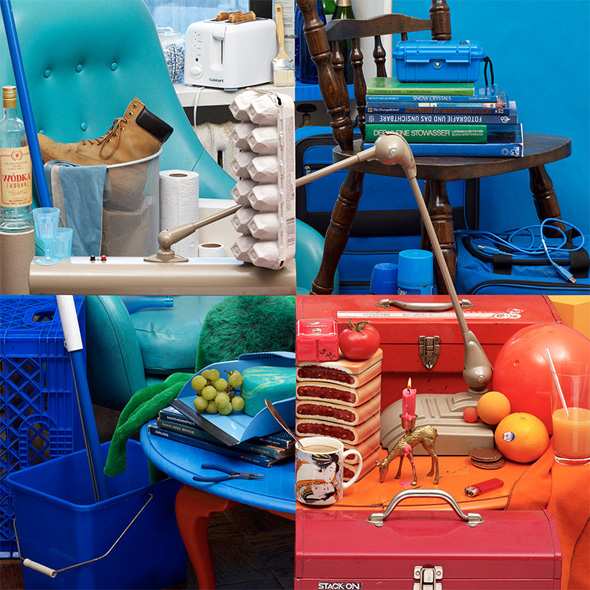 Yes, this deceptive photograph is actually made from a single shot! It was assembled from dozen of random objects, and made into a perfectly constructed optical illusion. I’m quite impressed with Borsodi’s ability to trick the viewer’s eye. The compositions was used for an album cover for the band VLP, their newest album titled Terrain.


A Navy corpsman at Camp Pendleton found four small bunnies in a hole next to their dead mother and decided to secretly raise them in his barracks. More photos and videos here. Megan McCormick squeals:
THE LIL FEET. THE LIL MILK BEARD. Dying of cute.

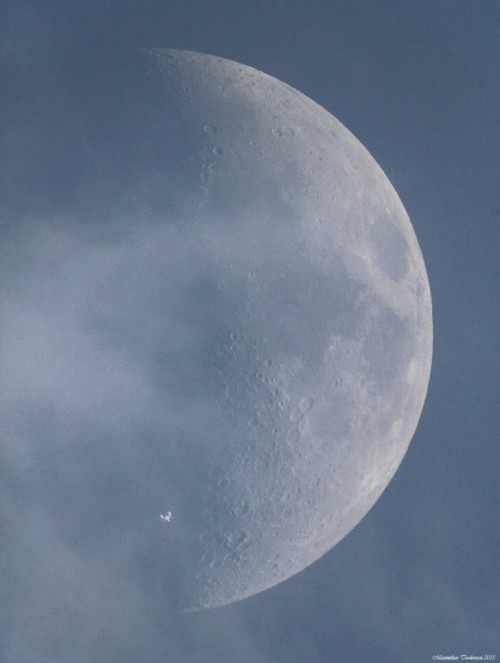
I’ve seen a lot of spacey photos in my time. Enough so that I catch myself occasionally making a jaded sigh, saying “Oh neat, another shot of a spacecraft in front of the moon. Been there, done that.“
Then I punch myself in the arm and tell myself to shut up because these are pictures of SPACE.
That’s what happened with Maximilian Teodorescu’s shot of the International Space Station against the face of the moon. At first I was minorly impressed, because it’s a very small thing traveling very fast, in front of a larger thing that is even farther away. But people take pictures of the ISS all the time. Big deal.
Then I realized that this one was taken during the day. At that point I lost my schnoodles. I’m betting a few of you will too.
(via Overthinking It)

Don’t worry, ISS astronaut Chris Cassidy is watching over you from above. These are the hands that make the wonder that we all enjoy.
(via NASA)
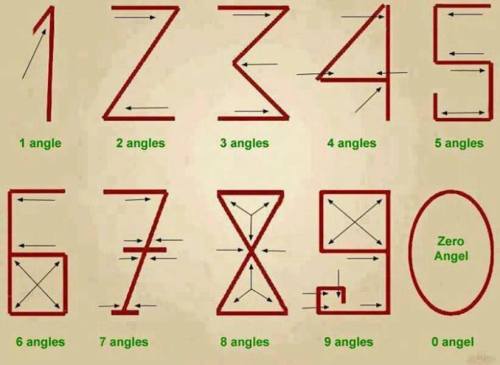
Here’s something interesting that popped up in my inbox today. Ever notice that the number of angles less than 180˚ in each of our Arabic number symbols corresponds to the number the symbol represents? It’s an interesting take on the origin of the Arabic numeral system … except that it’s not true.
My first hint was that for zero, “angle” was magically turned into “angel”. And why, exactly, do seven and nine need all that extra embellishment? Before you sound the sad trombone, why don’t we use this time to explore the real question: Where DO our numeral symbols come from?
For starters, Arabic numerals do not originate with the Arabs. Our numerical symbols actually trace their roots back to India at least as long ago as the 3rd century BC. These Brahmi numerals show obvious similarities with our modern “Arabic” symbols, as seen below (via Wikipedia):

The lack of a zero should not go unnoticed. Multiples of ten were given their own symbols in Brahmi, and large numbers were written as combinations of symbols instead of neat little decimals like we’re used to.
The idea of zero as a number (and not just numerical punctuation) makes its earliest appearance in the fifth century AD, again in India. Over time, the Indian numerical system migrated west into Persia, where decimal notation and the round 0 were formalized. In 976 AD, the Persian version of Wikipedia known as Muhammad al-Khwarizmi is credited with the invention of the word “sifr” to represent the empty decimal place, which later evolved into the very word we use for it today: zero.
From Persia, the “Arabic” symbols quickly made their way into Europe, along with their misattributed name. Like letter forms of the time, they were not standardized, and people wrote the symbols in their own style (which, to this day, is why some 2’s curl, and some 7’s are crossed).
With the development of moveable type, symbols were quickly standardized into the forms we know (and love?) today. Thanks, Gutenberg!
If you’re interested in more numerical history, check this out, or this. Numbers have a history with many interesting angles, but the geometric ones have nothing to do with why numbers look the way they do.
ElectrikmonkrjsMaybe Sun Times reporters will be using this.
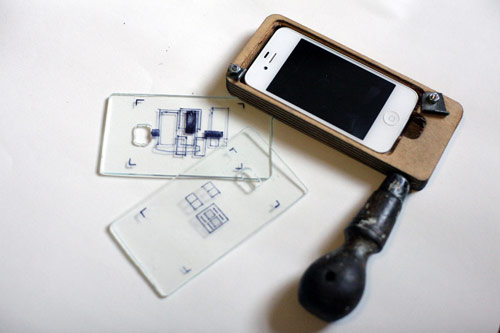
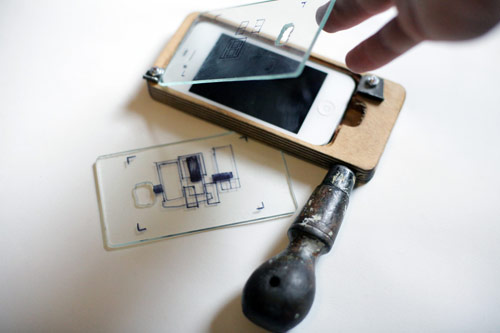
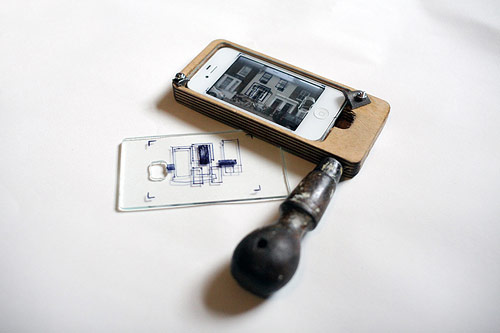
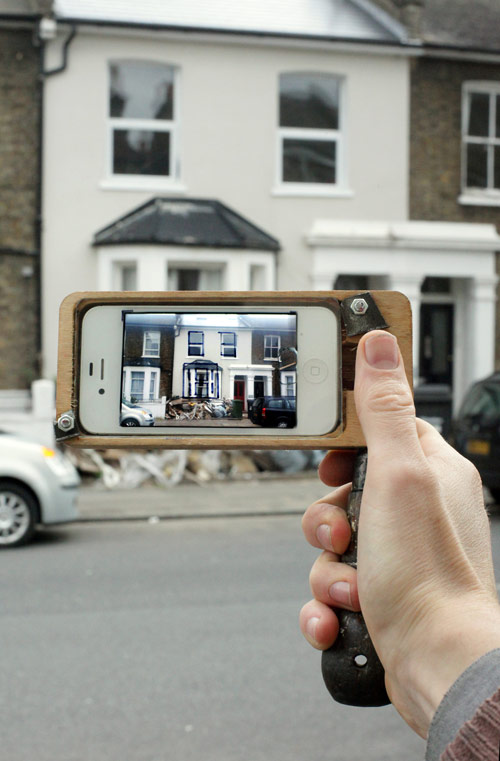
Callum Cooper (the same guy who made this, and this, and this, and this, and this) built this apparatus for his iphone and took 4,000 photos of homes from East to West London, over the course of two years. Then he compiled all the images into a film, watch it below!
View the whole post: “Victoria, George, Edward and Thatcher” by Callum Cooper over on BOOOOOOOM!.

Dear Lifehacker,
My very expensive DSLR camera just got stolen. Is there any way I can find the thief and get my camera back?
Signed,
Peeved at Thieves
Dear Peeved,
We're sorry to hear that. Losing an expensive camera—or having it pilfered from you—definitely sucks. Unfortunately, the chances of getting your camera back are slim, but not all hope is lost. Here are a few things you can try to find and recover your camera.

Images taken with your camera may automatically be marked with the time and location of the shots. These can be used to your advantage for tracking down your stolen gear.
Check out previously mentionedStolenCameraFinder or similar CameraTrace. These services search or monitor photos uploaded online for your camera's serial number, which is often recorded in the EXIF data of the photos. The serial number can be found on the camera itself (not much help right now when your camera is lost, we know), the original camera box, or existing photos you have. It's probably worth checking both services regularly to see if anything turns up. (StolenCameraFinder also has a Lost & Found registry you can search to see if anyone's reported finding your camera.)
If you find a match, you can try to learn more about the person uploading the photos (e.g., through his Flickr account profile and photos uploaded) and take that info to the police to further track down the camera.

Many stolen items end up on Craigslist, so you can try searching the site in the hopes your thief is trying to unload your camera there. Jeff Hu writes on PetaPixel how he busted a thief who tried to sell his DSLR. His camera disappeared after he and his roommate hosted a party, which included people he didn't know. He spotted his camera on Craigslist:
This was my camera. Even before looking at the pictures linked to the ad I knew it was my DSLR, with my battery grip, and my lens. The thief had decided to post the listing in the same city he stole it from… the day after he stole it. He didn’t bother to at least wait for me to stop checking Craigslist, or even post in a different city.
The pictures in the ad confirmed it was my camera — most importantly, the scratch on the door of the SD card slot. The ad stated that the camera was a gift, so there was no box, no manuals, not even a lens cap — not fishy at all!
At this point, I knew I was going to get my camera back one way or another.
Hu searched Facebook and found a matching profile of the seller, with the picture revealing he was at Hu's party. Hu then gathered his documentation, including camera box and pictures of the thief, and used Stolen Camera Finder mentioned above to retrieve the serial number for his camera. Undercover cops helped Hu get his camera back, thanks to all that detective work.
Though Hu's story is uncommon, several similar cases have been reported over the years. (One lady got her laptop back after it was taken from her checked luggage by similarly searching Craigslist—and helped the cops find more than a dozen other electronics stolen from travelers' checked bags.) It helps if your camera is customized or has identifiable marks like Hu's did—such as scratches, stickers, or engravings.
To do your own detective work, search Craigslist for your camera's description in both your area and surrounding areas. You can also use previously mentionedMokriya to search Craigslist for you in the background and alert you when it finds a match.
Stay safe, though. If you find the thief, get the police involved rather than trying to get your camera back yourself!

It won't help with your lost camera now, but it's a good reminder to set up tracking for your devices as soon as possible.
You might consider engraving your camera so it's identifiable if police recovers it, adding a "reward if found" label, keeping photo messages on your camera, and creating a note with your contact info on your digital devices for good Samaritans to find.
An Eye-Fi wireless camera card might also be handy disaster prevention for your next camera. If someone uses your camera with the card in it, the card could upload photos that might provide clues (including geo-locator information) to your camera's whereabouts.
If you have homeowner's or renter's insurance, it's also a good idea to add expensive gear, like a camera, to your insurance. Take photos of everything and keep an inventory list with serial numbers and purchase prices, and give your insurance company those records. That way, even if you don't get your pilfered valuables back, you may at least be able to replace it (after paying the insurance deductible).
Sincerely,
Lifehacker
Photo by InfoMofo.
In Appalachia, children are 42 percent more likely to have birth defects if they live near a mountaintop removal coal mine. Citizens are 50 percent more likely to suffer from cancer. This video from Appalachian Voices features children giving the basic lesson that blowing up mountains and dumping the waste in nearby rivers is harming their communities. Share the video and join the campaign to tell President Obama: No more excuses. End Mountaintop Removal. Now.

18 years ago, Pascale Honore was left paralyzed after an automobile accident. Determined to get her surfing, Tyron Swan (a friend of Pascale’s sons) and Honore were discussing possibilities over a few beers and came down to the old ‘if you can’t duct it…’ philosophy.

Video:
After countless rolls of duct tape and several trial runs in flat water, they were towed into this not-so-modest wave at the famous Blackfella’s reef break:
Click here to view the embedded video.
Honore and Swan have since surfed on several other occasions and a big wave off of Kalbarri, up the western coast of Australia, is their next target.
Fanatic Surfboards has sponsored them with a new board, but they’d really love a “duct-tape sponsor”, says Ty, “we go through a whole heap of it.”
Read more:

When it's time to pick a mutual fund for your investments, there's one number you should always look for. No, it's not the Morningstar 5-star rating or ranking on a "top funds" list. The key number is the expense ratio.
The chart above is based on Lipper ten-year annualized returns as of 2013, and it shows the clear correlation between performance and expense ratio (% annual fee charged just to own the fund). The lower the fees, the greater the performance.
The MoneyNing blog, which posted this chart and its accompanying infographic, explains in Mutual Investing Is Not Rocket Science:
An expense ratio is the annual fee levied by the fund. You probably know already that statistically speaking, managed funds do worse than cheap index funds, and that the explanation is, most likely, the higher expenses the managed funds charge. Higher expenses erode the profits that investors make. Rare is the managed mutual fund whose manager is so talented that the fund performs so much better than the overall market to justify and balance out its higher expenses.
Just as in the case of loads, why would anyone pay 2% annually, when they can pay half that – or less – and get the same (or better) results? Personally, I do not own any funds with an expense ratio higher than 1%, regardless of how fabulous they supposedly are.
Whether you're just starting to save for retirement or are already a seasoned investor, it's a good reminder of how fees can eat up your savings and profits. Here's the full graphic:

How Do You Pick a Mutual Fund for Your Portfolio? | MoneyNing

Portrait of two Mexican Chihuahuas, April 1944.
Photograph by Willard Culver, National Geographic
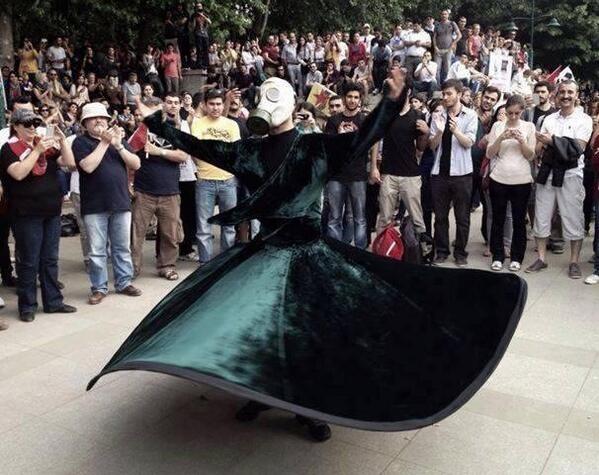
Mathilda sez, "In this photo by Twitter user @joeman24, a gas-mask wearing Dervish dances in front of protesters in Turkey."
A gas-mask wearing Whirling Dervish shows support for protesters in #Turkey 
|
|