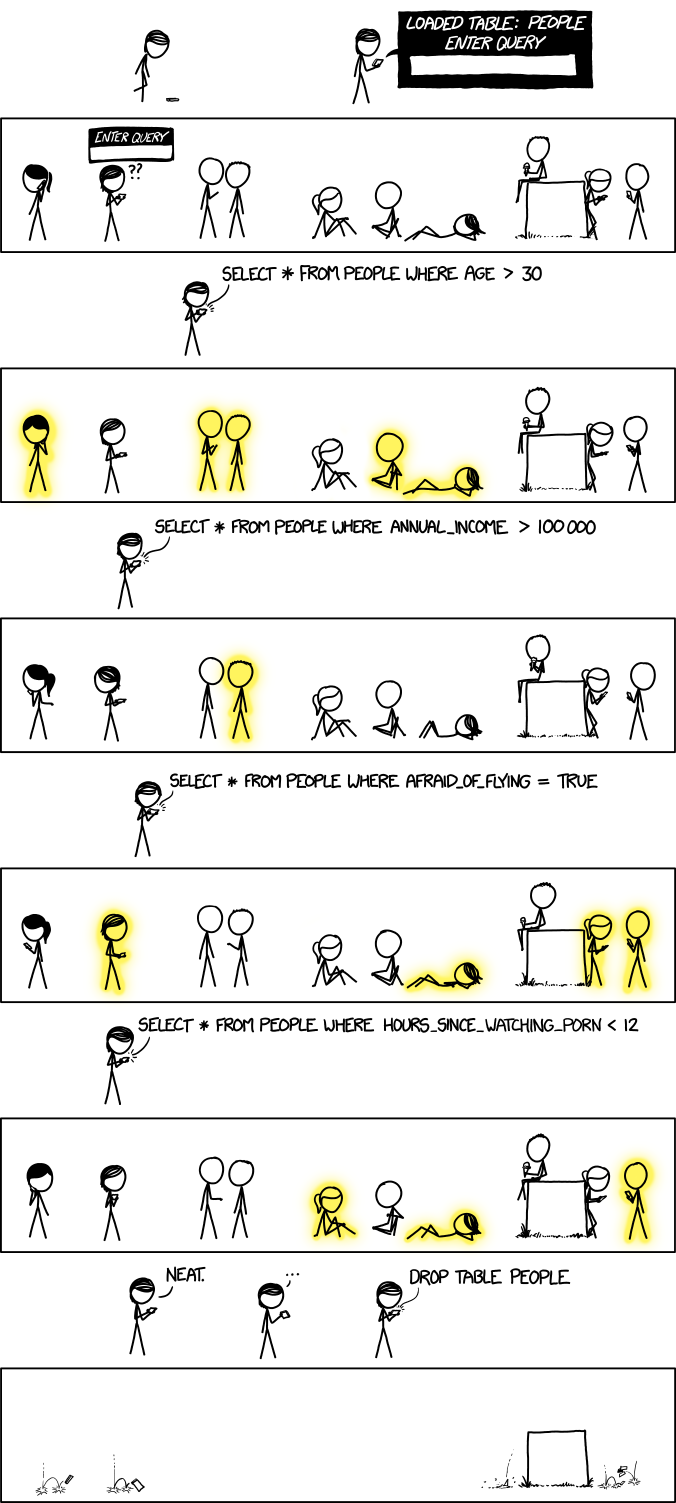
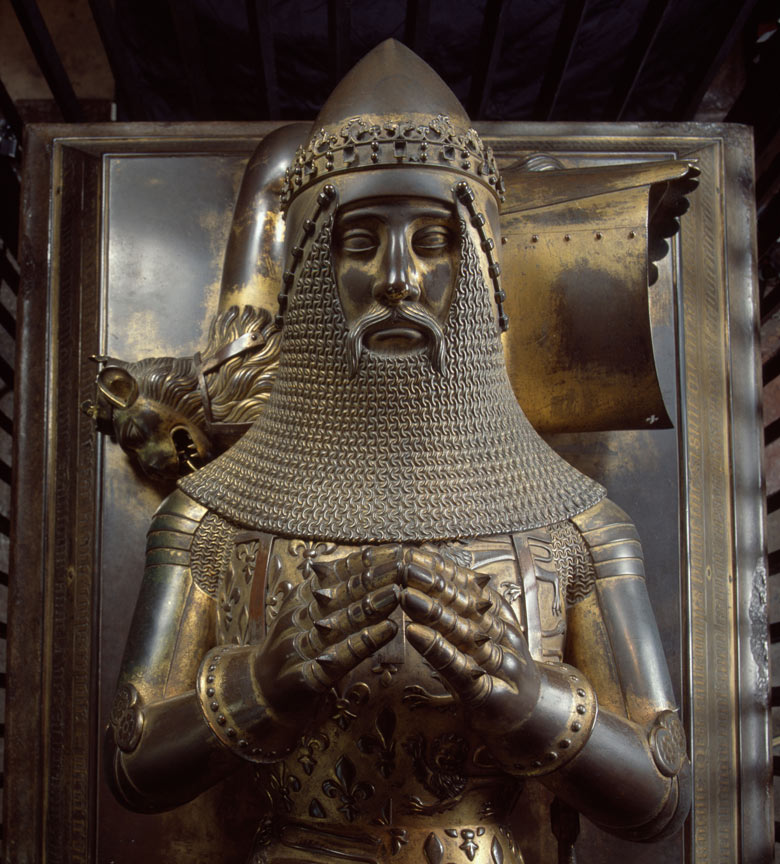
https://twitter.com/cpayneonaplane/status/508021423508844544/photo/1
Burly.Thurr
Shared posts
08 Sep 01:07
"someone show morrissey the @billboard site right now: http://t.co/qgJGaAOa9j"
by djempirical
Russian Sledges, firehose likes this




08 Sep 01:03
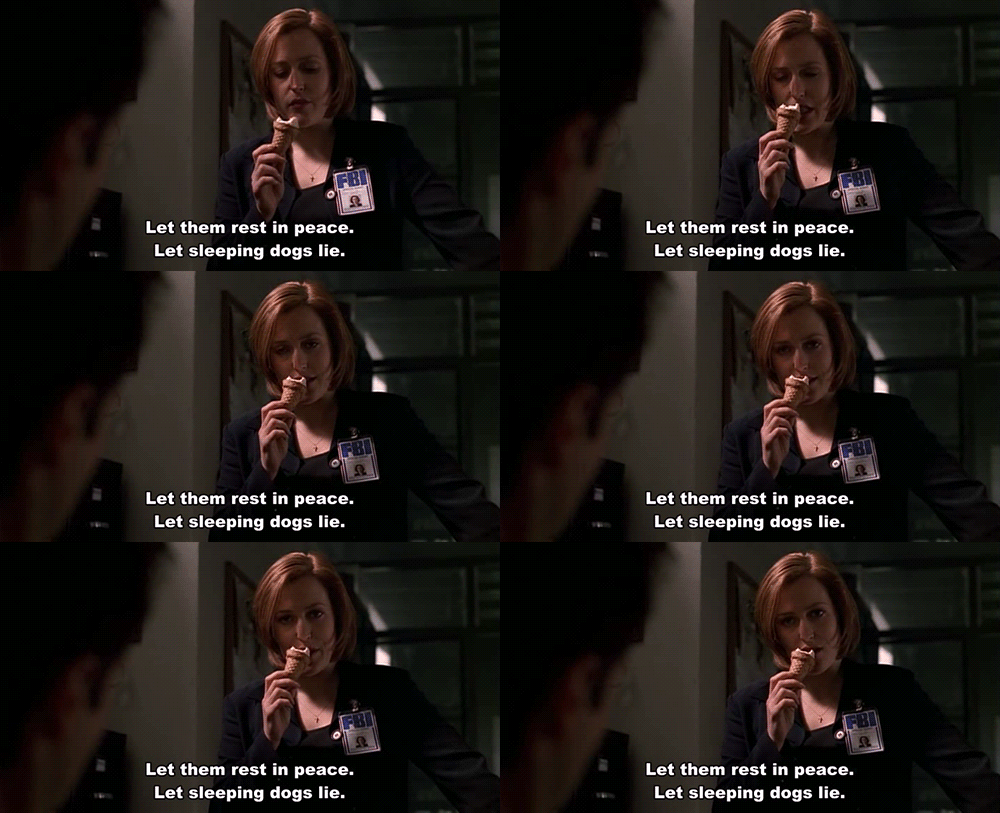
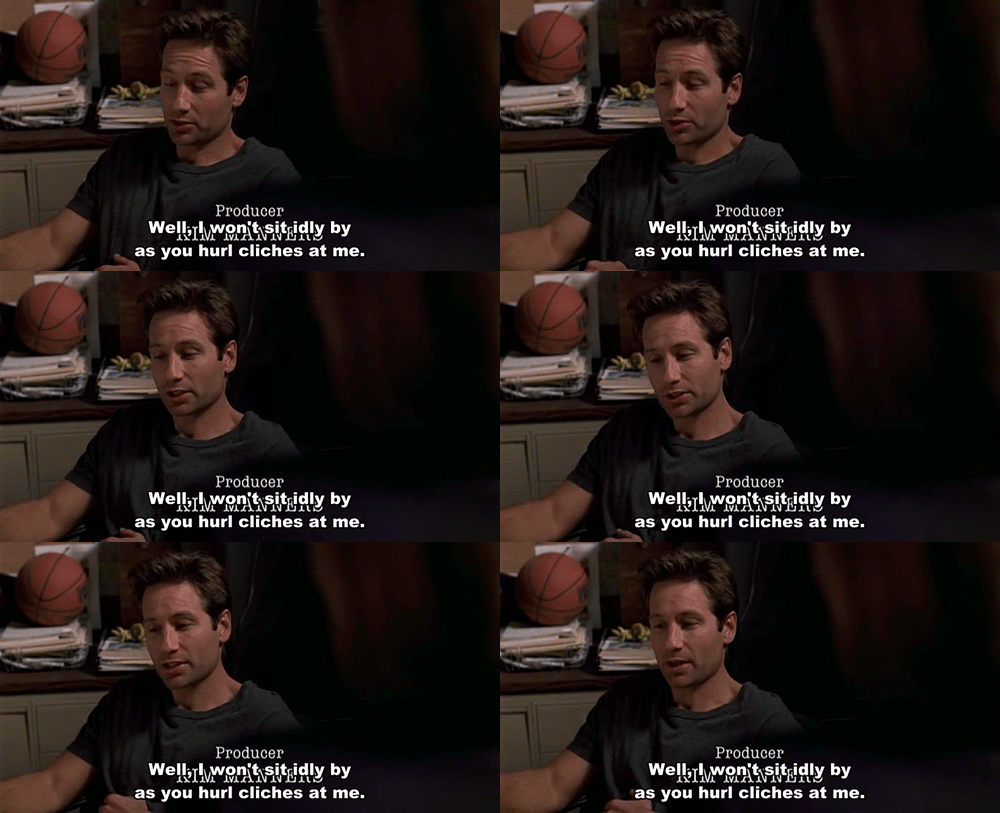
spitecho: k-lionheart: allonsyohanna: jaclcfrost: u think i am walking around the house with a...
Burly.Thurr"an expected journey." yuuup.
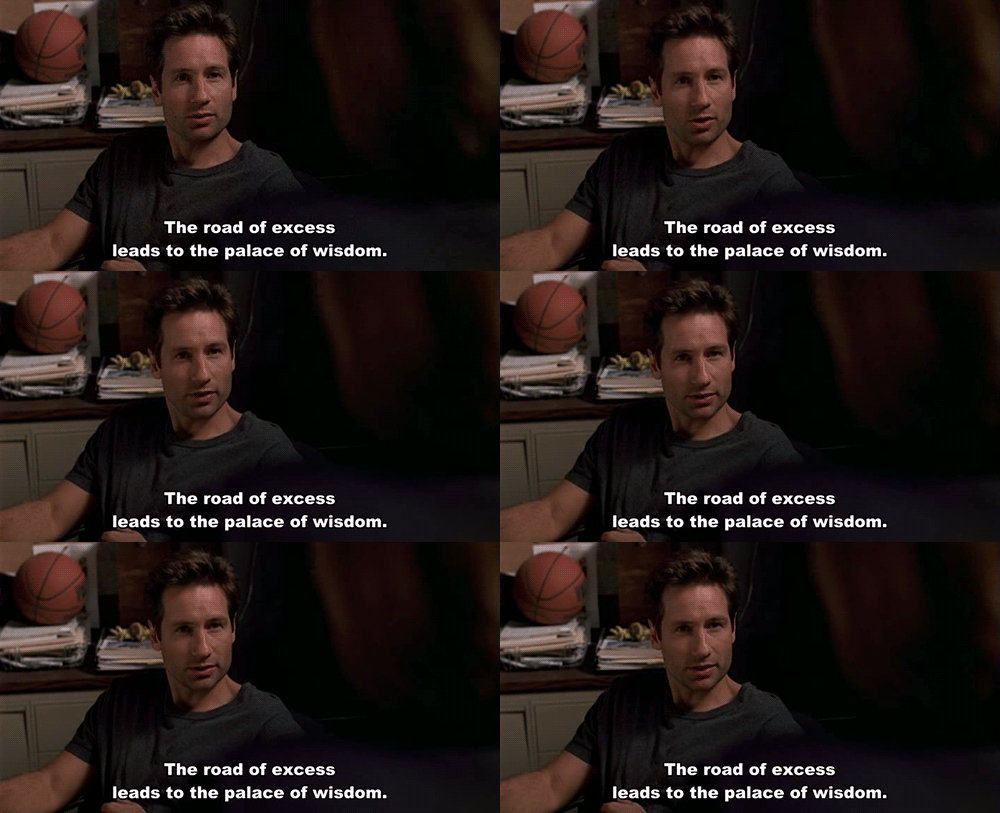
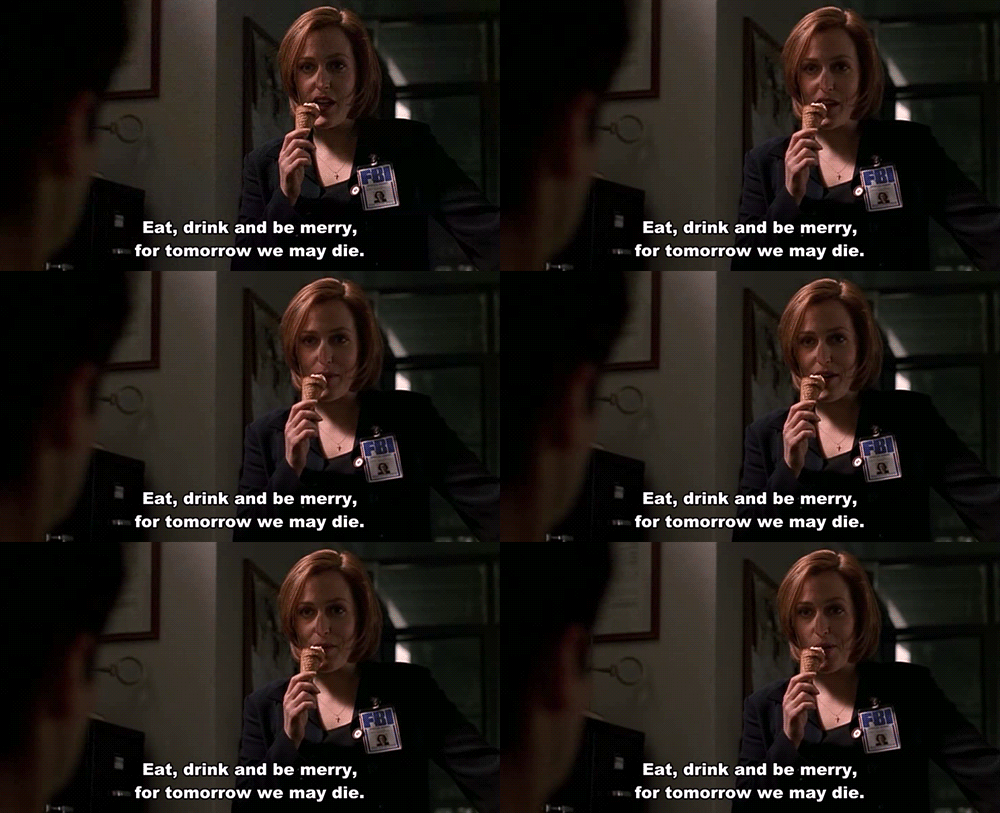
u think i am walking around the house with a blanket around my shoulders because i cold but in actuality it is my cloak and i am on an adventure
the fridge: there and back again
The microwave: the desolation of left overs
The liquor cabinet: an expected journey
ThePrettiestOne, Tertiarymatt likes this
08 Sep 00:59
#1059; In which Produce is productive
by David Malki
Dan Riggins, Tertiarymatt and one other like this
08 Sep 00:55
boesed: laughinghieroglyphic: Whoa. The MLA has officially...
Burly.ThurrThe example is well-played.
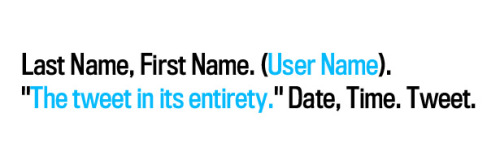
Whoa. The MLA has officially devised a standard format to cite tweets in an academic paper. Sign of the times.
ebooks, Horse. (horse_ebooks). “Leg Butt” 18 Nov 2011, 12:38 PM. Tweet.
Damiani.guilherme, Edu and one other like this
06 Sep 21:35


hanwearspants: ventriloquisthief: slowking-s-thompson: boyexem...
Burly.ThurrThe video actually says it all: https://www.youtube.com/watch?v=wSBS2F9VXaE
Ka-Pow: Watch These Fish Cannons Shoot Salmon Safely Over Dams
Salmon have serious swimming skills—some travel thousands of miles to return to their original homes to breed. But even though they can jump as high as 12 feet in the air, they can’t manage to get over massive concrete dams that we have built to block their journeys back to their homes. Now one new idea could give them a boost. The plan involves whisking the fish through a long vacuum tube at speeds up to 22 miles per hour and then shooting them out the other end like a cannon.
fuck we’ve made this planet weird
fuck yeah salmon cannons
I expect someone to make a weapon out of this someday. Just wait.
thanks for all the fish
PEW PEW PEW
Randy Laue, Cooper Griggs and one other like this
06 Sep 15:15
Those Tricky Germans
by Alicia P.Q. Wittmeyer
Burly.ThurrIt doesn't seem like the article is pointing to results of a robust study, but the conclusion is still fascinating. That the longer a person spent in East Germany under Communism, the more likely they are to cheat at a low stakes game where money is on the line. Perhaps the implied larger point, that communism was somehow the cause of moral degradation may be a little fallacious, however. But it's still an intriguing topic. I just wish there was a better way to study it.
A few too many years under the Deutsche Demokratische Republik can wreak havoc on a moral compass.

04 Sep 17:54
Women in military are hurt by the bigotry of low expectations, so help them by holding them to standards of excellence
by Thomas E. Ricks
Burly.ThurrBigotry of low expectations. I'm going to have to chew on this one for a bit.

04 Sep 04:18

CVS Has Stopped Selling Cigarettes
by Sophie Novack
Burly.ThurrResponsible business practices, except for this part, "CVS said its decision will result in a yearly hit of about $2 billion in revenue, or 1.6 percent of the company's $125 billion average annual haul." That's a big hit.
The pharmacy has nixed all tobacco products one month early.
04 Sep 02:10
laughingsquid: Video of a Large Ship Being Beached After...
Burly.ThurrReally great article in Nat Geo a few months ago about ship breaking: http://ngm.nationalgeographic.com/2014/05/shipbreakers/gwin-text
Cooper Griggs likes this
04 Sep 00:32
I disagree with Alan Turing and Daniel Kahneman regarding the strength of statistical evidence
by Andrew
Burly.ThurrKeep an open mind, but be skeptical. :) "statistically significant comparisons are not hard to come by, even by researchers who are not actively fishing through the data."
It’s funny. I’m the statistician, but I’m more skeptical about statistics, compared to these renowned scientists.
The quotes
Here’s one: “You have no choice but to accept that the major conclusions of these studies are true.”
Ahhhh, but we do have a choice!
First, the background. We have two quotes from this paper by E. J. Wagenmakers, Ruud Wetzels, Denny Borsboom, Rogier Kievit, and Han van der Maas.
Here’s Alan Turing in 1950:
I assume that the reader is familiar with the idea of extra-sensory perception, and the meaning of the four items of it, viz. telepathy, clairvoyance, precognition and psycho-kinesis. These disturbing phenomena seem to deny all our usual scientific ideas. How we should like to discredit them! Unfortunately the statistical evidence, at least for telepathy, is overwhelming.
Wow! Overwhelming evidence isn’t what it used to be.
In all seriousness, it’s interesting that Turing, who was in some ways an expert on statistical evidence, was fooled in this way. After all, even those psychologists who currently believe in ESP would not, I think, hold that the evidence for telepathy as of 1950 was overwhelming. I say this because it does not seem so easy for researchers to demonstrate ESP using the protocols of the 1940s; instead there is continuing effort to come up with new designs
How could Turing have thought this? I don’t know much about Turing but it does seem, when reading old-time literature, that belief in the supernatural was pretty common back then, lots of mention of ghosts etc. And at an intuitive level there does seem, at least to me, an intuitive appeal to the idea that if we just concentrate hard enough, we can read minds, move objects, etc. Also, remember that, as of 1950, the discovery and popularization of quantum mechanics was not so far in the past. Given all the counterintuitive features of quantum physics and radioactivity, it does not seem at all unreasonable that there could be some new phenomena out there to be discovered. Things feel a bit different in 2014 after several decades of merely incremental improvements in physics.
To move things forward a few decades, Wagenmakers et al. mention “the phenomenon of social priming, where a subtle cognitive or emotional manipulation influences overt behavior. The prototypical example is the elderly walking study from Bargh, Chen, and Burrows (1996); in the priming phase of this study, students were either confronted with neutral words or with words that are related to the concept of the elderly (e.g., ‘Florida’, ‘bingo’). The results showed that the students’ walking speed was slower after having been primed with the elderly-related words.”
They then pop our this 2011 quote from Daniel Kahneman:
When I describe priming studies to audiences, the reaction is often disbelief . . . The idea you should focus on, however, is that disbelief is not an option. The results are not made up, nor are they statistical flukes. You have no choice but to accept that the major conclusions of these studies are true.
And that brings us to the beginning of this post, and my response: No, you don’t have to accept that the major conclusions of these studies are true. Wagenmakers et al. note, “At the 2014 APS annual meeting in San Francisco, however, Hal Pashler presented a long series of failed replications of social priming studies, conducted together with Christine Harris, the upshot of which was that disbelief does in fact remain an option.”
Where did Turing and Kahneman go wrong?
Overstating the strength of empirical evidence. How does that happen? As Eric Loken and I discuss in our Garden of Forking Paths article (echoing earlier work by Simmons, Nelson, and Simonsohn), statistically significant comparisons are not hard to come by, even by researchers who are not actively fishing through the data.
The other issue is that when any real effects are almost certainly tiny (as in ESP, or social priming, or various other bank-shot behavioral effects such as ovulation and voting), statistically significant patterns can be systematically misleading (as John Carlin and I discuss here).
Still and all, it’s striking to see brilliant people such as Turing and Kahneman making this mistake. Especially Kahneman, given that he and Tversky wrote the following in a famous paper:
People have erroneous intuitions about the laws of chance. In particular, they regard a sample randomly drawn from a population as highly representative, that is, similar to the population in all essential characteristics. The prevalence of the belief and its unfortunate consequences for psvchological research are illustrated by the responses of professional psychologists to a questionnaire concerning research decisions.
Indeed.
Having an open mind
It’s good to have an open mind. Psychology journals publish articles on ESP and social priming, even though these may seem implausible, because implausible things sometimes are true.
It’s good to have an open mind. When a striking result appears in the dataset, it’s possible that this result does not represent an enduring truth or even a pattern in the general population but rather is just an artifact of a particular small and noisy dataset.
One frustration I’ve had in recent discussions regarding controversial research is the seeming unwillingness of researchers to entertain the possibility that their published findings are just noise. Maybe not, maybe these are real effects being discovered, but you should at least consider the possibility that you’re chasing noise. Despite what Turing and Kahneman say, you can keep an open mind.
P.S. Some commenters thought that I was disparaging Alan Turing and Daniel Kahneman. I wasn’t. Turing and Kahneman both made big contributions to science, almost certainly much bigger than anything I will ever do. And I’m not criticizing them for believing in ESP and social priming. What I am criticizing them for is their insistence that the evidence is “overwhelming” and that the rest of us “have no choice” but to accept these hypotheses. Both Turing and Kahneman, great as they are, overstated the strength of the statistical evidence.
And that’s interesting. When stupid people make a mistake, that’s no big deal. But when brilliant people make a mistake, it’s worth noting.
The post I disagree with Alan Turing and Daniel Kahneman regarding the strength of statistical evidence appeared first on Statistical Modeling, Causal Inference, and Social Science.
03 Sep 14:24
Fortune cookie
Burly.ThurrRegarding Higher Ed.

Cooper Griggs, Tertiarymatt and 3 others like this
02 Sep 14:07



viele-katzen: marina-and-the-dragons: spread-hope-inspire: Tri...
Tribute to Steve Irwin, a guy who genuinely loved nature and animals.
This man was beyond real
"Crocodiles are easy. They try to kill and eat you. People are harder. Sometimes they pretend to be your friend first."
- Steve Irwin (r.i.p.)
my mate
Cooper Griggs, Tertiarymatt and 2 others like this
02 Sep 14:05

unclewhisky: comedownstairsandsayhello: tigerhazard: jamdoughn...
Burly.ThurrI only got half way through the first part before I couldn't see through my tears.
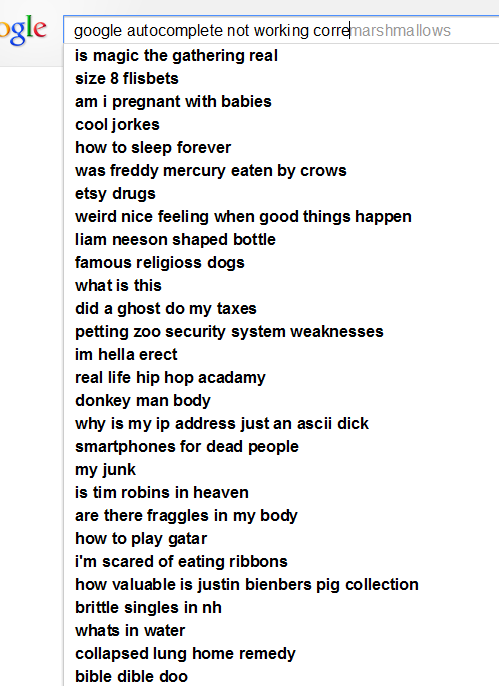
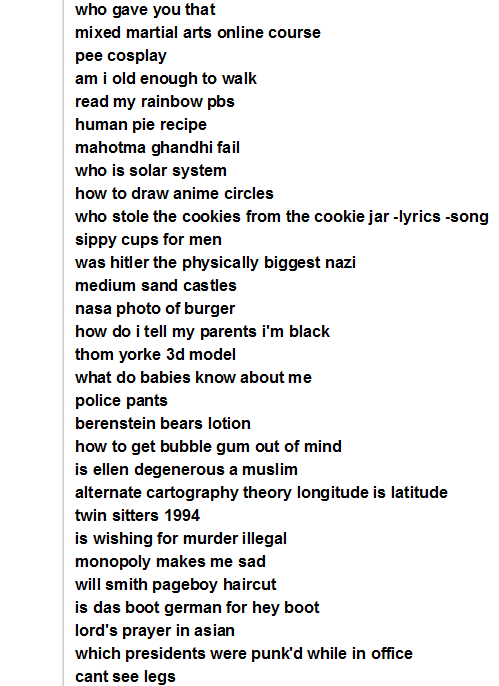
there is not one search term here that isn’t magical
i know ive reblogged this before at least twice but i decided to read through the entire thing this time and im in pain from how hard i am laughing please forgive me
If I ever stop reblogging this call EMS immediately.
I’m torn between “did a ghost do my taxes,” “are there fraggles in my body,” “who is solar system,” “cant see legs,” and is sarah palan made of crab meat.” Any one of them could be a Chip Zdarsky tweet.
Corvus.corax, Tertiarymatt and one other like this
02 Sep 13:28


Better
by Reza
Burly.ThurrGrowing old. Something to look forward to.

Damiani.guilherme, firehose and 3 others like this
29 Aug 14:58


buy this print!
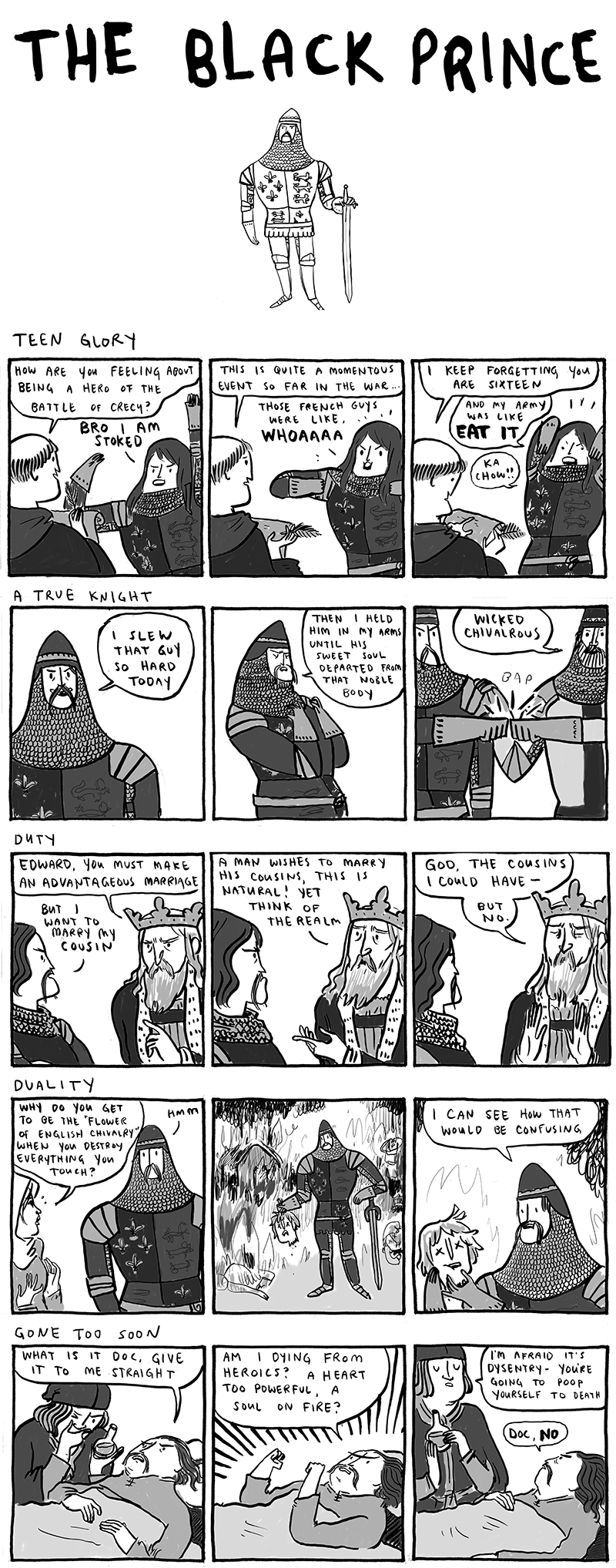
A couple of comics about Edward, the Black Prince. I love that a man who was brutal in many ways was celebrated as "the Flower of English Chivalry" even into the 1900s. That's from a towering statue in Leeds, where I am headed for this year's Thought Bubble Festival! Love Leeds, love Thought Bubble, love the Black Prince, love his statue. I admit that last year I was proud of myself for identifying the figure from afar - it's all that bullet shaped armour around his head (amiright), a style we all wish would come back.
Also, glory be! New shirts! I am so glad to be stocking the store with new things. The Venus one is not in yet, but coming, but head on over to check out the rest. Deck yourselves in them, deck your friends, deck whoever! Just click the link:

Hark, A Vagrant: Edward the Black Prince
Burly.Thurr"God the cousins I could have, but no"
buy this print!
A couple of comics about Edward, the Black Prince. I love that a man who was brutal in many ways was celebrated as "the Flower of English Chivalry" even into the 1900s. That's from a towering statue in Leeds, where I am headed for this year's Thought Bubble Festival! Love Leeds, love Thought Bubble, love the Black Prince, love his statue. I admit that last year I was proud of myself for identifying the figure from afar - it's all that bullet shaped armour around his head (amiright), a style we all wish would come back.
Also, glory be! New shirts! I am so glad to be stocking the store with new things. The Venus one is not in yet, but coming, but head on over to check out the rest. Deck yourselves in them, deck your friends, deck whoever! Just click the link:
arcturus, Tertiarymatt likes this
29 Aug 14:53
buy this print!
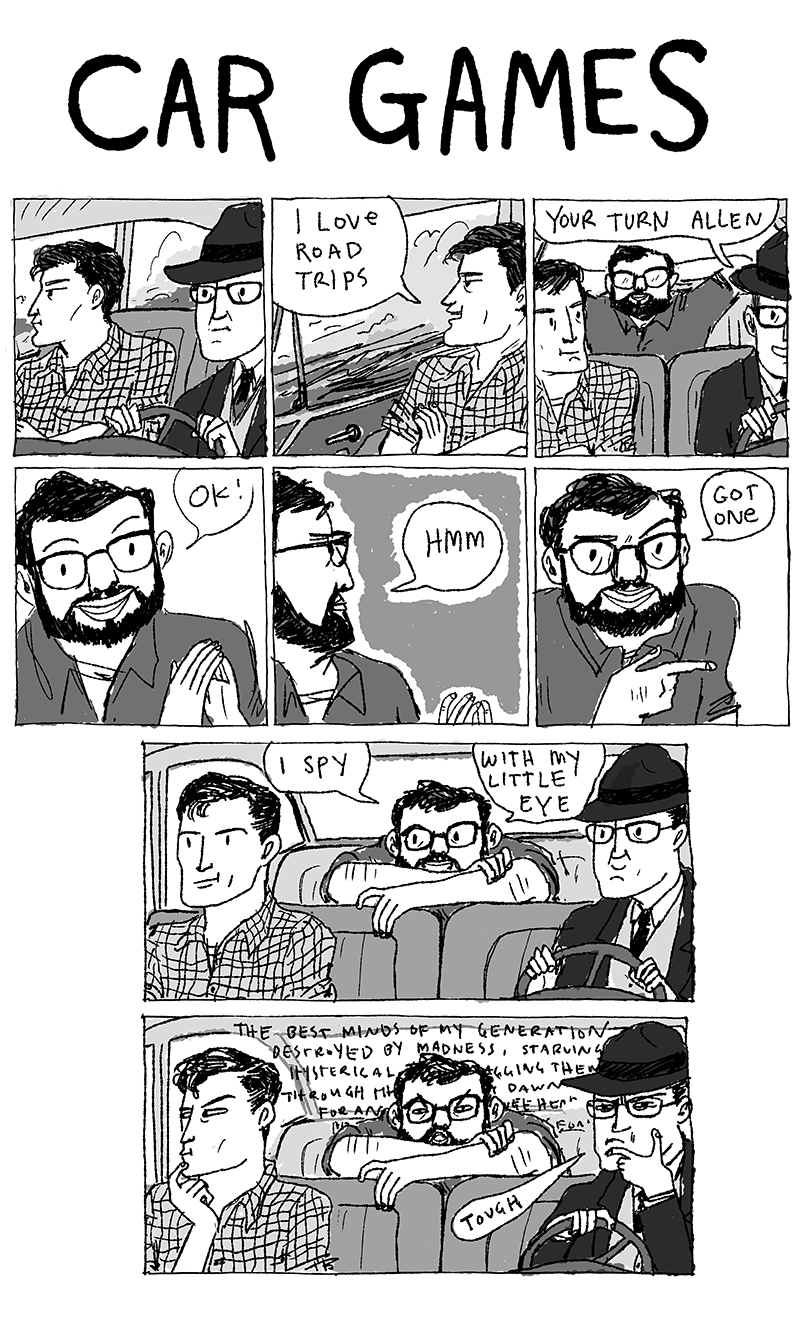
I thought of this as a three panel gag, because it is very silly like a three panel gag. But who are we kidding, this is the business of silliness, right?
Boy this Beat Car is a real dudefest! Have some Beat Ladies.
Hark, A Vagrant: Beat Car Games
buy this print!
I thought of this as a three panel gag, because it is very silly like a three panel gag. But who are we kidding, this is the business of silliness, right?
Boy this Beat Car is a real dudefest! Have some Beat Ladies.
Scott Akerman, Erin likes this
29 Aug 13:20
Can the Bacteria in Your Gut Send Messages to Your Brain?
Burly.ThurrMore stuff on crap.
Researchers discuss how the microbiome might play a role in anxiety, depression, and autism.
28 Aug 15:11


Free Windows App
Burly.ThurrPretty complete summary.
Tomas.jung, Ai and one other like this
28 Aug 06:56
Finding small villages in big cities
by Nathan Yau
Burly.ThurrSFI autoshare.
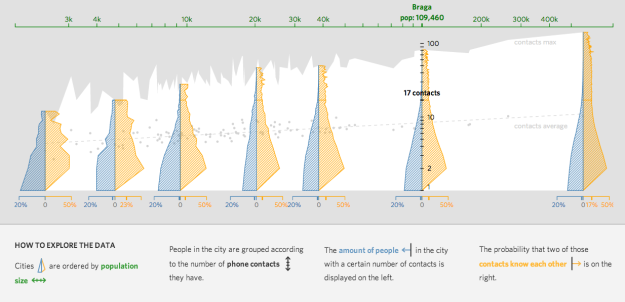
Daily life in cities tends to differ from daily life in small towns, especially by who we interact with. The MIT Senseable City Lab and the Santa Fe Institute studied this social aspect — individuals' contacts by city size — through anonymized mobile phone logs. As expected, those in cities with greater populations tended to have more contacts. However, when the researchers looked at who knew who, the results were more constant.
Surprisingly, however, group clustering (the odds that your friends mutually know one another) does not change with city size. It seems that even in large cities we tend to build tightly knit communities, or 'villages,' around ourselves. There is an important difference, though: if in a real village our connections might simply be defined by proximity, in a large city we can elect a community based on any number of factors, from affinity to interest to sexual preference.
Read the full paper for more details.
Tags: communication, MIT Senseable City Lab, mobile, social
Hartman.marcus, Jdinoto likes this
28 Aug 01:32

Confronting Lovecraft's racism
by Cory Doctorow
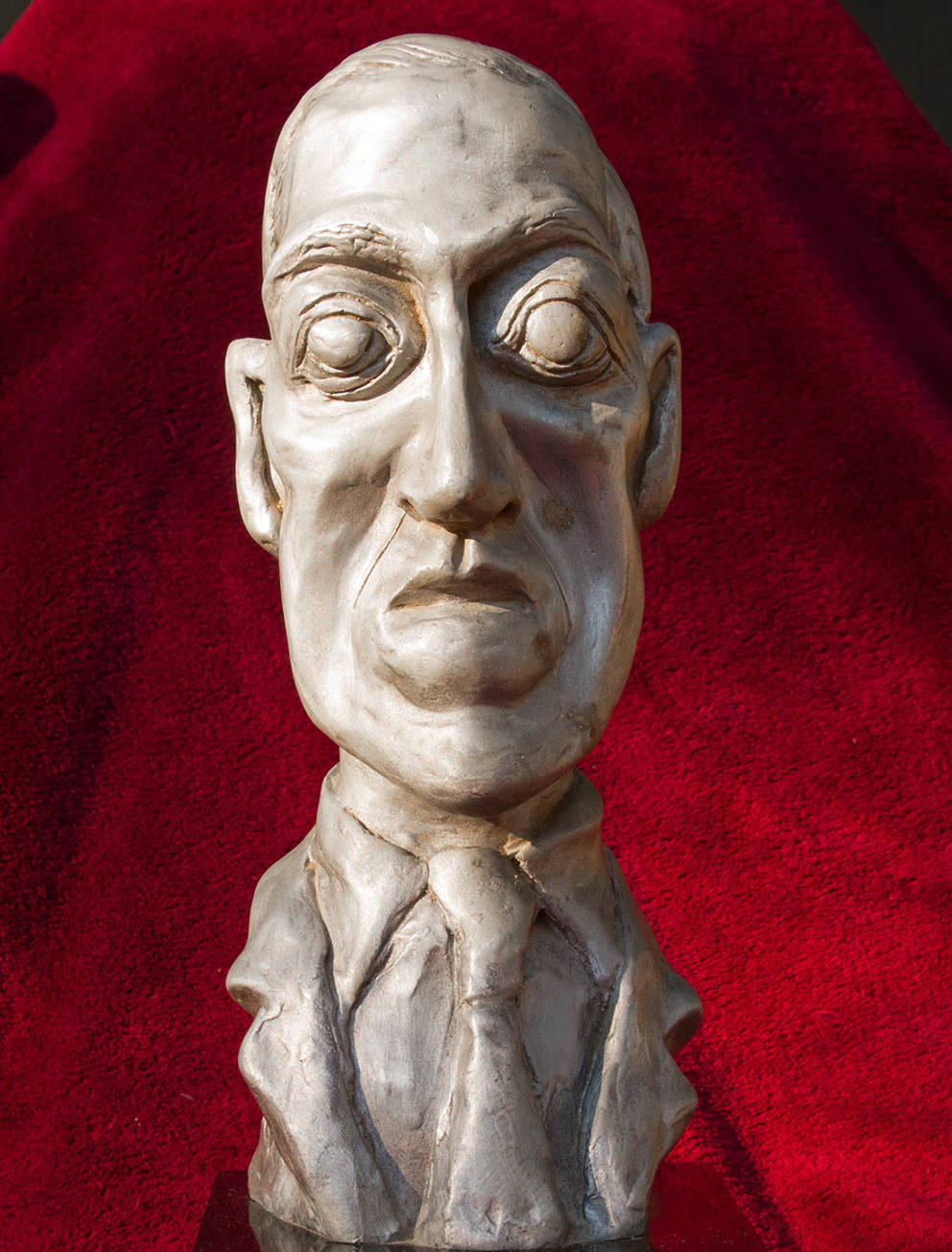
Award-winning horror writer David Nickle has been repeatedly frustrated in his attempts to have a frank and serious discussion of HP Lovecraft's undeniable racism; people want to hand-wave it as being a product of Lovecraft's times, but it is inseparable from Lovecraft's fiction.
Read the rest
Tertiarymatt and -1 others like this
27 Aug 16:47
A Decade After the Genome, Scientists Map the 'Proteome'
Burly.Thurr@Bjorno. Re: Changing your microbiome. I've been meaning to listen to this podcast. Looks very similar, perhaps complementary, to your share today on your "microbiome."
Nearly all the body's cells contain identical DNA. So why does a neuron grow up so differently than a liver cell? Proteins, says Akhilesh Pandey, a professor at the Johns Hopkins University.
Burly.Thurr likes this
26 Aug 20:56
What Lies Beneath Stonehenge?
by Miss Cellania
Burly.ThurrNew discoveries at the old mystery.
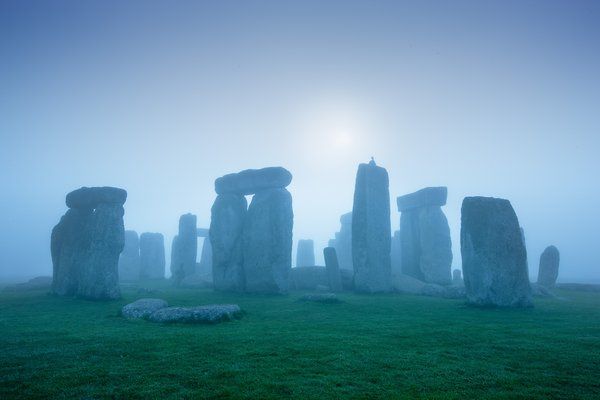
In the September issue of Smithsonian magazine, we see how archaeologists can explore underground without digging it up. Vince Gaffney heads a project that has given us a sort of three-dimensional map of what’s underneath the land surrounding the most mysterious place in Britain: Stonehenge.
Gaffney’s latest research effort, the Stonehenge Hidden Landscapes Project, is a four-year collaboration between a British team and the Ludwig Boltzmann Institute for Archaeological Prospection and Virtual Archaeology in Austria that has produced the first detailed underground survey of the area surrounding Stonehenge, totaling more than four square miles. The results are astonishing. The researchers have found buried evidence of more than 15 previously unknown or poorly understood late Neolithic monuments: henges, barrows, segmented ditches, pits. To Gaffney, these findings suggest a scale of activity around Stonehenge far beyond what was previously suspected.
Read about what they found, and see plenty of pictures and graphics to explain the project at Smithsonian. -via reddit
(Image credit: Henrik Knudsen)
mkvande, Russian Sledges and one other like this
24 Aug 00:51
The Ridden Rail Train Hoppers Today by W. Anderson Lee
Burly.ThurrI see train hoppers in my neighborhood all the time, and I wonder ever time about their intentions and lifestyle. I haven't read this but I watched the Freight Travels video near the bottom. It helped me get a sense, but I think I'll read more.
Tertiarymatt likes this
24 Aug 00:14
College Magazine of the University of Chicago
Burly.ThurrI read this UofC magazine article about one student studying the train hoppers for a summer. It's a nice intro to the subject.
Beyond the Quads
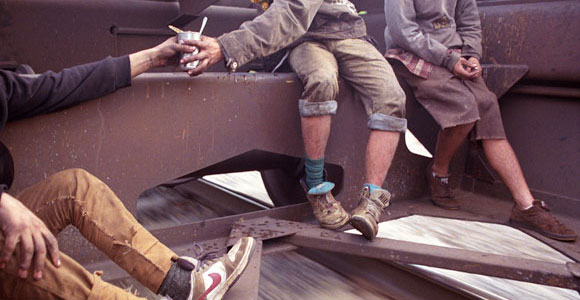
By Katherine E. Muhlenkamp | Photo by Mike Brodie, courtesy of M+B Gallery, Los Angeles and Yossi Milo Gallery, New York
Last July, Beth Topczewski, ’12, packed a few essentials—a sleeping bag, clothes, Pop-Tarts—into her 2000 Toyota Corolla and hit the road. With the help of a $900 research grant from the Dean’s Fund for Student Life, she spent the next two months on the move, traveling from Chicago to California, with stops in Michigan, Wisconsin, Minnesota, Iowa, Wyoming, Colorado, Utah, and Nevada. Sometimes Topczewski stayed at a motel, but more often slept outdoors in national parks or in the graffiti-covered, litter-strewn encampments that provide refuge for the subjects of her research: train hoppers, the contemporary version of Depression-era hobos who illegally traversed America via railroad.
Topczewski began her undergraduate studies at Southern Methodist University but decided to leave in 2007 and moved to Chicago, where she met Andrew Cone, SB’06, who is now her husband. Cone introduced her to train hopping, which she defines as boarding a freight train surreptitiously and settling into a discreet nook. Topczewski remembers the excursions vividly: “You find yourself thinking in terms of a completely different network that is superimposed on the world you already know. You start noticing different things—gas stations, police stations, weird industrial structures—because these kinds of things are clues to how the railroad in that area developed.”
Topczewski rode only occasionally, but she encountered other people hopping trains as a way of life. She wondered about the motivations behind their itinerant lifestyle and how it relates to mainstream American society. After enrolling in the College in 2010, she began looking for scholarly literature on train-hopping culture. She found nothing, so she decided to research it herself.
Topczewski didn’t jump trains herself on the research trip, but spoke with more than 100 people who do. She initially planned to drive along a train line but discovered that it was more fruitful to head straight for places where train-hoppers congregate, such as Minneapolis. She had no difficulty finding research subjects. “There are a lot of places where there’s no reason to go unless you want to hop a train,” she explains. She also frequented cafes and punk-rock shows—popular train-hopper hangouts—and walked city streets keeping an eye out. Topczewski quickly came to recognize the train-hopper aesthetic: multiple piercings, rail-related tattoos, backpacks covered in “a very specific kind of dirt, a greasy grime.”
It’s a young, primarily male subculture, Topczewski discovered: Most of the train hoppers she met were between 16 and 34, and 75 percent were male. Almost all were Caucasian. Females tended to travel in groups or with a male companion, whereas males often rode alone; many traveled with a dog.
Topczewski decided to focus her research on subjects under 34, who usually refer to themselves as travelers, sometimes as crust punks, gutter punks, street kids, or crusty kids. “Because I am young myself, it was much easier for me to find train hoppers who were also young,” she says. “And it’s a group that is more well defined than older train hoppers,” who have often curbed their train hopping to assume outside responsibilities.
Many of the travelers Topczewski encountered were homeless; they described feeling restless or uncomfortable within mainstream society. A teenage girl told Topczewski she left home and began train hopping because she felt extreme anger and didn’t know why. Although many travelers said they were burnt out on the practice, they showed few signs of stopping. “It’s an addictive activity,” she says. “There’s this game of beating the system, and a feeling of ‘I can go anywhere.’”
With this freedom comes a stressful, dangerous lifestyle, Topczewski discovered. Social ties, even intimate ones, appeared to develop and dissolve very quickly, and physical violence seemed an expected part of life, especially in settling disputes within the group. The travelers occasionally used drugs and frequently consumed alcohol.
Most survived by panhandling—a distinction between contemporary train hoppers and the hobos of yore who traveled from place to place in search of work. Topczewski was struck by how generously passersby provided food, clothing, and money. Panhandlers directly asked for money, played music with a collection box nearby, or held signs with messages like “clever but not that clever” or “too ugly to prostitute.”
This year Topczewski is writing up her findings for sociology professor Linda Waite, who has guided Topczewski’s research and provided her with additional undergraduate research funds. Topczewski is also formulating potential topics for future research. One possibility is a demographic study comparing travelers to homeless youth as a whole, she says. Some aspects of traveler culture, Topczewski explains, may illuminate broader issues in American culture: the generosity that people show toward travelers, for example, could shed light on motivations behind altruistic behavior. Or, she says, since travelers are constantly meeting other itinerants and forging new bonds, their behavior could help inform more general studies on how social and family networks form.
Once Topczewski finds her topic, she’ll develop a methodology for the research she hopes to carry out next summer. “This experience gave me enough social contacts and social cred to make that possible,” she says. “It’s a delicate thing, because travelers often don’t trust people outside their community.”
Tertiarymatt likes this
23 Aug 02:43


What If Michael Bay Directed Pixar's Up?
by Lauren Davis
Burly.ThurrMay have been a weak moment for me, but I thought this was hysterical.
One thing is for sure: it would contain a lot more explosions. Prepare for animated Bayhem.
Cooper Griggs, Tertiarymatt and one other like this
23 Aug 00:58
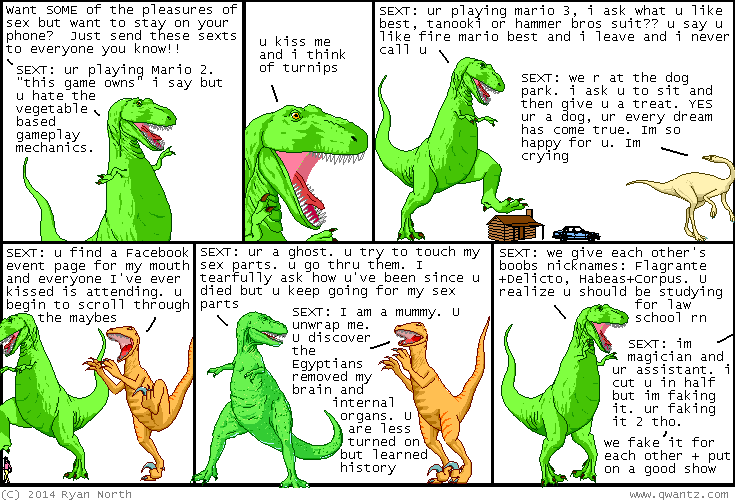
SEXT: im a doctor + i cut u open to see your heart. it's messy wet flesh that moves on its own. i seal u back up and we never kiss again
Burly.ThurrI don't usually enjoy this comic but this one hits the spot rn.
| archive - contact - sexy exciting merchandise - search - about | |||
 |
|||
| ← previous | August 20th, 2014 | next | |
|
August 20th, 2014: SEXT: im a tree and ur another tree. we blow sex dust all over each other + ppl sneeze and get hayfever. ur so turned on rn with my sex dust – Ryan | |||
Tertiarymatt, Scott Akerman and one other like this
20 Aug 20:05

optimysticals: partysoft: usagov: Image description: On...
Image description: On Saturday, the Navy christened a new research ship the “Sally Ride” after the first U.S. woman and youngest person in space. It is the fifth current ship named for an astronaut.
Photo from the U.S. Navythe person doing the christening is dr. tam o’shaughnessy, ride’s partner of 27 yrs. sally ride was not just the first woman and youngest person in space: she was also the first lesbian in space - likely, the first lgbtq person in space.
I know we shared this before but finding out that this ship was christened by Dr. Tam O’Shaughnessy was something that required re-sharing.
20 Aug 14:22
Grooveshark Mobile Applications
Music by Paul Oakenfold on Perfecto Presents Another World
Burly.ThurrRegarding the Fermi Paradox/Sagan's Follie embodied in song: Another World Disc 2 (Mixed by Paul Oakenfold)
Stream Paul Oakenfold - Music for free on Grooveshark.