This is quite fucking useful:
Matt Strom over at the Ice And Ruin blog has created (all by his lonesome without telling me) an index of all the world-material entries for my D&D game that are on this blog--everything from the Maidenmother Crone to the Jade Fang of Tiamat and all that.
With over 1000 entries on this blog, it can be hard to sort through this stuff.
Thanks Matt!
Tindalostalbot
Shared posts
18 Feb 21:44
sine die: Dictionary.com Word of the Day
sine die: without fixing a day for future action or meeting.
Tindalostalbot likes this
14 Feb 16:09
spoony: Dictionary.com Word of the Day
spoony: foolishly or sentimentally amorous.
Tanaquil, Tindalostalbot likes this


13 Feb 21:09
calliopean: Dictionary.com Word of the Day
calliopean: piercingly loud.
Tindalostalbot likes this
13 Feb 21:08
noblesse oblige: Dictionary.com Word of the Day
noblesse oblige: the moral obligation of those of high birth, powerful social position, etc., to act with honor, kindliness, generosity, etc.
Tindalostalbot likes this
10 Feb 00:38
paralogize: Dictionary.com Word of the Day
paralogize: to draw conclusions that do not follow logically from a given set of assumptions.
Roslyn , Tindalostalbot likes this
05 Feb 23:17
The real world has no genre. Stuff happens in whatever order for pinball reasons. Not so D&D.
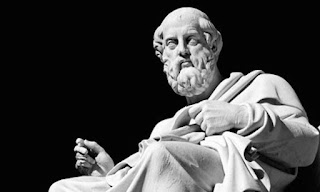
I'm imagining a cleric or philosopher inside the game world who accurately discovers the broad metaphysical rules upon which events in their life (and the lives of their companions) are based. Not at the level of every digit of armor class, but the correct assumptions that would eventually lead those born after this little Leibniz to something like accurate-in-D&D science.
More difficult is figuring out the priority of these rules--which ones take precedence over others. I was myself surprised to find there was a priority and it was rigid.
When all gamed out, the philosopher's laws also function as a description of GMing style, and a guide to nervous players (I have no nervous players, but I can imagine them) about what to expect when they play.
I think it's probably a good idea for DMs to think about what their own world's rules would be from this POV, but I've been doing ok without it until last week so maybe not urgent?
Here they are:
1. Law of Negated Aesthetics--The Creator of All Things has certain images and events of which he does not approve and these can never occur. This is the only Law which overrides the Law of Consistency below--for example, no-one ever wears sandals, despite the fact the law of consistency suggests you might be able to make them, goblins may fill pig-carcasses with lighter-than-air gas and thereby float but there is no way to make a full-sized blimp for the creator does not approve of blimps (nor does he approve of, for another example, gunpowder--though sulfur, charcoal and saltpeter strangely usually do what they would otherwise outside a gunpowder-making context). It also overrides all other Laws. Note this Law is total--things can happen or can't. There is a never a situation (say, trying to jump a chasm and jumping a distance related to your strength) which can happen sometimes but other times is aesthetically negated. This and Law 7 are the most complex laws and detailing them completely would require knowledge of the tastes of the Creator to a level of detail perhaps even he is unaware of.
7. Law of Posited Aesthetics--The Creator Of All Things has certain images of which he is fond (wolves in snow, ruined towers, beautiful women, decapitation, etc). These things will tend to appear and the world is made entirely of things that resemble them unless it violates a higher law (it logically can and will never conflict with Law 1, however, as the Creator cannot simultaneously like and dislike the same image).
My Name Is God (I Hate You)
by Zak Sabbath
The real world has no genre. Stuff happens in whatever order for pinball reasons. Not so D&D.
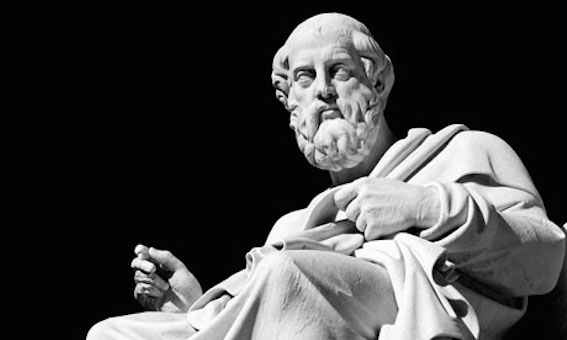
I'm imagining a cleric or philosopher inside the game world who accurately discovers the broad metaphysical rules upon which events in their life (and the lives of their companions) are based. Not at the level of every digit of armor class, but the correct assumptions that would eventually lead those born after this little Leibniz to something like accurate-in-D&D science.
More difficult is figuring out the priority of these rules--which ones take precedence over others. I was myself surprised to find there was a priority and it was rigid.
When all gamed out, the philosopher's laws also function as a description of GMing style, and a guide to nervous players (I have no nervous players, but I can imagine them) about what to expect when they play.
I think it's probably a good idea for DMs to think about what their own world's rules would be from this POV, but I've been doing ok without it until last week so maybe not urgent?
Here they are:
1. Law of Negated Aesthetics--The Creator of All Things has certain images and events of which he does not approve and these can never occur. This is the only Law which overrides the Law of Consistency below--for example, no-one ever wears sandals, despite the fact the law of consistency suggests you might be able to make them, goblins may fill pig-carcasses with lighter-than-air gas and thereby float but there is no way to make a full-sized blimp for the creator does not approve of blimps (nor does he approve of, for another example, gunpowder--though sulfur, charcoal and saltpeter strangely usually do what they would otherwise outside a gunpowder-making context). It also overrides all other Laws. Note this Law is total--things can happen or can't. There is a never a situation (say, trying to jump a chasm and jumping a distance related to your strength) which can happen sometimes but other times is aesthetically negated. This and Law 7 are the most complex laws and detailing them completely would require knowledge of the tastes of the Creator to a level of detail perhaps even he is unaware of.
2. Law of Consistency--The rules by which the universe operates are consistent and do not change. This overrides the Law of Free Will and all other Laws below so, for instance, I cannot travel to a town that has been destroyed by a marauding skyfortress even if I choose to and want to on account of my free will.
3. Law of Free Will--I may do whatever I like within the bounds of my abilities. This overrides the Law of Plural Solutions and all other Laws below so, for instance: if I build a dungeon and lock my foe inside it, I can create a puzzle that can only be escaped with one key.
4. Law of Plural Solutions--Challenges will be solveable in more than one way. Also: the Creator is not omniscient and there may be solutions the Creator has not imagined. This overrides the Law of Challenge and all other Laws below so that if I imagine a solution to a challenge that the Creator has not imagined, the challenge may cease to be difficult.
5. Law of Challenge--Life will be characterized by difficult challenges in need of urgent solution. This Law overrides the Law of Variety and all other Laws below so that, for example, if fighting 5 goblins in a row (lack of variety) would present a challenge not provided by fighting 1, this event can occur.
6. Law of Variety--Situations and things encountered will tend to be various. This overrides the Law of Posited Aesthetics, so if I just saw a wolf running across the snow last week I am less likely to see one this week despite the creator's fondness for said wolves.
-
-
-
The laws (like most good science) predict answers to questions.
Let's say there's a beautiful desert and the wizard casts what's supposed to be a permanent frost spell on it. Will it stay there or will some agent remove the frost? Well: the only thing that supports the desert's existence is the Law of Posited Aesthetics (the creator likes the beautiful desert), which has less priority than the Law of Consistency, so the spell will work as normal, so long as the creator is cool with frost (ie not violating the Law of Negated Aesthetics)--and the creator is or it wouldn't have been possible to create frost in the first place.
Can I ride a rhino at first level? Well this would be cool (7th Law) but would remove a lot of challenges (3rd Law). Oh well.
The main problem for the philosopher is that Law # 1 covers so much unknown ground and is so powerful it can kibosh any other prediction. Though they can take comfort in knowing it does come into play relatively rarely.
-
-
-
Another thing the DM can do is run through the laws in reverse to write an adventure.
Posit a cool image (Crooked witch house)
Add variety (It's actually 10 variations on a kitchen inside)
Add challenge (The witch prepares contact poisons in the kitchens)
Make sure the challenges have multiple solutions (In addition to avoiding them, there are antidotes and recipes)
Make sure the players have choices they can make (Different kitchens are clearly laid out as containing more valuable recipes but also more dangerous poisons)
Make sure it all makes sense together (Check the area of the map that the witch house is in to make sure it makes sense as being there and either has plausible connections to what's around it or plausible reasons not to have them)
Make sure nothing gauche is implied (Maybe draw the witches so that nobody thinks they're wearing basic burlap or anything).
-
-
-
-
-
The laws (like most good science) predict answers to questions.
Let's say there's a beautiful desert and the wizard casts what's supposed to be a permanent frost spell on it. Will it stay there or will some agent remove the frost? Well: the only thing that supports the desert's existence is the Law of Posited Aesthetics (the creator likes the beautiful desert), which has less priority than the Law of Consistency, so the spell will work as normal, so long as the creator is cool with frost (ie not violating the Law of Negated Aesthetics)--and the creator is or it wouldn't have been possible to create frost in the first place.
Can I ride a rhino at first level? Well this would be cool (7th Law) but would remove a lot of challenges (3rd Law). Oh well.
The main problem for the philosopher is that Law # 1 covers so much unknown ground and is so powerful it can kibosh any other prediction. Though they can take comfort in knowing it does come into play relatively rarely.
-
-
-
Another thing the DM can do is run through the laws in reverse to write an adventure.
Posit a cool image (Crooked witch house)
Add variety (It's actually 10 variations on a kitchen inside)
Add challenge (The witch prepares contact poisons in the kitchens)
Make sure the challenges have multiple solutions (In addition to avoiding them, there are antidotes and recipes)
Make sure the players have choices they can make (Different kitchens are clearly laid out as containing more valuable recipes but also more dangerous poisons)
Make sure it all makes sense together (Check the area of the map that the witch house is in to make sure it makes sense as being there and either has plausible connections to what's around it or plausible reasons not to have them)
Make sure nothing gauche is implied (Maybe draw the witches so that nobody thinks they're wearing basic burlap or anything).
-
-
-
Tindalostalbot likes this
30 Jan 23:51

Succubus by Laykir As found...
Succubus by Laykir
As found at:
http://laykir.deviantart.com/art/Succubus-488208055
Sometimes simple is very, very sexy…
Tindalostalbot likes this
30 Jan 22:35
Let's talk about mynoise.net
@pinkwanderess Maybe helpful???Have you ever been listening to Rainymood and thought, “Yeah, this is good … but it would be nice if I could customize the sound more, or if there was a little more choice.
Let me introduce you to MyNoise.
MyNoise is a customizable sounscape looper with so many options, even within each soundscape. So say, for instance, you really love rain sounds when you write or study or relax. Anything. I know I’m a big fan of rain sounds. They have a page for that.
But say you like really high, pattery rain, and LOTS of low thunder. Here’s where MyNoise really stands out: you can customize that. See those sliders with all the cute colors? That is your equalizer. You can adjust the levels based on what you want to hear more and less of. Here’s how it looks when you want high, pattery rain and low, rumbly thunder:
But say rain isn’t really your jam. Say you want something a little more ambient, a little more background noise-y. Something with people. Well, they have customizable coffee house chatter that even has the levels listed for things like “kitchen,” “babble,” and “table”:
Or say you miss the ocean.
Or say you miss your cat.
Or say you miss your spaceship.
Or say you miss the dungeon where you and your team of scalawag adventurers used to explore and face off against, say, dragons. In the dungeon.
This site is seriously so helpful, and those are just a fraction of every kind of sounscape the site has to offer. The best part is that if you want to layer it with music (for instance, I’ll layer a playlist + rain + coffee shop if the scene I’m writing takes place in a coffee shop), you can adjust the master volume, meaning all of your layers stay at their respective volumes, just louder or quieter.
Enjoy!
OH MY GOD
yeah this thing basically saved my thesis
@ ya’ll with misophonia or other noise sensitivies
I’ve been using the app version for hears and it has saved me from so many anxiety attacks


30 Jan 22:18
Because Fuck This Shit
by Zak Sabbath
Lamentations of the Flame Princess, the publisher of Vornheim and Red & Pleasant Land is offering any book from its catalogue free to anyone who donates US$50 or more to the ACLU (that's American Civil Liberties Union for those of you who don't read the news).
So if you've ever wanted these or any other LOTFP books like Kenneth Hite's Qelong (played it, loved it) or Jeff Rients new classic Broodmother Sky Fortress (ran it, love it, will run it again), now's a great time--the offer ends soon:
http://www.lotfp.com/RPG/
https://www.aclu.org/
Conditions:
Offer is good for donations made from January 29 2017 onward.
One free book per person.
Offer good through February 2017, or until we give away 500 books, whichever comes first.
Books available through this offer: http://www.lotfp.com/store/
(yes, you can pick a t-shirt instead)
Email proof of your donation to lotfp@lotfp.com along with your desired book and your shipping address.
You will not be added to any mailing list, your information won't be passed on, etc.
-
-
-
So if you've ever wanted these or any other LOTFP books like Kenneth Hite's Qelong (played it, loved it) or Jeff Rients new classic Broodmother Sky Fortress (ran it, love it, will run it again), now's a great time--the offer ends soon:
http://www.lotfp.com/RPG/
https://www.aclu.org/
Conditions:
Offer is good for donations made from January 29 2017 onward.
One free book per person.
Offer good through February 2017, or until we give away 500 books, whichever comes first.
Books available through this offer: http://www.lotfp.com/store/
(yes, you can pick a t-shirt instead)
Email proof of your donation to lotfp@lotfp.com along with your desired book and your shipping address.
You will not be added to any mailing list, your information won't be passed on, etc.
-
-
-

30 Jan 21:48
intrapreneur: Dictionary.com Word of the Day
intrapreneur: an employee of a large corporation who is given freedom and financial support to create new products, services, systems, etc., and does not have to follow the corporation's usual routines or protocols
Tindalostalbot, Tanaquil likes this
30 Jan 21:43
Click here to go see the bonus panel!
Hovertext:
We're also the only species that uses decorative hand-towels.
New comic!
Today's News:
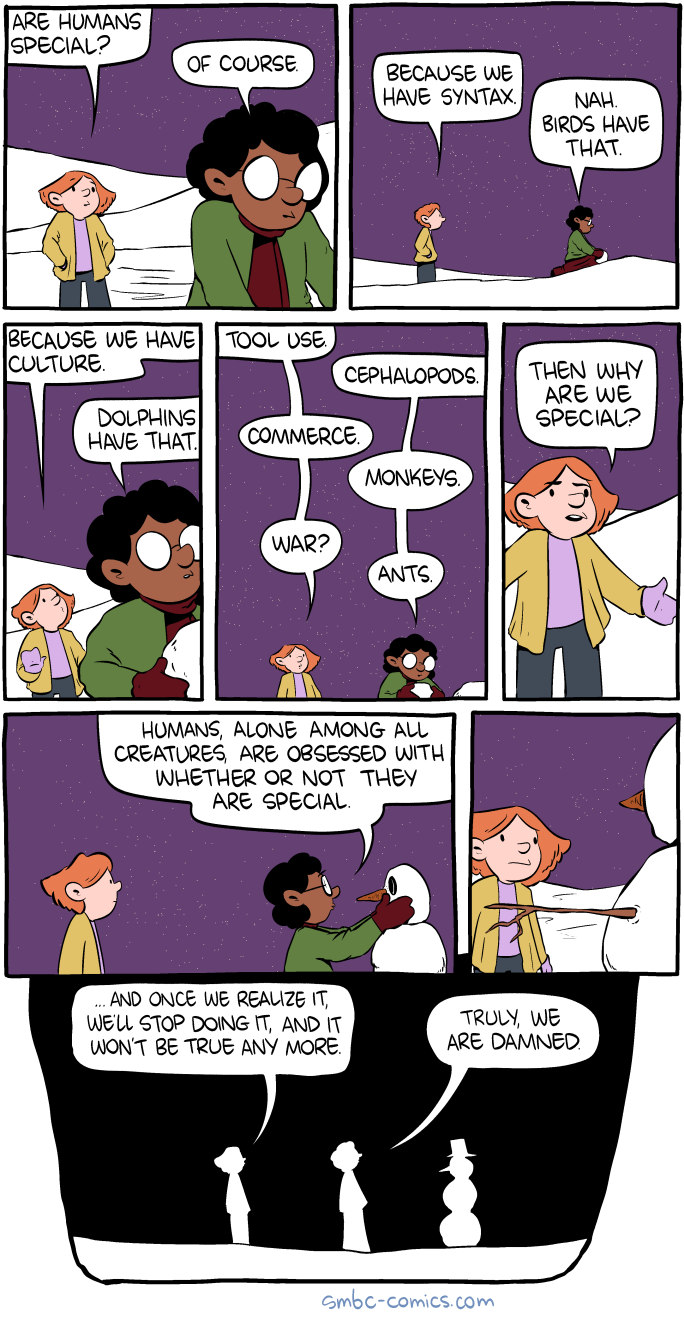
Saturday Morning Breakfast Cereal - We Are Special
by tech@thehiveworks.com
Click here to go see the bonus panel!
Hovertext:
We're also the only species that uses decorative hand-towels.
New comic!
Today's News:
Kelly has a new paper out, and she and her colleagues are prepared to answer your parasite-related questions!
30 Jan 21:41

Idempotence.A term I’d always found intriguing, mostly because...
Idempotence.
A term I’d always found intriguing, mostly because it’s such an unusual word. It’s a concept from mathematics and computer science but can be applied more generally—not that it often is. Basically, it’s an operation that, no matter how many times you do it, you’ll still get the same result, at least without doing other operations in between. A classic example would be view_your_bank_balance being idempotent, and withdraw_1000 not being idempotent.
HTs: @aidmcg and Ewan Silver who kept saying it
Tindalostalbot likes this
30 Jan 21:28

Stand diagonally on transport.It took me many years to figure...
Stand diagonally on transport.
It took me many years to figure out that if you stand diagonally you brace yourself better for both front-back jolts and side-to-side jostles.
Tindalostalbot likes this
30 Jan 21:02

Click here to go see the bonus panel!
Hovertext:
Of course, I personally would never go out in the cold.
New comic!
Today's News:
Saturday Morning Breakfast Cereal - The Consolation of Philosophy
by tech@thehiveworks.com
Click here to go see the bonus panel!
Hovertext:
Of course, I personally would never go out in the cold.
New comic!
Today's News:
Two days left to get in your BAHFest London proposal!
Vvicked, Roberto Liffredo and 7 others like this
30 Jan 20:08
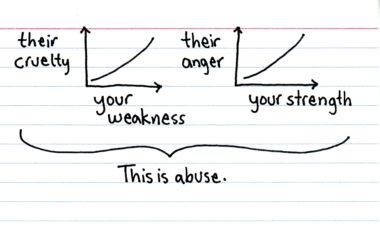
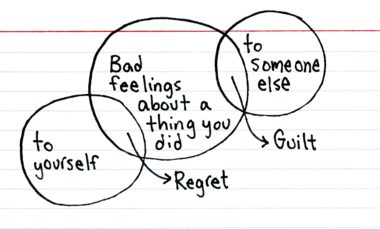
There’s always next year.
by Jessica Hagy
Tindalostalbot, zemlyanovr and one other like this
30 Jan 20:00
Raise your hand if you considered these things as a teenager--and raise both if you came to some conclusion about them that you still hold:
-What are the differences between a terrorist and a postcolonial freedom fighter engaged in asymmetric warfare against an occupying power? Are there any? How do we decide which a person is?
-Are (relative) peace and order worth oppression? How much?
-Is it ok to enslave robots that have personalities and what looks to be free will?
-What's up with the Eichmann "banality of evil" thing? Can you be bad for just doing your job?
I bet there's a fuckton of hands up right now, and not even just from the kids who always sharked straight for the Isaac Asimov at book-fair time. These are commonplace moral questions of the kind everyone born in the mental atmosphere since mid last-century has had opportunity to think about--and they feature prominently in many entertainments that teenagers might watch (for example, the third one is in Blade Runner, the last is in fucking Clerks, and they all sound like questions that'd be asked in random Star Treks--especially if it was a Wesley episode.)
In 2016, these questions (and things like "is reality real or am I a brain in a jar?", "is gay stuff ok?", "is there a god?" etc) are teenagery questions. This is not to say these questions aren't important: they need answers and very often adult action or legislation hinges on some of the answers and often adults give the wrong answers--but generally they only become difficult in non-fictional contexts when specific realworld identifiable personal interests are stake (like: "Spreading feminism is good, but invading countries is bad--do these priorities conflict in Afghanistan?""I just dropped a lotttt of acid--how much of reality can I epistemologically verify right now on this roof?").
The bullet-pointed questions, outside specific real-world iterations, are so basic they shouldn't make adults think. An adult thinking about these things would be like a teenager thinking about how to get socks on.
...yet somehow we still see the myth that Thought Provoking And Grown Up media "explore" these kinds of questions (to some undefined degree of exploredness) in their made-up worlds.
A typical example of the abuse of these terms appears, with some Rogue One spoilers, here.
The concepts of "grown-up" vs "adolescent" art--and related dichotomies like "mere entertainment" vs "makes you think" and "shallow" and "deep"--are as leaned-upon as they are vaguely-defined. "Thought-provoking" is usually used by critics to describe a work's attempt to communicate to other people the critic conceives of as less intelligent than the author that they should think about some things the critic already has long ago made their mind up about. The reader of such criticism often gets the feeling the critic wishes the world would catch up to the artwork--but what's noble in that sentiment is buried under the self-deception of pretending the art is doing work that it isn't.
This is why RPGs like Dogs In the Vineyard are alleged (by fans, not always the authors) to be more grown-up or thoughtful than D&D even though questions like "Is being a religious fascist ok?" and "Is cheating on your wife in the wild west ok?" are not actually remotely grown-up moral questions. Are there adults who would play Night Witches who were sexist before and decided not to be after?
Not only does the description of an artwork as "thought-provoking" etc often not actually involve the thing having provoked the speaker to have new useful thoughts, it's an expression of basically the opposite: the work, if anything, entrenches the critic further in their pre-existing beliefs.
Finding meaning in any art is like finding geology in any ground--you dig, you'll get it. Fictions don't explore issues--people explore fictions and then find issues there. When you invest hard enough you get an inevitability: the evidence left when complete, complicated humans contrive to find new ways to speak to as-yet-untapped parts of other complete, complicated humans.
"Deep"
by Zak Sabbath
1
Issues
Issues
Raise your hand if you considered these things as a teenager--and raise both if you came to some conclusion about them that you still hold:
-What are the differences between a terrorist and a postcolonial freedom fighter engaged in asymmetric warfare against an occupying power? Are there any? How do we decide which a person is?
-Are (relative) peace and order worth oppression? How much?
-Is it ok to enslave robots that have personalities and what looks to be free will?
-What's up with the Eichmann "banality of evil" thing? Can you be bad for just doing your job?
In 2016, these questions (and things like "is reality real or am I a brain in a jar?", "is gay stuff ok?", "is there a god?" etc) are teenagery questions. This is not to say these questions aren't important: they need answers and very often adult action or legislation hinges on some of the answers and often adults give the wrong answers--but generally they only become difficult in non-fictional contexts when specific realworld identifiable personal interests are stake (like: "Spreading feminism is good, but invading countries is bad--do these priorities conflict in Afghanistan?""I just dropped a lotttt of acid--how much of reality can I epistemologically verify right now on this roof?").
The bullet-pointed questions, outside specific real-world iterations, are so basic they shouldn't make adults think. An adult thinking about these things would be like a teenager thinking about how to get socks on.
2
"Thought-Provoking"
...yet somehow we still see the myth that Thought Provoking And Grown Up media "explore" these kinds of questions (to some undefined degree of exploredness) in their made-up worlds.
A typical example of the abuse of these terms appears, with some Rogue One spoilers, here.
The concepts of "grown-up" vs "adolescent" art--and related dichotomies like "mere entertainment" vs "makes you think" and "shallow" and "deep"--are as leaned-upon as they are vaguely-defined. "Thought-provoking" is usually used by critics to describe a work's attempt to communicate to other people the critic conceives of as less intelligent than the author that they should think about some things the critic already has long ago made their mind up about. The reader of such criticism often gets the feeling the critic wishes the world would catch up to the artwork--but what's noble in that sentiment is buried under the self-deception of pretending the art is doing work that it isn't.
This is why RPGs like Dogs In the Vineyard are alleged (by fans, not always the authors) to be more grown-up or thoughtful than D&D even though questions like "Is being a religious fascist ok?" and "Is cheating on your wife in the wild west ok?" are not actually remotely grown-up moral questions. Are there adults who would play Night Witches who were sexist before and decided not to be after?
Not only does the description of an artwork as "thought-provoking" etc often not actually involve the thing having provoked the speaker to have new useful thoughts, it's an expression of basically the opposite: the work, if anything, entrenches the critic further in their pre-existing beliefs.
3
Fascination Creates Content
Fascination Creates Content
Does that mean creating truly thought-provoking art is impossible? No. Or, at least it's no harder than making good art.
Here's a fact: how much artworks can say is largely an issue of how many questions you ask them.
Here's a fact: how much artworks can say is largely an issue of how many questions you ask them.
There are people who read about King Arthur as a child or see a film of Hamlet as a teen and enjoy them, maybe think a little, maybe get a little, then move on. Then there are people who keep asking these artworks things their whole lives--and keep getting useful answers. TH White asks the King Arthur story some childlike questions in Sword And The Stone (People get turned into animals? What would it be like to be turned into a bird?) and some very grown-up ones in later books (What would it be like to actually be the Lancelot described in the poems--a man who combines total nobility, immense capacity for violence and sexual dishonesty? Is that even a real personality?).
I'm going to go ahead and say there's no evidence this interrogatibility isn't true about any stupid thing you like. Because the mere fact that an art object fascinates you when others superficially similar do not tells you that it is hooking into something in your unique psychology. If you like the old Power Puff Girls but not the new Power Puff Girls and you think about Power Puff Girls every day even as a grown up than Power Puff Girls is talking to you, telling you about sensibilities, sensitivities, subliminal appeals that no other tool could articulate to you.
The amount of content a work of art has for any given audience member is always at least as large as the degree to which that audience member is fascinated with it. The fan who claims Ulysses has all the answers to the universe in it is right--but so is the fan who claims Ulysses 31 does. The main reason there are less of the second guy is because Ulysses was trying to do that. But a thing's desire that we should be fascinated is never necessary or sufficient to make it so.
This is because anyone's fascination is an index of mysteries unsolved to their unique human psychology. There is no such thing as empty appeal or "mere entertainment"--this is just a device critics use to hold their enjoyment at arm's length to avoid asking themselves why something in them they can't account for still wants to see lasers and swords move in this way rather than that way.
This is because anyone's fascination is an index of mysteries unsolved to their unique human psychology. There is no such thing as empty appeal or "mere entertainment"--this is just a device critics use to hold their enjoyment at arm's length to avoid asking themselves why something in them they can't account for still wants to see lasers and swords move in this way rather than that way.
Calling lasers and swords (and mean girls and make-up and prom) or anything else that is entertaining you, an adult, "adolescent" is cheap--because if, as an adult, you keep asking lasers and swords grown-up questions, you will keep getting grown-up answers. I asked rocket cats questions once.
4
Everything Can Be Adult
Everything Can Be Adult
I read TH White's Once & Future King as a kid and didn't really get a lot of the stuff about the adults. I read it--and enjoyed it--as just descriptions of some people. What I didn't have is the recognitions--Oh, that feeling. Oh, that kind of guy, that kind of girl.
This, rather than any attempt in fiction to focus attention on ethical dilemmas, is probably the most exclusively adult kind of art-moment: seeing things and having them remind you of things and times gone away. This is why, stereotypically, the older people are the more likely they are to cry--everything reminds them of something.
White's book has:
-kid+adolescent+grown-up content (pretending to be a bird, knights fighting)
-adolescent+grown-up content (the jokes and subtle inversions in the dialogue)
and
-grown-up-only content (the wistful, compromised emotional politics in the court).
I'd hesitate to be so vague as to call that content deep. Like "problematic", it's a word people use when they're afraid being pinned down to specifics would embarrass them. I'd say simply that part of White spoke to experiences I had because I'm an adult, with no value judgment beyond saying certain parts of the Big Lebowski speak to experiences I've had because I'm a nihilist porn actor who lives in Los Angeles.
-kid+adolescent+grown-up content (pretending to be a bird, knights fighting)
-adolescent+grown-up content (the jokes and subtle inversions in the dialogue)
and
-grown-up-only content (the wistful, compromised emotional politics in the court).
I'd hesitate to be so vague as to call that content deep. Like "problematic", it's a word people use when they're afraid being pinned down to specifics would embarrass them. I'd say simply that part of White spoke to experiences I had because I'm an adult, with no value judgment beyond saying certain parts of the Big Lebowski speak to experiences I've had because I'm a nihilist porn actor who lives in Los Angeles.
5
Some Things Are Only Adult
Some Things Are Only Adult
After Rogue One (which ruled, btw), I saw an unimpeachably grown-up movie about people in the real world where everyone was going to a funeral and an old song started to play and it felt distant and melancholy. I was reminded of things I'd been through and the song kept playing in my head for hours. I definitely was provoked to think--about people and about time.
The film was the kind that tried to build itself largely out of grown-up-only content. You can do that: you can make good things for grown-ups that kids can't get anything out of (and people should, and they are not discussed enough in places like D&D blogs) but you can't do the opposite unless you get down to the level of like Barney and Sesame Street. As soon as you get up to 6 or 7 years old--say Spongebob or Duck Tales--you're back to things some adult somewhere can productively obsess about ("Scrooge McDuck As Avatar of the Imperial-Heroic" etc).
6
Finding Meaning In Art Is Like Finding Geology In the Ground
Finding Meaning In Art Is Like Finding Geology In the Ground
I don't think you can be provoked to think by design. I think you can be persuaded to think, but only using the same tools with which you can be persuaded to play at all: by finding something so beautiful and fascinating and fun that you choose, in quiet moments, to think about the thing rather than be separated from it. If you wake up thinking about Overwatch and you go to sleep thinking about Overwatch then eventually, if you're a thinker, you will start thinking about Overwatch.
Finding meaning in any art is like finding geology in any ground--you dig, you'll get it. Fictions don't explore issues--people explore fictions and then find issues there. When you invest hard enough you get an inevitability: the evidence left when complete, complicated humans contrive to find new ways to speak to as-yet-untapped parts of other complete, complicated humans.
-
-
-
Tindalostalbot likes this
30 Jan 19:52
Second Encounter By TeraS and her Adored Brother
by TeraS
A short time ago, I shared a story called “Encounter” on the Tale. Today, with a dear loved friend’s help, we have what can only really be thought of as the …
Second Encounter
By TeraS and her Adored Brother
A promise is a promise.
Always.
She said that he would see her again.
She’d promised.
It felt like that he’d been waiting … forever.
But … she’d promised.
Waiting for her to walk around a corner, appear on the other side of a room … looking for her in a crowd, seeing a flash of red … not quite her’s … catching a glimpse of ebony hair, not as wild as hers … he didn’t give up on her promise.
He did wonder where she was, when she’d make herself known. Time passed, the seasons changed, and that moment still hadn’t come to be. Her card, the one that held her promise, didn’t carry the sweet scent of cherries any longer. But nonetheless, the memories of that night, of her being close, caring about him … those memories returned when he held that card. It was something that helped him to smile once again.
Yet time passed, as it does. Hours had turned to days, days into weeks, and she’d not returned as she’d promised. Still, the card didn’t exactly say when he’d see her, nor did it ask for him to wait for her. It was a promise, telling him that there was someone out there that cared about him. Her words to him, her smile, that promise she held openly for him, asked that he not give up, not turn away.
Asked him not to give up on his own promise.
He’d taken the chance once, and encountered her. The time came when he had courage once more to take a chance, to see what might be. She’d want that of him, ask him to try. He didn’t think it a poor idea, to try, to see who he might encounter. Perhaps there would be someone that he would be able to call his love. The weeks turned into months of encounters with those who didn’t see the value in dating him, of being with him. He was close to some, they seeing him as a friend, sometimes a confidant, occasionally a brother.
The promise began to feel threadbare.
The leaves fell from the trees; the weather was turning cold. Halloween arrived as the nights became longer, the depths of the shadows becoming more pronounced. A thought brought him along to a secret that made him look at the card, think about what she’d said and her promise, what such a thing meant.
The promise seemed not as it was before.
Thanksgiving arrived and with it came the reminders of another promise broken. The one he’d loved was with another. It wasn’t completely unexpected, but seeing her with another, the two of them laughing together, was a hard thing. He’d given his heart, she’d taken it, then she moved along. It broke his heart a little more knowing that they were together and he was alone. It was a time of thanks, at least it should have been. He couldn’t quite see how there was much, if anything, to be thankful for. The moment she’d been there wasn’t as clear, some of the details were slipping out of his memories. Sadly the choice of the one he loved made the day less happy within himself, a little bit of sadness creeping in.
The promise faded just a bit more in his eyes.
The snows came, the winds carrying the frost and the cold of the winter season. Christmas came, bringing with it wishes for those that could still hold onto their hopes and dreams. The family gathered, as was their way, he being alone as the moment played out around him. Watching his parents open their gifts brought a soft smile. That smile was a little wan as his brother and wife played with their two children, laughing as their presents are opened … together.
Though he hid it well, the promise was heartbreaking.
The eve of the new year arrived, the night upon which promises were made for the coming year, when those fortunate to have another in their lives were able to share their wishes as the old gave way to the new. But this was not what came on this night. He did not go out into the world, to find himself amongst humanity, sharing in the moment, to gather within a promise for another year to be. His place was in his apartment, alone … if not quite alone.
Pika, his only friend, at least the only one that hadn’t abandoned him, watched silently from a window ledge as the merrymakers sang and carried on far below. The cat’s deep grey eyes cast themselves across the room, falling upon a soul that had lost faith in their promise. He sat silently, listening to the laughter outside, his hands slowly rolling an empty can of Diet Coke between them. His eyes were haunted, there was pain in them. The year had burdened him, bent him, pushed him until, finally, depression had become his constant companion.
But that was not quite true. There was one other companion with him. Setting the empty can aside, tears in his eyes, he pressed a finger onto the card she’d given him, dragging it across the table. Six months now since she’d appeared. Six months since she’d given him the card. Turning it over, her name remained there.
Tera.
He considered tossing it aside, knowing that she’d never return. That her promise was—like every other one—untrue, and it brought tears to his eyes. Closing his eyes, he brushed one hand over them, wetting his skin. A single tear rolled over his cheek, passed into space, and then fell onto the card he continued to hold in spite of his feelings.
Turning the card over to look at her promise, he spoke to himself: “She called me a man of honour. She said that I was good, that I shouldn’t be alone. Why am I? Why isn’t it enough to be understanding, to care, to be there for someone? Why can’t I find someone who loves me? I’m the stereotypical nice guy that finishes last, that can’t find happiness.”
The tears came, the imagined truth he knew must be real pushing him. The card became damp, what little light there was around him shimmering where it fell on the wet card.
“I do everything a good man should … and that isn’t good enough for anyone.”
The card fell from his fingers, the last little bit of the promise being taken with it. It was more than depression, more than self-loathing, and his cat’s fur bristled as she watched him. He stood by the window, a hand stroking her fur, but she knew something was very wrong with him. The sight outside did nothing to help his mood as he watched the snow fall lazily towards the street below. He could see people walking together, happy couples on their way to parties to ring in the new year.
Those thoughts were finally too much. With a sigh, he nudged Pika off the window ledge and drew the curtains closed to blot out the scene outside. The lights were soon dimmed and he walked into his bedroom, once again alone.
He wasted little time, soon crawling into bed, the sheets pulled over, curled under them, a pillow clutched against his aching head. The bed shifted—it can only be Pika, he knows—and he didn’t stir from where he lay. He felt her walking over the sheets, nudging his shoulder with her nose, purring in an attempt to curl up with him. But he didn’t want to; he didn’t have that want inside of him.
What he wanted was something he’d never really had. Someone to love, to lay with in the night, to talk to, to have that connection, that need, filled within him—the need to feel their heat, to have a moment of passion, of love. But all his twin size bed had waiting on the other side of him was an empty space.
“… not worthy of anyone … never find someone to love me …”
His cat was the only one to hear the words whispered, to see the glint of his tears still being shed. The night moved closer and closer to the end of the year and he said not another word. When he felt Pika jump off the bed, he knew: at this moment, like so many before, he was alone.
The clock on the bedside table moved towards midnight, the seconds ticking away. Off in the other room, the card still was wet with tears. Over by the window, a cat peeked through a gap in the drawn curtains, watching the snow fall.
Then, she mewed.
Once.
Then, she purred.
A slim hand, tipped with red nails, lightly played over her fur, making her tail dart about in pleasure. But that warmth faded as she looked into a pair of oh-so-green eyes, a questioning mew echoing in the room.
The fingers scratched her ear then were drawn away, followed by the soft sound of heels clicking on the floor. She watched the shadow draped in red as it moved to the card, picking it up, then leaving. She bounded from the window in chase, darting between the shadow’s legs and rushing onwards.
He hadn’t fallen asleep, though he wished that he had. He was restless, turning over, trying to be comfortable. Coming to lie on his side, his eyes focused upon the clock.
It was just a moment before midnight … a single moment.
It seems to go on … forever.
He waits for the hands to move, to mark the passing of time.
But they didn’t.
Reaching out a hand towards the clock, his eyes still wet, he let a sniffle escape. He drew a breath, and in the back of his mind he sensed something in the air …
Cherries.
But his mood rejected it, and he closed his eyes, sighing.
She watched from the doorway, her so-green eyes considering him, his soul.
The bed shifted. It had to be Pika, of course; there was no one else there, he believed. It was the cat nudging him with her nose, trying to get him to roll over, to look, to see. But he wasn’t interested.
She mewled, then bounced off the bed. Somehow that seemed to be appropriate, no one wanted to be with him away. Nothing happened for a time, then the bed shifted again.
Deeply green eyes considered him now, the tilting of a head to the right, her raven locks falling wildly about her shoulders, covering her left eye. Flicking a finger through those errant locks, she held a soft smile as she reached to him, her right hand brushing against his bare shoulder, but he didn’t respond. It was another dream, a fantasy; it wasn’t real. The hand traced his shoulder, then he felt the touch of nails against his skin. He couldn’t ignore the soft lips that pressed against his shoulder next, however. Nor could he ignore a voice from the past: “A gentleman shouldn’t be left alone.”
His eyes remained closed. He didn’t want to open them, didn’t want to find this was all a dream. But he did reply: “You?”
“Yes. I promised.”
He opened his eyes, needing to know she was really there.
It was her, there was no question—the concern in her eyes, the soft smile playing on her lips. He’d expected her to see her as she was that night, but she wasn’t. A long, fuzzy, red, oversized sweater caressed her body. She looked, in many ways, like the girl next door, not the seductress she was said to be. There wasn’t something erotic pulling on him. What was tugging was the look in her eyes, one that reflected his one wish.
“Talk to me… please?”
The tales about her told of what she could do, but his mood, his mind, pushed him towards one single conclusion as he closed his eyes: “Nothing to talk about.”
“There’s always something to talk about.”
She gave him some time to think, to reply, but, when he didn’t, the bed moved again, her body flowing over the sheets. A ebon-haired, red horned and tailed vision lay beside him. She paused there, considering him, then she moved a little closer to him. Then he felt her spooned against him, one arm draped over his waist, the other lightly caressing his hair: “I promised.”
He sighed, it was almost in defeat: “I’m … ready.”
Her reply was concerned, almost hurt: “What … do you mean?”
Slipping out of her embrace, he rolled onto his back, waiting for her: “Take me … please. I’m ready for you to claim me and … just let it be over.”
She was fluid, moving from being beside him to straddling his legs, looking upon him: “Since when?”
“Halloween: I read a story about you.”
“Tell me.”
He couldn’t; it would only make things worse.
Her hands roamed the sheets over his chest: “Not all stories are true.”
“You are the Queen of the Succubi aren’t …”
The touch of a finger over his lips stopped him: “I do like to think that I’m not as ominous in person …”
She removed that finger, her hands lying lightly on his shoulders: “… and, please, you know my name.”
He still hadn’t reopened his eyes, but knew when she lay closer to him, the heat of her body warming the sheets: “Why … why are you here, Tera? Why after so long … why now?”
Her long hair tickled over his shoulder as she came closer still, her lips nuzzling against his cheek lightly: “I was called here.”
It wasn’t much of an answer, leaving out the who and the how. But that didn’t seem to matter, as her voice was sweet, smooth, and delicious. She spoke not in lust or want, but simply in truth.
He opened his eyes.
She had risen up again, drawing back, allowing him to see her, as she was, for the first time. She hadn’t changed from that night they’d met. There was the matter of her horns, of course, and he knew that her tail was somewhere as well. But she was herself, as the stories had told.
The red sweater was so much more perfect for her than that dress was, he realized. The expression he had made her giggle lightly, tilting her head to the left, a lock of ebon hair covering one of her lovely green eyes: “Are the stories close?”
“Not really.”
They were both silent for a time, just looking at each other, he trying to marshal his thoughts, she content to wait for him to do so. Time continued to pause and it took a grey-eyed cat jumping into bed with them and mewing for the moment to break.
Regarding the cat, the red-horned seductress sighed: “Pushy thing, isn’t she?”
He watched his cat rub herself against Tera’s thigh, looking at him expectantly: “Pika?”
Tera traced a finger over the cat’s back: “The stories about me and cats are, for the most part, true.”
He didn’t know what to say as his furry companion found a corner of the bed and curled up there.
“I’m not here to claim your soul. I’m here … because.”
“Because … why?”
The sigh was an aching one: “I’ve seen you suffer… watched from afar and saw. I felt your need. I felt the call of your heart … I’m here now.”
His blue eyes locked onto her deep, emerald orbs. He looked intensely into them as he expressed what he believed to be the truth: “You should just take my soul. I’m not anyone special.”
She shook her head, her mane dancing wildly about her: “No. Sorry. Not going to happen. Nothing good comes of that. You are not going to die at my hand, nor any of my kind. You are better than you know, and it would not be a mercy or a gift.”
“So, is this just out of pity?” the question was as blunt as a crowbar.
Her tail appeared behind her, the tip looking over her shoulder at him it seemed: “Pity? Oh, my dear sweet, none of this is for pity’s sake. I don’t do pity. This isn’t about sex; this isn’t about a quick roll in the hay. You are better than that and you know so.” Her expression turned soft: “This is about mending a lonely heart and helping its owner find a path to happiness.”
“Why?”
She had, of course, a bemused smile: “Why not?”
The clock striking midnight came unexpectedly. He found his lips pressed against her own, a kiss like none he’d felt before. She loved him, more than anyone had, more than anyone really could. It wasn’t for sex, passion, or raw need. She … just loved him. As the kiss broke, she kissed his lips twice more before her lips brushed over the tip of his nose: “Happy New Year.”
He … smiled. Something he hadn’t done since that night they’d first met. She’d come because she loved him. It wasn’t a love that could really be put into words, exactly. The next kiss was a little deeper, their tongues entwined, fingers cupping cheeks, the delicious moment of accepting.
He closed his eyes again, savouring her touch, her curves against his skin. He knew, truly, that if he wanted, he could let himself go, be buried within her, be held by her. She could do anything to him and she would allow him whatever he wished.
In all of the heat, the need, the desire, one part of him won that battle. Opening his eyes, she was still there, eyes warm and glinting, waiting for whatever he wished. Her smile said, without a word, that it was okay, whatever he wanted from her.
He knew, exactly, what he wanted: “Will you …?”
Tera moved to straddle his waist, the only thing separating them was the thin sheet between them: “Yes.”
He took her hand and kissed her palm: “I want you.”
“I know. I can feel how hard you are. How you are aching. But …”
He smiled, she knew. He wanted her, but not in the midst of being depressed: “But that’s not what I want.”
She nodded: “Of course … You’ll know when. But …” Her fingers gathered up the bottom of her sweater, rolling it slowly up her body: “… sex isn’t the same thing as being intimate.”
Lifting herself off the sweater, she rolled it up until the edge was just above her navel: “That’s what called me here.”
Tugging a little further, the curves of her cleavage came into view: “For me, it’s been a moment since I last saw you. Sometimes I lose track of time, lose my place.”
The sweater was pulled upwards, over her horns; then she held the bundled red against her cleavage, hiding her curves from view: “You never lost me. You’ll never lose me.”
Tera slid off, moving to the side, pulling at the sheet as she did so, the sweater being dropped beside the bed, for the moment forgotten: “I’m part of you for as long as you want me.”
She stood beside the bed, completely nude, her fingers lightly tracing over her thighs: “You’ll always smell cherries.”
As she said those words, that scent he’d pushed away came back, stronger than before, clearer, more alive.
He didn’t understand, not really: “Cherries?”
A twirl of a finger was her reply: “Sweet … please turn over.”
He rolled onto his stomach, turning his face to the side. He then felt Tera straddling him again, their naked rears rubbing against each other.
Tera’s hands were warm, soft, passing lightly over his back. She focused on pleasuring him through her massage, working from his neck and shoulders, all the way down his back and waist. He closed his eyes and enjoyed the feeling of her delicate fingers working over his tight muscles. When Tera kissed his spine, he moaned lightly from the pleasure. When she draped her wild mane of hair against his skin, he shivered from the sensations.
Laying herself down, her breasts pressed against his back, she whispered hotly against his ear: “You will always have my love. You are a gentleman, a lover, an amazing man most of all.”
A soft tongue licked over his ear: “Listen to me. Don’t forget what I’ve said. It matters.”
“Why?”
She didn’t answer that question, instead slinking off to the side, then lightly touching his shoulder, her tail pointing for him to turn onto his side. Before, there had been a sheet between them. There wasn’t one now.
The ebon haired dream spooned herself against him. One long, slender leg draped over his own, her tail lying over both. Her lips nuzzled into his hair, one arm laying over his waist. The press of her cleavage into him told everything.
He was there, in her arms, being held.
“Will you be here when I wake?”
“I promise that I will be here when you need me most. I promise that you will always have my love. And I promise that I’m always with you.”
The scent of cherries was stronger than ever.
He nodded as he closed his eyes, drifting off into the first real rest he’d had all year. Tera remained with him all night, watching over him, watching his chest rise, smiling at the dreams that came. The night passed, the dawn soon coming to awaken him. She rose from the bed, careful not to disturb him. He was a good soul, a worthy one. That thought made her smile as she slinked quietly from his bedroom, letting him sleep.
He awoke later in the day to find that Tera had gone. Lying in bed, he smiled, remembering her, what they’d shared. Stumbling out of bed he walked into the living room, where he found Pika curled up in a chair…
… and a second sliver card waiting for him.
The note read: A promise is a promise … for always … forever.
The words gave him hope as he looked out the window, a new year begun. Pika woke up then and looked at him, giving a miffed, hungry mew.
“Right; you are the Queen around here, aren’t you?”
He didn’t think he’d seen a more kittenish smile as he petted her, knowing that she wanted food. He was in the midst of opening a can of tuna when there was a knock at the door.
“Hang on!”
He scrambled to get something on—answering the door in the nude wasn’t a good idea, after all. Rushing back into the bedroom, he found a sweater lying on the ground, and tugged it on … a red one.
“I’m coming!”
The smell of cherries came, causing him to freeze in mid-rush for the door. It was her sweater. His cat looked at him with probably the most kittenish smile he’d seen.
He was wrong about that when he opened the door: “Um … Hello?”
The woman standing at his door had a far more kittenish smile: “Um … Hi! I moved in across the hallway last night and wanted to introduce myself.”
The scent of cherries from a certain Queen drifted around the two souls as they looked at each other a very long time before she asked a question: “Do you like cherries?”
He smiled: “I do. They’re my favourite.”
Her eyes twinkled as she revealed what she’d been holding in her hands. A pie of a particular kind: “I love cherries.”
He noted that the pie had been partially enjoyed: “Would you like to come in? I have some rocky road in the freezer.”
As she crossed the threshold, they both smiled: one for the road that brought them here, one for the road ahead.
As the door closed, at the other end of the hallway, Tera leaned against the wall …
… smiling and enjoying some of that lovely cherry pie.
Tindalostalbot likes this
24 Jan 17:54
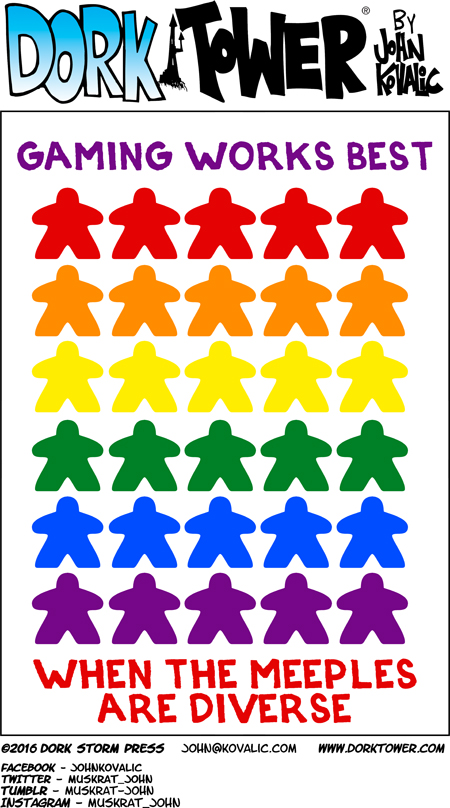
Gaming: It Takes All Kinds – DORK TOWER 15.12.16
by John Kovalic
Tindalostalbot, dequesi and one other like this
24 Jan 17:45

MOSCOW Prioritisation.A way of helping decide what to do next...
MOSCOW Prioritisation.
A way of helping decide what to do next based on Must do, Should do, Could do and Would do.
Strangely, so many of the things you’d really like to do when put in this organisation end up in the Would bucket.
Roslyn , Tindalostalbot likes this
24 Jan 17:32
Stay In Your Lane
by Zak Sabbath
I assume readers know evolution is not a conspiracy. You start out with a small tree shrew and—through nothing other than the pressure to survive in various environments—you end up with a giraffe whose neck gets ever longer and a panda whose color gets ever starker and who becomes increasingly intolerant of anything but bamboo.
Complex environments create specialists, and the longer these environments are stable, the more stereotyped the specialists are pressured to become. That’s why Bertrand Russell was able to write:
…so when I say “capitalism wants” I am no more talking about a conspiracy than when I use the shorthand “evolution wants”.
All kinds of people are born—always—but the pressure to survive while being that kind of person (plus the lessons their parents impress on them because they themselves had had to survive while being whatever kind of people they were) push people in each field toward personality types that can survive in their environment.
Considering, for instance, the world is going to keep producing artists, what kind of shape does early 21st-century capitalism want them in?
It needs them to go to school, for two reasons:
-the examples of earlier artists are always available (and often in the public domain), so in order to make anything broadly competitive saleable to a public whose main reliable taste is for technical expertise a decent chunk of them must have access to the means of acquiring it
-as we now expect technology will advance continuously, we like our artists to be conversant with it, as marrying the artist to new technology produces novelty—the other thing the public reliably likes—plus enables our artists to be able to talk to our advertisers, with whom they exist in a symbiotic relationship.
Capitalism wants artists’ talents and ideas because they can be used to sell things, capitalism wants artists to have a liberal education so they can steal ideas from all the world's culture. Capitalism would like to meet artists at parties—where the artist can simultaneously entertain the capitalist and can be introduced to patrons in an informal setting outside the recorded and legalized confines of the application process (where there are difficult questions concerning how many people of what kind you're taking applications from)--so it wants artists to throw parties, or at least go to them, and so be at least social enough to handle that. What it doesn’t want is artists who have money (artists are creative, so if you give them money they won’t necessarily invest in things and hire people to make more money, they might just spend it on firecrackers and beanbag chairs) or power (artists are nearly by definition people with unpredictable and radical ideas, and capitalism wants stable or at least controllable governance) or who are taken seriously outside the world of entertainment (unpredictable ideas plus the ability to communicate=trouble).
And, lo-and-behold, what kind of personality types do we get? “Artists are crazy,” “Artists are flakes,” “Guitarists are drug addicts,” “He’s a genius behind the piano but in real life he was a disaster”, etc. etc. Lovable but "unstable". You'd never vote for an artist.
Are these myths promoted to keep them in their place? Or descriptions of the personality-types that the institutions and conditions most favorable to survival produce? If, like lawyers, artists had art firms come around their studios around graduation time and offer them jobs they could keep for life we might well have a very different stereotype of them. Or maybe not. Whether chicken or egg isn’t actually important to my point, the point is however artists got there, capitalism has exactly no incentive to change their position. They have them right where they want them: always unstable, always vulnerable, always available.
-
-
-
The etymology of the word “nerd” goes back to 1950.
This makes perfect sense: a great war had just been decided through the use of weapons that had been unimagined (and in some cases had been unimaginable) during the war just before it. We were buying cars, we were about to have a space race. We did not know what the future would bring, but we knew we needed minders of machines and the mechanized bureaucratic instruments they enable. We put money into manufacturing these people on an industrial scale.
Just as The Art Student (nipple ring, blue hair, Starbucks job, campus-rock music taste, earnest and pointless politics, flake spirituality) is something that capitalism has done to its artists and the Jock (etymology: 1963) is something capitalism has done to its athletes and physically capable people, “nerd” is something that capitalism has done to its intellectuals.
“Intellectual” has two common definitions—the first is the kind of person you hear getting interviewed on NPR about a Big Idea, the second, used by people like Marx, is any kind of economic actor who gets paid to do brainstuff rather than hard labor, like a plumbing engineer. The point of "Nerd" is to keep these two kinds of intellectuals separate, because together they are fucking dangerous. When Ta-Nehisi Coates is writing Black Panther comics and demanding reparations after documenting decades of housing discrimination?--capitalism does not want that shit.
You, reading this, may very well work only with your brain for a living. You're probably too smart to go around calling yourself an intellectual--you know you'd get punched. But you call yourself a nerd? That's fine. That's adorable. Let me buy you a drink.
That's because the word ‘nerd’ and all the ideas around it are epiphenomena of anti-intellectualism. Troll culture is what you get when Nerd is shorn of any trace of intellectualism, and is, like all bullying, ultimately about enforcing existing social roles: If, in the middle of a discussion of a supremely nerdy subject, you bring up a creative imperative, you’re Pretentious, if you out-nerd the nerd you’re Aspie, if you display any awareness of the wider world, you’re reminded you’re just a nerd discussing a nerd thing in a nerd place. Be a middlebrow minder of machines, be quiet and uncharismatic and if you have to dream, dream only unreachably escapist and irrelevant dreams and if you have to fight, fight only with other nerds about those dreams and with no-one by your side. If 'Nerd' is the defanged intellectual, "troll" is the intellectual as collaborator, as kapo. And, like the kapo, they are betraying the only culture that could ever value their real assets.
Back in the day, under a different kind of ruling class than we have now, the kings and emperors knew that if they could just keep the smart people arguing which each other about whether Christ had one soul or three, they wouldn’t have much to worry about. That's why, when a smart person invented monks, they decided to keep them around--and make sure they kept wearing burlap sacks and having shitty haircuts. When the monks started growing pea plants and getting ideas about genetics and fucking nuns it was time to dream up new roles for them. Feudalism needed scholars, but not thinkers.
Capitalism needs smart and well-educated specialists who know how to teach machines to do new tricks. What it doesn’t need is more guys in the office charming or aggressive or relatable enough to compete for their management jobs. It doesn’t need to meet them at parties (they can just apply, it’s more efficient), it doesn’t need them to reproduce (their skills are considered transferrable through formal education rather than culture and parenting), it doesn’t want them rich or brave (a nerd who doesn’t need a new job after the one they’re quitting can do things to your machines that destroy you forever), it doesn’t need them broadly culturally educated (just make the fucking printer work, ok?).
For an example of how this works in practice, Wesley Yang does a good job here of describing what it's like for many high-achieving tiger-parented Asian-americans who feel like all their education has done is polish them into ideal cogs for managerial types to install and ignore: "An icon of so much that the culture pretends to honor but that it in fact patronizes and exploits. Not just people 'who are good at math' and play the violin, but a mass of stifled, repressed, abused, conformist quasi-robots who simply do not matter, socially or culturally.".
Nerds (or, rather: the intellectuals that late-stage-postindustrial capitalism would like to turn into mere “nerds”), like art students, aren’t actually that stupid. Anyone with a brain can do more (probably needs to do more) with it than crunch numbers and make bad jokes. And the nerds created, despite the wider economy’s—at best—apathy and—at worst—hostility to the idea, a culture. Gary Gygax going from adjusting insurance to working with Dave Arneson to invent a game about elves fighting demons is just about as pure an example of that culture as we get. The game drew on a knowledge of a rich literature that had developed completely independently of the mainstream of American literary culture; a culture that had vociferously argued, not coincidentally, the year before about whether to give Gravity’s Rainbow—an undeniably literary literary novel that only a Naval engineer with stacks of pulp novels in his garage could’ve produced—a Nobel prize. Both Gygax and Pynchon (born a year apart) were part of the first generation old enough to be called "nerds" as teenagers, had gotten nerd jobs to survive about as soon as they could and--about 20 years later, managed to make things that built on the would-be disposable culture they loved and the technocratic esoteric they'd been stuffed full of.
D&D, like Gravity’s Rainbow, was an assertion that the nerd had something to teach the art student—and a hint that maybe they both could push past roles that they were being asked to fill and just be smart people.
This is a terrible revelation—because it suggests maybe if you stop accepting You’re just a…(whatever) you might suddenly have responsibilities. You might be capable of things you’ve been neglecting. You might be expected to compete on a wider field than just how fast you can get that Naruto reference in or cite the figure that backs up the opinion everyone you know already has. You might’ve been slacking off all this time.
It is ok to be awkward or afraid or unable to relate to people outside the narrow world of your hobbies and tastes—but it isn’t ok to fail to recognize those things as limitations—and ones that the world outside you has encouraged and will continue to encourage. This was not done to protect you from the world--it was done to protect the world from you.
-
-
-
Complex environments create specialists, and the longer these environments are stable, the more stereotyped the specialists are pressured to become. That’s why Bertrand Russell was able to write:
The reign of Augustus was a period of happiness for the Roman Empire…Augustus, for the sake of stability, set to work, somewhat insincerely, to restore ancient piety, and was therefore necessarily rather hostile to free inquiry. The Roman world began to become stereotyped, and the process continued under later emperors.
…so when I say “capitalism wants” I am no more talking about a conspiracy than when I use the shorthand “evolution wants”.
All kinds of people are born—always—but the pressure to survive while being that kind of person (plus the lessons their parents impress on them because they themselves had had to survive while being whatever kind of people they were) push people in each field toward personality types that can survive in their environment.
Considering, for instance, the world is going to keep producing artists, what kind of shape does early 21st-century capitalism want them in?
It needs them to go to school, for two reasons:
-the examples of earlier artists are always available (and often in the public domain), so in order to make anything broadly competitive saleable to a public whose main reliable taste is for technical expertise a decent chunk of them must have access to the means of acquiring it
-as we now expect technology will advance continuously, we like our artists to be conversant with it, as marrying the artist to new technology produces novelty—the other thing the public reliably likes—plus enables our artists to be able to talk to our advertisers, with whom they exist in a symbiotic relationship.
Capitalism wants artists’ talents and ideas because they can be used to sell things, capitalism wants artists to have a liberal education so they can steal ideas from all the world's culture. Capitalism would like to meet artists at parties—where the artist can simultaneously entertain the capitalist and can be introduced to patrons in an informal setting outside the recorded and legalized confines of the application process (where there are difficult questions concerning how many people of what kind you're taking applications from)--so it wants artists to throw parties, or at least go to them, and so be at least social enough to handle that. What it doesn’t want is artists who have money (artists are creative, so if you give them money they won’t necessarily invest in things and hire people to make more money, they might just spend it on firecrackers and beanbag chairs) or power (artists are nearly by definition people with unpredictable and radical ideas, and capitalism wants stable or at least controllable governance) or who are taken seriously outside the world of entertainment (unpredictable ideas plus the ability to communicate=trouble).
And, lo-and-behold, what kind of personality types do we get? “Artists are crazy,” “Artists are flakes,” “Guitarists are drug addicts,” “He’s a genius behind the piano but in real life he was a disaster”, etc. etc. Lovable but "unstable". You'd never vote for an artist.
Are these myths promoted to keep them in their place? Or descriptions of the personality-types that the institutions and conditions most favorable to survival produce? If, like lawyers, artists had art firms come around their studios around graduation time and offer them jobs they could keep for life we might well have a very different stereotype of them. Or maybe not. Whether chicken or egg isn’t actually important to my point, the point is however artists got there, capitalism has exactly no incentive to change their position. They have them right where they want them: always unstable, always vulnerable, always available.
-
-
-
The etymology of the word “nerd” goes back to 1950.
This makes perfect sense: a great war had just been decided through the use of weapons that had been unimagined (and in some cases had been unimaginable) during the war just before it. We were buying cars, we were about to have a space race. We did not know what the future would bring, but we knew we needed minders of machines and the mechanized bureaucratic instruments they enable. We put money into manufacturing these people on an industrial scale.
Just as The Art Student (nipple ring, blue hair, Starbucks job, campus-rock music taste, earnest and pointless politics, flake spirituality) is something that capitalism has done to its artists and the Jock (etymology: 1963) is something capitalism has done to its athletes and physically capable people, “nerd” is something that capitalism has done to its intellectuals.
“Intellectual” has two common definitions—the first is the kind of person you hear getting interviewed on NPR about a Big Idea, the second, used by people like Marx, is any kind of economic actor who gets paid to do brainstuff rather than hard labor, like a plumbing engineer. The point of "Nerd" is to keep these two kinds of intellectuals separate, because together they are fucking dangerous. When Ta-Nehisi Coates is writing Black Panther comics and demanding reparations after documenting decades of housing discrimination?--capitalism does not want that shit.
You, reading this, may very well work only with your brain for a living. You're probably too smart to go around calling yourself an intellectual--you know you'd get punched. But you call yourself a nerd? That's fine. That's adorable. Let me buy you a drink.
That's because the word ‘nerd’ and all the ideas around it are epiphenomena of anti-intellectualism. Troll culture is what you get when Nerd is shorn of any trace of intellectualism, and is, like all bullying, ultimately about enforcing existing social roles: If, in the middle of a discussion of a supremely nerdy subject, you bring up a creative imperative, you’re Pretentious, if you out-nerd the nerd you’re Aspie, if you display any awareness of the wider world, you’re reminded you’re just a nerd discussing a nerd thing in a nerd place. Be a middlebrow minder of machines, be quiet and uncharismatic and if you have to dream, dream only unreachably escapist and irrelevant dreams and if you have to fight, fight only with other nerds about those dreams and with no-one by your side. If 'Nerd' is the defanged intellectual, "troll" is the intellectual as collaborator, as kapo. And, like the kapo, they are betraying the only culture that could ever value their real assets.
Back in the day, under a different kind of ruling class than we have now, the kings and emperors knew that if they could just keep the smart people arguing which each other about whether Christ had one soul or three, they wouldn’t have much to worry about. That's why, when a smart person invented monks, they decided to keep them around--and make sure they kept wearing burlap sacks and having shitty haircuts. When the monks started growing pea plants and getting ideas about genetics and fucking nuns it was time to dream up new roles for them. Feudalism needed scholars, but not thinkers.
Capitalism needs smart and well-educated specialists who know how to teach machines to do new tricks. What it doesn’t need is more guys in the office charming or aggressive or relatable enough to compete for their management jobs. It doesn’t need to meet them at parties (they can just apply, it’s more efficient), it doesn’t need them to reproduce (their skills are considered transferrable through formal education rather than culture and parenting), it doesn’t want them rich or brave (a nerd who doesn’t need a new job after the one they’re quitting can do things to your machines that destroy you forever), it doesn’t need them broadly culturally educated (just make the fucking printer work, ok?).
For an example of how this works in practice, Wesley Yang does a good job here of describing what it's like for many high-achieving tiger-parented Asian-americans who feel like all their education has done is polish them into ideal cogs for managerial types to install and ignore: "An icon of so much that the culture pretends to honor but that it in fact patronizes and exploits. Not just people 'who are good at math' and play the violin, but a mass of stifled, repressed, abused, conformist quasi-robots who simply do not matter, socially or culturally.".
Nerds (or, rather: the intellectuals that late-stage-postindustrial capitalism would like to turn into mere “nerds”), like art students, aren’t actually that stupid. Anyone with a brain can do more (probably needs to do more) with it than crunch numbers and make bad jokes. And the nerds created, despite the wider economy’s—at best—apathy and—at worst—hostility to the idea, a culture. Gary Gygax going from adjusting insurance to working with Dave Arneson to invent a game about elves fighting demons is just about as pure an example of that culture as we get. The game drew on a knowledge of a rich literature that had developed completely independently of the mainstream of American literary culture; a culture that had vociferously argued, not coincidentally, the year before about whether to give Gravity’s Rainbow—an undeniably literary literary novel that only a Naval engineer with stacks of pulp novels in his garage could’ve produced—a Nobel prize. Both Gygax and Pynchon (born a year apart) were part of the first generation old enough to be called "nerds" as teenagers, had gotten nerd jobs to survive about as soon as they could and--about 20 years later, managed to make things that built on the would-be disposable culture they loved and the technocratic esoteric they'd been stuffed full of.
D&D, like Gravity’s Rainbow, was an assertion that the nerd had something to teach the art student—and a hint that maybe they both could push past roles that they were being asked to fill and just be smart people.
This is a terrible revelation—because it suggests maybe if you stop accepting You’re just a…(whatever) you might suddenly have responsibilities. You might be capable of things you’ve been neglecting. You might be expected to compete on a wider field than just how fast you can get that Naruto reference in or cite the figure that backs up the opinion everyone you know already has. You might’ve been slacking off all this time.
It is ok to be awkward or afraid or unable to relate to people outside the narrow world of your hobbies and tastes—but it isn’t ok to fail to recognize those things as limitations—and ones that the world outside you has encouraged and will continue to encourage. This was not done to protect you from the world--it was done to protect the world from you.
-
-
-
Tindalostalbot likes this

24 Jan 16:46
The One Thing Everybody Playing Should Do
by Zak Sabbath
Broad "Listen Up Everybody!" advice on GMing often boils down to a list of things that'd be great if you had infinite time or a list of things that would be really dead-on if you were a totally different person.
Broad advice on playing often has the same problems plus it's for players so nobody reads it.
It's hard to give advice that applies to all the different problems people can have, but there is one thing that I think applies across the board to players and GMs in pretty much all RPGs and all playstyles and all personality types and that even experienced players and GMs can always push themselves to do better in every game (myself 100% included): support the reality of the other peoples' inventions.
What that means is: when someone (within whatever parameters the game says is legit) establishes they're doing something or something is there or something is like that--constantly casually acknowledge it in how you talk. It's basically a lot like the old improv rule: "Say 'Yes, and...'" but it doesn't ask for as much. You don't have to top them or even build on it--just mention what's there, whatever it is.
If the GM incidentally says the room is lit by magical fuchsia flames--say how weird everyone looks in the pink light. Mention looking down at the veins in your palms to see how they look. Or ask if it gives your pink warpig a stealth bonus. Not necessarily to get a bonus or find anything, just to say "Hey, that little detail--I heard that".
The druid says she has a scarf made from an ermine that (she hastily adds) died of natural causes, have your thief make a point of being like "How's that sound, dead ferret?" before nailing down the heist plans.
Do it in little ways: if you're playing in a pick-up or con game, try to use the other characters' names. Try to remember what they are good at and ask them to help. "Can you hold them off with your pike, Arnie?"
The only consistent difference between hanging with your buds and playing one of these games--the only reason we chose to do the second thing instead of just the first--is whatever it is we get out of a shared imaginative space. Simply reminding them "Oh you imagined that? I am now imagining it too" deepens what we get out of that, no matter which direction we then want to use that space to go.
-
-
-
Broad advice on playing often has the same problems plus it's for players so nobody reads it.
It's hard to give advice that applies to all the different problems people can have, but there is one thing that I think applies across the board to players and GMs in pretty much all RPGs and all playstyles and all personality types and that even experienced players and GMs can always push themselves to do better in every game (myself 100% included): support the reality of the other peoples' inventions.
What that means is: when someone (within whatever parameters the game says is legit) establishes they're doing something or something is there or something is like that--constantly casually acknowledge it in how you talk. It's basically a lot like the old improv rule: "Say 'Yes, and...'" but it doesn't ask for as much. You don't have to top them or even build on it--just mention what's there, whatever it is.
If the GM incidentally says the room is lit by magical fuchsia flames--say how weird everyone looks in the pink light. Mention looking down at the veins in your palms to see how they look. Or ask if it gives your pink warpig a stealth bonus. Not necessarily to get a bonus or find anything, just to say "Hey, that little detail--I heard that".
The druid says she has a scarf made from an ermine that (she hastily adds) died of natural causes, have your thief make a point of being like "How's that sound, dead ferret?" before nailing down the heist plans.
Do it in little ways: if you're playing in a pick-up or con game, try to use the other characters' names. Try to remember what they are good at and ask them to help. "Can you hold them off with your pike, Arnie?"
The only consistent difference between hanging with your buds and playing one of these games--the only reason we chose to do the second thing instead of just the first--is whatever it is we get out of a shared imaginative space. Simply reminding them "Oh you imagined that? I am now imagining it too" deepens what we get out of that, no matter which direction we then want to use that space to go.
-
-
-
Tindalostalbot, Huy Tran likes this
24 Jan 16:18
%20(1).png)
Click here to go see the bonus panel!
Hovertext:
Somewhere in the multiverse, there's a superior universe where all comics are this dorktastic.
New comic!
Today's News:
Saturday Morning Breakfast Cereal - The Talk
by tech@thehiveworks.com
Click here to go see the bonus panel!
Hovertext:
Somewhere in the multiverse, there's a superior universe where all comics are this dorktastic.
New comic!
Today's News:
Drawn with great humility and thanks to one of my favorite people. Scott did all of the real work, and I threw in some dirty jokes. So, hey, a pretty good deal all around.
Also,
Wednesday Book Reviews!
Our Magnificent Bastard Tongue (McWhorter)

I’m still on this McWhorter kick. This one was good, but not as good as some of the others. It’s about English and its interactions with other languages. The bulk of the book is about the idea that repeated conquests of English speakers resulted in English being particularly simplified in terms of its grammar, especially compared to related languages. There is also a large section on a proposed link between Celtic and English grammar, and even a section positing links between German and Hebrew. The latter idea is based on the work of Theo Vennemann, whose ideas are (as far as I could tell from google and wikipedia) found to be interesting but probably wrong. Because it’s McWhorter, there’s also a long lament about the popular usage of the Sapir-Whorf hypothesis. You get the feeling that his later book “The Language Hoax” was a great unburdening of linguistic angst.
An Extraordinary Time (Levinson)
<a href="https://www.amazon.com/gp/product/0062645358/ref=as_li_tl?ie=UTF8&camp=1789&creative=9325&creativeASIN=0062645358&linkCode=as2&tag=ss00a2-20&linkId=2c7c808d43f64
Roslyn , Tindalostalbot and 13 others like this