Yuval Pinter
Shared posts
"If this was taken from a successfully defended thesis, as it appears to have been, then he should..."
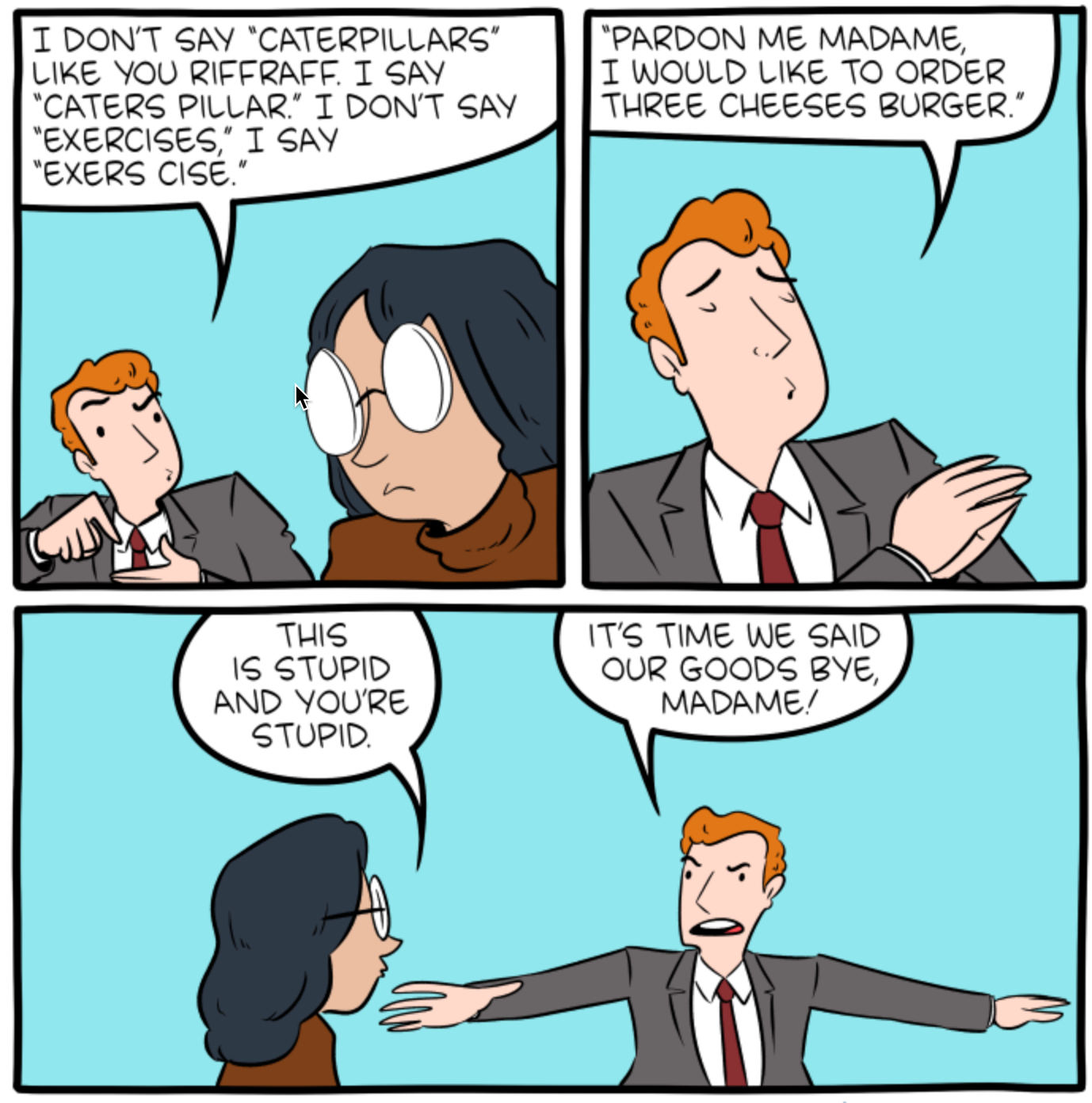
Saturday Morning Breakfast Cereal - Old
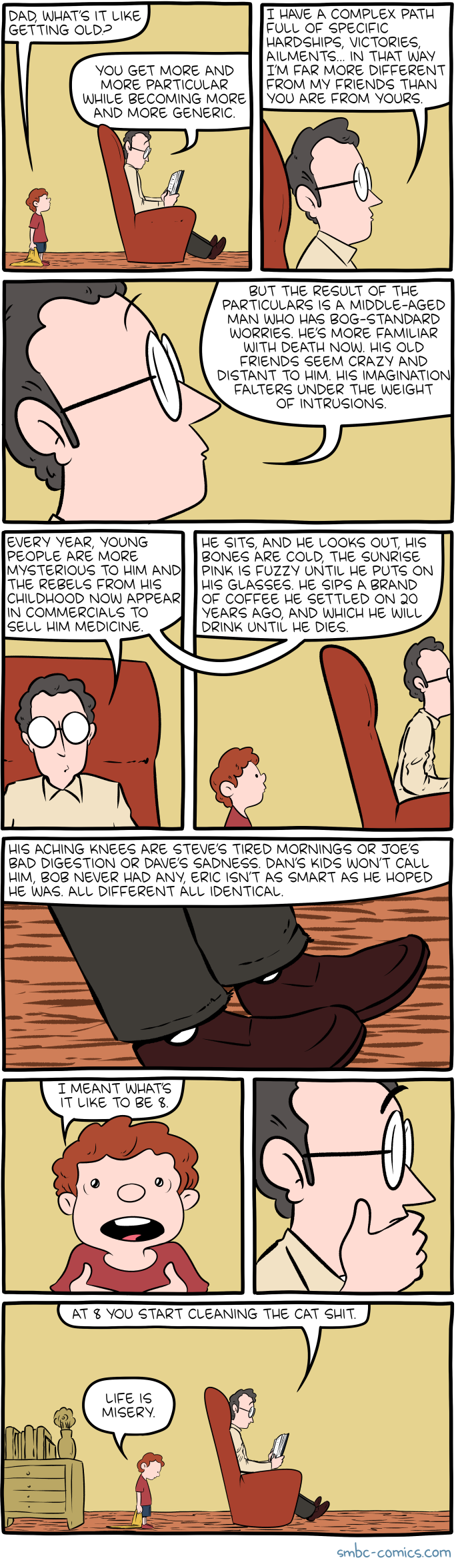
Click here to go see the bonus panel!
Hovertext:
This is one of this comics that prompts very nice 'are you okay?' emails, but honestly I'm just over here giggling.
Today's News:
Saturday Morning Breakfast Cereal - Reference
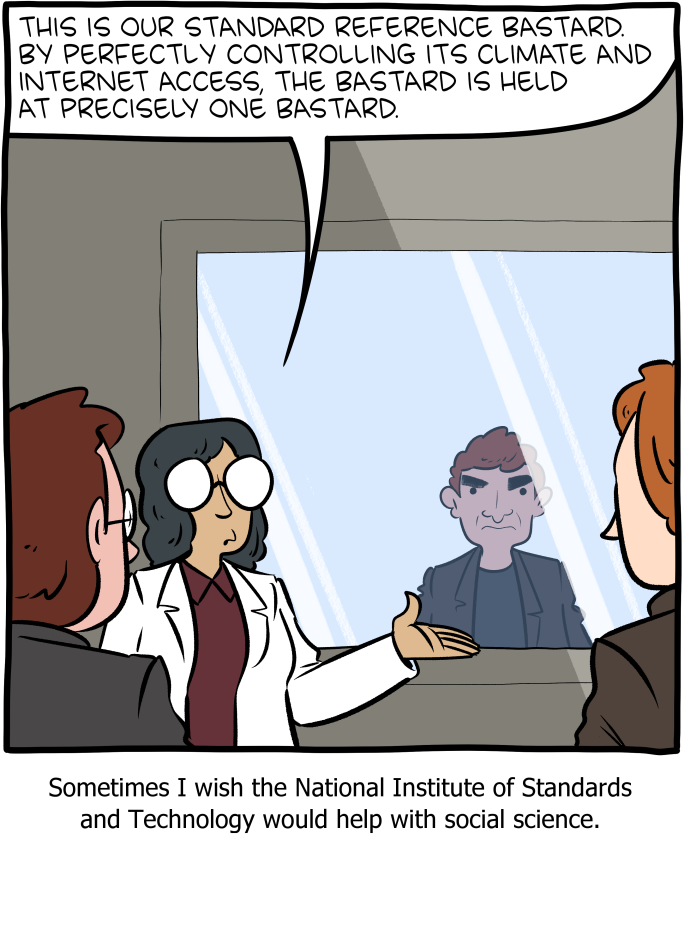
Click here to go see the bonus panel!
Hovertext:
The reference c-word is held at a stable level of inebriation at an Edinburgh pub.
Today's News:
Saturday Morning Breakfast Cereal - Ethics
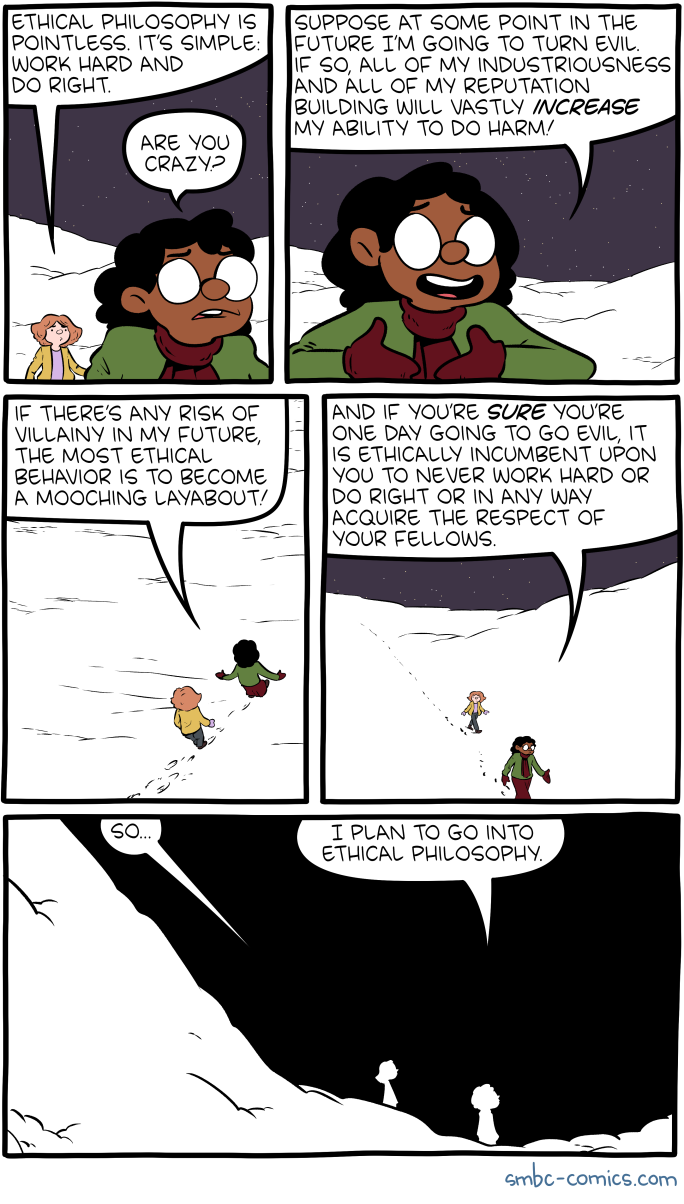
Click here to go see the bonus panel!
Hovertext:
Someone on patreon pointed out that Hitler tried to go into painting, and it's just ruined my whole point.
Today's News:
English Was Brilliant.
I’m finally reading Boris Fishman’s novel A Replacement Life
The letter was given to Slava. His fingers were small enough for the Bible font and onionskin pages of the brick dictionary they had procured from a curbside, somebody who had learned English already. As the adults shifted their feet, leaning against doorjambs and working their lips with their teeth, he carefully sliced open the envelope and unfolded the letter inside, his heart beating madly. He was all that stood between his family and expulsion by James Baker III. America was a country where you could have Roman numerals after your name, like a Caesar.
As the adults watched, Slava checked the unfamiliar words in the bricktionary. “Annual percentage rate.” “Layaway.” “Installment plan.” “One time only.” “For special customers like you.” The senior Gelmans waiting, Slava was embarrassed to discover himself mindlessly glued to certain words in the dictionary that had nothing to do with the task at hand. On the way to “credit card,” he had snagged on “cathedral,” its spires —t, h, d, l—like the ones the Gelmans had seen in Vienna. “Rebate” took him to “roly-poly,” which rolled around his mouth like a fat marble. “Venture rewards” led him to “zaftig,” a Russian baba’s breasts covering his eyes as she placed in front of him a bowl of morning farina. Eventually, he managed to verify enough to reassure the adults that, no, it didn’t seem like a letter from James Baker III. The senior Gelmans sighed, shook their heads, resumed frying fish.
Slava remained with the bricktionary. Hinky, lunker, wattles. Taro, terrazzo, toodle-oo. “Levity” became a Jewish word because Levy was a Jewish surname in America. “Had had”—knock-knock—was a door. A “gewgaw” was a “gimcrack,” and a “gimcrack” was “folderol.” “Sententious” could mean two opposite things, and wasn’t to be confused with “senescent,” “tendentious,” or “sentient.” Nor “eschatological” with “scatological.” This language placed the end of the world two letters away from the end of a bowel movement.
Russian words were as stretchy as the meat under Grandmother’s arm. You could invent new endings and they still made sense. Like peasants fidgeting with their ties at a wedding, the words wanted to unlace into diminutives: Mikhail into Mishen’ka (little Misha), kartoshka into kartoshechka (little potato). English was colder, clipped, a brain game. But English was brilliant.
Reginald Foster, RIP.
Stu Clayton sent me Margalit Fox’s NY Times obituary of a remarkable Latinist; it begins:
Reginald Foster, a former plumber’s apprentice from Wisconsin who, in four decades as an official Latinist of the Vatican, dreamed in Latin, cursed in Latin, banked in Latin and ultimately tweeted in Latin, died on Christmas Day at a nursing home in Milwaukee. He was LXXXI. His death was confirmed by the Vatican. He had tested positive for the coronavirus two weeks ago, The Milwaukee Journal Sentinel reported.
A Roman Catholic priest who was considered the foremost Latinist in Rome and, quite possibly, the world, Father Foster was attached to the Office of Latin Letters of the Vatican Secretariat of State from 1969 until his retirement in 2009. By virtue of his longevity and his almost preternatural facility with the language, he was by the end of his tenure the de facto head of that office, which comprises a team of half a dozen translators.
If, having read this far, you are expecting a monastic ascetic, you will be blissfully disappointed. Father Foster was indeed a monk — a member of the Discalced Carmelite order — but he was a monk who looked like a stevedore, dressed like a janitor, swore like a sailor (usually in Latin) and spoke Latin with the riverine fluency of a Roman orator.
He served four popes — Paul VI, John Paul I and II, and Benedict XVI — composing original documents in Latin, which remains the Vatican’s official language, and translating their speeches and other writings into Latin from a series of papal languages. (He was also fluent in Italian, German and Greek.)
As you can see, the obit itself is pleasingly written; a couple more samples:
Father Foster was unabashedly bibulous (from the Latin bibēre, “to drink”); combustible (< combūstibilis); dyspeptic (a Greek word, but indisputably apposite); cacophonous (his was a partly silent order, a state of affairs he more than made up for outside the monastery); undiplomatic (in interviews, he had all manner of advice for his exalted bosses, none of it solicited); and more than a trifle insurrectionist (in the privacy of his monastery room, he told The Minneapolis Star Tribune in 1998, he liked to say Mass attired as he was the day he was born). [...]
The Vatican, at any rate, found it could not do without him. When there was an encyclical to be translated; a congratulatory letter to a cardinal or bishop to be written; a contemporary term, like “microchip,” that sang out for a Latin equivalent (he chose “assula minutula electrica”: “tiny amber wood chip”); or, after John Paul II approved a no-smoking ordinance in Vatican City, a sign to be posted (proposed wording: “Vetatur Fumare”), it turned again and again to Father Foster. […]
“You do not need to be mentally excellent to know Latin,” he said in the Telegraph interview. “Prostitutes, beggars and pimps in Rome spoke Latin, so there must be some hope for us.”
The obit is behind a paywall; fortunately, Trevor Joyce sent a couple of links that are free to all comers: Fr. John Zuhlsdorf’s blogpost R.I.P. – Fr. Reginald Foster, OCD, which has some touching personal reminiscences, and a three-minute video Senior Vatican Priest – Father Reginald Foster – interviewed by Bill Maher, in which Foster is very cheeky indeed, to Maher’s delight. Foster has been mentioned here before, in 2004 (“Latin’s loudest advocate in the modern world”) and 2017 (“I have to say, Foster’s insistence on ‘total philological mastery’ sounds off-putting to me”). Stu has ordered Foster’s 2016 book Ossa Latinitatis Sola ad Mentem Reginaldi Rationemque (“The Mere Bones of Latin According to the Thought and System of Reginald”); I trust he will give us a report in good time.
Comic for 2020.12.27
Saturday Morning Breakfast Cereal - Surveillance
Yuval Pinterbonus panel.
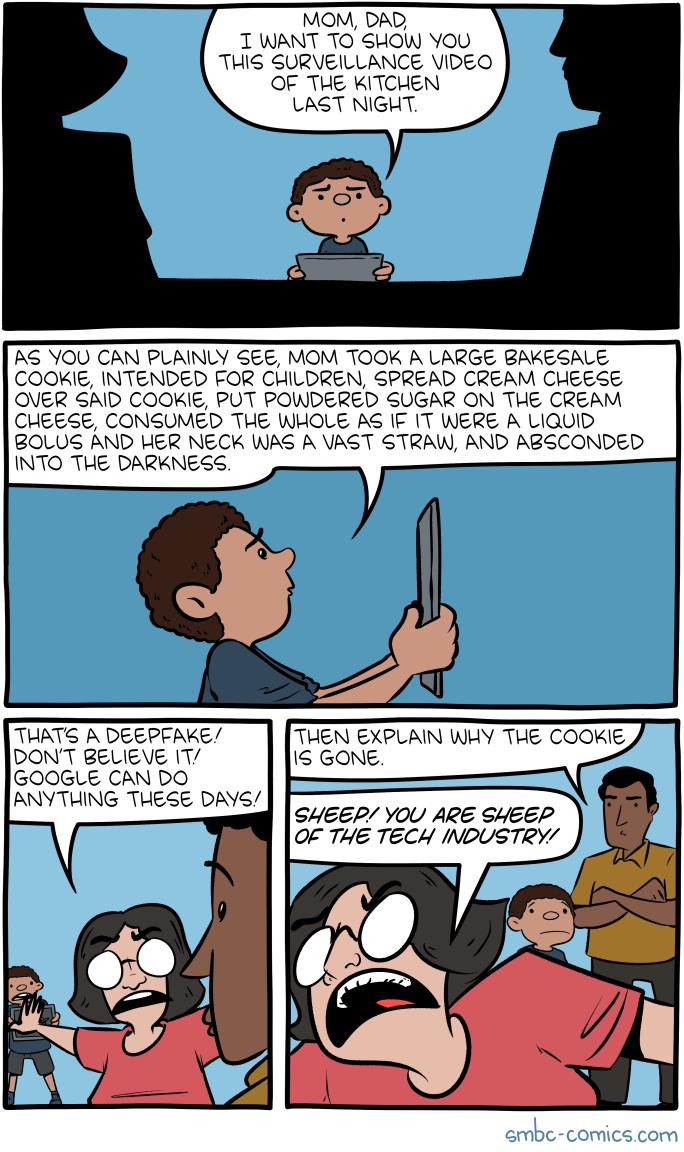
Click here to go see the bonus panel!
Hovertext:
Later it turns out the Dad has masterminded everything.
Today's News:
“History of Swear Words” on Netflix
We’re pleased AF to let you know that “History of Swear Words,” will launch on Netflix January 5, 2021. The series—six 20-minute episodes—will consider the etymologies, false etymologies, and usage of six classic swears: fuck, shit, dick, bitch, pussy, and damn.
We’re especially pleased that one of our Strong Language co-fuckers, lexicographer Kory Stamper, was one of the consultants for the show. The other experts include cognitive scientist and author of What the F Benjamin Bergen; linguist Anne Charity Hudley; professor of feminist studies Mireille Miller-Young; film critic Elvis Mitchell; and author of Holy Sh*t: A Brief History of Swearing Melissa Mohr.
Nicolas Cage will host.
More details here. And let’s hope for a second season so we can delve into asshole, cunt, cocksucker, and other sweary faves.

like conjugating verbs, but worse
Linguistics, University of Chicago
Person marking in Washo as Agreement and clitic movement
ML@GT Further Establishes Itself in Natural Language Processing Community

Over the years, the Machine Learning Center at Georgia Tech (ML@GT) has steadily been increasing its presence in the natural language processing (NLP) community. With a few new hires this fall and a big performance at this year’s Conference on Empirical Methods in Natural Language Processing (EMNLP), ML@GT is becoming a major player in the field.
With 10 papers accepted to the main EMNLP conference and three papers at a new, coinciding sister publication called Findings of EMNLP, Georgia Tech researchers are tackling problems like how to summarize text and interpreting how persuasive language impacts domains advertising and argumentation.

Diyi Yang, an assistant professor at ML@GT and the School of Interactive Computing leads the Georgia Tech group with six accepted papers. Yang is also the area chair for the interpretability and analysis of models for the NLP track.
“EMNLP is one of the most prestigious conferences in NLP, and one of the best conferences for the interaction of machine learning and NLP. Georgia Tech’s NLP program is emerging and our presence at EMNLP is a strong signal of it,” said Yang.
Yang also noted that many of the papers accepted from her lab, Social Language and Technologies (SALT), are from first-time authors who are also first-year Ph.D., master’s, or undergraduate students.
“It is a great recognition of our students’ passion, efforts, and their research impact in this NLP space. I feel proud of them and excited about more high-impact and fun projects that will come next!” said Yang.
Outside of accepted papers, Yang is also an invited speaker for the 4th Workshop on NLP and CSS. ML@GT Ph.D. student Yuval Pinter is co-organizing BlackboxNLP, a workshop at EMNLP dedicated to model interpretability. IC Associate Professor Alan Ritter and IC Assistant Professor Wei “Coco” Xu are co-organizing the Workshop on Noisy Text. Ritter and Wei are also involved with the language generation track as a senior area chair for information extraction and area chair, respectively.
Overall, EMNLP accepted 602 long papers and 151 short papers, with a 22.4 percent and 15.5 percent acceptance rate respectively. The conference will take place online Nov. 16 through 20. For more information on ML@GT’s presence at EMNLP 2020, visit ML@GT at EMNLP.
Press Contact:
Allie McFadden | Communications Officer | allie.mcfadden@cc.gatech.edu

Lawyers set to be executed
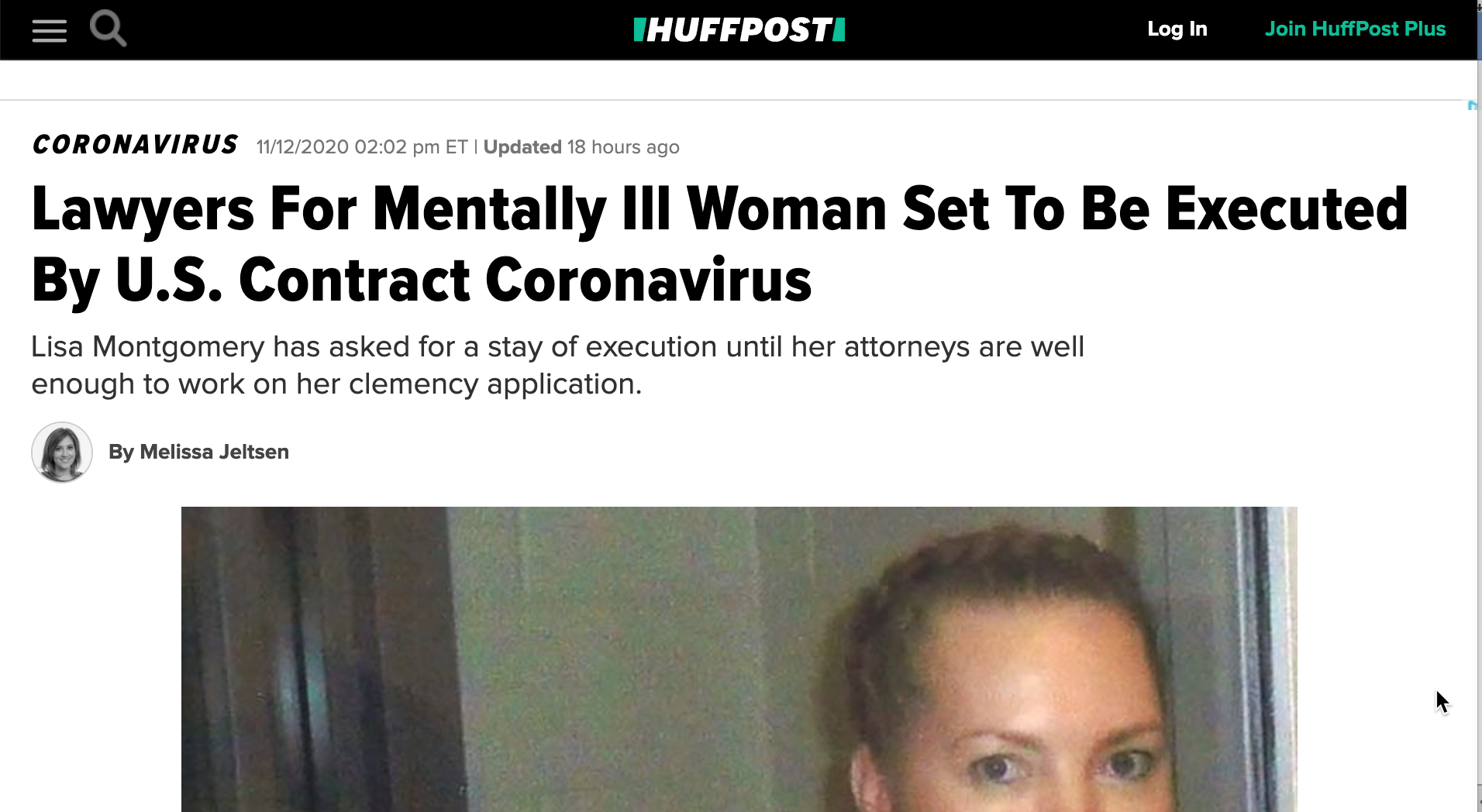
Melissa Jeltsen, "Lawyers For Mentally Ill Woman Set To Be Executed By U.S. Contract Coronavirus", Huffpost 11/12/2020.
"U.S. Contract Coronavirus" would be an innovative method of execution, but not the most unexpected event of the year.
The obligatory screenshot:
[h/t Rick Rubenstein]
Angle of Incidence.
This is actually based on the Kaverin novel I posted about yesterday, but that post was long enough already, so I figured I’d let this stand on its own. At one point Liza is having coffee in the Rotonde with her husband Georgii and Kostya, the love of her life, who’s visiting from Russia; she and Kostya have a few precious moments alone when Georgii wanders off too far to hear, and they have the following exchange (Kostya speaks first):
— Он не умеет читать по губам?
— Нет. Кроме того, для нас с тобой угол падения не равен углу отражения.“He doesn’t know how to read lips?”
“No. Besides, for us the angle of incidence isn’t equal to the angle of reflection.”
The line about the angles is repeated twice more in the course of the novel, so it’s not merely a passing remark (and it occurs to me that it’s probably not irrelevant to the titular mirror). It may seem a bit random to the reader unfamiliar with its antecedents, but it is part of a tradition — a meme, as we say nowadays — in Russian literature. The immediate source is Marina Tsvetaeva’s long essay on the painter Natalia Goncharova (both she and especially Tsvetaeva are characters in the novel); she writes that the world is reflected косвенно (‘indirectly, obliquely’) in Goncharova’s paintings, and continues:
То, что я как-то сказала о поэте, можно сказать о каждом творчестве: угол падения не равен углу отражения.
What I once said about a poet could be said about all creative work: the angle of incidence is not equal to the angle of reflection.
This, of course, is a poetic contradiction of the Law of Reflection (“the angle of incidence is equal to the angle of reflection”; for detailed explanations, see this Stack Exchange thread), but why does she bring it up? Because it was in one of the most important Russian works about painting, Merezhkovsky’s Воскресшие боги. Леонардо да Винчи (Resurrected Gods: Leonardo da Vinci; see this LH post) — describing Leonardo’s ability to discuss frightful subjects calmly and dispassionately, Merezhkovsky writes:
Говоря о мертвых телах, которые сталкиваются в водоворотах, прибавил: «изображая эти удары и столкновения, не забывай закона механики, по которому угол падения равен углу отражения».
Speaking about dead bodies colliding in whirlpools, he added: “in depicting these blows and collisions, do not forget the mechanical law according to which the angle of incidence is equal to the angle of reflection.”
Again, this is repeated several times; for example, when Leonardo realizes that waves in water, sound waves, and light all obey the same laws, he exclaims:
«Единая воля и справедливость Твоя, Первый Двигатель: угол падения равен углу отражения!»
“Thy will and justice are one and indivisible, First Mover: the angle of incidence is equal to the angle of reflection!”
(You can see the other occurrences at this National Corpus page.) But two decades earlier, Turgenev had used it in a very different way in one of his poems in prose, Истина и Правда [Scientific truth and real truth], where one person says scientific truth is vitally important and the other mocks him, asking if he can imagine someone running into a gathering and saying excitedly:
«Друзья мои, послушайте, что я узнал, какую истину! Угол падения равен углу отражения! Или вот еще: между двумя точками самый краткий путь — прямая линия!»
“Friends, listen to what I’ve just found out, what truth! The angle of incidence is equal to the angle of reflection! Or this: the shortest path between two points is a straight line!”
Here it represents the height of banality, on the level of 2 × 2 = 4 (which of course has its own Russian literary history). Why did this law of physics become a meme in Russian and not in English? I speculate because the Russian words are normal, everyday words: падение, translated in this context as “incidence,” is the normal word for ‘fall(ing)’ (both physical and in the Fall of Man), so the law sounds like a popular saying.
Thirst of the Dead

Here are more zombies. And there’s still lots of time to enter my Halloween contest!
Saturday Morning Breakfast Cereal - Nudge

Click here to go see the bonus panel!
Hovertext:
Someone on patreon pointed out that the small mammal sure looks like the infamous hedgefox of comics past, which makes perfect sense in context.
Today's News:
Comic for 2020.10.13
"I’m really sorry about this reviewer. If you’d like, I can get you a new one."
-
Editor

נער אמריקאי אחראי על ½ מוויקיפדיה הסקוטית. הוא לא דובר את השפה 🏰 ווייז, איפה בית הנאשם? 📻 האחראי על האינטרנט בגלצ 29.8.2020

 להאזנה לפינה
Na true Scotsman
כל טמבל יכול לכתוב בוויקיפדיה – ובמקרים רבים, זה מה שאכן קורה. מאז 2013, וויקיפד חרוץ (למרבה הצער) בשם אמריליס גרדנר (AmaryllisGardener) כתב יותר מ-23 אלף מ-57,928 הערכים בוויקיפדיה הסקוטית, ובסך הכל ביצע למעלה מ-200 אלף עריכות באתר. לפי MJL, אדמין נוסף בוויקיסקוטית, גרדנר אחראי ליצירה או עריכה של 49% מכל הערכים שם. הבעיה היא לא שגרדנר אינו סקוטי אלא אמריקאי לפי הפרופיל שלו, אלא שהוא לא דובר סקוטית. אפילו לא מילה; הוא כתב את הערכים באנגלית משובשת שנשמעת כמו אנגלית במבטא סקוטי. הוויקיפדים הסקוטים לא יודעים מה לעשות. רדיטור בשם אולטך (Ultach), שחשף את הסיפור, כתב: “אני חושב שהאיש הזה אולי גרם יותר נזק לשפה הסקוטית מכל אחד אחר בהיסטוריה”. וויקיפד.ית בשם makeitstop כתב.ה: “הפרוייקט כולו הוא אקט של ונדליזם תרבותי חסר תקדים, וצריך להימחק כליל”.
I’ve discovered that almost every single article on the Scots version of Wikipedia is written by the same person – an American teenager who can’t speak Scots from Scotland
מה בדיוק גרדנר עשה? אולטך פרסם היפותזה: גרדנר היה כותב ערך באנגלית, ואז מחפש כל אחת ואחת מהמילים בערך במילון המקוון Online Scots Dictionary, ומחליף את המילה האנגלית במילה הסקוטית הראשונה שהמילון הציע. אם לא מצא תרגום, גרדנר השאיר את המילה האנגלית. אפשרות נוספת: הוא השתמש בכלי תרגום מקוונים כמו lingojam.com/EnglishtoScots או scotranslate.com. “מלכתחילה ה-Online Scots Dictionary נחשב די עלוב לעומת מילוני סקוטית אחרים, אבל גם אלמלא היה, זו מן הסתם לא דרך ללמוד שפה, ובטח לא לקחת על עצמך תרגום של עשרות אלפי טקסטים לימודיים”, כתב אולטך.
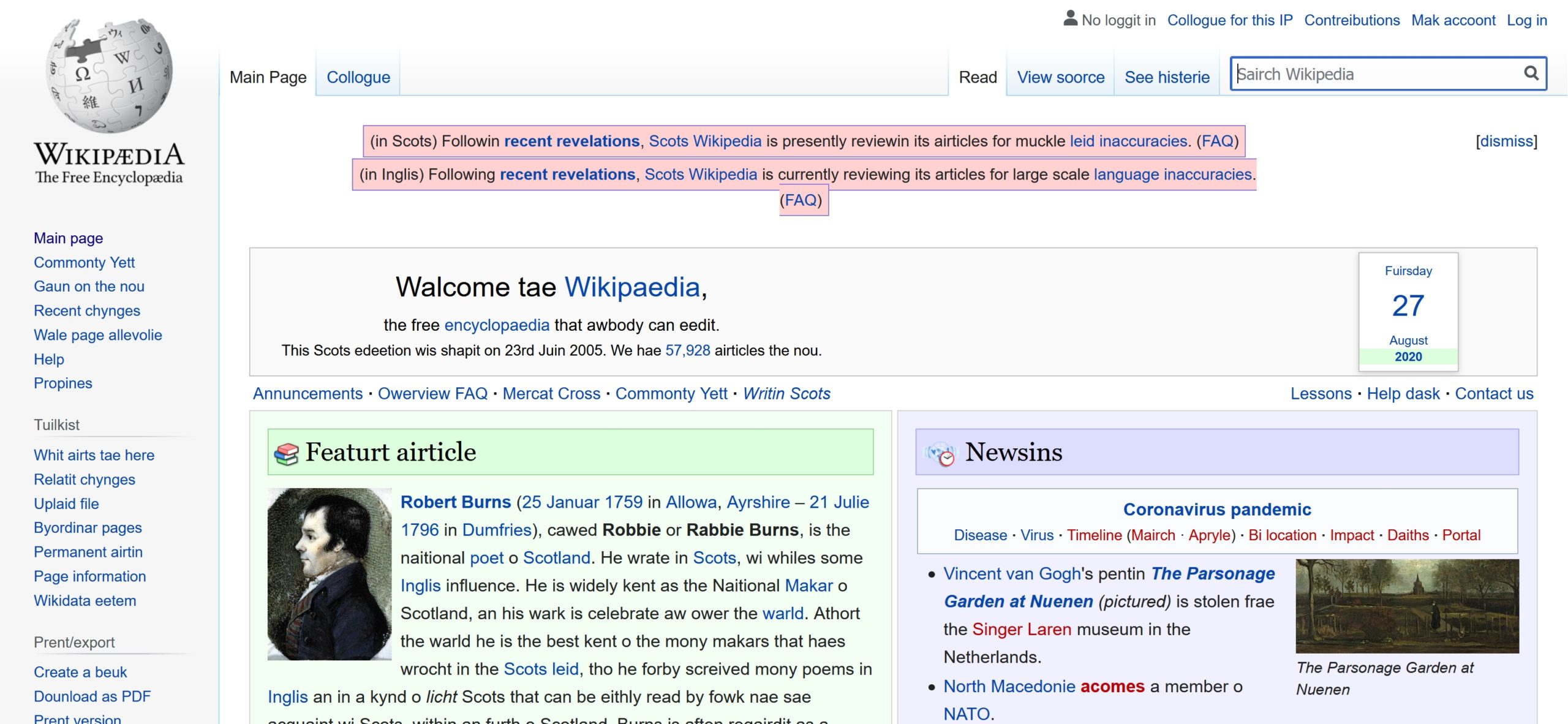
וויקיפדיה הסקוטית
הפעילות של גרדנר בוויקיפדיה גורמת למעגל משוב חיובי מזיק: מאחר שחלק ניכר מוויקיפדיה הסקוטית הוא לא באמת בסקוטית, סקוטים לא משתמשים בה; מאחר שהיא לא קיימת עבורם, הם גם לא עורכים אותה, ומשאירים את הערכים המשובשים על כנם; מאחר שהם לא עורכים, התרומה של גרדנר ממשיכה לתפוס חלק ניכר מהנפח של וויקיפדיה הסקוטית, והוא אף מוגדר כאדמין, כלומר משתמש בעל זכויות יתר, כגון חסימה ומחיקה של ערכים, וגם הכתבה של כללי הכתיבה והעריכה בוויקיפדיה הסקוטית, שמחלחלים אל שאר העורכים. וכמו שאולטך כתב ברדיט, “פוטנציאלית, עשרות מיליוני אנשים [שגלשו לוויקיפדיה הסקוטית] חושבים עכשיו שסקוטית היא גירסה מרוסקת להחריד של אנגלית ולא שפה או דיאלקט בפני עצמה. […] וויקיפדיה יכולה היתה להיות משאב יקר ערך עבור השפה הנאבקת על קיומה. במקום זה, היא הפכה לעוד תחמושת לאנשים שרוצים לזלזל בה וללעוג לה”.
השבוע, בדיון שנפתח בנושא, גרדנר פרסם הסבר והתנצלות:
בכנות, לא מפריע לי שתבטלו את כל העריכות שלי, תמחקו את הערכים שלי ותחסמו אותי מוויקי לצמיתות. גיליתי כבר שה”תרומות” שלי הכעיסו אינספור אנשים, וזה הדבר שהכי שבר אותי, אחרי שנים שבהן חשבתי שאני עושה דבר טוב (וכן, עורך באובססיביות). הייתי בסך הכל ילד בן 12 כשהתחלתי, ולפעמים כשאתה מתחיל משהו בצעירותך, קשה לך לראות עם התבגרותך שההרגל שפיתחת אינו בריא ואינו מועיל. אני לא מחפש להגן על עצמי, אני רק רוצה להפסיק לספוג הטרדות במדיה החברתית שלי (ולמנוע מחברים אחרים שלי, שלא קשורים לוויקי, מלספוג הטרדות גם הם). בין אם שקט יוכל לשרור על ידי כך שוויקיסקוט תישמר כפי שהיא או תעבור שינוי מקיף למחוק את ההשפעה שלי – זה לא משנה לי עכשיו שאני יודע שבכל מקרה מעשיי לא היו לטובה.
ההתנצלות של אמריליס גרדנר

מם ברייבהארט על אמריליס גרדנר  חדר 404
עומר בן יעקב, כתב לענייני וויקיפדיה בקפטן אינטרנט, סיכם:
ויקיפדיה בנוייה על הצורך האנושי הבלתי מוסבר לתקן טעויות של אנשים אחרים באינטרנט, הידוע גם כחוק קאנינגהם. השאלה האם ויקיפדיה הסקוטית צריכה להימחק או לעבור החייאה ושכתוב מחדש צריכה להיות מוכרעת על ידי הקהילה המקומית – בהנחה ויש כזאת אשר מוכנה לקחת על עצמה את המפעל. ללא מעקב צמוד של קהילה מגויסת, קל יהיה להמשיך להשחית ולדרדר את המפעל הסקוטי. הדבר יהווה תחמושת גם לאלה המתנגדים לרנסנס תרבותי סקוטי, וגם לאלה שמתנגדים לוויקיפדיה כמקור ידע לגיטימי.
אבל הבעיה גדולה יותר מהעובדה שלתלמידים וסטודנטים דוברי סקוטית אין מאיפה להעתיק שיעורים ועבודות. הבעיה של וויקיפדיה הסקוטית, ושל וויקיפדיות נוספות של שפות קטנות שנערכות על ידי מספר מצומצם של כותבים, היא ההשפעה שלהן כקורפוס טקסט גדול ופתוח. הבלשן יובל פינטר הסביר (1,2):
יש לסיפור הזה גם השלכות על טכנולוגיית שפה – כל המערכות דוגמת זיהוי קול ומקלדות מנחשות ואוטוקומפליט ואוטוקורקט נסמכות מאוד, במקרים של שפות מקומיות, על ויקיפדיה. סיכוי גדול שהפארסה הזאת הניאה המון סקוטים מלהשתמש בשפה שלהם במכשירים שלהם כי זה היה זבל בלי תקווה לשיפור. […] חלק עצום בשימור או החיאה של שפות (ולא מעט משתמשים בה ביום-יום) זה הנגשה טכנולוגית כדי שלאנשים יהיה נוח ויוכלו לבחור להתנהל בה בכל שדרות חייהם. תחשבי איפה היינו היום אם עדיין היו מאבקי קידוד בין עברית ויזואלית ללוגית.
כאן גרים בכיף: משפחת פשע
נראה שאקטיביסט אנטי-ביבי השחית את המפה של ווייז, וכעת כשמחפשים את “בית הנאשם” מקבלים את רחוב בלפור בירושלים, שבו נמצא מעונו הרשמי של הנאשם בנימין נתניהו.
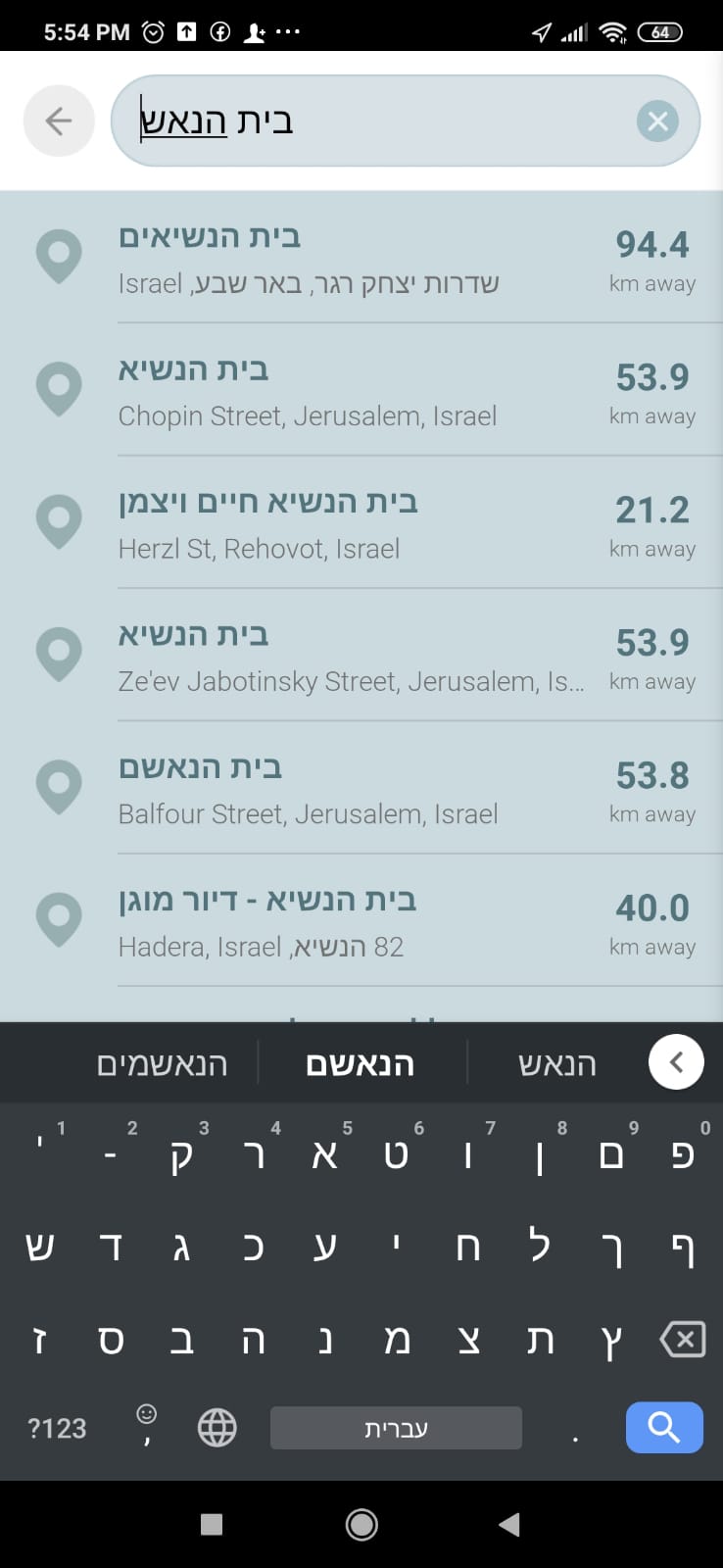
חיפוש “בית הנאשם” בווייז מעלה את רחוב בלפור בירושלים
רחוב שדרת האחוזה באפרת לא באמת נקרא כך. אדם שבית העסק שלו ממוקם באותו רחוב – יותר שביל עפר המתפתל בין כרמים מאשר רחוב – פרסם אותו עם שם הרחוב המומצא. ראש מועצת אפרת, עודד רביבי, הסתקרן, חיפש בווייז וגילה שהרחוב אכן נקרא כך באפליקציית הניווט, אף שרשמית זה לא שמו, כי אין לו שם. […] שמות הרחובות בווייז לקוחים ממקורות שונים, בהם שירותי מפות מקצועיים כדוגמת “מפה”, ומהיישום הווייזי, הוויקי במהותו, “עורך המפה“, שדרכו משתמש ווייז יכול לתרום ולערוך תכנים. כך, כנראה, הכניס אותו בעל עסק את השם “שדרת האחוזה” לווייז, ומאחר ששדרת האחוזה היא שביל עפר צדדי ללא שם בישוב קטן, היא הצליחה לחמוק מעיניי קהילת המיפוי, מה שלא סביר שהיה קורה אם מישהו היה מנסה לתת שם, או לשנות שם, לרחוב גדול בישוב גדול. בנוסף, כפי שהסביר בפייסבוק של “יהיה בסדר” מעין בן-דרור, שציין שהוא “כותב בשם קבוצת מנהלי האיזור בוייז שיושבים שעות ובודקים כל פניה ופניה וגם מאזינים לכם עכשיו.. [בשידור בגלצ; ע”ק]”, “לכל רחוב ישנה רמת נעילה…כבישים מרכזיים נעולים ברמה גבוהה יותר וכו’”.
[…]
בשנה שעברה גילתה הגולשת עדן קפלן בקבוצת הפייסבוק “כועסים בכעסך” כי בית הספר הדו-לשוני בירושלים, שפעילי להב”ה שלמה הציתו, מכונה בווייז “בית הספר הדו לשוני ימח שמם”. ווייז לא הגיבו לי עד היום, אבל “הארץ” דיווח אז שווייז מסרה שהנושא הובא לתשומת לבה ותוקן מיד, וכי מקור בחברה אמר שהכתובת נוספה על ידי אדם שהיתה לו סמכות להוסיף כתובות לאפליקציה ושאותו משתמש נחסם כעת.
חדר 404, 29.2.2016
שלום וויז
— דלית סוטר – גב"ח (@nfsgalibh) August 29, 2020
יש לכם 24 שעות להסיר את התועבה ולאחריהם אני מבטיחה לוודא, שרוב אזרחי ישראל יסירו את האפליקציה.
כמ כן, עליכם לפתור את הפירצה המאפשרת לייצורים מתועבים לבצע מניפולציות בחוסר האינטליגנציה המלאכותית שלכם.
שתפו, כדי שלפחות המסר יגיע ליעדו. pic.twitter.com/0LviGxkD1a

אם אתן רוצות להמשיך להפיק את הפודקאסט שלכן גם בימי הריחוק החברתי, אם אתם רוצים לנצל את הזמן הפנוי להתחיל את הפודקאסט שדחיתם עד עכשיו – דברו איתנו באימייל (Go@podcasti.co) או בטלפון (053-7337419), או בקרו באתר לפרטים נוספים Podcasti.co
הפינה “האחראי על האינטרנט” משודרת מדי שבת ב-19:30 בתוכנית “שישבת” בהגשת עידן קוולר בגלצ 
 אות פתיחה: ניאן קאט של daniwell, ביצוע גיטרות לניאן קאט של The GAG Quarter והשיר Never Gonna Give You Up של ריק אסטלי
  תודות: הדר בן יהודה
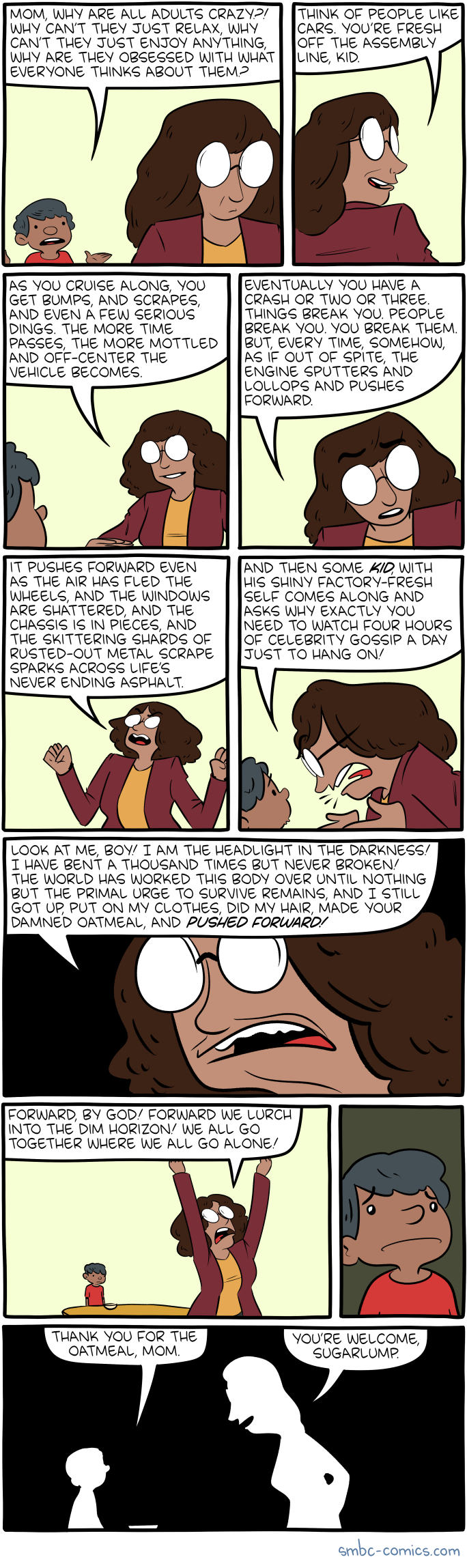
Saturday Morning Breakfast Cereal - Forward
Yuval Pintermood


Ladino New York.
Ladino (Judeo-Spanish) YouTube playlist:
Judeo-Spanish (widely known as Ladino) was once spoken by the Jews of Spain — after the expulsion of 1492, most of those speakers moved to the Ottoman Empire or to Morocco.
By the early 20th century, with the arrival of tens of thousands of speakers from cities such as Salonica, Istanbul, and Izmir, New York had become one of the language’s global centers.
These are the stories of “Ladino New York” — in 12 episodes, the stories of those speak the language or remember the language and its major role in the history and future of Jewish New York.
In the first one, Stella Levi, “a native Ladino speaker from Rhodes now in her 90s,” starts off by introducing herself as “Leví, o Levi — los italyanos dizen Levi, ande vos otros era Leví.” And in the fifth, Alicia Sisso Raz, whose family was originally from Tetouan, Morocco, speaks Haketia, mentioned here back in 2003. Thanks, Y!


Saturday Morning Breakfast Cereal - See Yourself
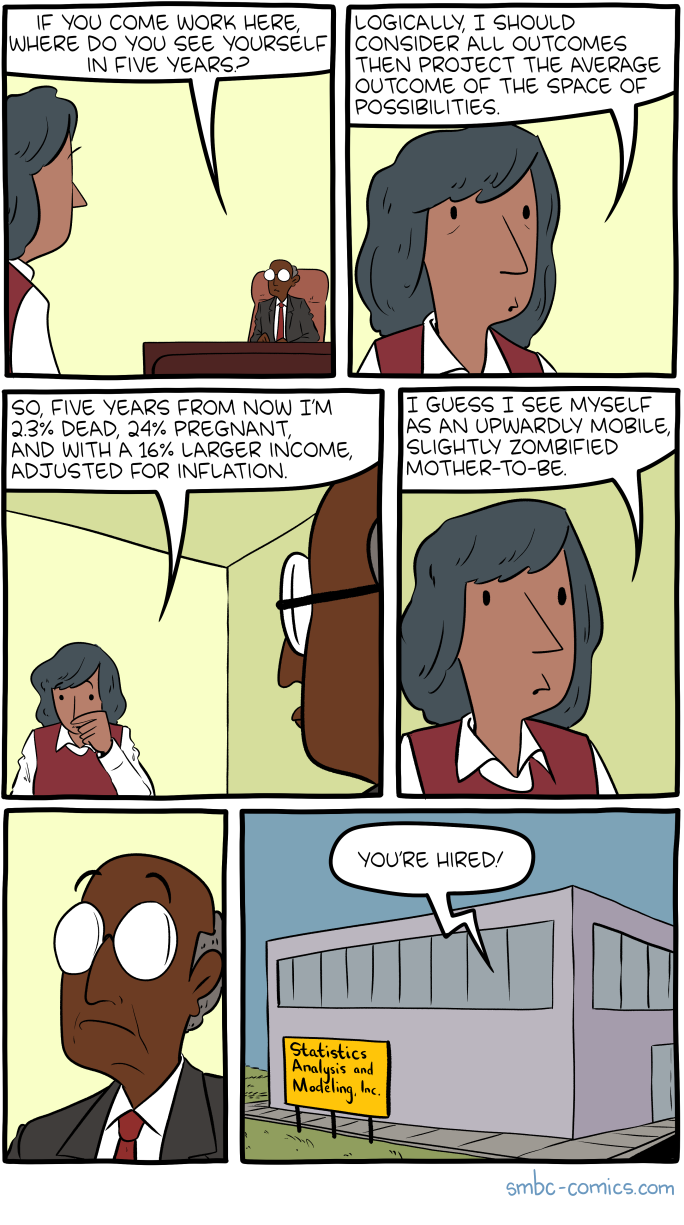
Click here to go see the bonus panel!
Hovertext:
That company really should've spent more time on their logo.
Today's News: