Shared posts

25 Apr 01:51

Adventures in Atomic Tourism: “They Wanted Me to Build Them a Bomb, So I Took Their Plutonium” Part I by Anne Wheeler

A few weeks ago I visited the Hanford Site in Washington State. As with my Christmas vacation visit to EBR-1, which you can read about here, I conned my mom into getting up well before dawn and driving several hours to an attraction probably of interest only to me. And you guys. Maybe.

The Hanford Site is a mostly shuttered nuclear production complex that was part of the Manhattan Project, but you may know it better as that super contaminated area in the Northwest US where there’s a whole lot of nuclear mess. The folks at the Hanford Site created the plutonium used in the devices discharged in the Trinity test, Fat Man (the bomb detonated over Nagasaki, ending WWII) and another 60,000 or so nuclear weapons. So they were busy.

Let’s take a look at the Hanford Site’s origin story.

In 1939, World War II was stomping across Europe, but the US was still pretty isolated from the conflict. Then some German scientists figured out how to split the uranium atom, which meant that they could possibly harness the power of atomic energy (fission!) for the first time, and we figured we should get our nuclear house in order. We started to worry that the Nazis maybe had an atomic bomb, or were at least thinking about it, or maybe it wasn’t the bomb we were so worried about, but the idea that they may be able to do something awesome (in the real sense of the word, not the totally tubular sense of the word), before we could
The US felt more and more pressure to join the just gestating nuclear arms race until the US government finally roped most of the research being done in US colleges and industrial labs around the country under the Manhattan Project umbrella.

The US Army Corps of Engineers was placed in charge of the Manhattan Project. The Army Crops recruited the DuPont Company (of later House of the Future fame) as lead contractor. Oak Ridge, Tennessee, had already been selected as the main Manhattan Project site, and the folks at DuPont recommended that the plutonium and uranium production facilities necessary to the project, (plutonium is essentially extracted from uranium after a very long and radioactive process) be located far away from Oak Ridge, Tennessee, and meet the following criteria:

  • A large and remote tract of land.
  • Space for laboratory facilities that were at least 8 miles from the nearest reactor and/or separation plants.
  • No towns of more than 1,000 people within 20 miles.
  • No main highway, railway or employee village closer than 10 miles to the hazardous rectangle.
  • A clean and abundant water supply.
  • A large electricity supply.
  • Ground that could bear heavy loads. (Like childbearing hips, but for land.)

A site in Southeastern Washington exceeded almost all of these criteria, thanks in part to the recently completed Grand Coulee Dam (which is still the largest power-producing facility in the US), and the site’s general proximity to the Columbia River, and it was about as far away from Tennessee as you can get without going to Canada, and nobody wants to do that. The only thing the site didn’t have going for it was that there were people there. The Hanford and White Bluffs settlements and numerous Native Americans in the area, who had most recently been relocated, i.e., screwed out of their lands, due to the Grand Coulee Dam project. So, the US government used its friend, eminent domain, to force the mandatory evacuation of approximately 1500 people (I don’t buy this number by the way—I assume it was much higher) from the area. Plus, 1500 is still a larger number than the 1000 mentioned in the requirements. The people were given the generous timeframe of 30 days to evacuate.1

The evacuated area was roughly the half the size of Rhode Island, which is an entire state. Before the evacuation, a whole lot of this land was planted in apricot orchards. If apricots get ripe in a government-seized orchard, and no one’s around to pick them… bring in the local prison camp to do it! For the next few seasons, even after the nuclear stuff started happening at the site, men from the low-security prison camp where brought in for the job. So radioactive apricots were likely part of the Northwest’s food supply for several years.2

So the men who were imprisoned because they didn’t want to fight in the war? Turns out they ended up being part the most destructive part of the war effort. Irony—it’ll get ya.

- - -

Our tour began at the B Reactor Tour Headquarters, located in a strip mall of the sort normally housing orthodontists and taco shops. At the tour headquarters we watched a very PR-ish, workplace-safety-style (but still good!) videos called The Hanford Story, outlining the area’s history (Apricots! Displaced people!) and current projects (cleanup, a cool nuclear glass production facility). I also wandered around looking at the few awesome artifacts on display. Like this really cool ID badge with dosimeter that had recently been freed from a block of sixty-year-old concrete.

There were also these scientist mannequins that were approximately 1/3 normal human size. (What’s up with the mini people at all of these atomic tourist sites, guys?) I don’t know what they were doing in the back of the room and I don’t know why they were so tiny. Did they escape from Oz? #mysteries. Anyway, the lady scientist even had tiny mannequin nylons (Wasn’t silk, or nylons in general, rationed during WWII? I’m not sure if she really would have had on nylons.) and penny loafers, so that was kind of awesome.

After the video and wandering the exhibits (which were basically the badge and the tiny scientists) we boarded the bus to take us to the site!

The bus was comfy and the windows were large. We were treated to a great out-the-window, over-the-loudspeaker tour by the bus docent, Ann. On the drive she pointed out the overall layout of the site. We could see seven of the nine reactors—amazing—and The Queen Mary of the Desert, which is the enormous Queen Mary_ sized plutonium separation plant plopped down in the middle of the desert. There were also the environmental features, including Rattlesnake Mountain, which is the tallest un-treed mountain in the world, you guys, and a sacred site of the Yakima Nation. Ann also showed us, or pointed in the direction of, really, the low security camp of the prisoners/apricot pickers, two gangs of elk, and the site of an old natural gas well that was accidentally discovered, and then used for years by sheepherders in the area as essentially a really big nightlight. Apparently, everyone knew it was there, and would just light it when they camped there, without an explosion incident, I think, until a gas company decided to make use of the gas for something other than shepherd camp lighting.

Our drive skirted the edge of the site, and once we were all the way at the other end, we turned off the highway and waited as Ann jumped off the bus and unlocked the gate to let us onto the grounds. The responsibility! I want those keys! But then again, the gate looked super heavy. We drove through the gate, and waited for Ann, because the driver was nice like that, and then proceeded down a fairly well-maintained road to a guard station (or just a group of trailers used by contractors at the site), where we were not checked. Then we made a right-ish turn toward the B Reactor! OMG, so exciting!

Here’s a pic of the B Reactor:

The B Reactor looked very much like EBR-1, except bigger. And there weren’t nuclear-powered jet engines wasting away under the hot Idaho sun. Instead, there was a big train used to haul nuclear stuff all over the site. And it was A-MAZ-ING. I mean, do you see how awesome it is?

Now I know this is kind of a bummer, but we’re not going to talk about the B Reactor today, because the tour of the reactor was so exciting, it needs its own column. Because you’d totally tl;dr the shit out of a column that was close to 5,000 words.

Instead, let’s talk a little about the mess at the site, and how we’re (trying to) fix it.

- - -

Environmental impact is possibly the trickiest piece of the nuclear puzzle.

Atomic weapons are radioactive. That’s why they’re so… god-like. And when this all started we really had no idea what the consequences would be, and I’m not just talking about the nearly immediate effects of dropping an atomic weapon in a populated area consisting almost entirely of wood-framed houses. I’m talking about the radiation that was inadvertently/unknowingly/maybe carelessly/I don’t really know released into the environment through the production of the weapons themselves.

It’s bad. Really, really incredibly bad.

The Hanford Site is the most contaminated nuclear site in the US.

First of all, we crapped-up the river. For almost thirty years, the Columbia River was used to cool the reactors at the Hanford Site. River water-cooling is still a fairly common process, but has been much refined since the Hanford days. This is what would usually happen. Water was pumped from the Columbia River, moved through the reactors to cool them, let sit in a tank for several hours upon exiting the reactor, and then returned to the river. Obviously, there was some radioactivity to this water. Radiation was measured downstream at the coast, where the Columbia River enters the Pacific Ocean. And you know what’s in the Columbia River? Salmon. And you know what salmon are? Food. For people, bears, beavers—all sorts of things.

Next, radioactive isotopes were released into the air when plutonium was separated from the uranium. These isotopes didn’t just disappear, but moved “downwind” to Idaho, Montana and parts of Canada. Downwinders experienced an increased rate of all sorts of cancers likely because of these radioactive isotopes. There was also something called the “Green Run” where 8,000 curies of iodine-131 were released over two days. This stuff causes thyroid cancer and is the stuff that we were/are worried about with the Fukushima accident.3

And then there’s all the stuff that was made radioactive in the actual plutonium separation process. This is literally anything that has touched something radioactive. Gloves, tools, glasses, machinery, sludge from the reactors—anything that has a radioactive tinge to it. Now, we did know that radiation was bad, we just didn’t really know the extent of it. It seems like anyway, judging by how we handled things, but then again, by this point in history, we’d had a few accidents, and we knew Marie Curie had died from her exposure to radiation, less than a decade before this, so…

Right now, the Hanford Site has 177 storage tanks. 149 of these tanks are “single-shell” tanks. This means there is ONE layer of tank between the radioactive stuff and the surrounding ground. Now this is in no way based on anything, but in my brain, these are septic tanks simply filled with radioactive mess rather than the normal septic tank mess. This seems like such a bad idea. And as you would think, some of these tanks (about 1/3 of them) are leaking, yes leaking, into the surrounding ground, with some of them leaking at a rate of almost a gallon a day. That’s a noticeable amount. I mean, you’d notice if a gallon of water were ending up on your kitchen floor every day, right?

Now I could try to shock you with the actual amounts of waste at the site (millions and billions are used to measure it), but what good would that do? We made a mess. But we were so young and strong-willed and clever and we were moving so quickly into the future, that we kind of skipped over some things. Some important things, but I get it. Maybe we did put the cart before the horse, but you know what? We ended a war because of it. I’m conflicted. We made all these incredible advances in science, more so than ever before, but we also unleashed the godhead and ruined chunks of our only home. It’s a lot to weigh.

But, we’re cleaning it up. Slowly. So very slowly, but it’s getting done, and with some very promising results both environmentally and technologically. One of the coolest parts of the cleanup, I think anyway, is the vitrification plant. Vitrification is basically making glass. The plan is to take the radioactive materials, combine them with glass-making components, super-heat the whole thing, pour it into molds and then let it cool, with the result being stable glass containing the radioactive waste. The glass can then be stored permanently, in a lot less risky/messy manner than before vitrification.4

Anyway, since we’ve spent this column in essentially the 1955 and 2015 of the Hanford Site if this was the _Back to the Future _franchise, we’ll spend some time in 1985 next time by looking at the B Reactor, the heart and soul of the whole (plutonium) production. Until then!

- - -

1 I’m really not sure why this evacuation part interests me so much, but it’s definitely turned into a brain bug and setup shop in my head. I’m super interested in the “before” of places. Maybe it’s because I’m a child of The West, home to too many dam/reservoir/reclamation projects to count, but show me a WPA/CCC-built reservoir and all I can see are the tangles of barbed wire and remnants of ranches rotting beneath. Entire settlements lie beneath some of these reservoirs and in my brain they look like the underwater Coney Island of A.I. If you’re at all interested in this type of thing, Northfork is an insanely beautiful (fictional) movie about the last days of a town before it is flooded as part of a new reservoir.

2 Can you imagine the cyanide you could have made from those suckers?!

3 Except the Fukushima accident has supposedly released 21 times the amount of iodine-131 that was released at Hanford during the first three years of operation. So, that’s concerning.

4 The vitrification plant reminds me so much of the scene near the beginning of Swan Song immediately following the nuclear strike on New York where Sister Creep finds sculptures created from the windows melting and fusing with the jewels of the 5th Avenue jewelers.

25 Apr 01:49

God, Einstein And Games Of Chance

The quantum world is mysterious. It behaves in ways that just don't match up with what we see in the larger world. Commentator Marcelo Gleiser probes the space between what we see and what we know in search of a bridge between both realities.

» E-Mail This     » Add to Del.icio.us

25 Apr 01:47

Fertilized World  |  National Geographic  |  Apr. 24, 2013  |  11 Minutes (2,929 words)

by Dan Charles
How modern fertilizer, and the nitrogen in it, have led to bountiful harvests with a larger environmental cost. Scientists are trying to find a balance:

"The nitrogen dilemma is most starkly visible in China, a country that loves its food and worries that supplies might run out. To the casual visitor, that anxiety seems misplaced. There’s a feast, it seems, on every street. In a restaurant called San Geng Bi Feng Gang, on the outskirts of Nanjing, I watch with wonder as dishes parade by: steamed fish, fried mutton chops, chrysanthemum-leaf-and-egg soup, a noodle dish made from sweet potatoes, fried broccoli, Chinese yams, steaming bowls of rice.

"'Did you always eat this well?' I ask Liu Tianlong, an agricultural scientist who’s introducing me to farmers nearby.

"His boyish smile fades, and for a second he looks grim. 'No,' he says. 'When I was young, you were lucky to get three bowls of rice.'"
25 Apr 01:47

Lello Bookstore, Porto, Portugal

by Sadie Stein

The Lello bookstore, Porto, Portugal,

The Lello bookstore, Porto, Portugal.

“Standing there, staring at the long shelves crammed with books, I felt myself relax and was suddenly at peace.” —Helene Hanff, Q’s Legacy


25 Apr 01:46

“Invalidenstrasse” & Other Poems

by Staff
psyche_amor

Detail from “Cupid and Psyche,” by François Gérard (1798)

We are pleased to introduce the curious and terrifying work of Szilárd Borbély to an American readership. The poems that follow have been drawn from two collections, The Sequences of Amor and Psyche and Berlin-Hamlet, and are translated from the Hungarian by Ottilie Mulzet. The full portfolio can be found in the February/ March print issue.
                                                                                                          —Uzoamaka Maduka


[ Letter V ]

If I come to Berlin at Easter, would you have an hour to spare,
so that I could visit you? It could be at any time, for I won’t
have any other business in Berlin, save our meeting. I hardly
have a proper suit in which to appear before you. But that is truly

incidental. One easily slides into temptation, however. I am only
travelling to Berlin to show myself to you, the one misled
by my letters, so you can see who I really am. I could not accomplish this in writing,
because I was in defiance of myself: in the light of reality

nothing remains hidden. Presence is irrefutable. If only I will have had
enough sleep when I meet you. If only my knees won’t shake. What
a farcical and vague monologue this is. If I travel,
I will be staying in the Askanischer Hof hotel on Königgrätzstrasse.


[ Invalidenstrasse ]

[i]

I must speak of my fear. Of the mornings
when I awoke drenched in sweat. After dreams
without memories. And I wanted nothing. Simply to disappear. Silence,
muteness. I didn’t know why. Then
it came to me: What would happen, if—? What would happen if
there wouldn’t be anything anymore. Everything I’m doing now

I wouldn’t have to finish. All of those things
which I don’t know how to do. At once to reach
the end. I should like to reach the end. Let there be an end.
I began to desire this. If I would depart. Perhaps then


On the Wings of Freedom

Being lured into the butterfly-hunter’s snare
was purely intentional. The intentions of a body
that desired what was beyond it. Savouring the
anonymous violence which now could be perpetrated,

the body having become a mere object. Suffering
like an animal. But the soul is free. To know
that dying is almost a joy to the physical being
when its spirit is a mere pawn. “Who are you”—Psyche

asked of the stranger. “Bitch!—I’m going to fuck you,
so just shut up and lie down”—came the answer.
And darkness was all around them, as if they were in someone’s mouth.

Because language is like night-time. Moist,
an indecipherable series of grunts. Pure dread, and
inchoate visceral shrieking. It is inhuman.


[ Letter VIII ]

So may I come to visit? If so, please respond in time
to the following questions: what is your telephone number? Shall I dress
in black, or would it suffice simply to arrive in my summer
suit? I would much prefer that, as it would be more convenient, or more properly

said, the former is virtually impossible. Shall I bring flowers
for your mother? What kind? I am going to stay in the Askanische Hof
again. It is difficult to say what paralyzes me so in your presence.
Why would I prefer to struggle like a beast on the forest’s earthen floor? There must

be a reason, mustn’t there? It terrifies me, if you say “I don’t understand
what this is all about, he writes often enough, but there’s no rhyme or reason
to his letters, I don’t know what they’re saying, we haven’t grown
closer, and there seems to be no hope of that, at least for now.”

25 Apr 01:36

23 April (1934): William Carlos Williams to “the Editor of A Year Magazine”

by Staff

This letter, a response to an editorial written by one Thomas Uzzell, shows Williams expounding upon what he views as the shortcomings of the American literary world. For a sense of how Williams’s views developed in the following years, click here and listen to his 1950 radio appearance on the Mary McBride Show.

To the Editor of A YEAR MAGAZINE 

April, 1934

Mr. Uzzell ably and sympathetically states the terms on which the never-to-be-ended battle against “The existing, old, reliable, literary magazines” must go on.

My comment on his categories would be:

1. The magazines which pay and still pretend to keep a literary standard, even though we cannot accept their shrewdly whittled codes, can print no more than about 200 short stories a year in the aggregate. The larger section of the field is occupied by nonpaying periodicals. Furthermore, it is this “radical” enterprise which has always dragged the paying magazines out of their own filth finally. Mr. Uzzell is too genial and forgiving toward the sluggardly offenses committed against good writing by the “old, reliable, literary magazines” which he cannot quite keep from somewhat defending. They have only one virtue, they pay. 

2. Americans in general are infantile in their reactions to sex. It still remains a burning topic with us; fully three quarters of the scripts that come into the small magazine offices have sex for theme; and they are terrible in their unenlightenment. I doubt if we shall ever achieve the French viewpoint or deftness here.  We are not much better at the pathology of it than at the physiology. What to do with all this steam is something that has puzzled me a good deal. I am glad that Mr. Uzzell recommends further investigation. Is something that we simply cannot drop, we haven’t done anything distinctive with it as yet. But the dirty mindedness of the pay magazine editors with their lists of censored words is the direct cause of forcing the thing underground into the frankly sex toilet-paper rags. 

3. It’s a hard thing for a young writer to find time for reading; he can’t get to the books and he is probably so harassed by parental, economic, and sacredly national impedimenta that he hasn’t even a hardwood chair to sit down on before table for writing. Compared with Europe, America is completely bare of books and they cost too much for every damn-fool reason. So, we don’t read. It hasn’t happened to us yet to have a literary saturation of the atmosphere. Therefore we don’t know what Europe has done before us. We think, then, that because we put down what we see (and what else, primarily, can we do?) we have thus achieved realism and so interest. I am emphasizing this from Mr. Uzzell’s statements because it is important. I say all this just to thank Mr. Uzzell for having mentioned Zola. Zola makes more of our realism look pretty sick.  

“The high art of the realist is much more subtle and profound than most youthful experimenters believe.” Then comes out the most interesting portion of Uzzell’s article. He gives three subcategories: (a) simply physical or external realism, (b) psychological realism, and (c) biological realism. He should have extended his comments on this last. I take it he means what we see in Shakespeare. Hadn’t it better have been called, imagination? “Use your imagination” is the common American term. It amounts to realistic observation related into an equally real schematic whole. But I’d like to say a word for the first of these sub-heads also: 

“Simply physical or external realism” has an important place in America still. We know far less, racially, than we should about our localities and ourselves. But it is quite true that the photographic camera will not help us. We can though, if we are able to see general relationships in a local setting, set them down verbatim with a view to penetration. And there is a cleanliness about this method which if it can be well handled makes a fascinating project in which every bit of subtlety and experience one is possessed of may be utilized. 

Plot is like God: the less we formulate it the closer we are to the truth. 

For some time I have maintained that the “radical magazine” is not a series of failures, always dying, but one continuous success, impossible to kill. It is an unconscious cooperative division of effort. Some of the cruder faults in its make-up have been dissected of and profitably laid bare by Mr. Uzzell. I’d like to know more about Anvil.  

William Carlos Williams

25 Apr 01:34

China earthquake: Sichuan province 2013

A powerful earthquake hit the Sichuan province of China near Ya'an city over the weekend reportedly killing some 200 people. Thousands of rescue workers have been deployed to help feed, treat, and house the displaced residents and help clear roads blocked by landslides in the remote area. The quake comes just short of five years after a massive quake in the same region killed some 70,000 people. -- Lloyd Young ( 46 photos total)

A woman whose relatives were killed in Saturday's earthquake cries while sitting on a pile of rubble in Lingguan township in Baoxing county of southwest China's Sichuan province on April 22. The earthquake in Sichuan province killed some 200 people, injured more than 11,000 and left nearly two dozen missing, mostly in the rural communities around Ya'an city, along the same fault line where a devastating quake to the north killed more than 70,000 people in Sichuan and neighboring areas five years ago in one of China's worst natural disasters. (Associated Press)


25 Apr 01:33

Louis C. K. on Career Capital

by Study Hacks

The Power of Diligence

The comedian Louis C. K. lives a remarkable life. How did he make that happen? Here’s an interesting quote from a recent New York Times interview:

There’s people that say: “It’s not fair. You have all that stuff.” I wasn’t born with it. It was a horrible process to get to this. It took me my whole life. If you’re new at this — and by “new at it,” I mean 15 years in, or even 20 — you’re just starting to get traction. Young musicians believe they should be able to throw a band together and be famous, and anything that’s in their way is unfair and evil. What are you, in your 20s, you picked up a guitar? Give it a minute.

Notice his use of the phrase “horrible process” in describing his rise. This is exactly what is wrong with telling people: “If you do what you love, you’ll never work a day in your life” — you’re providing them a flawed description of reality.

Careers you love require a lot of work. Sometimes even “horrible” work.

You can’t escape the necessity of career capital

(Hat tip: 99u)

25 Apr 01:32

Theory and Practice

by Greg Ross

http://commons.wikimedia.org/wiki/File:Richard_Feynman_-_Fermilab.jpg

In 1982 Richard Feynman and his friend Tom Van Sant met in Geneva and decided to visit the physics lab at CERN. “There was a giant machine that was going to be rolled into the line of the particle accelerator,” Van Sant remembered later. “The machine was maybe the size of a two-story building, on tracks, with lights and bulbs and dials and scaffolds all around, with men climbing all over it.

“Feynman said, ‘What experiment is this?’

“The director said, ‘Why, this is an experiment to test the charge-change something-or-other under such-and-such circumstances.’ But he stopped suddenly, and he said, ‘I forgot! This is your theory of charge-change, Dr. Feynman! This is an experiment to demonstrate, if we can, your theory of 15 years ago, called so-and-so.’ He was a little embarrassed at having forgotten it.

“Feynman looked at this big machine, and he said, ‘How much does this cost?’ The man said, ‘Thirty-seven million dollars,’ or whatever it was.

“And Feynman said, ‘You don’t trust me?’”

(Quoted in Christopher Sykes, No Ordinary Genius, 1994.)

25 Apr 01:32

Save Money and Shop Smart: Know the Style Pyramid

by Antonio

Let’s just be honest: style, for men, is a hard thing to grasp. It’s especially hard when buying new clothes. We always forget our sizes, we don’t know how things are supposed to fit, and we can never figure out what matches or looks good. Sometimes what we buy ends up sitting in the closet because we don’t like the way it fits or looks when we wear it. In short, shopping for clothes can feel like a confusing or frustrating process. But it doesn’t have to be. What if I told you there was a way to simplify style? If you can focus on the easy-to-remember tips in this article, you’ll be able to walk into any store with a clear idea of what to buy, and you’ll walk out and into the world with confidence in how you look.

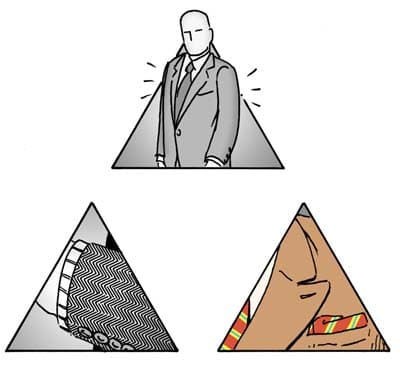
My favorite tool for selecting clothes that look good on you is the Style Pyramid.

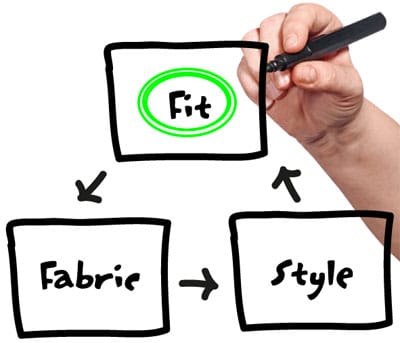
It’s a simple three-step rubric: Fit, Fabric, and Style.

Fit - Fabric - Style - The Style Pyramid

Fit, Fabric, & Style – The Style Pyramid

A piece of clothing that doesn’t meet all three criteria is a piece of clothing you’re better off not wearing.

  • Fit sits at the top of the pyramid. Everything else comes from it. If a garment doesn’t fit well, none of its other characteristics matter — it’s not going to look good on you. Fit should always be your first stopping point when you consider a purchase.
  • Fabric is key in determining the quality of a piece of clothing. If you’re not satisfied with the raw material, you’re not going to be all that satisfied with the finished product. It’s less of an absolute barrier than fit — you can have many degrees of quality, whereas fit mostly breaks down into “good” and “bad.” That said, fabric is still a crucial consideration.
  • Style is about your own personal taste and the image you want to present. If something fits and is well made, but doesn’t give you the look you want, it’s still not a good purchase.

Work your way through the pyramid in this order when you’re thinking about buying clothes. If something doesn’t fit, stop there. If it fits, but it seems cheaply made, skip it. And if it fits and is of good quality, but doesn’t feel right for your style, wait for something more suited to your tastes.

When all three intersect — then it’s time to buy.

fit-400

Fit

Fit is at the top of the pyramid for a reason.

The way your clothes sit on your body affect the way they look to others more than anything else about them.

Most men wear a suit 2 sizes too large. Fit matters - a lot.

Most men wear a suit that is two sizes too large. Fit matters – a lot.

Now, that doesn’t mean that you can look sharp-dressed in totally inappropriate clothes just because they fit well. A custom-tailored banana suit is still a banana suit. But it does mean that the best suit in the world can look awful on someone it’s not fitted for.

Think of it as the ultimate fashion triage: does the item in question fit your body? If not, skip it. It’s not worth wearing, no matter what its other merits might be.

The most general guideline for a good fit is that it should sit close to your skin without pinching or constricting. You shouldn’t feel the cloth tugging when you move around, but you also shouldn’t have any loose billowing or sagging.

In general, you should always be able to slip one or two fingers between the clothing and your body. But, every piece of clothing is a little different, so we’ll take a look at how to get the perfect fit for each item separately.

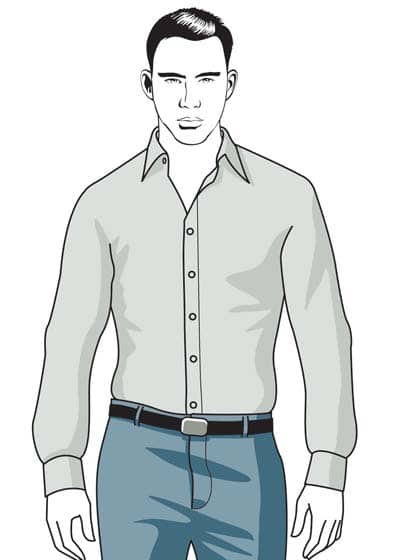
Notice no billowing around the waist - beware the muffin top!

Notice there is no billowing around the waist – beware the muffin top!

Shirt Fit

We’ll assume a collared shirt here so that we cover all the bases, but these guidelines work fine for T-shirts and other non-collared shirts as well. The only real difference is that a shirt you’ll be wearing untucked can be a little looser around the stomach and waist without it being noticeable.

  • The shirt collar should rest on your neck but not pinch it. In the case of a dress shirt, this should be with the collar button fastened, as if you were going to wear a necktie. If you can’t do that without feeling constricted, or if there’s a gap between the cloth and your neck, the fit is off.
  • The shoulder seams should end right where your shoulders do — the point where the vertical plane of your bicep intercepts the horizontal plane of your shoulder. If they don’t reach all the way, or if you’ve got part of the seam hanging down your bicep, it’s a no-go. This is a tough one for a tailor to adjust, so if the shoulder fit isn’t good to begin with, it’s usually not worth buying.
  • The cuffs should be long enough to cover the large bone in your wrist (the one directly above your pinky finger). If it’s shorter than that it won’t show properly beyond a suit or sports jacket sleeve. A straight sleeve or a slightly tapered one are both fine; the taper gives a better fit for most men.
  • The hem should fall at least three or four inches past your waist so that it can tuck in completely. If it has “tails” in the front and back, rather than an even hem, make sure the points at the side where the tails come together can tuck in, as well as the longer tails in front and back. You need the whole shirt to tuck, not just the longest parts.
  • The waist is where a lot of guys are wearing too much cloth. If your torso tapers, your shirt needs to as well. “Slim fits” can help with that, and it’s a relatively minor adjustment for a tailor to take the shirt in as long as there isn’t too much excess fabric. Get as close a fit as you can manage off the rack and then take it to a tailor if you need more.

Very tall or very short men also need to keep an eye on proportion. It’s easy for a breast pocket to wind up too far up or down your chest, or for a collar to be too short for your neck, especially when you’re having things adjusted. Keep an eye on the details and make sure none of them are “floating” too far from where other men are wearing theirs.

black-white-fit

Jacket Fit

A jacket gets a little more space off the body than a shirt, but not much. You’re still trying to avoid gaping open spaces, billowing or hanging cloth, and anything tight enough to pinch or pull.

  • Shoulders, like with shirts, have to be well-fitted to begin with. They can’t be adjusted, generally speaking. Like the shirt, the seam should end right where your shoulder does, not before the turn or hanging over it.
  • The chest is usually the only numerical measurement for off-the-rack jackets. If it’s taken right, the lapels of your jacket should rest comfortably on your shirt front when you stand, with just enough slack that you can slide a hand into the inner pocket. If the lapels are hanging far enough forward that there’s visible space between the shirt and the jacket in your natural resting pose, it’s too loose.
  • The waist affects how the buttons close. They should fasten without any tugging or pressure on the button (it not only looks better, but it’ll also save you buttons popping off). The buttoned sides of the jacket should rest on the shirt beneath them, with the fabrics touching.
  • The sleeves should fall just a bit shorter than your shirt sleeves. “A half-inch of linen” is the traditional phrase, but in practice it can vary a bit, so long as the shirt is visibly longer than the jacket you are just fine.
  • Length should be at least enough to fall past the curve of your buttocks, rather than resting above it.

Your big warning signs with a jacket are flapping around the lower part, gaps between the jacket and your chest, and of course, any tugging or tightening when you move. Tightness in the arms or sides can also show up as wrinkles where the fabric is pinching.

Notice the crotch doesn't extend down to the middle of the thighs - and the material near the cuff isn't overly bunched.

Notice the crotch doesn’t extend down to the middle of the thighs – and the material near the cuff isn’t overly bunched.

Trouser Fit

It’s good to have your shirt and your jacket flat against your skin at most places, but your pants — for obvious reasons — need a touch more room than that. The problem is that most guys go too far and get more room than they need, going from “comfortable” to “saggy.”

  • Length is pretty easy to judge; a good fit has the trouser legs ending where they just brush the tops of your shoes, or rest very lightly on them. This is why you need to bring nice shoes along with you when you go shopping. If you’re not touching the shoe leather at all or you’ve got a pile of bunched-up cloth resting on it, the fit is off.
  • The waist should be tight enough that you can’t pull the pants all the way off without unbuttoning/unzipping the fly. If it’s digging in or bunching up, it’s too tight. Aim for a fit in between those two. Make sure you’re fitting the waist where you want to wear it — on slacks, that should be up above the hips, at the natural waist. Jeans can be a touch lower, closer to the hips.
  • The rise is the distance from the waistband to the place where the seams join in the crotch. It should be as close to your body as comfort allows. A little room for movement is obviously necessary, but a lot of men are wearing pants with two, three, even four or five inches of “sag” in the crotch. Get rid of that! You want enough room for everything you’ve got between your legs, and not much more.
  • The seat can vary a bit from brand to brand. There’s no real numerical measurement for it, but it’s another place where you don’t want sag. A loose trouser seat makes your butt look big and soft. Find a brand that hugs your cheeks. You want just enough room that you can slip a wallet in comfortably.

Trouser styles can vary pretty widely, so take these as broad guidelines. Heavier-set men are going to want a little more looseness in the seat than skinny dudes. Just be sure you’re avoiding anything that’s uncomfortably tight or so big you can make the extra fabric sway by swinging your hips around.

Fabric-400

Fabric

Judging the quality of fabric at a glance (or a touch) can be challenging.

Product information can sometimes help you here, but it’s just as often misleading — things like “thread count” can be measured in different ways, and some merchants are more honest about it than others.

Inspecting Fabric

In general, if all you have to go on is the actual garment itself, look for the following key qualities:

  • 100% construction. If it’s cotton, it should be all cotton. If it’s wool, it should be all wool. A percentage point or two of synthetics may be fine (it’s common in “stretch” clothing, for example, and some wools will come with a small amount of synthetic blended in for mildew resistance), but if the blend goes much lower than 95% base material, it’s probably cheap fabric.
  • Appropriate weight. This can vary. If it’s a summer shirt, the weave should be loose and made from fine threads. If it’s a three-season suit, it should be made from sturdy wool, and you should be able to feel the weight in your hands. Avoid anything that seems flimsy, especially in trousers and jackets. You want those to have enough heft that they drape smoothly when you wear them. Too light and they’ll wrinkle and billow.
  • Even weave. Check for little knots or imperfections in the surface of the cloth. You don’t want those little bumps, and you definitely don’t want holes or snags. Not all fabrics are smooth — seersucker, for example, is going to be distinctly dimpled — but they should be even. If some bumps are bigger than others, or the spacing is uneven, you’ve got a problem.
Inspect & look for the details in clothing - if they are there you can bet the manufacturer did right in places you can't see.

Inspect and look for the details (such as a boutonniere latch on a jacket) – if they are there you can bet the manufacturer did right in places you can’t see.

Inspecting Construction

We say “fabric” because it’s convenient and easy to remember, but it’s worth taking a look at the rest of the construction as well. It’s less common for manufacturers to make shoddy clothing out of good cloth, but it’s not unheard of. Jeans are particularly common offenders; beware of “all USA” denim that’s then made into jeans in the Philippines or Malaysia or somewhere known for lower-quality goods.

Take a look at the details of the construction, whether it’s a fabric item or something as basic as a leather belt:

  • Stitching is a good place to check for basic quality assurance. If there are loose thread ends or wobbly stitches, the garment probably wasn’t made with much care or checked very closely. You can safely expect that to result in a lower quality (and lifespan) overall.
  • Hemming at the cuffs and edges are another good place to look for unevenness or imperfections. If the hem has wrinkles or folds in it, or is wider in some places than others, you’re not looking at a very well-made garment.
  • Materials on the detailing are another good clue. Are the buttons Mother-of-Pearl or plastic? Are the zippers thick brass or flimsy plastic? Are the rivets (blue jeans) evenly-stamped and sturdy? Think twice before buying anything that cuts corners on those small details.

Buying Online

Most of the above tips are only useful when you can hold the garment in your hand. How do you check the fabric (and construction) quality when you’re buying based on nothing but a picture and a written description?

  • Stick to brands you trust. If you can, try to avoid making first-time purchases of a brand online. Buying a pair of jeans from a company when you already know you like their quality is fine; buying just because you’ve heard good things is riskier. You could get lucky — but you could also get unlucky.
  • Only buy from sites with good return policies. Look at both the refund/exchange policy and the shipping details. Full refunds with no questions asked are best. Free exchanges with the shipping labels included (so that you don’t pay the return shipping) are nearly as good. If the website doesn’t have either of those, you’re taking a chance on spending more money to return something that didn’t work out.
  • Construction methods can take a little more research to understand, but it’s worth your time. If you’re buying shoes, know the difference between Goodyear and Blake construction. If you’re looking at jackets, know the difference between fused and unfused canvases, vented and unvented backs, and so on. When the only information you get about a product is a short description or a bullet-pointed list, you want to know what every term in there means.

style-400

Style

Style is the hardest of these three to define. Does the item say what you want it to? If the answer is yes, then it suits your style.

Wardrobe Interchangeability

Try to think about it in terms of your existing wardrobe. Look at the purchase you’re considering and imagine pairing it with the clothes you already own. If you can come up with a half-dozen different outfits, it’s a safe bet that it goes with your current style.

If you can’t think of any pairings, that’s not grounds for automatic rejection, but it does mean you should think hard about how you’d use the item.

It’s alright to break new ground — in a way, it’s ideal. We should all update our style from time to time. But do it realistically. If you’re going to leave it hanging in your closet for 360 days out of the year, it’s probably not a good investment.

Keep in mind, too, that some new styles may require you to purchase several items at once. Not a problem if you’re willing to do it — just be honest with yourself. Only commit to new looks that you’re pretty sure you’re going to wear regularly and confidently.

wardrobe-400

Style Upgrades

A good final question to ask yourself is, “Does this improve my look?”

Some of the best purchases are small, simple things that take your existing wardrobe and make it a little nicer-looking.

A new suit is great. But day to day it’s probably not going to make as much difference as, say, trading your Chuck Taylors for a pair of suede saddle shoes.

Not all style considerations are going to be major. They could be as basic as looking for a new buckle to put on an ordinary brown leather belt. Those little changes are often the biggest bang for your buck in terms of improving your look. Put enough of them together and suddenly you’ve got a “personal style” — without having to buy a whole new wardrobe for hundreds of dollars.

sport-jacket-400

Conclusion

The three-step style pyramid is deliberately simple.

You’re going to have more choices, more questions, and more decisions to make than this overview gives you. But it’s a good starting point — and, more importantly, it’s a good stopping point.

If something fails one of these three basic tests, you probably don’t want it in your wardrobe. So always ask yourself:

  • Is the fit good?
  • Is the fabric decent?
  • Does it suit my style?

If you’ve got a “no” in there anywhere, skip it. There’ll be better clothes some other day.

Video Summary of Post

_____________________

Written By Antonio Centeno
Want My Free Style EBook? Click Here

Related posts:

  1. A Man and the Sports Jacket: A Tailored Suit’s Sports Jacket Giveaway
  2. A Man’s Style in Relation to His Body Type
  3. The Art of Manliness Suit School: Part II – The Alterations Every Man Needs
  4. A Man’s Primer on the Blazer Jacket
  5. Measuring the Man: How to Measure Yourself for Clothing (Plus a Bonus Personal Sizing Card)


25 Apr 01:30

Mum

by Belinda Joy
A week with my mother, reconnecting. Walks on the beach. Home cooked dinners. Sewing. Birthday lunch at Mavis' Kitchen. The pleasure of giving. Watching Julianne Moore nail Sarah Palin. Mockingbird Cafe at Kingscliff. The big move in Silver Linings Playbook. Dahl with Katharina. A morning trip to the Murwillumbah farmer's market. The pikelets of my childhood. Nurturing.


Location:Beltana Drive,Tweed,Australia

24 Apr 15:22

Pick’s Theorem

by Greg Ross

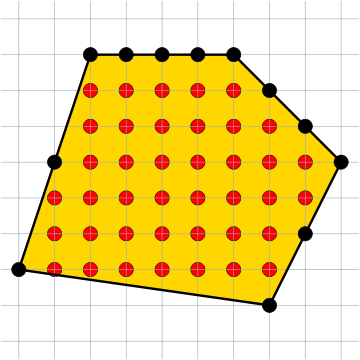
http://commons.wikimedia.org/wiki/File:Gitterpolygon.svg

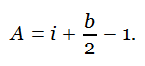
Georg Alexander Pick found a useful way to determine the area of a simple polygon with integer coordinates. If i is the number of lattice points in the interior and b is the number of lattice points on the boundary, then the area is given by

pick's theorem

There are 40 lattice points in the interior of the figure above and 12 on the boundary, so its area is 40 + 12/2 – 1 = 45.

(Thanks, Pål.)

24 Apr 15:22

Congress Deliberated Something Yesterday?

by Marc Herman
(IMAGE: AURIN/SHUTTERSTOCK)

Public opinion of the U.S. Congress is so low (Gallup had it at 15 percent approval last week) anything but pure party politics can feel unexpected from the institution. Yesterday’s Senate hearings on the use of unmanned “drone” aircraft for targeted assassinations were an astonishing example.

Most attention on the hearing has focused on the unlikely testimony of Farea Al Muslimi, the 22-year-old son of a hardscrabble farmer and an illiterate mother. Al Muslimi’s town in rural Yemen was hit by a U.S. drone strike less than a week ago. (He’s written a version the experience in an article for Al Monitor, here.)

Al Muslimi told a Senate Judiciary sub-committee he had become an “Ambassador for the United States” after returning from a State Department study abroad program. Then he described last week’s drone strike turning his village against the U.S. in the time it took a missile to explode.

The testimony caught on in international relations circles yesterday, and has hit some mainstream media—The Huffington Post highlighted it.

It’s still a stretch to say the testimony reached a wide enough audience to test Al Muslimi’s closing thoughts:

I believe in America and I deeply believe that when Americans truly know about how much pain and suffering the U.S. airstrikes have caused and how much they are harming efforts to win hearts, minds and [unclear] in Yemen and hearts and minds of the Yemeni people, they will reject this devastating targeted killing program.

(Aside: If that line, “I believe in America,” feels familiar, it is.)

The five other people who gave testimony at the hearing—a retired Air Force Colonel; a General; two law professors; and terrorism analyst Peter Bergen, notably the last American journalist to interview Osama bin Laden—received less media attention yesterday. But a look at the transcripts gives the impression of a thoughtful exchange among the panel, as if an actual debate had somehow broken out on Capitol Hill.

Georgetown University law professor Rosa Brooks spoke to the legal challenges of the drone program:

 …drone technologies enable the United States to strike targets deep inside foreign states, and do so quickly, efficiently, and deniably. As a result, drones have become the tool of choice for so-called targeted killing”—the deliberate targeting of an individual or group of individuals, whether known by name or targeted based on patterns of activity, inside the borders of a foreign country. It is when drones are used in targeted killings outside of traditional or “hot” battlefields that their use challenges existing legal frameworks.

Law is almost always out of date: we make legal rules based on existing conditions and technologies, perhaps with a small nod in the direction of predicted future changes. As societies and technologies change, law increasingly becomes an exercise in jamming square pegs into round holes. Eventually, that process begins to do damage to existing law: it gets stretched out of shape, or broken. Right now, I would argue, U.S. drone policy is on the verge of doing significant damage to the rule of law.

Compare that to retired Air Force Colonel Martha McSally. McSally doesn’t argue Brooks’ point. Rather, she argues that if an attack is going to happen, then drones are by far the best way to avoid a bomb hitting anything—or anyone—other than the target.

Unlike other platforms, the RPA ["Remote Piloted Vehicle"] platform enables commanders, analysts, and legal experts to monitor the target area in all phases of the targeting process with the ability to abort the strike if the target moves or civilians enter the area. This oversight is unprecedented. As a comparison, during a close air support mission in Afghanistan with A-10s from my squadron, rules of engagement were set and final decisions on weapons release were left with the enlisted ground controller supported by the Lieutenant or Captain pilot above, both of which are under stress due to the complexity and danger of combat situations. For targeted strikes of fleeting targets in low air defense threat environments, an RPA is the best platform to choose to ensure precision, persistence, flexibility, and minimize civilian casualties.

That brings us to Bergen, who provides a statistical picture of the victims. Citing a New America foundation study he in part ran, Bergen testified that”between 454 and 637 non-militant individuals” died in U.S. drone strikes just in Pakistan between 2004 and now. Of those, he estimated between 258 and 307, or just over 10 percent of the total number of people killed by drones in Pakistan, were civilians. He concludes with an echo of Al Muslimi’s account:

To what extent has the tactic of using drone strikes overwhelmed the broader strategic objectives of the United States? For instance, have the hundreds of drone strikes in Pakistan all really been necessary? If the cost of the drone program in Pakistan, whose victims are largely lower-level members of the Taliban, is the increasingly hostile view of the U.S. now prevalent among the 180 million citizens of Pakistan—a country with nuclear weapons and the second largest Muslim country in the world—is that cost too high?

24 Apr 15:19

No More Tangled Extension Cords: How to Wrap Up Your Extension Cord Like a Contractor

by Brett

header

Do your extension cords look like this when you’re unraveling them, no matter how nicely they were wrapped up?

upset

Today I’m going to show you a tip that will banish tangled and knotted extension cords from your life. It’s called the Contractor’s Wrap, and I learned it from a Boy Scout leader who worked as an HVAC man back when my mustache was merely peach fuzz.

Here’s how it works.

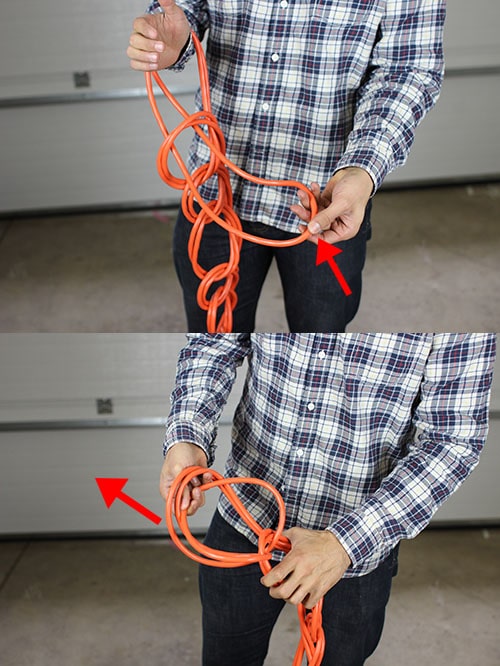
Step 1: Connect the Male and Female Ends Together

connect

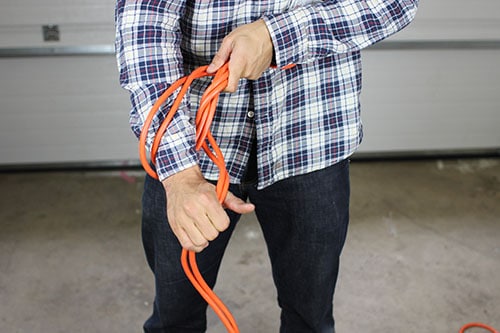
Step 2: Make an Overhand Knot at the End

overhandknot

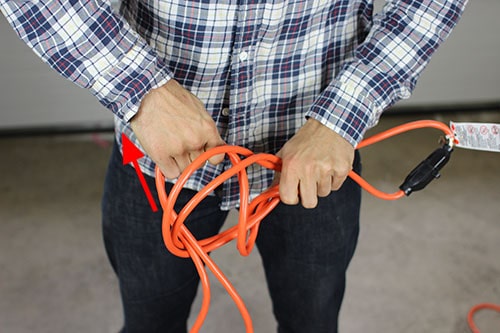
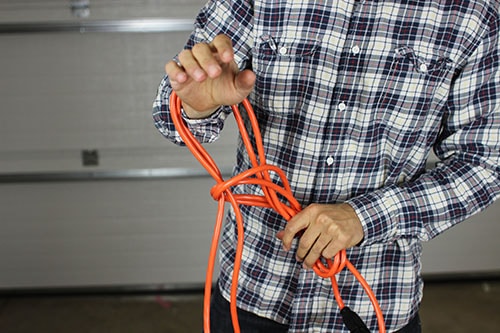
Step 3: Make a Chain of Successive Slip Knots

grab

Put your hand through the loop of the overhand knot that you just made and grab the two strands of cord beneath it.

pullthrough copy

Pull the two strands through the loop and form another loop.

loops1

Put your hand through the loop that you just made. Grab the two strands of cord beneath it, and pull it through the loop to form another loop. Repeat until you get to the end of the cord.

Step 4: Tie Off the End

finish knot

When you reach the doubled-over end of the cord (top image), you’ll want to pull it through your last loop to form an overhand knot.

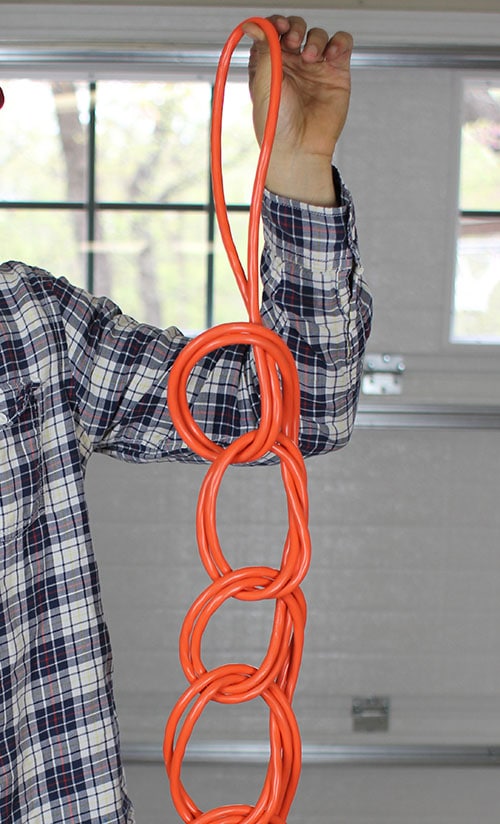
Finished Product

finishedsinlg

Your finished product should look something like this. Just hang it up to store.

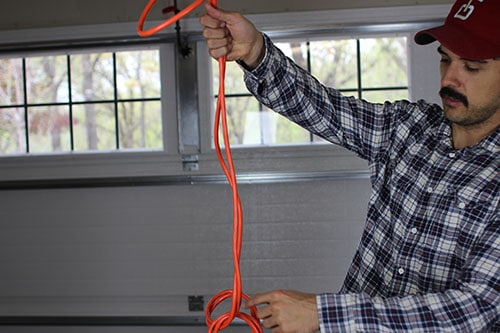
Unraveling

unravel

To unravel your extension cord, pull out the end to undo the overhand knot you finished with and then just keep pulling. Because you have a chain of successive slip knots, it will all just magically unravel without any tangling.

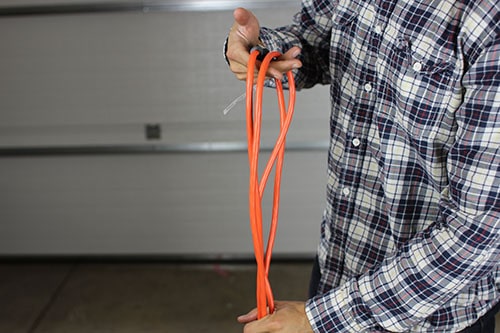
Doubling Up for Longer Cords

doubleup

If you have an extension cord that’s 50 feet or longer, I recommend doubling up your cord. Instead of pulling two strands through your loops, you’ll have four. It’s important that you grab and pull through all four strands when making your loops

doublefinish2

Finished doubled-up Contractor’s Wrap.

Related posts:

  1. How to Tie a Tie
  2. How to Easily Create Your Own Rope Ladder
  3. 3 Knots Every Fisherman Should Know
  4. Take the Navy SEAL Underwater Knot Tying Test
  5. Blacksmithing Basics: How to Make a Hook


24 Apr 15:17

Train Like an Ancient Hindu Warrior: The Steel Mace Workout

by Brett & Kate McKay

gama

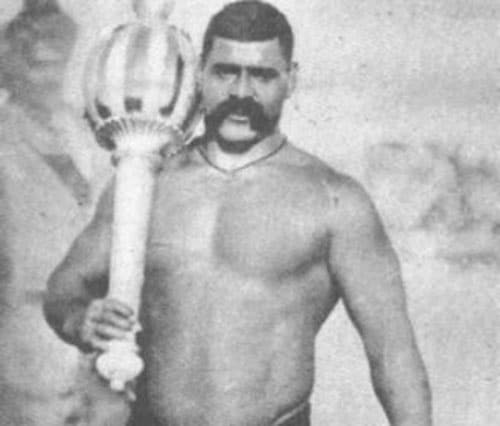
The Great Gama: undefeated wrestler, owner of a heroic mustache, and mace trainer.

OnnitLogo_125x125_WG This post is brought to you by Onnit. Check out Onnit’s line of supplements and fitness gear including their new steel mace.

Looking for a new workout? How about one that was used by Hindu warriors over 2,000 years ago and still used by Pehlwani wrestlers today?

The gada, or heavy mace, was the weapon of choice of Hindu soldiers as well as the Hindu deity Hanuman, an anthropomorphic monkey who can lift mountains with a single hand. According to the book Encyclopedia of Indian Physical Culture, warriors during the Puranic age would engage in mace training early in the morning along with wrestling, archery, and swordsmanship. Besides dueling one another with gadas, warriors would swing heavier versions — usually made with a bamboo stick with a heavy stone at one end — behind their backs in order to strengthen their backs, chests, shoulders, forearms, and fingers. Because of their rigorous physical and tactical training, Hindu warriors were some of the fiercest of the ancient world.

Today, the gada is used primarily by Pehlwani wrestlers in northern India and southern Pakistan. The most famous gada afficionado was the Great Gama (pictured above), the only undefeated Pehlwani wrestler in history. By the looks of it, his mustache also trained with a gada. That thing is a beast!

While the Indian Club enjoyed popular use among Western exercise enthusiasts as early as the 19th century, gada training for some reason didn’t catch on until very recently. Mixed martial artists in the West have taken up heavy mace training as a way to strengthen the muscles involved with throwing opponents to the mat. Functional fitness and natural movement practitioners have also taken to mace training because it provides such an amazing full-body workout.

If you’re ready to harness your inner Hindu warrior, read on. Below, Mr. Know Your Lifts showcases six different exercises that you can perform with a heavy mace.

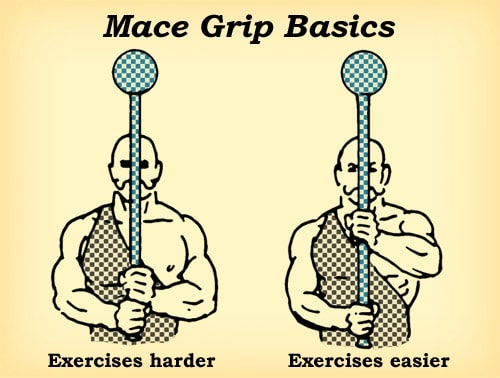
Mace Grip Basics

Basics-500

To make an exercise harder, grip both hands near the end of the handle. To make exercises easier, move at least one hand closer to the weighted end.

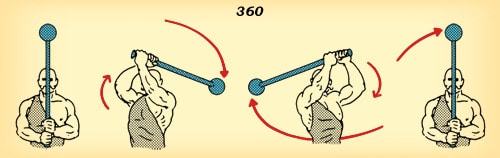
360

360-500

The 360 has been used by Hindu warriors and Pehlwani wrestlers for ages. It works the shoulders, chest, back, and forearms. Begin by holding the mace directly in front of you with your hands gripped closely together at the end of the handle. If your left hand is above your right hand, you’re going to push the mace ball over your right shoulder. The mace ball should swing behind your back. When it reaches your left shoulder, pull the mace over your left shoulder so that the mace is once again directly in front of you. Repeat several times. Switch up your hands so that your right hand is above your left, and push the mace ball over your left shoulder. Repeat swinging the mace in this direction several times.

To see this exercise in action, check out this video of Diesel Crew’s Jedd Johnson performing the 360.

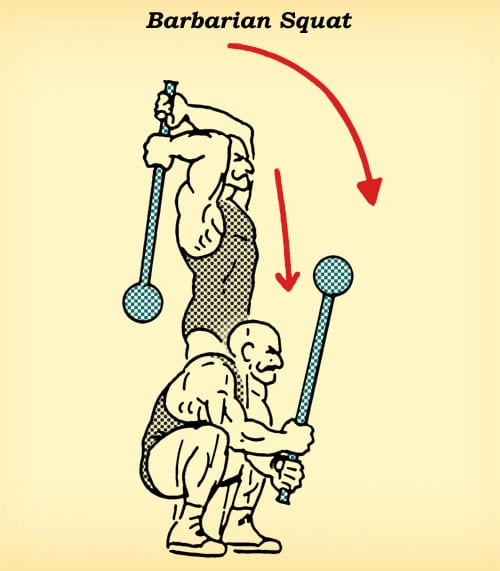
Barbarian Squat

BarbarianSquat-500

The Barbarian Squat is a great full-body exercise. You’re working your upper as well as your lower body in a single movement. Begin in a standing position with the mace behind your neck. Start lowering your body into a squatting position while simultaneously bringing the mace to the front. You’ve successfully completed the exercise if you’re in a full squat and the mace is in front of you. Return to your starting position by standing while simultaneously bringing the mace back to its original position. Repeat.

Dynamic Curl

DynamicCurl-500

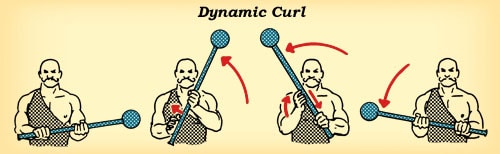
The Dynamic Curl works the forearms and biceps.

Hold the mace with a mixed grip — one hand overhand and one underhand — with the hand near the mace ball-end holding the handle with an underhand grip. Lift the ball end with the hand closest to the mace ball. When the ball reaches the middle of the arc, switch your hands up by sliding the hand that was near the ball down towards the end of the handle and bringing the hand that was near the handle up closer to the ball end. When you’ve finished, the ball end should be on your other side and your mixed grip should be reversed — the hand that was originally overhand should be underhand; the hand that was originally underhand should now be overhand. Swing the mace back and forth like this for several repetitions.

Spear Stab

SpearStab-500

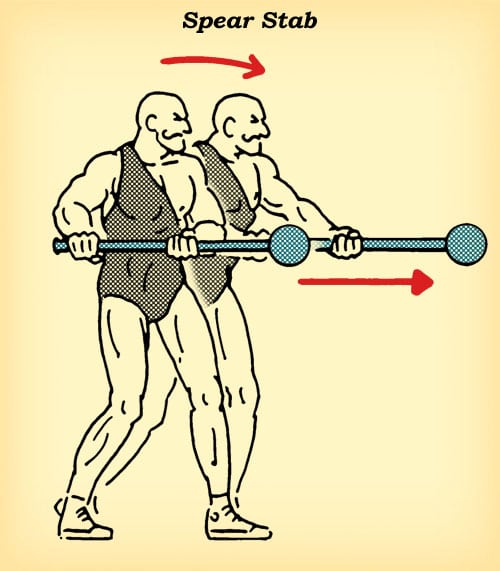
Hold the mace like you would a spear. Thrust as if you were an ancient Pauravaian warrior stabbing an a member of Alexander the Great’s Macedonian army in the Battle of the Hydaspes River. The closer both hands are to the handle, the more difficult this exercise will be. Switch up your hands and your stance to work the other side of your body.

Grave Digger

GraveDigger-500

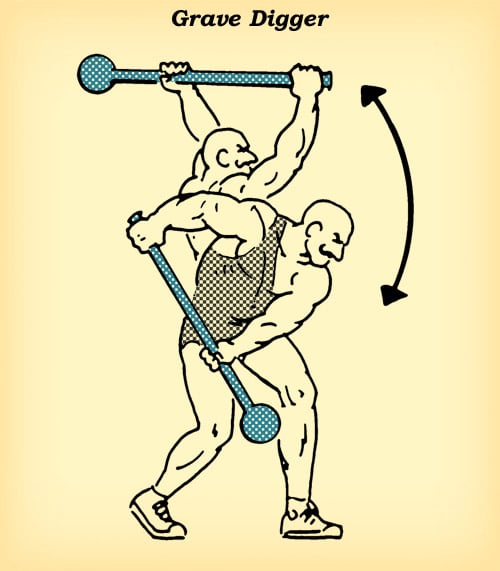
It’s time to bury all those imaginary Macedonian soldiers you just killed. Hold the mace like you would a shovel and pretend like you’re digging a hole in the ground with the mace ball. Repeat for several repetitions. Switch up your hands to work the other side of your body.

Splitting Wood

SplittingWood-500

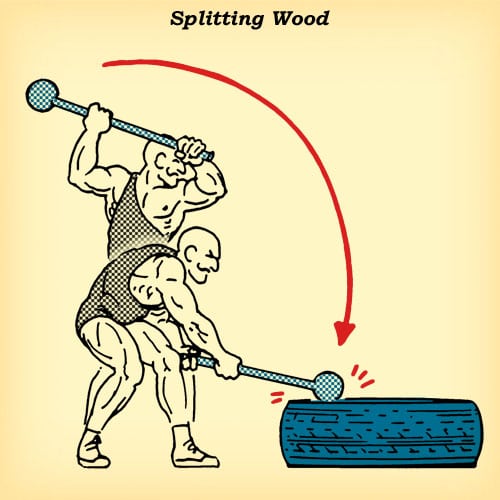
You’ll need a tire for this one. Just pretend like you’re splitting wood like a lumberjack. Start off with your non-dominant hand near the butt of the handle and your dominant hand placed near the mace’s head. Bring the mace head above your head. Swing down. As you swing, slide your dominant hand down the shaft of the mace for extra power. Switch up your hand placement to work the different sides of your body.

Illustrations by Ted Slampyak

Related posts:

  1. How to Throw a Perfect Football Spiral: An Illustrated Guide
  2. Hero Training: The Carry a Person to Safety Workout
  3. An Introduction to Indian Club Training
  4. Increase Your Strength and Athleticism with Medicine Ball Training
  5. Hero Training: The Lift an Object Off Someone in Distress Workout


24 Apr 13:18

Generated Paper Features Over 40 Printable Paper and Notebook Types

by Alan Henry

If you need a specific type of paper for your notebook, organizer, or even your Hipster PDA, don't settle for drawing lines on paper yourself. Generated Paper has over 40 printable PDF templates for ruled paper, graph paper, business cards, music sheets, and more, all completely free.

Read more...


24 Apr 10:53

Solvitur Ambulando: It Is Solved By Walking

by Brett & Kate McKay

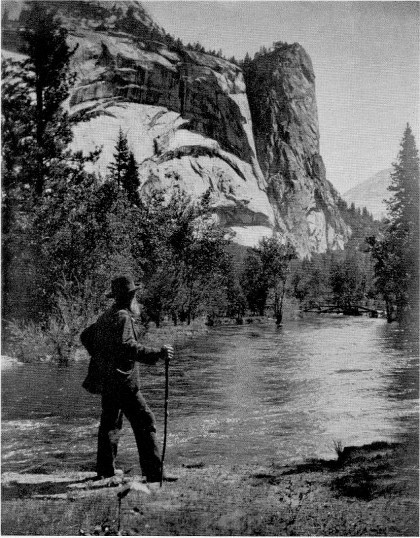
muir

“It is the best of humanity, I think, that goes out to walk. In happy hours all affairs may be wisely postponed for this. Dr. Johnson said, ‘Few men know how to take a walk,’ and it is pretty certain that Dr. Johnson was not one of those few. It is a fine art; there are degrees of proficiency, and we distinguish the professors from the apprentices. The qualifications are endurance, plain clothes, old shoes, an eye for nature, good-humor, vast curiosity, good speech, good silence, and nothing too much. Good observers have the manners of trees and animals, and if they add words, it is only when words are better than silence. But a vain talker profanes the river and the forest, and is nothing like so good company as a dog.” –Ralph Waldo Emerson, “Country Life,” 1857

“Your true kingdom is just around you, and your leg is your scepter. A muscular, manly leg, one untarnished by sloth or sensuality, is a wonderful thing.” –Alfred Barron, Foot Notes, Or, Walking as a Fine Art, 1875

Solvitur ambulando.

It’s a Latin phrase that literally means, “It is solved by walking.” Or, a little more loosely, “It is solved by walking around.”

Walking? “What problems have ever been solved by walking?” you may be asking yourself.

True enough, there is hardly anything more simple and less exciting than walking. It’s one of our first developmental milestones as babies, and once you take those initial toddling steps, neither you, nor those around you, take much notice of your walking ever again. If you happen to think about walking later in life, images of elderly women decked out in windsuits and circling the mall in the early morning hours may come to mind. Indeed, so unsexy is walking that our word for a person who travels by foot — pedestrian — is also a synonym for “dull” and “ordinary.”

‘Twas not always so, however. There was a time in which writers and philosophers wrote poems and paeans to the humble walk, publishing books and essays with titles such as “The Reveries of the Solitary Walker,” “In Praise of Walking,” and “Walking as a Fine Art.” Bipedal locomotion was referred to as “the manly art of walking,” and enrollment in the “noble army of walkers” was encouraged.

Did these long-dead bipedaling boosters know something that modern men do not? While walking’s simplicity may seem like a mark against it, perhaps its rudimentary nature is just the thing to bring us back to life’s much needed basics. Walking upright is part of what makes us human, after all, and who wouldn’t benefit from getting in touch with their humanity a little more often?

Walking is the world’s most democratic activity – it is open to almost everyone, whether young or old, rich or poor. It can be participated in no matter where you are. One can walk to work, stroll around their neighborhood, stride down city blocks, ramble through a parking lot, or saunter over hill and dale. All it takes to begin is placing one foot in front of the other. Despite this accessibility, we probably do less walking these days than ever before in history – the bulk of our day is spent riding, driving, and sitting.

Yet, taking the time to fit in more walking wherever and whenever we can, and putting our legs to their intended use, is a worthwhile endeavor. Below we discuss 11 “problems” that can be “solved” through the completely free remedy of taking a walk. We’ve also peppered the post with some of the best and pithiest quotes that we dug up from the surprisingly robust canon of walking literature. Think of this piece as one part article, one part quote repository. Read it through in one fell swoop, or come back to it from time to time when you need some motivation to get yourself out the door.

Solvitur ambulando.

Need a cheap form of transportation?
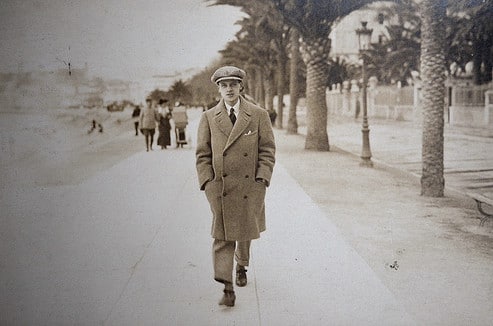
walk

“For most urbanites there is the opportunity for the daily walk to and from work, if only they were not tempted by the wheel of the street car or motor. During the subway strike in New York not long ago I saw ablebodied men riding in improvised barges or buses going at a slower-than-walking pace, because, I suppose, though still possessed of legs, these cliff-dwellers had become enslaved by wheels, just like the old mythical Ixion who was tied to one.” –John Finley, “Traveling Afoot,” 1917

“When I see the discomforts that ablebodied American men will put up with rather than go a mile or half a mile on foot, the abuses they will tolerate and encourage, crowding the street car on a little fall in the temperature or the appearance of an inch or two of snow, packing up to overflowing, dangling to the straps, treading on each other’s toes, breathing each other’s breaths, crushing the women and children, hanging by tooth and nail to a square inch of the platform, imperiling their limbs and killing the horses—I think the commonest tramp in the street has good reason to felicitate himself on his rare privilege of going afoot. Indeed, a race that neglects or despises this primitive gift, that fears the touch of the soil, that has no footpaths, no community of ownership in the land which they imply, that warns off the walker as a trespasser, that knows no way but the highway, the carriage-way, that forgets the stile, the foot-bridge, that even ignores the rights of the pedestrian in the public road, providing no escape for him but in the ditch or up the bank, is in a fair way to far more serious degeneracy.” –John Burroughs, “The Exhilarations of the Road,” 1895

Obviously, the most basic, primitive function of walking is to get from A to B. Foot-power requires no money, and no energy source besides a peanut butter sandwich. Yet, as Burroughs lamented over a century ago, as soon as motorized transportation was invented, people would do most anything to avoid having to hoof it. For some it’s a matter of convenience, often real, sometimes only perceived; many do not think of walking for even the shortest of errands, choosing to drive even when getting into one’s car and finding a parking spot can take almost as long. Others see walking as a safety hazard; I’m always amazed at the number of parents in SUVs that line up in my neighborhood in the afternoon in order to whisk their children right from the bus the quarter-mile to their house. Many folks, on the other hand, do wish they could walk more to get where they need to be, but their city/town was not laid out with any concern for pedestrian transportation. For someone who grew up in such a pedestrian-antagonistic town, moving to a place where walking becomes a practical possibility requires a mindset change. When I moved to Vermont for a stint, for the first time in my life I could walk into town to do my errands, and while at first the 15-minute “journey” seemed looong, I grew to really enjoy it and it became quite natural; soon if I needed to go somewhere, my first instinct was whether I could walk it.

Want to be prepared, come what may?

“I have read that the Scotch once had a custom of making a yearly pilgrimage or excursion around their boroughs or cities — ‘beating the bounds,’ they called it, following the boundaries that they might know what they had to defend. It is a custom that might profitably be revived. We should then know better the cities in which we live. We should be stronger, healthier, for such expeditions, and the better able and the more willing to defend our boundaries.” –John Finley, “Traveling Afoot,” 1917

“It is good for a man to keep himself in such condition that he can do ten miles on short notice. The deficiency in this respect, to which most people confess, is not a pleasant thing to contemplate.” –Alfred Barron, Footnotes, Or, Walking as a Fine Art, 1875

Even if those in developed countries rarely have a need to walk to get where they’re going, keeping up one’s walking endurance seems like a good “survival” skill to have. If walking once again became the only form of transportation available, say during the apocalypse, you’d be able to push your shopping cart of supplies across the country, ala the father in Cormac McCarthy’s The Road. Being able to walk long distances is also essential for being prepared for military service – where a principle form of transportation is the good old-fashioned march.
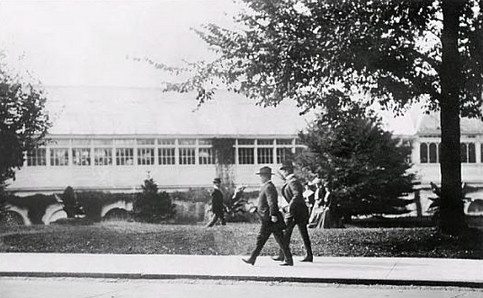
theodore roosevelt

Theodore Roosevelt walking to work. September 20, 1901.

Near the end of Theodore Roosevelt’s presidency, he was out on one of his regular “rough cross-country walks” at DC’s Rock Creek Park with some young Army officers. He was chagrined to hear from them of the “condition of utter physical worthlessness into which certain of the elder ones [officers] had permitted themselves to lapse, and the very bad effect this would certainly have if ever the army were called into service.” When TR looked into the matter, he found that “otherwise good men proved as unable to walk as if they had been sedentary brokers.” He thus “issued directions that each officer should prove his ability to walk fifty miles, or ride one hundred, in three days.” Despite the fact that this was a test, Teddy argued, “which many a healthy middleaged woman would be able to meet,” he got a lot of pushback from older officers who worked desk jobs. TR settled the matter by performing the ride requirement himself in snow and sleet, demonstrating how easy it was.

According to a naval officer who wrote to Roosevelt, the walking test was highly effective in getting men ready for the rigors of service:

“The original test of 50 miles in three days did a very great deal of good. It decreased by thousands of dollars the money expended on street car fare, and by a much greater sum the amount expended over the bar. It eliminated a number of the wholly unfit; it taught officers to walk; it forced them to learn the care of their feet and that of their men; and it improved their general health and was rapidly forming a taste for physical exercise…

This test may have been a bit too strenuous for old hearts (of men who had never taken any exercise), but it was excellent as a matter of instruction and training of handling feet—and in an emergency (such as we soon may have in Mexico) sound hearts are not much good if the feet won’t stand.”

The officer lamented that the Navy had since changed the standard to ten miles once a month — a test which he found would not produce the same benefits as a walk that had to be carried out over at least two days. The reason? The first day of walking is easy; it’s the second day, when one’s muscles and feet are sore, that’s the real challenge. The prospect of that second day, the officer explained, is what:

“made ‘em sit up and take notice—made ‘em practice walking, made ‘em avoid street cars, buy proper shoes, show some curiosity about sox and the care of the feet in general…

The point is that whereas formerly officers had to practice walking a bit and give some attention to proper footgear, now they don’t have to, and the natural consequence is that they don’t do it.

There are plenty of officers who do not walk any more than is necessary to reach a street car that will carry them from their residences to their offices. Some who have motors do not do so much. They take no exercise. They take cocktails instead and are getting beefy and ‘ponchy,’ and something should be done to remedy this state of affairs.”

Spiritually dry?

“I have met with but one or two persons in the course of my life who understood the art of Walking, that is, of taking walks,—who had a genius, so to speak, for sauntering, which word is beautifully derived ‘from idle people who roved about the country, in the Middle Ages, and asked charity, under pretense of going a la Sainte Terre,’ to the Holy Land, till the children- exclaimed, ‘There goes a SainteTerrer,’ Saunterer, a Holy-Lander. They who never go to the Holy Land in their walks, as they pretend, are indeed mere idlers and vagabonds; but they who do go there are saunterers in the good sense, such as I mean….For every walk is a sort of crusade, preached by some Peter the Hermit in us, to go forth and reconquer this Holy Land from the hands of the Infidels.” —Henry D. Thoreau, “Walking,” 1862

“The geographical pilgrimage is the symbolic acting out an inner journey. The inner journey is the interpolation of the meanings and signs of the outer pilgrimage. One can have one without the other. It is best to have both.” –Thomas Merton, Mystics & Zen Masters, 1961

Pilgrimages – the purest of which are conducted on foot – are a religious rite shared by nearly all the world’s faiths. That believers of varying stripes might incorporate walking into their pursuit of spirituality is not surprising. A pilgrimage takes our shared metaphor of life as a journey, in which a lone sojourner must struggle with courage and hope through the wilderness, and turns it into a concrete, bodily experience; it converts the abstract into a tangible path, with real goals and obstacles and pain.

A pilgrimage can separate the traveler from the distractions of everyday life and act as a process of transformation and purification. The physical hardship of the journey can nullify the temptations of the flesh, while also showing one’s devotion to his faith; a pilgrim may hope to present this sacrifice to God as a penance for his sins, or an offering for the healing of another. And of course the pilgrim may experience additional insights or blessings once he reaches the holy site he has journeyed to.

“I personally would rather do the existentially essential things in life on foot. If you live in England and your girlfriend is in Sicily, and it is clear you want to marry her, then you should walk to Sicily to propose. For these things travel by car or aeroplane is not the right thing.” –Werner Herzog, Of Walking in Ice, 1978

Even an avowed atheist might believe that the effort put forth through walking could somehow be converted into a kind of supernatural force. Such is the case of filmmaker Werner Herzog, who does not have a belief in God, but does possess a sort of faith in walking. In 1974, when he was 32 years old, Herzog heard that film historian and critic Lotte H. Eisner was gravely ill. Herzog considered her a dear mentor, and vowed, “I am not going to fly, I refuse to take a plane, refuse to take a car, I refuse to do anything else, I will come on foot,” because, he explained, “I was totally absolutely convinced that while I was walking from Germany to Paris to see her, she would not have a chance to die.”

Herzog used his compass to determine the straightest course to his destination and then set out in the middle of winter to walk from Munich to Lotte’s home in France – a journey of nearly 515 miles. For three weeks he traveled as a hobo, eschewing hotels in favor of abandoned homes and barns, and spent his journey getting reacquainted with himself, as well as observing the people and places he encountered. After hundreds of miles of arduous tramping, he arrived in France to find that his faith in walking had not been in vain — Lotte was indeed still alive and well.

Want to really get to know a place?
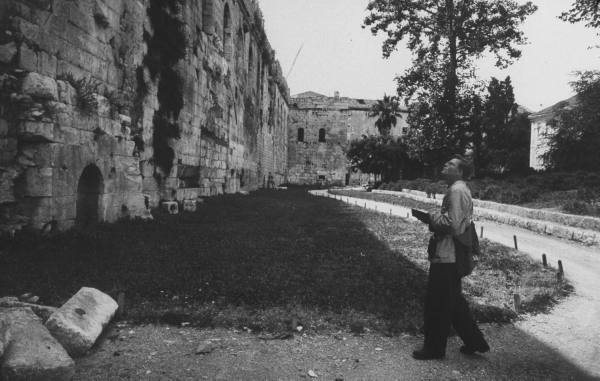
tourist

“Your pedestrian is always cheerful, alert, refreshed, with his heart in his hand and his hand free to all. He looks down upon nobody; he is on the common level. His pores are all open, his circulation is active, his digestion good. His heart is not cold, nor his faculties asleep. He is the only real traveller…He is not isolated, but one with things, with the farms and industries on either hand. The vital, universal currents play through him. He knows the ground is alive; he feels the pulses of the wind, and reads the mute language of things. His sympathies are all aroused; his senses are continually reporting messages to his mind. Wind, frost, ruin, heat, cold, are something to him. He is not merely a spectator of the panorama of nature, but a participator in it. He experiences the country he passes through—tastes it, feels it, absorbs it; the traveller in his fine carriage sees it merely. This gives the fresh charm to that class of books that may be called “Views Afoot,” and to the narratives of hunters, naturalists, exploring parties, etc. The walker does not need a large territory. When you get into a railway car you want a continent, the man in his carriage requires a township; but a walker like Thoreau finds as much and more along the shores of Walden pond…

I think if I could walk through a country I should not only see many things and have adventures that I would otherwise miss, but that I should come into relations with that country at first band, and with the men and women in it, in a way that would afford the deepest satisfaction…

Man takes root at his feet, and at best he is no more than a potted plant in his house or carriage, till he has established communication with the soil by the loving and magnetic touch of his soles to it. Then the tie of association is born; then spring those invisible fibres and rootlets through which character comes to smack of the soil, and which makes a man kindred to the spot of earth he inhabits.” -John Burroughs, “The Exhilarations of the Road,” 1895

There is no better way of getting to know a place — whether your own backyard or an exotic locale — than by walking it. At such a slow pace, you are able to notice rich details that would otherwise pass you by. In your neighborhood you begin to observe the little details of others’ homes; in the woods you discover new plants and creatures; in the city you find small stores, restaurants, and alleyways you’d otherwise miss; when venturing abroad you give yourself opportunities to meet and converse with the locals. Whenever I visit a new place, I’m eager to set off on a walk from my lodgings to explore the sights, sounds, and smells of my new surroundings.

This was actually the method of exploration used predominantly by Meriwether Lewis as part of the Lewis and Clark expedition. While his comrades were often in the river on boats, he would stride along on foot, taking copious notes and drawing as many species of flora and fauna as he could. His contributions to science and exploration — in large part due to his walking — are considered immeasurable.

Getting acquainted with a new nation is quite an adventure, but as Burroughs notes, you don’t need a huge area to cover in order to keep yourself occupied on your walks for quite some time. Alfred Barron, author of 1875’s Footnotes, Or, Walking as a Fine Art, makes this calculation: “If you confine yourself to walks of twelve miles in every direction from your home, you have a field of observation comprising four hundred and fifty-two square miles.” There’s plenty to explore right outside your door!

Lacking inspiration?
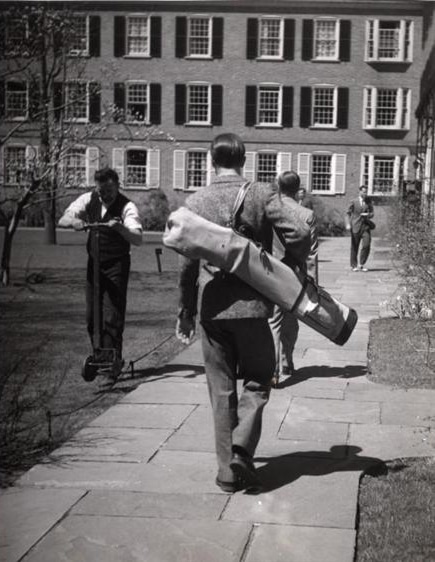
college

“I walk chiefly to visit natural objects, but I sometimes go on foot to visit myself. It often happens when I am on an outward-bound excursion, that I also discover a good deal of my own thought. He is a poor reporter, indeed, who does not note his thought as well as his sight. The profit of a walk depends on your waiting for the golden opportunity — on your getting an inspired hint before setting out…

These members [legs] when in motion, are so stimulating to thought and mind, they almost deserve to be called the reflective organs. As in the night an iron-shod horse stumbling along a stony road kicks out sparks, so let a man take to his legs and soon his brain will begin to grow luminous and sparkle.” –Alfred Barron, Foot Notes, Or, Walking as a Fine Art, 1875

“I can only meditate when I am walking. When I stop, I cease to think; my mind only works with my legs.” –Jean-Jacque Rousseau, Confessions, 1782

Throughout history, great minds in literature, philosophy, and science have found important insight and inspiration while out on a walk. Perhaps this is because walking – at least while out in nature (which is the kind of walking many of these thinkers favored) – has been shown by modern science to improve memory and attention. Or perhaps it’s because walking simply gets the blood pumping – a hard to quantify effect of invigoration.

William Wordsworth composed most of his poems while walking through meadows, moors, and mountains. He rambled in every kind of weather and all over Europe; a friend calculated that he had walked 180,000 miles in his life. Even in his 60s he was able to tour 20 miles a day.

Legend has it that Aristotle did his thinking and lecturing while walking, and students of his school of philosophy in Athens came to be known as Peripatetic philosophers — those “given to walking about.”

Nikola Tesla’s idea for his AC induction motor came to him while he was on a long walk through the city of Budapest. As he passed through a park and gazed at the sunset, “the idea came like a flash of lightning and in an instant the truth was revealed.”

For more examples of great thinkers whose minds were spurred on by their legs, we can do no better than turn to Bailey Millard, who penned this 1905 piece for The Critic, splendidly titled “The Relation of Legs to Literature”:

“Much bending over the folio does not make the better part of poetry or of prose. It inheres as much in the physiological condition that results from the swinging of the legs, which movement quickens heart action and stimulates the brain by supplying it with blood charged with the life-giving principle of the open air.

By taking a lover’s walk with the muse one may more readily woo words into new relations with thought than by sitting at a desk. And, leaving aside the matter of inspiration and looking at the subject from a lower plane, one finds that walking abroad often gives to the elusive, amorphous ideas, lurking darkly in the cerebral background, such clarity as is vainly sought within the compass of thought-impeding walls. Nearly all those poets whose lives are open to us have been good walkers—men and women who rambled about everywhere, adding to the scholar’s stimulus of study a truer poetical stimulus found along the woodland ways and out under the blue tenuity of the sky. In fact, I have long suspected that the flabby flexors and extensors of the locomotor media of our modern poets are largely responsible for the invertebrate verse of present production.

…Shelley, we are told, rambled everywhere. Goethe found his extensive walks about Weimar a source of great inspirational profit. Browning’s incomparable “Parcellus”‘ was composed for the most part during his rambles in the Dulwick woods. At any stage of his superb singing, wherever he happened to be, he would give his feet the freedom of the highway and the byway. He composed in the open air and trod out, as it were, many of his best lines. The tonic quality of his verse is, in a great measure, due to his habit of faring forth where he might “think the thoughts that lilies speak in white.”

…Dickens thought that it was necessary for him to walk as many hours as he wrote, and the excess of animal spirits which his work reveals throughout makes one feel that his system for maintaining that physical energy which begets mental alertness was an excellent one.

That artificial aid to locomotion, the bicycle, is in no way conducive to deep thought. Zola found that when he wanted to stop thinking the surest way was to ride forth a-wheel. The man with the “Here-I-come!” look in his face worn by so many wheelmen, is not likely to be doing much in the way of creative thought, clever and amiable though he may be as a road companion.

As for the philosophic brood, I find that most of them were men of sound legs, from Plato and Aristotle of the famous walking school down to Montaigne, Johnson, Carlyle, Ruskin and our own clearest minds, Emerson and Thoreau. Montaigne would have no fire in his great Circular study, which was “16 paces” (or shall we say about 40 feet?) in diameter. He warmed his mind as well as his body by walking. ‘My thoughts will sleep if I seat them,’ he declares. ‘My wit will not budge if my legs do not shake it up.’

…It is true that the nearer you approach the age of the trolley, the less depth is apparent in philosophy; which leads one to suspect that the Peripatetic School is the true school in any age…

As for Thoreau, his fine contribution to the world’s literature was as truly walked as it was written. So has been the work of John Burroughs, on the Atlantic side of the continent, and that of John Muir, the accredited spokesman for nature on the Pacific coast. If writings may be said to be manufactured by an author, then these latter were as truly pedufactured; and in offering our lexicographers this uncouth word I do so without a blush. For I plead guilty to a strong prejudice for the book that is walked first and written afterward. Other work may be more brilliant, and, in a sense, more clever, but that quality which one finds in the book which is walked is something never found in the book that makes no show of legs but all of head. The book that is walked, whether of prose or of verse, reveals ‘the buoyant child surviving in the man,’ of which Coleridge, himself a stout foot traveler, sings.”

Need a cheap form of exercise?

“I have two doctors, my left leg and my right. When body and mind are out of gear (and those twin parts of me live at such close quarters that the one always catches melancholy from the other) I know that I have only to call in my doctors and I shall be well again.” –George Macaulay Trevelyan, “Walking,” 1913

By now everyone knows the importance of regular exercise. What doesn’t get as much attention is that many of the health benefits of exercise are not predicated on sweating at the gym and using the latest and greatest equipment; all you need to do is hit the pavement. Walking is a low-impact activity that’s accessible to nearly everyone and has been shown to lower bad cholesterol and raise the good, reduce your blood pressure, strengthen muscles and bones, improve glucose control and insulin response, prevent and manage diabetes, and decrease your chances of becoming obese and getting heart disease.

Americans sometimes marvel at our European brethren who seem to enjoy good food and drink, turn up their noses at slaving away at the gym, and yet still remain trim. Part of their “secret” is that they walk three times more than we do.

Of course, as already mentioned many American cities aren’t very walkable and lack sidewalks. If you live in such a place, you can still squeeze in more short walk breaks at work and take a walk during lunch and in the mornings and evenings at home (getting a dog can help get you out the door). When I’m traveling, I usually have to skip my regular workout, and so I walk loops around the airport during layovers for a gentle bout of exercise. Helps pass the time, too.

Stressed, depressed, or anxious?
stressed

“The best thing is to walk…Movement is the best cure for melancholy.” –Bruce Chatwin, Anatomy of Restlessness, 1996

“I think that I cannot preserve my health and spirits unless I spend four hours a day at least— and it is commonly more than that—sauntering through the woods and over the hills and fields, absolutely free from all worldly engagements. You may safely say, A penny for your thoughts, or a thousand pounds. When sometimes I am reminded that the mechanics and shopkeepers stay in their shops not only all the forenoon, but all the afternoon too, sitting with crossed legs, so many of them—as if the legs were made to sit upon, and not to stand or walk upon—I think that they deserve some credit for not having all committed suicide long ago.

I am alarmed when it happens that I have walked a mile into the woods bodily without getting there in spirit. In my afternoon walk I would fain forget all my morning occupations and my obligations to society. But it sometimes happens that I cannot easily shake off the village. The thought of some work will run in my head, and I am not where my body is—I am out of my senses. In my walks I would fain return to my senses. What business have I in the woods, if I am thinking of something out of the woods?” –Henry David Thoreau, “Walking,” 1862

Going for a walk is a highly effective way to reduce your stress, depression, and anxiety. Like any form of exercise, walking releases endorphins which give pleasure to your brain and reduce your stress hormones, but unlike other forms of exercise, you can do it anywhere, anytime. A brisk 20- to 30-minute walk can have the same calming effect as a mild tranquilizer, and walking daily for a half-hour has been shown to quickly relieve major depression.

Walking has also been shown to clear the mind and refresh the senses. It’s a form of “meditation in action” which can rejuvenate your “brain fatigue.” Research has shown that reaching this meditative state through walking is made much easier when you take your stroll in nature, or even simply a small green space within a city. The mechanism at work here is a psychological phenomenon called “involuntary attention.” As opposed to the frenetic cityscape which grabs our attention in an exhausting way, natural surroundings engage the brain, but do it an effortless manner that still allows space for reflection. In this calm state, the knot of worries that have been tangling up from our day-to-day lives can more easily be unraveled and released.

Focusing on deeper meditation as you walk by centering your thoughts only on the present – concentrating on the movements of your body or counting your steps – can also help you tame your “monkey mind” which begets anxiety in its constant need to flit from one thing to another.

Finally, walking’s rejuvenating power may be located in the opportunity it provides for much needed solitude. Our two feet provide the opportunity to leave behind the crowd and the noise of the world at a moment’s notice, and regain our solitary independence.

Feeling like you’re about to flip out?
walk2

“An Eskimo custom offers an angry person release by walking the emotion out of his or her system in a straight line across the landscape; the point at which the anger is conquered is marked with a stick, bearing witness to the strength or length of the rage.” -Lucy Lippard, Overlay, 1983

When it comes to managing your anger, you may have heard it recommended to count to ten or to take a timeout and go somewhere for a cooling off period. The problem with such methods is that counting really doesn’t do the trick if you’re still right in the thick of (and staring at, and being stared at by) what set you off in the first place, and oftentimes when you leave to go somewhere else, your anger ends up building instead of dissipating; you start stewing in your room, or you talk to a friend who only eggs you on about how right you are, or you go get drunk which often leads not only to more anger but a whole other set of problems too.

In my experience, the best way to deal with a situation where you’re about to blow your top is to respectfully ask for a time out and then head right out the door to take a walk. As just discussed, walking can alleviate your anxiety and mellow you out. Plus, being alone with your thoughts can help you get perspective on what’s going down and how you really want to deal with it.

Baby won’t stop crying?
baby

When you have a newborn, nothing is more stressful than when they’re on a crying jag and you can’t soothe them. One “home remedy” I personally found highly effective was taking the baby out for a walk. It’s easy when you have one of those carriers that loads right into the stroller. Rolling along in the fresh air acted as a fast and all-natural baby pacifier. Plus, it’s hard for new dads to get exercise in, so this baby-mollification method kills two birds with one stone.

Age catching up with you?
oldman

“When Nero advertised for a new luxury, a walk in the woods should have been offered. It is the consolation of mortal men. I think no pursuit has more breath of immortality in it. It is one of the secrets for dodging old age.” –Ralph Waldo Emerson, “Country Life,” 1858

Emerson was more right than he knew. Modern studies have shown that men who daily walk two miles or more have half the chance of developing dementia and Alzheimer’s disease than men who walk a quarter-mile or less each day. Another study found that people over the age of 60 who walk 6-9 miles a week retain more gray matter and suffer less “brain shrinkage” and cognitive impairment than those who walk less. What’s really interesting is that not only does walking affect your mental faculties, but your mental faculties affect your walking. Researchers have found that as your cognitive abilities decline, your walking gait becomes slower and shakier, so looking at someone’s stride is actually one way to diagnosis those who have or are developing dementia. As the New York Times reports: “Thinking skills like memory, planning activities or processing information decline almost in parallel with the ability to walk fluidly…In other words, the more trouble people have walking, the more trouble they have thinking.”

So hey, those old ladies in windsuits at the mall are on to something after all.

Need to work through a problem with a friend or lover?
walk3

“The roads and paths you have walked along in summer and winter weather, the fields and hills which you have looked upon in lightness and gladness of heart, where fresh thoughts have come into your mind, or some noble prospect has opened before you, and especially the quiet ways where you have walked in sweet converse with your friend, pausing under the trees, drinking at the spring—henceforth they are not the same; a new charm is added; those thoughts spring there perennial, your friend walks there forever.” –John Burroughs, “The Exhilarations of the Road,” 1895

If you and a friend or significant other are grappling with some problem or issue or worry, there may be no better way of working through it than going for a walk together. When you sit face-to-face with someone, the mood can feel confrontational – you may be thinking about not making the “wrong” facial expression instead of the issue at hand, and if you do make the wrong expression, it can set the other person off. When you’re sitting or standing side-by-side, on the other hand, people feel more comfortable and open and less defensive. They can look off into the distance to gather their thoughts, grimace, and bite their lip without self-consciousness.

When you’re side-by-side on a walk, you have this benefit, plus all those mentioned above (stress-reduction, meditation, inspiration) that can enhance your ability to work through a problem with someone. Plus, walking provides the physical sensation of moving forward, which can translate into a mental sense of forward progress as well. The Chinese characters for walking mean putting one foot in front of the other – and that’s really the best way to deal with any dilemma or challenge that besets us.

“Afoot and light-hearted I take to the open road,
Healthy, free, the world before me,
The long brown path before me leading wherever I choose.

Henceforth I ask not good-fortune, I myself am good-fortune,
Henceforth I whimper no more, postpone no more, need nothing,
Done with indoor complaints, libraries, querulous criticisms,
Strong and content I travel the open road.”
-Walt Whitman, “A Song of the Open Road”

Related posts:

  1. Dim & Dash: Walking the Dog
  2. Old School Workout: Daily Exercises for Young Men From 1883
  3. Underestimating a Hike
  4. Every Man Should Do This Exercise Routine Every Day
  5. Hero Training: The Carry a Person to Safety Workout


24 Apr 10:50

Shakuntala Devi, ‘Human Computer,’ Dies in India at 83

by By HARESH PANDYA
Ms. Devi’s lightning calculations amazed audiences and supported her family, even when she was a child.


24 Apr 02:40

God’s Little Acre of Diamonds: Observations On Travel Ball in Cobb County, Georgia: Daddy Ball (and Mommy Ball) by Stella A.

Let’s say you keep the stats for your son’s 9U travel baseball team. Every game, you pull out your iPhone and open up an app called Gamechanger. You sit way up in the scorekeeper’s box where you can see every pitch cross the plate and puzzle out how today’s umpire calls balls (the strikes are always easy). On your little screen, you tap “strike swinging” or “strike looking” or “wild pitch”; every now and then you stab “ball in play” and drag tiny little numbers around tiny little bases. Usually you do all this while also throwing the toggle switches on the brains that control the Reagan-era analog scoreboard in left field. Don’t sweat if you’re slow lighting up a run scored; at least two or three parents will alert you by hollering “Hey scorekeeper!” within seconds of a kid sliding home.
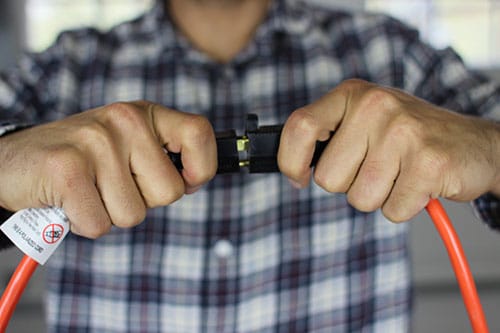
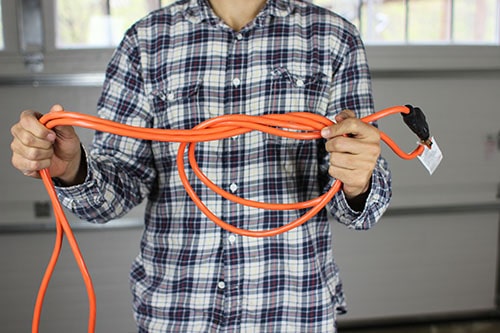
You try to make good judgments about what’s a hit and what’s an error. You try to be consistent. You ask the other parents or your husband when a pop-up drops between two infielders, when a ball takes a funny hop and the shortstop misses it. You’ve been doing this job awhile because no one else wanted it; the other moms demurred, preferring to keep games open for intervals of half-whispered gossiping and overly loud cheering. Some of the dads are in the dugout; the rest pace up and down the right field fence. In these particular moments, they lack your powers of concentration to type out the script for what’s essentially a laggy video game version of the game they’re watching.

You’ve figured out how to score an infield fly, offensive interference, and an international tiebreaker. From a purely statistical angle, you know more about the performance of every player on the team than even the coach, who doesn’t quite realize the reams of data that a little scorekeeping app generates in seconds. You are the Bill James of nine-year-old baseball! Only without any power to influence a single decision based on the data you’re harvesting. You know all but say nothing. If Coach wanted to know a kid’s PA, AB, AVG, RBI, R, HBP, BB, SO, OBP, SLG, OPS, FPCT, E, A, PO, DP, TP, GP, IP, ERA, or WHIP, you could tell him.1 But he doesn’t want to know. Well, he might have wanted to know once.

It’s the Monday after the boys played three back-to-back games on Saturday, and you get the dreaded phone call, the one you consider letting roll over to voicemail: “Hey Stella, this is Coach Larry here.” (He always identifies himself as “Coach Larry.” He signs all his emails “Coach Larry.” You find yourself addressing him as “Coach Larry” even though you feel mildly ridiculous doing so). “I’m trying to understand the stats on Gamechanger.” You sense where this is heading; someone has already uploaded the stats from Saturday’s games to the team web site.2 All the numbers are in plain view,3 and now, for the first time, Coach has taken an interest in them.

Making the stats public is something the parents have debated. You’re happy to keep the records—as volunteer jobs go, this one beats managing fundraising—but you’re uncomfortable with the attention they’ll get. It’s inviting trouble onto the team. The kids are nine. Nine. But several of the moms, including two coaches’ wives want the kids’ stats up on the web site, so the kids’ stats are up on the web site. You pull up Gamechanger. Coach says, “Now… I’m trying to understand this… so… um… who has the most errors on the team?”

You don’t even have to look to answer his question. It’s not even close. You’re pretty sure just about anyone who’s watched the kids play could answer his question too. You stall a little a bit, offer disclaimers about your fallibility, the game you missed that another mom reluctantly scored. Finally you just say it: “your son.”

There’s silence on the other end of the line. You think to yourself he’s not letting himself hear this. He is, in these few seconds of quiet, constructing a narrative where you’re a crappy scorekeeper. He’s re-assigning those errors to you. That’s okay. His kid is getting better on defense, and your kid could make a run for the title of Error King if he doesn’t clean up his fielding. Coach changes the subject, moves on to ask about the ERA of a couple of the pitchers. But he steers around the boys’ batting averages too. That’s one number he’s well aware of. At the team meeting in January, he even raised the issue himself: “Hey y’all—my kid has the lowest average on the team. I know that.” But in his mind, it doesn’t matter. He says his coaching is based on instinct, experience, a trained eye—not on numbers. Except now it’s April and his kid’s batting average hasn’t budged. Coach has a perfectly good reason in his head for putting his kid at the top of the batting order (but it doesn’t seem to have anything to do with his OBP either). The boys have lost more games than they’ve won, so the chatter is starting. Parents air their grievances more loudly now. Private conversations between moms and dads go semi-public; grumbling tumbles out the open doors of minivans. Everybody’s got something to say about the batting order and which kids sit which innings and which kids play which positions. The hard numbers on the web site only fuel the unhappiness that sets in about halfway through the season. In other words, it’s time to talk about Daddy Ball.

- - -

My mom has always been a very thorough obituary reader. In our family, if you need help sorting the living and the dead, she’s the person to ask—our very own Lachesis, the second of the Three Fates, the one who knows to the centimeter the length of your allotted bit of thread. For decades she’s subscribed to two newspapers, one from her North Carolina hometown and one from the small Alabama town where I grew up and she still lives. When I was in college, I remember standing in the mailroom, unfolding letters written in her steady cursive hand, and out would flutter bits of newsprint. Knowing somehow that college is a sort of remote island, she’d send clippings from the ever-changing world, word of the passing of politicians and poets, of the postman who always left two pieces of sour apple Super Bubble in our mailbox.

Her measure of the living and dead continues, though the bits of thread are more likely to come by email now. Back in December, my inbox held the news that one Basil H. Case, 72, “went to be with his Lord and Savior earlier this week.” The name and the life were not a bit familiar to me—not his ambitions to become a horse jockey or how he ran the projector at the drive-in movie theater or sold coffee door-to-door. Mom’s short note explained: “here’s an obit that appeared in today’s paper. Basil Case coached your baseball team way back when.”

It’s a bit cloudy now, but in the 1970s, I played one season of rec league baseball. I might have been around Henry’s age, eight or nine. I might have wanted to play because the two boys who lived next door were playing or because I’d seen and loved The Bad News Bears. Maybe Mom was glad to get rid of me for a few hours a week in the summer, when the ballet studio was closed. Or maybe it was the 1970s-era feminism in the air, drifting even to a small town in Alabama. That summer—or maybe the summer before—Mom put on a white t-shirt and white bellbottoms and boarded a bus for Washington D.C., where she and her friends and a hundred thousand other women marched on the Mall in a rally for the Equal Rights Amendment. It’s no surprise that Alabama never ratified the ERA, but these Alabama feminists good-naturedly endured the bra-burning jokes of their slightly mystified husbands, and at least one of them never blinked when her daughter asked to play on an all-boys baseball team.

There are three things that I remember clearly about my brief summer of baseball: 1) we wore green t-shirts that said “Tigers” across the chest; green and white mesh ball caps; and green, white, and yellow tube socks; 2) when I wasn’t striking out, I spent most of my time in the shaded dugout riding the bench; 3) the coach’s son always pitched. It was simply a given. Was he pitching because he was the best pitcher on the team? Was he pitching because his dad was coaching and assigned the positions? I have no idea. He was, to my untrained eyes, in his rightful place. Basil H. Case coached the team. Basil H. Case’s son pitched. Basil H. Case’s son batted cleanup.

- - -

Mention the words “daddy ball” to any family with a kid in sports and you’ll get more than an earful. Everybody’s got a story to tell about a coach’s preferential treatment of his own kid. Of a coach whose kid was the only one on the team who didn’t have to “earn” his position or “earn” playing time. Of games lost because a coach put his kid in a position he shouldn’t have played or left him in a game too long or gave him more chances than he gave other kids. Of a dad living through his son, erasing his own disappointments by highlighting his son’s accomplishments and talents. Daddy ball is one of the things parents complain about the most. It’s not hard to see why some parents will pay even more to put a kid on a team staffed by paid (non-parent) coaches (oh yes, those teams do exist). It removes at least one conflict of interest.

Volunteer coaches get defensive when there’s whiff of discontent in the air about who plays when, where, and how much. Some over-compensate. They’re much harder on their own kids than on yours. These relationships are easy to spot. Just look for the tears. Some coaches have kids who are amazing athletes and who raise the level of play for everyone else. There’s less resentment when the coach’s kid is clearly the best player out there. Honestly, this is not the case with Henry’s current team. The coach’s son is somewhere is the middle of the pack, and, anticipating parent chatter, Coach made a point of declaring at the team meeting: “I don’t play daddy ball. Period.” But it’s April, and some of the moms are already retweeting his declaration with verbal inflections that range from skepticism to irony. He said he doesn’t play daddy ball. He said he doesn’t play daddy ball.

All those statistics readily available through Gamechanger flatter the ambitions of parents, but feed their resentments as well. So you hear a lot of my kid is batting .X, but he’s 8th in the order. Coach’s son bats X-100, has Y errors, never sits out an inning, and bats 2nd. And here’s the thing. In a typical game, the boys play an hour and forty-five minutes, which is four to five innings at best. If a kid is at the top of the order, he may get three at-bats while the kid at the bottom of the order only gets two. You bat higher in the order, you get more plate appearances. More chances. More practice. More improvement, if you’re lucky.

Will and I have gone back and forth about the coach’s choices. Will’s position is that Coach is a volunteer. He’s spending his time and energy and money on this team (a 40 hour a week job he’d be quick to tell you). If Coach wants to play his kid at second base for every single inning of every single game (and he has, no lie) well, then, that’s his right. In Will’s view, we’re not going to the trouble of managing this team, running practices, and booking tournaments, so we have no right to complain from our comfy spot on the bleachers. At times, I agree. I wouldn’t want to manage the team or manage the parents who are just as much trouble. But in my less charitable moments, the moments when Coach’s wife hands me the line-up and her son’s name is, again, at the top of the order, while other kids who are hitting better topple backwards in the line-up, I re-think the question of who needs whom. Does Henry need this coach so he can play ball or does this coach need Henry (and seven other kids) so his own son can play ball?

Keeping stats on nine-year-olds can lead to some unfortunate thinking. Numbers make you look at a kid as a batting average or an ERA or an error count and, in an instant, you’re not thinking about what these kids can accomplish together but making judgments about each kid’s individual (statistical) contribution. When kids are reduced to numbers, they (and their parents) inevitably compete against each other. Henry’s hitting coach, who is much wiser than I am about these things, told me that he doesn’t care a thing about batting averages at nine years old. The only thing that matters is how well a kid’s hitting the ball. If a well-hit ball just happens to drop right into the center fielder’s glove, well, it’s how the kid hit it that really matters. And he’s skeptical of moms who keep stats—looking at you, lady with the iPhone up in the scorekeeper’s box.

When she came to visit recently, I asked my mom what she remembered of my brief season of little league.

“The other moms,” she said. “I couldn’t believe how they’d stand at the fence and yell at their kids. Mrs. T., especially. I’ve never seen anything like her. She was so loud.”

“Did I ever play,” I asked.

“No, not much. You mostly sat on the bench. But I thought you should have played more.”

- - -

1 Gamechanger invites fans to “dive into the details” with 150 season stats. When I kept a paper book in past seasons, I never once sat down with a calculator to figure batting averages or tally up RBIs. Electronic books are just another way kids’ sports have come to ape their professional big brothers.

2 This is sort of a passive aggressive Mom move (just as my remarking on it is also sort of passive aggressive). The mom who uploaded the stats probably has a kid who finally woke up at the plate and went 3-5 in the tournament. His batting average for the year may still hover around .200, but his stats for these games look good. And she’s happy for you to know it.

3 There are actually two different team web sites at this point. Two of the coaches’ wives got together and created a second one to replace the first one. On the original web site (maintained by a third coach and his wife), the stats are password protected. On the new site, they aren’t. I’m pretty sure there’s more to this competing web site thing than I’m privy to.

24 Apr 02:39

Inside America's Dirty Wars  |  The Nation  |  Apr. 23, 2013  |  20 Minutes (5,050 words)

by Jeremy Scahill
An investigation of the drone strikes that killed Anwar al-Awlaki and his 16-year-old American-born son, Abdulrahman al-Awlaki:

"One day in early September, Abdulrahman woke up before the rest of the house. He tiptoed into his mother’s bedroom, took 9,000 Yemeni rials—roughly $40—from her purse, and left a note outside her bedroom door. He then snuck out the kitchen window and into the courtyard. Shortly after 6 am, the family’s guard saw the boy leave but didn’t think anything of it. It was Sunday, September 4, 2011, a few days after the Eid al-Fitr holiday marked the end of the holy month of Ramadan. Nine days before, Abdulrahman had turned 16.

"A short while later, Abdulrahman’s mother woke up. She started to rouse his siblings for morning prayers and then went to wake him, but Abdulrahman was not in his bedroom. She called for him and, while searching the house, found his note. In it, he apologized for leaving without telling her and said that he missed his father and wanted to find him. He also said he was sorry for taking the money. 'When his mother told me about the letter, it was just like a shock for me,' Abdulrahman’s grandmother Saleha told me. 'I said, "I think this will be just like bait for his father."' The CIA, she feared, 'might find his father through him.'"
24 Apr 02:39

Ultralight Backpackin’ Tips

by mark

This is the best introduction to ultralight backpacking there is. Ultralight means you carry less than 25 pounds of gear, food and water for a 10 day trip, and maybe less than 5 pounds for a weekend trip! That’s liberating. If you obsessively reduce the mass of things (or leave them behind) by onefold then you can raise your enjoyment of hiking tenfold.

But most of the stuff in a backpack is carried to overcome a lack of knowledge. So whenever you take away weight you have to replace it with knowledge — knowledge that this book supplies.

This book assumes you are persuaded of this zen-like way. If you need to be persuaded that carry-weight is worth obsessing over, or you want the full course of every option available, and the evidence and reasons for each method, and how to make all the stuff yourself, then you’ll need Ray Jardines’ bible on the subject, the previously reviewed and now updated Beyond Backpacking/Trail Life.

But instead of a bible, this fantastic book by Mike Clelland will give you cartoons. Lot’s of them.

It’s jammed packed with dense, informative, easy to digest, and remarkably helpful advice, hints and instructions on how to accomplish and enjoy walking with very little stuff — and this knowledge is mostly compressed into witty cartoons. I am a big fan of Clelland’s other previously reviewed cartoon guides to snow travel and ordinary backpacking and I really like how amazingly effective his drawings are. Each one is worth thousands of words. It’s fun but not silly. Clelland grapples with the real-world details of, say, not taking a water filter or toilet paper (!!!) and his solutions are born of many seasons of experience. The whole book is authentic and reliable. It will very quickly have you out on the trail carrying a lot less than you once did. Even if you don’t get as extreme as he does, you can move in the right direction by substituting knowledge for stuff. I’ve been going super light for a long time and I learned tons of new tricks on almost every page.

-- KK

Ultralight Backpackin’ Tips
Mike Clelland
2011, 144 pages
$10

Available from Amazon

Sample Excerpts:

image (1) image (2) image (3) image (4) image (5) image (6) image

24 Apr 02:37

Pseudoenzymes: Back From the Dead as Targets?

There's a possible new area for drug discovery that's coming from a very unexpected source: enzymes that don't do anything. About ten years ago, when the human genome was getting its first good combing-through, one of the first enzyme categories to get the full treatment were the kinases. But about ten per cent of them, on closer inspection, seemed to lack one or more key catalytic residues, leaving them with no known way to be active. They were dubbed (with much puzzlement) "pseudokinases", with their functions, if any, unknown.

As time went on and sequences piled up, the same situation was found for a number of other enzyme categories. One family in particular, the sulfotransferases, seems to have at least half of it putative members inactivated, which doesn't make a lot of sense, because these things also seem to be under selection pressure. So they're doing something, but what?

Answer are starting to be filled in. Here's a paper from last year, on some of the possibilities, and this article from Science is an excellent survey of the field. It turns out that many of these seem to have a regulatory function, often on their enzymatically active relations. Some of these pseudoenzymes retain the ability to bind their original substrates, and those events may also have a regulatory function in their downstream protein interactions. So these things may be a whole class of drug targets that we haven't screened for - and in fact may be a set of proteins that we're already hitting with some of our ligands, but with no idea that we're doing so. I doubt if anyone in drug discovery has ever bothered counterscreening against any of them, but it looks like that should change. Update: I stand corrected. See the comment thread for more.

This illustrates a few principles worth keeping in mind: first, that if something is under selection pressure, it surely has a function, even if you can't figure out how or why. (A corollary is that if some sequence doesn't seem to be under such constraints, it probably doesn't have much of a function at all, but as those links show, this is a contentious topic). Next, we should always keep in mind that we don't really know as much about cell biology as we think we do; there are lots of surprises and overlooked things waiting for us. And finally, any of those that appear to have (or retain) small-molecule binding sites are very much worth the attention of medicinal chemists, because so many other possible targets have nothing of the kind, and are a lot harder to deal with.

24 Apr 02:36

Behind the Longreads: Antonia Crane on ‘Yellow,’ Our Latest Member Pick  |  Longreads  |  Apr. 23, 2013  |  1 Minutes (279 words)

by Antonia Crane
This week's Member Pick is "Yellow," a story by Antonia Crane about the days following the death of her mother. The piece will be featured in Black Clock #17 this summer and is adapted from her forthcoming book Spent. We asked her to tell us how the story first came together.
24 Apr 02:36

IBM And The Limits of Transferable Tech Expertise

Here's a fine piece from Matthew Herper over at Forbes on an IBM/Roche collaboration in gene sequencing. IBM had an interesting technology platform in the area, which they modestly called the "DNA transistor". For a while, it was going to the the Next Big Thing in the field (and the material at that last link was apparently written during that period). But sequencing is a very competitive area, with a lot of action in it these days, and, well. . .things haven't worked out.

Today Roche announced that they're pulling out of the collaboration, and Herper has some thoughts about what that tells us. His thoughts on the sequencing business are well worth a look, but I was particularly struck by this one:

Biotech is not tech. You’d think that when a company like IBM moves into a new field in biology, its fast technical expertise and innovativeness would give it an advantage. Sometimes, maybe, it does: with its supercomputer Watson, IBM actually does seem to be developing a technology that could change the way medicine is practiced, someday. But more often than not the opposite is true. Tech companies like IBM, Microsoft, and Google actually have dismal records of moving into medicine. Biology is simply not like semiconductors or software engineering, even when it involves semiconductors or software engineering.

And I'm not sure how much of the Watson business is hype, either, when it comes to biomedicine (a nonzero amount, at any rate). But Herper's point is an important one, and it's one that's been discussed many time on this site as well. This post is a good catch-all for them - it links back to the locus classicus of such thinking, the famous "Can A Biologist Fix a Radio?" article, as well as to more recent forays like Andy Grove (ex-Intel) and his call for drug discovery to be more like chip design. (Here's another post on these points).

One of the big mistakes that people make is in thinking that "technology" is a single category of transferrable expertise. That's closely tied to another big (and common) mistake, that of thinking that the progress in computing power and electronics in general is the way that all technological progress works. (That, to me, sums up my problems with Ray Kurzweil). The evolution of microprocessing has indeed been amazing. Every field that can be improved by having more and faster computational power has been touched by it, and will continue to be. But if computation is not your rate-limiting step, then there's a limit to how much work Moore's Law can do for you.

And computational power is not the rate-limiting step in drug discovery or in biomedical research in general. We do not have polynomial-time algorithms to predictive toxicology, or to models of human drug efficacy. We hardly have any algorithms at all. Anyone who feels like remedying this lack (and making a few billion dollars doing so) is welcome to step right up.

Note: it's been pointed out in the comments that cost-per-base of DNA sequencing has been dropping at an even faster than Moore's Law rate. So there is technological innovation going on in the biomedical field, outside of sheer computational power, but I'd still say that understanding is the real rate limiter. . .

23 Apr 13:26

The Colored Pencil Drawings of Marco Mazzoni Depict the Cycles of Nature

by Christopher Jobson

The Colored Pencil Drawings of Marco Mazzoni Depict the Cycles of Nature still life nature drawing

The Colored Pencil Drawings of Marco Mazzoni Depict the Cycles of Nature still life nature drawing

The Colored Pencil Drawings of Marco Mazzoni Depict the Cycles of Nature still life nature drawing

The Colored Pencil Drawings of Marco Mazzoni Depict the Cycles of Nature still life nature drawing

The Colored Pencil Drawings of Marco Mazzoni Depict the Cycles of Nature still life nature drawing

The Colored Pencil Drawings of Marco Mazzoni Depict the Cycles of Nature still life nature drawing

The Colored Pencil Drawings of Marco Mazzoni Depict the Cycles of Nature still life nature drawing

The Colored Pencil Drawings of Marco Mazzoni Depict the Cycles of Nature still life nature drawing

The Colored Pencil Drawings of Marco Mazzoni Depict the Cycles of Nature still life nature drawing

Milan-based artist Marco Mazzoni works almost exclusively with colored pencils to create intricate drawings that depict the cycles of nature and worlds based heavily in Italian folklore. One of his most frequent subjects are drawings of flora and fauna who seem to be consuming or living on top of the face of a woman whose eyes we never see. The artist says he consciously does not depict the eyes so the viewer doesn’t consider the artwork a portait, but instead a still life where all elements have equal importance. Via Galleria Patricia Armocida:

Mazzoni weaves a world based on Italian folklore, made up of Janas and Cogas, female figures who, according to Sardinian beliefs, seduce, enchant, curse, and heal. His work is an homage to the secret art of healers; each drawing is saturated with metaphors that tell their story. The circular compositions, which allude to the cycles of Nature, depict medicinal and lysergic plants, pollinator butterflies and birds which drink their nectar, and hidden amidst leaves and wings emerge the faces of these women forced to hide their sensuality and their knowledge due to bigotry imposed by religion, accused of witchcraft because they are herbarie, herbalists. Female healers and midwives held an important role within the community. [...] Marco Mazzoni underlines the importance of the interaction between the women and the plants by developing the subject that’s best known: the female face framed by flora and fauna, rendering it an icon. He reveals her innermost perceptions, memories scribbled on a diary page, highly imaginative visions of “impossible” animals, the fruit of ecstatic exploration of hallucinatory journeys. [...] The result is a work which recounts the moment in which woman takes control of everything, in complete harmony with Nature.

Mazzoni currently has a solo show in Milan at Galleria Patricia Armocida which runs through May 4th, 2013. You can see more of his work over on Facebook.

23 Apr 13:25

More Post-It Monsters

by Cory Doctorow


I picked up John Kenn Mortensen's More Post-It Monsters at a comic-show in London and it's terrific. Mortensen draws beautiful and grotesque line-art monsters on yellow sticky notes, and, as with the first collection of these, Sticky Monsters, More Post-It Monsters reproduces them with a minimum of text (apart from a brief and charming intro from China Mieville) and other distractions. It's just about 80 pages' worth of Gorey-esque illustrations that'll excite and reward your brain's monster-center.

John Kenn Mortensen: More Post-It Monsters


23 Apr 13:24

The Six Million Dollar Patch

by Ellis Morning

QA, UAT, and performance tests passed. John received authorization to promote his first major release to production. He checked in the code, and nothing exciting happened. No cake or streamers fell from the ceiling, but no errors or warnings bleated out at him. None. Given the complexity of the product, John’s success was the IT-world equivalent of winning both showcases on “The Price Is Right”.

John sent out emails to all the relevant stakeholders, and basked in the glow of a major project finally being done. The good feeling lasted for less than half an hour.

“The production servers are completely bogged down!” His boss clung to the threshold of his cube, breathless from the run over. “What the heck’s going on?”

Orders, orders everywhere. Tens of thousands of orders flooded into the production system. A glance at the log files explained their origins: the performance testing environment.

A horrible dread crept over John’s skin. “I must have left in some flags, or some settings- it’s pulling data from PerfTest. What should I do? Should I roll it back?” he asked.

“Yes, but get an OK from the system admin first,” his boss said.

His upcoming weekend, and potentially his career, were on the line. John emailed some attachments to the system admin on duty, then ran to the admin’s desk as though trying to beat the messages there.

The system admin had different ideas. “No need to roll the whole release back. Looks like all we need to tweak is this iBATIS query.” He tapped at his keyboard like a hacker in a bad movie. “See? Easy. Get this patch in before anything bad happens. Well, anything worse.

Weak with relief, John filed the emergency production change request with QA and release management. Once QA signed off, it would go into production without anything more from John. Everyone went home for the weekend, confident they’d done all they could.

To John’s surprise, the production-critical patch was still sitting in QA’s queue on Monday. And on Tuesday, Wednesday…

John didn’t need to inform the project lead. “I’ve been getting calls all week from people in Shipping. They’re sick of manually canceling those bad orders,” she said while popping several headache tablets. Her next action was to call the product’s main QA point of contact, placing him on speakerphone. “What’s the holdup?” she asked.

“We don’t have the financing to handle our workload,” the QA worker complained.

The project lead told her boss. John told his boss. They contacted the QA manager. Thus was the battle joined. The managers armed themselves with contact lists and SLAs. Conference calls and blamestorming sessions were the proving grounds over which these mid-tier titans clashed. With career interests and bottom lines dangling at the precipice, each vied to do as little as possible and spend the least amount of money while claiming the most credit. John’s urgent patch, a whopping eight-character code change, languished in limbo.

Nine months later, casualties stank up the battlefield. 1,000,000 bogus “orders” sent from the performance environment; $6,000,000 in losses for the company due to erroneous shipments, erroneously canceled real shipments, and angry customers. The only good thing was that by the time the damage was accounted, everyone had forgotten who released the bad code to production.

[Advertisement] Make your team a DevOps team with BuildMaster. Pairing an easy-to-use web UI with a free base platform, BuildMaster gets you started in minutes. See how Allrecipes.com and others use BuildMaster to automate their software delivery.

23 Apr 13:22

Perfect Pitch: Impossibly Starry City Skies in Blackest Night

by Urbanist
[ By WebUrbanist in Art & Photography & Video. ]

pitch black skies

Massive power outages give us rare glimpses of darkened cities, but in normal conditions, there is simply no way to see the starry skies above the typical urban metropolis – but one photographer has found a way to simulate them.

pitch black starry skies

Thierry Cohen uses a multi-step process to create stunning visualizations (dubbed Darkened Cities) of would-be, could-be sights from New York to London, Shanghai to Sao Paulo … ones that the ordinary eye will rarely or never see naturally.

pitch dark night space

Cohen takes a series of shots of each of the cities themselves, and carefully removes illumination from the equation. Night sky photos from the same latitudes (adjusted for time and angle) are then layered into the background, creating a seamless illusion.

pitch photo edited cities

The results are at once mesmerizing, revealing the unseen potential for views of space right where we live, but also somewhat depressing – these are scenes that no one can actually ever see outside of deserts, at least unless disaster strikes.

Share on Facebook

[ By WebUrbanist in Art & Photography & Video. ]

[ WebUrbanist | Archives | Galleries | Privacy | TOS ]


23 Apr 13:20

Is this free AI tool right for you? A RAIN{indie} review

by Staff

rainindie_thumb2.jpgHow does Rival Theory's free development tool RAIN{indie} stack up? Here's the rundown by Dave Mark from the April issue of Game Developer magazine.

When the Unity engine came on the scene, it opened up the world of game development to a significantly wider audience. Unity allowed people to sidestep the knowledge, time, and frustration of the complicated process of creating their own rendering engine, lighting effects, physics modeling, and more. Instead, they could get straight to the process of creating worlds, levels, and ultimately games (which is, in and of itself, a complicated process). However, as tickled as people were to be able to dive into Unity and "make things," one question kept coming up: How do I make AI?

Much like the other systems listed above, creating even simple game AI often takes a lot of investment in infrastructure. Even armed with Mexican food metaphors (see my AI Primer in the August 2012 issue of Game Developer), creating AI architectures is not an easy task. Unity users would simply be better off if there was a tool that allowed them to bypass the messy work of creating the underlying infrastructure and get right to the task of creating the actual behaviors. After all, isn't that what Unity is all about? Well, that's what Rival Theory set out to do with RAIN{indie}.

AI for free

I was originally introduced to Rival Theory a year ago when they showed me a brief demo of their initial product, RAIN{one}. Its successor, RAIN{indie}, has subtle differences, with a tightened feature set that focuses more on what the smaller developer needs the most access to. More importantly, while the original was a purchased product, RAIN{indie} is available as a free download. That's a huge bonus to the small developer who may not have the budget for tools. 

At the time of this writing, the tutorials and documentation of RAIN{indie} were still evolving, so I was given a tour of the new product's features by Rival Theory founder and CEO, William Klein. I had already downloaded the product from their site, installed it, and taken a walk through their demo applications. These showed, in varying degrees of fidelity, the end result of what their behavioral engine could do. William's explanation showed me how the tools are used to achieve those end results. I actually felt a little guilty for taking up his time - once I found out how simple many of the processes were, I realized I probably could have done it myself in short order. 

RAIN{indie} is actually a number of different AI products in one. Included in the package are support for creating pathfinding assets, the actual pathfinding code, behavior trees, and a sensory system. The systems are fully separate and can be included individually as desired. Adding them to your project is similar to adding any other sort of Unity add-in. More importantly, once added to your projects, the modules themselves are accessible. This means that you can use them "as is" or in some modified fashion - even combining them with Unity's default tech or that of another add-in. This flexibility, in and of itself, is something that should allow users to feel comfortable about incorporating RAIN{indie} into their projects without the chains, cages, or soul-selling that often comes with middleware packages.

Pathfinding with RAIN{indie}

The pathfinding components in RAIN{indie} include a voxel-based navmesh generator. Auto-generating a navmesh is as simple as adding a RAIN Recast object to your Unity scene, setting parameters for options such as the desired cell size and maximum traversable angle (e.g., 45°), and clicking Refresh Recast. Depending on your region size, you have a generated navmesh in seconds or minutes. Oddly, the generated navmeshes are grid-based rather than the typical "odd-shaped polygon" ones that many of us are accustomed to. At a cell size of 1, this makes for many cells - even in large open areas. The result looks more like an odd hybrid of a very dense nav graph rather than a true nav mesh. You can reduce the number of cells by specifying a larger size, but as with any resolution change, the fidelity of the auto-created walkable areas suffers. Regardless, the solution is certainly workable (see Figure 1). 

** Figure 1: A RAIN{indie}-generated navmesh overlaid onto a level. (Note that semi-transparency is mine for clarity.)

On top of your navmesh, you can add waypoints to your environment, connect them to each other, and hook them up as paths to assign to your agents. Using the "waypoint gizmo," navigation nodes can be dragged and dropped into the environment and automatically connected to each other based on raycast-based line-of-sight checks (see Figure 2). 

** Figure 2: Editing waypoints to the scene with the "waypoint gizmo."

In addition to pathfinding, RAIN{indie} has built-in collision avoidance and steering behaviors. It uses a form of "look ahead" steering that responds to terrain, static, and dynamic obstacles. I played with some of the samples in the steering demo (really just capsules gliding through an environment), and they performed respectably even when there was more than one dynamic obstacle. There was one agent in the demo who would get a little hung up on a combination of terrain and an obstacle, but managed to muddle through. To his credit, he was using steering only where a navmesh would have helped out the situation. 

While not necessarily as robust in complex situations as more-involved, custom solutions, the steering in RAIN{indie} performed well enough to create intelligent avoidance in simple dynamic environments.

Sensory system and behavior tree editor

RAIN{indie} also includes easy-to-attach sensors that help streamline the setup of the agent's detection of objects in the world. In essence, these amount to colliders that are looking for intersections with specified objects or types of objects. You can actually specify sensors for not only vision, but also for touch, sound, smell, and yes... taste. Really, there isn't much difference between them - a collider of a specified size and shape, and some tags to define what it is attempting to sense. Theoretically, you could define the sense as anything you wanted: ghosts, tachyon fields, teenage angst, whatever. It is amusing, however, to hook up a "taste sensor" to your agent - if only conceptually. 

While all of the above features are nice, the behavior tree component in RAIN{indie} is something that really caught my eye. For those that don't know, behavior trees are becoming increasingly popular as the go-to architecture for crafting AI. They are both easy to understand and powerful - so much so that many of the triple-A games today are using some form of behavior tree architecture. Thankfully, because of how they are constructed, they also lend themselves to being constructed and manipulated with visual design tools such as the one included with RAIN{indie}. 

Again, as with the other components in RAIN{indie}, attaching a behavior tree to a character only involves a few mouse clicks. Once that "mind" is in place, adding, moving, and editing nodes of the tree are fairly straightforward. Not only can you insert typical node types such as sequencers and selectors right from the tree interface, you can also assign animations, sound events, and more (see Figure 3). 

** Figure 3: The behavior tree editor with the dialog for adding nodes to the tree showing the selection of possible actions.

Editing the entire tree graphically is as easy as dragging and dropping. This is important, of course, because, as with any AI development, constructing behavior trees is often a very iterative process. To not have to worry about xml braces, tags, indenting, etc. is very relieving. Also the graphical tree structure is easy to read and helps you visualize the overall structure of your AI. Key parameters for the selected node are exposed right in the tree editor so that browsing the tree is simple and intuitive (see Figure 4). 

** Figure 4: A larger behavior tree expanded in the editor. Note that some of the parameters are editable from the properties screen.

Naturally the nodes themselves are not the end of the journey. If you want, RAIN will do a lot of the heavy lifting for you; the editor will create the scripts for you in JavaScript, C#, or Boo. However, depending on what your behaviors do or what decision logic you need to leverage, you may still have to write some code on your own. This is a very key point, though. The fact that the BT editor is writing code for you means that you can edit that code. Many middleware solutions are closed, black box systems; you do it their way whether you want to or not. With RAIN{indie}, you can lean on the system to do most of it on its own, or you can utilize only the framework and write the bulk of the code on your own. This is a huge boon that allows the product to scale gracefully from the casual interloper [is that the right word?] to the more advanced user.

Making it RAIN

All told, RAIN{indie} brings a lot to the table. I feel somewhat remiss as a reviewer since there is no way that I have completely kicked all the proverbial tires on the product. That means there might be more for me to discover - both positive and negative, of course. As they flesh out the documentation and tutorial videos, getting to know the ins and outs of the different features will certainly be easier. 

Rival Theory seems to have accomplished what it set out to do, however: Make creating AI for Unity characters simple yet powerful. Another thing it certainly did right is the price. Regardless of any of the features, benefits, and caveats that RAIN{indie} provides, there is really no risk in giving it a test run.

Data box:

Product name: RAIN{indie} Company Name: Rival Theory URL: rivaltheory.com/rainindie Price: Free System Requirements: Any computer capable of running Unity (Mac/PC) 

Pros:
  • Components are usable and editable directly in Unity
  • Graphical behavior tree structure editor
  • Hellooo? It's FREE?
Cons:
  • Still only a framework - not a magic bullet
  • Documentation and tutorials still "in process"
  • Nonstandard, grid-based navmeshes

Author Bio:

Dave Mark is the president and lead designer of Intrinsic Algorithm, an independent game development studio and AI consulting company in Omaha, Nebraska. He is the author of the book Behavioral Mathematics for Game AI and is a contributor to the AI Game Programming Wisdom and Game Programming Gems book series from Charles River Media. Dave is also a founding member of the AI Game Programmers Guild, has spoken at numerous conferences, and was a co-advisor for the previous AI Summits at GDC. 

[This article originally appeared on sister site Gamasutra]

23 Apr 13:17

explore-blog: Hemingway on writing.