Rtersieva
Shared posts
Undeserved Reputation? Aspartame, The Artificial Sweetener
Video shows the avalanche that hit Everest Base Camp after earthquake

Terrifying. German climber Jost Kobusch was at Everest Base Camp as the earthquake that devastated Nepal , hit Everest too. You can see the people realize the ground was shaking and then immediately get hit by a horrific avalanche right after. So sad.

In the Hatton Garden raiders' footsteps
Wormholes Untangle a Black Hole Paradox


Read more of this story at Slashdot.
12 Unusual City Slogans on Welcome Signs
 Take a look at some curious welcome signs with bizarre slogans.
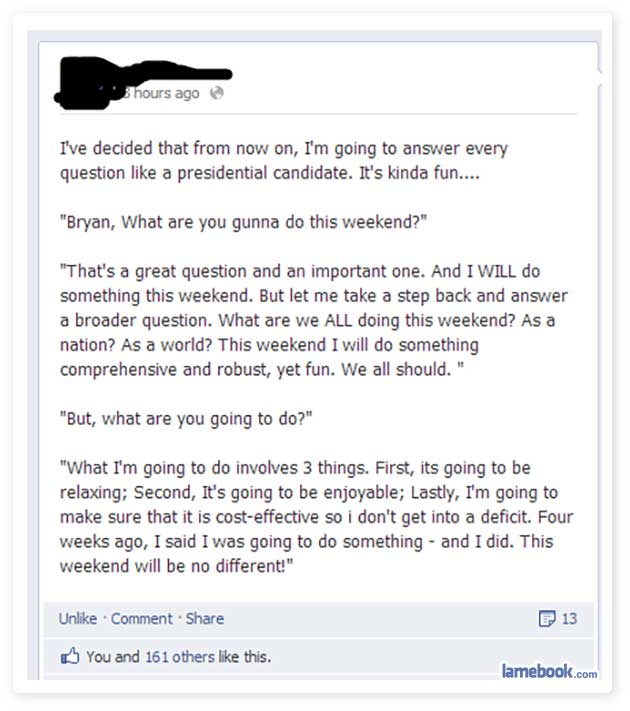
When I have to explain the different jobs in IT

 Expanded from
 New Javascript Attack Lets Websites Spy On the CPU's Cache
Read more of this story at Slashdot.
Гледайте новото лирик-видео на MOONSPELL "Medusalem"

По-долу, може да гледате лирик-видеото на MOONSPELL към парчето "Medusalem". Песента е от новия албум на групата, "Extinct", който излезе ...
A Dog in Scotland Took a Tractor for a Joyride. His Face Says it All.
Don the collie hopped in the tractor in Abington, South Lanarkshire early in the morning, crashing through a fence and careening through a busy commuter road. Don's owner was eventually able to commandeer the vehicle, and luckily no one was hurt.
And really, could you be mad at the little guy with a face like that?
Submitted by: (via trafficscotland)
How To Tell A Bobkitten From A Regular Kitten
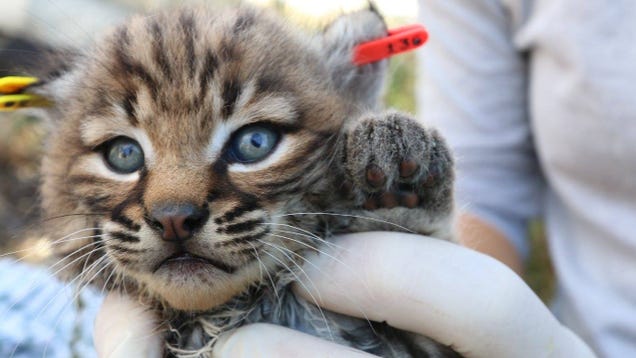
Bobkitten or regular kitten? While both look cute nibbling on your finger, one might actually eat that finger. This is the latest litter born in the Santa Monica Mountains.

Hatton Garden heist damage revealed
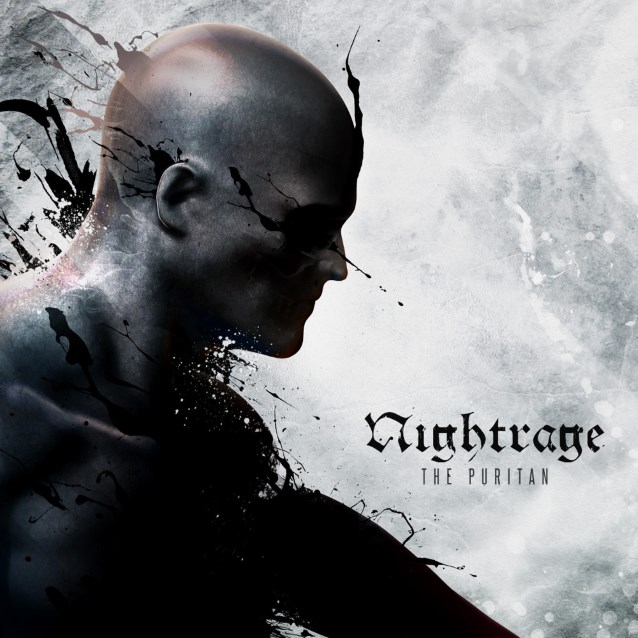
NIGHTRAGE: Entire 'The Puritan' Album Available For Streaming
CIVIL WAR Featuring Ex-SABATON Members: Audio Samples Of Entire 'Gods And Generals' Album

'Tame HIV' used to cure disease
Protein Converts Pancreatic Cancer Cells Back Into Healthy Cells
Read more of this story at Slashdot.
Cirque du Soleil sold to investors
Comic for 2015.04.20


More from Explosm
Loading...
Advertisement
Did you know by creating an account you can favorite comics and shorts, automatically bookmark the last one you saw, and more? Learn more about it here!
All content is Copyright © 2000–2015 of Explosm, LLC.
Log in or Register
This entry passed through the Full-Text RSS service - if this is your content and you're reading it on someone else's site, please read the FAQ at fivefilters.org/content-only/faq.php#publishers.
Cigarettes, damn cigarettes and statistics

We cannot rely on correlation alone. But insisting on absolute proof of causation is too exacting a standard
It is said that there is a correlation between the number of storks’ nests found on Danish houses and the number of children born in those houses. Could the old story about babies being delivered by storks really be true? No. Correlation is not causation. Storks do not deliver children but larger houses have more room both for children and for storks.
This much-loved statistical anecdote seems less amusing when you consider how it was used in a US Senate committee hearing in 1965. The expert witness giving testimony was arguing that while smoking may be correlated with lung cancer, a causal relationship was unproven and implausible. Pressed on the statistical parallels between storks and cigarettes, he replied that they “seem to me the same”.
The witness’s name was Darrell Huff, a freelance journalist beloved by generations of geeks for his wonderful and hugely successful 1954 book How to Lie with Statistics. His reputation today might be rather different had the proposed sequel made it to print. How to Lie with Smoking Statistics used a variety of stork-style arguments to throw doubt on the connection between smoking and cancer, and it was supported by a grant from the Tobacco Institute. It was never published, for reasons that remain unclear. (The story of Huff’s career as a tobacco consultant was brought to the attention of statisticians in articles by Andrew Gelman in Chance in 2012 and by Alex Reinhart in Significance in 2014.)
Indisputably, smoking causes lung cancer and various other deadly conditions. But the problematic relationship between correlation and causation in general remains an active area of debate and confusion. The “spurious correlations” compiled by Harvard law student Tyler Vigen and displayed on his website (tylervigen.com) should be a warning. Did you realise that consumption of margarine is strongly correlated with the divorce rate in Maine?
We cannot rely on correlation alone, then. But insisting on absolute proof of causation is too exacting a standard (arguably, an impossible one). Between those two extremes, where does the right balance lie between trusting correlations and looking for evidence of causation?
Scientists, economists and statisticians have tended to demand causal explanations for the patterns they see. It’s not enough to know that college graduates earn more money — we want to know whether the college education boosted their earnings, or if they were smart people who would have done well anyway. Merely looking for correlations was not the stuff of rigorous science.
But with the advent of “big data” this argument has started to shift. Large data sets can throw up intriguing correlations that may be good enough for some purposes. (Who cares why price cuts are most effective on a Tuesday? If it’s Tuesday, cut the price.) Andy Haldane, chief economist of the Bank of England, recently argued that economists might want to take mere correlations more seriously. He is not the first big-data enthusiast to say so.
This brings us back to smoking and cancer. When the British epidemiologist Richard Doll first began to suspect the link in the late 1940s, his analysis was based on a mere correlation. The causal mechanism was unclear, as most of the carcinogens in tobacco had not been identified; Doll himself suspected that lung cancer was caused by fumes from tarmac roads, or possibly cars themselves.
Doll’s early work on smoking and cancer with Austin Bradford Hill, published in 1950, was duly criticised in its day as nothing more than a correlation. The great statistician Ronald Fisher repeatedly weighed into the argument in the 1950s, pointing out that it was quite possible that cancer caused smoking — after all, precancerous growths irritated the lung. People might smoke to soothe that irritation. Fisher also observed that some genetic predisposition might cause both lung cancer and a tendency to smoke. (Another statistician, Joseph Berkson, observed that people who were tough enough to resist adverts and peer pressure were also tough enough to resist lung cancer.)
Hill and Doll showed us that correlation should not be dismissed too easily. But they also showed that we shouldn’t give up on the search for causal explanations. The pair painstakingly continued their research, and evidence of a causal association soon mounted.
Hill and Doll took a pragmatic approach in the search for causation. For example, is there a dose-response relationship? Yes: heavy smokers are more likely to suffer from lung cancer. Does the timing make sense? Again, yes: smokers develop cancer long after they begin to smoke. This contradicts Fisher’s alternative hypothesis that people self-medicate with cigarettes in the early stages of lung cancer. Do multiple sources of evidence add up to a coherent picture? Yes: when doctors heard about what Hill and Doll were finding, many of them quit smoking, and it became possible to see that the quitters were at lower risk of lung cancer. We should respect correlation but it is a clue to a deeper truth, not the end of our investigations.
It’s not clear why Huff and Fisher were so fixated on the idea that the growing evidence on smoking was a mere correlation. Both of them were paid as consultants by the tobacco industry and some will believe that the consulting fees caused their scepticism. It seems just as likely that their scepticism caused the consulting fees. We may never know.
Written for and first published at ft.com.
Simpsons Did It: 10 Times The Simpsons Predicted the Future
 South Park once argued that you can't criticize a show for copying The Simpsons because The Simpsons have already come up with so many different ideas. In fact, The Simpsons has even featured these events before they happened in real life.
Cheryl Is a Good Logic Puzzle Maker and a Bad Friend
Via NY Times:
Originally, Mr. Kong said this was a problem inflicted on fifth-graders, leading to hand-wringing that Singapore children were way better at math than everyone else in the world and worries that Singapore children were being mentally abused with convoluted logic at a young age.
It turned out the problem actually came from a math olympiad test for math-savvy high school-age students.
If you're having trouble here's the answer.
And here's the post that started it all.
Submitted by: (via NY Times)
Italian Man's Quest to Fix Toilet Led to Amazing Archaeology Discoveries

Fifteen years ago, Luciano Faggiano of Lecce, Italy sent his sons out digging for a broken sewer line. They didn’t find the pipe, but they did find “a Messapian tomb, a Roman granary, a Franciscan chapel and even etchings from the Knights Templar,” writes Jim Yardley in a story for the New York Times.

That Time the US Accidentally Nuked Britain’s First Satellite

When it comes to nations with a long and rich history of space travel and exploration, Britain isn’t normally a country that comes to most people’s minds. However, they were the third country in the world to operate a satellite in orbit. It’s just a shame America ended up accidentally killing it just a few months later…

Chrome 42 Launches With Push Notifications
Read more of this story at Slashdot.
New Horizons' First Color Photo of Pluto Is One Awe-Inspiring Blur

So that’s Pluto and its Texas-sized moon, Charon from a distance of about 71 million miles. Not a bad shot all things considered. But the New Horizons probe, on its way closer right now, will be upping its photo-taking game in July. Then we’ll get to see some actual surface features.

Spain's Hologram Protest: Thousands Join Virtual March In Madrid
Read more of this story at Slashdot.
The International Space Station (Finally) Gets an Espresso Machine
Read more of this story at Slashdot.
Want To See a Naked Washing Machine?

Are your desires …unconventional? Enough so that you have a deep yearning for a periodical of tastefully photographed technology, stripped down to its barest elements? Boy, have I got the magazine for you.

Theories of Disappointment
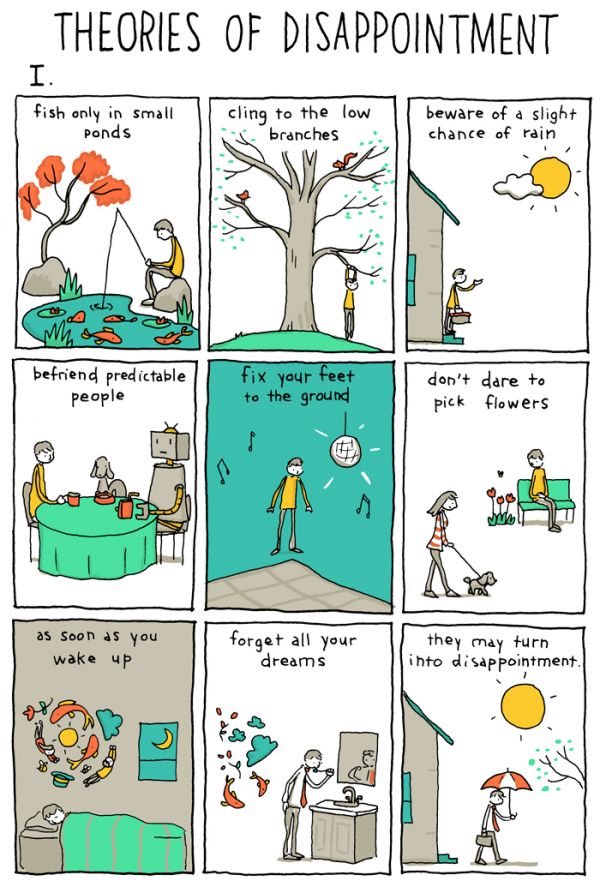
Grant Snider of Incidental Comics takes on the inevitable occurrence in life of being disappointed. Whether it's disappointment as a result of the actions of significant others, friends or family, disappointment in the workplace or in other life circumstances, it's unavoidable. But as Snider points out, trying to avoid disappointment at all costs only makes your world smaller, with few opportunities, and thus, more disappointing.
This is part one of "Theories of Disappointment." See part two at Incidental Comics.